Can these plastic roads solve two environmental problems? Every ton of this asphalt contains approximately 70,000 single-use plastic bags — and could potentially improve the quality of the roads we drive on: https://cnn.it/2u1SE4L
Can these plastic roads solve two environmental problems? Every ton of this asphalt contains approximately 70,000 single-use plastic bags — and could potentially improve the quality of the roads we drive on: https://cnn.it/2u1SE4L
I Hope They Made Scott Pruitt Turn Out His Pockets on His Way Out the Door
The departing EPA chief was a first-class grifter—but he did his lasting damage elsewhere.
By Charles P. Pierce
Getty Images
I have to admit, while watching the preposterous nomination of Scott Pruitt to be the head of the Environmental Protection Agency, I knew he was being put in the job not to do the job. That’s been Republican practice going back to Ronald Reagan, who put Anne Gorsuch in charge of the EPA for roughly the same reasons and with roughly the same results. (Her son, of course, will now afflict us from the Supreme Court for decades.) I expected the environmental calamity, the wholesale sell-off of our public lands, and the rolling back of the regulations that protected the air and the water. Even the climate denial came as no surprise. That was what he was getting paid to do.
What I didn’t anticipate was that Pruitt also would turn out to be so enthusiastic about gobbling at the public trough. (Borrowing your aides’ credit cards to book rooms and then not paying them back? That’s some first class deadbeatery right there.) It appears now that there’s only room for one first-class deadbeat and grifter in this administration*. From The New York Times:
Mr. Pruitt, a former Oklahoma attorney general who built his career on lawsuits against the agency he would eventually lead, remained a favorite of Mr. Trump’s for the majority of his tenure at the E.P.A. He began the largest regulatory rollback in the agency’s history, undoing, delaying or blocking several Obama-era environmental rules. Among them was a suite of historic regulations aimed at mitigating global warming pollution from the United States’ vehicles and power plants. Mr. Pruitt also played a lead role in urging Mr. Trump to follow through on his campaign pledge to withdraw the United States from the 2015 Paris climate agreement, despite warnings from some of the president’s other senior advisers that the move could damage the United States’ credibility in foreign policy. Under the landmark accord, nearly every country had committed to reducing emissions of planet-warming fossil fuel pollution.
That was his real job and he did it well enough to ride through an incredible array of scandals, most of them the kind of penny-ante greed that would embarrass Scott Walker, who is the master of that form. Pruitt did most of what he was hired to do and now he’s going to be replaced by Andrew Wheeler, who used to be a coal lobbyist. The lasting damage will continue to be done. Anyway, I hope they locked up the office supply closet before they canned Scott Pruitt, or at least made him empty his pockets on the way out the door.
P.S.—Here is Pruitt’s letter of resignation. If we had a functioning EPA, it would be a SuperFund site:
Respond to this post on the Esquire Politics Facebook page.
But 70 years ago, it contained twice the calcium, on average, and more than five times the amount of Vitamin A.
The same could be said for a lot of our fruits and vegetables.
Why? How?
The answers lie in the soil and how Americans farm it.
Over the last two centuries, U.S. population growth and food production methods have stressed and degraded our dirt.
Our soil is not as alive as it once was, and experts say that’s a problem.
It’s a complex issue, and there are various factors at play, but studies through the years draw a direct line back to American farms.
More and more farmers are recognizing they are part of the problem – one that extends beyond their farms, impacting the water quality in our lakes, rivers and oceans downstream.
Slowly, a soil health movement is spreading across the Midwest and other parts of America. Farmers are changing the way they farm, adding something called cover crops and changing up crop rotations. They’re finding ways to use less fertilizer, which is linked to decreased soil health and water degradation.
“This has an impact on everybody who eats,” says Eileen J. Kladivko, a professor of agronomy at Purdue University.
As states like Indiana emerge as leaders, experts say the movement is on the cusp of mainstream adoption – though much still stands in the way.
A troubled agricultural past
In the 1930’s, dirt was a high priority in America. Much of the country was experiencing a crushing series of droughts that lasted eight years. Poor land management and farming practices gave rise to the Dust Bowl.
In those days, it was typical to plow a field to a pulverized, fine dirt before planting. So, when the extended dry spell hit, soil became loose and was swept away by intense dust storms that blotted out the sun.
Farmers couldn’t grow food. Millions were forced to leave their homes to find work.
The ordeal resulted in the adoption of the uniform soil laws and the creation of the U.S. Soil Conservation Service – and was the birth of the modern-day soil health movement.
At the time, the effort focused on erosion or, simply, how to keep the dirt in place. Still, we continued to harm the soil — unintentionally, said Harold van Es, a professor of soil and water management at Cornell University.
In the 1950s, farmers began using synthetic fertilizers. The fertilizers weren’t bad in and of themselves, said van Es, but they allowed for a new way of farming in America that would often further degrade the soil.
So, many farmers stopped raising livestock for the manure and focused only on cash crops, like corn and soybeans, which go into many products.
Farmers began producing one or two crops, planted year after year. Over time, the combination of these things lowered the biodiversity of the soil.
Healthy soil should be teeming with microbes and worms and rich with decomposed organic matter (think: compost).
Today, the government budgets billions of dollars — $6.7 billion in 2017 alone — for conservation through the Farm Bill. That funding goes towards agencies like the Natural Resources Conservation Service, the predecessor of the Soil Conservation Service that offers financial and technical assistance to farmers to adopt practices like cover crops.
“I think we’ve reached a tipping point in terms of awareness and experimentation,” van Es said. “In terms of adoption, we simply need more farmers to start doing it.”
Changing how we farm to focus on the soil
Richard Stewart manages Carriage House Farm in southwestern Ohio and he’ll tell you what’s happening on the 163-year-old farm, owned by his family now for five generations.
His goal one day is to stop conventional farming – growing corn and soybeans for animal feed and export – and instead only grow and raise things people eat. His family converted about 60 acres from its 300-acre farm to produce fruits, vegetables, honey and, recently, a line of vinegar.
Stewart is paying close attention to the soil. And he’s learned, for example, to plant a cover crop of mustard before he grows a crop of potatoes. The mustard keeps away the Colorado potato beetles, which, you probably guessed, love potatoes but not mustard.
He makes sure there is a good strip of trees and native plants between his fields and the Great Miami River, because he wants to keep his soils in place and avoid any runoff that might hurt water quality.
“I’ve got kids. My child may be the seventh generation that farms this property, but that is not even a blink in the eye of the history of this planet,” Stewart said. “The Shawnee were people who farmed and hunted this land 3,000 years prior to us and we’ve taken more nutrients out of the soil than human beings did the last 3,000 years.”
Across the country, other farmers are compelled to improve their soils.
Take Indiana, for example, where the number of farm acres sowed with cover crops more than quintupled in just five years.
Cover crops involve planting something on the field during the offseason, so there’s always something growing.
Keeping something growing holds the soil in place, and when the cover crops grow and die they add organic matter, attracting microorganisms, adding nutrients – and creating healthier soils.
But Indiana still has a long way to go. Just over 90 percent of cropland in the state still goes without cover crops.
It’s hard to blame farmers who don’t participate.
Rising seed prices, whacky weather patterns and new talk of tariffs create financial challenges and uncertainty.
Shannon Zezula, state resource conservationist for the Indiana Natural Resource Conservation Service, sees this as part of the reason that last year, for the second year in a row, the percentage of cover crops fell slightly in Indiana.
“Here in Indiana we estimate we’ve lost about 50 percent of our soil’s organic matter,” largely in the last 70 years, Zezula said. “How much longer can we continue to farm this way? We have to reverse that trend.”
On the cusp of breaking into the mainstream
Nick Goeser is not discouraged. As director of the Soil Health Partnership, a program launched by the National Corn Growers Association in 2014, he sees the soil health movement catching on because more farmers are getting results.
The organization helps farmers do economic assessments to understand where the farmer is making or losing money. Together, they consider today’s technology, weather and markets to decide on methods that will improve the soil, help the environment and also make the farm more profitable.
“We ask: How do we do this today? Not 20 years ago; not 20 years from now,” Goeser said. ”More often than not, (farmers) are breaking even or making money in one to three years.”
That’s a faster turnaround than, say, five years ago, Goeser said.
A soil conservationist demonstrates why tilling may be weakening our farm soil and crops. Stephen J. Beard and Jenna Watson, Indianapolis Star
He thinks cover crop adoption is accelerating. When the partnership formed in 2014, its goal was to sign up 100 farmers in the first five years. It reached that in half the time.
Something else is at play, adding urgency for farmers to consider their soils, Goeser said.
“Climate change is 100 percent real and our farmers are experiencing this year to year,” he said. “It’s absolutely worth seeing the hard data.”
Take corn. Over the past few decades, the number of suitable days to plant corn has dropped, Goeser said. Heavy rains are partially to blame. But what’s even more damaging is the heat.
Warmer nights – and we have more of them now – keep the corn from resting, which can affect its ability to pollinate.
The result? Kernels have difficulty growing on the cob.
Humans have a long history of manipulating crops; cultivating strains to withstand certain conditions. We’ve been able to figure out how to keep growing more, even with the heat.
Healthier soils can help alleviate the stresses of climate change, Goeser said, because they retain more moisture which can lower the temperature on the fields. And healthier soils recycle more carbon and release less carbon dioxide – the world’s leading greenhouse gas.
Farmers are living proof that our soils make a difference
He raises corn and soybeans on 2,500 acres northwest of Indianapolis, and for the past 13 years, he’s worked to improve his soils, including sowing cover crops between seasons.
Starkey said he immediately saved money that he would have spent on equipment, labor and fuel by not tilling his fields. With cash in hand from selling his tilling equipment, and help from the state’s NRCS, Starkey invested in his soil with cover crops.
Over time, cover crops built up organic matter in his soil, reducing the need to purchase as much commercial fertilizer.
The benefits are not just to the farmer, conservationists say, and that’s why there’s a big push for cover crops across the nation.
Farm runoff is considered a major cause of harmful algal blooms in our lakes and rivers. It also contributes to the hypoxic dead zones in our coastal waters.
That’s because nitrogen and phosphorus, which are in the fertilizers, are food for toxic algae. Nutrients like that and others also clog up the water, taking the place of oxygen and creating dead zones in places like the Gulf of Mexico.
The low-oxygen zone in the gulf spread a record distance last year: an area the size of New Jersey. In hypoxic conditions such as these, living things struggle. This affects our fishing industry and the price we pay for different foods.
That’s why Starkey is part of a unique study to test whether the practices on his farm are improving surrounding water quality.
Fields sown with cover crops typically have lower nutrient runoff, but some don’t think it’s enough to curb the water quality issues facing the nation.
Even with every farmer doing this, states will struggle to come close to meeting nutrient overload reductions, said Trevor Russell, water policy director for Friends of the Mississippi.
“There is a false narrative in the water quality community. It’s not (about) doing a better job at what we grow – it’s quite literally what we grow,” Russell said.
“Until what we grow can achieve water quality standards and be economically viable, we’re not going to address those problems.”
There’s pretty much widespread agreement that cover crops control erosion and keep the soil resilient. And for some farmers, like Starkey, that’s reason enough.
In 2012, when the rest of the country was struggling through the driest drought since the Dust Bowl, he made it out okay. His corn yields that year was nearly double that of the rest of his county.
Mary Jo Forbord feels as if she’s doing her part to farm responsibly.
She and her husband run an organic beef, fruit and vegetable farm on the slopes of a glacial moraine in Minnesota. They plant cover crops, don’t use any chemicals and have reconstructed 380 acres of prairie, replacing what farmers before had wiped out.
But Forbord says the cards are stacked against farmers like her and America’s food system in general.
She’s looking at the big picture. From 1800 to 2017, the U.S. population grew from 5 million to 325.7 million people.
And today, 25 million — 8 percent of Americans – are food insecure, meaning they are unable to consistently access or afford adequate food.
Yet, over a quarter of U.S. cropland is used to grow corn, a crop we barely eat. Most of the corn we grow goes to feeding livestock or our gas tanks. And of the small portion we do eat, most of that goes into making sweeteners like high fructose corn syrup.
It’s a disparity that shows up in our waistlines, as the United States continues to lead the world in obesity rates. In the early sixties, about 14 percent of the country was obese. That description now fits one in every three Americans.
“It can be overwhelming to see how much this touches,” Forbord said.
One farmer at a time, the movement grows
You’ll find a type like Jon Reese in every county in America. The guy who’s always ready to share his knowledge, to bring just about anyone to his farm to show you results.
He does that by hosting “field days” on his farm in rural Miami County, Indiana. They’re like open houses that showcase soil health initiatives such as cover crops.
He works the holdouts, offering at a recent event to throw cover crop seed into one farmer’s truck right then and there, even let him borrow his special equipment.
“I almost begged him,” he said.
But the farmer never took him up on the offer.
How could cover crops spread faster?
Well, there’s talk about soil health labels on our food – to help consumers know whether they’re buying foods that respect the soil. And sustainability groups and corporations are creating agricultural sustainability metrics to provide individual farms with a stamp of approval.
These are steps forward but need to be closely vetted, said Kladivko, the agronomy professor at Purdue University.
But the common consumer can also play a role, observers and soil health supporters say.
The masses can do that by paying more attention to where their food comes from, shopping local, asking the farmers who grow food what they are doing and know where their politicians stand.
“Indirectly, you can support conservation programs at the federal and state level,” researcher van Es said. “You can also trust that organic food is soil friendly.”
Meanwhile, said Kladivko, the soil health movement will continue to spread as it does today, from farmer to farmer.
In his corner of the world, Reese’s influence is spreading.
Kameron Donaldson, the son of one of Reese’s high school classmates, now does cover crops and is improving the soil on his 3,000-acre farm, where he also raises 18,000 hogs every year.
Donaldson’s seen decreased erosion and improved yields of corn and soy.
But he’s also glad he’s going to leave the land better than he found it.
“It’s better to just take care of the land and it’ll take care of you,” he said. “But there is a cost to getting that land where you want it to be.”
The article was made possible in part by the generous support of the nonprofit Nina Mason Pulliam Charitable Trust, and by the Institute for Journalism & Natural Resources.
Americans Already Living EPA Rollbacks Under Pruitt
Ordinary people across America already living the results of environmental changes under Pruitt.
By Ellen Kickmeyer, Associated Press July 5, 2018
Seen in this 2017 photo, Drew Wynne who quit his job in 2016 to pursue a career manufacturing cold-brew coffee died in October 2017 after using a paint stripper at the business in Charleston, S.C. EPA administrator Scott Pruitt had put on hold the Obama administration’s attempt to ban consumer sales of paint strippers containing the compound methylene chloride. But he reversed course in May after meeting with families of men who died after using paint stripper. Brian Wynne, brother of Drew, believes, methylene chloride may already have been out of stores by fall 2017, when his brother was found dead at the business, killed by methylene chloride, according to coroners. (Brad Nettles/The Post and Courier via AP) The Associated Press
WASHINGTON (AP) — For 37 mostly female farm-workers in California‘s Central Valley, U.S. policy under Environmental Protection Agency chief Scott Pruitt became personal not long after sunup one day in May 2017.
Picking cabbage that morning, the workers noticed a tarry smell drifting from a nearby orchard. Mouths and lips tingled or went numb. Throats went dry. Soon some workers were vomiting and collapsing.
Officials in California’s farm-rich Kern County, where the workers fell ill, concluded that the harvesters were reacting to a pesticide, chlorpyrifos, misapplied at the neighboring orchard.
Five weeks before, in one of his first acts at EPA, Pruitt had reversed an Obama-era initiative to ban all food crop uses of the pesticide, which damages the brain and nervous system of fetuses and young children and has been prohibited as a household bug-killer since 2001.
While the new ban would not have gone into effect by the time of the Central Valley incident, Pruitt’s action postponed any further consideration of barring the popular bug-killer on food crops at least through 2022. Chlorpyrifos is crucial to agriculture, and the farms using it need “regulatory certainty,” Pruitt’s EPA said in announcing his March 2017 decision, using a phrase that would become a watchword for his business-friendly environmental rulings.
In all, the Trump administration has targeted at least 45 environmental rules, including 25 at EPA, according to a rollback tracker by Harvard Law School’s energy and environment program. The EPA rule changes would affect regulation of air, water and climate change, and transform how the EPA makes its regulatory decisions.
Pruitt, who resigned Thursday after months of ethics scandals, announced many of the policy changes quickly, and former EPA officials and environmental group predict that his proposed rollbacks will be vulnerable to court challenges.
“The world is focusing on Pruitt and his indiscretions, but they’re minuscule when you look at the impact of that change” on decision-making, said Chris Zarba, who quit this year as coordinator of two of the agency’s science advisory panels.
He was referring to allegations, now the subject of several federal investigations, about Pruitt’s lavish spending on travel and security, including a $43,000 soundproof telephone booth, and claims that he misused his office for personal gain, including seeking a fast-food franchise for his wife.
“This is not phone booths and Chick-fil-A issues,” Zarba said. “This is Americans’ lives.”
EPA spokesman Lincoln Ferguson defended the agency’s work under Pruitt, although some achievements Ferguson noted were largely completed in previous administrations.
“The science is clear, under President Trump greenhouse gas emissions are down, Superfund sites are being cleaned up at a higher rate than under President Obama, and the federal government is investing more money to improve water infrastructure than ever before,” the EPA spokesman said in a statement. The EPA declined to make an official available to speak directly on Pruitt’s policy initiatives.
Among Pruitt’s actions and proposals:
CLIMATE CHANGE
President Donald Trump, who famously called manmade climate-change an “expensive hoax” before his election, declared last summer that the United States would pull out of the Paris global accord on cutting climate-changing emissions from coal plants and other sources.
Pruitt, for his part, said he doesn’t believe humans are one of the main causes of climate changes.
Pruitt in October formally proposed the repeal of an Obama-era rule targeting climate-changing emissions from electricity plants powered by coal and other fossil fuels, part of his pro-coal and gas policies. “The war against coal is over,” Pruitt told Kentucky coal miners then.
The Obama rule would have cut power plant emissions by one-third. The Obama administration projected that it would prevent up to 6,600 premature deaths a year from air pollution.
CLEAN AIR
Pruitt’s other proposals affecting clean air include allowing truck-builders to retrofit new tractor-trailer bodies with old diesel engines that were built before tougher pollution standards. He called the Obama administration’s ban on the dirtier truck engines an example of regulatory overreach that “threatened to put an entire industry of specialized truck manufacturers out of business.”
Though just a tiny niche in overall truck sales, the Obama administration said the retrofitted trucks would account for up to 1,600 early deaths each year from the soot alone.
CLEAN WATER
Pruitt suspended an Obama-era version of a rule that ultimately governs what farmers, ranchers and businesspeople must do to protect water flowing through their property on its way to lakes, oceans and bays.
The so-called Waters of the United States rule impacts the water supply for people and wildlife. Pruitt, who had not yet publicly released his rewritten version of the rule when he resigned, told Nebraska farmers that his version would provide clarity and regulatory reform. “That’s how you save the economy $1 billion dollars,” he added.
Americans already are living with results of slowdowns and rollbacks in environmental regulation, said Elizabeth Southerland, who resigned last year as director of science and technology of the EPA’s Office of Water.
“Everybody in the country is now exposed to ongoing pollution, future environmental crises, because so many of these are being repealed,” Southerland said.
SCIENCE
Pruitt boosted industrial and business representation on panels that advise the EPA. Other Pruitt changes called for more consideration of the costs of environmental rules. And a major Pruitt change would allow EPA decision-makers to consider only studies for which all the underlying data is available.
Supporters say those changes are broadening the EPA’s decision-making and making it more transparent.
Opponents said that change could throw out the kind of decades-long public-health studies, using confidential patient information, that drove landmark regulation of air pollutants and other threats.
PESTICIDES
Pruitt also paused or slowed action on some other regulations that were started but not completed during the Obama administration, as with chlorpyrifos.
Chlorpyrifos used as directed offers “wide margins of protection for human health and safety,” said Gregg M. Schmidt, spokesman for DowDupont Inc., maker of the pesticide.
Industries said Pruitt’s EPA is giving business and economic impacts the consideration and input that past administrations long denied them.
“This is about how you find the appropriate balance here, where we can continue to make significant progress in environmental and health protection while continuing to benefit the economy,” said Mike Walls, vice president of regulatory and technical affairs at the American Chemistry Council trade group.
“The fact that industry no longer has an adversary in its government, and specifically at the EPA, is a huge step forward in common sense regulation,” said Ashley Burke of the National Mining Association. The mining group’s members include coal companies, which stand to benefit from proposed Pruitt rollbacks of Obama-era initiatives on fossil-fuel power plants and disposal of toxic coal ash.
A RETREAT
Pruitt had put on hold the Obama administration’s attempt to ban consumer sales of paint strippers containing the compound methylene chloride. But he reversed course in May after meeting with families of men who died after using paint stripper.
Brian Wynne, brother of 31-year-old Drew, is grateful. But if Pruitt’s EPA had never stayed the rule in the first place, Brian Wynne believes, methylene chloride may already have been out of stores by fall 2017, when his brother went to a South Carolina home-goods store to buy paint stripper to use on the floor of his cold-brew coffee company. Drew Wynne was found dead at the business last October, killed by methylene chloride, according to coroners.
The co-founder of the National Black Food and Justice Alliance seeks community-based solutions to address racial equity, food sovereignty, and land injustice.
By Korsha Wilson, Food Justice, Health, Nutrition July 3, 2018
“Definitions are important because whoever gets to define a problem gets to define its solution,” says Dara Cooper, activist, organizer, writer, and co-founder of the National Black Food and Justice Alliance (NBFJA). “Black communities are often beholden to white communities and their definitions, so they’re also beholden to their solutions,” she adds.
Cooper is redefining problems in food systems across the country and looking at ways that communities of color can reclaim, redesign, and reimagine their own foodways.
In a recent report titled “Reframing Food Hubs: Food Hubs, Racial Equity, and Self-Determination in the South,” Cooper writes: “If we want a truly transformed system—a truly just system—we must commit to divesting from our current system, naming race, and ultimately destroying what we know as a system of white supremacy that does not benefit the majority of the population.”
The report is the result of four months that Cooper spent traveling across the South, interviewing farmers, food hub leaders, and community organizers to identify the most pressing solutions to transform food hubs—popular models for distributing local food more effectively—for greater racial equity.
“In my mind’s eye, the report is aimed at the practitioners of this work, people of color who never get to see themselves in the mainstream narrative, who felt invisible,” she says. But she also wants the larger food justice community to see the report, too, in hopes that it convinces people to see new solutions to old problems.
Earlier this year, Cooper was named a James Beard Foundation Leadership Award honoree for her work, which she describes as “rooted in resistance, self-determination, and, quite frankly, survival.” She sees herself as a conduit for organizations and communities that are working to find community-based solutions to problems.
Cooper started working in food justice 15 years ago, after noticing children on their way to school stopping at a gas station in Chicago for breakfast. “They were eating Cheetos with five-day old hamburger meat and plastic-looking cheese and that was what they had access to. That didn’t seem right to me,” she remembers. At the time she was working to help low-income residents in Chicago do tax preparation focusing on earned income tax credits. But after seeing the lack of food options many families faced, she decided to shift her focus to food justice.
Civil Eats recently spoke with Cooper about the NBJFA, what inspires her food justice work, and her hopes for the future.
What are some of the guiding principles of your work?
All the work I do is about liberation. I focus on food sovereignty, land rights, and land injustice in my role with NBJFA. I work with three other organizers and a larger network of food organizations focusing on food justice, youth leadership, elders in our communities, working towards creating self-determining food economies, and land justice. We mobilize to protect Black people from losing their land, and we work to promote indigenous sovereignty.
What does land injustice look like?
There are historical and contemporary laws that have separated Black people from land, and my work is about how we can reclaim the system and move to a more collective system. We look at using co-op grocery stores and land trusts to deepen our agency and our means to create and design food systems that give us full dignity and agency. Native peoples and Black communities have always had to think about community-based ways of protecting one another and we have to think cooperatively when facing the system. In a group you have more power.
You’ve talked about your work to end “food apartheid,” instead of using the better-known term “food deserts.” Can you explain your choice of language?
One of the things that I’m aware of is all of the ways that Black people experience violence in our country. [Lack of healthy] food is a deep-rooted form of violence. Junk food is concentrated in Black communities, and fast food industries are concentrated there, too. We have research saying kids need nutrition to develop proper brain functions, and when they don’t have access to food with nutrients, that’s violence. We see high heart disease in our communities, and that’s by design. We use the term “food apartheid” instead of “food deserts” because it’s violence that has created this system.
The musician Moby recently wrote an op-ed for The Wall Street Journalabout how the Supplemental Nutrition Assistance Program (SNAP) shouldn’t be allowed to pay for junk food. What are your thoughts on that?
I’ve been in arguments with people about this for many years. This conversation is so layered, and it’s absurd to point the finger at individual choice. When you do that, it can be classist, racist, and paternalistic. When you do that and you don’t mention legislation that makes junk food cheap, you don’t challenge the industries that profit off of this.
I went to South Africa and I saw “crisps,” or what we call chips, were really expensive, and a bag of spinach was really cheap. It made me think about our system in America and how it’s the opposite here. When I went to Jamaica, I saw fruit trees everywhere, and they belong to everyone; they’re in service of the island. Being out of the country has really allowed me to see our capitalist-driven food system and its consequences more clearly.
I’d say to Moby he needs to check himself, his research, and his privilege. We need to point the finger at our systems.
What are you seeing change as part of your work?
I have the great privilege of knowing people that are doing [food justice] work, and we bring these people together to design national strategy. We’ve been focusing on Black co-op work and [helping] Black communities be able to organize themselves.
Solutions tend to focus only on [adding more] grocery stores, but that’s too narrow—we need to look at all of the different ways retail can meet community needs like community gardens, dinner swaps, I’ve even heard of senior centers coming together to carpool to local farms and grocery stores. We want to have a more expansive definition of what that can look like.
Even though Fresh Moves [a mobile grocery store for underserved Chicago communities, where Cooper worked as project manager in 2011] was bringing fresh food to the community, we really want strong land reform advocacy that prioritizes creating ancestral connection to the land instead of ownership. Capitalism creates an extractive relationship with the land and makes it about what we can get instead of how we can sustain ourselves and the land at the same time.
I think about our work on a continuum. We have emergency situations where we have to help a farmer keep their land, and we have to think more collectively [over longer time frames] about how we make sure we’re not repeating the same exploitative system. How can we make sure future generations have the land as well?
There are many people thinking about how to create land trusts. We also want to see this in urban areas, since urban farmers are losing their land too. Black Dirt Farm Collective is doing amazing things in that space and urban farmers are organizing.
What does a completely reimagined food system look like to you? What do you dream of seeing in the future?
It’s a system that’s much more creative, not capitalism-centered, with more tax dollars redistributed so communities can benefit from land owned by communities. I also want to see communities organizing at a larger scale, training more farmers, and creating a culture of good food. All of the junk food advertising would shift to okra, collard greens, all of the beautiful things we enjoy when we’re connected to the land. I want to see a shift to thinking about the sustainability of the planet. I want to see the people who grow, pick, and package our foods be able to support their families.
I hope to see that we can really make the connections between [the many ways] capitalism is failing us. We need to center joy and fairness if we care about our children’s children. Quick judgments about SNAP recipients are deviations from conversations that actually create change. Our food system is a direct reflection of how we show love for one another, and there’s always an opportunity to show that you care about people.
After a recent investigation into fish seller Sea to Table revealed some questionable practices, author Paul Greenberg asks what the hell do we do now if we want to eat local fish?
By Paul Greenberg, Labeling, Seafood, June 29, 2018
There was a time in my life, not too long ago, when the only fish I ate were the fish I caught myself. Sportfishing was my passion. Back then, I’d have sooner driven a Hummer than bought a slab of commercially caught tuna. I ended up writing a book that encapsulated much of my thinking on the subject called Four Fish. It was then that I first met Sean Dimin.
At a reading of the book at a now-defunct bookstore in Brooklyn, Dimin introduced himself and told me he had come to hear me talk because he and his father had recently founded a small seafood company whose mission was to help save the sea, oddly enough, by fishing. The business was called Sea to Table, and their plan was to buy fish from actual fishermen and sell it directly to actual fish eaters. Simplicity incarnate.
If they could make it work, they would offer an alternative to a seafood distribution system in which a fish usually changes hands at least seven times between leaving the water and hitting the frying pan. I liked the idea. I believed then and still believe that shortening the seafood supply chain could help people who really want to know where their seafood comes from as much as it could help people who really wanted to catch fish sustainably and earn a decent living in the process.
Earlier this month, eight years after my first encounter with Dimin, the Associated Press published a months-long investigation that links Sea to Table to seafood fraud stretching from Brooklyn to Micronesia. In the worst examples of the exposé, AP exhaustively documented a switcheroo in which foreign tuna of dubious origin was mislabeled and passed off to consumers as locally and sustainably caught. If the evidence is as rock-solid as it appears, it could mean the end of the Dimins’ business and a black mark on the quest to relocalize our seafood supply.
A little global context on the crazy, mixed-up world of the American fish market is in order before I continue.
Sea to Table was launched as part of a reaction against much larger economic forces. In the postwar years, America became increasingly enmeshed in the murky global seafood market. From the 1980s to the present, fish markets and individual fishmongers went from controlling 65 percent of the seafood trade to holding on to just 11 percent. Supermarkets, meanwhile, went from selling 16 percent of our seafood to selling 86 percent. Today, even though the United States controls more ocean than any country on earth, as much as 90 percent of the fish we eat is imported.
It gets worse.
The Rise of “Local” Seafood
Because of the endless trans-shipping of fish flesh from small vessels to freezer ships to processing plants, back and forth across huge swaths of water, it is common for an American fish to be caught in the U.S,, frozen whole, and sent to China, where it is defrosted, boned, refrozen, and sent back to the states double frozen. Triple and quadruple freezing also occurs. It gets even worse from a moral standpoint. A large portion of the fish that we import, often tuna, is caught illegally, sometimes using the labor of slaves.
All this prompted me to write a second seafood book called American Catch: The Fight for Our Local Seafood. As that book went to press, a new kind of business called a “community-supported fishery” started emerging. Many of these new entrepreneurs wanted to tell me their stories. There was Real Good Fish out in Monterey, California, offering salmon and rockfish. There was Walking Fish in North Carolina, selling black drum and sheepshead. Port Clyde Fresh Catch in Maine had pollock and haddock. Dock to Dish in Montauk had porgy and butterfish.
By the time American Catch went to paperback, there were dozens of these fledgling endeavors. Each of them was trying to do the same very difficult thing: chart a course around the foreign seafood pouring into the country and resist the lowballing from seafood-buying middlemen that left fishermen with dockside prices, often below $1 per pound.
I was won over by these stories. I started regularly buying seafood instead of catching it.
The struggle caught the public’s attention, too. Increasingly I found myself writing about the plight of community-supported fisheries and organizing events on their behalf. And all along the way, Sea to Table kept showing up. The company bought dozens of copies of American Catch and distributed them to its customers.
When I wanted to help Manhattan’s New Amsterdam Market stage a pop-up festival of locally caught New York fish on the grounds of the old Fulton Fish Market, the Dimins showed up with plenty of every kind of seafood you could hope to eat. When Yale, Ohio State, and the University of Massachusetts wanted to relocalize their cafeterias, Sea to Table was there to help. When the Monterey Bay Aquarium, the nation’s leader in rating sustainable seafood, needed Alaska salmon for an event, the Dimins had pounds and pounds of it.
It was a self-reinforcing loop: Ocean nonprofits needed a case study to prove that fish could be local and sustainable. Sea to Table wanted to be that case study — and to be that case study at scale. It was even the subject of an actual case study written by the nonprofit Oceana.
But at a certain point, small-scale fishermen, the kind of fishermen Sea to Table was encouraging, started grumbling that the company was not operating as it appeared. Why were “Montauk tuna” on Sea to Table’s list of products in the dead of winter, when Montauk Harbor was frozen and nary a tuna boat was heading out to fish? Why were Maryland blue crabs on the company’s docket in January, when the Maryland blue crab season had ended? These questions bugged me. And the complaints continued. By the time the Associated Press interviewed me for its investigation, it started to seem that the Sea to Table case study was not always holding water.
Now, after having read the full AP story, I have many questions. If what is reported turns out to be true, at what point did Sea to Table’s apparent reality veer away from its story? Did the company start out with an intent to defraud its customers, or was the intermingling of foreign tuna with locally caught fish just plain sloppy? Did it falsify the names of fishing vessels that caught supposedly local fish, as AP documented, or was it a repeated clerical error? Are the Dimins at heart good people who got confused, or did they become what they beheld because they realized that what they beheld might be the only way to make money in the fish business today?
Where Do We Go from Here?
Perhaps the most important question is the question everyone has been asking me for decades — and especially now that the AP story has dropped: What the hell do we do now if we want to eat fish?
Sea to Table has chosen to blame its tuna supplier, Gosman’s of Montauk. In a statement posted to the company’s site, Dimin asserts, “If the reporter’s allegations are accurate, the third party supplier singled out, Gosman’s, would be in clear breach of the spirit and contractual agreement that we have with them. As we further investigate, we have discontinued our working relationship with Gosman’s. The idea that we could be associated — even very loosely — with an organization that engages in poor labor practices is outright horrifying to us.
For the rest of us, the path forward is to learn more and try harder. It’s important to remember that Sea to Table was not a community-supported fishery, a fisherman’s co-op, or any other kind of fisherman-owned business. It was a fish seller that often worked with other fish sellers, like Gosman’s. But there are and there continue to be genuine community-supported fisheries. These organizations do sell directly to consumers, and they do focus exclusively on locally caught seafood. You can find most of them at LocalCatch.org.
In addition, there are supermarket chains that take seafood traceability very seriously. They are rated regularly on their traceability and sustainability systems, and you can see how they compare here.
We should also keep in mind that Sea to Table’s weaknesses are in part based on our weaknesses. The largest source of mislabeling in the Sea to Table portfolio appears to have been tuna. Do we really need to eat tuna as much as we do? In most years, tuna is the most-consumed family of fish in America. Tuna is also the largest source of mercury in the American diet, and much of it is coming from countries that have serious issues with forced labor and food safety. Couldn’t we get to know some other fish instead?
And in league with that question are many others we ought to ask ourselves.
Couldn’t we all become a little more acquainted with our own shores and come to their defense? Couldn’t we offer a word of protest when we hear that yet another commercial fishing port is being converted into a luxury harborside yacht club? Couldn’t we hold our towns and cities accountable when they don’t adequately budget for sewer systems that drain into our fishing grounds? Couldn’t we stand up for local oyster growers when they are boxed out of their home coasts by landowners who don’t want to be bothered by honest people making food?
And failing all that, couldn’t we read up on the regulations, visit a local tackle shop, and maybe one day this summer go out and catch a fish all by ourselves?
Emails reveal close rapport between top EPA officials, those they regulate
By Juliet Eilperin July 1, 2018
Does Scott Pruitt have an ethics problem?
Environmental Protection Agency Administrator Scott Pruitt faces rising scrutiny over several ethics issues, including his use of taxpayer money.(Video: Bastien Inzaurralde/Photo: Jabin Botsford/The Washington Post)
On the morning of April 1, 2017, Environmental Protection Agency appointee Mandy Gunasekara welcomed to her office a team of lobbyists representing the makers of portable generators.
For months, the Portable Generators Manufacturers’ Association had been trying to block federal regulations aimed at making its product less dangerous. The machines — used by many Americans during power outages after severe storms — emit more carbon monoxide than cars and cause about 70 accidental deaths a year.
Just before President Barack Obama left office, the Consumer Product Safety Commission had approved a proposal that would require generators to emit lower levels of the poisonous gas. Now industry lobbyists were warning Gunasekara of “a potential turf battle . . . brewing” between the commission and the EPA, which traditionally regulates air emissions from engines.
Less than six weeks later, EPA Administrator Scott Pruitt sent a letter informing Ann Marie Buerkle, the commission’s acting chair, that his agency had primary jurisdiction over the issue. Just over three months later, Buerkle signaled she might reassess mandatory regulations and described the industry’s work toward voluntary standards as “very promising.”
The communication between the lobbyists and one of Pruitt’s top policy aides — detailed in emails the agency provided to Democratic Sens. Bill Nelson (Fla.) and Thomas R. Carper (Del.) — open a window on the often close relationship between the EPA’s political appointees and those they regulate. Littered among tens of thousands of emails that have surfaced in recent weeks, largely through a public records lawsuit filed by the Sierra Club, are dozens of requests for regulatory relief by industry players. Many have been granted.
In March 2017, for example, a lobbyist for Waste Management, one of the nation’s largest trash companies, wrote to two top EPA appointees seeking reconsideration of “two climate-related rules” affecting business. (Another lobbyist “sings your praises,” she told the pair.) The EPA subsequently delayed a rule targeting methane emissions from landfills until at least 2020.
Environmental Protection Agency Administrator Scott Pruitt intervened as the Consumer Product Safety Commission was considering mandatory emissions limits for portable generators, saying the issue was instead the EPA’s domain. (Pablo Martinez Monsivais/AP)
Less than six weeks later, a representative of the golf industry wrote Samantha Dravis, then-associate EPA administrator for the Office of Policy, that “our guys” had been “amazed at the marked difference between our meeting today and the reception at EPA in years” past. The chief executive of the World Golf Association later sent his own email reminding Dravis of “our specific interest in repeal of the Clean Water Rule” — a rule the agency is now reviewing.
And in June 2017, Michael Formica, a lawyer for the National Pork Producers Council, sent a note “from my SwinePhone” thanking Gunasekara and other senior Pruitt aides “for your efforts to help address the recent air emission reporting issues facing livestock agriculture.” The EPA later revamped its guidelines so that pork, poultry and dairyoperations do not have to report on potentially hazardous air pollutants arising from animal waste.
EPA spokesman Jahan Wilcox said many of these groups “were dealing with the costly consequences of President Obama’s policies that expanded federal overreach while doing little for the environment.”
Any rule changes underway, he added in an email, received “robust public comment” and have been developed “consistent with administrative law and the rulemaking process” with the goal of improving the environment.
Others are far less enthusiastic about the EPA’s performance under Pruitt — including what appears to be an “open-door policy towards the industries they are supposed to be regulating,” said Brendan Fischer, director of federal reform at the Campaign Legal Center, a nonpartisan public watchdog group.“As these emails show, when lobbyists ask top EPA officials to jump, the answer is often ‘how high.’ ”
On some occasions, top EPA officials pushed back on the idea that they would automatically grant industry’s requests: In a sharply worded Aug. 21 email, Dravis told a lobbyist from ConocoPhillips that “no one committed” to relaxing a rule on small incinerators at the oil and gas company’s request. Career staff, she added, had raised concerns about the move.
Although the vast majority of the emails focused on industry concerns, Pruitt aides also tried to reach out to environmentalists, including Natural Resources Defense Council attorney John Walke and Environmental Defense Fund President Fred Krupp.
Walke, however, was unimpressed. “Scott Pruitt is at EPA only to serve the interests of polluting industries,” he said when asked about the overture. “A few token meetings with environmental groups cannot hide his destructive agenda.’’
EPA’s shifting stand on portable generators has proven particularly consequential. The Consumer Product Safety Commission had spent years examining whether to impose mandatory emissions requirements, concluding in late 2016 that the industry could not be trusted to lower emissions on its own. After Pruitt intervened, Buerkle announced last August that the commission would explore the voluntary standards being developed by the industry trade association even as rulemaking on the other front technically continued.
“Staff is obligated to proceed,” a spokeswoman for the commission said Sunday.
It is now working with the National Institute of Standards and Technology to evaluate two voluntary standards that would require a generator’s engine to shut off when carbon monoxide levels get too high.
“I don’t think anyone can deny that safer generators will now be produced,” Bracewell senior principal Edward Krenik, who represents the industry, said in an email Sunday. He noted that the shift is happening “voluntarily and without protracted litigation, which would have delayed any change.”
The safety consulting and certification company UL has proposed a more restrictive limit that would require the generators to emit lower levels of carbon monoxide overall — and shut off much sooner.
In May, Buerkle wrote Nelson and Sen. Richard Blumenthal (D-Conn.) to stress how, “thanks to many years of effort by the CPSC staff and generator manufacturers, safer portable generators are coming to market soon.” However, given that older machines remain in use, she wrote, “it is crucial to keep emphasizing the message that portable generators must be kept outdoors and as far from open windows and doors as possible.”
Despite aggressive public-information campaigns by federal and local officials on that point, carbon monoxide poisoning incidents remain a serious problem. The Florida Poison Information Center Network recorded 509 patients last year, compared with 327 in 2016 and 276 in 2015.
After Hurricane Irma, Nelson said in a statement, “at least 12 people died and many more were injured by carbon monoxide poisoning from portable generators in Florida.”
Nelson went on to accuse Buerkle and Pruitt of colluding “with industry and outside lobbyists to actually kill mandatory safety standards. It’s one of the worst examples of the fox guarding the henhouse I have seen, and it’s just shameful.”
Brady Dennis and Andrew Ba Tran contributed to this report.
Scott Pruitt Personally Involved in ‘Ratf*cking’ Ex-Aides Who He Feels Betrayed Him
The EPA chief demands loyalty. He doesn’t always reciprocate, though.
Lachlan Markay and Asawin Suebsaeng June 28, 2018
On May 18, a top aide to Environmental Protection Agency chief Scott Pruitt testified to a congressional committee that she had been tasked with procuring her boss a used mattress from the Trump International Hotel in Washington, D.C. Just days after news of that testimony broke, the aide, Pruitt’s now former director of scheduling Millan Hupp, submitted her resignation.
But even though Hupp was gone from the agency, Pruitt wasn’t done with her.
According to three sources familiar with the conversations, Pruitt was livid over Hupp’s testimony, which he felt had been particularly humiliating. And he personally reached out to allies in the conservative movement, including some at the influential legal group the Federalist Society, to insist that she had lied about, or at least misunderstood, the request for a used Trump mattress. He also stressed that Hupp could not be trusted—the implication being that she should not be hired at their institutions.
It was an aggressive move by a besieged, scandal-prone Cabinet member against a young staffer—one who worked on Pruitt’s attorney general campaign in Oklahoma, followed him to Washington, and by all accounts had been one of his most loyal aides at the EPA.
But it also showed a side of the EPA chief that top advisers say is not always readily apparent to the public. Though Pruitt demands loyalty among those in his inner circle, he has not reciprocated it to his aides, even as they face a legal and public-relations backlash stemming from his conduct at the agency. Sources say he’s actively undermined the reputations of former and current staffers, with campaigns that former senior EPA officials have described as “ratfucking.”
The targets aren’t just ex-schedulers either.
For months, Pruitt and top aides have suspected Kevin Chmielewski, Pruitt’s former deputy chief of staff, of leaking damaging details about the administrator’s travel and spending habits to the press. Sources say Pruitt led the charge to push back against his former senior aide. And he did so by tasking communications aides with leaking damaging information about Chmielewski’s alleged misconduct at EPA, including supposed unannounced vacations and shoddy timecard practices. Chmielewski has accused Pruitt of retaliation, a charge that is now under investigation by the Office of Special Counsel.
Knowledgeable sources also told The Daily Beast that Pruitt instructed staff to pitch “oppo hits” to media outlets on other officials who departed on bad terms or were sidelined. The targets include David Schnare, a former member of Donald Trump’s presidential transition team, and career official John Reeder, who Pruitt would privately call a “communist,” according to two people familiar with Pruitt’s complaints and thinking.
Pruitt’s vindictiveness doesn’t put him out of place within the administration. In many respects, it reflects some of the trademark impulses of his boss, Donald J. Trump. But for staff, the episodes have proven exhausting and demoralizing.
Hupp, for her part, was legally obligated to tell investigators the truth about seeking a used mattress from the Trump International Hotel. And as Pruitt faces a mounting number of investigations into his conduct and spending at the agency, other aides are now finding themselves facing their own inquiries, with little assistance from their EPA boss.
Pruitt set up a legal defense fund this year to deal with those inquiries. But sources say he has not offered to use the fund to assist current and former aides with their own considerable legal expenses. Nor, according to sources, has he offered apologies or expressed remorse to those aides for their ongoing legal and personal woes. The mounting financial difficulties that some of those aides face has fueled distress even among those who consider themselves loyal foot soldiers for Pruitt.
Cleta Mitchell, the attorney overseeing the Pruitt legal defense fund, did not respond to requests for comment.
Asked for comment, an EPA spokesperson referred The Daily Beast to Pruitt’s comments before a House committee in May. “I am not afraid to admit that there has been a learning process and when Congress or independent bodies of oversight find fault in our decision-making I want to correct that and ensure that it does not happen again,” Pruitt said at the time. “Ultimately, as the administrator of the EPA, the responsibility for identifying and making changes necessary rests with me and no one else.”
DOON, IOWA Tar Sand Spill. Part 1 of 50 future videos.
Help me document this spill every few months to make sure it is cleaned up right. Go to HELPPA.org to join #teamJohnBolenbaugh and help fund a good fight against water contamination to save our children.
Most homeowners can go solar with a new program that has zero down and your solar system payment will be less than your current electric bill.
DOON, IOWA Tar Sand Spill. Part 1 of 50 future videos. Help me document this spill every few months to make sure it is cleaned up right. Go to HELPPA.org to join #teamJohnBolenbaugh and help fund a good fight against water contamination to save our children. Most homeowners can go solar with a new program that has zero down and your solar system payment will be less than your current electric bill. Push freedomfromfossilfuels.com and enter your info
Klaas Martens grew up farming intensively with chemicals; now he and his wife Mary-Howell are organic devotees operating a thriving farm and grain mill helping boost the regional economy in upstate New York.
By Tamara Scully, Farmer Profiles, Farming June 27, 2018
“The day will come, probably in the near future, when prophylactically killing pests and weeds with toxic chemicals and neurotoxins will seem primitive and irresponsible,” Mary-Howell Martens of Lakeview Organic Grain exuberantly predicts.
In addition to operating a feed mill, Mary-Howell, her husband Klaas, and their son Peter farm 1,600 certified organic acres of grains and vegetables in the Finger Lakes region of New York on land they both rent and own. If anyone’s predictions on the demise of conventional farming—using chemicals to control pests, diseases, and weeds—should be taken seriously, it is that of the Martens’.
Klaas, who is a third-generation farmer, and Mary-Howell started out decades ago as conventional farmers. In their early years, they relied heavily on external inputs like herbicides and synthetic fertilizers and routinely plowed soil left bare outside of the growing season.
Then, following a pesticide-related health scare more than 20 years ago, the Martens switched “cold turkey” from conventional farming. Today, they are highly successful certified organic farmers and well-respected leaders who never tire of sharing their expertise with anyone who asks, including those who doubt that organic farming can feed the world.
Frederick white wheat fields at the Martens’s Farm
The couple are keenly aware that certified organic practices are often misunderstood. Many conventional farmers don’t understand how eliminating synthetic chemicals can produce healthier crops without sacrificing yields or profits, they say. Others simply want to substitute permitted certified organic sprays into their existing system in an attempt to reap the higher pricing associated with organics—but they do not make any other fundamental changes, such as using cultivation practices as a first defense against pest and disease concerns.
The Martens are also concerned about what they see as industrial-style organic farms skirting around the USDA National Organic Program’s standards, and in their view, seemingly operating outside the fundamental tenets that have guided the organic farming community since its inception.
“Often, organic farmers are defined by the ‘shalt nots’: no pesticides, antibiotics, synthetic fertilizers, genetically modified organisms [GMOs], growth hormones, sewage sludge,” Mary-Howell says, referring to practices that are prohibited by USDA Organic regulations. “But in reality, it is the ‘shalts’ that make organic farming possible. The secret for success in organic agriculture is the substitution of a more skilled level of management and observation, rather than the substitution of alternative organically-approved materials.”
“Organic farming at its best uses management inputs in the place of outside inputs,” Klaas explains. As an added benefit, “our costs per unit of production are lower today than when we farmed conventionally.”
Yellow mustard fields are an important part of the rotational cropping system on the Martens’s farm.
Cultivating Biodiversity, Patchwork-Style
When asked for a concise description that could convey the reality of organic farming, Mary-Howell has a ready reply: “intentional biodiversity.”
“A farm that practices intentional biodiversity develops multi-year, whole-farm crop rotations, including a variety of row crops, small grains, forages, and cover crops to deliberately nurture a healthy, diverse soil microbial population, break weed and pest cycles, build soil organic matters and enhance nutrient cycling, and prevent erosion and soil degradation,” she explains.
The Martens’s farm may feature amber waves of grain, but not with uninterrupted acres of a mono-crop often seen on a conventional commodity grain farm. Instead, it’s a patchwork. A field of spelt awaiting harvest may bump up against a field of soybeans ready to flower. As the Martens harvest one crop, they quickly plant another in the same location. Two crops, such as a clover cover crop planted between rows of a grain crop often share the same acreage.
“The total acreage appears to be much higher than our land base because over half of our land is double-cropped each year,” Klaas explains.
The key to this abundance is paying attention to the interaction between the crops and the role each crop plays in the farm system. As an example, Klaas highlights ancient grains—spelt, Einkorn wheat, and emmer wheat—now included in the farm’s rotations.
“Every new, well-adapted species we introduce to our system makes it stronger and more resilient,” he says. “Ancient grains have traits that make them more stress tolerant than our more highly specialized crops.” As a result, the system tolerates drought, increasing temperatures, and other less-than-ideal growing conditions much better.
Animals, too, play an integral role. The Martens raise 70 or so heifers and dry cows for nearby dairy farmers. They feed them primarily on the cover crops, crop residue, and crop by-products—clover, barley or oat residue, and corn stalks. In exchange, the animals provide manure as a natural source for soil fertility.
“The goal is to feed the animals without reducing our production of other food crops,” Klaas explains.
Because of their expertise, the Martens work regularly with Cornell University researchers on trials related to soil health and nutrition, small grains breeding, weed science, and seed propagation. They also work with the Rodale Institute, perfecting no-till best practices, including crimping and rolling rye to terminate cover crops, then planting a soybean crop into the residue.
“The overall principle that has tied all of the research together is that every agronomic problem we encounter in farming can be relieved or often eliminated by introducing the right new species into our system at the right point,” Klaas says. “Every pest, pathogen, or problem that we encounter is rooted in a chemical or biological imbalance in our farming system and is a symptom of that imbalance.”
Jeff Moyer, the executive director at the Rodale Institute, first met the Martens in the 1990s when they visited the Institute to learn. “Klaas was eager to learn everything he could about organic production, especially weed management. Learning soon morphed into teaching as both Klaas and Mary-Howell excelled in their transition an intensive conventional approach to a dynamic organic approach,” Moyer says. “Student and teacher both at the same time, that’s Klaas.”
Building Community with an Organic Grain Mill
In addition to their focus on biodiversity, the Martens have also worked to develop economic diversity on their farm and in their community. Two decades ago, they bought a defunct mill and brought it back to life as the Lakeview Organic Grain mill, which enabled them to find multiple markets for their crops—for example, their corn and rye are used for distilling, feed, and seed; their soybeans for seed, feed, and food; and their wheat for feed, seed, and straw.
The mill also revitalized the organic farming sector in the area. “The Martens have had a positive and lasting impact on the Finger Lakes Region,” says Moyer. “By creating marketing opportunities for their own farm they’ve created opportunities for the entire region. They truly are a model for how one farm can grow an organic community.”
Chef Dan Barber, who is a longtime customer of the Martens, credits the farm with widespread impacts, chronicled in his 2014 book The Third Plate. He calls the mill “one of the most vital contributions to the town’s economy,” creating jobs and incentivizing regional farmers to grow grains like triticale, oats, and barley, which improve the health of the region’s soil.
“In just two decades,” Barber writes, “Klaas and Mary-Howell have gone from harvesting a few organic grains to complex rotations that include heirloom wheat, vegetables, and legumes—many of them farmed on leased land. They’ve added seed production to the mix, and a seed distribution company to supplement the thriving mill and grain distribution business.”
The mill sells locally adapted seed and feed crops that meet the particular needs of organic farmers in the region. It buys grains from neighboring farmers, too, providing a reliable and equitable market for local operations. And it pays farmers a fair price and does so in a timely fashion—two things often missing in commodity grain sales.
“From the very start, we envisioned Lakeview Organic Grain as a community resource, providing the tools that our upstate New York organic farmers need to be successful,” Mary-Howell says. “We intentionally build the sense that this is a community, that we are all in this together.”
As the Martens learn new techniques and insights, they also actively share them with other farmers—in online forums, in published articles, at conferences, at farm open houses and on their Facebook page. “If we can help other farmers feel more secure, hopeful, and successful,” Mary-Howell says, “then our time is well spent.”
Einkorn wheat, an ancient grain.
Their Future of Organic Farming
The Martens’ farm is now well into its second generation, with their 30-year-old son Peter farming independently and in conjunction with his parents since his teenage years. He has taken over the operation of some of farm’s rented land. The two farms, integrally linked, share the same shop, barn, equipment, and philosophy as father and son work the land together.
“Peter is of an interesting demographic of ‘next-generation organics’—these young people who grew up on organic farms, never learning to farm conventionally,” Mary-Howell says. “Organic farming is just normal to him.”
Soon, farming organically may be the only way, she continues.
“As the climate changes and we experience increasingly unpredictable weather and market conditions, a diversified, flexible cropping system gives us more chance that at least some of our crops will be adapted and successful each year,” Mary-Howell says.
The argument that organic farming can’t feed the world will be debunked in the near future, says Mary-Howell, as new technology allows larger-scale organic production.
Although he is a steadfast proponent of soil-based farming, earlier this month Klaas expressed an openness to gene-edited crop varietals, as long as potentially breakthrough technologies like CRISPR are used to “mimic naturally occurring varieties,” rather than serving to further corporate consolidation of seeds and expanding the use of synthetic pesticides and fertilizers.
The Martens currently use technology such as mechanical in-row cultivators, GPS systems, and solar energy generation.
“We are trying to use GPS for planting and cultivation, and we would use much more, but that is made unnecessarily difficult because of the poor internet service and poor tech support” in their rural region, Mary-Howell states.
“With diverse and well-planned crop rotations and the right equipment, we can now be completely true to organic standards and intent and grow high-quality, high-yielding crops with effective weed control on thousands of acres,” she says. “Organic farming is now on the cutting edge, and there is nothing old-fashioned about where this is going.”
Top photo: The Martens family; from left: Klaas, their daughter Elizabeth, Mary-Howell, their son Daniel, their son Peter, Peter’s wife Hanna.

 Getty Images
 Seen in this 2017 photo, Drew Wynne who quit his job in 2016 to pursue a career manufacturing cold-brew coffee died in October 2017 after using a paint stripper at the business in Charleston, S.C. EPA administrator Scott Pruitt had put on hold the Obama administration’s attempt to ban consumer sales of paint strippers containing the compound methylene chloride. But he reversed course in May after meeting with families of men who died after using paint stripper. Brian Wynne, brother of Drew, believes, methylene chloride may already have been out of stores by fall 2017, when his brother was found dead at the business, killed by methylene chloride, according to coroners. (Brad Nettles/The Post and Courier via AP) The Associated Press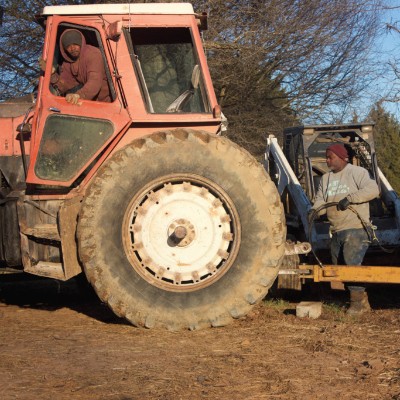


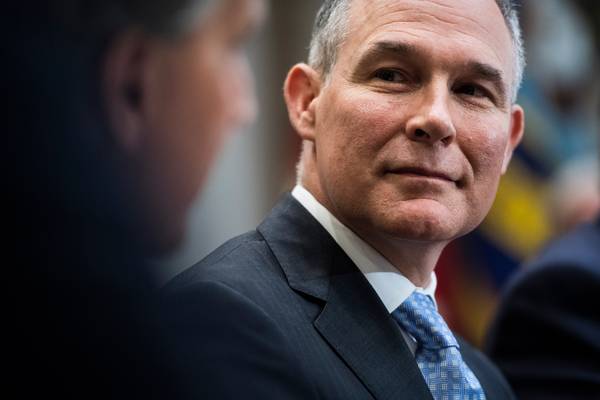
 Environmental Protection Agency Administrator Scott Pruitt intervened as the Consumer Product Safety Commission was considering mandatory emissions limits for portable generators, saying the issue was instead the EPA’s domain. (Pablo Martinez Monsivais/AP)
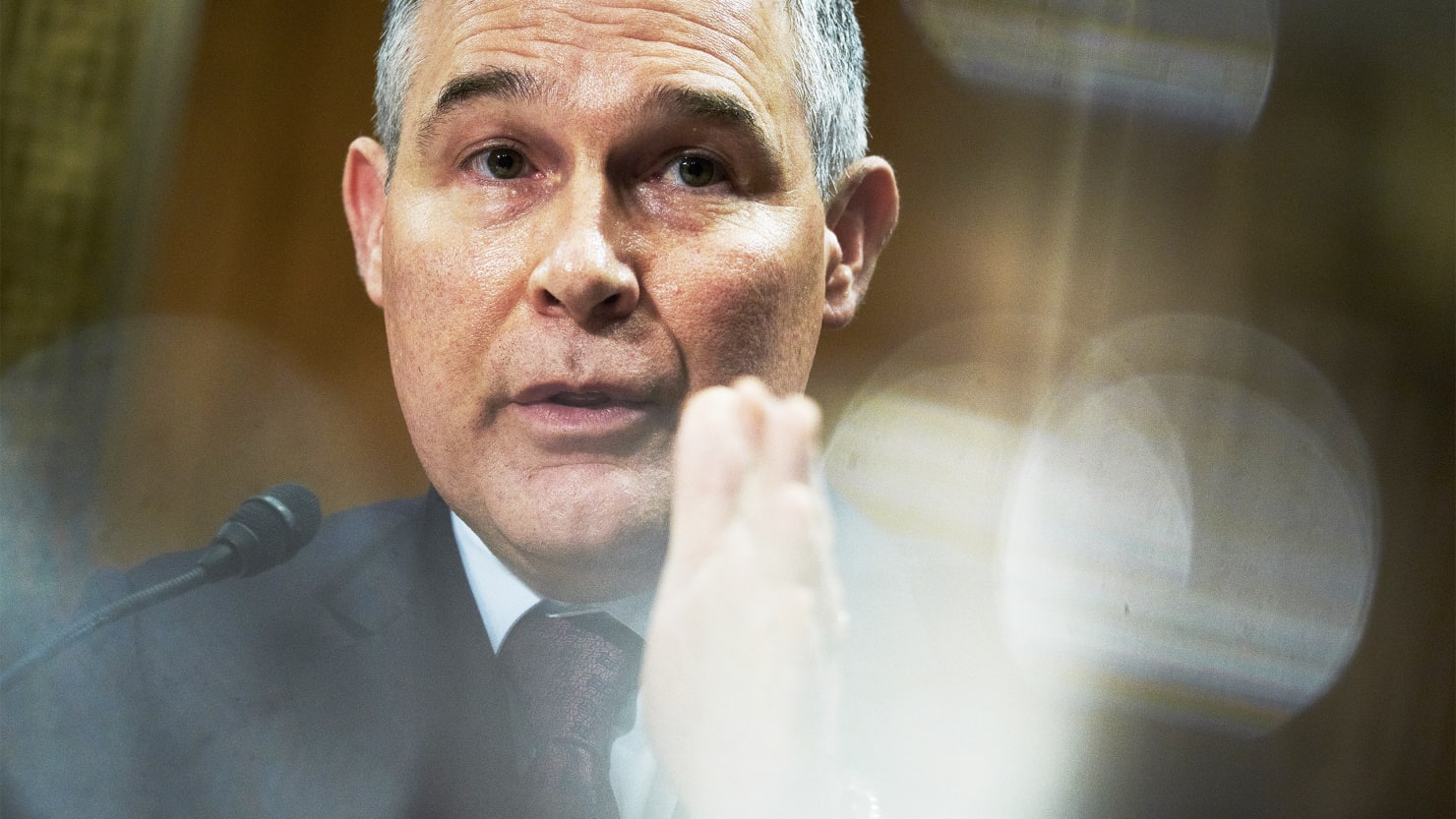 On May 18, a top aide to Environmental Protection Agency chief


 Animals, too, play an integral role. The Martens raise 70 or so heifers and dry cows for nearby dairy farmers. They feed them primarily on the cover crops, crop residue, and crop by-products—clover, barley or oat residue, and corn stalks. In exchange, the animals provide manure as a natural source for soil fertility.