FBI arrests Trump supporter who stormed Capitol while on bail on attempted murder charge
By Ryan J. Reilly – February 8, 2022
WASHINGTON — A Jan. 6 rioter who stormed the Capitol while he was out on bail on an attempted first-degree murder charge was arrested by the FBI on Tuesday, more than 10 months after he was first identified by online sleuths.
Matthew Jason Beddingfield, of North Carolina, faces felony charges of assaulting officers, impeding officers during a civil disorder and carrying a deadly or dangerous weapon on restricted Capitol grounds, as well as several misdemeanors, according to court records.
Beddingfield was first publicly identified in a HuffPost story in March after online sleuths investigating the Jan. 6 attack used facial recognition to find his mugshot and then confirmed his identification with the help of his father’s Facebook page. Beddingfield traveled to Washington on Jan. 6 with his father, a fellow Donald Trump supporter who also believed the former president’s lies about a stolen election. The two had attended a November 2020 rally in Washington in support of Trump’s efforts to overturn his election loss. Images that Beddingfield’s father posted of that rally showed his son wearing identical Nike sneakers and carrying the same pole attached to an American flag as he did on Jan. 6.
Matthew Beddingfield at the U.S. Capitol on Jan. 6, 2021.FBI
When he stormed the Capitol, Beddingfield was on bail on a first-degree attempted murder charge in connection with the December 2019 shooting of a 17-year-old in a Walmart parking lot, when Beddingfield was 19. He was initially held on $1 million bail, but he secured pretrial release when bail was lowered to $100,000. After he stormed the Capitol on Jan. 6, Beddingfield pleaded guilty to a lesser charge in connection with the shooting. He was on probation in the shooting case when he was arrested Tuesday.
Video compiled with the help of online investigators shows Beddingfield at the front of the mob outside the Capitol, jabbing at the police line with his American flag, throwing a metal object at the police and appearing to give a Nazi salute. By the time Beddingfield emerged from the Capitol, his father, Jason Beddingfield, like thousands of others, was on the restricted exterior grounds of the U.S. Capitol, but he is not facing charges as of Tuesday. The elder Beddingfield, who posted on Facebook on Jan. 6 about taking “the country back,” can be seen hopping over a fence restricting access to the Capitol grounds while carrying a pro-Trump flag.
An affidavit signed by a FBI special agent credits citizen investigators and the HuffPost story with identifying Beddingfield, and uses the nicknames he was given by online sleuths tracking his movements. “Beddingfield was associated with two hashtags: #SoggyKidInsider (possibly because he is pictured emerging from the Capitol covered in what appears to be a liquid), and #NaziGrayHat (possibly because he appeared to make a gesture that is commonly associated with the Nazis),” the statement of facts reads.
The FBI affidavit lays out more of Beddingfield’s actions inside the Capitol: He entered through the upper west terrace door, made his way through the rotunda, attacked an officer with his flag while near the Old Senate Chamber, and eventually left through the north door at the Capitol.
A probation officer with the North Carolina Department of Public Safety/Community Corrections confirmed Beddingfield’s identification, according to the affidavit. Beddingfield is due to make an appearance in federal court in the Eastern District of North Carolina.
The FBI has arrested more than 725 people in connection with the Jan. 6 attack on the Capitol. Online sleuths have successfully identified hundreds of people who stormed the Capitol, including dozens of individuals on the FBI’s Capitol Violence webpage who have not yet been arrested. The total number of people who could be arrested either for entering the Capitol on Jan. 6 or for engaging in violence outside the building tops 2,500.
Lets see how far senators can go to prevent election chaos.
Forget what Sen. Joe Manchin III (D-W.Va.) says; watch what he does. And right now, he seems fully invested in the bipartisan negotiations to reform the Electoral Count Act. This is good news for democracy.
Appearing with Sen. Lisa Murkowski (R-Alaska) on CNN’s “State of the Union” on Sunday, Manchin declared: “I think absolutely it’ll pass. Now, there will be some people saying it’s not enough. There will be some people saying it’s more than what we should do or we don’t need it.” He added that “what we’ll do is try to bring them all together and say, ‘Listen, this is what we should do because this is what caused the problem. And it’s what we can do. So let’s do that.’
”The “problem” he references was that the defeated former president and scores of Republican allies — assisted by unscrupulous lawyers such as John Eastman — believed members of Congress and the vice president had the power to interrupt the tabulation of the electoral college vote, throw out votes for the winner (Joe Biden) and toss the election back to the House, which by unit vote (one vote for each state’s delegation) would keep the losing candidate (Donald Trump) in office.
Murkowski has her eye on a broader problem that also afflicted the 2020 election. “We want to make sure that … if you’re going to be an election worker, if you’re going to be there at the polling booth, you don’t feel intimidated or threatened or harassed,” Murkowski said. “We are sitting down, I think, again, as members in good faith to ensure that election integrity across all 50 states moves forward in a positive way.” Now, that sounds promising.
The prospect of any bipartisan election reform that could circumvent efforts to subvert elections should be applauded. Nothing precludes Democrats from coming back for more comprehensive voting reform at a later time if they have the votes, but to forfeit an opportunity to prevent a repeat of the 2020 debacle in 2024 would be foolish in the extreme.
Nevertheless, let’s be clear about the “problem” in 2020. There are no less than six aspects of the attempted coup that Congress can address.
First, Congress can clarify that the vice president has no power to overturn or alter the electoral college result. Former vice president Mike Pence correctly affirmed this on Friday in a rare rebuke of his former boss. Congress should remove any doubt.
Second, Congress can raise the threshold for challenging electoral votes to a higher percentage. Perhaps a three-fifths majority (the same needed in the Senate for cloture) would be appropriate.
Third, Congress must amend the ECA to make clear that state legislatures do not have the power to send an alternative slates of electoral voters. This would essentially repudiate the radical “independent state legislature doctrine,” which postulates state legislatures can choose electors however they want, by clarifying that the language of Article II, Section 1 of the Constitution (″each State shall appoint, in such Manner as the Legislature thereof may direct, a Number of Electors …”) and the 12th Amendment do not allow the state to substitute a new method of selecting electoral votes after an election conducted by popular vote.
Specifically, ECA reform should amend the portion of the ECA that allows a state to submit an alternative slate when the state has “failed” to make a choice of president on Election Day. This can either be eliminated altogether or clarified to apply only when natural disaster has made voting impossible. (It is noteworthy that elections were conducted during every American war, including the Civil War.)
Fourth, as Murkowski notes, Congress must address the epidemic of threats, intimidation and arm-twisting of state officials in an attempt to alter the 2020 outcome (including by the losing presidential candidate). All such actions should be designated as felonies punishable by serious jail time. Moreover, election officials should be protected from criminal charges in instances in which they made a good-faith attempt to assist voters and from removal during an election count except for good cause. This should apply to all federal elections, not merely presidential contests.
Fifth, legislation can specify a speedy process for challenges to election results through the federal courts. For example, reform could specify that the D.C. Circuit would review cases (with clear and convincing evidence). This would avoid a repeat of the plethora of frivolous litigation trying to overturn election results in 2020. Losing parties should also be obligated to pay the states’ costs and legal fees.Finally, Congress can set legislative standards for paper ballots and neutral election audit procedures to stem any more phony audits engineered to undermine confidence in results.
All of these problems were apparent in the 2020 election and its aftermath. We might now have a real opportunity to correct these glaring shortcomings in a bipartisan, noncontroversial manner. Giving senators the space to negotiate the most comprehensive bill possible would be wise. If legislation addressing all or most of these issues emerges, the country should consider itself fortunate to have dodged a bullet aimed at the heart of our democracy.
Jennifer Rubin writes opinion for The Washington Post. She is the author of “Resistance: How Women Saved Democracy from Donald Trump.“
Right-wing demagogues tried to take over a small town in the Pacific Northwest. Here’s how concerned citizens stopped them.
By Sasha Abramsky – February 7, 2022– For the Feb. 22-28 issue.
Illustration by Ryan Inzana.
Dr. Allison Berry sits at a table at the Rainshadow Café in downtown Sequim (pronounced “Squim”), a 110-mile drive northwest of Seattle, describing the tsunami of hatred that has come her way during the pandemic. She’s young, smiles a lot, wears woolen sweaters and scarves, and has been the health officer for Clallam and Jefferson counties since 2018; before that, she was a doctor at a local clinic run by the Jamestown S’Klallam tribe.
To be able to sit indoors at the café, customers have to show proof of vaccination. The mandate was pushed by Berry this past September following Washington state’s reopening. A subsequent Covid surge had swamped the two local hospitals, put all elective procedures on hold, and led to a fearsome wave of intubations and deaths. Until the emergence of the vaccine-dodging Omicron variant, the mandate meant that diners in Clallam County, on the northern end of the Olympic Peninsula, could eat and drink in relative safety.
But it also meant that Berry—who had already attracted the ire of anti-shutdown advocates in the summer of 2020 when she asked the county to postpone fully reopening businesses by two weeks—became a lightning rod for anti-maskers, anti-government militias, and QAnon conspiracists. Unfortunately for her, these included Sequim’s QAnon-supporting mayor—a hairdresser and motorcycle aficionado named William Armacost—as well as a majority of the city council, three of whose six members had been appointed during Armacost’s mayorship when sitting councilors died or resigned. This past September, hundreds of demonstrators began showing up outside the county courthouse in downtown Sequim. The council stood on the sidelines, finally passing a nonbinding resolution condemning Berry’s public health mandate.
“People called for my public hanging,” Berry says quietly. This wasn’t, to say the least, what she had signed up for when she joined the department three years earlier. “It was insane.” When Berry implemented the vaccine mandate for indoor dining, right-wing websites started focusing on her and the little town of Sequim. “We started getting calls and threats from way outside the county. We became a rallying cry for anti-government forces. People were threatening to kill me on Facebook, tried to find my address to go to my house.”
Berry was receiving hundreds of threatening phone messages and e-mails every day. One text read: “Sleep with one eye open. I’m coming for you.” Much of the bile aimed at her, she recalls, was “really misogynistic. Think of your most colorful misogynistic language—that’s what came my way.” Young men in souped-up pickup trucks flying American flags would cruise her neighborhood—her address was kept private, but her enemies knew what part of the county she lived in. “My daughter couldn’t go outside, because we didn’t want people to see us,” she remembers. “I was so scared I wasn’t sleeping. I’d keep it together during the day and cry at night.” Eventually, fearing for both her safety and her mental well-being, Berry and her young daughter left the county.
Shortly afterward, though, she returned, defiant. With the additional staff she’d hired earlier that year, she continued her push for mass vaccinations and other pandemic mitigation measures. Dr. Berry’s story was one piece of a complex jigsaw puzzle. Over the past few years, partly because of the pandemic and partly because of underlying political schisms, Sequim had spiraled into crisis.
As with Port Angeles, Port Townsend, and the other picturesque, historic port cities of the northern Olympic Peninsula, Sequim has a cute old downtown and clusters of houses—surprisingly affordable despite the recent appreciation in real estate values—built on the windswept, rainy hills surrounding the center of the city. Its main thoroughfare, Washington Street, is lined with restaurants, high-end cafés, art galleries, and shops. It’s the sort of place where retirees and tourists alike come to find a refuge from high-stress urban living.
CURRENT ISSUE
Sequim seems an unlikely setting for a last stand against a local wannabe strongman. Yet, in fact, it’s bitterly divided politically, as is the rest of the county. The political headline for the region in the aftermath of the last presidential election is that Clallam County holds the distinction of being the longest-running presidential bellwether county in the United States.
Going into the 2020 election, there were 19 counties in the nation that had voted for the winner of every presidential election since 1980, when Ronald Reagan was first elected. Eighteen of those counties, all rural, lost their bellwether status in 2020 by going for Trump. Clallam County became the sole holdout by narrowly supporting Biden. That the mostly rural county would trend blue in 2020 seemed as improbable as the existence of Sasquatch, the legendary creature that lurks in the shadows of the dense rain forests of the peninsula but is somehow never clearly captured in photographs.
The results of the 2020 election hid a profound ideological and cultural divide in the remote, watery region that abuts the 96-mile-long windswept Strait of Juan de Fuca, which divides the US from Canada. In rural areas, signs were hung among the trees with wording like “Trump won the election. Wake up, sheeple.” Pickup trucks could be seen with flags urging fealty to the “Trump Revenge Tour 2024.” What was happening in America as a whole, as the country fissured under, and after, Trump’s presidency, was happening in microcosm in Clallam County.
William Armacost was first appointed to the city council in 2018, was elected unopposed to a four-year term in November 2019, and was finally appointed mayor by his colleagues in January 2020. After he became mayor, he was caught on camera pushing a shopping cart at a Costco wearing a T-shirt emblazoned with a Stars and Stripes–painted skull and the words “THIS IS THE USA. We Eat Meat. We Drink Beer. We Own Guns. We Speak English. We Love Freedom. If you do not like that GET THE FUCK OUT.”
Armacost ignored multiple requests to be interviewed for this article. When I caught up with him at his hair salon, Changes, late one afternoon in mid-December, he flatly stated that he had no time and wouldn’t agree to an interview either then or at any other time. All of his allies on the city council and in local conservative organizations either ignored my interview requests or, when reached by phone, declined to comment. All told, upwards of a dozen conservative activists, political figures, and lawyers in Sequim and the surrounding area ignored repeated attempts to get them to tell their side of this story.
In the wake of the Black Lives Matter protests, Armacost turned up at official city functions wearing a pin on his lapel featuring the Marvel Comics character the Punisher, a coded shout-out to vigilantism that he claimed simply demonstrated his support for law enforcement. As the pandemic raged, he logged on to Zoom council meetings while sitting under a large cross at his home—inserting religious iconography into what should have been a secular setting. He ended one meeting with the cryptic rhyme “Jesus is the reason for the season.” According to Marsha McGuire, a former Library of Congress researcher now living in Sequim, Armacost reposted and retweeted messages in which hostility to George Soros morphed into anti-Semitic rants. When motorcyclists gathered by the hundreds of thousands in Sturgis, S.D., in the summer of 2020, Armacost made the pilgrimage and refused to self-isolate afterward despite the fact that the event was the source of major Covid outbreaks around the country. When public health officials urged caution in the face of the Delta variant, he appeared at an October 2021 “Coffee with the Mayor” Zoom meeting and stated his opposition to more mandates, claiming to have access to better medical advice than did the county public health officer. At his hair salon, located in a semi-residential area just off Washington Street, a neon-pink sign on the door advertised “sexy” haircuts. Inside, the mayor, whom I saw working without a mask, attended to his equally unmasked clients.
During street protests, the mayor’s supporters weren’t averse to getting into physical tussles with opponents, those opponents allege. His ally on the city council, the aptly named Mike Pence, was caught on a hot mic at the end of an April 2021 Zoom council meeting having a discussion with his wife, in which she referred to a female opponent, the outspoken 72-year old progressive organizer Karen Hogan, as a “cunt.”
But perhaps Armacost’s most egregious act was orchestrating the forced resignation of the popular—and extremely competent—city manager, Charlie Bush, after Bush criticized him for urging the listeners of a local radio show in August 2020 to check out the QAnon conspiracy theory.
What ostensibly sealed Bush’s fate was that he had followed city rules on zoning and permitting, and as a result hadn’t nixed the Jamestown S’Klallam tribe’s efforts to build a medication-assisted treatment center for opioid addicts—an important intervention in a county that posted some of the highest addiction and overdose rates in the state. Opponents, marshaled by a nurse named Jodie Wilke—who lived not in Sequim but in a nearby town—into a group named Save Our Sequim, or SOS, argued that the treatment center was part of a conspiracy by Seattle and other big cities to dump their homeless and addicted populations into small communities like Sequim. Backed by the mayor and several other councilors, they descended on council meetings to air their views. (Wilke ignored multiple interview requests for this article.)
On SOS’s Facebook page, opposition to the tribe’s plans frequently degenerated into barrages of racial slurs. Vicki Lowe, the executive director of the American Indian Health Commission for Washington State and a recently elected Sequim city councilor, who traces her lineage to tribal ancestors as well as to pioneer stock, recalls hearing phrases such as “Indian idiots” and “playing cowboys and Indians.” She once called out SOS at a council meeting by holding up a series of cardboard signs displaying racist phrases uttered by the group—discarding them one by one à la Bob Dylan in the music video for “Subterranean Homesick Blues.”
Community care: Dr. Allison Berry, the public health officer for Clallam and Jefferson counties in Washington state. (Peninsula Daily News)
For two years, Armacost ran Sequim like his personal fiefdom, at one time subjecting people who called his city council phone line to a recorded message advertising herbal remedies (“in a capsule or gummy form”) that he was selling on the side. Armacost’s power was magnified by the Independent Advisory Association, a local group run by two longtime conservative operatives, Donnie Hall and Jim McIntire, with a Roger Stone–style take-no-prisoners approach. The IAA claimed to be nonpartisan, but locals recall that it would turn local political events into spectacles by red-baiting opponents and accusing critics of being outside agitators. When city council seats opened up, as they did three times in the early days of the Armacost mayorship, the IAA reportedly groomed potential appointees to be selected by the mayor and his colleagues. As the pandemic intensified, it tapped into public anger over lockdowns in order to Trumpify government offices along the peninsula.
When I visited Sequim, both members of the IAA team either declined to be interviewed or ignored my attempts to contact them. But I know that they received my messages: Shortly after I reached out to them, they or their allies doxxed me, posting my e-mail address, phone number, and photograph on Facebook, noting when I was in town, and urging their supporters to call and tell me exactly what they thought of me and The Nation.
After I e-mailed Hall for comment, he sent a long message explaining why he would not agree to be interviewed. He argued that the IAA was just “two guys and a website” and that the organization only wanted to promote independent, nonpartisan candidates for office. I suggested in response that there was a power struggle taking place on the peninsula, of which the IAA was a part. “I can’t stop laughing,” Hall wrote back. “Your premises are so out of alignment with reality.”
Yet a power struggle there most assuredly was. Armacost’s ascent to the mayorship was a red flag. All around Sequim, residents—whether they had previously been apolitical or had long been involved in political organizations and protests—reacted in horror to his bullying persona and far-right antics. “It was so raucous, and some of the statements were so ugly,” says Lisa Dekker, a member of the local chapter of Indivisible. “It shocked the progressive community. ”
In the spring of 2021, several concerned residents formed the Sequim Good Governance League (SGGL) with the initial goal of defending City Manager Charlie Bush from Armacost’s plan to force his retirement. Once that ship had sailed, they expanded their focus to fielding qualified candidates and exorcising the QAnon demons from their midst.
“All these conservative people snuck onto the city council when nobody opposed them,” says Ron Richards, a rugged 77-year-old onetime Clallam County commissioner who lives in a ranch house at the base of the Olympic Mountains and regularly hikes miles up into the snows for exercise. “And then they appointed their friends to government. It resulted in the most right-wing people you could imagine running the city of Sequim.” Horrified, Richards got involved in the SGGL.
“It became apparent we had a city council that needed to be replaced,” says Dale Jarvis, a retiree from the Seattle area who relocated to Clallam County three years ago. “We needed to get them out. We started organizing.”
Stars, stripes, and skulls: Then–Sequim Mayor William Armacost shopping at Costco, in a picture taken by a local resident. (Keith Thorpe / Olympic Peninsula News Group)
Clallam County’s fissures were a long time in the making. The region contains some of the most beautiful, dramatic landscapes in the United States. Its mountains—inhabited by bears and cougars—and coastline draw retirees from around the country, as well as a constant stream of day tourists and backcountry hikers looking to explore Olympic National Park. At the same time, it is home to many impoverished families, blue-collar residents who used to work in the Northwest’s thriving timber industry until a combination of overharvesting and stricter environmental protections drove the industry into the ground in the 1990s.
The county’s small cities all have charming old downtowns that draw in tourists from around the country and the world. New arrivals look to set down roots in a place where, behind the cold, misty veneer, there is natural beauty in abundance. There are many huge ranch-style houses, their picture windows offering spectacular views of the Olympic Mountains, snow-covered for half the year. It’s no wonder so many retirees—many bringing with them liberal political priorities from states like California—have moved into the region over the past decade.
But in recent years, Clallam County has gained a reputation for having some of the highest rates of opioid use and overdoses in the state. In 2019, The Washington Post reported that between 2006 and 2012, Clallam County residents popped 37,838,060 pain pills, which averages out to a staggering 76.6 pills per person per year. Between 2012 and 2016, the yearly opioid overdose rate in the county was 16.5 per 100,000 residents.
These catastrophic numbers led the Jamestown S’Klallam tribe to propose building its drug treatment clinic, which was modeled on a similar clinic opened up by a nearby tribe, the Swinomish, in 2017. “It was very successful,” Vicki Lowe says of the Swinomish clinic. “So, of course, Jamestown was like, ‘We want to do that too.’” In 2019 and 2020, the tribe went through all of the correct permitting processes and ended up getting approval for the project from the city manager.
But this triggered the Save Our Sequim–orchestrated backlash led by Wilke, as well as a slew of racist tirades against the tribe at council meetings and protests. “They posted things on Facebook every hour, trying to keep the anger up,” Lowe recalls. “It was very impressive. People who didn’t like that, who wanted to see the facility, we had to figure out how to organize.
”In 2020, Clallam County went for Biden by just over three percentage points. Yet that didn’t put the brakes on the slide into political chaos that had begun after Armacost’s election and the chance series of events that, over the course of a few months, had led to several ultraconservatives being appointed to the city council—and then forming, with Armacost, a 4-2 voting bloc. In early 2021, even as Biden was beginning his presidency, the little city of Sequim—despite nearly 60 percent of its voters having supported Biden—slid toward far-right governance.
Had it happened elsewhere on the peninsula, the capture of a city government by the far right might not have been so surprising. After all, Clallam County counts among its three cities the ultraconservative community of Forks—where a mixed-race family on a camping trip was accused of being antifa at the height of the Black Lives Matter protests in June 2020 and was trapped for several hours until high school students cut the trees being used to pen them in at their campsite. Residents had been on high alert for the previous several days after BLM demonstrations spread across the country. That same day in the more liberal Sequim, a city of only 8,000, a BLM protest drew hundreds of people. The protesters were met by camo-wearing, gun-toting militias egged on by Seth Larson, a local gun store owner who used Facebook and other social media to spread disinformation about BLM and to sow fears of an antifa-sympathizing mob of looters descending on the peninsula, moving from Sequim on to Forks.
But Sequim had, in recent elections, looked more like the progressive hub of Port Angeles—a fishing and logging town, population 20,000, from which ferries depart daily, their foghorns blaring as they set off to Victoria, British Columbia—than like conservative Forks.
That wasn’t enough, however, to buy immunity from the corrosive politics roiling the country. Both Sequim and Port Angeles experienced political upheavals in the Trump era. And in 2021, even the usually reliably true-blue Port Angeles found itself caught up in many of the same battles around public health and the future of the local economy that were reshaping politics in neighboring Sequim. City Councilor Lindsey Schromen-Warwin, an Oberlin- and Gonzaga-educated attorney and an avid hiker and wilderness camper, had been elected during a local progressive wave in 2017 but found himself in a tough brawl for reelection against an IAA-backed candidate. Schromen-Warwin squeaked to victory with a tiny margin. “In 2017,” he says, “I’d gotten the most votes of any city council member since 2005. In this last race, I won by 104 votes—which is way too close for comfort when your opponent is the person with a bullhorn trying to shut down the county health commissioner’s forum.”
Jefferson County, Clallam’s next-door neighbor, has historically been solidly blue. The brick warehouses and canneries that once lined the waterfront of its one sizable city, the Victorian-era Port Townsend, have recently been converted into bookstores, art galleries, and restaurants, and the city has long been a bohemian refuge for artists escaping the crowds and prices of big West Coast cities like Seattle and San Francisco. But Clallam County’s progressives had not solidified their position in the way their Jefferson counterparts had. The QAnon movement had made inroads into Clallam County during the Trump years, and, despite showing up for national elections, local Democrats were slow off the mark when it came to local politics. They didn’t field comprehensive slates of candidates for city council and other regional offices, apparently not realizing until late in the day just how much of an electoral threat the extremists had become.
“It does have a national ramification,” says Bruce Cowan, a retired elementary school teacher. Cowan lives in Port Townsend and has followed local politics in both Jefferson and Clallam counties since he moved there in 1977; in his retirement, he does volunteer consulting for progressive political campaigns. “Folks who don’t believe in government—populists, people who don’t have faith in the institutions of governance—shouldn’t be in charge of the government. One of the things that happened in Sequim is that people were not engaged enough to see how important it was to find candidates for city council. Now they understand the importance.”
Faced with the very real prospect of QAnoners consolidating power over all tiers of city and county government, the SGGL got busy. Progressive candidates were recruited to run for office; moderate conservatives, such as City Councilor Brandon Janisse, were wooed as voices to counter the IAA; dozens of volunteers were trained to do the on-the-ground grunt work that can make the difference between a painful election loss and a head-turning win.
Showing up: Sequim residents at a Black Lives Matter protest on Sequim Avenue and Washington Street. (Michael Dashiell / Sequim Gazette)
For concerned locals like Lowell Rathbun, an engineer by training, it had become increasingly difficult to sit on the fence in 2020 and 2021. With city councilors waging war on the county’s public health department and targeted protests occurring against individuals in that department, this was, they felt, a fight about civic decency.
This past May, Rathbun filed to run for the city council. Then, throughout the summer and fall, with backing from the SGGL and its growing cadre of canvassers, postcard writers, and other volunteers, he got to work. “We organized. I broke the town down into 54 neighborhoods, and we worked every one of those neighborhoods,” Rathbun recalls over a beer and mozzarella sticks at the local Applebee’s.
Volunteers would get up in the middle of the night to send out e-mail blasts. They’d drive around town putting up scores of signs for SGGL candidates. Above all, they’d talk with people. For months on end, door-knocking was the chief tool that the organization—known to its founders as “the little engine that could”— relied on.
On the night of the election, it became clear that the organizing had paid off. In one race after another—for city council, for the local school board, for hospital commissioners—SGGL candidates swept aside their IAA-backed opponents.
“When it turned out to be two-to-one,” Rathbun remembers, his reaction was visceral: “Holy crap! We kicked butt.”
SOS, the IAA, Armacost, and the other conservatives had, for two years, told everyone who would listen that they represented the silent majority of the county, that their brand of divide-and-conquer politics was the only brand worth selling. But, says McGuire, the former Library of Congress researcher, “At the election we proved it: They are not the majority. ”
When the votes were counted, they showed that the SGGL-backed candidates had ridden a wave of genuine popular fury against the faux populists aligned with Armacost. In Sequim, the five SGGL candidates for city council—Rathbun, Janisse, Vicki Lowe, Kathy Downer, and Rachel Anderson—all got between 65 and 70 percent of the vote. Both hospital commissioners’ positions in the county went to SGGL candidates, as did the fire commission and school district posts up for election last year.
It wasn’t so much that a given ideology triumphed—Iraq War veteran and county jail control-room technician Brandon Janisse’s conservative leanings are, for example, a far cry from the liberal politics of the tattooed, partly head-shaved Rachel Anderson or the longtime tribal health administrator Vicki Lowe—as it was that people’s better angels burst to the surface. The electorate in Sequim finally put the kibosh on Armacost and the Trumpian, QAnonist threat to civic well-being that he and his colleagues embodied.
“Four of the SGGL candidates are left-leaning. I’m right-leaning,” Janisse says. “But they endorsed me because of how I think government should be run at the local level. We’re worried about ‘Are the roads paved? Are the alleys good? Do you have sidewalks? Are the sewers not spraying leaks everywhere?’
”For Dr. Berry, as the tide turned against the vocal right-wingers who had held Sequim hostage through 2020 and 2021, her correspondence from residents shifted from a daily barrage of threats to something rather different. At some point last fall, a contingent of elderly people began writing letters to her and her public health colleagues expressing how much they appreciated the public health staff. Anonymous residents would swing by the office and leave bouquets of flowers. “A good thing happened: There was a counter-response in the community,” Berry recalls with a smile. “It was incredibly heartening.
”On January 11, Armacost was voted out of the mayorship by his fellow city councilors, the majority of whom had been endorsed by the SGGL in the recent elections. The only councilor to vote in favor of Armacost remaining as mayor was Armacost himself. The ousted mayor, his firebrand politics having been firmly rejected by the electorate, was replaced by Tom Ferrell, a somewhat conservative but non-QAnon-supporting longtime member of the council, who had been nominated by both Downer and Rathbun. Janisse was elected as his deputy.
For the SGGL-backed candidates now in the majority, it represents a new beginning, a chance to restore competent, get-things-done local government. “We have issues here,” says Lowe. “Housing issues. We have to work on bringing our community back together.” For Downer, a nurse who served as a city councilor in the little town of Marietta, Ohio, before retiring and moving to Sequim to be near her children, her role in city governance in her new home means that she, too, can focus on affordable housing. “When you can’t find housing for your nurses, policemen, firemen, and teachers—that’s a horrific situation,” she says. Rathbun, who was widowed suddenly during the campaign and has since thrown his heart and soul into his political work, wants to focus on housing as well. But after being the target of death threats, he is at least as desperate to restore faith in the basic workings of the democratic system and to find a way to dial down the fear and invective that saturates the social-media-dominated political discourse. “I would like to see a healing in this town. We can’t have red and blue Sequim. We have to have Sequim Sequim—and somehow start talking to each other about what we have in common.” Janisse, with his blue-collar roots, wants to focus on affordable housing and on changing zoning regulations to encourage the building of more high-density, multifamily units. And 31-year-old Rachel Anderson, a Head Start volunteer who was appointed to the council in early 2021 (Armacost was apparently unaware of her liberal political leanings), wants to focus more on children’s issues, as well as on affordable housing and local health safety measures.
“I think we’ll be more productive and actually make decisions that mean something,” Anderson says of the SGGL’s victory, “instead of saying, ‘We don’t like this.’
“I feel like there’s a lot more middle ground,” she continued. “I can only hope that, with a change in local leadership, there’s a change in the local political climate. I’ve worked with kids a lot, and a lot of the time during council meetings, it felt like children throwing a tantrum. Now, with the change in leadership, it feels like I’m having an adult conversation.”
Sasha Abramsky, who writes regularly for The Nation, is the author of several books, including InsideObama’s Brain, The American Way of Poverty, The House of 20,000 Books, Jumping at Shadows, and, most recently, Little Wonder: The Fabulous Story of Lottie Dod, the World’s First Female Sports Superstar. Subscribe to The Abramsky Report, a weekly, subscription-based political column, here.
White-tailed deer could become a reservoir for the virus, putting people and animals at risk, health experts say.
By Emily Anthes and Sabrina Imbler – February 7, 2022
Suresh Kuchipudi, a veterinary microbiologist at Penn State University in State College, Pa., with Cashew, a young white-tailed deer in the university’s deer research center.Credit…Hannah Yoon for The New York Times
In late 2020, the coronavirus silently stalked Iowa’s white-tailed deer. The virus infected large bucks and leggy yearlings. It infiltrated a game preserve in the southeastern corner of the state and popped up in free-ranging deer from Sioux City to Dubuque.
When scientists sifted through bits of frozen lymph node tissue — harvested from unlucky deer killed by hunters or cars — they found that more than 60 percent of the deer sampled in December 2020 were infected.
“It was stunning,” said Vivek Kapur, a microbiologist and infectious disease expert at Penn State, who led the research.
Dr. Kapur and his colleagues have now analyzed samples from more than 4,000 dead Iowa deer, diligently marking the location of each infected animal on a map of the state. “It’s completely mad,” he said. “It looks like it’s everywhere.”
From the start of the pandemic, experts were aware that a virus that emerged from animals, as scientists believe SARS-CoV-2 did, could theoretically spread back to animals. Mink have garnered much attention after the virus spread through mink farms in Europe and North America, leading to massive culls of the animals. But white-tailed deer, which may wander into urban and rural backyards, are also easily infected.
Infections in free-ranging deer, which display few signs of illness, are tricky to detect and difficult to contain. Deer also live alongside us in dizzying numbers; about 30 million white-tailed deer roam the continental United States.
Vivek Kapur, a microbiologist at Penn State University. “It’s completely mad,” he said. “It looks like it’s everywhere.”Credit…Hannah Yoon for The New York Times
If white-tailed deer become a reservoir for the virus, the pathogen could mutate and spread to other animals or back to us. Adaptation in animals is one route by which new variants are likely to emerge.
“This is a top concern right now for the United States,” said Dr. Casey Barton Behravesh, who directs the One Health Office — which focuses on connections between human, animal and environmental health — at the Centers for Disease Control and Prevention.
“If deer were to become established as a North American wildlife reservoir, and we do think they’re at risk of that, there are real concerns for the health of other wildlife species, livestock, pets and even people,” she added.
The virus is likely to continue circulating in deer, many experts predicted. But crucial questions remain unanswered: How are deer catching the virus? How might the pathogen mutate inside its cervid hosts? And could the animals pass it back to us?
White-tailed deer are a “black box” for the virus, said Stephanie Seifert, an expert on zoonotic diseases at Washington State University: “We know that the virus has been introduced multiple times, we know that there’s onward transmission. But we don’t know how the virus is adapting or how it will continue to adapt.”
Cervid surge
A researcher trying to swab a white-tailed deer at a wildlife center at Texas A&M University in College Station.Credit…Sergio Flores for The New York Times
The coronavirus enters human cells by attaching to what are known as ACE2 receptors. Many mammals have similar versions of these receptors, making them susceptible to infection.
Early in the pandemic, scientists analyzed the genetic sequences for ACE2 receptors in hundreds of species to predict which animals might be at risk. Deer ranked high on the list, and laboratory experiments later confirmed that the animals could become infected with the virus as well as transmit it to other deer.
The U.S. Department of Agriculture’s Animal and Plant Health Inspection Service began looking for coronavirus antibodies in blood samples from deer in Illinois, Michigan, New York and Pennsylvania. In July, the agency reported that 40 percent of the animals in those areas had antibodies, suggesting that they had already been infected by the virus.
Some months later, Dr. Kapur’s team, which partnered with the Iowa Department of Natural Resources, reported that active coronavirus infections were common in Iowa deer, and another group announced that more than one-third of the deer they had swabbed in northeastern Ohio were infected. Genomic analysis suggested that in both Iowa and Ohio, humans had passed the virus to deer multiple times and then the deer readily passed it to one another.
“The early detections in companion animals, in mink farms, in zoological collections — those were all different because those were confined populations,” said Dr. Andrew Bowman, a veterinary epidemiologist at Ohio State University, who led the Ohio research. “We didn’t really have a natural setting where the virus could run free.”
Whether the virus makes deer sick remains unknown. There is no evidence that infected deer become seriously ill, but humans might not notice if a wild animal was feeling slightly under the weather.
And these early studies — which have largely relied on pre-existing disease surveillance or population control projects in deer — provided only a snapshot of what could be a sprawling problem. “I wouldn’t be surprised if more sampling uncovers the fact that these are not necessarily sporadic events,” said Dr. Samira Mubareka, a virologist at Sunnybrook Research Institute and the University of Toronto.
In Canada, reports of infected deer are beginning to trickle in from Ontario, Quebec and Saskatchewan. When Dr. Mubareka’s team sequenced virus recovered from Canadian deer, the researchers found it closely matched sequences in Vermont. “Deer don’t respect borders,” said Arinjay Banerjee, a virologist at the University of Saskatchewan.
Samples taken from deer that tested negative in Dr. Kapur’s lab at Penn State UniversityCredit…Hannah Yoon for The New York Times
‘No masking, no social distancing’
How humans are transmitting the virus to deer remains an open question. “It’s definitely a mystery to me how they’re getting it,” said Dr. Angela Bosco-Lauth, a zoonotic disease expert at Colorado State University.
There are many theories, none entirely satisfying. An infectious hunter might encounter a deer, Dr. Mubareka noted, but “if they’re good at hunting,” she added, “it’s a terminal event for the deer.”
If an infected hiker “sneezes and the wind is blowing in the right direction, it could cause an unlucky event,” said Dr. Tony Goldberg, a veterinary epidemiologist at the University of Wisconsin-Madison. Or if people feed deer from their porch, they could be sharing more than just food.
And white-tailed deer are expert leapers, reaching heights of eight feet. “If you want to fence deer out of a place, you have to be trying very hard,” said Scott Creel, an ecologist at Montana State University. Deer would have no trouble jumping into alfalfa fields to graze alongside cattle, perhaps inviting a close encounter with a farmer, Dr. Creel said.
Transmission could also happen indirectly, through wastewater or discarded food or other human-generated trash. “Deer, like most other animals, will sniff before they eat,” Dr. Kapur said. And deer release their feces as they feed, creating conditions where other deer might forage in areas contaminated with waste, or snuffle around waste that has feed mixed in, experts say.
But it’s not clear how long the virus would remain viable in a polluted water source or on the surface of a half-eaten apple, or whether enough of it would be present to pose a transmission risk.
An intermediate host, such as an itinerant cat, might ferry the virus from humans to deer. Farmed deer, which have frequent contact with humans, might also pass the virus to their wild counterparts through an escapee or their feces, Dr. Seifert said. (More than 94 percent of the deer in one captive site in Texas carried antibodies for the virus, researchers found — more than double the rate found in free-ranging deer in the state.)
Dr. Sarah Hamer, a veterinary microbiologist at Texas A&M University, who is interested in contact tracing of deer to understand how their social interactions influence viral transmission.Credit…Sergio Flores for The New York Times
It may not require many spillovers for the virus to take off in a herd. Infected deer, which shed virus in nasal secretions and feces and have an infectious period of five to six days, can readily spread the virus to others, said Dr. Diego Diel, a virologist at Cornell University.
Wild deer are social — traveling in herds, frequently nuzzling noses and engaging in polygamy — and swap saliva through shared salt licks.
And unlike humans, deer have no tools for flattening the curve. “They don’t have rapid antigen tests,” Dr. Banerjee said.
Dr. Kapur added, “No masking, no social distancing.”
Dr. Sarah Hamer, a veterinary epidemiologist at Texas A&M University, is seeking funding to start contact tracing of deer to understand how their social interactions influence viral transmission. She hopes to use proximity loggers to record the time and duration of the animals’ interactions with one another. “What deer are hanging out with what deer?” Dr. Hamer said. “Are there deer superspreaders?”
Research is still in early stages, but understanding how the virus is spreading is essential both for slowing transmission in deer and for protecting other vulnerable wildlife. Deer may graze alongside other cervids, such as boreal woodland caribou, which are endangered in Canada and are a traditional food source of First Nations peoples.
And if humans are contaminating the wilderness with the virus, it could threaten other, highly endangered species, such as the black-footed ferret, which experts fear may be vulnerable to the virus. “If it’s in the environment, and we don’t know exactly how it’s in the environment or how it’s spreading, all of a sudden we have these endangered animals that are at even higher risk,” said Kaitlin Sawatzki, a virologist at Tufts University.
Knowing how we are giving the virus to deer is also crucial for assessing the risk that they may pass it back to us. “The metaphorical window is open, and we don’t know where,” Dr. Bowman said.
Dr. Hamer took a sample from a house cat to see if it had the coronavirus after its family had been infected. Cats could be an intermediate host between humans and deer.Credit…Sergio Flores for The New York Times
Herd immunity
The virus is clearly spreading in deer. But what happens next, and how worried should we be?
Many experts said they expected the virus to become established in deer and circulate indefinitely. “If it’s not already established, it’s heading in that direction,” Dr. Mubareka said.
Still, scientists said they needed longer-term data to be sure, and the outcome was not a given. Currently, people appear to be reintroducing the virus to deer frequently; but if human case rates fell substantially, and people stopped spreading the virus, it could disappear from deer populations.
Moreover, deer do develop antibodies to the virus; if the antibodies are strong enough and enough deer develop them, literal herd immunity could squelch the spread. But scientists know very little about deer immunity. “Does exposure to one variant protect the deer population from subsequent variants?” Dr. Banerjee asked.
If the virus does establish itself in deer, it is likely to evolve in ways that help it thrive in its new hosts.
A deer-optimized version of the virus would not necessarily be more dangerous for people; the virus might adapt in ways that make humans less hospitable hosts. “If this became ‘Deervid,’ then that would be great,” Dr. Goldberg said. (“Hopefully it would stay benign in deer,” he added.)
But the virus could retain its ability to easily infect humans while picking up more worrisome mutations, including ones that might allow it to evade our existing immune defenses.
“Even if you got the human population immune and fully vaccinated, if there’s still a reservoir persisting in the animals, then that can allow the virus to continue to evolve,” said Linda Saif, a virologist and immunologist at Ohio State University.
There is not yet any evidence that deer are infecting people, and for the foreseeable future, experts agreed, humans are far more likely to catch the virus from one another than from anything with hooves.
“Even if deer were infecting people, it’s largely inconsequential in the grand scheme, because millions of people are getting infected from human-to-human transmission,” said Dr. Scott Weese, an infectious diseases veterinarian at the University of Guelph in Ontario. “But it becomes more of a risk as we start to control it.”
Hunters, who handle deer carcasses extensively, could be at higher risk for contracting the virus from deer, scientists said. (There is no evidence that people can be infected by eating deer meat cooked to an internal temperature of 165 degrees Fahrenheit.) People who hand-feed their local deer — a practice experts warn against — could also be at risk.
An abundance of ungulates
Dr. Hamer at the deer pen at Texas A&M. Scientists worry that the virus could incubate in deer and morph into a variant capable of spilling back into humans or infect other animals. Credit…Sergio Flores for The New York Times
Other animals, too, may be at risk from infection from deer. Predators such as mountain lions which kill deer by biting into their trachea or over their nose and mouth, could be infected while feasting.
Scientists were relieved when early research suggested that cattle and pigs were minimally susceptible to the virus. But inside the bodies of white-tailed deer, the virus could morph into a pathogen capable of infecting such livestock.
“That could be a big problem for food production stability,” Dr. Seifert said.
Health officials must stay vigilant, experts said.
The U.S.D.A. is now working with state agencies to collect blood samples and nasal swabs from dead deer in more than two dozen states. The work should help experts estimate how many deer have already been infected and whether certain characteristics, from age to habitat type, put some deer at elevated risk.
“As we learn more, we will continue to refine and target our surveillance,” said Dr. Tracey Dutcher, the science and biodefense coordinator for the Animal and Plant Health Inspection Service at the U.S.D.A.
Long-term genomic surveillance is also needed, experts said. “If we start to see some really divergent viral variants popping up in deer in certain places, that would be a red flag,” Dr. Goldberg said.
Depending on what scientists learn in the near future, officials could consider a variety of potential mitigation measures, including vaccinating captive deer, thinning infected herds or cleaning up whatever environmental viral contamination is giving the deer the virus in the first place.
“I think we’ve got to get our hands around the situation before we really make plans on where to go,” Dr. Bowman said.
For now, scientists also advise keeping a close eye on other wildlife. If the virus is so prevalent in deer, which are relatively easy to sample, it could be silently spreading in other species, too.
After all, the only reason scientists found the virus in deer is because they thought to look. “We hadn’t realized it was spread in deer at all,” Dr. Kapur said. “We had no clue.”
Emily Anthes is a reporter for The New York Times, where she focuses on science and health and covers topics like the coronavirus pandemic, vaccinations, virus testing and Covid in children.
The Coronavirus Pandemic: Key Things to Know
The state of the virus in the U.S. The coronavirus has now claimed more than 900,000 lives across the country, and the Covid death rates remain alarmingly high. The number of new infections, however, has fallen by more than half since mid-January, and hospitalizations are also declining.
RNC Chairwoman Ronna McDaniel says January 6 committee is a ‘Democrat-led persecution of ordinary citizens who engaged in legitimate political discourse’
Bryan Metzger – February 4, 2022
RNC Chairwoman Ronna McDaniel at Republican National Convention on August 24, 2020 in Washington, DC.Jabin Botsford/The Washington Post via Getty Images
The Republican National Committee is set to censure Reps. Cheney and Kinzinger on Friday.
RNC Chairwoman Ronna McDaniel co-authored the censure resolution, which targets the January 6 committee.
She also called the committee a “persecution of ordinary citizens who engaged in legitimate political discourse.”
Republican National Committee Chairwoman Ronna McDaniel said the select committee investigating the January 6 attack on the US Capitol is a “Democrat-led persecution of ordinary citizens who engaged in legitimate political discourse.”
McDaniel made the remarks about the committee in a joint interview with The Washington Post alongside David Bossie, a fellow RNC official and former Trump campaign aide, with whom she co-authored a resolution to censure Republican Reps. Liz Cheney of Wyoming and Adam Kinzinger of Illinois over their participation in the congressional committee.
“We’ve had two members engage in a Democrat-led persecution of ordinary citizens who engaged in legitimate political discourse. This has gone beyond their original intent. They are not sticking up for hard-working Republicans,” McDaniel said.
Her comments mirrored language in the censure resolution itself, which accuses Kinzinger and Cheney of “sabotage” and says the duo are “utilizing their past professed political affiliation to mask Democrat abuse of prosecutorial power for partisan purposes.”
That measure, which says the RNC will “cease any and all support” for the two Republicans, easily passed the party’s resolutions committee on Thursday, and is expected to be approved on Friday at the RNC meeting in Salt Lake City.
“This isn’t a top-down situation. The members have shown tremendous support for this,” McDaniel told the Post. She also said it was the first time she was aware of the party censuring a member of Congress.
Given the violent nature of the January 6 attack on the Capitol — several people, including both rioters and officers, died that day and at least 768 people have been charged for their participation — it was unclear what exactly McDaniel was referring to by “legitimate political discourse,” and an RNC spokesperson did not immediately respond to Insider’s request for comment.
However, the Post reported that McDaniel took particular issue after an “elderly, recently widowed friend of hers” received a subpoena from the committee for serving as an alternate, pro-Trump elector in 2020.
‘The leaders of the Republican Party have made themselves willing hostages’
The censure resolution is the latest turn in the party’s ongoing feud with Cheney, who joined Kinzinger and 8 other House Republicans in voting to impeach former President Donald Trump last year for incitement of an insurrection.
The Post also reported that GOP officials in Wyoming struck a deal with the national party to financially support Harriet Hageman, a former RNC committeewoman who’s been endorsed by Trump, in her primary against Cheney this year.
That letter officially recognizes Hageman as the presumptive nominee Cheney’s seat, even though the primary won’t take place until August.
In response, Cheney slammed GOP leadership, writing on Twitter that they were “hostages” to Trump.
“The leaders of the Republican Party have made themselves willing hostages to a man who admits he tried to overturn a presidential election and suggests he would pardon Jan. 6 defendants, some of whom have been charged with seditious conspiracy,” she said, referring to the former president’s most recent bombshell disclosures.
Kinzinger, who unlike Cheney has opted not to run for re-election, also tweeted that he had “no regrets about my decision to uphold my oath of office and defend the Constitution.”
New Emails Suggest Supreme Court Justice Clarence Thomas Was Communicating With Ron DeSantis — For Some Strange Reason
William Vaillancourt – February 4, 2022
Justice Thomas Attends Forum On His 30 Year Supreme Court Legacy – Credit: Drew Angerer/Getty Images
Emails obtained by government watchdog group American Oversight suggest that Supreme Court Justice Clarence Thomas has been in regular contact with Florida Gov. Ron DeSantis.
The June 2021 emails, reported byPolitico on Friday, were sent by conservative activist Ginni Thomas to someone in the DeSantis administration requesting that the governor join a meeting organized in part by Judicial Watch, a right-wing group that frequently sues public officials.
Thomas, the wife of Clarence Thomas, writes that the governor should be familiar with her because, in addition to seeing him at a state dinner at the White House and having interviewed him for the Daily Caller, her “husband has been in contact with him too on various things of late.”
Ginni Thomas has long been intimately involved with several conservative groups that make no secret about where they stand on Supreme Court decisions. The New Republicnoted recently, for example, that in 2000, Thomas, then a staffer at the conservative Heritage Foundation, screened resumes for Bush administration employees while the court had yet to rule on the legality of the Florida recount. (In a 5-4 decision, in which Clarence Thomas participated despite calls to recuse himself, the court put a stop to the recount.)
A more recent example, as noted byThe New Yorker‘s Jane Mayer, pertains to Ginni Thomas’ role on the advisory board of the conservative group Turning Point USA, which transported busloads of insurrectionists to Washington, D.C., on Jan. 6. Last month, the court ruled 8-1 that ex-president Donald Trump must hand over documents to the House Jan. 6 committee. The lone dissenter? Clarence Thomas
These are just two of several instances of Ginni Thomas, who worries that America is danger of falling into the hands of “transsexual fascists,” presenting a conflict of interest to the court. As Stephen Gillers, an NYU law professor and a judicial ethicist, told Mayer, “I think Ginni Thomas is behaving horribly, and she’s hurt the Supreme Court and the administration of justice. It’s reprehensible. If you could take a secret poll of the other eight justices, I have no doubt that they are appalled by Virginia Thomas’ behavior. But what can they do?”
Friday’s report is sure to raise questions about whether DeSantis communicated with Clarence Thomas about, say, vaccine mandate cases that came before the court last month. The Biden administration’s mandate for health care workers was upheld in a 5-4 ruling, with Thomas dissenting, while the mandate for large businesses was overturned 6-3, with Thomas in the majority. DeSantis opposed both mandates.
Helen Aguirre Ferré, the executive director of the Republican Party of Florida, told Politico, “I can’t speak about any private conversations Governor DeSantis may or may not have had with anyone but both he and Justice Thomas believe in the separation of powers and defend individual liberty, the law and the Constitution as written.”
DeSantis’ office did not immediately respond to a request for comment from Rolling Stone.
Water Supplies From Glaciers May Peak Sooner Than Anticipated
Raymond Zhong – February 7, 2022
Satellite images provided by Maxar Technologies compare the Laohugou No. 12 glacier in China in September 2018, top, and again in July 2020. (Maxar Technologies via The New York Times)
The world’s glaciers may contain less water than previously believed, a new study has found, suggesting that freshwater supplies could peak sooner than anticipated for millions of people worldwide who depend on glacial melt for drinking water, crop irrigation and everyday use.
The latest findings are based on satellite images taken during 2017 and 2018. They are a snapshot in time; scientists will need to do more work to connect them with long-term trends. But they imply that further global warming could cause today’s ice to vanish in many places at a pace faster than previously thought.
In the tropical Andes, for instance, the study estimated glacier volume to be 27% less than the scientific consensus as of a few years ago. In parts of Russia and northern Asia, glacier volume was 35% smaller, the study found.-
Worldwide, the study found 11% less ice in the glaciers than had been estimated earlier. In the high mountains of Asia, however, it found 37% more ice, and in Patagonia and the central Andes, 10% more.
The new estimates come from a more detailed and realistic digital reconstruction of Earth’s 215,000 glaciers than had been possible before, said Romain Millan, a geophysicist at the Institute of Environmental Geosciences in Grenoble, France, and lead author of the study, which was published Monday in the journal Nature Geoscience.
Even so, “we still have lots of uncertainty in some regions,” Millan said, mostly because of the scarcity of on-the-ground measurements, which help to inform any digital reconstruction. Those regions, including the Andes and the Himalayas, “are the ones where people rely on fresh water coming from glaciers,” he said.
The melting of glaciers is threatening livelihoods and reshaping landscapes in North America, Europe, New Zealand and many places in between.
In the upper Indus basin of the Himalayas, which straddles Afghanistan, China, India and Pakistan, glacial melt accounts for nearly half of river flow. Yet logistical and political challenges mean scientists can monitor only a small share of the Himalayan glaciers, said Anjal Prakash, a water expert at the Indian School of Business in Hyderabad who did not work on the new study.
“It’s a data-deficient region,” Prakash said. “Countries do not cooperate. They don’t share information with each other.”
With 1.5 billion people benefiting from the water and other resources of the Himalayas, while also facing growing risks of severe floods, the region “is just waiting for a disaster to happen,” Prakash said.
As glaciers have melted, they have contributed to rising global sea levels. The new study suggests that, all together, they could add 10 inches to the oceans instead of the foot or so that was estimated earlier. Either way, it is small compared with what the melting of Greenland and Antarctica could add to sea levels in the far future if the planet heats to catastrophic levels.
To produce their new estimates of glacier dimensions, Millan and his colleagues combined more than 811,000 satellite images to clock the speeds at which the glaciers’ surfaces are moving. Glaciers may look like solid, unchanging masses, but in fact, they are constantly in motion: sliding across the terrain; deforming under their own weight; flowing, syrup-like, down valleys. This movement is a clue to the amount of ice that is locked inside.
“The thickness of the glacier controls how fast it moves,” said Daniel Farinotti, a glaciologist at the Swiss university ETH Zurich who did not work on the new study. “And so, vice versa, if you know how fast it moves, you can say something about the thickness.”
The high resolution of the satellite images allowed Millan and his colleagues to capture fine variations in the glaciers’ thickness, such as narrow troughs in the ground underneath. They could map small ice caps in South America, Europe and New Zealand that had never been mapped before.
In certain ways, scientists understand less about some of the glaciers draped over the world’s mountains than they do about the much larger ice sheets of Greenland and Antarctica, said Mathieu Morlighem, an earth scientist at Dartmouth College who worked on the new study.
Only a few thousand glaciers worldwide have been measured on-site. In places like North America, the balmier climate means more pockets of water in the glaciers, which can thwart radar measurements. Compared with the giant ice sheets, where fast-moving ice has smoothed the underlying bedrock over time, the terrain beneath mountain glaciers can be “just so complex,” Morlighem said, making it harder to gauge their dimensions.
“Just 10, 15 years ago, we barely knew the area of the glaciers,” said Regine Hock, a geoscientist at the University of Oslo in Norway who was not involved in the new research. Estimates of glacier volume were “very, very rough,” she said.
Today’s “data revolution” is helping scientists make better predictions about local and regional water resources, even if the big picture globally — that the glaciers will thin substantially during this century — is unlikely to change much, Hock said. “There is only so much ice,” she said, “and then it’s gone.”
The Canadian trucker protest is in its second week. This is how we got here
By Paula Newton – February 7, 2022
Ottawa (CNN)A massive protest by Canadian truckers and others against Covid-19 mandates has entered a second week, crippling downtown Ottawa with no end in sight. The city’s mayor has declared a state of emergency, and the capital’s police chief is calling for outside help to deal with the protesters.So what exactly are the demonstrations about, and what’s being done to address them? Why are the protests taking place now?
Thousands of Canadian truckers are participating in the so-called Freedom Convoy, fighting a vaccine mandate that is forcing all Canadian truckers crossing the US-Canada border to be fully vaccinated or face quarantine in their homes for two weeks when they return.
The new rule went into effect in mid-January in Canada and January 22 in the United States. The US Department of Homeland Security now requires non-citizens entering the United States via border crossings or ferry terminals along the US northern and southern borders be fully vaccinated against Covid-19.
A man takes part in the Freedom Convoy protest over Canadian Covid-19 restrictions in Ottawa on February 2.Before this mandate, truckers were exempted from the vaccine requirement and permitted to cross the border, at times testing for Covid-19, even during the 18-month period that the border was closed to non-essential traffic. Truckers were considered vital to keeping supply chains functioning normally.
According to the Canadian government, nearly 90% of Canada’s truckers are fully vaccinated and eligible to cross the border. Canadian Prime Minister Justin Trudeau said the protesting truckers represent a “small, fringe minority” and his government did not expect the vaccine mandate to significantly affect supply chains.
How did the protests start?
The “Freedom Convoy” of truckers began its protest in January in Canada’s western provinces with the goal of reaching the nation’s capital, Ottawa, and continuing the protest until the vaccine mandate was lifted.People protest Covid-19 vaccine mandates in Ottawa on February 5.On its cross-country journey and now in Ottawa, the protest has attracted support from thousands of Canadians, even some who are fully vaccinated, who say they want all vaccine and mask mandates lifted and all Covid-19 health restrictions dropped.
How have the protests evolved?
A large, noisy convoy, including hundreds of trucks and vehicles, descended on Ottawa on January 29. Dozens of trucks remain in Ottawa’s downtown core in what local officials have described as an “occupation.” This past weekend, several cities and towns joined in the protest with hundreds of trucks and thousands of protesters in some of Canada’s largest cities.
While most of the demonstrations outside Ottawa have ended, some protesters in those cities promise to return every weekend until health restrictions are lifted.The protest in Ottawa continues despite Ottawa’s police chief saying the demonstration is now “unlawful.”
What do the protesters want?
In a statement released last week, organizers of the Freedom Convoy said they will remain in Ottawa “for as long as it takes for governments across Canada to end all mandates” associated with Covid-19.Protesters CNN has spoken with also say they would like Canadian Prime Minister Justin Trudeau to speak with them and hear their opposition to the mandates and restrictions.Trudeau has said he has no intention of meeting with them, and that they hold views “unacceptable” to most Canadians.Canadian Prime Minister Justin Trudeau listens to a question at a media availability on Monday, January 31.
What has the impact been on Canadians?
The most profound impact has been in Ottawa’s downtown core, where the convoy of trucks has blockaded several downtown streets, honking their horns in some cases day and night.Residents and service providers in the downtown core told CNN they feel like hostages in a city under siege. The majority of businesses in the area have been forced to close; they include a large mall adjacent to the protest site.People hold signs and wave flags along Wellington Street in front of Parliament Hill on February 5 as part of the Freedom Convoy protest.Ottawa police say they opened a hate-incident hotline that has received more than 200 calls in a matter of days, with residents reporting incidents of harassment and intimidation.To date, Ottawa police say, they have initiated more than 60 criminal investigations related to the demonstration. They are primarily for mischief, thefts, hate crimes and property damage, they say.Hundreds of traffic and parking tickets have also been issued, as well as dozens of fines for bylaw infractions.
What has PM Justin Trudeau said about all this?
Trudeau says the protesters do not represent the vast majority of Canadians who have opted to be fully vaccinated and believe that public health restrictions save lives.At a news conference last week, he indicated that while there are no formal requests for military help — despite Ottawa’s police chief saying it may take the military’s help to end the protest — the military option was not “in the cards right now.””One has to be very, very cautious before deploying military forces in situations engaging Canadians. It is not something that anyone should enter in lightly,” Trudeau said.A spokesman for Canadian Defense Minister Anita Anand also told CNN last week that “the Canadian Armed Forces are not involved in law enforcement in this situation,” adding that the military is not a police force.
81% of Canadians are vaccinated. Why so much angst now?
According to the Public Health Agency of Canada, more than four of every five Canadians are vaccinated. However, provincial governments and the federal government have enforced various vaccine mandates.
At the federal and provincial level, Canada has enforced some of the strictest Covid-19 measures in the world with widespread mask mandates and restrictions on the size of gatherings, not only at large events and restaurants, but in private homes.
A vocal minority of Canadians says they agree with the truckers’ protest, saying is it time to drop most Covid-19 restrictions. With so many Canadians complying for so long with vaccine and mask mandates and other Covid-19 measures, some say public health officials and government leaders are now going too far.As one couple who said they were fully vaccinated told CNN, they feel they did their part and now they want to move on.
Had Canadians staged serious protests over Covid-19 rules before this?
Various smaller protests took place across the country against health measures and mandates in 2020 and 2021. However, this is the largest and most widespread protest of its kind to date during the pandemic.
What Covid-19 restrictions are in place now for Canadians who are not truckers?
Several provinces are beginning to drop some health measures and allow the reopening of restaurant dining rooms, theaters, cinemas and gyms, albeit with capacity restrictions.
Decisions about most of these health restrictions and how and when to ease them are determined not by the Trudeau government, but by individual provinces.
There is still a federal vaccine mandate for passengers traveling by air domestically or internationally. In addition, all federal public servants are required to be fully vaccinated as a condition of employment.
WSJ Gives Republicans A Blunt Reality Check Over ‘3-Time Loser’ Trump
Ed Mazza – February 7, 2022
The Wall Street Journal ripped into Donald Trump and Republicans after the party doubled down in its support of the former president.
The newspaper also praised former Vice President Mike Pence for refusing to cave to Trump’s pressure to overturn the 2020 election results on Jan. 6, 2021.
“Mr. Pence was presiding over the vote counting as President of the Senate, but he refused Mr. Trump’s pressure to disqualify electors from some closely contested states,” the editorial stated. “It was Mr. Pence’s finest hour.”
But that, the newspaper said, wasn’t common in today’s Republican Party.
“Mr. Pence stands out as a rare Republican these days willing to stand up to Mr. Trump’s disgraceful behavior after the election,” the newspaper’s editorial said. “Too many in the GOP seem to have lost their constitutional moorings in thrall to one man.”
The Journal warned the GOP about the cost of sticking to Trump no matter what, given his less-than-stellar track record at the ballot box:
The conventional wisdom now is that Mr. Trump controls the Republican Party and can have the 2024 nomination if he wants it. But someone should remind voters that Mr. Trump ended as a three-time election loser. He mobilized Democrats against him in historic numbers to cost the GOP the House in 2018, then the White House in 2020 and finally the two Georgia Senate seats in 2021.
Americans are living through the best labor market in half a century. Pay for low-wage workers is up. Why can’t the left take credit?
By Zachary D. Carter – February 7, 2022
GraphicaArtis / Getty
We are living through the best labor market in 50 years. The U.S. economy created 467,000 jobs in January, more than triple the 125,000 that economists had anticipated. According to the most recent data, the economy created 700,000 more jobs at the end of last year than previously believed. Workers are leaving their jobs for greener pastures at record levels, organized labor is enjoying a resurgence of worker power unseen in a generation, and pay for low-wage workers is up even after adjusting for inflation.
Compared with the federal government’s response to the 2008 financial crisis, the recovery from the COVID-19 crash has been an extraordinary success. It took more than a decade after the onset of the previous recession for the unemployment rate to fall back to 4 percent, the level where it stands today. Even this figure understates the gap between the Great Recession and the pandemic-era economy. Most of the jobs created after the 2008 crisis paid poverty wages, and the country never recovered all of the manufacturing jobs it lost. Today, manufacturing jobs have nearly returned to their pre-pandemic levels amid a burst of onshoring activity across different industries. The stunning jobs numbers over the past two months were secured as the Omicron variant damaged commercial activity across the country.
It remains difficult to find intellectuals or policy makers eager to take credit for these triumphs. This silence is especially noticeable on the left, which can reasonably claim much of the change in approach as its own. The federal government spent far more money over the course of the pandemic than it did in response to the 2008 crash, and spent more of that money on ordinary families. The child-tax-credit expansion unveiled by President Joe Biden in early 2021 cut child poverty in half all by itself, never mind the hardships averted by expanded unemployment benefits and stimulus checks.
The primary rationale for this reluctance to declare victory is not a secret: Many Americans are pretty miserable at the moment. The pandemic itself is a grief machine, and most of the efforts that households and governments can take to mitigate the coronavirus’s spread are extremely frustrating. Biden’s approval rating has been in the toilet since the summer, and reached new lows last month. The collapse of Biden’s Build Back Better agenda, which was sabotaged by two senators in the president’s own party, has not helped his cause, and neither has his administration’s clunky and at times bizarre response to the pandemic itself. (White House Press Secretary Jen Psaki mocking the very idea of sending out free COVID-19 tests to households was probably the low point.)
But most of the conversation about the economy today is not about manufacturing jobs, strike activity, or quit rates. It’s about inflation. And wage growth across the pandemic is much less impressive when you focus on the past six months or so of consumer-price data. Inflation-adjusted wages are actually up since the first quarter of 2020, but they were down 2.4 percent over the course of 2021. (Even this data point carries a silver lining, though: Workers in the bottom third of the income distribution still enjoyed modest wage gains last year, a break with recent trends in which wage growth has been concentrated at the top.) Polling consistently indicates that voters loathe inflation. In 2013, when inflation was nonexistent, a majority of Americans cited inflation as “a very big problem.” It is less popular today.
Just why inflation remains a problem is a matter of intense debate among economists, but virtually everyone accepts two premises. First, the pandemic is a major cause of rising prices. Shutting down whole sectors and then starting them up again creates all sorts of disruptions and bottlenecks that lead to shortages, which in turn lead to price increases. Second, the higher prices created by those shortages are exacerbated by robust consumer purchasing power. How much of either factor—high household demand or bad bottlenecks—is responsible for the problem remains under dispute, but it seems likely that inflation will not dissipate until the supply-chain issues are resolved. In the meantime, any good economic news—more jobs, better pay—will put at least some upward pressure on prices. People are reluctant to claim credit for the recovery because they are reluctant to accept blame for inflation.
They shouldn’t be. Highlighting the strength of the job market may or may not be a winning message for politicians, but it’s essential for understanding both the calamity we avoided and how to respond to inflation going forward. The conventional response to rising prices—higher interest rates from the Federal Reserve, withdrawing fiscal stimulus—may well bring prices down, but it will do so by attacking the incomes of ordinary Americans, particularly those at the edges of the labor market. Given Senate gridlock, this may well be the best that policy makers can do with the tools available to them. But it is not the only way to deal with rising prices. An excess-profits tax on businesses is one; rent control for families is another. Both have the advantage of avoiding a direct hit to consumer pocketbooks.
The Great Recession was a generational cataclysm for the American middle class. The COVID-19 recession has not been, because policy makers have prioritized the benefits of a high-demand economy over the risk of moderately rising prices. They should not be ashamed of their success.
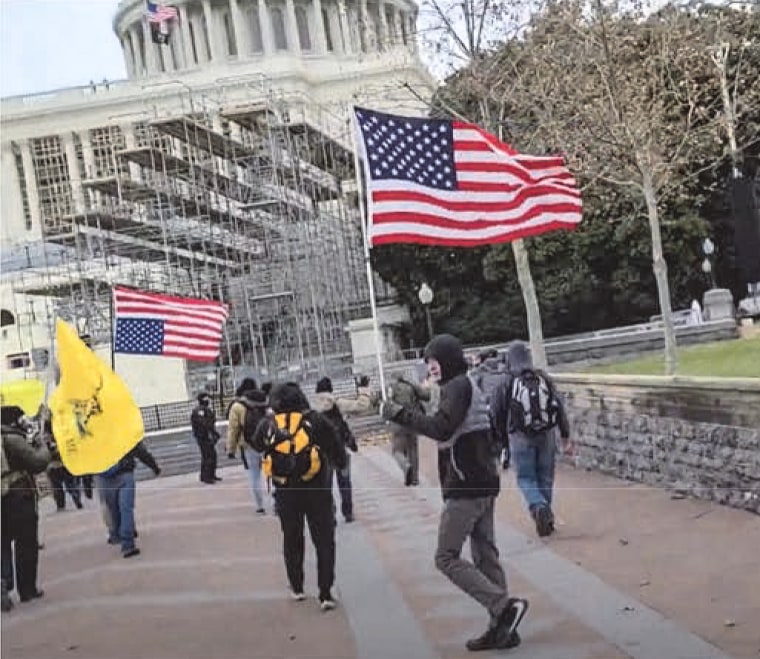



 A man takes part in the Freedom Convoy protest over Canadian Covid-19 restrictions in Ottawa on February 2.Before this mandate, truckers were exempted from the vaccine requirement and permitted to cross the border, at times testing for Covid-19, even during the 18-month period that the border was closed to non-essential traffic. Truckers were considered vital to keeping supply chains functioning normally.
 People protest Covid-19 vaccine mandates in Ottawa on February 5.On its cross-country journey and now in Ottawa, the protest has attracted support from thousands of Canadians, even some who are fully vaccinated, who say they want all vaccine and mask mandates lifted and all Covid-19 health restrictions dropped.

 Canadian Prime Minister Justin Trudeau listens to a question at a media availability on Monday, January 31.
 People hold signs and wave flags along Wellington Street in front of Parliament Hill on February 5 as part of the Freedom Convoy protest.Ottawa police say they opened a hate-incident hotline that has received more than 200 calls in a matter of days, with residents reporting incidents of harassment and intimidation.To date, Ottawa police say, they have initiated