Mr. Rogers understands what trump will never know.

NowThis Politics

July 5, 2019

Mr. Rogers’ commencement speech at Dartmouth is exactly what we need right now

Mr. Rogers' Dartmouth Commencement Speech Is What We All Need Right Now

Mr. Rogers’ commencement speech at Dartmouth is exactly what we need right now

Posted by NowThis Politics on Friday, July 5, 2019

Algae blooms. Iguanas headed north. That’s climate change.

Tampa Bay Times – Editorial

Algae blooms. Iguanas headed north. That’s climate change. | Editorial

Alarm bells that a warming climate is impacting the Sunshine State.
July 5, 2019
An aerial photo shows blue-green algae enveloping an area along the St. Lucie River in 2016. Algae has been spotted in Gulfport and Treasure Island in recent weeks. Associated Press (2016)
An aerial photo shows blue-green algae enveloping an area along the St. Lucie River in 2016. Algae has been spotted in Gulfport and Treasure Island in recent weeks. Associated Press (2016).


It’s been a tough week for anyone who cares about Florida’s environment and the effects of climate change. First, we learned that blue-green algae is infecting waterways in Treasure Island and Gulfport. There’s no way to know exactly what caused the most recent outbreak of the foul smelling ooze, but it’s a good bet we brought this on ourselves, or at least helped make it worse. Whether it’s leaky septic tanks, runoff from our lawns or too much farm waste flowing into waterways, we’ve created conditions ripe for algae to take hold. And don’t forget that a 2014 Climate Assessment Report predicted more blooms in Florida as the globe warms.

In recent years, massive algae blooms contaminated the St. Lucie and Caloosahatchee rivers, which flow from they highly polluted Lake Okeechobee. The algae choked ecosystems and killed fish and other marine life. Fishing guides, retailers and other businesses that rely on the rivers lost money. Aerial images of the bright green menace were beamed around the world, hardly the best advertisement for a state that relies heavily on tourism.

Algae blooms can happen naturally, without human help. But there’s growing evidence that we are providing fuel for more blooms that grow larger and stick around longer. We shouldn’t think of that as a new normal, another reality of living in Florida that we can’t do anything about. We can and we should. Gov. Ron DeSantis took a good first step recently by creating the Blue-Green Algae Task Force. But it can’t be window dressing. The task force needs to come up with practical solutions. This is not the time for partisan bickering.

This week we also learned how roseate spoonbills have adapted to the changing climate by migrating away from South Florida and into central and north Florida, Georgia and South Carolina. While the spoonbills have so-far thrived, the same article reiterated that 40 percent of the Earth’s 10,000 bird species are in decline, thanks in large part to human interference.

A separate report came out about how green iguanas have moved further north in Florida thanks to a warming planet. The invasive species already plague several south Florida counties. Their digging causes erosion and undermines water control projects including canals and sea walls. Green iguanas are such a scourge that the Florida Fish and Wildlife Conservation Commission encourages homeowners to kill any that wander onto their property.

Finally, an analysis of satellite imagery showed that sprawling mats of sargassum seaweed floating in the Atlantic are much more prevalent than before 2011. Reports of sargassum-clogged oceans date back to at least Christopher Columbus, but something has changed in recent years, the researchers concluded. They correlated the sargassum explosion to an increase in fertilizer used on farms that continue to replace the Amazon rainforest. Florida’s beach communities should expect more of the seaweed, which stinks as it decays, they said.

Too many of Florida’s leaders have been slow to react to climate change and the assault on the state’s environment. Too many denied anything was happening before moving onto the equally absurd notion that humans have little or no influence on the changes. That’s dangerous thinking, and fortunately it seems to be on the decline in Tallahassee. The state must be cleared-eyed about the environmental realities. This week’s news highlights why.

Four Florida beaches post health warnings for water quality

Tampa Bay Times – The Buzz

Four Florida beaches post health warnings for water quality

None are in Tampa Bay, however beaches in Hernando and Pasco tested for elevated levels of bacteria that could pose risks if the water quality continues to decline.

Sign at the entrance to Robert J. Strickland Memorial Park in Hudson. It’s better known as Hudson Beach Park. [CAROLYN EDDS | Times]

TALLAHASSEE — On one of the busiest beach weekends of the year in Florida, the state Department of Health warns that four Florida beaches — including three in Sarasota County — pose health hazards for beach goers because of high fecal levels.

“Water at this site may pose increased risk of infectious disease particularly for susceptible individuals,’’ the agency warns in a nondescript notice on its Healthy Beaches web site, which lists water test results for the sites the state tests.

Although the agency lists only one beach as receiving a health advisory, a review of the water sample reports by the Times/Herald found that four health advisories have been issued: one at the Panama City Beach Access in Bay County and three others in Sarasota County: Brohard Park, Lido Casino Beach and Venice Beach.

The warnings come a year after toxic algal blooms closed beaches across the state during the Fourth of July weekend and beyond. So, if there is any good news to the warnings this year, state regulators reported on Wednesday that “there are currently no known algal blooms affecting Florida beaches.”

But at the four beaches in which advisories have been issued, contamination from flesh-eating bacteria is now a new concern. In the last month, two cases of life-threatening infections have been reported from Florida waters .

A 77-year-old woman from Ellenton fell and scraped her leg while walking on Anna Maria Island and died two weeks later because of an infection from a flesh-eating bacteria. The report came just weeks after the mother of a 12-year-old Indiana girl wrote on Facebook that she believes her daughter contracted the same infection during a trip to Destin in early June.

Both are believed to have suffered from “necrotizing fasciitis,” an infection caused by bacteria that stops blood circulation and causes tissue to die and skin to decay. The infection, although rare, can come from different strains of bacteria found in the water and on sand, health officials say.

It is called “flesh-eating” because the infection progresses rapidly. In April, two men reported cases of necrotizing fasciitis in Tampa Bay after spending time on the water.

When the Department of Health issues an advisory, it means that water samples have been tested and re-tested to confirm that the bacteria levels are dangerous and the water is too contaminated to enter.

“These indicate that contact with the water at this site may pose increased risk of infectious disease particularly for susceptible individuals,“ DOH said on its Healthy Beaches web site. State officials are warning people to stay away from swimming in these waters with a wound or cut, and to refrain from eating uncooked seafood.

The Department of Health samples the water in dozens of beaches in the state’s 26 coastal counties and relies on the public to check its web site to get the word out. The agency posts data “in real-time to the DOH Healthy Beaches webpage,” and posts advisory signs at the beach and sends out media alerts, said Brad Dalton, spokesperson for the Florida Department of Health.

According to the most recent water samples, 16 beaches in 11 counties — including in Miami-Dade and Broward counties — have elevated levels of bacteria that could pose risks if the water quality continues to decline.

In Miami-Dade, Dog Beach on the south side of Virginia Key Beach has tested as having “poor” or high levels of bacteria, with 70.5 parts per 100 ml of marine water on July 1. Oleta State Park also tested as having moderately elevated levels with between 35.5 to 70.4 per 100 ml.

In Broward, two beaches — Dania Beach and Commercial Boulevard Pier — tested for higher levels of bacteria. Monroe County hasn’t had its beaches tested since June 25, according to the Department of Health, and all received a good rating.

But new information won’t be updated until after the weekend, Dalton said.

“Lab tests take 24 hours to incubate after sampling and delivery time; thus the process takes two consecutive days to collect sample and get lab results, so it is unlikely any testing will be done over the holiday or on the weekend,’’ he said.

Beaches with high bacteria levels

Miami Dade — one poor, one moderate:

• Dog Beach (Virginia Key Beach, South side) tested as having poor levels of 70.5 per 100 ml of marine water on July 1.

• Oleta State Park tested as having moderately elevated levels – between 35.5 to 70.4 on July 1.

Broward — two moderate:

• Dania Beach — tested as having moderately elevated levels — between 35.5 to 70.4 on July 1.

• Commercial Boulevard Pier — tested as having moderately elevated levels — between 35.5 to 70.4 on June 17.

Bay — one health advisory:

• Panama City Beach Access — tested as having poor levels of 70.5 per 100 ml of marine water on June 24 and again on July 2. An advisory has been issued.

Collier — one moderate:

• Hideaway Beach — tested as having moderately elevated levels — between 35.5 to 70.4 on June 19.

Escambia — two moderate:

• Sanders Beach — tested as having moderately elevated levels — between 35.5 to 70.4 on July 1.

• Bayou Texar — tested as having moderately elevated levels — between 35.5 to 70.4 on June 24.

Flagler — one moderate:

• North Flagler Pier — tested as having moderately elevated levels — between 35.5 to 70.4 on June 18.

Franklin — one moderate;

• St. George Island at 11th St. — tested as having moderately elevated levels — between 35.5 to 70.4 on June 24.

Hernando — one moderate:

• Pine Island Beach — tested as having moderately elevated levels — between 35.5 to 70.4 on June 18.

Martin — one moderate:

• Jensen Beach — tested as having moderately elevated levels — between 35.5 to 70.4 on June 17.

Okaloosa — three moderate:

• Henderson Park Beach — tested as having moderately elevated levels — between 35.5 to 70.4 on June 24.

• Lincoln Park — tested as having moderately elevated levels — between 35.5 to 70.4 on June 24.

• Rocky Bayou State Park —tested as having moderately elevated levels — between 35.5 to 70.4 on June 24, an improvement over its poor test on June 10.

Pasco — one poor:

• Robert J. Strickland Beach — tested as having poor levels of 70.5 per 100 ml of marine water on June 24 and it was listed as moderate on July 1.

Sarasota — 3 beach advisories:

• Brohard Park — tested as having poor levels of 70.5 per 100 ml of marine water on July 1 and again on July 2, an advisory has been issued.

• Lido Casino Beach — tested as having poor levels of 70.5 per 100 ml of marine water on July 1 and again on July 2, an advisory has been issued.

• Venice Beach — Tested as having poor levels of 70.5 per 100 ml of marine water on July 1 and again on July 2, an advisory has been issued.

Wakulla — one moderate:

• Mash’s Island — tested as having moderately elevated levels — between 35.5 to 70.4 on June 24.

July 4, 2019: What’s the Real American Story?

Robert Reich
July 4, 2019
What’s the Real American Story?

This July 4th let’s reject Trump’s false narrative for America and tell the real American story rooted in history, truth, and facts.

What's the Real American Story?

This July 4th let's reject Trump's false narrative for America and tell the real American story rooted in history, truth, and facts.

Posted by Robert Reich on Thursday, July 4, 2019

Trump could feed every homeless veteran for the cost of his parade!

President Donald Trump’s military parade is set to kick off on Veterans Day, but at a cost that even conservative estimates show could feed every homeless veteran for at least two weeks, a Newsweek analysis found.

The military showcase was initially estimated to cost $10 million and $30 million, White House budget director Mick Mulvaney told the House Budget Committee in February. That cost accounted for Trump’s vision of tanks rolling through Washington DC—not unlike what he witnessed in France during its Bastille Day celebration, or what occurs in North Korea, China and Russia—though a Pentagon memo originally obtained by CNN on Friday nixed the use of heavy military vehicles.

Though not an exact science—parade cost estimates included using tanks et al., and it’s impossible to determine exact figures of homelessness by nature of their transience—these numbers provide a financial comparison and a look at the Trump administration’s priorities.

Using the most conservative estimates available from federal agencies and non-profit organizations, Newsweek found Trump could completely eliminate hunger among homeless veterans, serving them three meals a day, for at least 14 days.

GettyImages-814226372
The cost of President Donald Trump’s military parade on Veterans Day could pay for completely eliminating hunger among homeless veterans for at least two weeks, conservative estimates show, according to a Newsweek analysis.ALAIN JOCARD/AFP/GETTY IMAGES


The Numbers

There were 40,056 homeless veterans in the United States in 2017, according to a Department of Housing and Urban Development report published last December. The finding marked a 1.5 percent increase from the 39,471 homeless veterans in 2016—the first such increase in seven years.

Feeding America, a non-profit organization and the nation’s largest hunger-relief and food rescue group, found the average cost-per-meal in the U.S. was $2.94 in 2015, the latest data available. The organization culled data from several organizations and agencies, including the Bureau of Labor Statistics, and found the cost-per-meal ranged from a low of $2.04 in Maverick County, Texas to a high of $5.61 in Crook County, Oregon.

A $10 million military parade—Mulvaney’s lowest estimate, granted it included tanks—could provide $249.65 for all 40,056 homeless veterans. That could provide each of those veterans 44.5 meals priced at $5.61 per meal—the highest national cost estimate, according to Feeding America—enough for three meals a day for 14.8 days.

Adjusting the cost per meal to the national average of $2.94, homeless veterans could eat three meals a day for nearly a month, 28.3 days.

In February, Trump told Fox News he wouldn’t hold the parade if the cost was exorbitant.

“We’ll see if we can do it at a reasonable cost, and if we can’t, we won’t do it, but the generals would love to do it, I can tell you, and so would I,” he said.

On Thursday, the Pentagon sent the chairman of the Joint Chiefs of Staff a memo saying the military showcase would be integrated with the annual Veterans Day parade in DC and have an “an emphasis on the price of freedom.”

This is why the ocean is key to protecting our planet against climate change

Climate Reality

This is why the ocean is key to protecting our planet against climate change

This is why the ocean is key to protecting our planet against climate change

This is why the ocean is key to protecting our planet against climate change

Posted by Climate Reality on Friday, May 17, 2019

Are parts of India becoming too hot for humans?

CNN

Are parts of India becoming too hot for humans?

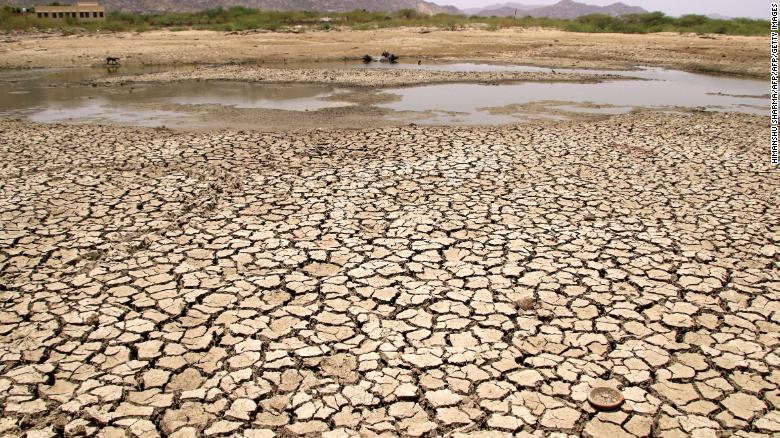
(CNN)Intense heat waves have killed more than 100 people in India this summer and are predicted to worsen in coming years, creating apossiblehumanitarian crisis as large parts of the country potentially become too hot to be inhabitable.

Heat waves in India usually take place between March and July and abate once the monsoon rains arrive. But in recent years these hot spells have become more intense, more frequent and longer.
India is among the countries expected to be worst affected by the impacts of climate crisis, according to the Intergovernmental Panel on Climate Change (IPCC).
Experts at MIT say that even if the world succeeds in cutting carbon emissions, limiting the predicted rise in average global temperatures, parts of India will become so hot they will test the limits of human survivability.
“The future of heat waves is looking worse even with significant mitigation of climate change, and much worse without mitigation,” said Elfatih Eltahir, a professor of hydrology and climate at MIT.

A mirage shimmers in New Delhi on June 10, 2019.A mirage shimmers in New Delhi on June 10, 2019.
When the heat rises
The Indian government declares a heat wave when temperatures reach at least 4.5 degrees Celsius (8.1 Fahrenheit) above the “normal” temperature for that area for at least two days. A heat wave becomes “severe” when temperatures climb to 6.4 degrees Celsius (11.5 Fahrenheit) above normal for at least two days.
Thresholds for heat waves, therefore, differ across the country — in the capital New Delhi, a heat wave is declared after two consecutive days of temperatures of at least 45 degrees Celsius (113 Fahrenheit).
Last year, there were 484 official heat waves across India, up from 21 in 2010. During that period, more than 5,000 people died.This year’s figures show little respite.
In June, Delhi hit temperatures of 48 degrees Celsius (118 Fahrenheit), the highest ever recorded in that month. West of the capital, Churu in Rajasthan nearly broke the country’s heat record with a high of 50.6 Celsius (123 Fahrenheit).
India’s poorest state, Bihar, closed all schools, colleges and coaching centers for five days after severe heat killed more than 100 people. The closures were accompanied by warnings to stay indoors during the hottest part of the day, an unrealistic order for millions of people who needed to work outdoors to earn money.
And forecasters believe it’s only going to get worse.
“In a nutshell, future heatwaves are likely to engulf in the whole of India,” said AK Sahai and Sushmita Joseph, of the Indian Institute of Tropical Meteorology, in Pune in an email.

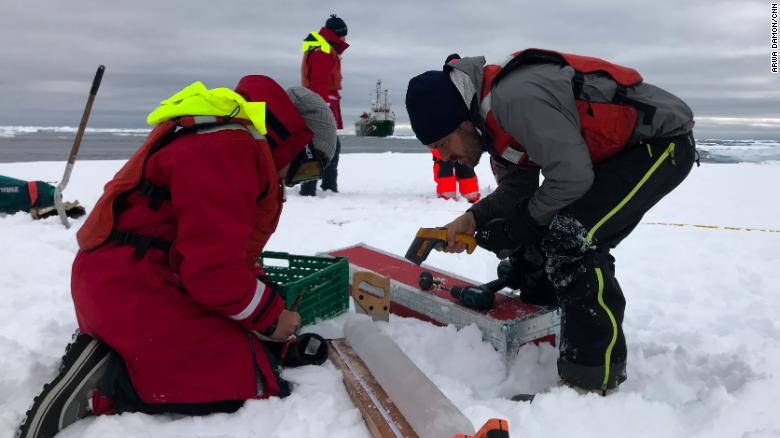
Arctic ice faces trouble from above and below

Arctic ice faces trouble from above and below

Arctic ice faces trouble from above and below .

Survivability
India’s situation is not unique. Many places around the world have endured heat waves so far this year, including parts of Spain, China, Nepal and Zimbabwe.
To examine the question of future survivability of heat waves in South Asia, MIT researchers looked at two scenarios presented by the IPCC: The first is that global average surface temperatures will rise by 4.5 degrees Celsius by the end of the century. The second is the more optimistic prediction of an average increase of 2.25 degrees Celsius. Both exceed the Paris Agreement target to keep the global average temperature rise by 2100 to below 2 degrees Celsius.
Under the more optimistic prediction, researchers found that no parts of South Asia would exceed the limits of survivability by the year 2100.
However, it was a different story under the hotter scenario, which assumes global emissions continue on their current path.


An Indian man uses a towel to wipe the sweat on his face on a hot and humid summer day in Hyderabad, India, on June 3, 2019. An Indian man uses a towel to wipe the sweat on his face on a hot and humid summer day in Hyderabad, India, on June 3, 2019.
In that case, researchers found that the limits of survivability would be exceeded in a few locations in India’s Chota Nagpur Plateau, in the northeast of the country, and Bangladesh.
And they would come close to being exceeded in most of South Asia, including the fertile Ganges River valley, India’s northeast and eastern coast, northern Sri Lanka, and the Indus Valley of Pakistan.
Survivability was based on what is called “wet bulb temperature” — a combined metric of humidity and the outside temperature.
When the wet bulb reaches 35°C it becomes impossible for humans to cool their bodies through sweating, hence it indicates the survival temperature for humans. A few hours of exposure to these wet bulb conditions leads to death, even for the fittest of humans.
The places in India where it could become more difficult to survive overlap with already highly vulnerable areas, said Eun Soon, assistant professor at Hong Kong University of Science and Technology, who also took part in the MIT study.
That is, places with dense populations and poor economies that rely heavily on fishing and agriculture. They include cities like Patna and Lucknow in northeastern India, home to more than 4 million people combined.
“If we continue to produce the greenhouse gases at the current pace, one of the most populous regions in the world will not avoid the high risk of the deadly heat wave, facing an upper limit on human heat tolerance,” she said.

What is the government doing about it?
India is still in the initial stages of developing a robust nationwide Heat Action Plan.
The Indian Meteorological Department (IMD) is working with state health departments to create an early warning system that would notify millions of people by text message about ways to stay cool, when heat waves hit.
The city of Ahmedabad, in Gujarat, introduced the country’s first action plan in 2013, and its text messages, extra drinking stations and advice to keep out of the sun are credited with saving more than 2,000 lives. At the same time, India is seeking long-term solutions.
A signatory to the 2015 Paris Climate Agreement, the country has pledged to cuts its carbon emissions by 33% to 35% below 2005 levels by 2030.
Last month, Prime Minister Narendra Modi’s administration announced plans to add 500 gigawatts of renewable energy to the country’s power grid by 2030. By that year, renewable energy should account for at least 40% of India’s installed power capacity. The country is also planting forests to help mop up carbon emissions.
Climate Action Tracker, a site that analyzes countries’ progress, says India is making good headway but could do more by reducing its reliance on coal power stations.
report by India’s Central Electricity Authority released this week found that coal power could still account for half of India’s power generation in 2030, despite the country’s investments in solar power.
Given the more frequent heat waves and dire future predictions, capping a rise in global temperatures could very well turn out to be India’s most important challenge in decades ahead.
The survivability of more than a billion people is at stake.


Maryland boy infected with flesh-eating bacteria. Be careful this holiday!

USA Today

Matthew Prensky, USA TODAY       July 2, 2019

Dogs ‘think they’re going to die’ on the Fourth of July.

BP Says Some of Its Oil ‘Won’t See the Light of Day’

Bloomberg

BP Says Some of Its Oil ‘Won’t See the Light of Day’

Kelly Gilblom, Bloomberg         July 3, 2019