
ThinkProgress
Rick Perry gives pep talk to natural gas industry in wake of damaging climate study
U.S. gas industry also opposes Trump’s proposed bailout of coal and nuclear industries.
Mark Hand June 26, 2018
 Energy Secretary Rick Perry gave a keynote speech on June 26, 2018, to kick off the 2018 World Gas Conference in Washington, D.C. Credit: Smith Collection/Gado/Getty Images
Energy Secretary Rick Perry touted natural gas as an environmentally friendly fuel in a speech Tuesday, kicking off an international gathering of natural gas industry officials in Washington, D.C.
Perry’s pep talk at the triennial World Gas Conference, attended by thousands of industry representatives from around the world, came less than a week after the release of an important new study that found natural gas to be far more destructive to the climate than previously thought.
The new study, published last week in the journal Science, found that methane emissions from the nation’s oil and gas industry are nearly 60 percent higher than earlier estimates — effectively enough to offset much of the climate benefits of burning natural gas instead of coal.
The study’s results upend arguments made over the past decade — as the controversial practice of fracking gained momentum across the country — that natural gas could play a key role in fighting climate change, including serving as a bridge fuel to greater integration of renewable energy resources.
Perry advocated for the Trump administration’s all-of-the-above energy policy — one that he said includes wind and solar energy — although he paid the highest tribute to natural gas. The president’s strategy “includes the cleanest fossil fuel and one of the most abundant energy sources on the planet, and that’s natural gas,” Perry emphatically told the audience.
Perry criticized fossil fuel opponents who “flatly reject” an all-of-the-above energy strategy. “The answer is not to exclude oil and gas and coal from the world’s energy mix,” he said. “For the sake of environmental progress … we must honor the right of every nation to responsibly use every fuel at its disposal.”
He also claimed these opponents are ignoring the positive side of fossil fuels. “There is still this stubborn opposition to natural gas and other fossil fuels. Opposition exists even as fossil fuels have become cleaner and low-emission natural gas increases its share of total fossil production and use,” Perry said.
The new study, “Assessment of methane emissions from the U.S. oil and gas supply chain,” was led by the Environmental Defense Fund. It has authors from 16 different institutions, including the National Oceanic and Atmospheric Administration, National Institute of Standards and Technology, Stanford, Harvard, Princeton, and Carnegie Mellon — experts who have co-authored many of the most important studies in this area.
The study found that methane emissions are so large that the total warming from natural gas-fired power plants, including leaks from transporting the gas to the plant plus emissions from the burning of gas, over a 20-year period is comparable to the total warming from coal plants over 20-year period.
Researchers concluded that if a coal-fired plant is replaced with a gas-fired plant there is no net climate benefit for at least two decades. Perhaps even more important is that other studies have shown natural gas not only does not have a climate benefit over coal, but that its use displaces many carbon-free sources of power such as wind and solar.
The argument for fracking as a climate solution just went down in flames

Although Perry received a warm welcome at Tuesday’s conference, the natural gas industry has strongly criticized Trump’s plan to subsidize the coal and nuclear power industries. The Interstate Natural Gas Association of America — the industry trade group for the North American natural gas pipeline industry — said in a statement earlier this month that it is “deeply troubled by the Trump administration’s apparent move to scapegoat natural gas to prop up uneconomic coal and nuclear plants.”
Perry didn’t address the coal and nuclear bailout in his address to the natural gas industry. On Monday, though, Perry told reporters that the Trump administration is making progress on the proposal, although he did not offer a timetable for implementation.
A small group of protesters held signs and tried to engage in conversations with attendees as they entered the Washington Convention Center for the conference. One of the protesters, Steve Norris, a member of Beyond Extreme Energy, told ThinkProgress that the “present policies of the United States government with regard to gas, the present regulatory apparatus, and the present leadership of the Department of Energy are heading us in the wrong direction.”

For several years, Beyond Extreme Energy has tried to get officials at the Federal Energy Regulatory Commission (FERC) to consider the climate impacts of natural gas. In a change of tone at the commission, the two Democratic members of FERC — Cheryl LaFleur and Richard Glick — have starting highlighting the climate impacts of natural gas.
“We’ve been in their faces for the last four years,” Norris said. “And we’re seeing some changes there. Two of the commissioners, for the first time, are beginning to dissent because of climate issues. And that’s really encouraging. Rick Perry, on the other hand, has his head stuck in the ground, drinks oil for breakfast, and gas for dinner.”
 A truck delivers coal to a Pacificorp’s coal-fired power plant on October 9, 2017. Credit: George Frey/Getty Images


 © Greg Nash
 Government provided video shows more than 1,100 people inside metal cages in a warehouse that’s divided into separate wings for unaccompanied children, adults on their own, and mothers and fathers with children.
  (Photo John Moore, Getty Images)
 Border Patrol detains immigrant families crossing US-Mexico border
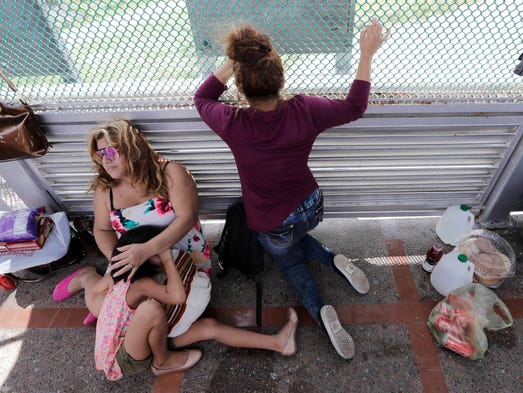
 Border Patrol agents take a group of migrant families to a safer place to be transported after intercepting them near McAllen, Texas, on June 19, 2018. More than 2,300 children have been separated from their parents at the border as a result of the Trump administration’s new “zero tolerance” policy, creating a deepening crisis for the government on how to care for the children. Courtney Sacco, Caller-Times via USA TODAY NETWORK
 Border Patrol detains immigrant families crossing US-Mexico border
 An immigrant child looks out the window of a bus as protesters try to block a bus carrying migrant children out of a U.S. Customs and Border Protection Detention Center on June 23, 2018 in McAllen, Texas. Dozens of protesters blocked the bus from leaving the center resulting in scuffles with police and Border Patrol agents before the bus retreated back to the center. Spencer Platt, Getty Images
 Des Moines Register
 A worker carries lumber as he builds a new home on January 21, 2015 in Petaluma, California. (Photo by Justin Sullivan/Getty Images)

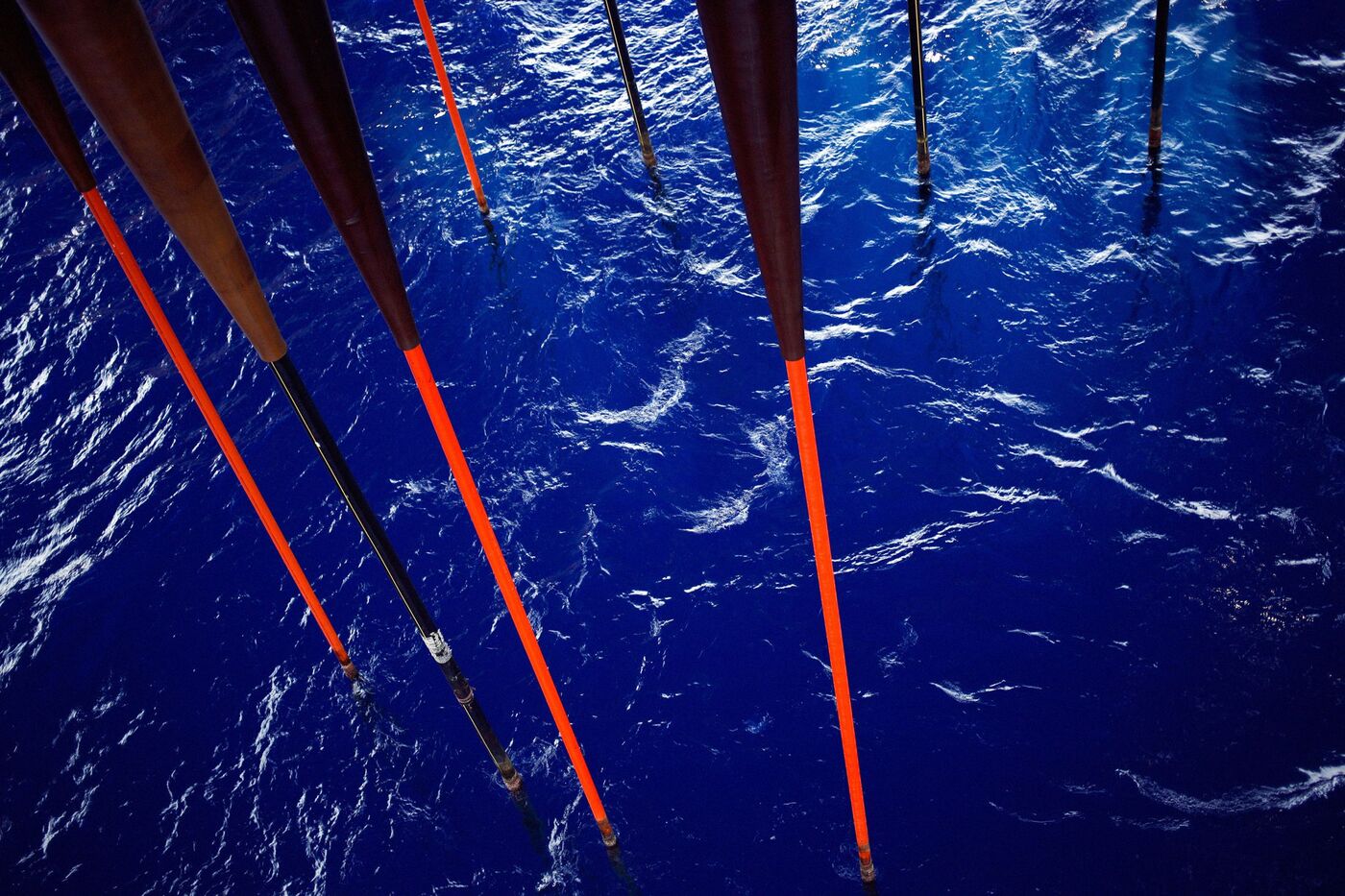 Pipes and mooring lines rise from the Gulf of Mexico beneath Chevron Corp.’s Jack/St. Malo deep-water oil platform about 200 miles off the coast of Louisiana on May 18, 2018. Photographer: Luke Sharrett/Bloomberg
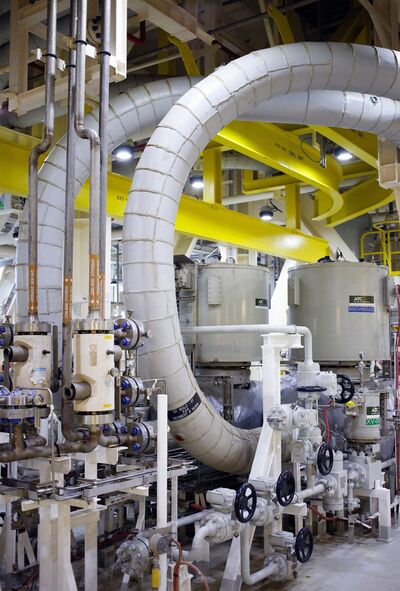 Oil production equipment onboard Chevron’s Jack/St. Malo platform. Photographer: Luke Sharrett/Bloomberg
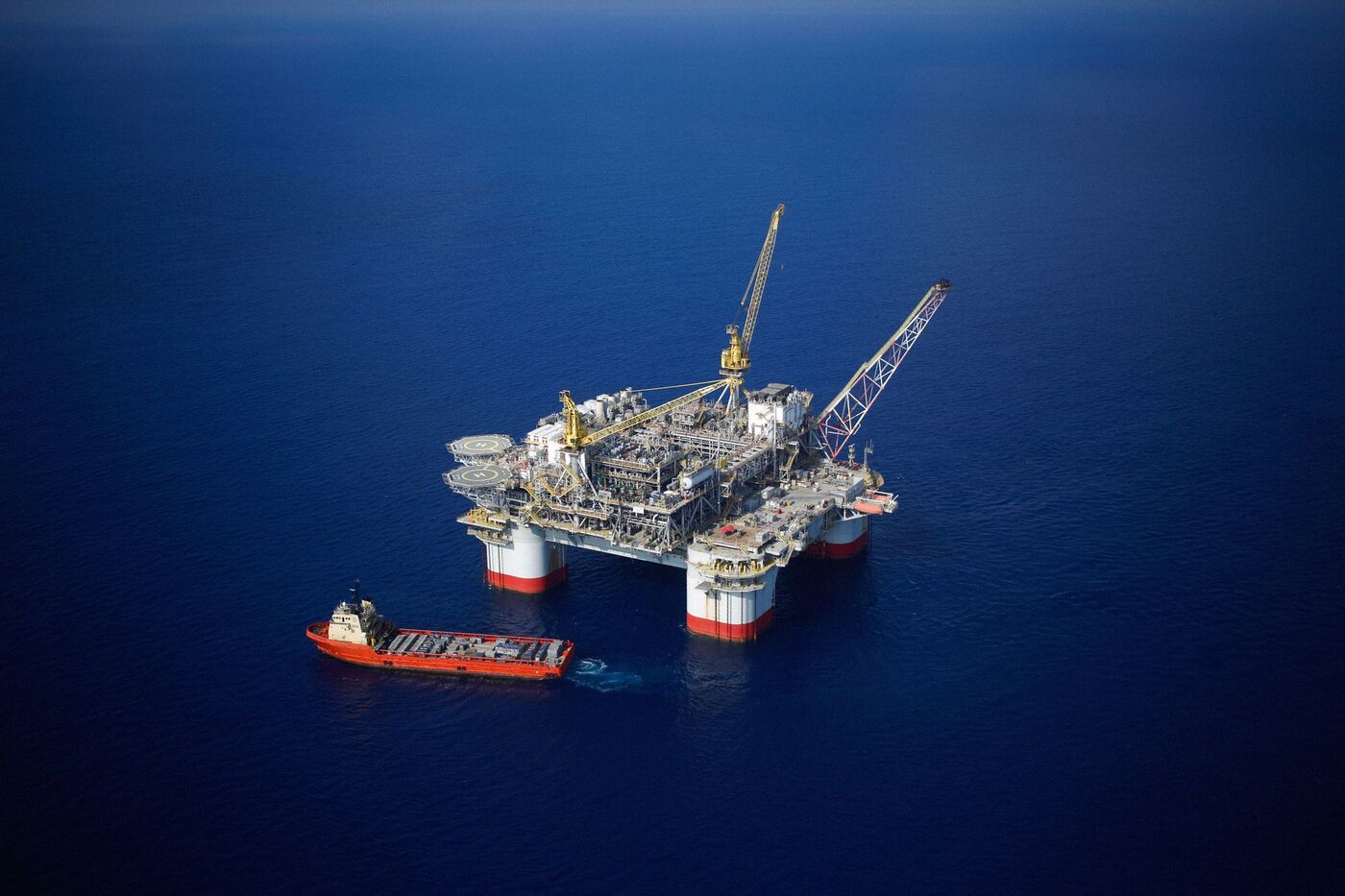 Platform supply vessel Kobe Chouest anchored alongside Jack/St. Malo. Photographer: Luke Sharrett/Bloomberg
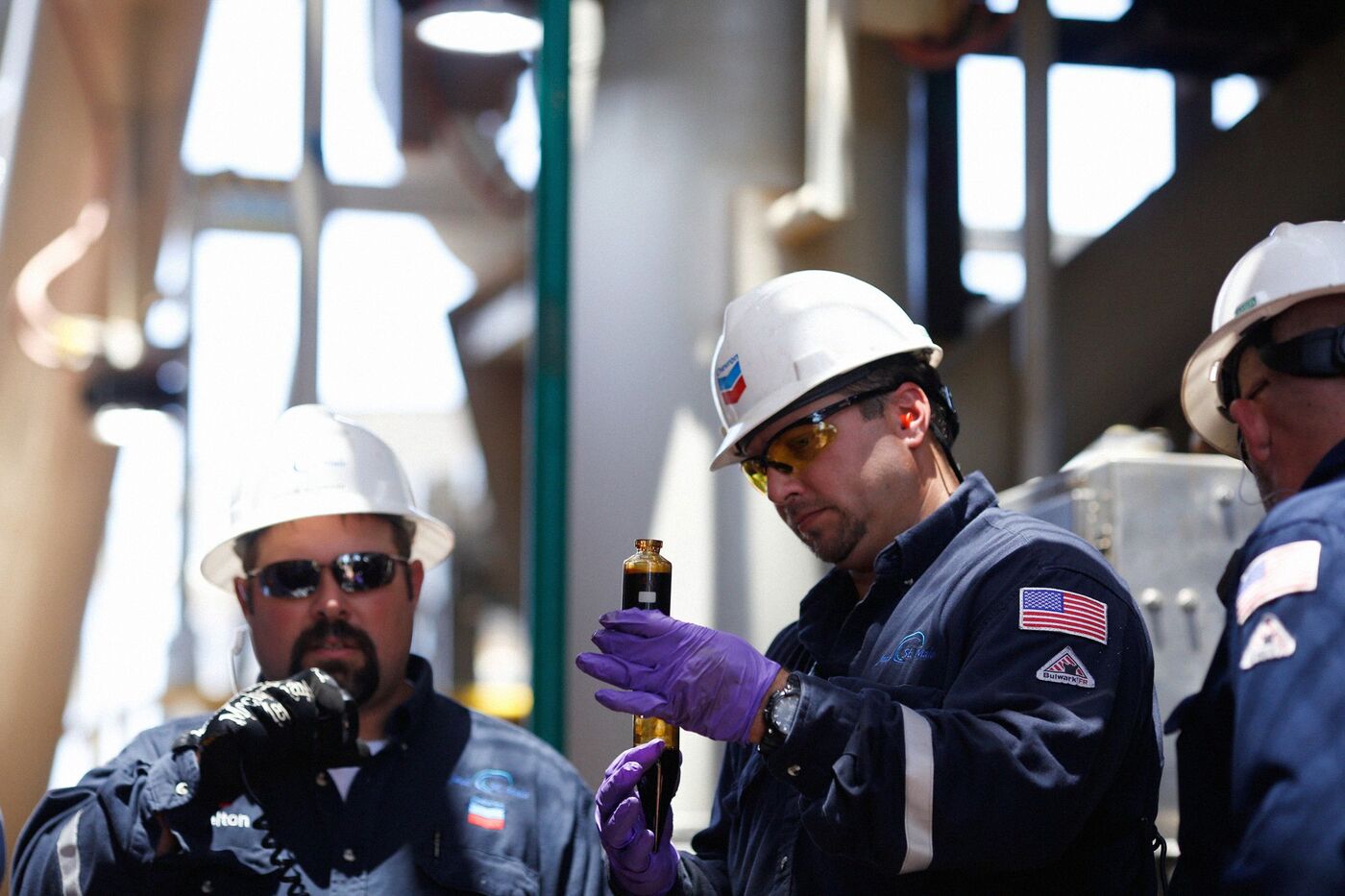 Chevron workers examine hydrocarbon samples on Jack/St. Malo. Photographer: Luke Sharrett/Bloomberg