Election Falsehoods Surged on Podcasts Before Capitol Riots, Researchers Find

New York Times

Election Falsehoods Surged on Podcasts Before Capitol Riots, Researchers Find

Stuart A. Thompson January 5, 2022

Weeks before the 2020 presidential election, conservative broadcaster Glenn Beck outlined his prediction for how Election Day would unfold: President Donald Trump would be winning that night, but his lead would erode as dubious mail-in ballots arrived, giving Joe Biden an unlikely edge.

“No one will believe the outcome because they’ve changed the way we’re electing a president this time,” he said.

None of the predictions of widespread voter fraud came true. But podcasters frequently advanced the false belief that the election was illegitimate, first as a trickle before the election and then as a tsunami in the weeks leading up to the violent attack at the Capitol on Jan. 6, 2021, according to new research.

Researchers at the Brookings Institution reviewed transcripts of nearly 1,500 episodes from 20 of the most popular political podcasts. Among episodes released between the election and the Jan. 6 riot, about half contained election misinformation, according to the analysis.

In some weeks, 60% of episodes mentioned the election fraud conspiracy theories tracked by Brookings. Those included false claims that software glitches interfered with the count, that fake ballots were used, and that voting machines run by Dominion Voting Systems were rigged to help Democrats. Those kinds of theories gained currency in Republican circles and would later be leveraged to justify additional election audits across the country.

The new research underscores the extent to which podcasts have spread misinformation using platforms operated by Apple, Google, Spotify and others, often with little content moderation. While social media companies have been widely criticized for their role in spreading misinformation about the election and COVID-19 vaccines, they have cracked down on both in the last year. Podcasts and the companies distributing them have been spared similar scrutiny, researchers say, in large part because podcasts are harder to analyze and review.

“People just have no sense of how bad this problem is on podcasts,” said Valerie Wirtschafter, a senior data analyst at Brookings who co-wrote the report with Chris Meserole, a director of research at Brookings.

Wirtschafter downloaded and transcribed more than 30,000 podcast episodes deemed “talk shows,” meaning they offered analysis and commentary rather than strictly news updates. Focusing on 1,490 episodes around the election from 20 popular shows, she created a dictionary of terms about election fraud. After transcribing the podcasts, a team of researchers searched for the keywords and manually checked each mention to determine if the speaker was supporting or denouncing the claims.

In the months leading up to the election, conservative podcasters focused mostly on the fear that mail-in ballots could lead to fraud, the analysis showed.

At the time, political analysts were busy warning of a “red mirage”: an early lead by Trump that could erode because mail-in ballots, which tend to get counted later, were expected to come from Democratic-leaning districts. As ballots were counted, that is precisely what happened. But podcasters used the changing fortunes to raise doubts about the election’s integrity.

Election misinformation shot upward, with about 52% of episodes containing misinformation in the weeks after the election, up from about 6% of episodes before the election.

The biggest offender in Brookings’ analysis was Steve Bannon, Trump’s former adviser. His podcast, “Bannon’s War Room,” was flagged 115 times for episodes using voter fraud terms included in Brookings’ analysis between the election and Jan. 6.

“You know why they’re going to steal this election?” Bannon asked on Nov. 3. “Because they don’t think you’re going to do anything about it.”

As the Jan. 6 protest drew closer, his podcast pushed harder on those claims, including the false belief that poll workers handed out markers that would disqualify ballots.

“Now we’re on, as they say, the point of attack,” Bannon said the day before the protest. “The point of attack tomorrow. It’s going to kick off. It’s going to be very dramatic.”

Bannon’s show was removed from Spotify in November 2020 after he discussed beheading federal officials, but it remains available on Apple and Google.

When reached for comment on Monday, Bannon said that Biden was “an illegitimate occupant of the White House” and referenced investigations into the election that show they “are decertifying his electors.” Many legal experts have argued there is no way to decertify the election.

Sean Hannity, the Fox News anchor, also ranked highly in the Brookings data. His podcast and radio program, “The Sean Hannity Show,” is now the most popular radio talk show in America, reaching upward of 15 million radio listeners, according to Talk Media.

“Underage people voting, people that moved voting, people that never re-registered voting, dead people voting — we have it all chronicled,” Hannity said during one episode.

Claims about voter fraud came not just from Hannity but also his guests, including pollster John McLaughlin, who shared a private exchange he had with Trump.

In the exchange, according to McLaughlin’s on-air account, Trump said that the election was stolen.

“Yeah,” McLaughlin said to the president. “I said it yesterday on Hannity radio.”

“Keep saying it,” Trump replied.

McLaughlin went on to say during the podcast: “This election, easily, was stolen and these drop boxes and the Dominion Systems — their voting system — are definitely the culprits.”

Claims about Dominion Voting Systems were debunked and internal Republican memos showed officials in Trump’s reelection campaign knew the claims were false. Dominion later filed a number of lawsuits against people and media companies who pushed the conspiracies.

Representatives for Hannity, McLaughlin and Beck did not comment when reached about the findings.

Apple’s podcast guidelines say the company does not allow podcasts that “may lead to harmful or dangerous outcomes.” Apple declined to comment.

Spotify did not immediately comment on the research.

The lack of moderation on podcast apps is particularly complicated for Alphabet, the parent company of Google and YouTube. The video streaming site cracked down on videos about election fraud, the conspiracy theory QAnon, and vaccine misinformation, prompting some podcast episodes hosted there to be removed. But the same episodes remained accessible on Google’s Podcasts app. Bannon’s show was removed from YouTube shortly after Jan. 6, for instance, but the podcast remains available on Google’s Podcasts app.

Google has argued that its Podcasts app more closely resembles a search engine than a publishing service because no audio is hosted by the company. A Google spokesman, Farshad Shadloo, said the app simply “crawls and indexes audio content” hosted elsewhere and that they have “policies against recommending podcasts that contain harmful misinformation, including misinformation about the 2020 U.S. elections.”

‘Do you realize you are describing a coup?’: MSNBC host challenges Trump aide after he described plans to overturn the 2020 election

Business Insider

‘Do you realize you are describing a coup?’: MSNBC host challenges Trump aide after he described plans to overturn the 2020 election

Sinéad Baker January 5, 2022

  • On MSNBC, Peter Navarro described Trump allies’ plans to decertify the 2020 election results.
  • He detailed plans to challenge the results in battleground states.
  • The host Ari Melber shot back, asking, “Do you realize you are describing a coup?”

The MSNBC host Ari Melber on Tuesday challenged Peter Navarro, a former Trump White House economic advisor, over his description of plans to challenge the 2020 presidential election result, saying Navarro was actually “describing a coup.”

Navarro has promoted former President Donald Trump’s baseless claims that President Joe Biden, who has been in office for nearly a year, did not actually win the 2020 election.

On “The Beat,” Melber asked Navarro about Trump allies’ plans to challenge Biden’s win.

Navarro said the plan was to use over 100 US representatives and senators to “challenge the results of the election in the six battleground states,” including Michigan, Pennsylvania, Georgia, Wisconsin, and Nevada.

“And basically these were the places where we believed that if the votes were sent back to those battleground states and looked at again that there would be enough concern amongst the legislatures that most or all of those states would decertify the election,” Navarro said.

He continued: “That would throw the election to the House of Representatives. And I would say to you here, Ari, that all of this, again, was in the lanes legally. It was prescribed by the Constitution. There is a provision to go, rather than through the Electoral College, to the House of Representatives.”

He said this process started when lawmakers began to challenge Arizona’s results on January 6, 2021, and he criticized the media.

Melber shot back: “You just described this plan as a way to take an election where the outcome was established by independent secretaries of state, by the voters of those states, and legal remedies had been exhausted with the Supreme Court never even taking, let alone siding with, any of the claims that you just referred to. So legally, they went nowhere.”

Melber then described the plan Navarro had outlined. “Do you realize you are describing a coup?” he said.

Navarro responded: “No. I totally reject many of your premises there.”

Jan. 6 attack posed loyalty test for Indiana Rep. Greg Pence

IndyStar – Indianapolis Star

Jan. 6 attack posed loyalty test for Indiana Rep. Greg Pence

Brian Slodysko – January 4, 2022

WASHINGTON — Greg Pence watched the Jan. 6 insurrection unfold from an extraordinary perch.

As chants of “Hang Mike Pence” echoed in the Capitol, the Republican congressman from Indiana and his better-known brother were whisked away from the Senate by the Secret Service shortly before a mob of Donald Trump supporters burst in, intent on stopping the vice president from certifying Democrat Joe Biden’s win.

Their dramatic escape, caught on security cameras, came minutes after Trump excoriated Mike Pence on Twitter for lacking the “courage” to use his ceremonial post presiding over the certification of the 2020 election to overturn its outcome.

More: Rep. Greg Pence votes against commission into ‘Hang Mike Pence’ US Capitol insurrection

“My brother was being asked to do what we don’t do in this country,” Greg Pence recounted at a Republican fundraising dinner in his district last July, one of the rare instances he has spoken publicly about the attack. He later added, “I couldn’t be prouder.”

At the beating heart of the insurrection lies Trump’s attempt to pressure his vice president to take the unprecedented step of overturning the election. And few had a better vantage point on the day of the attack than Greg Pence, who hunkered down in a secure area with his younger brother while the vice president worked the phone, pleading for help to clear rioters from the building.

That makes Greg Pence a tantalizing prospective witness for the House Jan. 6 committee, which is investigating the origins of the insurrection that Trump fomented when he urged his supporters to march on the Capitol and “fight like hell.”

Pence has largely declined to discuss what transpired while he was with his brother that day, other than praising his brother as a hero for standing up to Trump.

Capitol riot: Here’s the latest on 9 people with Indiana ties charged

His silence serves as powerful evidence of the grip that Trump still holds on his party, which has led many Republicans to dispute the seriousness of the attack and instead perpetuate the lie that Trump was wrongly denied a second term.

Pence declined last month to speak with The Associated Press at the Capitol. A spokesperson did not respond to multiple inquiries seeking comment.

First elected to Congress in 2018, 65-year-old Greg Pence represents a deeply Republican and largely rural district that his brother held for 12 years before he was elected Indiana governor and eventually selected by Trump to become vice president. Unlike his brother, who from a young age was fixated on a career in politics, Greg Pence was always an unlikely congressman.

After graduating from Loyola University in Chicago, he joined the Marines and later fell into a series of petroleum industry jobs. He eventually served as president of Kiel Bros., a Midwest gas station empire his father helped build, a post he resigned from in 2004 after the company filed for bankruptcy and saddled the state of Indiana with more than $21 million in unpaid environmental cleanup costs, a 2018 Associated Press investigation found.

Pence turned his focus in 2006 to operating antique malls he purchased with his wife, Denise, a business now worth between $5 million and $25 million, according to his congressional financial disclosure.

When Mike Pence’s former congressional seat opened up in 2018, his brother ran a stealthy campaign. Granting few interviews and ducking debates, he coasted to victory.

“I looked into the mirror and said, ‘If not me, who?’” Greg Pence told his hometown newspaper, The Columbus Republic, in a rare interview during the campaign.

But he also expressed deep ambivalence about the job, as well as a lack of conviction that would likely have doomed other candidates.

“What would be my positions, what would be my focus?” he said in a September 2017 interview with the Washington Examiner, a conservative publication, before formally launching his campaign. “I really haven’t dug into or formed positions on anything yet.”

Since then, Pence has had a muted presence in Congress, where he serves on the House Energy and Commerce Committee. Yet during the Trump administration, he enjoyed rarefied privileges, riding with the president on Air Force One for campaign and administration events where the president name-checked him.

One area in which he has excelled is fundraising, raising far more money than the average first-term member of Congress.

Pence also has enjoyed the trappings of political life, spending over $49,000 at Trump-owned properties, while paying Trump’s pollster $137,000 during his 2018 race when there was little doubt he would win, campaign finance disclosures show.

Pence and his family also have collected money from his campaign account, including $18,000 in rent paid to the company he runs with his wife, and $35,000 paid to his daughter Nicole, a former TV reporter, who advised his 2018 campaign. He has also collected $57,000 in reimbursements for travel and meals, records show.

Insurrections loyal to President Donald Trump climb the west wall of the the U.S. Capitol, Jan. 6, 2021, in Washington.

For months it was unclear whether the committee would even seek interviews with members of Congress connected to the insurrection, which was viewed as a provocative step. But in late December, the committee announced it wanted to interview Rep. Jim Jordan of Ohio, a staunch Trump ally, as well as Rep. Scott Perry of Pennsylvania, who leads the hard-line House Freedom Caucus.

So far, Democrats who serve on the committee have been tight-lipped about whether Greg Pence could be called for an interview or asked to submit documents.

“I’m not going to talk about any individual being called,” said Rep. Pete Aguilar, a California Democrat on the committee, when asked whether an interview with Pence would be sought.

Pence has repeatedly voted against attempts to shed light on the insurrection, or hold those who urged it on accountable. He voted twice against forming a committee to investigate the origins of the attack, calling it “bass-ackwards.” He also voted against impeaching Trump.

But perhaps the most significant vote was in the immediate aftermath of the attack.

Hours after emerging from a secure location, Mike Pence gaveled the joint session of Congress back in and presided over the certification of the election, despite Trump’s demands.

Greg Pence, meanwhile, joined scores of other Republicans who sided with Trump and cast a vote rejecting the outcome in Pennsylvania, the state that clinched the election for Biden.

Schumer: Senate to vote on filibuster change on voting bill

Associated Press

Schumer: Senate to vote on filibuster change on voting bill

Lisa Mascaro, January 3, 2022

WASHINGTON (AP) — Days before the anniversary of the Jan. 6 attack on the Capitol, Majority Leader Chuck Schumer announced the Senate will vote soon on easing filibuster rules in an effort to advance stalled voting legislation that Democrats say is needed to protect America’s democracy.

In a letter Monday to colleagues, Schumer, D-N.Y., said the Senate “must evolve” and will “debate and consider” the rule changes by Jan. 17, Martin Luther King Jr. Day, as the Democrats seek to overcome Republican opposition to their elections law package.

“Let me be clear: January 6th was a symptom of a broader illness — an effort to delegitimize our election process,” Schumer wrote, “and the Senate must advance systemic democracy reforms to repair our republic or else the events of that day will not be an aberration — they will be the new norm.”

The election and voting rights package has been stalled in the evenly split 50-50 Senate, blocked by a Republican-led filibuster with Democrats unable to mount the 60 votes needed to advance it toward passage.

So far Democrats have been unable to agree among themselves over potential changes to the Senate rules to reduce the 60-vote hurdle, despite months of private negotiations.

Two holdout Democrats, Sens. Joe Manchin of West Virginia and Kyrsten Sinema of Arizona, have tried to warn their party off changes to the Senate rules, arguing that if and when Republicans take majority control of the chamber they can then use the lower voting threshold to advance bills Democrats strongly oppose.

President Joe Biden has waded only cautiously into the debate — a former longtime senator who largely stands by existing rules but is also under enormous political pressure to break the logjam on the voting legislation.

Voting rights advocates warn that Republican-led states are passing restrictive legislation and trying to install election officials loyal to the former President, Donald Trump, in ways that could subvert future elections.

Trump urged his followers last Jan. 6 to “fight like hell” for his presidency, and a mob stormed the Capitol trying to stop Congress from certifying the state election tallies for Biden. It was the worst domestic attack on a seat of government in U.S. history.

How the Senate filibuster rules would be changed remains under discussion.

It seems certain that a full-scale end of the filibuster is out of reach for Democrats. Changing the rules would need all 50 votes, and Manchin and Sinema have made it clear they are unwilling to go that far.

Senators are wary of a sweeping overhaul after seeing the fallout that came from Democrats ending the filibuster for some judicial and executive branch nominees. Once Republicans took power, Sen. Mitch McConnell, the GOP leader, did away with the filibuster for Supreme Court nominations — ushering three Trump-picked conservative justices to the high court.

But despite their reluctance on major filibuster changes, Manchin and Sinema both support the election legislation. In fact, Manchin helped craft the latest package in an unsuccessful effort to win Republican support. Now the two Democrats’ colleagues are working on ways to change the filibuster so at least this legislation could pass.

Private talks with senators have been underway for weeks and continued during the holiday break.

Ideas include forcing senators to hold the floor, old-fashioned style, rather than simply raise their filibuster objections — a scene that would have echoes of the 1950s and 1960s when Southern segregationists filibustered civil rights legislation.

Other ideas are also being considered, and some Democrats have noted that Sinema has mentioned she is open to hearing the arguments as part of a full debate.

Republicans are so worried Democrats will end the filibuster that McConnell has taken other actions to try to keep Manchin and Sinema close so they don’t join the rest of their party in making any drastic changes.

One Republican, Sen. Mike Lee of Utah, argued on Monday that ending the filibuster would turn the Senate into a “Lord of the Flies”-style institution where majority rules, no matter what.

“It is absurd and dangerous to the institution itself,” said Lee in a statement. He said Schumer and his “disastrous plan” must be stopped.

Is the Answer to Dementia Actually in the Air?

Daily Beast

Is the Answer to Dementia Actually in the Air?

Neel V. Patel January 3, 2022

Marek Piwnicki / Unsplash

A growing body of evidence over the last few years has demonstrated that air pollution is a significant risk factor for developing dementia in old age. It shouldn’t be much of a shock. “When sensitive people breathe in polluted air from outdoors, very small particles can penetrate the lungs and get into the circulation system,” Jiu-Chiuan Chen, a neuroscientist at the University of Southern California, told The Daily Beast. “These ‘toxic’ responses can make the blood-brain barrier leaky and cause damage to the brain.” It’s not all that different from how other risk factors like smoking can negatively impact human health, leaving it more vulnerable to degenerative conditions like dementia.

The big question scientists have had in the last few years was whether the impact of air pollution on dementia risk was permanent—or whether this was something that could be reversed. New findings published in Proceedings of the National Academy of Sciences bring good news: Improved air quality over several years is associated with a reduced risk of dementia in elderly women.

The findings bolster suspicions that external pollutants can contribute to accelerated aging in the brain (which is effectively what dementia is). But more critically, they also show that this aging can be slowed down if exposure to those pollutants decreases.

We Just Got a Lot Closer to Finding a Cure for Alzheimer’s

Led by Chen and others from USC, a group of researchers assessed the yearly physical and cognitive health of 2,239 women in the U.S. aged 74 to 92, from 2008 to 2018. (Chen and her colleagues focused on women since they are disproportionately affected by neurodegenerative diseases like Alzheimer’s, which can lead to dementia). Those women were geographically spread out over the country, and all were dementia-free from at least 2008 to 2012. The researchers compared those assessments with yearly average concentrations of outdoor pollution from 1998 and 2012 to determine in what locations air quality was trending to healthier levels. The study focused on measurements for fine particulate matter and nitrogen dioxide—two very common pollutants resulting from traffic exhaust.

Over those 10 years, 398 women were diagnosed with dementia. But the researchers found that locations with larger improvements in air quality showed a smaller incidence in dementia diagnoses among the women who took part in the study. While the reduction in risk varies with other factors, Chen explained that lowering air pollution exposure to roughly 15 percent below the EPA’s current standard threshold led to a 20 percent reduction in dementia risk.

Air Pollution Can Be as Harmful to Your Lungs as Smoking Cigarettes: Study

Moreover, the link between lower dementia risk and better air quality did not differ significantly by age, education, geography, or cardiovascular risk factors, suggesting that air pollution actually plays a bigger role in dementia than previously thought.

The study is far from perfect. The findings would probably translate to older men, but we can’t be certain yet without actual data to confirm it. Moreover, some women may have been exposed to much different levels of air pollution in their everyday lives than what the general air quality of their surroundings suggests. Other factors like green spaces may have affected air quality at the local level.

But there’s little reason to doubt the overall takeaway: There’s no disentangling human health from environmental health.

US could be under rightwing dictator by 2030, Canadian professor warns

The Guardian

US could be under rightwing dictator by 2030, Canadian professor warns

Richard Luscombe – January 3, 2022

<span>Photograph: Jonathan Drake/Reuters</span>
Photograph: Jonathan Drake/Reuters

The US could be under a rightwing dictatorship by 2030, a Canadian political science professor has warned, urging his country to protect itself against the “collapse of American democracy”.

Related: America is now in fascism’s legal phase | Jason Stanley

“We mustn’t dismiss these possibilities just because they seem ludicrous or too horrible to imagine,” Thomas Homer-Dixon, founding director of the Cascade Institute at Royal Roads University in British Columbia, wrote in the Globe and Mail.

“In 2014, the suggestion that Donald Trump would become president would also have struck nearly everyone as absurd. But today we live in a world where the absurd regularly becomes real and the horrible commonplace.”

Homer-Dixon’s message was blunt: “By 2025, American democracy could collapse, causing extreme domestic political instability, including widespread civil violence. By 2030, if not sooner, the country could be governed by a rightwing dictatorship.”

The author cited eventualities centered on a Trump return to the White House in 2024, possibly including Republican-held state legislatures refusing to accept a Democratic win.

Trump, he warned, “will have only two objectives, vindication and vengeance” of the lie that his 2020 defeat by Joe Biden was the result of electoral fraud.

A “scholar of violent conflict” for more than four decades, Homer-Dixon said Canada must take heed of the “unfolding crisis”.

“A terrible storm is coming from the south, and Canada is woefully unprepared. Over the past year we’ve turned our attention inward, distracted by the challenges of Covid-19, reconciliation and the accelerating effects of climate change.

“But now we must focus on the urgent problem of what to do about the likely unraveling of democracy in the United States. We need to start by fully recognising the magnitude of the danger. If Mr Trump is re-elected, even under the more optimistic scenarios the economic and political risks to our country will be innumerable.”

Homer-Dixon said he even saw a scenario in which a new Trump administration, having effectively nullified internal opposition, deliberately damaged its northern neighbor.

“Under the less-optimistic scenarios, the risks to our country in their cumulative effect could easily be existential, far greater than any in our federation’s history. What happens, for instance, if high-profile political refugees fleeing persecution arrive in our country and the US regime demands them back. Do we comply?”

Related: One in three Americans say violence against government justified – poll

Trump, he said, “and a host of acolytes and wannabes such as Fox [News]’s Tucker Carlson and Georgia representative Marjorie Taylor Greene”, had transformed the Republican party “into a near-fascist personality cult that’s a perfect instrument for wrecking democracy”.

Worse, he said, Trump “may be just a warm-up act”.

“Returning to office, he’ll be the wrecking ball that demolishes democracy but the process will produce a political and social shambles,” Homer-Dixon said.

“Still, through targeted harassment and dismissal, he’ll be able to thin the ranks of his movement’s opponents within the state, the bureaucrats, officials and technocrats who oversee the non-partisan functioning of core institutions and abide by the rule of law.

“Then the stage will be set for a more managerially competent ruler, after Mr Trump, to bring order to the chaos he’s created.”

5 Things to Do in 2022 for Better Heart Health, According to the American Heart Association

Eating Well

5 Things to Do in 2022 for Better Heart Health, According to the American Heart Association

Leah Goggins December 27, 2021

After a few weeks of enjoying rich meals and seasonal sweets, the new year marks a fresh start and for many, that means making some healthy changes. Whether you’re looking for a little post-holiday reset or some tips to stick to for years to come, you might appreciate some guidance on how, exactly, you can make changes that are easy to stick to. Luckily for those looking to improve their heart health, the American Heart Association (AHA) just shared a roundup of easy-to-achieve goals and resolutions that will help you take care of your ticker in the new year.

“The most important thing is to set realistic expectations and start with small changes that you can amp up over time,” said American Heart Association volunteer cardiologist John A. Osborne, M.D, Ph.D., in a press release. “And if you get off track, don’t be discouraged or give up. Maintaining a healthy lifestyle takes time, so be kind to yourself and realize that making a new, healthy start doesn’t always need to coincide with January 1.”

Portrait of woman during sunbath in winter

Getty Images / Westend61

Even if heart health isn’t your top concern in the new year, you can’t go wrong staying on top of your cardiovascular wellbeing. Sadly, heart disease is the leading cause of death in the United States, according to the Centers for Disease Control (CDC). And, a recent study found that 40% of adults between the ages of 50 and 64 without a heart-disease diagnosis still had early signs of a condition called atherosclerosis that put them at a greater risk of experiencing a heart attack (read more on that specific study here). You can never start taking care of your ticker too early. Read on for five ways you can stay on top of your heart health in 2022.

1. Take it one step at a time.

You don’t need to tackle all of these goals at once. Look for ways to sneak some healthier options onto your plate or find ten minutes in the day to stretch your legs between meetings. Simple changes add up.

2. Aim for lean protein.

We all know that fish and seafood are great sources of protein for your heart, and research shows that cutting back on the amount of animal protein in your routine can be a game-changer for heart health.. In any case, avoiding processed meats and sticking to plant protein, seafood and lean cuts of meat can help you keep your heart in good shape. (This list of heart-healthy foods is a good place to start if you need more info on what foods your heart will appreciate most.)

3. Get physical.

“Balance food and calorie intake with physical activity to maintain a healthy weight,” the AHA recommends. As long as you find a version of exercise that you enjoy, it doesn’t matter what it is—though research suggests that both strength training and high-intensity interval training are both excellent ways to protect your heart. Going for an afternoon walk has plenty of benefits too, so those who prefer something low-impact are in good shape.

4. Give yourself a break.

Stress can be tough on the heart. Whether you have a pet whose presence helps you relax or a walking path that helps you clear your head, giving yourself time to enjoy the things that relax you can make a big difference. Try meditation if you’re looking for a calming activity to add to your routine.

5. Make a plan.

You don’t have to meal prep every week if that’s not your style—but you should think about meals and snacks ahead of time if you want to set yourself up for success, the AHA says. When you’re making your next big grocery list, think about adding heart-healthy items like anti-inflammatory foods and whole grains to your cart. Or, if you’d like to start meal planning for the week but need some inspiration, look to simple ideas like this meal plan for beginners.

Bottom Line

You don’t have to center healthy changes around a new year’s resolution this year. Instead, focus on simple, manageable goals that you can take on day by day. Adding heart-healthy ingredients to your meals and taking care of yourself the best you can are both simple, effective ways to stay healthy in the new year.

Climate change threatens drinking water quality across the Great Lakes

The Conversation

Climate change threatens drinking water quality across the Great Lakes

Gabriel Filippelli, Chancellor’s Professor of Earth Sciences and Executive Director, Indiana University Environmental Resilience Institute, IUPUI and Joseph D. Ortiz, Professor and Assistant Chair of Geology, Kent State University. January 2, 2022

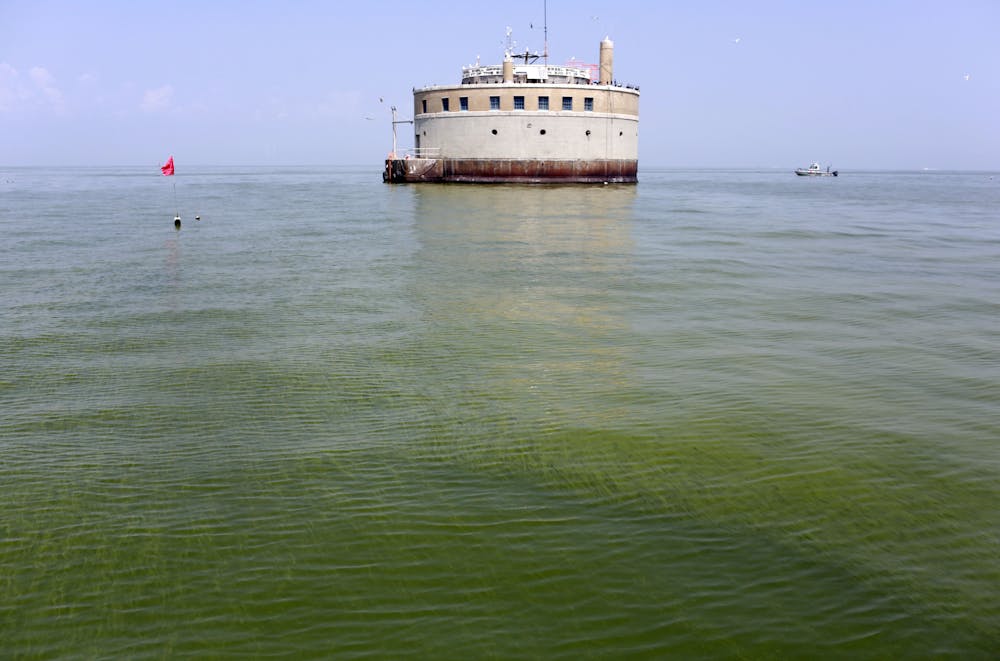
<span class="caption">Harmful algal bloom in Lake Erie, Sept. 4, 2009.</span> <span class="attribution"><a class=
Harmful algal bloom in Lake Erie, Sept. 4, 2009. NOAA/Flickr

This story is part of the Pulitzer Center’s nationwide Connected Coastlines reporting initiative. For more information, go to https://pulitzercenter.org/connected-coastlines-initiative.

“Do Not Drink/Do Not Boil” is not what anyone wants to hear about their city’s tap water. But the combined effects of climate change and degraded water quality could make such warnings more frequent across the Great Lakes region.

A preview occurred on July 31, 2014, when a nasty green slime – properly known as a harmful algal bloom, or HAB – developed in the western basin of Lake Erie. Before long it had overwhelmed the Toledo Water Intake Crib, which provides drinking water to nearly 500,000 people in and around the city.

Tests revealed that the algae was producing microcystin, a sometimes deadly liver toxin and suspected carcinogen. Unlike some other toxins, microcystin can’t be rendered harmless by boiling. So the city issued a “Do Not Drink/Do Not Boil” order that set off a three-day crisis.

Local stores soon ran out of bottled water. Ohio’s governor declared a state of emergency, and the National Guard was called in to provide safe drinking water until the system could be flushed and treatment facilities brought back on line.

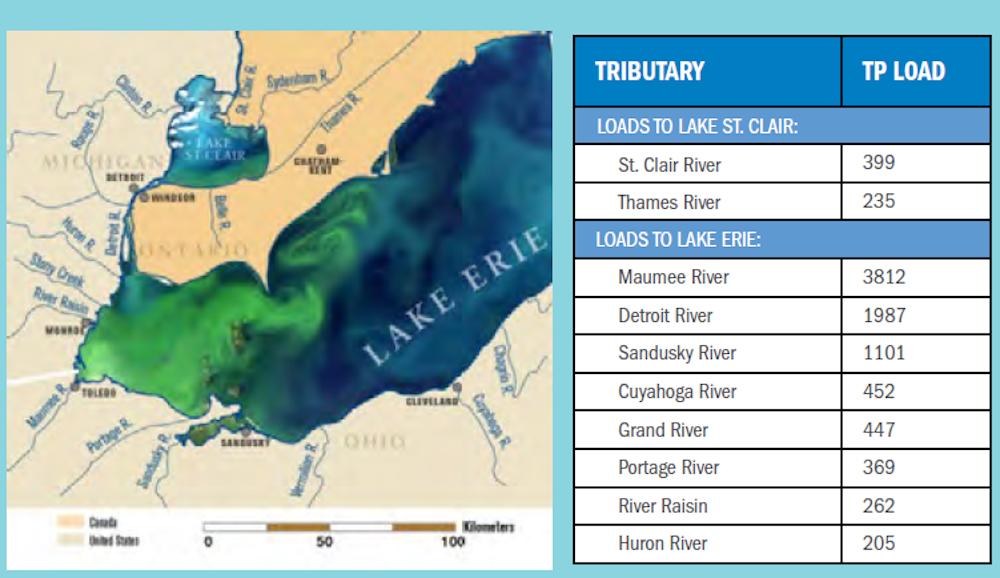
The culprit was a combination of high nutrient pollution – nitrogen and phosphorus, which stimulate the growth of algae – from sewage, agriculture and suburban runoff, and high water temperatures linked to climate change. This event showed that even in regions with resources as vast as the Great Lakes, water supplies are vulnerable to these kinds of man-made threats.

As Midwesterners working in the fields of urban environmental health and climate and environmental science, we believe more crises like Toledo’s could lie ahead if the region doesn’t address looming threats to drinking water quality.

Vast and abused

The Great Lakes together hold 20% of the world’s surface freshwater – more than enough to provide drinking water to over 48 million people from Duluth to Chicago, Detroit, Cleveland and Toronto. But human impacts have severely harmed this precious and vital resource.

In 1970, after a century of urbanization and industrialization around the Great Lakes, water quality was severely degraded. Factories were allowed to dump waste into waterways rather than treating it. Inadequate sewer systems often sent raw sewage into rivers and lakes, fouling the water and causing algal blooms.

Problems like these helped spur two major steps in 1972: passage of the U.S. Clean Water Act, and adoption of the Great Lakes Water Quality Agreement between the United States and Canada. Since then, many industries have been cleaned up or shut down. Sewer systems are being redesigned, albeit slowly and at great cost.

The resulting cuts in nutrient and wastewater pollution have brought a quick decline in HABs – especially in Lake Erie, the Great Lake with the most densely populated shoreline. But new problems have emerged, due partly to shortcomings in those laws and agreements, combined with the growing effects of climate change.https://www.youtube.com/embed/D4Nsp96zV-E?wmode=transparent&start=0

Warmer and wetter

Climate change is profoundly altering many factors that affect life in the Great Lakes region. The most immediate impacts of recent climate change have been on precipitation, lake levels and water temperatures.

Annual precipitation in the region has increased by about 5 inches over the past century. Changes in the past five years alone – the hottest five years in recorded history – have been particularly dramatic, with a series of extreme rainfall events bringing extremely high and rapidly varying water levels to the Great Lakes.

Record high precipitation in 2019 caused flooding, property damage and beachfront losses in a number of coastal communities. Precipitation in 2020 is projected to be equally high, if not higher. Some of this is due to natural variability, but certainly some is due to climate change.

Another clear impact of climate change is a general warming of all five Great Lakes, particularly in the springtime. The temperature increase is modest and varies from year to year and place to place, but is consistent overall with records of warming throughout the region.

More polluted runoff

Some of these climate-related changes have converged with more direct human impacts to influence water quality in the Great Lakes.

Cleanup measures adopted back in the 1970s imposed stringent limits on large point sources of nutrient pollution, like wastewater and factories. But smaller “nonpoint” sources, such as fertilizer and other nutrients washing off farm fields and suburban lawns, were addressed through weaker, voluntary controls. These have since become major pollution sources.

Since the mid-1990s, climate-driven increases in precipitation have carried growing quantities of nutrient runoff into Lake Erie. This rising load has triggered increasingly severe algal blooms, comparable in some ways to the events of the 1970s. Toledo’s 2014 crisis was not an anomaly.

These blooms can make lake water smell and taste bad, and sometimes make it dangerous to drink. They also have long-term impacts on the lakes’ ecosystems. They deplete oxygen, killing fish and spurring chemical processes that prime the waters of Lake Erie for larger future blooms. Low-oxygen water is more corrosive and can damage water pipes, causing poor taste or foul odors, and helps release trace metals that may also cause health problems.

So despite a half-century of advances, in many ways Great Lakes water quality is back to where it was in 1970, but with the added influence of a rapidly changing climate.

Filtering runoff

How can the region change course and build resilience into Great Lakes coastal communities? Thanks to a number of recent studies, including an intensive modeling analysis of future climate change in Indiana, which serves as a proxy for most of the region, we have a pretty good picture of what the future could look like.

As one might guess, warming will continue. Summertime water temperatures are projected to rise by about another 5 degrees Fahrenheit by midcentury, even if nations significantly reduce their greenhouse gas emissions. This will cause further declines in water quality and negatively impact coastal ecosystems.

The analysis also projects an increase in extreme precipitation and runoff, particularly in the winter and spring. These shifts will likely bring still more nutrient runoff, sediment contaminants and sewage overflows into coastal zones, even if surrounding states hold the actual quantities of these nutrients steady. More contaminants, coupled with higher temperatures, can trigger algal blooms that threaten water supplies.

But recent success stories point to strategies for tackling these problems, at least at the local and regional levels.

A number of large infrastructure projects are currently underway to improve stormwater management and municipal sewer systems, so that they can capture and process sewage and associated nutrients before they are transported to the Great Lakes. These initiatives will help control flooding and increase the supply of “gray water,” or used water from bathroom sinks, washing machines, tubs and showers, for uses such as landscaping.

Cities are coupling this “gray infrastructure” with green infrastructure projects, such as green roofs, infiltration gardens and reclaimed wetlands. These systems can filter water to help remove excess nutrients. They also will slow runoff during extreme precipitation events, thus recharging natural reservoirs.

Municipal water managers are also using smart technologies and improved remote sensing methods to create near-real-time warning systems for HABs that might help avert crises. Groups like the Cleveland Water Alliance, an association of industry, government and academic partners, are working to implement smart lake technologies in Lake Erie and other freshwater environments around the globe. Finally, states including Ohio and Indiana are moving to cut total nutrient inputs into the Great Lakes from all sources, and using advanced modeling to pinpoint those sources.

Together these developments could help reduce the size of HABs, and perhaps even reach the roughly 50% reduction in nutrient runoff that government studies suggest is needed to bring them back to their minimum extent in the mid-1990s.

Short of curbing global greenhouse gas emissions, keeping communities that rely so heavily on the Great Lakes livable will require all of these actions and more.

Read more:

Gabriel Filippelli receives funding from the U.S. National Science Foundation and the American Chemical Society-Petroleum Research Fund

Joseph D. Ortiz receives funding from NASA, the HW Hoover Foundation and the National Geographic Society. He is a participant in the Cleveland Water Alliance, which includes Kent State University. His spouse owns an environmental consulting firm, which is not involved in this project or his research.

Schumer: Senate to vote on filibuster change on voting bill

Associated Press

Schumer: Senate to vote on filibuster change on voting bill

LISA MASCARO January 3, 2022

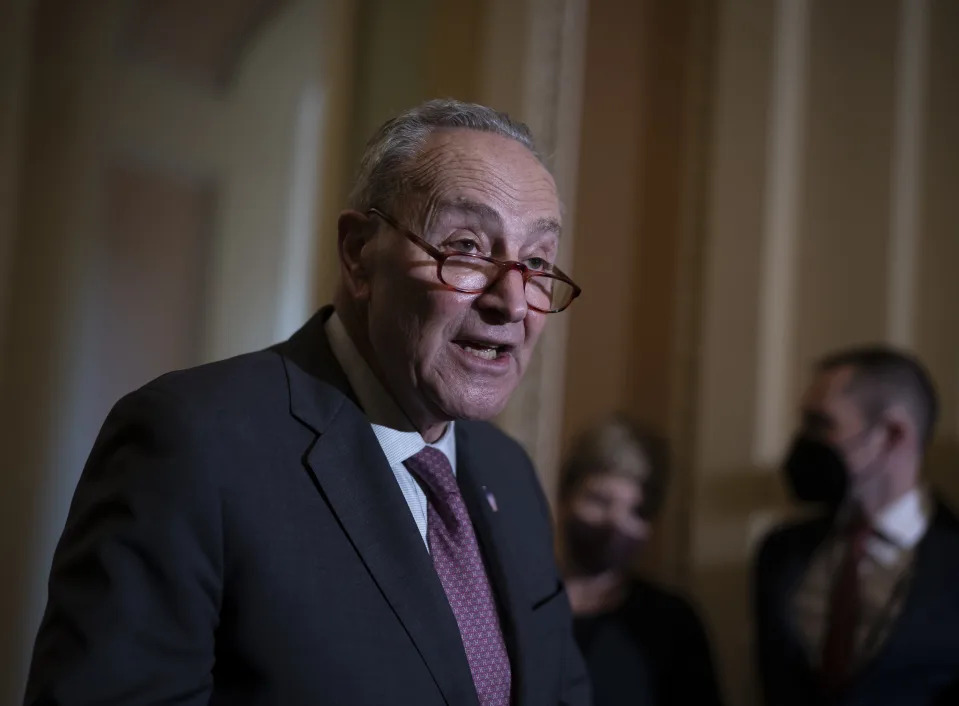
Senate Majority Leader Chuck Schumer, D-N.Y., speaks to reporters after a Democratic policy meeting at the Capitol in Washington, Tuesday, Dec. 14, 2021. (AP Photo/J. Scott Applewhite)

WASHINGTON (AP) — Days before the anniversary of the Jan. 6 attack on the Capitol, Majority Leader Chuck Schumer announced the Senate will vote on filibuster rules changes to advance stalled voting legislation that Democrats say is needed to protect democracy.

In a letter Monday to colleagues, Schumer, D-N.Y., said the Senate “must evolve” and will “debate and consider” the rules changes by Jan. 17, on or before Martin Luther King Jr. Day, as the Democrats seek to overcome Republican opposition to their elections law package.

“Let me be clear: January 6th was a symptom of a broader illness — an effort to delegitimize our election process,” Schumer wrote, “and the Senate must advance systemic democracy reforms to repair our republic or else the events of that day will not be an aberration — they will be the new norm.”

The election and voting rights package has been stalled in the evenly-split 50-50 Senate, blocked by a Republican-led filibuster and leaving Democrats unable to mount the 60-vote threshold needed to advance it toward passage.

Democrats have been unable to agree among themselves over potential changes to the Senate rules to reduce the 60-vote hurdle, despite months of private negotiations.

Two holdout Democrats, Sens. Joe Manchin of West Virginia and Kyrsten Sinema of Arizona, have tried to warn their party off changes to the Senate rules, arguing that if and when Republicans take majority control of the chamber, they could use the lower voting threshold to advance bills Democrats oppose.

President Joe Biden has waded cautiously into the debate — a former senator who largely stands by existing rules but is also under enormous political pressure to break the logjam on the voting legislation.

How the Senate rules would be changed remains under discussion.

Voting rights advocates warn that Republican-led states are passing election legislation and trying to install elections officials loyal to the former president, Donald Trump, in ways that could subvert future elections.

Trump urged his followers last Jan. 6 to “fight like hell” for his presidency, and a mob stormed the Capitol trying to stop Congress from certifying the state election tallies for Biden. It was the worst domestic attack on the seat of government in U.S. history.

Liz Cheney says Trump is unfit for office and ‘clearly can never be anywhere near the Oval Office ever again’

Business Insider

Liz Cheney says Trump is unfit for office and ‘clearly can never be anywhere near the Oval Office ever again’

Yelena Dzhanova January 2, 2022

Liz Cheney says Trump is unfit for office and ‘clearly can never be anywhere near the Oval Office ever again’
  • Republican Rep. Liz Cheney on Sunday said Donald Trump should never be in office again.
  • Cheney said his inaction during the January 6 Capitol riot last year was unacceptable.
  • She said he had the power to put an end to it but did not despite repeated pleas to do so from his allies.

Rep. Liz Cheney scorched former President Donald Trump on Sunday, saying he has proven that he cannot be “anywhere near the Oval Office ever again.”

In an interview on ABC’s “This Week,” Cheney, a Republican representative from Wyoming, said Trump had the power to put an end to the Capitol riot on January 6 but did not despite repeated pleas to do so from his allies and family members.

“I think it’s also important for the American people to understand how dangerous Donald Trump was,” Cheney said in the interview. “We know as he was sitting there in the dining room next to the Oval Office, members of his staff were pleading with him to go on television to tell people to stop. We know Leader McCarthy was pleading with him to do that. We know members of his family. We know his daughter — we have firsthand testimony — that his daughter Ivanka went in at least twice to ask him to please stop this violence.”

Cheney is part of the House select committee charged with investigating the January 6 insurrection.

“Any man who would not do so, any man who would provoke a violent assault on the Capitol to stop the county of electoral votes, any man who would watch television as police officers were being beaten, as his supporters were invading the Capitol of the United States, is clearly unfit for future office, clearly can never be anywhere near the Oval Office ever again,” Cheney continued.

Rioters were emboldened by Trump’s calls to protest the results of the 2020 election, despite Democrat Joe Biden’s victory. While members of Congress were meeting inside the Capitol to certify the results and verify Biden’s presidency, Trump supporters attempted a coup and stormed the Capitol.

The January 6 Select Committee, made up of a group of Republican and Democratic representatives, has been issuing subpoenas to collect documentation and testimony in its investigation of the Capitol riot.

So far, at least 727 people have been charged in relation to the riot.