The Heartbreaking Note Left With Abandoned Infant in Alaska: ‘My Mom Is So Sad to Do This’
Tracy Connor January 2, 2022
Downtown Fairbanks
A newborn boy was found abandoned in a cardboard box in freezing weather in Alaska on New Year’s Eve—with a heartbreaking note saying the parents did not have food or money.
The temperature was just 1 degree when a Fairbanks woman spotted the blanket-filled box near her home. Alaska police said the child was taken to the hospital and “was found to be in good health.”
The note left with the infant—headlined “Please help me!!!”—indicated he was born 12 weeks premature, though authorities did not confirm that.
‘My parents and grandparents don’t have food or money to raise me,” the handwritten note said. “They NEVER wanted to do this to me.
“My mom is so sad to do this,” it continued. “Please take me and find me a LOVING FAMILY. My parents are begging whoever finds me. My name is Teshawn.”
The note was posted in video by a Facebook user with the handle Roxy Lane. She also posted video of herself pulling back the blankets to show a baby nestled beneath.
“I’ve been processing my feelings all day and running through all the different scenarios and reasons, with my bf and family, as to why something like this could have happened,” Lane wrote.
She suggested that the parents might be too young to realize that Alaska has a safe haven law that allows unwanted babies to be dropped with police, firefighters, or paramedics until they are 21 days old.
“I hope the mother gets the help she might need. I doubt they could have afforded to take her to the hospital and she may be in need of medical attention. Please, someone knows this new mom, check on her! She might be in a desperate situation, feeling abandoned herself,” Lane wrote.
She used the discovery of Teshawn to call for unity in the Fairbanks community.
“Clearly, someone in our community felt so lost and hopeless that they made probably the hardest choice of their lives to leave that innocent life on the side of the road with nothing but some blankets and a name,” she wrote.
“But she named him! There’s some love there, even if she made a terrible decision. I know we’re all struggling, I see it. I see you. I love you all and I’m here. Today I saved a baby and I’ll probably think about Teshawn for the rest of my life.”
In a message to The Daily Beast, Lane said she released the video only “in the hopes that everyone involved got the help they might need and that whatever justice needed to be served would be served.”
“I only hope for more awareness in the community, and maybe some compassion for a difficult situation for everyone involved,” she said, declining an interview.
The Alaska Daily News said Fairbanks Memorial Hospital reported that “the baby is doing well and very healthy.”
Pressure Grows on Biden to Shut Down Trump-Era Medicare Privatization Scheme
A petition calling on the president to end the Medicare Direct Contracting pilot program has now garnered more than 10,000 signatures.
Jake Johnson December 30, 2021
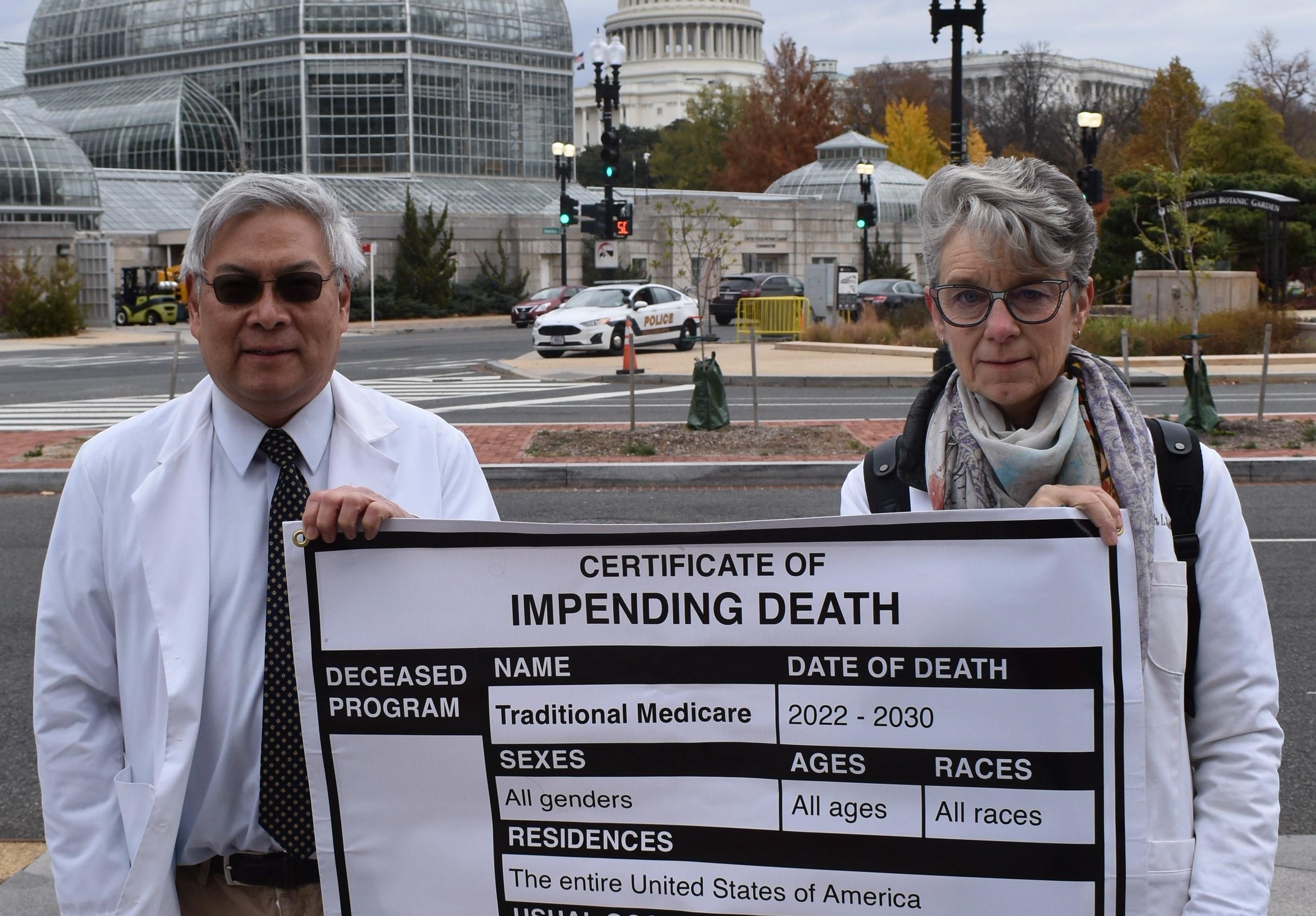
Doctors attend a protest at the headquarters of the Health and Human Services Department on November 30, 2021 in Washington, D.C. (Photo: Physicians for a National Health Program)
Calls are mounting for President Joe Biden to terminate an under-the-radar Trump-era pilot program that—if allowed to run its course—could result in the complete privatization of traditional Medicare by the end of the decade.
“The Biden administration is moving the DCE program forward, threatening the future of Medicare as we know it.”
A petition recently launched by Physicians for a National Program (PNHP) has garnered more than 10,000 signatures as doctors and other advocates work to raise public awareness of the Medicare Direct Contracting program, which the Trump administration rolled out during its final months in power.
“Under this model,” the petition warns, “the Centers for Medicare and Medicaid Services (CMS) could move more than 30 million traditional Medicare beneficiaries into mostly commercial, for-profit plans called Direct Contracting Entities (DCE) without the enrollees’ understanding or consent.”
“In ways similar to commercial Medicare Advantage plans, DCEs have the potential to interfere with care decisions and waste taxpayer money when compared with the efficiency of traditional Medicare,” the appeal continues. “The Biden administration is moving the DCE program forward, threatening the future of Medicare as we know it. We, the undersigned, demand that CMS immediately stop the DCE program to keep Medicare public and nonprofit for future generations.”
Late last month, as Common Dreamsreported, a group of physicians from across the U.S. traveled to the headquarters of the Health and Human Services Department in Washington, D.C. to demand that HHS Secretary Xavier Becerra halt the pilot program in its tracks.
The doctors were ultimately blocked from delivering a petition signed by around 1,500 physicians calling for an end to the privatization scheme, which inserts profit-seeking companies between traditional Medicare and healthcare providers.
“Just like corporate middlemen stand between patients and the healthcare they need, security staff stood between PNHP doctors and the policymakers who want to privatize Medicare,” PNHP tweeted during the demonstration at the nation’s capital.Play
While the doctor-led protest was followed by a brief uptick in reporting on the obscure initiative, Biden’s HHS has yet to act and few members of Congress have publicly spoken out against the Direct Contracting program despite the massive implications for the future of Medicare and its tens of millions of beneficiaries.
“People don’t know that it’s happening,” Dr. Ed Weisbart, chair of PNHP’s Missouri chapter, told Common Dreams in an interview last month. “Most people in Congress don’t know that it’s happening. We’ve started having some of these conversations with congressional staff… but it’s not on their radar either.”
One notable exception is Rep. Pramila Jayapal (D-Wash.), chair of the Congressional Progressive Caucus. Earlier this month, Jayapal penned an op-ed with PNHP president Dr. Susan Rogers urging Biden to stop the Direct Contracting program “while we have the chance.”
According to PNHP, Jayapal is collecting signatures from fellow lawmakers’ for a letter pressuring Biden to shut down the pilot, which sparked legal concerns and general revulsion among career CMS staff when it was launched toward the end of former President Donald Trump’s White House tenure.
“This shit is so fucking gross,” one staffer wrote in a group text viewed by The Intercept.
In their op-ed for The Hill earlier this month, Jayapal and Rogers warned that the Direct Contracting program “could radically transform Medicare within a few years, without input from seniors or even a vote by Congress.”
“After our experience with commercial Medicare Advantage plans,” they added, “we already know that inserting a profit-seeking middleman into Medicare ends up costing taxpayers more, with fewer choices and worse outcomes for seniors.”
Oregonian Chuck Sams has big plans for national parks
By Monica Samayoa (OPB) and Bradley W. Parks (OPB) December 30, 2021
Sams, the first Native American director of the National Park Service, wants to make good on major investments in the park system.
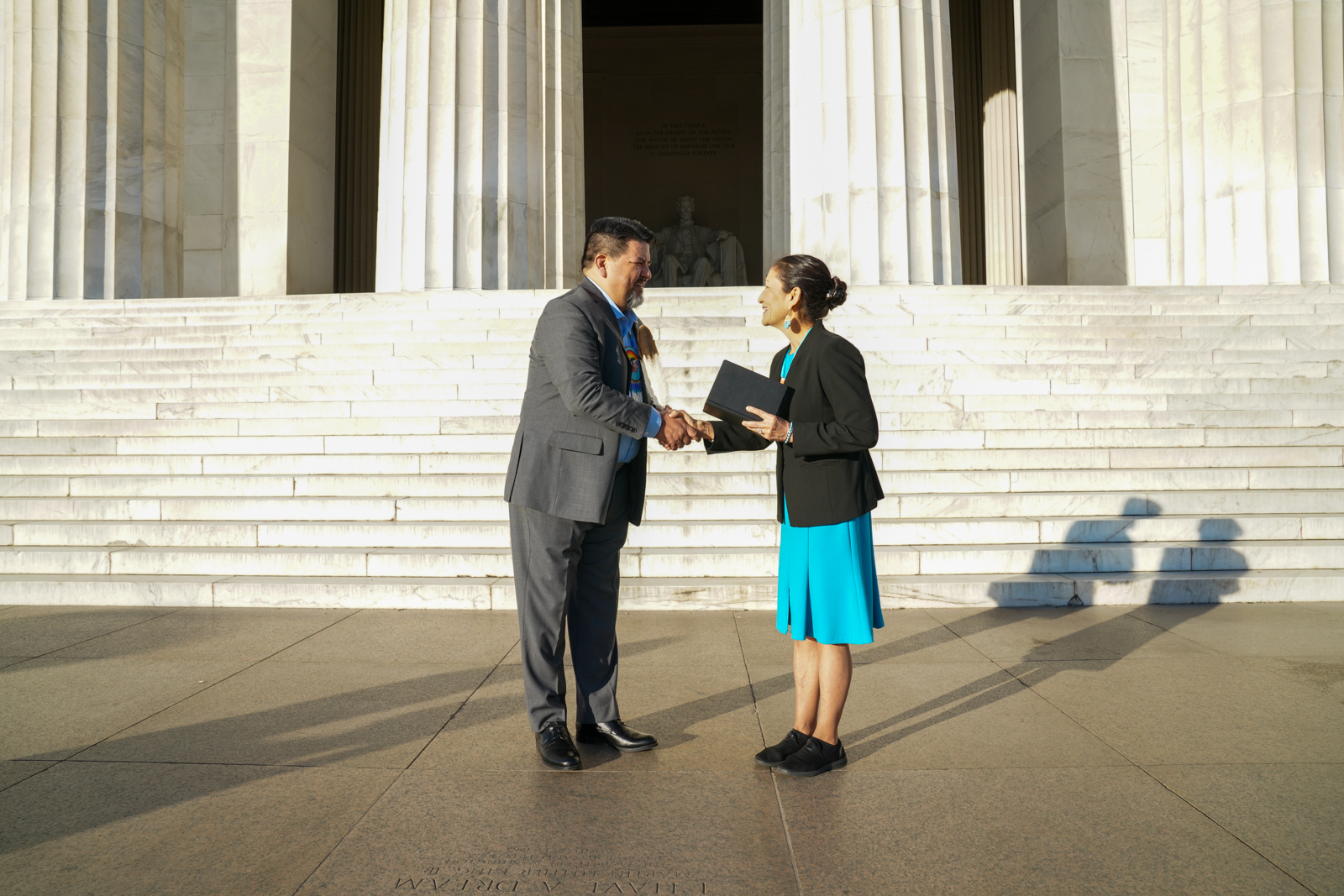
Charles “Chuck” Sams shakes hands with Interior Secretary Deb Haaland after being sworn in as the next director of the National Park Service at the Lincoln Memorial in Washington, D.C., Dec. 16, 2021.U.S. Department of the Interior / Heilemann
Charles F. “Chuck” Sams III shook Interior Secretary Deb Haaland’s hand moments after she officially made Sams the next director of the National Park Service on the sunbathed steps of the Lincoln Memorial in mid-December.
It was a historic moment: the United States’ first Native American cabinet member, Haaland, who is a member of the Pueblo of Laguna, swearing in Sams, enrolled Cayuse and Walla Walla with the Confederated Tribes of the Umatilla Indian Reservation, as the first Native American to lead one of the nation’s foremost public lands agencies.
The significance was not lost on Sams, who spoke recently with OPB.
“I’m so happy and I’m so grateful to President Biden for nominating me to be the 19th director of the National Park Service,” Sams said, “and to continue on in my stewardship responsibilities as an American Indian.”
Sams is the first permanent director of the park service since 2017. He enters the office as the country has made a pair of enormous investments in the park system to clear a hefty maintenance backlog and bolster national parks, monuments and memorials for a growing crush of visitors.
“We’re just very excited to be able to take the investments from the American people and put those on the ground so that we can ensure that parks are here for the next seven generations,” Sams said.
OPB environment reporter Monica Samayoa spoke with Sams about his plans for the park service, overcrowding on public lands and his first-ever trip to a national park.
Monica Samayoa: So your confirmation has been a cause of celebration because you are the first Native American to lead the park service. What does that mean to you?
Chuck Sams: I couldn’t ask for a better opportunity to serve the United States than in national parks. National parks are America’s treasure, America’s gem. Since the founding of the parks in 1916 there has been a dedicated staff who have done that stewardship and continue to do that stewardship. And it really aligns with my values as an American Indian and my values as an American citizen.
Samayoa: I want to talk about your relationship with national parks growing up as a Native American and as an Oregonian.
Sams: My parents regularly took us on summer vacation to Arizona where my mother’s people are from. My mother is Cocopah from southwest Arizona near the town of Somerton, and, of course, I grew up here in Eastern Oregon on the Umatilla Indian Reservation. … I can look back at age 4 or 5 and remember probably the first national park I was able to go to was Grand Canyon. Since then I’ve been to well over 125 parks across the United States and U.S. territories. And so I’ve had a wonderful relationship of being able to walk into the footsteps of my fellow Americans, whether that was the Seminole Indians in Florida and the Everglades, or whether that was Union or Confederate soldiers on a number of battlefields between Maine and Florida itself — in addition to walking in my ancestors’ own homelands here in Oregon, down in the John Day Fossil Beds or at Crater Lake.
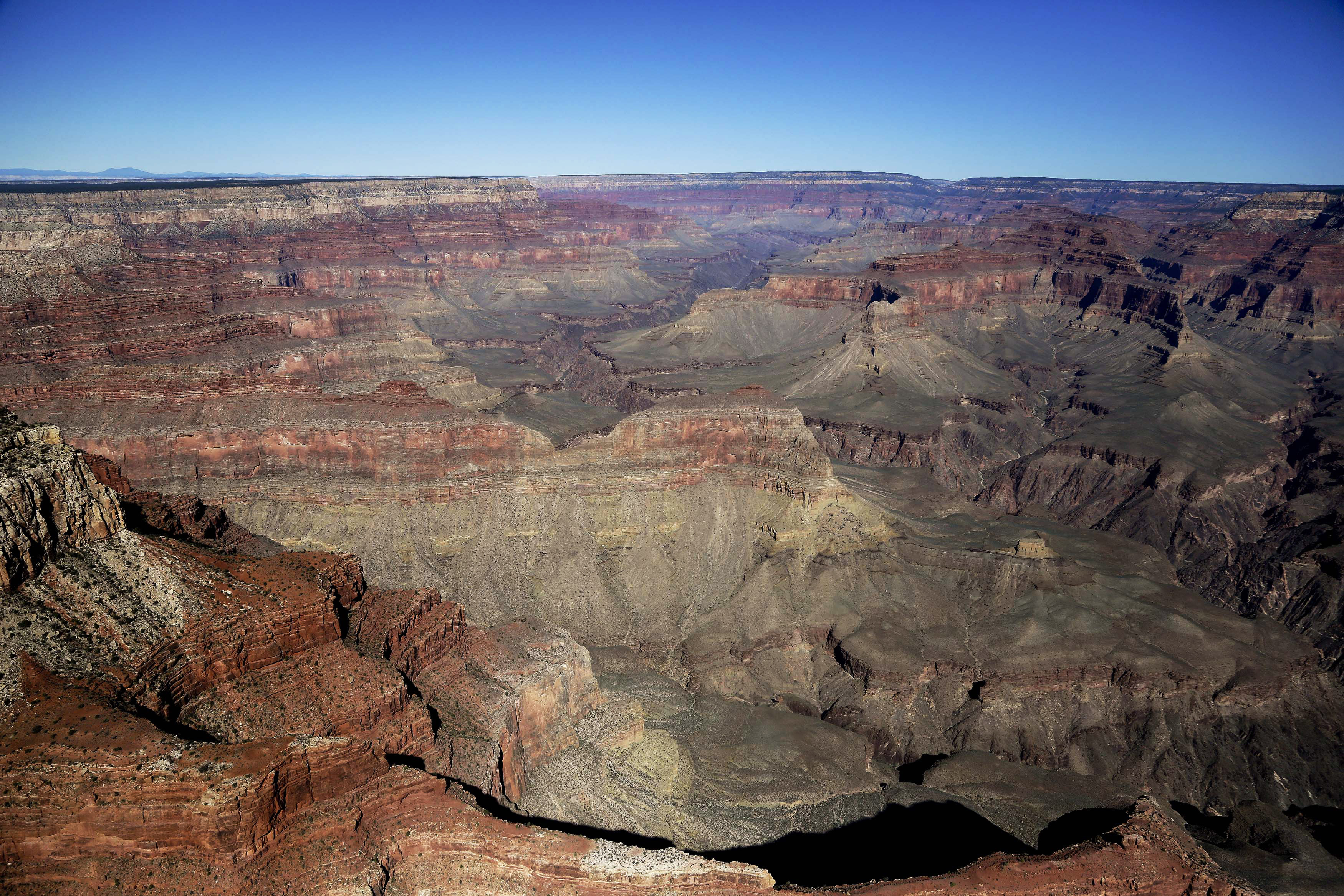
The Grand Canyon National Park is covered in the morning sunlight as seen from a helicopter near Tusayan, Ariz., on Oct. 5, 2013.Julie Jacobson / AP
Samayoa: You shared with us that your first experience at a national park was the Grand Canyon. Can you tell us what that feeling was when you first stepped foot in that national park?
Sams: Just looking at that huge canyon and recognizing the grandeur and the beauty and how small we are, what a great, immense responsibility we have as American Indians to be stewards of our resources. My own creation story — whether that is here among the Umatilla, Walla Walla and Cayuse or the Cocopah people — tells us that we are supposed to protect these lands and these resources for the next seven generations. And so seeing that and being able to travel to a number of national parks, it invigorates me and excites me to join such a dedicated staff who do that stewardship.
Samayoa: Can we talk a little bit more about your priorities now that you are the director of the National Park Service?
Sams: I’m very appreciative of the House and Senate passing the Great American Outdoors Act and the bipartisan infrastructure law. Both of those bring resources to the table that allow us to [take on] a number of issues and infrastructure build-up. National parks have over 5,000 miles of roads and over [1,400] bridges. Many of those have a backlog of issues that need to be addressed so that they can get up to standard. This funding allows us to do that. … I want to be able to prove to the American people that those investments are going to be made soundly as we are able to put that money on the ground across all 50 states and U.S. territories. In addition, I want to help prepare for the growing workforce. As you probably know, the National Park Service [staffing] is down by 20% and yet we’ve seen a 20% increase in people coming into national parks — well over 300 million visitors a year. And so I want to look out and make sure that we are making investments into the next generation of stewards and making sure that workforce is diverse and reflects Americans across the spectrum.
Samayoa: You just mentioned there’s a 20% increase of people just flocking to national parks, especially over the past year. How are you going to balance overcrowding problems and still encourage all Americans to visit public parks without “loving them to death”?
Sams: First, I want to applaud what has been done in the past couple years with the national park staff, who have come up with innovative ways, whether that is timed entry or figuring out how to use new technology to bus people in and shuttle them in and around the parks. But what may work at Acadia is not necessarily what’s gonna work at Yosemite. What works down in the Everglades may not necessarily work at Zion or Denali. And so we really have to work very closely with the local communities to help address these issues, especially the gateway communities and how we can ensure that folks still have equal and open access to the parks and yet that we are not loving them to death. I mean it’s a good problem to have, don’t get me wrong, but we have to find that balance so that we can ensure that what we’re stewarding will be here for the next seven generations ahead.
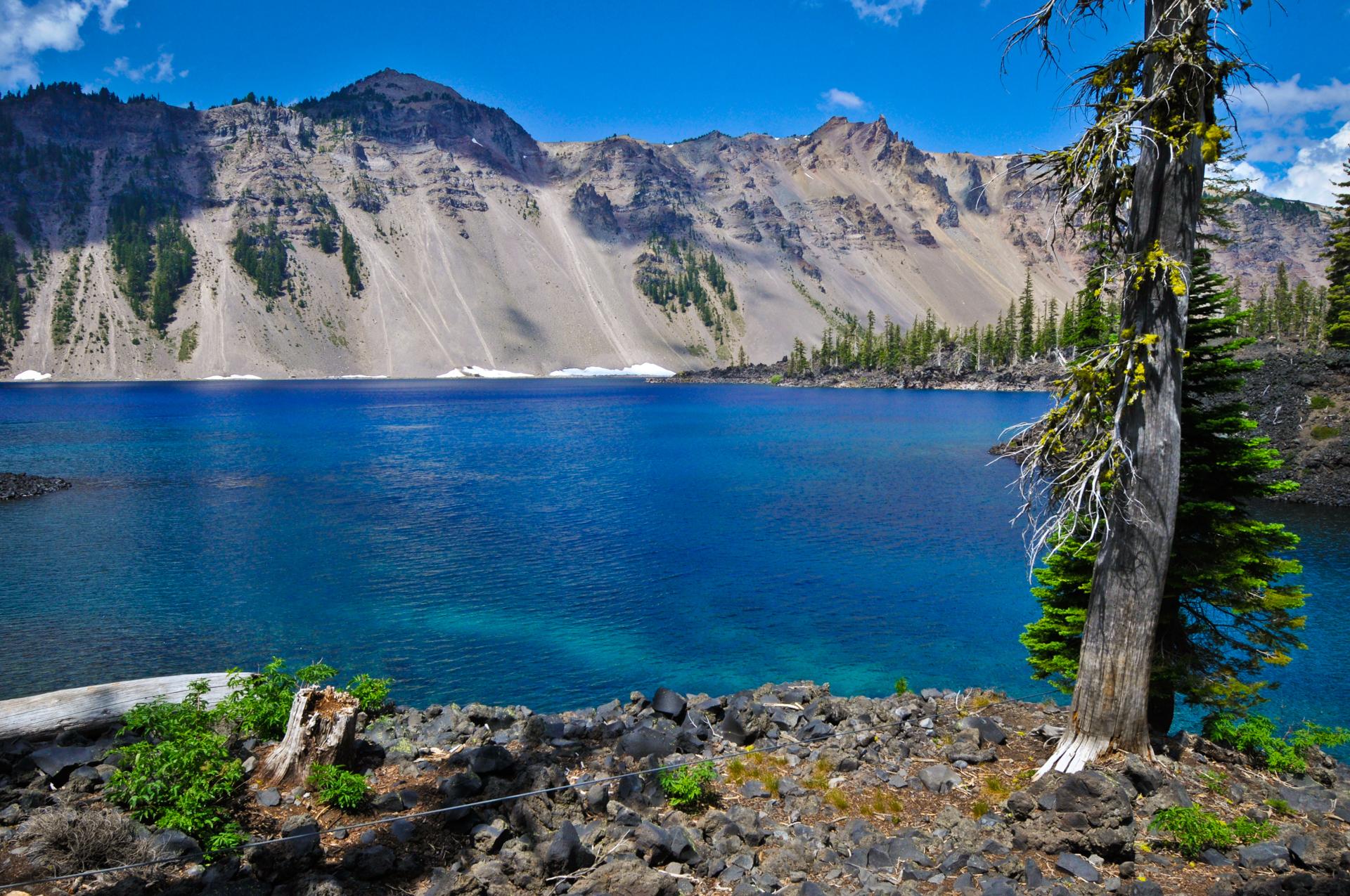
Crater Lake is pictured in an undated file photo.Vince Patton / OPB
Samayoa: You also mentioned encouraging other communities that are not as engaged with parks. How will you work with those communities?
Sams: I want to sit down and talk with them so that we can see what those realities are and see where we can help and make sure that those resources are available so that they aren’t excluded from being able to get into those national parks. National parks fees are localized. The majority of that funding where parks do charge a fee goes right back into helping maintain that park. But we also want to make sure that we don’t price anyone out in America to be able to get into their national parks. And so those are conversations that we’re definitely going to be having across the United States.
Samayoa: So I want to switch into talking about climate change and how it’s altering our national parks. I’m curious how this is informing the way you plan to serve as a steward for these treasured places.
Sams: I think that we can look at our national parks as still some of the strongest anchors on being able to do climate adaptation and fight climate change. That being said, of course, they’re also some of the first places that we see that are being affected — whether that is Denali and the road closures up there due to landslides because of permafrost actually becoming defrosted, whether that is the drought that we’re experiencing at Lake Mead and how the water affects recreation and water needs and uses throughout the West. This administration, the Biden-Harris administration, is committed to fighting and figuring out how we can do climate adaptation. National Park Service staff regularly steward those resources so well that I think that we can be the model for a number of federal agencies and federal land managers to help in figuring out best practices, best management and also the things that we didn’t do well so that we can go out and see how climate adaptation can affect and build a stronger and more resilient United States.
Samayoa: Is there anything else you’d like to share with us on what we can expect from you and the National Park Service within the next year?
Sams: As an Oregonian, I’m very proud to be able to serve at a national level to help and inspire my fellow Oregonians to be out there and be the strong stewards, and to inspire Indian Country that they have a steward here in this chair and that we will continue to fulfill our responsibilities of making sure that the landscape is not only protected, preserved, but also enhanced in the way that will be here for future folks to be able to enjoy and recreate in.
This interview has been edited and condensed for clarity. Interview by Monica Samayoa. Additional reporting and writing by Bradley W. Parks.
Capitol Police officer says it’s a ‘disgrace’ that Pence is dismissing January 6: ‘We did everything possible to prevent him from being hanged and killed in front of his daughter and his wife’
Bryan Metzger – December 30, 2021
Former Vice President Mike Pence and Capitol Police Sergeant Aquilino Gonell.Tom Williams/CQ-Roll Call/Getty Images
Capitol Police Sergeant Aquilino Gonell said Pence’s minimization of January 6 was a “disgrace.”
“We did everything possible to prevent him from being hanged,” he said.
Pence recently said that “one tragic day in January” was being used to demean Trump supporters.
Capitol Police Sergeant Aquilino Gonell in an interview with NPR called former Vice President Mike Pence’s recent minimization of the January 6 Capitol attack a “disgrace” and “pathetic.”
Gonell, who helped defend the US Capitol against a mob of supporters of then-President Donald Trump as a joint session of Congress met to count the country’s electoral votes, spoke about the troubles he’d dealt with in the year since the attack. That includes ongoing therapy for his mental health, injuries that prevent him from raising his left arm, and emotional trauma.
Gonell, an Army veteran who served in Iraq, criticized the recent remarks by the former vice president, whom he helped defend that day.
Speaking recently with the Christian Broadcasting Network, Pence referred to the assault on the Capitol as “one tragic day in January,” a description that the former vice president has used more than once.
“I’m not going to allow the Democrats or the national media to use one tragic day in January to demean the intentions of 74 million people who stood with us in our cause,” Pence said. “And I’m not going to allow the Democrats to use one tragic day in January to distract attention from their failed agenda and the failed policies of the Biden administration. We’re going to focus on the future.”
When he was asked about Pence’s comments about January 6, Gonell criticized the former vice president.
“That one day in January almost cost my life,” Gonell told NPR. “And we did everything possible to prevent him from being hanged and killed in front of his daughter and his wife. And now he’s telling us that that one day in January doesn’t mean anything. It’s pathetic. It’s a disgrace.”
Gonell added: “He swore an oath to the country, not to Donald Trump.”
Without naming anyone, the officer also criticized members of Congress that voted against certifying the 2020 presidential-election results, as well as those who downplayed the attack.
“We risked our lives to give them enough time to get to safety. And allegedly, some of them were in communication with some of the rioters and with some of the coordinators or in the know of what would happen,” Gonell told NPR. “And it makes you question their motives and their loyalty for the country, as we were battling the mob in a brutal battle where I could have lost my life and my dear fellow officers, as well.”
He added: “They’re telling us, ‘Oh, it wasn’t that bad.’ It was that bad when they were running for their lives. It was that bad when we were struggling to hold them off so they could have a chance to escape to safety.”
Gonell testified in July before the House select committee investigating the January 6 riot, describing the “horrific and devastating” violence he experienced at the west entrance to the Capitol, which he called a “medieval battleground.”
“To be honest, I did not recognize my fellow citizens that day, or the United States they claimed to represent,” Gonell said at the time.
Dead from injuries sustained in a car crash after the close of WWII, General George S. Patton, Jr. left in his wake a tremendous legacy. While some have mourned what was a tragic loss at the time, others over the decades have theorized Patton’s death was anything but an accident.
Learn about Henry Ford’s bizarre social program here.
Known for his aggressive nature just as much as his many battlefield victories, General George S. Patton was like a giant among men. He was one of the few allied generals who had combat experience commanding tanks during WWI, making him invaluable during the North Africa campaign. Later, he embarrassed many of his peers in Sicily, Italy by winning the race to Messina against the British Eighth Army.
In what might seem a little too coincidental, Patton was exposed for allegedly slapping and dressing down soldiers in a field hospital since they claimed to be suffering from battle fatigue. The press wanted Patton’s blood and they were able to get some worked up enough to call for him to be relieved of duty. However, General Dwight D. Eisenhower and General George C. Marshall stepped in, likely realizing Patton was too valuable to the war effort.
After spending some time in England, Patton was key to Operation FORTITUDE, the ruse invasion staged in Pas-de-Calais, France. German commanders were so fearful of Patton’s abilities and so convinced he was leading the real invasion that they maintained troops in Pas-de-Calais even after D-Day.
One of Patton’s most famous act of heroics was during the Battle of the Bulge when he led parts of the U.S. Third Army in a counterattack, saving the hopelessly besieged 101st Airborne Division. This endeared him even more to soldiers and the public in general.
On December 9, 1945, Patton was still stationed in Germany when he accepted an invitation from his chief of staff, Major General Hobart Gay, to go pheasant hunting near the base. Originally, Patton was sitting in the front seat of the Cadillac which was being driven by Private H.L. Woodring, his favorite chauffeur. However, when the general noticed the hunting guide’s dog was riding in an open-top jeep, he asked for the party to pull over and had the dog sit in the front of the car so it could warm up. Patton moved to the backseat. Sadly, the good deed would not go unpunished.
While traveling over a railroad crossing, the Cadillac collided with the passenger side of a U.S. Army truck which was turning left. Some claim the limousine Patton was riding in was traveling at a relatively low speed. Others say Private Woodring was going too fast for conditions. During the accident, Patton struck his head on the glass partition in front of him. That impact resulted in a compression fracture and dislocation of the cervical third and fourth vertebrae as well as cervical spinal cord injury. He was paralyzed from the neck down. A mere 12 days later, on December 21, one of the greatest generals the United States Army has ever known passed away from his injuries.
Fueling speculation that the accident with the U.S. Army truck was in truth not an accident but instead was a coordinated assassination was the fact Patton rubbed Russian officers the wrong way in many social and diplomatic relations. He also had been talking about the prospects of invading Russia, saying they were obviously inferior to Americans and would fold in no time. Many in the upper ranks of the U.S. Military didn’t like such a proposition, a feeling which was shared by much of Washington, D.C. and other powers that be of the time. Some believe it was Stalin who had Patton killed because he feared the man could pull off an invasion successfully. Others claim it was the CIA, others in the US government, actors in the British government, or even Allied leaders working with Stalin to get rid of Patton.
Patton also was vocal in post-war Germany about the denazification process and other moves with the government. Eisenhower removed him as the U.S. commander in Bavaria for the politically unwise statements and was transferred to the 15th Army Group, his final post.
The only four star general to be buried at an American Battle Monuments Commission cemetery, Patton was laid to rest alongside his men at Luxembourg American Cemetery, per his request. Just like in his life, in death the general was a man of the people. Beloved by his soldiers and a good portion of the public, it’s entirely possible others saw him as too big of a threat, especially since there was no longer a worldwide war to be fought.
Record-breaking Sierra snow buries towns, closes highways
Hayley Smith, Melody Gutierrez December 28, 2021
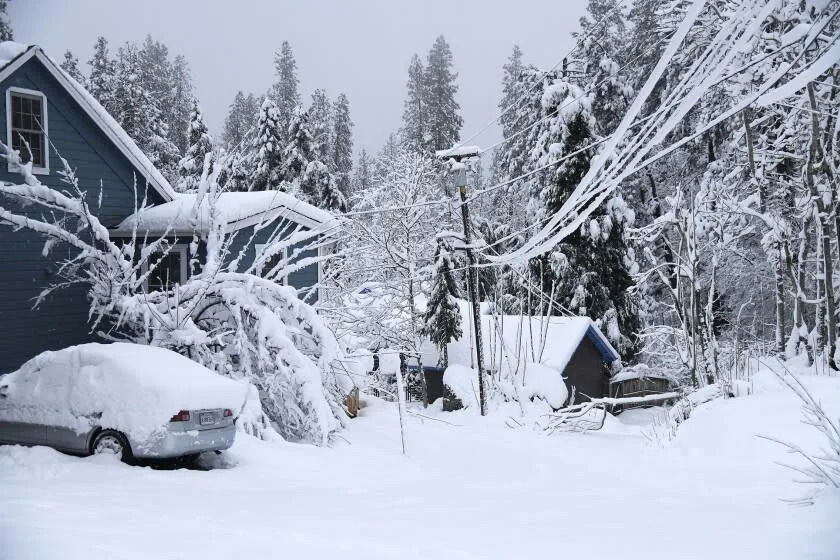
Spring Street in Nevada City, Calif., was socked in with snow and downed tree limbs on Dec. 27. (Elias Funez / The Union )
“Snowbound” was not a term Stephen Kulieke thought he would hear at the end of California’s driest year in a century, but that’s precisely the position the Sierra City resident found himself in this week.
“It’s snowmaggedon,” said Kulieke, 71, whose mountain cabin was buried under at least 4 feet of powder Monday amid record-breaking snowfall in the Sierra Nevada. “It’s just beyond belief how much snow there is.”
Officials at the UC Berkeley Central Sierra Snow Lab at Donner Pass said the area’s snowfall totals have surpassed the previous December record of 179 inches set in 1970. By Tuesday morning, the lab had received a whopping 202.1 inches of snow, making it the third-snowiest month on record.
The snow comes as a much-needed surprise for the bone-dry West, where only months ago, officials put residents under a state of drought emergency amid increasingly dry conditions. During the long, hot summer, rivers and reservoirs dried up, and once-green fields sat fallow and turned to dust.
But December roared in like a lion, with back-to-back storms dumping up to 15 feet of snow across the Sierra Nevada and other mountain areas of California, prompting road closures and snarling holiday travel. Though experts wouldn’t go so far as to call it a drought-buster, they said every bit helps.
“It’s a great start,” said Mike Anderson, state climatologist at the California Department of Water Resources. “It alleviates the worst of the conditions that had accumulated, but it doesn’t cure everything. We really need this to continue into the new year.”
Andrew Schwartz, the station manager and lead scientist at the Berkeley snow lab, agreed, noting that “cautious optimism is the name of the game right now.”
According to Schwartz, the month’s earlier storms were driven by a high-pressure system sitting off the coast of California. Another high-pressure system off Alaska has been “slinging moisture” at the state this week.
The result is that snowfall at the lab since Oct. 1 — the start of California’s water year — is at 258% of average, he said. Almost all of it came in December.
Though welcome, the snowfall has also proven dangerous.
Conditions have hampered search and rescue efforts for a missing 43-year-old ski shop worker in Truckee, Rory Angelotta, who was last seen heading out to ski on Christmas morning. There have been rockfalls, road closures and multicar pileups as the latest storm barreled through the state from north to south.
Highway 50 near South Lake Tahoe was backed up and “at capacity” Tuesday, officials with the California Department of Transportation said. Residents were urged to stay home or face delays of up to 10 hours.
Other highways were completely blocked, including Interstate 80, which was closed much of the day Tuesday from Colfax to the Nevada state line until some eastbound lanes reopened in the afternoon.
In South Lake Tahoe, officials activated the city’s emergency operations center and warned drivers against unnecessary travel. They warned that basic services — gas, tow trucks and lodgings — were strained or overwhelmed. “With the highways also at capacity, there are significant delays in travel time.”
Drivers risk running out of fuel or depleting their batteries and becoming stranded, according to the statement.
“Emergency vehicles, snowplows and their staff are challenged with getting through the traffic, so assistance may be delayed,” officials said.
Electric vehicle drivers are encouraged to look up charging stations closest to them, officials said.
“Because of road conditions and limited ability to get supplies, all resources within the city are currently limited and will likely remain so until conditions improve,” officials said.
At Marval’s Sierra Market in Colfax, store manager Jeremey Rogers and supervisor Barrett Deveraux watched drivers navigate the unplowed parking lot.
“This is pretty gnarly,” Deveraux said of the storm, which toppled trees and threatened to dump more snow later in the day.
A steady stream of shoppers flooded the store, leaving with bread, water and beer. Several locals said spotty cell service was preventing them from making calls. The market was out of propane and low on bread, but Rogers said he expected to have enough diesel to run the generator until more supplies arrived.
“I slept here at the store last night,” said Rogers, who lives in Alta Sierra, northwest of Colfax, where his home was also without power. “I might have died on my way home.”
Those hitting the highways encountered blockades amid hazardous conditions, with some expressing concern that mapping software was sending drivers onto dangerous, poorly maintained mountain roads in efforts to avoid closures.
On Tuesday, weary travelers and locals pulled into a Valero gas station south of Colfax off I-80’s Applegate exit in hopes of snacks and fuel. But with no power, the pumps were off and the station closed.
“We haven’t had power since yesterday morning,” said Zach Stein, 33, who lives in nearby Weimar. “There are downed trees and power lines.”
Erin Morgan and her husband, Jaime Labeiga, were trying to get to a rental house in Truckee with Labeiga’s sister and her boyfriend, who had never seen snow before.
They knew they were unlikely to make it when they left the Bay Area, but as they drove past Auburn and continued east on I-80, their hopes began to rise.
“We were driving and there was no snow, no snow, and then bam,” Morgan said.
With cars being turned around, the four pulled over at the gas station for a snowball fight and to take pictures with a deserted snowman.
“Clearly, we weren’t the only ones with this idea,” Morgan said. “I guess we will just head back after this.”
The record snow is still only a start for California, which has to make up for a massive moisture deficit before it can chip away at the drought, Schwartz said. Though snowfall for Tuesday was high at the snow lab, it still was only about 68% of what the state expects each year.
“It’s definitely amazing that we’ve been able to break this record, but ultimately, we can’t really depend on it to do anything to the drought just yet,” Schwartz said.
Earlier this year, researchers at the Lawrence Berkeley National Laboratory found that climate change was contributing to dwindling snowpack across the state and that winters of low snow, or even no snow, could become a regular occurrence in California in as little as 35 years.
Anderson, the state climatologist, said the recent snow is tied to shifting weather patterns, but it doesn’t necessarily alter the long-term climate outlook.
“The good news is December came through the way we needed it to in terms of delivering rainfall and developing snowpack,” he said. “It also fits into that narrative that as the world warms, there’s more extremes, more variability. So when you do get these events — boy, they really come in.”
Whether the current deep snowpack will last until the spring and summer — when the state’s water regulators typically lean on it as a critical source of supplies — depends on several factors, including temperatures, wind and sun, he said. But there’s no denying that it made a difference.
“If December ends up being our whole winter, if that’s the case, then thank goodness it was such a big one,” Anderson said, noting that statewide reservoirs made some gains this month.
The latest outlook from the National Oceanic and Atmospheric Administration also points to drought improvements for large parts of the Central Valley, he said, although drought conditions are likely to persist in much of Southern California.
For residents like Jared Abelson, an avid skier with a home in the Tahoe Donner neighborhood of Truckee, the waist-high snow was cause for celebration.
“This is probably one of the best things that could happen to the state after the drought,” said Abelson, 39. “Most of our water comes from Sierra snowmelt, so we need this. Especially after the dry November. I live for this stuff.”
Abelson said he made it to a grocery store in Truckee on Sunday, which was running on a generator and had been nearly picked clean of supplies. He was able to secure enough provisions to hunker down at the house with his family of eight, including his wife, children and in-laws.
But temperatures quickly dropped into the teens and single digits as a storm hit Sunday night, and electricity in the area was intermittent, he said. Everyone gathered around a small fireplace that had already been running for four days straight.
“We hung blankets in front of the windows, put towels around the door jambs and put other blankets on the floors just trying to keep the heat in,” Abelson said.
Still, he was glad for what the snow means for California, and said the family was passing the time playing with the kids, ages 4 and 8 months, and snowshoeing and shoveling.
His excitement will likely be met with even more snow: The National Weather Service on Tuesday said another storm was rolling in this week. Winter weather watches and storm advisories will be in effect in the Sierra and other mountain areas intermittently through week’s end, officials said.
Some, like Kulieke in Sierra City, are glad for the moisture. A columnist for the weekly Mountain Messenger newspaper, he said he spent 10 straight weeks this year writing about wildfires, including the Dixie fire, which burned nearly 1 million acres not far from where his cabin now sits beneath a mountain of snow.
“What’s the old expression? Look out what you ask for — you might get it,” he joked.
The small community where he and his husband, Jeff, spend much of their time has been impassable for days, and electricity has been intermittent. He was using a generator to power his cellphone and refrigerator, and a fireplace to keep the house warm.
His husband has already trounced him in Scrabble several times, he said, so he was passing the hours in his study working on his next column for the paper, which will be a reflection on the events of 2021.
“It’s daunting how both nature and a pandemic can bring us to a standstill,” he said as he watched the steady snow falling outside his window. “We’re going into a new year in a way that we didn’t anticipate, and it has challenges and also opportunity. And that’s a good metaphor for our lives generally right now.”
Times staff writers Mark Z. Barabak, Stuart Leavenworth and Gregory Yee contributed to this report. Gutierrez reported from Colfax, Calif., and Smith from Los Angeles.
On Monday, December snow totals at the UC Berkeley Central Sierra Snow Lab reached 193.7 inches, blowing a 1970 record of 179 inches out of the water.
The lab, located at Donner Pass, has received roughly 39 inches of snow in the past 24 hours and could break the 200-inch mark today.
The lab was built in 1946 by the U.S. Weather Bureau and Army Corps of Engineers and maintains one of the longest-running manual snow depth records in the world, dating back to 1879.
“This has been a very beneficial storm for the Sierra region,” said Dan McEvoy, regional climatologist for the Western Regional Climate Center.
Snow continued to make travel nearly impossible over mountain passes on Dec. 26, 2021, a day after a Christmas storm left more than 7 feet of snow in some locations. Seen here is a sign for Spooner Summit Dec. 26, 2021
The Lake Tahoe Basin is sitting around 200 percent of average for snow water equivalent – the amount of water that will be released from the snowpack when it melts – for this time of year.
And the Basin is sitting at 60 percent of its peak average snow water equivalent, which occurs around late March or early April, McEvoy said. The median peak average is 27 inches, and today 16.1 inches of snow water equivalent was measured, he said.
December’s storms came in “forming a right-side-up snowpack,” he said. Earlier storms were wetter with higher elevation snow, but then temperatures and snow levels dropped.
“That’s good for both water content and avalanche concerns,” McEvoy said.
It will also help keep the snowpack for area ski resorts in good shape, even if the region runs into a dry spell.
“It’s been a pretty impressive December,” McEvoy said.
But, he cautioned, it’s possible for drought conditions to resume.
“If I had to emphasize one point, it’s that the drought’s not over. We need the storms to continue through the winter.”
Op-Ed: After 2021 tumult, here’s what it will take to protect American democracy
Nils Gilman December 27, 2021
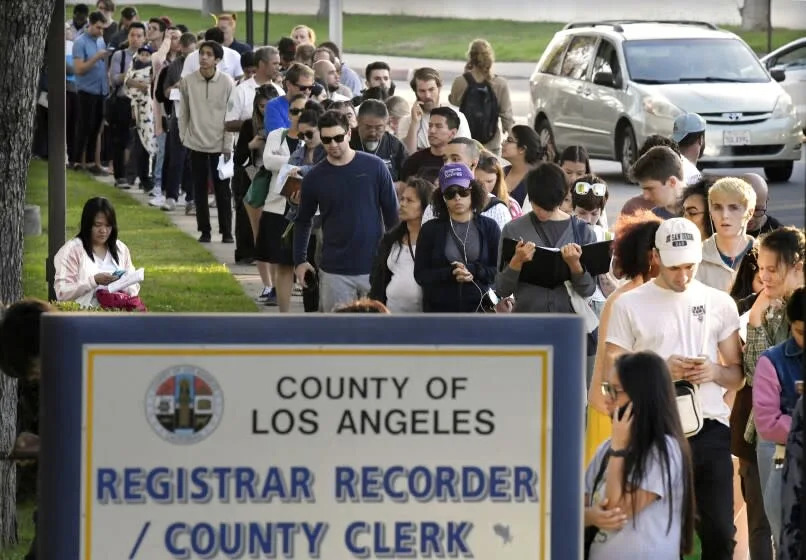
Voters wait in long lines in November 2018 to vote at the Los Angeles County Registrar’s office in Los Angeles. (Associated Press)
For those of us who care about protecting democracy, 2021 has at times resembled the sort of nightmare where you see a friend standing on a train track but your screams about the looming danger can’t be heard. The runaway train of illiberalism continues to bear down on American democracy, and the need to act could not be more urgent.
In truth, this nation avoided the worst that many anticipated might happen during and after the 2020 presidential election. Notwithstanding the “Big Lie” promoted by former President Trump and his cronies, the election, in fact, went off properly, and the candidates who received the most votes were allowed to assume their offices.
However, what the insurrection at the U.S. Capitol on Jan. 6 showed, and which subsequent congressional investigations have made even clearer, is that Trump and his minions were very much willing to try to steal the election. They considered a variety of specific plans, with some going so far as to wargame strategies for overturning his electoral loss.
Yet the main reason that Trump and his team were unable to pull off their schemes was because the election wasn’t all that close. Of the 59 presidential elections since 1792, there have been 13 that were narrower in the electoral college and 17 that were closer in terms of the popular vote.
Despite Trump’s failure, the right-wing anti-democratic forces are still at it. Over the last year, Republicans in state legislatures crafted various measures to make it easier to pull off what they tried to do in the 2020 election. The GOP’s anti-democratic strategy has several dimensions.
First, gerrymander so aggressively that they can win majorities of seats with minorities of votes. The template here is the Wisconsin State Assembly, where the GOP has so successfully gerrymandered the state that in 2018, they received only 47% of the Assembly votes but picked up 64% of the Assembly seats. As congressional redistricting unfolds after the 2020 census – which (by design) undercounted Democratic-leaning residents — similar efforts are underway in every state controlled by Republicans.
Second, make it harder for those same Democratic constituencies to vote. For example, by striking them from electoral rolls, or limiting the number of polling stations in heavily Democratic areas, including in communities of color, or by making it illegal to provide various forms of voting assistance. In just the first half of 2021, 18 states enacted more than 30 laws that restrict access to the vote.
Third, if all else fails and Democrats somehow still manage to get more votes, nullify the votes themselves. Trump demanded this of Georgia, Michigan and Pennsylvania lawmakers and election officials after his losses in those states in 2020. The elections officials, who upheld normal electoral practices, have in many cases been replaced by ones making few bones about their desire to ensure GOP victories occur no matter what.
Fourth, purge any Republicans critical of anti-democratic political strategies. In one swing state after another, Trump supporters are working to replace impartial election administrators with partisan hacks who, in some cases, have explicitly said they will try to enforce results on the basis of the Big Lie. Of the 10 Republicans in Congress who voted to impeach Trump after the Jan. 6 insurrection, all appear headed for the exits, either voluntarily or by primary challenges from Trump loyalists.
All of this adds up to a Republican Party that has made a complete turn toward what in other countries, such as Viktor Orban’s Hungary or Recep Tayyip Erdogan’s Turkey, is known as “illiberal democracy.” Illiberal democracies are ones where elections take place, but they are rigged in the sense that not everyone has equal access to the ballot; or the ballots themselves do not get counted in impartial ways. In such nations, the purpose of elections is not to ensure that elected representatives reflect the will of the people, but rather to legitimate and consolidate the power of one party or leader.
Despite ample evidence of how this has happened in other countries, and of the explicitly stated intentions of Trumpist Republicans in the U.S., Americans continue to stand on the railroad tracks, their backs turned to the impending danger. The primary imperative, then, is for all citizens to take seriously the danger of election nullification, achieved through various means.
Taking that threat seriously means passing federal voting rights and election security bills to ensure that every citizen is empowered to vote, that every vote is properly counted and that the candidates with the most votes assume office. Unfortunately, Democrats have failed to get these bills to President Biden’s desk. They need to do so immediately, if necessary, by carrying out filibuster reform.
Perhaps even more important is the critical political work at the state and local level, where the clearest threats to our democratic system appear at present. For ordinary citizens, this means getting directly involved with local politics, because showing up to vote every four years is hardly enough.
This can include volunteering to serve as a poll worker; getting involved in the campaigns of pro-democracy candidates for governor and secretaries of state; and running for one of the thousands of local electoral administration positions across the country. Ideally, we will move toward nonpartisan professionals overseeing elections, while citizens insist that elected representatives commit to respecting ballot outcomes.
A liberal democracy in the end depends not on laws, but on the political virtues and commitments of its citizens. Those who would tear down our democratic traditions are a minority in this country, but a focused one. To defend against this deepening threat, Americans, regardless of party, will have to respond with greater fervor and dedication.
Nils Gilman is vice president of programs at the Berggruen Institute in Los Angeles.
Trump Adviser Worried He’s Not Getting Enough Credit for Trying to Ruin American Democracy
Tim Dickinson December 28, 2021
Ted-Cruz-Paul-Gosar-Jan-6 – Credit: Tom Williams/CQ-Roll Call, Inc/Getty Images
For most patriotic Americans, Jan. 6 represents a day of national shame and terror at what could have been the end of our democracy. But when former Trump economic adviser Peter Navarro reflects on that day, what he dwells on is that he doesn’t get nearly enough credit.
Navarro recently published a memoir, and is now pushing out interviews to reporters, bragging of a scheme he dreamed up with former Trump adviser Steve Bannon to overturn the results of the 2020 election. They even had a cringey name for it: the Green Bay Sweep.
The plot sought to keep Trump in office by exerting maximum pressure on Vice President Mike Pence to block the certification of the Electoral College votes from pivotal swing states, by drawing out the proceedings on national television for as long as 24 hours. “It was a perfect plan,” Navarro told the Daily Beast. “We had over 100 congressmen committed to it.”
Navarro’s anti-democratic plot was intended to keep Trump in office without violence, he’s fast to insist. In fact, Navarro blames the bloody insurrection at the Capitol for what he calls the “inglorious” result of Congress certifying the (100 percent legitimate) election of Joe Biden, foiling the autogolpe that could have continued Trump’s reign of “populist economic nationalism.”
Navarro is a Harvard-educated economist whom Trump tapped, originally, to escalate his trade war with China. But as coronavirus struck, Navarro’s role at the White House expanded to include pandemic response, in which he pushed the quack treatment of hydroxychloroquine. By the bitter end, Navarro was compiling cockeyed dossiers of (now-exhaustively-debunked) allegations of election fraud — “receipts” Navarro believed justified tin-pot measures to keep Trump in the White House.
So what was the Green Bay Sweep? The plot, Navarro writes, was named after a famous football play designed by storied 1960’s NFL coach Vince Lombardi, in which a Packers running back would pound into the end zone behind a “phalanx of blockers.”
For the 2021 Green Bay Sweep, Navarro writes, Bannon played the role of Lombardi. The plan was to have members of the House and Senate raise challenges to the counts of Electoral College votes from six pivotal battleground states.
“The political and legal beauty of the strategy,” Navarro writes, is that the challenges would force up to two hours of debate per state, in each chamber of Congress. “That would add up to as much as 24 hours of nationally televised hearings,” Navarro writes. The hearings would enable Republicans to “short-circuit the crushing censorship of the anti-Trump media,” Navarro hoped, and broadcast their Big Lie that Democrats had stolen the election “directly to the American people.”
The goal was not to get the election overturned on Jan. 6. Instead, they aimed to create such a spectacle that Pence would be forced to exercise his authority as president of the Senate to “put the certification of the election on ice for at least another several weeks” while Congress and the state legislatures pursued the “fraud” allegations. The dark particulars for how Trump would remain in office after that are not spelled out, and Navarro did not immediately answer an email seeking clarification. But he writes that the Green Bay Sweep was the “last, best chance to snatch a stolen election from the Democrats’ jaws of deceit.”
The problem with the plot was that its success hinged on “Quarterback Mike” — and Pence wasn’t solidly on board. Navarro writes that he tried, with Trump’s backing, to brief Pence on his claims of election irregularities, but that Pence was kept off-limits by his chief of staff, Marc Short. (Navarro seethes that Short was part of the Koch brothers wing of the GOP, having previously worked for a nonprofit backed by the Kochs. When Short came to work for the vice president, Navarro writes, “it was like the Soviet Union taking over Eastern Europe. As an Iron Koch Curtain fell over the vice president, the only way you could speak to VPOTUS was to go through Short.”)
Regardless, Jan. 6 began auspiciously — to Navarro’s view of things. He told the Daily Beast that Trump was “on board with the strategy,” which he writes also had the backing of “more than 100” members of Congress. Navarro elaborated that the plan started off “perfectly” as Congress opened the proceedings to count Electoral College votes. Rep. Paul Gosar objected to results from his home state of Arizona, seconded by Sen. Ted Cruz of Texas — an action that received standing applause from GOP colleagues in the chamber.
Navarro writes that the insurrection at the Capitol actually undermined the Green Bay Sweep by disrupting the official proceedings. When the Capitol was finally cleared of rioters and the joint session of Congress reconvened, Pence and leaders of both parties used “the excuse of the violence” to block other challenges to certification, Navarro writes. “In the inglorious way,” the Green Bay Sweep ended. Call it a sack, a fumble, or an interception, Navarro writes, Pence blew the play and “secured his place in history as the Brutus most responsible for the final betrayal of President Trump.”
It is unclear whether the Jan. 6 committee is probing the Green Bay Sweep as part of its investigation. Bannon, for his part, has been charged with criminal contempt for defying a subpoena from the congressional body. Navarro did not immediately respond to questions about whether he’s been contacted by the committee, or whether he was concerned about having potentially implicated himself in an attempted coup.
This Simple Breathing Technique Could Help Fend Off Illness and Ease Stress
Mary Anderson December 28, 2021
If you hum while you read this, your body could experience beneficial side effects from the vibrations. For one, the resulting oscillation as you exhale helps circulate healthy nitric-rich air within the nasal sinuses, which creates a better environment to help protect against pathogens. “If you do 10 seconds of humming, all the air is exchanged,” says Eddie Weitzberg, M.D., a researcher at the Karolinska Institute and an intensive care physician at Karolinska University Hospital in Sweden. “With normal breathing, it takes between a half-hour and one hour.” The better ventilation may help guard against sinus infections, especially in those prone to recurrent ones, he says.
Previous research by Dr. Weitzberg and his colleague also found that people who hummed as they steadily exhaled through their nose for five seconds increased the amount of nitric oxide in their nasal cavity (pumped in from the sinuses, which have stores of it) by 15 times compared with exhaling normally for five seconds. That spike in nitric oxide presents an opportunity to get more of the salubrious gas into the lungs, says Lou Ignarro, Ph.D., an emeritus professor of molecular and medical pharmacology at UCLA who won a Nobel Prize for his findings about nitric oxide. “After you finish humming, if you immediately breathe in through your nose, you can capture quite a bit of the nitric oxide,” he says.
The huge benefits of getting that injection into your lungs (which work to produce the gas themselves): Nitric oxide helps cells throughout the body destroy pathogens, and it’s also both a vasodilator (it helps blood vessels open wider) and a bronchodilator (it expands airways). “Nitric oxide dilates the pulmonary arteries and veins so more blood can get into the lungs and therefore pick up the oxygen,” Ignarro says. “It also widens the airways, the trachea, and the bronchioles so more oxygen can get in and get picked up by the increased blood getting in.” Better circulation means your body is getting more fuel for all its inner workings, immune functions included. Then there’s this crucial direct detox: “Nitric oxide in the lungs will kill or inhibit the growth of many bacteria, parasites, and viruses, especially the coronavirus,” he says. (Related: How Improving Your Cardiorespiratory Fitness Can Strengthen Your Immune System)
Meanwhile, your humming is also creating vibrations in the inner ear that are being picked up by the vagus nerve, the longest nerve in the body, which starts at the brain stem and runs to the belly. “This power cord is the bidirectional highway of communication between body and brain,” says Arielle Schwartz, Ph.D., a clinical psychologist in Boulder, Colorado. A study in the International Journal of Yoga that five minutes of humming (the humming-bee breath in yoga) increased vagus nerve activity as measured by improved heart rate variability. “That rhythmic rise and fall of the heart rate in synchronization with the breath in its optimal zone is actually putting the brain into what’s often referred to as flow state,” she says. Having your system in flow translates to many health benefits, including less stress.