Sen. Kyrsten Sinema’s argument for not changing or ending the filibuster states is basically that is a tool that protects the democracy and was created for comity. It was not. In 2011, Rob Goodman and Jimmi Soni wrote in The Atlantic: “There’s a reason, after all, that there’s no filibuster written into the Constitution. Our founders had good reason to fear the consequences of a legislature addicted to minority rule.
Sen. Joe Manchin was not always against changing or eliminating the senate filibuster. In 2011, he called for overhauling the filibuster because it “paralyzed” the U.S. and prevented cooperation between the parties. Convenient “amnesia”?
This country has been so polarized for the past five years that the bipartisanship that Sen. Sinema states as a reason to keep the filibuster does not now exist. How many times have Democrats brought bills to the floor with no Republican support?
Right now, Democrats must continue to show voters they are a party of strength and push their positions of being a party for all Americans. The Democrats must not allow Republicans to dictate legislation. It is clear that after the loss in 2020 of the White House, the Congress and the Senate, the GOP is intent on regaining power at any cost, including using the filibuster to block bills that would help their own constituents because the bills were brought to the floor by Democrats.
Without changing or eliminating the filibuster, there will be no check on nationwide Republican-led voter suppression laws that would ensure a their party’s majority in Congress and the Senate, and possibly the White House. Their “agenda” is to regain power and keep it any cost. Republicans will never support voting rights legislation and will continue their obstructionist agenda against everything democratic or any legislation proposed by Democrats.
To ensure equal voting rights, to support future fair and free elections and correctly count every vote cast, the filibuster must be carved out or changed to pass protective voting rights legislation, now. Without this, Democrats could lose control of the House, the Senate and perhaps the White House, and their agenda of helping America will be squashed under boot of a party led by an aspiring autocrat intent on keeping power through fear and bullying and ultimately marking the end of our fledgling democracy.
What if the Jan. 6 insurrection had succeeded in illegally installing Trump?
David Rothkopf – January 6, 2022
As we approach the first anniversary of the Jan. 6 insurrection on the U.S. Capitol, many questions remain. Among these, one of the most important is, “What if?”
What if the coup attempt had succeeded? What if the election results had been overturned? What if Donald Trump were illegally installed for a second term as president of the United States?
It could have happened several different ways. Capitol Police officer Eugene Goodman might have been out sick last Jan. 6 and not in place to divert the mob away from fleeing and hiding members of Congress. The Trumpist horde could have found their way to House Speaker Nancy Pelosi, Vice President Mike Pence or other members of Congress and killed or injured them.
Had they done so, it might have resulted in postponing the certification of the election and in the ensuing time, despite whatever national outrage was triggered, the former president and his supporters might have engineered politically motivated challenges in key states throwing the election’s results into question.
Do you doubt that? Then your memory has faded much in the past year. Because a coup attempt occurred, five people died, more than 140 police officers were injured, for the first time in American history we did not have a peaceful transfer of power, and the backlash with the leadership and rank and file of the GOP was shockingly minimal.
A stunning blow to democracy
Just hours after the attack, 147 Republican members of Congress voted to object to the election results – although there was zero evidence of wrongful outcomes in electoral counts. Even with massive evidence of Trump’s central role in promoting the uprising, only 10 House Republicans voted to impeach him. Just seven voted to convict him in the Senate.
What is more, within weeks of the assault, the leadership and rank and file of the GOP fell into line around the continued promotion of the Big Lie and the continued defense of Trump as their party’s standard-bearer.
This combination of gullibility or willingness to deny demonstrable facts to advance a political goal suggests that another “what if” scenario also came precariously close to succeeding.
This is the plot we are learning was being pursued by Trump supporters to get the certification stalled by peaceful means while state challenges could be pursued and – with the help of GOP legislatures, governors and judges – won. In a new memoir, Trump White House adviser Peter Navarro calls the effort “a perfect plan” and has stated, “We had over 100 congressmen committed to it.” He called the plan “the Green Bay Sweep.”
We do know that the effort came very close to success. For example, one key element was for Vice President Pence to refuse to certify the election results, sending them back to the states. Pence reportedly struggled with this issue, wanted to find a way to make it work, before being dissuaded by former Vice President Dan Quayle. What if Pence had ignored the advice?
Had the election results been flipped, it would have been a stunning blow to democracy in the United States. But it is not hard to imagine that within weeks after stealing the election, Trump would have moved quickly to consolidate power and protect himself from challenges. How do we know? He had senior officials in the Justice Department like Jeffery Clark working with him to flip the election, according to The New York Times, and who is said to have even schemed to remove an acting attorney general not deemed loyal enough to Trump.
What we face today
There is plenty of evidence to suggest that Trump, a man who has joked about being president for life and envying the power of dictators, would have shredded the Constitution and likely have had the support of much of the Republican Party as he did it.
Scary as the answers to those “what if” questions are, perhaps even scarier is that today – despite Biden having won the election with more votes than any presidential candidate in U.S. history, despite Trump having lost more than 60 court challenges to the election, despite failed recount efforts, despite public knowledge of unfounded and likely illegal attempts to pressure state officials to change their vote counts, despite the coup attempt and becoming the only American president ever impeached twice – the attempt to undermine democracy is continuing unabated.
Election laws are being changed that will make it harder for tens of millions of Americans – often minority voters and others who tend to vote Democratic – to vote. States are shifting decision-making power in contested elections to partisan officials.
And while President Biden has said that he was willing to support filibuster reform to ensure voting rights are protected – a crucial move given the threat – it is far from a sure thing that will happen.
What is more, a recent poll shows that Trump vs. Biden rematch in 2024 would be a dead heat.
The attempted coup is not over. The threat to democracy not only remains, it has also proved to be shockingly resilient. Its advocates are as shameless as they are resourceful. And this means that the most instructive aspect of “what if” questions might be that they remind us of what could lie ahead for us all if we are not more vigilant – and if we do not fight as so many of our ancestors have done to preserve and enhance democracy in America.
Let me start with the part you already know — probably from personal experience. Omicron is surging across the U.S.
We set several daily case records for new infections last week. Many of us watched friends and family — vaxxed and boosted — get infected, feeling as though the walls were closing in on us, too. “Name that infection” became the holidays’ most popular parlor game as we struggled to access rapid tests to know for sure whether our sniffles and scratchy throats were a common cold or something more sinister.
COVID has now infected nearly a sixth of all Americans. As omicron continues to surge, it’ll likely claim many more. And yet omicron is changing the nature of how we understand COVID. In November, I posed three questions that ought to guide our thinking about omicron. December brought us answers which may explain what we’re in for this January.
Omicron causes more breakthrough infections.
One question was whether omicron could better evade vaccine-mediated immunity. The answer is complicated: Vaccines were never intended to eliminate the risk of infection. Rather, they were tested against their ability to protect against serious symptoms among the infected. Nevertheless, the secondary benefit of protecting against infection in the first place emerged as a hallmark of vaccine messaging: that we should get vaccinated to protect ourselves and our communities.
What’s clear is that vaccinations continue to protect us from severe illness, particularly among those who are boosted. One analysis by the U.K. government of over a million people who were infected with either delta or omicron found that one dose alone was 52% effective at preventing hospitalization and two doses were 72% effective, although protection waned substantially after 25 weeks. Those who were boosted enjoyed 88% protection from hospitalization compared to the unvaccinated. Ultimately, the unvaccinated remain eight times as likely to be hospitalized from COVID.
The study also showed that booster doses were up to 75% effective at preventing infection within two to four weeks of having received the dose. But that protection waned to between 40-50% after 10 weeks. Protection from infection is more blunted, as the shocking number of breakthrough cases has demonstrated. In that respect, omicron is decidedly more vaccine evasive than previous variants.
To understand why omicron feels like it’s causing so many breakthrough cases, even among the boosted, remember that 25% of a skyrocketing number of exposures is still a lot of infections.
And that’s because …
Omicron is definitely more transmissible.
That much is certain. The vertical lines on graph after graph of COVID cases is all we need to answer that question. But the next question is more interesting: “Well, why?”
A flurry of research articles have all pointed to the same phenomenon. One study from the University of Liverpool’s Molecular Virology Research Group studied the pathophysiology of omicron in mice, and found that omicron was less likely to replicate in lung cells, opting for the cells of the throat instead. Another study from a group in Belgium found similar results in hamsters.
Replication in the throat — so close to the mouth and nose — could help explain, in part, why omicron is so transmissible. But it could also explain something else.
Omicron is less likely to require hospitalization (per individual).
Several studies have demonstrated that, indeed, each omicron case is less likely to require hospitalization. That U.K. study also showed us that, of 528,000 people infected with omicron and 573,000 people infected with delta, omicron-infected people were, at baseline, about a third as likely to require hospitalization.
That said, omicron could still paradoxically cause more hospitalizations. How? Because if there are more than three times the number of omicron cases as there are delta cases, even with a third the probability or hospitalizations, there could be more hospitalizations overall.
That complicates the way we understand “severity.” On an individual level, omicron is decidedly less severe. But on a population level, its transmissibility means that it could be more severe, causing substantially more pressure on our hospital system.
There’s another risk here. Omicron is already causing more hospitalization among young children, who for most of the pandemic have been spared the worst consequences of COVID-19. That’s in part because whereas the hospitalization rate for omicron among adults is lower, the hospitalization rate for omicron among children appears to be similar to that of delta. Multiply that by substantially more cases, and it helps explain why hospitalization among children is higher than it’s ever been.
The pathophysiology of omicron, which appears to replicate in the throat, may explain this. Pediatricians are reporting croup-like symptoms — a dry, barking cough — among patients who test positive for omicron. Because their necks are smaller, airway obstruction poses an acute risk for children, and may explain why a variant that disproportionately infects the upper airway could affect children so profoundly.
What does it mean for the state (and future) of the pandemic?
South Africa, where omicron was first discovered, has already reported that it’s beyond the peak of its omicron curve — and that it occurred without a spike in COVID mortality. What’s clear is that omicron moves fast. Infectious disease models suggest that we could hit the peak of our curve as early as next week, though most believe it’ll peak by the end of January.
In the interim, though, it’ll continue to wreak havoc. Though most cases are mild, its transmissibility has already caused disruptions across the economy — including the healthcare system and the airline industry. Over 2,000 flights were cancelled yesterday alone.
That’s, in part, what prompted the Centers for Disease Control and Prevention to issue new isolation guidelines for exposed and infected Americans, changing the individual isolation period from 10 days to only five. Though it’s generally true that omicron’s infection timeline appears to be shorter than previous variants, there’s no guarantee that infected people are not still not transmitting the virus after this new five-day period. Indeed, the guidelines should have required a negative test to assure that infected people weren’t spreading the extraordinarily transmissible variant after they isolated — a change the CDC is now considering.
That brings up the other challenge: there just isn’t enough testing to go around. Requiring tests would have accentuated our national testing shortage, rubbing in the egg that’s currently all over the Biden administration’s face on this. Ultimately, though, surging cases will do it just the same as people struggle to differentiate between COVID, the flu, and the common cold.
But there is a light at the end of this relatively short tunnel.
Omicron vs. delta vs. the next variant.
Right now, there’s a subcellular arms race raging between omicron and delta. Omicron’s winning: It’s more transmissible — and having had omicron seems to protect people from getting delta more than having had delta protects people from getting omicron. Immunity tends to wane with time. But because this surge is so broad and so quick, omicron is leaving a wall of acquired immunity in its wake.
Though the Great Wall of Immunity that omicron is currently constructing is no guarantee that the next variant may not drive right through it, it certainly makes it harder. In order to outcompete omicron, the next one will need to be different enough from omicron to evade omicron-mediated immunity, and/or to be yet more transmissible than it. That’s a big hurdle. Four serious variants in, I no longer put anything past SARS-CoV-2 … so I’m not saying that’s impossible. I’m just saying that once we’re finally there, omicron could potentially have played a role in getting us past the pandemic phase of COVID into the endemic phase.
What do we do now?
There’s a very difficult January ahead of us. Cases are likely to continue to skyrocket through the peak. We’re already near 500,000 cases per day, on average. A month of growth could spell tens of millions more cases.
First, if you haven’t yet boosted, I don’t know what you’re waiting for. There’s ample evidence that boosters protect against both infection and hospitalization with omicron. Get your booster now.
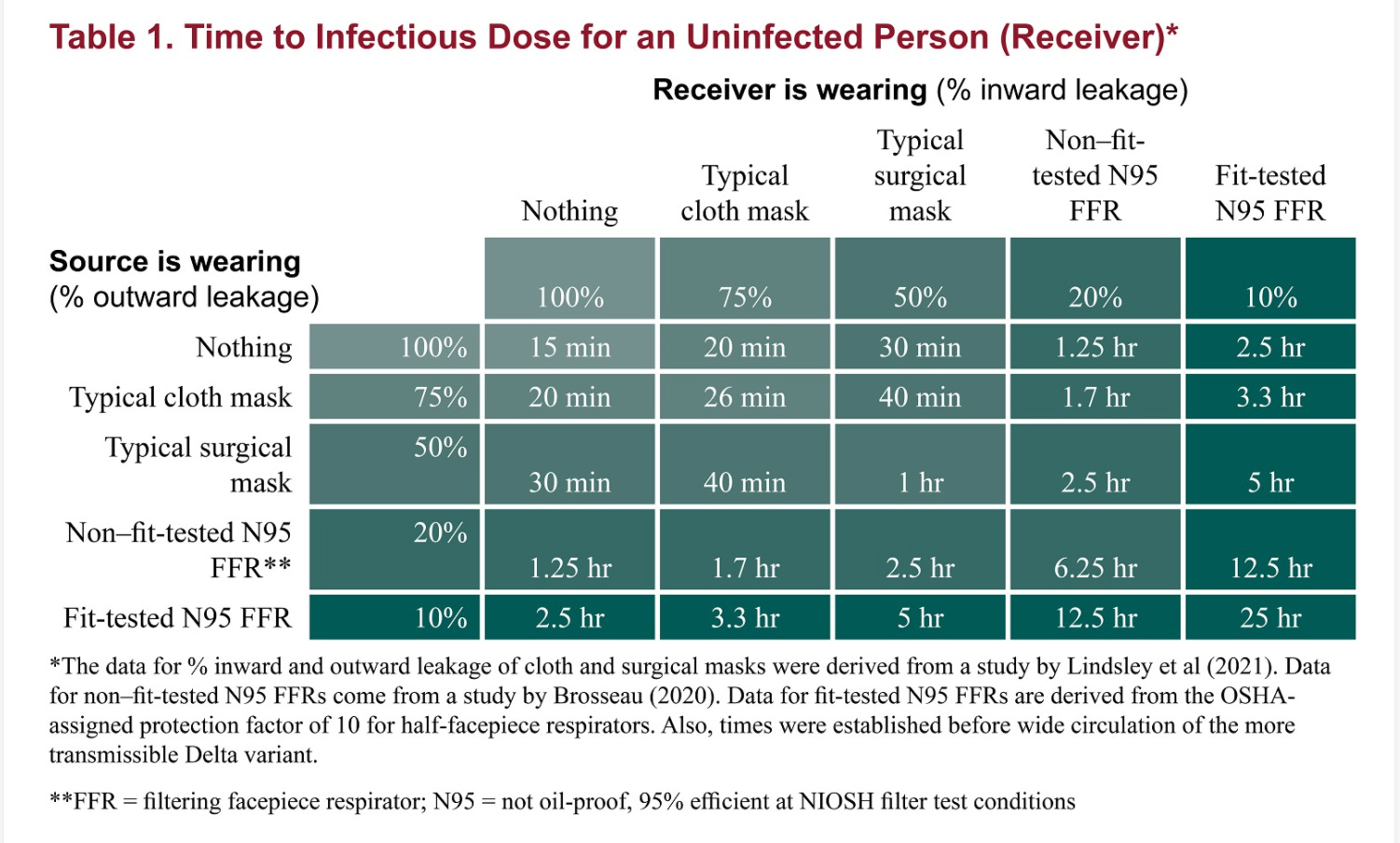
It’s also time to upgrade that fun cloth mask to something that’s medical grade. While any mask is better than no mask, medical grade masks are substantially better than cloth masks. The Center for Infectious Disease Research and Policy at the University of Minnesota estimates that an N95 can extend the amount of time it would take to breathe in an infectious dose of COVID if you were breathing the same air as an infected person fifty-fold, from 15 minutes to 12.5 hours — whereas the average cloth mask buys you about 5 minutes. And that was before omicron.
Rapid antigen tests are hard to come by; there’s also some question over how well they perform on omicron. But if you can get your hands on them, they can help provide some assurances for the most important social events.
Finally, January may be the month to forgo all but the most necessary social engagements. Remember, COVID doesn’t care how “over it” you are. It’s not yet over with us.
Asked why he came to the Capitol this day, Cheney said, “It’s an important historical event,” referring to the anniversary of the insurrection. “You can’t overestimate how important it is.”
PHOTO: Former Vice President Dick Cheney and Rep. Liz Cheney recite the pledge of allegiance on the floor of the U.S. House of Representatives in Washington, on Jan. 6, 2021. (House TV)
He added, “I’m deeply disappointed we don’t have better leadership in the Republican Party to restore the Constitution.”
He noted that his daughter, Rep. Liz Cheney, R-Wyo., is an exception. She is the vice chair of the House select committee investigating the attack on the Capitol, and has come under heavy fire from fellow Republicans.
PHOTO: Former Vice President Dick Cheney is interviewed in St. Michaels, Md., March 17, 2012. (David Hume Kennerly/Getty Images, FILE)
Cheney then went to the House floor with his daughter — he has lifetime floor privileges as a congressman who held the seat she now occupies — to observe a moment of silence.
One by one, Democratic members, including some liberals who castigated him and his politics when he was vice president — approached him to shake his hand and pay their respects.
Besides the Cheneys and her staffers, there were no other Republicans in sight.
PHOTO: Former Vice President Dick Cheney walks with his daughter Rep. Liz Cheney in the Capitol Rotunda at the Capitol in Washington, Jan. 6, 2022. (Manuel Balce Ceneta/AP)
As Cheney departed the House chamber, walking alongside his daughter, he told ABC News, “Very proud of Liz,” when asked for some parting thoughts.
“It’s great coming back,” he told a swarm of reporters. “Liz is doing a hell of a job. I’m here to support her.”
When asked for his reaction to Republican leadership’s handling of this day, Cheney — not one to mince words — said, “Well, it’s not a leadership that resembles any of the folks that I knew when I was here for 10 years — dramatically.”
Rep Liz Cheney said it was “very concerning,” adding, “I think a party that is in thrall to a cult personality is a party that is dangerous to the country, and I think we clearly have got to get to a place we are we are focused on substance and on issues.”
The former vice president then took the long walk across the Capitol toward the Senate chamber, stopping momentarily to take in a white stone bust of himself outside the office of Senate Republican Leader Mitch McConnell, who is far from the Capitol, and instead, at a funeral for a late GOP senator in Atlanta.
ABC News’ Trish Turner, Benjamin Siegel and Mariam Khan contributed to this report.
Ocean’s Largest Dead Zones Mapped by MIT Scientists
Olivia Rosane – January 26, 2022
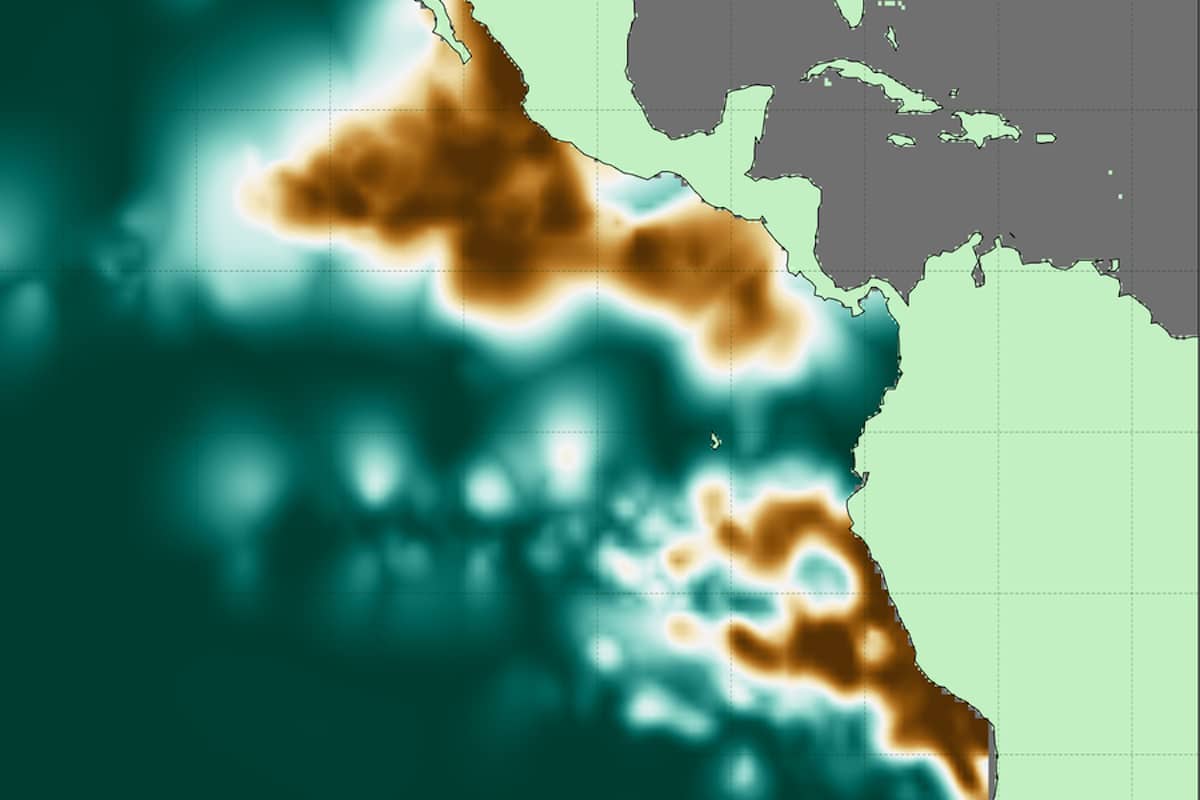
Oxygen-deficient zones intensity across the eastern Pacific Ocean, where copper colors represent the locations of consistently lowest oxygen concentrations and deep teal indicates regions without sufficiently low dissolved oxygen. Jarek Kwiecinski and Andrew Babbin
When you think of the tropical Pacific, you might picture a rainbow of fish ribboning their way between pinnacles of coral, or large sea turtles swimming beneath diamonds of sunlight. But there are two mysterious zones in the Pacific Ocean where life like this cannot survive.
That is because they are the two largest oxygen-deficient zones (ODZ) in the world, which means they are a no-go zone for most aerobic (oxygen-dependent) organisms. Two Massachusetts Institute of Technology (MIT) scientists recently succeeded in making the most detailed atlas to date of these important oceanic regions, revealing crucial new facts about them in the process. The new high-resolution atlas was described last month in the journal Global Biogeochemical Cycles.
“We learned just how big these two zones in the Pacific are, reducing the uncertainty in the measurement, their horizontal extent, how much and where these zones are ventilated by oxygenated waters, and so much more,” Andrew Babbin told EcoWatch in an email. Babbin is one of the atlas’s two developers and Cecil and Ida Green Career Development Professor in MIT’s Department of Earth, Atmospheric and Planetary Sciences. “Being able to visualize in high resolution the low oxygen zones really is a necessary first step to fully understanding the processes and phenomena that lead to their emergence,” he said.
Natural Dead Zones
Oxygen-deficient zones can also be referred to as hypoxic zones or dead zones, as the National Oceanic and Atmospheric Administration explains. They can be caused by human activity, especially nutrient pollution. For example, the world’s second-largest dead zone is in the Gulf of Mexico, and is largely caused by the runoff of nitrogen and phosphorus from cities and factory farms.
The new atlas focuses on two naturally-occurring ODZs in the tropical Pacific, however. One is located off the coast of South America and measures about 600,000 cubic kilometers (approximately 143,948 cubic miles), or the equivalent of 240-billion Olympic swimming pools, MIT News reported. The second is around three times larger and located in the northern hemisphere, off the coast of Central America.
Both natural and anthropogenic ODZs have something in common: too many nutrients. In the case of the Pacific ODZs, Babbin said, those nutrients build up because of wind patterns that push water offshore.
“Deeper water then upwells to fill in this void, bringing higher nutrients to the surface,” Babbin told EcoWatch. “Those nutrients stimulate a massive amount of growth of phytoplankton, akin to how we fertilize crop lands and even our potted plants at home. When those phytoplankton then sink, heterotrophic bacteria act to decompose the organic material, consuming oxygen just like humans do to respire our food.”
However, because of where these zones are located, it takes a long time for oxygen-rich waters to reach the area and replenish what the bacteria gobble up.
“In essence, the biological demand of oxygen outpaces the physical resupply,” Babbin concluded.
While these specific zones aren’t caused by human pollution, understanding them is still important in the context of human activity. ODZs can emit the greenhouse gas nitrous oxide, and there is a concern that the climate crisis may cause them to expand.
People with Omicron don’t gasp for air as much as with other variants, but are getting ‘really sick in a different way,’ an ER doctor said
Dr. Catherine Schuster-Bruce January 5, 2022
Omicron is making people sick in a different way than the original virus, an ER doctor has said.
The variant exacerbates other medical conditions and there’s “so much of it,” Dr. Craig Spencer said.
“The nightmare is over, but this is scary too,” he tweeted on Tuesday.
COVID-19 caused by Omicron is “making people really sick in a different way” compared to the original virus, a leading ER doctor has said.
Dr. Craig Spencer, an associate professor in Emergency Medicine at the Columbia University Medical Center, tweeted Tuesday that fewer patients were “gasping for air” and requiring oxygen, unlike the first wave in March 2020.
New York City has more than 5,000 COVID-19 hospital admissions as of January 3, official data shows.Angela Weiss/AFP/Getty
“But there’s just SO much of it and it’s impacting patients in different ways,” Spencer said, referring to his experience during an ER shift in New York City.
Spencer said “record numbers” of people with COVID-19 were attending the ER, as well as “extremely high” numbers of non-COVID-19 patients. “During the first surge, COVID was the only thing we saw in our ERs,” he said.
According to Spencer, COVID-19 is making preexisting medical conditions worse. For example, it could trigger a life-threatening condition, called diabetic ketoacidosis, in people with diabetes, he said.
Older people with COVID-19 can become too weak to get out of bed, can’t walk and can’t leave hospital, he said.
“What’s also different now is those COVID cases are often in beds next to patients who’ve done everything to avoid the virus, and for whom an infection might have a dramatic toll,” Spencer added. “The cancer patient on chemotherapy. Those immunocompromised or severely sick with something else.”
There were 5,495 people hospitalized with COVID-19 in New York City as of Monday, official statistics show — four times the number from two weeks ago and higher than any point since May 2020.
“The nightmare is over. But this is scary too,” he said.
In the UK — where Omicron is the most common variant — two-thirds of COVID-19 patients were hospitalized directly with COVID-19, according to NHS England data released Friday.
The rest were a “mix” of people with COVID-19 making existing conditions worse, COVID-19 picked up coincidentally, or people stuck in hospital, Christina Pagel, professor of operational research at University College London, said on Twitter at the time.
It is still unclear if Omicron itself causes different symptoms than other variants or whether immunity from previous infections or vaccinations stops it from becoming more severe.
Spencer said that most of the sickest patients with COVID-19 were unvaccinated, even with Omicron. “If you haven’t been vaccinated or boosted yet, now is really the time. It makes a difference,” he said.
Symptoms according to vaccine status
Elsewhere, Mucio Kit Delgado, an assistant professor in Emergency Medicine at Penn Presbyterian Medical Center emergency department, said on Twitter on Monday that he had seen a “strikingly consistent pattern” in symptoms based on vaccination status.
Delgado said that he “hardly saw anyone who had gotten a booster because if they caught COVID-19 they’re likely at home doing fine or having regular cold/flu-like symptoms.”
Meanwhile, when people were vaccinated but not boosted, he said he found many patients were “wiped out, dehydrated and febrile.” Delgado said that people who were older than 55 or had other medical problems were often admitted overnight for intravenous fluids and “supportive care,” but usually went home within a day or two.
Finally, Delgado said that in his experience, unvaccinated people were “the folks that get sick and had to be hospitalized because they need oxygen.” “Some even younger than me,” he said.
I’m a hospice physician in Wisconsin. I’m still watching people die from COVID. Please get the facts and get vaccinated.
Nick Turkal – January 6, 2022
None of us expected the pandemic to last this long. We are all tired of masks, sick of restrictions, and of hearing the horror stories of people dying of a virus unnecessarily.
I am a hospice physician, and sadly, I am seeing COVID patients dying of lung failure, kidney failure and a variety of other problems. The most frequent cases are patients who cannot clear their COVID pneumonia and die from hunger for air. Suffocating is a terrible way to die. There is nothing much worse than not being able to breathe. We can ease patients’ pain, but we cannot change the outcome.
This is an article about the facts of the pandemic — and it is an urgent request for action by all readers.
Fact: There were 2,060 Wisconsinites in the hospital with COVID as of Thursday afternoon, according to the Wisconsin Hospital Association. In July of 2021, that number was about 100. There were 475 Wisconsinites in ICU beds. In July, there were 20.
Fact: The vast majority of severely ill patients with COVID are unvaccinated.
Fact: Hospitals and health systems in Wisconsin are now in a crisis. The crisis is twofold: a lack of ICU beds for COVID and non-COVID patients, and a critical shortage of workers to care for patients. The rate of employees leaving health care in Wisconsin has risen 30%. The rate of burnout in nurses, physicians and other professionals has been well documented.
Fact: People are not getting all of the health care services they need, because health care systems are overwhelmed with COVID patients. This means delays in surgical cases for cancer and heart patients. As of last summer, the CDC estimates that 41% of U.S. adults had delayed health care services because of the pandemic. While mainly an annoyance until now, it will soon reach a crisis.
Fact: The COVID virus has been more difficult to control than expected. The omicron variant is much more contagious than delta. It is likely that there will be more variants that continue to keep this virus in our community. This is what viruses do — they mutate to “outsmart” us.
Commentary: My colleagues locally and nationally are simply running out of steam. They are working long hours and feel a sense of failure because they are telling patients and families that they cannot solve the problems of COVID. The virus overwhelms the body, and people die. Part of the frustration for health care workers is that the very sick and dying are almost all unvaccinated. We have all seen the deathbed pleas from COVID patients, wishing they had been vaccinated. However, in this highly politicized world, even those pleas don’t seem to sink in with people who aren’t vaccinated. Next time you see a health care worker, please thank them for all that they do each day. Ask them not to give up on their profession.
Commentary: I choose to wear a mask and be vaccinated for the safety of others, as well as myself. Even though I am vaccinated and have received a booster shot, I know that I could become infected with COVID and pass it along to someone else. I couldn’t sleep at night if I felt that my actions might have caused someone else’s death. I take precautions for my granddaughters (one of whom is too young for vaccination), for my relatives, for my friends, for my neighbors, and for the strangers that I meet in the grocery store.
What responsible Wisconsin citizens can do
Put the masks back on. When you are in indoor spaces, like grocery stores, you WILL be close to people with the virus. They can transmit the virus before they have symptoms. Masks remain a good way to protect others and yourself. I encourage employers to reinstitute masking policies for employees and guests. Simply put, this saves lives.
If you have been exposed or have symptoms, get tested. If you are positive, please isolate yourself according to CDC guidelines. This disease variant, omicron, spreads so easily. We all need to take extra steps to make certain we are not spreading the virus.
Please, please, please get vaccinated. Vaccines have helped us defeat smallpox, polio and other viral diseases. The solution to COVID is to get everyone vaccinated. More boosters may be necessary. If you won’t do this for yourself, do it for your family.
Think about this: How many people have you heard of dying from the vaccine? Likely no one. Have you heard of someone dying of COVID? Likely you have.
Please do the right thing. We have safe and effective vaccines that can help prevent serious infection and death. Let’s take advantage of that, and end this pandemic.
Dr. Nick Turkal is the former CEO of Aurora Health Care. He is a practicing hospice physician in Wisconsin, and a national health care consultant. Eric Borgerding, president and CEO of the Wisconsin Hospital Association, contributed to this piece.
The donkey told the tiger, “The grass is blue.” The tiger replied, “No, the grass is green .”The discussion became heated, and the two decided to submit the issue to arbitration, so they approached the lion.
As they approached the lion on his throne, the donkey started screaming: ′′Your Highness, isn’t it true that the grass is blue?” The lion replied: “If you believe it is true, the grass is blue.” The donkey rushed forward and continued: ′′The tiger disagrees with me, contradicts me and annoys me. Please punish him.
“The king then declared: ′′The tiger will be punished with 3 days of silence.” The donkey jumped with joy and went on his way, content and repeating ′′The grass is blue, the grass is blue…”
The tiger asked the lion, “Your Majesty, why have you punished me, after all, the grass is green?” The lion replied, ′′You’ve known and seen the grass is green. “The tiger asked, ′′So why do you punish me?”
The lion replied, “That has nothing to do with the question of whether the grass is blue or green. The punishment is because it is degrading for a brave, intelligent creature like you to waste time arguing with an ass, and on top of that, you came and bothered me with that question just to validate something you already knew was true! “
The biggest waste of time is arguing with the fool and fanatic who doesn’t care about truth or reality, but only the victory of his beliefs and illusions. Never waste time on discussions that make no sense. There are people who, for all the evidence presented to them, do not have the ability to understand. Others who are blinded by ego, hatred and resentment, and the only thing that they want is to be right even if they aren’t.
A bipartisan select committee probing the insurrection — established after Republicans in Congress voted against a 9/11-style commission — has issued more than 50 subpoenas since its formation in June.
Below are some notable numbers related to the attack and its aftermath.
725+
The number of people charged in connection with the Jan. 6 Capitol riot, according to the FBI
The age (in years) of the youngest person, a teenager from Milton, Ga., charged in connection with the attack
46
The number of states that the people who were arrested came from
163
The number of Capitol rioters who have entered guilty pleas in connection to the riot, according to NPR
140+
The number of police officers who were injured during the riot, according to officials from the U.S. Capitol Police and Metropolitan Police departments
4
The number of Capitol Police officers who committed suicide following the attack
6
The approximate number of hours Congress was delayed in certifying Joe Biden’s victory over Donald Trump in the Electoral College vote; the breach of the Capitol began shortly after 2 p.m. ET, and lawmakers returned to certify the results around 8 p.m. ET
The number of tweets and retweets posted to Trump’s Twitter feed on Jan. 6, including this one at 6:01 p.m. ET: “These are the things and events that happen when a sacred landslide election victory is so unceremoniously & viciously stripped away from great patriots who have been badly & unfairly treated for so long. Go home with love & in peace. Remember this day forever!”
1.5 million
The estimated cost (in dollars) of the damage to the Capitol Building on Jan. 6, according to the Architect of the Capitol
An explosion caused by a police munition is seen while supporters of then-President Donald Trump riot in front of the U.S. Capitol Building on Jan. 6, 2021. (Leah Millis/Reuters)
100+
The number of people, businesses or entities who have received subpoenas from the select committee investigating the attack, according to CNN
275+
The number of witnesses that the Jan. 6 committee has heard from so far in its investigation of the attack, according to Reuters
35,000
The number of pages of records obtained by the select committee so far, including texts, emails and phone records from people close to Trump
The number of months Robert Palmer was sentenced to prison — the longest sentence handed down so far; Palmer, a 54-year-old Florida resident, pleaded guilty to assaulting law enforcement officers with a dangerous weapon after hurling a fire extinguisher, plank and pole at them
75
The percentage of Trump voters now convinced the election was “rigged and stolen” from him, according to the most recent Yahoo News/YouGov poll
54
The percentage of Trump voters who view the attack on the Capitol as “unjustified,” according to the same Yahoo News/YouGov poll
27
The percentage of registered U.S. voters who think the next election will be “free and fair,” says the poll
84
The percentage of American adults who are worried about the future of democracy, according to the poll
60
According to the poll, the percentage of U.S. adults who believe an attack like the one on Jan. 6 could happen again
‘Don’t Look Up’: Hollywood’s primer on climate denial illustrates 5 myths that fuel rejection of science
Barbara K. Hofer, Professor of Psychology Emerita, Middlebury and Gale Sinatra, Professor of Education and Psychology, University of Southern California January 5, 2022
Every disaster movie seems to open with a scientist being ignored. “Don’t Look Up” is no exception – in fact, people ignoring or flat out denying scientific evidence is the point.
Leonardo DiCaprio and Jennifer Lawrence play astronomers who make a literally Earth-shattering discovery and then try to persuade the president to take action to save humanity. It’s a satire that explores how individuals, scientists, the media and politicians respond when faced with scientific facts that are uncomfortable, threatening and inconvenient.
The movie is an allegory for climate change, showing how those with the power to do something about global warming willfully avoid taking action and how those with vested interests can mislead the public. But it also reflects science denial more broadly, including what the world has been seeing with COVID-19.https://www.youtube.com/embed/RbIxYm3mKzI?wmode=transparent&start=0
The most important difference between the film’s premise and humanity’s actual looming crisis is that while individuals may be powerless against a comet, everyone can act decisively to stop fueling climate change.
Knowing the myths that feed science denial can help.
Myth #1: We can’t act unless the science is 100% certain
The first question President Orlean (Meryl Streep) asks the scientists after they explain that a comet is on a collision course with Earth is, “So how certain is this?” Learning that the certitude is 99.78%, the president’s chief of staff (Jonah Hill) responds with relief: “Oh great, so it’s not 100%!” Government scientist Teddy Oglethorpe (Rob Morgan) replies, “Scientists never like to say 100%.”
This reluctance to claim 100% certainty is a strength of science. Even when the evidence points clearly in one direction, scientists keep exploring to learn more. At the same time, they recognize overwhelming evidence and act on it. The evidence is overwhelming that Earth’s climate is changing in dangerous ways because of human activities, particularly the burning of fossil fuels, and it has been overwhelming for many years.
When politicians take a “let’s wait and see” attitude toward climate change (or “sit tight and assess,” as the movie puts it), suggesting they need more evidence before taking any action, it’s often a form of science denial.
Myth #2: Disturbing realities as described by scientists are too difficult for the public to accept
The title phrase, “Don’t Look Up,” portrays this psychological assumption and how some politicians conveniently use it as an excuse for inaction while promoting their own interests.
A 2021 international study found that 80% of individuals are indeed willing to make changes in how they live and work to help reduce the effects of climate change.
Myth #3: Technology will save us, so we don’t have to act
Often, individuals want to believe in an outcome they prefer, rather than confront reality known to be true, a response that psychologists call motivated reasoning.
For example, belief that a single technological solution, such as carbon capture, will fix the climate crisis without the need for change in policies, lifestyles and practices may be more grounded in hope than reality. Technology can help reduce our impact on the climate; however, research suggests advances are unlikely to come quickly enough.
Hoping for such solutions diverts attention from significant changes needed in the way we work, live and play, and is a form of science denial.
Myth #4: The economy is more important than anything, including impending crises predicted by science
Taking action to slow climate change will be expensive, but not acting has extraordinary costs – in lives lost as well as property.
Consider the costs of recent Western wildfires. Boulder County, Colorado, lost nearly 1,000 homes to a fire on Dec. 30, 2021, after a hot, dry summer and fall and little recent rain or snow. A study of California’s fires in 2018 – another hot, dry year – when the town of Paradise burned, estimated the damage, including health costs and economic disruption, at about $148.5 billion.
When people say we can’t take action because action is expensive, they are in denial of the cost of inaction.
Myth #5: Our actions should always align with our social identity group
In a politically polarized society, individuals may feel pressured to make decisions based on what their social group believes. In the case of beliefs about science, this can have dire consequences – as the world has seen with the COVID-19 pandemic. In the U.S. alone, more than 825,000 people with COVID-19 have died while powerful identity groups actively discourage people from getting vaccines or taking other precautions that could protect them.
Viruses are oblivious to political affiliation, and so is the changing climate. Rising global temperatures, worsening storms and sea level rise will affect everyone in harm’s way, regardless of the person’s social group.
How to combat science denial – and climate change
A comet headed for Earth might leave little for individuals to do, but this is not the case with climate change. People can change their own practices to reduce carbon emissions and, importantly, pressure leaders in government, business and industry to take actions, such as reducing fossil fuel use, converting to cleaner energy and changing agricultural practices to reduce emissions.
In our book, we discuss steps that individuals, educators, science communicators and policymakers can take to confront the science denial that prevents moving forward on this looming issue. For example:
Individuals can check their own motivations and beliefs about climate change and remain open minded to scientific evidence.
Educators can teach students how to source scientific information and evaluate it.
Science communicators can explain not just what scientists know but how they know it.
Policymakers can make decisions based on scientific evidence.
As scholars who work to help people make sound decisions about complex problems, we encourage people to consume news and science information from sources outside their own identity group. Break out of your social bubble and listen to and talk with others. Look up.
Gale Sinatra has received funding from the National Science Foundation (NSF), the Social Sciences and Humanities Research Council (SSHRC) of Canada, and Mattel Children’s Foundation.
Barbara K. Hofer has received research funding from the National Science Foundation and Vermont EPSCOR.