MSNBC Host Tiffany Cross Accuses Kyrsten Sinema of ‘Upholding White Supremacy’
Lindsey Ellefson January 15, 2022
MSNBC’s Tiffany Cross was the latest to scold Democratic Sen. Kyrsten Sinema for her refusal to align with her party on dismantling the filibuster, saying Saturday that, “Sinema is a Democrat, but she is in many ways upholding white supremacy.”
During Saturday’s “The Cross Connection,” viewers saw a clip of Sinema’s emotional Thursday speech in which she reiterated her decision not to vote with the majority of her party for filibuster reform, which garnered significant blowback online and on cable news. Senate Democrats have been attempting to pass two voting rights bills in the face of unified GOP opposition. The passages hinge on Sinema and Democratic Sen. Joe Manchin.
“I don’t think I can roll my eyes hard enough and you kind of just want to say, ‘Girl, bye,’” Cross said of Sinema.
Guest Angela Rye also weighed in, adding Sinema’s stance is “rooted in falsehoods.”
“We also know that voting rights has been supported on a bipartisan level in both chambers of Congress since 1965, when a Democrat signed the bill into law,” Rye continued. “So, what I would tell Sen. Sinema is to please reflect on your history. Not not a wobbly voice, not an emotional plea for people to remove or to not remove the filibuster when you just could cross that hurdle. Right now — I’m talking about this year — they could cross that hurdle.”
Cross added, “It is a way to ensure we’re back on that right road, and in this case, she is a hurdle on that road.”
Former President Donald Trump, the leading figure in the Republican party, is planning a rally in Arizona Saturday, just two days ahead of Martin Luther King, Jr. Day. The late civil rights leader’s family is rallying for the voting rights bills in the same state over the holiday.
A Florida Republican who was defeated by 59 percentage points in a congressional special election won’t concede
John L. Dorman January 16, 2022
Campaign signs outside the Sunset Lakes Community Center in Miramar, Florida, on January 11.AP Photo/Rebecca Blackwell
The Republican Jason Mariner hasn’t conceded in Florida’s 20th District special election House race.
Sheila Cherfilus-McCormick, a progressive Democrat, beat Mariner in a 79%-20% landslide.
Mariner filed a lawsuit before the election was called, telling CBS Miami “stuff” was “discovered.”
A Florida Republican who last Tuesday lost a congressional special election by a landslide in a heavily Democratic district has declined to concede the race, according to CBS Miami.
Sheila Cherfilus-McCormick — a Democrat who pledged to fight for $1,000 monthly checks for Americans and who backs progressive policies such as the Green New Deal and “Medicare for All” — easily defeated the Republican Jason Mariner in the race to succeed the Rep. Alcee Hastings, who died in April.
With all precincts reporting, Cherfilus-McCormick defeated Mariner 78.7% to 19.6% in Florida’s 20th District — a 59.1-percentage-point victory. She received 43,663 votes to her opponent’s 10,883 votes.
But in a move reminiscent of former President Donald Trump, who continues to dispute his election loss to President Joe Biden, Mariner has made claims of irregularities in the South Florida district.
“Now they called the race — I did not win, so they say, but that does not mean that they lost either, it does not mean that we lost,” the Republican told CBS after the race was called.
Before the polls closed for the special election, Mariner filed a lawsuit alleging ballot issues in Broward and Palm Beach counties, the two populous Democratic-leaning jurisdictions that anchor the district.
“We’ll also have some stuff coming out that we’ve recently discovered,” Mariner told the TV station without elaborating.
Cherfilus-McCormick — who eked by Dale Holness by five votes in a multicandidate Democratic primary in November — brushed off Mariner’s actions.
“Well, this wouldn’t be my first time running against an opponent who is refusing to concede, so it’s not our first time, and at the end of the day nothing can stop the motion,” she told CBS.
Holness, a former Broward County commissioner, filed a lawsuit in November seeking to invalidate the Democratic primary results, alleging that Cherfilus-McCormick’s advocacy for universal basic income was tantamount to bribing voters.
Election officials in Broward and Palm Beach counties told CBS the election results would be certified in 14 days — with challenges permitted for 10 days after that point.
While candidates who are unsuccessful in their races aren’t legally bound to formally concede, Trump’s continued refusal to acknowledge his 2020 loss despite a clear 306-232 Electoral College victory for Biden has morphed into a major point of contention for partisans, from the grassroots level to the halls of Congress.
In the wake of Trump’s defeat in 2020, Republicans across the US have raced to implement voting restrictions, fueled by Trump’s widely debunked claims of mass voter fraud.
Congressional Democrats have sought to nullify many of the provisions of Republican-authored election laws with the Freedom to Vote Act and the John Lewis Voting Rights Advancement Act but have been stymied nearly unanimous GOP opposition to the bills as well as by resistance from Sens. Joe Manchin of West Virginia and Kyrsten Sinema of Arizona to changing the filibuster.
A Vivid View of Extreme Weather: Temperature Records in the U.S. in 2021
Krishna Karra and Tim Wallace January 15, 2022
SHAVER LAKE, CA – JULY 15: In an aerial view, a barren landscape is seen after burned trees were cut down following the Creek Fire, which began on September 4, 2020 and was fully contained on December 24, on July 15, 2021 near Shaver Lake California. The 379,895-acre fire was the fourth largest recorded in California and the biggest single fire that was not part of a greater complex fire. Hundreds of homes were destroyed and scores of backpackers the path of the fire were airlifted from the wilderness in the Sierra Nevada mountains. At one point, about 1,000 people were trapped near Mammoth Pool Reservoir with more than 200 on a boat launch. Authorities are bracing for a predicted driest year on record for the Kern River, carrying only about a quarter of the average Sierra snowmelt water to Lake Isabella. Large portion of the West are now in the most extreme drought category and fire officials are warning of another devastating wildfire season in California. (Photo by David McNew/Getty Images) (David McNew via Getty Images)
Temperatures in the United States last year broke more records for the hottest or coldest ever documented than any other year since 1994, according to a New York Times analysis of Global Historical Climatology Network data.
Heat waves made up most of these records, setting a new mark at 8.3% of all U.S. weather stations, more than in any year since at least 1948, when weather observations were first digitally recorded by the federal government.
The world has been warming by almost two-tenths of a degree per decade. Extreme-temperature events can often demonstrate the most visible effects of climate change.
“We do not live in a stable climate now,” said Robert Rohde, the lead scientist at Berkeley Earth, an independent organization focused on environmental data science. “We will expect to see more extremes and more all-time records being set.”
The brutal arctic outburst that caused Texas’ power grid to fail and the heat wave in the Pacific Northwest in June account for many of the records.
During the winter storm, on Feb. 17, the temperature dropped to minus 5.98 degrees in Jacksonville, Texas, far below its normal February low of about 40 degrees. State officials in Texas said that 246 people died in the storm.
In Salem, Oregon, the temperature spiked to 116.96 degrees on June 28. The normal high there in June is around 74 degrees. The National Weather Service has attributed at least 110 deaths to the extreme heat.
The Times analyzed temperature data from more than 7,800 weather stations across the United States. Locations without at least 30 years of weather data were ignored, though most stations have recorded temperature for at least 65 years.
Records have been set somewhere in the country every year since at least 1970, but 2021 stands alone when compared with recent years, a Times analysis found.
Heat waves in 2002 and 2012 brought extreme temperatures to hundreds of cities and towns. Like 2021, 2011 broke numerous cold and heat records. But last year’s extreme temperatures were spread across large areas of the country and surpassed even more records.
Numerous records set in 2021 were also broken by double digits.
To explain these extremes, Rohde made a comparison with world records in the 100-meter dash. Runners typically break world records by hundredths of a second.
Among the new temperature records, Rohde said, “it’s like someone came in and seemed to be running an entirely different race because they just blew past everything we’ve come to expect.”
New marks were also set by breaking records that have stood for decades. Bottineau, North Dakota, set a new minimum temperature record of minus 50.98 Fahrenheit, eclipsing tens of thousands of daily observations since 1893.
According to experts, climate change has pushed the extremes of temperature ranges around the world.
“What were hot days in the past are becoming more common,” Rohde said. “What were very, very hot days in the past are now two or three times more common than they used to be.”
METHODOLOGY
Data in the United States was obtained from the Global Historical Climatology Network (GHCN), an integrated database maintained by NOAA that contains daily climate summaries from land surface stations. The data was processed and analyzed with BigQuery.
The GHCN daily data set acts as the official weather record of the United States, and it has been validated for spatial and temporal consistency across measurements. Daily observations that failed any quality checks were excluded, such as measurements that far exceed the lowest or highest temperatures ever recorded on Earth.
A historical record is defined as the hottest or coldest temperature ever recorded up to that date. Only the hottest or coldest record for a particular year is compared. Other records in the same year, like, for example, during an extended heat wave, are excluded.
For every historical record, only stations that have collected a minimum of 30 years of data are used. Further, each station included in our analysis is required to have collected data for a minimum of half of its life span.
To compute historical records for cities, stations were aggregated to incorporated places as defined by the U.S. Geological Survey. Within each area, data across stations is treated as a unified measurement for calculating historical records. Records may differ slightly from other aggregated sources based on the specific regions and stations considered.
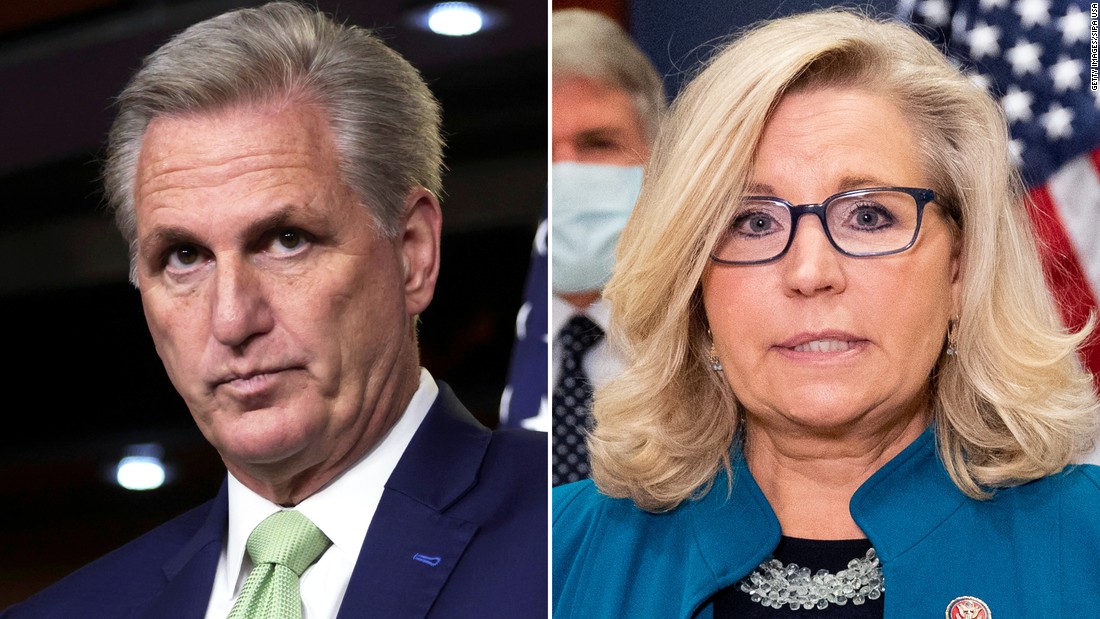
Liz Cheney says Kevin McCarthy is ‘clearly trying to cover up what happened’ at the Capitol riot after he refused to work with investigators
Sinéad Baker January 13, 2022
House Minority Leader Kevin McCarthy refused to cooperate with Capitol-riot investigators.
Liz Cheney, who is on the committee, said he was trying to “cover up” what happened at the riot.
McCarthy called the committee “illegitimate” and said it was trying to hurt Republicans.
Rep. Liz Cheney said House Minority Leader Kevin McCarthy was trying to “cover up” what happened at the Capitol riot by refusing to work with the House committee investigating it.
Cheney, one of two Republicans on the committee, told CNN on Wednesday: “I wish that he were a brave and honorable man. He’s clearly trying to cover up what happened. He has an obligation to come forward and we’ll get to the truth.”
She also refused to rule out the option of subpoenaing him, CNN reported.
“As a representative and the leader of the minority party, it is with neither regret nor satisfaction that I have concluded to not participate with this select committee’s abuse of power that stains this institution today and will harm it going forward,” he said.
The committee had asked him to take part voluntarily in its investigation, noting that he has said he spoke with then-President Donald Trump while the riot was unfolding and that he spoke on the House floor after the insurrection about Trump’s role in it.
McCarthy said in that speech that Trump bore responsibility for the riot, though he has since downplayed it and suggested people need to move on from the attack.
Cheney, in stark contrast with some other Republicans, has repeatedly criticized Trump over the riot. She was the third-most-senior House Republican before her party removed her from leadership last May over her comments on Trump.
McConnell’s threats of political retribution have long made Democrats uneasy, and the looming specter of legislative payback is central to the arguments of Democratic centrist senators in favor of preserving the 60-vote threshold.
But McConnell’s threats of political payback shouldn’t even register in Democrats’ minds as a reason to keep the filibuster around. In fact, they are largely empty.
First off, a lot has to go right for the GOP in order for McConnell to make good on his threat. Sure, he may put some bills on the floor some Democrats would rather not vote on, but a Republican Senate won’t be able to turn bills into laws without a Republican House and White House willing to pass and sign them. That scenario is certainly possible after 2024—a lifetime away in political-years—but it’s far from guaranteed.
This is why Democrats are so laser-focused on tossing out the filibuster right now: the clock on guaranteed unified control for Democrats is ticking down to zero fast. They’re terrified of the damage Republicans could do to the country when in charge, and almost just as terrified of how long they could soon be out of power without changes to voting and elections.
But even if Republicans do hit the federal trifecta soon, it’s unlikely they will win large enough majorities for them to push the kind of transformative legislation that so frightens Democrats. It’s one thing to maintain the appearance of party unity on broad policy themes and campaign slogans, particularly when in the minority—it’s another thing entirely to negotiate palatable compromises across an entire caucus at the level of detail federal legislation requires. Just ask the Democrats.
The bills McConnell is threatening—like immigration crackdowns or abortion restrictions—are ones that will both rile up the GOP base and make some Democrats queasy. They’re also precisely the ones that would have the weakest support from the vulnerable GOP senators their majority is all but certain to depend upon. Senators at risk of losing their seats won’t want to upset their fragile electoral security by taking a recorded vote that may trigger voter backlash, and the party won’t want to jeopardize their majority status by forcing them to do so.
Party leaders like McConnell know full well that pursuing base-pleasing but nationally unpopular issues can often do the party more harm than good. Remember the Obamacare replacement fiasco the last time the GOP controlled Congress and the White House? Not only did they fail to write a bill that satisfied enough members of their own party despite it being a major campaign pillar, their very public activity on the issue focused voter attention and stimulated subsequent turnout that ultimately cost the GOP their House majority.
This political reality actually underpins a major counterintuitive reason the filibuster has stuck around so long: the filibuster is convenient political cover for the majority party, and particularly its most vulnerable members.
It helps them avoid politically tough votes, which is why Senator Joe Manchin is dead set against its elimination. He represents uber-red West Virginia; he’s not looking to stick his neck out for the most progressive legislation.
The filibuster allows the majority to blame the rules and an obstructionist minority for holding them back from passing something they actually don’t have the votes to do on a party-line basis. Without the filibuster, the parties will have no defensible obstacle to enacting their sweeping campaign promises; voters will expect that they do even more than they do now.
McConnell understands this. It’s why he was unmoved even by former President Donald Trump’s demands to end the filibuster when he served as majority leader. He certainly didn’t keep it around because he’s an institutionalist who reveres Senate collegiality or custom. He’s gleefully proven time and time again he’ll do whatever it takes to win. If at some point he feels comfortable enough that his caucus is united behind goals that are politically advantageous, he won’t bat an eye at tossing the filibuster himself to achieve them. He’d gladly welcome the dysfunction he’s threatening now if it means GOP victories legislation with lasting consequences.
The filibuster, like most things in politics, is a question of tradeoffs. At its most fundamental level, Democrats have to decide whether the policy gains they can lock in now by eliminating the filibuster will outweigh the downsides of what the GOP might do and undo when they take back a no-filibuster Senate. After all, if the GOP wins unified government in a post-filibuster world, they will reap policy wins, perhaps a great many. They should. They won. That’s how a responsive government is supposed to work.
But will they be able to navigate the various political minefields within a diverse caucus made up of countless members who want to be the face of the Republican Party? Will they be unified enough on the most politically controversial issues to achieve the type of substantive wins they are threatening? Maybe, maybe not.
On something as important as voting rights, access, and fairness, the gains Democrats would make would be monumental and immediate. The political discomfort or policy losses that might result down the line are much more uncertain. Democrats are united enough to chalk up at least one hugely important win now. And if this bill is necessary to save democracy, as they have shouted for months, it should be a no-brainer.
There are simply too many unknowns for McConnell’s threat of political vengeance to be the reason Democrats won’t act. If his threat of forcing tough votes at some later date is enough to scare them off from realizing such a critically important win, they just might be in the wrong business.
Washington Post Torches Kevin McCarthy: ‘Thrown In His Lot With Enemies Of Democracy’
Lee Moran – January 14, 2022
The Washington Post tore into House Minority Leader Kevin McCarthy’s (R-Calif.) refusal to cooperate with a House select committee’s investigation into the U.S. Capitol riot.
In an editorial published Thursday, the newspaper said the probe into the Jan. 6, 2021, attack on Congress by a violent mob of then-President Donald Trump’s supporters was “indispensable not only for history, but also to bolster the nation’s democratic procedures against another attempt to subvert them, which could come as early as 2024.”
“No patriotic American should oppose such a probe,” the newspaper’s editorial board wrote.
The Post called for the subpoena of key Trump ally McCarthy, a move it described as “unprecedented” but necessary because “his behavior amounts to a dereliction of his oath to support and defend the Constitution against all enemies, foreign and domestic.”
“In his quest to become the next GOP House speaker, Mr. McCarthy has instead thrown in his lot with the enemies of democracy,” the editorial declared.
Letters to the Editor: Our soldiers fight for democracy, not the Senate filibuster
January 13, 2022
President Biden speaks in Atlanta on Jan. 11 in support of changing the Senate filibuster rules that have stalled voting rights legislation. (Patrick Semansky / Associated Press)
To the editor: The politicians today who undermine democracy by supporting the Senate filibuster dishonor the memory of every American soldier who fought and died at Normandy in France and the other World War II battlefields. Those soldiers knew very well who the enemy was — and it wasn’t democracy. (“President Biden urges filibuster changes to protect voting rights,” Jan. 11)
These same politicians should be required to visit the graves of the soldiers who died in Europe defending the world against the nightmare that fascist leaders unleashed.
The gravestones at the Normandy American Cemetery stretch into the horizon in neat rows of white marble stone. They are reminders of the ultimate sacrifice these brave men and women made so future generations would have the freedoms and liberties enshrined in our democratic institutions.
These brave soldiers fought and many of them died to preserve democracy. They did not fight and die to preserve the filibuster.
Dennis Clausen, Escondido
..
To the editor: This isn’t just about voting rights or President Biden keeping a campaign promise to his base. Changing the Senate’s filibuster rule to allow a simple vote on a bill protecting ballot access will safeguard our democracy, which is currently under assault, literally as well as politically.
Whatever one’s political persuasion, it should not be contested that the filibuster can be, and is being, weaponized. A carve-out for voting rights will only set a precedent for future exploitation by an opposing party.
But, will a failure to try to enact voting protections make the task of preserving our democracy a higher and steeper climb?
Dan Mariscal, Montebello
..
To the editor: Biden spoke of needing to change voting rules.
So tell me, who has been disenfranchised from voting? Who, actually, was just not interested in voting? I ask because I keep hearing more and more people are voting, which makes it a lie that people are being disenfranchised.
And tell me also, if demanding an ID to vote is so onerous, why are we asked to show an ID with our vaccination cards?
Florida must warn the public of sewage-tainted waterfronts | Commentary
Howard L. Simon January 12, 2022
The Florida Legislature has had a hard time maneuvering through the politics of clean water to curb pollution and protect our waterways — and public health.
With great fanfare, the Legislature enacted the “Clean Waterways Act of 2020,” but though penalties were increased, it was light on enforceable regulations to curb pollution, continued to rely on largely voluntary and presumed compliance with state regulations and ignored many of the principal recommendations of the Governor’s Blue-Green Algae Task Force.
But as the Legislature convenes for its 2022 Session, it will have another opportunity, thanks to Sen. Lori Berman of Delray Beach and Rep. Yvonne Hayes Hinson of Gainesville. The legislators have introduced the “Safe Waterways Act,” Senate Bill 604 and House Bill 393.- ADVERTISEMENT -https://s.yimg.com/rq/darla/4-10-1/html/r-sf-flx.html
The proposal requires, rather than just authorizes, the Florida Department of Health (FDOH) to issue health advisories and, through the network of county health departments, specifically to post and maintain warning notices at “public bathing places” (whether fresh, salt or brackish water) that are used for swimming and other recreational activities and where the water has been verified impaired for fecal indicator bacteria.
The proposed “Safe Waterways Act” also requires FDOH to notify a municipality or county if a health advisory due to elevated bacteria levels is issued for swimming in a public bathing place within the municipality’s or county’s jurisdiction. The department would also be required to maintain such signage until state water quality standards are met.
The FDOH does monitor and post advisories at some coastal beaches and other areas that are designated as “public swimming areas” under the Healthy Beaches Program but not at other areas used by the public for swimming, kayak launches and other recreational activities.
It is inconceivable that Floridians and visitors to our state could be recreating in water contaminated with fecal bacteria.
The Legislature must act on this urgently needed proposal.
Boats fill Lake Boca Raton during the Boca Bash on Lake Boca Raton on April 28, 2019 in Boca Raton, Florida.Thousands of party-goers floated in in boats, kayaks and paddle boards in the middle of the lake. [GREG LOVETT/palmbeachpost.com]
It is alarming that contamination of Florida’s rivers and streams by fecal bacteria is so widespread. The Florida Department of Environmental Protection, based on years of monitoring, have determined that nearly 9,000 miles of streams and rivers designated for recreation are impaired for fecal bacteria.
This situation has continued for decades with no signage, or inadequate signage, warning the public of the contamination.
High counts of bacteria indicate that the water is not safe. Fecal bacteria are indicators of dangerous pathogens that can cause ailments that include diarrhea, nausea, rashes and eye irritation. Swimming or wading in contaminated water exposes individuals to risk of infections and gastrointestinal illnesses.
The sources of fecal contamination in our waterways are numerous. They include untreated stormwater, leaks from aging or poorly functioning sewage treatment plants, leaching septic tanks, and runoff from fields that contain animal waste.
Occasionally, advisories are posted, but as the law currently stands, there is no requirement in Florida law for any state, county or municipal agency to inform the public of this health threat.
Imposing a duty on government to warn the public of a health threat should not be a heavy lift. Tornado watches and storm warnings are routinely issued by the National Weather Service when dangerous weather activity is possible. Since 1966, the U.S. Surgeon General has affixed health warnings on cigarette packages informing consumers that cigarette smoking causes lung cancer, heart disease and emphysema, as well as complications for pregnancies such as fetal injury, premature birth, and low birth weight.
And Gov. DeSantis’ Blue-Green Algae Task Force urged that health advisories be developed by the Departments of Health and Environmental Protection “to inform the public about the potential health impacts associated with exposure to algae and/or algae toxins.”
Of course, policy-makers should focus on the sources of pollution and impose responsibility on polluters to clean up their mess. But both prevention and warning are necessary strategies to protect public health.
Curbing pollution at its source, rather than dealing with its consequences, clearly is both more effective and cost efficient. But in the real world, recognizing the public’s right to know about health hazards and imposing a duty on government agencies to inform the public of a threat constitutes some progress.
If the state continues to fail to enact enforceable measures to curb pollution, or vigorously and effectively enforce current anti-pollution regulations, the least it can do is provide warnings to the public so people can make informed decisions about whether to go in the water or avoid risking their health.
For more information on the campaign for a “Right To Know,” go to right2knowfl.org.
Howard L. Simon, Ph.D., who served as Executive Director of the American Civil Liberties Union of Florida from 1997–2018, wrote this piece for The Palm Beach Post. He is president of Clean Okeechobee Waters Foundation and a board member of Calusa Waterkeeper.
My husband and I spent years contemplating staying in Southern California, with its high cost of living, hit-or-miss public schools, and distance from family — we spent thousands of dollars flying back and forth to the Midwest to visit them. At a certain point, it became unrealistic for us to keep chasing what we thought was our dream.
L.A. has a lot to offer, but we weren’t doing much
We lived in L.A. for six years and loved the cultural diversity, the endless places to explore, and my husband especially loved the idea of being able to surf the Pacific in the morning and ski down Mt. Baldy in the afternoon.
I, too, liked the idea of having outdoor adventures, Disneyland, and the beach nearby to visit with the kids. But even though we lived 20 miles from some of these wonders, it could take hours to arrive.
Animated map shows best and worst states to raise a family
Where you decide to live can be crucial to raising a family. There are so many decisions to weigh from education to safety to cost of living.
At times, it felt like we were imprisoned in paradise. We were close enough to have the allure but practically couldn’t drive anywhere between the hours of 6 a.m. and 10 a.m. Then we’d need to head home before 2 p.m., otherwise we’d be stuck in hours of horrendous traffic.
One of the more traumatic days of my life was after a single-parenting attempt at Disneyland. We missed the 2 p.m. “avoid traffic” deadline and left at 2:45. We sat in traffic for hours. My children, a 2 -year-old and 6-month-old, were strapped in their car seats, helplessly screaming hard enough to blow their vocal cords and my sanity.
We couldn’t afford the life our children deserved
The cost of living added financial stress that made us wonder how we could afford to stay long term and how everyone else seemed to make it work. The financial benefit of staying included a soaring appreciation of home values. But leaving meant we could use that lofty down payment on more stable and cash-flowing investments.
The real kicker was our stage of life. We had two small children in an apartment with no yard and our families 30 driving hours away. After losing one of our parents unexpectedly, we wanted our kids and parents to have rich experiences with one another during this precious phase.
My husband found a work-from-home job, and I was able to start a master’s degree with the support of my parents nearby.
We do miss the friendships and fascinating people we became close to in L.A., the pop-up opportunities to sit in on a movie screening, and the impressive hiking. My daughter says she wants to be a ballerina and an actress, and sometimes I wonder if we moved from the right place to the wrong place for her dreams.
The emotions of leaving on that one-way flight were exhausting. Change is not easy. But we are enjoying the novelties of the Midwest, like hanging with live pigs at the farm store, hosting baby goats in our yard, and visiting the local creamery, where we eat lots of artisan cheese and ice cream.
We get to share the four seasons of thunderstorm watching, snowball fights, the flowering of spring, and pontoon-boat rides in the summer. And, of course, grandma and grandpa’s love goes a long way.
Senate Majority Leader Chuck Schumer told Democratic colleagues in a letter Wednesday that he will force a procedural vote on the Freedom To Vote Act and John Lewis Voting Rights Advancement Act.
To make that happen, he’ll use a quirk in the rules to allow floor debate on the bills, both of which have majority support in the 50-50 Senate. But advancing the measures to a vote on final passage requires 60 senators to break a filibuster, which Democrats have no realistic hope of achieving due to Republican opposition.
Once the bills are filibustered, Schumer said, “we will need to change the Senate rules as has been done many times before,” according to the letter obtained by NBC News.
But Democrats don’t have the 50 votes they need to pierce the filibuster rule using the so-called nuclear option. Sen. Kyrsten Sinema, D-Ariz., and Sen. Joe Manchin, D-W.Va., remain reluctant to changing the rules, and there is scant evidence that they’re likely to budge.
Still, Democratic leaders are focusing their rhetoric on Republicans.
“If the right to vote is the cornerstone of our democracy, then how can we in good conscience allow for a situation in which the Republican Party can debate and pass voter suppression laws at the State level with only a simple majority vote, but not allow the United States Senate to do the same?” Schumer said in Wednesday’s letter. “In the coming days, we will most likely confront this sobering question – together.”
The Freedom To Vote Act doesn’t have any Republican support in the Senate. The John Lewis bill has one GOP backer: Sen. Lisa Murkowski of Alaska.
Schumer’s letter to colleagues comes one day after President Joe Biden gave a fiery speech calling for changing the filibuster, if necessary, to pass the two election overhaul bills and overcome former President Donald Trump’s “big lie” about a stolen 2020 election that has fueled voting restrictions at the state level.
“As an institutionalist, I believe that the threat to our democracy is so grave that we must find a way to pass these voting rights bills, debate them, vote. Let the majority prevail,” Biden said. “And if that bare minimum is blocked, we have no option but to change the Senate rules, including getting rid of the filibuster for this.”
Senate Minority Leader Mitch McConnell, R-Ky., fiercely opposes the two bills and has said states should be able to set their own election rules. Unlike Democrats, he has said there’s no problem with the voting limits being enacted in numerous Republican-led states around the country.
McConnell said Biden’s speech featured “rhetoric unbecoming of a president of the United States.”
‘A critical issue of our time’
Manchin said Wednesday that Biden gave a “good speech,” but offered no indication that he has changed his mind on the filibuster. “We’re all still talking,” he said. “He understands — we all understand how the Senate works.”
Sinema’s office declined to comment.
Both of their positions will become clear in the next few days. Schumer has said he wants to hold the votes no later than Martin Luther King Jr. Day, on Monday.
Schumer’s strategy for forcing the votes utilizes a little-used congressional procedure where the House can send a bill to the Senate in a way that allows Democrats to bypass one of two 60-vote-threshold filibuster votes that most legislation is subject to in the upper chamber.
The House kicked off that process Wednesday evening with a meeting in the Rules Committee to send the legislative vehicle to the Senate.
Once the House sends the bill across the Capitol, Senate Democrats will be able to start debate on the voting rights bills with a simple majority, something they have been blocked by Republicans from doing in the past.
“We will finally be able to get on the bill,” Sen Tim Kaine, D-Va., told reporters. “What happens next is still TBD, but the Republicans cannot filibuster us getting on the bill anymore.”
Republicans are guaranteed to filibuster an end to floor debate on the bill, which would prevent a final vote on the legislation.
“I’m just trying to figure out if he wants to lose once or twice,” Sen. John Cornyn, R-Texas, said of Schumer’s gambit. “But I think we know what the outcome is going to be.”
Sen. Ben Cardin, D-Md., acknowledged the challenges facing Democrats.
“There’s a growing consensus among Democrats and Republicans on the need for rules changes. It’s difficult to do during a debate on one bill,” he said.
Sen. Patty Murray of Washington, the No. 3 Democrat in the chamber, hasn’t given up on winning.
“I think everybody realizes that this is a critical issue of our time,” she told NBC News. “It is important that we find a way to make sure that when history is on our shoulders right now, we have a way to move forward. I don’t think we can prejudge the outcome of this at all.”