Russian combat power drops below 90% as Ukrainians, frostbite stall Putin invasion: DOD
Caitlin McFall – March 22, 2022
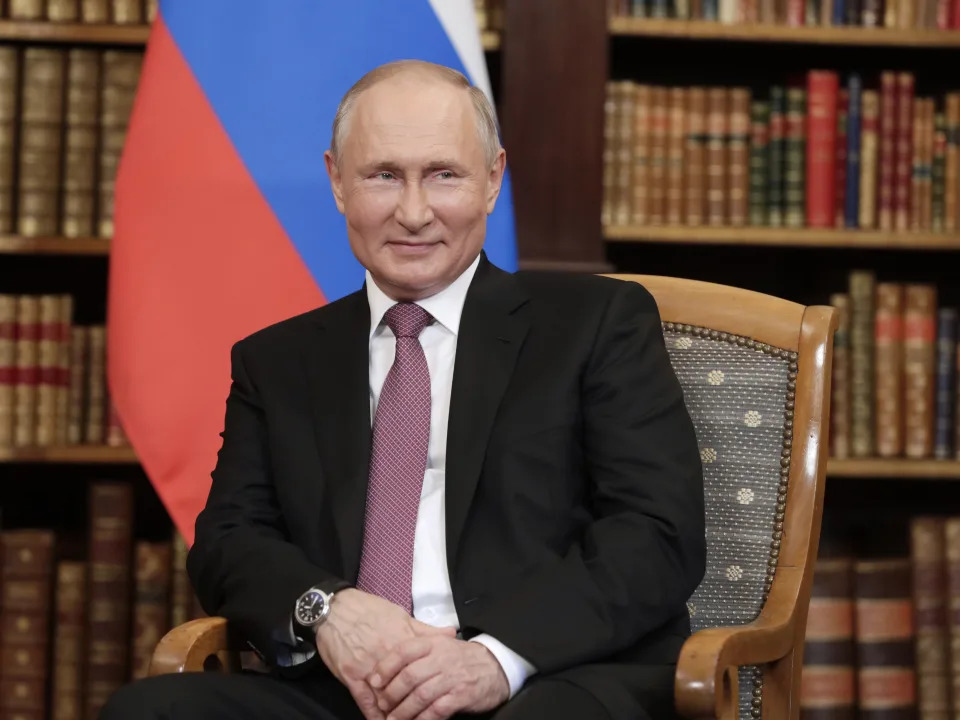
Russia President Vladimir Putin’s invasion into Ukraine has persisted for nearly four weeks but his forces remain stalled, with the Pentagon assessing Tuesday that his combat power is dropping.
“We’ve assessed, for the first time, that the Russians may be slightly below a 90% level of assessed available combat power,” a senior defense official told reporters.
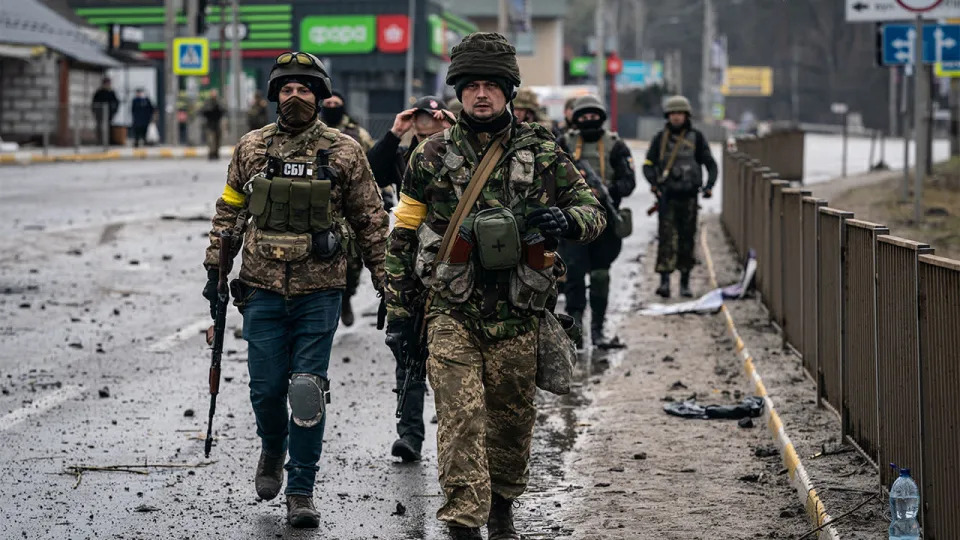
Ukrainian soldiers are seen near a collapsed bridge that was the target of a Russian missile, near the town of Irpin, Ukraine, on March 3, 2022. Wolfgang Schwan/Anadolu Agency via Getty Images
The drop in power is reflective of the 150,000 soldiers he amassed on Ukraine’s border in the lead-up to the invasion last month.
“It is not an assessment of all Russian military power,” the senior defense official added.
Security officials continue to warn that Putin may be looking to bring supplemental forces into Ukraine to aid his war as Russian ground forces remain stalled across the country.
But there is scant evidence that any foreign fighters have headed to Ukraine despite reports that Putin has offered incentives to fighters from nations like Syria.
The senior defense official said there are indications of continued “discussions” by Moscow to aid its war “both in terms of resupply and also reinforcement,” but there is no indication any such plan has been enacted.
Experts anticipate that if the Kremlin does move to send in reinforcements, it would pull support from troops stationed outside of Russia before pulling additional troops from inside its own borders.
“Of the battalion tactical groups that Mr. Putin has available to him across Russia, he’s used about 75% in this particular operation,” the senior defense official explained. “So I think our assumption would be he’d pull from outside the country first.”
Ukrainian forces have continued to counter stiff Russian aggression. But despite weeks of shelling, Putin’s troops have not been able to make significant progress in advancing on the capital city of Kyiv.
“We’re definitely seeing anecdotal evidence that the Ukrainians are not only defending well, where they choose to defend, but they are making efforts to take back territory,” the senior defense official added.
Reports surfaced Tuesday showing that Ukrainian forces were able to retake a suburb outside of Kyiv, but the senior defense official said they were unable to verify the reporting.
Citing the Russian Ministry of Defense, a Russian tabloid claimed this week that 9,861 Russian troops had been killed in the fighting with another 16,000 injured – a stark difference from the 498 troops killed and 1,597 reported as injured by the ministry on March 2.
The report has since been taken down and the Pentagon has been unable to verify any causality estimates during the 27-day war.
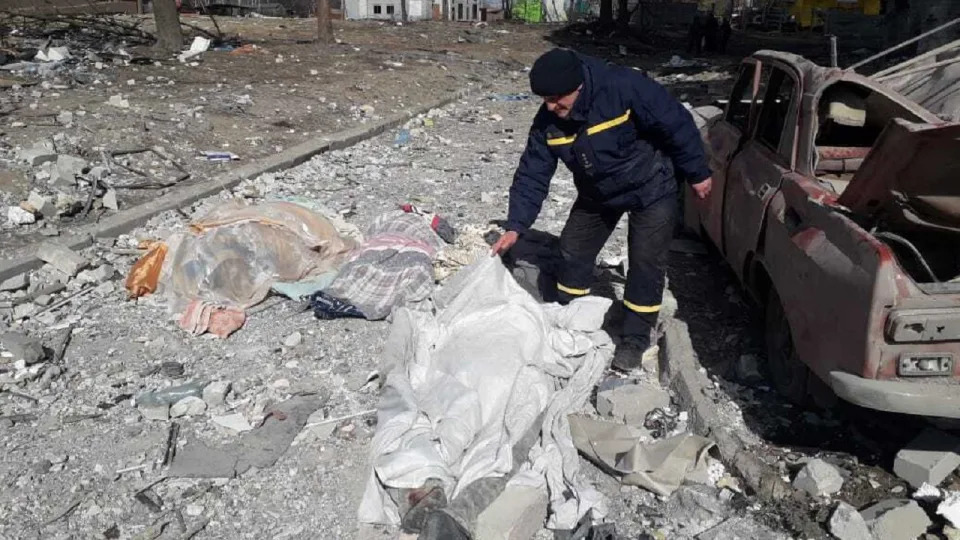
A man covers a dead body after residential buildings were hit by a Russian attack in Chernihiv, Ukraine. State Emergency Service of Ukraine/Handout/Anadolu Agency via Getty Images
But the senior defense official said it is not only the mounting number of deaths hindering Russian troops.
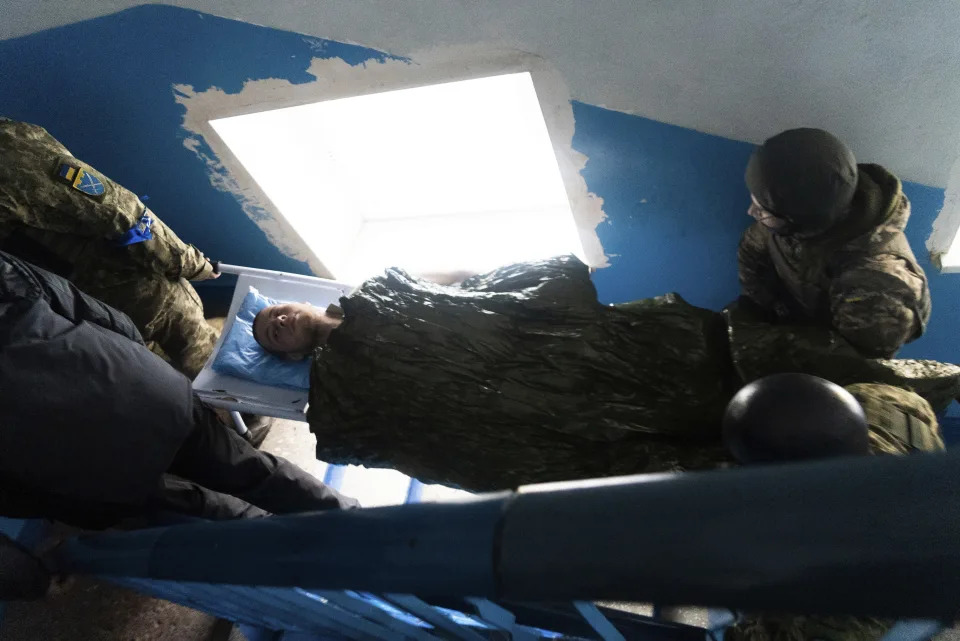
“They’re having trouble. And we picked up indications that some troops have actually suffered and been taken out of the fight because of frostbite,” the official said. “They are having continued logistics and sustainment issues.”
The official said not only has Russia failed to properly plan for logistics and sustainment but also the “Ukrainians have done a good job frustrating their efforts.”
‘Hard days ahead in Ukraine,’ White House says of Russian invasion
Alexander Nazaryan, Senior W. H. Correspondent – March 22, 2022
WASHINGTON — Russia will face increased economic isolation, national security adviser Jake Sullivan said Tuesday from the White House as President Biden prepared for his trip to Brussels, where he is to meet with European allies in an effort to end the invasion of Ukraine that was launched late last month by the Kremlin.
Biden “will join our partners in imposing further sanctions on Russia and tightening the existing sanctions to crack down on evasion and to ensure robust enforcement,” Sullivan said at a White House briefing, adding that Biden will also announce “further American contributions to a coordinated humanitarian response.” Russia’s invasion has caused a massive refugee crisis while also leaving Ukrainians who have stayed behind without necessities like drinking water.
National security adviser Jake Sullivan takes questions during a briefing at the White House on Tuesday. (Nicholas Kamm/AFP via Getty Images)
Yet for all that, Russian President Vladimir Putin has shown no signs of backing down in his campaign to turn Ukraine into the kind of vassal state it was during the nearly eight-decade existence of the Soviet Union. Ukrainian forces have thus far defended the capital, Kyiv, and the key Black Sea port of Odesa, even as Mariupol, on the Sea of Azov, has been devastated.
With Biden making clear that the United States would not send troops to Ukraine out of fears of provoking Russia into a broader conflict, it is not apparent just how the current stalemate will be resolved. “There will be hard days ahead in Ukraine,” Sullivan acknowledged. “This war will not end easily, or rapidly.”
Sullivan predicted, however, that Putin would fail to ultimately “subjugate” Ukraine and its people, even if Russia sees military gains in the days and weeks to come.
According to the United Nations, 953 Ukrainian civilians have been killed since the start of the war, including 78 children.
20 days in Mariupol: The team that documented city’s agony
Mstyslav Chernov – March 21, 2022
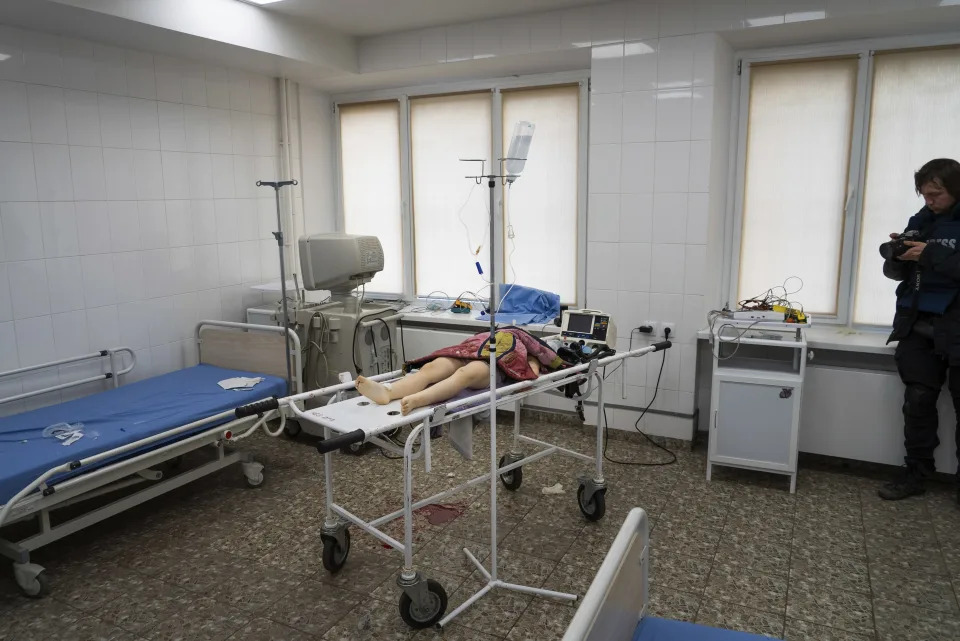
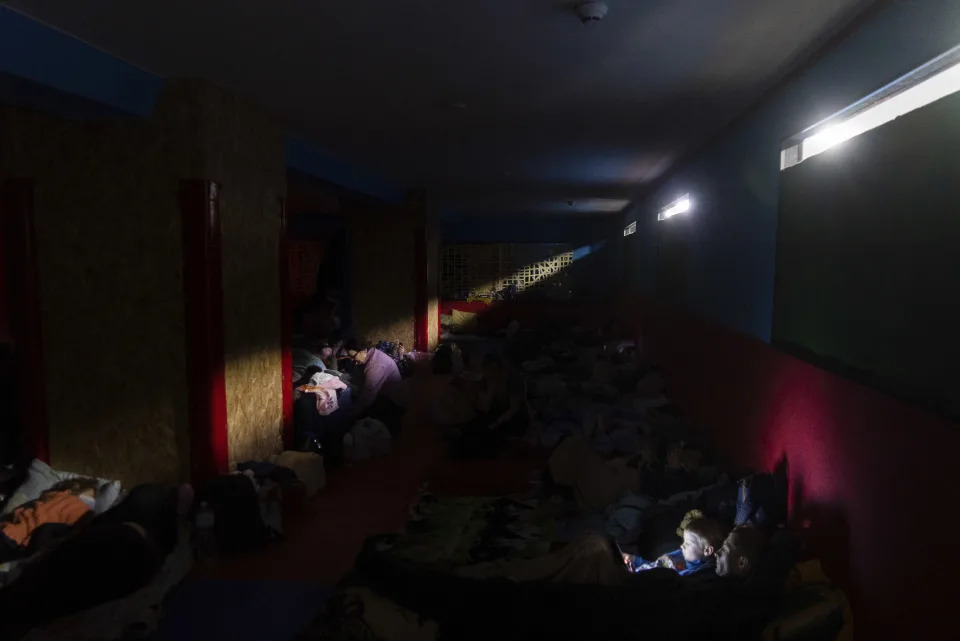
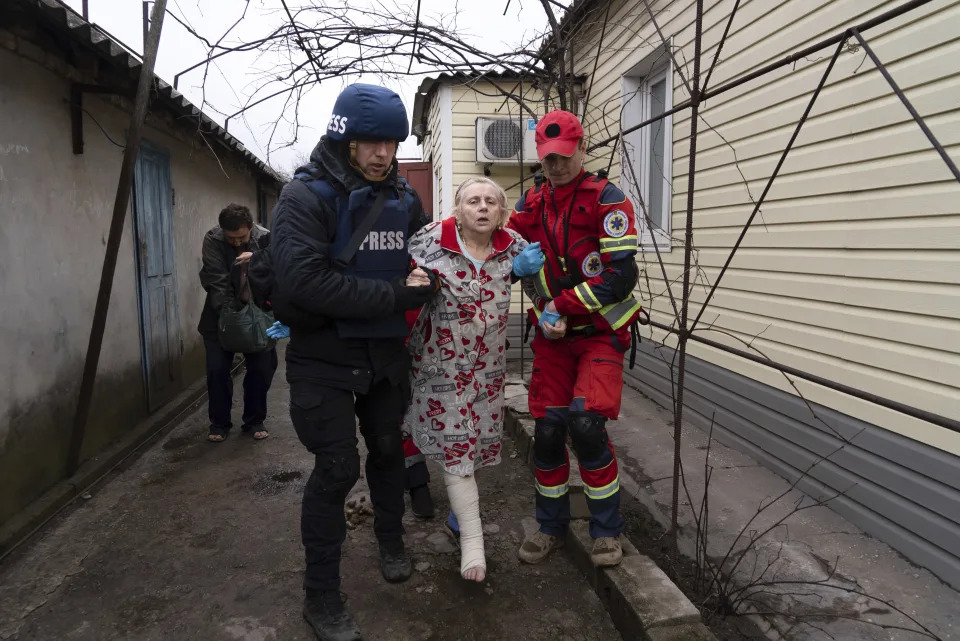
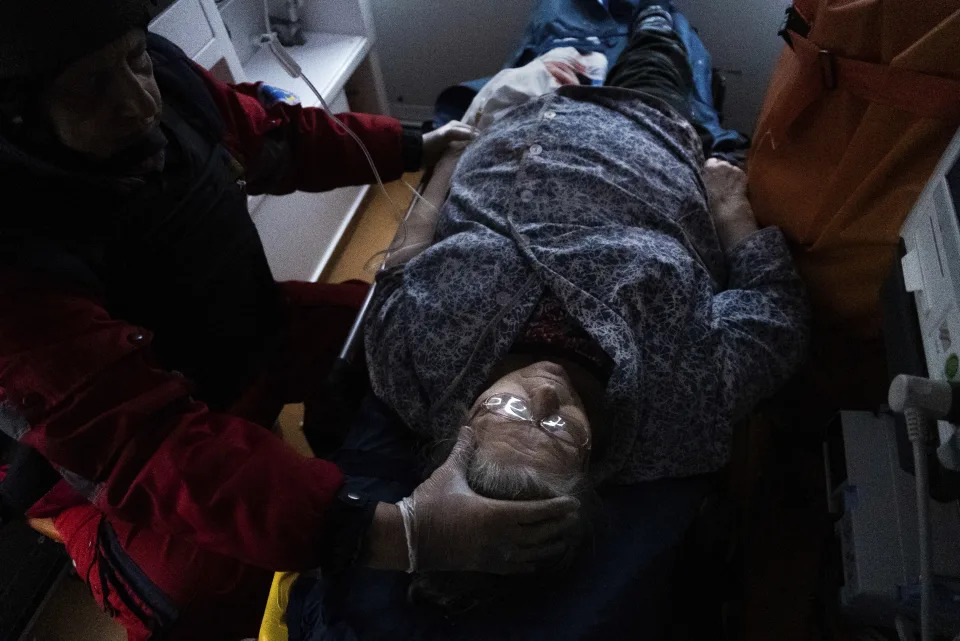
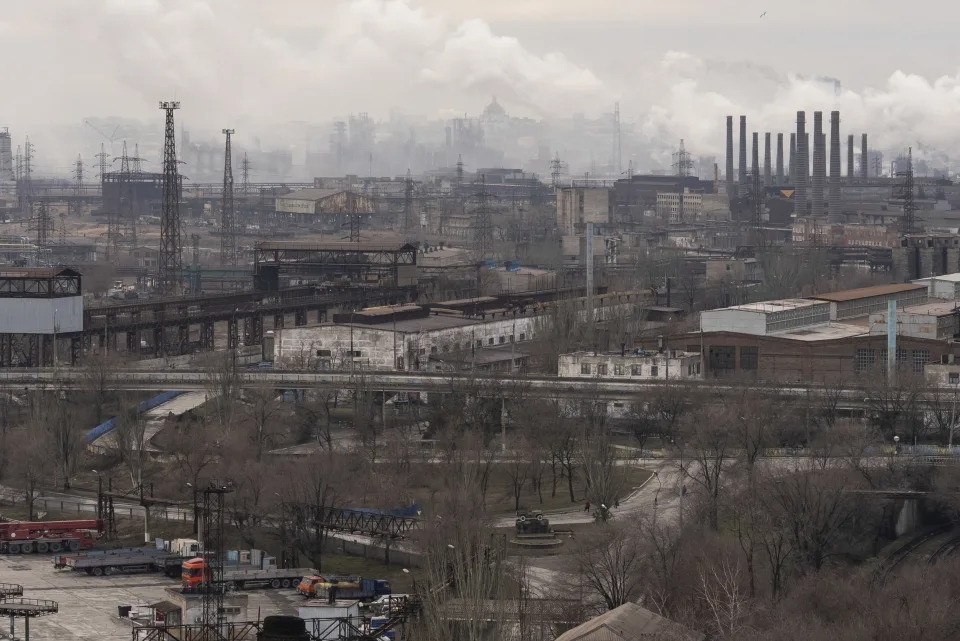
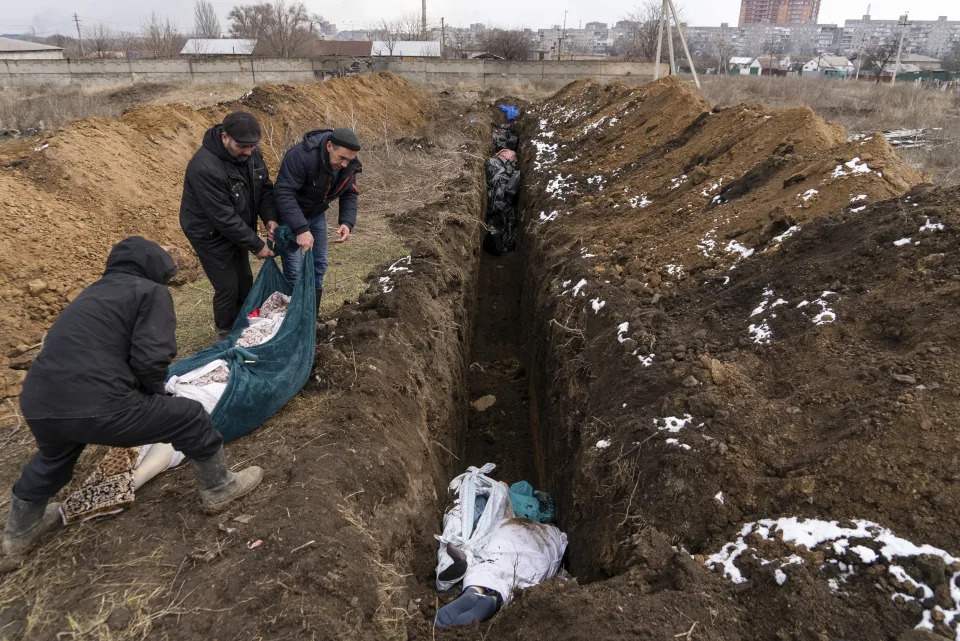
Associated Press videographer Mstyslav Chernov walks amid smoke rising from an air defense base in the aftermath of a Russian strike in Mariupol, Ukraine, Thursday, Feb. 24, 2022. (AP Photo/Evgeniy Maloletka) ASSOCIATED PRESSAssociated Press videographer Mstyslav Chernov walks amid smoke rising from an air defense base in the aftermath of a Russian strike in Mariupol, Ukraine, Thursday, Feb. 24, 2022. (AP Photo/Evgeniy Maloletka) ASSOCIATED PRESSPeople hide in a shelter during Russian shelling, in Mariupol, Ukraine, Thursday, Feb. 24, 2022. (AP Photo/Mstyslav Chernov) ASSOCIATED PRESSAssociated Press photographer Evgeniy Maloletka points at the smoke rising after an airstrike on a maternity hospital, in Mariupol, Ukraine, Wednesday, March 9, 2022. (AP Photo/Mstyslav Chernov) ASSOCIATED PRESSAssociated Press photographer Evgeniy Maloletka takes a photo of the lifeless body of a girl, killed from shelling of a residential area, at the city hospital of Mariupol, eastern Ukraine, Sunday, Feb. 27, 2022. (AP Photo/Mstyslav Chernov) ASSOCIATED PRESSPeople prepare for the night in the improvised bomb shelter in a sports center, in Mariupol, Ukraine, late Sunday, Feb. 27, 2022. (AP Photo/Mstyslav Chernov) ASSOCIATED PRESSA fire burns at an apartment building after it was hit by shelling in Mariupol, Ukraine, Friday, March 11, 2022. (AP Photo/Mstyslav Chernov) ASSOCIATED PRESSAssociated Press photographer Evgeniy Maloletka helps a paramedic to transport a woman injured during shelling in Mariupol, eastern Ukraine, Wednesday, March 2, 2022. (AP Photo/Mstyslav Chernov) ASSOCIATED PRESSA car escaping from shelling drives past a crashed vehicle in Mariupol, Ukraine, Friday, March 4, 2022 (AP Photo/Mstyslav Chernov) ASSOCIATED PRESSAmbulance paramedics transfer a woman wounded by shelling to a hospital in Mariupol, Ukraine, Wednesday, March 2, 2022. (AP Photo/Mstyslav Chernov) ASSOCIATED PRESSThis shows the city of Mariupol, Ukraine, Thursday, Feb. 24, 2022. (AP Photo/Mstyslav Chernov) ASSOCIATED PRESSA woman whose husband was killed in the shelling cries on the floor of a corridor in a hospital in Mariupol, eastern Ukraine Friday, March 11, 2022. (AP Photo/Mstyslav Chernov) ASSOCIATED PRESSDead bodies are placed into a mass grave on the outskirts of Mariupol, Ukraine, Wednesday, March 9, 2022, as people cannot bury their dead because of heavy shelling by Russian forces. (AP Photo/Mstyslav Chernov) ASSOCIATED PRESSAssociated Press photographer Evgeniy Maloletka stands amid rubble of an airstrike on Pryazovskyi State Technical University on Thursday, March 10, 2022, in Mariupol, Ukraine. (AP Photo/Mstyslav Chernov) ASSOCIATED PRESSA Ukrainian serviceman and a civilian carry a wounded man who was injured by shelling in a hospital in Mariupol, Ukraine, Thursday, March 3, 2022. (AP Photo/Mstyslav Chernov) ASSOCIATED PRESSMedical workers treat a man, wounded by shelling, in a hospital in Mariupol, Ukraine, Friday, March 4, 2022. (AP Photo/Mstyslav Chernov) ASSOCIATED PRESSA woman holds a child in an improvised bomb shelter in Mariupol, Ukraine, Monday, March 7, 2022. (AP Photo/Mstyslav Chernov) ASSOCIATED PRESSSeen through partially drawn curtains a house burns after shelling in Mariupol, Ukraine, Saturday, March 12, 2022. (AP Photo/Mstyslav Chernov) ASSOCIATED PRESSPeople hide in an improvised bomb shelter in Mariupol, Ukraine, Saturday, March 12, 2022. (AP Photo/Mstyslav Chernov) ASSOCIATED PRESSA Ukrainian serviceman guards his position in Mariupol, Ukraine, Saturday, March 12, 2022. (AP Photo/Mstyslav Chernov) ASSOCIATED PRESSA doctor shows bodies of children killed by shelling at No. 3 hospital in Mariupol, Ukraine, Tuesday, March 15, 2022. (AP Photo/Mstyslav Chernov) ASSOCIATED PRESSA car damaged by shelling that was used by Associated Press journalists to escape from the Mariupol blockade sits parked in Ukraine, Thursday, March 17, 2022. (AP Photo/Mstyslav Chernov) ASSOCIATED PRESS
MARIUPOL, Ukraine (AP) — The Russians were hunting us down. They had a list of names, including ours, and they were closing in.
We were the only international journalists left in the Ukrainian city, and we had been documenting its siege by Russian troops for more than two weeks. We were reporting inside the hospital when gunmen began stalking the corridors. Surgeons gave us white scrubs to wear as camouflage.
Suddenly at dawn, a dozen soldiers burst in: “Where are the journalists, for fuck’s sake?”
The walls of the surgery shook from artillery and machine gun fire outside, and it seemed safer to stay inside. But the Ukrainian soldiers were under orders to take us with them.
Video: Mariupol residents suffer continued bombardment
Mstyslav Chernov is a video journalist for The Associated Press. This is his account of the siege of Mariupol, as documented with photographer Evgeniy Maloletka and told to correspondent Lori Hinnant.
We ran into the street, abandoning the doctors who had sheltered us, the pregnant women who had been shelled and the people who slept in the hallways because they had nowhere else to go. I felt terrible leaving them all behind.
Nine minutes, maybe 10, an eternity through roads and bombed-out apartment buildings. As shells crashed nearby, we dropped to the ground. Time was measured from one shell to the next, our bodies tense and breath held. Shockwave after shockwave jolted my chest, and my hands went cold.
We reached an entryway, and armored cars whisked us to a darkened basement. Only then did we learn from a policeman why the Ukrainians had risked the lives of soldiers to extract us from the hospital.
“If they catch you, they will get you on camera and they will make you say that everything you filmed is a lie,” he said. “All your efforts and everything you have done in Mariupol will be in vain.”
The officer, who had once begged us to show the world his dying city, now pleaded with us to go. He nudged us toward the thousands of battered cars preparing to leave Mariupol.
It was March 15. We had no idea if we would make it out alive.
As a teenager growing up in Ukraine in the city of Kharkiv, just 20 miles from the Russian border, I learned how to handle a gun as part of the school curriculum. It seemed pointless. Ukraine, I reasoned, was surrounded by friends.
I have since covered wars in Iraq, Afghanistan and the disputed territory of Nagorno Karabakh, trying to show the world the devastation first-hand. But when the Americans and then the Europeans evacuated their embassy staffs from the city of Kyiv this winter, and when I pored over maps of the Russian troop build-up just across from my hometown, my only thought was, “My poor country.”
In the first few days of the war, the Russians bombed the enormous Freedom Square in Kharkiv, where I had hung out until my 20s.
I knew Russian forces would see the eastern port city of Mariupol as a strategic prize because of its location on the Sea of Azov. So on the evening of Feb. 23, I headed there with my long-time colleague Evgeniy Maloletka, a Ukrainian photographer for The Associated Press, in his white Volkswagen van.
On the way, we started worrying about spare tires, and found online a man nearby willing to sell to us in the middle of the night. We explained to him and to a cashier at the all-night grocery store that we were preparing for war. They looked at us like we were crazy.
About a quarter of Mariupol’s 430,000 residents left in those first days, while they still could. But few people believed a war was coming, and by the time most realized their mistake, it was too late.
One bomb at a time, the Russians cut electricity, water, food supplies and finally, crucially, the cell phone, radio and television towers. The few other journalists in the city got out before the last connections were gone and a full blockade settled in.
The absence of information in a blockade accomplishes two goals.
Chaos is the first. People don’t know what’s going on, and they panic. At first I couldn’t understand why Mariupol fell apart so quickly. Now I know it was because of the lack of communication.
Impunity is the second goal. With no information coming out of a city, no pictures of demolished buildings and dying children, the Russian forces could do whatever they wanted. If not for us, there would be nothing.
That’s why we took such risks to be able to send the world what we saw, and that’s what made Russia angry enough to hunt us down.
I have never, ever felt that breaking the silence was so important.
A second child died, then a third. Ambulances stopped picking up the wounded because people couldn’t call them without a signal, and they couldn’t navigate the bombed-out streets.
The doctors pleaded with us to film families bringing in their own dead and wounded, and let us use their dwindling generator power for our cameras. No one knows what’s going on in our city, they said.
Shelling hit the hospital and the houses around. It shattered the windows of our van, blew a hole into its side and punctured a tire. Sometimes we would run out to film a burning house and then run back amid the explosions.
There was still one place in the city to get a steady connection, outside a looted grocery store on Budivel’nykiv Avenue. Once a day, we drove there and crouched beneath the stairs to upload photos and video to the world. The stairs wouldn’t have done much to protect us, but it felt safer than being out in the open.
The signal vanished by March 3. We tried to send our video from the 7th-floor windows of the hospital. It was from there that we saw the last shreds of the solid middle-class city of Mariupol come apart.
The Port City superstore was being looted, and we headed that way through artillery and machine gunfire. Dozens of people ran and pushed shopping carts loaded with electronics, food, clothes.
A shell exploded on the roof of the store, throwing me to the ground outside. I tensed, awaiting a second hit, and cursed myself a hundred times because my camera wasn’t on to record it.
And there it was, another shell hitting the apartment building next to me with a terrible whoosh. I shrank behind a corner for cover.
A teenager passed by rolling an office chair loaded with electronics, boxes tumbling off the sides. “My friends were there and the shell hit 10 meters from us,” he told me. “I have no idea what happened to them.”
We raced back to the hospital. Within 20 minutes, the injured came in, some of them scooped into shopping carts.
For several days, the only link we had to the outside world was through a satellite phone. And the only spot where that phone worked was out in the open, right next to a shell crater. I would sit down, make myself small and try to catch the connection.
Everybody was asking, please tell us when the war will be over. I had no answer.
Every single day, there would be a rumor that the Ukrainian army was going to come to break through the siege. But no one came.
By this time I had witnessed deaths at the hospital, corpses in the streets, dozens of bodies shoved into a mass grave. I had seen so much death that I was filming almost without taking it in.
On March 9, twin airstrikes shredded the plastic taped over our van’s windows. I saw the fireball just a heartbeat before pain pierced my inner ear, my skin, my face.
We watched smoke rise from a maternity hospital. When we arrived, emergency workers were still pulling bloodied pregnant women from the ruins.
Our batteries were almost out of juice, and we had no connection to send the images. Curfew was minutes away. A police officer overheard us talking about how to get news of the hospital bombing out.
“This will change the course of the war,” he said. He took us to a power source and an internet connection.
We had recorded so many dead people and dead children, an endless line. I didn’t understand why he thought still more deaths could change anything.
I was wrong.
In the dark, we sent the images by lining up three mobile phones with the video file split into three parts to speed the process up. It took hours, well beyond curfew. The shelling continued, but the officers assigned to escort us through the city waited patiently.
Then our link to the world outside Mariupol was again severed.
We went back to an empty hotel basement with an aquarium now filled with dead goldfish. In our isolation, we knew nothing about a growing Russian disinformation campaign to discredit our work.
The Russian Embassy in London put out two tweets calling the AP photos fake and claiming a pregnant woman was an actress. The Russian ambassador held up copies of the photos at a U.N. Security Council meeting and repeated lies about the attack on the maternity hospital.
In the meantime, in Mariupol, we were inundated with people asking us for the latest news from the war. So many people came to me and said, please film me so my family outside the city will know I’m alive.
By this time, no Ukrainian radio or TV signal was working in Mariupol. The only radio you could catch broadcast twisted Russian lies — that Ukrainians were holding Mariupol hostage, shooting at buildings, developing chemical weapons. The propaganda was so strong that some people we talked to believed it despite the evidence of their own eyes.
The message was constantly repeated, in Soviet style: Mariupol is surrounded. Surrender your weapons.
On March 11, in a brief call without details, our editor asked if we could find the women who survived the maternity hospital airstrike to prove their existence. I realized the footage must have been powerful enough to provoke a response from the Russian government.
We went up to the 7th floor to send the video from the tenuous Internet link. From there, I watched as tank after tank rolled up alongside the hospital compound, each marked with the letter Z that had become the Russian emblem for the war.
We were surrounded: Dozens of doctors, hundreds of patients, and us.
The Ukrainian soldiers who had been protecting the hospital had vanished. And the path to our van, with our food, water and equipment, was covered by a Russian sniper who had already struck a medic venturing outside.
Hours passed in darkness, as we listened to the explosions outside. That’s when the soldiers came to get us, shouting in Ukrainian.
It didn’t feel like a rescue. It felt like we were just being moved from one danger to another. By this time, nowhere in Mariupol was safe, and there was no relief. You could die at any moment.
I felt amazingly grateful to the soldiers, but also numb. And ashamed that I was leaving.
We crammed into a Hyundai with a family of three and pulled into a 5-kilometer-long traffic jam out of the city. Around 30,000 people made it out of Mariupol that day — so many that Russian soldiers had no time to look closely into cars with windows covered with flapping bits of plastic.
People were nervous. They were fighting, screaming at each other. Every minute there was an airplane or airstrike. The ground shook.
We crossed 15 Russian checkpoints. At each, the mother sitting in the front of our car would pray furiously, loud enough for us to hear.
As we drove through them — the third, the tenth, the 15th, all manned with soldiers with heavy weapons — my hopes that Mariupol was going to survive were fading. I understood that just to reach the city, the Ukrainian army would have to break through so much ground. And it wasn’t going to happen.
At sunset, we came to a bridge destroyed by the Ukrainians to stop the Russian advance. A Red Cross convoy of about 20 cars was stuck there already. We all turned off the road together into fields and back lanes.
The guards at checkpoint No. 15 spoke Russian in the rough accent of the Caucasus. They ordered the whole convoy to cut the headlights to conceal the arms and equipment parked on the roadside. I could barely make out the white Z painted on the vehicles.
As we pulled up to the sixteenth checkpoint, we heard voices. Ukrainian voices. I felt an overwhelming relief. The mother in the front of the car burst into tears. We were out.
We were the last journalists in Mariupol. Now there are none.
We are still flooded by messages from people wanting to learn the fate of loved ones we photographed and filmed. They write to us desperately and intimately, as though we are not strangers, as though we can help them.
When a Russian airstrike hit a theater where hundreds of people had taken shelter late last week, I could pinpoint exactly where we should go to learn about survivors, to hear firsthand what it was like to be trapped for endless hours beneath piles of rubble. I know that building and the destroyed homes around it. I know people who are trapped underneath it.
And on Sunday, Ukrainian authorities said Russia had bombed an art school with about 400 people in it in Mariupol.
But we can no longer get there.
This account was related by Chernov to Associated Press reporter Lori Hinnant, who wrote from Paris. Vasylisa Stepanenko contributed to the report.
The lightweight but lethal weapon has, military experts said, helped the underdog Ukrainians inflict major damage on Moscow’s much-vaunted military and stymie their advance.
Not only has the United States-made weapon become a symbol of resistance, it’s been dubbed “Saint Javelin” in a meme circulating on the web created by Canadian marketer Christian Borys, which shows Mary Magdalene, a saint of the Orthodox church, cradling a Javelin in her arms.
“The Javelin, very specifically that system’s advanced capabilities, have been vital to Ukrainian military survival and ability to hold ground” against the Russians, said John Spencer, chair of urban warfare studies at the nonpartisan Madison Policy Forum in New York City.
Produced by defense contractors Raytheon and Lockheed Martin, the 46-pound weapon is shoulder-fired and has the “lethality to penetrate any tank or mobile vehicle on the battlefield,” Spencer said.
“The Javelins are the most sophisticated and most effective weapon the Ukrainians have, but not the most numerous,” Cancian said.
The Ukrainians have more Israeli-made NLOS “Spike” antitank missiles in their arsenal as well as German Panzerfaust 3 antitank weapons, Cancian said.
“The short answer is that infantry antitank weapons (of which Javelin is one) seem to be quite effective,” Cancian said in an email to NBC News. “There are lots of social media videos of their use. Further, the Russians seem to be moving very slowly, if not actually stalled, and these weapons must be part of what has given the relatively small and weak Ukrainian forces so much ability to resist.”
Russia has roughly four times as many troops as Ukraine’s 130,000-strong army. It also spends about $78 billion on its armed forces annually, compared to the $1.6 billion Ukraine has been able to budget for its military.
But Russia has only a quarter of its forces fighting in Ukraine, with the rest deployed in the Caucasus or defending the border with China. Meanwhile, Ukraine has some 900,000 reserves and is fighting on its home turf.
The FGM-148 Javelin is one of the more than 1,700 antitank weapons that have been rushed by NATO via Poland to Ukraine since Moscow’s forces invaded more than three weeks ago, and the evidence of their effectiveness soon became clear when the Russian tank advance on the capital city, Kyiv, was quickly stopped in its tracks, the experts said.
Manned most often by a team of two soldiers, the Javelin fires a heat-seeking missile with a range of up to 2.5 miles. It has what’s known as a “fire and forget” system, which allows the soldiers to quickly take cover after firing, before the enemy can detect them. It’s called a Javelin because it strikes tanks from the top like a spear, the experts said.
The Javelins can also fire directly at a target, making them a threat against low-flying helicopters, they said.
Also, they said, the Javelin is easy to use, which is a plus because much of the fighting in Ukraine is being done by civilians with very little military training.
The Ukrainians have touted the success of the Javelin by sharing images of their soldiers hefting the weapons along with photos of destroyed Russian tanks.
Kyiv put in its first order for a little over 200 Javelin missiles in 2018, according to various published reports. That same year, Trump signed an agreement to give Ukraine $250 million in military aid.
But it wasn’t until a year later that these weapons helped detonate a scandal that resulted in Trump’s first impeachment.
During a July 25, 2019, phone call with Trump, Ukrainian President Volodymyr Zelenskyy said, “We are almost ready to buy more Javelins from the United States for defense purposes.”
Trump replied, “I would like you to do us a favor though because our country has been through a lot and Ukraine knows a lot about it.”
Then Trump suggested that Zelenskyy should investigate the Ukrainian business dealings of Joe Biden, then considered Trump’s top rival for the presidency in 2020, and his son Hunter Biden, for possible corruption.
After the phone call with Zelenskyy, in which he was assured by the Ukrainian president that his new prosecutor would look into these matters, Trump released millions of dollars in military aid for Ukraine.
Trump was impeached by the Democratic-led House in December 2019 for abuse of power and obstruction of Congress. But he was acquitted by the Senate, which had a Republican majority, of these charges in February 2020.
Utah Sen. Mitt Romney was the only Republican to vote with the Democrats to convict Trump on the abuse of power charge.
Citing “available information,” it reported state-owned company Uralvagonzavod, which builds tanks such as the T-72B3, has had to temporarily cease production in Nizhny Tagil.
“The specified companies specialize in the manufacturing and repair of tanks, as well as other armored equipment needed by the Russian Federation armed forces,” the General Staff wrote in its Facebook post.
Western allies, including the United States and the European Union, have ordered a complete halt to the export of certain components like microchips to Russia as part of an escalation package of sanctions.
So-called dual-use goods have been banned, since they can be employed for both military as well as civilian applications.
“Our aim is to reduce the Kremlin’s capacity to wage war on its neighbor,” EU Commission President Ursula von der Leyen explained earlier this month.
It may be working. Halting the manufacture and repair of T-72B3s, as well as more advanced but less numerous T-80s and T-90s, could hobble Russia’s efforts to continue its advance across war-torn Ukraine.
Over the past 27 days since Putin’s invasion, Russian tank columns have been one of the main targets of drone strikes by Ukraine’s fleet of Bayraktar TB2s.
They have also come under heavy fire from infantry personnel wielding shoulder-launched “fire and forget” Javelin missiles, as well as next-generation light anti-tank weapons (NLAWs) that can destroy or at least disable the tracked vehicles.
On Monday, the General Staff claimed Ukraine’s forces had eliminated 509 tanks in total, an estimate that Lt. Gen. Mark Hertling, former commanding officer of U.S. Army Europe, seemed to share.
Some tanks, either abandoned or out of fuel, have even been filmed being carted away by tractor-driving Ukrainian farmers.
Developments in Russia are however notoriously difficult to independently verify with any degree of certainty given Putin’s stranglehold over the media.
In a potentially inadvertent leak on Monday, a pro-Kremlin website published data from the Ministry of Defense citing nearly 9,900 Russian dead and over 16,000 wounded before the post was swiftly taken down.
A new class of oligarchs could rise from Putin’s seizure of Western assets, says an expert in Russian finance
Huileng Tan – March 22, 2022
Russian President Vladimir Putin’s plan to seize and nationalize the assets of foreign companies leaving the country could create a new class of oligarch.Photo by Mikhail Metzel\TASS via Getty Images
Russian President Vladimir Putin has threatened to take over assets of foreign companies that leave the country.
The assets could be auctioned off, Russia’s Economy Ministry has suggested.
A fire sale of the assets could create a new class of oligarchs, said a Russian finance expert.
Russia has announced it’s considering seizing the assets of foreign companies that exit the country — and it could create a new class of oligarchs, an expert on Russian finance told Insider.
Those who manage to acquire ownership of seized assets at fire-sale prices through state auctions could become the new class of tycoons, said Hassan Malik, a senior sovereign analyst at Boston-based investment management consultancy Loomis Sayles.
“There’s certainly a risk that you just see the creation of a new class of crony capitalists or oligarchs,” Malik told Insider.
As international companies exit Russia en masse, they are leaving behind assets such as factories and offices that are in working condition. Russian President Vladimir Putin has threatened to take over such idle but productive assets, telling government officials the Kremlin would seek to “introduce external management and then transfer these enterprises to those who actually want to work,” according to the Associated Press.
Russia’s Economy Ministry has suggested the assets could be auctioned off, Bloomberg reported on March 10. The auctions could mirror a controversial 1990s “loans-for-shares” program launched by former Russian president Boris Yeltsin, Malik told Insider. At the time, rich Russian businessmen and banks close to the authorities lent the government money in exchange for stakes in state-owned industrial companies. The shares were acquired at “dirt-cheap prices,” The New York Times wrote in 1996.
Malik described the deals as “sweetheart deals” because when the Russian state “predictably defaulted” on the loans, the creditors seized their shares. This created a generation of outrageously rich oligarchs, said Malik, who is also the author of “Bankers and Bolsheviks,” a book about finance in the early 1900s during the Russian Revolution.
Russia’s richest man, Vladimir Potanin, built up his vast fortune through the “loans-for-share” scheme when he acquired metals giant Nornickel. Potanin has a net worth of $24.7 billion, according to the Bloomberg Billionaires Index. Billionaire Roman Abramovich (net worth $14.5 billion) acquired a controlling stake in oil company Sibneft through the program.
Today, the Russian government — in need of funds amid sweeping international sanctions over the Ukraine war — could offload seized foreign assets to favored investors at a discount again, Malik told Insider. “I think it’s a real risk given Russia’s history,” he said.
Some foreign investors could be eyeing Russia
The Kremlin may also open such auctions up to foreign players, which could entice opportunistic investors eyeing a way into the market, said Malik.
“There may be players from countries where they feel relatively insulated from the threat of Western sanctions,” he said.
Potential investors could hail from China, India, or countries in the Middle East that have not condemned Russia’s invasion of Ukraine, said Malik.
Among them, China is most likely to take an active role in pursuing investments in Russia, as it has more leverage in its power relations with the West than do many other countries, said Malik. Large, state-owned companies are unlikely to take the risk of running afoul of international sanctions, but investors could set up a holdings company that only operates and trades in China and Russia to get around restrictions, he said.
China appears to be eyeing opportunities in the Russian market already.
Chinese ambassador to Russia, Zhang Hanhui, told a group of business leaders in Moscow on Sunday to seize opportunities presented by a “void” in the country, the Russia Confucius Culture Promotion Association wrote on its official WeChat account.
Zhang did not mention sanctions, but told business leaders the international situation was “complex,” with large companies facing issues in supply chains and payments. “This is a time when private, small- and medium-sized enterprises can play a role,” said Zhang.
THIS Is the Safest Place to Live in the US as the Climate Changes
United Nations: Climate change refers to long-term shifts in temperatures and weather patterns, mainly caused by human activities, especially the burning of fossil fuels.
What are hypersonic missiles? Russia’s newest weapon in Ukraine war.
Niamh Cavanagh, Producer – March 21, 2022
Russia’s military has claimed to have twice unleashed hypersonic missiles in its invasion of Ukraine, apparently destroying an arms depot in the process, during its monthlong onslaught.
Defense Ministry spokesperson Igor Konashenkov claimed the attack used its newest Kinzhal, or “dagger,” hypersonic missile, in Ukraine.
“The Kinzhal aviation missile system with hypersonic aeroballistic missiles destroyed a large underground warehouse containing missiles and aviation ammunition in the village of Deliatyn in the Ivano-Frankivsk region,” Konashenkov claimed.
RIA Novosti, a Russian state news agency, said the attacks were the first time the next-generation weapons have been used since Russian troops were deployed to Ukraine on Feb. 24.
However, on March 9, Ukraine’s National Guard shared a picture of an unexploded hypersonic missile in the city of Kramatorsk in the breakaway region of Donetsk. Reports did not verify whether it was a “dagger” missile.
A short-range hypersonic ballistic missile, according to Ukrainian authorities, in Kramatorsk, Ukraine, in a photo released on March 9. (Press service of the National Guard of Ukraine/Handout via Reuters)
‘Ideal weapon’
The advanced missile, which Russian President Vladimir Putin previously described as an “ideal weapon,” was one of several new weapons he unveiled in his state of the nation address in 2018. During that speech, Putin boasted that the missiles could hit almost any point across the world and evade the United States’ missile defense shield.
It is believed that Russia first used the hypersonic weapon in support of Bashar Assad during the Syrian civil war in 2016, although it has not been confirmed if it was the exact Kinzhal model.
The missile, designed to be launched from a MiG fighter jet, can fly at 10 times the speed of sound, and unlike other missiles can change course during its flight, making it impossible for air-defense systems to shoot it down. The Kinzhal missile can also be used to deliver nuclear weapons.
In comparison, while the U.S. Tomahawk cruise missile can travel as fast as 550 mph, the Kinzhal can travel at 7,672 mph. The French Navy and the U.K.’s Royal Navy have since 2011 been jointly developing their own hypersonic missile, which is expected to be completed in 2030.
Ukrainian officials have confirmed Russia’s attacks over the weekend but said the type of missile used was not confirmed.
Unconfirmed reports
A Russian Air Force MiG-31K jet in 2018 carries a high-precision hypersonic aero-ballistic Kinzhal missile. (Alexander Zemlianichenko/AP)
According to reports, doubts have swirled over Russia’s use of the ballistic missile. One report suggested that the lack of secondary explosions from the attack at an ammunition warehouse in western Ukraine is suspicious. “There’s also a distinct lack of secondary explosions as one would expect when rocket fuel and explosives cook-off,” the online magazine the War Zone noted on Saturday.
The magazine also questioned how an Orlan-10 — an unmanned aerial vehicle, commonly known as a drone — was able to fly over the targeted area to film the strike. If a maneuverable hypersonic missile was needed for the attack due to Ukraine’s air-defense systems, then how could a drone manage to film the strike and get away safely?
Russian analyst Pavel Felgenhauer said the missile would change little on the ground in Ukraine beyond “giving a certain psychological and propaganda effect.” He added that its use may suggest that the Russian military’s weapons are drying up. Defense strategy researcher Joseph Henrotin reiterated Felgenhauer’s point, suggesting on Twitter that Russia could be running out of weaponry. Henrotin also claimed that Putin might have used the nuclear-capable missile in a bid to raise the stakes of the war.
On Saturday, the U.N.’s human rights office said at least 847 civilians had been killed since Feb. 24, including 155 men, 119 women, 21 boys and seven girls, but said it’s believed the actual figures are “considerably higher.”
Ukraine captured a batch of Russia’s missiles and fired them back at its troops, report says
Sophia Ankel – March 21, 2022
Ukrainian forces are capturing Russian military equipment and using it against Russian troops.
On Sunday, Ukraine seized intact Russian missiles and fired them back, an official told CNN.
President Zelenskyy last week joked that captured gear made Russia a top arms supplier to Ukraine.
Ukrainian forces captured a batch of intact Russian missiles and fired them back at Russian troops, CNN reported on Monday.
Russian troops trying to invade Kyiv from the northwestern city of Hostomel on Sunday were attacked with their own weapons, Yuri Golodov, the deputy commander of one of Ukraine’s territorial forces, told CNN.
“Last night we sent the Ukrainian armed forces 24 Uragan missiles that were on their way here to fly over our cities,” Golodov told CNN on Monday.
“We captured them intact, gave them to the armed forces of Ukraine at night, and now the Ukrainian army has fired missiles back at them,” he added.
Golodov leads a team working to repair and repaint Russian military equipment that has been captured or abandoned, CNN reported.
The team works on different types of military vehicles at a junkyard in Kyiv, fixing broken parts, removing communications systems, and painting over any Russian military symbols, the report said.
“It looks like old weaponry, but actually if you use it correctly it will serve us for a long time,” Golodov said, adding, “Everything that we take away from the Russian army, we transfer to the armed forces of Ukraine.”
“We take trophies and use them to protect Ukraine,” Zelenskyy said in a video address. “Today, Russian troops are, in fact, one of the suppliers of equipment to our army.”
Ukraine’s armed forces said on Monday that Russian troops had lost 498 tanks, 121 helicopters, and 1,535 armored personnel carriers since the start of the conflict on February 24. The figures have not been verified.
Russia may not stop with Ukraine – NATO looks to its weakest link
Sabine Siebold and Robin Emmott – March 21, 2022
ON BOARD THE SUPPLY SHIP ELBE, Latvia (Reuters) – Hours after Russian missiles first struck Ukrainian cities on Feb. 24, German naval commander Terje Schmitt-Eliassen received notice to sail five warships under his command to the former Soviet Republic of Latvia to help protect the most vulnerable part of NATO’s eastern flank.
The hasty dispatch was part of Germany’s scramble to send “everything that can swim out to sea,” as the navy’s top boss phrased it, to defend an area military strategists have long deemed the weakest point for the alliance. The vessels’ sudden departure demonstrated how NATO, and Germany, were propelled by Russia’s invasion into a new reality and face what officials, diplomats, intelligence officials and security sources agree is the most serious threat to the alliance’s collective security since the Cold War.
Schmitt-Eliassen, who is based in the German Baltic port of Kiel, spoke to Reuters on the flight deck of the supply ship Elbe. Moored next to it, within sight of the church towers of the Latvian capital Riga, were a Latvian and a Lithuanian ship, and vessels and sailors from nations including Denmark, Belgium and Estonia were due to join the group later.
A total of 12 NATO warships with some 600 sailors on board are due to start a mine-clearing operation in the coming days.
Video: NATO says conflict must not spread beyond Ukraine
STORY: “That would be even more dangerous, destructive and even more deadly. The situation could spiral out of control,” Stoltenberg warned.Speaking alongside Latvia’s President Egils Levits, Stoltenberg said Russia’s invasion was causing horrific suffering and that the humanitarian impact was devastating.“We will protect and defend every inch of Latvia and we will protect and defend every inch of all allied territory,” he added.The United Nations said the number of refugees who have fled Ukraine had surged past 2 million, describing the flight as one of the fastest exoduses in modern times.Moscow describes its actions in Ukraine as a “special operation” to disarm its neighbor and unseat leaders it calls neo-Nazis. Ukraine and its Western allies call this a baseless pretext for an invasion to conquer a country of 44 million people.
On Feb. 16, when intelligence showed an invasion was imminent, NATO Secretary General Jens Stoltenberg called the current era a “new normal.”
It looks a lot like a return to the past. Founded in 1949 to defend against the Soviet threat, the NATO alliance is facing a return to mechanised warfare, a huge increase in defence spending, and potentially a new Iron Curtain falling across Europe. After struggling to find a new post-Cold War role, countering terrorism following the Sept. 11 attacks on the United States in 2001 and a humiliating withdrawal from Afghanistan in 2021, NATO is back defending against its original nemesis.
But there’s a difference. China, which split with the Soviet Union during the Cold War, has refused to condemn the Russian invasion of Ukraine, which Moscow calls a “special military operation.” And the old Cold War blueprints no longer work, as NATO has expanded east since the 1990s, bringing in former Soviet states – including the Baltic states of Latvia, Lithuania and Estonia in 2004.
In early February, China and Russia issued a powerful joint statement rejecting NATO’s expansion in Europe and challenging the Western-led international order.
Direct confrontation between NATO and Russia could touch off a global conflict.
“We have reached a turning point,” said retired German general Hans-Lothar Domroese, who led one of the highest NATO commands in the Dutch town of Brunssum until 2016.
“We have China and Russia acting in concert now, boldly challenging the United States for global leadership … In the past, we have been saying deterrence works. Now we have to ask ourselves: Is deterrence enough?”
This is underscored by Schmitt-Eliassen’s mission – a regular exercise that was brought forward by Russia’s invasion.
The issue is access. Before the Soviet Union was dissolved, NATO could have moved to contain the Soviet Union by blocking the western entrance of the Baltic Sea. That would seal in the Soviet Union’s Baltic Fleet to prevent it from reaching the North Sea where its warships could attack U.S. supply convoys.
Today, NATO’s and Russia’s roles have been reversed: An emboldened Moscow could encircle NATO’s new Baltic members, and cut them off from the alliance. If a new Iron Curtain is to fall, NATO needs to ensure its members are not behind it (see map https://tmsnrt.rs/3tnekaO).
The three tiny countries, with a combined population of some six million people, have a single overland link to the alliance’s main territory. A corridor of some 65 km (40 miles) is squeezed between the heavily armed Russian exclave of Kaliningrad on the west and Belarus on the east.
So Schmitt-Eliassen’s goal is to keep the waterway open, as a supply line also for non-NATO states Finland and Sweden. Millions of tons of old mines, ammunition and chemical weapons are believed to lie on the bed of the shallow Baltic Sea, a legacy of two World Wars.
Mines – whether old and unexploded or freshly laid – can have an impact beyond destruction, Schmitt-Eliassen said. A mine sighting, or rumoured sighting, can close harbours for days while the area is swept. If that happens in the Baltic, there’s a risk “the supermarket shelves will remain empty.”
Even commercial ships can become a military factor in the narrow western entrance to the Baltic, he said, referring to scenarios such as the March 2021 incident when the Ever Given container ship blocked traffic through the Suez Canal for days.
“You cannot blame anybody for this (kind of incident), it is not attributable,” the chief of the German navy, vice-admiral Jan Christian Kaack, told Reuters.
NEXT TARGET?
Crucial for the Baltics is the land link between Kaliningrad and Belarus. Called the Suwalki Gap, its seizure would cut the Baltic states off.
“Putin could quickly seize the Suwalki Gap,” said Domroese, the retired German general, adding this will not happen today or tomorrow, “but it could happen in a few years.”
Putin’s recent actions have not all been predictable. He put Russia’s nuclear forces on high alert on Feb. 28, with rhetoric that Stoltenberg told Reuters is “dangerous, it’s reckless.”
The Kremlin did not respond to a request for comment. Putin says Russia’s concerns expressed over three decades about NATO’s expansion were dismissed by the West, and post-Soviet Russia was humiliated after the 1991 fall of the Soviet Union.
He says NATO, as an instrument of the United States, was building up its military on Ukraine’s territory in a way that threatened Russia.
On March 11, Russia’s Defence Minister Sergei Shoigu told Putin the West was beefing up military forces close to Russia’s Western borders. Putin asked Shoigu to prepare a report on how to respond.
Ukraine’s President Volodymyr Zelinskiy has warned that the Baltic states will be Russia’s next target. The Baltic Sea is a large and busy shipping market for containers and other cargo, connecting Sweden, Finland, Estonia, Latvia, Lithuania and Russia with the rest of the world.
It “has gone from being a normal peaceful area, to an area where you tread carefully,” said Peter Sand, chief analyst at the air and ocean freight rate benchmarking platform Xeneta. With demand and logistics disrupted, the fees shippers pay to move cargoes from Hamburg to Saint Petersburg and Kaliningrad are down 15% since the invasion, according to Xeneta data.
For almost 25 years, the West believed Russia could be tamed by diplomacy and trade to maintain stability and security in Europe. In 1997, NATO and Russia signed a “founding act” that was designed to build trust and limit both sides’ force presence in eastern Europe.
The alliance also sought to build a partnership with Russia, which took part in NATO exercises in the Baltic as recently as 2012, according to retired U.S. Admiral James Foggo, who commanded U.S. and NATO fleets in Europe for almost a decade until 2020.
After Russia annexed Crimea in 2014, NATO created small, multinational combat units in Poland and the three Baltic states, which serve as a forward presence to deter Moscow. But the force numbers are designed not to violate the “founding act,” which has hindered NATO’s ability to move troops into the Baltics and Poland on a permanent basis.
“We all thought that there wouldn’t be an enemy anymore,” Admiral Rob Bauer, the chairman of NATO’s military committee, told Reuters. “We now are confronted with a nation that is showing that it is aggressive, that it has forces that we thought were not going to be used anymore.”
While the numbers are changing all the time, the number of troops under the command of NATO Supreme Allied Commander in Europe (SACEUR) Tod Wolters has more than doubled since Russia’s invasion, to around 40,000, according to NATO diplomats and officials.
NATO allies have also moved five aircraft carriers into European waters, in Norway and the Mediterranean, increased the number of warplanes in the air in NATO airspace and more than doubled the size of the combat units in the Baltics and Poland. Host nation forces number some 290,000 in the region, but mainly under national control.
GERMANY’S MOMENT
The biggest shift in NATO’s “new normal,” diplomats, former officials and experts say, is Germany’s reversal of a decades-long policy of low defence spending. Held back by guilt over its wartime past and resulting pacifism among its population, Germany resisted pressure from the United States to increase this to a NATO target of 2% of economic output. France and Britain both meet the goal, but Germany’s defence spending was only 1.5% in 2021.
With ageing equipment and personnel shortages, Berlin had been seen for decades as a weak partner because of its reluctance to send troops to combat operations.
But on Feb. 27, Chancellor Olaf Scholz said Berlin would now meet the 2% target – and promised a 100 billion euros ($110 billion) injection into the military.
Germany has been concerned by Moscow’s presence in the Baltic Sea for a while. After Russia’s annexation of Crimea, Berlin forged an alliance of the western navies on the Baltic Sea.
“We simply had to take note of the fact that – whether we like it or not – we are the 900 pound gorilla in the ring,” said navy chief Kaack. “The way we look up to the United States as a smaller partner, that’s how our partners here look at us.”
Soon after Russia’s invasion, Berlin announced it would buy 35 Lockheed Martin F-35 fighter jets from the United States to replace its ageing Tornado fleet.
NO MORE CONSTRAINTS
The United States is also moving more military equipment into Europe, including vehicles and weapons to Belgium, the Netherlands, Germany and Poland that could be used immediately by newly arriving U.S. troops, rather than waiting weeks for tanks and trucks to be shipped from U.S. bases.
Douglas Lute, a former U.S. ambassador to NATO, told Reuters that NATO’s “new normal” should be a step up from what the alliance agreed after Crimea. It is likely to be set down in writing in NATO’s official master strategy document, known as its “Strategic Concept,” which will be agreed at the next NATO summit in Madrid in June.
“You’ll see a push forward of combat capability to both reassure eastern allies and to make an even more prominent deterrence message to Russia,” Lute said.
He said NATO’s existing multinational combat units in the Baltics and Poland – originally some 5,000 troops in total – should be significantly increased in size. He said he expected “more sophisticated air defence systems postured forward,” including Patriot and other systems in the Baltics and Poland.
And he expects more U.S. weapons and military equipment to be pre-positioned in Europe. More NATO troops could be stationed in Romania, Bulgaria, Slovakia and Hungary.
The U.S. delegation to NATO declined to comment. Its envoy, Julianne Smith, said on March 15 the alliance was making commitments to “have more force posture in Central and Eastern Europe and develop new policy tools.”
But – just as in the Cold War – NATO will need to keep communicating with Russia to avoid risking accidents with potentially devastating consequences.
“NATO has some responsibility to do more than just trying to keep Russia out,” said Adam Thomson, a former British ambassador to NATO and now director of the European Leadership Network think tank in London. “It’s about the management of an unavoidable strategic instability.”
($1 = 0.9044 euros)
(Additional reporting by Jonathan Saul and Guy Faulconbridge in London; edited by Sara Ledwith)