A key ally of Putin said he wants to invade Poland next, ignoring Russia’s inability to capture Ukraine
Sinéad Baker – February 8, 2023
Head of the Chechen Republic Ramzan Kadyrov attends a military parade in the Chechen capital Grozny in May 2022.REUTERS/Chingis Kondarov/File Photo
A Putin ally said he wants to turn to Poland after Ukraine, to “denazify and demilitarize” it.
Chechen leader Ramzan Kadyrov said “I personally have such an intention.”
Russia has been struggling in Ukraine, but Kadyrov said the war would end this year.
A key ally of Russia’s President Vladimir Putin said he wants to invade Poland after Russia takes over Ukraine.
Ramzan Kadyrov, the Kremlin-appointed leader of Chechnya, said on Monday that Poland is in his sights as the next country that Russia could “denazify and demilitarize” — the excuse Russia gave in justifying its invasion of Ukraine.
“What if, after the successful completion of the NMD, Russia begins to denazify and demilitarize the next country? After all, after Ukraine, Poland is on the map! I will not hide that I personally have such an intention,” Kadyrov said on Telegram, according to a translation by the Daily Beast.
“I have repeatedly stated that the fight against Satanism should continue throughout Europe and, first of all, on the territory of Poland,” he added.
It’s not clear how Russia could go about this, given its ongoing struggles in Ukraine, where its military has been bogged down for almost a year in a grinding conflict.
Many had expected Ukraine to be captured within days after the invasion began.
Poland is also a NATO and EU member, which means it would get more support from the West than Ukraine has.
Kadyrov also suggested, without justification, that the war in Ukraine could be over soon, telling a minister that the war would be “over before the end of this year,” according to Russian news agency TASS.
“European countries will admit they have been wrong, the West will fall to its knees, and, as usual, European countries will have to cooperate with the Russian Federation in all spheres. There should not and will never be an alternative to that,” he said.
Ukraine’s neighbors were initially worried at the start of Russia’s invasion that Russia could confront them next, or launch attacks while it was still fighting in Ukraine.
With Russia back on the offensive after significant Ukrainian combat successes around Kharkiv and Kherson in the second half of 2022, the past few weeks have been the bloodiest so far of an already bloody war, with both sides taking extraordinarily heavy casualties. Expect it to get worse.
Ukrainian defence minister Oleksii Reznikov says Russia has mobilised “much more” than 300,000 troops, perhaps up to half a million, and these are pouring into Ukraine in preparation for what is expected to be a major offensive in the coming days and weeks. Although Kyiv has also been building up its forces and supplying them with modern equipment donated by the West, Putin has a much greater advantage in troop numbers than he did when he invaded a year ago. Despite repeated optimistic reports of Russia running low on artillery shells – a battle winner in this conflict – Putin’s war stocks are vast, and his factories have been working around the clock to churn out even more.
Under pressure towards the end of last year, Russia withdrew its forces to positions of strength, trading ground for time as it massed resources for a planned hammer blow while grinding down the Ukrainians in the east, softening them up for the assault to come. Much of this has been done by infantry attack, throwing away “expendable” troops in time-honoured Russian style. The Kremlin has at the same time been conserving artillery shells (though expending thousands each day around Bakhmut alone) and the armoured vehicles that are so essential for the fast-moving blitzkrieg Putin is planning.
Until now, the narrative in the West has been that Ukraine is comfortably winning this war, albeit while sustaining heavy bombardments on its major cities. The reality is more complex. The latest estimates suggest that each side may have taken upwards of 120,000 casualties already – hardly indicative of a triumph for Ukraine. And there may be worse to come: the truth is that recent promises of new combat equipment for Ukraine – especially longer range missiles, tanks and other armoured vehicles – are unlikely to be fulfilled in time to have an impact in this battle if Putin launches his offensive on the timetable Kyiv predicts.
With so many more men and resources at its disposal, Moscow will be able to sustain higher casualty rates. This is why Russia tends to do better in wars the longer they go on – it can bring more to bear over time. Even today, Putin does not fear high casualties: disproportionate numbers of his troops are recruited from distant provinces rather than cities such as Moscow and St Petersburg, where a stream of body bags could have some effect on what still remains rock solid support for him and his war.
Another concern is that, while Russian forces have performed abysmally – thwarted by low troop morale, inadequate numbers, badly maintained equipment, clumsy tactics, substandard battle discipline, poor logistics, the stiffest Ukrainian resistance and an unexpectedly united effort from the West – some Ukrainian reports from the front indicate the Russians have been learning hard lessons and making much needed improvements, at least at the level of battle tactics and discipline. The Russian army was bleeding before, but it appointed new commanders and – as in the Second World War – may be recovering from its earlier disasters.
We must therefore be prepared for significant Russian gains in the coming weeks. We need to be realistic about how bad things could be – otherwise the shock risks dislodging Western resolve. The opposite occurred last summer and autumn, as flagging support in parts of Europe and the US was galvanised by Ukrainian success.
It is essential that we not only maintain our combat supplies to Ukraine, but step it up even further and even faster. If Putin gains more ground, then Kyiv will need to counterattack more strongly, and will need more armoured vehicles, better air defences, longer-range missiles and vast quantities of artillery shells and ammunition. The only alternative is that President Zelensky is forced to come to terms, handing victory to Russia and defeat to Ukraine and Nato.
Colonel Richard Kemp is a former infantry commander
Outnumbered and Worn Out, Ukrainians in East Brace for Russian Assault
Michael Schwirtz – February 6, 2023
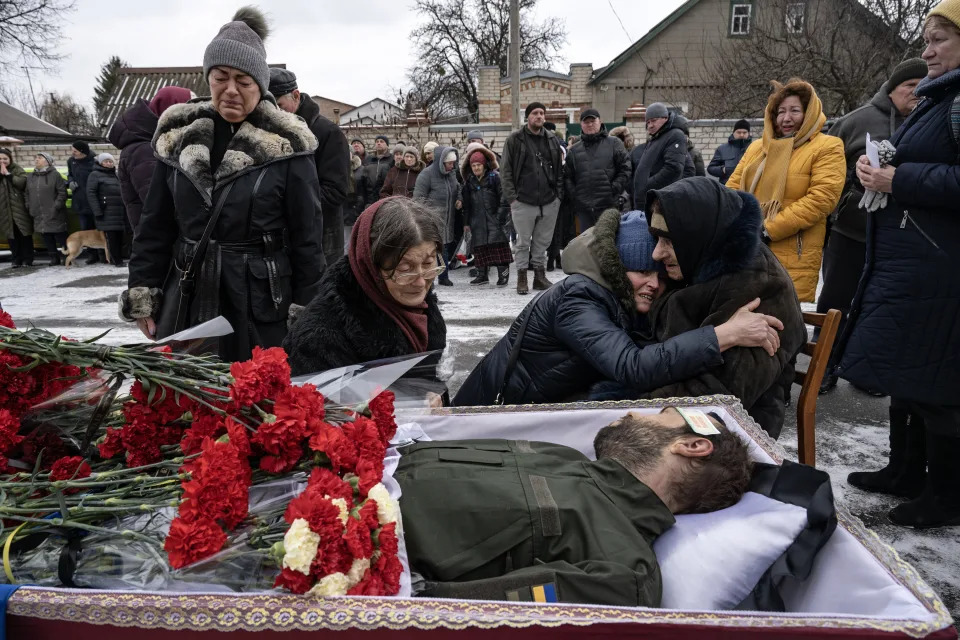
Mourners in Kharkiv, Ukraine grieve on Monday, Feb. 6, 2023, during the funeral of Anton Pushkar, a Ukrainian soldier who was killed in fighting near Bakhmut, in eastern Ukraine. (Lynsey Addario/The New York Times)
NEVSKE, Ukraine — In a tiny village in eastern Ukraine at the epicenter of the next phase of the war, Lyudmila Degtyaryova measures the Russian advance by listening to the boom of incoming artillery shells.
There are more and more of them now. And they are coming more frequently, as Russian troops grind their way forward.
“You should see the fireworks here,” said Degtyaryova, 61, as the sounds of artillery howled all around. “It is like New Year’s.”
Russia’s military is preparing to launch a new offensive that could soon swallow Degtyaryova’s village of Nevske, and perhaps much more in the eastern Ukrainian region known as the Donbas. But already the impact of Russia’s stepped-up assault is being felt in the towns and villages along the hundreds of miles of undulating eastern front.- ADVERTISEMENT -https://s.yimg.com/rq/darla/4-10-1/html/r-sf-flx.html
Exhausted Ukrainian troops complain they are already outnumbered and outgunned, even before Russia has committed the bulk of its roughly 200,000 newly mobilized soldiers. And doctors at hospitals speak of mounting losses as they struggle to care for fighters with gruesome injuries.
The civilians standing in the way of Russia’s planned advance once again face the agonizing decision of whether to leave or to stay and wait out the coming calamity. This area in the northern Donbas was among the last to be liberated in a Ukrainian blitz offensive last fall that raised hopes among local residents that their months of trauma were over.
But the war has come back. Two weeks ago, a Russian shell landed in Degtyaryova’s yard, and as she contemplated her future over the weekend, the remains of her barn still smoldered.
She has rabbits, ducks and three pregnant cows to care for. A chicken, its feathers partly burned off in the recent strike, lay recovering in a bed of hay, its small injured foot in a homemade cast.
If the Russians come back, she lamented, she’ll have to flee.
“I’ve started to pack my things, if I’m being honest,” she said. “The soldiers will cover my back and I will leave. I’ll let my cows out and I’ll go. I don’t want to go back there.”
When and where the new offensive will begin in earnest is still unclear, but Ukrainian officials are gravely concerned. Ukraine’s military defied dire assessments before the war, thwarting Russia’s early efforts to seize the capital, Kyiv, and eventually driving Russian forces back in the northeast and south.
But the Russian military just keeps coming. Right now, the newly mobilized troops are finishing their training and entering the field; the forces include as many soldiers as took part in the initial invasion last year.
They could be ready to fight in as little as two weeks, said Serhiy Haidai, the governor of the Luhansk region, which includes Nevske — much sooner than new Western weapons, including tanks and heavy armored fighting vehicles, are expected to arrive in Ukraine.
“There are so many,” Haidai said of the new recruits. “These are not professional soldiers, but it is still 200,000 people who are shooting in our direction.”
Russia is expected to punch hard, looking to reverse nearly a year of cascading failure. While a renewed attack on Kyiv is now considered improbable, Russian forces will likely try to recover territories they lost last fall. as well as take full control of the Donbas, a key objective of Russian President Vladimir Putin.
Military analysts say that one likely scenario would be for Russian forces to swing down from the north and up from the south in an arc, creating a large claw that would cut off Ukrainian supply lines running east and west. That would put villages like Nevske in the direct path of Russia’s likely advance.
For locals it would be a disaster. Out here at the far edge of Ukraine’s offensive, people have not experienced the fruits of liberation the way Ukrainians farther west have. There is still no power or water and the fighting has never subsided. Fields of black unharvested sunflowers are pocked with snow-filled craters, and the area is littered with burned-out tanks and unexploded ordnance and mines that frequently kill livestock. Passing through the region, one occasionally comes across their frozen bodies or bones.
In Makiivka, just north of Nevske, five of Ruslan Vasilchenko’s cows have been killed, and those that remain were huddled on a recent day in a tiny barn that had been spackled with shrapnel. There was a burned tank in his garden and two destroyed cars in his courtyard. He said he expected things would get much worse soon.
“Over the last few days, the soldiers have come by to tell us not to leave our homes,” he said.
The first stages of the Russian offensive have already begun. Ukrainian troops say that Bakhmut, an eastern Ukrainian city that Russian forces have been trying to seize since the summer, is likely to fall soon. Elsewhere, Russian forces are advancing in small groups and probing the front lines looking for Ukrainian weaknesses.
The efforts are already straining Ukraine’s military, which is worn out by nearly 12 months of heavy fighting.
Troops say they have tanks and artillery pieces, but not enough of either, and have far less ammunition than their adversaries. Russian forces have also started to field more sophisticated weaponry, such as the T-90 tank, which is equipped with technology capable of detecting the targeting systems of anti-tank weapons like the U.S-made Javelins, limiting their effectiveness.
Mostly, though, the challenge comes down to numbers.
“It’s particularly difficult when you have 50 guys and they have 300,” said a 35-year-old infantry soldier named Pavlo, who was struck in the eye with a piece of shrapnel from a rocket-propelled grenade near Bakhmut. “You take them out and they keep coming and coming. There are so many.”
Losses among Ukrainian forces have been severe. Troops in a volunteer contingent called the Carpathian Sich, positioned near Nevske, said that some 30 fighters from their group had died in recent weeks, and soldiers said, only partly in jest, that just about everyone has a concussion.
“It’s winter and the positions are open; there’s nowhere to hide,” said a soldier from the unit with the call sign Rusin.
At one front-line hospital in the Donbas, the morgue was packed with the bodies of Ukrainian soldiers in white plastic bags. In another hospital, stretchers with wounded troops covered in gold foil thermal blankets crowded the corridors, and a steady stream of ambulances arrived from the front nearly all day long.
A military surgeon at that hospital, Myroslav Dubenko, 36, scrolled through photographs of soldiers with ghastly injuries: a lower jaw blasted off, half of a face missing. One soldier was rushed in with his throat sliced open from ear to ear. Dubenko was able to quickly repair the damage, and the soldier survived.
“In civilian life, you know that no matter how horrible your shift is, it will end sooner or later,” Dubenko said. “Here, you never know when it will end.”
It not just the influx of soldiers that is consuming doctors; civilians, too, are frequent victims of Russian attacks. For Andriy Drobnytsky, a 27-year-old military doctor, this is part of a deliberate strategy of overwhelming Ukraine’s military hospitals. Last week, a retired prison guard was rushed into the military hospital where Drobnytsky is deployed, his hand blown apart by a mortar shell that exploded while he was gathering firewood. Drobnytsky assisted in sewing his hand back together, probably saving his index finger.
“If there are lots of victims, we’ll get distracted by them,” he said. “You just can’t abandon them, right?”
Whether Russia will be able to capitalize on its strength in numbers is an open question. Russian soldiers, according to Ukrainian and Western assessments, are dying in far greater numbers. U.S. officials now estimate the number of Russian troops wounded and killed to be approaching 200,000, an astounding casualty rate.
In his sleeping quarters at a base near Bakhmut, a soldier with the call sign Badger pulled out a cloth bag and dumped its contents onto a cot. Inside were half a dozen knives — one with a hilt made from a deer’s hoof — trophies he said he had taken from the bodies of dead Russian soldiers.
“We also have losses, but they have huge losses,” Badger said. “We’ve wasted them all in huge numbers.”
Back near Nevske, soldiers from the Carpathian Sich said they had enough ammunition to hang on for now. One soldier, with the call sign Diesel, showed videos on his phone of the bodies of Russian troops he had killed when they came too close.
As they have since the beginning of the war, the Russians continue to make stupid mistakes, he said. From one dead officer, Diesel said, he took a tablet computer without an access code that had the coordinates of all of their mines and snipers.
In a video he recorded from the front, Diesel approaches a body lying in the snow, his rifle muzzle trained on the Russian’s head.
“Hello,” he whispers after determining the man was dead. “Did you sleep well?”
Major Russian offensive will end by April and will not be successful ISW
Ukrainska Pravda – February 2, 2023
Russian President Vladimir Putin may have overestimated the Russian military’s own capabilities again, and therefore its major offensive in the east of Ukraine will end prematurely in the spring rainy season and will not be effective, analysts of the Institute for the Study of War (ISW) are convinced.
Details: Andrii Cherniak, Representative of the Defence Intelligence of Ukraine, told the Kyiv Post on 1 February in an interview that Russian President Vladimir Putin had ordered the Russian military to capture all of Donetsk and Luhansk oblasts by March 2023. Cherniak also stated that Russian forces are redeploying additional unspecified assault groups, units, weapons, and military equipment to unspecified areas in the east of Ukraine.
“Putin may have overestimated the Russian military’s own capabilities again. ISW has not observed any evidence that Russian forces have restored sufficient combat power to defeat Ukraine’s forces in east of Ukraine and capture over 11,300 square kilometres of unoccupied Donetsk Oblast (over 42 percent of Donetsk Oblast’s total area) before March as Putin reportedly ordered,” ISW emphasised.
According to the ISW’s preliminary assessments, a major Russian offensive before April 2023 would likely prematurely culminate during the April spring rain season before achieving operationally significant effects.
“Russian forces’ culmination could then generate favourable conditions for Ukrainian forces to exploit in their own late spring or summer 2023 counteroffensive after incorporating Western tank deliveries,” a report of ISW said.
Background:
Oleksii Reznikov, Minister of Defence of Ukraine, said that Russia may launch an offensive on two fronts on the anniversary of the 2022 invasion.
According to Bloomberg, despite enormous losses, Russian President Vladimir Putin is planning a new offensive in Ukraine, while at the same time preparing his country for years of confrontation with the US and its allies.
Journalists fight on their own frontline. Support Ukrainska Pravda or become our patron!
Russia’s Shadow Army Accused in Mysterious Teen Abductions
Philip Obaji Jr. – February 2, 2023
Photo Illustration by Erin O’Flynn/The Daily Beast/Getty Images
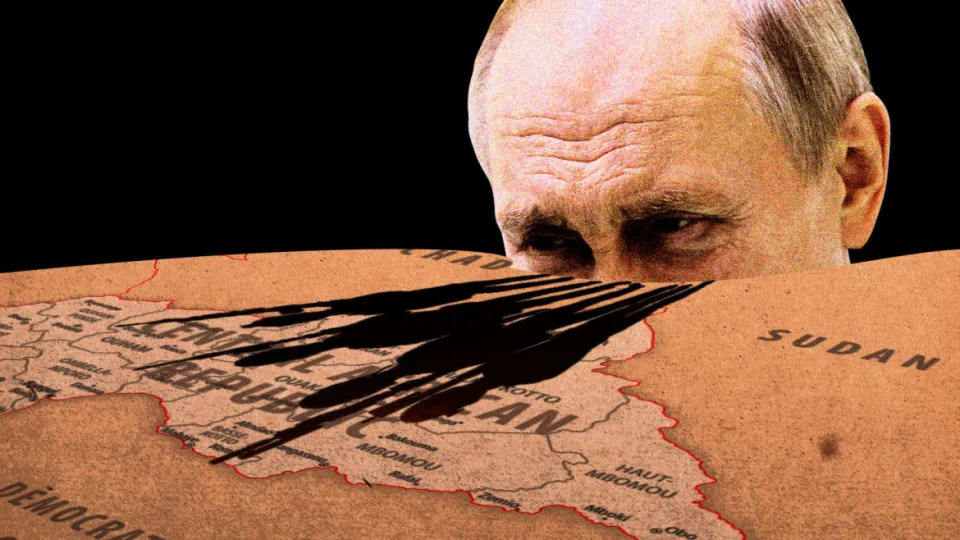
KENZOU, Cameroon—It was the middle of the night when armed men from the local wing of Russia’s Wagner Group, commonly referred to as “Black Russians,” allegedly arrived at Ali’s home.
“They looked straight into my eyes and said, ‘If you don’t come back to us, you and your family will be killed,’” Ali, who had spent close to a year working closely with the Wagner Group, told The Daily Beast. “They left without saying anything else.”
Ali’s wife, his three adolescent daughters and three adult brothers were allegedly at their three-bedroom home in the outskirts of Berbérati—a city in the southwest of the Central African Republic (CAR)—when the men arrived armed with machine guns. “As they stepped out of the house, one of them looked at me and said ‘Tell your husband to do what is right or else all of you will suffer,’” Fatou*, Ali’s wife, told The Daily Beast.
Minutes later, the armed men allegedly stormed the nearby home of Hassan* and issued him a similar warning, but with a more severe punishment for allegedly masterminding the exit of several Black Russians from the Wagner Group.
“They said if I don’t return to the [Black Russians] group they’ll seize me and my family and torture us for days before they eventually kill us,” Hassan, a former Black Russian who was living in a two-bedroom home with his mother and two teenage sons when the armed men arrived, told The Daily Beast. “They believe I have been the one encouraging other members to leave the group because I was among the first to quit.”
The Wagner Group, which showed up in the war-torn Central African Republic around 2018, has relied heavily on local recruits since last year, after hundreds of its Russian mercenaries were pulled from Central Africa and sent to Ukraine to fight Vladimir Putin’s war. But poor welfare for Black Russians—and fear that they could be deployed to fight overseas without compensation or insurance—has forced many to abandon the group.
The threats to their families weren’t enough to force Ali and Hassan back to the group. Both men subsequently stayed away from their homes to avoid being captured and killed—the kind of punishment the Wagner Group is known to hand out to fighters who disobey orders or desert the organization.
“We didn’t take their threat of harming our families seriously because that is not how they [Wagner mercenaries and local recruits] are known to act,” said Ali, who—along with Hassan—had to squat in a faraway unfinished building, where construction work had long been abandoned, to hide from their former colleagues. “Throughout the time we worked with them, no one targeted anyone’s family. When you commit an offense, you face the consequences on your own.”
Ali and Hassan would later realize that they misjudged the group they had been part of—and that their refusal to rejoin the Black Russians could prove costly.
According to Hassan’s family, the same men who visited the previous week returned to his home and seized his two sons, who are 15 and 13 years old, vowing not to release them until their father returns to the Wagner unit to face discipline. Hassan and his mother, who was the only one at home with the boys when they were taken away, fled to Cameroon the following day as they feared their lives were in danger.
“They dragged my grandsons from the house and threw them into a [pickup] truck and then drove them away,” Hassan’s mother Bintou* told The Daily Beast in the Cameroonian border town of Kenzou, where she and her son live in a single-room mud house. “We don’t even know whether he is dead or alive.”
On the same day Hassan’s sons were seized, Ali’s three younger brothers, who are 27, 24, and 23 years old, left home in the morning to attend a music festival at a playground just outside Berbérati. But they never returned home and no one has seen them since then, according to family members who believe the Wagner Group is responsible for their disappearances.
“It must be the same people who came to our home to threaten us that kidnapped them,” said Ali, who also fled Berbérati to Kenzou along with his wife and daughters. “They want me to meet face to face with them, that’s why they are holding my brothers.”
Three years ago, Ali and Hassan joined the Union for Peace (UPC), a Central African rebel group fighting for control of the Ouaka central province, located at the border between the mainly Muslim north and the predominantly Christian south. Their involvement with the UPC, whose leader Ali Darassa was sanctioned over a year ago by the U.S. Department of the Treasury’s Office of Foreign Assets Control (OFAC) “for serious human rights abuses”, lasted only a few months. It was cut short by an enticing offer from Wagner Group, run by Putin’s close friend and ally Yevgeny Prigozhin.
Ali and Hassan were among hundreds of UPC rebels who surrendered to the CAR military in December 2021 after both men said they were promised a chance to work with the Wagner Group and earn a monthly pay of about $1,000.
But when Wagner stopped paying some Black Russians after a few months, and many local recruits mysteriously disappeared towards the end of 2022, both Ali and Hassan decided to leave the group and move away from their base in the capital Bangui to Berbérati.
“The main reason some of us left the [Black Russians] group is because we feared they could send us to war in Ukraine without giving us the chance to inform our families,” said Ali, who has been in touch with some of his colleagues deployed to Ukraine in the early months of Russia’s invasion and allegedly abandoned thereafter. “If we die on the battlefield, no one would know anything about it.”
Ali and Hassan believe the Wagner Group’s decision to not reveal the whereabouts of Black Russians deployed to Ukraine’s Donbas region is based on financial reasoning.
“They don’t want to pay the death benefit they promised they will pay to families of fighters who died while in active service,” said Hassan. “If families don’t know their sons are fighting in Ukraine, they won’t also know when they are killed in combat and can’t demand death benefit as a result.”
For years, and especially since a brutal civil war broke out in CAR in 2013, the Cameroonian border town of Kenzou has welcomed thousands of refugees fleeing the conflict in their country. Now, the commercial town has a new type of guests: ex-Wagner recruits running away from imminent attacks from their former employers.
“We know for sure that there are former CAR rebels now living in this town with us,” Vincent Olembe, a local chief in Kenzou, told The Daily Beast. “Luckily, they’ve assured us that they aren’t here for trouble but were forced from their country because their lives were in danger.”
The CAR government and Prigozhin did not respond to a series of requests for comment on the allegations made by Ali and Hassan. The Daily Beast sent emails to the spokesperson of the CAR government and to Concord Management, a company majority-owned by Prigozhin, but did not receive a reply.
In Kenzou, Ali and Hassan are confident that their family members wouldn’t be hurt by the Wagner Group or those working closely with them. They believe the Russians will use them as leverage.
“If they [the seized family members] were women, I would have been worried,” said Hassan, who—like Ali—turns 40 this year. “But from the way I know them to operate, anyone who is arrested or captured is offered a chance to join the Black Russians and be forgiven or punished if he refuses.”
One day, said Hassan, “I’ll reunite with my boys.”
*The names of these sources have been changed for fear of retribution.
Russian runaway officer reveals how Ukrainians are tortured in captivity
Ukrainska Pravda – February 2, 2023
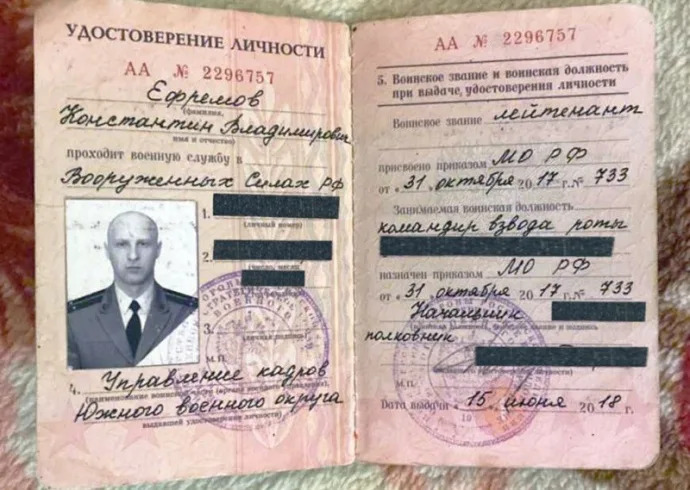
Konstantin Yefremov, former Russian military officer who fled Russia, has claimed that Ukrainian men were cruelly tortured in captivity; Russian soldiers shot at them and threatened to rape them.
Details: In April 2022, Yefremov’s unit guarded their “rear HQ” in Kamianka village in Zaporizhzhia Oblast, Ukraine. The colonel was in charge of questioning Ukrainian captives there.
Quote from Yefremov: “Three Ukrainian military captives were brought there one day. One of them confessed he was a sniper. And the colonel’s eyes lit up when he heard it. He beat him up, pulled down his pants and asked if he was married. He [the captive] answered yes. The colonel told [us] to bring a mop: ‘We will make you a girl now and send the video to your wife.’
The colonel asked a captive once to name all nationalists that he knew in his regiment, his platoon. And the guy did not understand the question, he said: ‘We are marines of the Armed Forces of Ukraine’. The Colonel beat him up and knocked out a few teeth.
He put a gun to a guy’s head as he was blindfolded and told him: ‘I am counting to three, and then I will shoot you in the head.’ He counted, then shot close to the head. He shoots close to one ear and then keeps asking questions.”
Details: The officer has stated that these questioning and tortures “had been going on for a week – every day, or night, sometimes twice a day”.
He has also recollected that the captives were held in a garage. The Colonel forbade feeding them with normal food and only allowed us to give them water and rusks.
Moreover, according to Yefremov, the Colonel shot through the captive’s arm keeping the bone bone intact, and shot his right leg, breaking a bone, once during the questioning.
The BBC has pointed out that it cannot confirm Yefremov’s detailed statements, but it highlights that those statements correspond with other comments about torturing Ukrainian captives.
Photo: Russian BBC News
Background: Senior Lieutenant Yefremov was a commander in a mine clearance platoon of the 42nd Guards Motor Rifle Division, with its headquarters in Chechnya. Yefremov has said that he arrived in Dzhankoi, Crimea, on 10 February 2022, before Russia’s full-scale invasion of Ukraine.
Yefremov has assured the press that even officers did not believe that there would be a war and thought they were going to military exercises.
He has claimed that he realised on the first day of the war that he did not want to fight and tried to abandon service. At first, the command refused, calling him a coward and a traitor, and threatened with prison for desertion, but they finally dismissed Yefremov, and he left Russia.
Yefremov has said that for the last three years, he was clearing mines in Chechnya that survived two wars – until the Russian war against Ukraine began; he loved his job and believed he was helpful.
“I am apologizing to the Ukrainian people that I came to their home armed and as an unwelcome guest. And I thank God that no one suffered from my hands, that I did not take anyone’s life on that land. And thank God I was not hurt. I do not even have a moral right to ask Ukrainians to forgive me,” Yefremov summed up.
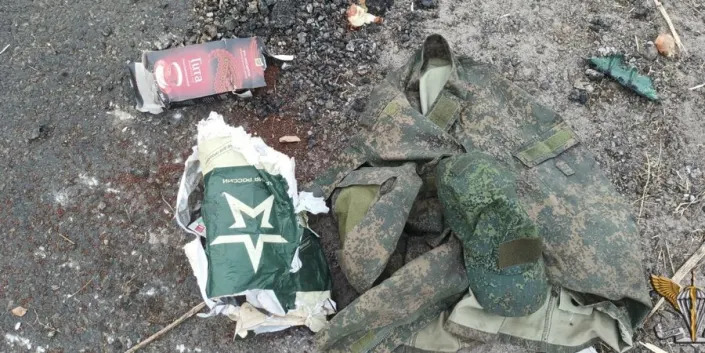
Ten Russian servicemen surrendered in total, he said.
“The 155th Brigade is known from the Kyiv axis, when they were storming the city of Kyiv (in February and March 2022),” Dmytrashkivskyi said.
“They entered Irpin and Bucha. These fighters became ‘famous’ for looting and wreaking havoc. However, they were almost completely destroyed in that area.”
After being restored, this brigade reappeared on the Donetsk axis, where it was also defeated in November 2022.
“And today they have reappeared on the Vuhledar axis. Ten of their fighters have surrendered,” the spokesman said.
According to Ukrainian law enforcement agencies, more than 1,200 civilians were killed in Bucha area during the Russian occupation.
War’s longest battle exacts high price in ‘heart of Ukraine’
Hanna Arhirova – February 1, 2023
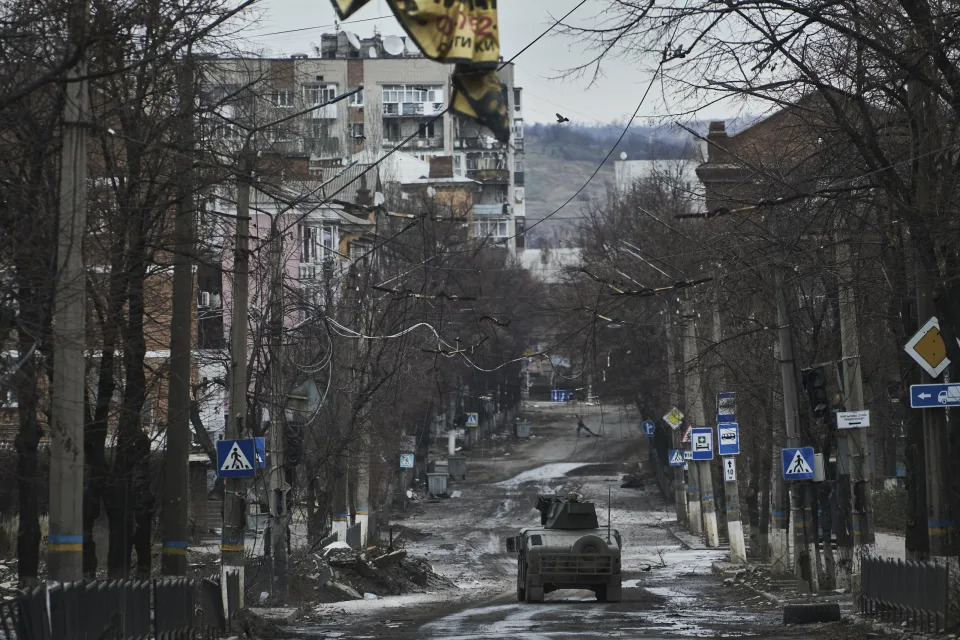
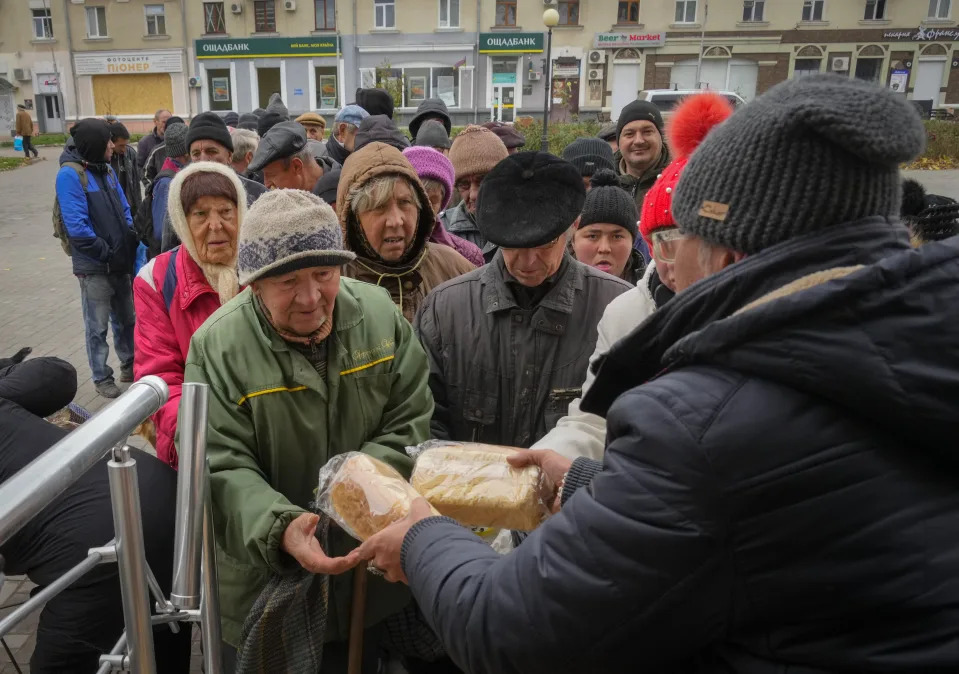
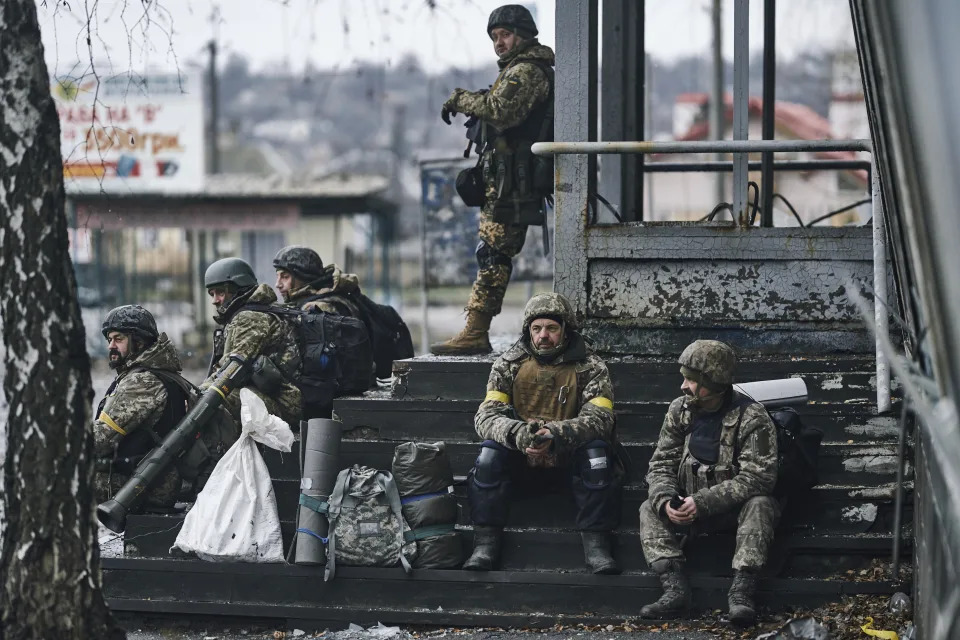
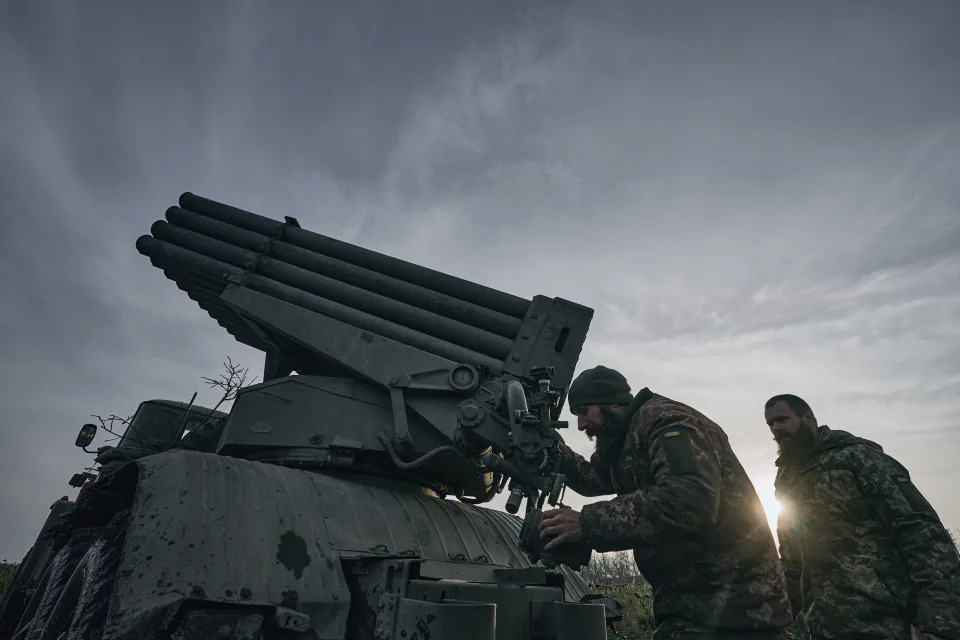
Ukrainian soldiers ride in a Humvee in Bakhmut, Donetsk region, Ukraine, Wednesday, Dec. 21, 2022. (AP Photo/Libkos, File)Rescuers carry the body of a civilian at a site of an apartment building destroyed by Russian shelling in Bakhmut, Donetsk region, Ukraine, Wednesday, May 18, 2022. (AP Photo/Andriy Andriyenko, File)Local residents stand in line waiting for free bread from volunteers in Bakhmut, the site of the heaviest battle against the Russian troops in the Donetsk region, Ukraine, Friday, Oct. 28, 2022. (AP Photo/Efrem Lukatsky, File)Smoke billows after Russian attacks in the outskirts of Bakhmut, Ukraine, Tuesday, Dec. 27, 2022. (AP Photo/LIBKOS, File)Ukrainian soldiers rest near their position in Bakhmut, Donetsk region, Ukraine, Saturday, Dec. 17, 2022. (AP Photo/LIBKOS, File)Ukrainian soldiers fire a Pion artillery system at Russian positions near Bakhmut, Donetsk region, Ukraine, Friday, Dec. 16, 2022. (AP Photo/LIBKOS, File)Ukrainian servicemen prepare to fire at Russian positions in the frontline near Bakhmut, Donetsk region, Ukraine, Thursday, Nov. 24, 2022. (AP Photo/LIBKOS, File)
KYIV, Ukraine (AP) — Visitors used to browse through Bakhmut’s late 19th century buildings, enjoy walks in its rose-lined lakeside park and revel in the sparkling wines produced in historic underground caves. That was when the city in eastern Ukraine was a popular tourist destination.
But their scorched-earth tactics have made it impossible for civilians to have any semblance of a life there.
“It’s hell on earth right now; I can’t find enough words to describe it,” said Ukrainian soldier Petro Voloschenko, who is known on the battlefield as Stone, his voice rising with emotion and resentment.
Voloschenko, who is originally from Kyiv, arrived in the area in August when the Russian assault started and has since celebrated his birthday, Christmas and New Year’s there.
The 44-year-old saw the city, located around 100 kilometers (60 miles) from Russia’s border, gradually turned into a wasteland of ruins. Most of the houses are crushed, without roofs, ceilings, windows or doors, making them uninhabitable, he said.
Out of a prewar population of 80,000, a few thousand residents remain. They rarely see daylight because they spend most of their time in basements sheltering from the ferocious fighting around and above them. The city constantly shudders with the muffled sound of explosions, the whizzing of mortars and a constant soundtrack of artillery. Anywhere is a potential target.
Bakhmut lies in Donetsk province, one of four that Russia illegally annexed in the fall — but Moscow only controls about half of it. To take the remaining half, Russian forces have no choice but to go through Bakhmut, which offers the only approach to bigger Ukrainian-held cities since Ukrainian troops took back Izium in Kharkiv province in September, according to Mykola Bielieskov, a research fellow at Ukraine’s National Institute for Strategic Studies.
“Without seizure of these cities, the Russian army won’t be able to accomplish the political task it was given,” Bielieskov said.
The deterioration in Bakhmut started during the summer after Russia took the last major city in neighboring Luhansk province. It then poured troops and equipment into capturing Bakhmut, and Ukraine did the same to defend it. For Russia, the city was one stepping stone toward its goal of seizing the remaining Ukrainian-held territory in Donetsk.
From trenches outside the city, the two sides dug in for what turned into an exhausting standoff as Ukraine clawed back territory to the north and south and Russian airstrikes across the country targeted power plants and other infrastructure.
The months of battle exhausted both armies. In the fall, Russia changed tactics and sent in foot soldiers instead of probing the front line mainly with artillery, according to Voloschenko.
Bielieskov, the research fellow, said the least-trained Russians go first to force the Ukrainians to open fire and expose the strengths and weaknesses of their defense.
Bielieskov said that Ukraine compensates for its lack of heavy equipment with people who are ready to stand to the last.
“Lightly armed, without sufficient artillery support, which they cannot always be provided, they stand and hold off attacks as long as possible,” he said.
The result is that the battle is believed to have produced horrific troop losses for both Ukraine and Russia. Quite how deadly isn’t known: Neither side is saying.
“Manpower is less of a Russian problem and, in some ways, more of a Ukrainian problem, not only because the casualties are painful, but they’re often … Ukraine’s best troops,” said Lawrence Freedman, a professor emeritus of war studies at King’s College London.
The Institute for the Study of War recently reported that Wagner forces have seen more than 4,100 die and 10,000 wounded, including over 1,000 killed between late November and early December near Bakhmut. The numbers are impossible to verify.
Ukrainian President Volodymyr Zelenskyy, in a recent address, described the situation in Bakhmut as “very tough.”
“These are constant Russian assaults. Constant attempts to break through our defenses” he said,
Like Mariupol — the port city in the same province that Russia eventually captured after an 82-day siege that eventually came down to a mammoth steel mill where determined Ukrainian fighters held out along with civilians — Bakhmut has taken on almost mythic importance to its defenders.
“Bakhmut has already become a symbol of Ukrainian invincibility,” Voloschenko said. “Bakhmut is the heart of Ukraine, and the future peace of those cities that are no longer under occupation depends on the rhythm with which it beats.”
For now, Bakhmut remains completely under the control of the Ukrainian army, albeit more as a fortress than a place where people would visit, work or play. In January, the Russians seized the town of Soledar, located less than 20 kilometers (some 12 miles) away, but their advance is very slow, according to military analysts.
“These are rates of advancement that do not allow us to talk about serious offensive actions. It’s a slow pushing out at a very high price,” Bielieskov said.
Along the front line on the Ukrainian side, emergency medical units provide urgent care to battlefield casualties. From 50 to 170 wounded Ukrainian soldiers pass daily through just one of the several stabilization points along the Donetsk front line, according to Tetiana Ivanchenko, who has volunteered in eastern Ukraine since a Russia-backed separatist conflict started there in 2014.
After its setbacks in Kharkiv in the northeast and Kherson province in the south, the Kremlin is hungry for any success, even if it is just seizing a town or two that have been pounded into rubble. Freedman, the King’s College London professor emeritus, said the loss of Bakhmut would be a blow for Ukraine and offer tactical advantages to Russian forces, but wouldn’t prove decisive to the outcome of the war.
There would have been more value for Russia if it could have captured a populated and intact Bakhmut early on in the war, but now the capture would just give its forces options on how to seize more of Donetsk, said Freedman.
A 22-year-old Ukrainian soldier who is known as Desiatyi, or Tenth, joined the army on the day that Russia started the full-scale war in Ukraine. After months spent defending the Bakhmut area, losing many comrades, he said he has no regrets.
“It is not about comparing the price and losses on both sides. It’s about the fact that, yes, Ukrainians are dying, but they are dying because of a specific goal,” said Desiatyi, who did not give his real name for security reasons.
“Ukraine has no choice but to defend every inch of its land. The country must defend itself, especially now, so zealously, so firmly, and desperately. This is what will help us liberate our occupied territories in the future.”
A captured member of the infamous Wagner Group said he is more ‘afraid of Putin’ than dying in battle, Ukrainian soldier reveals
Rebecca Cohen – February 1, 2023
Russian President Vladimir Putin (L) looks on Defence Minister Sergei Shoigu (R) during a military parade in Pskov, Russia, on March,1, 2020.Mikhail Svetlov/Getty Images
A captured Russian soldier said he is more afraid of Vladimir Putin than he is of dying in battle.
“We’re afraid of Putin,” a Ukrainian solder recalled the man saying.
The Ukrainian solder said the man joined Russia’s Wagner Group to expunge his criminal record.
A captured fighter from Russia’s Wagner Group told his Ukrainian captors he is more afraid of Russian President Vladimir Putin than he is of dying on the battlefield, a Ukrainian soldier revealed to CNN.
In an audio recording reviewed by CNN of the Ukrainian soldier questioning the Russian prisoner, Andriy told the man: “Obviously, you know that you will be killed [in battle.] But you’re afraid to fight for your freedom in your country.”
“Yes, this is true,” the Ukrainian soldier named Andriy recalled the man replying. “We’re afraid of Putin.”
The Wagner fighter was an engineer, CNN reported, citing the audio recording. According to CNN, he had started selling drugs in Russia to make more money on the side, and he joined Wagner in hopes of expunging his criminal record so his daughter, who wants to be a lawyer, would run into fewer roadblocks in her future.
In the recording reviewed by CNN, Andriy asked the man when he realized he was “just meat,” to which he replied: “At the first combat mission. They brought us to the frontline on December 28. They sent us forward last night.”
Russian President Vladimir Putin is “desperate for a victory of any kind” ahead of the one-year anniversary of his invasion into Ukraine, and he’s sending his troops into some of Ukraine’s most heavily defended areas to try to get it, a former Australian general said earlier this month.
To achieve this, Russia has been sending prisoners recruited by the Wagner Group and freshly mobilized troops to the front lines to clear the way for its better-trained forces, who step in later, a US official said, Insider previously reported.
Wagner — a private military contractor with close ties to the Kremlin — was designated as a “significant transnational criminal organization” by the US government last week and its global network was targeted by a slew of sanctions. The White House said in January that the group had about 10,000 mercenaries and 40,000 former prisoners deployed across Ukraine, where it has joined in Moscow’s war efforts.
Fighting ramps up in eastern Ukraine in ‘devastating WWI-like environment’
Tom Soufi Burridge – February 1, 2023
Russia has escalated its attacks on Ukrainian positions in eastern Ukraine as Russian President Vladimir Putin presses for gains on the battlefield ahead of the one-year anniversary of the war towards the end of this month.
Ukrainian and Russian forces remain locked in a brutal battle in and around the eastern city of Bakhmut.
On Wednesday, the Ukrainian army said its positions in that area had been shelled 151 times during the previous 24 hours. Russian claims that its forces had surrounded the city were denied by Ukrainian officials.
However, Russia has also started a more sustained assault to the south on another frontline town called Vuhledar, according to both Ukrainian and Western officials.
Images circulating on social media show that the town has been pummeled by Russian artillery and Western officials said Russia had made “creeping gains” in that area.
PHOTO: Ukrainian servicemen take part in tanks military drills, amid Russia’s attack on Ukraine, in Kharkiv region, Ukraine January 25, 2023. (Stringer/Reuters)
Russia’s offensive in Vuhledar, they thought, could be an attempt to force the Ukrainians to move resources away from the battle in Bakhmut.
“It’s a devastating First World War-like environment” Western officials told journalists at a briefing on Tuesday, adding that both sides were sustaining “really heavy casualties.”
Medics at a Ukrainian army field hospital situated a few miles from the frontlines in eastern Ukraine told ABC News last Thursday that they are currently receiving “dozens of casualties” every day.
As Russia attempts to push forward, it has recently enjoyed some “tactical successes” in eastern Ukraine, according to Western officials.
However, the officials claimed there is still broad “parity” between Ukrainian and Russia forces in the battle zone and argued that Russia still does not have the means to commit significant additional resources into the fight to tip the balance.
That said, Ukraine and its Western allies are in a race against time.
The U.S. and its NATO partners are working to get new weaponry, including advanced Western tanks into Ukraine.
PHOTO: Ukrainian servicemen ride atop an infantry fighting vehicle along a road, amid Russia’s attack on Ukraine, near a frontline in Donetsk region, Ukraine January 30, 2023. (Viacheslav Ratynskyi/Reuters)
More than a hundred German-made Leopard 2 tanks and British Challenger 2 tanks could take “months” to reach the battlefield, say officials.
Ukrainian forces are also potentially more vulnerable to Russian attacks now because some of its best soldiers are resting and training on new Western weaponry ahead of a likely Ukrainian offensive in the coming weeks or months.
The Russians are also preparing for an “imminent offensive” said the Institute for the Study of War (ISW) in one of its recent reports, stating that its assessment came from “western, Ukrainian and Russian sources.”
However, the uptick in Russian attacks in eastern Ukraine did not mean a major Russian offensive was already underway, Western officials told journalists.
If Russia wants to launch a successful offensive, it will need to mobilize more soldiers, via a fresh draft, the officials claimed.
“The Russians’ ability to supply their troops and provide appropriate logistics to their forces in the battle zone limits their ability to change the course of the conflict,” they told reporters on Tuesday.