Ukraine’s defiant city struggles to hold out as Russia pushes for a bloody victory

NBC News

Ukraine’s defiant city struggles to hold out as Russia pushes for a bloody victory

 0:21 3:27   Russia and Ukraine battling for city of Bakhmut

Richard Engel and Marc Smith and Patrick Smith – February 9, 2023

BAKHMUT, Ukraine — Surrounded on three sides, this eastern Ukrainian city has held out for months in bloody defiance against invading forces, Russian shells pounding day and night against streets coated with snow and rubble.

But, as the Kremlin’s troops advance here and threaten a major offensive across the war’s front lines, gunfire could be heard on a recent visit while the few thousand remaining locals sheltered in basements, stubbornly refusing to leave what remains of their homes.

“Bakhmut holds” is a patriotic battle-cry heard across the country, cementing the city as a symbol of national resistance.

And it still holds, for now.

‘Death is not an option’

The long-awaited spring offensive from Russia’s military is expected in the coming weeks — if it hasn’t already begun. Analysts have warned that Moscow’s forces, pushing for a high-profile victory to coincide with the Feb. 24 anniversary of the invasion, could finally be on the brink of taking the city.

The people of Bakhmut are all too familiar with the most intense fighting of the war, with many living in shelters for as long as six months. Their resolve and determination holds firm.

Olena Molchanova, 40, is one of three doctors caring for the few thousand people who stayed behind from an estimated pre-war population of around 80,000. She lives with her husband in the basement under her clinic, where she works seven days a week, from morning to evening. Their 18-year-old daughter has fled to the relative safety of the capital, Kyiv.

Of the three patients to visit during NBC News’ trip, two were registering deaths. This is an everyday reality, she said. But she won’t leave.

“I’m here because people still here need medical help, they need treatment. How can I leave them?” she said. “Death is not an option for me…. I don’t want to die, I have reason to live, I have a job to do.”
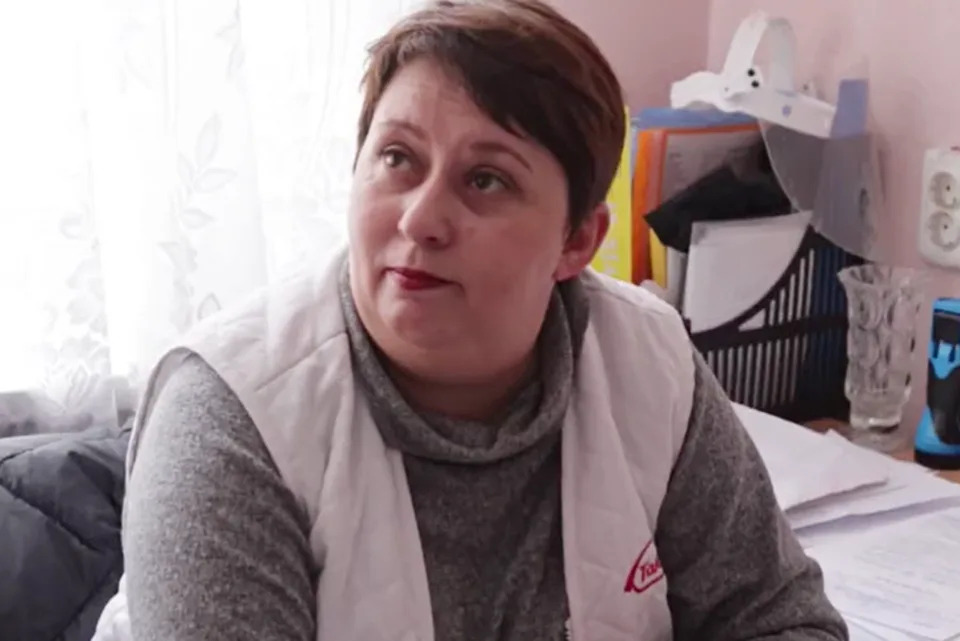
Dr. Olena Molchanova, a family doctor who is living in a makeshift shelter under her Bakhmut clinic. (Dean Taylor / NBC News)

There is only one highway still under Ukrainian control here.

The road dips into a snow-covered valley and is clearly visible to Russian positions on nearby hilltops. “This part is dangerous,” NBC News’ Ukrainian military escort said. “We must go fast.”

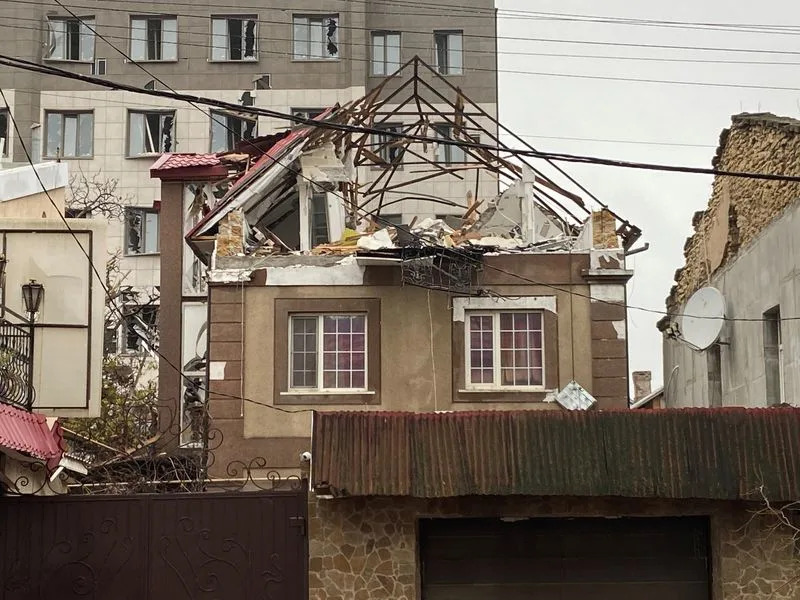
Apartment blocks, offices, schools, shops and entire streets lie in ruins. If Russia does seize this city, it will be taking control of a place that is depleted and largely destroyed.

Battles rage for the town of Vuhledar, also in the Donetsk region, and increasingly in the neighboring Luhansk region. Together the two areas comprise the eastern Donbas, a huge swathe of the country famed for its industrial output and which Russian President Vladimir Putin appears intent on seizing to match his declared annexation.

The Wagner Group of mercenaries led by Putin ally Yevgeny Prigozhin was involved in taking the nearby mining town of Soledar in January, and has helped lead the assault on Bakhmut with waves of ex-convicts thrown at Ukrainian lines. Prigozhin has been eager to claim credit for the gains, in what many experts interpreted as part of a growing internal power struggle.

Russian Defense Minister Sergei Shoigu said in a news conference Tuesday that his forces “were successfully developing operations” near Bakhmut.

A map produced by the Institute for the Study of War, a Washington-based think tank, showed Russian forces at least claim to hold significant land to the south and east of the city, which they plan to connect to the large swathes of eastern and southern Ukraine already held by Moscow.
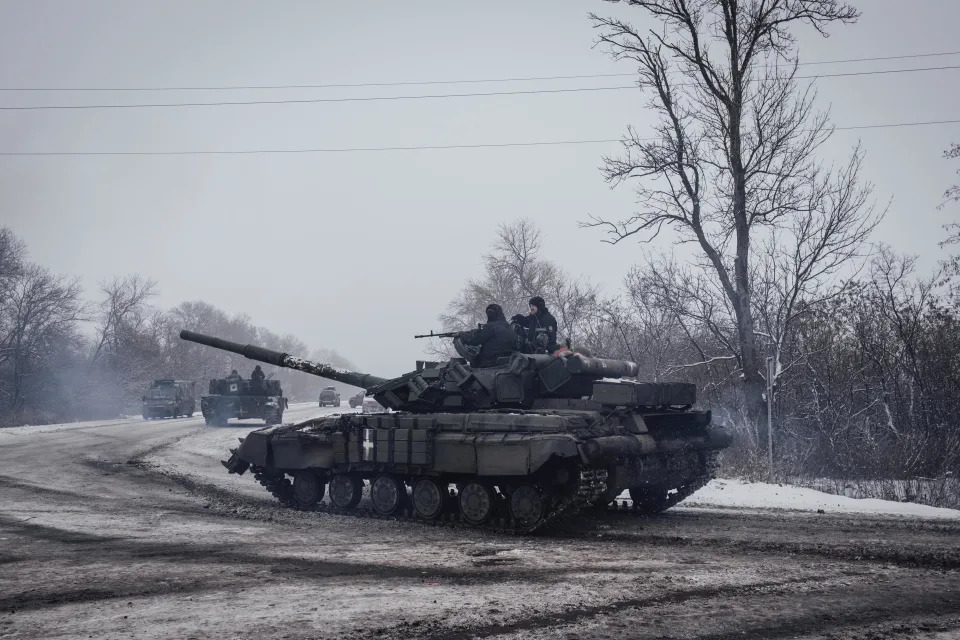
A Ukrainian tank patrols near Bakhmut on Jan. 30, 2023. The city has been the center of intense fighting for months. (Adrien Vautier / Le Pictorium / AP)

Ukrainian officials have spoken of the increasing intensity of the fight for Bakhmut in recent days.

“The battles for the region are heating up,” said Pavlo Kyrylenko, the governor of Donetsk, in televised remarks Monday. “The Russians are throwing new units into the battle and eradicating our towns and villages.”

President Volodymyr Zelenskyy’s normally optimistic tone took a noticeable drop when referring to the eastern front over the weekend.

“I’ve often had to say the situation at the front is tough, and is getting tougher, and it’s that time again… The invader is putting more and more of his forces into breaking down our defenses,” he said in a televised address. “It is very difficult now in Bakhmut, Vuhledar, Lyman and other directions.”

Ukrainian forces re-took Lyman in October, sparking scenes of jubilation and a general feeling that the tide may have turned in the country’s favor.

Now, that is far from certain.
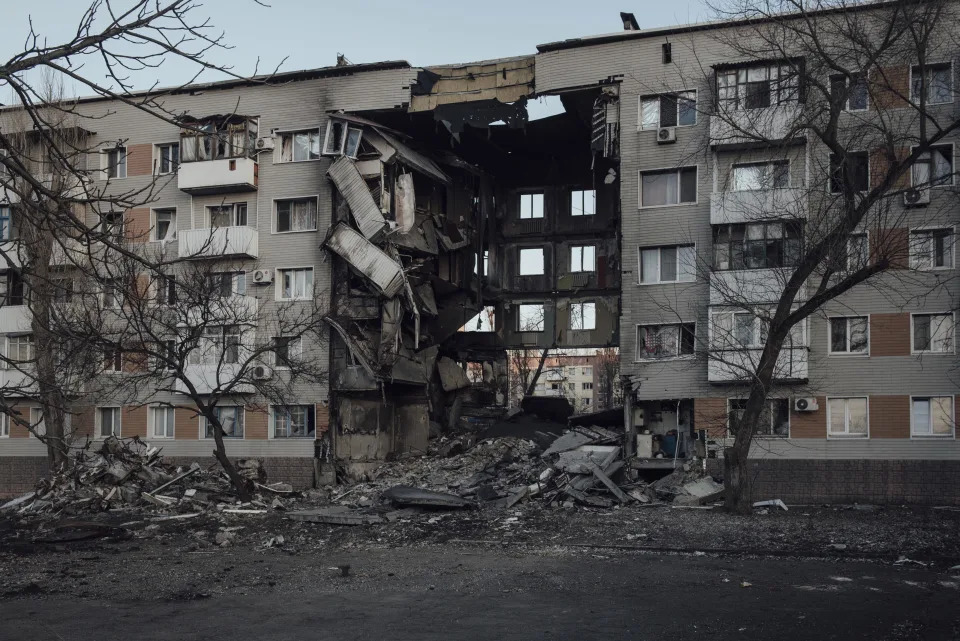
A shattered residential building in Bakhmut on Jan. 27, 2023. Only a few thousand civilians remain in the city. (Adrien Vautier / Le Pictorium / AP)

“It does look as though the Russians are making a very big push to take this town,” said John Lough, an associate fellow at the Chatham House think tank in London, about Bakhmut.

“Within the Western community over recent months there’s been a general feeling that the Russians are getting their act together and prosecuting this war to a successful conclusion, from their point of view,” Lough added.

It’s unclear just how much strategic value the city holds. But after months of bombardment and fighting, the symbolism would be undeniable.

“This little town is neither here nor there,” said Jonathan Eyal, international director at the Royal United Services Institute, a defense think tank in London. “The real important thinking is that it shows that the Russians despite having performed very poorly can turn it around and actually push Ukrainians back. So emotionally it is an important point,” he added.

Some Ukrainians here say they don’t understand the politics of the war, nor what Russia may be planning. But their resilience shows no signs of breaking.
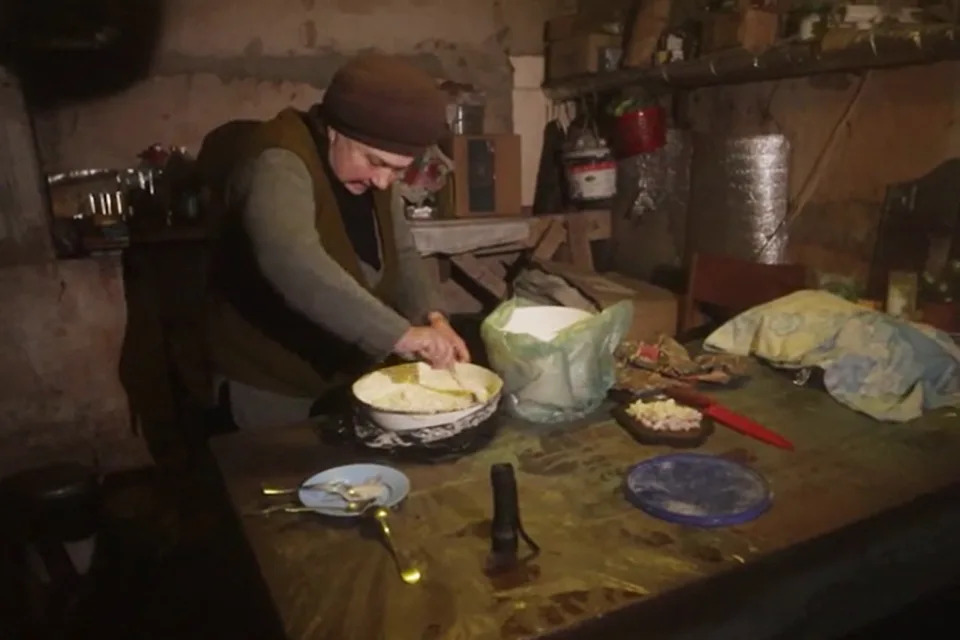
Ludmyla, 70, makes a potato cake for the people sharing her makeshift shelter in the war-torn city of Bakhmut. (Dean Taylor / NBC News)

Ludmyla, 70, who declined to give her last name out of fear of retribution, was born in Bakhmut and has always lived here.

She makes potato cake for the six others sharing the dark, makeshift basement shelter she’s called home for three months.

Now retired, she worked in a passport office for decades. She has no family here, since her husband died three years ago. Her children and two grandchildren have moved away, but she won’t.

“It is very disgusting what is happening,” Ludmyla said. “We are civilians, we didn’t enter any lands, they came to our lands

Richard Engel and Marc Smith reported from Bakhmut, Ukraine, and Patrick Smith reported from London.

Ukraine intercepted plans to destroy Moldova

Associated Press

Zelenskyy: Ukraine intercepted plans to destroy Moldova

February 9, 2023

European Council President Charles Michel, front right, speaks with Ukraine’s President Volodymyr Zelenskyy, front second right, and Hungary’s Prime Minister Viktor Orban, second row center, as they pose with other European Union leaders for a group photo at an EU summit in Brussels on Thursday, Feb. 9, 2023. European Union leaders are meeting for an EU summit to discuss Ukraine and migration. (AP Photo/Virginia Mayo) (ASSOCIATED PRESS)

BRUSSELS (AP) — Ukrainian President Volodymyr Zelenskyy said Thursday that his country has intercepted plans by Russian secret services to destroy Moldova

Speaking to European Union leaders in Brussels, Zelenskyy said he recently told Moldovan President Maia Sandu about the alleged scheme.

“I have informed her that we have intercepted the plan of the destruction of Moldova by the Russian intelligence,” Zelenskyy said through a translator.

Zelenskyy said the documents showed “who, when and how” the plan would “break the democracy of Moldova and establish control over Moldova.”

Zelenskyy said the plan was very similar to the one devised by Russia to take over Ukraine. He added that he did not know whether Moscow ultimately ordered the plan to be carried out.

Russian Foreign Minister Sergey Lavrov charged last week that the West was considering turning Moldova into “another Ukraine.” He alleged that the West backed the 2020 election of the pro-Western Sandu, claiming that she is eager to take the country into NATO, merge Moldova with Romania and “practically is ready for anything.”

In December, Moldova’s national intelligence agency warned that Russia could launch a new offensive this year with the aim of creating a land corridor through southern Ukraine to Moldova’s Moscow-backed breakaway region of Transnistria.

Transnistria broke away after a 1992 civil war but is not recognized by most countries. It extends roughly 400 kilometers (250 miles) from the eastern bank of the Dniester River to the country’s border with Ukraine. Russia has about 1,500 troops nominally as “peacekeepers” in the breakaway region.

How a band of Ukraine civilians helped seal Russia’s biggest defeat

Reuters

How a band of Ukraine civilians helped seal Russia’s biggest defeat

Jonathan Landay and Tom Balmforth – February 9, 2023

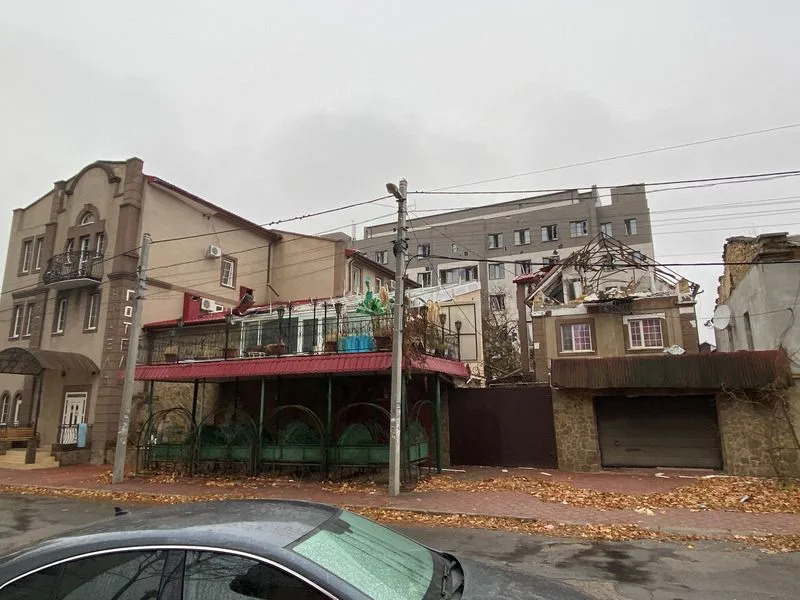
The remains of the Ninel Hotel, a hotel taken over by Russian security officials that was hit by the Ukrainian military, are seen in downtown Kherson

KHERSON, Ukraine (Reuters) – Ukrainian intelligence wanted confirmation last autumn that officers of Russia’s Federal Security Service (FSB) overseeing the occupation of Kherson were staying in a small hotel on a back street of the southern port city.

The task was assigned to Dollar: the code name for a civilian who had been secretly providing targeting coordinates and information on enemy operations in Kherson and the surrounding region, the operative said.

Reuters held extensive interviews with Dollar and two other members of the underground partisan network in Kherson after the city was captured in early November.

Their separate accounts provide a rare window into how information and sabotage operations were coordinated with Ukrainian intelligence services behind enemy lines, operations that are still ongoing elsewhere in Ukraine.

While Reuters could not corroborate the specific events they described, two U.S. officials said that such operations by an underground of intelligence operatives, ex-soldiers and amateurs helped hasten Russia’s withdrawal from Kherson – one of the biggest setbacks for the Kremlin in a war that marks its first anniversary on Feb. 24.

Dollar, who declined to give his name for security reasons, said he began driving by the Hotel Ninel – Lenin spelled backwards – with his wife, a fellow operative who is part of the network and uses the code name Kosatka, Ukrainian for killer whale.

The gun-toting security men they regularly saw outside the hotel convinced the couple that FSB officers were staying inside; Dollar said he texted his observations to his handler at the Security Service of Ukraine (SBU).

Ukraine’s SBU and Russia’s FSB did not respond to requests for comment on Dollar’s account or other partisan operations. The defense ministry also did not respond to requests for comment.

Before dawn on Oct. 5, a huge explosion ripped through the hotel, according to Ukrainian media reports and regional lawmaker Serhii Khlan, who wrote on Facebook that two FSB officers and seven Russian military officials died.

“I received an SMS (text) that said, ‘Have a look and see how the Hotel Ninel is doing,'” recalled Dollar, who took Reuters to view the shattered hulk. “I went over and reported back: ‘There is no more Hotel Ninel.'”

Reuters was unable to review the text message. Dollar and other partisans say they regularly deleted their chats and social media for security reasons.

Dollar and Kosatka received decorations from Ukrainian Defense Minister Oleksii Reznikov inscribed with thanks for “cooperating with the armed forces,” according to a photograph seen by Reuters dated Dec. 1 in which the inscriptions are visible. Mart and Kolia, the other two members of their four-person cell, were also decorated by Reznikov, Dollar said.

Asked about resistance operations in occupied territory, an official from Ukraine’s Main Directorate of Intelligence (GUR) said “the local population is supportive,” declining to provide details of specific activities.

Operations to target Russian security personnel and disrupt their plans are continuing across swathes of eastern and southern Ukraine held by Russia and its allies, according to several Ukrainian and Russian-installed officials as well as members of the Kherson partisan cell.

The Institute for the Study of War also says Ukrainian partisan warfare is being waged in Melitopol, Tokmak and Mariupol in the south and Donetsk and Svatove in the east.

Serhiy Haidai, the exiled governor of the eastern Luhansk province which has been under Russian control since last June, said partisans there were conducting sabotage operations there and attacks on suspected Russian collaborators.

In an interview on Jan. 23, he credited partisans with a recent attack on a railway line that Russia’s military was using to transport troops and equipment. He declined to provide further details for security reasons and Reuters could not independently confirm partisan involvement in the attacks.

CAPTURED PARTISANS

Risking arrest, interrogation, torture and death, partisans in Kherson hung Ukraine’s blue-and-yellow national colors on trees and relayed Russian positions on Google Earth and other online maps to Ukrainian security officials, Dollar said.

Vitalyi Bogdanov, 51, a regional council member, said that during the eight-month Russian occupation, he collected and relayed to law enforcement authorities in Kyiv information later used to launch investigations into suspected collaborators.

“We were able to start a very big number of criminal cases,” he said. He declined to provide further details because the investigations were ongoing.

Kolia, part of the 4-member Kherson cell, said that the group was told by its handlers not to use firearms because information was a more potent weapon.

Other partisans took up arms.

Alexei Ladin, a lawyer in Russian-occupied Crimea, told Reuters he was defending two Ukrainians held there, accused by the FSB of violent attacks against the Russians.

Pavlo Zaporozhets served in the Ukrainian army from 2014-17 and joined Ukraine’s GUR military intelligence during the occupation of Kherson, Ladin said.

Zaporozhets was arrested while attempting to attack a Russian military night patrol and faces up to life imprisonment on charges of international terrorism, Ladin said.

He said Zaporozhets was being held in a detention facility in Simferopol and that he and his client attended a preliminary court hearing in the Russian port city of Rostov-on-Don by video link on Feb. 2. The court ordered Zaporozhets’ transfer to a facility in Rostov, Ladin said.

According to an FSB account seen by Reuters, Zaporozhets, then 31, was arrested in Kherson by FSB officers on May 9 carrying two grenades, a fishing line and two plastic bottles that he had made into homemade bombs.

Zaparozhets told his questioners he was contacted by a Ukrainian GUR handler codenamed Optium and agreed to carry out his orders for 30,000 hryvnias ($800) a month, according to the FSB case documents seen by Reuters.

Ladin said the FSB account was based on testimony obtained when his client was tortured during questioning and showed Reuters a copy of a handwritten note from Zaporozhets dated from last August in which he described being beaten and subjected to electric shocks while in custody.

While some details about the FSB account were true, Ladin said, the FSB falsely accused Zaporozhets of deliberately targeting civilians as well as the night patrol. The military action was meant to be carried out during the curfew with intention of avoiding civilian casualties, Ladin said.

Ladin said the “optimal solution” would be an exchange of Zaporozhets and another client, Yaroslav Zhuk – who was arrested in Melitopol in June and accused of setting off a home-made bomb – for Russian POWs held by Ukraine. Zhuk denies attacking civilian targets, Ladin said.

The FSB has declined to recognize Zaporozhets as a Ukrainian serviceman eligible for a prisoner swap, saying they could not verify a document presented by the defense confirming his status, Ladin said. In the case of Zhuk, Ladin says his client is a combatant covered by the Geneva convention; the FSB has not accepted the designation.

Reuters was unable to speak to the two detainees directly.

FLEEING KHERSON

Dollar, Kolia and Mart – another member of the cell – said they felt compelled to resist the Russian takeover of Kherson because there was no organized defense of their city when the Russians attacked on Feb. 24.

Dollar and Mart’s first overt bid to confront the Russians came on March 1, they said, when they drove a truck loaded with concrete blocks toward the Antonovskiy Bridge, a main entry point to the city, aiming to slow Russia’s advance.

They turned around because they feared the invaders already were in the city, they said.

Dollar considered his options: organize a civil disobedience movement, take up arms or gather intelligence.

Friends put him in touch with an SBU officer. Dollar and Kolia, who were old friends, agreed to collect and relay information on the Russians and build a network of retired police officers, former SBU officials, pensioners, and others, they said.

Kolia, a seasoned hunter who knew the Kherson countryside, solicited information from local villagers, including an elderly woman who would count Russian convoys as she milked her cow.

Between reconnaissance forays, the pair would meet sources in a coffee shop to gather intelligence.

Over the summer one farmer gave Kolia the position of a Russian truck-mounted missile launcher known as a Tochka-U around the village of Muzykivka, about 12 km (7.5 miles) north of Kherson. Dollar said he passed on the information.

The next day the farmer reported to Kolia that there was only a hole in the road where the truck once stood, Dollar said. Reuters could not independently confirm the attack.

Dollar’s wife, Kosatka, recruited her own network of informants, he said. Kosatka declined to comment for this story.

THE AIRPORT

At the same time, Mart pursued an independent intelligence gathering effort, visiting people living near the Kherson International Airport in Chornobaivka on April 10 and urging them in person and over Telegram chats to send him information about Russian troop movements. He codenamed his five-person cell Miami. Reuters did not view the chats, which Mart said he deleted.

Russian forces in March had established their headquarters within the three-square kilometre airport complex, which was repeatedly bombed by Ukrainian forces.

Kyiv said large numbers of Russians soldiers were killed, including at least two generals, while aircraft and ammunition stores were also destroyed. Moscow withdrew its military hardware in October.

As Russian losses mounted, some members of the cell Mart had recruited grew over-confident and began taking greater risks, said Mart and Dollar.

When the Russians arrested four of the Miami members at the end of August, Mart feared they would give him away. Reuters was unable to determine what later happened to the four members.

Mart fled to Vasliyevka village in Zaporizhzhia province, the only checkpoint where Russians allowed Ukrainian civilians to cross into Ukrainian-controlled territory, and then made his way to Kyiv.

Despite the liberation of Kherson, Dollar said he and Kosatka would continue aiding the resistance until Ukrainian troops recover Crimea, where the couple owns an apartment.

“The end of the war for me will be when I move back into my apartment,” he said.

(Reporting by Jonathan Landay and Tom Balmforth; Editing by Mike Collett-White and Suzanne Goldenberg)

Wagner Group stops recruiting prisoners

The Telegraph

Wagner Group stops recruiting prisoners

Nataliya Vasilyeva – February 9, 2023

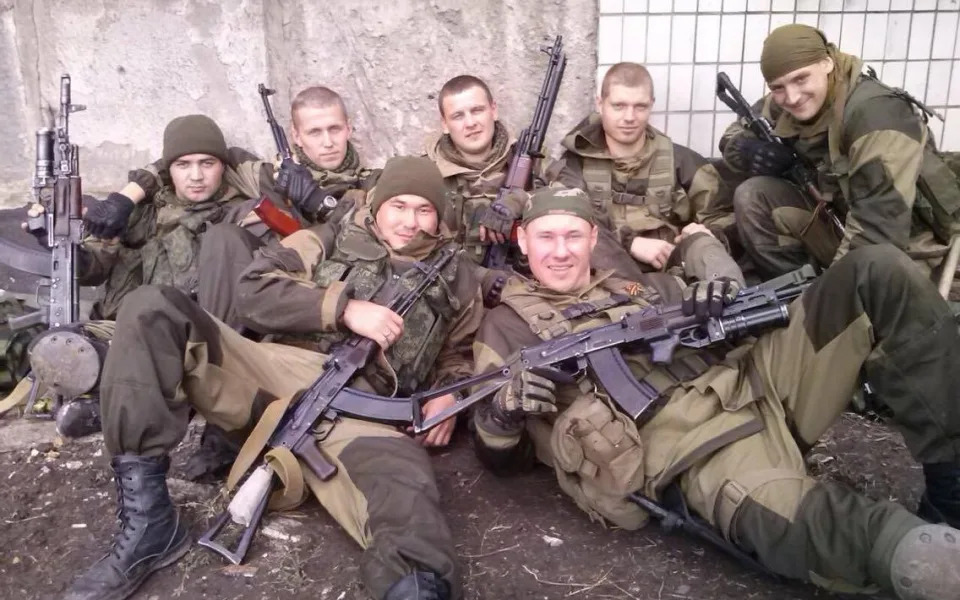
Russian mercenaries from Wagner Group - Conflict Intelligence Team
Russian mercenaries from Wagner Group – Conflict Intelligence Team

The founder of Russia’s Wagner mercenaries has said its prison recruitment drive has ended, after thousands of inmates were sent to fight in Ukraine.

“The recruitment of prisoners” has “stopped completely”, Yegenvy Prigozhin said in a statement released by his press office.

The Kremlin-linked businessman himself personally toured Russian prisons last summer in Moscow’s last-ditch attempt to bolster its forces in Ukraine after suffering heavy losses.

The fighters who joined up with Wagner have been promised pardons if they survive their deployments. Some of those who were pardoned after they fought for six months were convicted murderers.

Mr Prigozhin on Thursday said all “obligations” towards prisoners who joined up with the group were being fulfilled.

Russian rights activists reported at the end of the year that Wagner’s recruitment drive had begun to dry up, partly because news of the group’s brutal treatment of its own men and the staggering number of casualties among recruited convicts reached the prisons.

Olga Romanova, head of the prison rights group Russia Behind Bars, earlier this week quoted sources at several Russian prisons as saying that Wagner’s recruitment drive has effectively ground to a halt.

Officials from the defence ministry have reportedly picked up the baton in recruiting the prisoners, however.

“Some representatives of the defence ministry have been working at the prison colonies starting last weekend,” she said on Wednesday.

“Now it’s just them who are taking people away to war. The first group of prisoners recruited by the ministry of defence left for the frontline from the colony in Kemerovo on Sunday.”

An estimated 40,000 convicts have been recruited from prisons and sent to fight in Ukraine since last summer, according to rights activists citing sources inside Russia’s prison network, as well as official statistics.

Wagner fighters, some of whom have been implicated in killings of civilians, have made rare battlefield gains for Russia, including the capture of the eastern salt-mining town of Soleder last month, while the regular Russian army has suffered embarrassing defeats across southern and eastern Ukraine.

Wagner has also played a key role in Russia’s assault on Bakhmut, with their relentless attacks helping to turn it into one of the bloodiest and most protracted battles of the war.

Zelensky hints at ‘positive decisions’ on fighter jets as Russia intensifies assaults in Donbas

The Kyiv Independent

Ukraine war latest: Zelensky hints at ‘positive decisions’ on fighter jets as Russia intensifies assaults in Donbas

Asami Terajima – February 9, 2023

President Volodymyr Zelensky said on Feb. 9 that “certain positive decisions” concerning Western-made fighter jets were made in Brussels, with “several” European countries showing readiness to send them to Ukraine when the time comes.

Zelensky’s discrete comments at the EU Summit news conference come amid his second known international trip nearly a year after Russia launched its full-scale invasion of Ukraine.

While details remain unclear, Zelensky said he was due to hold a series of bilateral meetings with EU leaders, where “combat aviation” would be among the topics discussed in-depth.

Poland is the only country that has publicly shown readiness to send fighter jets to Ukraine – but it said the transfer needs NATO approval. The West feared the aircraft transfer could escalate tensions with Russia – especially just after green lighting modern tanks for Ukraine.

Zelensky did not reveal the names of countries that have agreed to transfer Ukraine’s long-sought jets or what the timeframe would be.

His chief of staff, Andriy Yermak, also ambiguously hinted that there is a shift in the West’s hard-no stance regarding the aircraft, saying that the issue concerning fighter jets and longer-range weapons “seems like it can be solved.” Yermak did not provide further details.

Mixed signals from the West

The West sent mixed signals regarding the possible transfer of the fighter jets on Feb. 9.

The U.K., which announced on Feb. 8 that it would begin training Ukrainian pilots on NATO jets, dashed Ukraine’s hopes of an immediate transfer of Western aircraft.

British Defense Secretary Ben Wallace told BBC on Feb. 9 that sending fighter jets for another country to use in a conflict could potentially take months, so he said alternatives – such as the transfer of longer-range missiles and drones – were being considered to help Ukraine protect its sky.

Earlier, the U.K. seemed to be warming toward sending fighter jets to Ukraine. Prime Minister Rishi Sunak said, standing next to Zelensky on Feb. 8, that “nothing is off the table,” including the potential transfer of the jets.

German Chancellor Olaf Scholz stressed his country’s “key contribution” to ensure the timely delivery of Western-made tanks to Ukraine, but he did not comment on the fighter jets, the German newspaper Bild reported on Feb. 9.

French President Emmanuel Macron, who traveled to Brussels with Zelensky after their meeting in Paris, did not comment on the possible transfer of fighter jets to Ukraine in public on Feb. 9. Earlier on Jan. 30, he said that he does not “exclude” it, but multiple conditions need to be considered first.

Amid the mixed signals, European Parliament President Roberta Metsola called on member states to quickly consider providing Ukraine with fighter jets.

“You need to win and now (EU) member states must consider quickly as the next step providing long-range systems and the jets that you need to protect your liberty,” Metsola said.

After securing hundreds of Western-made tanks and armored vehicles in January, Ukraine is now focused on its pleas for fighter jets and longer-range weapons – to shoot targets deeper behind the front line.

The delivery of the Western fighter jets is crucial for Ukraine, whose small air force is made of outdated Soviet-standard aircraft, including MiGs. Highly maneuverable F16 jets are considered to be the best fit for Ukraine.

Intensifying battle in Luhansk Oblast

As Zelensky wrapped up his trip to western Europe, where he addressed the European Parliament and attended a special meeting afterward with the EU’s 27 leaders on Feb. 9, fierce battles raged in Donbas, an industrial heartland in the east of Ukraine comprising Donetsk and Luhansk oblasts.

Serhiy Haidai, an exiled governor of Luhansk Oblast, claimed that Russian forces intensified their shelling of Ukrainian positions near the Russian-occupied town of Kreminna.

Haidai added that Ukrainian forces still held the defensive line in the Kreminna area, where Kyiv was reportedly working on a counteroffensive to recapture the key town for months.

Kreminna is a gateway to the region’s occupied cities of Sievierodonetsk and Lysychansk, which fell to Russia in June and July.

The Institute for the Study of War (ISW), a Washington D.C.-based think-tank analyzing the war in Ukraine, said in its Feb. 8 report that “Russian forces regained the initiative in Ukraine,” launching their “next major offensive” in the mostly occupied Luhansk Oblast.

The ISW reported that the Russian offensive between Kreminna and Svatove, another key town in Luhansk Oblast, has “increased markedly over the past week.”

Russian forces appeared to be launching attacks on Ukrainian defensive lines in the border areas of Kharkiv and Luhansk oblasts, and their “marginal advances” northwest of Svatove (near Kupiansk) were confirmed with geolocated combat footages, according to the ISW.

The think-tank added that Russian forces have also likely made gains west of Kreminna.

The General Staff of Ukraine’s Armed Forces mentioned Russian attacks in Luhansk and Kharkiv oblasts, but has not confirmed Moscow’s reported advances.

Russian forces are “trying to take full control of the territory of Donetsk and Luhansk oblasts,” the General Staff said.

This photograph taken on Feb. 8, 2023, shows part of the building burning after shelling in the frontline city of Avdiivka in Donetsk Oblast, amid the Russian invasion of Ukraine. (Photo by Yasuyoshi Chiba/AFP via Getty Images)

Wagner Group claims to have stopped recruiting prisoners

Russia’s Wagner mercenary group has “completely stopped” recruiting prisoners to fight alongside Russian forces in Ukraine, Wagner founder Yevgeny Prigozhin said on Feb. 9.

Prigozhin’s claim comes nearly half a year after Wagner began recruiting prisoners, whom, according to their contract, are offered an official pardon if they serve six months on the battlefield.

While Wagner Group forces oversaw the capture of Soledar and other areas around Bakhmut in Donetsk Oblast, evidence points to its high casualties and other internal issues.

Investigations by the New York Times and Reuters have revealed that Wagner has suffered extremely high casualties in Ukraine.

In late January, Olga Romanova, head of Russia Behind Bars, a nonprofit that protects the rights of convicts, said that only 10,000 of the nearly 50,000 mercenaries recruited into Wagner had remained in service – suggesting that the rest had deserted or had been killed or wounded.

Wagner Group stops recruiting prisoners as growing numbers refuse to be enlisted on suicide missions, reports say

Business Insider

Wagner Group stops recruiting prisoners as growing numbers refuse to be enlisted on suicide missions, reports say

Sophia Ankel – February 9, 2023

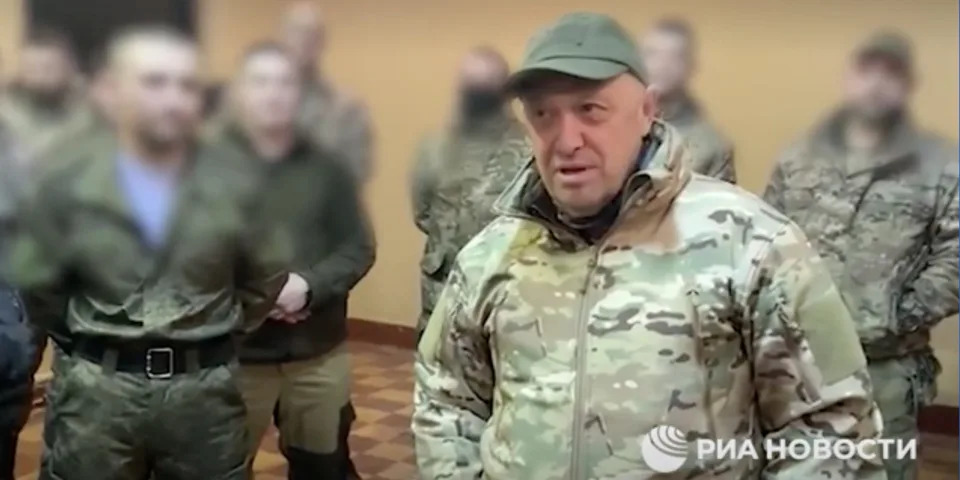
Wagner Group founder Yevgeny Prigozhin addresses former convicts as he releases them from serving in his mercenary army, according to state-controlled media
Wagner Group founder Yevgeny Prigozhin addresses former convicts as he releases them from serving in his mercenary army, according to state-controlled media.RIA Novosti
  • The Wagner Group has stopped recruiting prisoners to fight in Ukraine, its founder said Thursday.
  • Reports say prisoners are refusing to go because they know about Wagner’s high rate of casualties.
  • One prisoner told Meduza they no longer want “even to discuss the possibility” of joining the war.

The Wagner Group has stopped recruiting prisoners as growing numbers refuse to be enlisted on suicide missions in Ukraine, according to multiple reports.

A prisoner in Russia’s Tula region told the independent Russian media outlet Meduza in a report published Wednesday that inmates no longer want “even to discuss the possibility” of joining the war in Ukraine.

“One of the prisoners who left [with Wagner Group] told me that after he asked [Wagner] representatives how much training there would be, [they told him], ‘The battlefield will be your training.’ It’s quite possible that they’re already directly participating [in combat],” the prisoner told Meduza.

Another prisoner in the Urals told Meduza that more than 1,000 convicts accepted Wagner Group’s offer in October, while only 340 enlisted in December.

Earlier this month, MediaZona tracked the journey of another recruited prisoner, who tried to escape the front and return to prison.

“We thought we’d be equal with the hired fighters, that we wouldn’t be any different, but in reality they just make assault teams out of the inmates, and that’s the meat [in the meat grinder],” the prisoner told MediaZona.

Russian prisoners for Wagner also said they’ve witnessed public executions of deserters and those who failed to obey orders.

The mercenary organization has now “completely” stopped recruiting prisoners, its founder Yevgeny Prigozhin said in a Telegram statement on Thursday.

The group has been a major player as a Russian proxy in President Vladimir Putin’s invasion of Ukraine.

Prigozhin did not give a reason behind the decision nor did he indicate how long the process has been stopped for. The statement was published by Concord Management, the catering company founded by Prigozhin.

Prigozhin first started recruiting convicts to fight in Ukraine last summer. He was seen traveling to multiple prisons around the country to try to persuade convicts to fight in exchange for freedom and money.

Tens of thousands of prisoners took the deal, but most of them died on the battlefield, according to investigations by The New York Times and Reuters.

A Ukrainian military intelligence report, published in December and first obtained by CNN, said that Wagner Group fighters, which include prisoners, “have become the disposable infantry” in Ukraine.

A Ukrainian soldier who recently had a run-in with a group of Wagner mercenaries told CNN that the first group of attackers was mainly made up of recruits from Russian prisons, comparing the battle to something out of a “zombie movie.”

Abused Russian Troops Relocated After Leaking Beatings by Own Allies

Daily Beast

Abused Russian Troops Relocated After Leaking Beatings by Own Allies

Shannon Vavra – February 8, 2023

(Sputnik/Sergei Fadeichev/Pool via REUTERS, via third party)

The Russian Ministry of Defense is transferring some mobilized Russian troops out of Donetsk in Ukraine after they reported that the militia of the Donetsk People’s Republic beat them earlier this month, according to Vladislav Khovalyg, the governor of Tuva.

The Russian troops, who were trained in the Novosibirsk region of Russia, began fighting at the front in Ukraine in December, according to Novaya Gazeta. But come February, the militia in the DPR began beating them, troops said in a video message shared with Russian news outlets and posted to Telegram.

“On February 4, the military from the DPR arrived. They fired at us with machine guns,” said the Russian troops, who came from Tuva, a region in southern Siberia. “The military police came and beat us.”

Another video appears to show a Russian soldier getting knocked down and held at gunpoint.

The withdrawal of the Russian soldiers following the beatings peels back the layers on Russia’s attempts to integrate the illegally annexed Donetsk in Ukraine with Russia, and could be a sign that Russia’s efforts to integrate the militia in Donetsk with Russia’s military are not going smoothly.

Moscow illegally annexed Donetsk, along with Luhansk, Zaporizhzhia, and Kherson, in October. Russia’s military has also just formally integrated occupied areas of Ukraine into its Southern Military District in an attempt to further meld together the occupied territories with Moscow, according to a British intelligence report released this week.

“The Russian military likely aspires to integrate newly occupied territory into a long-term strategic posture,” the intelligence report stated.

Putin’s Men Fear ‘Minced Meat’ Fate in New Offensive

The integration, though, might not go over well for some time, since the deployment of forces has not been systematic, the intelligence report warned. “It is unlikely to have an immediate impact on the campaign: Russia currently deploys forces from across all of Russia’s military districts, commanded by an ad hoc deployed headquarters,” the intelligence assessment said.

Russia’s illegal annexation of territories in Ukraine last fall has been bungled since the start. The Kremlin admitted in the early days after the annexation that it wasn’t clear on what the borders of the claimed territories were. And within days of laying claim to the land, Ukraine’s military was able to claw back some of the occupied regions, such as Lyman in Donetsk.

Indications that the integration efforts with the claimed territories are faltering coincides with western officials’ warnings that Russia is preparing to unleash a new offensive against Ukraine in the coming months. Moscow is plotting to mobilize between 300,000 to 500,000 troops in addition to those mobilized last year in the so-called “partial mobilization,” according to a Ukrainian intelligence brief.

Even so, the Russian government appears intent on signaling that Russian President Vladimir Putin is prepared for a prolonged fight with Ukraine. Russian Defense Minister Sergei Shoigu held a press conference on the status of the war Tuesday, in what was likely an “attempt to posture the Russian Ministry of Defense (MoD) as an effective and involved leadership apparatus as the Russian military prepares for a renewed major offensive in Ukraine,” the Institute for the Study of War (ISW) said in an analysis.

“Shoigu likely held this press conference in order to create the guise of formality and legitimacy for the Russian MoD as it continues efforts to reform the Russian military, prepare for a renewed offensive, and set conditions for prolonged operations in Ukraine,” the ISW said.

Putin likely supplied the missile that downed flight MH17 over Ukraine in 2014, investigators say

Insider

Putin likely supplied the missile that downed flight MH17 over Ukraine in 2014, investigators say

Sinéad Baker – February 8, 2023

Lawyers attend the judges' inspection of the reconstruction of the MH17 wreckage, as part of the murder trial ahead of the beginning of a critical stage, on May 26, 2021 in Reijen, Netherlands.
Lawyers attend the judges’ inspection of the MH17 wreckage, on May 26, 2021 in Reijen, Netherlands.Photo by Piroschka van de Wouw – Pool/Getty Images
  • Putin likely gave separatists the missile that hit flight MH17, investigators said on Wednesday.
  • 298 people died when the Malaysian Airlines flight was shot down in 2014.
  • But prosecutors said they can’t pursue suspects due to the high bar of proof necessary.

Russian President Vladimir Putin likely supplied the missile system that shot down flight MH17 in July 2014, killing 298 people onboard, international investigators said on Wednesday.

The team has been investigating the crash since August 2014, and said in a statement that there are “strong indications” that the Russian president decided on supplying the missile system to separatists in Ukraine.

Investigators have previously said that the Malaysia Airlines plane was shot down by a Buk missile brought from Russia to a field in Ukraine.

They said on Wednesday that the separatists had asked for longer-range anti-aircraft systems and that there is “concrete information” that the separatists’ request was presented to the Russian president, and that this request was granted.

But, they added, it’s not known whether their request explicitly mentioned the missile system that was later used to shoot down MH17.

Nor was it ultimately clear if Putin “deliberately assisted in the downing of MH17.”

Russia has always denied any involvement in the fate of the plane.

MH17
The site of a Malaysia Airlines Boeing 777 plane crash near Grabovo in the Donetsk region of Ukraine, July 17, 2014.Reuters

Investigators said on Wednesday that the evidence was not strong enough to formally accuse Putin.

“Although we speak of strong indications, the high bar of complete and conclusive evidence is not reached. Furthermore, the President enjoys immunity in his position as Head of State,” they said in the statement.

Prosecutors also said on Monday that they did not have enough evidence to pursue criminal proceedings against anyone else associated with the crash.

Dutch court sentenced three men  — Russian nationals Igor Girkin and Sergey Dubinskiy and Ukrainian national Leonid Kharchenko — to life in prison last November over the downing of the plane. But the men are still at large.

The plane, a Boeing 777, was flying from Amsterdam, The Netherlands, to Kuala Lumpur, Malaysia. It was shot down over eastern Ukraine, where pro-Russian separatists had taken over parts of the country.

MH17 inquiry: ‘Strong indications’ Putin OK’d missile supply

Associated Press

MH17 inquiry: ‘Strong indications’ Putin OK’d missile supply

Mike Corder – February 8, 2023

Digna van Boetzelaer, the Netherlands, Andy Kraag, the Netherlands, David McLean, Australia, Asha Hoe Soo Lian, Malaysia, Eric van der Sypt, Belgium, and Oleksandr Bannyk, Ukraine, from left to right, are seen during the Joint Investigation Team (JIT) holds a news conference in The Hague, Netherlands, Wednesday, Feb. 8, 2023, on the results of the ongoing investigation into other parties involved in the downing of flight MH17 on 17 July 2014. The JIT investigated the crew of the Buk-TELAR, a Russian made rocket launcher, and those responsible for supplying this Russian weapon system that downed MH17. (AP Photo/Peter Dejong)
Netherlands Ukraine MH17
Digna van Boetzelaer, the Netherlands, Andy Kraag, the Netherlands, David McLean, Australia, Asha Hoe Soo Lian, Malaysia, Eric van der Sypt, Belgium, and Oleksandr Bannyk, Ukraine, from left to right, are seen during the Joint Investigation Team (JIT) holds a news conference in The Hague, Netherlands, Wednesday, Feb. 8, 2023.
Digna van Boetzelaer, the Netherlands, Andy Kraag, the Netherlands, David McLean, Australia, Asha Hoe Soo Lian, Malaysia, Eric van der Sypt, Belgium, and Oleksandr Bannyk, Ukraine, take their seats for the Joint Investigation Team (JIT) news conference in The Hague, Netherlands, Wednesday, Feb. 8, 2023, on the results of the ongoing investigation into other parties involved in the downing of flight MH17 on 17 July 2014. The JIT investigated the crew of the Buk-TELAR, a Russian made rocket launcher, and those responsible for supplying this Russian weapon system that downed MH17. (AP Photo/Peter Dejong)
FILE - People walk amongst the debris at the crash site of a passenger plane near the village of Grabovo, Ukraine, July 17, 2014. An international team is presenting an update Wednesday Feb. 8, 2023 on its investigation into the 2014 downing of Malaysia Airlines flight MH17 over eastern Ukraine. The announcement comes nearly three months after a Dutch court convicted two Russians and a Ukrainian rebel for their roles in shooting down the Boeing 777 and killing all 298 people on board on July 17, 2014. (AP Photo/Dmitry Lovetsky, File)
People walk amongst the debris at the crash site of a passenger plane near the village of Grabovo, Ukraine, July 17, 2014. An international team is presenting an update Wednesday Feb. 8, 2023 on its investigation into the 2014 downing of Malaysia Airlines flight MH17 over eastern Ukraine. The announcement comes nearly three months after a Dutch court convicted two Russians and a Ukrainian rebel for their roles in shooting down the Boeing 777 and killing all 298 people on board on July 17, 2014. (AP Photo/Dmitry Lovetsky, File)

THE HAGUE, Netherlands (AP) — An international team of investigators said Wednesday it found “strong indications” that Russian President Vladimir Putin approved the supply of heavy anti-aircraft weapons to Ukrainian separatists who shot down Malaysia Airlines flight MH17 in 2014 with a Russian missile.

However, members of the Joint Investigation Team said they had insufficient evidence to prosecute Putin or any other suspects and they suspended their 8½-year inquiry into the shooting down that killed all 298 people on board the Boeing 777 flying from Amsterdam to Kuala Lumpur.

Russia has always denied any involvement in the downing of the flight over eastern Ukraine on July 17, 2014, and refused to cooperate with the international investigation.

Dutch prosecutors said that “there are strong indications that the Russian president decided on supplying” a Buk missile system — the weapon that downed MH17 — to Ukrainian separatists.

“Although we speak of strong indications, the high bar of complete and conclusive evidence is not reached,” Dutch prosecutor Digna van Boetzelaer said, adding that without Russian cooperation, “the investigation has now reached its limit. All leads have been exhausted.”

She also said that, as head of state, Putin would have immunity from prosecution in the Netherlands. The team played a recording of an intercepted phone call in which they said Putin could be heard discussing the conflict in eastern Ukraine.

“Are we disappointed? No, because we think we came further than we had ever thought in 2014. Would we have liked to come further? Of course, yes,” said Andy Kraag of the Dutch police.

The team informed relatives of those killed in the downing of MH17 of their findings before making them public.

“There was disappointment because … they wanted to know why MH17 was shot down,” Kraag said. “We’re really clear on what has happened, but the answer to the question why MH17 was shot down still remains in Russia.”

Van Boetzelaer said that while the investigation is being suspended, phone lines will remain open for possible witnesses who may still want to provide evidence. If that happens, the inquiry could be reactivated.

Russian officials say that a decision to provide rebels with military support over the summer of 2014 was in Putin’s hands.

A decision to supply arms was even postponed for a week “because there is only one who makes a decision (…), the person who is currently at a summit in France,” the investigative team said, citing a phone conversation that was referring to Putin.

Prosecutors said that at the time Putin was at a commemoration of D-Day in France.

The announcement by the investigative team comes nearly three months after a Dutch court convicted two Russians and a Ukrainian rebel for their roles in shooting down the plane. One Russian was acquitted by the court.

None of the suspects appeared for the trial and it was unclear if the three who were found guilty of multiple murders will ever serve their sentences.

The convictions and the court’s finding that the surface-to-air Buk missile came from a Russian military base were seen as a clear indication that Moscow had a role in the tragedy. Russia has always denied involvement. The Russian Foreign Ministry accused the court in November of bowing to pressure from Dutch politicians, prosecutors and the news media.

But the November convictions held that Moscow was in overall control in 2014 over the self-proclaimed Donetsk People’s Republic, the separatist area of eastern Ukraine where the missile was launched. The Buk missile system came from the Russian military’s 53rd Anti-Aircraft Missile Brigade, based in the city of Kursk.

The Joint Investigation Team is made up of experts from the Netherlands, Australia, Malaysia, Belgium and Ukraine. Most of the victims were Dutch. It had continued to investigate the crew of the missile system that brought down the plane and those who ordered its deployment in Ukraine.

As well as the criminal trial that was held in the Netherlands, the Dutch and Ukrainian governments are suing Russia at the European Court of Human Rights over its alleged role in the downing of MH17.

The findings revealed Wednesday will likely strengthen the case at the human rights court and could also be used by prosecutors at the International Criminal Court who are investigating possible war crimes in Ukraine dating back to the start of the separatist conflict.

Russian state energy giant Gazprom is starting its own private security force, a move Ukraine fears will lead to a new Wagner-like mercenary army

Business Insider

Russian state energy giant Gazprom is starting its own private security force, a move Ukraine fears will lead to a new Wagner-like mercenary army

Mia Jankowicz – February 8, 2023

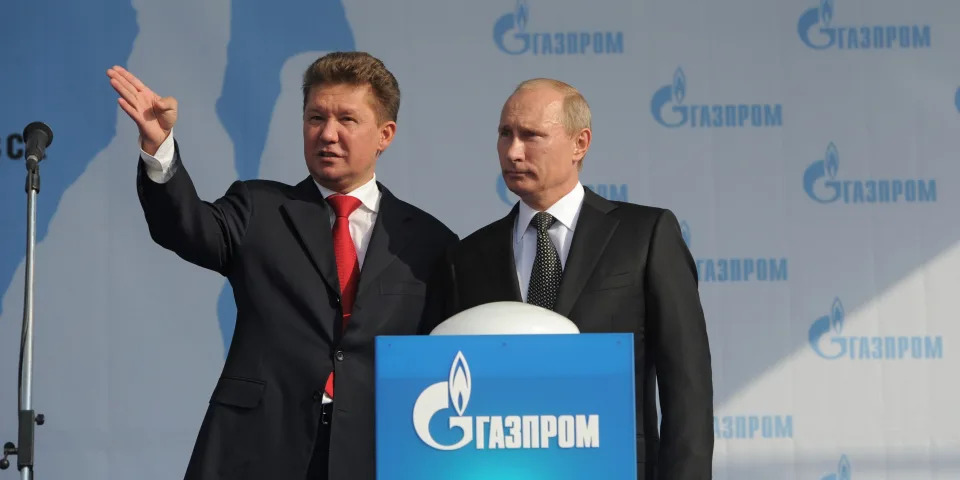
Vladimir Putin Gazprom
President Vladimir Putin, right, with Alexei Miller, CEO of state-controlled energy company Gazprom.AFP/Getty Images
  • Russia’s government is allowing energy giant Gazprom to start a private security outfit.
  • Ukraine’s Ministry of Defence drew comparisons with the notorious private army the Wagner Group.
  • Experts said it’s plausible that another Russian mercenary army is in the works.

Russian majority state-owned energy company Gazprom has been authorized to create its own private security outfit, in a move that Ukrainian intelligence says is part of a war-fueled “arms race” to develop a mercenary army.

Russia’s government gave its go-ahead for the energy giant to create a private security organization on February 4, under the pretext of securing the country’s energy sector.

The decree gives Gazprom 70% control of the resulting company, per Ukrainska Pravda’s translation.

Commenting on Tuesday, Ukraine’s Ministry of Defence intelligence department said that the move signals intent to mimic the Wagner Group, the notoriously cruel mercenary army run by ally of President Vladimir Putin, Yevgeny Prigozhin.

The Wagner Group has been a major player as a Russian proxy in Putin’s invasion of Ukraine.

Gazprom did not immediately respond to Insider’s request for comment.

Private military companies (PMCs) are technically outlawed in Russia, with the Russian government’s decree authorizing a conventional security company — the kind that any major company would conceivably use to protect its sites.

Nonetheless, experts told Insider that it’s possible another Wagner-like mercenary army is in the works, as a means to leverage Gazprom’s vast riches in the direction of international conflicts.

“The timing is obviously curious,” Dale Buckner, CEO of security firm Global Guardian, told Insider. “Following the Wagner template, everyone’s drawing conclusions that there might be a tie there — which is probably a very good assumption at this point.”

Stepan Stepanenko, research fellow at the UK security think tank The Henry Jackson Society, told Insider it was “entirely plausible” that the Gazprom outfit could operate as a PMC.

If the new entity does operate as a PMC, we can be “certain” that “Putin is behind it, or at the very least approved it, and it will have support from the army,” Stepanenko added.

Wagner — which has been designated a “transnational criminal organization” by the US — apparently operates with no legal backing other than Putin’s personal say-so.

The murky legal situation makes Russian PMCs particularly difficult to track.

Gazprom’s CEO, Alexei Miller, is considered among Russia’s super-elite class of silovarchs — olicharchs with exceptional connections to Putin, as Insider’s Sam Tabahriti previously reported.

But Stepanenko said that even if the Gazprom entity does begin to operate as a PMC, the decree “is not a clear-cut move to Gazprom’s direct involvement in Ukraine.”

To fight in Ukraine, Gazprom’s would-be combatants would have to compete with the conventional army and Wagner, while production and logistics are already stretched, he said.

“While the financial muscle of Gazprom is sufficiently large, it is not a bottomless pit of cash,” he added.

Training an elite mercenary also takes years, the use of state-supported facilities, and a lot more men, Buckner said, pointing out that Prigozhin had already resorted to recruiting troops from Russian penal colonies.

“Why would it be any easier for Gazprom to recruit?” Buckner asked.

Noting Russian Foreign Minister Sergei Lavrov’s recent visits to multiple African countries, Stepanenko suggested that the Gazprom move could be connected to sending Russians to countries like those.

“Should Ukraine be worried? No,” he added. “Ukrainians are handling Wagner, they are handling the Russian army.”