Russia loses 15 of its so-called ‘invincible’ T-90M tanks in Ukraine, GS reports
March 17, 2023
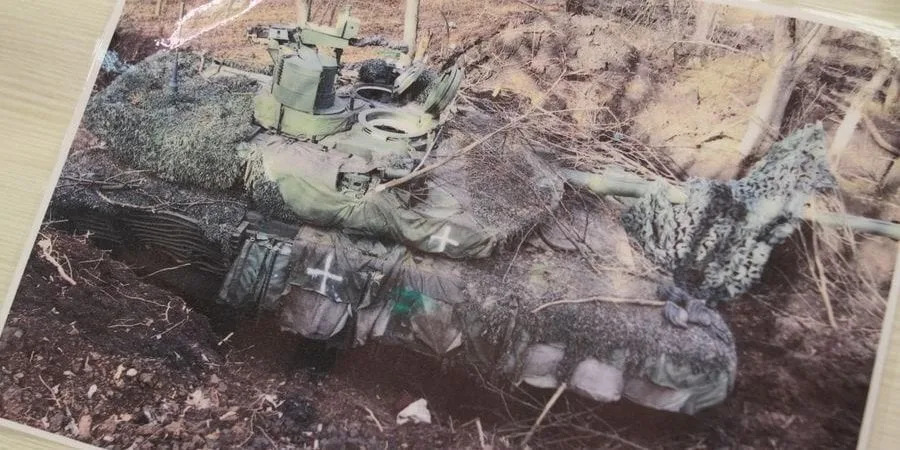
15 Russian T-90M Proryv tanks have already been destroyed in Ukraine
Like much of its expensive, top-of-the-line military equipment, Russia’s occupying forces have chosen to keep its T-90M tanks – the most technologically-advanced they possess – from combat actions.
They turned out to be not so “unbeatable” or “perfect” as Russia pretended, Rudyk said.
“As of today, the Russian Armed Forces have lost 15 T-90Ms in Ukraine. We are talking only about those cases that have indisputable evidence in the form of photo and video footage. It is likely that the occupiers have lost many more of them,” the Military Media Center reported Rudyk as saying.
The first record of a T-90 M Breakthrough tank being destroyed was in Kharkiv Oblast on May 4, 2022. Ukraine’s Territorial Defense Forces eliminated the vehicle with a Carl Gustav rifle in Staryi Saltiv.
An inspection of the incapacitated tank revealed that the T-90M is “the upper limit of what the Russian military-industrial complex has been able to squeeze out of Soviet developments.” According to Rudyk, Russia not only does not produce electronics for it, but also tries to conceal information about the origin of some components.
“Sometimes the situation reaches the point of absurdity — Russia simply passes it off as its own development. The much-hyped Kalyna fire control system has only Russian markings,” Rudyk said.
Russian mass manufacturing of these tanks now has turned into piece-by-piece production due to the sanctions. Therefore, Russia, suffering heavy losses and trying to break through the Ukrainian defense, is forced to decommission old and “naked” T-62 and T-72 tanks.
Russia has lost 3,504 tanks since the start of the large-scale war against Ukraine, including 12 over the past 24 hours, according to the latest General Staff’s update.
Strange activity and number of Russian ships in Black Sea
Ukrainska Pravda – March 16, 2023
Ukrainian defenders have noted an atypical Russian activity in the Black Sea; Russians have deployed 20 ships and a large number of units of the auxiliary fleet ships there.
Source: Nataliia Humeniuk, Head of the Joint Press Centre for Operational Command Pivden (South), during the national 24/7 broadcast on 16 March
Quote: “We are carefully monitoring the naval group in the Black Sea and the actions of the enemy.
Atypical activity and number of ship groups were recorded. There are currently 20 units in the Black Sea, including 4 missile carriers, one of them is underwater; the total salvo is 28 missiles that can be equipped for launch.”
Details: Also, according to Humeniuk, many units of the auxiliary fleet were recorded at sea.
All the ships are scattered, so maybe the Russians want to find the wreckage of the American drone they talked about earlier.
Humeniuk noted that the occupiers are trying to “cover the naval operations in the Black Sea as much as possible and are trying to hide their actions” from the Ukrainian defenders, but careful observation gives results, and the defenders see and understand Russia’s steps ahead.
Background:
The US Air Force issued a statement on 14 March, which said that a Russian Su-27 fighter jet damaged an American MQ-9 Reaper reconnaissance and strike UAV over the Black Sea during an interception, as a result of which the drone had to be sunk.
The US National Security Council Coordinator for Strategic Communications, John Kirby, noted that while Russian intercepts of US aircraft over the Black Sea are not uncommon, Tuesday’s episode was unique regarding how “dangerous, unprofessional and reckless” Russia’s actions were.
The Ministry of Defence of Russia stated on Tuesday evening that their Su-27 fighter jets had nothing to do with the crash of the MQ-9 Reaper American UAV in the Black Sea. In addition, they said it approached annexed Crimea and was flying in violation.
The US Department of Defense, in turn, said it was working to declassify visual information related to the incident in the international airspace over the Black Sea.
NBC News reported that the highest levels of the Kremlin approved the aggressive actions of Russian military fighter jets against a U.S. military drone over the Black Sea.
Russia is so cut off from the international financial system that the Kremlin thinks Western sanctions have ‘insured’ the country against the banking crisis
Huileng Tan – March 15, 2023
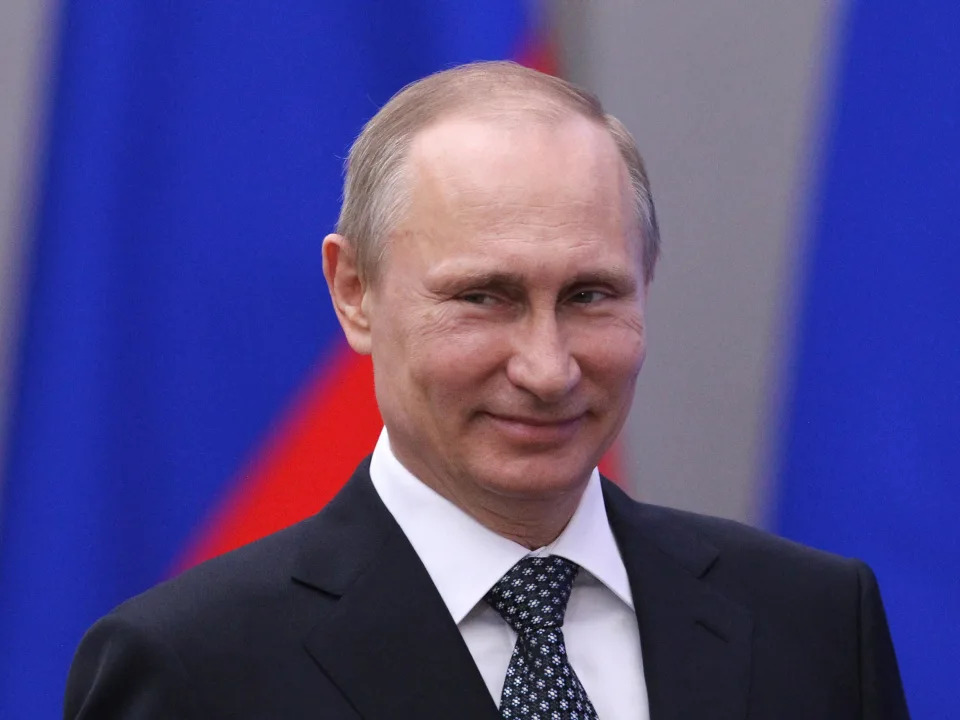
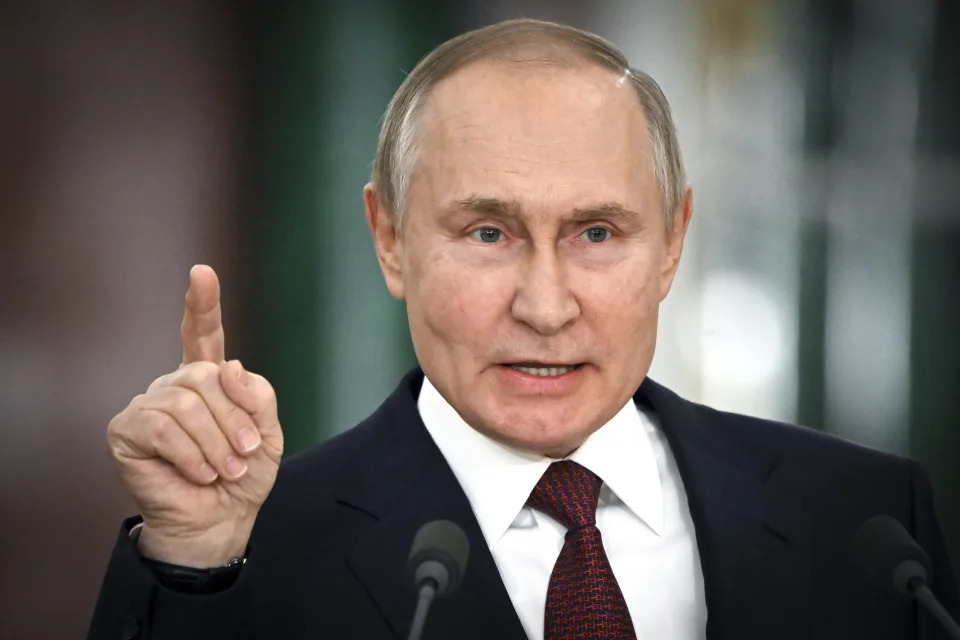
Russian President Vladimir Putin.Sasha Mordovets/Getty Images
The Kremlin said Russia will not be impacted by the US bank crisis.
Kremlin’s spokesperson said Russia is ‘insured’ against the fallout from Silicon Valley Bank’s collapse.
Sanctions over the Ukraine war have cut Russia off from the international financial system.
It’s been a rocky week for US banks. But the Kremlin’s looking at the bright side of things.
Russia is now so cut off from the global financial system that the Kremlin thinks it will face no impact from the collapse of Silicon Valley Bank.
“Our banking system has certain connections with some segments of the international financial system, but it is mostly under illegal restrictions from the collective West,” the spokesperson for Kremlin, Dmitry Peskov, said Tuesday, according to TASS state news agency. He was referring to sanctions against the country over its invasion of Ukraine one year ago.
“We are, to a certain extent, insured against the negative impact of the crisis that is now unfolding overseas,” Peskov said, per the media outlet.
In contrast, Russia — like much of the world — faced a credit crunch due to the fallout from the US subprime mortgage crisis in 2008, which ultimately led to the Global Financial Crisis.
International banks and accounting giants have pulled out of Russia or are working on their exits over the Ukraine war. Two days after the invasion, some Russian banks were also banned from SWIFT, the Belgium-based messaging service that lets banks around the world communicate about cross-border transactions. This ban has hampered cross-border transactions for Russia’s trade and financial systems, isolating the country economically and financially. The country is also facing restrictions on its key energy exports, including a $60 per barrel oil price cap.
Still, Russian President Vladimir Putin has touted the resilience of Russia’s economy and the country’s statistics service said its GDP contracted by just 2.1% in 2022 — although there are some questions over its numbers because it stopped publishing certain key economic statistics last year.
Russia wants to recover debris of US drone from Black Sea
Elena Becatoros and Darlene Superville – March 15, 2023
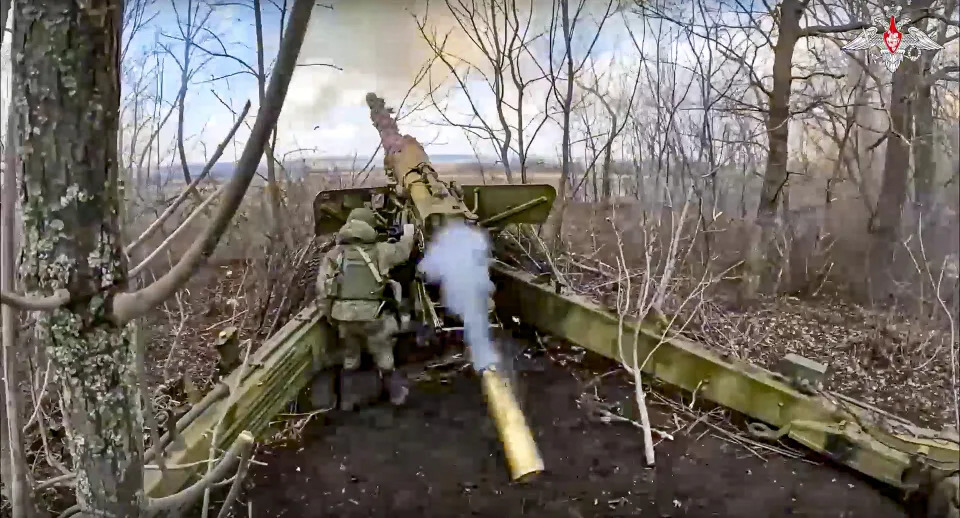
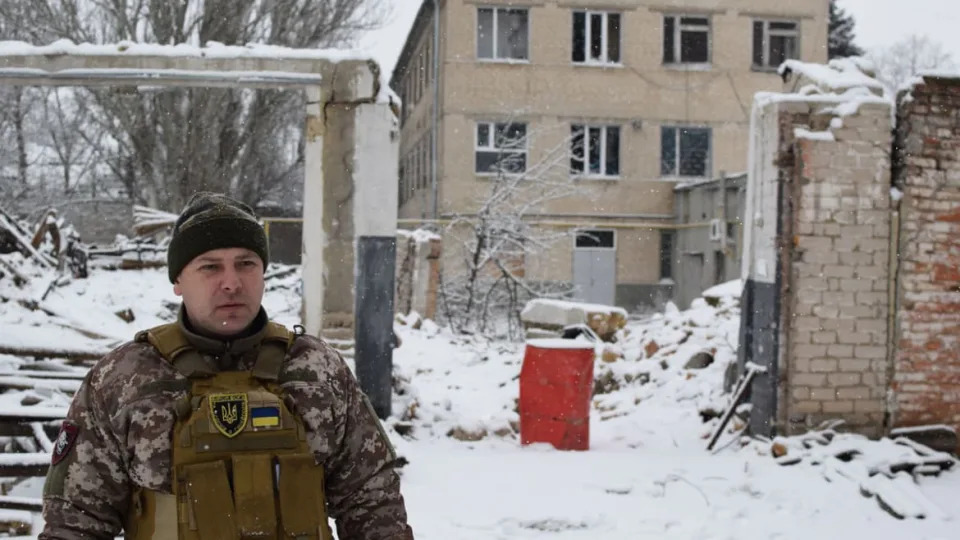
Defense Secretary Lloyd Austin, right, and Chairman of the Joint Chiefs of Staff Gen. Mark Milley, attend a virtual meeting of the Ukraine Defense Contact Group, Wednesday, March 15, 2023, at the Pentagon in Washington. (Andrew Caballero-Reynolds/Pool via AP)A view of the town of Bakhmut, the site of the heaviest battles with the Russian troops, Donetsk region, Ukraine, Wednesday, March 15, 2023. (AP Photo/Roman Chop)Curtains blow in a flat in the building damaged by shelling at the scene of the heaviest battles with Russian troops in Bakhmut, Donetsk region, Ukraine, Wednesday, March 15, 2023. (AP Photo/Roman Chop)In this handout photo taken from video and released by Russian Defense Ministry Press Service on Wednesday, March 15, 2023, the Russian army’s 152-mm howitzer “Hyacinth-B” fires at Ukrainian troops at an undisclosed location. (Russian Defense Ministry Press Service via AP)
KYIV, Ukraine (AP) — Russia wants to recover the fragments of a U.S. surveillance drone that American forces brought down in the Black Sea after an encounter with a Russian fighter jet, a Russian security official said Wednesday.
Nikolai Patrushev, the secretary of Russia’s Security Council, claimed in televised remarks that Tuesday’s incident was “another confirmation” of direct U.S. involvement in the conflict in Ukraine. He said Russia planned to search for the drone’s debris.
“I don’t know if we can recover them or not, but we will certainly have to do that, and we will deal with it,” Patrushev said. “I certainly hope for success.”
U.S. National Security Council spokesperson John Kirby said the drone was flying in international airspace and over international waters when a Russian fighter jet struck the propeller of the MQ-Reaper drone.
U.S. officials accused Russia of attempting to intercept the unmanned aerial vehicle, although its presence over the Black Sea was not an uncommon occurrence.
“It is also not uncommon for the Russians to try to intercept them,” Kirby said, adding that such an encounter “does increase the risk of miscalculations, misunderstandings.”
Kirby said the drone had not yet been recovered and it was unclear whether it would be, but the U.S. “took steps to protect the information and to protect, to minimize any effort by anybody else to exploit that drone for useful content.”
“It is also not uncommon for the Russians to try to intercept them,” Kirby said, adding that such an encounter “does increase the risk of miscalculations, misunderstandings.”
Sergei Naryshkin, the head of Russia’s Foreign Intelligence Service, said Russia has the technological capability to recover the drone’s fragments from deep in the Black Sea.
Earlier Wednesday, Kremlin spokesman Dmitry Peskov repeated the Russian Defense Ministry’s statement that Russian jets didn’t use their weapons or impact the U.S. drone.
Peskov described U.S.-Russia relations as being at their lowest point but added that “Russia has never rejected a constructive dialogue, and it’s not rejecting it now.”
At the Pentagon, U.S. Defense Secretary Lloyd Austin said the intercept by the Russian jet was part of a “pattern of aggressive, risky and unsafe actions by Russian pilots in international airspace.” He said Russia must operate its aircraft in a safe manner.
“Make no mistake, the United States will continue to fly and to operate wherever international law allows,” Austin said in opening remarks before a virtual meeting of a U.S.-led effort to coordinate Western military support for Ukraine.
While encounters between Russian and NATO aircraft are not unusual — before the invasion of Ukraine, NATO planes were involved in an annual average of 400 intercepts with Russian planes — the war has heightened the significance and potential hazards of such incidents.
“The last thing that we want, certainly the last thing that anybody should want, is for this war in Ukraine to escalate to become something between the United States and Russia, to have this actually … expand beyond that,” Kirby said, speaking Wednesday on CNN.
The secretary of Ukraine’s National Security and Defense Council, Oleksiy Danilov, tweeted Wednesday that the drone incident was “a signal from (Russian President Vladimir) Putin that he is ready to expand the conflict zone, with drawing other parties in.”
Separately, the U.K. defense ministry said British and German air force fighter jets were scrambled Tuesday to intercept a Russian aircraft flying close to Estonian airspace. The U.K. and Germany are conducting joint air policing missions in Estonia as part of NATO’s bolstering of its eastern flank.
The defense ministry said the Typhoon jets responded after a Russian air-to-air refueling aircraft failed to communicate with Estonian air traffic control. The Russian plane did not enter the airspace of Estonia, a NATO member.
On the ground in Ukraine, the fighting ground on. At least three civilians were killed and another 23 wounded in the country by Russian strikes over the previous 24 hours, Ukraine’s presidential office said Wednesday morning.
In eastern Ukraine’s partially occupied Donetsk province, where much of the heaviest fighting has been concentrated, Gov. Pavlo Kyrylenko said a total of 14 cities and villages were shelled. That included Kramatorsk, a city where some of Ukraine’s military forces are based.
In embattled Bakhmut, where Russian forces have pressed a months-long assault to capture the city, Ukrainian forces have successfully fought for northern parts of the city, Ukrainian Deputy Defense Minister Hanna Maliar said.
“There are certain and significant successes of the armed forces of Ukraine who were able to achieve something in the north of the city,” Maliar told Ukrainian television. “Bakhmut is the epicenter (of fighting in the Donestk region), the Russian occupiers are tryng to encircle and seize the city.”
In the northeastern Kharkiv region, one person was killed and another was wounded in Vovchansk, a city near the border with Russia that is regularly shelled. Gov. Oleh Syniehubov said Russian forces also hit a civilian area of Kharkiv itself, Ukraine’s second-largest city.
“There is no military or infrastructure facility in the vicinity of the place of the strike,” Mayor Ihor Terekhov said. “Only residential buildings and urban infrastructure.”
Speaking on Ukrainian television, Terekhov said a boarding school, where only employees were present, had been damaged, as well as an apartment building. No casualties were immediately reported.
In the south, Russian forces shelled the city of Kherson seven times in the last 24 hours, hitting an infrastructure facility and residential buildings and wounding four people. In Dnipropetrovsk province, Russian forces shelled Nikopol and Marhanets, towns located across a river from the Zaporizhzhia Nuclear Power Plant.
Details: According to the newspaper, the Institute for the Study of War told Insider that its mapping data showed that Russia had gained just 0.039% more territory in Ukraine between 31 January and 28 February.
At the same time, according to Business Insider, according to the war Mapper tracking group, Russia managed to increase the territory it controls in Ukraine by less than 0.01% in February, the same month it launched its long-awaited new offensive, experts say.
The ISW told Insider that “both numbers are small enough” that a tiny miscalculation could be why they are different, but that ultimately, both accurately portray the limited state of Russia’s territory gains.
“Russia gained this tiny amount of land while losing thousands of soldiers and hemorrhaging military equipment,” the publication concludes.
Exclusive-Ukraine accuses Russian snipers of abusing child, gang raping mother
Stefaniia Bern and Anthony Deutsch – March 14, 2023
Scan of a document with a lineup of 12 Russian soldiers suspected in a spree of sexual violence in the Brovary district on the outskirts of Kyiv
KYIV (Reuters) – Ukraine has accused two Russian soldiers of sexually assaulting a four-year-old girl and gang raping her mother at gunpoint in front of her father, as part of widespread allegations of abuse during the more than one-year-long invasion.
According to Ukrainian prosecution files seen by Reuters, the incidents were among a spree of sex crimes Russian soldiers of the 15th Separate Motorized Rifle Brigade committed in four homes of Brovary district near the capital Kyiv in March 2022.
Russia’s Defence Ministry did not respond to a request for comment. Phone numbers listed for the brigade were out of order. Two officials at the Samara Garrison, of which the brigade is a part, said they were unable to give contacts for the unit when contacted by Reuters, with one saying they were classified.
During Moscow’s failed push to capture Kyiv after its Feb. 24 invasion, soldiers entered Brovary a few days later, looting and using sexual violence as a deliberate tactic to terrorise the population, the Ukrainian prosecutors said.
“They singled out the women beforehand, coordinated their actions and their roles,” said the prosecutors, whose 2022 documents were based on interviews with witnesses and survivors.
Most of the alleged atrocities took place on March 13, when soldiers “in a state of alcoholic intoxication, broke into the yard of the house where a young family lived,” the prosecutors alleged.
The father was beaten with a metal pot then forced to kneel while his wife was gang raped. One of the soldiers told the four-year-old girl he “will make her a woman” before she was abused, the documents said.
The family survived, though prosecutors said they are investigating additional crimes in the area including murders during the same period.
President Vladimir Putin’s government, which says it is fighting Western-backed “neo-Nazis” in Ukraine, has repeatedly denied allegations of atrocities. It has also denied that its military commanders are aware of sexual violence by soldiers.
The soldiers were both snipers, aged 32 and 28, the files said, adding that the former had died while the younger, named as Yevgeniy Chernoknizhniy, returned to Russia.
When Reuters asked for the identities of both soldiers, prosecutors provided only the name of the younger man. When Reuters called a number in online databases for him, a person saying he was Chernoknizhniy’s brother said he was deceased.
“He died. There’s no way you can get hold of him,” said the man, crying. “That’s all that I can say.”
Reuters was unable to independently confirm his assertion.
GROWING ACCUSATIONS
The two snipers were among six suspects accused in the Brovary assaults, which prosecutors say is one of the most extensive investigations of sexual abuse since the invasion.
After the alleged attack on the girl and her parents, the two soldiers entered the house of an elderly couple next door, where they beat them, prosecutors said, also raping a 41-year-old pregnant woman and a 17-year-old girl.
At another location where several families lived, the soldiers forced everyone into the kitchen and gang raped a 15-year-old girl and her mother, they said.
All the victims survived, prosecutors said, and were receiving psychological and medical assistance.
A pre-trial investigation is ongoing into the possible role of superior officials in the Brovary attacks, prosecutors said, in a case adding to growing allegations of systematic sexual abuse by Russian soldiers.
Ukraine’s Prosecutor General’s office says it is investigating more than 71,000 reports of war crimes received since Russia sent tens of thousands of troops over the border.
Ukrainian investigators know the probability of finding and punishing suspects is low and potential trials would be mainly in absentia, but there are also international efforts to prosecute war crimes including by the International Criminal Court.
While suspects are unlikely to be surrendered by Moscow, anyone convicted in absentia may be placed on international watchlists, which would make it difficult to travel.
Russia has also accused Ukrainian forces of war crimes, including the execution of 10 prisoners of war.
A U.N. human rights monitoring mission in Ukraine has said that most of the dozens of sexual violence accusations pointed at the Russian military.
So far, Ukrainian prosecutors have convicted 26 Russians of war crimes – some prisoners of war, some in absentia – of which one was for rape.
(Reporting by Anthony Deutsch in Amsterdam and Stefaniia Bern in Kyiv; Additional reporting by Anton Zverev and Maria Tsvetkova; Editing by Alison Williams and Andrew Cawthorne)
Zelenskiy: more than 1,000 Russian dead in Bakhmut
March 13, 2023
Relentless fighting surged in and around the ravaged eastern Ukraine city of Bakhmut on Monday, in a months-long struggle that has become Europe’s bloodiest infantry battle since World War Two.
To the north, Ukrainian paramedics raced to stabilize and evacuate soldiers wounded on the front line.
Russian forces led by the Wagner mercenary army have captured the city’s east but so far failed to encircle it.
A Ukrainian commander on the ground said Monday that all enemy attempts to capture the town have been repelled, while President Volodymyr Zelenskiy said late Sunday that Russian forces had taken heavy losses.
“In less than a week – starting from March 6 – we managed to kill more than 1,100 enemy soldiers in the Bakhmut sector alone, which is Russia’s irreversible loss, the loss right there, near Bakhmut.”
Reports of intense combat, also coming from the Russian side
Wagner boss Yevgeny Prigozhin – who is leading Russia’s assault on Bakhmut — on Sunday described the situation as ‘very tough’.
“The enemy is fighting for every meter and the closer we are to the center of the city, the harder the fighting, the more the artillery is shelling at us, the more tanks appear. The Ukrainians throw in endless reserves. But we are advancing and we will be advancing.”
Footage aired by Russian tv over the weekend showed devastation purported to be southern Bakhmut, with buildings in ruins and bodies strewn on the ground.
A Russian soldier said they went house to house, ‘assaulting’ the groups inside.
Ukraine has vowed not to withdraw, aiming to inflict heavy losses on Russia ahead of a planned counterattack later this year.
Moscow says taking the city would be a major success, opening a path to capture the rest of the surrounding Donetsk region.
As the fighting ground on, Moscow appeared on the cusp of a diplomatic breakthrough: several sources told Reuters that China’s President Xi Jinping could visit Russia as soon as next week.
Putin has touted such a visit as a show of support..
China has declined to ascribe blame for the war while opposing Western sanctions against Russia, and has said it intends to try to broker peace in Ukraine.
But the deepening ties between Russia and China are stirring concerns in the West.
British Prime Minister Rishi Sunak said on Monday that Russia and China threatened to create a world … ‘defined by danger, disorder and division.”
In an update to its foreign policy framework published Monday, Britain cast China as representing an “epoch-defining challenge” to the world order, declaring that the UK’s security hinged on the outcome of the Ukraine war.
Frontline City Braces for ‘Decisive’ Attack on Putin’s Army
Sam Skove – March 14, 2023
Mayor Serhey Yermak by Sam Skove
HULIAIPOLE, Ukraine—The lightning crack of shellfire has long replaced the hum of traffic on the streets of Huliaipole, a historic farming city on Ukraine’s front line.
On a February morning blanketed by the first snow of the year, though, the only sound on the nearly deserted streets was the whine of tires on fresh snow.
“No one knows why,” the Russians stopped firing two days ago, said the city’s mayor, 42-year-old Serhey Yermak, standing near the massive crater left by a Russian missile strike that killed his deputy in October. “Maybe the Russians are rotating their forces.”
Sam Skove
The town’s near-yearlong ordeal of Russian shelling shows what’s at stake for Ukraine’s much-heralded spring counteroffensive, which media report will likely happen nearby.
Western tanks—the first batch of which were delivered to Ukraine roughly two weeks ago—will likely be key to the assault. While they’ve yet to be seen in combat, Ukrainian troops are busy training on them in preparation. If Ukraine successfully breaks Russian lines, the town can finally recover from one of the longest periods of sustained shelling in Ukraine. If it fails, the town, already tattered, will face yet further disintegration under Russian fire.
While Ukraine has been tight-lipped about where its next thrust might be, experts have said that southern Ukraine is a prime target. “The south is the place where an offensive could be most decisive,” John Herbst, a former U.S. ambassador to Ukraine now at the Atlantic Council, told The Daily Beast. A counteroffensive there would break Russia’s land route to the occupied Crimean peninsula, possibly setting the stage for Russian forces there to “wither on the vine,” Herbst added.
U.S. Defence Secretary Lloyd Austin has said that the counteroffensive will happen this spring, without stating exactly where such an offensive might occur.
Not so long ago, Mayor Yermak sported a blue suit and white shirt to work. He first entered the town’s administration in 2006 and in 2017 was elected mayor, presiding over the mundane work of building parks, remodeling schools and trash removal.
Huliaipole, founded in 1777, is a small town clustered around historic brick buildings in the center, including a 113-year-old synagogue. It’s famous throughout Ukraine as the base of Nestor Makhnko, a military leader who used the chaos following the end of World War I to establish one of the only anarchist states to ever exist.
Huliaipole’s ordeal began almost immediately after Russia launched its full-scale invasion of Ukraine on Feb. 24 of last year. Two days later, Ukrainian media reported a loss of electricity in the town due to shelling, and on March 5, Russian troops briefly entered Huliaipole. The front line eventually settled just outside the town, with the closest Russian positions less than two miles away.
Avhustyna Psevdaklyayeva (left) and a neighbor.Sam Skove
“Be afraid of hell and the guy from Makhno-city.”
Yermak’s first task when the war began was evacuating the city. Around 12,000 residents eventually left the town, some on school buses provided by the city. Around 3,000 mostly elderly residents remain. Despite Yermak’s dismay, at least 93 children are also still in the city.
He then had to learn how to run a city in wartime. “Not a single thing prepared me” for the war, he said, reflecting on his 16 years in the city administration. Still, municipal tasks continue on. The hospital functions, although its patients are treated in the basement. The police still patrol, with their chief task being the prevention of looting and stopping soldiers from buying alcohol. The city still arranges trash, but its garbage collectors now dress in body armor and helmets.
Yermak himself ditched his suit for camouflage and body armor. A patch on the camouflage fatigues that Yermak now favors is a tribute to Makhno: “Be afraid of hell and the guy from Makhno-city.”
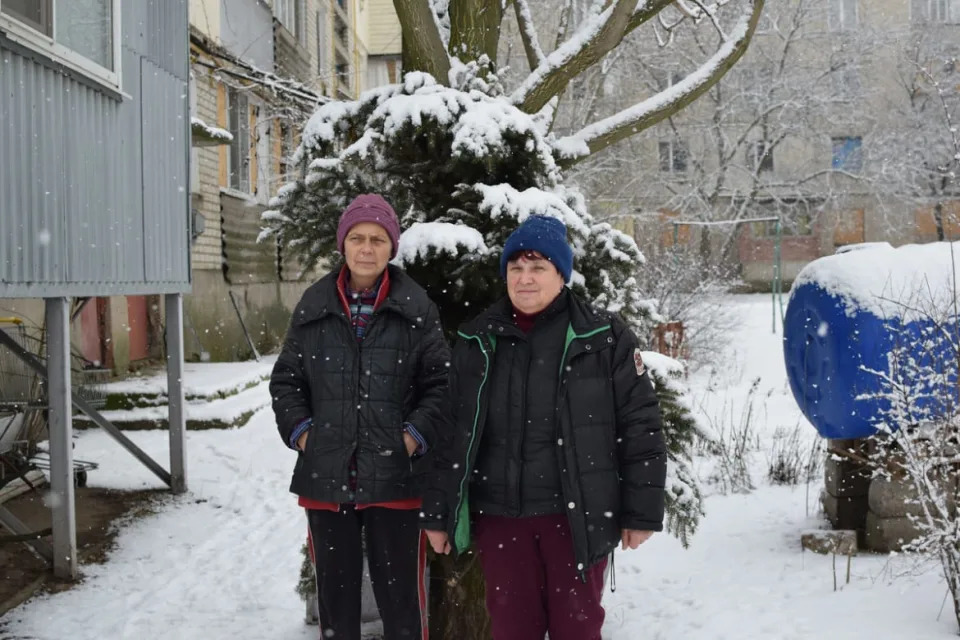
The town’s residents have been living without electricity, water, and heat since March. In one of the town’s Soviet-built seven-story buildings, Avhustyna Psevdaklyayeva, 67, and Lyudmyla Zhovnyrenko, 52, live with five others in a cramped, chilly apartment. It’s “very, very cold” Psevdaklyayeva said. Psevdaklyayeva is staying there due to the expense of moving on her small pension.
There is not much to do but cook food and tend to the cats and dog that also live there. At night, the residents sit at their one table and reminisce, said Psevdaklyayeva. “Each one talks about their memories and so the time passes a little faster,” she told The Daily Beast.
Thrown together in the war, the group are now friends. On one wall hangs a Ukrainian flag with their names signed on it, in commemoration of their still-ongoing ordeal. Not all relationships survived the war. “The war showed who was who,” said Zhovnyrenko. The two women said they keep an eye out for looters who visit the area, questioning any unknown faces.
Until Jan. 13, Psevdaklyayeva’s husband lived there too. He had a heart attack and lost consciousness, but when they called the hospital, they were advised to come on foot. They called the mayor who cajoled the hospital into sending an ambulance. It came too late, and her husband died.
On a drive around the town after leaving Psevdaklyayeva and Zhovnyrenko, it’s clear that the city is gradually fraying apart. The former city cultural center, a once-massive concrete building, is entirely smashed. In the downtown, flurries of snow drifted in through shell holes in stately old brick buildings.
As terrible as the situation is, it could get even worse if Russia ever launches a sustained assault. If that occurs, the town would more likely resemble other ruined communities across Ukraine that endured street fighting, like Soledar, Izyum, or Bucha.
Such an assault is unlikely in the near term, the American think tank the Institute for the Study of War reported in December. City officials, though, spoke of an intensification of shelling in December and January.
“We’re all for our counteroffensive coming soon,” Yermak said. “To tell you from a patriotic viewpoint, of course we’re not afraid. But of course everyone is worried.”
Mayor Serhey Yermak (left)Sam Skove
Several miles on the road away from Huliaipole, 37-year-old Alina Kovaleva and her 5-year-old son Gordei were celebrating the first day of the snow the way many families might: they made a snowman.
About 3 feet tall and with a carrot for a nose, the snowman stood on as Gordei, giggling furiously, hurled larger and larger snowballs at Alina, both of them wearing heavy winter coats.
Kovaleva said her village has Russian shells fall in it occasionally. When there’s shelling at night, she and her husband take their three children down into the cellar.
She wasn’t considering relocating, however. “All of Ukraine’s dangerous,” she told The Daily Beast with a shrug, returning to the snowball fight with her son.
Russia’s economy holds up, but growing challenges test Putin
David McHugh – March 13, 2023
Russian President Vladimir Putin gestures while speaking at a news conference following a meeting of the State Council at the Kremlin in Moscow, Russia on Dec. 22, 2022. Russia’s economy has weathered the West’s unprecedented economic sanctions far better than expected. But with restrictions finally tightening on the Kremlin’s chief moneymaker — oil — the months ahead will be an even tougher test of President Vladimir Putin’s fortress economy. (Sergey Guneyev, Sputnik, Kremlin Pool Photo via AP, File)A view of the business tower Lakhta Centre, the headquarters of Russian gas monopoly Gazprom in St. Petersburg, Russia, on April 27, 2022. After a year of far-reaching sanctions aimed at degrading Moscow’s war chest, economic life for ordinary Russians doesn’t look all that different than it did before the invasion of Ukraine. But with restrictions finally tightening on the Kremlin’s chief moneymaker — oil — the months ahead will be an even tougher test of President Vladimir Putin’s fortress economy. (AP Photo, File) People wait in a line to pay for her purchases at the IKEA store on the outskirts of Moscow, Russia, on March 3, 2022. Furniture and home goods remaining after IKEA exited Russia are being sold off on the Yandex website. (AP Photo, File)A logo of a newly opened Stars Coffee in the former location of a Starbucks in Moscow, Russia, on Jan. 24, 2023. Crowds might have thinned at some Moscow malls, but not drastically. Some foreign companies like McDonald’s and Starbucks have been taken over by local owners who slapped different names on essentially the same menu. (AP Photo/Alexander Zemlianichenko, File)Few visitors pass inside the GUM department store with lots of boutiques closed due to sanctions in Moscow, Russia, on June 1, 2022. U.S. officials say Russia is now the most sanctioned country in the world. But as the war nears its one-year mark, it’s clear the sanctions didn’t pack the instantaneous punch that many had hoped. (AP Photo/Alexander Zemlianichenko, File)Deputy Chairman of the Russian Security Council Dmitry Medvedev, second left, accompanied by Russian Presidential Envoy to Ural Federal District Vladimir Yakushev, left, visits the Uralvagonzavod factory in Nizhny Tagil in Nizhny Tagil, Russia, on Oct. 24, 2022. Russia has weathered sweeping Western economic sanctions better than many expected. (Ekaterina Shtukina, Sputnik, Government Pool Photo via AP, File)
Western sanctions have hit Russian banks, wealthy individuals and technology imports. But after a year of far-reaching restrictions aimed at degrading Moscow’s war chest, economic life for ordinary Russians doesn’t look all that different than it did before the invasion of Ukraine.
There’s no mass unemployment, no plunging currency, no lines in front of failing banks. The assortment at the supermarket is little changed, with international brands still available or local substitutes taking their place.
“Economically, nothing has changed,” said Vladimir Zharov, 53, who works in television. “I work as I used to work, I go shopping as I used to. Well, maybe the prices have risen a little bit, but not in such a way that it is very noticeable.”
Economists say sanctions on Russian fossil fuels only now taking full effect — such as a price cap on oil — should eat into earnings that fund the military’s attacks on Ukraine. Some analysts predict signs of trouble — strained government finances or a sinking currency — could emerge in the coming months.
But other economists say the Kremlin has significant reserves of money that haven’t been hit by sanctions, while links to new trade partners in Asia have quickly taken shape. They say Russia isn’t likely to run out of money this year but instead will face a slow slide into years of economic stagnation.
“It will have enough money under any kind of reasonable scenario,” Chris Weafer, CEO and Russian economy analyst at the consulting firm Macro-Advisory, said in a recent online discussion held by bne IntelliNews.
Apple has stopped selling products in Russia, but Wildberries, the country’s biggest online retailer, offers the iPhone 14 for about the same price as in Europe. Online retailer Svaznoy lists Apple AirPods Pro.
Furniture and home goods remaining after IKEA exited Russia are being sold off on the Yandex website. Nespresso coffee capsules have run short after Swiss-based Nestle stopped shipping them, but knockoffs are available.
Labels on cans of Budweiser and Leffe beer on sale in Moscow indicate they were brewed by ABInBev’s local partner — even though the company wrote off a stake in its Russian joint venture and put it up for sale. Coke bottled in Poland is still available; local “colas,” too.
ABInBev says it’s no longer getting money from the venture and that Leffe production has been halted. Wildberries and Svyaznoy didn’t answer emails asking about their sourcing.
But it’s clear goods are skirting sanctions through imports from third countries that aren’t penalizing Russia. For example, Armenia’s exports to Russia jumped 49% in the first half of 2022. Chinese smartphones and vehicles are increasingly available.
The auto industry is facing bigger hurdles to adapt. Western automakers, including Renault, Volkswagen and Mercedes-Benz, have halted production, with sales plunging 63% and local entities taking over some factories and bidding for others.
Foreign cars are still available but far fewer of them and for higher prices, said Andrei Olkhovsky, CEO of Avtodom, which has 36 dealerships in Moscow, St. Petersburg and Krasnodar.
“Shipments of the Porsche brand, as for those of other manufacturers, aren’t possible through official channels,” he said. “Whatever is on the market is scattered offerings of cars that were imported by individual persons or through friendly countries by official channels.”
While 191 foreign companies have left Russia and 1,169 are working to do so, some 1,223 are staying and 496 are taking a wait-and-see approach, according to a database compiled by the Kyiv School of Economics.
Companies are facing public pressure from Kyiv and Washington, but some have found it’s not so easy to line up a Russian buyer or say they’re selling essentials like food.
“Maybe it hasn’t affected me yet,” 63-year-old retiree Alexander Yeryomenko said. “I think that we will endure everything.”
Dmitry, a 33-year-old who declined to give his last name, said only clothing brands had changed.
“We have had even worse periods of time in history, and we coped,” he said, but added that “we need to develop our own production and not to depend on the import of products.”
One big reason for Russia’s resilience: record fossil fuel earnings of $325 billion last year as prices spiked. The surging costs stemmed from fears that the war would mean a severe loss of energy from the world’s third-largest oil producer.
That revenue, coupled with a collapse in what Russia could import because of sanctions, pushed the country into a record trade surplus — meaning what Russia earned from sales to other countries far outweighed its purchases abroad.
The boon helped bolster the ruble after a temporary post-invasion crash and provided cash for government spending on pensions, salaries and — above all — the military.
The Kremlin already had taken steps to sanctions-proof the economy after facing some penalties for annexing Ukraine’s Crimea peninsula in 2014. Companies began sourcing parts and food at home and the government built up huge piles of cash from selling oil and natural gas. About half of that money has been frozen, however, because it was held overseas.
Those measures helped blunt predictions of a 11% to 15% collapse in economic output. The economy shrank 2.1% last year, Russia’s statistics agency said. The International Monetary Fund predicts 0.3% growth this year — not great, but hardly disastrous.
Estimates differ on how hard those measures will hit. Experts at the Kyiv School of Economics say Russia’s economy will face a “turning point” this year as oil and gas revenue falls by 50% and the trade surplus plunges to $80 billion from $257 billion last year.
They say it’s already happening: Oil tax revenue fell 48% in January from a year earlier, according to the International Energy Agency.
Other economists are skeptical of a breaking point this year.
Moscow could likely weather even a short-term plunge in oil earnings, said Janis Kluge, a Russian economy expert at the German Institute for International and Security Affairs.
Even cutting Russian oil revenue by a third “would be a severe hit to GDP, but it would not bankrupt the state and it would not lead to a crash,” he said. “I think from now on, we are talking about gradual changes to the economy.”
He said the real impact will be long term. The loss of Western technology such as advanced computer chips means an economy permanently stuck in low gear.
Russia may have successfully restarted factories after the Western exodus, “but the business case for producing something sophisticated in Russia is gone, and it’s not coming back,” Kluge said.
Russia is using one of Ukraine’s bloodiest battles to decimate the Wagner Group, after its boss started a feud with military leaders, experts say
Sinéad Baker – March 13, 2023
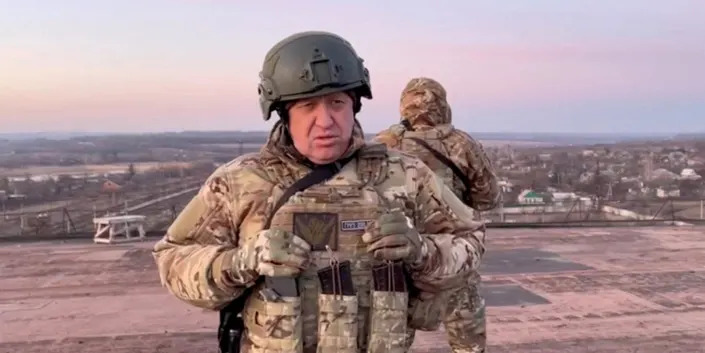
Yevgeny Prigozhin, the founder of Russia’s Wagner mercenary force, speaks in Paraskoviivka, Ukraine, in this still image from an undated video released on March 3, 2023.Concord Press Service/via REUTERS
Russia is using the battle for Bakhmut to kill off Wagner soldiers, according to a DC-based think tank.
The pro-Kremlin mercenary army has aided Russia’s military, but its leader has become more critical.
The military is likely trying to “expend” Wagner troops and weaken the group’s leader, the ISW said.
Russia is using the fight for the city of Bakhmut as a way to heavily weaken a mercenary force that once boosted its army but has become increasingly critical of its military leadership, according to the Washington DC-based Institute for the Study of War, or ISW.
The battle for the eastern Ukrainian city has become one of the bloodiest since Russia’s invasion began. And the Wagner Group, which has tens of thousands of mercenaries and former prisoners deployed in Ukraine, is heavily involved in the fighting.
In an update on Sunday, the ISW said that Russia’s defense ministry is likely using the battle to significantly reduce the Wagner Group, as a feud between them escalates.
Yevgeny Prigozhin, the group’s leader, who is also known as Putin’s chef, has become highly critical of Russia’s military leadership.
And the ISW said that Russia’s leadership “is likely seizing the opportunity to deliberately expend both elite and convict Wagner forces in Bakhmut in an effort to weaken Prigozhin and derail his ambitions for greater influence in the Kremlin.”
The think tank added that “Russian military leadership may be trying to expend Wagner forces – and Prigozhin’s influence – in Bakhmut.”
The ISW said that Putin’s use of the Wagner group had likely angered Russia’s traditional military leadership, “who were then tasked with sharing limited equipment and ammunition with Wagner mercenaries.”
Prigozhin and Russia’s defense ministry have also clashed over who could take credit for Russian victories.
The ISW said that Prigozhin was waging “a relentless defamation campaign” against Russia’s military.
Russian President Vladimir Putin has also started to distance himself from Prigozhin, with the Wagner leader saying that he had been “cut off” by Putin and that Russia’s military was denying ammunition to his group, calling it an “an attempt to destroy” Wagner.
The ISW wrote that Prigozhin had previously been able to recruit from Russian prisons, but had “lost that permission and access to that manpower pool at the beginning of 2023.”
The death toll in Bakhmut is high. Western officials estimate between 20,000 and 30,000 Russian troops have been killed or injured there, though Russia is still making progress in its attempt to capture the city.
The ISW said that given the high number of Wagner troops there, Russia’s leadership might not mind the high death toll.
“Russian military leadership may be allowing the Wagner Group to take high casualties in Bakhmut to simultaneously erode Prigozhin’s leverage while capturing the city at the expense of Wagner troops.”
At the same time, Ukraine also sees the brutal fighting in Bakhmut as an opportunity to deplete Wagner’s forces once and for all, according to The New York Times.
Ukrainians fighting in the city say it has been a “living hell” for months, while commanders on both sides have called the battle a “meat grinder.”
The UK Ministry of Defence said on Monday that half of the prisoners sent to Ukraine by the Wagner Group since the invasion began have likely been killed or wounded.