US speeds up Abrams tank delivery to Ukraine war zone

Associated Press

US speeds up Abrams tank delivery to Ukraine war zone

Lolita C. Baldort – March 21, 2023

WASHINGTON (AP) — The Pentagon is speeding up its delivery of Abrams tanks to Ukraine, opting to send a refurbished older model that can be ready faster, with the aim of getting the 70-ton battle powerhouses to the war zone by the fall, the Pentagon said Tuesday.

The original plan was to send Ukraine 31 of the newer M1A2 Abrams, which could have taken a year or two to build and ship. But officials said the decision was made to send the older M1A1 version, which can be taken from Army stocks. Officials said the M1A1 also will be easier for Ukrainian forces to learn to use and maintain as they fight the invading Russian forces.

“This is about getting this important combat capability into the hands of the Ukrainians sooner rather than later,” said Brig. Gen. Pat Ryder, the Pentagon press secretary.

The Biden administration announced in January that it would send the tanks to Ukraine — after insisting for months that they were too complicated and too hard to maintain and repair. The decision was part of a broader political maneuver that opened the door for Germany to announce it would send its Leopard 2 tanks to Ukraine and allow Poland and other allies to do the same.

Speaking at a Pentagon press conference, Ryder said the tanks will be refurbished and refitted to make them combat ready for Ukraine. He declined to say where that work will be done.

It’s unclear how soon the U.S. would begin training Ukrainian forces on how to use, maintain and repair the tanks. The intention would be to have the training of the troops coincide with the refurbishment of the tanks, so that both would be ready for battle at the same time later this year, said U.S. officials, who spoke on condition of anonymity to discuss details not publicly provided. The Pentagon will also have to ensure that Ukrainian forces have an adequate supply chain for all the parts needed to keep the tanks running.

The Russian and Ukrainian forces have been largely in a stalemate, trading small slices of land over the winter. The fiercest battles have been in the eastern Donetsk region, where Russia is struggling to encircle the city of Bakhmut in the face of dogged Ukrainian defense. But both sides are expected to launch more intensive offensives in the spring.

Asked about the timing of the tanks’ arrival, Ryder said the Abrams are part of the medium- and longer-term military support the U.S. is providing to Ukraine. He said that as Ukrainian forces take or retake territory, they will also need to sustain those gains and deter Russia from regaining any footholds.

During a visit to a tank plant in Lima, Ohio, in February, Army Secretary Christine Wormuth met with officials there at length to determine the best options for getting the tanks to Ukraine.

“Part of it is figuring out — among the different options — what’s the best one that can allow us to get the Ukrainians tanks in as timely a fashion as we can,” without disrupting foreign military sales, Wormuth said at the time.

Officials at the plant, which is owned by the Army and operated by Reston, Virginia-based General Dynamics, said production totals can vary, based on contract demands. And while they are currently building 15-20 armored vehicles per month, including tanks, they can easily boost that to 33 a month and could add another shift of workers and build even more if needed.

Development of tanks for Ukraine would have to be squeezed in between the current contracts for foreign sales, which include 250 of the newest versions for Poland and about 75 for Australia. During Wormuth’s tour of the plant, workers were preparing to build an updated version of the vehicle for Poland.

Ukrainian leaders have persistently pressed for the Abrams, which first deployed to war in 1991 and has thick armor, a 120 mm main gun, armor-piercing capabilities and advanced targeting systems. It runs on thick tracked wheels and has a 1,500-horsepower turbine engine with a top speed of about 42 miles per hour (68 kilometers per hour).
Vladimir Putin’s health may be disintegrating and it should terrify us all

The Telegraph

Vladimir Putin’s health may be disintegrating and it should terrify us all

Colonel Richard Kemp – March 21, 2023

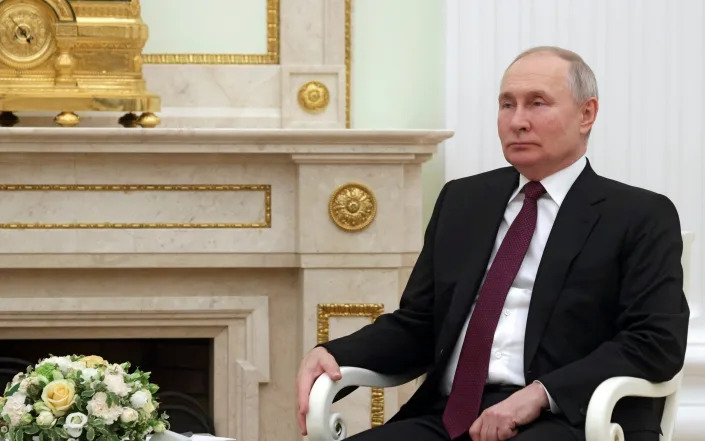
Russian President Vladimir Putin listens to Chinese President Xi Jinping during their meeting at the Kremlin in Moscow, Russia

Images of Putin gripping his chair and squirming next to President Xi in Moscow have again fuelled speculation about his health. He was filmed limping during a visit to Crimea a few days ago and during a February meeting with Belarus leader Alexander Lukashenko his leg was shaking uncontrollably. Since Putin invaded Ukraine last year, rumours of his physical well-being have been rife, with a range of theories from cancer to Parkinson’s.

This may amount to little more than wishful thinking that the man whose actions have led directly to the deaths of tens of thousands may be falling apart, and CIA Director William Burns said last year: “As far as we can tell, he’s entirely too healthy”.

But if we imagine, for a moment, that he is suffering from some serious affliction, then that would have big ramifications. For one, the immense stress that must press upon him could rapidly exacerbate his illness and directly affect his mental processes and judgement. Even if Burns is right, the demands of running a country in any circumstances are huge, and we’ve all seen the way many national leaders appear to age prematurely over their time in office.

The pressure cooker inside 70-year-old Putin’s head must sometimes reach bursting point after leading Russia for a quarter of a century, presiding over a war which has been going catastrophically wrong for the last year. Such a crushing burden would be tough enough for the leader of a democracy, but as ruler of the Russian autocracy Putin is well aware that his end could come in a violent death. Short of that, he will also know that he could face jail time following the arrest warrant for war crimes issued last week by the ICC. If he is deposed, it is possible a new regime in Moscow might hand him over as happened to Slobodan Milosevic in 2021.

All this will be playing on Putin’s mind, although his troubles could have been eased by a lifeline from Xi during his visit, perhaps with promises of money, weapons and sanctions busting. That will have been his hope, but it might also have gone the other way depending on Xi’s calculations of where his interests lie. China stands to gain from this war, whichever side prevails.

Whatever the truth about Putin’s state of mind, we should be prepared for him to behave with growing irrationality unless he is able to dramatically improve his fortunes on the battlefield. That is far from certain, with Kyiv reportedly gearing up for a major offensive next month.

Those around him know far better than we do about Putin’s mental state and if they perceive a dangerous deterioration, or if he becomes physically or mentally incapable, it’s possible they could seek to bring him down. That is a more likely scenario than the much-discussed possibility of a coup inspired by disaffection over the way he is running the war. Any attempt to depose Putin, especially if he resists as is likely, could lead to a violent power struggle, instability and chaos across the country and potentially even civil war with untold consequences for Russia and the world.

Another possible impact of a Putin breakdown may be even more apocalyptic. His sabre-rattling over nuclear weapons earlier in the conflict was an attempt to cow the West. But those who argue that he will never use battlefield or strategic nuclear weapons based on the logic that it could lead to retaliation that will do much greater damage to Russia than Ukraine or the West should remember we could be dealing with a man fighting for his life and increasingly devoid of logical thinking.

While the circumstances today are different, it’s worth remembering that Hitler, who had become increasingly deranged as he contemplated the collapse of his Reich, ordered the destruction of all economic, industrial, transport, military and communication facilities in Germany. As Hitler’s diabolical orders were refused, we must hope that those in Putin’s nuclear chain of command would also refuse to press the button if they were told to do so.

Hope, though, is not a strategy and as we seem to be witnessing a deterioration in Putin’s condition, it becomes increasingly urgent that Western leaders prepare for the possible consequences. Much of the burden for that falls on US and British intelligence agencies, who will already have been doing what they can to covertly influence Putin’s key nuclear players and preparing – as far as possible – to shape events in the wake of a collapse in the Kremlin, including early engagement with whatever regime emerges. That will involve a race with Beijing’s Ministry of State Security.

Kremlin Caught Stealth Editing Awkward Putin Video

Daily Beast

Kremlin Caught Stealth Editing Awkward Putin Video

Allison Quinn – March 21, 2023

Kremlin.ru/Handout via Reuters

The Kremlin has shifted to damage control mode after Vladimir Putin’s latest PR stunt was derailed by a public show of disgust for him.

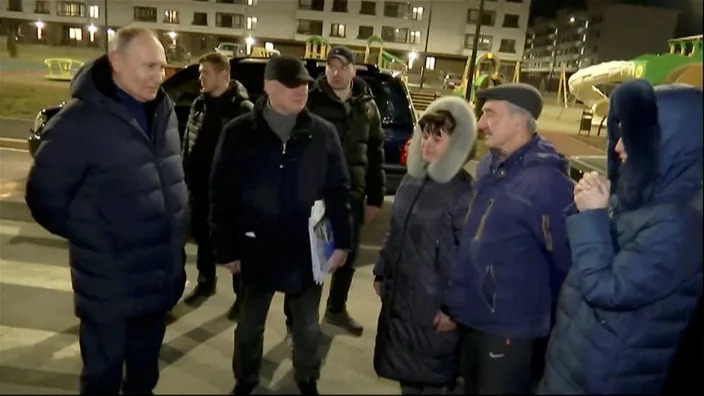
The Russian leader made a show of his alleged visit to Ukraine’s Mariupol over the weekend, in which people identified by the Kremlin as local residents treated him as their savior, thanking him for Russia’s “help” and calling their new home a “little piece of heaven.”

In a brief part of the video that had apparently been overlooked by Putin’s team, however, a woman was heard shouting, “It’s all untrue, it’s all for show!” just as the Russian leader began reading his lines. Deputy Prime Minister Marat Khusnullin could be seen grinning uncomfortably as Putin’s security team set off to track down the lone protester.

Two days after the off-script comments were noticed in the video released by the Kremlin, that version was replaced on the official Kremlin website with a version in which the party crasher had been edited out, the independent outlet Mozhem Obyasnit noted Tuesday.

Putin’s alleged visit to the city—his first trip to Ukrainian territory since the start of his war—was the closest to the frontline he’d ever set foot. And despite the glowing testimonials from supposed local residents broadcast by Russian state television, many locals apparently saw right through the propaganda.

“Nobody fucking needs us here. Everything is done for a picture on TV, so that people in Russia will watch,” one resident wrote in a Telegram channel devoted to local news.

Others questioned why Putin didn’t visit the parts of the city decimated by his own military.

“And why take him there, he was only taken to places that were preserved and new buildings. Nobody will show him the empty pits under the foundations of destroyed houses.”

Anton Gerashchenko, a senior adviser to the Ukrainian government, seemed to suggest on Monday that Putin may have sent a body double to Mariupol.

Ukrainians are riding tanks captured from an elite Russian unit into battle in Bakhmut, but their new gear may not last long

Business Insider

Ukrainians are riding tanks captured from an elite Russian unit into battle in Bakhmut, but their new gear may not last long

Michael Peck – March 21, 2023

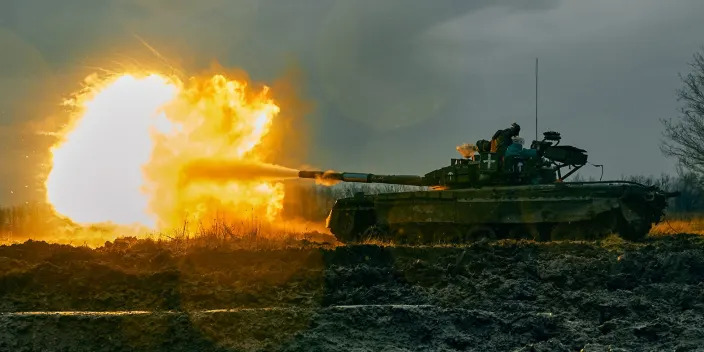
Ukranian forces fire at Russian positions using a captured T-80 tank.
Ukrainian troops fire a captured Russian T-80 tank at Russian positions in the Donetsk region on November 22.AP Photo/LIBKOS
  • Ukrainian troops have repurposed an array of gear that Russian forces have left on the battlefield.
  • That includes T-80 tanks captured from the 1st Guards Tank Army, an elite Russian armored unit.
  • But Russian tanks are designed for Russian forces, and Ukraine might get limited use out of them.

There is poetic justice in the idea that a country under attack is using its adversary’s weapons against it.

No wonder Western observers have been thrilled by reports of Ukrainian forces capturing hundreds of Russian tanks and turning them against the invaders. No doubt Western governments were happy, too; the more weapons Ukraine captures for itself, the fewer Western countries may have to send from their own stocks.

Michael Kofman, the director of the Russia Studies Program at CNA, said that the gear Ukraine is repurposing includes tanks that were captured from Russia’s elite 1st Guards Tank Army and sent back into Bakhmut, the site of Ukraine and Russia’s deadliest fighting.

Kofman spoke at a March 13 event hosted by the Carnegie Endowment and described a recent trip to Bakhmut, where he said that he saw “a reinforcing tank platoon coming in from the Ukrainian side which was entirely made up of Russian T-80s that they had captured from 1st Guards Tank Army at Izyum.”

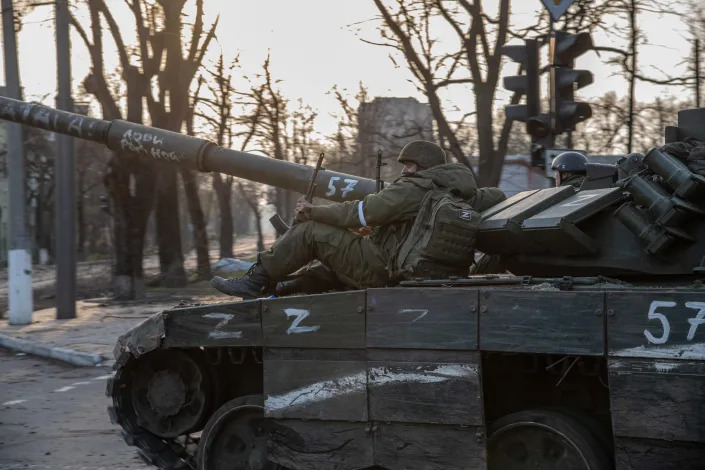
Russian soldiers sitting on a T-80 tank heading towards the Azovstal plant in Ukraine.
Russian soldiers on a T-80 tank heading toward the Azovstal plant in Mariupol on April 16, 2022.Maximilian Clarke/SOPA Images/LightRocket via Getty Images

“They were very easily identifiable,” Kofman added. “You can see an entire unit composed of nothing but captured Russian tanks.”

That the tanks were trophies from a 1st Guards Tank Army defeat must be particularly galling to Moscow. The unit earned fame as a Red Army formation from World War II. It was deactivated in 1998 but reactivated with great fanfare in 2014 as an elite, well-equipped force that became the Russian army’s prime ground maneuver unit.

The 1st Guard Tank Army took heavy losses in several battles around Kyiv and Kharkiv when it was deployed in Ukraine — and eventually had to be withdrawn for refitting.

Russian troops have been quite generous with their equipment, leaving an array of hardware, some of it undamaged, for Ukrainian forces to capture.

Living off captured hardware may work for insurgents, but it doesn’t work for armies that need advanced weapons for protracted operations, and Ukraine now faces the question of how long these vehicles will be in fighting condition.

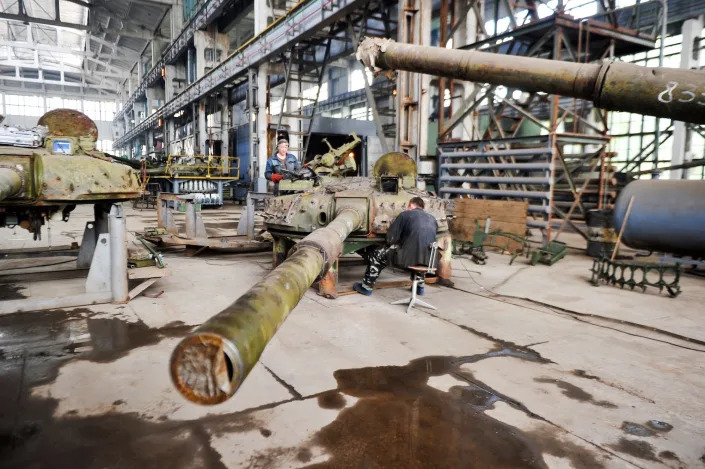
Ukrainian mechanics working on the turret of a T-80 tank in Kharkiv
Workers upgrade a T-80 tank at the Malyshev Tank Factory in Kharkiv in July 2015.SERGEY BOBOK/AFP via Getty Images

While Ukrainian mechanics have worked wonders to restore captured Russian equipment — aided by the fact that most of Ukraine’s pre-war arsenal was based on Soviet-era designs — sustained operations with Russian tanks will require a stream of parts from Russian factories.

“They don’t have the parts that keep a lot of these running,” Kofman said. “So on paper you may capture a lot of vehicles, but you don’t have the engines, you don’t have the transmissions, you don’t have the parts to keep them going.”

While Ukraine needs tanks and will get use out of them, Kofman said that ammunition and other spare parts are higher priorities: “First and foremost, it’s artillery ammunition and replacement of artillery barrels. Alongside air-defense ammunition — that’s missiles and what have you, and air-defense systems.”

Kofman said that he believes Ukraine doesn’t need tanks as much as it needs armored vehicles to carry infantry into battle.

“Ukraine has very large brigades of mechanized infantry, but to be mechanized, they actually need to be riding on something. Otherwise, Ukraine has a lot of manpower, not a lot of mobility,” Kofman said at the Carnegie event.

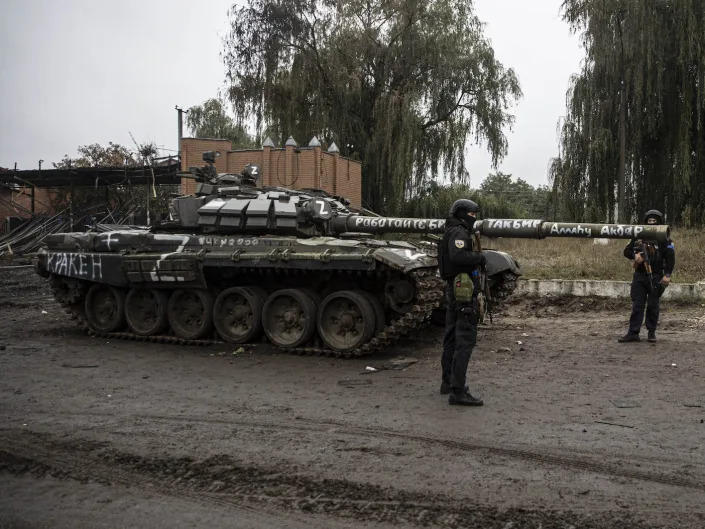
Ukrainian soldiers stand next to a damaged tank in Izyum
Ukrainian soldiers with a damaged tank after the Russian withdrawal from Izyum in September.Metin Aktas/Anadolu Agency via Getty Images

A similar situation played out in World War II; one reason German-panzer divisions were so formidable early in the conflict was that they were the first to carry infantry in armored half-tracks — rather than in soft-skinned trucks — so that infantry could safely keep up with the tanks.

Large numbers of immobile Ukrainian infantry “might work for a defense-in-depth strategy and that might work for holding Bakhmut,” Kofman said, “but it’s not going to work if you want to go on the offensive.”

Kofman said that Ukraine still needs Western tanks, which have a more reliable supply of spare parts and ammunition. However, these tanks — including the older Abrams tanks the US has agreed to send — need to be refurbished and could take months to arrive.

Political and public attention is focused on tanks — as well as fighter jets — for reasons that are as much symbolic as strategic, but discussions that are “overly centered” on tanks risk neglecting other crucial factors, Kofman said.

Such discussions often don’t touch on “important things like force quality and training, expanding that, scaling it up, and dealing with the real challenges in the Ukraine force — things like communication systems, distribution of intelligence, surveillance assets, and intelligence,” Kofman said. “A lot of other things have been very significant in this war but are less spoken of.”

Michael Peck is a defense writer whose work has appeared in Forbes, Defense News, Foreign Policy magazine, and other publications. He holds a master’s in political science. 

Russia’s spring Ukraine offensive may be winding down amid heavy troop losses, munitions shortages

The Week

Russia’s spring Ukraine offensive may be winding down amid heavy troop losses, munitions shortages

Peter Weber, Senior editor – March 20, 2023

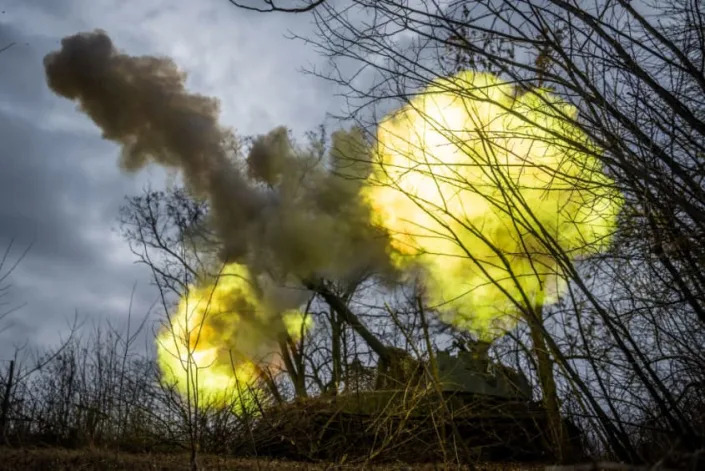
Ukrainian tank fires near Bakhmut
Ukrainian tank fires near Bakhmut Wolfgang Schwan/Anadolu Agency via Getty Images

U.S. officials are quietly warning Ukraine to conserve its dwindling supplies of artillery shells and other ammunition, air defenses, and experienced soldiers for a major spring counteroffensive to regain territory from Russian invaders, expected to start in May, once Western armor and weapons are in place. Ukraine is especially running through artillery shells and suffering heavy losses holding on to Bakhmut, a razed town U.S. officials see of limited strategic value.

But Ukrainian President Volodymyr Zelensky and other Ukrainians say Russia is using more ammunition and suffering much heavier losses in Bakhmut and elsewhere along the front lines for only incremental, halting gains. “And Ukrainian commanders on the front lines say that they sense that Russian units are hollowed out and could collapse in the face of a strong Ukrainian counteroffensive” in the spring, The New York Times reports. After Russian forces came dangerously close to encircling Bakhmut in February, Ukraine pushed back and has kept open its western supply routes.

Statements from Ukrainian military officials and warnings from Russian pro-war military bloggers “suggest that the overall Russian spring offensive may be nearing culmination,” with few “operationally significant gains” to show for it, the Institute for the Study of War think tank assessed Sunday. If 300,000 conscripts “have been unable to give Russia a decisive offensive edge in Ukraine, it is highly unlikely that the commitment of additional forces in future mobilization waves will produce a dramatically different outcome this year. Ukraine is therefore well positioned to regain the initiative and launch counteroffensives in critical sectors of the current front line.”

What Russian war bloggers call Moscow’s mass-casualty “meat assaults” on Bakhmut, Vuhledar, and other contested cities have also prompted a new flurry of videos from Russian troops begging Russian President Vladimir Putin to change tactics, The Washington Post reports. “People die for nothing,” a balaclava-covered recruit from the 5th Motorized Brigade said in one video. “We are not meat. We are ready to fight with dignity, not as meat, in frontal attacks.”

The close combat in Bakhmut is “hell” for Ukrainian forces, but it’s worse for Russia, Ukrainian war veteran Yevhen Dykyi recently told Ukraine’s First Western TV channel. “This amount of Russian losses hasn’t caused an explosion in Russian society yet, but it resonates a lot inside the Russian Army,” he said. “And the longer these crazy losses — unjustified in the opinion of lower- and middle-rank soldiers — go on, the lower the morale of the Russian Army will be at the time of our counteroffensive.”

300,000 new troops couldn’t get Russia’s big offensive to work, and sending more to the front probably won’t help, war experts say

Business Insider

300,000 new troops couldn’t get Russia’s big offensive to work, and sending more to the front probably won’t help, war experts say

Jake Epstein – March 20, 2023

Ukrainian servicemen fire a howitzer cannon aimed at Russian positions on the front line nearby Bakhmut in Chasiv Yar, Ukraine on March 17, 2023.
Ukrainian servicemen fire a howitzer cannon aimed at Russian positions on the front line nearby Bakhmut in Chasiv Yar, Ukraine on March 17, 2023.Photo by Muhammed Enes Yildirim/Anadolu Agency via Getty Images
  • Russia mobilized hundreds of thousands of troops to fight in Ukraine and fuel a spring offensive.
  • But these new soldiers have been unable to turn Russia’s advances into a major success, war experts say.
  • Ukraine now appears positioned for its own push, according to the Institute for the Study of War.

Hundreds of thousands of Russian troops called up to fight in Ukraine have been unable to turn Moscow’s new offensive into a battlefield success, war experts said in a new analysis. And throwing more soldiers into the fight most likely won’t help.

Russian President Vladimir Putin ordered a partial military mobilization in September 2022 to fight off a personnel shortage, and 300,000 reservists drafted. These soldiers — many of whom were sent into battle poorly equipped and with limited training — have since been committed to Russia’s ongoing spring offensive, the Institute for the Study of War (ISW), a Washington-based think tank, wrote in a Sunday assessment.

But Moscow’s offensive is “likely approaching culmination” because advances along several fronts in eastern Ukraine’s Donbas region have so far failed to yield more than “incremental tactical gains,” the assessment said. ISW noted hostilities around the war-torn city of Bakhmut, where intense fighting has raged for months, and cited Ukrainian military officials in its analysis.

“If 300,000 Russian soldiers have been unable to give Russia a decisive offensive edge in Ukraine it is highly unlikely that the commitment of additional forces in future mobilization waves will produce a dramatically different outcome this year,” ISW wrote in its assessment.

“Ukraine is therefore well positioned to regain the initiative and launch counteroffensives in critical sectors of the current frontline,” it added.

This image provided by the Ukrainian Armed Forces and taken in February 2023 shows damaged Russian tanks in a field after an attack on Vuhledar, Ukraine.
This image provided by the Ukrainian Armed Forces and taken in February 2023 shows damaged Russian tanks in a field after an attack on Vuhledar, UkraineUkrainian Armed Forces via AP, File

Experts, NATO officials, and Western intelligence agencies concluded in February that Russia had started its much-anticipated offensive in eastern Ukraine. On February 20, just days before the one-year anniversary of Russia’s full-scale invasion of Ukraine, Britain’s defense ministry said Russia was pursuing advances along several fronts around Bakhmut, Kremina, and Vuhledar.

This push by Russia marked a pivotal moment for Ukraine’s military, which was tasked with blunting Moscow’s assault and stopping its numerically larger force from advancing long enough to allow for the delivery of advanced Western armor, such as tanks, artillery, and infantry fighting vehicles, and other weaponry.

The massive influx of Russian troops into Ukraine was aimed at overwhelming the Ukrainians with numbers, even if it meant accepting a high casualty rate, NATO Secretary General Jens Stoltenberg said last month.

“What Russia lacks in quality, they try to compensate in quantity, meaning that the leadership, the logistics, the equipment, the training, don’t have the same level as the Ukrainian forces, but they have more forces,” he said at the time.

Meanwhile, Russian forces sent to fight in Ukraine have taken a beating. Western intelligence and US officials estimate Russia has likely suffered up t0 200,000 casualties in Ukraine. Over 60,000 soldiers alone may have been killed, according to a brief from the Center for Strategic & International Studies.

Sen. Mark Kelly flew with Russian pilots in the Navy and with NASA, and he said the Russian fighter jet running into a US drone shows ‘how incompetent they are’

Business Insider

Sen. Mark Kelly flew with Russian pilots in the Navy and with NASA, and he said the Russian fighter jet running into a US drone shows ‘how incompetent they are’

Sarah Al-Arshani – March 19, 2023

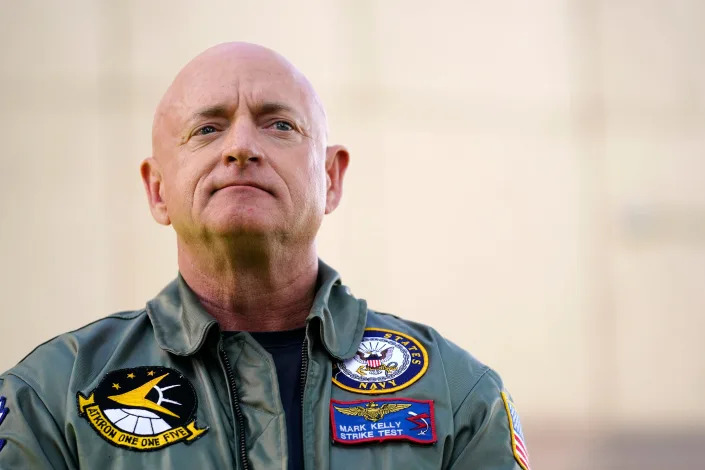
mark kelly has a skeptical expression wearing a us navy bomber jacket
Sen. Mark Kelly, D-Ariz., waits to speak during a news conference at the Arizona Capitol in Phoenix, on Nov. 7, 2022.AP Photo/Ross D. Franklin, File
  • A US drone crashed after a Russian fighter jet clipped its propeller over the Black Sea last week.
  • A think tank suggested the move was “aggressive messaging” by Russia.
  • Sen. Mark Kelly, a former Navy combat pilot, said it was an example of Russia’s incompetence.

Sen. Mark Kelly flew with Russian pilots as a US Navy combat pilot and as a NASA astronaut.

He said the incident last week where a Russian fighter jet dumped fuel on and then clipped the propeller of a US military drone shows how “reckless” and “incompetent” they are.

“I’m not surprised by this. I mean, I flew with Russian pilots, fighter pilots who couldn’t fly formation. And I watched this video, and it’s pretty obvious what happened. He lost sight of it, and he crashed into it,” Kelly told CNN’s Jake Tapper on “State of the Union” Sunday.

—CNN (@CNN) March 19, 2023

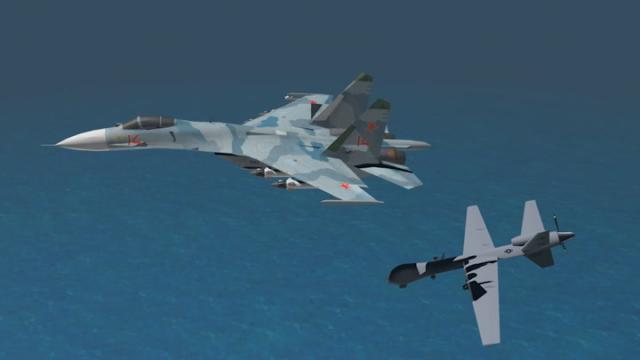
On Tuesday, two Russian Su-27 fighter jets intercepted a US military MQ-9 Reaper drone that was flying over international waters above the Black Sea. The jets dumped fuel on the drone, and one jet eventually clipped the drone’s propeller. The drone eventually crashed into the water.

WatchHow a Russian warplane hit an unarmed US drone 0:00 1:32 How a Russian warplane hit an unarmed US drone

Insider previously reported that while one think tank analysis suggested this was aggressive messaging by Russia, US officials have said the incident was most likely due to Russians not knowing how to fly.

The incident further soured the tense relationship between Washington and the Kremlin since Russia invaded Ukraine last February.

Kelly compared the fighter jet incident to the “incompetence that we see on the battle field every day in Ukraine.”

“That’s why the losses that the Russians are suffering right now are really high. At this point I mean, the best choice for Vladimir Putin would be to say: ‘Hey, this isn’t working,’ and he’s got to stop this illegal invasion,” Kelly said.

A Ukrainian soldier wondered if the Russians advancing on Bakhmut are on drugs: ‘Otherwise, how can they go to certain death?’

Insider

A Ukrainian soldier wondered if the Russians advancing on Bakhmut are on drugs: ‘Otherwise, how can they go to certain death?’

Kenneth Niemeyer – March 19, 2023

Ukrainian servicemen are seen along the frontline south of Bakhmut in the town of Toretsk, Ukraine on March 17, 2023.
Ukrainian servicemen are seen along the frontline south of Bakhmut in the town of Toretsk, Ukraine on March 17, 2023.Anadolu Agency/GettyImages
  • A Ukrainian soldier said troops from Russia’s Wagner Group in Bakhmut seem like they are on drugs.
  • No evidence has emerged to show that Russia or the Wagner Group provide their troops with drugs.
  • Ukrainian soldiers have previously claimed that Russian troops seemed like “zombies.”

A Ukrainian soldier fighting in Bakhmut told The New York Times that his unit has sometimes wondered if fighters belonging to Russia’s infamous Wagner Group are on drugs.

While there’s no evidence of that, it’s not the first time Ukrainians have wondered aloud that the behavior of some Russian soldiers could be medically induced.

The Wagner Group is a powerful Russian paramilitary unit that has emerged as a key ally in Russia’s advance inside Ukraine. The group once sparked controversy when it offered convicted Russian prisoners freedom in return for fighting. Fighters from the Wagner group are notorious for storming frontline positions and enduring severe casualties.

A retired US Marine estimated that the average life expectancy of a Wagner soldier on the frontlines in eastern Ukraine is just four hours. And a 48-year-old prison inmate who exchanged his freedom to serve in Russia’s Wagner Group told the Wall Street Journal earlier this month that the group only trained him for three weeks and that he expected to die on his first mission.

It’s the kind of behavior that soldiers from Ukraine’s Third Assault Brigade, which is now fighting the Wagner Group in the key eastern city of Bakhmut, believe could be the result of taking drugs. The unit’s media officer told The New York Times that 10 to 15 Wagner fighters were advancing on their position, to their almost certain deaths, every day during the first month of fighting.

“They are killed and they come again,” he told The Times. “Our guys are wondering if they are on drugs. Otherwise, how can they go to certain death, stepping over the rotting corpses of their colleagues? You can go mad a bit.”

Ukrainians earlier speculated that Russian soldiers were taking drugs in November as winter began to make the fighting ever more miserable, telling AFP that Russian soldiers seemed like “zombies.”

“You shoot them and more come constantly,” one soldier said, according to AFP.

Another Ukrainian soldier told CNN in February that advancing Russian forces looked like a “zombie movie” as they climbed over “the corpses of their friends.”

“It looks like it’s very, very likely that they are getting some drugs before attack,” the soldier told CNN.

While there’s no evidence that fighters from the Wagner Group are taking drugs, there is a long history of drug-taking in conflict.

During World War II, Nazi Germany administered amphetamines, which were touted as a “miracle product,” according to TIME. Nazi soldiers took the drugs to increase their alertness and vigilance, according to the outlet.

Also during World War II, Russia’s Ministry of Defense gave every Russian soldier on the frontline a 100-gram ration of vodka called the commissar’s ration, according to a report from Macalester College.

And in World War 1, according to the BBC, cocaine and heroin use was common among soldiers. Department stores even sold kits for taking the drugs, which were marketed as a nice present for those fighting on the frontline.

Russia tries to boost its flagging army by changing conscription age range

The Telegraph

Russia tries to boost its flagging army by changing conscription age range

James Kilner – March 18, 2023

Vladimir Putin
Vladimir Putin

The Kremlin wants to shift the age of army conscripts to boost the number of combat personnel under its command to 1.5 million.

The age bracket for conscription will be moved from 17-27 to 21-30 in order to close a loophole used by students to avoid conscription, according to the British Ministry of Defence (MoD).

“Many 18 to 21-year-old men currently claim exemption from the draft due to being in higher education,” it said.

The Russian parliament introduced a Bill covering these changes earlier this week. The MoD said it was “likely to be passed” by the start of next year.

Under current Russian law, conscripts are banned from being deployed overseas. However, by illegally annexing Crimea in 2014 – along with Donetsk, Luhansk, Kherson and Zaporizhzhia last September – Vladimir Putin, the Russian president, can claim that they are defending Russia.

Bid to expand army

Russia’s ministry of defence has said it wants to increase the size of combat personnel under its command from 1.15 million to 1.5 million.

Putin was forced to order the first mobilisation in Russia since the Second World War in September to shore up his front line, which was in danger of collapse. Many of the 325,000 men called up were sent straight to fight in Ukraine without decent equipment or training.

Conscription is carried out twice a year in Russia, recruiting around 125,000 men for 12 months through each draft. But it is treated as a duty and a sort of finishing school. Conscripts are there to serve but not to be thrown into battle.

Even if conscripts are not sent to fight in Ukraine, the MoD said that expanding conscription would still help the Russian war effort in Ukraine.

“Extra conscripts will free up a greater proportion of professional soldiers to fight,” it said.

Reports from inside Russia have said that a low-level mobilisation is ongoing for the army, especially in regional cities.

The Kremlin’s Wagner mercenary group has also switched to openly recruiting in 42 cities across Russia.

Yevgeny Prigozhin, the Wagner chief, said that he hoped to recruit an extra 30,000 fighters by May.

Slovakia Will Send Entire Fleet of MiG-29 Jets to Ukraine

Bloomberg

Slovakia Will Send Entire Fleet of MiG-29 Jets to Ukraine

Daniel Hornak – March 17, 2023

(Bloomberg) — Slovakia will send its entire fleet of Soviet-era fighter jets to Ukraine to boost its defense against Russian forces, government officials said.

The eastern NATO member state will send all 13 of its MiG-29 jets – grounded since last August and in various states of readiness – at an unspecified date, Defense Minister Jaroslav Nad told reporters in Bratislava on Friday.

The announcement comes a day after Poland said it will send four Soviet-era fighter jets to Ukraine in the coming days. Both nations are responding to pleas from Ukrainian President Volodymyr Zelenskiy, who has persistently demanded warplanes since the first days of the war as essential to driving back the Russian invasion.

The deliveries would cross a threshold in sending firepower to Kyiv, as many western allies have drawn the line at delivering fighter jets, citing the risk of being drawn into a direct confrontation with Moscow.

And while the aging aircraft don’t meet the standard of more modern F-16s or similar models Kyiv has craved most, MiG shipments could add to Ukraine’s fleet with operational jets or spare parts for its own damaged stock.

Officials didn’t specify when the jets, which have been grounded since a maintenance agreement with Russia was terminated last year, will be transferred to Ukraine, citing security reasons. Slovakia is awaiting the delivery of new US-made F-16 warplanes.

The nation will also send part of its Kub air-defense system to Ukraine. In return, it will receive about $700 million worth of US military equipment and $200 million from European Union funds, Nad told reporters.

Read More: Poland to Send Four Soviet-Era Jets to Kyiv in Coming Days

Last month, Nad said that Ukraine would be able to add as many as eight new planes to its fleet from Slovak hardware.

The Kremlin dismissed the plan of Slovakia and Poland on Friday, saying the fighter jets won’t be a game changer.

“You get the feeling that these countries are just getting rid of old, unneeded equipment,” Kremlin spokesman Dmitry Peskov said, according to Tass. “You don’t need to be a military expert to say that this won’t affect” the war, he added, saying that they will be “subject to destruction” by Russian forces.

The administration has been a staunch ally of Ukraine despite public opposition that has risen over the past few months of political turmoil. Prime Minister Eduard Heger defended the decision to send the jets, saying they were “not dragging Slovakia into the war.”

With assistance from Peter Laca.

(Updates with reaction from Russia from ninth paragraph.)