Russia will not be able to recruit 400,000 “volunteers”, people will be forced to join army – UK Defence Intelligence
Ukrainska Pravda – March 30, 2023
UK Defence Intelligence believes that Russia will not be able to recruit another 400,000 people to the army voluntarily, as it has declared.
Source: UK Defence Intelligence update from 30 March 2023
Details: UK Defence Intelligence noted that Russian media reporting suggests the authorities are preparing to start a major military recruitment campaign with the aim of signing up an additional 400,000 troops.
Quote: “Russia is presenting the campaign as a drive for volunteer, professional personnel, rather than a new, mandatory mobilisation. There is a realistic possibility that in practice this distinction will be blurred, and that regional authorities will try to meet their allocated recruitment targets by coercing men to join up.”
According to UK Defence Intelligence, Russian authorities have likely selected a supposedly ‘volunteer model’ to meet their personnel shortfall in order to minimise domestic dissent. It is highly unlikely that the campaign will attract 400,000 genuine volunteers.
However, rebuilding Russia’s combat power in Ukraine will require more than just personnel, UK Defence Intelligence noted; Russia needs more munitions and military equipment supplies than it currently has available.
Background: According to Bloomberg, Russia plans to increase its army by 400,000 people this year; it is reported that in 2022, the occupiers likely recruited more than 500,000 people.
Finland clears final hurdle for NATO membership, will be admitted by July
Peter Weber, Senior editor – March 30, 2023
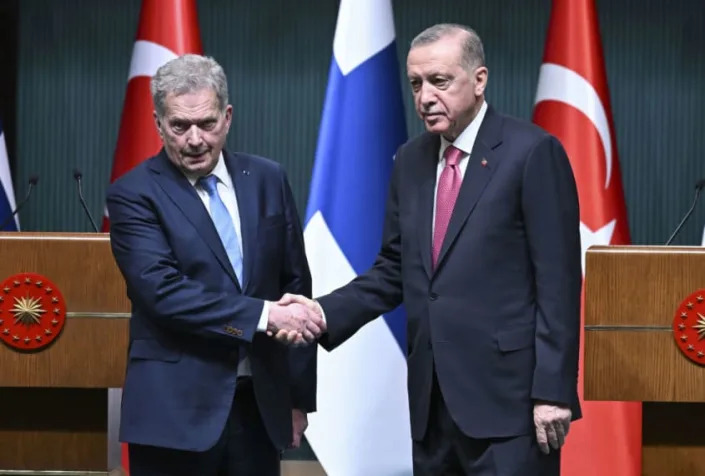
Finnish President Sauli Niinisto and Turkish President Recep Tayyip Erdogan Emin Sansar/Anadolu Agency via Getty Images
Turkey’s parliament on Thursday approved Finland’s bid for membership in the North Atlantic Treaty Organization, clearing the final obstacle for the Nordic country to become NATO’s 31st member. Hungary’s legislature ratified Finland’s application on Monday. Finland will be formally admitted to NATO at the alliance’s next meeting in July, in Lithuania, but if Ankara gets the ratification paperwork to Washington in time, Helsinki “could participate as a full member in a NATO foreign ministers’ meeting scheduled for next week in Brussels,” The Wall Street Journal reports.
“This will make the whole NATO family stronger and safer,” NATO Secretary General Jens Stoltenberg tweeted after Turkey’s parliament unanimously endorsed Finland’s accession.
The fate of Sweden’s tandem application to join is still unclear, as both Turkey and Hungary have declined ratification for different reasons. NATO requires all members to approve any expansion. Turkish President Recep Tayyip Erdogan, who faces re-election in May, accuses Sweden of harboring Kurdish militants and allowing them to protest against Turkey in the streets of Stockholm; Hungary says Swedish politicians have made disparaging remarks about Hungary’s degraded democracy and blames Stockholm for helping cut European Union funds to Budapest. Sweden said it still hopes to gain admission before the July meeting in Lithuania.
Sweden and Finland dropped their neutrality and applied for NATO membership together after Russia invaded Ukraine. Finland decoupled its application from Sweden in March after it became clear Turkey planned to stonewall Stockholm for at least a few more months. “There are certain things we expect of them,” Edrogan said earlier this week. “They must be fulfilled first.”
“The entrance of both Finland and Sweden would expand NATO’s capacity by allowing it to treat a vast area spanning about a thousand miles from the Baltic Sea to the Arctic as part of a coherent area of operations,” the Journal reports. Finland’s inclusion alone will “add more than 800 miles to NATO’s border with Russia and bring to the alliance one of Europe’s best-defended and best-armed countries.”
Russia says Gershkovich was spying, which the Journal adamantly denies. It’s safe to believe the Journal because Russia passed a law last year that basically criminalizes what journalists do: ask questions about things the government doesn’t want anybody to know about.
That law focuses on anybody spreading information about the Russian military, which may apply to Gershkovich because he was reportedly researching a story on the Wagner paramilitary group that’s part of Russia’s invasion force in Ukraine. But that’s just a pretext for Russian President Vladimir Putin to punish and silence one voice highlighting the economic price Russians are starting to pay for Putin’s disastrous invasion of Ukraine.
A picture taken on July 24, 2021 shows journalist Evan Gershkovich. – A US reporter for The Wall Street Journal newspaper has been detained in Russia for espionage, Russian news agencies reported Thursday, citing the FSB security services. “The FSB halted the illegal activities of US citizen Evan Gershkovich… a correspondent of the Moscow bureau of the American newspaper The Wall Street Journal, accredited with the Russian foreign ministry,” the FSB was quoted as saying. He is “suspected of spying in the interests of the American government” and of collecting information “on an enterprise of the Russian military-industrial complex,” agencies reported. (Photo by Dimitar DILKOFF / AFP) (Photo by DIMITAR DILKOFF/AFP via Getty Images)
For several months after Russian forces invaded Ukraine last February, the Russian economy seemed resilient. A spike in energy prices boosted Russia’s oil and gas revenue, its largest source of funds. Deft maneuvers by the Russian Central Bank helped the country withstand tough sanctions imposed by the United States and other allies of Ukraine. Russian forces floundered in Ukraine, but that was due to poor military planning and execution, not sanctions.
Now, however, sanctions are finally beginning to strangle the Russian economy in ways that could set it back for years. Laura Solanko of the Bank of Finland recently described how Russia is undergoing “reverse industrialization” in which the military-industrial complex driven by war needs crowds out the consumer economy, as in Soviet times. “Russia is stuck ineluctably on a path to lower potential growth and a bleak economic future,” Solanko wrote on March 27.
On paper, Russia seems to be surviving. Official data show its economy shrank by 2.2% in 2022, with the International Monetary Fund (IMF) forecasting flat GDP growth in 2023. But Russia, never the most trustworthy data purveyor, has stopped publishing a variety of economic statistics, and some IMF critics have blasted the agency’s Russia forecast as naïve and wrong. The wonky debate matters because it gets to the question of whether sanctions are accomplishing anything or not.
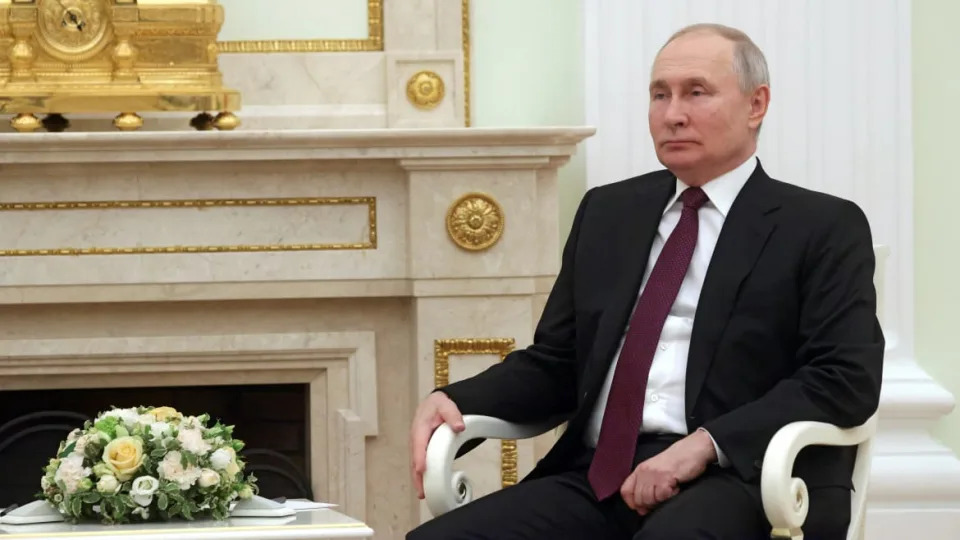
Russian President Vladimir Putin takes part in a ceremony via video link at the Kremlin in Moscow, Russia March 30, 2023. Sputnik/Gavriil Grigorov/Pool via REUTERS ATTENTION EDITORS – THIS IMAGE WAS PROVIDED BY A THIRD PARTY.
In early March, Russian journalist Boris Grozovsky detailed a new Russian economy in which “all resources go to war” and “household goods are sacrificed.” Spending on consumption, he reported, fell by 49% in 2022, largely because there was nothing to buy. There’s been explosive growth in sectors related to defense production, but cars, furniture, and appliances have grown scarce as imports disappeared and the Russian economy pivoted toward materiel needed for the war.
Murmurs of discontent are seeping out of Russia itself. Aluminum magnate Oleg Deripaska said at a recent conference in Siberia that Russia will run out of money by 2024. He complained about new taxes on Russian businesses to help finance the war effort. Even Putin has acknowledged that “restrictions imposed on the Russian economy may indeed have a negative impact.”
Sanctions imposed after Russia invaded Ukraine in February 2022 aimed to isolate its financial system and restrict trade while leaving Russia’s energy exports more or less intact. Since Russia is one of the world’s largest exporters of oil and natural gas, the goal was to hurt Russia without causing a global energy shortage that would send prices soaring. That largely worked, but the scheme allowed Russia to continue earning huge amounts of energy revenue that helped finance the war.
Last December, the European Union banned most imports of Russian oil, while a U.S.-led group of large economies imposed a price cap of $60 per barrel on Russian oil. Those sanctions were novel and nobody was sure they’d work. Some Ukraine allies wanted a lower oil price cap that would reduce Russia’s oil revenues even more.
Energy markets remained calm after those moves went into effect, and in February a similar set of sanctions went into effect on refined Russian hydrocarbons such as diesel fuel. Russia is still exporting energy, but the sanctions do seem to be forcing costly workarounds in Russia’s energy exports and denting revenue. The allied nations could lower the price caps on Russian energy at any time, effectively tightening the sanctions.
Russia’s economic woes are intensifying as it seems to be running short of tanks, artillery, and other weapons vitally needed in Ukraine. The intent of sanctions is to make it progressively more difficult for Russia to sustain the war. Ukraine, of course, is suffering weapons shortages of its own and a sharp economic contraction, though billions in aid from the United States and other partners compensates for some of that.
The Journal piece, written by Gershkovich and Georgi Kantchev, catalogued Russia’s economic woes and its diminution into a kind of junior partner for China, whose economic assistance it depends on. The story described how sanctions prevent Russian airlines from obtaining spare parts and finance firms from updating software. New-car sales have plunged by 62% year-over-year. Investment in Russian oil and gas exploration is down 42%, which could lead to a long-term decline in Russia’s energy output.
That wasn’t the first story on Russia’s economic problems, but it was comprehensive and may have arrived just as Putin is feeling the rising heat of a failing war and a flat-lining economy. Snatching Gershkovich on bogus charges probably reveals increasing desperation for Putin, yet it’s consistent with the bullying behavior of a dictator who has badly erred and blames the messengers. It won’t be the last of Putin’s aberrant behavior.
Russia plans to conscript over half million people this year
Ukrainska Pravda – March 29, 2023
Russia plans to increase its army by 400,000 people this year; it is reported that in 2022, the occupiers were likely to recruit more than 500,000 people.
Source:Bloomberg, referring to the Federal Statistics Service data and sources familiar with the conscription plan in the Russian Federation
Details: Bloomberg, citing data from the Russian Federal Statistics Service, reports that the size of the Russian army last year increased by approximately 400,000 people. According to the news agency, the army of the Russian Federation probably was strengthened by 500,000.
In addition, according to Bloomberg’s sources familiar with the Kremlin’s plan, Russia plans to call up another 400,000 contract soldiers this year as Putin prepares for a prolonged war against Ukraine.
The total strength of the Russian army, as reported by the Ministry of Defence of the Russian Federation, is planned to increase to 1.5 million from 1.15 million by 2026.
The agency notes that Putin’s drive to expand Russia’s Armed Forces is exacerbating labour shortages as the war against Ukraine draws hundreds of thousands of workers from other sectors of the economy into the army.
Background:
In the autumn, Russian President Vladimir Putin announced that the number of servicemen mobilized recently in the Russian Federation had reached 318,000 people, despite the previously announced limit of 300,000.
Kyiv urges Russians not to adopt Ukraine’s ‘stolen’ children
March 28, 2023
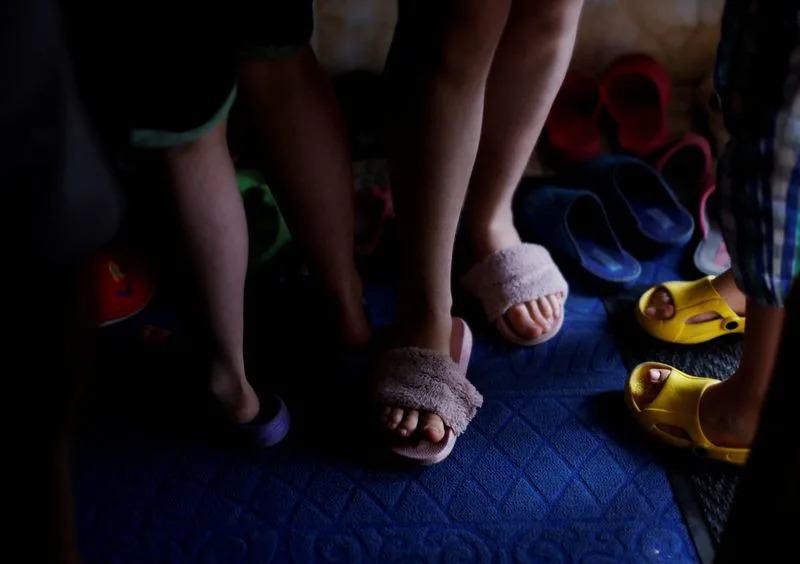
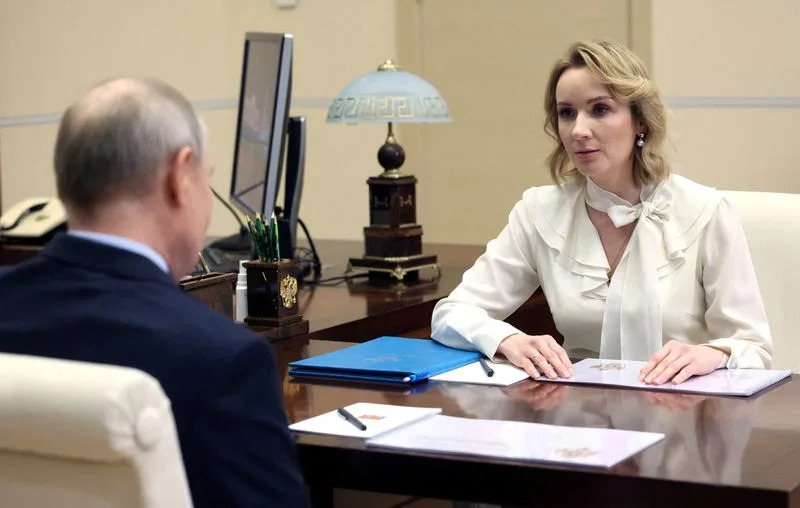
The Wider Image: Ukraine seeks to trace thousands of ‘orphans’ scattered by war Russian Presidential Commissioner for Children’s Rights Maria Lvova-Belova meets with Russian President Vladimir Putin outside Moscow
(Reuters) – Ukrainian Deputy Prime Minister Iryna Vereshchuk urged Russians on Tuesday not to adopt children who she said were “stolen” in Ukraine during the war and deported to Russia.
The war that Russia has been waging on its neighbour for 13 months now has seen millions of people displaced, including families and children. The real number of children who have been forcefully deported to Russia is impossible to establish.
The International Criminal Court (ICC) issued an arrest warrant earlier in March against Russian President Vladimir Putin and Maria Lvova-Belova, Russia’s commissioner for children’s rights, accusing them of the war crime of illegally deporting hundreds of children from Ukraine.
Vereshchuk said on the Telegram messaging app that orphans have been “stolen in Ukraine” and allegedly given up for adoption in Russia.
“I strongly recommend that Russian citizens do not adopt Ukrainian orphans who were illegally taken out of the temporarily occupied territories of Ukraine,” Vereshchuk, in charge of social issues, said.
“Once again I remind all Russian so-called ‘adoptive parents’ and ‘guardians’: sooner or later you will have to answer.”
According to Ukraine’s Ministry of Integration of Occupied Territories, 19,514 Ukrainian children are currently considered illegally deported.
Russia has not concealed a programme under which it has brought thousands of Ukrainian children to Russia, but presents it as a humanitarian campaign to protect orphans and children abandoned in the conflict zone.
Most of the movement of people and children occurred in the first few months of the war and before Ukraine started its major counter offensive to regain occupied territories in the east and south in late August.
Russia’s defence ministry said in mid-August that 3.5 million people had been brought to Russia by then, including more than half a million children.
The United States said in July that Russia “forcibly deported” 260,000 children, from their homes to Russia.
Russian TASS agency cited Vitaly Ganchev, Moscow-installed official of Russia-occupied parts of the Kharkiv region, as saying on Tuesday that a group of children from the region was sent to Russia last year with the consent of their parents or guardians.
“The children were placed in excellent conditions, they are provided with everything necessary. And we will continue to take care of them until their parents come for their return,” Ganchev added.
(Reporting by Lidia Kelly in Melbourne and Ron Popeski in Winnipeg; Writing by Lidia Kelly; Editing by Stephen Coates)
ICC arrest warrant for Vladimir Putin: a king-size dilemma for South Africa
Sascha-Dominik (Dov) Bachmann – March 29, 2023
Presidents Cyril Ramaphosa and Vladimir Putin at the first Russia-Africa Summit in Sochi, Russia, in 2019. Photos: GCIS
The International Criminal Court (ICC) has issued an international arrest warrant for Russian president Vladimir Putin for alleged war crimes regarding the unlawful deportation of children from Ukraine to Russia. Such acts are war crimes under two articles of the Rome Statute, which established the court.
Putin faces arrest if he sets foot in any of the 123 signatory states to the statute. Of these, 33 are African states. The issue could come to a head in August when South Africa is set to host the 15th summit of the Brazil, Russia, India, China and South Africa (BRICS) bloc in Durban.
As the head of a member state Putin has been invited to attend. But as a member of the court, South Africa is obliged under Article 86 of the ICC statute and domestic law to cooperate fully by arresting the Russian president.
This is not the first time the country has faced such a dilemma.
The arrest warrant for Putin has put President Cyril Ramaphosa’s government between a rock and a hard place. Complying with its domestic and international obligations by executing the arrest warrant would alienate Russia. This would have bilateral consequences – the country is still considered a friend by the ruling African National Congress based on the Soviet Union’s support during the struggle against apartheid – as well as ramifications within the BRICS, given Moscow’s strong ties with Beijing.
It is not unreasonable to argue that Ramaphosa’s government would want to tread carefully to avoid any such tensions.
When the Zuma administration refused to arrest Al Bashir, it landed the government in judicial hot water. South Africa’s Supreme Court of Appeal found that it had violated both international and domestic law.
Following the ruling of the Supreme Court of Appeal, Zuma’s government notified the United Nations secretary general of its intention to withdraw from the Rome Statute. This ill advised move was challenged in the High Court in Pretoria. It ruled that the notice of withdrawal was unconstitutional due to the absence of prior parliamentary approval. Consequently, the government “withdrew from the withdrawal”.
In 2017, the ICC found that South Africa had failed in its obligations under the Rome Statute towards the court by not arresting and surrendering Al Bashir. The court, however, decided not to pursue the matter further for pragmatic reasons. It also reasoned that to refer South Africa to the United Nations Security Council for noncompliance “would not be an effective way to foster future cooperation”.
In the event that Putin attended the upcoming BRICS summit and Ramaphosa’s government did not arrest him, it would mean that South Africa was flouting domestic legislation as well as its own constitution. Article 165 (5) of the country’s constitution makes it clear that the government is bound by court orders and decisions.
At present the government’s response is not clear. On the one hand, Ramaphosa’s spokesperson said that the country was aware of its obligations to arrest Putin and surrender him to the ICC.
On the other hand, Naledi Pandor, the foreign relations minister, confirmed the invitation to Putin to attend the BRICS meeting. She noted that cabinet would have to decide on how to respond in view of the ICC warrant.
The government would want to balance its ICC obligations, domestic responsibilities and its historically friendly relations with Russia carefully. Unless it is hellbent on defying its own court decisions and laws, there are options available to avoid another round of international condemnation, and that would help it avoid potential court battles by civil society for noncompliance with the country’s own laws and court decisions.
Options
Firstly, South Africa should continue to extend an invitation for Russia to attend the summit. But, through diplomatic channels, request that the Russian delegation be led by its foreign minister, Sergei Lavrov. Lavrov has in essence become the face of Russia on the international stage since the start of the war in Ukraine.
Secondly, during the COVID pandemic, it became clear that physical presence at international gatherings for heads of states could be substituted with virtual attendance. The UN General Assembly set a good benchmark for this when heads of state submitted video statements due to pandemic restrictions. Putin could attend the BRICS summit virtually.
The need to sign summit documentation by the heads of state is not an impediment to virtual attendance. Putin can sign the documents electronically or after the summit, if a non-electronic signature is required.
The ball is now in the South African government’s court. The hope is that it makes the right decision, one which is in the best interests of the country and its people – not Russia or the likes of the US, especially as neither major power is a signatory to the ICC’s statute. Neither should prescribe to South Africa what it should decide.
Most importantly, the government must not trample on its own laws and court decisions. Compliance with the constitution must be the priority. Making a decision that is in the interests of South Africa and its people would also provide guidance to the other 32 African ICC signatory states, should they ever be faced with a similar dilemma in the future.
This article was co-authored with Sasha-Lee Stephanie Afrika (LLD), Attorney of the High Court of South Africa and former lecturer at Stellenbosch University and University of Johannesburg.
Sascha-Dominik (Dov) Bachmann, Professor in Law and Co-Convener National Security Hub (University of Canberra) and Research Fellow (adjunct) – The Security Institute for Governance and Leadership in Africa, Faculty of Military Science, Stellenbosch University- NATO Fellow Asia-Pacific, University of Canberra
Sascha-Dominik (Dov) Bachmann does not work for, consult, own shares in or receive funding from any company or organization that would benefit from this article, and has disclosed no relevant affiliations beyond their academic appointment.
The International Criminal Court (ICC) issued a warrant for Putin’s arrest earlier this month over alleged war crimes in Ukraine, particularly his alleged involvement in the unlawful deportation of children from Ukraine. But the ICC doesn’t have the power to enforce its warrants, and since Russia doesn’t recognize the court’s jurisdiction, much of its enforcement will depend on other countries’ willingness to step in if Putin travels.
“If Putin comes to Armenia, he should be arrested… It is better for Putin to stay in his country,” Gagik Melkonyan, deputy of the Armenian National Assembly, said this week, according to a Moscow Timestranslation of an interview with Factor.am. “If we enter into these agreements, then we must fulfill our obligations. Let Russia solve its problems with Ukraine.”
The decision from the ruling party of Armenia, which is part of a Russian-led collective defense organization, stands in stark contrast to other Kremlin allies that are not deviating from loyalty to Moscow. Hungary, which has close ties with Russia, announced it will not enforce the ICC’s arrest warrant for Putin last week.
Even though Armenia is technically a Russian ally—as part of the Collective Security Treaty Organization (CSTO)—Armenia’s decision is just the latest indication that the country is willing to take matters into its own hands and hold Putin accountable. Just last week, Armenia took steps that will pave the way for it to ratify the Rome Statute, the treaty that established the ICC.
“If we enter into these agreements, then we must fulfill our obligations,” Melkonyan said.
The Kremlin rebuked Armenia for entertaining the idea of joining the Rome Statute, according to a source in the Russian Foreign Ministry.
“Moscow considers absolutely unacceptable the plans of official Yerevan to accede to the Rome Statute of the International Criminal Court against the backdrop of the recent illegal and legally void ‘warrants’ of the ICC against the Russian leadership,” the source said early this week, according to TASS.
The Russian Foreign Ministry warned there would be “extremely negative” consequences for Armenia moving forward.
But Armenia is not alone, and other countries are banding together with plans to arrest Putin. Ireland, Croatia, Austria, and Germany have each said they will enforce the warrant.
The decision in Armenia suggests that Russia’s allies are growing more willing by the day to question Moscow’s judgment in the war in Ukraine over one year into the conflict.
The unusually frank call between two Russian socialites and what they said about Putin
Nataliya Vasilyeva – March 29, 2023
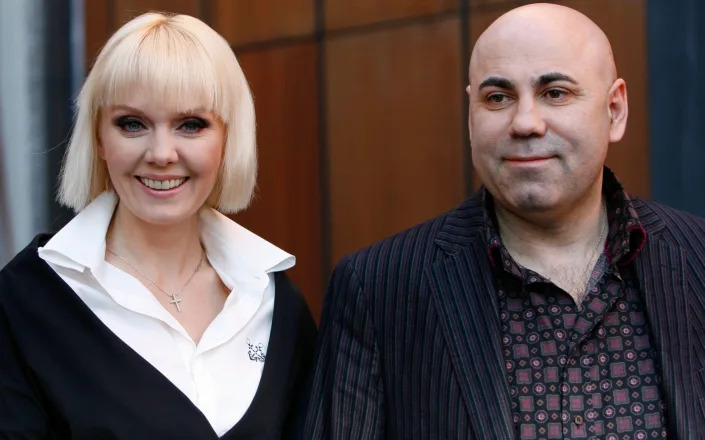
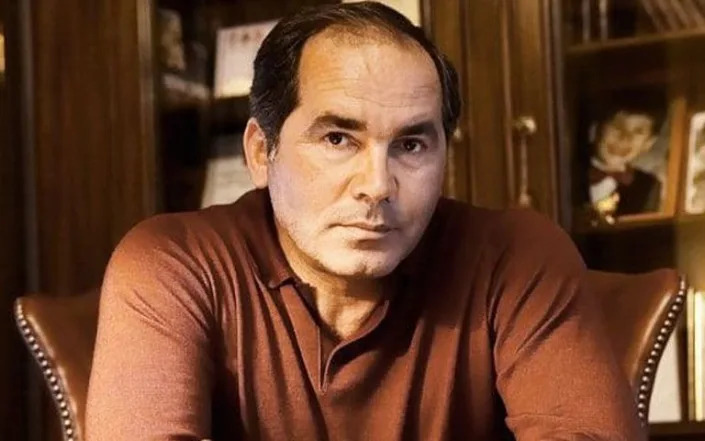
Farkhad Akhmedov (left), Vladimir Putin and Iosif Prigozhin – Webgrab, AFP and Reuters/Alamy
Vladimir Putin is a “dwarf” and a “wimp” who is ruining Russia, according to a leaked phone conversation between two prominent society figures.
The unusually frank call purportedly involves Iosif Prigozhin, a music producer, and Farkhad Akhmedov, an Azerbaijan-born energy billionaire, and has exposed deep resentment towards the Kremlin among the country’s overtly pro-regime elite.
In the 35-minute conversation, Mr Akhmedov calls Putin “Satan”, a “wimp” and a “dwarf” who “doesn’t give a damn about anything and doesn’t give a f— about the people”. “They f—– us over, f—– over children, their future, do you get it?” he adds.
Mr Prigozhin replies: “They’re criminals, to be honest, criminals of the worst kind. He [Putin] squandered the country away … There won’t be any future for us.”
Mr Akhmedov later says: “He has buried the entire Russian nation… How are we going to wash this off? This is a war between f—— brothers. There will be fascism there, that’s what’s going to happen… a military dictatorship. You will see. It’s going to end like this.”
The call was leaked by an obscure Ukrainian YouTube channel earlier this month but has only been picked up in the last few days.
Yevgeny Prigozhin, the founder of the Wagner Group – who is not related to the music producer – has suggested that the wiretappers may have been trying to target him but got the wrong Prigozhin.
If the call is real, it suggests a deep sense of frustration and anger among even members of the Russian elite who are ostensibly pro-Kremlin.
Iosif Prigozhin and his wife, the singer Valeria, in 2009 – Reuters/Alamy stock photo
Mr Prigozhin and his wife, the pop star Valeria, have been long-time public supporters of Putin. They campaigned for him in the 2018 elections and have called on the Kremlin to go after anti-war musicians who fled the country following the invasion of Ukraine.
Mr Akhmedov, 67, made his money in Siberia’s gas industry in the 1990s and is estimated to be worth about £1.36 billion. He served as a Russian senator between 2004 and 2009 and made headlines in 2021 when he had to pay £450 million to his ex-wife following a legal battle at the High Court in London.
He has never publicly opposed the war and was sanctioned by the UK and the EU after the conflict began, measures he has tried unsuccessfully to overturn.
Farkhad Akhmedov
Mr Prigozhin lives in Moscow while Mr Akhmedov currently lives between Azerbaijan and Moscow.
In another part of the call, Mr Prigozhin refers to Putin’s inner circle as “washed-up low-lifes” who act as if they are “gods” and complains to Mr Akhmedov about different factions within the security services blaming the defence minister for blunders in Ukraine.
“They are the most f—– up people ever. I have nothing good to say about them,” he says. “They are dragging everyone down to the very bottom.”
Mr Akhmedov complains about the sanctions he is facing, including the seizure of his £225 million superyacht MV Luna, which he said was “rotting” in Hamburg.
The EU said last April that the oligarch was “close to the Kremlin”, but Mr Akhmedov said: “They write that I’m a close friend of Putin’s. F— that! The last time I saw Putin was in 2008.”
The leaked audio has given voice to a widespread sentiment among the Russian establishment that “Putin has let his country down”, said Tatyana Stanovaya, a Russian political scientist.
“Some felt deeply satisfied that finally someone – their own kind of people – said it all out loud,” she wrote for the Carnegie Endowment for International Peace on Wednesday. “The leak clearly had a major impact on the mental well-being of the Russian elite.”
The Kremlin and state media, which typically clamours for revenge against “traitors”, have been noticeably quiet about the call, with only a few pro-war bloggers calling for blood.
Mr Prigozhin at first claimd the leak as completely faked before later suggesting parts of it were real.
“Everyone is aware of my political stance, which is evidenced in all of my interviews,” he told the Fontanka website on Monday. “But you know, while I was listening to the audio, I almost believed it was me. There are definitely some real things here.”
However, he did not reiterate his support for Putin. Mr Akhmedov has not yet commented.
Russian opposition figures have urged Mr Prigozhin to flee the country for his own safety, but Kremlin-watchers do not expect the government to go after him because criminal charges would only confirm that the conversation was genuine and public support for Putin was waning.
Russia’s Wagner chief says battle for Bakhmut has damaged his forces
March 29, 2023
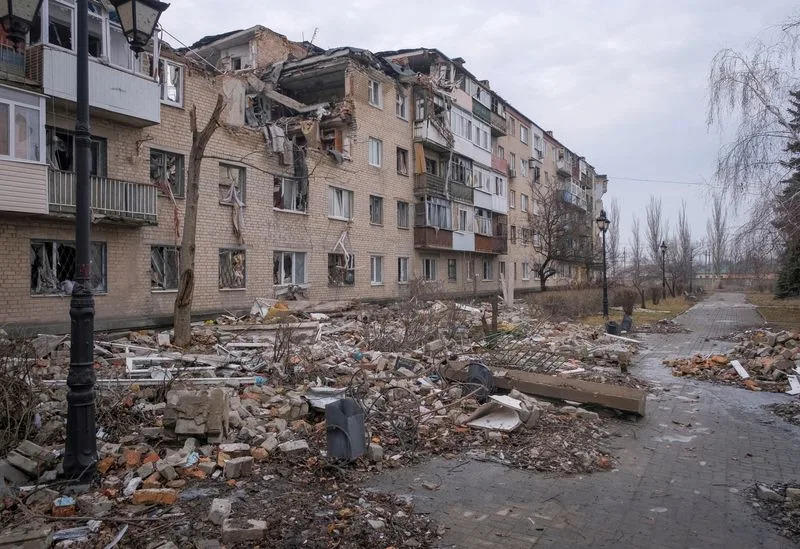
A general view shows a building damaged by a Russian military strike in BakhmutYevgeny Prigozhin, founder of Russia’s Wagner mercenary force, speaks in Paraskoviivka
(Reuters) – The head of Russia’s Wagner mercenary group acknowledged on Wednesday that fighting for the Ukrainian city of Bakhmut had inflicted severe damage on his own forces as well as the Ukrainian side.
Bakhmut, a small eastern city that has for months been the target of a Russian offensive, has seen intense fighting and destruction in what has become the longest, bloodiest battle of the war.
“The battle for Bakhmut today has already practically destroyed the Ukrainian army, and unfortunately, it has also badly damaged the Wagner Private Military Company,” Wagner chief Yevgeny Prigozhin said in an audio message.
Russian officials say their forces are still capturing ground in street-by-street fighting inside Bakhmut, but have so far failed to encircle it and force the Ukrainians to withdraw, as had seemed likely weeks ago.
British military intelligence said on Wednesday the Ukrainians had successfully pushed the Russians back from one of the city’s main supply routes.
Ukraine Gets Its First Western Heavy Tanks. Here’s What to Know
Armani Syed – March 28, 2023
Ukrainian recruits and their British Armed Forces trainers pose for a photograph on Driver Tank Trainer (DTT) armored vehicles at a military facility, on Feb. 23, 2023 in Southern England. (Credit – Leon Neal – Getty Images)
The first heavy tanks from Britain and Germany have arrived in Ukraine as the nation’s army prepares for a spring offensive against Russian forces.
Ukrainian Defence Minister Olesksiy Reznikov tweeted a video Tuesday of himself taking a British Challenger 2 for a test drive, confirming the arrival of 14 tanks. “These fantastic machines will soon begin their combat missions,” he wrote, thanking U.K. Prime Minister Rishi Sunak, Defense Minister Ben Wallace, and the British people.
The tweet comes a day after German Chancellor Olaf Scholz announced that 18 Leopard 2 battle tanks had successfully been delivered to Ukraine.
Reznikov also announced the arrival of American Cougar armored trucks and American Stryker and German Marder fighting vehicles in a Facebook post on Monday. In the image shared by Reznikov, Ukrainian defense leaders and members of the armed forces posed in front of the military hardware while holding U.S., U.K., and German flags.
Ukraine has long called for heavier weapons to bolster its war efforts. But the decision to provide Western-made heavy tanks such as the Leopard 2s and Challenger 2s to Ukraine was not taken lightly by NATO allies, with many fearing it would provoke Russia into further escalating the war.
Below, what to know about Ukraine’s growing supply of Western-made tanks.
What are the British Challenger 2s?
In January, Britain became the first nation to pledge Western battle tanks—in this case 14 Challenger 2 tanks from its supply of 227 to Ukraine. Ukrainian President Volodymyr Zelensky thanked Sunak “for the decisions that will not only strengthen us on the battlefield, but also send the right signal to other partners.”
The tanks were built in the late 1990s by BAE Systems and Land Armaments and can carry up to four people. The heavy vehicle weighs over 65 tons and are equipped with a 120 mm rifled gun. The tank’s merit lies in its ability to shock enemies with rapid fire.
In addition to tanks, the U.K. is also providing 20 Bulldog armored troop carriers and 30 AS-90 self-propelled artillery guns, offering Ukrainian forces a competitive upgrade.
On Monday, Ukrainian crews returned from several weeks of training in Dorset, England, where they learned how to operate and fight using Challenger 2s.
Wallace, Britain’s defense minister, said the soldiers “return to their homeland better equipped, but to no less danger.”
What are the German Leopard 2 tanks?
First made during the Cold War, there are now 2,000 Leopard 2 tanks scattered across Europe. Germany was initially reluctant to send its own supply of the tanks but said it would not get in the way of other nations wishing to send their stock of the German-made vehicle.
Other nations sending these tanks were required to obtain Germany’s authorization before doing so. Poland became the first nation to deliver German-made tanks to Ukraine on the one-year anniversary of the war on Feb. 24.
But in late January—after intense global pressure—Germany U-turned on its decision and announced that it would send 14 of its own tanks.
On Monday, German Chancellor Olaf Scholz announced Berlin had supplied 18 “very modern” Leopard battle tanks, four more than originally planned.
“Our tanks arrived as promised and punctually in the hands of our Ukrainian friends,” Germany’s Defense Minister Boris Pistorius said in a statement.
“I’m sure they can make a difference on the pitch,” he added.
When are the U.S. Abrams 1 tanks arriving?
In January, the Biden administration reversed its call to not send M1 Abrams tanks to Ukraine. The vehicle has a powerful engine that makes it mobile while carrying its gun and heavy armor. They can run at speeds up to 42 mph and carry up to four crew members.
The U.S. previously feared that the tanks required too much maintenance for Ukrainian forces to handle. But after mounting pressure both Germany and the U.S. announced on Jan. 25 that they would send heavy tanks, with Biden pledging 31 American battle tanks as part of a $400 million package of military aid.
It was previously expected to take a year or more for the tanks to arrive, but on March 21, the U.S. announced that it will expedite the process by sending M1-A1, an older model of the tank.
The delay in sending more modern M1-A2 versions stemmed from the need to build new tanks or upgrade existing older vehicles, as well as training Ukrainian forces on its systems. Now, the tanks could arrive as early as fall this year.