Ukraine’s fighter jet fleet is slowly growing, but its weapons to bring down Russian jets are dwindling, leaked US document shows

Business Insider

Ukraine’s fighter jet fleet is slowly growing, but its weapons to bring down Russian jets are dwindling, leaked US document shows

Christopher Woody – April 16, 2023
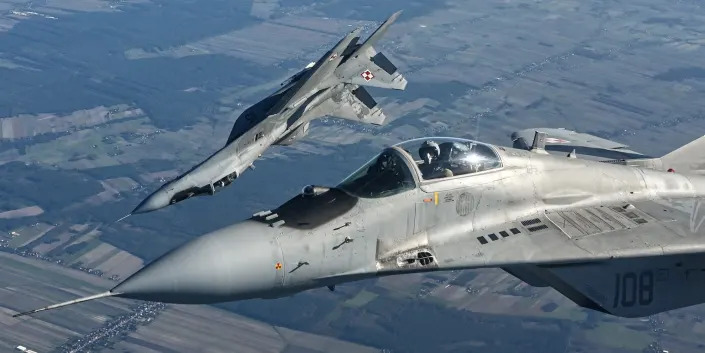
Poland MIG-29 fighter jets
Polish MIG-29 fighter jets during a NATO shielding exercise over Poland in October 2022.Omar Marques/Getty Images
  • Poland received permission from Germany to send Ukraine five more MiG-29s this week.
  • The jets will bolster Ukraine’s fighter fleet, which is still under fire from Russia’s larger air force.
  • But air-defense ammunition is a more urgent need, one underscored in recently leaked US documents.

Poland received permission from Germany to send five MiG-29 fighter jets to Ukraine this week, bolstering Kyiv’s fleet ahead of a season of more intense fighting.

The jets, however, won’t tip the scales in the aerial battle between Russia and Ukraine, and they will arrive as Ukraine and its partners scramble to find more ammunition for Ukrainian air-defense weapons, which have been vital to denying Russia’s aircraft and missiles the ability to strike at will.

Berlin approved Warsaw’s request to send jets to Ukraine on Thursday, the same day it was received. Poland acquired 22 MiG-29s, which had been part of the East German military, from Germany in 2003 with the requirement that the Germans approve any future transfers.

Poland and Slovakia pledged to send roughly two dozen MiG-29s to Ukraine in March. At the time, Poland’s president said the first four jets would be delivered within days, and Ukrainian officials said in late March that the first Slovakian jets were already in combat around Kharkiv.
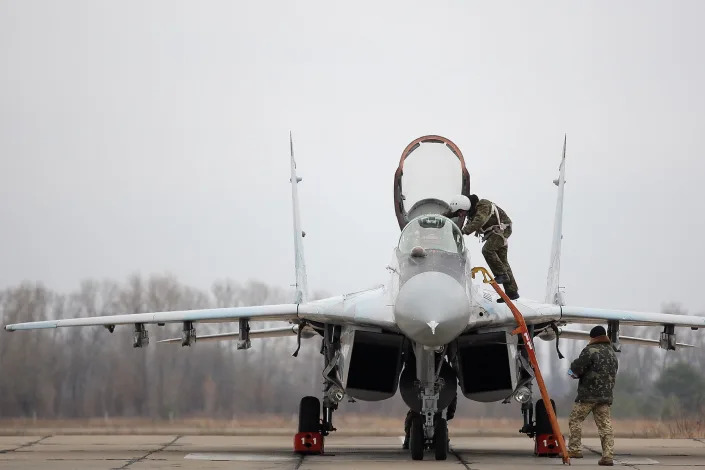
Ukraine pilot MiG-29 fighter jet
A Ukrainian pilot exits a MiG-29 at an airbase outside of Kyiv in November 2016.Danil Shamkin/NurPhoto via Getty Images

The MiG-29s will give Kyiv an airpower boost and be familiar to pilots with experience on Ukraine’s own MiGs, but Russian and Ukrainian jets remain of limited use over the battlefield, as each side has air-defense weapons that have prevented the other from achieving air superiority.

“Their integrated air- and missile-defense is working pretty well, to the point where they’re shooting down [each] other’s aircraft,” Gen. James Hecker, the commander of US Air Forces in Europe, said at an event hosted by the Mitchell Institute for Aerospace Studies on March 22.

Having more jets “is going to help” the Ukrainians, Hecker said. “This will allow them to come at different axes, which will complicate the problem that Russia has.”

“Is that going to be the enabler that’s going to let them get air superiority? No, I don’t think so, not anytime soon,” Hecker added. “The integrated air- and [missile-defense] system that both Ukraine as well as Russia have is very extensive, and it would be difficult from a US perspective to take all that down in a couple days.”

Ukraine started the war with a smaller, less advanced air force than Russia and has lost more than 60 aircraft, while Russia has lost more than 70, Hecker said at a separate event in early March. Both air forces have shifted tactics and now operate farther from the front line, playing to the advantage of the Russian aircraft, which have an edge at longer ranges.
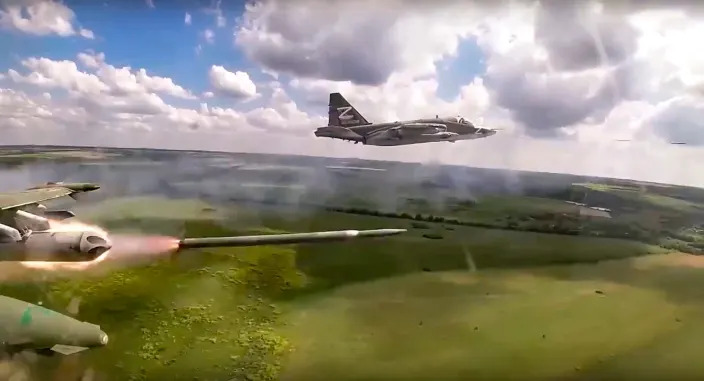
Russian Su-25 jet in Ukraine
A Russian Su-25 ground-attack jet fires rockets on a mission in Ukraine in July 2022.Russian Defense Ministry Press Service via AP

Ukraine has also adopted US-made weapons, including anti-radiation missiles that have helped suppress Russian surface-to-air missiles and extended-range bomb kits that have had “some success,” Hecker said on March 22.

Ukrainian officials have requested more advanced jets like the US-made F-16, arguing they will give Ukrainian pilots an advantage. US officials have said repeatedly that it would be too costly and time-consuming for Ukraine’s air force to adopt those jets and that other weapons are more immediately useful, particularly air-defense systems, which both Ukrainian and Western officials have cited as one of their highest priorities.

According to classified US Defense Department documents leaked online in recent weeks, US officials believe that Kyiv is at risk of running out of air-defense weapons and ammunition by late spring or early summer, leaving important targets exposed to Russian attacks.

Ukraine’s current air-defense plan “balances limited resources to protect critical national infrastructure (CNI), population centers, front line of troops (FLOT), and other key assets,” according to a summary on one document, which has markings that indicate it was prepared on February 23 and was classified top secret. Insider obtained a copy of it and other documents but could not independently verify their authenticity.

Ukraine’s “ability to provide medium range air defense to protect the FLOT will be completely reduced by MAY 23,” the summary says. A detailed assessment included in the document said Soviet-designed Buk and S-300 systems compose 89% of Ukraine’s defenses for targets above 20,000 feet and that based on expenditure rates at the time, the Buks would be expended by March 31 and S-300s by May 2.

Other systems, such as older Soviet-era SA-3s or Western-provided NASAMs, are limited in number and “unable to match” the volume of attacks.
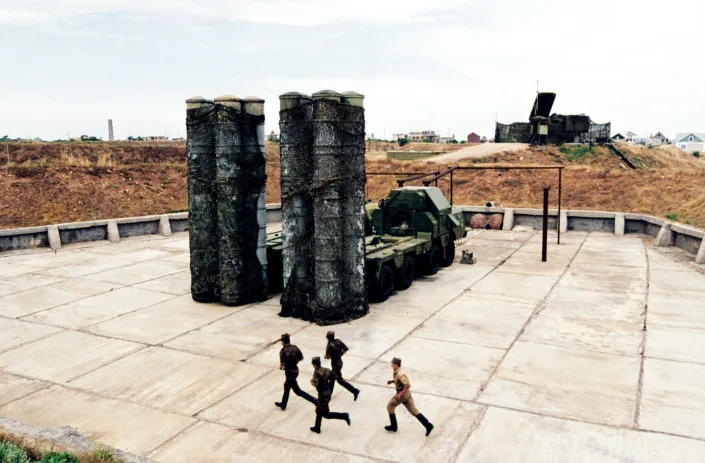
Ukraine S-300 Sevastopol Crimea
Ukrainian soldiers rush to an S-300 air-defense missile station during training near Sevastopol in July 1995.VALERY SOLOVJEV/AFP via Getty Images

Short-range air-defense weapons provided by Western countries, like Stinger missiles or the Gepard cannon, “mitigate the expenditure” of other surface-to-air missiles but “do not have the same deterrent effect” on Russian aircraft. Ukraine also has “limited to no” air-to-air defense, the document says.

Without the threat posed by those interceptor missiles, Russian aircraft would have greater freedom to attack Ukrainian aircraft and bomb Ukrainian targets, including in support of Russian front-line troops, the leaked document says. Russia’s long-range missiles could also be more accurate, as they would no longer have to dodge air defenses, and the Russian military could expand the type of munitions it is using and conduct a greater range of aerial operations, further challenging Ukraine’s ability to mass forces to conduct attacks.

The document suggests several courses of action, including resupplying Buk and S-300 missiles over the following three months and restricting their usage to Russian tactical aircraft. The document also suggests “military deception” and adjusting firing doctrine to counter Russian aerial attacks more effectively.

The document further recommends over a three- to six-month period providing more Western-made air-defense systems, like Patriots, and expediting work on something called the “FrankenSAM,” which may refer to a modification of an existing weapon or weapons.

The document echoes many of the warnings by Western officials and experts, who have cautioned that without sufficient air-defense ammunition, Ukrainian infrastructure would be more vulnerable, its forces more exposed, and Russia’s military more free to use its aircraft and gather its forces for renewed attacks.
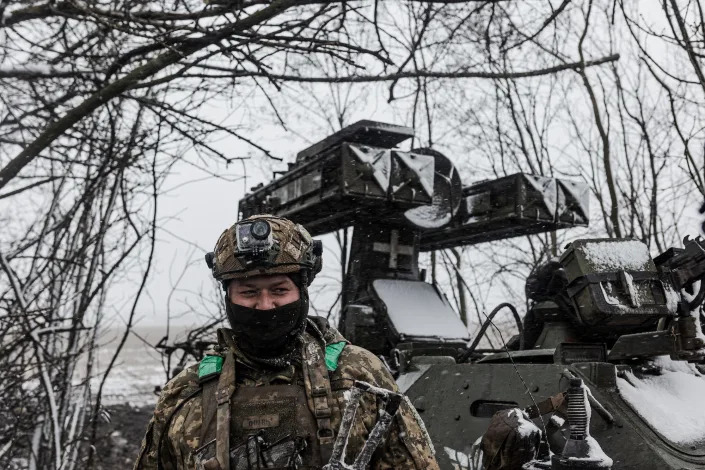
A Ukrainian soldier standing under a tree in front of an anti-aircraft battery in Bakhmut.
A Ukrainian soldier next to an anti-aircraft battery near Bakhmut on March 30.Diego Herrera Carcedo/Anadolu Agency via Getty Images

Western countries have made air-defense ammunition a focus of recent security-assistance efforts, a reflection of broader efforts to support Ukraine ahead of an expected counteroffensive in the spring and summer.

On March 15, nearly 50 countries participated in the 10th meeting of the Ukraine Defense Contact Group, during which air-defense systems were a major point of discussion. “A broad mix of air-defense systems have been promised, and they will protect the skies over Kyiv and the free cities of Ukraine,” Gen. Mark Milley, chairman of the Joint Chiefs of Staff, said after the meeting.

On April 4, the US announced a $2.6 billion package of security aid for Ukraine that included ammunition for the Patriot system the US provided in December, which will come from existing US stockpiles, as well as ammunition for NASAMs, gun trucks and laser-guided rockets to shoot down drones, anti-aircraft ammunition, and air-surveillance radars, which will be ordered from the US defense industry and take longer to deliver.

The dozens of countries at the Contact Group meeting “responded” to the challenge and were able to provide “a lot more surface-to-air missiles” to Ukrainian forces, Hecker said on March 22, “but it’s something that they’re using constantly because of the tactics that the Russians are using.”
Ukraine hails GPS-guided Excalibur artillery shells that can hit a target 25 miles away with pinpoint accuracy

Business Insider

Ukraine hails GPS-guided Excalibur artillery shells that can hit a target 25 miles away with pinpoint accuracy

Alia Shoaib – April 15, 2023

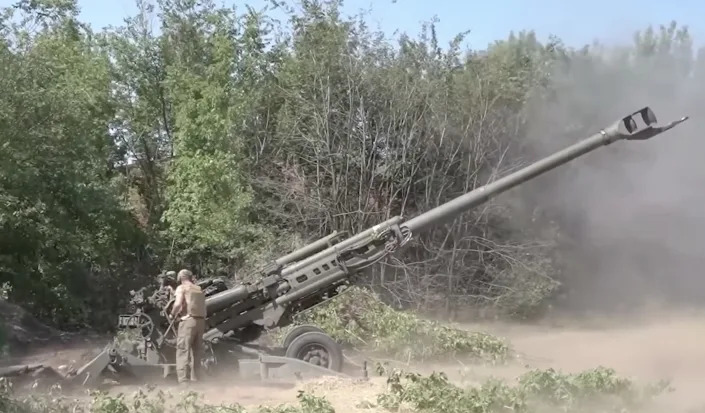
An M982 Excalibur round being fired by Ukrainian forces.
An M982 Excalibur.Gen. Valeriy Zaluzhny / Facebook
  • Ukraine’s commander-in-chief posted a Facebook video showing the effects of the M982 Excalibur.
  • Gen. Valeriy Zaluzhny praised the maximum accuracy of the precision-guided shells.
  • The US has supplied Ukraine with more than 3,000 of the advanced shells, according to a report.

Ukraine’s top general Valeriy Zaluzhny shared a video showing the effectiveness of US-provided M982 Excalibur shells against Russian forces.

In the video, which was posted to Zaluzhny’s Facebook page, a Ukrainian soldier praised the high-precision Excalibur shells, saying they were extremely important for accurately striking Russian forces’ equipment.

“Constant firing by our gunners against Russian positions on the Right [western] Bank [of the Dnipro River] for 24 hours a day, led to the enemy losing a huge amount of equipment which had been shelling Mykolaiv,” the serviceman said, according to a translation by the Kyiv Post.

The video shared by Ukraine’s commander-in-chief appears to show several destroyed Russian weapons systems, including what seems to be a 2S7 Pion self-propelled cannon and two S-300 anti-aircraft systems, the Kyiv Post reported.

The GPS-guided 155 mm shells offer an accurate, longer-range alternative to conventional artillery shell, capable of hitting within seven feet of their target.

The Excalibur has a range of 25 miles, according to Pentagon budget documents from last year that first confirmed the shells had been sent to Ukraine.

While the weapon can be used to accurately strike targets within that range with normal artillery, the US has even used it to score a direct hit on a truck at more than 40 miles in tests, Forces.net reported.

BAE Systems, the manufacturer, said the shell’s “key feature” is that it has the same accuracy regardless of the distance between the gun and the target, adding that it has a “Circular Error Probability,” which is a measure of a weapon’s precision, of less than 10 meters.

The rounds are fired after a crew puts GPS coordinates into the shell, and once it is launched its deployable fins pop out, allowing it to adjust its trajectory to hit the designated location.

The Excalibur’s accuracy “enables a first-round effect on target, reducing the number of rounds required while reducing collateral damage,” according to Army budget documents reported on by Bloomberg.

One downside of the shells is the cost — each Excalibur round costs around $100,000, the documents say, compared with just a few hundred dollars for a conventional munition such as the M795, the US military’s standard unguided 155 mm shell.

It is thought that the US has sent around 3,000 Excalibur rounds to Ukraine since Russia invaded last year, Forces.net reported in January.

NATO member Finland breaks ground on Russia border fence

Associated Press

NATO member Finland breaks ground on Russia border fence

Kostya Manenkov and Sergei Grits – April 15, 2023

Finland's border guards walk at construction site of the border barrier fence between Finland and Russia near Pelkola border crossing point in Imatra, south-eastern Finland, Friday, April 14, 2023. (AP Photo/Sergei Grits)
Finland’s border guards walk at construction site of the border barrier fence between Finland and Russia near Pelkola border crossing point in Imatra, south-eastern Finland, Friday, April 14, 2023. (AP Photo/Sergei Grits)
The construction site of the Finland-Russia eastern border barrier fence near Pelkola crossing point in Imatra, south-eastern Finland, Friday April 14, 2023. In Pelkola the construction of a pilot fence of approximately three kilometres has started on both sides of the Imatra border crossing point. Finland’s 1,340 kilometer (832 mile) border with Russia is the longest of any European Union member. (Roni Rekomaa/Lehtikuva via AP)

IMATRA, Finland (AP) — The construction of barbed-wired fence along Finland’s long border with Russia – primarily meant to curb illegal migration – has broken ground near the southeastern town of Imatra less than two weeks after the Nordic country joined NATO as the 31st member of the military alliance.

The Finnish Border Guard on Friday showcased the building of the initial three kilometer (1.8 mile) stretch of the fence to be erected in Pelkola near a crossing point off Imatra, a quiet lakeside town of some 25,000 people.

Finland’s 1,340 kilometer (832 mile) border with Russia is the longest of any European Union member.

Construction of the border fence is an initiative by the border guard that was approved by Prime Minister Sanna Marin’s government amid wide political support last year. The main purpose of the three-meter (10-foot) high steel fence with a barbed-wire extension on top is to prevent illegal immigration from Russia and give reaction time to authorities, Finnish border officials say.- ADVERTISEMENT -https://s.yimg.com/rq/darla/4-11-1/html/r-sf-flx.html

In 2015-2016, Moscow attempted to influence Finland by organizing large numbers of asylum-seekers to northern Finnish crossing points in the Arctic Lapland region. Russian authorities were seen deliberately ushering thousands of asylum-seekers – mostly from Iraq, Afghanistan and other Middle East nations – to those border crossing points.

The move was seen as a show of muscle by Moscow. The issue was settled when Finnish President Sauli Niinistö held talks with Russian President Vladimir Putin. The flow of migrants stopped shortly thereafter.

This is a scenario that Finland – a nation 5.5 million people that officially became a NATO member on April 4 – wants to prevent from repeating itself.

Border officials are quick to acknowledge, however, that it was Russia’s invasion of Ukraine on Feb. 24 last year – the main reason for Finland’s quick push to join NATO after decades of military nonalignment – that prompted construction of the border fence.

“Border barrier fence was no kind of political topic before the war (in Ukraine). And actually, it wasn’t a kind of plan of the Finnish border guard,” Brig. Gen. Jari Tolppanen, head of the technical division at the Finnish Border Guard, told The Associated Press. “All changed after the attack (of Russia against Ukraine).”

The pilot section of the fence is scheduled to be completed by this summer, while the barrier will eventually be extended to a maximum of 200 kilometers (124 miles). It will cover areas – in bits and pieces of separate length – mainly in southeastern Finland near the main border crossing points with Russia but it will also have sections up in the Arctic north in Lapland.

“In this new situation, we must have much more credible and much more independent border control,” Tolppanen said. “We need to strengthen our resources. And the fence is necessary in order to manage, for example, large-scale illegal immigration.”

Imatra is located a mere seven kilometers (4.4 miles) off the Russian industrial town of Svetogorsk in the Karelia region and is a few hours’ drive away from Russia’s second city of St. Petersburg. The town has a long history in dealing with Russians – tourists, day-trippers and permanent residents alike.

“Here in Imatra, we’re not so afraid about Russians because the border has always been there and it has never been open like between European countries,” said Antero Lattu, vice chairman of Imatra City Council. He stressed that locals aren’t afraid of Russians “but we’re happy because of that fence.”

Erkki Jouhki, who works as a town planner, agreed but also stressed Finland’s military capabilities. NATO membership gives Finland “a strong back but we have a very strong army. it’s very well (armed) … it’s a very modern army here because of Russia.”

The border fence project is estimated to cost a total of 380 million euros ($422 million) and is scheduled to be completed by 2026.

Finland’s long eastern frontier runs mainly through thick forests. In some places the Finnish-Russian border is marked only by wooden posts with low fences meant to stop stray cattle.

Jari Tanner in Helsinki contributed to this article.

Finland starts fence on Russian border amid migration, security concerns

Reuters

Finland starts fence on Russian border amid migration, security concerns

Anne Kauranen – April 14, 2023

Finland starts building border fence on Russian border

IMATRA, Finland (Reuters) – Finland is building the first stretch of a fence on its border with Russia on Friday, less than two weeks after it joined the NATO military alliance to complete a security U-turn taken in response to the war in Ukraine.

Fearing retaliation from the east following its NATO application, the government decided last year to construct the barrier, primarily in case Russia moved to flood the border with migrants.

Finland aims to guard against a repeat of events on the European Union’s eastern frontier in Poland in winter 2021, when the bloc accused neighbouring Belarus – a staunch Russian ally – of engineering a crisis by flying in migrants from the Middle East, giving them visas and pushing them across the border.

Made of steel mesh, the Finnish fence is scheduled to cover some 200 kilometres (125 miles) of the most critical parts of its border by the end of 2026. Project manager Ismo Kurki said on Friday that, while it is not intended to stop any invasion attempt, the fence will have surveillance equipment.

Meanwhile, there has so far been little human activity along the border, which stretches to 1,300 km in all.

Last year, Finland detected only 30 illegal crossings there, while Russian border guards stopped some 800 attempts to enter Finland, the Finnish Border Guard said.

“The situation at the Finnish-Russian border has been stable and is stable at the moment,” said Border Guard Brigadier General Jari Tolppanen, as one of his teams worked on the first 3-kilometre (1.9-miles) stage of the fence at Imatra, some 250km (155 miles) northeast of Helsinki.

“But in this totally changed (security) situation, Finland must have more credible and more independent border control. And Finland needs to be less dependent on the Russian border control,” he added.

Poland and the Baltic States have already began erecting fences on their borders with Russia and Belarus following the February 2022 invasion of Ukraine.

Until now, the Finnish-Russian border has been a mere line in the vast forests covering the area, marked only by a low wire fence intended to stop cattle and other domestic animals but not people.

The new fence will be 3 metres (10ft) high, topped with razor-wire and tracked by a road, and cost an estimated 380 million euros ($417 million).

“Most of (the border area) is very remote and very difficult to access. We construct the target areas which are accessible by vehicle and where large-scale illegal immigration is likely,” Tolppanen said.

($1 = 0.9106 euros)

(Reporting by Anne Kauranen; editing by John Stonestreet)

China and India are buying so much Russian oil that Moscow’s now selling more crude than it was before invading Ukraine

Business Insider

China and India are buying so much Russian oil that Moscow’s now selling more crude than it was before invading Ukraine

Phil Rosen – April 14, 2023

Sergei Karpukhin/Reuters
  • Russia’s exports of crude oil have now surpassed the volumes hit before its invasion of Ukraine.
  • China and India account for roughly 90% of Russia’s seaborne crude exports, Kpler data shows.
  • With Europe largely out of the picture, the two countries are each buying 1.5 million barrels a day from Russia.

Russia has been able to navigate Western sanctions well enough to push oil exports above levels reached before its war on Ukraine — and new data suggests that Moscow has China and India to thank for that.

In the first quarter, Russia’s seaborne crude oil exports totaled 3.5 million barrels per day versus 3.35 million barrels in the year-ago quarter, the tail end of which saw the start of Russia’s war on Ukraine.

China and India now account for roughly 90% of Russia’s oil, with each country snapping up an average of 1.5 million barrels per day, according to commodities analytics firm Kpler,

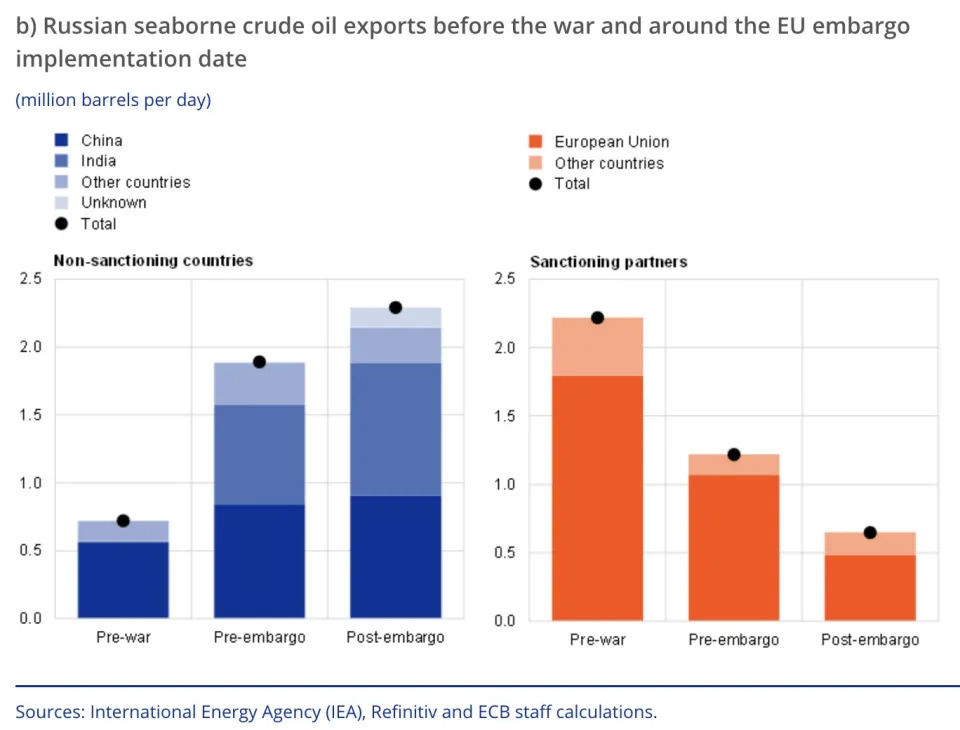
That’s enough to absorb the shipments that no longer head to European nations, which used to account for nearly two-thirds of Russia’s crude exports. Europe now takes in only 8% of Russia’s oil exports, per Kpler.

“Both China and Russia are taking advantage of discounted Russian crude, benefiting from the sanctions applied on Russian materials by other countries,” Matt Smith, lead oil analyst at Kpler, told Insider Friday.

Behind China and India, Turkey and Bulgaria are the biggest buyers of Russian crude.

Even before Vladimir Putin launched his war on Ukraine, China was already a top buyer of Russian crude, importing 25% of its crude from the country in 2021. That’s since climbed to 36%, Kpler data shows.

India, the world’s third-largest oil importer, relied on Russia for about 1% of its total volumes prior to the war, but now buys 51% of its oil from Russia.

The US has led Europe and other Western nations in imposing sanctions and energy price caps on Russia, designed to maintain market flows while curtailing Moscow’s export revenue.

European Central Bank calculations show trade volume between the euro area and Russia has halved since February 2022, with the bloc’s imports of Russian imports seeing particularly steep declines following the bans on coal in August 2022, crude oil in December 2022, and refined oil products in February 2023.

The ECB chart below shows a similar pattern illustrated in Kpler’s data, with Russian seaborne crude exports shifting toward Asian buyers and away from Europe.

Russian economy oil sanctions crude imports
European Central Bank, ECB Economic Bulletin

To be sure, the revenue Russia generates from its energy exports has fallen along with the drop in prices, even as volumes remain elevated.

The International Energy Agency said Friday that Moscow’s revenue is down about 43% compared to the same time last year.

But oil prices are heading back up as China’s reopening economy drives demand while OPEC and Russia pinch supplies.

Earlier this month, OPEC+ announced a surprise production cut of over 1 million barrels a day, with Russia extending its 500,000-barrel-a-day pullback through mid-2023.

Leaked documents show Russian special forces have been gutted in Ukraine war

The Hill

Leaked documents show Russian special forces have been gutted in Ukraine war: report

Natalie Prieb – April 14, 2023

Leaked documents show Russian special forces have been gutted in Ukraine war: report

U.S. documents included in a leak of sensitive material online show that the war in Ukraine has decimated Russia’s elite special forces, according to a new report.

The Washington Post, citing U.S. assessments it obtained that were initially leaked online through the platform Discord, reported that American officials believe it will take Moscow years to replenish the clandestine special forces’ ranks.

In making the assessment of Russia’s military status, U.S. officials pointed to Russian commanders relying too heavily on specialized units, according to the Post.

The spetsnaz forces are typically assigned to specialized, high-risk missions, but when the Ukraine war began, Moscow’s senior commanders ordered them into direct combat, according to the leaked documents reported by the Post.

The classified information did not specify how many of the elite troops are suspected to have been killed or wounded, though one spetsnaz unit was said to have “lost nearly the entire brigade with only 125 personnel active out of 900 deployed,” the Post reported.

The leak of sensitive and classified documents has roiled the U.S. government, revealing information about Ukraine’s battalion sizes, advanced weaponry and other military capabilities — dealing a blow to the Ukraine war effort.

Jack Teixeira, a member of the Massachusetts Air National Guard, was arrested Thursday in Massachusetts in connection with the leak. He was charged on Friday with unauthorized retention of classified material.

The information reported in the leaked U.S. assessments underscores the toll the Ukraine war has taken on Russian forces.

A report released in February from the Center for Strategic and International Studies detailed that the country’s death toll in its first year of the war likely surpassed the combined death toll of all of its wars since World War II.

Putin says Russia lost $15 billion in oil and gas revenue last quarter, but thinks the hole can be filled in the next few months

Business Insider

Putin says Russia lost $15 billion in oil and gas revenue last quarter, but thinks the hole can be filled in the next few months

Jennifer Sor – April 13, 2023

putin russia
Russian President Vladimir Putin.Contributor/Getty Images
  • Russia lost over $15 billion in oil and gas revenue over the past quarter.
  • But that hole in the Kremlin’s budget can be filled, President Putin said this week.
  • Academics have criticized Putin for misrepresenting the state of Russia’s economy.

Russia lost over $15 billion in oil and gas revenue in the first quarter of 2023 – but that gaping hole in the Kremlin’s budget can be filled over the next few months, according to Russian President Vladimir Putin.

At a televised government meeting on Tuesday, Putin said Russia’s oil and gas revenue fell by $15.8 billion in the first quarter amid tightening Western sanctions following Moscow’s invasion of Ukraine last year.

The Kremlin posted a $29 billion budget deficit in the first quarter overall, as military spending also increased to continue waging war and mobilizing hundreds of thousands more troops.

Despite the losses, Putin emphasized the resilience of the Russian economy, adding that he foresaw a “positive trend” as oil prices would continue to rise.

“It is expected that by the end of the second quarter, against the backdrop of rising oil prices, the situation will change. Additional oil and gas revenues will begin to flow into the budget,” Putin said, per Reuters‘ report.

Oil and gas exports are among Russia’s main revenue sources, but they have plunged since Western countries shunned Moscow’s supplies and imposed sanctions.

Putin has rebuffed those sanctions as “stupid,” and Russia has responded by slashing its oil production by half a million barrels per day.

OPEC+, of which Russia is a member of, also recently announced a surprise production cut of over a million barrels a day. The cuts have pushed oil prices upward, helping Russian export revenue going forward.

Still, academics have criticized Putin for misrepresenting Russia’s situation: The Central Bank of Russia hasn’t disclosed important statistics that could paint a bleaker picture of its situation, like the nation’s exports and imports, and its economic growth forecasts this year are largely created from “cherry-picked” numbers, two Yale researchers said this week.

Experts are also seemingly confused about Russia’s economy, with top forecasters divided on whether its economy is growing or shrinking. Morgan Stanley, Goldman Sachs, and World Bank are all expecting a mild decline in real GDP this year.

Russia’s economic stats are ‘pure invention from Putin’s imagination,’ and its economy is actually imploding, Yale researchers say

Business Insider

Russia’s economic stats are ‘pure invention from Putin’s imagination,’ and its economy is actually imploding, Yale researchers say

Jennifer Sor – April 12, 2023

Putin
Russian President Vladimir Putin talks on the phone as part of a nationwide charity campaign, in Moscow on January 3, 2023.MIKHAIL KLIMENTYEV/SPUTNIK/AFP via Getty Images
  • Russia’s economy is in tatters, despite what its central bank says, according to Yale researchers.
  • In a recent op-ed, two academics called Russia’s growth forecasts a figment of Putin’s imagination.
  • Stats outside of what is stated by Russia suggest its economy has been hit hard by sanctions.

Russia’s economy is in tatters, and economic stats touted by the country’s central bank are “pure invention” from Russian President Vladimir Putin, according to two Yale researchers.

In an op-ed for TIME on Tuesday, Jeffrey Sonnenfeld and Steven Tian, two academics at the Yale Chief Executive Leadership Institute, blasted Russia’s economic forecasts, with the nation’s central bank painting an image of resilience amid western sanctions and Russia’s costly invasion of Ukraine.

The central bank recently adjusted its GDP outlook, estimating its economy to grow 1% or contract 1% this year, though it previously estimated a 1%-4% contraction. But those numbers are “fictional,” Sonnenfeld and Tian said.

“Since the Ukrainian invasion, our data has shown that the Kremlin’s economic releases have become increasingly cherry-picked, selectively tossing out unfavorable metrics while releasing only those that are more favorable,” the academics said.

They pointed to unreleased statistics that paint a bleaker picture of Russia’s situation, including the nation’s exports and imports, capital inflows and outflows, and output data for oil and gas.

“Thus the Russian GDP number is a pure invention from Putin’s imagination,” the researchers said. “The Putin-selected statistics are then recklessly trumpeted across the world media and relied upon by careless experts in constructing ludicrous forecasts which are unrealistically favorable to the Kremlin.”

Sonnenfeld and Tian were particularly critical of the International Monetary Fund, which have factored in Russia’s economic projections in their own analysis of the nation’s economy. The IMF currently estimates Russia’s GDP to grow by 0.7% in 2023, but Sonnenfeld and Tian claim that the organization’s economists have privately admitted they have “zero visibility” into the actual state of Russia’s economy.

Estimates outside of those offered by Russian officials suggest the country’s economy has been battered over the past year. By some accounts, Russia’s energy revenue has tanked amid the EU’s Russian oil ban and $60 price cap, and other major sectors of its economy have plunged 60%-95%, Sonnenfeld and Tian estimate.

Other experts also have a poor outlook for Russia’s economy, largely due to the nation’s isolation from global markets and its de-investment in technology. The nation could become a failed state by the end of the decade, according to one think-tank. The World Bank, Morgan Stanley, and Goldman Sachs all expect Russia’s economy to contract this year.

“Putin is losing the military war, the diplomatic war, and the economic war. He must not win the disinformation war by western media and policy makers naively falling for his fake economic data,” the researchers said.

Ukraine clings to Bakhmut as Russia pounds front lines

Reuters

Ukraine clings to Bakhmut as Russia pounds front lines

Kyiv and the West say the smashed city has only symbolic importance.

April 11, 2023

Fighting raged in the frontline cities in eastern Ukraine Tuesday, as Russian forces launched airstrikes and artillery attacks.

Footage from a Ukrainian soldier’s bodycam video, released by the border service, showed fighters launching rocket-propelled grenades and shooting rifles in the destroyed yard of a house, purported to be in the besieged city of Bakhmut.

Ukrainian officials said its forces repelled dozens of attacks, as the Russian military kept up its effort to take control of Bakhmut.

The battle for the small city – now largely ruined – on the edge of Russian-controlled territory in Donetsk has been the bloodiest of the war, as Moscow tries to revive its campaign after recent setbacks.

Both sides have suffered heavy casualties in the Bakhmut fighting.

Near the frontline, under the cover of darkness, medical volunteers loaded wounded soldiers into a bus converted into an ambulance to bring them to a hospital in the city of Dnipro.

Mariia, a 23-year-old volunteer paramedic, told Reuters that during a two-week rotation she and her team evacuated hundreds of wounded soldiers.

“This bus has been operational for around two months, so we evacuated nearly 600 people. This bus makes a whole difference as it saves people’s lives.”

Tens of thousands of soldiers have been killed and wounded on both sides of the conflict since Russia invaded Ukraine last year.

The ambulance effort involves rotating teams of volunteers who spend several weeks on call, ready when injured soldiers need transport from the frontline.

Both trained medics and volunteers without a medical background serve.

“It is very important for me because I have a connection to what we are doing. I work in the field which I know and where I am confident that I will do my best. Each of us has a mission and this is my mission.”

Donetsk is one of four provinces in eastern and southern Ukraine that Russia declared annexed last year and is seeking to fully occupy.

Last week, President Volodymyr Zelenskiy said troops could be withdrawn from Bakhmut if they ran the risk of being encircled.

Kyiv and the West say the smashed city has only symbolic importance.

How Russia’s large-scale war efforts have warped the country’s economy, according to top scholars

Business Insider

How Russia’s large-scale war efforts have warped the country’s economy, according to top scholars

Morgan Chittum – April 11, 2023

The war in Ukraine by the numbers, one year later

Putin SCTO summit
Russian President Vladimir Putin.Contributor/Getty Images
  • Russia’s economy is adjusting to the sanctions imposed on it after Moscow began its war on Ukraine.
  • As a result, the country has lost the largest markets for its exports.
  • The shrinking market for Russia’s resources will force the Kremlin to cut spending on infrastructure and social programs.

Russia’s economy has been transformed in nearly ever way since Vladimir Putin launched his war on Ukraine last year.

While the World Bank sees a smaller contraction than expected, and the International Monetary Fund forecasted some growth in 2023, top scholars outlined how the country has adjusted to the Western sanctions imposed on it since the invasion.

For example, Russia has lost its largest export markets, reducing its bargaining power. So Russia is selling its crude to a “truncated” market for around $50 per barrel, or just half of its breakeven price, Wharton Business School professor Philip Nichols told Insider.

“Russia is able to make up the difference by drawing on the foreign currency reserves in its National Wealth Fund, but those reserves are shrinking,” he said.

Eventually, the smaller market for Russia’s resources will force the Kremlin to cut spending on infrastructure and social programs, Nichols added.

Meanwhile, Russia has had to search for substitutions to trading partners that the Kremlin deems as “unfriendly countries,” which represent over 50% of the global economy, per a report from Finland’s central bank.

As a result of deteriorating relationships with other countries, Russia is orienting towards partners that did not impose sanctions like China and Turkey.

To trade with them, Russia must build more infrastructure, such as oil pipelines, to minimize exposure to the West, said Boston College’s Aleksandar Tomic.

“However, the war in Ukraine is definitely imposing costs on Russia, and there must be realignment to support the effort which is not likely to end any time soon,” he added.

And car imports from China have increased as Russian auto manufacturing collapsed, Tania Babina, a business professor at the Columbia Business School, told Insider.

Finally, airlines, pharmaceuticals, and industries that require “sophisticated materials” have been hit hard too, Nichols said.

This is due to highly skilled workers fleeing the country, resulting in less productivity. Also, these industries rely on sophisticated machinery, which need a continued supply of replacement parts that are now harder to obtain because of sanctions.

“This cannot be turned around in a short period of time; the Russian economy is going to feel the effects of this downgrade for a long time,” said Nichols.