The little-known group that’s saving Ukraine

Politico

The little-known group that’s saving Ukraine

Lara Seligman and Paul McLeary – May 1, 2023

Efrem Lukatsky/AP Photo

RAMSTEIN AIR BASE, Germany — When U.S. Defense Secretary Lloyd Austin brings together the defense chiefs of more than 40 nations here in southwest Germany each month, the hours-long gathering typically ends the same way: Celeste Wallander, the Pentagon’s head of international security affairs, calls on each participant to read out what weapons their nation is ready to donate to Ukraine.

It’s a question — perhaps the question — that will help determine Ukraine’s future more than a year following Russia’s invasion.

And it’s made the monthly closed-door grouping of leaders — known by the anodyne bureaucratic title of the Ukraine Defense Contact Group — an under-the-radar yet central force in equipping the Ukrainian military with everything from precision rockets to main battle tanks. It’s also helped the nation create an ad hoc yet astonishingly modern military that would be capable of outgunning some long-standing NATO members.

But on the sidelines of the group’s April 21 meeting in a cavernous, wood-paneled ballroom here at the American-run Ramstein Air Base, it was clear that staying united — which the group has succeeded at for more than a year — will be an increasing challenge.

A number of fissures have emerged recently in the group, particularly over whether and when to send Western fighter jets to Ukraine, and delays in certain weapons shipments — most pressingly, German and Spanish tanks. Meanwhile, the mass transfer of weaponry to Kyiv has left donor nations worried about their own stockpiles, and recent meetings have started to turn to the issue of NATO allies reequipping themselves as well as sustaining the weapons donated to Ukraine for the long haul.

“We have done a lot already in terms of the donations, but now the question is more on sustainability,” Esa Pulkkinen, the permanent secretary, or deputy, in Finland’s defense ministry, said as military leaders gathered at Ramstein last month.

“Besides supporting Ukraine, we also need to replenish our own stocks, right?” one European diplomat said.

Austin, Joint Chiefs Chair Gen. Mark Milley and Ukrainian Defense Minister Oleksii Reznikov sit at a head table draped in white tablecloths, flanked by American and Ukrainian flags. Crystal chandeliers hang over their heads. Aides sip coffee and mingle in hushed voices on the sidelines.

The meeting starts, as always, with a battlefield update from the Ukrainians. The other members sit at two narrow tables perpendicular to the leaders’ table, forming three sides of an open rectangle. Each country is represented by a miniature flag next to its member’s microphone.

Austin leads the discussion, making opening and closing comments, but typically spends more time listening to the presentations. Wallander emcees, moving each presenter along. During the latest meeting, members devoted one 90-minute block to discussing sustainment and industrial base challenges; the entire meeting can last more than six hours.

The impetus for the Ramstein gatherings came about without fanfare early on in the conflict. While readying a secret trip to wartime Ukraine just a month after the Russian invasion, the people attending Austin’s daily 6:30 a.m. staff meeting on the third floor of the Pentagon — called a “policy op sync” and modeled off the twice-daily meetings he chaired during the Afghanistan evacuation — realized a major problem was brewing.

Kyiv had survived Russia’s initial onslaught, yet it was becoming clear that the U.S. and other countries would need to overcome past misgivings about arming Ukraine and commit for the long haul. In those early days, no one was coordinating the equipment that countries were quickly beginning to pledge, risking a serious miscalculation for the Western nations aiding Ukraine.

“I did a lot of phone calls talking to countries, ‘can you send this,’ and I think it was at that point that the idea developed that the secretary had, ‘no, we need to bring the key contributors to Ukraine together so we can understand what the scope of this is,’” said Wallander in an interview at the Pentagon.

Austin named it the Ukraine Defense Contact Group, which met on April 26, 2022, at Ramstein. It was the meeting — which was conceived and planned in about a week’s time — that kick-started the process of saving Ukraine.

Although disputes do break out between the participants, the sniping typically stays outside the room — a remarkable feat that members say is due to Austin’s steady leadership, calm presence and deep military knowledge. Austin’s attention to bilateral relations — including always giving countries public credit for their donations — has won him credibility, according to officials involved in the Ramstein meeting.

POLITICO spoke to 17 people directly involved in the discussions for this story, many of whom were granted anonymity to discuss the closed-door meetings.

Tensions brewing

The Ramstein meetings are typically scripted affairs, during which ministers read from prepared notes. But the orderly gatherings mask significant differences between the governments working to arm Ukraine. Eastern European countries such as Poland and Estonia have leaned forward in providing aid, while Germany and France often lag. The United States — specifically Austin — at times must straddle the two sides.

Meanwhile, Kyiv is constantly asking for more — and better — equipment. The ink was barely dry on the decision to send Abrams main battle tanks in January, for example, when Ukrainian officials renewed a push to receive F-16 fighter jets.

The fighter jet question is still a live issue, and the split between the various participants over whether to send Western warplanes was on display at the most recent Ramstein meeting. While Austin and other U.S. officials have been clear that they do not believe F-16s are necessary for the current fight, others say that the group is still debating the issue.

“There’s an ongoing discussion about also other types of jets,” said NATO Secretary General Jens Stoltenberg, speaking to reporters on the balcony while participants stretched their legs during a break in the meeting.

Still, others seemed sure that Western jets will be heading to Kyiv at some point.

“Western fighters will be a part of the Western military integration of the Ukraine armed forces, whether the time is now or perhaps later,” Pulkkinen said.

President Joe Biden has at times called on Austin to use the Ramstein meeting to appeal to his counterparts directly to do more to help Ukraine. In January, after German Chancellor Olaf Scholz refused to send Leopard tanks without the U.S. first sending its own Abrams tanks, the president turned to Austin to make one final appeal to his brand-new German counterpart, Defense Minister Boris Pistorius, at that month’s gathering.

Biden had reason to hope Austin could clinch a deal. Throughout the conflict, the defense secretary has consistently managed to turn his relationships into concrete aid for Ukraine. Early in the war, Austin personally brokered a deal with Slovakia’s defense minister for the eastern European country to send one of its Russian-made S-300 air defense systems, in exchange for the U.S. repositioning one of its Patriot missile systems to Slovakia.

But this time, Austin could not break through Berlin’s hesitation. Ultimately, Biden ended up greenlighting the Abrams, paving the way for Germany to send the Leopards.

Some nations are still frustrated with the slow pace of Berlin’s donations.

Germany should be “sending more weapons, sending more ammunition, and giving more money to Ukraine, because they are the richest and the biggest country by far,” Polish Prime Minister Mateusz Morawiecki told POLITICO. He added that the Germans “were not as generous as they should have been” with Ukraine since the start of the war.

“Collectively we have to, and we can, do more. We all understand what is at stake,” Estonian Defense Minister Hanno Pevkur told POLITICO at Ramstein. Referring to his own government, he said, “we have done a lot definitely.”

Despite differences between the various countries, participants said Austin’s consistency and attention to personal relationships keeps each gathering running smoothly and is the reason the members return to Ramstein time and again to discuss new ways to support Ukraine.

Canadian Defense Minister Anita Anand recalled how Austin encouraged her to donate some of Canada’s 82 Leopard 2 tanks. Parting with those tanks was “no small thing,” she said. Her personal relationship with Austin — who she calls a “constant gentleman” — was crucial in Ottawa’s decision to ultimately send four tanks.

“This is why we have to gather. This is why we have to come together and that’s to say why we have to help Ukraine,” Pevkur said.

But the tensions over the tank decision could foreshadow more angst in the months ahead as Ukraine continues to suck up billions in munitions. Replacing all of that takes time, planning and significant investments.

New challenges

The last several meetings of the Ukraine group have seen allies starting to think hard about how to find the money — and the industrial capacity — to replace the gear sent to battle the Russians.

“It still is the only effective format when it comes to coordination of deliveries but also of the needed materiel,” one senior European diplomat said. “Regardless [of] the differences in opinion.”

Plus, they need to wade through a thicket of parochial interests and find a way to do something even more difficult: jointly manufacture ammunition and other materiel as the war in Ukraine grinds on and individual production lines reach their breaking point.

Another divisive issue is how defense spending is split among allies. NATO’s annual report released in March showed that despite an entire year of pledging increased defense spending, only seven countries out of 30 have met the nine-year-old goal of spending 2 percent of their GDP on defense — two fewer countries than hit the mark in 2021.

Other trends have emerged at the Ramstein meetings that have also frustrated some participants. According to the two European diplomats, a handful of countries have consistently promised equipment that never seems to arrive but is recycled at each meeting with no timeline attached.

“They somehow never mention when that will happen, and then we have another Ramstein format happen and you are still claiming the same thing,” one of the officials said.

Despite these emerging fissures, sticking with Kyiv for the long haul has been a talking point for all NATO allies since the start of the war, and even with some delays in promised equipment, donations continue to flow over the border to Kyiv. And 14 months in, with new spring and summer offensives on the way, there has been no change in that rhetoric.

“We cannot let war fatigue in our societies and politics take hold,” Latvian Defense Minister Inara Murniece said while visiting Washington just before the latest Ramstein meeting. “We must grab this momentum and do everything possible to make the spring and summer Ukrainian offensive successful. We can’t lose this moment.”

Lili Bayer in Brussels contributed to this report.
They Refused to Fight for Russia. The Law Did Not Treat Them Kindly.

The New York Times

They Refused to Fight for Russia. The Law Did Not Treat Them Kindly.

Neil MacFarquhar – April 30, 2023

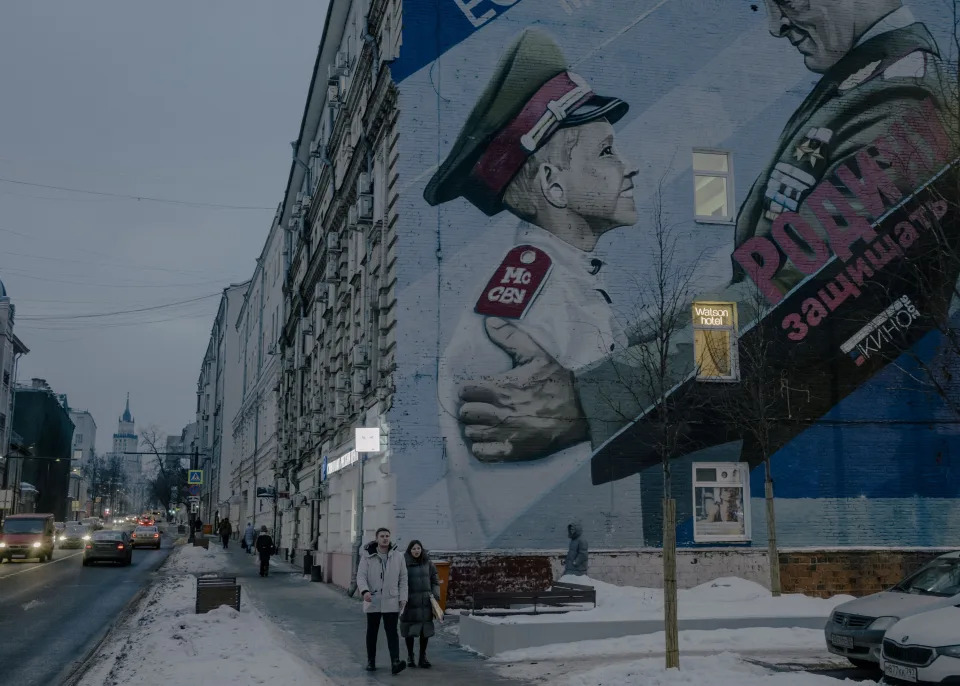
Pedestrians walk past a patriotic mural dedicated to victory in World War II, in Moscow, Feb. 17, 2023. (Nanna Heitmann/The New York Times)

An officer in the Federal Guard Service, which is responsible for protecting Russian President Vladimir Putin, decided last fall to avoid fighting in Ukraine by sneaking across the southern border into Kazakhstan.

The officer, Maj. Mikhail Zhilin, disguised himself as a mushroom picker, wearing camouflage and carrying a couple of small bottles of cognac so that he could douse himself and then act drunk and disoriented if he encountered the Russian border patrol.

In the dark, the lean, fit major navigated across the forested frontier without incident, but he was arrested on the other side.

“Freedom is not given to people that easily,” he told his wife, Ekaterina Zhilina, months later, after Kazakhstan rejected his bid for political asylum and handed him back to Russia to face trial for desertion.

“He had these romantic notions when he first began his military-academic studies,” Zhilina said in a recent interview, describing perceptions drawn from Russian literature about the honor and pride inherent in defending your homeland. “But everything soured when the war started.”

Zhilin is among the hundreds of Russian men who faced criminal charges for becoming war refuseniks since Moscow’s full-scale invasion of Ukraine last year. Some dodge the draft, while those already serving desert or refuse orders to redeploy on the bloody, chaotic battlefields of Ukraine.

In 2022, 1,121 people were convicted of evading mandatory military conscription, according to statistics from Russia’s Supreme Court, compared with an average of around 600 in more recent years. Before the war, a vast majority were fined, not imprisoned. Russia recently passed a measure making it much harder to avoid a draft summons.

In addition, criminal cases have been initiated against more than 1,000 soldiers, mostly for abandoning their units, according to a broad court survey by Mediazona, an independent Russian news outlet. Anticipating the problem in September, when several hundred thousand civilians were mobilized, Russia toughened the penalties for being AWOL.

The maximum sentence was doubled to 10 years for what is euphemistically called “Leaving for Sochi.” (SOCH is the Russian acronym for AWOL, but the expression is a play on the name of Sochi, a Black Sea getaway for the country’s elite and site of the 2014 Winter Olympics.) Refusing an order to participate in combat carries a sentence of three to 10 years.

That has not stopped Russian men from going to unusual lengths to avoid fighting. One officer said he took a bullet in the leg as part of a pact among several soldiers to shoot one another and then claim that they were wounded in a firefight. Hailed as a hero for various battlefield events, it took him six months to recover, at which point he decided to flee.

The Kremlin has shrouded in secrecy an increasing amount of information about the military, including new statistics about crimes involving military service, so the numbers are undoubtedly higher than what is available. But the number of AWOL cases accelerated after the general mobilization, according to Mediazona. Many criminal cases involve soldiers who refused orders to enter battle, leading to confrontations with their commanders, according to several lawyers who defend soldiers.

One lawyer, Dmitri Kovalenko, was retained by the families of more than 10 soldiers who said they were thrown into pits, called “zindans,” near the front line after refusing to fight. “People realize that they are not ready — that their commanders are not ready, that they have to go in blind, not knowing where or why,” he said.

Intimidation is the first response of commanders, he said, so treatment can be harsh. Two soldiers whom he defended were locked into a container last summer without food or water, he said. At one point, about 300 conscripts who refused to fight last year were held in a basement in eastern Ukraine, where they were threatened, called “pigs,” not fed and not allowed to go to the toilet or to bathe, according to Astra, an independent news outlet, and other Russian news media organizations, quoting relatives. The Wagner mercenary group has threatened to execute its refuseniks, and there have been scattered reports of them being shot.

In theory, Russian law allows for conscientious objectors performing alternative service, but it is rarely granted. Sometimes those charged with refusing to fight are given suspended sentences, which means they can be redeployed.

The officer who was shot in the leg by his colleague had pursued a military career since he was 9 and a cadet, he said, but he wanted it to be over the minute he was ordered into Ukraine. He ended up staying about three months, appalled by the very idea of the war as well as by the terrible state of the Russian military.

Soldiers were not provided basic items like underwear, he said, and few knew how to navigate and got themselves killed.

“There are no saints on either side,” said the officer, who spoke on the condition that he not be named, nor his location published, out of concern that Russia might seek his extradition. “The locals were actively partisan. I shot back. I didn’t want to die.”

After he recovered, and the military ordered him back to Ukraine, he decided to run.

“I’m ready to die for Russia, but I don’t want to fight, to risk my life for the criminals who sit in the government,” said the officer, who is now on a wanted list in Russia.

Another Russian, a member of the Sakha ethnic group concentrated in the Siberian region of Yakutia, also deserted. Five days among the drunken, newly mobilized soldiers at an army camp convinced him to leave.

The man, who also insisted on anonymity, was fired from his construction job so that he could go fight. Packed onto an airplane, the draftees discovered their destination for training by looking at their phones when they landed. Most soldiers drank constantly, he said in an interview. One night in another barracks, he said, a soldier stabbed another to death.

The conscript said that the racist attitude of his Russian officers when he did his military service a decade earlier had soured him on the military — they called him “reindeer herder” because of his ethnic Siberian background. He said he was subjected to similar comments as soon as he mobilized. Things deteriorated further after he tried to bribe his lieutenant to leave. The officer mocked him openly as a coward.

His mother flew in to extract him, directing a taxi to a hole in the base’s fence. After he fled the country and was charged with desertion, he faced fierce criticism from home, he said, with authorities saying that he had disgraced the Sakha people. Even a close friend threatened to beat him up.

Some Russian courts still publicize military cases to create a chilling deterrent to potential deserters. In the spring, for example, a court announced that a sailor who had gone AWOL twice had been sentenced to nine years in a prison colony.

The Krasnoyarsk Garrison Military Court released a photograph and a statement in December showing dozens of soldiers crowding a courtroom to watch an AWOL case. The sentence was pronounced before that audience “for preventive purposes,” the statement said.

In the Belgorod region near the Ukrainian border, two soldiers were detained on a parade ground in November and charged with refusing to obey a deployment order. They were called out of the ranks, handcuffed and thrown into a paddy wagon in front of their unit, all shown on a video posted on the Telegram messaging app. Earlier this month, both were sentenced to three years in prison, according to Russian news media reports.

Well before the war, Zhilin, 36, the soldier who left for Kazakhstan, had become disenchanted with the very administration he was assigned to protect. An engineer, he worked in the Siberian city of Novosibirsk for the presidential security service, supervising the Kremlin’s communications lines with the eastern parts of Russia.

The assassination of Russian opposition leader Boris Nemtsov in 2015 and the poisoning of Alexei Navalny in 2020 had drawn his attention, his wife said. He started following political news more closely.

He weighed quitting, but decided he could endure the two years until he received a pension. Then came the war. “‘It is one thing to suppress human rights,’” his wife quoted him as saying, “‘it is quite another to kill people.’”

In the fall, before the mobilization, he had visited the cemetery where his mother is buried. He found 30 new graves of riot police officers who had fought in the war. The ribbon on one small wreath said just “Daddy.”

Two colleagues had already died in Ukraine, and he wondered if his son, 11, and daughter, 8, might one day make a similar wreath. When the mobilization was announced, he quickly decided to leave the country.

Since his security clearance gave him access to state secrets, leaving was prohibited. He decided to cross on foot while his family drove into Kazakhstan legally.

But the plan went awry. Lacking a cell signal, he could not find their car. He was arrested after stumbling upon a Kazakh border officer. He requested political asylum, but in December, he was deported.

In March, he was sentenced to 6 1/2 years in a penal colony and stripped of his rank.

Right after he was deported, his wife, fearing that she and the children would also be sent back, sought and received political asylum in France.

So far, her husband has not been mistreated, she said. The couple, although bitter toward Kazakh authorities, consider the sentence a far better alternative than dying in Ukraine.

“Mikhail wrote me that he feels morally freer than he was,” she said, adding that he told her, “‘I guess you have to pay a certain price for the freedom to think and to say what you want.’”

Ukraine hits Crimea depot as nation gears up for spring offensive: Updates

USA Today

Ukraine hits Crimea depot as nation gears up for spring offensive: Updates

John Bacon, USA TODAY – April 30, 2023

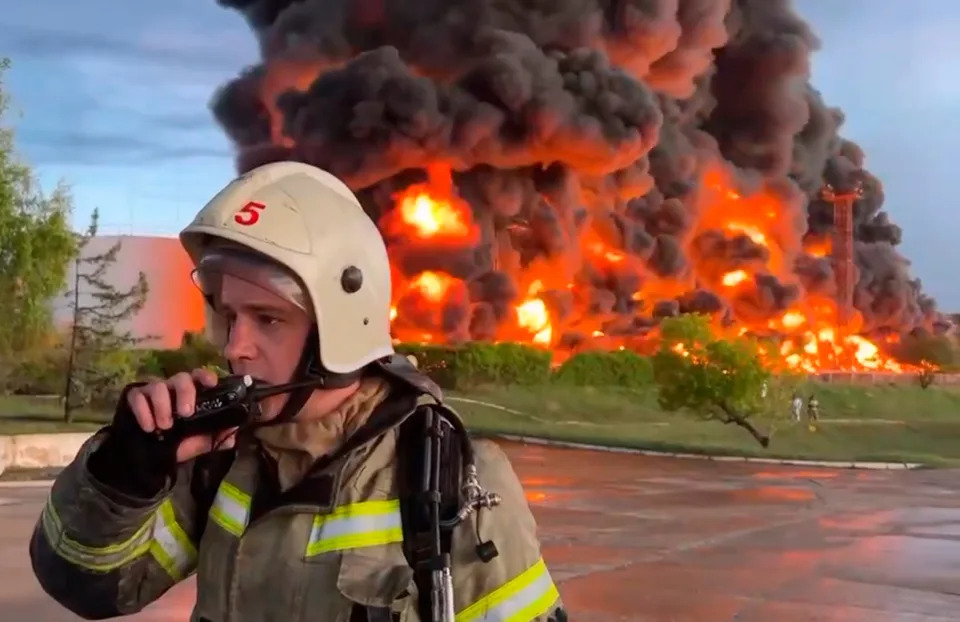
A suspected Ukraine drone strike that ignited a massive fire at a Crimean oil depot in the Russian-occupied city of Sevastopol was a prelude to a much-anticipated spring offensive, the Ukraine military warned Sunday.

Russian Occupation governor Mikhail Razvozhaev blamed the fire Saturday on a Ukrainian drone, and social media footage showed the fire raging at a storage facility at Kozacha Bay. He said no injuries were reported.

The Ukraine military, as usual after a strike into Russia, did not claim direct responsibility, but spokesperson Natalia Humeniuk came close.

“This work is a preparation for the broad, full-scale offensive that everyone expects,” Humeniuk told Ukraine Pravda.

The attack came a day after Russia struck Ukraine with over 20 cruise missiles and two drones, killing at least 23 people. Most of the deaths took place in an apartment building in the central Ukraine city of Uman.

Ukraine military intelligence spokesperson Andriy Yusov told RBC Ukraine the Crimean strike was “God’s punishment. … This punishment will be long-lasting.” He warned residents of Crimea to stay away from sites that support “the aggressor’s army.”

A Russian military blogger based in Sevastopol reported that two Ukrainian drones destroyed four fuel tanks, the Study for the Institute of War said in its most recent assessment of the war. Another Russian military blogger reported that at least 10  drones conducted the attack but that most were shot down. Crimean occupation head Sergey Aksyonov said the attack did not result in any casualties.

Russia has occupied Crimea for nine years. Since Russia invaded Ukraine more than a year ago, Ukraine President Volodymyr Zelenskyy has pledged to drive Russian forces out of all Ukraine’s territory, including Crimea.

In this handout photo made from video released by the governor of Sevastopol, Mikhail Razvozhaev, on April 29, 2023, on Telegram, a firefighter speaks on a walkie-talkie as smoke and flames rise from a burning fuel tank in Crimea.

Developments:

►Ukrainian forces shelled the city of Nova Kakhovka, according to Moscow-installed authorities in the Russian-occupied part of southern Ukraine’s Kherson province. “Severe artillery fire” cut off power in the city, the officials said.

►Ukraine is set to boycott the world judo championships next week after the International Judo Federation signaled it will allow Russian and Belarusian competitors to enter the event, a key Olympic qualifier.

RUSSIAN MISSILE STRIKES KILL 23: The attack was among the deadliest  in months: Updates

Wagner leader threatens to back off Bakhmut without more ammo

Wagner Group financier Yevgeny Prigozhin threatened to withdraw Wagner forces from Bakhmut if the Russian military command fails to provide more ammunition to the Wagner mercenaries. Prigozhin told a Kremlin-affiliated miitary blogger that his troops will continue to fight in Bakhmut but will need to “withdraw in an organized manner or stay and die” if the situation does immediately not improve.

Prigozhin said Wagner needs about 80,000 shells per day – its previous shell allowance prior to apparent Russian Ministry of Defense efforts to reduce Wagner’s influence. Prigozhin added that Wagner is only receiving 800 of the 4,000 shells per day that it is now requesting. Prigozhin claimed that Wagner and Deputy Commander of Russian Forces in Ukraine Army General Sergei Surovikin developed a plan to “grind” the Ukrainian forces in Bakhmut to deprive Ukraine of its initiative on the battlefield.

Ukraine: Residents in occupied areas can get Russian passports to ‘survive’

Ukrainians who live in Russian-controlled regions of Ukraine should “make a decision to survive” and sign up for Russian passports, Ukrainian human rights commissioner Dmytro Lubinets said Sunday. Otherwise, people should leave occupied territories “in any possible way,” the ombudsman told the Kyiv Independent.

Russian President Vladimir Putin signed a decree last week allowing the deportation of Ukrainians who refuse Russian citizenship. Ukrainians who choose to retain their Ukrainian citizenship can be deported after July 1, 2024. They also face arrest, turning them into a “separate category of civilian hostages,” Lubinets said.

“This decree is aimed at legalizing forced ‘passportization,'” Lubinets said.

Moscow promises ‘very harsh’ response to embassy school eviction

Moscow will give a “very harsh” response to the seizure of the Russian embassy’s school in Poland, Russian Foreign Ministry Spokeswoman Maria Zakharova said  Sunday.

Polish authorities ordered the Russian staff out Saturday, saying the building was part of Warsaw City Hall. Moscow described the eviction as illegal. Russia’s Ambassador to Poland Sergey Andreyev told TASS that on Sunday the staff of the school was moving equipment out of the building and that an alternative site had been obtained. Classes will resume after the May holidays on May 10, Andreyev said.

Zakharova told Russia’s TV1 channel that “Warsaw will receive retaliatory steps. … This is their choice; we will respond.”

Contributing: The Associated Press

Putin’s gangster state is bleeding his forces dry

The Telegraph – Opinion

Putin’s gangster state is bleeding his forces dry

Hamish de Bretton-Gordon – April 30, 2023

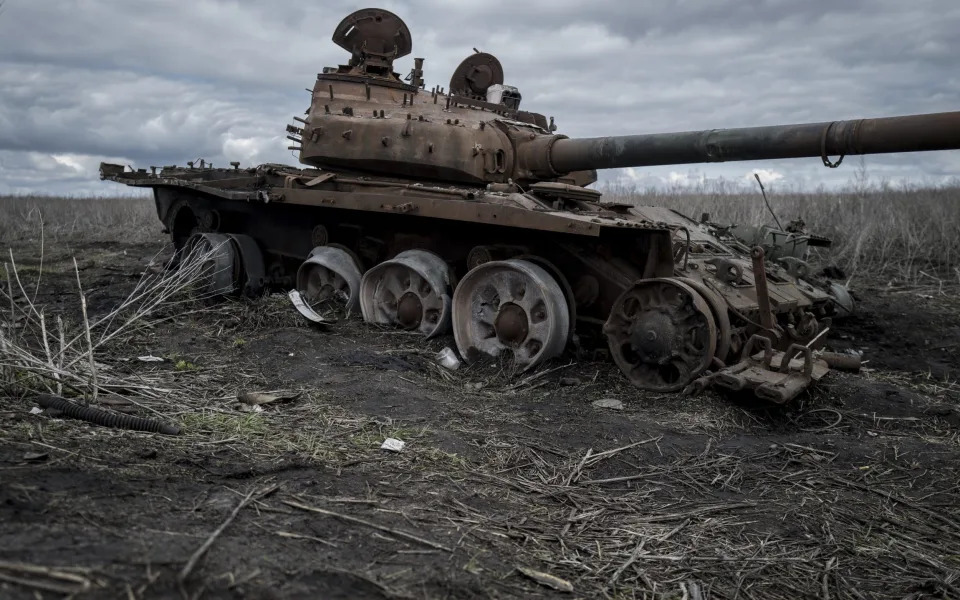
A damaged tank and pieces of war, Izyum

It comes as no surprise that Vladimir Putin rules Russia in spectacularly corrupt fashion. We all know how money is siphoned from the state and funnelled to his allies and oligarchs, as well as his own pocket. For years, this systemic corruption strengthened his grip on power, yet for his forces in Ukraine – despite the stalemate on the front lines, and undue pessimism from certain quarters – this criminality continues to do the opposite, slowly but steadily weakening the Russian ability to wage war and eroding Putin’s ability to control events.

Despite appearances, the Russian invasion is still falling apart – quite literally in the case of some poorly maintained vehicles and naval equipment – as a direct result of the rot at the heart of the Kremlin. The news that a Russian tank commander was arrested last week and accused of stealing the engines out of battle tanks comes as no surprise; neither are the recent revelations of the decrepit state of much of the Russian navy. It’s the perfect illustration of the insurmountable moral rot plaguing Putin’s gangster state.

The spectacular losses of armoured vehicles suffered by Moscow’s forces was initially a surprise to Western analysts; now I’m inclined to think they may well have been sitting ducks, with critical components sold for scrap or maintained on the cheap. In hindsight, we should have seen it coming: I can remember stories from my time serving as a tank commander in the Cold War facing off against the Russians in Germany. It was common to hear about Russian tank soldiers stealing engine coolant to drink for its intoxicating properties or flogging diesel supplies to buy food.

As for the state of the navy, Russia’s only aircraft carrier, Admiral Kuznetsov, has been out of action since 2018 thanks to a toxic combination of botched repairs and blatant illegality. In March 2021, the general director of the shipyard was arrested in connection with embezzlement of funds. The carrier is not predicted to return to active service until 2024 at the earliest. Meanwhile, the similarly antiquated nuclear-powered flagship of the Northern fleet, Peter the Great, will probably have to be scrapped because it is too expensive to modernise. So much for a country “bouncing back” from its earlier humiliations in Ukraine, such as the memorable sinking of the Moskva.

It is worth remembering, too, that many in the intelligence community believe that even Putin’s trump card – his much-vaunted tactical nuclear weapons – would not actually work properly because of age and mismanagement, even if the soldiers manning them could be persuaded to deploy them, which is far from clear.

As a former soldier, I remain certain this rot will inevitably deprive Russians of the will to fight. The most effective soldiers the Kremlin has left are the criminals that have been sprung out of jails across Russia to fight with the mercenary Wagner Group. But the moral component to fighting spirit is embedded in the belief and right of the fight, and the “silver” shilling of encouragement will only glint for so long. Russian gold is now badly tarnished and the exploitation of the people by a small elite is now all too obvious. The Kremlin’s coin will eventually poison those who cherish it and lead to Russia’s capitulation.

The timing of this implosion will entirely depend on Western resilience to keep giving Ukraine the weapons it needs to drain the Russians of their morale and ability to fight. Reports that Ukrainian units are having to ration shells when they have the might of so many advanced industrialised countries behind them shames us all. This is 2023, not 1915.

To those who think Russia can still summon an unstoppable wave of men and materiel like in the Second World War, think again. Putin’s gangsters have pillaged their own country, normalised corruption throughout the ranks of the military, and, in doing so, doomed themselves to defeat. The moral corruption endemic in Russia will bring Putin down, as it has countless tyrants before him. It is only a matter of time, if the West shows the same resilience in supporting Ukraine as the Ukrainians have in defending their country.

Col Hamish de Bretton-Gordon is a former commander of the 1st Royal Tank Regiment

Russia’s Defense Ministry braces for major defeat in Ukraine, expert says

The New Voice of Ukraine

Russia’s Defense Ministry braces for major defeat in Ukraine, expert says

April 27, 2023

Ukrainian soldiers ride a tank on the road to the town of Chasiv Yar

Read also: Russia’s General Staff spread disinformation about winter offensive on Kyiv – Pentagon leaks

“This is preparation; not only are information resources being prepared, but also the Ministry of Defense of the Russian Federation,” said Svitlan.

“They are already starting to move (personnel), removing from certain positions generals who can be held accountable for failures and, possibly, war crimes.”

Svitlan adds that Russia is bracing for a major breach of its defensive lines in Ukraine.

“At least two fronts will implode; and it needs to be somehow covered up, redirected, and obscured from the media space,” he said.

Read also: Dmytro Syryk, Suspilne radio host, killed at front

“The only way to cover it is to be overtaken by a more significant problem. This is a standard technique of information warfare.”

According to Radio Free Europe/Radio Liberty, citing data from the Pentagon, Russia does not have enough personnel to maintain full control over all temporarily occupied territories of Ukraine.

Read also: Fighter jets ranked 8th on Ukraine’s list of military needs, Pentagon says

Meanwhile, Ukrainian forces could launch a major counter-offensive in May, according to recent reports in Western media.

We’re bringing the voice of Ukraine to the world. Support us with a one-time donation, or become a Patron!

Rick Steves Is Making One Major Change to His European Guidebooks This Year — for an Important Reason

Travel + Leisure

Rick Steves Is Making One Major Change to His European Guidebooks This Year — for an Important Reason

Kelsey Fowler – April 27, 2023

The newest edition of Rick Steves Eastern Europe is getting a new name.

<p>Courtesy of Rick Steves
Courtesy of Rick Steves’ Europe

The guidebook formerly known as “Rick Steves Eastern Europe” will have a new title when the next edition is published later this year.

Rick Steves’ Europe is changing “Eastern Europe” across the brand to “Central Europe,” to better reflect a more geographically accurate name for the region.

When the 11th edition is published, the guidebook will switch over to “Central Europe” as the identifier for the area that includes countries like the Czech Republic, Poland, Hungary, Slovenia, and Croatia. The change was announced in February and will roll out across the company’s guidebooks, website, and tour itineraries.

In a recent interview with Travel + Leisure, founder Rick Steves explained why he thought the switch was long overdue.

<p>Courtesy of Rick Steves' Europe </p>
Courtesy of Rick Steves’ Europe

“From a marketing, publishing, and tourism point of view, we call Central Europe ‘Eastern Europe’ and that’s a hangover from the Cold War,” he said. “That was a 50-year anomaly. Poland, Hungary, the Czech Republic got filed away in our minds as Eastern Europe, but that’s really Central Europe.”

In a post announcing the change, guidebook co-author Cameron Hewitt wrote that “Eastern” Europe should really be considered countries like Georgia, Ukraine, and Russia. Prague, often the showcase city of “Eastern” European tours, is actually located to the west of cities like Vienna, Stockholm, and even parts of Italy.

“The political divide of Europe has changed, of course, and it’s high time guidebooks and tour itineraries do, too,” Hewitt wrote.

The zone is also down in tourism this year, Steves said, because people are worried about the ongoing war in Ukraine. Rick Steves’ Europe is continuing to operate tours in the region as long as it remains safe to do so, and Steves said he plans to film with his TV crew in Poland later this year.

<p>Courtesy of Rick Steves' Europe </p>
Courtesy of Rick Steves’ Europe

“It’s unfortunate that people are penalizing the countries that are farther east,” Steves said. “Their economy is hurting because people are staying away.”

While the change might result in some confusion for travelers looking to visit Poland but still searching for “Eastern” Europe trips and tips, Hewitt and those at Rick Steves’ Europe believe the change is worth the risk that come with rebranding.

Hewitt wrote: “We’ve learned that Rick Steves travelers are savvy, open-minded, and curious enough about our world to hop on board when we lead them toward new places and new ideas.”

For more Travel & Leisure news, make sure to sign up for our newsletter!

Russia has emptied out a Crimea base of weaponry, with officials worried Ukraine could target the region in a possible counteroffensive

Business Insider

Russia has emptied out a Crimea base of weaponry, with officials worried Ukraine could target the region in a possible counteroffensive

Sinéad Baker – April 27, 2023

Russian President Vladimir Putin speaks with Crimean leader Sergei Aksyonov in November 2016.
Russian President Vladimir Putin speaks with Crimean leader Sergei Aksyonov in November 2016.Mikhail Klimentyev/Sputnik, Kremlin Pool Photo via AP
  • Satellite photos obtained by CNN show that Russia has emptied out a military base in Crimea.
  • Ukraine is planning a counteroffensive, and the head of the region indicated it could be a target.
  • Russia annexed Crimea in 2014, and Ukraine says one of its goals is to get it back.

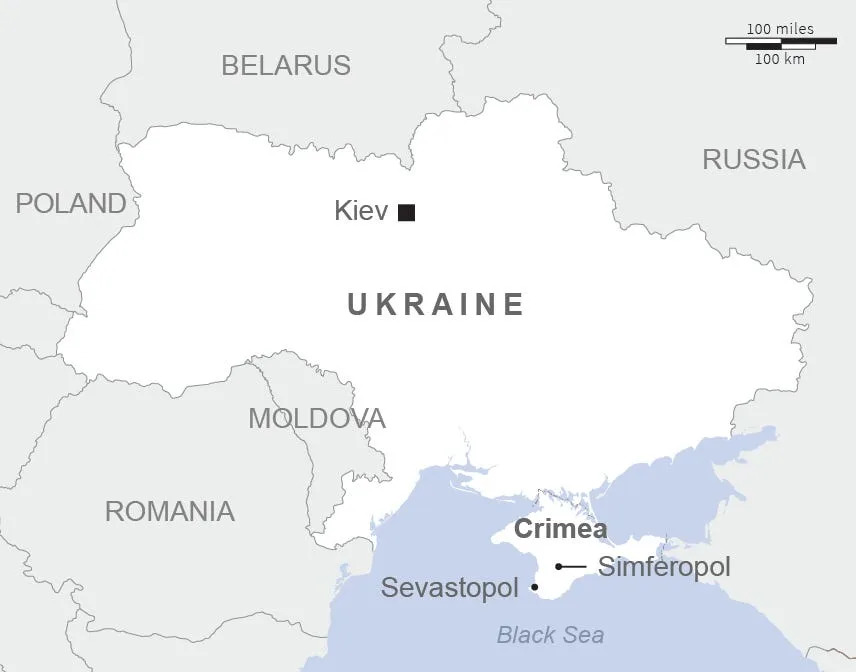
Russia has taken weaponry and equipment out of a military base in Crimea, according to satellite images obtained by CNN, as a Russian official warns that Ukraine may be gearing up to try to take back the region.

Russia annexed Crimea from Ukraine in 2014, claiming it as part of Russia in a move that has not been recognized internationally.

CNN compared satellite images of the base taken on January 21, February 11, and March 27 by the EU’s Sentinel 2 satellite and by Maxar Technologies.

The January image of the base, located close to the village of Medvedivka and near the border with Kherson, shows a lot of Russian equipment at the site, while the February image shows “dozens of armoured vehicles, including tanks and artillery pieces,” CNN reported.

But in the March image, much of that weaponry is gone.

It is not clear why Russia would move the equipment, but a local official warned that Ukraine appears poised to target the region when it launches its expected counteroffensive.

Sergei Aksyonov, the Russia-appointed governor of Crimea, said earlier this month that Russia was building defensive structures in and around Crimea, indicating that Russia expects a Ukrainian attack.

He said that they “had to prepare for any scenario,” per CNN’s translation.

The governor of Crimea’s largest city said earlier this week that Ukrainian drones had targeted Russia’s main naval base there.

And Ukrainian President Volodymyr Zelenskyy has repeatedly stated that he wants to take Crimea back.

ukraine crimea russia map
The location of Crimea compared to Russia and Ukraine.Thomson Reuters

Ukraine has been gearing up for a long-awaited counteroffensive, including by getting more advanced training and weapons from its allies.

But it isn’t clear when it will begin.

Crimea has a strategic military importance: Russia uses it to support its troops in Ukraine’s south, and it is home to multiple military bases and airports, as well as Russia’s Black Sea Fleet.

The region also served as a launchpad for Russia when it began its invasion of Ukraine in February 2022.

And it has symbolic value: Russia’s President Vladimir Putin has called it a “holy land” for his country.

Insider’s John Halitwagner reported in January that Crimea could become the next big battlefield, and one that could decide the outcome of the war.

Russian troops digging trenches in Ukraine reportedly infected with anthrax

The Telegraph

Russian troops digging trenches in Ukraine reportedly infected with anthrax

Joe Barnes – April 26, 2023

The Russian unit was probably digging trenches as part of an effort to reinforce their defences in the Zaporizhia region, ahead of the long-awaited Ukrainian counter-offensive - @30brigade/Newsflash
The Russian unit was probably digging trenches as part of an effort to reinforce their defences in the Zaporizhia region, ahead of the long-awaited Ukrainian counter-offensive – @30brigade/Newsflash

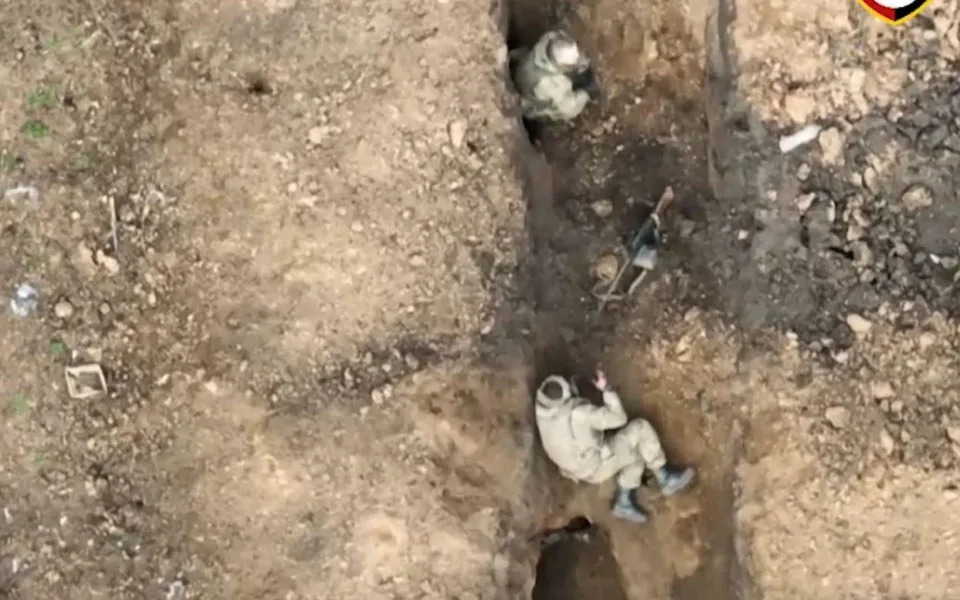
Russian troops were reportedly infected with anthrax after unearthing a burial site for cattle while digging defensive trenches in southern Ukraine.

The unit was ordered into immediate quarantine, after doctors diagnosed cases of the deadly disease in at least two soldiers, according to Ivan Fedorov, the exiled Ukrainian mayor of Melitopol.

Two Russian servicemen were admitted to a hospital in Melitopol, which has been under occupation since March last year, before being discharged and sent to an unknown location, Fedorov wrote on the Telegram messaging app.

“The enemy unit is now in quarantine,” he said.

“Two Russian servicemen were first brought to Melitopol hospital, but after the diagnosis was confirmed they were quickly discharged and taken to an unknown destination.”

The Russian unit was probably digging trenches as part of an effort to reinforce their defences in the Zaporizhia region, ahead of the long-awaited Ukrainian counter-offensive.

Anthrax is a bacterial infection that can be spread via infected animal carcasses and food. Symptoms include diarrhoea and vomiting blood.

The disease was endemic across much of the Soviet Union in the 20th century because of intense cattle farming.

More than 10,000 cases of anthrax were registered in humans each year at the beginning of the century, but this has decreased drastically because of improved health standards.

Exposed to radiation

It is not the first time the environment in Ukraine has wreaked havoc with Russian troops since their invasion last February.

When Moscow’s troops captured the areas around the Chernobyl nuclear disaster, units were forced to dig trenches in highly radioactive soil in the exclusion zone.

At the time, Ukraine’s state nuclear agency, Energoatom, said the Russian troops would have been exposed to “significant doses of radiation” as they were not wearing protective clothing.

Officials claimed the soldiers were transported to a hospital in Gomel, Belarus, to be treated for radiation sickness, although this was never confirmed by the Belarusian or Russian authorities.

Fresh Ukrainian troops are ready to smash Putin

The Telegraph

Fresh Ukrainian troops are ready to smash Putin

David Axe – April 26, 2023

Ukrainian tanks - Kateryna Klochko/AP
Ukrainian tanks – Kateryna Klochko/AP

Russia’s winter offensive is grinding to a bloody halt in the ruins of Bakhmut in eastern Ukraine’s Donbas region. That assault was Russia’s best chance at spoiling a long-anticipated Ukrainian counteroffensive.

Now there are just two things the Russians can do: stockpile ammunition, and wait for the coming attack. The assault could come as soon as the deep mud that’s typical of Ukrainian springtime finally dries up.

Even before a braggadocious young US Air National Guard airman leaked classified intelligence on Ukrainian preparations, it was widely known that Kyiv planned a powerful counteroffensive. Ukrainian president Volodymyr Zelensky and other leaders in Kyiv have spoken openly about the coming attack: perhaps to inspire their countrymen, perhaps to spook the Russians. Perhaps both.

It’s one thing to talk up a risky, complex and potentially costly military offensive. It’s another to actually pull it off. And there are two key issues that could constrain just how successful the Ukrainian attack might be. Kyiv’s military probably has enough troops, tanks and artillery. But shortages of artillery shells and air-defence missiles could leave the attacking brigades exposed, and vulnerable to Russian defenses.

The Kremlin actually began preparing for the coming Ukrainian onslaught shortly after the previous Ukrainian counterattack, which kicked off in southern and northeastern Ukraine late last summer. Exploiting gaps between exhausted Russian regiments, two dozen powerful Ukrainian brigades rolled south toward occupied Kherson and east from the free city of Kharkiv, ultimately liberating thousands of square miles from Russian occupation.

After stabilizing the new front line, the Russians dug in.

“Digging trenches, setting up defenses-in-depth,” was the Pentagon description of Russia’s efforts since. The Russian lines are now defended by minefields, concrete anti-tank obstacles and earthen berms. On the far side, Russian troops await.

Penetrating the fortifications, in one or more places somewhere along the 600-mile front line, will be the Ukrainians’ first task, once they’ve decided conditions are right for an attack. In military parlance, this is called a “breach.” Achieving a breach is one of the most complex and riskiest missions in land warfare.

First, engineers have to clear a path through the mines. Then, they must blow up the concrete obstacles, fill in the trenches and blast or dig through the berms – all while under enemy fire. If they succeed in opening up a breach, tanks and infantry can pour through into the enemy’s undefended rear areas.

Ukraine’s attack last year succeeded in part because Russian forces hadn’t yet prepared extensive fortifications – that made it easier for the Ukrainians to punch through. Russia’s offensive this past winter failed because it never succeeded in fully breaching Ukraine’s own defensive fortifications in and around Bakhmut, Vuhledar and other key eastern towns. Soon we will find out if the Ukrainians can do better.

In many ways Zelensky’s troops are well equipped. Thanks to aid from its allies, Ukraine has plenty of equipment for making a breach, including mine-clearing gear and specialized armoured engineering vehicles. It’s also got hundreds of British-, German- and Polish-made tanks, many of them more advanced than their Russian opponents, and missile- and gun-armed fighting vehicles from France, Germany, Sweden and the United States.

Nato and other allied nations have trained tens of thousands of fresh Ukrainian troops to operate this equipment, and Ukraine has organized them in around 20 new brigades overseen by two new headquarters. Kyiv has managed to keep these untouched heavy brigades in reserve even as fighting in Bakhmut escalated earlier this year, cleverly balancing the need to hold the Russians against maintaining their striking power for a future counteroffensive.

The problem for the Ukrainians is that a breaching assault – and the exploitation of the breach once made – is practically suicide without a lot of artillery fire support and solid air defences. Big guns need to hammer the defending enemy troops and gunners in order to keep their heads down and give the attacking engineers time to work. Surface-to-air missile batteries need to ward off helicopters and warplanes the enemy sends to strike the forces assaulting the breach.

Ukraine is short of ammunition for both. If the Ukrainian attack kicks off with inadequate air defence and insufficient supplies of shells, its chance of success drops. A lot.

The ammo problem has been a long time in the making. When Russia widened its war on Ukraine in February 2022, Kyiv’s military still mostly operated ex-Soviet equipment. The factories which make ex-Soviet pattern missiles and shells are in Russia.

At the same time, the fighting has been more intensive than most observers anticipated. Ukrainian artillery has fired as many as 8,000 shells per day, every day, for more than a year. Over the same span of time, Ukrainian air defences have fired dozens of their best missiles every day. Every Soviet-made shell or missile the Ukrainians fired was a shell or missile they couldn’t readily replace.

The main solution, of course, was for Kyiv to reequip its artillery and air defence batteries with Western-made guns and launchers firing Western-made shells and missiles. While the guns and launchers have been forthcoming, supplies of ammo aren’t keeping up. The documents leaked by that young US airman suggest that Ukraine’s medium- and long-range air defences will run out of missiles in April and May respectively – assuming no changes in supplies.

Last month, Ukrainian defense minister Oleksii Reznikov said Ukrainian forces needed “munitions, munitions and more munitions,” including a million 155-millimeter artillery shells for Nato-pattern guns, in order for the coming counteroffensive to succeed. That’s on top of the 1.5 million 155-millimeter shells the United States alone has already donated, many of which have already been fired.

More ammo is on the way, including an unspecified number of additional shells that the Biden administration pledged on April 19. Two days later, US Defence Secretary Lloyd Austin III told reporters the USA and other allies “continue to rush in ground-based air-defense capabilities and munitions to help Ukraine control its sovereign skies.”

But it can take weeks for aid to arrive after it’s announced. And Ukraine can’t wait forever to launch its counteroffensive. Every day of delay is another day the Russians have to dig in deeper and add to their own artillery stockpile.

Zelensky, Reznikov and Ukraine’s front-line commanders face a difficult decision of timing. What’s the earliest date when the mud is dry enough and Kyiv’s forces have just enough ammo to execute a breach? Go too soon, and the assault gets stuck in mud and pummeled by Russian artillery and warplanes. Go too late, and Russian fortifications could be even more daunting than they are now.

What’s clear is that if Westerners want to see Ukraine win and the murderous Putin humbled, we should dig deeper yet into our own stockpiles. The Ukrainians are fighting not just bravely but skilfully: building up a powerful strategic reserve while holding a long front line against heavy attacks has taken guts and generalship. Zelensky and his troops have a genuine opportunity to push the Russians back, if we just get them the munitions they need as soon as we can.

Will the West Turn Ukraine into a Nuclear Battlefield?

Resilience – Energy

Will the West Turn Ukraine into a Nuclear Battlefield?

By Joshua Frank, originally published by Tom Dispatch 

April 20, 2023

Chernobyl
Why Depleted Uranium Should Have No Place There

It’s sure to be a blood-soaked spring in Ukraine. Russia’s winter offensive fell far short of Vladimir Putin’s objectives, leaving little doubt that the West’s conveyor belt of weaponry has aided Ukraine’s defenses. Cease-fire negotiations have never truly begun, while NATO has only strengthened its forces thanks to Finland’s new membership (with Sweden soon likely to follow). Still, tens of thousands of people have perished; whole villages, even cities, have been reduced to rubble; millions of Ukrainians have poured into Poland and elsewhere; while Russia’s brutish invasion rages on with no end in sight.

The hope, according to Ukrainian President Volodymyr Zelensky, is that the Western allies will continue to furnish money, tanks, missiles, and everything else his battered country needs to fend off Putin’s forces. The war will be won, according to Zelensky, not through backroom compromises but on the battlefield with guns and ammo.

“I appeal to you and the world with these most simple and yet important words,” he said to a joint session of Great Britain’s parliament in February. “Combat aircraft for Ukraine, wings for freedom.”

The United Kingdom, which has committed well over $2 billion in assistance to Ukraine, has so far refused to ship fighter jets there but has promised to supply more weaponry, including tank shells made with depleted uranium (DU), also known as “radioactive bullets.” A by-product of uranium enrichment, DU is a very dense and radioactive metal that, when housed in small torpedo-like munitions, can pierce thickly armored tanks and other vehicles.

Reacting to the British announcement, Putin ominously said he would “respond accordingly” if the Ukrainians begin blasting off rounds of DU.

While the UK’s decision to send depleted-uranium shells to Ukraine is unlikely to prove a turning point in the war’s outcome, it will have a lasting, potentially devastating, impact on soldiers, civilians, and the environment. The controversial deployment of DU doesn’t pose faintly the same risks as the actual nuclear weapons Putin and his associates have hinted they might use someday in Ukraine or as would a potential meltdown at the embattled Zaporizhzhia nuclear facility in that country. Still, its use will certainly help create an even more lethal, all too literally radioactive theater of war — and Ukraine will end up paying a price for it.

The Radioactive Lions of Babylon

Stuart Dyson survived his deployment in the first Gulf War of 1991, where he served as a lance corporal with Britain’s Royal Pioneer Corps. His task in Kuwait was simple enough: he was to help clean up “dirty” tanks after they had seen battle. Many of the machines he spent hours scrubbing down had carried and fired depleted uranium shells used to penetrate and disable Iraq’s T-72 tanks, better known as the Lions of Babylon.

Dyson spent five months in that war zone, ensuring American and British tanks were cleaned, armed, and ready for battle. When the war ended, he returned home, hoping to put his time in the Gulf War behind him. He found a decent job, married, and had children. Yet his health deteriorated rapidly and he came to believe that his military service was to blame. Like so many others who had served in that conflict, Dyson suffered from a mysterious and debilitating illness that came to be known as Gulf War Syndrome.

After Dyson suffered years of peculiar ailments, ranging from headaches to dizziness and muscle tremors, doctors discovered that he had a severe case of colon cancer, which rapidly spread to his spleen and liver. The prognosis was bleak and, after a short battle, his body finally gave up. Stuart Dyson died in 2008 at the age of 39.

His saga is unique, not because he was the only veteran of the first Gulf War to die of such a cancer at a young age, but because his cancer was later recognized in a court of law as having been caused by exposure to depleted uranium. In a landmark 2009 ruling, jurors at the Smethwick Council House in the UK found that Dyson’s cancer had resulted from DU accumulating in his body, and in particular his internal organs.

“My feeling about Mr. Dyson’s colon cancer is that it was produced because he ingested some radioactive material and it became trapped in his intestine,” Professor Christopher Busby, an expert on the effects of uranium on health, said in his court testimony. “To my mind, there seems to be a causal arrow from his exposure to his final illness. It’s certainly much more probable than not that Mr. Dyson’s cancer was caused by exposure to depleted uranium.”

The U.S. Department of Defense estimated that American forces fired more than 860,000 rounds of DU shells during that 1991 war to push Iraqi autocrat Saddam Hussein’s military out of Kuwait. The result: a poisoned battlefield laced with radioactive debris, as well as toxic nerve agents and other chemical agents.

In neighboring southern Iraq, background radiation following that war rose to 30 times normal. Tanks tested after being shelled with DU rounds had readings 50 times higher than average.

“It’s hot forever,” explains Doug Rokke, a former major in the U.S. Army Reserve’s Medical Service Corps who helped decontaminate dozens of vehicles hit by DU shells during the first Gulf War. “It doesn’t go away. It only disperses and blows around in the wind,” he adds. And of course, it wasn’t just soldiers who suffered from DU exposure. In Iraq, evidence has been building that DU, an intense carcinogenic agent, has led to increases in cancer rates for civilians, too.

“When we were moving forward and got north of a minefield, there were a bunch of blown-out tanks that were near where we would set up a command post,” says Jason Peterson, a former American Marine who served in the first Gulf War. “Marines used to climb inside and ‘play’ in them … We barely knew where Kuwait was, let alone the kind of ammunition that was used to blow shit up on that level.”

While it’s difficult to discern exactly what caused the Gulf War Syndrome from which Dyson and so many other soldiers suffered (and continue to suffer), experts like Rokke are convinced that exposure to depleted uranium played a central role in the illness. That’s an assertion Western governments have consistently downplayed. In fact, the Pentagon has repeatedly denied any link between the two.

“I’m a warrior, and warriors want to fulfill their mission,” Rokke, who also suffers from Gulf War Syndrome, told Vanity Fair in 2007. “I went into this wanting to make it work, to work out how to use DU safely, and to show other soldiers how to do so and how to clean it up. This was not science out of a book, but science done by blowing the shit out of tanks and seeing what happens. And as we did this work, slowly it dawned on me that we were screwed. You can’t do this safely in combat conditions. You can’t decontaminate the environment or your own troops.”

Death to Uranium

Depleted uranium can’t produce a nuclear explosion, but it’s still directly linked to the development of atomic weaponry. It’s a by-product of the uranium enrichment process used in nuclear weapons and fuel. DU is alluring to weapons makers because it’s heavier than lead, which means that, if fired at a high velocity, it can rip through the thickest of metals.

That it’s radioactive isn’t what makes it so useful on the battlefield, at least according to its proponents. “It’s so dense and it’s got so much momentum that it just keeps going through the armor — and it heats it up so much that it catches on fire,” says RAND nuclear expert and policy researcher Edward Geist.

The manufacturing of DU dates back to the 1970s in the United States. Today, the American military employs DU rounds in its M1A2 Abrams tanks. Russia has also used DU in its tank-busting shells since at least 1982 and there are plenty of accusations, though as yet no hard evidence, that Russia has already deployed such shells in Ukraine. Over the years, for its part, the U.S. has fired such rounds not just in Kuwait, but also in Bosnia, Iraq, Kosovo, Syria, and Serbia as well.

Both Russia and the U.S. have reasons for using DU, since each has piles of the stuff sitting around with nowhere to put it. Decades of manufacturing nuclear weapons have created a mountain of radioactive waste. In the U.S., more than 500,000 tons of depleted-uranium waste has built up since the Manhattan Project first created atomic weaponry, much of it in Hanford, Washington, the country’s main plutonium production site. As I investigated in my book Atomic Days: The Untold Story of the Most Toxic Place in America, Hanford is now a cesspool of radioactive and chemical waste, representing the most expensive environmental clean-up project in history with an estimated price tag of $677 billion.

Uranium, of course, is what makes the whole enterprise viable: you can’t create atomic bombs or nuclear power without it. The trouble is that uranium itself is radioactive, as it emits alpha particles and gamma rays. That makes mining uranium one of the most dangerous operations on the planet.

Keep It in the Ground

In New Mexico, where uranium mines were primarily worked by Diné (Navajo People), the toll on their health proved gruesome indeed. According to a 2000 study in the Journal of Occupational and Environmental Medicinerates of lung cancer in Navajo men who mined uranium were 28 times higher than in those who never mined uranium. The “Navajo experience with uranium mining,” it added, “is a unique example of exposure in a single occupation accounting for the majority of lung cancers in an entire population.”

Scores of studies have shown a direct correlation between exposure to uranium and kidney diseasebirth defects in infants (when mothers were exposed), increased rates of thyroid disease, and several autoimmune diseases. The list is both extensive and horrifying.

“My family had a lot of cancer,” says anti-nuclear activist and Indigenous community organizer Leona Morgan. “My grandmother died of lung cancer and she never smoked. It had to be the uranium.”

One of the largest radioactive accidents, and certainly the least reported, occurred in 1979 on Diné land when a dam broke, flooding the Puerco River near Church Rock, New Mexico, with 94 million gallons of radioactive waste. The incident received virtually no attention at the time. “The water, filled with acids from the milling process, twisted a metal culvert in the Puerco and burned the feet of a little boy who went wading. Sheep keeled over and died, while crops curdled along the banks. The surge of radiation was detected as far away as Sanders, Arizona, fifty miles downstream,” writes Judy Pasternak in her book Yellow Dirt: A Poisoned Land and the Betrayal of the Navajo.

Of course, we’ve known about the dangers of uranium for decades, which makes it all the more mind-boggling to see a renewed push for increased mining of that radioactive ore to generate nuclear power. The only way to ensure that uranium doesn’t poison or kill anyone is to leave it right where it’s always been: in the ground. Sadly, even if you were to do so now, there would still be tons of depleted uranium with nowhere to go. A 2016 estimate put the world’s mountain of DU waste at more than one million tons (each equal to 2,000 pounds).

So why isn’t depleted uranium banned? That’s a question antinuclear activists have been asking for years. It’s often met with government claims that DU isn’t anywhere near as bad as its peacenik critics allege. In fact, the U.S. government has had a tough time even acknowledging that Gulf War Syndrome exists. A Government Accountability Office report released in 2017 found that the Veterans Affairs Department had denied more than 80% of all Gulf War illness claims by veterans. Downplaying DU’s role, in other words, comes with the terrain.

“The use of DU in weapons should be prohibited,” maintains Ray Acheson, an organizer for the International Campaign to Abolish Nuclear Weapons and author of Banning the Bomb, Smashing the Patriarchy. “While some governments argue there is no definitive proof its use in weapons causes harm, it is clear from numerous investigations that its use in munitions in Iraq and other places has caused impacts on the health of civilians as well as military personnel exposed to it, and that it has caused long-term environmental damage, including groundwater contamination. Its use in weapons is arguably in violation of international law, human rights, and environmental protection and should be banned in order to ensure it is not used again.”

If the grisly legacy of the American use of depleted uranium tells us anything, it’s that those DU shells the British are supplying to Ukraine (and the ones the Russians may also be using there) will have a radioactive impact that will linger in that country for years to come, with debilitating, potentially fatal, consequences. It will, in a sense, be part of a global atomic war that shows no sign of ending.