The worst thing for Russia’s economy isn’t Western sanctions. It’s Putin.
Phil Rosen – July 10, 2023
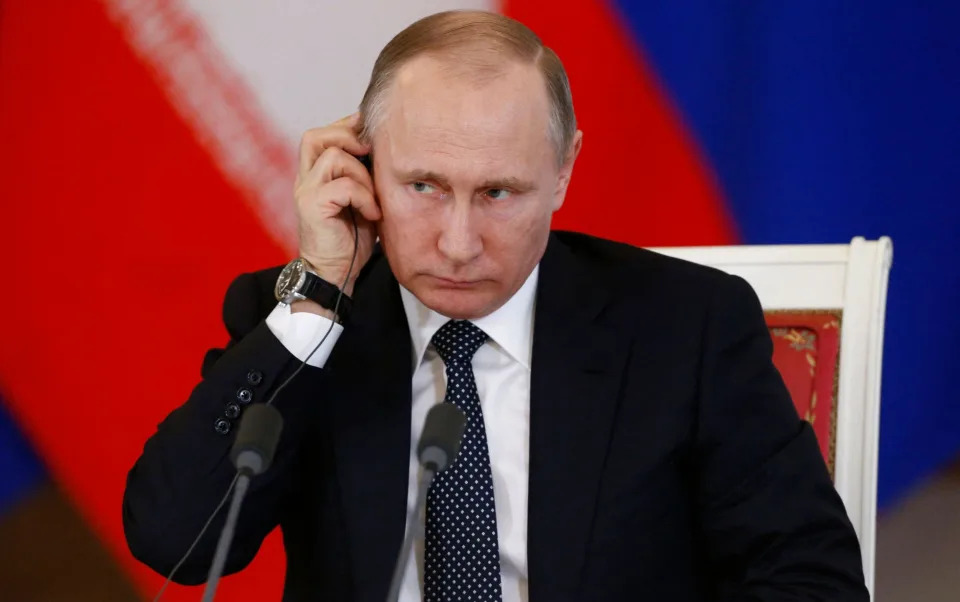
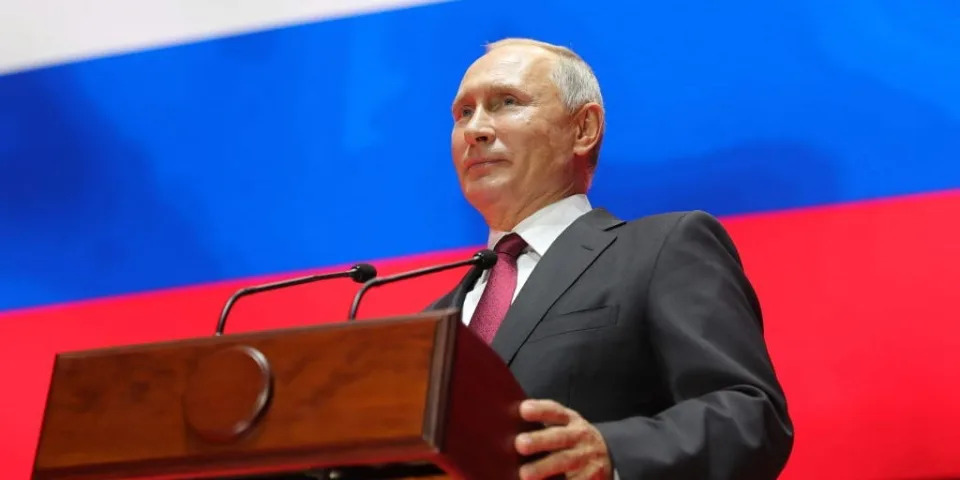
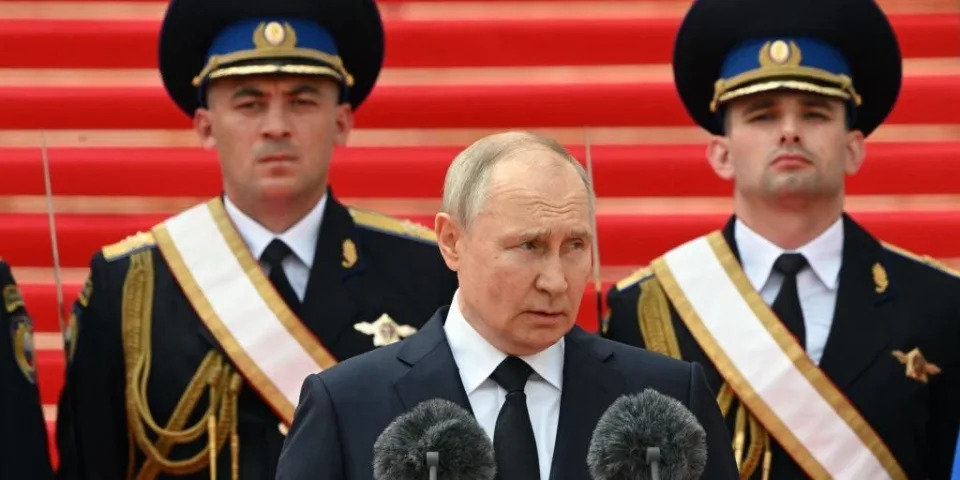
Vladimir Putin has steered the Russian economy to the brink of catastrophe.Anadolu Agency / Getty Images
Vladimir Putin has crippled Russia’s economy to fund the war in Ukraine, experts tell Insider.
Experts say the official data from Moscow suggests it’s faring far better than it actually is.
The ruble has is crashing, the labor force has seen an exodus, and civil war remains possible.
The West has imposed sweeping sanctions on Moscow since it launched its war on Ukraine last February, but much of Russia’s economic troubles can be chalked up to suspect and counterproductive leadership by Vladimir Putin.
Before the “special military operation” began, Russia was the 11th largest economy in the world, accounting for almost 40% of Europe Union’s natural gas imports and a quarter of its crude oil. A year and a half later, Putin’s turned Moscow into a pariah state, isolated from the global financial system, barred from its most lucrative trade routes, and in the midst of a worker brain drain. Experts say the damage has been largely self-inflicted.
Speaking with Insider on Monday, Yale researchers Jeffrey Sonnenfeld and Steven Tian said that Putin has lost the economic battle to a profound degree, and now he’s scrambling to maintain a status quo that’s quickly dissolving beneath his feet.
“He’s devouring core bedrock industries,” Sonnenfeld said. “The lion’s share of the economy is controlled by the state, the energy and financial sectors, and Putin is taking from the seed capital of those businesses to use as a cookie jar for his war chest.”
Trade will never be the same
Russia is barely breaking even on its energy trade, and most of its other top commodities like wheat, lumber, and metals sell cheaper today than before the invasion. The lack of trade income pushed Putin to levy draconian windfall taxes on businesses and individuals, which the Yale academics see as part of his “cannibalization” of the economy.
“Laying on onerous taxes is doing nothing for the economic health of the country, but they allow him to pay bills,” Sonnenfeld said.
Putin’s policy missteps became inevitable after he made the initial call to invade Ukraine, Tian said, adding that Russia’s trade status may never be the same. It’s become increasingly clear that other countries can get by just fine without Russia as a trading partner.
“He’s destroying the historical underpinnings of the Russian economy,” Tian said. “Its main exports have always been commodities, but now nobody needs to buy Russian commodities anymore.”
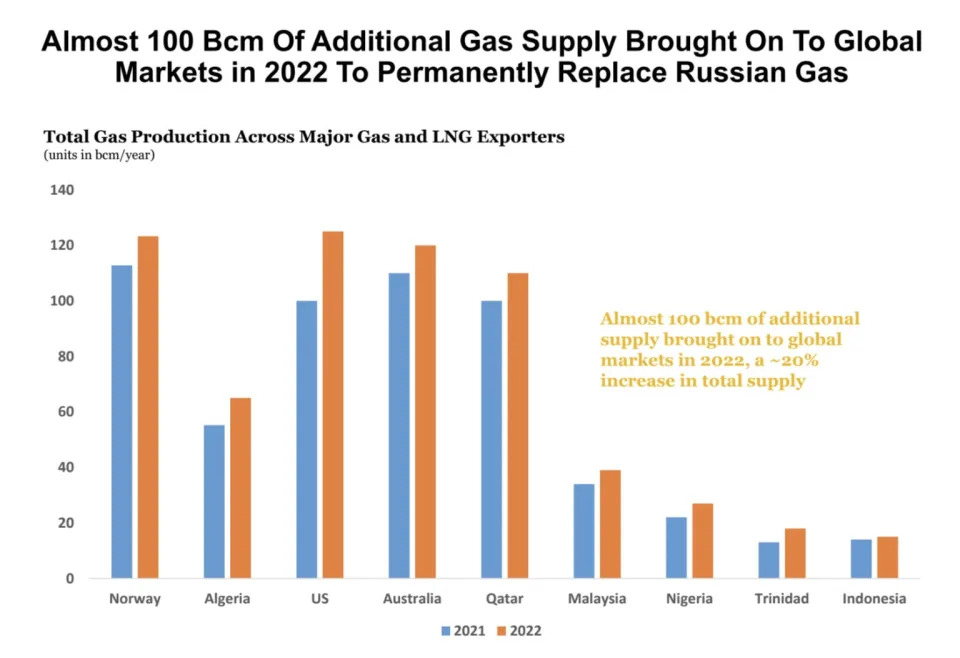
Yale data shared with Insider showed that Russia’s natural gas market in particular has been permanently lost.
The initial supply shock in February 2022 has quickly been overcome, with nearly 100 billion cubic metres of natural gas going online since then thanks to regasification projects commissioned across Europe. Germany has led nations including France, Netherlands, and Italy to develop new floating storage units that have come online in record time.
Russia’s LNG markets are permanently lost, according to Yale data. Gas production across other major exporters jumped following the invasion of Ukraine.Courtesy of Yale Chief Executive Leadership Institute
While China and India have stepped in as big buyers of cheap Russian crude since last year, steep discounts and lengthy shipping routes prevent those sales from propping up the Russian economy in a meaningful way.
“If Putin were on the call with us today, he couldn’t point to a single policy or economic positive for himself, the Russian people, or the economy,” Sonnenfeld said.
Potential for Soviet-style collapse
Volodymyr Lugovskyy, an economics professor at Indiana University, told me he expects to see a dramatic economic change within the next three or four months.
“Many people still don’t realize how bad the situation in Russia might be,” he said.
Official government data point to an economy that’s been able to withstand the costs of war, but under-the-hood numbers like retail sales, flight purchases, and business activity suggest otherwise.
“Things are much worse than the reported 2% drop in GDP,” Lugovskyy said. “Sales of new cars, sales of new computers, those dropped by 40% to 60%. And if you remove military activity from the data, production looks far worse [than reported].”
The country’s currency in particular looks vulnerable. After the Wagner Group’s attempted mutiny in June, the ruble crashed to a 15-month low. On Monday, it hovered just above 90 per dollar, but that could weaken to 149 per dollar, in Lugovskyy’s view.
A change in power, civil war, or another attempt at mutiny, the professor maintained, could drag on the exchange rate and ultimately lead to the collapse of the economy.
“Russia might collapse into multiple pieces, like the Soviet Union, and that might not be a bad thing for the world,” Lugovskyy said. “It’s resembling an empire right now, with a central power. Extreme events are highly possible.”
Kremlin expands surveillance on Russians’ music and taxi journeys
James Kilner – July 8, 2023
Vladimir Putin has ramped up surveillance of his people as he battles to crush dissent – AFP
The Kremlin will soon begin restricting Russians’ music playlists and tracking their taxi journeys in real time as it ramps up state surveillance two weeks after a failed rebellion.
Yandex Music, Russia’s most popular music streaming service, has said it will create a “safe environment” by blocking “dangerous” content, a move that activists have criticised.
“Recommendations on music services are nothing more than the automation of censorship using algorithms,” said Sarkis Darbinyan, a lawyer at Russian Roskom Svoboda which is a Russian NGO.
The music streaming service is part of the Yandex group of companies. Once dubbed the “Russian Google”, Yandex provides Russians with navigation tools, internet searches, a taxi-hailing app, food delivery services and everything else in between.
But analysts have also said that the Kremlin uses Yandex to spy on Russians and spread its propaganda. Part of this propaganda has been to promote pro-war singers and sideline anti-war artists but this is the first time that it will impose restrictions on people’s music choices.
To ‘protect’ listeners
Yandex Music said that the restrictions were designed to protect listeners from racist and Nazi-themed songs but Ms Darbinyan from Roskomsvoboda said that this was just a smokescreen.
“Musicians who have declared their civil and anti-war position have already essentially been thrown off the Russian stage, forbidden to perform and to earn their bread,” she said. “Now, I’m afraid this practice of blacklisting will affect all Russian streaming platforms.”
The Kremlin has banned parts of the internet including YouTube, while Spotify and other Western music streaming services stopped operating in Russia after the Russian invasion last year.
The new restrictions came after Vladimir Putin faced down a mutiny two weeks ago by his former mercenary commander Yevgeny Prigozhin, and analysts have said he needs to reimpose his authority.
And this means more censorship and more power for his favoured FSB intelligence agency.
Round-the-clock access to data
On Friday, the Russian government said that it had given the FSB the right to monitor people’s movements on taxi aggregation services.
Russian opposition media described the new taxi censorship laws as effectively giving the FSB “24/7 remote access” to passenger data.
One of the FSB’s main roles is to monitor the Russian population for any signs of dissent, and the Wall Street Journal has now reported that foreigners fall under an intensified surveillance operation.
It said that a special FSB unit called the DKRO monitors foreign nationals that enter Russia.
They also often play intimidatory mind games such as breaking into hotel rooms or apartments, moving bookcases and leaving smoked cigarette butts in bathrooms and faeces in suitcases, the newspaper reported.
Biden said he decided to send Ukraine controversial cluster bombs because Kyiv is ‘running out of ammunition’
Alia Shoaib – July 8, 2023
Biden said he decided to send Ukraine controversial cluster bombs because Kyiv is ‘running out of ammunition’
Joe Biden has agreed to send Ukraine deadly cluster munitions.
He defended his decision and said Ukraine needed them because they were “running out of ammunition.”
The controversial weapons are banned under an international treaty signed by 123 countries, but not the US.
President Joe Biden defended his decision to send Ukraine controversial and deadly cluster munitions, explaining it was because Kyiv was “running out of ammunition” after 500 days of war.
“It was a very difficult decision on my part. And by the way, I discussed this with our allies, I discussed this with our friends up on the Hill,” Biden told CNN’s Fareed Zakaria on Friday.
“The Ukrainians are running out of ammunition,” he added.
The US finally agreed to send the weapons as part of a new $800 million security assistance package on Friday, following months of requests from Kyiv.
The cluster munitions will be compatible with US-provided 155mm howitzers, which have been a key piece of artillery for Ukrainian forces, CNN reported.
Cluster bombs are particularly dangerous because they break apart into multiple little bombs when fired, some of which do not always explode upon impact. The unexploded ordinance can put civilians at risk for years to come, like landmines.
Experts say cluster bombs will be useful for Ukraine’s forces against well-dug-in Russian trenches amid a grueling counteroffensive.
However, the lethal weapons are highly controversial and are banned under an international treaty signed by 123 countries – but not the US, Russia, and Ukraine.
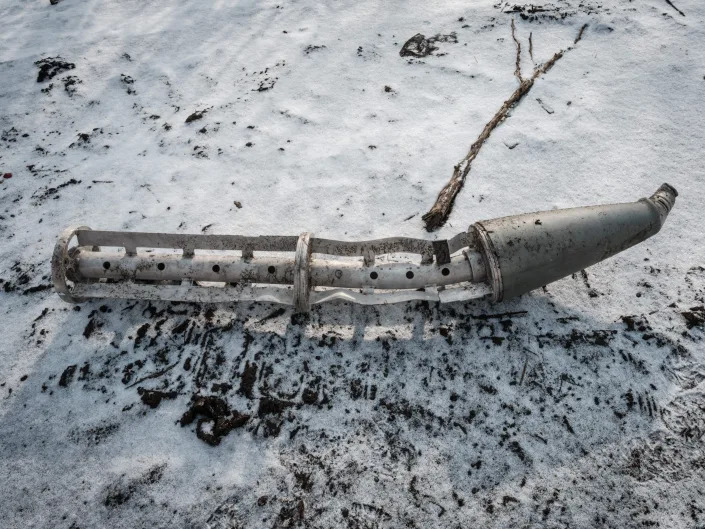
A casing of a cluster bomb rocket lays on the snow-covered ground in Zarichne on February 6, 2023, amid the Russian invasion of Ukraine.YASUYOSHI CHIBA/AFP via Getty Images
Biden told Zakaria that the weapons were being sent to Ukraine during a “transition period” until the US is able to produce more 155mm artillery.
“This is a war relating to munitions. And they’re running out of that ammunition, and we’re low on it,” Biden said.
“And so, what I finally did, I took the recommendation of the Defense Department to – not permanently – but to allow for this transition period, while we get more 155 weapons, these shells, for the Ukrainians.”
Ukraine launched its much-anticipated counteroffensive to take back territory occupied by Russia in early June, but gains have so far been slow.
Biden said it took him a while “to be convinced” to send cluster bombs, but he ultimately decided Ukraine “needed them.”
Former chief of general staff for the British Army Lord Dannatt said that Biden’s move risks “fracturing” NATO harmony, considering so many NATO countries have banned them.
Responding to Biden’s decision, UK Prime Minister Rishi Sunak noted on Saturday that the UK was a signatory of the international treaty banning and discouraging their use but said his government would continue to support Ukraine in other ways.
Ukraine told to investigate its use of banned ‘butterfly’ antipersonnel mines
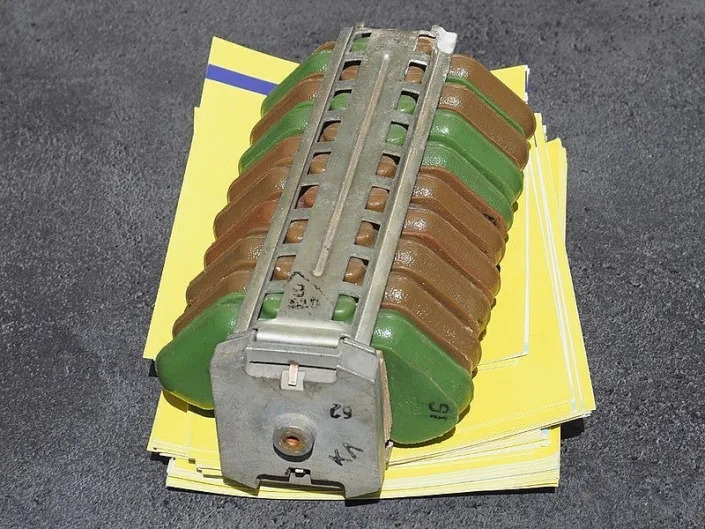
18 PFM-1 in cluster dispenser. Also known as ‘butterfly’ mines.German Army Combat Training Centre Letzlingen 2019/Wikicommons
Last week, Human Rights Watch told Ukraine to investigate the use of banned land mines by the Ukrainian military after new evidence that they had caused civilian casualties was discovered.
The group called for Ukraine to investigate the use of Russian-made PFM-1 antipersonnel mines around the eastern Ukrainian city of Izium between April and September 2022. It said it had evidence of 11 civilian casualties from the mines, including one fatality.
The miniature PFM-1, also known as “butterfly” or “petal” mines, are fired from rockets and scatter indiscriminately on a wide area.
Putin is cannibalizing Russia’s economy as war in Ukraine derails financial order, Yale researchers say
Jennifer Sor – July 8, 2023
Russia’s President Vladimir Putin speaks at the victory ceremony at an Annual International Vladivostok Jigoro Kano Cadet Judo Tournament at Fetisov Arena, on Day 2 of the 2018 Eastern Economic ForumMikhail Klimentyev\TASS via Getty Images
Putin has begun a “merciless cannibalization” of Russia’s economy, two Yale academics said.
Researchers pointed to the chaos unfolding in Russia as Putin tries to cover the nation’s growing budget deficit.
Russia’s show of economic strength is a “facade,” the researchers said.
Vladimir Putin is ruining his nation’s economy, as the Russian president is derails the financial order in his quest to conquer Ukraine, according to two Yale researchers.
In a recent op-ed for TIME, Jeffrey Sonnenfeld and Steven Tian, two academics from the Yale Chief Executive Leadership Institute, pointed to the economic chaos unfolding in Russia as the war in Ukraine drags on.
“Far from the prevailing narrative on how Putin funds his invasion, Putin’s financial lifeline has his merciless cannibalization of Russian economic productivity,” Sonnenfeld and Tian said. “He has been burning the living room furniture to fuel his battles in Ukraine, but that is now starting to backfire amidst a deafening silence and dearth of public support.”
Putin, for his part, has tried to shore up more money as the war effort continues, but has done so in ways that have largely ignored Russia’s fiscal responsibilities, the researchers said. That includes measures like printing record volumes of Russia’s ruble “out of thin air,” forcing institutions to buy “near-worthless” Russian debt assets, hefty windfall taxes on “basically anything that moves,” and taking billions out from Russia’s sovereign wealth fund to square the nation’s finances.
Those measures have contributed to the flight of millionaires and everyday workers, who have left the country to look for better opportunities, significantly hurting the nation’s output and productivity. And though Putin has made a show of Russia’s economic strength, his actions have only bought Russia more time, researchers warned.
“That resilience is nothing but a Potemkin façade, sustained not through genuine economic productivity but rather through shaking down the entire country for pennies to direct towards war,” Sonnenfeld and Tian said. “Putin can continue to sustain his invasion of Ukraine this way, but in doing so, continues to rip off his own people. In avoiding outright economic collapse by mortgaging Russia’s future, he grows more unloved by his people and is thus increasingly weakened.
Sonnenfeld and Tian have been critical of the state of Russia’s economy, despite Putin’s attempts to assure the public that Russia is doing just fine. Unpublished statistics from the Kremlin are likely to show a weaker picture of Russia’s economy than the government has led on, Sonnenfeld and Tian said, who previously argued that Russia’s economic figures were merely “cherry-picked” and that its economy was actually imploding.
“Amidst such undisguised plundering of the Russian economy, stripping it down for war toys, it is perhaps no surprise that Prigozhin’s failed putsch this past weekend revealed no lost love for Putin domestically from the Russian populace and elites,” the researchers said.
The uncertainty in Russia has sparked a surge in demand for other currencies, with Bloomberg estimating that $43.5 billion of retail deposits ditched the ruble in favor of other currencies since the war began in February 2022.
Sonin said that while the ruble surged in 2022 because of “weird” macroeconomic effects, including a dramatic fall in imports, those effects were over and the currency faced several headwinds that could push it to record lows.
“What remains is continuing capital flight, decreasing budget revenues, both oil/gas and domestic taxes, declining real incomes, CB reserves lost because of the war,” Sonin said, referring to central-bank reserves.
Crude-oil prices have dropped about 10% year to date, and the G7 imposed a $60-a-barrel price cap on seaborne crude, dimming Russia’s chances of getting full market value for its oil sales.
With Russia’s economy facing mounting headwinds amid its war against Ukraine, Sonin expects the ruble to continue its decline, though “not necessarily as fast as in the last couple of months,” he said.
Captured Russian soldier said commanders were high on painkillers and gave ‘nonsensical orders’ like sending them out under mortar fire
Sinéad Baker – July 6, 2023
In this photo released by Russian Defense Ministry Press Service on July 6, 2023, a Russian 152 mm self-propelled Giatsint-S fires toward Ukrainian positions at an undisclosed location.Russian Defense Ministry Press Service via AP
A Russian soldier told CNN his commanders were high on painkillers and gave nonsensical orders.
Slava, who was captured by Ukraine, said this included soldiers being sent out under mortar fire.
He told CNN that he got only two weeks of basic training and Russian soldiers “had no morale.”
A captured Russian soldier told CNN that his commanders in Ukraine were high on drugs and gave nonsensical orders that put their men’s lives at risk.
The prisoner, identified as Slava, said his commanders would send soldiers out under mortar fire while high on their stock of painkillers.
Slava also described jumping over craters and body parts amid Ukrainian shelling, before being captured in a foxhole south of Bakhmut. It is not clear when this took place.
CNN interviewed Slava and two other Russian soldiers in the presence of Ukrainian soldiers.
The outlet said the captives did not appear to be speaking under duress, and that it did not use their real names to avoid “possible negative consequences upon their return to Russia” and to follow Red Cross guidelines on reporting about prisoners of war.
Slava and Anton, another soldier, said they had just two weeks of basic training before they were deployed.
Both Slava and Anton, who were recruited out of prison, said that everything they had known about the war came from Russian media. Media in Russia is considered to be tightly controlled by President Vladimir Putin.
Anton also described how he planned to kill himself when Ukrainian soldiers reached him, as he expected to be either tortured or executed.
“I switched the rifle to single shot mode, and I thought I would shoot myself. But I couldn’t,” he told CNN.
The ruble traded near 91 per US dollar on Wednesday, extending its 3% fall after the Wagner Group’s short-lived rebellion against Moscow last week.
The latest move means Russia’s currency has blown through a key range of 80-90 per US dollar, which first Russian deputy prime minister Andrey Belousov described as the optimal level for the currency.
The ruble has been one of the worst-performing currencies in 2023 thanks to sanctions and economic headwinds resulting from Russia’s ongoing invasion of Ukraine, with investors eyeing the impact of Western trade restrictions and increased military spending on the Kremlin’s coffers. The value of the ruble against the dollar is now 21% lower from levels at the start of the year.
Ruble holders have also shown their desire to switch to other currencies, with retail deposits held in other countries rising to $43.5 billion from early 2022 through May 2023, per an analysis from Bloomberg Economics. 15 regions in Russia saw demand for other currencies increase as much as 70-80% shortly after Wagner’s attempted rebellion, Belousouv previously stated.
The Kremlin, meanwhile, has increased its reliance on other currencies, particularly China’s yuan. The government began selling its $54 billion yuan stash in February to cover falling energy revenues, Russia’s finance ministry said.
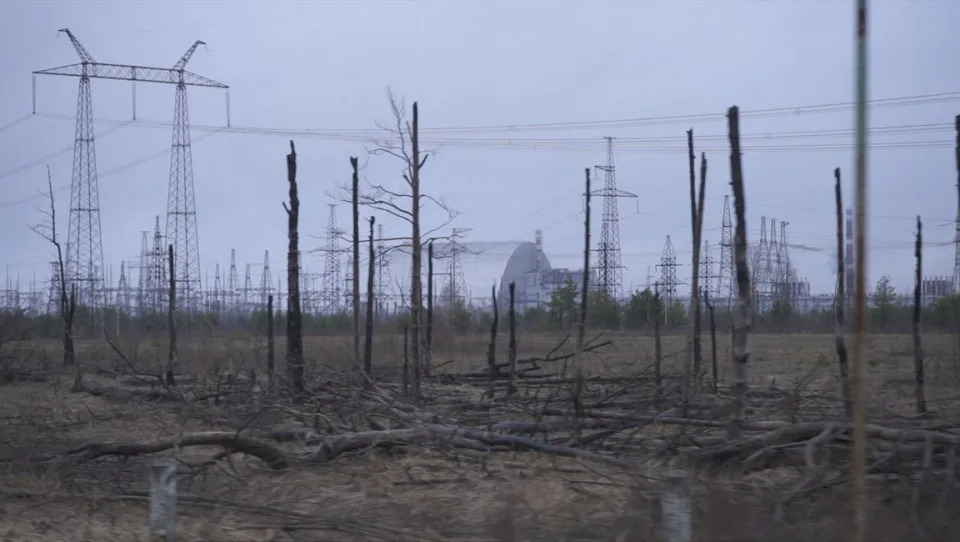
Standing between them and the capital, however, was the ruins of the Chernobyl Nuclear Power Plant and its surrounding exclusion zone, a heavily restricted 1,000 square-mile area poisoned by radiation. Undeterred, the Russian forces moved in and captured the decommissioned plant on the very first day of the invasion. Five weeks later, even as the horrors of the war raged throughout Ukraine, Russian forces quit the plant.
Ever since the plant’s No. 4 reactor exploded in April 1986—to this day, the worst nuclear power accident the world has ever seen—the site has been meticulously managed by generations of workers to mitigate the ongoing threat the area poses to the public. Their critical work could not stop when the Russian tanks and troops arrived on Feb. 24, 2022.
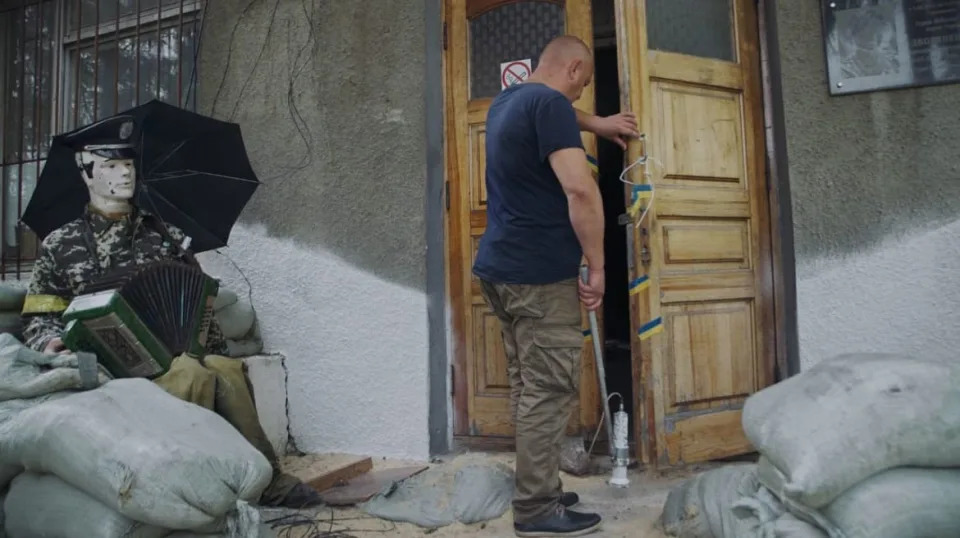
A new film featuring the worker’s testimonies tells how, under incredible strain, they used their expertise and manipulation against Russian occupiers until the soldiers were finally forced to leave.
“Never before in history has a nuclear power plant been taken over by a hostile army. This is something that’s unprecedented,” Oleksiy Radynski, a Kyiv-based documentarian, told The Daily Beast. “And also, no one was prepared for this because people assumed that everyone is a little bit civilized and you don’t do this. You don’t do something that can really lead to a global disaster of like unspoken proportions. But the Russians did it.”
A still from the documentary “Chernobyl 22” about the Russian Army’s invasion of Chernobyl.Oleksiy Radynski
Radynski is part of The Reckoning Project, a team of journalists and researchers documenting Russian war crimes in Ukraine to build a body of evidence for eventual prosecutions. One such war crime was the occupation of Chernobyl, which Radynski explored through testimony of those who were forced to work and live alongside Russian forces as they moved in and shocked the world by turning the site into a military base. He also made a documentary film, Chernobyl 22, using footage from interviews conducted after the occupation of the plant ended on March 31, 2022.
Radynski’s connection to the area is personal, having been one of tens of thousands of children evacuated from Kyiv following the disaster at the plant 37 years ago when he was just two years old. The meltdown, created by human error, and its aftermath are among Radynski’s earliest childhood memories. It was unthinkable, he says, that the security of Chernobyl would be risked by a military operation of any kind, right up until the moment it happened.
“They had security protocols for literally any kind of disaster, like a natural disaster or a terrorist attack for example, but not for an invading army coming in with tanks and heavy artillery and so on,” Radynski said of the plant workers. “So they had to improvise. I think they did something really, really amazing. The resolve of these people is also just unimaginable.”
The plant’s capture immediately sparked international condemnation and concern. Those fears were exacerbated when monitoring stations at the plant recorded a huge spike in radiation levels on the day Russian forces arrived as military vehicles disturbed contaminated soil as they plowed across the exclusion zone. The risks were real. But the Ukrainian workers realized they could use the fear of those risks to their advantage, Radynski says, by exacerbating the fear of radiation among Russian commanders.
“What the Ukrainian personnel at the plant—I mean the senior personnel—did, was they said: ‘If you want to survive, this place is very dangerous,’” Radynski says. “‘If you think you have taken over the nuclear power plant you are wrong. This is not really a nuclear power plant, this is a decommissioned and post-disaster nuclear plant. It’s something completely different and if you want to survive here you have to follow Ukrainian laws on radiation safety.’”
“This was of course true, but this was also a bit of manipulation, because along with these basic radiation safety rules they also started to impose on the Russians,” Radynski says. In one incident, on March 9, the plant suffered a blackout due to power lines being damaged in fighting elsewhere. The workers at the plant convinced the Russians to give them fuel for diesel generators, arguing that a complete loss of power could lead to catastrophic consequences. The plant’s Supervising Electrician, Oleksiy Shelestiy, says in Radynski’s film that staff joked among themselves that, in their own way, they were helping Ukraine’s armed forces by diverting tons of fuel to Chernobyl and away from Russian tanks.
A still from the documentary “Chernobyl 22” about the Russian Army’s invasion of Chernobyl.Oleksiy Radynski
The daily reality for those who did have to remain working in the decommissioned plant throughout the occupation was nevertheless perilous and draining. “They didn’t have proper sleep,” Radynski says. “They didn’t have proper rest. They were completely exhausted—they could make a mistake of any kind at any moment. They could do something wrong at the plant. So this was also extremely dangerous. Some of them spent even more than 25 days of nonstop working there.”
When they could sleep, many had to do so in the same areas as the Russians. Of course, the danger of the situation in Chernobyl affected the invading troops too.
One particularly bizarre example of the recklessness shown by Russia throughout the occupation is where they chose to dig their fortifications. One of the sites was in the Red Forest—the wooded area near the plant named for the rubescent shade its pine trees turned after being exposed to large amounts of radiation during the 1986 disaster. As part of the clean-up operation, authorities decided to bulldoze the forest and bury its contaminated trees in trenches.
The roadblock and trenches made by Russian soldiers near the Red Forest within the Chernobyl Nuclear Power Plant’s Exclusion Zone on May 29, 2022, during the Russian invasion of Ukraine.DIMITAR DILKOFF/AFP via Getty Images
“They dug fortifications in this area, which is actually not a forest, but the forest is below ground,” Radynski says. “The most contaminated materials are below ground. So you shouldn’t really walk there, but one thing you definitely should not do is dig there.”
In the course of his interviews, Radynski says he learned this extremely hazardous decision may not have simply been down to Russian commanders’ negligence of their own soldiers’ wellbeing. “The Russian generals who were taking over the plant, they were kind of boasting to the staff that they know their plant really well because in Russia they have an identical plant,” Radynski says.
That twin plant, Radynski says, is the Kursk Nuclear Power Plant in western Russia—a Soviet plant built in the 1970s which is so structurally similar to Chernobyl that it’s been used as a stand-in for its Ukrainian double as a filming location.
“They were saying that they were planning and rehearsing this takeover in that nuclear power plant in Kursk,” Radynski said of the Russian commanders. “But of course there is one thing that they didn’t take into account probably—is that the power plant in Kursk is really identical in every way with one exception: it’s not contaminated.”
The extent of the damage to Russian soldiers exposed to potentially dangerous doses of radiation remains unclear. Reports claimed some required treatment for radiation sickness in Belarus, while one witness in the documentary claims workers saw Russian men “evacuated on buses full of people vomiting.” Another said Chernobyl’s cooks had to warn Russians who had shot and skinned a moose that eating the animal—where wild fauna graze on the contaminated fauna—might be a bad idea.
A still from the documentary “Chernobyl 22” about the Russian Army’s invasion of Chernobyl.Oleksiy Radynski
When the Russians withdrew, Ukraine’s Defense Ministry cited losses incurred at the hands of its armed forces and “radiation exposure” as key reasons for the departure, taking the opportunity to mock Russian “mutants” on their way out.
The occupation nevertheless had serious consequences for the ongoing safety of Chernobyl. As the Russians left, large amounts of property was either destroyed or stolen—one estimate suggested around $1 million of property was looted—including everything from technical equipment to teapots. “It’s just lucky that a lot of really vital equipment is just too large to be squeezed into a tank or a military bus,” Radynski says. The area has also been heavily mined, a small part of a national scourge which has reportedly seen an area the size of Florida in Ukraine infested with explosives.
Arguably the most troubling of all the consequences for the workers, Radynski says, is the now ever-present sense of insecurity that comes with the fear that the Russians could return. Once unimaginable, the cavalier attitude toward nuclear safety in Ukraine has remained constant since Chernobyl’s occupation. On Thursday, Ukrainian emergency workers even took part in drills to prepare for a possible radiation leak at the Zaporizhzhia Nuclear Power Plant—Europe’s largest—amid alarming reports that Moscow is preparing such a plot at the site. Like Chernobyl, the southwestern Zaporizhzhia plant was captured by Russian forces early in the war—but the occupiers are still in control there to this day.
For Radynski, the fact that the Chernobyl plant is back under Ukrainian control is in itself a remarkable testament to the fortitude of those workers who stoically carried out their duties in the face of unparalleled danger. “There has been many stories of Russian military defeats during this war—I hope there will be more,” he says. “But most of the stories of Russian defeats that we know of, they come from the Ukrainian Army.”
In this case, however, it was Ukrainian workers who won out. The Russians in Chernobyl “were defeated by the power of Ukrainian kafkaesque bureaucracy,” Radynski says, as the staff found a way to “swallow them into this kind of swamp of radiation protocols.” Protocols, he notes, which they didn’t follow anyway.
In the documentary, a physical protection engineer at Chernobyl describes an exchange with a Russian energy official who kept tabs on the plant’s staff fearing they might intentionally trigger some kind of nuclear disaster. “‘I don’t care about your armed thugs,’” Vitaliy Popov says he told the official. “‘Our guys will take care of them. As for me, I actually came here to stop 1986 from happening again.’ I told him: ‘I will accomplish my task.’”
Putin says he hopes Prigozhin and his Wagner mercenaries ‘didn’t steal much’ of the billions Russia spent on them
Ryan Pickrell – June 28, 2023
Russian President Vladimir Putin addresses troops from the defence ministry, National Guard, FSB security service and interior ministry gathered on the Sobornaya (Cathedral) Square from the porch of the the Palace of the Facets on the grounds of the Kremlin in central Moscow on June 27, 2023.SERGEI GUNEYEV/SPUTNIK/AFP via Getty ImagesMore
Putin revealed on Tuesday Russia spent billions on Yevgeny Prigozhin and his mercenaries.
He then said that he hopes “no one stole anything — or, let’s say, didn’t steal much.”
Putin’s comment seems to suggest some theft is expected, highlighting the state of corruption in Russia.
After Russian President Vladimir Putin said Tuesday Moscow spent billions on Yevgeny Prigozhin and his Wagner mercenaries, he quipped he hopes they “didn’t steal much” in a telling comment on the corruption running rampant in Russia, as well as potential plans for Prigozhin.
In a meeting just days after Prigozhin called off his rebellion against the Russian Ministry of Defense and his march on Moscow, Putin said that Russia had fully financed Wagner operations between May 2022 and May 2023.
During much of that time, Wagner’s paramilitary forces were engaged in costly, high-intensity warfare in Ukraine, particularly in Bakhmut, while the group’s leader publicly feuded with the defense ministry, specifically the defense minister, Sergei Shoigu, and Valery Gerasimov, chief of the general staff and head of war operations in Ukraine.
On Tuesday, Putin revealed the Russian government spent 86 billion rubles, or roughly $1 billion, on support for Wagner, The New York Times reported, and the Concord catering company founded by Prigozhin, who has been nicknamed “Putin’s Chef,” received roughly 80 billion rubles for supply contracts with the Russian military.
He then hinted at potential consequences for those who may have run off with the money, at least above certain limits. Though he didn’t call out his long-time ally Prigozhin by name, there are indications he could pursue him and others for corruption.
“I hope that in the course of this work, no one stole anything — or, let’s say, didn’t steal much,” the Russian president said, according to a translation from The Times. “But we will certainly get to the bottom of this.”
Corruption is recognized as a serious problem in Russia, where opposition figures with anti-corruption agendas have been jailed for speaking out about illicit operations running all the way to the top. Such was the case for Alexei Navalny, an imprisoned critic of the Kremlin and Putin.
And, in an almost Soviet tradition, it extends beyond just politics into the military as well.
A former Russian air force lieutenant who later worked as an analyst for state media before leaving the country over the war in Ukraine told The New York Times last year, just a few months into the war in Ukraine, “it is impossible to imagine the scale of lies inside the military.”
The man described Russian commanders faking military exercises and then pocketing funds and contractors delivering sub-par systems to skim cash from dedicated budget allocations.
The veteran of the Russian military, Gleb Irisov, told The Times that he saw air defense systems that couldn’t even shoot down small drones, military vehicles that would break down after only a couple of years, and parts on fighter jets that would troublingly melt at supersonic speeds.
“The quality of military production is very low because of the race to steal money,” he said, describing a tradition of problematic rot in the Russian ranks and defense industry.
There is more to Putin’s comments than an acknowledgement of the corruption.
His statement Tuesday on financing for Wagner suggests that the private military company’s employees once celebrated as heroes after their Pyrrhic victory in Bakhmut may still be facing punishment beyond what the Russian leader initially let on.
The full consequences of Prigozhin and Wagner’s revolt remain to be seen.
A mutiny in photos: Inside Russian mercenary group’s march toward Moscow
Yevgeny Prigozhin, leader of the Wagner Group mercenary army, said he turned around to avoid “shedding Russian blood.”
Dylan Stableford, Senior Writer – June 27, 2023
Fighters of the Wagner Group mercenary army stand on a tank in the city of Rostov-on-Don, Russia, on Saturday. (Stringer/Reuters)
Russian President Vladimir Putin appears for now to have survived what many saw as a coup attempt, striking a deal with Yevgeny Prigozhin, the leader of the Wagner Group mercenary army, which had advanced to the outskirts of Moscow over the weekend.
Prigozhin agreed to call off his drive toward the Russian capital, withdraw forces from the captured city of Rostov-on-Don and leave Russia for Belarus.
But the dramatic show of force left Putin considerably weakened on the world stage, triggering speculation that the episode marked the end of his iron grip on Russia.
Here’s how the weekend unfolded — in photos
Wagner Group fighters in Rostov-on-Don on Saturday. (Stringer/Reuters)
The Wagner Group’s band of mercenaries, which had been fighting for Russia in its war on Ukraine, crossed into southern Russia and seized a military outpost in Rostov-on-Don without a fight.
A Wagner Group fighter in Rostov-on-Don on Saturday. (Stringer/Reuters)
Prigozhin then led his soldiers toward Moscow on a “march for justice“ to remove what he labeled as Russia’s incompetent and corrupt senior military leadership after an alleged strike on a Wagner military camp killed 30 of his fighters.
Military vehicles operated by the Wagner Group in Voronezh, Russia, along the M-4 highway — which links Moscow to the country’s southern cities — as smoke from a burning fuel tank at an oil depot rises in the background. (Stringer/Reuters)Wagner Group fighters during a stop on the highway in Voronezh, Russia, on Saturday. (Stringer/Reuters)The Wagner convoy drives in Voronezh toward Moscow on Saturday. (Stringer/Reuters)
Putin vowed to strike back hard, denouncing Prigozhin’s rebellion as an “armed mutiny” that would be met with a “harsh” response from regular Russian troops.
Russian President Vladimir Putin gives a televised address in Moscow on Saturday. (Sputnik/Gavriil Grigorov/Kremlin via Reuters)
“Any actions that split our nation are essentially a betrayal of our people, of our comrades-in-arms who are now fighting at the frontline,” Putin said in remarks on Saturday morning from the Kremlin, invoking the bloody legacy of the Bolshevik revolution of 1917. “This is a knife in the back of our country and our people.”
Hours later, Prigozhin announced that the column of troops would halt its advance on Moscow in a deal apparently brokered by Belarusian President Alexander Lukashenko, a key Putin ally.
Wagner Group fighters pull out of Southern Military District headquarters in Rostov-on-Don on Saturday night. (Alexander Ermochenko/Reuters)
Prigozhin said his goal was to avoid “shedding Russian blood,” but he did not say if the Kremlin agreed to his demand for replacing Russia’s military leadership.
Wagner Group leader Yevgeny Prigozhin leaves Southern Military District headquarters in Rostov-on-Don on Saturday night. (Alexander Ermochenko/Reuters)Prigozhin, seated in the back of an SUV, leaves Southern Military District headquarters. (Alexander Ermochenko/Reuters)Russian police cars during the Wagner Group’s pullout from Rostov-on-Don on Saturday. (Stringer/Reuters)
On Monday, Russian Defense Minister Sergei Shoigu made his first public appearance since the short-lived mutiny, inspecting troops in Ukraine in a video aimed at projecting a sense of order. But the questions swirling around Moscow continue to mount.
Russian Defense Minister Sergei Shoigu and Col. Gen. Yevgeny Nikiforov talk on board an aircraft at an unknown location on Monday as they visit Russian troops involved in the Russia-Ukraine conflict. (Russian Defense Ministry/Handout via Reuters)
NATO Secretary-General Jens Stoltenberg called the events “yet another demonstration of the big strategic mistake that President Putin made with his illegal annexation of Crimea and the war against Ukraine.”
“I think what we’re seeing in Russia over the last days demonstrates the fragility of the [Putin] regime,” Stoltenberg said Monday. “And, of course, it is a demonstration of weakness.”
A Russian police officer guards the closed Red Square in Moscow on Saturday. (Maxim Shemetov/Reuters)