Most efficient vehicles of 2022

auto blog

Most efficient vehicles of 2022

John Beltz Snyder – April 11, 2022

Fueling our cars is no small expense, but as a recurring and regular part of owning a vehicle, it’s inevitable. That can make things interesting — frustrating, burdensome — when the market is in turmoil, or when we have a life change that necessitates greater consumption. Gas prices can fluctuate head-spinningly quickly, too. And it’s not just internal combustion vehicles that are subject to changing fuel costs. EV operating costs are tied to energy prices, too, of course, which means changes in supply and demand due to global or national economics, or even regional weather events, can mean we’re paying more per mile regardless of what fuels our vehicles. And perhaps it’s not about the money.

Even when prices are cheap, many of us would like to minimize our footprint in the course of our daily lives. As such, choosing a fuel-efficient vehicle can be a priority for drivers who want to spend less and pollute less. With that in mind, here are the most efficient vehicles you can buy today, broken down by powertrain, with combined fuel economy and estimated annual fuel costs listed. (EPA calculates annual fuel cost based on “45% highway, 55% city driving, 15,000 annual miles and current fuel prices,” but also offers a calculator to personalize your own estimated yearly fuel costs.)

Most efficient EVs for 2022

Battery-electric vehicles are the obvious choice for saving on fuel costs and consumption, but not all EVs are created equal. Range is often the bigger consideration for many customers when choosing an EV — we just want to be able to get where we’re going with the least disruption and downtime. If lower operating costs and carbon footprint is your goal, though, you want to pay more attention to efficiency than driving range. The simplest way for a consumer to do this is to look at the EPA’s combined miles-per-gallon-equivalent (mpge) rating. We’re also including the EPA’s estimated annual fuel costs. Here are the top 20 most efficient EVs, based on the most efficient version of each model. These are also the least expensive to fuel overall.

1. Tesla Model 3: 132 mpge; $500/yr

2. Lucid Air: 131 mpge; $500/yr

3. Tesla Model Y: 129 mpge; $500/yr

4. (Tie) Chevrolet Bolt EV: 120 mpge; $550/yr

4. (Tie) Hyundai Kona Electric: 120 mpge; $550/yr

4. (Tie) Tesla Model S: 120 mpge; $550/yr

7. Kia EV6: 117 mpge; $550/yr

8. Chevrolet Bolt EUV: 115 mpge; $550/yr

9. Hyundai Ioniq 5: 114 mpge; $600/yr

10. Kia Niro EV: 112 mpge; $600/yr

11. Nissan Leaf: 111 mpge; $600/yr

12. Mini Cooper SE: 110 mpge; $600/yr

13. BMW i4: 109 mpge; $600/yr

14. Polestar 2: 107 mpge; $600/yr

15. Ford Mustang Mach-E: 103 mpge; $650/yr

16. Tesla Model X: 102 mpge; $650/yr

17. Volkswagen ID.4: 99 mpge; $650/yr

18. Mercedes-Benz EQS: 97 mpge; $700/yr

19. Audi Q4 E-Tron (incl. Sportback): 95 mpge; $700/yr

20. Mazda MX-30: 92 mpge; $700/yr

If you’d rather break it down further by including each individual specification, the 15 most efficient EVs are as follows.

1. Tesla Model 3 RWD: 132 mpge; $500/yr

2. (Tie) Lucid Air G Touring AWD w/19-inch wheels: 131 mpge; $500/yr

2. (Tie) Tesla Model 3 Long Range AWD: 131 mpge; $500/yr

4. Tesla Model Y RWD: 129 mpge; $500/yr

5. Lucid Air Dream R AWD w/19in wheels: 125 mpge; $500/yr

6. Tesla Model Y Long Range AWD: 122 mpge; $550/yr

7. Lucid Air G Touring AWD w/21-inch wheels: 121 mpge; $550/yr

8. (Tie) Chevrolet Bolt EV: 120 mpge; $550/yr

8. (Tie) Hyundai Kona Electric: 120 mpge; $550/yr

8. (Tie) Tesla Model S: 120 mpge; $550/yr

11. Kia EV6 RWD (both Standard- and Long-Range): 117 mpge; $550/yr

12. (Tie) Lucid Air Dream P AWD w/19-inch wheels: 116 mpge; $550/yr

12. (Tie) Lucid Air Dream R AWD w/21-inch wheels: 116 mpge; $550/yr

12. (Tie) Tesla Model S Plaid w/19-inch wheels: 116 mpge; $550/yr

15. Chevrolet Bolt EUV: 115 mpge; $550/yr

Most efficient plug-in hybrids for 2022

If going gas-free isn’t in your plans, a plug-in hybrid is a decent compromise to lower your fuel costs and emissions while still having the convenience and security of being able to fill up quickly and be on your way, while still being able to do some driving on electricity alone. These are the most efficient PHEVs currently on sale, based on combined mpge rated by EPA. Estimated annual fuel costs are listed, as well. Note that some of these are even more efficient, by the EPA’s standards, than some all-electric vehicles in the list above. In fact, #1 is rated the most efficient of all the vehicles on this page, period.

1. Toyota Prius Prime: 133 mpge; $750/yr

2. Hyundai Ioniq Plug-In Hybrid: 119 mpge; $750/yr

3. (Tie) Ford Escape PHEV: 105 mpge; $850/yr

3. (Tie) Kia Niro Plug-In Hybrid: 105 mpge; $850/yr

5. Toyota RAV4 Prime: 94 mpge; $900/yr

6. Lexus NX 450h Plus: 84 mpge; $1,150/yr

7. Chrysler Pacifica Hybrid: 82 mpge; $1,200/yr

8. Hyundai Tucson Plug-In Hybrid: 80 mpge; $1,100/yr

9. Kia Sorento Plug-In Hybrid: 79 mpge; $1,150/yr

10. Lincoln Corsair Grand Touring: 78 mpge; $1,200/yr

11. Hyundai Santa Fe Plug-In Hybrid: 76 mpge; $1,200/yr

12. BMW 330e: 75 mpge; $1600/yr

13. Mitsubishi Outlander PHEV: 74 mpge; $1,450/yr

14. Mini Cooper SE Countryman: 73 mpge; $1,750/yr

15. Audi A7 e: 70 mpge; $1,500/yr

16. (Tie) Volvo S60 Recharge: 69 mpge; $1,550/yr

16. (Tie) Volvo V60 Recharge: 69 mpge; $1,550/yr

18. BMW 530e: 64 mpge; $1,750/yr

19. Volvo S90 Recharge: 63 mpge; $1,650/yr

20. Volvo XC60 Recharge: 57 mpge; $1,950/yr
Most-efficient internal combustion vehicles for 2022

If you’re not ready or able to get a car with a plug, but still want to get the most mileage from your fill-ups, these are the most efficient gasoline-powered vehicles you can buy. The vast majority of these are traditional hybrids, but a few non-hybrid cars made the list. Again, these are based on the EPA’s combined mpg rating, listed by the most efficient specification for each model, and including estimated annual fuel costs.

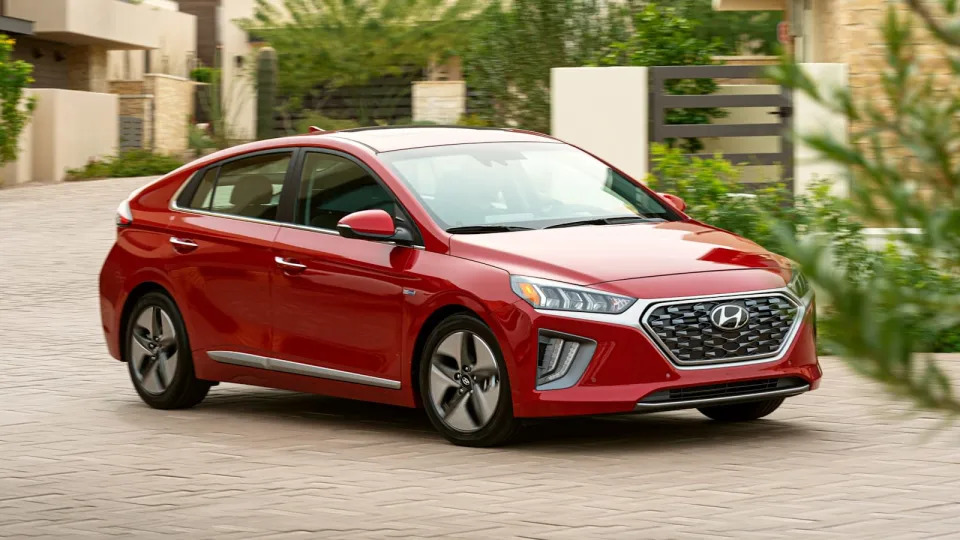
1. Hyundai Ioniq: 59 mpg; $900/yr

2. Toyota Prius: 56 mpg; $950/yr

3. Hyundai Elantra Hybrid: 54 mpg; $1,000/yr

4. Honda Insight: 52 mpg; $1,050/yr

4. (Tie) Hyundai Sonata Hybrid: 52 mpg; $1,050/yr

4. (Tie) Toyota Camry Hybrid: 52 mpg; $1,050/yr

4. (Tie) Toyota Corolla Hybrid: 52 mpg; $1,050/yr

8. Kia Niro: 50 mpg; $1,100/yr.

9. Honda Accord Hybrid: 47 mpg; $1,150/yr

10. (Tie) Lexus ES 300h: 44 mpg; $1,250/yr

10. (Tie) Toyota Avalon Hybrid: 44 mpg; $1,250/yr

12. Lexus UX 250h: 42 mpg; $1,300/yr

13. Ford Escape Hybrid: 41 mpg; $1,300/yr

14. Toyota RAV4 Hybrid: 40 mpg; $1,350/yr

15. (Tie) Lexus NX 350h: 39 mpg; $1,650/yr

15. (Tie) Mitsubishi Mirage: 39 mpg; $1,400/yr

15. (Tie) Toyota Venza: 39 mpg; $1,400/yr

18. (Tie) Honda CR-V Hybrid: 38 mpg; $1,400/yr

18. (Tie) Hyundai Tucson Hybrid: 38 mpg; $1,400/yr

20. (Tie) Ford Maverick: 37 mpg; $1,450/yr
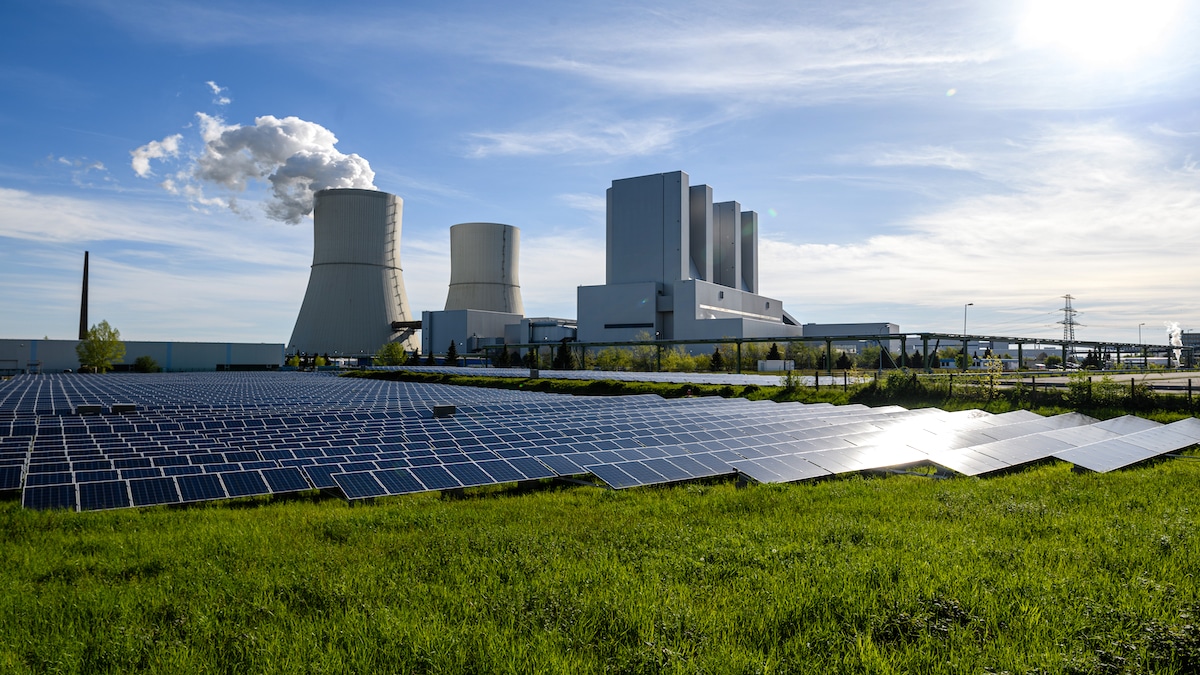
Germany Announces New Plan to ‘Turbocharge’ Transition to Renewable Energy

EcoWatch – Renewable Energy

Germany Announces New Plan to ‘Turbocharge’ Transition to Renewable Energy

Olivia Rosane – April 07, 2022

A solar energy field next to a coal plant in Germany.

A solar energy field next to a coal plant in Germany. Jens Schlueter / Getty Images

Responding to both the climate crisis and Russia’s invasion of Ukraine, Germany unveiled a major package Wednesday to speed its transition to renewable energy. 

The goal of the new plan is for Germany to get at least 80 percent of its energy from renewable sources by 2030 and achieve almost 100 percent renewable energy by 2035, DW reported. 

“On the one hand, the climate crisis is coming to a head. On the other hand, Russia’s invasion shows how important it is to phase out fossil fuels and promote the expansion of renewables,”  Economy Minister Robert Habeck told the press, as Reuters reported. 

The package comes days after the latest Intergovernmental Panel on Climate Change report warned that nations must reduce carbon dioxide emissions 43 percent by 2030 in order to limit global warming to 1.5 degrees Celsius above pre-industrial levels. It also comes as European countries have vowed to wean themselves off of Russian fossil fuels “well before 2030” in response to Russia’s invasion of Ukraine. 

The new energy plan is a 600-page document known as the “Easter Package,” DW reported. Habeck said it was “the biggest comprehensive energy package in two decades” and would “turbocharge” the transition to renewable energy. 

The plan is the work of Germany’s coalition government, which includes the Free Liberals, Social Democrats and Greens, according to Reuters. It was approved by the German cabinet. It increases Germany’s previous renewable energy target from 65 percent by 2030. Currently, the country gets around 40 percent of its energy from renewable sources. Meeting the 100 percent 2035 goal will require the country to more than double its current rate in 13 years, AP News reported. 

The new plan also sets specific targets for different types of renewable energy, according to DW. These include:

  1. Increasing land-based wind power by 10 gigawatts a year, to reach 115 gigawatts by 2030. 
  2. Increasing solar by 22 gigawatts a year, to reach 215 gigawatts by 2030.
  3. Reaching 30 gigawatts of offshore wind power by 2030, 40 by 2035 and at least 70 by 2045. 

While the plan is ambitious, Germany may miss its near-term climate targets because of failing to take action in the past, Habeck said, as AP News reported. The transition to renewable energy has lagged in recent years because of regulations and changes to feed-in subsidies, and the country added no offshore wind power in 2021. The new package labels renewable energy as having “overriding public interest,” which should help speed changes through the bureaucracy. 

In the immediate push to phase out Russian fossil fuels, Germany may have to increase the use of domestic coal, Habeck acknowledged. He said that the country would stop importing Russian oil and coal this year and gas by halfway through 2024. 

“You can see at what speed we are becoming independent of Russian energy,” he said. 

Germany aims to achieve carbon neutrality by 2045. 

Plant-Based Grocery Sales Outpace Total Food Sales by 3x in U.S., Study Finds

EcoWatch – Food

Plant-Based Grocery Sales Outpace Total Food Sales by 3x in U.S., Study Finds

Paige Bennett – April 08, 2022

A woman shops for vegan foods.

Plant-based food sales were three times higher than total food sales in the U.S. in 2021. Ole Spata / picture alliance via Getty Images

A new study from The Good Food Institute (GFI), the Plant-Based Foods Association (PBFA) and SPINS, a wellness-focused data technology organization, has found that at U.S. grocery stores, plant-based food sales were three times higher than total food sales in 2021. 

According to the report, plant-based food sales increased 6.2% compared to previously record-high sales in 2020, and the plant-based food market reached $7.4 billion last year. For many categories, plant-based products were more popular than conventional counterparts made with dairy or meat.

“Meanwhile, the conventional protein market has been rocked by supply chain disruptions and escalating inflation,” the report said. “Conventional meat dollar sales grew three times faster than its unit sales over the past three years, indicating that the apparent growth is driven solely by price hikes.”

GFI noted that the largest plant-based category is milk, and 42% of U.S. households purchased plant-based milk in 2021. Plant-based milks have been popular in recent years with a dollar sales growth from 4% to 33% over the past three years. In 2021, dairy milk sales declined by 2% in comparison.

Almond milk remains the top choice, making up 59% of all plant-based milk sales. Oat milk has seen rapid growth though and is up to 17% of plant-based milk sales as of last year. In 2017, oat milk sales made up only 0.5% of the category in 2018.

Other dairy-free products, such as ice creams, yogurts, creamers and cheeses, also saw growth over the past year, while many conventional products, such as cheese, actually declined in 2021.

Meat alternatives are an interesting case study in their own right. Although the plant-based meat category matched its 2021 sales to its 2020 sales, plant-based meat unit sales outpaced conventional meat unit sales six times in the past three years. Plant-based burgers lead the category with the most sales, but chicken alternatives and other options like deli slices and meatballs have seen the most growth in the past year.

“The sustained rise in the market share of plant-based foods is remarkable, and makes it clear that this shift is here to stay. More and more consumers are turning to plant-based options that align with their values and desire to have a positive impact on personal and planetary health,” said Julie Emmett, PBFA senior director of marketplace development. “The potential impact of these initiatives extends far beyond the store shelf: By taking consumer concerns to heart, the industry is actively embracing its role as a key driver of change that moves us closer to a secure and sustainable food system.”

Micro-plastics Found in Lungs of Living People for First Time, and Deeper Than Expected

EcoWatch – Health – Wellness

Micro-plastics Found in Lungs of Living People for First Time, and Deeper Than Expected

Olivia Rosane –  April 06, 2022

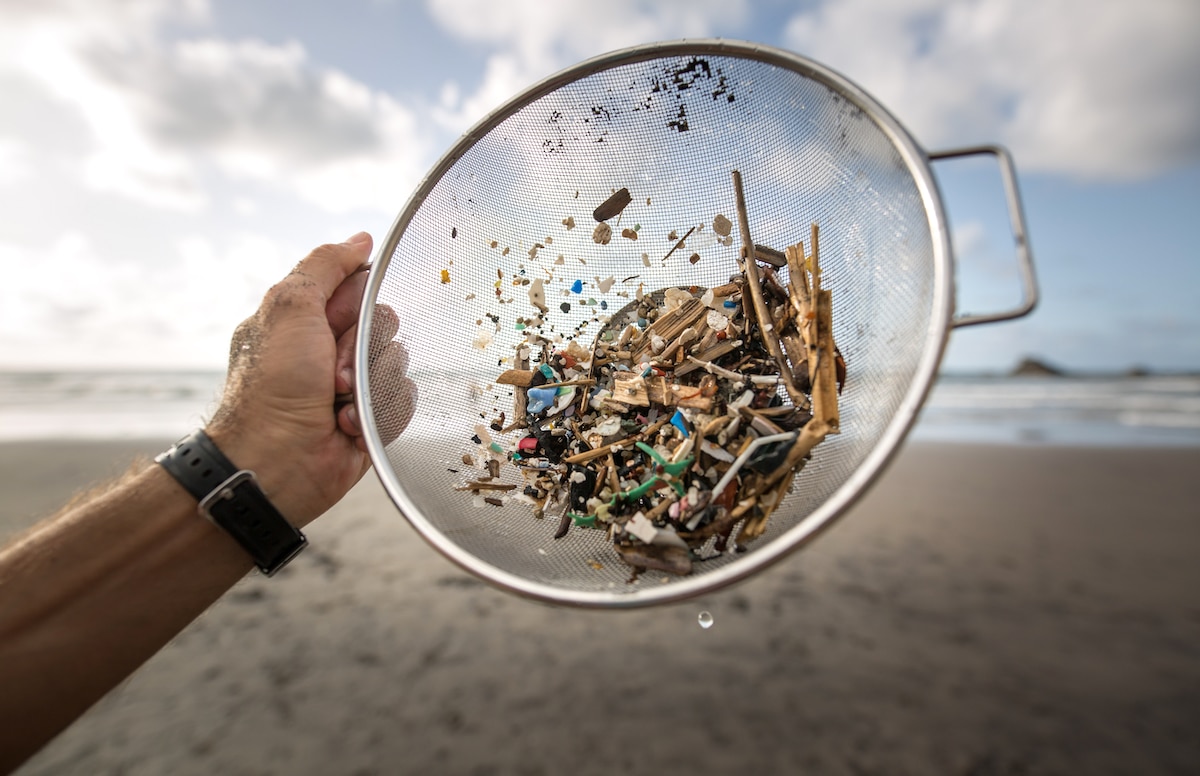
Microplastics found in the Canary Islands.

Micro-plastics found in the Canary Islands. DESIREE MARTIN / AFP via Getty Images

It is possible to breathe in micro-plastics

A study accepted for publication in Science of the Total Environment last month detected micro-plastics in the lung tissue of living people for the first time, and much deeper than the researchers expected. 

“We did not expect to find the highest number of particles in the lower regions of the lungs, or particles of the sizes we found,” senior author Laura Sadofsky at Hull York medical school told The Guardian. “It is surprising as the airways are smaller in the lower parts of the lungs and we would have expected particles of these sizes to be filtered out or trapped before getting this deep.”

The research comes as more and more evidence shows that micro-plastics are penetrating the human body. Another study published days earlier found micro-plastics in human blood for the first time, and in almost 80 percent of the people sampled. 

The new study also found the plastic in the majority of lung tissue samples – 11 out of 13, the study authors wrote. A total of 39 microplastics were found in all regions of the lung. 

Previous studies had found plastics in lung samples taken from autopsies. One 2021 study in Brazil found microplastics in the lungs of 13 out of 20 people studied, The Guardian reported. A 1998 study of U.S. lung cancer patients found plastic and plant fibers in more than 100 samples. However, the lung tissue in the most recent study came from live patients at Castle Hill Hospital in East Yorkshire, the Press Association reported. It was removed in surgeries as part of the patients’ routine medical care. 

“Microplastics have previously been found in human cadaver autopsy samples; this is the first robust study to show microplastics in lungs from live people,” Sadofsky said, as the Press Association reported. 

The scientists used spectrometry to identify the plastics, The Guardian explained. The most common two types of plastic were polypropylene, which is used for packaging and pipes, and PET, which is commonly used for beverage bottles. 

In total, 11 microplastics were found in the upper parts of the lung, seven in the middle and 21 in the lower parts, a result that was particularly surprising, according to the Press Association.

“Lung airways are very narrow so no-one thought they could possibly get there, but they clearly have,” Sadofsky said, as the Press Association reported. 

The findings build on reports that people exposed to microplastics in industrial settings have developed respiratory symptoms and diseases, the study authors wrote. 

“This data provides an important advance in the field of air pollution, micro-plastics and human health,” Sadofsky said, as the Press Association reported. “The characterization of types and levels of micro-plastics we have found can now inform realistic conditions for laboratory exposure experiments with the aim of determining health impacts.”

WHO: 99% of the world is breathing polluted air

Yahoo! News

WHO: 99% of the world is breathing polluted air

Ben Adler, Senior Editor – April 6, 2022

Virtually everyone on Earth is breathing polluted air, according to a new report from the World Health Organization (WHO). In a report released Monday, the U.N. agency stated that 99% of the global population “breathes air that exceeds WHO air quality limits, and threatens their health.”

That startling fact can be attributed in part to improved monitoring of air quality. An all-time high of more than 6,000 cities in 117 countries now monitor air pollution. That’s 2,000 more cities than the last update to the WHO’s air quality database, and six times as many as when it launched in 2011. The WHO is also now able for the first time to measure ground-level average annual concentrations of nitrogen dioxide, and it can track smaller sizes of particulate matter than ever before. (Exposure to nitrogen dioxide can cause respiratory disease such as asthma, symptoms such as coughing, and emergency room visits.)

An aerial view of vehicles driving near downtown Los Angeles.
An aerial view of vehicles driving near downtown Los Angeles. (Mario Tama/Getty Images)

The high percentage of areas that exceed the threshold for harmful pollution is also driven by the fact that last year the WHO tightened its standards for air quality for the first time in 15 years. The organization lowered exposure levels of pollutants including sulfur dioxide, carbon monoxide, ground-level ozone and particulate matter. The WHO calculates that air pollution causes more than 7 million premature deaths each year.

“It has been recognized that air pollution has an impact at a much lower level than previously thought,” Dr. Sophie Gumy, technical officer at WHO’s Department of Environment, Climate Change and Health, told UN News. “So, with all the new evidence that has come up over the last 15 years since the last WHO air quality guideline update, most of the values of the guidelines levels have been reduced.”

Most air pollution is caused by the combustion of fossil fuels such as oil, gas and coal, which are also responsible for the greenhouse gas emissions causing climate change. Climate change is also itself a cause of increasing air pollution, due to the fact that ground-level ozone, also known as smog, forms more readily in warmer temperatures, and wildfires are increasingly frequent and severe.

The WHO called for nations to accelerate their transition to electric vehicles and clean sources of energy.

“Current energy concerns highlight the importance of speeding up the transition to cleaner, healthier energy systems,” said WHO Director-General Tedros Adhanom Ghebreyesus in the report. “High fossil fuel prices, energy security, and the urgency of addressing the twin health challenges of air pollution and climate change, underscore the pressing need to move faster towards a world that is much less dependent on fossil fuels.”

Birds and Bees Make Better Coffee, Study Finds

EcoWatch

Birds and Bees Make Better Coffee, Study Finds

Cristen Hemingway Jaynes – April 06, 2022

Birds and bees work together as pollinators

Birds and bees work together as pollinators. DansPhotoArt on flickr / Moment / Getty Images

For many people, one rich, pleasant smell signals the start of a new day more than any other: coffee. Different techniques have been used to get the best cup of the caffeine-rich liquid, from a French press to the pour-over method.

A unique new study has found that the secret to better coffee is really in control of the birds and the bees.

In the study, researchers found that when birds and bees joined forces to protect and pollinate coffee plants, the result was coffee beans that were bigger, more abundant and of better quality, reported the University of Vermont. Some of the flying assistants come from thousands of miles away, and without them the $26 billion coffee industry would see a 25 percent decrease in crop yields, or about $1,066 per hectare —  a hectare equals almost two and a half acres — in coffee losses.

“Until now, researchers have typically calculated the benefits of nature separately, and then simply added them up,” said Alejandra Martínez-Salinas of the Tropical Agricultural Research and Higher Education Center (CATIE), who was the study’s lead author, the University of Vermont (UVM) reported. “But nature is an interacting system, full of important synergies and trade-offs. We show the ecological and economic importance of these interactions, in one of the first experiments at realistic scales in actual farms.”

For the study, the researchers from Latin America and the U.S. used the world’s most popular type of coffee, Coffea arabica, a self-pollinating crop. They used small lace bags and large nets to test four scenarios on 30 coffee farms in Costa Rica. These included bee pollination alone; pest control by birds alone; zero bee and bird activity; and “a natural environment” in which the bees and birds were free to work together, going about their pollinating activities and munching on insects like the damaging coffee berry borer, which affects worldwide coffee production.

“These results suggest that past assessments of individual ecological services… may actually underestimate the benefits biodiversity provides to agriculture and human wellbeing,” said Taylor Ricketts of the University of Vermont’s Gund Institute for Environment. “These positive interactions mean ecosystem services are more valuable together than separately.”

The study, “Interacting pest control and pollination services in coffee systems,” was published in the journal Proceedings of the National Academy of Sciences.

In the study, it was found that the birds and bees had combined positive effects on the overall weight, weight uniformity and set of the coffee fruit — which all affect the quality and price — that were more significant than each of their effects alone, the University of Vermont reported.

“One important reason we measure these contributions is to help protect and conserve the many species that we depend on, and sometimes take for granted,” Ph.D. candidate at UVM’s Gund Institute for Environment and Rubenstein School of Environment and Natural Resources Natalia Aristizábal said. “Birds, bees, and millions of other species support our lives and livelihoods, but face threats like habitat destruction and climate change.”

In a first, wind power is second-leading U.S. source of electricity in one day

Yahoo! News

In a first, wind power is second-leading U.S. source of electricity in one day

David Knowles, Senior Editor – April 6, 2022

Power generated by wind turbines in the United States hit a milestone last week, becoming the second-highest source of electricity in the country for a 24-hour period, according to the Energy Information Administration.

Wind turbines generated more than 2,000 gigawatt-hours of electricity in the U.S. on Tuesday, March 29, more than was provided by nuclear and coal power plants that day. Wind power, which is renewable and does not release greenhouse gases into the atmosphere, still trailed the electricity produced by natural gas, but it was the first time in U.S. history that wind turbines outperformed nuclear and coal power.

On its website, the EIA notes, “The amount of wind electricity generation has grown significantly in the past 30 years. Advances in wind energy technology have decreased the cost of producing electricity from wind. Government requirements and financial incentives for renewable energy in the United States and in other countries have contributed to growth in wind power.”

In total, electricity generated from wind power has gone from roughly 6 billion kilowatt-hours in 2000 to 380 billion in 2021, EIA says. Wind turbines now account for roughly 9.2% of the U.S.’s total “utility-scale electricity generation,” according to the agency.

Power-generating Siemens 2.37-megawatt wind turbines are seen at the Ocotillo Wind Energy Facility in California.
Power-generating Siemens 2.37-megawatt wind turbines are seen at the Ocotillo Wind Energy Facility in California. (Bing Guan/Reuters)

The rush toward wind energy has picked up steam as the country looks for ways to ween itself from oil and reduce greenhouse gas emissions that cause climate change. In 2020, 42% of new electricity generation capacity came from land-based wind energy, according to figures from the U.S. Department of Energy. Spurred on by federal tax incentives, wind turbines have been going up in states such as Illinois, Indiana, Iowa, Colorado, Kansas, Texas and Minnesota.

The U.S. Geological Survey has mapped the location wind turbines nationwide as an analytical tool for “government agencies, scientists, private companies, and citizens.”

In an effort to help the U.S. reach net-zero greenhouse gas emissions by 2035, President Biden announced leases in January for nearly 500,000 acres off the coast of New York and New Jersey for the construction of offshore wind farms.

In February, the Department of the Interior auctioned offshore leases off the coast of New York totaling $4.37 billion.

“This week’s offshore wind sale makes one thing clear: The enthusiasm for the clean energy economy is undeniable and it’s here to stay,” Interior Secretary Deb Haaland said in a written statement at the time. “The investments we are seeing today will play an important role in delivering on the Biden-Harris administration’s commitment to tackle the climate crisis and create thousands of good-paying, union jobs across the nation.”

In a report issued this week, the United Nations Intergovernmental Panel on Climate Change warned that in order to keep global temperatures from rising more than 1.5°C above pre-industrial levels, global greenhouse gas emissions have to start dropping in 2025 and go down 43% from current levels by 2030 — and 84% by 2050. To do so, experts say, wind power will need to ramp up significantly in the coming years.

Supreme Court reinstates Trump-era water rule, for now

Associated Press

Supreme Court reinstates Trump-era water rule, for now

Jessica Gresko – April 6, 2022

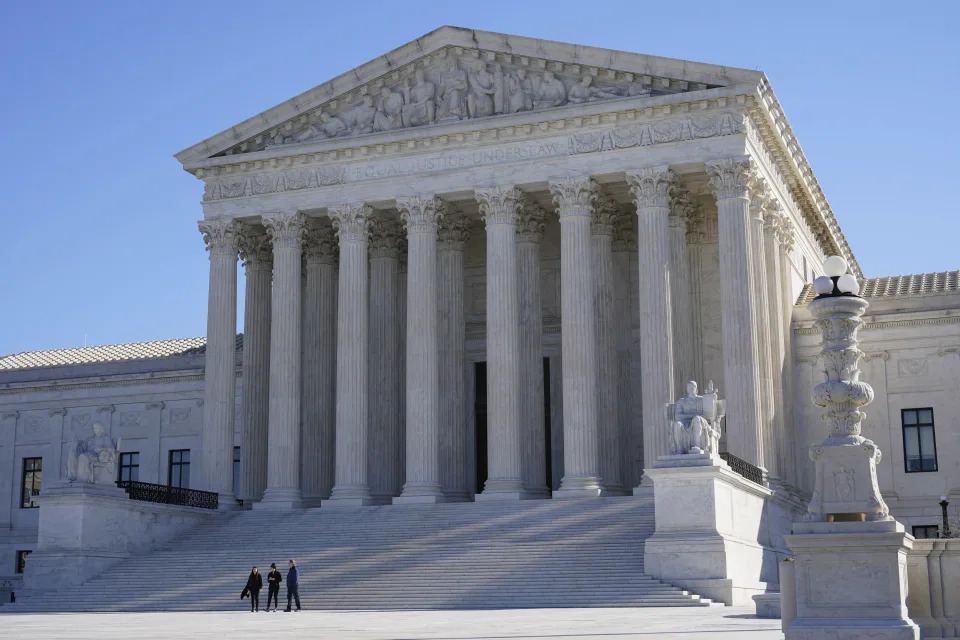
  • FILE - Visitors walk outside the Supreme Court building on Capitol Hill in Washington, Feb. 21, 2022. The Supreme Court on Wednesday, April 6, 2022, reinstated for now a Trump-era rule that had curtailed the power of states and Native American tribes to block pipelines and other energy projects that can pollute rivers, streams and other waterways. (AP Photo/Patrick Semansky, File) Visitors walk outside the Supreme Court building on Capitol Hill in Washington, Feb. 21, 2022. The Supreme Court reinstated for now a Trump-era rule that had curtailed the power of states and Native American tribes to block pipelines and other energy projects that can pollute rivers, streams and other waterways. (AP Photo/Patrick Semansky, File)
  • FILE - Frozen water pools in a corn field near a Keystone pipeline pumping station in rural Milford, Neb., Thursday, Jan. 9, 2020. The Supreme Court on Wednesday, April 6, 2022, reinstated for now a Trump-era rule that had curtailed the power of states and Native American tribes to block pipelines and other energy projects that can pollute rivers, streams and other waterways. (AP Photo/Nati Harnik, File)Frozen water pools in a corn field near a Keystone pipeline pumping station in rural Milford, Neb., Thursday, Jan. 9, 2020. The Supreme Court reinstated for now a Trump-era rule that had curtailed the power of states and Native American tribes to block pipelines and other energy projects that can pollute rivers, streams and other waterways. (AP Photo/Nati Harnik, File)

WASHINGTON (AP) — The Supreme Court on Wednesday reinstated for now a Trump-era rule that curtails the power of states and Native American tribes to block pipelines and other energy projects that can pollute rivers, streams and other waterways.

In a decision that split the court 5-4, the justices agreed to halt a lower court judge’s order throwing out the rule. The high court’s action does not interfere with the Biden administration’s plan to rewrite the rule. Work on a revision has begun, but the administration has said a final rule is not expected until the spring of 2023. The Trump-era rule will remain in effect in the meantime.

The court’s three liberal justices and Chief Justice John Roberts dissented. The court’s other conservative justices, including three nominated by President Donald Trump, voted to reinstate the rule.

Writing for the dissenters, Justice Elena Kagan said the group of states and industry associations that had asked for the lower court’s ruling to be put on hold had not shown the extraordinary circumstances necessary to grant that request.

Kagan said the group had failed to demonstrate their harm if the judge’s decision were left in place. She said the group had not identified a “single project that a State has obstructed” in the months since the judge’s decision and had twice delayed making a request, indicating it was not urgent.

Kagan said the court’s majority had gone “astray” in granting the emergency petition and was misusing the process for dealing with such requests. That process is sometimes called the court’s “shadow docket” because the court provides a decision quickly without the full briefing and argument. The liberal justices have recently been critical of its use.

As is typical, the justices in the majority did not explain their reasoning.

Kagan wrote that her colleagues’ decision “renders the Court’s emergency docket not for emergencies at all.”

The Biden administration had told the justices in a court filing that it agreed that the U.S. District Court Judge William Alsup lacked the authority to throw out the rule without first determining that it was invalid. But the administration had urged the court not to reinstate the rule, saying that in the months since the Alsup’s ruling, officials have adapted to the change, reverting to regulations in place for decades. Another change would “cause substantial disruption and disserve the public interest,” the administration said.

Alsup was nominated to the bench by President Bill Clinton.

The section of federal law at issue in the case is Section 401 of the Clean Water Act. For decades, it had been the rule that a federal agency could not issue a license or permit to conduct any activity that could result in any discharge into navigable waters unless the affected state or tribe certified that the discharge was complied with the Clean Water Act and state law, or waived certification.

The Trump administration in 2020 curtailed that review power after complaints from Republicans in Congress and the fossil fuel industry that state officials had used the permitting process to stop new energy projects. The Trump administration said its actions would advance then-President Donald Trump’s goal to fast-track energy projects such as oil and natural gas pipelines.

States, Native American Tribes and environmental groups sued. Several mostly Republican-led states, a national trade association representing the oil and gas industry and others have intervened in the case to defend the Trump-era rule. The states involved in the case are: Arkansas, Louisiana, Mississippi, Missouri, Montana, West Virginia, Wyoming and Texas.

‘A year-after-year disaster:’ The American West could face a ‘brutal’ century under climate change

USA Today

‘A year-after-year disaster:’ The American West could face a ‘brutal’ century under climate change

Elizabeth Weise – April 2, 2022

SAN FRANCISCO – The West, once a beacon for all that was new and hopeful in America, could become an example of the grim, apocalyptic future the nation faces from climate change.

The last five years already have been harrowing.

Whole neighborhoods burned down to foundations. Children kept indoors because the air outside is too dangerous to play in. Killer mudslides of burned debris destroying towns. Blood-red skies that are so dark at midday, the streetlights come on and postal workers wear headlamps to deliver the mail.

And it’s going to get worse unless dramatic action is taken, two studies published this week forecast.

The first predicts the growth of wildfires could cause dangerous air quality levels to increase during fire season by more than 50% over the next 30 years in the Pacific Northwest and parts of northern California.

A second shows how expected increases in wildfires and intense rain events could result in more devastating flash floods and mudslides across a broad portion of the West.

“These studies reinforce the likelihood of a brutal future for the West,” said Jonathan Overpeck, a climate scientist and dean of the University of Michigan’s School for Environment and Sustainability.

“Even climate scientists are scared,” he said. If climate change isn’t curbed, a “dystopian” landscape could be the result.

El Dorado County firefighters battle a fire close to a home off of U.S. Highway 89 in the Christmas Valley community near Meyers, Calif., on Monday, Aug. 30, 2021.

Deadly mudslides: More Americans are threatened as heavy rains loom over scorched lands

Each study, based on evermore-precise climate modeling, follows previous research showing the recent red skies, torched forests and neighborhoods, and catastrophic flooding and mudslides could be the new normal unless carbon emissions are halted soon.

“These papers echo an overwhelming trend,” said Rebecca Miller, who studies the impact of fire on the West at the University of Southern California. “Fires and their impacts are getting more severe and are projected to just get worse, becoming a year-after-year disaster.”

What this means for the West, home to 79 million people, is in some ways a return to the past.

“When you moved to the West a century ago, it was an inhospitable place. There was an underlying danger,” said Bruce Cain, director of the Bill Lane Center for the American West at Stanford University. “We’re returning to that.”

The dire consequences, however, may be an incentive for Americans to take meaningful climate action.

“It’s a kick in the pants to get stuff done,” Cain said.

Bad air days

Rising levels of dangerous particles in the air due to smoke from wildfires are a growing threat not just in the American West but across the country, the paper published Monday in the Proceedings of the National Academy of Science showed.

In just the last five years, the West saw a series of historically large and destructive fires that burned millions of acres, destroyed thousands of homes and killed hundreds of people. The annual area burned by forest fires in the region has increased tenfold over the past half-century.

The smoke from those fires turned skies red and was so pervasive that Pacific Coast cities from Los Angeles to Seattle kept children indoors during recess and canceled sporting events. Residents were advised not to go outside and to tightly close windows and doors. Sales of air filters skyrocketed.

Downtown Los Angeles and Dodger Stadium are shrouded, looking south from Elysian Fields through the smoke from the Bobcat and the El Dorado fires, Friday, Sept. 11, 2020.

‘It could happen tomorrow’: Experts know disaster upon disaster looms for West Coast

By the end of the century, these kinds of dangerous, polluting fires could occur every three to five years across the Pacific Northwest and parts of northern California, the study by scientists at Princeton University and the National Oceanic and Atmospheric Administration found.

“These unhealthy particle pollution levels that occurred in the recent large fires may become the new norm in the late 21st century,” said Yuanyu Xie, a researcher in atmospheric and oceanic sciences at Princeton and one of the paper’s authors.

The scientists modeled several scenarios. In what’s known as the “middle of the road” climate change scenario, in which carbon emissions don’t start to fall before mid-century and don’t reach net-zero until 2100, the models show smoke pollution increasing by 100% to 150%.

In the “business as usual” scenario, in which society doesn’t make concerted efforts to cut greenhouse gases, smoke increases 130% to 260%.

The danger stretches across the United States. Wildfire smoke can travel hundreds and even thousands of miles. In July, smoke from Western wildfires triggered air quality alerts and caused smoky skies and red-orange haze in New York, Washington, Baltimore, Philadelphia and Boston.

Staten Island ferry commuters take in the view of the Statue of Liberty seen through the haze on July 20, 2021, in New York. Smoke from wildfires across the U.S. West, including Oregon's Bootleg Fire, has wafted over large swaths of the eastern United States. New York City's skies were hazy with smoke from fires thousands of miles away.
Staten Island ferry commuters take in the view of the Statue of Liberty seen through the haze on July 20, 2021, in New York. Smoke from wildfires across the U.S. West, including Oregon’s Bootleg Fire, has wafted over large swaths of the eastern United States. New York City’s skies were hazy with smoke from fires thousands of miles away.

“It’s not simply a health threat to people who lives in Western states. We’re seeing impacts hundreds and sometimes thousands of miles away,” said the American Lung Association’s senior vice president for public policy Paul Billings.

The particles in smoke can penetrate deep into the lungs, creating and exacerbating multiple health issues.

“It can cause asthma attacks, strokes, heart attacks and increases in cardiovascular problems,” said Billings. There’s also evidence that smoke may impact pregnancy and birth outcomes.

Cloudbursts, floods and mudslides

A second paper, published Friday in the journal Science Advances, modeled two separate trends in the West – increasing “fire weather” and increased extreme rainfall events – that together spell trouble.

In the past, extreme rainfall was unlikely to follow a major wildfire, but the one-two punch is becoming more common and can be a dangerous combination.

Westerners have long lived with so-called fire weather, times of exceptional heat, dryness and wind that increase fire danger. The National Weather Service even produces fire weather forecasts. The researchers’ models show that these extreme events will increase in the coming decades.

Extreme rain: How a summer of extreme weather reveals a stunning shift in the way rain falls in America.

At the same time, the frequency and intensity of extreme rain events are projected to also increase in much of the western United States, the study showed. By mid-century, midsized heavy rain events are expected to increase by more than 30%.

“It’s like rolling dice, you have your set of fire dice and your set of rain dice. Sometimes it comes up fire and rain in the same year,” said Samantha Stevenson, a climate modeler at the University of California, Santa Barbara, a co-author of the paper.

That poses an additional risk to anyone living downhill from charred areas. Fires destroy vegetation that holds soils in place and can sometimes harden the ground, lessening its ability to absorb water. Both contribute to the possibility of catastrophic flash floods and what scientists call debris flows.

“It’s a mixture of rocks, soil, vegetation and water that’s moving downhill at a rate you can’t outrun,” said Matthew Thomas, a research hydrologist with the U.S. Geological Survey. “A flood can inundate a home, but a debris flow can take it off its foundation.”

Models run by scientists predict that in the Pacific Northwest, more than 90% of fire weather days will be followed within six months by extreme rain events. Over five years, almost all fire weather will be followed by at least one extreme rainfall event – and it can take that long for scorched land to recover.

The findings were similar, though less extreme for California and Colorado.

The results surprised Danielle Touma, an environmental engineering researcher at the University of California, Santa Barbara, who co-authored the paper.

“Seeing the numbers on your screen, it’s quite shocking,” she said.

The phenomenon is already visible.

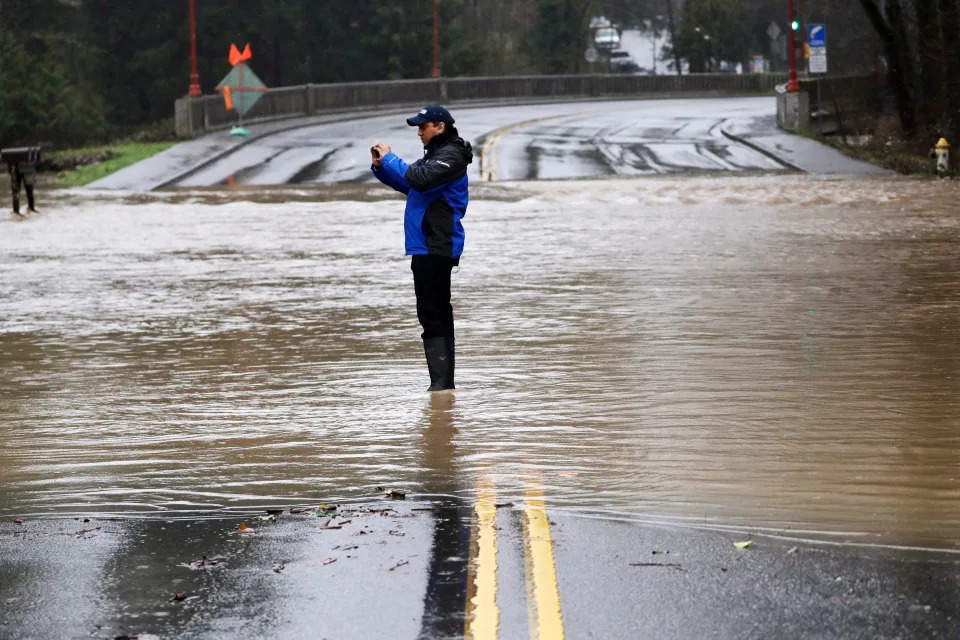
A man stands in a roadway flooded by Issaquah Creek and takes photos Thursday, Feb. 6, 2020, in Issaquah, Wash. Heavy rain sent the creek over a major roadway, under an apartment building east of Seattle and up to the foundations of homes as heavy rains pounded the region. A flood watch was in effect through Friday afternoon across most of western Washington.

A USA TODAY investigation last year found that between 2018 and 2021, fast-moving debris flows have damaged and destroyed hundreds of homes, closed major transportation routes across at least three states and caused more than $550 million in property damage. Close to 170 people have been injured and 28 people died since 2018.

Last year, flash floods in Colorado’s Poudre Canyon killed at least three people. It occurred in the burn scar left by the 2020 Cameron Peak Fire, the largest recorded fire in Colorado history.

In 2018 the Montecito mudslide killed 23 people near Santa Barbara, and properly loss claims totaled $421 million. It came just a month after the Thomas fire, one of the largest in state history, killed two people, destroyed at least 1,000 structures and cost $1.8 billion in property damages.

The speed at which wildfires have worsened across much of America has exceeded predictions by the scientific community, said Overpeck.

“If anything, the theory and the models were underestimating how hard and fast these impacts would accumulate,” he said. “Mother Nature is making that crystal clear.”

Contact Elizabeth Weise at eweise @usatoday.com

San Francisco's Glen Park neighborhood at 9:55 am Pacific Daylight Time on Wednesday, September 9, 2020. Smoke from numerous wildfires over a layer of marine fog turned the sky an eerie orange color. Cars were using headlines and some street lights were still on.
San Francisco’s Glen Park neighborhood at 9:55 am Pacific Daylight Time on Wednesday, September 9, 2020. Smoke from numerous wildfires over a layer of marine fog turned the sky an eerie orange color. Cars were using headlines and some street lights were still on.

Scientists Achieve Record Energy Efficiency for Thin Solar Panels

EcoWatch – Renewable Energy

Scientists Achieve Record Energy Efficiency for Thin Solar Panels

Paige Bennett – March 30, 2022

A disordered honeycomb layer used on top of the silicon panel

Scientists collaborated with AMOLF in Amsterdam to use solar panels one micrometer thick with a disordered honeycomb layer on top of the silicon panel. AMOLF

Scientists from the University of Surrey and Imperial College London have achieved an increase in energy absorption in ultra-thin solar panels by 25%, a record for panels of this size.

The team, which collaborated with AMOLF in Amsterdam, used solar panels just one micrometer thick with a disordered honeycomb layer on top of the silicon panel. The biophilic design draws inspiration from butterfly wings and bird eyes to absorb sunlight from every possible angle, making the panels more efficient.

The research led to a 25% increase in levels of energy absorption by the panels, making these solar panels more efficient than other one-micrometer-thick panels. They published their findings in the American Chemical Society’s journal, Photonics.

“One of the challenges of working with silicon is that nearly a third of light bounces straight off it without being absorbed and the energy harnessed,” said Marian Florescu from the University of Surrey’s Advanced Technology Institute (ATI) in a statement. “A textured layer across the silicon helps tackle this and our disordered, yet hyperuniform, honeycomb design is particularly successful.”

The panels in the study reached absorption levels of 26.3 mA/cm2, compared to a previous absorption record of 19.72 mA/cm2 from 2017.

Increasing the efficiency and absorption of ultra-thin panels is crucial to achieving low-cost photovoltaics.

“Micrometer-thick silicon photovoltaics (PV) promises to be the ultimate cost-effective, reliable, and environmentally friendly solution to harness solar power in urban areas and space, as it combines the low cost and maturity of crystalline silicon (c-Si) manufacturing with the low weight and mechanical flexibility of thin films,” the authors of the study explained.

The researchers expect that more design improvements will push the efficiency of macrometer-thin panels even higher, and they will be able to compete with existing commercial solar panels. Plus, these flexible panels could offer versatility in how they are used.

“There’s enormous potential for using ultra-thin photovoltaics. For example, given how light they are, they will be particularly useful in space and could make new extra-terrestrial projects viable,” Florescu said. “Since they use so much less silicon, we are hoping there will be cost savings here on Earth as well, plus there could be potential to bring more benefits from the Internet of Things and to create zero-energy buildings powered locally.” 

Outside of photovoltaics, the research could also be useful for other industries, like photo-electrochemistry, solid-state light emission and photodetectors, that focus on light management.

Following the successful absorption rate increase of the ultra-thin panels in this study, the scientists plan to start looking for commercial partners and develop a plan for manufacturing.