Comet last seen during Ice Age will be visible over Idaho. Here’s when and how to watch
Shaun Goodwin, Patrick McCreless, Genevieve Belmaker – January 11, 2023
A comet last visible by the naked eye when Neanderthals roamed the Earth should be observable in Idaho skies again soon.
The comet C/2022 E3 (ZTF) is passing through the inner solar system and will get closest to the sun on Jan. 12, according to space.com. The comet will continue to travel near the Earth, making its closest passage between Feb. 1 and Feb. 2.
The comet could be visible to the naked eye if it continues to brighten. Such a sight can be difficult to predict for comets, space.com states. However, even if the comet does dim a bit, it should still be visible with binoculars or a telescope for several days around its approach.
Though ancient, C/2022 E3 (ZTF) was only discovered by astronomers at the Zwicky Transient Facility at CalTech in March 2022. The facility operates at the Palomar Observatory at California’s Palomar Mountain, about 90 minutes northeast of San Diego.
The comet has a period of about 50,000 years, NASA Jet Propulsion Laboratory states. As such, the last time the comet came so close to the sun and Earth was during the last Ice Age, when humans and Neanderthals existed on the planet at the same time.
According to NASA, observers in Idaho and throughout the northern hemisphere should be able to find the comet in the morning sky as it travels northwest in late January.
Viewers should look for the comet when the moon is dim in the sky. The new moon on Jan. 21 will offer an excellent opportunity. Although the National Weather Service only provides accurate day-by-day forecasts five days out, the Climate Prediction Center predicts a 40-50% higher-than-normal chance for rain in the next eight to 14 days.
Although a higher chance of precipitation does not necessarily mean more cloud cover, clouds form when the atmosphere reaches its saturation point; more moisture in the atmosphere means a higher chance for clouds.
Brian Jackson, an associate professor at Boise State’s Physics Department, has previously told the Idaho Statesman that Camel’s Back Park in North Boise is an excellent spot to look toward the night sky. The park allows watchers to turn their backs on the light pollution from Boise and look out toward the Boise Mountains.
Jackson also recommended the Central Idaho Dark Sky Reserve in the Sun Valley, which offers one of the darkest night skies in the United States. The Light Pollution Map website also shows the best spots in Idaho to escape light pollution.
Weather Service meteorologist Josh Smith told the Statesman that Bogus Basin is an excellent place to stargaze and look for comets if there is cloud cover. Bogus Basin’s base sits at 5,800 feet, meaning it should be above any low cloud ceiling above the Treasure Valley.
What are comets?
Comets consist of ice and frozen gases, along with rocks and dust left after the solar system’s formation more than 4 billion years ago. They orbit the sun in highly elliptical orbits. When a comet approaches the sun, it heats up quickly, causing some ice to turn into gas. This heated gas and dust are what form a comet’s tail.
A green comet that takes about 50,000 years to complete its orbit around the sun will come closest to Earth for the first time since the Stone Age
Kenneth Niemeyer and Morgan McFall-Johnsen – January 10, 2023
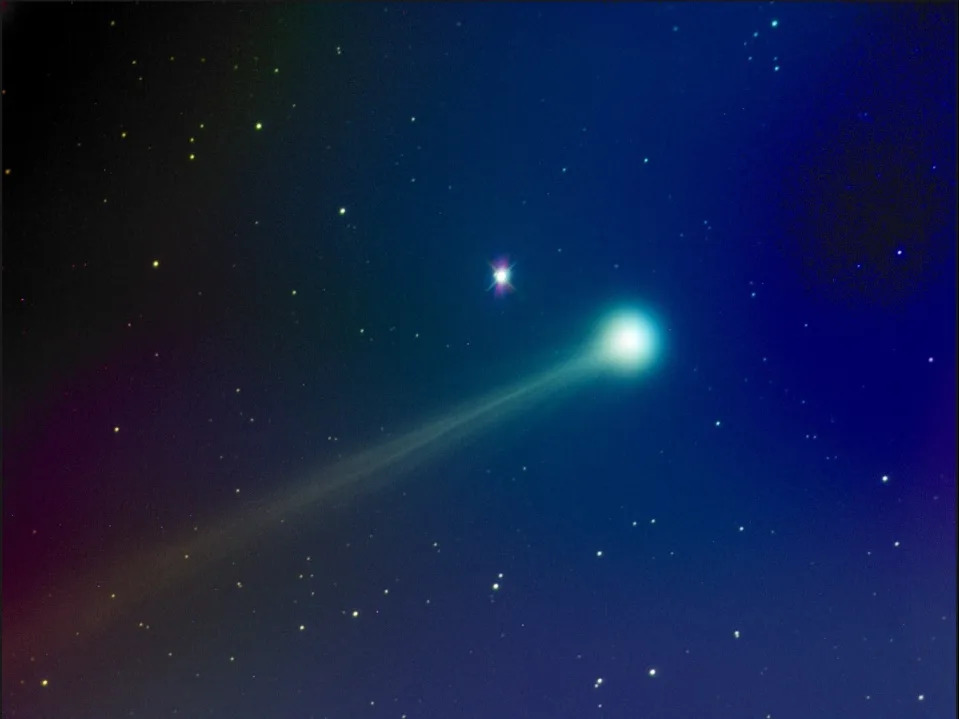
A green comet named C/2022 E3 (ZTF) is expected to be about 26 million miles from Earth on February 2.Mike Hankey
A green comet named C/2022 E3 (ZTF) is approaching Earth, according to NASA.
The comet most recently passed our planet 50,000 years ago, during the last Ice Age, according to astronomers.
The comet is expected to be visible at night as it swings past Earth in early February.
A green comet is set to pass by Earth for the first time since the Stone Age, according to NASA‘s Jet Propulsion Laboratory, and it may be visible in the skies in late January and early February.
Astronomers discovered the comet, a ball of ice named C/2022 E3 (ZTF), in March 2022. They’d never seen it before, because it takes an incredibly long time to circle the sun, completing an orbit over tens of thousands of years. Modern astronomy didn’t exist last time this comet was in our neighborhood.
The comet is expected to be about 26 million miles from Earth on February 2. That would be the closest it has been to the Earth in 50,000 years, according to astronomers.
Back then, a period known as the Upper Paleolithic era, was when humans are believed to have left Africa and settled in Asia and Europe. Neanderthals still walked the Earth. The planet was in the middle of an Ice Age.
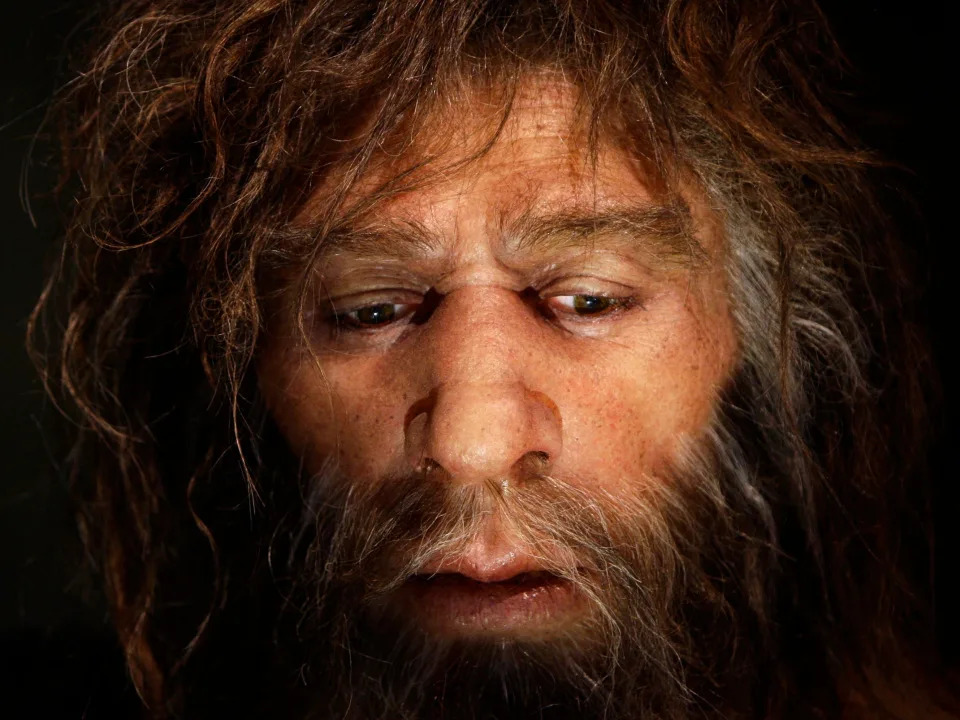
Hyperrealistic face of a neanderthal male is displayed in a cave in the new Neanderthal Museum in northern Croatia.REUTERS/Nikola Solic
The icy cosmic visitor will pass our planet at nearly 109 times the average distance of the moon, but the comet is burning so bright that it could still be visible in the night sky.
“Comets are notoriously unpredictable, but if this one continues its current trend in brightness, it’ll be easy to spot with binoculars, and it’s just possible it could become visible to the unaided eye under dark skies,” NASA wrote in an update on December 29.
How, where, and when to spot comet C/2022 E3 (ZTF)
In the Northern Hemisphere, the green comet should be visible just before dawn in late January. At first, spotting it may require a telescope, but as it approaches Earth NASA expects viewers can see it with binoculars.
“The new long-period comet has brightened substantially and is now sweeping across the northern constellation Corona Borealis in predawn skies,” NASA said in a news release December 24. At that time, it was still too dim to see with a telescope.
A completely darkened new moon could provide ideal dark skies for spying the comet on January 21.
In the Southern Hemisphere, the green cosmic snowball will be visible in early February.
Why the comet is green
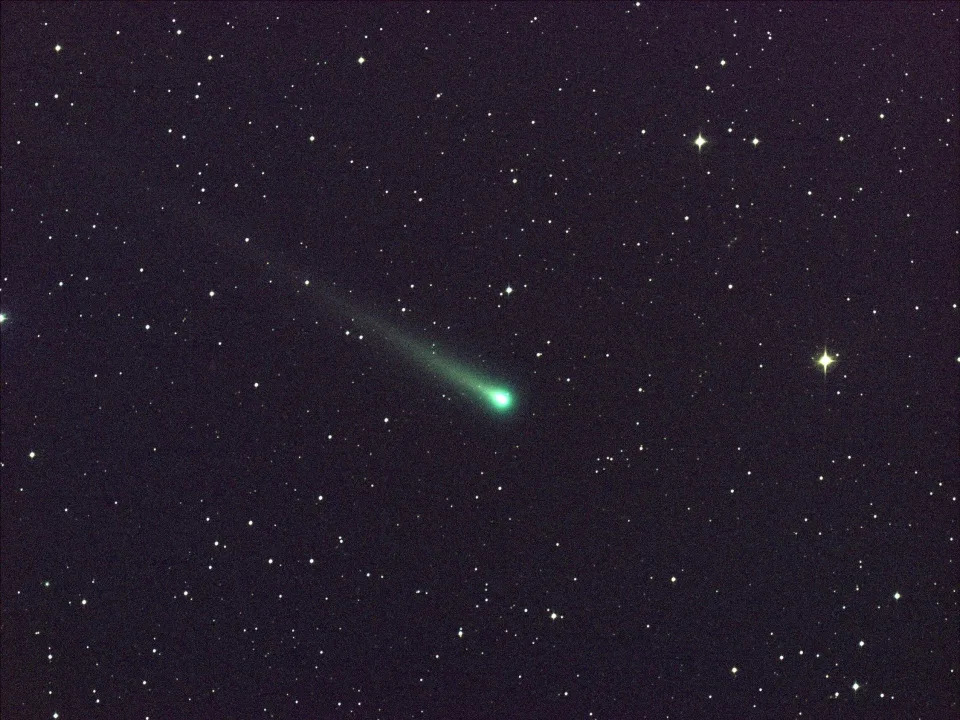
Another green comet, called ISON, passed Earth in 2013.NASA
The comet has a “greenish coma, short broad dust tail, and long faint ion tail,” according to NASA.
Many comets glow green. Laboratory research has linked this aura to a reactive molecule called dicarbon, which emits green light as sunlight decays it.
Dicarbon is common in comets, but it’s not usually found in their tails. That’s why the coma — the haze surrounding the ball of frozen gas, dust, and rock at the center of a comet — is glowing green, while the tail remains white.
The comet likely came from the mysterious Oort Cloud
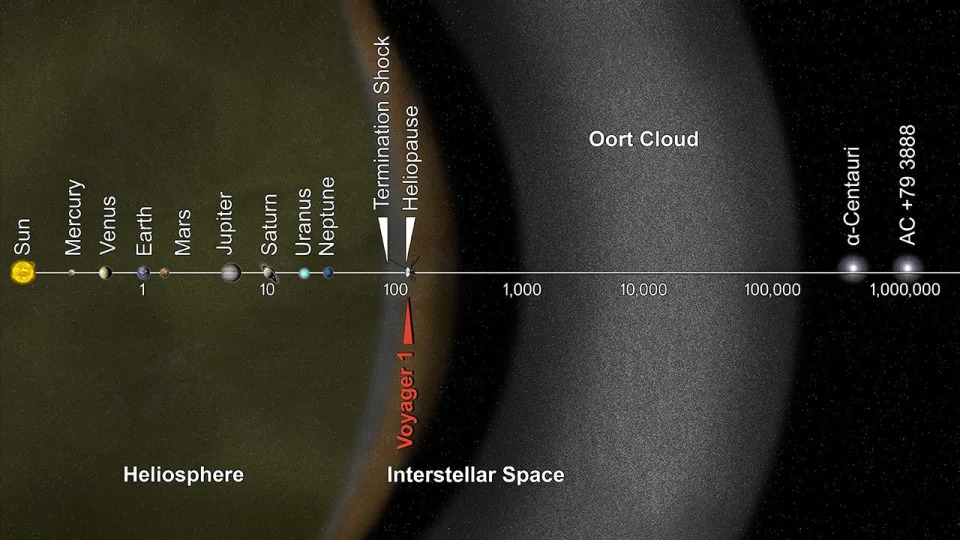
The Oort Cloud is the most distant part of the solar system.NASA/JPL-Caltech
Experts told USA Today that the comet most likely came from the Oort Cloud, the farthest region of the solar system, which NASA describes as a “big, thick-walled bubble made of icy pieces of space debris the sizes of mountains and sometimes larger.”
The Oort Cloud is the most distant part of our solar system, encircling everything like a “giant spherical shell,” according to NASA. It’s so far away that astronomers measures its distance in astronomical units (AU). One AU is the distance between Earth and the sun. The inner edge of the Oort Cloud is 2,000 to 5,000 AU away.
That distance means astronomers have never observed an object in the Oort Cloud, so it’s still a “theoretical concept,” according to NASA. But astronomers suspect many far-traveling comets like C/2022 E3 (ZTF) come from there.
The comet won’t return for another 50,000 years — if ever
This is your only chance to see comet C/2022 E3 (ZTF), and may be the last chance humanity ever gets.
“We don’t have an estimate for the furthest it will get from the Earth yet—estimates vary—but if it does return it won’t be for at least 50,000 years,” Jessica Lee, an astronomer at Royal Observatory Greenwich, told Newsweek.
“Some predictions suggest that the orbit of this comet is so eccentric it’s no longer in an orbit—so it’s not going to return at all and will just keep going,” she added.
Correction: January 9, 2023 — A photo caption in an earlier version of this story misstated when the comet C/2022 E3 (ZTF) is expected to get to 26 million miles from Earth. It is February 2, 2023, not 2022.
Editor’s Note: This story has been updated with additional information about the comet and how to see it.
2022 was the 5th warmest year on record, adding further evidence of climate change
The last 8 years have been the warmest 8 on record, the report from the European Union’s Copernicus Climate Change Service said.
David Knowles, Senior Editor – January 10, 2023
Motorists drive west toward the setting sun in Long Beach, Calif., during a September heat wave. (Luis Sinco/Los Angeles Times via Getty Images)
Planet Earth experienced its fifth warmest year in recorded history in 2022, adding to a streak in which the last eight years have been the hottest on record, thanks to climate change caused by the burning of fossil fuels.
The cause of rising temperatures has long been established. Hundreds of thousands of scientific studies over decades have concluded that the burning of fossil fuels releases greenhouse gases into the Earth’s atmosphere that trap the sun’s ultraviolet radiation and result in warming. While government action around the world has begun to try to limit the emissions causing climate change, the pace of that effort has so far failed to keep temperatures from continuing to rise.
Carbon dioxide concentrations rose by approximately 2.1 parts per million and methane rose by around 12 parts per billion, resulting in an average of approximately 417 ppm for carbon dioxide and 1,894 ppb for methane.
“For both gases these are the highest concentrations from the satellite record,” the Copernicus Climate Change Service wrote in its report. “By including other records, they are the highest levels for over 2 million years for carbon dioxide and over 800,000 years for methane.”
Some of the findings on 2022 global changes in climate from a study by the European Union’s Copernicus Climate Change Service. (Reuters)
Average global temperatures have risen by 2.1 degrees Fahrenheit since the start of the Industrial Revolution. Climate scientists say that is enough to have set off a cascade of consequences, many of which were seen around the world last year.
Since carbon atoms released into the atmosphere through the burning of fossil fuels can remain there for hundreds of years, the so-called greenhouse effect causing temperatures to rise is expected to continue to worsen over the coming decades, absent a coordinated global effort to dramatically curb emissions.
“We are on a fast track to climate disaster: Major cities under water. Unprecedented heat-waves. Terrifying storms. Widespread water shortages. The extinction of a million species of plants and animals,” Guterres said in a written statement.
UN says ozone layer slowly healing, hole to mend by 2066
Seth Borenstein – January 9, 2023
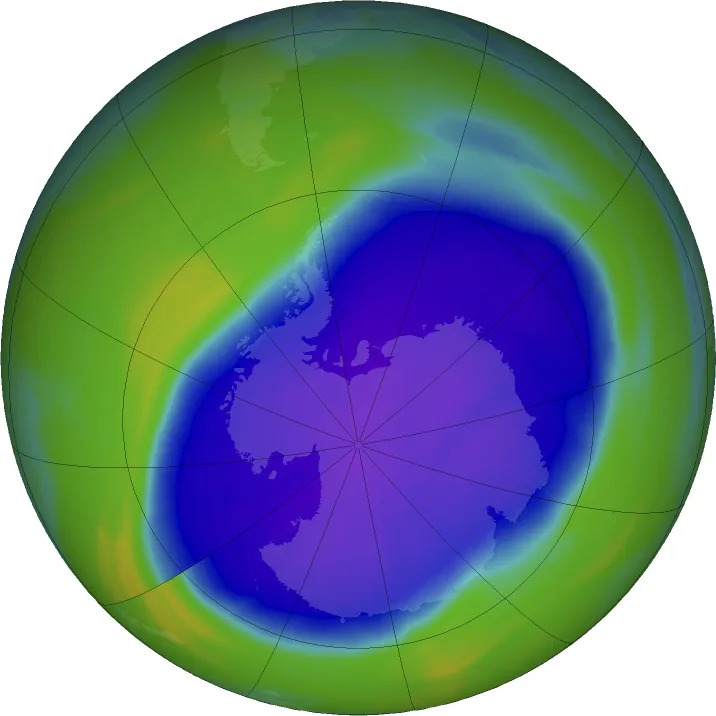
In this NASA false-color image, the blue and purple shows the hole in Earth’s protective ozone layer over Antarctica on Oct. 5, 2022. Earth’s protective ozone layer is slowly but noticeably healing at a pace that would fully mend the hole over Antarctica in about 43 years, a new United Nations report says. (NASA via AP, File)
DENVER (AP) — Earth’s protective ozone layer is slowly but noticeably healing at a pace that would fully mend the hole over Antarctica in about 43 years, a new United Nations report says.
A once-every-four-years scientific assessment found recovery in progress, more than 35 years after every nation in the world agreed to stop producing chemicals that chomp on the layer of ozone in Earth’s atmosphere that shields the planet from harmful radiation linked to skin cancer, cataracts and crop damage.
“In the upper stratosphere and in the ozone hole we see things getting better,” said Paul Newman, co-chair of the scientific assessment.
The progress is slow, according to the report presented Monday at the American Meteorological Society convention in Denver. The global average amount of ozone 18 miles (30 kilometers) high in the atmosphere won’t be back to 1980 pre-thinning levels until about 2040, the report said. And it won’t be back to normal in the Arctic until 2045.
Antarctica, where it’s so thin there’s an annual giant gaping hole in the layer, won’t be fully fixed until 2066, the report said.
Scientists and environmental advocates across the world have long hailed the efforts to heal the ozone hole — springing out of a 1987 agreement called the Montreal Protocol that banned a class of chemicals often used in refrigerants and aerosols — as one of the biggest ecological victories for humanity.
“Ozone action sets a precedent for climate action. Our success in phasing out ozone-eating chemicals shows us what can and must be done – as a matter of urgency — to transition away from fossil fuels, reduce greenhouse gases and so limit temperature increase,” World Meteorological Organization Secretary-General Prof. Petteri Taalas said in a statement.
Signs of healing were reported four years ago but were slight and more preliminary. “Those numbers of recovery have solidified a lot,” Newman said.
The two chief chemicals that munch away at ozone are in lower levels in the atmosphere, said Newman, chief Earth scientist at NASA’s Goddard Space Flight Center. Chlorine levels are down 11.5% since they peaked in 1993 and bromine, which is more efficient at eating ozone but is at lower levels in the air, dropped 14.5% since its 1999 peak, the report said.
That bromine and chlorine levels “stopped growing and is coming down is a real testament to the effectiveness of the Montreal Protocol,” Newman said.
“There has been a sea change in the way our society deals with ozone depleting substances,” said scientific panel co-chair David W. Fahey, director of the U.S. National Oceanic and Atmospheric Administration’s chemical sciences lab.
Decades ago, people could go into a store and buy a can of refrigerants that eat away at the ozone, punch a hole in it and pollute the atmosphere, Fahey said. Now, not only are the substances banned but they are no longer much in people’s homes or cars, replaced by cleaner chemicals.
Natural weather patterns in the Antarctic also affect ozone hole levels, which peak in the fall. And the past couple years, the holes have been a bit bigger because of that but the overall trend is one of healing, Newman said.
This is “saving 2 million people every year from skin cancer,” United Nations Environment Programme Director Inger Andersen told The Associated Press earlier this year in an email.
A few years ago emissions of one of the banned chemicals, chlorofluorocarbon-11 (CFC-11), stopped shrinking and was rising. Rogue emissions were spotted in part of China but now have gone back down to where they are expected, Newman said.
A third generation of those chemicals, called HFC, was banned a few years ago not because it would eat at the ozone layer but because it is a heat-trapping greenhouse gas. The new report says that the ban would avoid 0.5 to 0.9 degrees (0.3 to 0.5 degrees Celsius) of additional warming.
The report also warned that efforts to artificially cool the planet by putting aerosols into the atmosphere to reflect the sunlight would thin the ozone layer by as much as 20% in Antarctica.
Federal agency considers ban on gas stoves following report linking them to childhood asthma
A study released last week found gas stoves were the cause of 12.7% of childhood asthma cases in the United States.
Davis Knowles, Senior Editor – January 9, 2023
A blue flame from the burner of a natural gas stove. (David McNew/Getty Images)
The U.S. Consumer Product Safety Commission is considering a federal ban on gas stoves in response to a growing body of scientific research has linked them to a variety of health problems.
“This is a hidden hazard,” Richard Trumka Jr., an agency commissioner, told Bloomberg in an interview. “Any option is on the table. Products that can’t be made safe can be banned.”
The agency will begin public comment sessions this winter as it begins weighing restrictions on emissions from gas stoves that have found to be harmful to human health.
Last week, a study in the peer-reviewed International Journal of Environmental Research and Public Health concluded that gas stoves, which are used in roughly 40% of U.S. homes, were responsible for 12.7% of childhood asthma cases in the country. In all, the study found, gas stoves are responsible for giving asthma to 650,000 children in the U.S.
“When the gas stove is turned on, and when it’s burning at that hot temperature, it releases a number of air pollutants,” Brady Seals, a co-author of the study and the carbon-free buildings manager at the energy policy think tank RMI, told Yahoo News. “So these are things like particulate matter, carbon monoxide and nitrogen dioxide, along with others. So, for example, nitrogen dioxide is a known respiratory irritant. And the EPA, in 2016, said that short-term exposure to NO2 causes respiratory effects like asthma attacks.”
The dangers of using gas stoves have long been known. In 2013, a meta-analysis published in the International Journal of Epidemiology found that children living in homes with gas stoves were 42% more likely to experience symptoms of asthma than those that lived with electric ranges and ovens, while 24% were more likely to be diagnosed with lifetime asthma.
Sen. Cory Booker of New Jersey is one of a group of lawmakers concerned with the effects of gas stoves. (Elizabeth Frantz/Reuters)
In December, Sen. Cory Booker, D-N.J., and Rep. Don Beyer, D-Va., sent a letter co-signed by 18 Democratic lawmakers to Consumer Product Safety Commission Chairman Alexander Hoehn-Saric, asking the agency to take steps to limit the risks posed by gas stoves, which they said were more significant for lower-income Americans.
“These emissions can create a cumulative burden to households that are already more likely to face higher exposure to both indoor and outdoor air pollution. Statistics show that Black, Latino, and low-income households are more likely to experience disproportionate air pollution, either from being more likely to be located near a waste incinerator or coal ash site, or living in smaller homes with poor ventilation, malfunctioning appliances, mold, dust mites, secondhand smoke, lead dust, pests, and other maintenance deficiencies,” the letter stated.
Using a stove’s ventilation hood greatly reduces the health risks associated with gas ranges and ovens, but many homes don’t have them. And even using a hood doesn’t obviate the health risks. A 2022 study by researchers at Stanford University found that gas stoves regularly leak, and that approximately 40 million units in the U.S. represent problems for human health as well as the emissions that cause climate change.
“Using a 20-year timeframe for methane, annual methane emissions from all gas stoves in U.S. homes have a climate impact comparable to the annual carbon dioxide emissions of 500,000 cars,” the study stated.
Given the number of gas stoves currently in American homes, new emissions restrictions could set off a political standoff. On Monday, Sen. Ted Cruz, R-Texas, offered a preview of that likely battle.
US Department of Agriculture approves first-ever vaccine for honeybees
The drug could protect bees from American foulbrood, a bacteria that can devastate entire colonies.
Igor Bonifacic, Weekend Editor – January 8, 2023
NurPhoto via Getty Images
The humble honeybee hasn’t had an easy go of things recently. Between climate change, habitat destruction, pesticide use and attrition from diseases, one of the planet’s most important pollinators has seen its numbers decline dramatically in recent years. All of that bodes poorly for us humans. In the US, honeybees are essential to about one-third of the fruit and produce Americans eat. But the good news is that a solution to one of the problems affecting honeybees is making its way to farmers.
This week, for the first time, the US Department of Agriculture granted conditional approval for an insect vaccine. A biotech firm named Dalan Animal Health recently developed a prophylactic vaccine to protect honeybees from American foulbrood disease. The drug contains dead Paenibacillus larvae, the bacteria that causes the illness.
Thankfully, the vaccine won’t require beekeepers to jab entire colonies of individual insects with the world’s smallest syringe. Instead, administering the drug involves mixing it in with the queen feed worker bees eat. The vaccine then makes its way into the “royal jelly” the drones to feed their queen. Her offspring will then be born with some immunity against the harmful bacteria.
The treatment represents a breakthrough for a few reasons. As The New York Times explains, scientists previously thought it was impossible for insects to obtain immunity to diseases because they don’t produce antibodies like humans and animals. However, after identifying the protein that prompts an immune response in bees, researchers realized they could protect an entire hive through a single queen. The vaccine is also a far more humane treatment for American foulbrood. The disease can easily wipe out colonies of 60,000 bees at once, and it often leaves beekeepers with one choice: burn the infected hives to save what they can.
Dr. Annette Kleiser, the CEO of Dalan, told The Times the company hopes to use the vaccine as a blueprint for other treatments to protect honeybees. “Bees are livestock and should have the same modern tools to care for them and protect them that we have for our chickens, cats, dogs and so on,” she said. “We’re really hoping we’re going to change the industry now.”
‘Terrifying prospect’: Utah’s Great Salt Lake could disappear in 5 years without drastic water conservation
Dinah Voyles Pulver, USA TODAY – January 7, 2023
Scholars and conservationists released a briefing this week urging emergency water-saving measures to prevent the looming collapse of Utah’s Great Salt Lake.
Without an urgent, dramatic increase in water flow, “the lake as we know it is on track to disappear in five years,” stated the report, led by Benjamin Abbott, a professor of ecosystem ecology at Brigham Young University.
Decades of overconsumption of water throughout the region, and a mega-drought made worse by climate change, threaten to further shrink the lake and cause great harm to the region’s public health, environment and economy, Abbott told USA TODAY.
Politicians, residents, farmers and industry made great strides forward in recent years, he said, but “extraordinary, emergency measures” are needed to be better stewards.
How low is the lake?
In 2021, the lake reached its smallest point ever, 941 square miles, down from a peak of about 2,400 miles in 1986-1987, according to the U.S. Geological Survey.
“We’re at a point where more than half the lake bed is exposed,” Abbott said. The lake is so low one measuring gauge has been out of use since September.
“At 19 feet below the average level the lake has maintained since 1850, the lake is in uncharted territory,” stated the report. Unsustainable water use dries out the habitat, exposes toxic dust and drives salinity higher and higher.
Salinity historically averaged between 10% and 15%, Abbott said. Today it’s at 19%, five-and-a-half times saltier than the ocean.
If the rate of decline continues, the lake’s remaining water could be depleted, he said. “It’s a terrifying prospect.”
Will there be any water left the Great Salt Lake in 5 years?
The remaining water could be gone in about 5 years if the lake keeps drying up at its current rate, the report says.
If the lake stays on that path, its food webs will collapse and “the lake as we know it will be gone,” Abbott said. “We’re not making a prediction that 5 years from now there will be no water. We are making the observation that the rate of decline if it continues is enough to deplete the remaining water in the lake.”
Over the last three years, the lake has received less than a third of its natural streamflow because of excessive water diversions.
In 2022, the lake dropped to a record elevation of 4188’ — the lowest level on the state’s contingency charts.
Water depletion is even more severe than it appears because groundwater is not included in the estimates. While the lake has lost about 26 million acre-feet of water, twice that amount may have been lost from declining water levels in aquifers around the lake. These empty aquifers could slow the rate of rebound after runoff is increased.
Report details lake’s importance
The Great Salt Lake lies along a critical flyway, attracting an estimated 10 million birds a year. Roughly 350 bird species depend on its ecosystems.
It provides $2.5 billion in direct economic productivity, primarily from mineral extraction, recreation and brine shrimp harvesting, and supports 9,000 jobs.
Evaporation from the lake increases annual snowfall in nearby mountains and ski resorts by 5-10%, supporting an additional $1.8 billion in economic activity.
Its water suppresses heavy metals and cyanotoxins that accumulated in sediments over hundreds of years. When sediments are exposed, toxic dust can blow all over the country, Bennett said. “Already dust from the lake has been observed as far away as Wyoming and Arizona.”
The report urges Utah Governor Spencer Cox to implement a watershed-wide emergency rescue, with financial support from the legislature. It also lists these items:
Enough water conservation upstream to ensure that more than a million acre feet of water per year is sent to the lake.
As much as a 30% – 50% reduction in water use in the entire watershed
A “lake first” approach to water stewardship
Increased trust and cooperation between farmers, cities and policy makers.
Overuse led to this point
Profligate water use for decades contributed to the crisis as the region grew more populous. Increasing demands for water have forced utilities, farmers and other water users to grapple with a shrinking water supply.
Today, more water needs to make its way all the way down through rivers and dams far upstream of the lake, Abbott said. “It’s like running a bank account. You have to make sure the income is greater than the expenses, otherwise you’re borrowing from the future.”
“We can be careful caretakers of this ecosystem and wise stewards,” he said. “Or we can say it doesn’t matter what happens in the future, and we’re just going to think about today.”
A call for unity
Tim Hawkes is among the state legislators who have worked to change Utah’s water laws and invest in lake restoration.
“There’s been an ethic on the lake for decades of stakeholders trying to work together,” said Hawkes, an outgoing Republican member of the House of Representatives. “It speaks to Utah and how we problem solve.”
Because some of the measures are still being implemented, the region is coming up short, thanks in part to the drought, and needs to “pull some emergency levers” to reverse the lake’s trajectory, he said. “We’re going to have to do a lot and do it fast, and the only way to do that is to try to keep people on the same script and working together.”
Warning about aquifer’s decline sets up big fight in Kansas
John Hanna – January 6, 2023
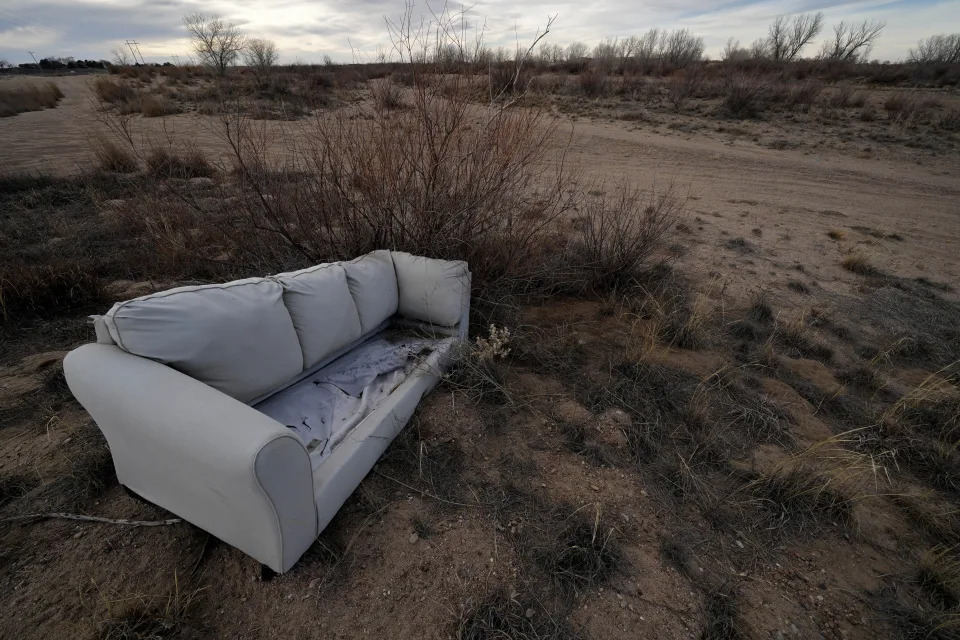
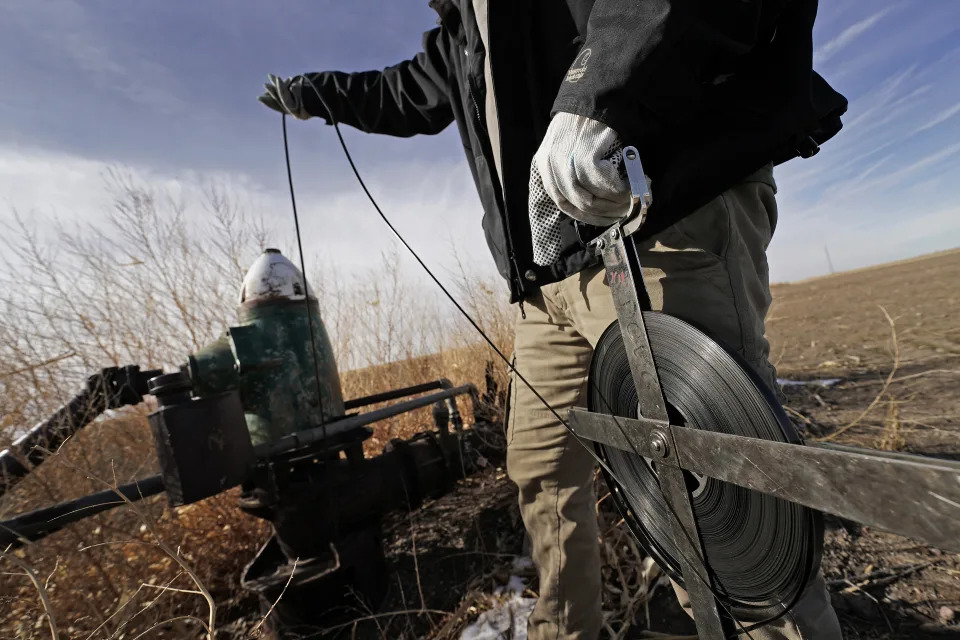
Lee Reeve poses for a photo at the cattle feedyard and ethanol plant operated by his family Thursday, Jan. 5, 2023, near Garden City, Kan. Reeve sees language by the Kansas Water Authority on controlling groundwater use in western Kansas as “toxic,”as the Kansas Legislature looks to take up ways to address depletion of the Ogallala Aquifer in the upcoming session. (AP Photo/Charlie Riedel)A discarded couch litters the dry bed of the Arkansas River Thursday, Jan. 5, 2023, near Garden City, Kan. The river in western Kansas is mostly dry after decades of extensive groundwater use and periodic droughts. Lawmakers are looking to take up groundwater issues in western Kansas in the upcoming session as the Kansas Water Authority is urging stricter usage measures to try to slow the steady decline of water levels in the Ogallala Aquifer. (AP Photo/Charlie Riedel)Kansas Geological Survey field research technician Connor Umbrell measures water levels in an irrigation well Thursday, Jan. 5, 2023, near Marienthal, Kan. Lawmakers are looking to take up groundwater issues in western Kansas in the upcoming session as the Kansas Water Authority is urging stricter usage measures to try to slow the steady decline of water levels in the Ogallala Aquifer. (AP Photo/Charlie Riedel)
TOPEKA, Kan. (AP) — Kansas water experts are sounding an alarm decades in the making: Farmers and ranchers in the state’s western half must stop pumping more water out of a vast aquifer than nature puts back each year or risk the economic collapse of a region important to the U.S. food supply.
That warning is setting up a big and messy fight for the annual session of the Kansas Legislature set to open Monday.
The Kansas Water Authority is telling lawmakers that Kansas needs to break sharply with its decadeslong policy of slowing depletion while still allowing water levels to drop in the Ogallala Aquifer. The aquifer covers roughly 175,000 square miles (453,000 square kilometers) in the western and Great Plains states of Texas, New Mexico, Oklahoma, Kansas, Colorado, Nebraska, Wyoming and South Dakota.
Most of those states have areas where depletion is a problem, but the call in Kansas to “halt” the declines has farmers, ranchers and politically influential agriculture groups preparing to battle proposals that would give them less control over water and possibly could force them to cultivate fewer acres, buy expensive new equipment or turn on a dime to grow different crops.- ADVERTISEMENT -https://s.yimg.com/rq/darla/4-10-1/html/r-sf-flx.html
Imposing the Water Authority’s policy means agribusinesses that drive the region’s economy would have to consume less water — perhaps as much as 30% less in some areas. Lawmakers also would have to decide whether local officials would keep driving conservation efforts or if the state would be in charge.
“The easy part was making the statement. That didn’t cost anybody anything,” said Clay Scott, who farms in southwestern Kansas. “We’re going to have to start paying for it, and we have to decide how that gets divvied up.”
Kansas produces more than 20% of the nation’s wheat and has about 18% of the cattle being fed in the U.S. The western third of Kansas, home to most of its portion of the Ogallala, accounts for 60% of the value of all Kansas crops and livestock. That’s possible because of the water.
The recommendation on the Ogallala from the water authority, a planning and advisory commission, is a response to data showing that since widespread pumping began around 1940, much of the Ogallala has lost at least 30% ofits available water and more than 60% in places in western Kansas. The Kansas Geological Survey had a team in western Kansas this week to measure well depths for updated figures.
“There are wells that are starting to run dry already, so this isn’t a distant problem in some areas,” said Tom Buller, executive director of the Kansas Rural Center, a nonprofit that promotes sustainable agriculture and family farming. “There isn’t a lot of time to solve the problem.”
The Water Authority’s recommendation comes as much of the western U.S. continues to suffer through a megadrought fueled by climate change. Parts of Kansas have had drought conditions for a year, and more than half the state has been in extreme drought since mid-September.
“We are told that the future, due to climate change, is going to get warmer and drier in western Kansas,” said Connie Owen, director of the Kansas Water Office, which oversees long-term plans for preserving water. “That is making things worse, which is all the more reason that we have to deal with this now.”
There’s broad agreement, including among powerful agriculture groups and nervous farmers and ranchers, that Kansas needs to extend the aquifer’s life.
But the path forward isn’t yet clear for Democratic Gov. Laura Kelly and the Republican-controlled Legislature.
In a pre-session interview, Kelly promised only to get affected parties together to negotiate a comprehensive solution. She added that following her narrow reelection in November, “I’ve got some political capital to spend to deal with what will be a very contentious issue.”
Depletion of the Ogallala was one reason that in the Kansas House, the Water Committee last year considered a 283-page bipartisan proposal to set aside $49 million a year for conservation efforts and other programs. The measure also would have reorganized those programs and made the official who grants rights to use water independent of the state Department of Agriculture. In addition, it would have curbed the power of big irrigators in local districts that manage groundwater use, including from the Ogallala.
Opponents included the Kansas Farm Bureau and the Kansas Livestock Association. Nothing ultimately passed after critics accused supporters of drafting it largely in secret. The committee’s chair later retired.
The new Water Committee chair, Republican Rep. Jim Minnix, a southwestern Kansas farmer, said he hopes to work on incentives for local officials to be more aggressive about water conservation.
The state allows local districts to set restrictions, and one in northwest Kansas gets high marks from water experts and officials for cutting water use. In one area of 99 square miles (256 square kilometers), it set water-use rules, sought to cut consumption 20% and reduced it 35% over the past decade, according to Manager Shannon Kenyon.
Kenyon prizes local control but said the state should take charge where local officials haven’t pursued enough conservation.
If local officials allow the water dry up, she said, “They are going to kill the economy in the state of Kansas,” Kenyon said.
Some western Kansas farmers argue that the state’s best move is to ramp up education about ways to conserve water and provide incentives to help farmers adopt them. Several of them, as well as local water officials, said agriculture has become more careful with water over the past several decades through new technology, new crop varieties and better farming practices.
Lee Reeve, whose family has farmed near Garden City in southwest Kansas for more than 100 years and now operates a cattle feed yard and ethanol plant, sees the Water Authority’s language on halting depletion as “toxic,” noting that farmers already are suspicious of government programs.
“There’s just enough of this scare stuff out there that it’s hard to get through to people that, ‘Hey, there are things we can do,’” he said.
Great Salt Lake on track to disappear in five years, scientists warn
Sarah Kaplan and Brady Dennis, Washington Post – January 6, 2023
MAGNA, UTAH – AUGUST 02: Park visitors walk along a section of the Great Salt Lake that used to be underwater at the Great Salt Lake State Park on August 02, 2021 near Magna, Utah. As severe drought continues to take hold in the western United States, water levels at the Great Salt Lake, the largest saltwater lake in the Western Hemisphere, have dropped to the lowest levels ever recorded. The lake fell below 4194.4 feet in the past week after years of decline from its highest level recorded in 1986 with 4211.65 feet. Further decline of the lake’s water levels could result in an increase in water salinity and could generate dust from the exposed lakebed that could impact air quality in the area. The lake does not supply water or generate electricity for nearby communities but it does provide a natural habitat for migrating birds and other wildlife. According to the U.S. Drought Monitor, 99 percent of Utah is experiencing extreme drought conditions. (Photo by Justin Sullivan/Getty Images) (Justin Sullivan via Getty Images)
Without dramatic cuts to water consumption, Utah’s Great Salt Lake is on track to disappear within five years, a dire new report warns, imperiling ecosystems and exposing millions of people to toxic dust from the drying lake bed.
The report, led by researchers at Brigham Young University and published this week, found that unsustainable water use has shrunk the lake to just 37 percent of its former volume. The West’s ongoing mega-drought – a crisis made worse by climate change – has accelerated its decline to rates far faster than scientists had predicted.
But current conservation measures are critically insufficient to replace the roughly 40 billion gallons of water the lake has lost annually since 2020, the scientists said.
The report calls on Utah and nearby states to curb water consumption by a third to a half, allowing 2.5 million acre feet of water to flow from streams and rivers directly into the lake for the next couple of years. Otherwise, it said, the Great Salt Lake is headed for irreversible collapse.
“This is a crisis,” said Brigham Young University ecologist Ben Abbott, a lead author of the report. “The ecosystem is on life support, [and] we need to have this emergency intervention to make sure it doesn’t disappear.”
Scientists and officials have long recognized that water in the Great Salt Lake watershed is overallocated, – more water has been guaranteed to people and businesses than falls as rain and snow each year.
Agriculture accounts for more than 70 percent of the state’s water use – much of it going to grow hay and alfalfa to feed livestock. Another 9 percent is taken up by mineral extraction. Cities use another 9 percent to run power plants and irrigate lawns.
There are so many claims on the state’s rivers and streams that, by the time they reach the Great Salt Lake, there’s very little water left.
Over the last three years, the report says, the lake has received less than a third of its normal stream flow because so much water has been diverted for other purposes. In 2022, its surface sank to a record low, 10 feet below what is considered a minimum healthy level.
With less freshwater flowing in, the lake has grown so salty that it’s becoming toxic even to the native brine shrimp and flies that evolved to live there, Abbott said. This in turn endangers the 10 million birds that rely on the lake for a rest stop as they migrate across the continent each year.
The vanishing lake may short-circuit the weather system that cycles rain and snow from the lake to the mountains and back again, depriving Utah’s storied ski slopes. It threatens a billion-dollar industry extracting magnesium, lithium and other critical minerals from the brine.
It has also exposed more than 800 square miles of sediments laced with arsenic, mercury and other dangerous substances, which can be picked up by wind and blown into the lungs of some 2.5 million people living near the lakeshore.
“Nanoparticles of dust have potential to cause just as much harm if they come from dry lake bed as from a tailpipe or a smokestack,” said Brian Moench, president of Utah Physicians for a Healthy Environment. He called the shrinking of the lake a “bona fide, documented, unquestionable health hazard.”
Dried-up saline lakes are hot spots for dangerous air pollution. Nearly a century after Owens Lake in southern California was drained to provide water to Los Angeles County in the 1920s, it was still the largest source of hazardous dust in the country, according to the U.S. Geological Survey. The pollution has been linked to high rates of asthma, heart and lung disease and early deaths.
Kevin Perry, an atmospheric scientist at the University of Utah who studies pollution from the receding lake, said about 90 percent of the lake bed is protected by a thin crust of salt that keeps dust from escaping. But the longer the lake remains dry, the more that crust will erode, exposing more dangerous sediments to the air.
“You see this wall of dust coming off the lake, and it reduces horizontal visibility sometimes to less than a mile,” Perry said. The impact might only last a couple hours at a time, he said, but the consequences can be profound.
Perry and other researchers have mapped the location and elevation of the dust hot spots, he said, and the results show that the problem is unlikely to abate anytime soon. The lake would need to rise roughly 14 feet to cover 80 percent of current hot spots, Perry said, or about 10 feet to submerge half of them.
Even researchers have been taken aback by the rapid pace of the Great Salt Lake’s decline, Abbott said. Most scientific models projected that the shrinking would slow as the lake became smaller and saltier, since saltwater evaporates less readily than freshwater.
But human-caused climate change, driven mostly by burning fossil fuels, has increased average temperatures in northern Utah by about 4 degrees Fahrenheit since the early 1900s and made the region more prone to drought, the report said. Studies suggest this warming accounts for about 9 percent of the decline in stream flows into the lake. Satellite surveys also show significant declines in groundwater beneath the lake, as ongoing drought depletes the region’s aquifers.
If humans weren’t using so much water, the lake might be able to withstand these shifts in climate, Abbott said. But the combined pressure of drought and overconsumption is proving to be more than it can bear.
Candice Hasenyager, the director of the Utah Division of Water Resources, said Utahns are becoming increasingly aware of the urgency of the lake’s decline. Last year, the Utah legislature passed numerous bills aimed at conservation, including a $40 million trust intended to help the ailing lake. Gov. Spencer Cox (R) recently proposed another massive infusion of funding for water management and conservation.
“We don’t have the luxury to have one solution,” but curbing water demand is essential, Hasenyager said. “We live in a desert, in one of the driest states in the nation, and we need to reduce the amount of water we use.”
Yet recent efforts haven’t kept up with the accelerating crisis. Abbott and his colleagues found that Utah’s new conservation laws increased stream flow to Great Salt Lake by less than 100,000 acre feet in 2022 – a tiny fraction of the 2.5 million acre feet increase that’s needed to bring the lake back to a healthy minimum level.
“Among legislators and decision-makers there is still a very prevalent narrative of ‘let’s put in place conservation measures so over the next couple of decades the Great Salt Lake can recover,'” Abbott said. “But we don’t have that time.”
“This isn’t business as usual,” he added. “This is an emergency rescue plan.”
The new report, drafted by more than 30 scientists from 11 universities, advocacy groups and other research institutions, recommends that Cox authorize emergency releases from Utah’s reservoirs to get the lake up to a safe level over the next two years.
This would require as much as a 50 percent cut in the amount of water the state uses each year, requiring investment from federal agencies on down to local governments, church leaders and community groups.
For decades, Abbott said, officials have prioritized human uses for all the water that trickles through the Great Salt Lake watershed.
Until last year, the lake itself wasn’t even considered a legitimate recipient of any water that fell in the region. If a farmer chose not to use some of their shares, allowing that water to flow to the lake and the surrounding ecosystem, they risked losing their water rights in the future.
“We have to shift from thinking of nature as a commodity, as a natural resource, to what we’ve learned over the last 50 years in ecology, and what Indigenous cultures have always known,” Abbott said. “Humans depend on the environment. . . . We have to think about, ‘What does the lake need to be healthy?’ and manage our water use with what remains.”
The weather this year has given Utah a prime opportunity to, in Abbott’s words, “put the lake first.” After a series of December storms, the state’s snowpack is already at 170 percent of normal January levels. If that snow persists and precipitation continues through the rest of the winter, it would enable the state to set aside millions of acre feet of water for the lake without making such drastic cuts to consumption.
“I’m generally optimistic,” said Hasenyager, the water resources director. “I don’t think we are past a point of no return – yet.”
Study: Two-thirds of glaciers on track to disappear by 2100
Seth Borenstein – January 5, 2023
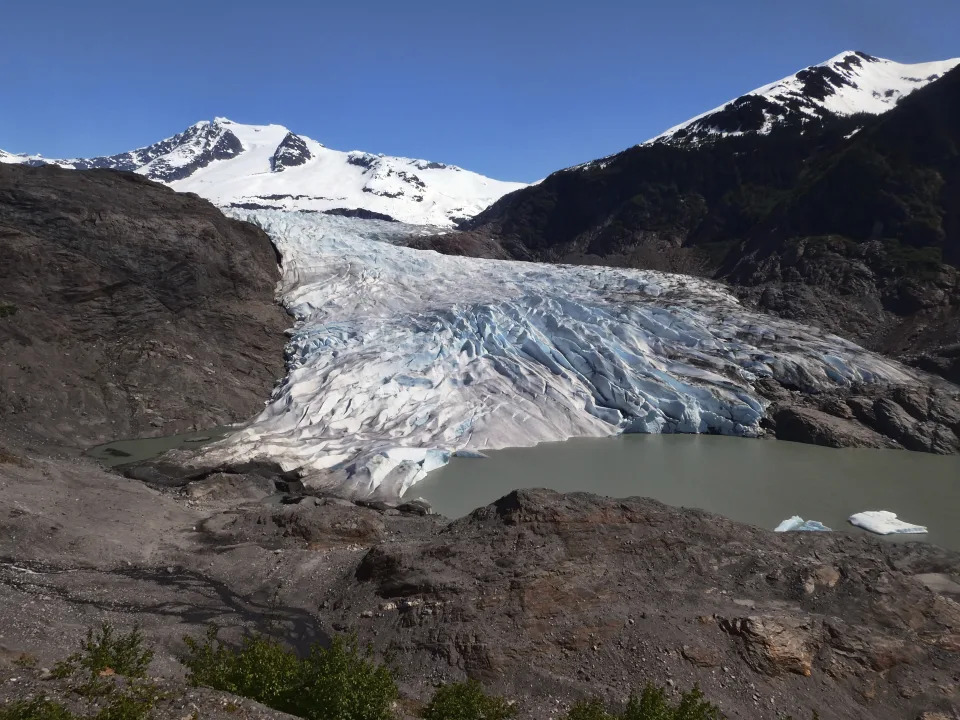
Chunks of ice float on Mendenhall Lake in front of the Mendenhall Glacier on Monday, May 30, 2022, in Juneau, Alaska. A study of all of the world’s 215,000 glaciers published on Thursday, Jan. 5, 2023, finds even if with the unlikely minimum warming of only a few tenths of a degrees more, the world will lose nearly half its glaciers by the end of the century. With the warming we’re now on track to get, the world will lose two-thirds of its glaciers and overall glacier mass will drop by one-third while sea level rises 4.5 inches just from melting glaciers. (AP Photo/Becky Bohrer)This combination of Sept. 14, 1986, left, and Aug. 1, 2019 photos provided by NASA shows the shrinking of the Okjokull glacier on the Ok volcano in west-central Iceland. A geological map from 1901 estimated Okjökull spanned an area of about 38 square kilometers (15 square miles). In 1978, aerial photography showed the glacier was 3 square kilometers. in 2019, less than 1 square kilometer remains. (NASA via AP, File)People climb to the top of what once was the Okjokull glacier, in Iceland, Sunday, Aug. 18, 2019. With poetry, moments of silence and political speeches about the urgent need to fight climate change, Icelandic officials, activists and others bade goodbye to the first Icelandic glacier to disappear. (AP Photo/Felipe Dana, File)
The world’s glaciers are shrinking and disappearing faster than scientists thought, with two-thirds of them projected to melt out of existence by the end of the century at current climate change trends, according to a new study.
But if the world can limit future warming to just a few more tenths of a degree and fulfill international goals — technically possible but unlikely according to many scientists — then slightly less than half the globe’s glaciers will disappear, said the same study. Mostly small but well-known glaciers are marching to extinction, study authors said.
In an also unlikely worst-case scenario of several degrees of warming, 83% of the world’s glaciers would likely disappear by the year 2100, study authors said.
The study in Thursday’s journal Science examined all of the globe’s 215,000 land-based glaciers — not counting those on ice sheets in Greenland and Antarctica — in a more comprehensive way than past studies. Scientists then used computer simulations to calculate, using different levels of warming, how many glaciers would disappear, how many trillions of tons of ice would melt, and how much it would contribute to sea level rise.
The world is now on track for a 2.7-degree Celsius (4.9 degrees Fahrenheit) temperature rise since pre-industrial times, which by the year 2100 means losing 32% of the world’s glacier mass, or 48.5 trillion metric tons of ice as well as 68% of the glaciers disappearing. That would increase sea level rise by 4.5 inches (115 millimeters) in addition to seas already getting larger from melting ice sheets and warmer water, said study lead author David Rounce.
“No matter what, we’re going to lose a lot of the glaciers,” Rounce, a glaciologist and engineering professor at Carnegie Mellon University, said. “But we have the ability to make a difference by limiting how many glaciers we lose.”
“For many small glaciers it is too late,” said study co-author Regine Hock, a glaciologist at the University of Alaska Fairbanks and the University of Oslo in Norway. “However, globally our results clearly show that every degree of global temperature matters to keep as much ice as possible locked up in the glaciers.”
Projected ice loss by 2100 ranges from 38.7 trillion metric tons to 64.4 trillion tons, depending on how much the globe warms and how much coal, oil and gas is burned, according to the study.
The study calculates that all that melting ice will add anywhere from 3.5 inches (90 millimeters) in the best case to 6.5 inches (166 millimeters) in the worst case to the world’s sea level, 4% to 14% more than previous projections.
That 4.5 inches of sea level rise from glaciers would mean more than 10 million people around the world — and more than 100,000 people in the United States — would be living below the high tide line, who otherwise would be above it, said sea level rise researcher Ben Strauss, CEO of Climate Central. Twentieth-century sea level rise from climate change added about 4 inches to the surge from 2012 Superstorm Sandy costing about $8 billion in damage just in itself, he said.
Scientists say future sea level rise will be driven more by melting ice sheets than glaciers.
But the loss of glaciers is about more than rising seas. It means shrinking water supplies for a big chunk of the world’s population, more risk from flood events from melting glaciers and about losing historic ice-covered spots from Alaska to the Alps to even near Mount Everest’s base camp, several scientists told The Associated Press.
“For places like the Alps or Iceland… glaciers are part of what makes these landscapes so special,” said National Snow and Ice Data Center Director Mark Serreze, who wasn’t part of the study but praised it. “As they lose their ice in a sense they also lose their soul.”
Hock pointed to Vernagtferner glacier in the Austrian Alps, which is one of the best-studied glaciers in the world, but said “the glacier will be gone.”
The Columbia Glacier in Alaska had 216 billion tons of ice in 2015, but with just a few more tenths of a degree of warming, Rounce calculated it will be half that size. If there’s 4 degrees Celsius (7.2 degrees Fahrenheit) of warming since pre-industrial times, an unlikely worst-case scenario, it will lose two-thirds of its mass, he said.
“It’s definitely a hard one to look at and not drop your jaw at,” Rounce said.
Glaciers are crucial to people’s lives in much of the world, said National Snow and Ice Center Deputy Lead Scientist Twila Moon, who wasn’t part of the study.
“Glaciers provide drinking water, agricultural water, hydropower, and other services that support billions (yes, billions!) of people,” Moon said in an email.
Moon said the study “represents significant advances in projecting how the world’s glaciers may change over the next 80 years due to human-created climate change.”
That’s because the study includes factors in glacier changes that previous studies didn’t and is more detailed, said Ruth Mottram and Martin Stendel, climate scientists at the Danish Meteorological Institute who weren’t part of the research.
This new study better factors in how the glaciers’ ice melts not just from warmer air, but water both below and at the edges of glaciers and how debris can slow melt, Stendel and Mottram said. Previous studies concentrated on large glaciers and made regional estimates instead of calculations for each individual glacier.
In most cases, the estimated loss figures Rounce’s team came up with are slightly more dire than earlier estimates.
If the world can somehow limit warming to the global goal of 1.5 degrees Celsius (2.7 degrees Fahrenheit) of warming since pre-industrial times — the world is already at 1.1 degrees (2 degrees Fahrenheit) — Earth will likely lose 26% of total glacial mass by the end of the century, which is 38.7 trillion metric tons of ice melting. Previous best estimates had that level of warming melting translating to only 18% of total mass loss.
“I have worked on glaciers in the Alps and Norway which are really rapidly disappearing,” Mottram said in an email. “It’s kind of devastating to see.”