‘So much pain’: KC-area woman who spent 322 days on a ventilator with COVID dies

The Kansas City Star

‘So much pain’: KC-area woman who spent 322 days on a ventilator with COVID dies

Lisa Gutierrez – January 19, 2023

COVID-19 began stealing Gwen Marie Starkey from her Missouri family nearly two years ago. It forced the retiree to spend 322 days, nearly all of 2021, hooked to an uncomfortable noisy ventilator.

But in the end, Starkey left this earth in peace, at home with family.

Starkey, 61, of Polo, north of Kansas City, died on Jan. 2, after contracting COVID-19 in February 2021. She leaves behind her husband, Troy Starkey, two daughters, four grandsons and three sisters.

Starkey caught COVID before vaccines were widely available.

“News I never wanted to share,” her daughter, April Shaver, told The Star after her mother died. “She passed on her own. She went on hospice by choice and passed in less than a week.

“It’s been terribly difficult but we had almost a year with her at home with us.”

Starkey had just retired after 30 years at the Ford Motor Co. Kansas City Assembly Plant in Claycomo when she and several relatives got infected during a family gathering a few days before the Super Bowl. She got the worst case.

“The next day our lives changed without us even knowing it,” said Shaver. “I even told her, ‘You died the day you got COVID because you have never been the same. I’ve been grieving you for two years.”

About a month after she was hospitalized, Starkey told her family on FaceTime that she didn’t work all those years at the Ford plant just to die in a bed with COVID.

Gwen Starkey spent her 60th birthday in a hospital bed. She spent nearly all of 2021 on a ventilator after getting COVID-19.

Taking on the naysayers

In the first of several stories The Star wrote about Starkey’s battle, Shaver said it shocked her to see her mother — healthy, active, an avid gardener — felled so quickly.

She had never seen her mother so helpless, her hands so gray and lifeless. She watched her mother become “a body in a bed” as life moved on around her.

Starkey’s father died while she was on the ventilator. She celebrated her 60th birthday in the hospital.
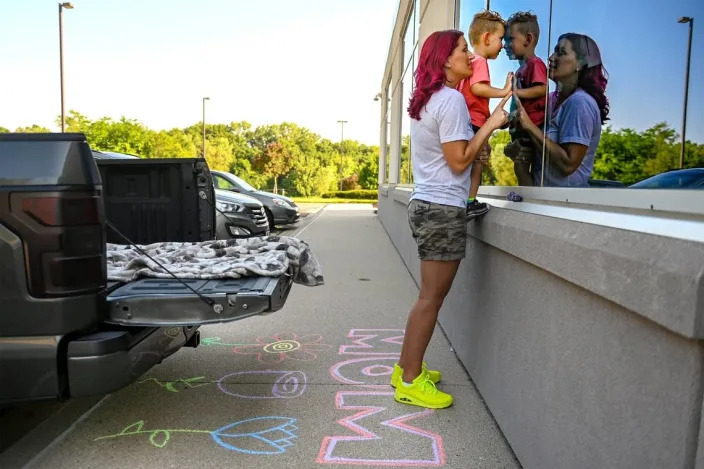
Outside of Kindred Hospital Northland in the summer of 2021, April Shaver of Kansas City held her 2-year-old son, Malakai, up to the window during a visit to see her mother, Gwen Starkey.

Watching her mother suffer, Shaver lost patience with the naysayers. She became so angry at people who called COVID a hoax that she posted a photo of herself holding her mom’s hand in the hospital. She wrote on Facebook: “This. Is. Covid. Please stop trying to say it’s not real.”

It was rare for COVID patients to spend that long on a ventilator. Sharkey became national news in July 2021 when Shaver appeared on “Erin Burnett OutFront” on CNN to talk about her mother’s health.

Starkey’s illness became a frustrating series of strides and setbacks, of hope and helplessness. She had collapsed lungs. Her kidneys failed.

She couldn’t speak for months after doctors tunneled into her throat with a tracheotomy tube. Sick as she was, she rode in ambulances several times, moving from one facility to another as her health waxed and waned.

She was admitted to Liberty Hospital in February 2021, transferred to Saint Luke’s in Kansas City, moved to a transitional care hospital in the Northland, returned to Saint Luke’s when she faltered, returned to Kindred Hospital Northland and entered MidAmerica Rehabilitation Hospital in Johnson County last January.

She had just come off a ventilator then, earning a “Certificate of Ventilator Liberation” certificate.

She finally returned home to Polo last February but was never able to get out of bed again, Shaver said. She was hospitalized several times during her year at home.

Gwen Starkey of Polo, Missouri, spent the last year of her life at home with family members, including her 4-year-old grandson, Kai.

‘Ready to go’

Having her at home wasn’t “your usual family time,” Shaver said. Mostly, her mom just wanted “uneventful” peace and quiet.

Starkey still had to endure dialysis, riding 40 minutes back and forth to nearby Richmond three times a week. Missing an appointment sometimes led to a short hospital stay. But some days it was just too much. She chose not to go because the trip alone exhausted her.

In early December, during one of her mother’s good spells, Shaver went to Texas and got a tattoo on her right forearm: a butterfly and flowers like the ones in her mom’s garden. “Before I left she was so full of life and I was so happy because I felt like she was bouncing back,” she said. “But when I came back it felt like she was declining again.”

The timeline of Starkey’s last days “was just so bizarre,” Shaver said.

The day after Christmas, Starkey decided she wanted hospice care. The next day, Shirkey Hospice and Palliative Care from Richmond arrived. Family members said goodbye.

“I had my breakdown, confessed all my childhood secrets to her,” Shaver said. “It was happy, sad, everything you’d expect a goodbye to be.”

But her mom had a dream that God told her: “It’s not your time.” So Starkey sent hospice away.

But on Dec. 30, Starkey went to yet another dialysis session and changed her mind. She was ready to go.

On New Year’s Eve, family members said goodbye again.

On New Year’s Day, Starkey was unresponsive.

On the night of Jan. 2, she died.

Gwen Starkey never fully recovered from COVID-19. She spent the last year at home in bed. This is one of the last photos of her with family members in December.

One regret?

“She was in so much pain. You could look at her and could just tell,” said Shaver. “When I had my heart-to-heart with her, I was sobbing, my dad was sobbing, my husband was sobbing. She was completely dry-eyed. She was ready to go. She was good with God.”

When Starkey first got sick, the family waited to take her to the hospital. Loved ones, and Starkey herself, were scared that if she was put on a ventilator she would die. They had heard horror stories about COVID patients dying on the machines.

No one wanted to take her to the hospital. She didn’t want to go either, said Shaver, who has had COVID three times. She is vaccinated and boosted.

“Had we known, we would have sent her to the hospital several days before,” Shaver told The Star.

Starkey’s husband of more than 25 years spent the last two years as her caretaker, at her bedside in all those hospital rooms, at her side at home. Shaver worries that he needs looking after now. “He went from being needed all day to sitting in a room that’s quiet and empty,” she said.

Her mom requested a party after she was gone. The family plans to have one in the summer.

“The last thing she said to me, Shaver said, was, ‘Everything is going to be OK.”

From Gwen Starkey’s funeral. She was an avid gardener and her daughter, April Shaver, got a tattoo of flowers in her mother’s memory.

Researchers find a more sustainable way to grow crops under solar panels

Engadget

Researchers find a more sustainable way to grow crops under solar panels

Translucent solar cells that split the light spectrum could allow for more productive use of arable land.

Kris Holt, Contributing Reporter – January 18, 2023

Andre Daccache/UC Davis

Researchers say they have determined a way to make agrivoltaics — the process of growing crops underneath solar panels — more efficient. They found that red wavelengths are more efficient for growing plants, while the blue part of the spectrum is better for producing solar energy. Solar panels that only allow red wavelengths of light to pass through could enable farmers to grow food more productively while generating power at the same time.

Previous studies have found that agrivoltaics can reduce the amount of water required for crops, since they’re shaded from direct sunlight. Researchers at Michigan Technological University determined in 2015 that shading can reduce water usage by up to 29 percent. Majdi Abou Najm, an associate professor at University of California, Davis’ department of land, air and water resources, told Modern Farmer that by splitting the light spectrum, crops can get the same amount of carbon dioxide with less water while shielding them from heat.

The researchers put the idea to the test by growing tomatoes under blue and red filters, as well as a control crop without any coverings. Although the yield for the covered plots was about a third less than the control, the latter had around twice the amount of rotten tomatoes. Abou Najm noted that the filters helped to reduce heat stress and crop wastage.

A blue filter over crops with a temperature reading super imposed.

For this approach to work in practice, though, manufacturers would need to develop translucent solar panels that capture blue light and allow red light to pass through. Matteo Camporese, an associate professor at the University of Padova in Italy and lead author of a paper on the topic, suggested that translucent, carbon-based organic solar cells could work. These cells could be applied onto surfaces such as glass.

There are other issues, including the fact wavelength-selective agrivoltaic systems may need to account for different crop types. Harvesting those crops efficiently might require some out-of-the-box thinking too. Still, the research seems promising and, with a growing global population, it’s important to consider different approaches to using our resources more productively.

“We cannot feed 2 billion more people in 30 years by being just a little more water-efficient and continuing as we do,” Abou Najm said. “We need something transformative, not incremental. If we treat the sun as a resource, we can work with shade and generate electricity while producing crops underneath. Kilowatt hours become a secondary crop you can harvest.”

Skipped Showers, Paper Plates: An Arizona Suburb’s Water Is Cut Off

The New York Times

Skipped Showers, Paper Plates: An Arizona Suburb’s Water Is Cut Off

Jack Healy – January 16, 2023

A water hauler sets up hoses to fill the tank at a home that is listed for sale in the Rio Verde Foothills outside of Scottsdale, Arizona, on Sunday, Jan. 8, 2023. (Erin Schaff/The New York Times)

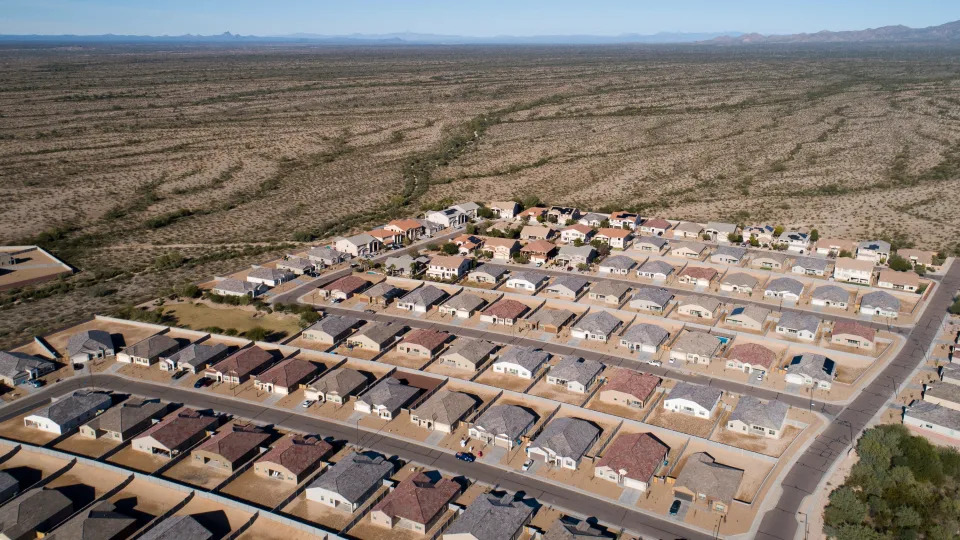
RIO VERDE, Ariz. — Joe McCue thought he had found a desert paradise when he bought one of the new stucco houses sprouting in the granite foothills of Rio Verde, Arizona. There were good schools, mountain views and cactus-spangled hiking trails out the back door.

Then the water got cut off.

Earlier this month, the community’s longtime water supplier, the neighboring city of Scottsdale, turned off the tap for Rio Verde Foothills, blaming a grinding drought that is threatening the future of the West. Scottsdale said it had to focus on conserving water for its own residents, and could no longer sell water to roughly 500 to 700 homes — or around 1,000 people. That meant the unincorporated swath of $500,000 stucco houses, mansions and horse ranches outside Scottsdale’s borders would have to fend for itself and buy water from other suppliers — if homeowners could find them, and afford to pay much higher prices.

Almost overnight, the Rio Verde Foothills turned into a worst-case scenario of a hotter, drier climate, showing what happens when unregulated growth collides with shrinking water supplies.

For residents who put their savings into newly built homes that promised desert sunsets, peace and quiet (but relegated the water situation to the fine print), the turmoil is also deeply personal. The water disruption has unraveled their routines and put their financial futures in doubt.

“Is it just a campground now?” McCue, 36, asked one recent morning, after he and his father installed gutters and rain barrels for a new drinking-water filtration system.

“We’re really hoping we don’t go dry by summer,” he said. “Then we’ll be in a really bad spot.”

In a scramble to conserve, people are flushing their toilets with rainwater and lugging laundry to friends’ homes. They are eating off paper plates, skipping showers and fretting about whether they have staked their fates on what could become a desiccated ghost suburb.

Some say they know how it might look to outsiders. Yes, they bought homes in the Sonoran desert. But they ask, are they such outliers? Arizona does not want for emerald-green fairways, irrigated lawns or water parks.

“I’m surrounded by plush golf courses, one of the largest fountains in the world,” said Tony Johnson, 45, referring to the 500-foot water feature in the neighboring town of Fountain Hills.

Johnson’s family built a house in Rio Verde two years ago, and landscaped the yard with rocks, not thirsty greenery. “We’re not putting in a pool, we’re not putting in grass,” he said. “We’re not trying to bring the Midwest here.”

The heavy rain and snow battering California and other parts of the Mountain West over the past two weeks is helping to refill some reservoirs and soak dried-out soil. But water experts say that one streak of wet weather will not undo a 20-year drought that has practically emptied Lake Mead, the country’s largest reservoir, and has strained the overburdened Colorado River, which supplies about 35% of Arizona’s water. The rest comes from the state’s own rivers or from aquifers in the ground.

Last week, Arizona learned that its water shortages could be even worse than many residents realized. As one of her first actions after taking office, Gov. Katie Hobbs unsealed a report showing that the fast-growing West Valley of Phoenix does not have enough groundwater to support tens of thousands of homes planned for the area; their development is now in question.

Water experts say Rio Verde Foothills’ situation is unusually dire, but it offers a glimpse of the bitter fights and hard choices facing 40 million people across the West who rely on the Colorado River for the means to take showers, irrigate crops, or run data centers and fracking rigs.

“It’s a cautionary tale for homebuyers,” said Sarah Porter, director of the Kyl Center for Water Policy at Arizona State University. “We can’t just protect every single person who buys a parcel and builds a home. There isn’t enough money or water.”

Porter said a number of other unincorporated areas in Arizona rely on water service from larger nearby cities like Prescott or Flagstaff. They could find themselves in Rio Verde’s straits if the drought persists and the cities start taking drastic conservation measures.

There are no sewers or water mains serving the Rio Verde Foothills, so for decades, homes there that did not have their own wells got water delivered by tanker trucks. (The homes that do have wells are not directly affected by the cutoff.)

The trucks would fill up with Scottsdale water at a pipe 15 minutes’ drive from the Rio Verde Foothills, and then deliver water directly to people’s front doors. Or rather, to 5,000-gallon storage tanks buried in their yards — enough water to last an average family about a month. When the tanks ran low, homeowners would call or send an electronic signal to the water haulers for another delivery.

It was a tenuous arrangement in the middle of the desert, but homeowners said the water always arrived, and had come to feel almost as reliable as a utility hookup.

Now, though, the water trucks can’t refill close by in Scottsdale, and are having to crisscross the Phoenix metro area in search of supplies, filling up in cities a two-hour round trip from Rio Verde. That has meant more driving, more waiting and more money. An average family’s water bill has jumped to $660 a month from $220, and it is unclear how long the water trucks will be able to keep drawing tens of thousands of gallons from those backup sources.

Heavier water users like Cody Reim, who moved into a starter house in Rio Verde two years ago, are being hit even harder. He said his water bills could now exceed $1,000 a month — more than his mortgage payment. Reim and his wife have four young children, which in normal times meant a lot of dishwashing, countless toilet flushes and dozens of laundry cycles to clean soiled cloth diapers.

Reim, who works for his family’s sheet-metal business, is planning to become his own water hauler, lashing large containers to his pickup and setting out to fill them up. He guesses that fetching water will take him 10 hours every week, but he said he would do anything to stay in Rio Verde. He loves the dark skies and the baying coyotes at night, and how his children can run up and down a dirt road that with views of the Four Peaks Wilderness.

“Even if this place went negative and I’d have to pay somebody to take it, I’d still be here,” he said of his house. “There’s no other option.”

Cities across the Southwest have spent years trying to cut down on water consumption, recharge aquifers and find new ways to reuse water to cope with the drought.

Experts say that most Arizona residents do not have to worry about losing their drinking water any time soon, though deeper cuts loom for agricultural users, who use about 70% of Arizona’s water supply. Phoenix and surrounding cities have imposed few water restrictions on residents.

Rio Verde Foothills once felt like a remote community far from the urban centers of Scottsdale or Phoenix, residents said, a quilt of ranches and self-built houses scattered among mesquite and palo verde trees.

But over the past few years, there has been a frenzy of home construction in the area, fueled by cheap land prices and developers who took advantage of a loophole in Arizona’s groundwater laws to construct homes without any fixed water supply.

To prevent unsustainable development in a desert state, Arizona passed a law in 1980 requiring subdivisions with six or more lots to show proof that they have a 100-year water supply.

But developers in Rio Verde Foothills have been sidestepping the rule by carving larger parcels into sections with four or five houses each, creating the impression of a miniature suburbia, but one that did not need to legally prove it had water.

“It’s a slipped-through-the-cracks community,” said Porter, with the Kyl Center for Water Policy.

Thomas Galvin, a county supervisor who represents the area, says there’s not much the county can do if builders split their parcels into five lots or less to get around the water supply requirement. “Our hands are tied,” he said.

People in Rio Verde Foothills are bitterly divided over how to resolve their water woes.

When some proposed forming their own self-funded water provider, other residents revolted, saying the idea would foist an expensive, freedom-stealing new arm of government on them. The idea collapsed. Other solutions, like allowing a larger water utility to serve the area, could be years off.

On Thursday, a group of residents sued Scottsdale in an effort to get the water turned back on. They argued the city violated an Arizona law that restricts cities from cutting off utility services to customers outside their borders. Scottsdale did not respond to the lawsuit.

Rose Carroll, 66, who is a plaintiff in the suit, said she would support any idea that would keep her from having to kill her donkeys.

She moved to Rio Verde Foothills two years ago, and runs a small ranch for two dozen rescued donkeys who had been abandoned, left in kill pens or doused with acid. The donkeys spend their days in a corral on her seven-acre property, eating hay and drinking a total of 300 gallons of water every day.

Carroll collected rainwater after a recent winter storm, enough for a few weeks’ worth of toilet flushes. The new cost to get water delivered to the ranch could reach an unaffordable $1,800 a month, she said, so she is putting some of the donkeys up for adoption and said she might have to euthanize others if she does not have enough water to keep them alive.

She said she got a call a few days ago, asking her to take in two more abandoned donkeys, but had to say no.

“I didn’t have the water,” she said.

Health Experts Break Down the Science That Has Politicians Debating a Gas Oven Ban

Good Housekeeping

Health Experts Break Down the Science That Has Politicians Debating a Gas Oven Ban

Zee Krstic – January 16, 2023

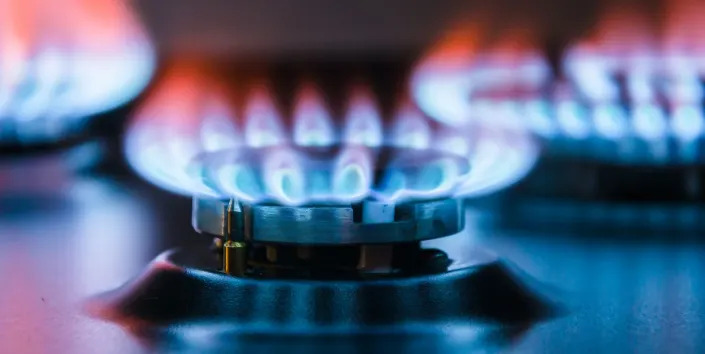
gas stove top burner fueled by methane gas
Can Gas Ovens Really Make You Sick?Valerii Vtoryhin – Getty Images
  • New research published in 2022 has linked gas stove pollution to negative health effects, prompting federal regulators to consider potential legislation.
  • Health experts say that gas stoves may pose an elevated risk to respiratory health due to a byproduct of burning methane gas in kitchens, known as nitrogen dioxide.
  • A leading environmental pollutant, nitrogen dioxide has been linked to increased asthma and lung disease for decades — but scientists are now looking at how gas stoves may contribute to the issue.
  • Our experts in the Good Housekeeping Institute share ways you can reduce any potential health risks associated with gas ovens without purchasing a new stove.

Recent headlines about the potential for an outright ban of gas ovens and stoves in the U.S. may have you concerned that federal regulators are coming for your oven.

But despite sparking a political debate among lawmakers on Capitol Hill, White House officials said Wednesday that new legislation concerning gas stoves and ovens won’t be officially considered any time soon, CNN reports. In short, open gas flames in home kitchens won’t be banned outright — and that it’s unlikely any potential future regulations would affect someone who already owns a gas stove top.

But concern remains over new research regarding the potential drawbacks of using gas burners at home, with some experts arguing that it’s just the latest study to back up years of evidence suggesting gas stoves may worsen respiratory health over time — and potentially trigger asthma.

In a December 2022 report published in the International Journal of Environmental Research and Public Health, the use of gas stoves in home kitchens was linked to an increased risk of asthma among children, in particular.

The evidence presented by researchers estimated that nearly 13% of childhood asthma cases in the U.S. may be traced back to exposure to chemical byproducts of burning gas. This purported link was prefaced by a similar report released by the American Medical Association in late 2022 that formally recognized “the association between the use of gas stoves, indoor nitrogen dioxide levels and asthma.”

These recent developments — as well as additional data from the 1990s to as recent as 2014 — prompted the U.S. Consumer Product Safety Commission (CPSC) to announce it would consider new forms of regulation on gas stoves.

Lawmakers are currently debating whether or not regulation should be implemented that could require gas stoves to be sold with a hood that vents to the outdoors among other proposals, per Bloomberg, but others in the healthcare field are seizing the moment to educate American families about ways to improve their kitchen hygiene.

If you’re among the more than 40 million American households currently using gas ovens in their kitchens, according to the U.S. Energy Information Association, there are several ways you can improve indoor air quality that doesn’t include quitting your stove altogether.

Many risks can be reduced by better ventilation in your kitchen, explains Nicole Papantoniou, the Good Housekeeping InstituteKitchen Appliances & Innovation Lab Director. That all starts with the hooded vent above your oven, which should be turned on well before you begin cooking — and regularly cleaned to avoid poor circulation.

Read on for more tips and to learn about the potential risks associated with gas ovens, plus what you can do right now to reduce them while cooking at home.

Why are experts worried about gas stove tops?

Believe it or not, there are many ways in which health experts say cooking at home may lead to poor air quality issues, which can impact your health over time. But a gas burner may indirectly pose more of a threat than an electric stove top, due to the byproducts that are released into the air as methane gas burns while you cook; namely, nitrogen dioxide, which has been linked to respiratory issues as well as cardiovascular risks, explains Huawei Dong, M.D., pulmonology and critical care medicine professor at the University of California, Irvine’s School of Medicine and pulmonologist at UCI Health.

“When we breathe that in, it causes irritation and local inflammation into the bronchial tubes and the airways,” Dr. Dong says, which you may not even notice if you’ve never experienced prior respiratory issues like asthma. “One of the key things that happens in asthma patients, whether you’re a child or an adult, is that the airways become inflamed and they become narrower, causing things like wheezing and shortness of breath.”

It’s important to note that nitrogen dioxide is produced whenever fossil fuels are burned, which means the overwhelming majority of this particular pollutant comes from vehicles and nearby power plants, adds Dr. Dong. And while there are established guidelines released by officials at the Environmental Protection Agency (EPA) that dictate appropriate levels of nitrogen dioxide, especially as it relates to vehicle emissions and other factors, there aren’t guidelines for indoor settings just yet.

In fact, researchers have established that gas stove tops produce considerable nitrogen dioxide when they’re in use. A Stanford University study published in early 2022 suggests that the amount of nitrogen dioxide emitted from gas stoves and ovens exceeded EPA standards within minutes. But since there isn’t any regulation for indoor appliances just yet, this is where CPSC officials want to step in.

How can gas stove tops impact your health?

Gas ovens aren’t likely to be the sole reason that you develop a respiratory issue, including asthma — Dr. Dong tells Good Housekeeping that most asthma cases, including those in children, are considered “multifactorial” by doctors who treat them.

After all, genetics often play a heavy hand in how likely it is for someone to develop asthma or other breathing difficulties. But available research on nitrogen dioxide and other commonplace air pollutants indicates that there is a link between poor respiratory health and increased exposure, and the December 2022 report only further suggests that impactful exposure may be occurring indoors more frequently than we realize.

“Some of the risk for asthma certainly may come down to what we’re exposed to in the home, as well as where we live and the outdoor environments we spend time in due to air pollution,” she says. “We’ve known that for decades in seeing the development of worse asthma and lung disease — but, most of that effect is cumulative over time.”

Translation: Sitting beside an open gas burner in your kitchen for a few minutes won’t significantly increase your asthma risk, even for children and their developing lungs and immune systems. What healthcare experts are more concerned about is the exposure effect over the course of months and years — and how gas ovens may exacerbate breathing issues for someone who is already asthmatic or seriously hampered by their respiratory health. This is when Dr. Dong says more immediate, short-term symptoms are noticeable (and the need for prevention is key).

Despite the recent research, the need for more evidence on how nitrogen dioxide triggers respiratory issues indoors is needed, as there is some conflicting research on the childhood asthma link that CPSC officials referred to earlier this year. A 2013 Lancet Respiratory Medicine study that touts data collected from 500,000 children globally indicates that researchers couldn’t determine “an association” between gas stoves and self-reported asthma diagnosis or symptoms.

In the end, future regulation on gas stoves may simply focus on the sale and manufacturing of gas ovens; back in October, a peer-reviewed study published in Environmental Science and Technology illustrated that some gas stoves may leak methane gas and benzene, another pollutant, even when not in use. New manufacturing regulations may prevent this from happening, as well as encourage the use of properly installed vents that effectively remove airborne pollutants from kitchens entirely.

Are gas stoves unsafe?

CPSC officials have clarified that a ban on gas stoves and ovens isn’t on the table currently — and you shouldn’t feel the need to rip out your gas stove ASAP over air quality concerns, as both Good Housekeeping Institute pros and healthcare officials agree that there are many ways to reduce any inherent respiratory risks.

Raj Dasgupta, M.D., a pulmonary critical care specialist at the University of Southern California’s Keck School of Medicine, tells Good Housekeeping that nitrogen dioxide build-up can largely be dissipated through the use of an exhaust hood, or range hood, in addition to odors, smoke and grease. Additionally, opening windows for fresh air can better assist range hoods that don’t vent directly to the outdoors.

Of course, not every kitchen has a hooded vent over a gas stove top, which is the best way to ensure air pollutants don’t hang around your kitchen. If your space is only equipped with a vented fan, opening windows and providing fresh air supply is even more important, Dr. Dasgupta says.

You may also want to consider investing in an air purifier. “There aren’t a lot of downsides to having an air purifier in your home, aside from the financial investment — they help remove various contaminants from the air in your kitchen, namely smoke and odors,” he adds, as well as dust, pollen and pet dander, all of which may contribute to asthmatic risk and on-set symptoms over time as well.

Regular maintenance of your gas oven and stovetop is also crucial to ensure that air pollution remains as minimal as possible while you cook. Our experts in the Good Housekeeping Institute‘s Kitchen Appliances & Innovation Lab recommend doing the following:

  1. Turn vents or fans on before you start cooking. It takes time for high-speed fan settings to kick in, and smoke and other pollutants in the air simply hang suspended if air flow isn’t strong enough. Putting your vent or fan on before you begin cooking ensures this won’t happen
  2. Keep your gas burner clean. Grease, splatter and other kitchen residue can easily build up over the gas burners on your stove top, which may delay or prevent the complete ignition of a burner, which could contribute to potential gas leakage over time, according to Papantoniou. Keeping your burners clean can help prevent this from happening.
  3. Replace fan filters and have vents serviced regularly. You can do this with the help of your oven’s manufacturer. Replacing filters regularly ensures grease and other airborne pollutants are captured effectively, leaving less work for any air purifiers you have elsewhere in your home. And if it’s possible, work with a professional

If you’re able, consider investing in a vent hood that has an optimized capture efficiency range — even if that means replacing an outdated model, advises Dan DiClerico, the Good Housekeeping Institute‘s home improvement and outdoor director. “It should be within the 70 to 80% range, and is usually included as a spec on many newer models, though manufacturers aren’t required to list it,” he adds.

The bottom line:

It’s unclear when and if federal consumer safety regulators will introduce new rules for oven and stove manufacturers. Americans should rest easy knowing that there won’t be any changes required for those who currently use gas ranges in their home — though, research is clear that these types of ovens likely pose an additional health risk compared to electric models.

Focusing on improving the ventilation in your kitchen is key if you’re worried that cooking is adding to poor air quality at home. Simply working to open as many windows or doors as you can while cooking can offset poor air quality, and is essential for anyone who is already facing established respiratory issues. And taking the time to have any hooded range vent or kitchen fan regularly serviced by HVAC professionals may reduce the risk of suspended smoke, odor and other pollutants above your stove top.

Additionally, air purifiers can work to combat pollutants in your kitchen as well as other airborne factors in your home contributing to respiratory irritation. Experts say dust, pollen, pet dander and odors are often targeted by air purifiers, but the best air purifiers also work to reduce volatile nitrogen dioxide released into kitchens over time.

What are the causes of climate change? Why scientists say humans are to blame.

USA Today

What are the causes of climate change? Why scientists say humans are to blame.

Dinah Voyles Pulver, USA TODAYS – January 14, 2023

Scientists around the world are striving to learn more about how rising average temperatures worldwide influence the weather. They say it’s increasingly likely that climate change is making weather events more intense, more frequent or of longer duration.

It’s punching up temperatures in heat waves and adding some percentage of rainfall to intense storms. It also may cause weather events to occur outside times or locations where they typically happened in the past.

But what is causing climate change? Why are global temperatures rising? And is the warming climate to blame for wild weather events? Here’s some key information:

What does climate change mean?

Weather is what you see outside the window. Climate is what occurs in an area over years or decades. Climate change is the difference seen in long-term trends in air, water and ocean temperatures and longer-term weather patterns.

Monitoring stations around the world add to a growing trove of information that reveals how temperature and rainfall are changing. Some have decades of measurements, while others have more than a century of data. In Japan, they’ve recorded the start of the cherry tree bloom for more than 1,200 years.

Scientists use these historical records to study the rise in global average temperatures. For example, records show how sap rises earlier in maple trees or when wildfire seasons start earlier. They know warmer temperatures delay ice formation on the Great Lakes, when the warmer water temperatures fuel more lake effect snow.

DEFINITIONS: Is climate change the same thing as global warming?

EFFECTS: How climate change disrupts our daily life and fuels disasters.

What is the most important cause of climate change?

The biggest influence on the planet’s changing climate is the release of emissions into the atmosphere from burning oil, gas and coal to move people and goods from place to place and to create energy, according to the U.S. Environmental Protection Agency.

Here’s how that works:

  • Carbon dioxide and other naturally occurring gases have always existed in the atmosphere, keeping the world warm just as a greenhouse keeps tropical plants alive in the winter. Scientists see that “greenhouse effect” in ice cores, sediments and tree rings.
  • Modern day measurements show CO2 emissions are rising. Since 1958, the level of carbon dioxide in the atmosphere measured at the Mauna Loa Observatory in Hawaii has grown from 316 parts per million to 417 parts per million.
  • Measured in such small amounts, the change might seem minuscule. However, because CO2 has risen by more than 30% percent, NASA and other say the changes are having an out-sized impact on global average temperatures.
  • National and international studies document how excess carbon dioxide traps excess energy and causes the planet to get hotter faster.

If CO2 doubles above the pre-industrial levels benchmark, the draft of the latest National Climate Assessment said global temperatures could rise by 4.5 – 7.2 degrees, spawning deadly heat waves, crop damage and other cascading impacts around the world.

What are other causes of climate change?
  • Manufacturing, mining and cutting down forests.
  • Release of methane and nitrous oxide also contribute to the greenhouse effect.
  • The El Niño Southern Oscillation, a pattern of changing water temperatures in the Pacific Ocean, can change weather patterns.
  • Volcanic eruptions can produce carbon dioxide emissions that warm the Earth, but also aerosol particles that have a cooling effect.
How to stop climate change

So what can be done to prevent the dire consequences forecast if emissions and temperatures continue to rise?

Scientists with the United Nations and governments around the world say fossil fuel emissions must be slashed and soon to avoid “catastrophic consequences.” To keep the increase in global average temperatures at 2.7 degrees compared to temperatures in the late 1800s, the world must reach “net zero” CO2 emissions by 2050, according to the latest climate assessment.

The world can’t slash all emissions, so reaching the result of net zero emissions requires removing carbon dioxide from the air through both natural and mechanical means, the United Nations Intergovernmental Panel on Climate Change has reported. That includes measures such as preserving and protecting forests and wetlands that store carbon and developing technologies that can effectively suck carbon from the air.

Other methods urged by the U.N. and others include living a less carbon-intensive lifestyle and increasing the use of renewable energy resources.

Even if the world does reach net zero emissions, the national climate assessment states it will be impossible to prevent some of the warming already in motion.

California storms erase extreme drought from nearly all of state

Yahoo! News

California storms erase extreme drought from nearly all of state

In a single week, the portions of the state classified as experiencing extreme drought in California fell from 27.1% to 0.32%.

David Knowles, Senior Editor – January 12, 2023

Flooding from the Sacramento and American rivers, near downtown Sacramento, Calif.
Flooding from the Sacramento and American rivers, near downtown Sacramento, Calif., Jan. 11. (Fred Greaves/Reuters)

BERKELEY, Calif. — There is a silver lining to the relentless California storms that have so far killed at least 18 people and racked up an estimated $1 billion in damages: In a single week, extreme drought conditions that had gripped almost one-third of the state have been downgraded nearly everywhere.

The U.S. Drought Monitor released an updated map Thursday that accounts for the series of atmospheric river storms that have doused the state in recent weeks with more than 24 trillion gallons of water. It shows that “extreme drought,” the second-highest classification used by the agency has been all but erased from the interior sections of the state.

U.S. Drought Monitor map
A U.S. Drought Monitor map of conditions in California. (U.S. Drought Monitor)

In a single week, the portions of the state classified as experiencing extreme drought in California fell from 27.1% to 0.32%, according to the U.S. Drought Monitor. Still, 46% of the state remains classified in “severe drought,” though that figure fell from 71% a week ago.

Drought conditions in California on the week of Jan. 3
Drought conditions in California from the week of Jan. 3. (U.S. Drought Monitor)

Extreme drought conditions are still widespread in Nevada and Utah, and the California storms have not affected the Colorado River Basin, including the badly depleted reservoirs Lake Mead and Lake Powell, where the federal government has been forced to implement water restrictions.

In order to completely eliminate drought conditions across the American West several consecutive seasons of precipitation at 120% to 200% of normal would need to occur, ABC News reported. A 2022 study published in the journal Nature found that the past 22 years have been the driest period in the Southwest in the last 1,200 years.

As temperatures continue to rise thanks to humankind’s burning of fossil fuels, one effect, called the Clausius-Clapeyron relationship, is that there is 7% more moisture in the atmosphere per every degree Celsius of warming. That means extreme downpours like those in California in recent days can become more likely when conditions are right. By the same token, however, that relationship can also spur what UCLA climate scientist Daniel Swain has called “flash droughts,” in which extremely dry conditions can arise quickly, even in a year of above-average precipitation.

“The Clausius-Clapeyron relationship also increases what is known as the vapor pressure deficit,” Swain told Yahoo News in November, which means that “the atmosphere’s potential to act as a giant sponge and extract more water out of the landscape has increased, even if the relative humidity has stayed the same. This Clausius-Clapeyron relationship is actually what drives the atmosphere’s capacity to dry out the landscape faster.”

For now, however, the precipitation picture is much brighter than it was even a week ago. Water levels in depleted state reservoirs have been rising, and California’s snow pack as of Wednesday measured 226% of normal. While the risks of flash flooding remain high, more rain and snow is in the forecast for the coming week.

Developers are trying to build hundreds of thousands of homes in Arizona. New report warns there isn’t enough water.

USA Today

Developers are trying to build hundreds of thousands of homes in Arizona. New report warns there isn’t enough water.

Brandon Loomis, USA TODAY NETWORK – January 12, 2023

PHOENIX — Amid a megadrought depleting groundwater across the West, a newly released report from Arizona signals difficulty ahead for developers wishing to build hundreds of thousands of homes in the desert west of Phoenix.

Arizona Gov. Katie Hobbs released the modeling report Monday, and it shows that plans to add homes for more than 800,000 people west of the White Tank Mountains will require other water sources if they are to go forward. The report also signals the start of Hobbs’ effort to shore up groundwater management statewide.

“We must talk about the challenge of our time: Arizona’s decades-long drought, over-usage of the Colorado River, and the combined ramifications on our water supply, our forests, and our communities,” Hobbs said.

The West’s megadrought which worsened in 2021 made it the driest in at least 1,200 years, according to a study from the journal Nature Climate Change.

As a result of the expanding drought, western states are struggling with a water shortage due to lakes and rivers drying up in addition to communities pumping more groundwater and depleting aquifers at an alarming rate.

The groundwater crisis has impacted agriculture and rural communities as many are losing access to groundwater. Now, new homes will need new water sources, according to Arizona’s modeling report.

The Arizona Department of Water Resources had developed the model showing inadequate water for much of the development envisioned as far-west suburbs, but had not released it during then-Gov. Doug Ducey’s term.

In the case of development on the western edges of the urban area, the information Hobbs’ team released makes clear that developers who own desert expanses largely in Buckeye’s, the westernmost suburb in Phoenix, planning area will need more water to make their visions come true.

The report, called the Lower Hassayampa Sub-basin Groundwater Model, finds that projected growth would more than double groundwater use and put it out of balance by 15%. The state’s groundwater law requires developers in the Phoenix area to get state certificates of assured water supplies extending out 100 years before they can build.

Arizona Water Resources Director Tom Buschatzke on Monday said he would not issue new certificates for the area unless developers find secure water sources in addition to the local groundwater.

LOOMING LAKE MEAD DISASTER: How Colorado River cities are preparing for shortages

New homes will need new water sources

Some of the Buckeye subdivisions in the area already have certifications for homes that Buschatzke estimated to number in the thousands, and that will combine to add 50,000 acre-feet of demand in a basin that already uses 123,000 acre-feet. The aquifer apparently can bear that amount, but not the 100,000 acre-foot demand that department analysts have attributed to hundreds of thousands more homes envisioned for the zone.

The Howard Hughes Corp. is a major player in the area, with 100,000 homes planned on 37,000 acres.

The question of where developers might get the water to support such vast housing tracts has previously presented a mystery, with some developers merely saying they were confident in their prospects. The report the state released this week provides an initial answer: They won’t be finding that water solely in the aquifer below the land. Instead, they will have to find new ways of importing and possibly recycling water if they want to build out the property.

“Some of the big plans that are out there for master-planned communities will need to find other water supplies or other solutions,” Buschatzke said.

ARE CALIFORNIA’S STORMS NORMAL?: Or is climate change making them worse? What experts say.

For now, the groundwater deficiency could stall much building on the Valley’s far west side. But it also could foreshadow a push for big new infrastructure projects, such as an ocean desalination plant and pipeline proposal that a state water finance board has agreed to evaluate. That proposal, led by an Israeli company that has built or operated desalination plants around the world, would pipe water north from Mexico and through Buckeye on its way to the Central Arizona Project canal.

Other options include moving water from other areas, such as the Harquahala Valley to the west, or recycling wastewater, Buschatzke said. Those options could take years, though.

Buckeye officials sent a statement to The Arizona Republic, part of the USA TODAY Network, saying they need time to study the report but will work to ensure sustainable growth: “Buckeye is committed to responsible and sustainable growth and working to ensure we have adequate water for new businesses and residents, while protecting our existing customers.”

Researcher says finding water won’t be cheap or easy

Arizona State University water researcher Kathleen Ferris had called for the groundwater report’s release, and on Tuesday said she was delighted that Hobbs made it public.

Ferris, with the school’s Kyl Center for Water Policy, is a past director of the Department of Water Resources and helped craft the 1980 groundwater law that requires a 100-year supply for new development.

“It’s a hugely important step,” Ferris said. “As the governor said, It’s about transparency and knowledge. We should not be allowing this growth to occur when the water isn’t there.”

Ferris said she counts herself among skeptics who don’t believe a desalination plant will come online quickly. The Colorado River’s drought-reduced storage means it can’t provide excess water to soon fill the gap in groundwater supplies, either. It doesn’t mean Buckeye can’t grow, she said, but finding the water to do so won’t be cheap or easy.

She cautioned that other cities with stronger water portfolios are also on the lookout to snap up new water to secure their own futures.

Beyond Buckeye, Ferris said, Hobbs is right to push for better groundwater management statewide. The 1980 law applied mostly to urban areas, leaving vast areas of rural Arizona unregulated.

18 DISASTER AT $1 BILLION EACH: How the US was impacted by weather in 2022.

The whole state doesn’t necessarily need the same 100-year-supply rule, Ferris said, but groundwater users everywhere should be responsible for tracking and reporting what they use.

Any effort to address rural groundwater with statewide regulations is bound to face resistance in the Arizona Legislature, where lawmakers for several years have declined to extend state regulations.

Whatever happens, Ferris said, the state is due for an honest conversation about where and by how much it can grow. She hopes the governor’s announcement is the start of such a reckoning. “We just can’t have subdivisions approved (solely) on groundwater,” she said.

Contributing: The Associated Press

Gov. Katie Hobbs issued a ‘wake-up call’ on groundwater. Is anyone listening?

AZ Central – The Arizona Republic

Gov. Katie Hobbs issued a ‘wake-up call’ on groundwater. Is anyone listening?

Joanna Allhands, Arizona Republic – January 11, 2023

Gov. Katie Hobbs give her State of the State address to the Arizona House of Representatives during the opening session of the 56th Legislature on Jan. 9, 2023, in Phoenix.

Gov. Katie Hobbs called it a “wake-up call” on water.

Whether it is remains to be seen.

The newly elected governor spent a good chunk of her first State of the State address talking about the “challenge of our time: Arizona’s decades-long drought, over usage of the Colorado River, and the combined ramifications on our water supply, our forests and our communities.”

She released a long-awaited model that shows parts of the far West Valley don’t have enough groundwater to sustain all users for the long term (more on that in a second).

And she called for swift action – particularly to address rural groundwater problems that have been festering for decades.

It’s the right tone, but will lawmakers agree?

Hobbs struck the tone that many in the water community have long sought from elected leaders – one that noted we’re not playing around, that there are consequential decisions we must make (and soon) to protect our dwindling water supplies.

But how willing is the Legislature to play along?

As infrastructure crumbles:Small towns face escalating water fees

There have been rumors aplenty about what may or may not be addressed this session, and right now, there are few answers, particularly on how far lawmakers might be willing to go on water regulation, something they have resisted for years.

Former Rep. Regina Cobb got nowhere on an effort to give rural communities more tools to manage groundwater use and more flexibility to choose which measures best fit their circumstances.

Retooled legislation is expected again this session, with more detail on how these new authorities would work with existing regulations.

And Hobbs is clearly pressing to have this discussion.

Hobbs’ council must have clear goals, deadlines

She told lawmakers she would convene a council to study ways to modernize and expand the Groundwater Management Act of 1980, which created Irrigation Non-expansion Areas and Active Management Areas, as well as an Assured Water Supply program that requires new subdivisions to prove they have a 100-year water supply before lots can be platted.

Hobbs also promised to include money in her proposed budget, due to be released later this week, to support rural communities that want to form Active Management Areas, the state’s most stringent form of groundwater regulation.

Granted, her predecessor created a council to study urban and rural groundwater management, but without strong direction and deadlines, it was generally where ideas went to die.

Hobbs cannot make the same mistake.

What if fast-growing areas can’t grow?

Because, as she correctly noted, real issues are beginning to manifest – even in metro Phoenix, where groundwater management is most robust.

Don’t overlook the significance of the report Hobbs released, one that she and others have claimed was withheld by former Gov. Doug Ducey.

The report found that the Lower Hassayampa groundwater subbasin – which contains Buckeye, one of the fastest-growing cities in the nation – is 4.4 million acre-feet shy of the groundwater it needs to service users for the long haul.

That’s roughly half of what a similar model found in the Pinal Active Management Area south of metro Phoenix. But presuming the state Department of Water Resources treats the Hassayampa subbasin’s imbalance the same way – meaning, it no longer allows developers to grow solely on groundwater – that could have major implications for Buckeye and the massive housing projects that have been proposed nearby.

New subdivisions would all but be shut down in that subbasin, under the state’s Assured Water Supply program, unless developers can secure and count renewable supplies toward their certificates, which are required to plat lots.

Arizona needed a call to arms. Now what?

Whether it’s real or not, there is a lot of fear that lawmakers will try to loosen the rules this session to maintain the status quo on growth in the outskirts, which has heavily relied on groundwater. Hobbs could certainly veto any such effort.

But if we agree to abide by the rules – and we should, because loosening them now would be disastrous for our negotiating position on even more painful Colorado River cuts – we’re going to have to rethink a lot of assumptions about how we continue to grow.

This is not going to be easy work.

Especially if Hobbs’ speech was not the wake-up call she hoped it would be. Or if Rep. Gail Griffin, the chair of the House natural resources committee, continues to be the brick wall upon which all new water regulation explodes.

The governor will need allies willing to go around that wall, if it remains.

But give Hobbs credit for issuing a call to arms. The days of allowing 80% of the state to pump indiscriminately, without ground rules to protect everyone, are over.

And even in areas with regulation, we need to up our game.

Arizona says developers lack groundwater for big growth dreams in the desert west of Phoenix

AZ Central – The Arizona Republic

Arizona says developers lack groundwater for big growth dreams in the desert west of Phoenix

Brandon Loomis, Arizona Republic – January 11, 2023

The Tartesso community development borders the desert in Buckeye. It's one of the last noticeable developments on the way out of the Phoenix area.
The Tartesso community development borders the desert in Buckeye. It’s one of the last noticeable developments on the way out of the Phoenix area.

A newly released state report on groundwater supplies under the desert west of Phoenix signals difficulty ahead for developers wishing to build hundreds of thousands of homes there.

It also signals the start of an effort by Arizona’s new governor to shore up groundwater management statewide.

Gov. Katie Hobbs released the modeling report Monday afternoon, and it shows that plans to add homes for more than 800,000 people west of the White Tank Mountains will require other water sources if they are to go forward.

The Arizona Department of Water Resources had developed the model showing inadequate water for much of the development envisioned as far-west suburbs, but had not released it during then-Gov. Doug Ducey’s term. Hobbs mentioned it during her State of the State address, along with other initiatives, including a new council dedicated to updating the state’s 1980 groundwater protection act for a new era of scarcity.

Hobbs also announced a new Governor’s Office of Resiliency, coordinating agencies, tribal governments and experts in finding land, water and energy solutions for the state.

“We must talk about the challenge of our time: Arizona’s decades-long drought, over-usage of the Colorado River, and the combined ramifications on our water supply, our forests, and our communities,” the governor said.

In the case of development on the western edges of the urban area, the information her team released makes clear that developers who own desert expanses largely in Buckeye’s planning area north of Interstate 10 and west and north of the White Tank Mountains will need more water to make their visions come true.

The report, called the Lower Hassayampa Sub-basin Groundwater Model, finds that projected growth would more than double groundwater use and put it out of balance by 15%. The state’s groundwater law requires developers in the Phoenix area to get state certificates of assured water supplies extending out 100 years before they can build.

Arizona Water Resources Director Tom Buschatzke on Monday said he would not issue new certificates for the area unless developers find secure water sources in addition to the local groundwater.

‘Breathing room’:Buckeye adopts a plan to find more water as city rapidly expands

New homes will need new water sources

Some of the Buckeye subdivisions in the area already have certifications for homes that Buschatzke estimated number in the thousands, and that will combine to add 50,000 acre-feet of demand in a basin that already uses 123,000 acre-feet. The aquifer apparently can bear that amount, but not the 100,000 acre-foot demand that department analysts have attributed to hundreds of thousands more homes envisioned for the zone.

The Howard Hughes Corp. is a major player in the area, with 100,000 homes planned on 37,000 acres in the Teravalis development, formerly called Douglas Ranch.

The question of where developers might get the water to support such vast housing tracts has previously presented a mystery, with some developers merely saying they were confident in their prospects. The report the state released this week provides an initial answer: They won’t be finding that water solely in the aquifer below the land. Instead, they will have to find new ways of importing and possibly recycling water if they want to build out the property.

“Some of the big plans that are out there for master-planned communities will need to find other water supplies or other solutions,” Buschatzke said.

Contacted on Tuesday, Howard Hughes Corp. did not respond to an interview request, but did provide a statement from Phoenix Region President Heath Melton: “We support the Governor’s initiative to proactively manage Arizona’s future water supply and will continue to be a collaborative partner with our elected officials, civic agencies, and community stakeholders to drive forward the most modern water management and conservation techniques and help ensure a prosperous and sustainable future for the West Valley, Arizona, and the greater Southwest.”

For now, the groundwater deficiency could stall much building on the Valley’s far west side. But it also could foreshadow a push for big new infrastructure projects, such as an ocean desalination plant and pipeline proposal that a state water finance board has agreed to evaluate. That proposal, led by an Israeli company that has built or operated desalination plants around the world, would pipe water north from Mexico and through Buckeye on its way to the Central Arizona Project canal.

Other options include moving water from other areas, such as the Harquahala Valley to the west, or recycling wastewater, Buschatzke said. Those options could take years, though.

Buckeye officials sent a statement to The Arizona Republic saying they need time to study the report but will work to ensure sustainable growth: “Buckeye is committed to responsible and sustainable growth and working to ensure we have adequate water for new businesses and residents, while protecting our existing customers.”

New growth:Where will water come from for the massive community planned for Buckeye?

Researcher: Finding water won’t be cheap or easy

Arizona State University water researcher Kathleen Ferris had called for the groundwater report’s release, and on Tuesday said she was delighted that Hobbs made it public. Ferris, with the school’s Kyl Center for Water Policy, is a past director of the Department of Water Resources and helped craft the 1980 groundwater law that requires a 100-year supply for new development.

“It’s a hugely important step,” Ferris said. “As the governor said, It’s about transparency and knowledge. We should not be allowing this growth to occur when the water isn’t there.”

Ferris said she counts herself among skeptics who don’t believe a desalination plant will come online quickly. The Colorado River’s drought-reduced storage means it can’t provide excess water to soon fill the gap in groundwater supplies, either. It doesn’t mean Buckeye can’t grow, she said, but finding the water to do so won’t be cheap or easy.

She cautioned, too, that other cities with stronger water portfolios are also on the lookout to snap up new water to secure their own futures.

Beyond Buckeye, Ferris said, Hobbs is right to push for better groundwater management statewide. The 1980 law applied mostly to urban areas, leaving vast areas of rural Arizona unregulated. The whole state doesn’t necessarily need the same 100-year-supply rule, Ferris said, but groundwater users everywhere should be responsible for tracking and reporting what they use. That would help the state know when it must act to conserve stressed aquifers, as it did this winter by halting expansion of irrigated farming around Kingman.

Any effort to address rural groundwater with statewide regulations is bound to face resistance in the Arizona Legislature, where lawmakers for several years have declined to extend state regulations to areas including Kingman. Voters in Cochise County approved a limited management area in November for one groundwater basin.

Whatever happens, Ferris said, the state is due for an honest conversation about where and by how much it can grow. She hopes the governor’s announcement is the start of such a reckoning. “We just can’t have subdivisions approved (solely) on groundwater,” she said.

One advocate for updating and strengthening groundwater protections around the state says she is encouraged that Hobbs has started her administration with moves to do just that.

“We are really encouraged and grateful that water is a top priority,” said Haley Paul, an Audubon Society regional policy director who co-chairs the Water for Arizona coalition.

The Hassayampa groundwater report demonstrates that Arizona needs to do something different now that it can’t rely on excess Colorado River water to backfill pumped groundwater, Paul said. Following a similar finding that has led groundwater depletion to limit Pinal County growth, she said, the report is “a reality check” on unlimited growth in the desert.

Brandon Loomis covers environmental and climate issues for The Arizona Republic and azcentral.com.

Environmental coverage on azcentral.com and in The Arizona Republic is supported by a grant from the Nina Mason Pulliam Charitable Trust. 

US official warns of risks posed by heavy electric vehicles

Associated Press

US official warns of risks posed by heavy electric vehicles

Tom Krisher – January 11, 2023

FILE – Jennifer Homendy of the National Transportation Safety Board speaks during a news conference, Oct. 3, 2019, in Windsor Locks, Conn. On Wednesday, Jan. 11, 2023, Homendy, the chairwoman of the National Transportation Safety Board, said she is concerned about the risk that heavy electric vehicles pose if they collide with lighter vehicles. (AP Photo/Chris Ehrmann, File) (ASSOCIATED PRESS)

DETROIT (AP) — The head of the National Transportation Safety Board expressed concern Wednesday about the safety risks that heavy electric vehicles pose if they collide with lighter vehicles.

The official, Jennifer Homendy, raised the issue in a speech in Washington to the Transportation Research Board. She noted, by way of example, that an electric GMC Hummer weighs about 9,000 pounds (4,000 kilograms), with a battery pack that alone is 2,900 pounds (1,300 kilograms) — roughly the entire weight of a typical Honda Civic.

“I’m concerned about the increased risk of severe injury and death for all road users from heavier curb weights and increasing size, power, and performance of vehicles on our roads, including electric vehicles,” Homendy said in remarks prepared for the group.

The extra weight that EVs typically carry stems from the outsize mass of their batteries. To achieve 300 or more miles (480 or more kilometers) of range per charge from an EV, batteries have to weigh thousands of pounds.

Some battery chemistries being developed have the potential to pack more energy into less mass. But for now, there’s a mismatch in weight between EVs and smaller internal combustion vehicles. EVs also deliver instant power to their wheels, making them accelerate faster in most cases than most gas-powered cars, trucks and SUVs.

Homendy said she was encouraged by the Biden administration’s plans to phase out carbon emissions from vehicles to deal with the climate crisis. But she said she still worries about safety risks resulting from a proliferation of EVs on roads ands highways.

“We have to be careful that we aren’t also creating unintended consequences: More death on our roads,” she said. “Safety, especially when it comes to new transportation policies and new technologies, cannot be overlooked.”

Homendy noted that Ford’s F-150 Lightning EV pickup is 2,000 to 3,000 pounds (900 to 1,350 kilograms) heavier than the same model’s combustion version. The Mustang Mach E electric SUV and the Volvo XC40 EV, she said, are roughly 33% heavier than their gasoline counterparts.

“That has a significant impact on safety for all road users,” Homendy added.

The NTSB investigates transportation crashes but has no authority to make regulations. For vehicles, such authority rests largely with the National Highway Traffic Safety Administration.

Even apart from EVs, the nation’s roads are crowded with heavy vehicles, thanks to a decadelong boom in sales of larger cars, trucks and SUVs that’s led to extreme mismatches in collisions with smaller vehicles. But electric vehicles are typically much heavier than even the largest trucks and SUVs that are powered by gasoline or diesel.

Michael Brooks, executive director of the nonprofit Center for Auto Safety, said he, too, is concerned about the weight of EVs because buyers seem to be demanding a range of 300 or more miles per charge, requiring heavy batteries.

Setting up a charging network to accommodate that may be a mistake from a safety perspective, Brooks said.

“These bigger, heavier batteries are going to cause more damage,” he said. “It’s a simple matter of mass and speed.”

Brooks said he knows of little research done on the safety risks of increasing vehicle weights. In 2011, the National Bureau of Economic Research published a paper that said being hit by a vehicle with an added 1,000 pounds increases by 47% the probability of being killed in a crash.

He points out that electric vehicles have very high horsepower ratings, allowing them to accelerate quickly even in crowded urban areas. “People are not trained to handle that type of acceleration. It’s just not something that drivers are used to doing,” Brooks said.

Also, many newer electric SUVs are tall with limited visibility that poses risks to pedestrians or drivers of smaller vehicles, he said.

Sales of new electric vehicles in the U.S. rose nearly 65% last year to 807,000 — about 5.8% of all new vehicle sales. The Biden administration has set a goal of having EVs reach 50% of new vehicle sales by 2030 and is offering tax credits of up to $7,500 to get there. The consulting firm LMC Automotive has made a more modest prediction: It expects EVs to make up one-third of the new-vehicle market by 2030.