Ron DeSantis is learning that not every state wants to be Florida

NBC News

Ron DeSantis is learning that not every state wants to be Florida

Henry J. Gomez – May 22, 2023
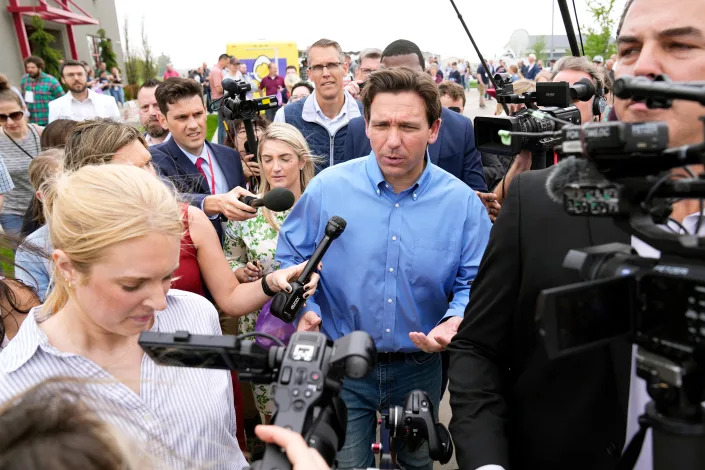
Charlie Neibergall

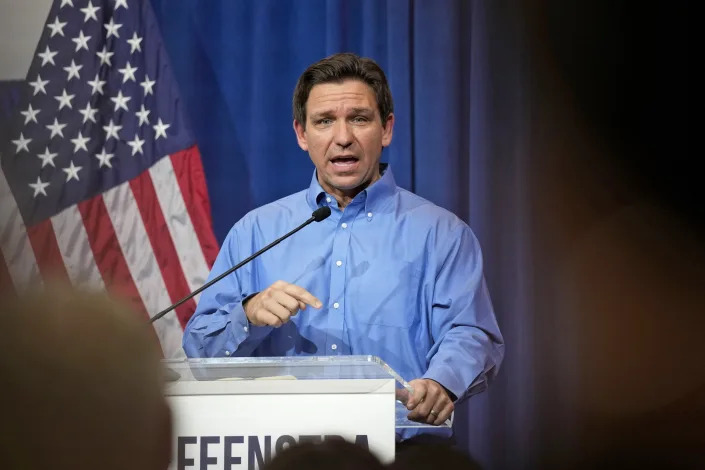
Wherever Gov. Ron DeSantis goes, he brings greetings from “the free state of Florida.” He heralds his “Florida Blueprint.” And he brags about how many people originally from whichever state he happens to be visiting love taking advantage of Florida’s warm weather and low taxes.

But a funny thing has happened as DeSantis travels the country with a “Make America Florida” message that underpins the Republican’s soon-to-launch presidential campaign.

DeSantis has found that not everyone wants to be Florida. And he has encountered spirited pushback from competitive fellow governors and GOP officials who believe that their states have done just as much, if not more, to advance a conservative agenda.

“It’s a lot of fun competing with my colleagues and Republican governors across the country,” Iowa Gov. Kim Reynolds, who has hosted DeSantis in the first-in-the-nation caucus state, said in an interview with NBC News. “But make no mistake, we are competitors.”

Reynolds introduced and interviewed DeSantis at two events in March, making sure to hold up her own record alongside his and frame them as equally accomplished governors. DeSantis, though, emphasized that he enjoys a “special perch” or “unique catbird’s seat” to view how other governors are doing, “because when people visit or move here, they tell me what’s going on in their states.”

After bestowing this authority onto himself, he took some shots at Democratic-led Illinois and proclaimed that Reynolds indeed presides over “one of the best-run states.”

It’s a tricky task — one that has caught attention of DeSantis’ home state reporters at Florida Politics — that in the wrong hands can come off as a magnanimous pander or a condescending pat on the back. And there have been signs in recent weeks that DeSantis recognizes he needs to shift how he talks about Florida, making it seem less aspirational and exceptional and more like an example of Republican leadership that has thrived elsewhere.

Reynolds, who stressed that her rivalry with DeSantis is friendly, brushed aside a question about whether his comments might offend Iowans and then quickly pivoted to her own accomplishments.

“Offend Iowans? Oh no, because I took care of that,” Reynolds said. “Because starting this year, we no longer tax retirement income. I made a deal with Gov. DeSantis. I said, ‘Hey, I’ll let our retirees go down to Florida — maybe a couple of months in January and February when the temperature’s not as good here in Iowa. … He’s gracious when he talks about it.”

DeSantis’ Florida boosterism has also prompted some ribbing in New Hampshire. At a GOP dinner there last month, DeSantis spoke admiringly about that state’s “Live Free or Die” motto before launching into his self-congratulatory story. Before DeSantis left the stage, New Hampshire GOP Chairman Chris Ager playfully jabbed at the governor.

“Instead of people moving to Florida,” Ager said, “maybe you can move up here.”

DeSantis’ spokesperson did not return a request for comment for this piece.

As boastful as DeSantis can be, he also searches for common cause with his audiences. During two stops in Ohio last month he played up his mother’s roots in the Youngstown area and his wife’s childhood in Troy, near Dayton. During that trip, he told a GOP crowd over breakfast in Akron that some parts of Florida are like “Ohio South,” given the number of retirees there.

“And it’s all good, because I’ll tell you, when it came time to get that big victory margin, there were a lot of transplanted people from Ohio who had my back,” DeSantis said, referring to his 19-point re-election margin last year. “So, God bless them for doing that.”

During a speech in South Carolina, DeSantis mentioned how his in-laws now live in the state and how he’s noticed more traffic on the roads there when he and his wife visit.

“Similar to what we’ve seen in Florida over the years with people coming down here,” he said.

But he was unable to resist an attempt at one-upmanship: “Famously — and, as long as I’m around, permanently — we have no state income tax. You guys should try that sometime.”

In Georgia, a compliment quickly gave way to grievance.

“One thing we’re no longer No. 1 in is college football,” DeSantis told an audience during a visit to a gun store in March. “So I just have a little bit of a plea … just stop taking so many of our high school football recruits. Can you give us a little bit of a chance?”

Ager, the New Hampshire GOP chair, said in an interview that he sees nothing wrong with friendly competition — and he wasted little time asserting his own state’s superiority.

“We are clearly No. 1. Gov. DeSantis calls it the free state of Florida. But the Cato Institute … in their whole scoring criteria, New Hampshire came in first last year,” Ager said, referring to a libertarian think tank’s ranking of New Hampshire as the freest state, based on personal and economic freedoms. “So we have some objective criteria from a third party.”

DeSantis himself seems to have softened his pitch a tad. While addressing the Utah GOP’s organizing convention in late April, he called the state, led by Republican Gov. Spencer Cox, “one of the best governed, best performing states.” DeSantis then went on to bestow perhaps the biggest compliment he could, even if it kind of came at the expense of a third state.

“I was recently visiting with some folks in Iowa, and people said, ‘Iowa, they’re really the Florida of the Midwest with all the conservative stuff they’re doing,’” DeSantis said. “Well, let me just tell you, maybe this is a little secret, but it might just be that Florida’s the Utah of the Southeast.”

By the time he returned to Iowa this month, DeSantis sounded ready to reconsider.

“I was here in March, and someone kind of took note and they’re like, ‘Man … Iowa’s like the Florida of the Midwest.’ … But I just want to let you know, after watching all the good stuff you’ve done in Iowa, it may be that Florida is the Iowa of the Southeast. So we’ll see.”

For the competitive Reynolds, there’s no question.

“Absolutely,” said Iowa’s governor, who has not endorsed a candidate for president. “Florida is the Iowa of the Southeast, and we’re doing everything we can to continue that narrative.”
Florida flood insurance costs are about to explode. ZIP codes closest to the coast will pay the most

South Florida Sun Sentinel

Florida flood insurance costs are about to explode. ZIP codes closest to the coast will pay the most

Ron Hurtibise, South Florida Sun Sentinel – May 22, 2023

Events of the past year have convinced more Florida homeowners of the need to carry flood insurance.

Flooding caused by hurricanes Ian and Nicole caught hundreds, if not thousands, of homeowners across the state by surprise, and without flood insurance.

Similarly, many homeowners affected by last month’s historic rainfall in eastern Broward County had no flood insurance and learned tragically that damage caused by water rising from the ground was not covered by their normal homeowner insurance.

It’s not just flood victims who are experiencing hard lessons about flood insurance.

Just as homeowners are realizing the increased risks of going without flood coverage, the Federal Emergency Management Agency has released data showing that coverage costs are exploding for properties in coastal areas most vulnerable to flooding.

The cost hikes stem from mandates by Congress to require rates charged by the National Flood Insurance Program, which is run by FEMA, to reflect the cost of flood risk to individual covered properties, and to pay down the program’s deficit, which was $20.5 million as of last November, according to FEMA.

The result is a new risk pricing model called Risk Rating 2.0, which took effect on Oct. 1, 2021, for new NFIP policies and on April 1, 2022, for renewing policies. Rather than set rates solely based on a property’s elevation within a zone on a Flood Insurance Rate Map, the new approach considers more risk variables such as flood frequency, types of flooding, and distance to a water source, along with individual property characteristics like elevation and the cost to rebuild, FEMA’s website states.

Improved modeling, however, is of little comfort to homeowners who will have to pay more for flood insurance at the same time costs of regular multiperil property insurance are skyrocketing.

Recently, FEMA released a spreadsheet that compared average premiums currently and how high they’ll climb under the new pricing model.

For example, homeowners in Boca Raton’s 33432 ZIP code can look forward to a whopping 229% flood insurance premium increase, from an average $950 per policy to $3,128.

In Broward County, the 33305 ZIP code that includes Wilton Manors and Fort Lauderdale neighborhoods near the Middle River will pay 209% more, from $1,099 to $3,400.

In the 33315 zip code, which includes Fort Lauderdale’s Edgewood neighborhood that was among the hardest-hit by last month’s flooding, average rates will increase by 64% — from $863 currently to $1,420.

These numbers are averages. Within each ZIP code are less expensive homes with cheaper coverage costs and pricier homes that will cost even more to insure.

Unsurprisingly, homes nearest the coast, particularly in low-lying areas, cost far more to insure than homes on higher ground in western suburban cities.

For example, homeowners in Coral Springs’ 33071 ZIP code are looking at a total premium increase of just 17.6% — from $669 to $787.

FEMA says the new pricing model will also drive down the cost of flood insurance for customers with low-risk characteristics. Yet, none of South Florida’s ZIP codes will see average rates decrease, FEMA’s data shows.

Not everyone facing rate increases will have to pay the higher premiums immediately. While homeowners who previously did not carry NFIP flood insurance will have to pay the new higher prices if they want a new policy, price hikes for existing policyholders are capped at 18% a year for homesteaded properties and 25% annually for second homes or investment properties, until they reach the new rates.

If the total increase is 18% or less, affected homeowners will pay it just once — presumably until FEMA raises rates again, whenever that happens.

Few homes have flood insurance, even in Florida

Although Florida has the largest number of NFIP flood insurance policies of any U.S. state — 597,967 of 2.2 million in the U.S., FEMA data shows, the percentage of covered homes remains low.

Florida has 3.8 million detached single-family homes, according to 2020 census figures. The number of FEMA flood insurance policies are just 15.7% of that total. In South Florida’s tricounty region, the percentage is 20.8%.

The actual percentages of homes with flood insurance are likely to be a little different. The above estimates don’t take into account private flood insurance policies, which are increasing but still a fraction of the number of federally-backed policies. And the estimates exclude attached single-family homes, such as townhomes. The percentage also does not include condominiums, which are typically covered by blanket commercial policies.

Experts advise every Florida homeowner to buy flood insurance because flooding can happen throughout the state, as during last fall’s hurricanes.

But many buy flood insurance only when required, such as home loan borrowers with federally backed mortgages who live in high-risk flood zones.

Flood insurance required for some with Citizens insurance

This year, a new set of homeowners are required to buy flood insurance. Customers of state-owned Citizens Property Insurance Corp. who live in high-risk flood zones are required to also carry flood insurance.

That mandate, enacted by the state Legislature and governor last year, took effect on April 1 for new Citizens policyholders and on July 1 for renewing policyholders.

Under the new law, all Citizens policyholders will have to buy flood insurance by 2027.

According to Citizens data, 228,203 of the company’s 1.2 million customers are now required to buy flood insurance. Of them, 105,763 are in Broward, Palm Beach or Miami-Dade counties.

When enacted last year, the law also required condo owners covered by Citizens to buy flood insurance. They were exempted, however, by a new law that was passed during the just-completed spring Legislative session and now awaits the governor’s signature. The change followed complaints that flood insurance is unnecessary for residents on upper floors of multistory buildings and for those covered by commercial policies that cover all units.

Although the mandate remains in place legally, Citizens has stopped sending notices to condo owners telling them they must buy flood insurance at renewal time, Citizens spokesman Michael Peltier said. Once it is signed, condo owners who bought coverage will be able to drop it.

If they bought FEMA coverage, they can request refunds if their policies have not yet taken effect, the NFIP’s website states.

Because the flood insurance requirement for renewing Citizens customers won’t take effect until July 1, Ryan Papy, president of Palmetto Bay-based Keyes Insurance, says it’s still a bit early to gauge the impact.

“There hasn’t been that much sticker shock,” Papy said in an email. “Many (premiums) in Miami-Dade County have gone down.”

But he added, “We do see issues when some clients are purchasing new property.” The difference between a new owner’s premiums and the capped rates paid by the previous owner can sometimes “be extreme,” he said.

Save money on the private market?

Florida homeowners hit hardest by rising NFIP rate hikes might ask their agents to see if they can save money by checking out the private flood insurance market.

Neptune Flood, the nation’s largest private flood insurer with more than 150,000 clients, can save policyholders up to 25% off the cost of comparable NFIP coverage, Neptune spokeswoman Loren Pomerantz said by email.

Private flood insurance satisfies requirements of both federal mortgage guarantors and Citizens, according to Pomerantz and Peltier.

Pomerantz said Neptune’s sales in Florida have increased in recent months. Sales climbed 20% in areas hard hit by Hurricane Ian prior to the new Citizens mandate taking effect. In high-risk flood zones, sales have increased 25% since April 1 compared to the same period last year, she said.

Private flood insurance also offers coverage that far exceeds the NFIP’s $250,000 cap for structural damage and $100,000 limit for personal property damage. “We can cover homes for up to $4 million in building coverage and $500,000 of personal property,” she said. “Additional coverage options not available through the NFIP include pool repair and refill, replacement cost on contents, temporary living expenses and more. This allows a homeowner to adequately cover their property and protect their families in the event of a flood-related loss.”

A ‘Canadian Armageddon’ Sets Parts of Western Canada on Fire

The New York Times

A ‘Canadian Armageddon’ Sets Parts of Western Canada on Fire

Dan Bilefsky – May 20, 2023

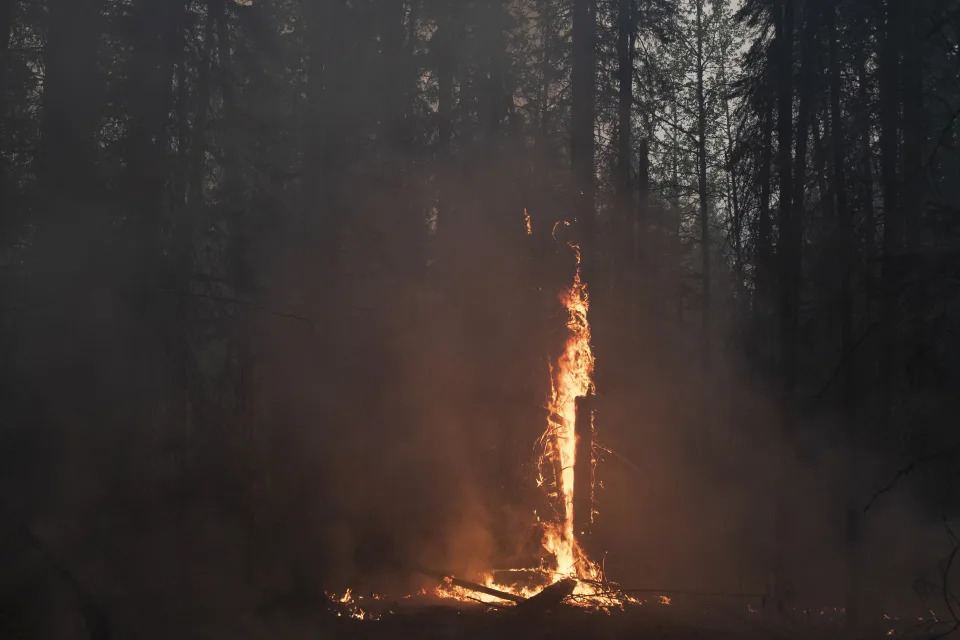
Flames from a prescribed burn, started by wildland firefighters in an attempt to halt the spread of larger wildfires, in Shining Bank, Alberta, Canada on May 19, 2023. (Jen Osborne/The New York Times)

EDMONTON, Alberta — As acrid smoke filled the air, turning the sky around her sleepy hometown, Fox Creek, Alberta, a garish blood orange, Nicole Clarke said she felt a sense of terror.

With no time to collect family photographs, she grabbed her two young children, hopped into her pickup truck, and sped away, praying she wouldn’t drive into the blaze’s menacing path.

“This feels like a Canadian Armageddon, like a bad horror film,” said Clarke, a 37-year-old hair stylist, standing outside her truck, a large hamper of dirty laundry piled in the back.

In a country revered for placid landscapes and predictability, weeks of out-of-control wildfires raging across western Canada have ushered in a potent sense of fear, threatening a region that is the epicenter of the country’s oil and gas sector.

Climate research suggests that heat and drought associated with global warming are major reasons for the increase in bigger and stronger fires.

Amid frequent fire updates dominating national television news broadcasts, the blazes have also helped unite a vast and sometimes polarized nation, with volunteers, firefighters and army reservists from other provinces rushing in to lend a hand.

Roughly 29,000 people in Alberta have been forced from their homes by the recent bout of wildfires, though that number has been cut in half in recent days as fires subsided.

Clarke said her family had been staying in cheap motels since they were ordered about a week ago to evacuate. But she and her boyfriend were unemployed and money was quickly running out.

“I don’t know if I’ll have a home to return to,” she added Thursday, sobbing.

The fires have produced such thick smoke that during recess, children in some towns have remained in their classrooms rather than risk smoke inhalation outside. Dozens of residents left in such a frantic panic that they left pets behind.

On Highway 43, a long stretch of Alberta highway peppered by small, evacuated towns, the thick layer of smoke blanketing the road on Thursday conjured the feeling of a dystopia.

With helicopters hovering and dropping water, police cars with flashing lights blocked parts of the highway as fires approached the road. Residents trying to return to homes they hoped were still intact commiserated as they were forced to turn back.

Fires have broken out throughout western Canada, including British Columbia, but hardest hit has been neighboring Alberta, a proud oil and gas producing province sometimes referred to as “the Texas of the North,” which has declared a state of emergency. More than 94 active wildfires were burning as of Friday afternoon.

British Columbia was the site in 2021 of one of Canada’s worst wildfires in recent decades, when fires decimated the tiny community of Lytton after temperatures there reached a record 49.6 degrees Celsius, or 121.3 Fahrenheit.

Not since the worst of the COVID-19 pandemic buffeted the region has the area been so overcome by apprehension, accompanied by the all-too familiar need to wear masks outside. Only this time, residents say, a silent killer has been replaced by something more visceral and visible.

So far, no deaths have been reported. But in Alberta, Frankie Payou, a firefighter and 33-year-old father of three from the East Prairie Métis Settlement in Northern Alberta, was in a coma with severe injuries after being hit in the head by a burned tree. His home was also destroyed by a fire.

The bulk of the fires are in the far north of the province, home to many Indigenous communities, dealing a heavy blow to people who depend on the land and natural resources.

At a sprawling evacuation center in Edmonton, Ken Zenner, 61, a father of eight, two of whom are members of the Sturgeon Lake Cree Nation, said he and his family had been evacuated from the town of Valleyview. He worried how they would get by.

Families that have been displaced for a cumulative seven days are eligible for government-provided financial support, according to provincial regulations. But Zenner said he didn’t qualify because he had only been evacuated for six days.

“Indigenous communities have been underfunded for years and now we are seeing the consequences,” he said.

The rest of the country is mobilizing to help. Some 2,500 firefighters are battling the fires, among them 1,000 from other provinces. Joining them are wilderness firefighters from the United States.

The fires have even affected Alberta’s largest city, Calgary, where residents this week said they sat down for breakfast only to see and smell pungent smoke entering from cracks under their front doors.

Environment and Climate Change Canada said the air quality index for the city Wednesday afternoon was at 10+, or “very high risk.” Canadian health authorities have warned the smoke could cause symptoms ranging from sore and watery eyes to coughing, dizziness, chest pains and heart palpitations.

In Alberta, the blazes have brought back bad memories of 2016 when a raging wildfire destroyed 2,400 buildings in Fort McMurray, Alberta, the heart of Canada’s oil sands region with the third-largest reserves of oil in the world.

Alberta is Canada’s main energy-producing province and the United States’ largest source of imported oil and the fires have compelled some companies to curb production.

As flames bore down on wells and pipelines, major drillers such as Chevron and Paramount Resources together shut down the equivalent of at least 240,000 barrels of oil a day, according to energy consulting firm Rystad Energy.

For now, the disruptions affect only a small proportion of the country’s total oil and gas output. Still, they underscore how the production of oil and gas, the main driver of climate change, is also vulnerable to increasingly dire consequences of a warming planet.

Some say the fire may help galvanize Canadians about the perils of climate change. “The smoke from forest fires has an in-your-face impact affecting millions of Canadians that makes it harder to ignore,” the CBC, the national broadcaster, observed this week.

The human toll of the fires will reverberate for weeks to come. Christine Pettie, a business manager for a logging cooperative in Edson, a rural town about two hours west of Edmonton, said residents were still shellshocked after being evacuated.

She and her husband left in such a rush that he forgot his insulin medicine. They were fortunate that their home remained standing.

Still, Pettie said, the experience “definitely shook me to my core.”

Texas is facing a housing crisis, a migrant crisis, a multi-year drought, and an epidemic of mass shootings. Ted Cruz, meanwhile, has opened an investigation into Bud Light.

Insider

Texas is facing a housing crisis, a migrant crisis, a multi-year drought, and an epidemic of mass shootings. Ted Cruz, meanwhile, has opened an investigation into Bud Light.

Katie Balevic – May 20, 2023

Texas is facing a housing crisis, a migrant crisis, a multi-year drought, and an epidemic of mass shootings. Ted Cruz, meanwhile, has opened an investigation into Bud Light.

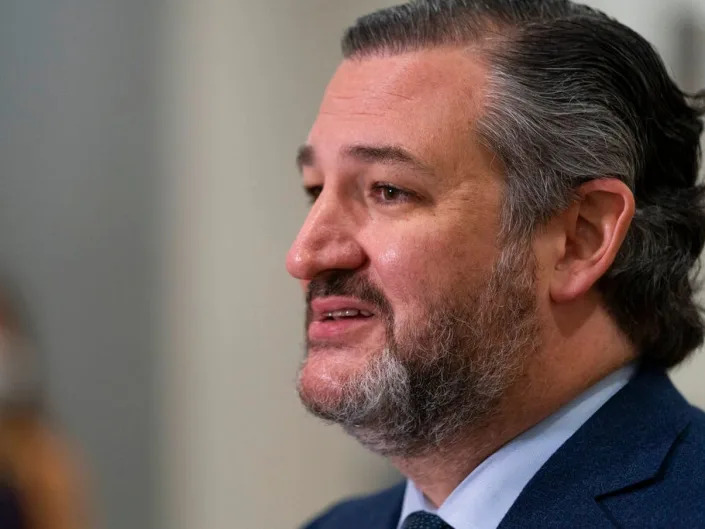
Texas Sen. Ted Cruz opened an investigation into Bud Light’s partnership with trans influencer Dylan Mulvaney.

Meanwhile, Texas is grappling with a migration crisis and a severe housing crisis.

And also an epidemic of gun violence, extreme weather, and a multi-year drought.

Texas is facing a laundry list of crises: housing, immigration, and weather, among others.

So, naturally, Texas Sen. Ted Cruz is opening an investigation into Bud Light.

Social conservatives across the country continue to clutch their pearls over Bud Light’s partnership with influencer Dylan Mulvaney, a 26-year-old transgender activist who has shaken the far-right’s perception of reality by existing in the open.

The company’s partnership with Mulvaney led to right-wing calls for a boycott of Bud Light, which has impacted sales at its parent company, Anheuser-Busch. The latter reported a 23% drop in sales for the last week of April compared to the previous year, CBS News reported.

Together with Sen. Marsha Blackburn of Tennessee, Cruz sent a letter to the beer industry’s regulatory body, the Beer Institute, inquiring whether Anheuser-Busch’s partnership with Mulvaney “violates the Beer Institute’s guidelines prohibiting marketing to underage individuals.”

“The Beer Institute must examine whether your company violated the Beer Institute’s Advertising/Marketing Code and Buying Guidelines prohibiting marketing to individuals younger than the legal drinking age,” the letter said, claiming that “Mulvaney’s audience skews significantly younger than the legal drinking age.”

To avoid an investigation, Cruz and Blackburn offered Anheuser-Busch the option to “publicly sever its relationship with Dylan Mulvaney, publicly apologize to the American people for marketing alcoholic beverages to minors, and direct Dylan Mulvaney to remove any Anheuser-Busch content” from her social media platforms, they wrote in the letter.

The letter, which misgendered Mulvaney throughout, also seeks documents and information on how “Anheuser-Busch vets its partnerships and how Anheuser-Busch failed in assessing the propriety of a partnership with Dylan Mulvaney.”

Meanwhile, in Cruz’ home state of Texas:

Following the expiration of Title 42, the fates of thousands of immigrants are up in the air as politicians on both sides of the aisle play hot potato by busing them to different cities.

The state faces an urgent housing and affordability crisis. There are just 25 available rental units for every 100 low-income households, according to The Texas Tribune.

Texas is also grappling with a series of deadly extreme weather events. In 2022, at least 279 people in Texas died from extreme heat, and the year before that, 246 Texans died from a brutal winter freeze. And Texas farmers are bracing for another growing season beset by a multi-year drought.

Texas is also the epicenter of gun violence. It is the site of 5 of the 10 deadliest shootings in US history.

Beer marketing, however — thanks to Cruz — has all the attention of the state’s top leaders in Washington.

Texas is facing a housing crisis, a migrant crisis, a multi-year drought, and an epidemic of mass shootings. Ted Cruz, meanwhile, has opened an investigation into Bud Light.

Insider

Texas is facing a housing crisis, a migrant crisis, a multi-year drought, and an epidemic of mass shootings. Ted Cruz, meanwhile, has opened an investigation into Bud Light.

Katie Balevic – May 20, 2023

Texas is facing a housing crisis, a migrant crisis, a multi-year drought, and an epidemic of mass shootings. Ted Cruz, meanwhile, has opened an investigation into Bud Light.

Texas Sen. Ted Cruz opened an investigation into Bud Light’s partnership with trans influencer Dylan Mulvaney.

Meanwhile, Texas is grappling with a migration crisis and a severe housing crisis.

And also an epidemic of gun violence, extreme weather, and a multi-year drought.

Texas is facing a laundry list of crises: housing, immigration, and weather, among others.

So, naturally, Texas Sen. Ted Cruz is opening an investigation into Bud Light.

Social conservatives across the country continue to clutch their pearls over Bud Light’s partnership with influencer Dylan Mulvaney, a 26-year-old transgender activist who has shaken the far-right’s perception of reality by existing in the open.

The company’s partnership with Mulvaney led to right-wing calls for a boycott of Bud Light, which has impacted sales at its parent company, Anheuser-Busch. The latter reported a 23% drop in sales for the last week of April compared to the previous year, CBS News reported.

Together with Sen. Marsha Blackburn of Tennessee, Cruz sent a letter to the beer industry’s regulatory body, the Beer Institute, inquiring whether Anheuser-Busch’s partnership with Mulvaney “violates the Beer Institute’s guidelines prohibiting marketing to underage individuals.”

“The Beer Institute must examine whether your company violated the Beer Institute’s Advertising/Marketing Code and Buying Guidelines prohibiting marketing to individuals younger than the legal drinking age,” the letter said, claiming that “Mulvaney’s audience skews significantly younger than the legal drinking age.”

To avoid an investigation, Cruz and Blackburn offered Anheuser-Busch the option to “publicly sever its relationship with Dylan Mulvaney, publicly apologize to the American people for marketing alcoholic beverages to minors, and direct Dylan Mulvaney to remove any Anheuser-Busch content” from her social media platforms, they wrote in the letter.

The letter, which misgendered Mulvaney throughout, also seeks documents and information on how “Anheuser-Busch vets its partnerships and how Anheuser-Busch failed in assessing the propriety of a partnership with Dylan Mulvaney.”

Meanwhile, in Cruz’ home state of Texas:

Following the expiration of Title 42, the fates of thousands of immigrants are up in the air as politicians on both sides of the aisle play hot potato by busing them to different cities.

The state faces an urgent housing and affordability crisis. There are just 25 available rental units for every 100 low-income households, according to The Texas Tribune.

Texas is also grappling with a series of deadly extreme weather events. In 2022, at least 279 people in Texas died from extreme heat, and the year before that, 246 Texans died from a brutal winter freeze. And Texas farmers are bracing for another growing season beset by a multi-year drought.

Texas is also the epicenter of gun violence. It is the site of 5 of the 10 deadliest shootings in US history.

Beer marketing, however — thanks to Cruz — has all the attention of the state’s top leaders in Washington.

Texas has the anti-climate Governor: Greg Abbott signs Law Making EV Owners Pay for Their Gas-Free Cars

Gizmodo

Greg Abbott Signs Law Making EV Owners Pay for Their Gas-Free Cars

Lauren Leffer – May 19, 2023

Photo of electric vehicles charging


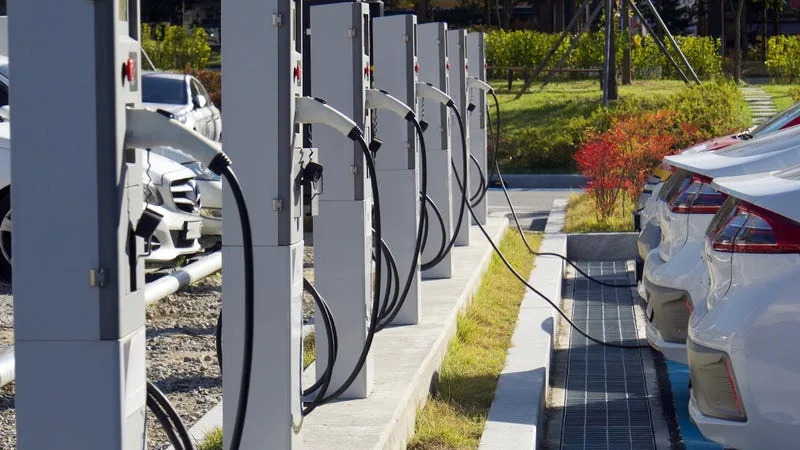
EV drivers in Texas don’t pay at the pump, but will have to start paying a significant annual fee that critics are calling “punitive.”

Driving an electric vehicle in Texas is soon to become more expensive. Governor Greg Abbott signed a law (SB 505) on May 13 instituting new fees for registering and owning EVs in the state. Under the bill, electric car owners will have to pay $400 upon registering their vehicle. Then, every subsequent year, EV drivers will have to shell out an additional $200. Both of those fees are on top of the cost of the standard annual registration renewal fees, which are $50.75 each year for most passenger cars and trucks.

The law exempts mopeds, motorcycles, and other non-car EVs, and goes into effect starting on September 1, 2023.

At least 32 states currently have special electric vehicle registration fees, according to data from the National Conference of State Legislatures. These range from $50 in places like Colorado, Hawaii, and South Dakota to $274 (starting in 2028) in a recently passed piece of Tennessee legislation. Note: Tennessee lawmakers had originally proposed a $300 fee, but lowered it in response to pushback.

Like many other states that have instituted EV fees, the reasoning behind the Lone Star State’s new law is that electric car drivers don’t buy gas. Taxes at the fuel pump are the primary way that most states, Texas included, amass funds for road construction, maintenance, and other driving-related infrastructure.

“Currently, Texas uses the gasoline/diesel fuel tax to fund transportation projects; however, with the growing use of EVs, the revenue from the fuel tax is decreasing, which diminishes our ability to fund road improvements for all drivers,” said the bill’s author, Republican State Senator Robert Nichols, in comments about the legislation, per local NBC News affiliate KXAN.

But, compared with what gas drivers contribute, Texas’s EV fees seem a little out of whack. Charging $200 per year and $400 at the outset of EV ownership places Texas’s fee schedule at the higher price end of the policies out there. In comparison, Texas’s gas tax is among the lowest in the country, at just $0.20 per gallon. Just seven states impose a lower duty on gasoline than TX. Among the 10 most populous states in the country, additional fees levied elsewhere make Texas’s gas the cheapest.

The average Texas driver burned through ~55 million BTUs of motor gasoline in 2018, according to data from the U.S. Energy Information Administration. That’s equal to about 440 gallons of gas. At $0.20 per gallon, the standard car owner in Texas is paying just $88 per year in gas taxes—far less than the hundreds more EV drivers will now be throwing into the pot. A 2022 Consumer Reports analysis determined that a Texas driver’s gas tax contribution is even lower, at just $71.

The new law says loud and clear that Texas is “fully behind oil and gas,” Kara Kockleman, a transportation engineering professor at the University of Texas, Austin, told local ABC News affiliate KVUE. “Electric vehicles should pay a gas tax – I just think the tax on the conventional cars should be much, much higher than it is. We pay less for gas in this state than almost anyone in the world… Texas is really behind the curve on trying to do the right thing by the environment. And so, that’s embarrassing, I think, for all of us.”

There’s no doubt that roads and other car infrastructure are expensive. Though it can be easy to forget that—every time a driver cruises down the asphalt, complies with a traffic signal, or reads a highway sign—they’re benefiting from a costly system constructed for their particular use and benefit. But compared with other forms of transportation in the U.S., car ownership is already heavily subsidized. So is burning fossil fuels.

According to a 2015 analysis from the nonprofit Canadian media outlet The Discourse, society pays more than $9 for every $1 a driver pays in commuting: Through infrastructure, accident liability, noise and air pollution, and congestion. Buses, biking, and walking all eat up much less public funds for the same amount of miles traveled. EVs presumably also have a slightly lower public cost, as they’re quieter and don’t directly emit air pollution.

Yet in Texas, the tax load for driving an electric car will far exceed that of a gas-powered vehicle. The new law is “punitive” according to Consumer Reports. “Consumers should not be punished for choosing a cleaner, greener car that saves them money on fuel and maintenance,” Dylan Jaff, a policy analyst at CR, wrote in an April statement. “The fees proposed in this bill will establish an inequitable fee scale for EV owners, and will not provide a viable solution to the long-standing issue of road funding revenue.”

Luke Metzger, director of the non-profit advocacy group, Environment Texas, echoed Consumer Reports’ findings in a statement from last month. “The Texas Legislature is pouring sugar in the tank of the electric vehicle revolution. This punitive fee will make it harder for Texans to afford these clean vehicles which are so critical to reducing air pollution in Texas.”

Electric personal vehicles are not a perfect solution to the ongoing problem of petroleum-powered cars. Swapping every gas-guzzler for an EV still would use up an extraordinary amount of resources, that are likely to be ill-gotten. Public investment in mass transit would inarguably be a better environmental strategy. But, as long as the U.S. remains overwhelmingly car dominant and as long as most Americans lack access to adequate public transit, EV uptake remains important for lowering the nation’s carbon emissions.

Already, the upfront costs of purchasing an electric car are significantly higher than buying a gas vehicle. A disproportionate tax system adds to that burden, and it could dissuade people from transitioning to EVs.

Florida passes bill to prevent billionaires like Elon Musk and Jeff Bezos being sued if their mega-rockets kill or injure people

Business Insider

Florida passes bill to prevent billionaires like Elon Musk and Jeff Bezos being sued if their mega-rockets kill or injure people

Marianne Guenot – May 17, 2023


How SpaceX, Blue Origin, and Virgin Galactic plan on taking you to space

The SpaceX Starship lifts off from the launchpad during a flight test from Starbase in Boca Chica, Texas, on April 20, 2023.
The SpaceX Starship lifts off in Boca Chica, Texas, on April 20, 2023.PATRICK T. FALLON/AFP via Getty Images
  • Florida passed a bill protecting space companies in case of injury or death of a crew member.
  • Passengers will have to sign a waiver stating they understand the risks before boarding a spaceship.
  • The bill comes as more billionaires are trying to make commercial space flight a reality.

Florida has signed a bill protecting the billionaire owners of space companies against civil lawsuits in case of the death or injury of a passenger or crew member.

Passengers will have to sign a waiver stating they understand the risks of spaceflight before boarding a spaceship, the bill states.

“Under Florida law, there is no liability for an injury to or death of a participant or crew in a spaceflight activity provided by a spaceflight entity if such injury or death results from the inherent risks of the spaceflight activity,” the bill states.

For private sector companies like Elon Musk’s SpaceX and Jeff Bezos’ Blue Origin, the bill “has the potential to limit the cost of litigation to businesses engaging in spaceflight activities,” a senate analysis of the bill said.

The bill extends protections to private space companies
Elon Musk
Elon Musk stands in front of a model of a rocket.(Photo by Hannibal Hanschke-Pool/Getty Images)

The Spaceflight Entity Liability bill, which was sent to Governor Ron DeSantis and passed the Florida Senate and House with little opposition, was adjusted to reflect “the evolution of spaceflight,” said Republican Sen. Tom Wright, the bill’s sponsor, per Florida Politics.

“Astronauts are no longer government astronauts. These are commercial crew,” said Republican Rep. Tyler Sirois at a March 9 hearing, per Florida Politics.

The new bill states that space flight remains “an extraordinarily dangerous condition” and people should take responsibility for the risks before boarding the rocket, the Senate bill analysis states.

The bill doesn’t protect the companies in case of “gross negligence”

Florida lawmakers have every motivation to protect the spaceflight industry, which contributes $17.7 billion in revenues to Florida’s economy, per Florida’s Aerospace and Spaceport Development Authority.

SpaceX and Blue Origin have their primary launch sites in Florida. Jeff Sharkey, a lobbyist representing SpaceX, also stood in support of the bill at a March 26 hearing, per Florida Politics.

Still, the bill doesn’t abrogate space companies from all responsibility. It states clearly that the company is still liable in case of gross negligence, if the company knew or should have known about dangerous conditions, or it intentionally tried to hurt or kill a crewmember.

Even in a case of negligence, the bill would be difficult to hold up in court, Mark Sundahl, director of the Global Space Law Center at Cleveland State University, told Gizmodo in an email.

The waiver, he said “assumes that there is ‘informed consent.’ It is questionable whether a passenger who is not familiar with the technology and history of spaceflight can truly be ‘informed’ as to the risks.”

More protections are needed as space tourism takes off
yusaku maezawa is seeing wearing a orange shirt, floating cross legged and waving in the International Space Station.
Japanese billionaire Yusaku Maezawa floats inside the International Space Station (ISS) as seen in this photo uploaded on December 9, 2021,Yusake Maezawa via Instagram/via REUTERS

The bill comes in the wake of a boom in space tourism led by private companies.

Multi-millionaire and billionaire civilians are hitching rides to low earth orbit and outer space.

“The fear is that the estate of ultra-wealthy passengers could bring massive claims for hundreds of millions of dollars in lost revenue due to the life of the passenger being cut short,” said Sundahl, per Gizmodo.

“The industry is still in its early days and such liability might stunt the industry,” he said.

These include billionaire Yusaku Maezawa, a Japanese fashion mogul who has already flown to the International Space Station and purchased all the seats on an upcoming SpaceX  Starship flight around the moon.

Texas passes bill stripping authority from cities

The Hill

Texas passes bill stripping authority from cities


Saul Elbein – May 16, 2023

A sweeping Texas bill stripping authority from cities passed the state Senate on Tuesday and is now headed to the governor’s desk.

House Bill 2127 takes large domains of municipal governing — from payday lending laws to regulations on rest breaks for construction workers to laws determining whether women can be discriminated against based on their hair — out of the hands of the state’s largely Democratic-run cities and shifts them to its Republican-controlled legislature.

According to the Austin American Statesman, Gov. Greg Abbott (R) has been a vocal supporter of the bill.

Progressive critics argue the legislation — which one lawyer for Texas cities called “the Death Star” for local control — represents a new phase in the campaign by conservative state legislatures to curtail the power of blue-leaning cities.

Opponents of the bill include civil society groups like the AFL-CIO — and representatives of every major urban area in Texas, along with several minor ones.

They argue the shift in power it would enable would hamstring cities’ abilities to make policies to fit their unique circumstances.

“Where the state is silent, and it is silent on a lot — local governments step into that breach, to act on behalf of our shared constituents,” state Sen. Sarah Eckhardt (D) told the Senate on Tuesday.

“We should be doing our job rather than micromanaging theirs.”

But the bill’s Senate sponsor, state Sen. Brandon Creighton (R), said it was necessary to protect “job creators” from “cities and counties acting as lawmakers outside of their jurisdiction.”

Both the legislation’s sponsors and the principal trade group that backed it — the National Federation of Independent Businesses (NFIB) — have argued local regulation poses an existential threat to Texas businesses.

“As prices escalate, property taxes increase, and workers remain in short supply, small business owners are continuing to struggle in this economic environment,” said Annie Spilman, state director of the NFIB, in a statement earlier this month. “Arduous local ordinances, no matter how well-intended, exacerbate these challenges.”

The NFIB’s solution to that problem: one set of rules governing business across the state, which it says will cut costs by preventing the “patchwork” of local and county regulations that govern Texas’s sprawling cities.

While the NFIB and the legislation are officially nonpartisan, support for the bill has been overwhelmingly Republican.

The bill passed the state Senate 18-13 on a nearly party-line vote after passing the House in April with the votes of just eight out of 65 Democrats.

If enacted, the legislation would have a wide reach, banning — technically “preempting” — broad swaths of the state code.

It would nullify many existing ordinances, like Austin and Dallas’s heat protections for construction workers.

It would also ban new restrictions on payday lending or puppy mills, although — after a long fight — existing city laws will be preserved.

Urban advocates say other specific local laws without state or federal analogs — like an Austin law banning discrimination based on hair texture or style — would also likely be struck down.

The bill failed to pass in the 2019 or 2021 sessions — in part because it was seen as too broad, Austin City Councilor Ryan Alter told The Hill.

But with every failed passage, Alter said, “The bill has only gotten broader.”

Alter listed the state preemption of the Property and Business and Commerce codes as two domains that would lead to unforeseen consequences for cities.

“We do a lot of things as the city as relates to property, land use and issues concerning land, and we make a lot of decisions that impact business and commerce,” Alter added.

The bill also preempts city and county ordinances relating to the Agriculture Code, Finance Code, Insurance Code, Labor Code, Natural Resources Code and Occupations Code.

One worry among the legislation’s opponents is procedural.

The state legislature only meets every two years, making each session a logjam of potential bills, most of which never go anywhere. In 2022, for example, the Legislature passed about 38 percent of the nearly 10,000 bills introduced.

That low frequency of meetings and state-level focus make the Legislature a body opponents argue is ill-suited to managing the day-to-day affairs of cities.

Under the new law, “cities and counties across Texas will have to rely on the state’s part-time Legislature, which meets for only 140 days every two years, to address various issues and problems of local concern,” Adrian Shelley, Texas director for public interest advocacy group Public Citizen, said in a statement.

Spilman of the NFIB has argued the law was necessary to rein in out-of-control municipal governments.

The long campaign for the legislation that became H.B. 2127 began in 2018, when Dallas, Austin and San Antonio passed ordinances requiring employers to offer paid sick leave.

Those laws were later shot down by state and federal courts as a violation of state bans on raising the minimum wage above the federal standard.

But the ordinances would have given city governments subpoena power to investigate potential violations — powers which worried the NFIB, Spilman said in an April statement.

“I just don’t know why a city ordinance would have something in there like that. That’s very frightening to a small business owner, with no compliance officers.”

The need for the legislation was urgent, she added at the time. “You go another two years without this protection — we just don’t know what cities might propose next.”

Opponents, meanwhile, argue the bill would present challenges to businesses because its scope is so broad as to make it impossible to say how far it will reach.

“If there is one thing businesses hate it is uncertainty,” Houston city attorney Collyn Peddie wrote in an April statement.

“Because 2127 barely attempts to define the fields that it purports to preempt, [self-governing] cities will not know what laws to enforce and, more important, businesses will not know what laws to obey,” Peddie continued.

Another source of concern for bill opponents is the method of enforcement, which — as in the case of the state’s “bounty” abortion ban — would occur through lawsuits.

The bill would authorize “any person who has sustained an injury in fact, actual or treated” to sue cities and counties for passing ordinances in areas now officially under the domain of the state.

Winners of such suits would get damages and attorney’s fees covered.

Whenever cities pass big ordinances, “people get clever in their lawsuits to challenge anything they don’t like,” said Alter, the Austin councilor.

“And because the bill is so broad there are a lot of opportunities for people to poke holes in any bills the city passes.”

The NFIB’s position is that the newly preempted powers aren’t being taken away from cities: They’re ones the cities never had to start with, as Spilman explained to The Hill.

The legislation’s GOP sponsors agree. “It’s a ‘stay in your lane’ bill,” Rep. Dustin Burrows (R) said at a February event hosted by the NFIB. “If you’re a city, do your core functions. If you’re a county, do your core functions.”

Burrows has dismissed critics of the bill as “taxpayer-funded lobbyists” who he told the Texas Tribune in March were “out in full force trying to undermine this effort.”

In those remarks, Burrows took a tack familiar from statehouse Republican messaging nationwide.

Groups opposing the bills, he added, “are beholden to special interest groups who cannot get their liberal agenda through at the statehouse, so they go to city halls across the State, creating a patchwork of unnecessary and anti-business ordinances.”

But bill opponents argued that local laws are a patchwork because local conditions are, too.

“Lawmakers who voted for this must explain to their constituents why they gave away local authority to lawmakers hundreds of miles away in Austin who may have never even set foot in their community,” said Adrian Shelley, Texas director of advocacy group Public Citizen.

Eckhardt, the state senator from Bastrop, argued the legislation “obliterates the local balancing of interests that creates the distinct local flavor from Lubbock to Houston, Laredo to Texarkana.”

Bills like House Bill 2127 “excuse the Texas legislature from leading,” she added.

“We are wasting our precious 140 days — when we could be doing statewide health, education, justice and prosperity policies — barging into bedrooms, locker rooms, boardrooms examining rooms and now city council meetings.”

Texas passes bill stripping authority from cities

The Hill

Texas passes bill stripping authority from cities


Saul Elbein – May 16, 2023

A sweeping Texas bill stripping authority from cities passed the state Senate on Tuesday and is now headed to the governor’s desk.

House Bill 2127 takes large domains of municipal governing — from payday lending laws to regulations on rest breaks for construction workers to laws determining whether women can be discriminated against based on their hair — out of the hands of the state’s largely Democratic-run cities and shifts them to its Republican-controlled legislature.

According to the Austin American Statesman, Gov. Greg Abbott (R) has been a vocal supporter of the bill.

Progressive critics argue the legislation — which one lawyer for Texas cities called “the Death Star” for local control — represents a new phase in the campaign by conservative state legislatures to curtail the power of blue-leaning cities.

Opponents of the bill include civil society groups like the AFL-CIO — and representatives of every major urban area in Texas, along with several minor ones.

They argue the shift in power it would enable would hamstring cities’ abilities to make policies to fit their unique circumstances.

“Where the state is silent, and it is silent on a lot — local governments step into that breach, to act on behalf of our shared constituents,” state Sen. Sarah Eckhardt (D) told the Senate on Tuesday.

“We should be doing our job rather than micromanaging theirs.”

But the bill’s Senate sponsor, state Sen. Brandon Creighton (R), said it was necessary to protect “job creators” from “cities and counties acting as lawmakers outside of their jurisdiction.”

Both the legislation’s sponsors and the principal trade group that backed it — the National Federation of Independent Businesses (NFIB) — have argued local regulation poses an existential threat to Texas businesses.

“As prices escalate, property taxes increase, and workers remain in short supply, small business owners are continuing to struggle in this economic environment,” said Annie Spilman, state director of the NFIB, in a statement earlier this month. “Arduous local ordinances, no matter how well-intended, exacerbate these challenges.”

The NFIB’s solution to that problem: one set of rules governing business across the state, which it says will cut costs by preventing the “patchwork” of local and county regulations that govern Texas’s sprawling cities.

While the NFIB and the legislation are officially nonpartisan, support for the bill has been overwhelmingly Republican.

The bill passed the state Senate 18-13 on a nearly party-line vote after passing the House in April with the votes of just eight out of 65 Democrats.

If enacted, the legislation would have a wide reach, banning — technically “preempting” — broad swaths of the state code.

It would nullify many existing ordinances, like Austin and Dallas’s heat protections for construction workers.

It would also ban new restrictions on payday lending or puppy mills, although — after a long fight — existing city laws will be preserved.

Urban advocates say other specific local laws without state or federal analogs — like an Austin law banning discrimination based on hair texture or style — would also likely be struck down.

The bill failed to pass in the 2019 or 2021 sessions — in part because it was seen as too broad, Austin City Councilor Ryan Alter told The Hill.

But with every failed passage, Alter said, “The bill has only gotten broader.”

Alter listed the state preemption of the Property and Business and Commerce codes as two domains that would lead to unforeseen consequences for cities.

“We do a lot of things as the city as relates to property, land use and issues concerning land, and we make a lot of decisions that impact business and commerce,” Alter added.

The bill also preempts city and county ordinances relating to the Agriculture Code, Finance Code, Insurance Code, Labor Code, Natural Resources Code and Occupations Code.

One worry among the legislation’s opponents is procedural.

The state legislature only meets every two years, making each session a logjam of potential bills, most of which never go anywhere. In 2022, for example, the Legislature passed about 38 percent of the nearly 10,000 bills introduced.

That low frequency of meetings and state-level focus make the Legislature a body opponents argue is ill-suited to managing the day-to-day affairs of cities.

Under the new law, “cities and counties across Texas will have to rely on the state’s part-time Legislature, which meets for only 140 days every two years, to address various issues and problems of local concern,” Adrian Shelley, Texas director for public interest advocacy group Public Citizen, said in a statement.

Spilman of the NFIB has argued the law was necessary to rein in out-of-control municipal governments.

The long campaign for the legislation that became H.B. 2127 began in 2018, when Dallas, Austin and San Antonio passed ordinances requiring employers to offer paid sick leave.

Those laws were later shot down by state and federal courts as a violation of state bans on raising the minimum wage above the federal standard.

But the ordinances would have given city governments subpoena power to investigate potential violations — powers which worried the NFIB, Spilman said in an April statement.

“I just don’t know why a city ordinance would have something in there like that. That’s very frightening to a small business owner, with no compliance officers.”

The need for the legislation was urgent, she added at the time. “You go another two years without this protection — we just don’t know what cities might propose next.”

Opponents, meanwhile, argue the bill would present challenges to businesses because its scope is so broad as to make it impossible to say how far it will reach.

“If there is one thing businesses hate it is uncertainty,” Houston city attorney Collyn Peddie wrote in an April statement.

“Because 2127 barely attempts to define the fields that it purports to preempt, [self-governing] cities will not know what laws to enforce and, more important, businesses will not know what laws to obey,” Peddie continued.

Another source of concern for bill opponents is the method of enforcement, which — as in the case of the state’s “bounty” abortion ban — would occur through lawsuits.

The bill would authorize “any person who has sustained an injury in fact, actual or treated” to sue cities and counties for passing ordinances in areas now officially under the domain of the state.

Winners of such suits would get damages and attorney’s fees covered.

Whenever cities pass big ordinances, “people get clever in their lawsuits to challenge anything they don’t like,” said Alter, the Austin councilor.

“And because the bill is so broad there are a lot of opportunities for people to poke holes in any bills the city passes.”

The NFIB’s position is that the newly preempted powers aren’t being taken away from cities: They’re ones the cities never had to start with, as Spilman explained to The Hill.

The legislation’s GOP sponsors agree. “It’s a ‘stay in your lane’ bill,” Rep. Dustin Burrows (R) said at a February event hosted by the NFIB. “If you’re a city, do your core functions. If you’re a county, do your core functions.”

Burrows has dismissed critics of the bill as “taxpayer-funded lobbyists” who he told the Texas Tribune in March were “out in full force trying to undermine this effort.”

In those remarks, Burrows took a tack familiar from statehouse Republican messaging nationwide.

Groups opposing the bills, he added, “are beholden to special interest groups who cannot get their liberal agenda through at the statehouse, so they go to city halls across the State, creating a patchwork of unnecessary and anti-business ordinances.”

But bill opponents argued that local laws are a patchwork because local conditions are, too.

“Lawmakers who voted for this must explain to their constituents why they gave away local authority to lawmakers hundreds of miles away in Austin who may have never even set foot in their community,” said Adrian Shelley, Texas director of advocacy group Public Citizen.

Eckhardt, the state senator from Bastrop, argued the legislation “obliterates the local balancing of interests that creates the distinct local flavor from Lubbock to Houston, Laredo to Texarkana.”

Bills like House Bill 2127 “excuse the Texas legislature from leading,” she added.

“We are wasting our precious 140 days — when we could be doing statewide health, education, justice and prosperity policies — barging into bedrooms, locker rooms, boardrooms examining rooms and now city council meetings.”

Significant El Niño event is almost guaranteed this year, experts warn. And it could be a big one.

Live Science

Significant El Niño event is almost guaranteed this year, experts warn. And it could be a big one.

Harry Baker – May 12, 2023

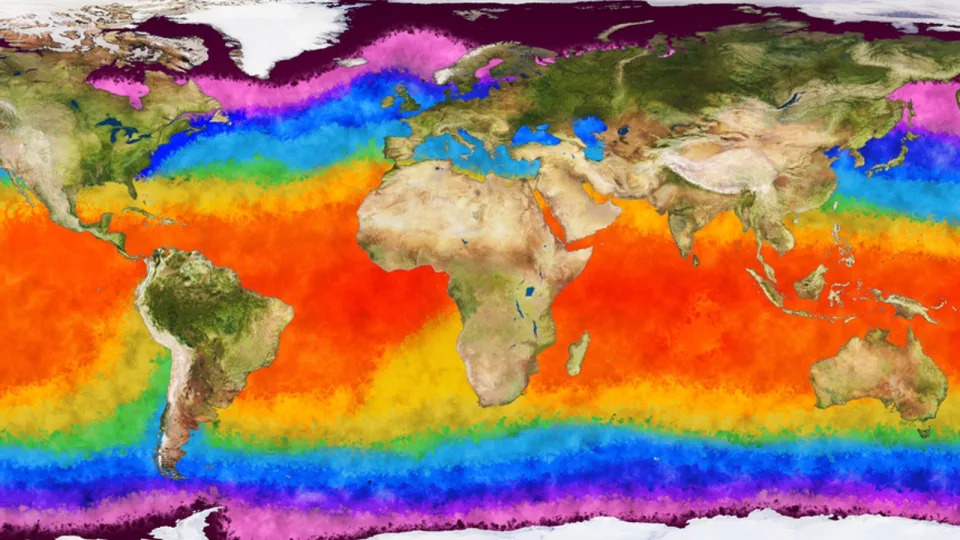
 A rainbow-colored map of the world showing different sea surface temperatures across the globe.
A rainbow-colored map of the world showing different sea surface temperatures across the globe.

The chance of the ocean-warming event known as El Niño hitting this year is now over 90%. It will likely begin in the coming months, and there is a good chance it will persist into 2024 and have a widespread impact, experts have warned.

El Niño, which means “the little boy” in Spanish, is a major climatic event caused by changes to ocean currents in the Pacific Ocean. This heating event is strong enough to trigger major changes in global weather patterns and seriously impact marine ecosystems, especially combined with the effects of human-caused climate change. El Niño, along with its counterpart La Niña, or “the little girl” — a cooling event triggered by changes to the same ocean current system — make up the El Niño-Southern Oscillation (ENSO) cycle.

Experts have suspected that an El Niño event could be on the horizon for some time. And on May 3, the World Meteorological Organization (WMO) predicted there was a 60% chance that it would begin between May and July.

But on May 11, the National Atmospheric and Oceanic Administration (NOAA) released its own forecast, which suggested that it is a near certainty that El Niño will begin during the same period. The agency also said there was a 90% chance that El Niño will persist into 2024.

Related: Is climate change making the weather worse?

“Keep your eyes peeled on the tropics, and don’t blink,” Nathaniel Johnson, a meteorologist at NOAA’s Geophysical Fluid Dynamics Laboratory, wrote in a NOAA blog post. “Conditions are evolving quickly!”

ENSO cycle 101

The ENSO cycle is mainly linked to trade winds in the Pacific Ocean that blow westward along the equator. Normally, this blows warmer surface waters from South America toward Asia, which are in turn replaced by cooler deep ocean waters in a process known as upwelling, according to NOAA.

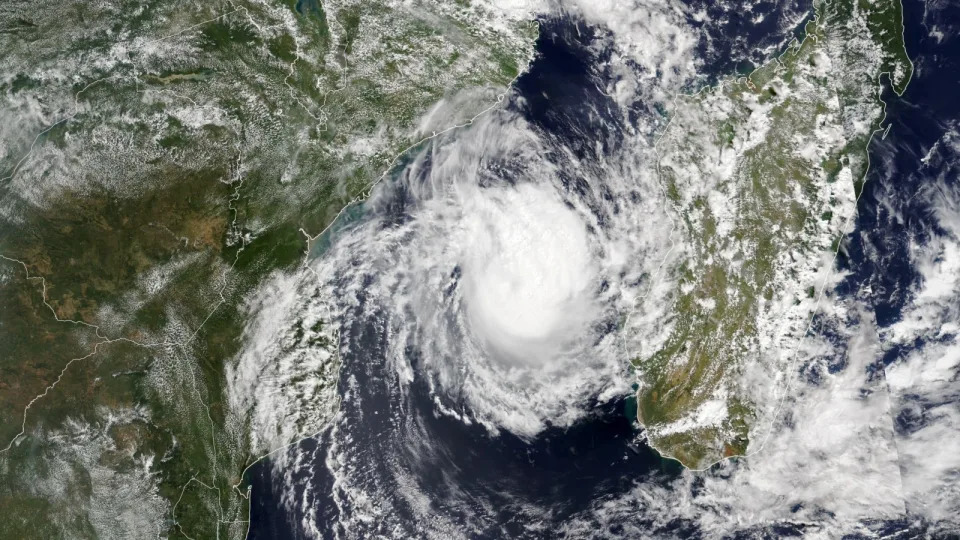
Cyclone Freddy between Mozambique and Madagascar on March 8. The image was captured by the Visible Infrared Imaging Radiometer Suite (VIIRS) on the NOAA-20 satellite.

During El Niño, the trade winds weaken, which leads to reduced upwelling and in turn warmer surface waters. During La Niña, the trade winds are unusually strong, which has the opposite effect. Both events can trigger extreme weather events, such as the potentially record-breaking Cyclone Freddy that battered parts of Africa in February and March.

The periods between El Niño and La Niña events are known as ENSO neutral.

When was the last El Niño?

In the past, El Niño and La Niña events occurred roughly once every two to seven years, according to NOAA. But their appearance has recently become much more erratic due to the effects of climate change: In the last 50 years, the ocean has absorbed nearly 90% of the energy trapped by global warming, which has drastically increased sea surface temperatures, impacting the ENSO cycle.

The last El Niño event occurred between February and August 2019 and was quite weak. Between July 2020 and March 2023, a rare triple-dip La Niña suppressed rising global temperatures.

El Niño events normally last somewhere between nine months and two years but can be longer.

How strong will El Niño be?

It’s unclear exactly how strong this El Niño will become, but NOAA’s predictions suggest there is an 80% chance of at least a moderate El Niño, where sea surface temperatures will rise by 1.8 degrees Fahrenheit (1 degree Celsius), and a 55% chance of a strong El Niño, where temperatures will rise by 2.7 F (1.5 C).

Experts are also concerned that recent high sea surface temperatures will make the upcoming El Niño worse. In early April, the average global sea surface temperature was the highest in recorded history.

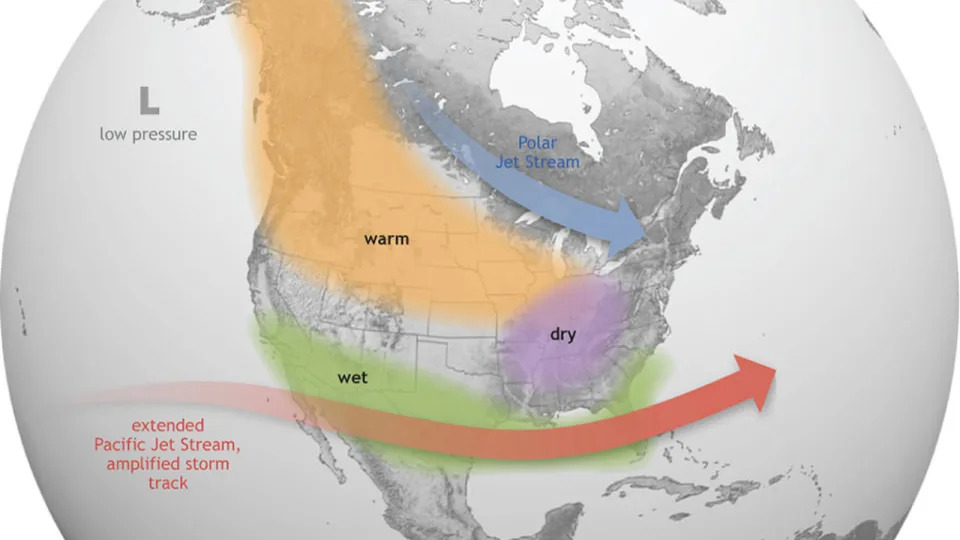
A map of the U.S. showing the effects of el nino. There is a warm front coming in from NW Canada, a dry patch over parts of NW America and a wet patch over the Southern US from California to Florida.

NOAA will provide more information on how El Niño is progressing in early June.

How will El Niño affect North America?

During El Niño, the weaker trade winds mean more warm water is pushed back east toward the west coast of the Americas. The warmer waters push the Pacific jet stream south of its neutral position, which impacts weather patterns in North America, according to NOAA.

RELATED STORIES

Climate ‘points of no return’ may be much closer than we thought

10 signs we got closer to climate disaster in 2022

World must act now to defuse ‘climate time bomb,’ UN scientists warn

For the northern U.S. and Canada, this can lead to warmer weather than usual, while eastern states often receive less rainfall. For the southern U.S. and northern Mexico, the result is often heavy rainfall, which can cause flooding and landslides.

The WMO expects global temperatures to rise to record levels during the next few years as La Niña’s cooling effect ends and El Niño begins, which could severely impact the lives of millions of people.