Poisonous algae bloom affected major cities and fishing towns in Chile in 2016. Experts said it was linked to high temperatures stemming from the El Niño.
Last month, NOAA said there was a 62% chance that El Niño would develop between May and July. Things have rapidly progressed, and now there is a 90% chance of El Niño forming and persisting into the end of this year, according to NOAA.
These two “siblings” are global climate shifts that are marked by cooler or warmer ocean temperatures and changes in global air currents, which alter weather and storm patterns. La Niña is associated with lower-than-average ocean temperatures, while El Niño is the opposite. Experts have noticed quickly rising ocean temperatures lately, one of the signs of a formation year.
What can we expect now that The Boy is coming to town? Ocean temperatures are going to rise above average. The Atlantic hurricane season is expected to be milder, because storms are more likely to form there during La Niña years. However, storms are more likely to form in the Pacific. In the U.S., the shift brings more rain to southern states and to the East Coast. It also brings warmer temperatures to northern states.
El Niño years are especially hot. This was certainly true in 2016, one of the hottest years on record, according to the World Meteorological Organization. Scorching temperatures have already pummeled Southeast Asia—just last week, Vietnam recorded its hottest temperature ever. Expect more extreme heat to come this year.
Pancreatic cancer rates are spiking in women 55 and under. Experts don’t yet know why.
Korin Miller – May 10, 2023
Pancreatic cancer rates are spiking in women under 55, according to a recent study. (llustration: Blake Cale; Photo: Getty Images)
Allison Lippman-Kuban was just 31 when she was diagnosed with pancreatic cancer in 2017. Lippman-Kuban tells Yahoo Life that she first developed symptoms of the disease after she returned from a vacation in France with her boyfriend.
“I was having severe abdominal pain that shot into my back,” she says. “I had weight loss, fatigue, trouble digesting food — a lot of gastrointestinal issues.”
Lippman-Kuban reached out to her doctor and had tests scheduled with specialists, including a colonoscopy, to try to figure out what was behind her sudden pain. “But the pain got so severe that I ended up going to the hospital,” she says. She was hospitalized for five days, where she underwent a slew of tests. “I left with a diagnosis of neuroendocrine cancer and was later told it was stage 4 pancreatic cancer,” she says.
“I was just shocked,” Lippman-Kuban says. “I questioned everything, including why was my boyfriend staying with me. I had just been promoted at my job — I was nervous that I was going to lose that. Then, the fear of all of that subsided, and it was more, How long do I have to live?“
Lippman-Kuban says she was urged “to do chemo as long as I could,” but her doctor also sent her biopsy to a lab for genetic sequencing. Her specific biomarker (a gene, protein or other substance that provides information about a type of cancer) qualified her for a clinical trial at MD Anderson Cancer Center in Houston. “I’ve been on that trial for five and a half years now,” she says.
She says she’s had a “change of lifestyle” on the trial. “I stopped chemo, I take two pills in the morning and two pills each afternoon,” she says. “Within a month, my strength started coming back, my hair started coming back, and I was able to start rediscovering myself.”
Lippman-Kuban’s cancer isn’t gone, but her tumors have shrunk by 70%. “I now treat my cancer as a chronic illness,” she says. “I just take my medicine in the morning and the evening. I don’t have any side effects from it, which is great.”
Teona Ducre was just 41 when she was diagnosed with stage 3 pancreatic cancer in 2016. She tells Yahoo Life she had “extreme pain” in her lower stomach and lower back, along with exhaustion, indigestion and “substantial” weight loss. “Upon my initial diagnosis, I was in disbelief and did not fully appreciate the significance of the fact that pancreatic cancer is most often terminal,” she says.
Ducre discovered the Pancreatic Cancer Action Network (PanCAN), a patient advocacy and research organization, and received guidance on her form of cancer, along with what to expect for treatment. She then underwent six months of chemotherapy, followed by surgery and five more months of chemotherapy. She’s now a pancreatic cancer survivor. “Survival is not some specified date in the future when the tumor is gone —survival is every single day a person wakes up and did not succumb to the disease,” she says.
Paula Mack Drill was diagnosed with stage 2 pancreatic cancer five years ago, when she was in her mid-50s. She tells Yahoo Life that she had been on sabbatical for three months from her job as a rabbi and “was coming off the most healthy, toxic-free diet” when she started having symptoms. Drill hosted people at her house for Passover Seder and kept eating a chocolate and caramel dessert that she jokingly refers to as “Matzo Crack.” “Around 5 a.m. the next morning, I had terrible stomach pain, which I assumed was from eating Matzo Crack,” she says. “But it got worse and worse as the day went on.”
The pain became so intense that Drill went to the emergency room. She was first diagnosed with pancreatitis — inflammation of the pancreas — but was later informed that the doctors had found a tumor. They suspected that she had pancreatic cancer (something that could only be confirmed with surgery) and needed surgery to remove the tumor, which was scheduled for three weeks from then.
“I was in deep denial,” she says of her diagnosis, noting that she didn’t look up anything about pancreatic cancer online. “I did not understand that pancreatic cancer is a killer,” she added.
Drill’s doctor was Dr. Russell C. Langan, director of surgical oncology, Northern Region at RWJBarnabas Health, Rutgers Cancer Institute of New Jersey. “He saved my life,” she says. He performed a procedure known as a Whipple procedure, to remove the head of the pancreas, where Drill’s tumor was located.
“It’s a very intense, really hard surgery, and he came to me after the surgery and was practically crying,” Drill says. “He was able to take the tumor out. I was encapsulated. It hadn’t spread.”
Drill, who was diagnosed with stage 2 pancreatic cancer, says she had “heavy-duty chemo” after that twice a month for six months, followed by radiation therapy.
Now, she says she feels “100% better.” She just had a five-year scan that was clear. “Now, when I go in, it’s like a little party,” Drill says. “Everyone is happy, and we have a little celebration. I feel great.”
Pancreatic cancer rates are spiking in women of under age 55
While cancer rates have fallen in the U.S. as a whole over the last few years, there’s been a disturbing rise in pancreatic cancer diagnoses. More specifically, rates are spiking in women under the age of 55.
A study published in the journal Gastroenterologyin February analyzed data from nearly 455,000 patients diagnosed with pancreatic cancer between 2001 and 2018 and found that, while rates of the disease rose overall, they climbed in younger women. Specifically, the researchers found that the rates of pancreatic cancer in women under 55 rose 2.4% higher than those of men of the same age. The researchers also noted in the study that the trend did not appear to be “slowing down.”
Pancreatic cancer has a reputation as a fatal disease — its overall five-year survival rate is just 12% — and it used to be known as a cancer for older people. It also typically doesn’t cause symptoms until it is in the advanced stages, Dr. Anne Noonan, a medical oncologist with the Ohio State University Comprehensive Cancer Center-Arthur G. James Cancer Hospital and Richard J. Solove Research Institute, tells Yahoo Life.
While the majority of pancreatic cancer cases are people in their 70s, doctors say they’ve seen an increase in the number of younger patients over the past few years. “We are certainly seeing more patients with pancreas cancer, and some patients are younger than the usual age at which we typically see it,” Noonan says. “Sometimes patients are in their 40s, 30s and even 20s.”
Pancreatic cancer is “still largely a disease of aging,” Dr. Shubham Pant, an associate professor in the department of gastrointestinal medical oncology at MD Anderson Cancer Center, tells Yahoo Life. “We are seeing a handful more of younger patients,” he says. “Before, we would see one or two a year. Now we are seeing five or more a year. It is increasing, but it’s a relative increase.”
Why are pancreatic cancer rates on the rise in women?
It’s not entirely clear. The most recent study only found an increase in cases — and did not explore why they’re on the rise. Langan says it’s possible that this could be due to an increase in obesity rates or alcohol consumption, but it could also be due to a variety of causes. “I would favor the cause being multifactorial,” he tells Yahoo Life.
“There are a number of theories,” Noonan says, including that pancreatic cancer may be linked to a high-fat diet, smoked and processed meats, physical inactivity and certain genetic mutations.
“But it’s very hard to say right now,” Pant says. “While the numbers are increasing, they are still very small.”
Pancreatic cancer symptoms can be easily confused with those of other illness, but may include jaundice, belly or back pain, weight loss and poor appetite and nausea and vomiting, according to the American Cancer Society.
Lippman-Kuban stresses the importance of getting evaluated by a doctor if you develop any symptoms. “If I had not pursued the pain and the treatment, I don’t know if I’d be here,” she says.
Climate change is bad for everyone. But this is where it’s expected to be worst in the US.
Dinah Voyles Pulver, USA TODAY – May 7, 2023
If you’re thinking about a long-term real estate investment or shopping for a place to settle down for 20 or 30 years, you might be wondering which cities or states could fare better than others in a changing climate.
The impacts vary widely over time and space, so it’s difficult to make a definitive ranking that says “buy here, not there,” but a growing body of evidence helps highlight some general trends.
USA TODAY looked at data from First Street and Moody’s Analytics – two organizations examining future climate risk – to see what areas of the country are most at risk from these climate impacts over the next 30 years.
Insurers and mortgage companies are asking the same kinds of questions, Kamins said. Banks are being asked to “stress test their portfolios in preparation for the impact of climate change.”
While locations with the greatest risks seem obvious – think Florida – others might surprise you.
Here’s your guide to what, when and where you can expect climate change impacts to be the worst in the U.S.
Each region sees risks
Climate change will have uneven impacts on the U.S. in coming decades. Some areas may experience more heat, more flooding, more extreme storms, or more intense wildfires – or all of the above.
The U.S. won’t see any locations underwater or wiped off the map over the next 30 years, Kamins said, but access to fresh water and insurance premiums will become bigger challenges.
“Every year it becomes increasingly crystal clear, just the amount of risk that we face, whether it’s increasingly severe natural disasters or droughts and heat risk,” he said. “In some cases it’s creating renewed momentum or brand new momentum for governments and businesses that hadn’t been thinking seriously about the impact of climate change before.”
East Coast: Wind, flooding and sea level rise stack the deck against many counties and states, especially Florida and the Carolinas, Kamins said. Bustling economies and distance to the beach still attract people in droves, but at some point the tide literally will turn against communities along beaches and coastal rivers.
Southwest: Heat and fire bring increasing risks, particularly in Arizona, he said, even without factoring in the perils of a dwindling water supply.
Interior: Intense heat may affect these states the most in runaway warming scenarios, Mann said. Sudden downpours with unprecedented rain also are occurring more often, even though these states aren’t in hurricane-prone coastal areas. One study he co-authored showed some of the greatest risk of heat stress could be in urban areas in the Pacific Northwest and Great Lakes.
Idaho to Minnesota: A swath of states across the northern U.S. look better than most, with less-pronounced risks, Kamins said. Recent statistics on an influx of newcomers to Idaho and its burgeoning tech hub in Boise show people may be figuring that out. He expects Montana may be the next frontier within 10-20 years.
States that may face more climate change risk sooner
Texas – Its sheer size and geography means Texas has a lot of risk. First Street’s data shows some of its counties are at great risk of wildfire, some face higher potential losses from tropical cyclone winds and some have greater flood risks. The Lone Star State leads the nation in billion-dollar disasters, according to information from the National Oceanic and Atmospheric Administration. It averages 5.3 such events a year, double the number it experienced in the previous 20, even adjusted for inflation.
Florida – 8,346 miles of shoreline, surrounded on three sides by water. Need we say more? Rising sea levels and extreme rainfall fueled by warming oceans, with the potential for more intense hurricanes while more people crowd into densely populated areas, increase the risks. Florida has the most top spots on First Street’s list of counties that could see the biggest increases in the number of days with the very warmest temperatures they experience today.
California – Over the past three years, the state has seen its largest wildfire season in history, its worst drought in 1,200 years and a string of record-setting atmospheric rivers. Golden State residents need no reminder of the risks they face, but First Street’s data shows some California counties high on its lists for most extreme fire risk and some cities with the greatest percentage of residential properties at risk of flooding.
Which states did Moody’s Analytics find face the greatest physical risks?
When it comes to weather-related events, hurricanes are literally the heavy hitters when accounting for acute physical risk. Climate change already is cranking up the rain in some tropical storms and hurricanes and could be slowing them down over land but that research is still underway, scientists say. Floods and wildfires also figured into Kamins’ assessment of physical risks. Here’s his list:
Florida
Louisiana
South Carolina
North Carolina
Delaware
Rhode Island
New Jersey
Virginia
Massachusetts
Connecticut
Other locations suffer from change happening over time rather than in single headline-grabbing events. Think the creep of rising sea levels or warmer nights and higher average temperatures.
San Francisco faces above average risk across these categories and more, and is the nation’s most exposed large city, Kamins said.
Brown pelicans fly in front of the San Francisco skyline on August 17, 2018 in San Francisco, California.
It’s one of those urban areas where residents aren’t used to temperature extremes and many homes don’t have air conditioning, he said. In a world where temperatures rise 5-10 degrees, unlike Floridians, San Francisco residents are ill-equipped for dealing with heat and it could be economically damaging.
Other cities with more gradually increasing risk on the Moody’s Analytics list are:
Southeastern metropolitan areas are particularly risky because they’re experiencing rising sea levels and higher temperatures, in addition to a parade of cyclones that could be growing more intense, according to Kamins’ study. The top 10:
Jacksonville, NC
New Bern, NC
Myrtle Beach, SC
Wilmington, NC
Greenville, NC
Charleston, SC
Punta Gorda, FL
Deltona, FL
San Juan, PR
Palm Bay, FL
Goldsboro, NC
Billion dollar disaster data helps point to states already paying the price as the climate changes.
At least 37 states suffered twice the number of billion dollar disasters this century than during the previous 20-years.
Tornado activity appears to be expanding in the Mid-South, with more frequent outbreaks, and a USA TODAY investigation showed extreme rainfall events are occurring more often along the Mississippi River Valley. Scientists say both trends may be linked to the warming Gulf of Mexico.
But it’s not just weather events causing the disaster toll to rise, NOAA said. More extreme weather events take a greater toll when population and development increase in vulnerable areas.
Billion dollar disaster events per year since 2001 (More than 3):
Texas – 5.3
Illinois – 3.9
Georgia – 3.7
Oklahoma – 3.6
Missouri – 3.5
North Carolina – 3.4
Alabama – 3.3
Tennessee – 3.3
Virginia – 3.2
Kansas – 3.1
Mississippi – 3.1
More than 300% increase in billion dollar disaster events per year since 2000:
Arizona – 500%
Wyoming – 450%
Utah – 400%
New Mexico – 367%
Nevada – 335%
Nebraska – 320%
Colorado – 300%
Wisconsin – 300%
When considering future scenarios, it’s important to note much remains within the world’s control, Mann said.
With substantial action to hold warming below 3 degrees F, “we can limit the worsening of extreme weather events,” although sea level increases would already be locked in, he said. A lack of action would mean “impacts in the interior of our continent could be every bit as bad.”
The nonprofit insurance associations were already a backstop measure, stepping in after 2022’s Hurricane Ian drove insurance companies in the Gulf Coast into failure, causing the cancellation of tens of thousands of homeowners’ policies and leaving millions in unpaid claims.
But those unpaid claims were so high that the associations have had to turn to emergency borrowing of hundreds of millions of dollars at significant interest rates. “We’re currently in the midst of an insurance crisis,” Jim Donelon, Louisiana’s insurance commissioner, said in a news briefing. The crisis is “largely…a result of hurricane activity in our state the last couple of years.”
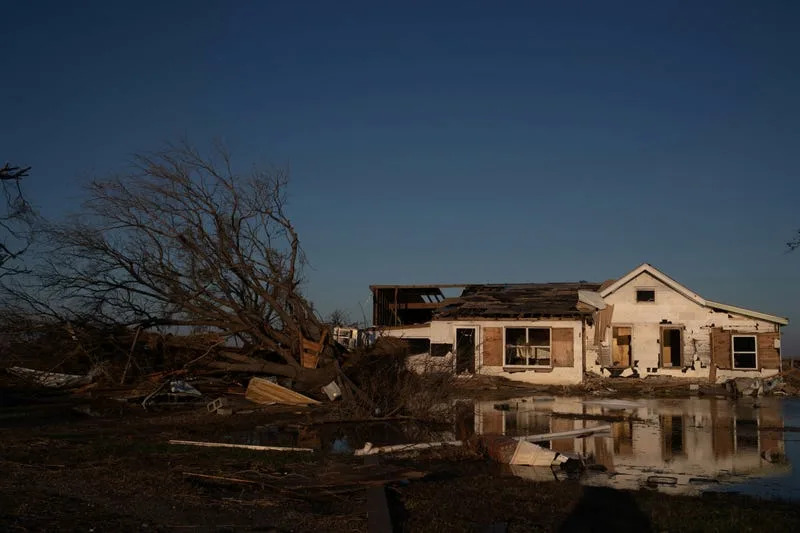
A home destroyed by Hurricane Delta in Louisiana.
Climate change is making insurance more expensive along the US Gulf Coast
The increased burden of debt, including the high borrowing costs, will be shouldered by Florida and Louisiana residents in the form of higher premiums for homeowners’ insurance as well as higher costs for auto and theft insurance.
A study published in April confirmed that climate change is making hurricanes stronger, and will cause more catastrophic storms to hit the US East and Gulf Coasts in the coming decades.
“This is an extraordinary event for us,” John Wells, executive director of the Louisiana Insurance Guaranty Association, the state-chartered association, said of the emergency borrowing. “What everybody has to come to terms with is how much it takes to cover catastrophic losses.”
Climate change is causing property insurance markets to collapse
Insurance companies are built on their ability to predict loss. But worsening disasters are injecting more uncertainty into calculations, and insurers in the most climate-affected areas are struggling to cope with it.
Reinsurance companies, which help insurers deal with catastrophes, have been fleeing high-risk areas, particularly those prone to wildfires or flooding.
“Just as the US economy was overexposed to mortgage risk in 2008, the economy today is overexposed to climate risk,” Eric Andersen, president of Aon PLC, one of the world’s largest insurance brokers, said during a Senate hearing in March.
California’s wildfires are also driving an insurance crisis, causing higher premiums and lower coverage limits—if property owners can get coverage at all—as insurers withdraw from the market.
In the Gulf Coast, analysts are warning that more insurers could become insolvent before hurricane season starts again on June 1.
America is refusing to do the one simple thing that would solve the Great People Shortage
Gaby Del Valle – May 4, 2023
The US needs more workers or it will face serious economic chaos. There’s a clear fix: more immigration.Tyler Le/Insider
Two simple words: more immigrants
America needs more workers.
The United States is already running low on critical positions such as nurses, home-health aides, farmworkers, and truckers. And there are fewer young people on the way to make up the difference: The National Bureau of Economic Research found that birth rates in the US have declined by nearly 20% since 2007, while the fertility rate has been below the replacement level for decades.
That means that unless people start having a lot more kids, the US population could eventually start to shrink — just like China’s population has. The problem, though, isn’t just a smaller population, but an aging one. With fewer people to pay into Social Security to support the growing number of retirees and fewer workers in critical industries, including healthcare and agriculture, a declining population would have devastating consequences for the American economy.
“This is the issue of the future, because this is going to become the first-order issue for all kinds of industries in America,” Lant Pritchett, a development economist and RISE Research director at Oxford University’s Blavatnik School of Government, told me. “They just won’t be able to attract workers.”
Politicians have suggested various ways to encourage people to have more children: “We will support baby bonuses for a new baby boom,” former President Donald Trump said at a conference in March. But even if these policies went into effect, we’d still have to wait for those kids to grow up before they could enter the workforce. The labor imbalance is already here, and the economy needs more workers now. That’s why a growing number of demographers, economists, and business executives support letting more immigrants into the US as a more immediate way to fill in the gaps. President Joe Biden’s economic advisors even said in March that more legal immigration is needed to boost the economy. And while immigration is a politically touchy solution, the quickly aging US economy is running out of options to keep itself afloat.
“The only solution is more workers,” Pritchett said.
America’s People Shortage
The US fertility rate first dipped below the replacement level — the rate needed to sustain the population, which is about 2.1 births per woman — in the 1970s. After rebounding in the 1990s and early 2000s, the rate began a steady decline in 2007 that has not reversed. While the US population has managed to avoid an outright drop, population growth reached an unprecedented low of 0.12% in 2021. Some of this loss can be attributed to the deaths of over 1 million Americans during the pandemic, but the COVID crisis only exacerbated preexisting demographic trends. Americans are getting older: The median age of the US population has increased by roughly 3.5 years since 2000, according to the Census Bureau, and 2021 saw the largest upward shift in the population age ever recorded.
According to estimates, these trends won’t reverse anytime soon. The Congressional Budget Office estimated this year that population growth will slow between 2023 and 2053, and that by 2042, any growth will be from immigration, not births. Kenneth Johnson, a professor of sociology and a senior demographer at the University of New Hampshire, pointed out that the demographic mismatch is even more dire when you look at county-by-county data. Deaths outnumbered births in two-thirds of US counties in 2021, creating a phenomenon that demographers call “natural decrease.” Even before the pandemic, roughly half of all US counties had more deaths than births, he said.
Johnson said that one big debate among demographers is whether people are simply delaying having children or just putting it off altogether. It’s possible that a combination of factors, including the lingering effects of the Great Recession, coupled with crushing student-loan debt, the rising cost of housing, and the pandemic simply pushed back the timeline for many people to have children. After all, birth rates did rise slightly in 2021, likely because of stimulus payments and the flexibility of remote work. But Johnson told me, “Right now, my impression is that a fair number of those babies aren’t going to be born.”
Policymakers and economists have suggested myriad ways to increase the number of babies people are having — ranging from “baby bonds” to a stronger social-safety net. But some ideas to boost fertility come with a sinister undercurrent. The preoccupation with increasing birth rates has particularly taken hold on the political right, which has long had a fascination with the racist conspiracy theory that there is a global plot to “replace” white Americans with immigrants. Trump’s baby-boom plan, for instance, may have been inspired by Hungary’s family-planning program, which is designed to encourage white heterosexual couples to have more children. “Migration for us is surrender,” Hungary’s far-right Prime Minister Viktor Orbán said in 2019.
Kenneth Johnson, University of New Hampshire
The pronatalist movement, which argues that people should be having more babies, has also grabbed hold in Silicon Valley — but some of its adherents don’t believe that just anyone should be having children. Tech billionaires like Elon Musk (who has 10 children) have become convinced that they need to have lots of children to save the human race. And one Silicon Valley couple has started a campaign to encourage more people like themselves to have children, speaking openly about their use of reproduction technology to select embryos based on genetic testing.
But so far, policies designed to induce people into having more kids have been a bust. Japan has struggled with a declining birthrate for decades despite efforts to encourage families to have more children. Earlier this year, Prime Minister Fumio Kishida warned that Japan was “on the brink of not being able to maintain social functions” due to population decline, adding that it was “now or never” to solve the problem. China’s population is both aging and shrinking as well, and after decades of restrictive family-planning policies, the country is trying to change course. In recent years, China has reversed its notorious “one-child policy” and started restricting abortions for “nonmedical reasons.” But the country’s population is still declining.
How immigration can boost the economy
In the face of looming population decline and resulting labor shortages, there is a clear answer staring the US in the face: immigration. Allowing more people to become Americans would not only help immediately alleviate some of the labor shortages plaguing the US economy but would also help to stem some of the country’s long-term population decline. Historically, the median age of immigrants has been younger than the median American age. And people of working age — meaning those between 18 and 64 — comprised 77% of the immigrant population in 2021, compared to just 59% of the US-born population that same year. Immigrants, Johnson said, “bring not only themselves,” but also the potential for more children, further boosting the US population and productivity.
Though current immigration rates — particularly the number of migrants apprehended at the border — are the subject of contentious national debate, recent Census data shows that the total number of immigrants arriving in the country isn’t enough to offset population losses. Between 2021 and 2022, the number of immigrants in the 20 most-populous counties in the country nearly tripled, but most of those counties still saw their overall populations decline. Despite increased immigration, Los Angeles County’s population declined by 90,000 people in 2022 — and by 180,000 people the previous year.
In order to truly prevent a people shortage, the US will need to let more people into the country. And there’s already evidence that immigrants can help boost local economies — and transform entire cities. Immigrants are 80% more likely to start a business than people born in the US, and recent data shows that they’ve started more than 25% of businesses in seven of the eight fastest-growing sectors of the US economy. Because of that, research has found that immigrants actually create more jobs than they take. Plus, across the US, several key industries — including agriculture, meatpacking, manufacturing, and healthcare — depend on immigrant labor. And if we boost immigration rates, the incoming workers could help ease labor shortages in these critical fields.
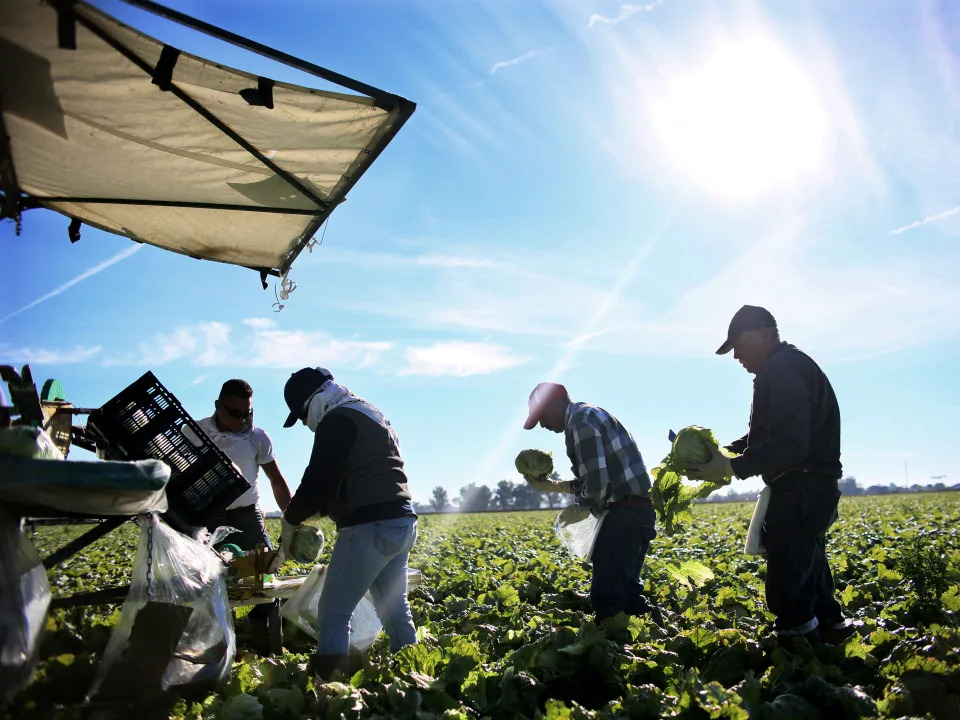
Critical industries such as agriculture and healthcare rely on immigrant labor.Sandy Huffaker/AFP via Getty Images
From central Indiana to New York City, businesses are struggling because they can’t hire enough workers to fill their open roles. “If we don’t do this and have a positive conversation about immigration today, it will continue to crush Hoosier households and economy,” Patrick Tamm, the president and CEO of the Indiana Restaurant and Lodging Association, told a local publication.
Take Utica, New York. The city’s population declined from 100,410 people in 1960 to just over 60,500 in 2000. But instead of facing extinction, the postindustrial city’s population slowly began rebounding in the 1990s with the arrival of Bosnian immigrants fleeing the Yugoslav Wars, who were followed by refugees from Myanmar in the 2000s and, more recently, Bantu refugees from Somalia. The city’s relatively low cost of living has made it a hub for people fleeing conflicts around the world, who resettle with the help of refugee-aid organizations. Though the city’s population still hovers around 60,000, it would be much lower if not for the resettled refugees and their families who now make up about 25% of Utica’s population.
“The refugee population has helped the city’s economy tremendously,” Brian Thomas, the commissioner of Utica’s Department of Urban and Economic Development, told CNBC.
Political compromise?
Immigration has, of course, been a political hot potato for decades. One 2022 survey found that one-third of Americans and two-thirds of Republicans believe in tenets of the so-called “Great Replacement” theory. A February Gallup poll found that just 28% of responding Americans are satisfied with our current immigration rates, and most of those who are dissatisfied want immigration to decrease. But even without a huge overhaul of the entire system, there are clear solutions that could help welcome more talented, much-needed workers to America.
One way the US could encourage more immigration is by focusing on temporary visas for specific industries that need workers. Japan took this approach and quietly opened itself to foreign workers in 2019 when it began allowing “specific skilled workers” in 14 key industries. These workers are allowed to stay in the country for up to five years on temporary labor visas — but they aren’t allowed to bring their families. Lawmakers hoped that the policy would attract around 345,000 workers in a five-year period, or an average of 5,750 people each month. Pritchett said this model could also work in the United States.
“A lot of people in the world would love to come work in a high-productivity place and would be more than willing to do so not in an exploitative way, but on a term-limited basis,” he told me.
There are already two guest-worker programs in the United States: the H-2A program for temporary agricultural laborers and the H-2B program for temporary non-agricultural workers. Both programs give temporary work visas to people tied to specific employers. The current programs are not perfect, however, and workers on H-2A and H-2B visas have sounded the alarm over squalid living conditions, wage theft, and exploitation. And the treatment of workers in the country on temporary visas has been a problem for decades. For these programs to be expanded, there would need to be significant safeguards in place to ensure workers aren’t exploited.
And there are other approaches that could work. Tara Watson, an economist and the director of the Center on Children and Families at the Brookings Institution, said that solutions focused on bringing people here on a long-term basis are more in line with what the US needs. “I’d rather see more expansion on the permanent side than the temporary side, because I think the challenges that we’re facing are long-run challenges and they really require long-run solutions,” Watson said.
She said that a good place to start would be expanding both family- and employment-based migration by simply allocating more visas in each category. Scaling up both programs would make an immediate difference, she said. Other simple solutions include lifting the cap on the number of skill-based green cards issued to immigrants from each country and letting people on nonimmigrant visas renew their status in the United States, rather than having to leave the country to do so.
Regardless of the approach, the biggest hurdle is a matter of political will. “I think there will be some resistance to this as a solution,” said Watson. “But I also think it’s essentially an imperative.” After all, the US is running out of options, and soon its growing people shortage is going to spell economic disaster.
Watson said that the economic forces will eventually overwhelm the “white-nationalist far right” that has “played an outsize influence” on the immigration debate. “If we don’t solve this problem in the next couple of years, it’s going to come to a head,” she said.
Gaby Del Valle is a writer and reporter living in Brooklyn. She coauthors the immigration newsletter BORDER/LINES.
Cancer-causing toxins are in shampoos, body lotions, and cleaning products. Here’s what experts want you to know
Robin Dodson, Ruthann Rudel, Megan R. Schwarzman, The Conversation – May 2, 2023
Getty Images
The big idea
Consumer products released more than 5,000 tons of chemicals in 2020 inside California homes and workplaces that are known to cause cancer, adversely affect sexual function and fertility in adults or harm developing fetuses, according to our newly published study.
We found that many household products like shampoos, body lotions, cleaners and mothballs release toxic volatile organic compounds, or VOCs, into indoor air. In addition, we identified toxic VOCs that are prevalent in products heavily used by workers on the job, such as cleaning fluids, adhesives, paint removers and nail polish. However, gaps in laws that govern ingredient disclosure mean that neither consumers nor workers generally know what is in the products they use.
For this study we analyzed data from the California Air Resources Board (CARB), which tracks VOCs released from consumer products in an effort to reduce smog. The agency periodically surveys companies that sell products in California, collecting information on concentrations of VOCs used in everything from hair spray to windshield wiper fluid.
We cross-referenced the most recent data with a list of chemicals identified as carcinogens or reproductive/developmental toxicants under California’s right-to-know law, Proposition 65. This measure, enacted in 1986, requires businesses to notify Californians about significant exposure to chemicals that are known to cause cancer, birth defects or other reproductive harms.
We found 33 toxic VOCs present in consumer products. Over 100 consumer products covered by the CARB contain VOCs listed under Prop 65.
Of these, we identified 30 product types and 11 chemicals that we see as high priorities for either reformulation with safer alternatives or regulatory action because of the chemicals’ high toxicity and widespread use.
Why it matters
Our study identifies consumer products containing carcinogens and reproductive and developmental toxicants that are widely used at home and in the workplace. Consumers have limited information about these products’ ingredients.
We also found that people are likely co-exposed to many hazardous chemicals together as mixtures through use of many different products, which often contain many chemicals of health concern. For example, janitors might use a combination of general cleaners, degreasers, detergents and other maintenance products. This could expose them to more than 20 different Prop 65-listed VOCs.
Similarly, people experience aggregate exposures to the same chemical from multiple sources. Methanol, which is listed under Prop 65 for developmental toxicity, was found in 58 product categories. Diethanolamine, a chemical frequently used in products like shampoos that are creamy or foamy, appeared in 40 different product categories. Canada and the European Union prohibit its use in cosmetics because it can react with other ingredients to form chemicals that may cause cancer.
Some chemicals, such as N-methyl-2-pyrrolidone and ethylene gylcol, are listed under Prop 65 because they are reproductive or developmental toxicants. Yet they appeared widely in goods such as personal care products, cleansers and art supplies that are routinely used by children or people who are pregnant.
Our findings could help state and federal agencies strengthen chemical regulations. We identified five chemicals – cumene, 1,3-dichloropropene, diethanolamine, ethylene oxide and styrene – as high-priority targets for risk evaluation and management under the Toxic Substances Control Act by the U.S. Environmental Protection Agency.
What still isn’t known
Our analysis of the CARB data on volatile toxicants does not paint a complete picture. Many toxic chemicals, such as lead, PFAS and bisphenol A (BPA), don’t have to be reported to the Air Resources Board because they are not volatile, meaning that they don’t readily turn from liquid to gas at room temperature.
In addition, we were not able to identify specific products of concern because the agency aggregates data over whole categories of products.
What other research is being done
Studies have shown that women generally use more cosmetic, personal care and cleaning products than men, so they are likely to be more highly exposed to harmful chemicals in these categories. Further, women working in settings like nail salons may be exposed from products used both personally and professionally.
Ultimately, a right-to-know law like Prop 65 can only go so far in addressing toxics in products. We’ve found in other research that some manufacturers do choose to reformulate their products to avoid Prop 65 chemicals, rather than having to warn customers about toxic ingredients.
But Prop 65 does not ban or restrict any chemicals, and there is no requirement for manufacturers to choose safer substitutes. We believe our new analysis points to the need for national action that ensures consumers and workers alike have safer products.
Florida’s insurance crisis: 2 special sessions, little help | Commentary
Scott Maxwell, Orlando Sentinel – May 2, 2023
For years, Florida lawmakers ignored a looming insurance crisis.
Then, with rates skyrocketing and companies fleeing the state, they scrambled to call not one, but two special sessions, vowing to help.
Well, my wife and I saw what the Legislature’s version of help looks like a few months ago when our insurance bill jumped from $4,000 to $7,000.
Any more “help “like that and we’ll be eating cat food.
In reality, we’ll be just fine. But a growing number of Floridians are facing bills they can barely afford as prices skyrocket throughout the state.
The Insurance Information Institute predicted increases of 40% throughout Florida this year. Some companies have requested 60% hikes. And scores of Floridians are still being dropped by their carriers while the state-run Citizens Property Insurance keeps bloating.
This is an undeniable, mounting mess.
So once again, GOP legislators – who have spent the better part of the past two years waging culture wars – have cobbled together another insurance bill.
But if you’re counting on this lowering your rates, bad news: It will not.
That’s not my take. It’s the take of former GOP Sen. Jeff Brandes – one of the few lawmakers who repeatedly warned his colleagues to take action years ago and was largely ignored.
“Nothing in this bill lowers rates,” Brandes, who now runs the Florida Policy Project, said this week. “Nothing in this bill encourages more companies to come.”
Brandes and I have differing views on some aspects of reform – particularly as it relates to the transparency measures and regulations that subsidized insurance companies should face.
But we agree on three key things:
1. Despite years of yapping about fraud claims driving up costs and rates, Florida lawmakers have never cracked down on bad actors in any meaningful fashion.
2. The solutions they’re talking about now aren’t going to do much, if anything, to bring down rates.
3. Any meaningful solution – in a state like ours that’s basically a bullseye for hurricanes and increasingly at risk of flooding – is going to involve a boatload of public money.
Brandes and I may have varied thoughts on how that money should be spent. But the reality is that this problem – where the state-run insurance company is now covering millions of Floridians at increasingly high rates – requires a major investment and serious policy reform.
And that’s not good news for a Legislature that specializes in divisive bumper-sticker priorities – dragging Disney, fuming about drag queens and decrying wokeism.
When it comes to hard, serious policy work, they are either unwilling or incapable of getting the job done. At least when it comes to insurance.
A clear example of that is fraud. For years, lawmakers have blamed fraudulent claims for driving up insurance costs and driving companies out of the state. But they haven’t done squat from an enforcement standpoint.
“If you want talent in the Office of Insurance Regulation – which should be one of the most talented in the state – you have to pay for it,” Brandes said.
That seems obvious. If your city had a rash of burglaries, you’d beef up your burglary patrol. But Florida politicians have whined about fraud without ever dedicating serious resources to exposing, punishing and stopping it.
If they can set up a statewide election-crime police force to deal with fever-dream problems, you’d think they’d beef up their insurance team to deal with an actual financial nightmare.
But to really bring down prices, we need more competition among providers. Or we need to invest more in Citizens – and basically accept that a giant, costly state-run insurance company is the only way we’re going to be able to cover everyone in a state that’s both storm-ravaged and low-wage.
Few people really want that second option. Certainly not Brandes. But many of us aren’t super keen either on just handing over tax dollars to an industry with a track record of hosing its policy holders.
Just a few weeks ago, the Washington Post published a maddening investigative report that found Florida insurance companies were financially victimizing hurricane survivors by gutting their claims and payments – sometimes by as much as 90% of what the companies’ own adjusters said the homeowners were due. The piece featured an adjuster who said one insurance company took his report – which estimated $200,000 in valid claims for one home – and whittled it down to just $27,000 without his knowledge or consent.
Brandes prefers offering companies incentives to write Florida policies. That may be worth exploring – with a lot of checks and balances added in.
But here’s the bottom line: Either scenario – majorly subsidizing private industries or growing/transforming Citizens into something like a Florida version of Medicare for homeowners – is painful. They’re both costly, politically unpopular and involve a lot of hard work.
Unfortunately, most Florida politicians don’t want to do hard work or make unpopular moves. So they just keep screaming about critical race theory and transgender athletes. And while they scream, your rates keep rising.
I think we’re heading toward a pain point – where even the Floridians who used to laugh at the culture wars are going to stop laughing once they realize they can barely afford to stay in their homes. That may be when they start finally putting people in office who are more interested in solving problems than creating them.
Manchin’s ‘playing with fire’ — and some Democrats are tired of the drama
Josh Siegel – May 1, 2023
Amanda Andrade-Rhoades/AP Photo
Sen. Joe Manchin is losing patience with his fellow Democrats over their signature climate law — and the feeling is mutual.
The West Virginia Democrat has spent weeks escalating his attacks on President Joe Biden’s implementation of the Inflation Reduction Act, the sweeping bill that Manchin helped write in a deal that stunned Washington last summer. Last week, he threatened to join Republicans in voting to repeal the law, as the House GOP is demanding in its legislation for raising the nation’s debt limit.
Manchin’s comment caught his caucus colleagues off guard, even if such a repeal would be a long shot in Congress. It came just as Biden was launching a reelection campaign that rests heavily on that legislation’s climate and health care provisions.
“That surprises me that he wants to repeal it. I think it’s one of his greatest accomplishments,” said Sen. Angus King (I-Maine), a close colleague of Manchin’s on the Energy Committee, in an interview.
The IRA is far less of a political bright spot for Manchin, whose potential reelection hopes are clouded by growing disapproval ratings in his home state, partly driven by his support for the law. Manchin has yet to announce whether he’s running, but a formidable challenger entered the West Virginia Senate race last week — GOP Gov. Jim Justice.
Manchin’s fellow Democrats understand that his reelection could determine whether they retain their slim 51-seat Senate majority in 2024. But they are also growing weary of his attacks against their marquee climate law — even if they’ve come to expect it and know there’s little they can do to change his mind. And his votes against Democratic policies and Biden nominees have already complicated his party’s agenda in the 51-49 Senate.
Some Democrats fear that Manchin’s criticisms will do real damage by confusing the public about one of the law’s most debated-provisions: its $7,500 tax credits for electric vehicles. He has accused the Treasury Department of violating the law by flouting strict provisions he wrote designed to force electric vehicles to be made in the U.S. with American-made parts.
“When you’re Joe Manchin it never hurts to be seen butting heads with the administration, but I think this is genuine umbrage over the fact Congressional intent seems pretty clear, even if the statutory construction left room for Treasury to maneuver,” said Liam Donovan, a lobbyist with the firm Bracewell who previously worked for the National Republican Senatorial Committee. “And given that he would not have been on board for the bill at all had this been the understanding, it reads as a personal betrayal.”
Democrats counter that the administration has been doing its best to balance the IRA’s competing goals of lowering the cost of electric vehicles while promoting U.S. manufacturing and jobs.
“Fifty of us agree that [boosting electric vehicle deployment] is a priority,” Sen. Martin Heinrich (D-N.M.) said in an interview. “The law is what it is. If he doesn’t like implementation he can run for president.”
Manchin in recent weeks has also joined Republicans in supporting resolutions they’ve brought up for a vote disapproving of the administration’s energy and environmental policies, most recently on Wednesday when he was the only Democrat to vote with Republicans in overturning an EPA regulation on emissions from heavy-duty trucks.
And Manchin, chair of the Senate Energy Committee, has also expressed his ire with the administration by torpedoing a series of Biden’s nominees, including Richard Glick to chair the Federal Energy Regulatory Commission, Laura Daniel-Davis, Biden’s pick for assistant Interior secretary for land and minerals management, and Gigi Sohn as a commissioner of the Federal Communications Commission.
The White House has supported fossil fuel projects that Manchin has backed — angering environmentalists — including the Willow oil and Alaska LNG projects, as well as the Mountain Valley Pipeline that would deliver natural gas produced in West Virginia.
Manchin did not comment for this article, but his spokesperson Sam Runyon said his objections were because the administration had strayed from the intent of the bill.
“President Biden, then-Speaker Pelosi and Majority Leader Schumer were in full agreement with Sen. Manchin that the IRA was an energy security bill and the legislative language is crystal clear,” she said. “The Administration continues to blatantly violate the law in an effort to replace Congressional intent with their own radical climate agenda that simply didn’t, and wouldn’t have, passed.”
Some Republicans have expressed sympathy for Manchin’s position.
“Is it playing with fire? Sure. Does Joe care? I don’t think so,” said Sen. Lisa Murkowski (R-Alaska), Manchin’s frequent legislative partner when she chaired the Energy Committee. “Good for him for calling the administration out.”
Murkowski noted that the climate law had been seemingly dead for most of last year until Manchin’s support allowed Democrats to pass it on a party-line vote. The law includes $369 billion in incentives for clean energy and electric vehicles, as well as health measures such as a cap on insulin costs for Medicare recipients.
“They made a deal with him,” Murkowski said. “And it was a hard deal and they wanted his vote, and they got it — at some political cost to him and he would admit that. And now [the Biden administration is] trying to rewrite the bill, or interpret in the way they wished they had been able to get it passed. That’s their problem.”
Manchin has repeatedly denounced Biden’s electric vehicle policies in recent weeks, including by announcing he would support Republican efforts in Congress to overturn EPA auto pollution rules designed to speed up EV adoption. He accused the administration of “lying to Americans with false claims about how their manipulation of the market to boost EVs will help American energy security.”
“Y’all broke the law,” Manchin later told Biden’s Energy secretary, Jennifer Granholm, at a hearing April 20, accusing the administration of “liberalizing” its rollout of the tax subsidy to stimulate sales of electric vehicles — and warning that that approach could send money and jobs to China.
Republicans are eager to pounce on Democratic dissension over how the administration is executing the climate law. GOP lawmakers, who unanimously opposed the law, argue that it spends too much money and say its twin goals — quickly weaning the U.S. economy off fossil fuels while reducing reliance on China for clean energy technologies — are incoherent.
“Maybe he’s looked at it [the IRA] more deeply and realized it’s not what he thought it was,” Sen. Shelley Moore Capito, Manchin’s GOP counterpart from West Virginia, said in an interview. “I can’t believe he would be that naïve. But who knows?”
But other Democrats say the administration is carrying out the law that Congress passed.
“Almost all of us who voted for this legislation and contributed to it wanted to supercharge EV sales,” said Rep. Jared Huffman (D-Calif.) in an interview. “Clearly Sen. Manchin did not. He thought he was maybe sabotaging the EV industry. And it’s driving him nuts that it’s not working out that way.”
Negotiations over the EV tax credit were fraught from the start.
After Manchin rejected Democrats’ climate and social spending agenda last July when it was packaged as Build Back Better — Manchin and Senate Majority Leader Chuck Schumer quietly resumed negotiations. The electric vehicle tax credits were among the last items they haggled over.
During the preceding months, Manchin repeatedly criticized Democrats’ interest in subsidizing electric vehicle sales, calling the idea “ludicrous.”
Manchin, whose state is home to a non-unionized Toyota manufacturing facility, also derided Democrats’ original proposal to offer an extra incentive for electric vehicles made by union workers. He called the proposal “not American.” The version that became law dropped it.
Manchin, Schumer and their staffs finally forged a compromise on electric vehicles in secret talks, unveiling the renamed Inflation Reduction Act on July 27. It offered a credit of up to $7,500 for electric vehicles, but only for those meeting a thicket of stringent requirements on what countries their battery minerals and components come from. Those requirements have since sparked a major trade feud with European governments whose companies are blocked from the incentives.
“He [Manchin] does not support the credit at all. And really when he wrote it, he hoped nobody could use it. And so he’s disappointed there are a few vehicles that can use it,” said Sen. Debbie Stabenow, a Democrat from auto-industry-heavy Michigan.
Heinrich said a clash with Manchin over implementation was “inevitable” given the different ways Manchin and the White House characterized the end product, which Manchin sees as an energy security measure designed to shore up energy production of all types. Biden is using the law to push a rapid transition away from fossil fuels in the name of combating climate change.
Rep. Pramila Jayapal (D-Wash.), chair of the House Progressive Caucus, downplayed the idea of a rift within the Democratic Party.
“The majority of [the IRA] we are all together on,” Jayapal said. “I do think he [Manchin] believes we should have a renewable energy transition. We probably have different ideas for what the transition looks like and how we get there. “
But the law didn’t leave the Biden administration much wiggle room in developing regulations to fit its complex domestic content restrictions, energy experts say. Manchin contends the administration is abusing the leeway it got. He’s especially taken umbrage at the Treasury’s initial three-month delay in issuing rules, which until mid-April allowed electric vehicles to qualify for the tax credit without meeting any domestic sourcing requirements.
When Treasury finally announced the guidance in March, it offered some olive branches to automakers worried about the rules being overly restrictive, but still left the majority of EVs on the market ineligible for the credit.
Even so, Manchin cried foul, calling the Treasury rules too loose in allowing foreign suppliers to share in the tax credit bounty.
He took particular aim at the Biden administration’s classification of certain foils, powders and other components used in the batteries. By classifying the powders as “critical minerals,” rather than “battery components,” Treasury avoided placing even more severe restrictions on vehicles eligible for the tax credit.
Manchin has also criticized Treasury for allowing leased vehicles to qualify for full tax breaks as “commercial” vehicles, a workaround that skirts some restrictions in the law.
And a crucial piece of guidance is still missing: clarity on which companies’ vehicles could be barred from receiving the credit because of their connections to China. The Treasury Department says it expects to release that provision later this year.
“Manchin very clearly wanted to put deglobalization ahead of decarbonization,” said Kevin Book, managing director of ClearView Energy Partners, a research group. “He wants this stuff made here and if it slows down the transition so be it. Treasury is leaning toward trying to transition faster.”
Most Democrats, though, disagree that Biden has ignored congressional intent. They point to projections showing the IRA has already been a boon to the country’s clean energy jobs: It has prompted at least $243 billion in investments in battery plants, electric vehicles factories and other green energy projects since Biden signed the law in August.
Since Biden became president, there have been at least $95 billion in private-sector investments announced across the U.S. clean vehicle and battery supply chain, according to the Department of Energy, including $45 billion since the IRA passed.
Heinrich said he knows it may be “politically expedient” for Manchin to argue the IRA is not taking shape as he intended.
“But the reality is this legislation is working, and this administration is trying to manage both what we need to do long term, which is make all of this stuff here, but also build the runway to get there,” Heinrich said.
CORRECTION: A previous version of this report incorrectly quoted Kevin Book.
The uptick on excoriating “woke ” ideology has increased in recent years among politicians, including former President Donald Trump, as Americans across the nation battle over diversity, inclusion and equity efforts in the workforce, public schools and in legislation.
But what is “woke”? And what do the GOP attacks mean for 2024?
Among conservative lawmakers and activists “woke” tends to be an across-the-board denunciation of progressive values and liberal initiatives.
Some have used it to attack trans and gay rights while others apply it to critical race theory – a legal theory that examines systemic racism as a part of American institutions – and the teachings of the New York Times’ 1619 project in public schools.
“If you ask people what woke is, I think what they mean is they want to stand against people who are engaging in some type of advocacy for marginalized people,” said Andra Gillespie, political scientist at Emory University.
“It’s kind of this lumping together of anybody whose views could be construed as being progressive on issues related to identity and civil rights.”
As the Black Lives Matter movement began after the police killing of Michael Brown in Ferguson, Missouri in 2014, “woke” expanded outside of Black communities into the larger public lexicon.
What about ‘stay woke’?
Black artists and entertainers continued to insert the phrase in their music, including Grammy-award-winning artists Erykah Badu and Childish Gambino — a.k.a. Donald Glover—for political causes.
Yet “woke” has now been hijacked by the political right to mean something far from its original definition.
“The reason we have to ‘stay woke’ is because of exactly what these people are doing right now, which is finding very insidious ways to undercut our rights,” said Terri Givens, a political science professor at McGill University.
Givens called the attacks on the term “a full-on dog whistle” and pointed to attempts to limit the right to vote, curtail reproductive and abortion rights and ban inclusive education in schools as examples of the backlash against Black and brown civil rights.
“Learning history is not about woke-ism,” Given said.
Conservatives now use the term as a political retort to combat what they perceive as political correctness gone haywire.
But progressive commentators note that the response also comes in the context of a changing America, which is becoming more diverse racially and ethically and along sexual orientation and gender identity lines.
“What they’re trying to do is make the term a pejorative,” said Kendra Cotton, chief operating officer of New Georgia Project, a progressive-leaning voting rights group.
As more marginalized groups are elected into office and exercising their voting power during elections, it can make some Americans afraid, said Cotton.
Florida Gov. Ron DeSantis, a possible GOP presidential candidate, has built a persona crusading against ideas and policies conservatives deem as “woke.”
Tehama Lopez Bunyasi, a political scientist at George Mason University and co-author of the book “Stay Woke: A People’s Guide to Making All Black Lives Matter,” said the legislation is “perhaps the most explicit way we see the co-optation of the term ‘woke’ today.”
“Right now, we’re seeing racially conservative pundits and politicians positioning themselves as adversaries of the multiracial Black Lives Matter movement,” said Lopez Bunyasi. “One of the rhetorical tools they are using is the maligning of a term that has been in use by Black people and in Black politics for well over a hundred years.”
Have the anti-woke attacks been successful?
Virginia GOP Gov. Glenn Youngkin cruised to victory in 2021 riding a wave of parental anger over teaching inclusive history in public schools.
Keneshia Grant, a political scientist at Howard University, said Youngkin’s success was part of an intentional pushback against marginalized communities, which includes misunderstanding terms like woke, critical race theory, and LGBTQ rights.
“He ends up successfully using the fear that people have about teaching students Black history or American history through the guise of CRT and successfully uses that to motivate a base,” Grant said. “They are doing this because they think it will help them win. And we have evidence that sometimes it actually does help them win.”
Americans divided on what ‘woke’ means
What’s telling is that despite the conservative backlash most Americans don’t view “woke” negatively heading into the 2024 presidential contest.
A March 2023 USA TODAY/Ipsos Poll found that 56% of Americans said it means “to be informed, educated on, and aware of social injustices.”
But the efforts to re-define “woke” have worked with a significant portion of the country. Roughly 39% of those surveyed agree with the Republican definition,”to be overly politically correct and police others’ words.”
“Racial resentment and grievance are certainly one of those things that have been very effectively used to mobilize a certain segment of the Republican population for a long time,” said Gillespie.
Reporter Phillip M. Bailey contributed to this story.
Billions of gallons of water from Lake Powell are being dumped into the Grand Canyon
Julia Jacobo – April 27, 2023
Billions of gallons of water are being taken from Lake Powell and dumped into waterways along the Grand Canyon, according to federal environmental agencies.
For 72 hours, water will be released from the Glen Canyon Dam at a rate of 39,500 cubic feet per second, which the National Park Service characterized as a “much larger than normal.”
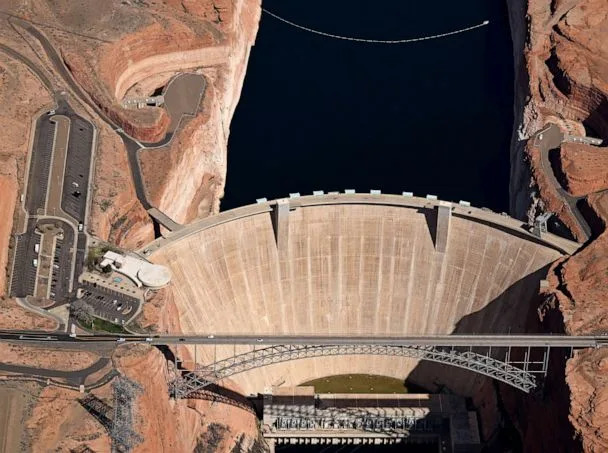
PHOTO: Glen Canyon Dam holds back Colorado River water to create Lake Powell on April 15, 2023 in Lake Page, Arizona. (RJ Sangosti/MediaNews Group/The Denver Post via Getty Images)
The release aims to restore sandbars, beaches and campsites used by visitors to the Grand Canyon, according to the NPS. The water will enter the Paria River and move sediment onto beaches and sandbars in Marble Canton and eastern Grand Canyon to restore the Colorado River corridor in eastern Grand Canyon National Park.
In addition to serving as recreational areas for tourists, the sandbars also supply sand needed to protect archaeological sites.
Releases from Glen Canyon Dam at Lake Powell to supply water to Lake Mead typically happen in the fall.
Current sediment loads, as well as “favorable hydrology conditions” resulting from a wet winter with ample rainfall and snowpack, are conducive to the high-flow experiment, which is being conducted by the U.S. Bureau of Reclamation. The release will mimic the natural flow pattern of the Colorado River, which would typically occur each spring during the runoff of snowmelt.
PHOTO: Glen Canyon Dam holds back Colorado River water to create Lake Powell on April 15, 2023 in Lake Page, Ariz. (RJ Sangosti/MediaNews Group/The Denver Post via Getty Images)
The experiment will not affect the total annual amount of water released from Lake Powell to Lake Mead for the 2023 water allotment, officials said.
The high flows that follow the initial release could affect the difficulty of some of the rapids within the canyons, according to the NPS.
River users are advised to exercise caution along the Colorado River through Glen and Grand Canyons through Sunday.
“There are inherent risks associated with recreational activities along the Colorado River corridor through Grand Canyon at all times,” the NPS statement said.
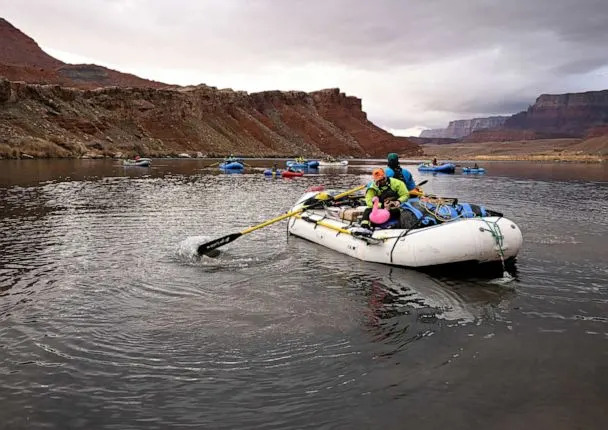
PHOTO: A group of rafters push off from the banks at Lees Ferry for a 25-day rafting trip down the Grand Canyon on January 1, 2023 in Marble Canyon, Arizona. (RJ Sangosti/MediaNews Group/The Denver Post via Getty Images, FILE)
The water releases will eventually snake through the canyons to Lake Mead.
NEW – ABC News Explains How 'Cloud Seeding' is Being Used to Modify Weather Across the U.S.
"There are currently 42 cloud seeding projects across the American West…They fly right into the storm and send microscopic [silver iodide] particles into the clouds…The federal… pic.twitter.com/pL37nzcGkI