NowThis Politics

December 20, 2018

‘We draw our people, our strength, from every country and every corner of the world.’ — Ronald Reagan’s final speech was a love letter to immigrants

Ronald Reagan's Final Speech as President Was a Love Letter to Immigrants

'We draw our people, our strength, from every country and every corner of the world.' — Ronald Reagan's final speech was a love letter to immigrants

Posted by NowThis Politics on Thursday, December 20, 2018

Rest in Peace Penny Marshall

Down The DeepFollow

December 16, 2018

Lenny and Squiggy (Michael McKean and David Lander) from Laverne and Shirley perform their (shoulda been) big hit at the Shotz Brewery Talent Show..

Lenny and Squiggy (Michael McKean and David Lander) from Laverne and Shirley perform their (shoulda been) big hit at the Shotz Brewery Talent Show..

Lenny and Squiggy (Michael McKean and David Lander) from Laverne and Shirley perform their (shoulda been) big hit at the Shotz Brewery Talent Show..

Posted by Down The Deep on Sunday, December 16, 2018

The Dow and the S&P 500 are on pace for the worst December since the Great Depression.

Robert Reich
December 21, 2018

The market continues to slide into dangerous territory. The Dow and the S&P 500 are on pace for the worst December since the Great Depression. Globally, world markets have lost nearly $7 trillion in 2018, making it the worst year since the financial crisis.

Why have the markets soured? Trump’s tax cuts, which at first fueled a temporary frenzy in the stock market, have already worn off. Corporations plowed most of their savings in buying back shares of their stock — lining the pockets of executives, but providing no real benefit to the economy.

Meanwhile, Trump’s trade wars have made matter worse, causing the entire global economy to shake. His clash with China has been especially damaging, pitting the world’s two largest economies against each other. In other words, brace for impact.

CNBC

The stock market is on pace for its worst December since the Great Depression

Michael Sheetz        December 18, 2018

Emotion moving market more than fundamentals, says CIO

Emotion moving market more than fundamentals, says CIO .

Two benchmark U.S. stock indexes are careening toward a historically bad December.

Both the Dow Jones Industrial Average and the S&P 500 are on pace for their worst December performance since 1931, when stocks were battered during the Great Depression. The Dow and S&P 500 closed down 7.6 percent and 7.8 percent this month, respectively.

December is typically a very positive month for markets. The Dow has only fallen during 25 Decembers going back to 1931.

The S&P 500 averages a 1.6 percent gain for December, making it typically the best month for the market, according to the Stock Trader’s Almanac.

While the S&P 500 began dissemination in 1950, the performance data was backtested through 1928. It’s worth noting that historically, the second half of December tends to see gains.

– CNBC’s Gina Francolla contributed to this report.

Mother of 9-year-old girl with cerebral palsy invented a coat that makes it easy for anyone in a wheelchair to stay warm

CBS News
December 21, 2018

This 9-year-old girl with cerebral palsy used to struggle to get her jacket on before recess. Then, her mom invented a coat that makes it easy for anyone in a wheelchair to stay warm 💜 https://cbsn.ws/2RKYNvR

Mom invents jacket for 9-year-old in wheelchair

This 9-year-old girl with cerebral palsy used to struggle to get her jacket on before recess. Then, her mom invented a coat that makes it easy for anyone in a wheelchair to stay warm 💜 https://cbsn.ws/2RKYNvR

Posted by CBS News on Friday, December 21, 2018

Shane Boyle died because he was $50 short of paying for his insulin supplies.

U.S. Senator Bernie Sanders
December 21, 2018

Shane Boyle died because he fell $50 short of raising enough money on GoFundMe to pay for his insulin supplies. We should not be having people die in this country because they can’t afford the high cost of their medication.

$50 Short on GoFundMe For Insulin

Shane Boyle died because he fell $50 short of raising enough money on GoFundMe to pay for his insulin supplies. We should not be having people die in this country because they can't afford the high cost of their medication.

Posted by U.S. Senator Bernie Sanders on Friday, December 21, 2018

Why Food Insecurity Is a Global Farmworker Issue

A new United Nations report outlines how low wages, dangerous working conditions, and immigration laws undermine agricultural workers’ right to food.

Campesinos Working in Tlalquiltenango, Morelos, Mexico. (Photo credit: Joseph Sorrentino / iStock)

The severity of working conditions for farmworkers around the world is so striking it can inspire disbelief.

Consider, for example, the fact that in the past few decades, eight cases of slave labor have been brought against employers in Florida’s tomato fields. Or the fact that as recently as October, six people who were forced to work on cocoa farms as children without pay won an appeal to sue Nestlé and Cargill on the basis that the companies knowingly condoned slave labor. In another example, more than a decade ago, Chiquita Brands International admitted to paying $1.7 million to a Colombian paramilitary group “to kill or intimidate” workers who were promoting collective bargaining on banana plantations.

The latter is one of several examples highlighted in a new report completed by the United Nations Special Rapporteur on the right to foodHilal Elver, in an effort to call attention to some of the conditions affecting farmworkers using the lens of hunger. While other publications and organizations have highlighted the paradox inherent in workers who produce food struggling to feed themselves, this report is unique in its comprehensive outline of the problem as a global issue and its attention to the systemic causes of food insecurity.

More than one billion people around the world play a critical role in producing food, and the report shows they often work long hours for low wages, live in isolated rural areas, and lack rights afforded to workers in other industries, including the right to organize.

Elver sees correcting all of those issues as critical to workers being able to realize their “right to food,” and she’s used her position to dig deep into the root causes of food insecurity and expand the understanding of that “right” in the past. Her previous reports, for example, have looked at how the overproduction of cheap, nutrient-poor industrial foods are not solving the world’s hunger problem and how excessive use of pesticides threatens human health and the global food supply.

Her pesticide research, in fact, inspired Elver to dedicate this latest report to farmworkers’ rights. “I found out that agricultural workers are the real victims” of pesticide use, she said in an interview with Civil Eats.

The Food Chain Workers AllianceWhyHunger, and the Rural Migrant Ministry recently co-hosted an event at the Church Center of the United Nations to release the report, and representatives from all three organizations offered insights from their own work to support its findings.

Suzanne Adely, from the Food Chain Workers Alliance, pointed out that in the U.S., food workers have higher rates of food insecurity than workers in any other industry. Jose Chapa, from the Rural Migrant Ministry, talked about his work advocating for a New York State law that would grant farmworkers the right to organize for better conditions.

In the end, Elver’s report and the experiences of all of the groups represented speaks to “the need for us to continually break out of sectoral silos,” said WhyHunger’s Alison Cohen. “We talk about labor, we talk about food, we talk about housing, we talk about water, we talk about the environment—and increasingly we’re understanding that these are all deeply, deeply interconnected.”

Civil Eats spoke with Elver after the event about those connections, the report’s findings, and how food insecurity among farmworkers can be most effectively addressed.

When you say “agricultural workers,” who exactly are you talking about? Do small farmers who work their land themselves count?

I sort of made a larger definition—whoever works, either with contract or without contract, producing food and giving their physical power to the system. For instance, if you look at subsistence farmers, they work together with their families—women and children are the workers [as well], but they don’t get a salary and they don’t have a contract. So [by] my definition… it doesn’t matter if they are paid or non-paid—[if] they are working in agriculture, that’s my argument. Maybe from a very legalistic point of view, they are not workers, but they are actually workers.

  • Support Civil Eats Today!

    Support from readers like you is what keeps Civil Eats going.
    Please consider making a year-end donation or signing up for an annual subscription if you haven’t already.

    Thank you from the Civil Eats team!

Your job is to report on the right to food, but this report is more about the labor issues that lead to hunger, including low wages and working conditions. Are you seeking to draw connections between systemic economic issues and food insecurity?

If you look at the whole economic system in relation to the production of food, especially in the last 20 or 30 years … when it became industrialized, these subsistence farmers became workers for the big companies. They have no way to make their own decisions. The companies are coming and they’re telling you what to produce. They give them a seed, they give them fertilizer and chemicals, they come and collect, and they make the decision about the price. So they are in a completely non-negotiable situation when they produce this food—it doesn’t matter if they’re the owner or the worker, whatever. This is the kind of system right now that we are dealing with.

How do conditions for agricultural workers in the U.S. compare to other parts of the world?

I looked at differences between developing countries and developed countries. The U.S. is not alone. For instance, if you look at Italy, Spain, and Canada, you find a similar kind of system, basically undocumented workers [doing agricultural work]—they’re not citizens, they have no rights, and they definitely are in an informal system.

I live in California, and I see with my own eyes what’s happening in the agricultural system. California is basically [a producer of] specialty food, or fruits and vegetables that need a lot of human power to collect. You see people collecting strawberries on the farm—they don’t have any documentation, they can’t even speak Spanish [because they speak indigenous languages]… Nobody understands them [which makes it easier to exploit them]. It is a serious kind of disconnect with producers and exploitation.

Your recommendations are mostly about governments exercising regulation to improve labor rights for workers—the section on the role of industry is very limited. Why?

It’s a very important role corporations play. They are basically promoting basic corporate responsibility, which means, “Okay, we’re going to do good things, but don’t investigate, don’t monitor me, it’s going to be voluntary.” Voluntary is never going to work. Some companies are good companies, and I’m not saying everyone is bad, but most of the corporate social responsibility should be regulated and monitored by third parties. It could be governments or worker unions.

Speaking of worker activism, you mention the success the Coalition of Immokalee Workers has had with their Fair Food Program (FFP). Did you see other examples of worker-led movements around the world?

I think that in the U.S., the FFP is very, very interesting. I really don’t know if there are other examples [like it]. In Italy, there was a citizen movement to deal with criminal activity. In Italy, Mafia-like organizations [are] buying people and selling them to corporations, and it created huge public outcry, leading the creation of a law [that mandates tougher penalties for farm owners who abuse workers]. This law is difficult to implement, but at least in 2016, they [created] it. That was a law that came not from workers but from citizens, from consumers.

Speaking of consumers, what can they do to promote the rights of agricultural workers?

Consumers should be conscious about what they buy, from whom, and how the food comes to their table. In order to do this, we have to raise the consciousness. This consciousness is very new. It takes time. We have to really question our supermarkets, for example. Supermarkets should be places where people question what they buy. In the U.S. and Europe, because of the internationalization of the food trade system, it’s very difficult to trace where you get the food or who is making the food, but it could be a starting point.

In the end, you’re talking about the right to food, but a lot of the countries that you talk about, including the U.S., haven’t actually ratified the international agreements that recognize that right. So how can state action be compelled?

In writing this report and exposing the situation to the governments, we’re saying ‘We’re aware you’re not following the international laws [that guarantee the right to food]. You don’t ratify, you don’t internalize, and you don’t do your job.’ That’s kind of a warning system. As many other human rights reports do, we don’t do naming and shaming, but we [do] have some examples. At least we can open a discussion.

I’m Not Seeing My Trump-Loving Family On Christmas And I Couldn’t Be Happier About It

HuffPost

Ashley Scoby, HuffPost      December 20,  2018

I Hope That Tax Cut Was Worth It

Esquire

Jack Holmes, Esquire       December 20, 2018

Three Generations, Two Families, and One Organic Farm Model Succession

Cival Eats

Three Generations, Two Families, and One Organic Farm Model Succession

At Meadowlark Organics in Wisconsin, a young couple has partnered with an experienced farmer to take stewardship of his 950-acre sustainable operation.

“They have the desire and motivation to lift the heavy stuff off my shoulders,” says Paul Bickford from his place at the kitchen table in a recently renovated farmhouse. Bickford is the 65-year-old owner of Bickford Organics. “It’s nice to see what I envisioned, what I built, continue,” he says.

Bickford is speaking about the 950-acre organic grain farm in the Driftless Region of Southwest Wisconsin, which he has managed and owned through several incarnations across the span of four decades. Bickford is in the process of transitioning the farm to the young couple seated across from him.

Bickford’s successors, John and Halee Wepking, hold sweat equity in the farmhouse renovations. In exchange for their work, they live here with their growing family on the farm they now co-manage with Bickford, who lives just down the road. The couple holds no familial relation to Bickford, and met him through a Craigslist ad. But, Halee says, to the nodding of heads, “We have become a family.”

Even the farm’s title is in transition, with the old-guard Bickford Organics easing out of the spotlight to make room for Meadowlark Organics, a name adopted by the Wepkings to carry the farm into the future.

Meadowlark Organics is an organic farm that specializes in growing grains: wheat, rye, polenta corn, and buckwheat. They also grow hay and recently added a small beef herd of around 20 breeding cows to the mix. With plans to continue diversifying with the addition of a granary and flour mill, Meadowlark Organics is poised to lead the Driftless region of Wisconsin into a new era of local, value-added organic grain products grown with an eye for soil conservation and land stewardship.

All this has been made possible by Bickford, who—in wanting to ensure his farm found the right heirs—allowed an enterprising couple to realize their dreams in an industry where many newcomers struggle to ever achieve viability.

Paul Bickford with John and Halee Wepking and their childrenThough the Wepking’s children, a three-year-old and his baby sister, are with their grandmother on this day, a countertop collection of toy tractors suggests that the kids usually fill the kitchen with life.

“It’s my responsibility to see the operation survives because they have a family,” Bickford says. “I take that quite seriously.”

Farmer ISO Protégés

Bickford, who has carried the farm from its beginnings as a confined dairy, through its transition to rotational grazing, and on to its most recent incarnation as an organic small-grain producer, only began to think about retirement around 55.

Bickford’s children are now adults following their own paths—and though he has a son who farms with him, he would prefer to stay out of the farm’s management. So, Bickford has had to pursue a less conventional route to transitioning the farm.

Lucky for all, just the right eyes landed on the ad Bickford posted early in 2015. It read: “I am seeking a forward-thinking individual or couple to join my 950-acre organic farming operation … Ethics and trust are a cornerstone of organic farming and are important to my operation. I want to share my 40 years of farm experience with someone who is willing to work to improve my farm.”

The Wepkings met working in the kitchen at Prune in the East Village of New York City. A Wisconsin native, John had always dreamed of farming, and Halee, who is from Arizona and holds a degree in modern dance and years of professional experience in kitchens, was eager to support this dream. “I was always moving toward what felt important to me,” Halee says. “Farming, producing people’s food—that felt important.”

When the Wepkings moved back to Wisconsin, they hoped to farm on John’s family land. When that proved infeasible for reasons beyond their control, they began to look for other options.

The initial investment necessary to raise livestock alongside grains at a marketable scale limited the Wepking’s ability to start from scratch. To create the farm they envisioned, they sought an established operation managed by someone willing to build them and their vision into the farm’s future.

When the Wepkings answered Bickford’s ad, they were still wet behind the ears. But they shared Bickford’s values—they wanted to farm as land stewards using practices modeled by balanced ecosystem function. In teaming up with Bickford, they found a perfect fit.

Forging a Path Forward Together

“My first month on the job was a blur,” says John. He spent much of that first stretch alone on a tractor with three times the horsepower of anything he’d ever operated. Halee had given birth to the couple’s first child just a few weeks into the new arrangement, and through these earliest days Bickford was nearly absent—a fire had burned a building on his property, and as happens on farms, he was pulled in opposing directions.

Before joining Bickford, the Wepkings gained much of their understanding of farming practices through online research. Halee says they both gleaned as much as they could from resources such as Practical Farmers of Iowa and MOSES.

  • Support Civil Eats Today!

    Support from readers like you is what keeps Civil Eats going.
    Please consider making a year-end donation or signing up for an annual subscription if you haven’t already.

    Thank you from the Civil Eats team!

When they finally did get to work side by side, John says Bickford shared knowledge of another sort. The veteran farmer knows how fields will carry water after a rain, when to plant or weed, and what grows well where and why. In short, Bickford knows the intimate details of his land and its seasons.

Three years into their arrangement, their roles have developed definition. Halee takes the lead with the kids, manages marketing, keeps the books, and collaborates on planning decisions. Bickford is mechanically inclined: he likes his tractors and enjoys the hands-on aspects of farming. John, Bickford says, “is the boss.”

“John has very good skills at organization,” Bickford continues. He “has a grasp on the organic plans and the food that we’re going to grow.”

Extending Rotations, Diversifying Production, and Looking to Value-Added Products

John soon demonstrates his ease with planning as he launches into a description their crop rotations. “When we started, it was a pretty typical Southern Wisconsin rotation of corn, soybeans, and small grain—in spring, start with small grain like oats or barley to establish alfalfa and make hay, then plow that alfalfa under for corn again,” he says. “What we’ve done is extend that into fall with planting grains.”

meadowlark organics grains for sale at the farmers' marketThey also transitioned the spring grain mix to include spring wheat for bread flour, and last year, they started growing buckwheat. “So we’re looking at more of a six-to-seven-year rotation as opposed to four to five,” John says.

On top of these changes, with the aid of a Farm Service Agency (FSA) microloan, the Wepkings have introduced a small beef herd to the mix. The cattle allow the farmers to keep their soil nutrients in a closed loop, and the longer crop rotations allow them to, in Halee’s words, “limit tillage; manage weeds, pests, and diseases; and grow and conserve our soils.”

Bickford has always been open to adaptation, but thanks to the Wepkings, he has come to truly value diversification.

“Our current agricultural system is not going to support family farms as is, so we have to be thinking of how we diversify, where we capture value,” Halee says.

Along with the new crops, Meadowlark has expanded into value-added products such as milled flour and polenta that they sell to area co-ops, restaurants, bakeries, and consumers at markets and online. They have already invested in grain storage bins, and their long-term plans include a grain cleaning and production facility as well as a small flour mill. Ultimately their hope is to create an organic grain hub to supply the region with locally produced, consistent products on a scale that keeps pace with the burgeoning local markets.

ORIGIN Breads, an organic bakery based in nearby Madison, already bakes exclusively with grains sourced from Meadowlark Organics. When the small-scale bakery opened two years ago, owner and head baker Kirk Smock says he was faced with a decision: “Organic or local?”

With Meadowlark Organics, he and his customers get both. Meadowlark now plans their yearly production with ORIGIN Breads in mind, but allows Smock to pay for his purchases incrementally. The arrangement is somewhat unconventional, but Smocks says it is one of the many benefits to the relationships that grow through sourcing locally.

The focus on relationship-building is reflected in the farm transition. The Wepkings and Bickford have yet to work out the fine print, but they’re okay with letting the transition take shape organically. Bickford sees himself easing into full retirement within five to 10 years. In those years, the group plans to continue to evolve alongside their ideas about how best to delegate responsibilities and ownership. For now, they’re content to know they share a vision and common goals.

When asked what others might learn from their experience, Halee says, “You don’t need to have a certain salary; you need to be secure in your life. You need to have a path forward in your future. It’s about our common goal and our values. It’s about maintaining this land organically.”

Bickford chimes in, “And about feeding people healthy food.”

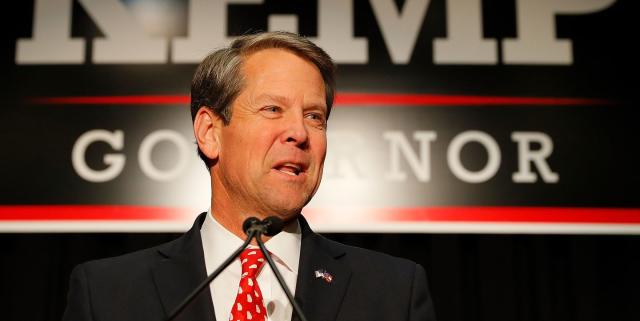
Brian Kemp’s Credibility Is Shredded Before He Even Takes Office

Esquire

Brian Kemp’s Credibility Is Shredded Before He Even Takes Office

Charles P. Pierce, Esquire          December 17, 2018