Top venture capitalist: “The climate is f’d”

Top venture capitalist: “The climate is f’d”

“The climate is f’d. Even worse than it seems.” That’s from the opening page of a 12-page letter sent by venture capitalist Chris Sacca to potential investors in Lowercarbon Capital, the climate-focused firm he launched last year after a brief retirement.

What’s new: Lowercarbon, which initially funded more than 50 startups via money from Sacca and his wife Crystal, last week announced that it raised $800 million in outside capital.

  • The $800 million is split among four funds, two early-stage and two later-stage. Each strategy includes a small fund that contains a slice of existing Lowercarbon portfolio companies, so that LP and GP interests are more aligned (plus, it was a marketing sweetener).

Why it matters: Both institutional and individual investors have gotten over ROI PTSD from the initial green-tech investing boom, with Sacca telling me that the funds were more than 2x oversubscribed in just a matter of days.

  • “Carbon is an expensive, inefficient thing,” Sacca argues. “Anywhere we can remove it from the process, it’s cheaper. That means customers. We’re not running a nonprofit here.”
  • “One big difference between now and years ago is that current tech makes it so much faster for startups to get to the binary point of understanding if something works or not. Biotech’s binary moment usually comes much later, and even web/app stuff can take a couple years to build something that you don’t actually know if it will catch on.”

Big picture: There is still a relative dearth of early-stage firms investing in green tech, despite an emerging consensus that climate change is an existential threat and that it can’t be stemmed (let alone reversed) via policy change alone.

  • Sacca believes we’ll know the money is matching the opportunity when we see more VC firms hire climate scientists like Lowercarbon’s Clea Kolster.
  • “I’m seeing more traditional VCs who do care and want to be proud of what they do. But we’re still not seeing too much competition, because most of these firms are clustering around lower-impact, consumer-facing technologies like basic reuse and recycling because they don’t yet have the skill set for deeper tech.”

Also: Lowercarbon had planned to offer some fund allocations to Historically Black Colleges and Universities on a no-fee/no-carry basis. But it hasn’t happened yet, as Sacca says it’s proven surprisingly difficult to find “decision-makers” at schools that haven’t traditionally had access to top VC funds.

  • “Our goal now is to donate a few million of each fund to HBCUs, while setting up direct relationships with the schools so they can get similar deals with other big VC funds. It’s kind of an open invitation because we have a chunk of these funds waiting for them. Maybe this interview will help get the word out.”

The bottom line: If we’re going to innovate our way out of global climate catastrophe, venture capital must play a key role. Right now.

Fish fewer at Hanauma Bay since reopening with new visitor limitations system

Fish fewer at Hanauma Bay since reopening with new visitor limitations system


Aug. 16—In the first light of day, at 7 a.m., when Hanauma Bay Nature Preserve opens to the public, its great half moon of beach is empty, and the sea over its dappled reef is at peak clarity, before rising winds and waves, kicking swim fins and wading feet bring turbidity.

It’s also the time when Hawaii residents with state IDs enjoy the privilege of entering the vast, collapsed volcanic crater without a reservation until 8 a.m.

“It’s impossible to get a reservation online—they’re all gone in one minute—so I drove here by 6 :30 a.m., ” said Annabella Taylor of Palolo Valley as she and her children, Zoe, Zen and Zarina, paused to overlook the bay’s turquoise waters as they walked down the hill Thursday morning.

Under a new reservation and visitor limitations system aiming to reduce stress on the bay’s coral reef ecosystem when it reopened in December, after 8-1 /2 months’ closure due to COVID-19, the preserve currently receives about 1, 400 visitors a day—half its former 3, 000 visitors a day but almost twice the 720-780 daily visitors initially allowed at reopening, according to Nathan Serota, spokesman for the Honolulu Department of Parks and Recreation.

Meanwhile, a new study has found that population density and biomass of more than half the bay’s most common fish species increased during the closure but decreased after reopening at only 25 % of the former visitor load.

This suggests “human avoidance behavior, even at 25 % capacity of visitors, for these more sensitive species, ” according to the “Hanauma Bay Biological Carrying Capacity Survey 20 /21 Annual Report, ” the third annual report conducted for DPR by the Coral Reef Ecology Lab of the Marine Biology Institute of the University of Hawaii at Manoa.

The study period ended two months after reopening and before the city began raising admission quotas. said lead author Sarah Severino.

“I find it interesting that seven of the 13 most abundant fish species in the bay showed an increase in density during closure, and after reopening really decreased in abundance, (showing ) some response to an increase in visitors, even at 25 % of normal visitor capacity prior to closure, ” Severino said in a telephone interview.

“A lot of the study is broken down by species, ” she noted, explaining that biomass refers to the size of the fish and the numbers of that particular fish, combined.

While many larger, common fish such as surgeonfish showed an increase both during the closure and after the reopening of the bay, the report said, many smaller species, such as butterflyfish, snappers and wrasses, decreased after the reopening.

“We’re thinking that these fishes are more sensitive to human interactions so may be modifying their behaviors, ” Severino said, adding what she meant by sensitivity was “when you’re snorkelling around and fish respond to you (being ) next to them and go into a hole, while other species don’t seem fazed at all.”

The seven species that increased with closure and decreased with reopening were palenose parrotfish (uhu ), saddle wrasse (hinalea lauwili ), belted wrasse (omaka ), brighteye damselfish, blackspot sergeant (kupipi ), white spotted toby and chubs (nenue ).

Diversity of fish species also changed, Severino said, most notably in Keyhole, the most heavily snorkeled area of the bay.

While Keyhole significantly increased in mean fish density and biomass throughout the closure, it also experienced significant decreases in the number of species of fish (species diversity ) and relative abundance of different species (species evenness ), “which means less species in Keyhole, ” she said.

Brown surgeonfish, convict tangs (manini ) and chubs “have now infiltrated and become dominant species in Keyhole, and smaller ones are either hiding or have moved elsewhere (in the bay ), ” Severino said, adding, “Generally speaking, higher diversity is associated with a healthier reef.”

At the same time, she pointed out, an increase in diversity was seen in the Channel sector of the bay, which has more reef with crevices and holes, compared with Keyhole’s open, sand-bottom spaces.

Density of butterflyfish increased during the closure within all sectors, suggesting they may have come in from offshore or ventured out of shelter due to lack of visitors, the report said.

The marine biology team also conducted video recordings of fish behavior and found “when more snorkelers were in the water, they would flee sooner when approached, and when there were less snorkelers, they would let you approach closer before they would flee, ” Severino said.

The bay’s water was 56 % clearer during closure when compared with days at full capacity in 2018, “which was pretty significant, ” Severino said, adding it remained 12.2 % clearer after reopening at 25 % capacity, “so that is something we can be excited about.”

There was 8.9 % greater clarity during the closure than on Tuesdays, when the bay was closed to public, in 2018.

Since reopening, the bay is closed Mondays as well as Tuesdays.

On Thursday morning a reporter who last swam in the bay on its first reopening day Dec. 3 observed fewer, and different, fish species in Keyhole than the last time.

There were still large surgeonfish and large schools of manini, but compared with before, there were few turquoise parrotfish and red-and-green wrasses and none of the dinner plate-size butterflyfish that had previously swum close to humans without flinching.

Here and there a couple of pairs of small, four-spot butterflyfish swam unhurriedly beneath a swimmer without fleeing, but two threadfin butterflyfish were already deep in a hole, looking up, as a lone human approached ; bird wrasses, with their long-nosed white faces, were prevalent before and now nowhere to be seen.

However, this was only what scientists call an anecdotal observation ; in contrast, Ron Sanderson of Hawaii Kai, who has swum in the bay almost weekly for 50 years, said he saw “hundreds and hundreds of fish, the usual kine, ” and was “so excited to be here because the online reservation system was impossible for me.”

While they hadn’t yet been in the water, first-time Hawaii visitors Zach Urgena, 28, and Mariel Cruz, 27, of New York City said they were astonished by the unique beauty of the bay and thought the $25 entry fee a person, recently raised from $12.50, was fair “because it’s to keep up the preserve, ” Urgena said.

The cost was minimal compared with the “hundreds of dollars a person we pay to go to Disneyland, ” said James Craig, a visitor from Pensacola, Fla.

Visitors also praised the video all entrants are required to view in the preserve’s theater before descending to the beach.

“The video was very informational, with the safety rules and what we can do to protect the reef, like not touching the animals or feeding them, and not leaving trash behind, ” said Lizbeth Yerena, 22, of Los Angeles.

She added she would apply the knowledge “to maintain our sea life no matter where.”

Despite having to make an early morning drive to enter without a reservation, “I agree, to preserve the reef, they need to limit visitors, ” said Waipahu resident Edie Ruiz, who arrived with her family at 5 :50 a.m., adding she felt tourists should be welcome “so long as they respect the aina.”

As for how many tourists—and residents—the bay can tolerate, “I think there’s a happy medium, something we’ve been trying to find throughout our three-year capacity study, ” Severino said.

EXPLAINER: Western states face first federal water cuts

EXPLAINER: Western states face first federal water cuts

WASHINGTON (AP) — U.S. officials on Monday declared the first-ever water shortage from a river that serves 40 million people in the West, triggering cuts to some Arizona farmers next year amid a gripping drought.

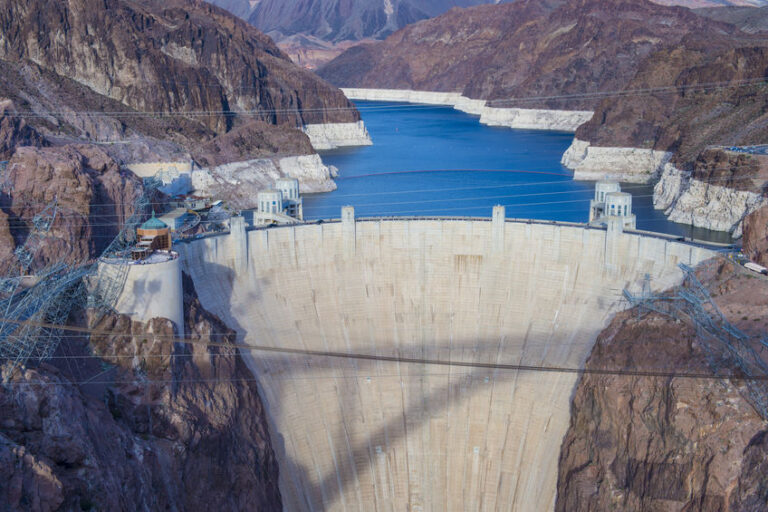
Water levels at the largest reservoir on the Colorado River — Lake Mead — have fallen to record lows. Along its perimeter, a white “bathtub ring” of minerals outlines where the high water line once stood, underscoring the acute water challenges for a region facing a growing population and a drought that is being worsened by hotter, drier weather brought on by climate change.

States, cities, farmers and others have diversified their water sources over the years, helping soften the blow of the upcoming cuts. But federal officials said Monday’s declaration makes clear that conditions have intensified faster than scientists predicted in 2019, when some states in the Colorado River basin agreed to give up shares of water to maintain levels at Lake Mead.

“The announcement today is a recognition that the hydrology that was planned for years ago — but we hoped we would never see — is here,” said Bureau of Reclamation Commissioner Camille Touton.

Lake Mead was formed by building the Hoover Dam in the 1930s. It is one of several man-made reservoirs that store water from the Colorado River, which supplies household water, irrigation for farms and hydropower to Arizona, California, Colorado, Nevada, New Mexico, Utah, Wyoming and parts of Mexico.

But water levels at Lake Mead and Lake Powell, the river’s two largest reservoirs, have been falling for years and faster than experts predicted. Scorching temperatures and less melting snow in the spring have reduced the amount of water flowing from the Rocky Mountains, where the river originates before it snakes 1,450 miles (2,334 kilometers) southwest and into the Gulf of California.

“We’re at a moment where we’re reckoning with how we continue to flourish with less water, and it’s very painful,” said Sarah Porter, director of the Kyl Center for Water Policy at Arizona State University.

HOW IS THE RIVER WATER SHARED?

Water stored in Lake Mead and Lake Powell is divvied up through legal agreements among the seven Colorado River basin states, the federal government, Mexico and others. The agreements determine how much water each gets, when cuts are triggered and the order in which the parties have to sacrifice some of their supply.

Under a 2019 drought contingency plan, Arizona, Nevada, California and Mexico agreed to give up shares of their water to maintain water levels at Lake Mead. The voluntary measures weren’t enough to prevent the shortage declaration.

WHO DOES LAKE MEAD SERVE?

Lake Mead supplies water to millions of people in Arizona, California, Nevada and Mexico.

Cuts for 2022 are triggered when predicted water levels fall below a certain threshold — 1,075 feet (328 meters) above sea level, or 40% capacity. Hydrologists predict that by January, the reservoir will drop to 1,066 feet (325 meters).

Further rounds of cuts are triggered when projected levels sink to 1,050, 1,045 and 1,025 feet (320, 318 and 312 meters).

Eventually, some city and industrial water users could be affected.

Lake Powell’s levels also are falling, threatening the roughly 5 billion kilowatt hours of electricity generated each year at the Glen Canyon Dam.

Colorado, New Mexico, Utah and Wyoming get water from tributaries and other reservoirs that feed into Lake Powell. Water from three reservoirs in those states has been drained to maintain water levels at Lake Powell and protect the electric grid powered by the Glen Canyon Dam.

WHICH STATES WILL BE AFFECTED BY THE CUTS?

In the U.S., Arizona will be hardest hit and lose 18% of its share from the river next year, or 512,000 acre-feet of water. That’s around 8% of the state’s total water use.

An acre-foot is enough water to supply one to two households a year.

Nevada will lose about 7% of its allocation, or 21,000 acre-feet of water. But it will not feel the shortage largely because of conservation efforts.

California is spared from immediate cuts because it has more senior water rights than Arizona and Nevada.

Mexico will see a reduction of roughly 5%, or 80,000 acre-feet.

WHO IN THOSE STATES WILL SEE THEIR WATER SUPPLY CUT?

Farmers in central Arizona, who are among the state’s largest producers of livestock, dairy, alfalfa, wheat and barley, will bear the brunt of the cuts. Their allocation comes from water deemed “extra” by the agency that supplies water to much of the region, making them the first to lose it during a shortage.

As a result, the farmers will likely need to fallow land — as many already have in recent years because of persisting drought — and rely even more on groundwater, switch to water-efficient crops and find other ways to use less water.

Water suppliers have planned for the shortage declaration by diversifying and conserving their water supply, such as by storing water in underground basins. Still, water cuts make it harder to plan for the future.

The Central Arizona Project, which supplies water to Arizona’s major cities, will no longer bank river water or replenish some groundwater systems next year because of the cuts.

“It’s a historic moment where drought and climate change are at our door,” said Chuck Cullom of the Central Arizona Project.

Cities such as Las Vegas, Phoenix and Tucson, and Native American tribes are shielded from the first round of cuts.

CAN THE DECLINE OF LAKE MEAD BE REVERSED?

Water levels at the reservoir have been falling since 1999 due to the dry spell enveloping the West and increased water demand. With weather patterns expected to worsen, experts say the reservoir may never be full again.

Though Lake Mead and Lake Powell could theoretically be refilled, planning for a hotter, drier future with less river water would be more prudent, said Porter of Arizona State University.

AP reporters Felicia Fonseca in Flagstaff, Arizona, and Sam Metz in Carson City, Nevada, contributed to this report.

The Associated Press receives support from the Walton Family Foundation for coverage of water and environmental policy. The AP is solely responsible for all content. For all of AP’s environmental coverage, visit

It’s been a brutally hot summer. Experts say this is just a glimpse of the future.

It’s been a brutally hot summer. Experts say this is just a glimpse of the future.

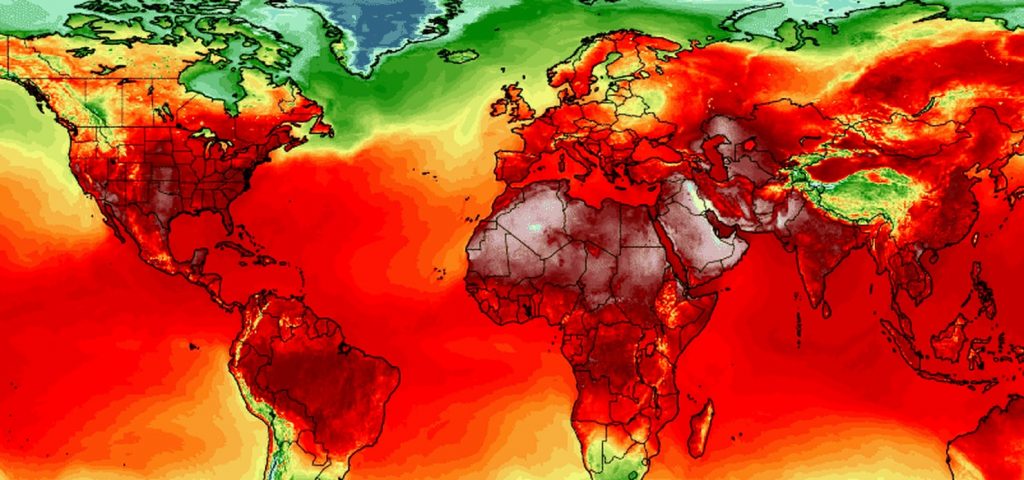
In a summer already full of extreme weather, it’s the heat waves roasting hundreds of millions of people across three continents that are confirming a grim climate prophecy for many experts.

Sizzling temperatures in the United States and Canada and persistent heat in parts of Europe and northern Africa are creating dangerous health conditions, aggravating droughts and fueling wildfires around the world. And it’s this troubling confluence of climate threats that researchers have been warning about for two decades.

“Climate scientists were predicting exactly these kinds of things, that there would be an enhanced threat of these types of extreme events brought on by increased warming,” said Jonathan Martin, a professor of atmospheric science at the University of Wisconsin-Madison. “It’s very distressing. These are not encouraging signs for our immediate future.”

While August is typically one of the hottest months in the Northern Hemisphere, this week’s heat waves add to a growing list of recent extremes. The National Oceanic and Atmospheric Administration announced Friday that July was the hottest month since record-keeping began 142 years ago. Catastrophic flooding killed more than 200 people in Europe last month, and wildfires are raging in Siberia, across the Mediterranean and along the western coasts of the U.S. and Canada.

But to many experts, these events offer just a glimpse of what lies ahead in future summers because of climate change.

This week, a United Nations panel released an alarming report on the state of climate change and the consequences of further global warming. The assessment highlighted the threat of extreme weather events, including how global warming will make heat waves both more frequent and more intense.

The U.N.’s Intergovernmental Panel on Climate Change found that severe heat waves that previously occurred once every 50 years will now likely happen once per decade. And in a study published last month in the journal Nature Climate Change, scientists determined that record-shattering heat events are up to seven times more likely to occur between now and 2050, and more than 21 times more likely to occur from 2051 to 2080.

The oppressive heat that blanketed the Pacific Northwest early this summer demonstrated how dangerous heat extremes can be. Hundreds of deaths were linked to the June heat wave, and more than 35 cities across Washington state and Oregon tied or set new temperature records.

“The heat event that we had in the Pacific Northwest in June — it’s not that we’re suddenly going to see that every summer, but the recent extremes are certainly a preview of what we’ll see more frequently in the future,” said Karin Bumbaco, a research scientist at the University of Washington and Washington’s assistant state climatologist.

Heat waves occur when a ridge of high pressure parks over a region, suppressing cloud formation and causing air to compress and warm. The resulting heat domes have been associated with tropical cyclone activity, which can alter the circulation of air over the Northern Hemisphere and trigger unusual weather patterns.

Heat waves occur naturally in the summer, but climate change is exacerbating these events because emissions of heat-trapping greenhouse gases are causing average temperatures to increase. These changes to baseline temperatures mean that when heat waves do occur, they are more likely to be severe, said Gerald Meehl, a senior scientist at the National Center for Atmospheric Research in Colorado.

“If average temperatures are increasing everywhere, that increases the odds of more intense heat events,” he said. “Even relatively small increases in average temperatures cause a much bigger shift in the extremes.”

Extreme weather events, including heat waves, are driven by a complex mix of atmospheric processes and can vary from year to year, but climate change helps amplify the threats, said Philip Mote, a climate scientist at Oregon State University.

Global warming can also create feedback loops that then make other extreme events more likely to occur. Droughts, for instance, can intensify heat waves because the sun can more easily heat the ground when there is less moisture in the soil to evaporate.

“Right now, we have drought conditions over half the country, so that’s also playing into why we’re seeing so much heat this summer,” Bumbaco said.

Yet even while climate scientists have spent the past few decades projecting the effects of global warming, Mote said the intensity and pace of changes to the planet have been surprising.

“I’ve been involved with climate research for 23 years, and I honestly didn’t think it would get this bad this fast,” he said. “This isn’t really news to anyone who have been studying this for a while, but it’s depressing to see it coming true.”

First-ever water shortage declared for Lake Mead on Colorado River, prompting cuts

Axios

First-ever water shortage declared for Lake Mead on Colorado River, prompting cuts


For the first time since its construction in the 1930s, the federal government has formally declared a water shortage at Lake Mead, the nation’s largest reservoir by volume, on the Colorado River.


Why it matters: The declaration, issued by the Bureau of Reclamation, sets in motion a series of water allocation cuts to downstream states along the Colorado River.

  • It also serves as a stark warning to a rapidly growing Southwest population that drought, heat and climate change are major threats to the region.

Driving the news: Lake Mead is at record low levels, having dropped below 1,075 feet above sea level, or 40% of capacity. The cuts come because the forecast lake level for 2022 is below that level as well.

The West has been mired in the worst drought of this century, and when viewed over several decades, scientists have found that the Southwest is locked in the grip of the first climate change-caused megadrought seen in the past 1,200 years.

  • The water level of Lake Mead has been on the decline since about 1999.
  • Hotter temperatures and a reduction to spring snowmelt has reduced the water flowing into the Colorado River from the Rockies, where the river begins, before winding its way into the Gulf of California. So too has burgeoning water demand from increasing populations and thirsty agricultural interests.
  • A series of agreements governs water use from the river, as well as the cuts to be implemented when the water levels dip below a certain threshold.

Details: Lake Powell’s levels also are on the decline, which poses a threat to the electricity generated by the Glen Canyon Dam, threatening the roughly 5 billion kilowatt hours of electricity generated each year at the Glen Canyon Dam.

  • This first round of cuts is going to have the greatest impact on Arizona farmers, as the state will lose 18% of its share from the river, which translates to about 8% of the state’s total water use, or 512,000 acre-feet. (An acre-foot is about enough water to cover an acre in a foot of water.)
  • Farmers in Arizona are likely to experience the brunt of the water cuts and may be faced with tough choices of letting their fields go fallow or tapping dwindling groundwater supplies or other alternate water sources.
  • Under the water allocation cuts, Nevada will lose about 7% of its allocation, or 21,000 acre-feet of water.
  • Mexico will see a reduction of roughly 5%, or 80,000 acre-feet.
  • According to the Bureau of Reclamation, the Upper Colorado River Basin experienced an exceptionally dry spring in 2021, with April to July runoff into Lake Powell totaling just 26% of average despite near-average snowfall last winter.
  • The Interior Department agency predicts the amount of water that would flow into Lake Mead without storage behind the dam is just 32% of average.

What they’re saying: “It’s clear that the scale and pace of climate change in the Colorado River Basin poses a huge threat to the water supplies on which everything depends,” Kevin Moran, who leads the Colorado River program for the Environmental Defense Fund, told Axios.

  • “The Colorado River is the lifeblood of many Arizona cities, tribal communities, and generations of farmers who depend on it for water,” said Sen. Mark Kelly (D-Ariz). “The announcement by the Bureau of Reclamation is serious, but Arizona has prepared for these initial water curtailments through the Lower Colorado River Drought Contingency Plan.”

Thousands of Californians likely to lose power amid powerful winds, wildfire threat

Thousands of Californians likely to lose power amid powerful winds, wildfire threat


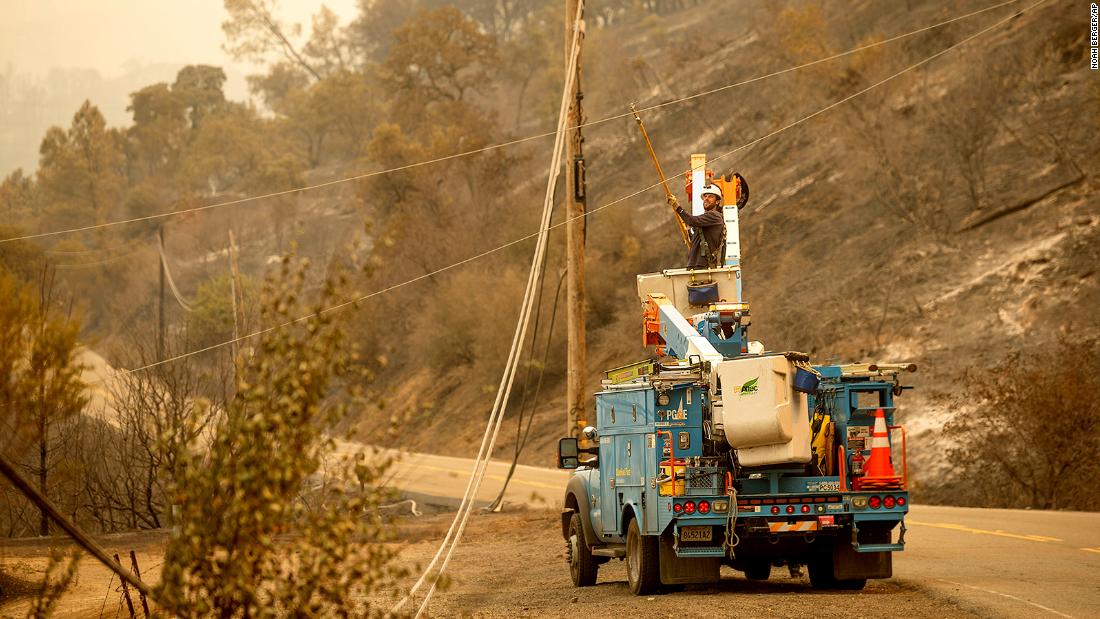
Tens of thousands of Northern Californians are likely to lose power Tuesday as gusty winds return to the region, potentially sparking more wildfires in a state where the second-largest blaze on record is burning across more than a half-million acres.

California’s largest utility, Pacific Gas and Electric, warned about 39,000 customers across 16 counties Sunday that they could lose power when operators shut down equipment to prevent wildfires.

The utility said on its website Monday that the outages were “likely.”

Most of the shutoffs will occur in two counties, one of them Butte, one of four counties where the massive Dixie Fire has scorched nearly 570,000 acres, the utility said.

A little over a quarter of the blaze, which ignited more than a month ago and destroyed the historic Sierra Nevada town of Greenville this month, was surrounded by containment lines Monday afternoon, according to the California Department of Forestry and Fire Protection.

Powerful offshore winds are expected to pick up Tuesday night, a potentially devastating event as most of California is experiencing “extreme” or “exceptional” drought. The utility said the shutoffs could last as long as two days for some customers.

The utility began using the proactive measure during a wave of devastating wildfires in recent years, including the deadliest in state history, the Camp Fire of 2018. The company pleaded guilty to unlawfully starting the fire, which left at least 84 people dead, after investigators blamed its transmission lines.

Flood knocks down German bridge, sweeps people away

Flood knocks down German bridge, sweeps people away

Germany Floods ((c) Copyright 2021, dpa (www.dpa.de). Alle Rechte vorbehalten)

BERLIN (AP) — Dozens of German rescue teams were searching Monday for an unknown number of missing people who witnesses said were tossed into a river in Bavaria’s Valley of Hell when a sudden flood tore down a bridge they were on, the German news agency dpa reported.

Police said rescue operations with about 100 officers were underway and at least four people had been pulled out of the water in the valley known as Höllentalklamm near Germany’s tallest mountain, Zugspitze.

“One has to assume that more people are still missing,” spokesman Stefan Sonntag from the Upper Bavaria police headquarters told dpa.

He said witnesses told them that several people were carried away by the floods when the bridge suddenly collapsed. The sudden flood followed heavy rains in the region

The Höllentalklamm, or Valley of Hell, is a popular destination for hikers from across the country and abroad.

Last month, more than 200 people died in deadly floods in western Germany.

Climate scientists say there’s little doubt that climate change from the burning of coal, oil and natural gas is driving more extreme weather events — such as heat waves, droughts, wildfires, floods and storms — as the planet warms.

Coronavirus: Hundreds Test Positive In First Week Of School Across Tampa Bay

WUSF – Public Media

Coronavirus: Hundreds Test Positive In First Week Of School Across Tampa Bay


Microscopic view of Coronavirus, a pathogen that attacks the respiratory tract. Analysis and test, experimentation. Sars
Coronavirus
News about coronavirus in Florida and around the world is constantly emerging. It’s hard to stay on top of it all but Health News Florida and WUSF can help. Our responsibility at WUSF News is to keep you informed, and to help discern what’s important for your family as you make what could be life-saving decisions.
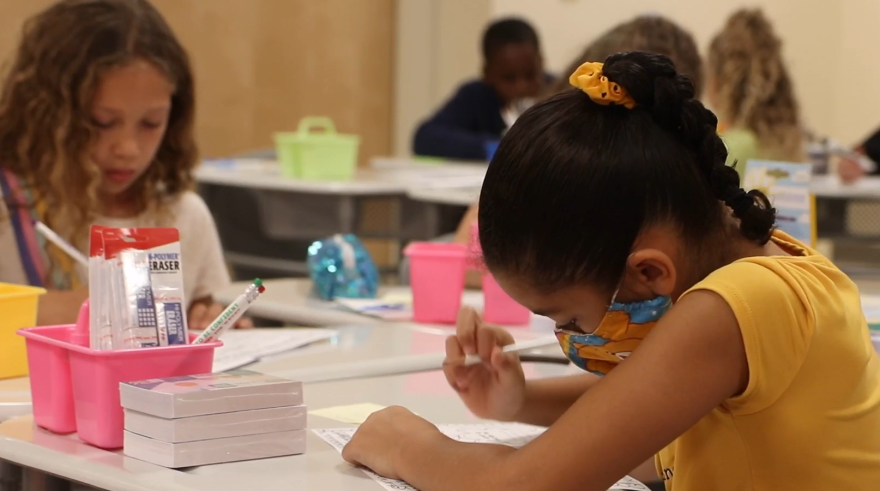
Girl in mask at school
Pasco County Schools
Actual case counts are almost four times higher than the district’s COVID dashboard shows, according to Sarasota school board chair Shirley Brown.

Even though classes just started last week, schools in the greater Tampa Bay region have already seen hundreds of students and staff test positive for coronavirus, and thousands of people are isolating due to exposure or illness.

The numbers were generally between 10 times to 20 higher than the cases that were counted in the first week of school last year, and in Sarasota, school board chair Shirley Brown said the numbers reflected on district dashboards are far below the actual case count.

“It’s actually worse than what our dashboard shows because we are having trouble keeping up with data entry,” Brown said in an email to WUSF Sunday night.

By Sunday, 261 students in Sarasota County schools had tested positive in the first week. According to the school district’s COVID dashboard, 194 students were in isolation on Sunday.

A case count of 261 is already more than 20 times higher than last year, in a district that contains about 45,000 students. The Sarasota Herald Tribune reported there were just 10 cases of COVID in the county’s schools the first two weeks last year. But Brown said that’s not even the full picture.

“We (have) 818 names on a report but I don’t know if (they are) staff or student or charter school student,” Brown added. “We may actually come close to last year’s numbers before the end of August.”

Brown said she has asked staff to “put a priority on data entry” so that the updated numbers are available before a school board workshop to discuss safety protocols on Tuesday.

Elsewhere, in the nation’s eighth largest school district, Hillsborough County reported 435 students — up from 41 in the first week of school last year — and 228 staff had tested positive for coronavirus.

About 2,900 were in quarantine as of Thursday, with no way to remotely access their classes, school board member Karen Perez said at a meeting that evening.

“How are these 2,000 — almost 3,000 — students receiving their lessons? How are they being contacted to get their reading, their math, their lessons completed?” she asked.

By the weekend, those numbers were higher: nearly 4,500 students were in quarantine, or 2 percent of Hillsborough’s 193,000 students, according to the Tampa Bay Times.

Last year, school officials said 10 to 15 percent would have to be out to consider closing a school, superintendent Addison Davis said Thursday.

Bus drivers, who are already in short supply, were also seeing staffing shortages due to sickness.

“We have 18 drivers that are in quarantine. And that’s without any absenteeism. I mean, that’s about more than double what we’re normally at this point of the year,” operations chief Chris Farkas said Thursday.

Pinellas reported 152 cases among students, and 79 among staff.

Manatee County reported 182 students tested positive last week, and announced random temperature checks for students.

Masks remain optional across the region, due to an executive order by Gov. Ron DeSantis that bars schools districts from issuing mandatory mask policies without parental exemptions.

Hillsborough County requires parents to complete an opt-out form so that their children don’t have to wear a face covering. District officials said about 14 percent of students had turned in an opt-out form.

The Manatee County School Board is scheduled to hold an emergency meeting at 9 a.m. Monday to discuss implementing a mask mandate with an opt-out for students.

The Florida Education Association is tracking cases statewide, and said 4,148 Florida Pre-K-12 students and staff have tested positive for coronavirus since Aug. 1.

Three children in Florida and 15 educations have died from COVID-19 since July, according to the Southeast’s largest labor union.

Astronauts say they’re saddened to watch the climate crisis from the space station: ‘We can see all of those effects from up here’

Astronauts say they’re saddened to watch the climate crisis from the space station: ‘We can see all of those effects from up here’

Astronauts say they’re saddened to watch the climate crisis from the space station: ‘We can see all of those effects from up here’
two astronauts holding microphone inside international space station
NASA astronauts Megan McArthur and Mark Vande Hei speak with Insider from the International Space Station, August 11, 2021. NASA 

Astronauts have a better view of Earth than anybody, but lately it’s a discouraging one.

“We’ve been very saddened to see fires over huge sections of the Earth, not just the United States,” NASA astronaut Megan McArthur told Insider on a recent call from the space station.

Wildfires are raging across the US, Canada, Greece, Turkey, Italy, Algeria, and Siberia. McArthur’s crewmate, French astronaut Thomas Pesquet, has posted photos of those blazes from above on Twitter.

Wildfires are one of the most visible hallmarks of the climate crisis. This summer, they’ve come alongside historic heat waves and the western US’s worst drought in the 20-year history of the US Drought Monitor.

A new report from the UN’s Intergovernmental Panel on Climate Change (IPCC) warns that “fire weather” will probably increase by 2050 in North America, Central America, parts of South America, the Mediterranean, southern Africa, north Asia, Australia, and New Zealand. That means more days where conditions are warm, dry, and windy enough to trigger and sustain wildfires.

The amount of fuel available to burn in those places – dry vegetation – is also likely to increase as rising temperatures cause the air to absorb more moisture and bring about more droughts.

The IPCC report, released Monday, is the first part of the group’s sixth assessment, which recruits hundreds of experts to analyze years of scientific research on climate change. Those experts determined that global temperatures will almost certainly rise at least 1.5 degrees Celsius above the preindustrial average by 2040.

That may sound small, but it brings about huge changes across the planet, including further melting of glaciers and polar ice caps. This contributes to sea-level rise, and water expands as it heats up, so it is virtually certain that oceans will continue rising through the end of this century. In the best case scenario, the IPCC authors said, oceans will rise by nearly a foot over the next 80 years.

But there is still time to prevent 2 degrees Celsius of warming and the even more catastrophic changes that would bring, the report said.

“Over many years, scientists around the world have been sounding this alarm bell,” McArthur said. “This is a warning for the entire global community. It’s going to take the entire global community to face this and to work through these challenges.”

Astronauts can see the climate crisis unfolding across the planet
hurricane laura ISS
A photo of Hurricane Laura taken from the International Space Station on August 25, 2020. Chris Cassidy/NASA


Astronauts can see other signs of the changing climate, too: “Big tropical storms – those are always coming, and potentially the flooding that comes after them,” McArthur said. “We can see all of those effects from up here.”

Future astronauts will probably observe even more of that. The IPCC report found that combinations of extreme events like heavy rainfall and hurricane-caused storm surge, paired with rising seas, will continue to make flooding more likely in coming decades.

Other satellites can also see signs of drought, like dried-up reservoirs across California.

“The other thing that we can see, of course, is the very thin lens of atmosphere,” McArthur said. “That is what protects our Earth and everything on it. And we see how fragile that is, and we know how important it is.”

thin atmosphere glowing orange against space stars above nighttime earth city lights
The atmosphere glows above the southeastern African coast, as seen from the International Space Station. NASA 


The burning of fossil fuels like coal and oil is drastically changing that thin atmosphere by filling it with heat-trapping gas.

In 2019, the concentration of carbon in the atmosphere was higher than at any time in at least 2 million years, according to the IPCC report. Concentrations of methane and nitrous oxide – more potent greenhouse gases than carbon dioxide – were higher than at any time in at least 800,000 years.

smoke plumes dixie fire as seen from space
On August 4, 2021, an astronaut on the International Space Station shot a photo of the Dixie fire’s thick smoke plume. NASA/JSC 


As those gases fill the atmosphere, they prevent more and more heat from the sun from bouncing back into space. That’s what’s causing global temperatures to rise and bringing about the extreme weather that astronauts are watching in horror.

“That is the place that we need to be able to live. So it’s important that we take ownership of whatever we can do to help maintain it,” NASA astronaut Mark Vande Hei told Insider.

‘Simply not an option’: How Finland is solving the problem of homelessness

Y-Foundation housing projects in Helsinki, Finland. Y-FOUNDATION

What if homelessness was simply not an option?

That’s the approach that Finland took when it decided to address their homelessness problem, beginning with a comprehensive strategy to provide immediate, permanent housing for those who most needed it.

As a result, Finland has become the leading example of how to drastically reduce homelessness.

Juha Kaakinen is chief executive officer of Finland’s non-profit Y-Foundation, which develops housing and purchases existing housing, and then leases it out to people who’d otherwise be homeless. Mr. Kaakinen, who was at the forefront of Finland’s radical housing transformation, took part in a recent panel discussion on whether Canadian cities were using useless stopgap measures to solve the affordable housing crisis.

The Canadian Urban Institute held the virtual nine-speaker Aug. 4 event. In particular, the panel looked at homeless encampments that had become a feature of the pandemic in the past year, including large tent cities in Toronto, Vancouver and Victoria.

“I have always thought that there were a lot of similarities between Canada and Finland, but this seems to be an issue where we also have great differences, because I really can’t recall that we have had any homeless encampments in this century,” Mr. Kaakinen told the panel.

Juha Kaakinen is chief executive officer of Y-Foundation, which develops housing and purchases existing housing, and then leases it out to people who’d otherwise be homeless. KIRSI TUURA

That’s not to say Finland, a small country of around 5 million, has not had its problems. In 1987, Finland had a homeless population of about 20,000 and it became clear that temporary shelters weren’t a solution. They overhauled the system. Since then, Finland’s rate has plummeted to 4,300 single homeless people and an estimated 200 couples or families that are homeless. Most are temporarily living with friends or relatives, Mr. Kaakinen explained in an e-mail.

By comparison, Canada’s homelessness rate is conservatively estimated at around 235,000.

In an interview, Mr. Kaakinen expressed his dismay at the visible reality of Canada’s housing crisis, having seen pictures of people struggling on the streets and in parks.

“I’m not surprised to see pictures like these from the U.S.A., but Canada? These pictures remind me most of some pictures of Finland in the 1960s. For me, there is only one [criterion] for a civilized society: it takes care of all its members, including people experiencing homelessness. “There seems to be countries that regard themselves as highly developed, rich, world-leading countries, but utterly fail in securing basic human rights like housing.”

Vancouver’s homelessness crisis became a bleak reality during the pandemic, when an encampment set up in Oppenheimer Park and then Strathcona Park. The City of Vancouver conducted its last annual homeless count just before the pandemic broke, in early March, 2020. The count found that 2,095 residents in Vancouver identified as homeless. Of those, 547 people lived on the street and 1,548 people were living in shelters, including detox centers, safe houses and hospitals, with no fixed address, according to information provided by the city in an e-mail. Victoria Mayor Lisa Helps told the panel that her city saw an increase of people living in the rough go from about 35 at the onset of the pandemic to an estimated 465 people a month later.

Shelters are not an acceptable form of housing, and large encampments have never been a form of shelter in Finland, Mr. Kaakinen told the panel. He saw some homeless people grouped together near Helsinki in the 1980s, but even then there were many shelters and hostel beds.

Homeless advocate Chrissy Brett at a homeless encampment at Strathcona Park, in Vancouver, on Dec. 4, 2020. DARRYL DYCK/THE GLOBE AND MAIL

In 2008, the country adopted a national policy based on “Housing First” philosophy, whose advocates say that providing permanent housing is the first priority in solving the crisis. As a result, shelters were converted into comfortable permanent homes, with staff on hand to support those with addictions, or in need of life skills and training and work placement.

Housing First advocates say that research has shown stable housing for all people has proven to be the most effective remedy, both for improving lives and saving money.

One such study from 2009, published in the Journal of the American Medical Association, saw costs to Seattle’s public-health system drop by 60 per cent after the first six months, when chronically homeless people with severe alcoholism obtained stable homes.

In Finland, residents have their own apartments with rental contracts, and if necessary, they receive a housing benefit. Former homeless people are involved at the national level in the planning of social housing at the city level, Mr. Kaakinen said.

“The message from homeless people about homelessness has always been that it has to be a permanent housing, a safe place – not a shelter or a hostel. And so, since 2008, our policy has been based on this principle of providing permanent housing on rental contract, and support if that’s needed. … It’s been a partnership between the states, the government, local authorities and NGOs [non-governmental organizations] working at the national and local level.


“Of course, in practice, the greatest responsibility is on the cities … and we have homeless people represented in the national programs, in the steering groups. They are taking part in planning the services in the cities. I think that it has been a very pragmatic and successful way to work.”

The Y-Foundation started to buy private apartments throughout Finland in 1985, with grants obtained from the government-run Finland Slot Machine Association, he says. The grant covered 50 per cent of the price of an apartment, and today they also purchase apartments without grant money.

About 80 per cent of the apartments are subleased to municipalities and NGOs, who rent them out and provide support services, if needed. Revenues cover operating costs. NGOs and municipalities also develop new affordable housing. In Finland’s large urban centers, 25 per cent of all new housing must be for social housing. There’s no visible difference between private and public housing.

“It makes the idea of a more equal society a reality,” says Mr. Kaakinen. “It has obvious social benefits, and it has also a huge psychological importance [because] everybody can have the feeling that they belong to this society.”

Victoria resident Tina Dawson, 52, told the panel about her experience as a first-time homeless person in the past year, moving between shelters and encampments. People in her position need to be empowered and maintain their dignity, she said.

“Being newly homeless, I am gob-smacked at the way things are out of sight, out-of-mind, and the machine that is in place to keep people homeless. How on earth am I going to get out of this position? I’ve managed my entire life. I’ve raised three children. And I have no address. The problem is [putting together] the damage deposit. I’m on permanent disability. That’s hand to mouth.”

Panel member Leilani Farha, lawyer and global director of Ottawa-based affordable housing initiative The Shift, later said in an interview that part of the success of Finland is the national mindset around homelessness. It’s simply not an option.

“People have a right to housing as part of their constitution. They have embraced it. It’s a different culture,” said Ms. Farha, who travelled the world for six years visiting homeless encampments when she worked as the United Nations special rapporteur on the right to adequate housing.

Finland is a smaller country and highly regulated, so it’s more difficult for rents to escalate as they have in Canada, she adds. Helsinki, for example, owns the majority of land within the city limits, and operates an in-house construction company. But Canada, says Ms. Farha, could learn to think boldly and creatively, like the Finns. Why, for example, hasn’t Canada embraced a Housing First approach, she asks.

“I think people are beginning to realize that housing is just completely unaffordable, and we don’t have much social housing in this country – we have very little actually. So I think people are cottoning onto the idea that the average family person working at a minimum wage job could easily end up homeless. I think that’s changing, but I don’t know that we’re there yet.

“What I see in governments around Canada is a timidity around bold creative moves that are value based, and I think now is the time.

“We need some bold creativity, come on. I’m seeing all these things happening in other countries. Where is it in Canada?”