Everything You’ll Want to Know About Donald Trump’s Legal Woes

The Disgraced Former Guy Is In Over His Head in Court Cases and Investigations; Here’s Your Definitive Catalogue

Bookmark this article. It’s your scorecard to the trials and tribulations of Donald J. Trump.

DCReport has compiled a list of 21 legal cases, investigations and related matters engulfing Trump, his family and their four-generation criminal enterprise, the Trump Organization.

The items range from the widely reported grand jury investigation by the Manhattan district attorney to an obscure $1 million dispute regarding a Chicago property tax refund; from the congressional inquiry into the Jan. 6 Capitol insurrection to two defamation cases brought by women who claim Trump assaulted them.

The Trump Family.
Principals of the Trump crime family

What you read here is based on our own reporting as well as the ongoing Trump Litigation Tracker maintained by the online forum Just Security at New York University School of Law. We also relied on the Program on Extremism at George Washington University, which created a central database of court records related to the events of the Jan. 6. Capitol insurrection.

We believe our list is complete, but we invite anyone with knowledge of other pending or ongoing legal matters to alert us.

Our takeaway? In reviewing his legal battles, we noticed two common themes: money and lies. Trump’s penchant for lying, particularly his pattern of lying about his finances and the election, is coming back to bite him legally.

Throughout Trump’s presidency the phrase, “No one is above the law,” was heard frequently. But other than his record-setting two impeachments, Trump has effectively evaded legal consequence. That’s changing. Now that Trump is a private citizen, these lawsuits and investigations will determine whether he will be held accountable for his illegal conduct and sedition.

The Money
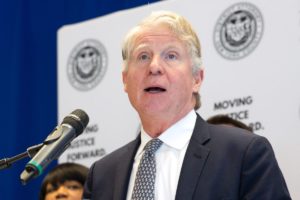
New York District Attorney Cyrus Vance Jr. (Ben Fractenberg / THE CITY)

1. Manhattan D.A.’s Criminal Investigations into Trump’s Finances

Manhattan District Attorney Cy Vance Jr. has been investigating Trump, the Trump Organization and its officers since at least 2018. Trump’s former lawyer Michael Cohen and the former daughter-in-law of Trump’s chief financial officer Allen Weisselberg are both known to be cooperating with the D.A.’s office, and a grand jury is well under way. Court filings and witnesses have indicated that one of the main components of the investigation is whether the former president and his company falsely inflated the value of their properties for banks and insurers and then undervalued the properties to skimp on taxes. Both the grand jury and Cy Vance’s tenure are set to expire in November so we expect announcements, not to mention indictments, before then.

Where’s the Justice Department?

Attorney General Merrick Garland

While Attorney General Merrick Garland’s Justice Department is on the periphery of many of these cases and investigations, the department is notably absent from any primary cases directed at Trump himself.

Indeed, in some cases such as the E. Jean Carroll defamation suit, Garland and the department actually supported Trump against his accusers. In other matters directly involving the politicization of the department, Garland chose to let its inspector general take the point.

“Sometimes we have to make decisions about the law that we would never have made and that we strongly disagree with as a matter of policy,” he told a Senate committee in June.

In July, the department cleared the way for government officials to testify in the congressional election interference investigation. The department said that it “would not be appropriate to assert executive privilege with respect to communications with former President Trump and his advisers and staff on matters related to the committee’s proposed interviews.”


2. New York Attorney General’s Civil and Criminal Investigations

In a similar vein to the Manhattan D.A.’s office, New York Attorney General Letitia James is investigating Trump for altering property values to avoid taxes. Although the case started in civil court, James announced in May that the probe expanded to a criminal investigation.

3. D.C. Civil Suit over Misuse of 2017 Inauguration Funds

For the 2017 inauguration, Trump raised a staggering and record-setting $107 million. The civil suit alleges that Trump used various schemes to siphon money from that inauguration fund and to direct it to the Trump businesses. In one example Trump’s inaugural committee allegedly paid $175,000 for event space at Trump’s own Washington hotel. That same day that same space was rented to a nonprofit for $5,000—in line with the hotel’s standard pricing guidelines. The suit alleges that the Trump nonprofit was used to enrich Trump’s personal businesses.

4. Mary Trump Fraud Litigation
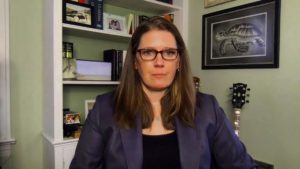
Mary Trump

Michael Cohen once told Congress that in his experience, “Trump inflated his total assets when it served his purposes.” In niece Mary Trump’s case, however, the daughter of his dead brother Fred Trump Jr. alleges that Trump devalued the family assets to defraud her out of 10s of millions of her grandfather’s inheritance. Mary Trump—a psychologist and author of the bestselling Too Much and Never Enough—alleges that her aunt and uncles presented her with fraudulent valuations to hide the real value of the estate, ty keeping 10s of millions for themselves.

5. Panama Hotel Fraud and Tax Litigation 

Ithaca Capital, a real estate holding company, alleges that it purchased a majority share of the Trump Hotel in Panama based on false and misleading information. Ithaca claims that Trump’s company misrepresented the hotel as profitable and artificially deflated the expenses. The company alleges that the Trump Organization failed to report or fully pay Social Security withholding for hotel employees or pay income taxes to the Panama government. Additionally, Trump’s management company paid itself more than what was listed on the financial statements all while the hotel sat virtually empty and went uncleaned for years.

6. Doe vs. The Trump Corporation Class Action 

In a class-action suit filed in 2018 by the New York law firm of Kaplan, Hecker & Fink, the plaintiffs allege that from 2005 to 2015 Donald, Ivanka, Don Jr. and Eric Trump used the Trump brand to promote and endorse various “Secrets of His Success”-style seminars, business opportunities and training programs through companies Trump claimed were independent of him. The suit alleges that the family allowed these companies to use Trump’s brand name and endorsements to defraud thousands of struggling Americans who invested in a range of exorbitantly priced offerings from these companies, knowing that the purchasers’ likelihood of success was minuscule. The family was paid millions by the companies, the suit claims.

The former Trump tower in Chicago (Trump Organization)

7. Chicago State’s Attorney Blocks a $1 Million Tax Refund

The Cook County State’s Attorney Kimberly Foxx has filed a suit to block a $1 million property tax refund awarded in June by the Illinois Property Tax Appeal Board. The board found that the Cook County Board of Review overestimated the value of Trump’s Chicago skyscraper and overcharged his firm in 2011. The refund has been controversial after an initial investigation was undertaken in 2020 due to allegations that a Republican state official who was the executive director of the Property Tax Appeal Board pressured his staff to reduce the value of the tax bill to try and obtain the $1 million refund for Trump. That state official was let go in October 2020 and the vote was delayed until after Trump left office, but it still passed unanimously in favor of Trump.

The Lies

8. Atlanta Criminal Election Influence Investigation

On Feb. 10, 2021, the Fulton County district attorney’s office opened an investigation into attempted election interference, based on the widely reported recording of a phone call between Trump and Georgia’s Secretary of State Brad Raffensperger. Trump was heard pressing the Georgian to overturn the election results saying, “I just want to find 11,780 votes.” The case looked to be stalled until last month when the county provided additional funds to the D.A.’s office to help handle a severe backlog of cases.

9. Washington, D.C., Incitement Criminal Investigation

Shortly after the Jan. 6 Capitol insurrection, D.C.’s Attorney General Karl Racine said, “I know that I’m looking at a charge under the D.C. code of inciting violence, and that would apply where there is a clear recognition that one’s incitement could lead to foreseeable violence.” Inciting a riot in Washington is a misdemeanor with a very high bar to be able to prove, but related lawsuits and the congressional Jan 6 investigation could help Racine with his case.

10. Incitement Suit for Jan 6 Capitol Attack

Ten Democratic members of Congress are suing Trump, Rudy Giuliani the Proud Boys, the Oath Keepers, the Warboys and the head of the Warboys, Enrique Tarrio. The suit says that Trump violated the Ku Klux Klan Act by inciting the rioters with the intent to prevent the members from discharging their official duty of approving the Electoral College vote. The 1871 act allows members of Congress to sue individuals who conspire to violently “molest, interrupt, hinder, or impede” the discharge of a public official’s duties. The suit was originally filed in February by Rep. Bennie Thompson (D-Miss.), who later withdrew his name when he was appointed to lead the House select committee investigating the riot.

11. Eric Swalwell Incitement Suit for Jan. 6 Riots

On March 5, 2021, Rep. Eric Swalwell (D-Calif.) brought a suit against Donald Trump, Donald Trump Jr., Representative Mo Brooks (R-Ala.) and then-lawyer Rudy Giuliani. Like the suit brought by other members of Congress, Swalwell claims Trump violated the Ku Klux Klan Act and that Trump and the other defendants incited the violence in the Capitol. Swalwell’s suit additionally claims that the defendants should be held civilly liable for negligence because they committed criminal incitement under D.C.’s local code. Swalwell’s suit may lay the groundwork for the criminal charges that the D.C. attorney general announced he was pursuing.

12. Capitol Police Suit for Jan.  6 Riots

Two Capitol Police officers who were injured in the Jan. 6 riot have sued Trump, arguing that he was responsible for their physical and emotional injuries. They claim that Trump “inflamed, encouraged, incited, directed, and aided and abetted” the “insurrectionist mob” to force its way “over and past the plaintiffs and their fellow officers, pursuing and attacking them inside and outside the United States Capitol.”

13. NAACP’s Legal Defense Fund Voting Rights Case

The Michigan Welfare Rights Organization and three Michigan voters in November sued Trump and his campaign alleging that Trump falsely spread stories of widespread fraud and pressured election officials to disenfranchise Black voters in Detroit and other cities with large Black populations, including Philadelphia, Milwaukee and Atlanta. The complaint was amended a month later to include the NAACP as a plaintiff and the Republican National Committee as a defendant.
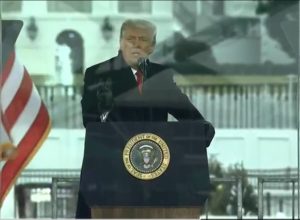
The Senate Must Convict Trump: President Trump addressed supporters near the White House on Jan. 6, shortly before members of the group stormed the U.S. Capitol. (The Washington Post)
Trump addressed supporters near the White House on Jan. 6. (Washington Post photo)

14. 572 Federal Cases Against Capitol Insurrectionists

While Trump has not been charged for his role in the Jan. 6 violence at the Capitol, individual rioters have been. We are including the Capitol cases here because Trump’s role in the insurrection is at the very center of events. Many rioters have claimed that they went to Washington and marched on the Capitol because Trump told them to—and he may well end up being charged for his incitement of the riot.

Congressional Investigations

15. House Ways and Means Committee 

On July 30, the Department of Justice reversed a Bill Barr-era decision, saying that Ways and Means Committee Chairman Richard E. Neal (D-Mass.) had made valid arguments and the IRS must hand over to the committee Trump’s elusive tax returns, two years after Neal’s initial request.

16. House Oversight and Government Reform Committee 

A federal judge this week ruled that Trump’s accountants must turn over two years’ worth of his tax and financial records to the committee investigating whether Trump and his businesses profited from his service in the White House. U.S. District Court Judge Amit Mehta approved a subpoena for Trump’s records covering 2017 and 2018 but turned down most of the panel’s request for similar information dating back to 2011. The decision is likely to be appealed by Trump’s lawyers and could also be challenged by the House panel.

17. House Financial Services and Intelligence Committees

The House Financial Services Committee and the House Intelligence Committee subpoenaed Deutsche Bank in 2019 seeking years of the president’s personal and business records. In a filing on May 17, the parties said they were “continuing to engage in negotiations intended to narrow or resolve their disputes and believe they are close to an agreement.”

18. House Select Committee on the Jan. 6 Attack

Reps. Liz Cheney (R-Wyo.) and Bennie Thompson (D-Miss.)

Democrat House Speaker Nancy Pelosi established the committee after efforts to form a bipartisan commission were rebuffed by Republicans. She appointed seven Democrats and two Republicans: Liz Cheney of Wyoming and Adam Kinzinger of Illinois, both of whom had voted to impeach Trump in January. Cheney has said the committee must focus on Trump’s role in the insurrection: “We must know what happened here at the Capitol. We must also know what happened every minute of that day in the White House—every phone call, every conversation, every meeting leading up to, during, and after the attack.” The committee, led by Rep. Bennie Thompson of Mississippi, held its first public testimony on July 27.

19. Senate Judiciary Committee 

Committee Chairman Dick Durbin (D-Ill.) is focusing on the Trump-era politicization of the Department of Justice, starting with the department’s acquisition of metadata related to some members of the House of Representatives—including Intelligence Committee Chairman Adam Schiff (D-Calif.), who was the chief prosecutor in Trump’s first impeachment. The committee has since expanded its areas of interest to include the department’s role in the obstruction of Special Counsel Robert S. Mueller’s investigation and its role in regard to Trump’s lies about the 2020 presidential election. The committee has taken testimony from former Acting Attorney General Jeff Rosen and Byung J. Pak, the U.S. attorney in Atlanta who abruptly resigned rather than say there was widespread voter fraud in Georgia.

Sexual Assaults

20. E. Jean Carroll Defamation Case

In 2019, journalist E. Jean Carroll wrote about her experience more than 20 years ago; she says Trump shoved her against the wall of a Bergdorf Goodman fitting room, forced himself on her and raped her. Trump accused Carroll of lying saying he didn’t even know her. Carroll disputed his claim with evidence in the form of a picture showing them together and by filing a defamation suit. Carroll’s civil defamation suit became complicated when William P. Barr’s Justice Department stepped in arguing that Trump was protected from being prosecuted for lying under the Federal Tort Claims Act which provides blanket immunity to federal employees who commit certain torts–including defamation–arising out of their official duties. The Justice Department also argued the case should be moved to federal court as it was a federal case as opposed to a state civil suit. In June, Merrick Garland’s Justice Department filed a reply continuing Barr’s arguments that the president is an employee under the act and that elected officials act within the scope of their employment when they respond to media inquiries.

21. Summer Zervos Defamation Suit

Before and after the 2016 presidential campaign, more than 25 women accused Trump of unwanted sexual conduct. Summer Zervos was one of Trump’s accusers. After Trump claimed she was lying, Zervos responded by filing a suit for defamation which was filed on January 17, 2017, three days before Trump took office. The case faced various delays during Trump’s presidency but on March 30, the New York Court of Appeals denied Trump’s ongoing argument that a state court could not hear a suit against a sitting president. In a one-sentence order, the court stated that the issue of Trump’s presidency was moot, and the case can now go forward.

  • Alison Greene is a political investigative journalist with a focus on election integrity and national intelligence issues. Follow her on Twitter @GrassrootsSpeak. Send tips to alisoniazoe@yahoo.com.

GOP takes down 2020 page touting Trump’s ‘historic peace agreement with the Taliban’

GOP takes down 2020 page touting Trump’s ‘historic peace agreement with the Taliban’

One of the few areas of foreign policy President Biden and former President Donald Trump agreed on was ending the two-decade-long war in Afghanistan. With the Taliban’s effective capture of Kabul, Afghanistan’s capital, it appears the war is over two weeks before Biden’s deadline, with a chaotic final rush to the exit. Biden is standing by his decision to pull out U.S. forces and contractors, but the Republican Party appears to be tiptoeing backward from Trump’s role.

The Republican National Committee has removed a page from the 2020 campaign that says “Biden has had a history of pushing for endless wars” while “Trump has continued to take the lead in peace talks as he signed a historic peace agreement with the Taliban in Afghanistan, which would end America’s longest war,” The Washington Post‘s David Weigel noted Sunday.

Trump’s secretary of state, Mike Pompeo, argued Sunday that the Trump administration had insisted the Taliban meet “a set of conditions” before the U.S. withdrew, and that the Biden administration “has failed.” As the Post‘s Paul Kane pointed out, it’s not clear Trump agrees with that.

In researching his new book, Reign of Terror: How the 9/11 Era Destabilized America and Produced Trump, Spencer Ackerman spoke in 2020 with retired Gen. Stanley McChrystal, the former Joint Special Operations Command and Afghanistan War commander, and asked him if the War on Terror had been worth it. “It would be impossible to argue that it was,” McChrystal answered, Ackerman writes at The Daily Beast. “The outcome just hasn’t been positive enough to argue that.”

“I think that we can never know a counterfactual, we can never know what would have happened if we’d gone in and done things differently, so I can’t argue it automatically would have been different,” McChrystal continued. “I think the things that were done with good intentions, mostly. But no. We just made so many fundamental mistakes in how we approached it that the question is, which again, you and I can’t answer: Had we gone in with a different mindset, a totally different approach, which would have been more of a counterinsurgency approach, building through the state, would it have worked? I can’t say it would’ve, but I think it would have been a better approach.”

Earth’s hottest month featured extreme heat, drought and wildfires

Earth’s hottest month featured extreme heat, drought and wildfires


Reproduced from NOAA; Chart: Connor Rothschild/Axios

July was the hottest month on record worldwide, according to the National Oceanic and Atmospheric Administration (NOAA).

Why it matters: When it comes to establishing new climate milestones, the Earth is on a roll, thanks in large part to the burning of fossil fuels for energy, as well as deforestation.

  • The monthly temperature record news dropped in the same week as the dire climate report from the U.N. Intergovernmental Panel on Climate Change.
  • That report makes clear that global warming can no longer be viewed as a problem simply for future generations — its effects are already here.
  • The report was the climate science equivalent of the horror movie trope: “The phone call is coming from inside the house.”

Details: The Northern Hemisphere land-surface temperature was the highest ever recorded for July, at an unprecedented 2.77°F (1.54°C) above average, NOAA found.

  • The month was the hottest month on record for Asia, and second-hottest for Europe.

During July:

  • California saw a spate of wildfires worsen, as did Oregon, Montana and other western states. One of the fires that began in July, known as the Dixie Fire, is now California’s second-largest blaze on record.
  • Brutal heat waves hit Europe and Asia, and vast stretches of Siberia went up in flames, choking population centers with smoke and haze.
  • Turkey set record highs, which helped set the stage for wildfires that broke out in August. Parts of Japan broke temperature records, and Northern Ireland broke its all-time heat record two days in a row.

Yes, but: Climate scientists don’t pay very close attention to individual calendar months, but rather to long-term, 30-year-plus trends. But in both cases, the trend lines are clear: The world is getting warmer, quickly, as greenhouse gas concentrations in the air climb.

  • It is nearly certain that 2021 will rank among the top 10 warmest years on record, most likely at number 6 or 7 on NOAA’s list. That is despite the presence of a La Niña event in the tropical Pacific Ocean that helped keep global average temperatures lower for a time.

What they’re saying: “This new record adds to the disturbing and disruptive path that climate change has set for the globe,” said NOAA administrator Rick Spinrad.

DeSantis’ Collateral Damage? Floridians and Conservatism.

DeSantis’ Collateral Damage? Floridians and Conservatism.

Photo Illustration by Elizabeth Brockway/The Daily Beast/Getty


Just as the GOP abandoned years of conservative dogma to become the party of pornPutin, and protectionism, so too has its respect for local authority—once understood to be a foundational principle—become situational.

Take Florida Gov. Ron DeSantis’ order banning local mask requirements and threatening to withhold the salaries of superintendents and school board members following the CDC’s new Delta variant guidance.

Texas Gov. Greg Abbott has similarly banned local mask mandates, which may be a lot of things but is not conservative.

For a proper explanation of how this flies in the face of conservatism, you only have to go back a few years ago, when then-Wisconsin Rep. Paul Ryan explained that “the [Catholic] principle of subsidiarity, which is really federalism” says the “government closest to the people governs best.” Ryan went on to say that this is how we can “advance the common good”—a term which has since been co-opted by the illiberal right to make the exact opposite argument—“by not having big government crowd out civic society, but by having enough space in our communities so that we can interact with each other, and take care of people who are down and out in our communities.”

Of course Ryan (who was then being heralded by the likes of Sarah Palin and Laura Ingraham) was merely advocating preexisting conservative concepts.

First, there is the “knowledge problem” that economist F.A. Hayek warned about. Central planners, he argued, can’t possibly know everything, and the arrogant assumption that they do is a “fatal conceit.” What is more, by imposing one-size-fits-all solutions, central planners deprive us of diversity and experimentation.

There is an argument that a real free market would simply let individuals decide for themselves whether to wear a mask. But that argument doesn’t translate well when you add in a contagious virus that impacts other individuals, including children—the “live and let live” formulation we apply to other circumstances doesn’t fit when “live and let die” may be the closer analogy.

Florida’s Death Toll Now Exceeds DeSantis’ Margin of Victory

Let’s be honest, the stakes are high. While it is clear that children are less susceptible to COVID than adults, we are seeing numerous reports of kids getting sick and even dying from it. According to The Atlantic, “as the hypertransmissible Delta variant hammers the United States, the greatest hardships are being taken on by the unvaccinated, a population that includes some 50 million children younger than age 12.” It’s too soon to know whether the Delta variant is making kids sicker than other variants, but it’s understandable why some communities want to err on the side of caution.

What we are left with is a prudential public policy decision: what level of government should be making that call?

Second, humans inherently trust their friends and neighbors more than distant bureaucrats. “To be attached to the subdivision, to love the little platoon we belong to in society, is the first principle (the germ as it were) of public affections,” wrote Edmund Burke, who many consider to be the founder of conservatism. “It is the first link in the series by which we proceed towards a love to our country, and to mankind.”

If members of this first link believe wearing masks is the right thing to do to keep their children safe and alive, then who is DeSantis to tell them otherwise? Can someone 500 miles away in Tallahassee realistically decide what’s best for kids and parents in Miami? Why not allow diverse community leaders who live in the community to exercise autonomy and err on the side of safety?

To be sure, automatic deference to local rule runs into problems when that local government is discriminatory, reactionary, xenophobic, oppressive or corrupt. But requiring masks isn’t the same as Jim Crow, no matter what Marjorie Taylor Greene might say. Although there is much hand-wringing about the physical and psychological toll of wearing masks, the potential downside of allowing local authorities to mandate wearing them is discomfort; the potential downside of DeSantis’ order is sickness, an overloaded medical system and needless deaths.

The anti-mask move is just the latest manifestation of DeSantis’ larger, unconservative, worldview. Just this week, a judge ruled that he can’t stop Norwegian Cruise Line Holdings from requiring passengers to be vaccinated. The notion that a political leader would prevent a private business from adopting such a reasonable policy was always at odds with a “no shoes, no shirt, no service” pro-business philosophy. But it was especially ironic for an adherent of a political philosophy that said it was wrong for big government to force a local business owners to bake a cake for a gay wedding.

As Republicans abandon conservative principles—that private businesses can make their own decisions and that a deference to local control is generally prudent—the question may be what lines are left to be crossed. In eschewing localism and conservatism, DeSantis is embracing populism.

DeSantis is a smart politician who’s transparently doing this to advance his own political career. He knows which way the wind is blowing in the GOP and he recognizes that masks have become a culture-war symbol—thus his attempt to double down on his anti-mask, tough-guy image. The only danger is that his bullying nature leaves conservatism, and Floridians, as collateral damage.

Get ready to pay more for tomatoes, as California growers reel from extreme weather

Get ready to pay more for tomatoes, as California growers reel from extreme weather


Tomato sauce is feeling the squeeze and ketchup can’t catch up.

California grows more than 90 percent of Americans’ canned tomatoes and a third of the world’s. Ongoing drought in the state has hurt the planting and harvesting of many summer crops, but water-hungry “processing tomatoes” are caught up in a particularly treacherous swirl (a “tormado”?) of problems that experts say will spur prices to surge far more than they already have.

The drought threatens to imperil some of Americans’ favorite ingredients – pizza sauce, marinara, tomato paste, stewed tomatoes and ketchup all hang in the balance. And this comes not long after a bizarre, and completely unrelated, shortage of pizza sauce and individual ketchup packets during the height of the food-delivery-crazed pandemic.

This also comes on top of already steep increases in the price of fruits and vegetables, which have been rising since the coronavirus pandemic was declared last year.

For tomatoes, higher prices could start taking hold soon if not already, said Wells Fargo’s chief agricultural economist Michael Swanson.

“If you’re a producer or a canner and see these problems coming, why would you not raise prices now in anticipation?” he said, adding that consumers don’t see the price tag for a lot of the processed tomatoes consumed away from home. “It’s embedded in the menu board – but it is one more reason prices at Chipotle and Pizza Hut will go up.”

In a normal year, Aaron Barcellos, a farmer in Firebaugh, Calif., grows 2,200 acres of processing tomatoes. This year he’s decided to drop to 900 acres on his farm, which is on the border of Merced and Fresno counties. He’s left the remaining acres unplanted, choosing to focus all of his precious water on almonds, pistachios and olives grown on trellises – crops that command higher prices and represent already-significant sunken costs.

“We get eight inches of rain in a normal year. Last year we got 4 1/2 inches,” he said. “We got zero percent of our water allocation, which forced us to buy a lot of expensive water, and it doesn’t make sense to put it on tomatoes.”

He said many growers have made the decision to use their limited water on permanent crops – trees and things like grape vines – choosing to forgo planting annuals like tomatoes, onions and garlic, or even letting crops already planted wither in the desert-like conditions.

This year’s shortage of processing tomatoes has been a long time in the making. Farmers already had been planting fewer tomatoes. From 2015 to 2019, fewer countries were importing American tomatoes, partly because the dollar was strong, which made U.S. canned tomato products more expensive. This created an oversupply of California tomatoes, said Rob Neenan, chief executive of the California League of Food Producers.

Processors cut back their orders and farmers grew fewer acres. At the same time, partly because of a trade war, a global shortage of steel sheets used to make cans for food production caused can prices to soar. Major processing plants in Williams, Lemoore and Stockton, Calif., closed, citing higher production expenses, leaving fewer places for growers to sell. Inventory at the beginning of 2020 was low and supplies had tightened up worldwide.

And then the pandemic hit. Cue the tomato hoarding.

Frank Muller, a multigenerational tomato grower and president of M Three Ranches in Woodland, Calif., in Yolo County, euphemistically describes the market last year as “disrupted.”

Early in the pandemic, gallon cans of tomatoes sat unwanted on restaurant distributor shelves, hurting those who sold to the restaurant industry and other food-service sectors – this included caterers, event arenas and corporate cafeterias, all shuttered in the spring of 2020. Meanwhile, retail sales at grocery stores – from 5-ounce cans of paste to 28-ounce cans of diced – went nuts.

“If you were just selling to food service, they didn’t want all those tomatoes last year when restaurants closed. But if you were in retail, you were in hog heaven,” he said, going on to describe the huge uptick in pandemic pizza delivery, which used up all those gallon cans, followed by a ketchup shortage when curbside pickups and food delivery services grabbed all those little packets.

On top of the chaos of the supply problem, there’s still the threat of the coronavirus: Thousands of farmworkers throughout California have gotten sick on the job. Outbreaks still occur, despite robust vaccination pushes.

Muller said there were very few infections among his farmworkers – his tomatoes are mechanically picked. Now he’s also worried about worker shortages.

“We made it through last year, but here we are, and the workforce is still not returning because of enhanced unemployment benefits, and that has affected seasonal processing plants,” Muller said.

All these problems are leading to fewer tomatoes. Processors reined in their estimate of how many tons of tomatoes they would contract for this year, dropping it by more than a million tons, and now even that looks overly hopeful. Muller said this is the first year processors didn’t get all the tomato tonnage they wanted from farmers. “This year will be some of lowest inventory levels that we’ve ever seen,” he said.

Prices were already on the rise. In April, processing tomatoes worldwide were 7% more expensive than during three previous seasons, according to the World Processing Tomato Council. And before this summer’s heat wave struck, the California Tomato Growers Association had negotiated a price on behalf of farmers with the tomato processors that is 5.6% higher than last growing season, because, as Muller says, farmers’ expenses are rising: “Supplies, fuel, drip tape, anything with steel, you name it, it’s going up.”

“Tomato processors have very expensive facilities that can only do one thing. If they don’t want to be out of business, they will have to bid up tomatoes rather than leave facilities idle,” said Swanson, the agricultural economist.

Those price increases are expected to be passed along to the big companies that contract with processors, agricultural experts say. Companies that have deep ties to tomatoes have yet to signal price increases. Kraft Heinz declined to comment about pricing for this story, as did Campbell Soup, which is a grower as well as a processor and uses about 2 billion pounds of tomatoes annually for its iconic soup, V8 beverages and Prego and Pace sauces.

James Sherwood of the Morning Star Company, one of the largest tomato processors, said it’s hard to predict how high prices could go. He said higher prices are not just due to the drought but also increasing costs for fertilizer, labor and natural gas. And next year looks even grimmer.

“We have lower inventories right now and a water crisis,” Sherwood said, “and for next year, there are farmers making decisions about crops based on their allocation of water. The reservoirs are tremendously, historically low right now and that’s concerning.”

But a lot of these business decisions were made before the recent blistering, record heat wave. Fresno County, the top producer of tomatoes, saw a long stretch of triple-digit temperatures. Yolo, Kings, Merced and San Joaquin are the next largest in terms of tomato production, and all five are in the “exceptional drought” category, the highest level on the U.S. drought map. Severe drought conditions have enveloped nearly all of California’s landmass, with the state’s rain and snowfall well below average and its network of reservoirs holding much less water than usual.

Muller said in a typical year he has allocated three or four feet of water for every acre of farmland that needs irrigation. This year he got a smidgen of one foot, just 3.6 inches of water per acre. Much less rain than usual, as well as much less irrigation water than usual, means growers must turn to groundwater, which is more expensive, to save their crops.

“In Yolo County, we have relatively stable groundwater and replenishment of the aquifer. It’s like having money in the bank, so we’re pumping water out of the ground like a withdrawal,” he said. “We’re just keeping our fingers crossed that the water table will maintain itself. That’s caused a whole new level of concern.”

Greg Pruett, chief executive of Ingomar Packing Company in Los Banos, a partnership of four growers, says the situation is going to be significantly worse next year, because while there were reasonable reservoir levels going into this growing season, that will be entirely depleted by growers turning to groundwater.

On Friday, California’s State Water Resources Control Board released an order that would cut farmers off from turning to rivers and streams in the Sacramento and San Joaquin river watersheds, removing yet another source of water in an extreme drought year.

“Growers will have the worst water situation ever by the end of this growing season,” Pruett said. “The cost increases this year – in water, cans, all the other ingredients, labor, transportation – all those things add up to major cost inflation. And that pales in comparison to what’s going to happen next year.”

Bottom line, he says: If the drought continues and the water table dips significantly, many growers may not plant tomatoes next year.

First water cuts in US West supply to hammer Arizona farmers

First water cuts in US West supply to hammer Arizona farmers

CASA GRANDE, Ariz. (AP) — A harvester rumbles through the fields in the early morning light, mowing down rows of corn and chopping up ears, husks and stalks into mulch for feed at a local dairy.

The cows won’t get their salad next year, at least not from this farm. There won’t be enough water to plant the corn crop.

Climate change, drought and high demand are expected to force the first-ever mandatory cuts to a water supply that 40 million people across the American West depend on — the Colorado River. The U.S. Bureau of Reclamation’s projection next week will spare cities and tribes but hit Arizona farmers hard.

They knew this was coming. They have left fields unplanted, laser leveled the land, lined canals, installed drip irrigation, experimented with drought-resistant crops and found other ways to use water more efficiently.

Still, the cutbacks in Colorado River supply next year will be a blow for agriculture in Pinal County, Arizona’s top producer of cotton, barley and livestock. Dairies largely rely on local farms for feed and will have to search farther out for supply, and the local economy will take a hit.

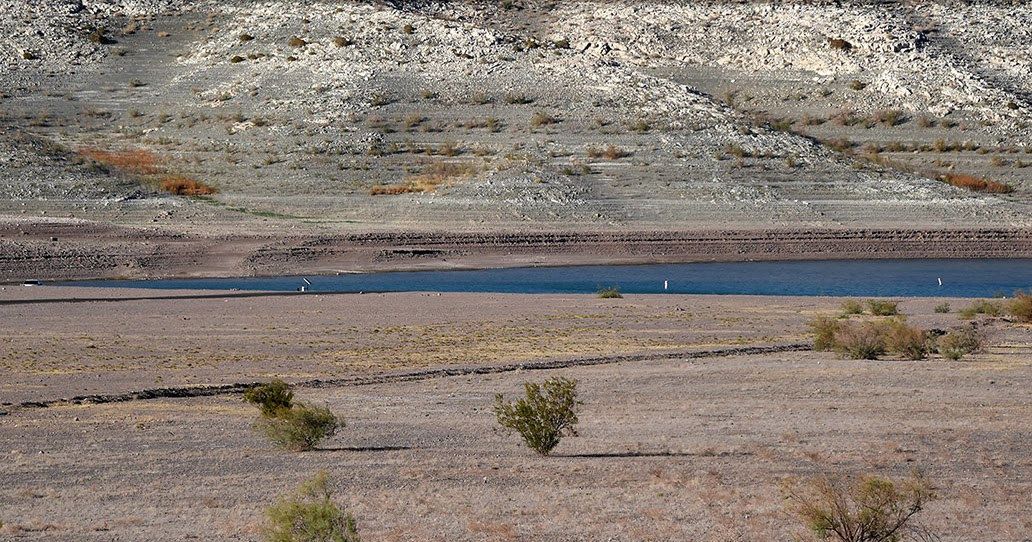
The cuts are coming earlier than expected as a drought has intensified and reservoirs dipped to historic lows across the West. Scientists blame climate change for the warmer, more arid conditions over the past 30 years.


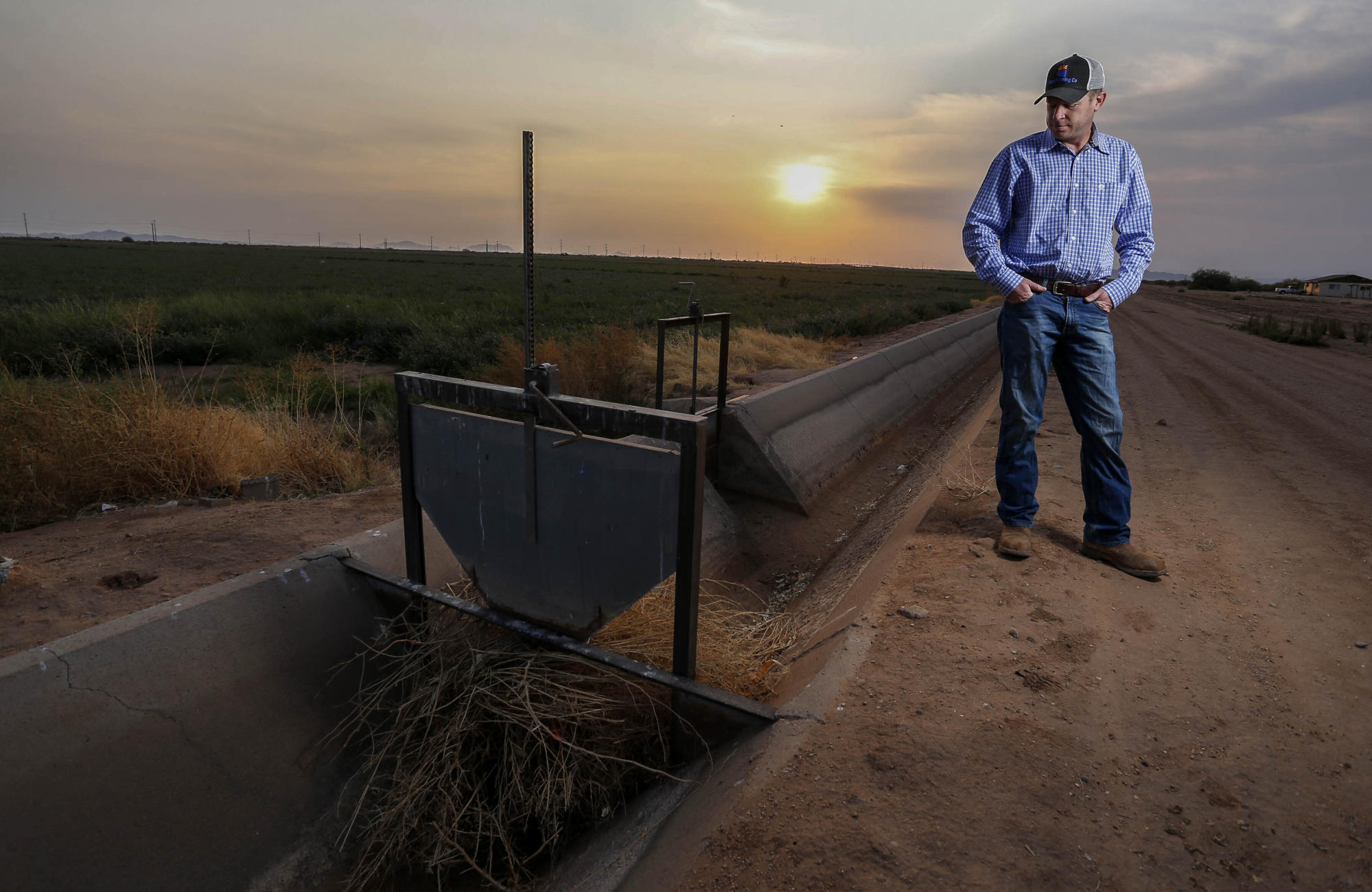
Standing next to a dry field, his boots kicking up dust, farmer Will Thelander said “more and more of the farm is going to look like this next year because we won’t have the water to keep things growing everywhere we want.”

His father, Dan, tried to steer his kids away from farming, not because water would be scarce but because development was expected to swallow farms between Phoenix and Tucson where their family grows alfalfa, corn for cows, and cotton, some destined for overseas markets.

“It was fun just keeping the family business going, working with my dad,” said Thelander, a 34-year-old, fourth-generation farmer whose office is a dusty pickup truck.

Thelander manages almost half of the 6,000 acres his family farms under Tempe Farming Co., much of it devoted to corn for cows. He’s not planning on growing that crop next year, opting for others that will be more profitable on less land.

He didn’t plant anything on 400 acres this year to cut down on water use. Farmers’ Colorado River water comes by way of Lake Mead, which sits on the Arizona-Nevada border and serves as a barometer for water deliveries to Arizona, Nevada, California and Mexico, in the river’s lower basin.

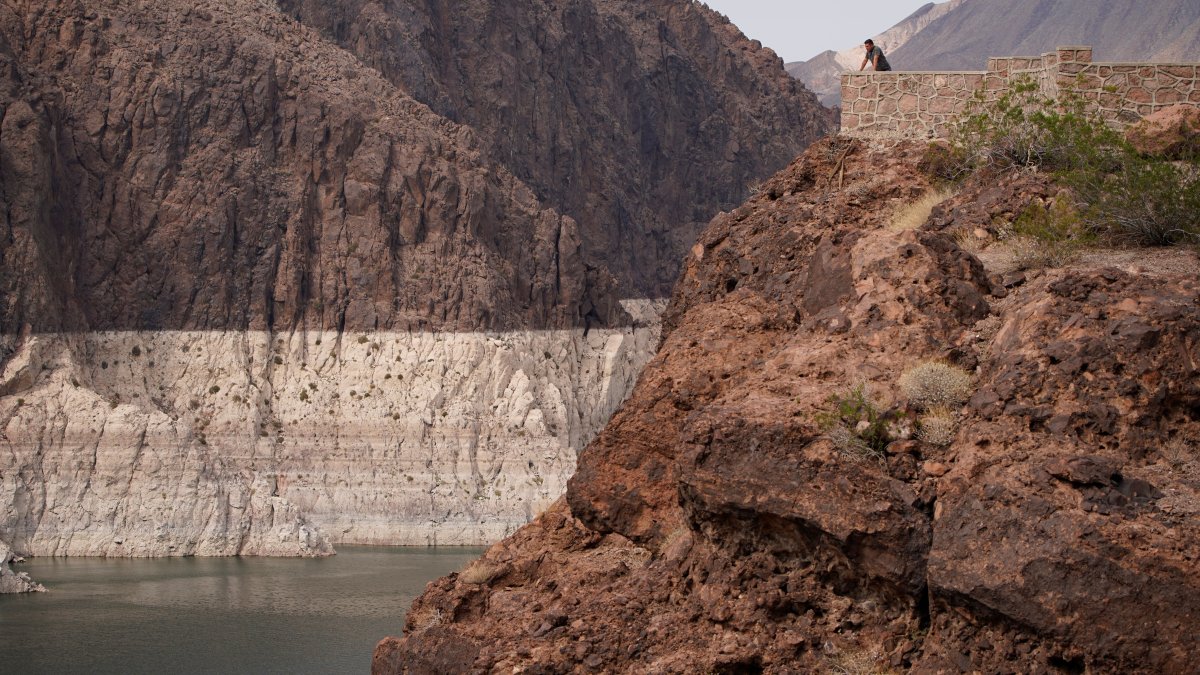
The nation’s largest reservoir already has hit the level that triggers mandatory shortages — 1,075 feet (328 meters) above sea level. The Bureau of Reclamation will issue the official projection for 2022 water deliveries Monday, giving users time to plan for what’s to come.

Arizona is expected to lose 512,000 acre-feet of water, about one-fifth of the state’s Colorado River supply but less than 8% of its total water. Nevada will lose 21,000 acre-feet, and Mexico will lose 80,000 acre-feet. An acre-foot is enough water to supply one to two households a year.

The cuts will be most deeply felt in Arizona, which entered into an agreement in 1968 for junior rights to Colorado River water in exchange for U.S. funding to build a 336-mile (540-kilometer) canal to send the water through the desert to major cities.

Agriculture won’t end in Pinal County, but the cuts to farmers will force more of them to rely on groundwater that’s already overpumped.

Hardly anyone expects a more than 20-year megadrought to improve. Models show the Colorado River will shrink even more in coming years because of climate change, leading to additional cuts that could ultimately affect home taps.

The river carries melted snow from the Rocky Mountains and other tributaries through seven Western states, providing drinking water, nourishment for crops and habitat for plants and animals. Lake Mead and Lake Powell, the river’s two largest reservoirs, are popular for recreation and their dams produce hydropower for the region.

“It’s such a significant river,” said Sarah Porter, director of the Kyl Center for Water Policy at Arizona State University. “It used to be called the Nile of the West, which is almost impossible to believe these days.”

Arizona has positioned itself to weather the cuts by storing water underground and in Lake Mead and through conservation. It’s also trying to secure other water sources. Among the options are importing groundwater to metropolitan Phoenix and Tucson from other parts of the state, leasing more water from tribes, creating a more robust supply of recycled water and desalinating water from the Sea of Cortez in Mexico.

“They all work together,” said Ted Cooke, general manager of the Central Arizona Project, which manages the canal system that carries river water. “Some of them are more near term, some of them are farther away, some of them are more costly than others, but all of those things need to be done.”

Under a drought contingency plan that Western states signed in 2019, some of the water that farmers will lose will be replaced by other sources next year. Arizona, the Central Arizona Project, environmental groups and others have kicked in millions of dollars to soften the blow to farmers and improve groundwater infrastructure.

The Maricopa-Stanfield Irrigation and Drainage District, where Thelander farms, plans to have nine wells complete by year’s end.

District President Bryan Hartman said it won’t pump anywhere near what it used to and will be looking for other sources, likely turning to cities and tribes with higher priority water rights.

The next few months will be critical to planning for a future with less water.

“Growers will be asking, ‘How much water are we going to get, how many acre-feet, what are the flows going to be,’ and that will determine the cropping pattern,” said Hartman, himself a farmer.

Paul “Paco” Ollerton, 66, who largely grows feed for animals, will plant 25% to 35% less land next year.

He thought he was done with farming back in 2005 when he sold his land, partly because he knew water would be hard to get.

“I just finally woke up one day and thought, the secretary of the Interior one day is going to say, ‘It’s more important for you to flush your toilet and have water to brush your teeth with than farm,’” Ollerton said.

Too young to retire, he leased back the land and has farmed across Pinal County.

One of his farms along a stretch of interstate leading to San Diego uses drip irrigation that makes water use more efficient and crops more productive, he said. Making the rounds in his cotton fields, he flushes the system’s valves with Aggie, a yellow lab who rides in the backseat of his pickup truck.

His two children talk about being farmers, but he doesn’t promote the long hours or uncertainty. Three generations of farming likely ends with him.

For Thelander, he’s considered getting out of farming and starting a trucking business. But he also sees hope in guayule, a drought-resistant shrub that could be used in the production of rubber. His family’s farm is participating in research for a tire manufacturer to see if it can be used on a large scale.

“This is my Hail Mary, trying to save farming for myself,” Thelander said.

96,000 Fish Die in Chlorine Leak at Norwegian Fish Farm

96,000 Fish Die in Chlorine Leak at Norwegian Fish Farm

Olivia Rosane                        August 12, 2021

​A fish farm in Norway.
A fish farm in Norway. franckreporter / Getty Images


Nearly 100,000 fish have died after one of the world’s largest salmon farming companies released 4,000 gallons of chlorine into a Norwegian fjord on Tuesday.

Grieg Seafood, which is headquartered in Norway, said that the leak occurred in one of their fish slaughterhouses in the town of Alta in the Norwegian Arctic, as The Independent reported.

“This is very sad,” harvesting plant manager Stine Torheim said in a statement. “Our focus is now first and foremost on cleaning up. We will get all facts about this incident on the table, to ensure that it will not happen again.”

The company said that the leak did not harm any employees or other people. Further, police spokesperson Stein Hugo Jorergensen told Norwegian broadcaster NRK that no toxic chlorine gas had been released on land, according to The Independent. However, the leak did kill 96,000 fish in holding pens at the time.

In addition to contaminating the fjord, the chlorine also flowed into the Atlantic Ocean, Norwegian police said on Twitter, as The Independent reported.

“The emergency services are working on site to get an overview of the incident,” the police said.

The company said it did not yet know how the leak might impact the environment of the fjord, but had contracted an assessment from Akvaplan Niva. In general, chlorine tends to dilute and break down rapidly once it enters water.

“According to what we know today, the leak had a short-term, acute impact on organisms that were in the water around the harvesting plant when the incident occurred,” the company said. “The environmental assessment, which is expected to take a few days, will provide a full answer.”

The company uses chlorine in its day-to-day operations to disinfect the water used for processing at the plant. It said that it would cooperate with authorities as they investigate the cause of the leak. In the meantime, it is conducting a cleanup of the pens, removing dead fish. It said it expected the process to take a few days.

Grieg Seafood provides more than 25,000 tons of salmon to North America and Asia every year, according to CBS News. Approximately 430 tons were lost in the leak, the company said, which Norwegian media company Intrafish estimated to be worth around $3.4 million, CBS News reported. Grieg Seafood said that, while the financial consequences of the incident were still unclear, the fish had been insured.

China cities declare ‘red alerts’ as flood death toll hits 21

Reuters

China cities declare ‘red alerts’ as flood death toll hits 21

China regularly experiences flooding during its wet summer months, but authorities have warned that extreme weather is now becoming more frequent as a result of climate change.

Source: Reuters        August 13, 2021

NBC News Video:    blob:https://www.nbcnews.com/45cb5e0c-882a-401e-a6e1-06a99cb7529e


The deaths were recorded in the township of Liulin, part of the city of Suizhou in the north of the province. More than 2,700 houses and shops suffered flood damage and power, transportation and communications were also disrupted, the official Xinhua news agency reported.

Rescue crews have been dispatched to the worst affected areas, including the cities of Suizhou, Xiangyang and Xiaogan, China’s Ministry of Emergency Management said. The city of Yicheng also saw a record 400 millimeters of rain on Thursday.

According to the official China News Service, as many as 774 reservoirs in Hubei had exceeded their flood warning levels by Thursday evening.

Extreme weather in the province has caused widespread power cuts and has damaged more than 3,600 houses and 8,110 hectares of crops. Total losses were estimated at 108 million yuan ($16.67 million), the official China Daily said on Friday, citing the province’s emergency management bureau.

China regularly experiences flooding during its wet summer months, but authorities have warned that extreme weather is now becoming more frequent as a result of climate change.

Watch: Stranded flood victims in Zhengzhou, China, rescued by rafts and heavy machinery

July 22, 2021

Around 80,000 were evacuated in the southwestern province of Sichuan last weekend and record rainfall in Henan last month caused floods that killed more than 300 people.


The China Meteorological Administration warned that heavy rainstorms were likely to continue until next week, with regions along the Yangtze river vulnerable to flooding.

State weather forecasters also issued a geological disaster warning late on Thursday, saying areas at risk include the central provinces of Hubei, Hunan, Henan and Anhui, Chongqing, Sichuan and Guizhou in the southwest as well as Zhejiang on the eastern coast.

China’s Port Shutdown Raises Fears of Closures Worldwide

China’s Port Shutdown Raises Fears of Closures Worldwide


China’s Port Shutdown Raises Fears of Closures Worldwide


(Bloomberg) — Supply Lines is a daily newsletter that tracks trade and supply chains disrupted by the pandemic. Sign up here.

A Covid outbreak that has partially shut one of the world’s busiest container ports is heightening concerns that the rapid spread of the delta variant will lead to a repeat of last year’s shipping nightmares.

The Port of Los Angeles, which saw its volumes dip because of a June Covid outbreak at the Yantian port in China, is bracing for another potential decline because of the latest shutdown at the Ningbo-Zhoushan port in China, a spokesman said. Anton Posner, chief executive officer of supply-chain management company Mercury Resources, said that many companies chartering ships are already adding Covid contract clauses as insurance so they won’t have to pay for stranded ships.

Read More: China Partly Shuts World’s Third-Busiest Port, Risking Trade

It seemed as if things were just starting to calm down, “and we’re now into delta delays,” Emmanouil Xidias, partner at Ifchor North America LLC, said in a phone interview. “You’re going to have a secondary hit.”

The shutdown at Ningbo-Zhoushan is raising fears that ports around the world will soon face the same kind of outbreaks and Covid restrictions that slowed the flows of everything from perishable food to electronics last year as the pandemic took hold. Infections are threatening to spread at docks just as the world’s shipping system is already struggling to handle unprecedented demand with economies reopening and manufacturing picking up.

Ningbo-Zhoushan Port said in a statement late Thursday that all other terminals aside from Meishan have been operating normally. The port is actively negotiating with shipping companies, directing them to other terminals, and releasing information on a real-time data platform, it said.

To minimize the impact, it’s also adjusting the operating time of other terminals to make sure clients can clear their shipments. A spokesman for the port said there were no further updates when contacted Friday.

Company Reactions

Some ships that docked at the Meishan terminal before the closure are suspending cargo operations until the terminal re-opens, according to a notice sent by shipping line CMA CGM SA to shippers.

Other vessels which usually call at the Meishan terminal will stop at the Beilun terminal instead, according to a statement Thursday from A.P. Moller-Maersk A/S. One of the company’s ships will skip Ningbo next week, it said.

“We are working on contingency plans in order to mitigate the likely impact on our vessel schedules and cargo operations,” Orient Overseas Container Line, a subsidiary of Orient Overseas International Ltd. container subsidiary said via email.

Ningbo city is still considered a low risk virus area, according to the city’s health commission, although flights to and from the capital Beijing have been canceled.

Authorities in Ningbo said the port worker was fully vaccinated with an inactivated vaccine and had the second dose on March 17. The worker was asymptomatic as of Thursday afternoon. He was infected with the delta strain, genetic sequencing showed, and epidemiological investigation shows the worker had come into close contact with sailors of foreign cargo ships.

The Baltic Dry Index that serves as a global benchmark for bulk shipping prices is up more than 10% since a month ago as the delta variant began to spread rapidly. While there haven’t been significant effects on U.S. ports, the problems in China could hurt companies that rely on container exports from the nation.

Container prices also have soared, with the benchmark cost of shipping a container from Shanghai to Los Angeles up more than 220% over the past year to $10,322 this week.

Covid may have begun with Chinese scientist collecting bat samples, says WHO investigator

Covid may have begun with Chinese scientist collecting bat samples, says WHO investigator

Field workers from the Wuhan Institute of Virology hunt for bats  - Chinese Academy of Sciences
Field workers from the Wuhan Institute of Virology hunt for bats – Chinese Academy of Sciences


A Chinese scientist may have started the pandemic after being infected with coronavirus while collecting bat samples, the head of the World Health Organization’s investigation has said.

In a documentary released this week by the Danish television channel TV2, Dr Peter Embarek said it was a “likely hypothesis” that a lab employee could have picked up the virus while working in the field.

Scientists from the Wuhan Institute of Virology were known to be working on bat coronavirus at labs in the city, but China has been uncooperative in providing details of their research.

Dr Embarek said WHO investigators were forced to conclude that a lab leak was “extremely unlikely” in their official report to avoid further arguments with the Chinese.

He said the team had come to an “impasse” with China, which would only allow a lab leak scenario to be included in the report if there were no recommendations to look further.

“My counterpart agreed we could mention (the lab leak scenario) in the report under the condition that we wouldn’t recommend specific studies of that hypothesis. We would just leave it there.”

Asked whether the Chinese would have agreed to the report without the scenario being labelled “extremely unlikely”, Dr Embarek said: “That would have probably demanded further discussion and arguments for and against I didn’t think it was worth it.”

However, Dr Embarek said it was possible that a lab employee may have been infected in the field.

“We consider that hypothesis a likely one,” he added.

Chinese pressure

Pressure is growing on China to release documentation of work at laboratories in Wuhan and allow a thorough investigation.

A report into the lab leak scenario, which was commissioned by Joe Biden, is expected to report at the end of August, and last month the WHO called for an in-depth audit, a request that the Chinese had rejected.

Sir Iain Duncan Smith, co-chairman of the Inter-Parliamentary Alliance on China, said the international community urgently needed to identify how the virus outbreak erupted.

“There’s no question now that this process needs to be undertaken by the WHO. They need to come clean, as China needs to come clean, about the origins of the virus,” he said.

‘Arrogant refusal to accept the origins of the virus’

Sir Iain said millions of people had lost their lives on account of the “terrible and arrogant refusal to accept that the origins of the virus” may be linked to the Wuhan lab.

Dr Embarek, pictured below, also told the documentary team that he was concerned about a second lab, the Wuhan Centre for Disease Control and Prevention (CDC), which had moved premises to just a third of a mile from the Wuhan wet market where the outbreak first emerged.

Peter Ben Embarek - Hector Retamal/AFP
Peter Ben Embarek – Hector Retamal/AFP


“There are other labs in Wuhan that are interesting, such as CDC, which also worked with bats,” he said.

“What is more concerning to me is the other lab that is next to the market, because they were also handling coronaviruses, without potentially having the same level of expertise or safety …

“When we were being shown around I thought it all looked new. I asked how old the lab was and they said, ‘We moved on 2 December’.

“That’s when it all started. We know that when you move a lab it disturbs all the procedures. You have to move the virus collection and the samples. That’s why that period of time and that lab are interesting.”

Lab leak theory persists

Experts in Britain said it was “plausible” that a lab employee could have brought the virus back to Wuhan, which would also fit with genetic studies showing it had jumped from an animal.

Dr Jonathan Stoye, group leader of the Retrovirus-Host Interactions Laboratory at The Francis Crick Institute, said: “It sounds entirely plausible to me

“My feeling when I read the original WHO report was there was no grounds for calling it extremely unlikely so it was always slightly strange.

“I have been saying for a while that this isn’t solved, the lab link is still there and we need to know more. The question is how we go about getting more.

“To my mind, there is no evidence of manipulation of the virus, but we know these investigators have been collecting bat samples, so they could have carried something back.”

Genetic studies support both a lab leak scenario and a wild infection

Ravi Gupta, professor of microbiology at the University of Cambridge, said that current genetic studies supported both a lab leak scenario and a wild infection

“The genetics are consistent with the lab leak/field work infection scenario described by the WHO mission lead, and also consistent with infection from the wild in general by a non-lab worker,” he said.

However, other researchers said the comments did little to move the investigation forward.

“There are many possible ways the virus was transmitted to humans,” said Prof David Robertson, head of viral genomics and bioinformatics at the University of Glasgow,

“Peter was just referring to something that was possible. As we’ve no evidence for this, or any link to a lab-leak, it remains just speculation.”