In Arizona, worry about access to Colorado River water

Associated Press

In Arizona, worry about access to Colorado River water

Tony Davis – September 13, 2022

FILE - Utah State University master's student Barrett Friesen steers a boat near Glen Canyon dam on Lake Powell on June 7, 2022, in Page, Ariz. In Arizona, water officials are concerned, though not panicking, about getting water in the future from the Colorado River as its levels decline and the federal government talks about the need for states in the Colorado River Basin to reduce use. (AP Photo/Brittany Peterson, File)
Utah State University master’s student Barrett Friesen steers a boat near Glen Canyon dam on Lake Powell on June 7, 2022, in Page, Ariz. In Arizona, water officials are concerned, though not panicking, about getting water in the future from the Colorado River as its levels decline and the federal government talks about the need for states in the Colorado River Basin to reduce use. (AP Photo/Brittany Peterson, File)
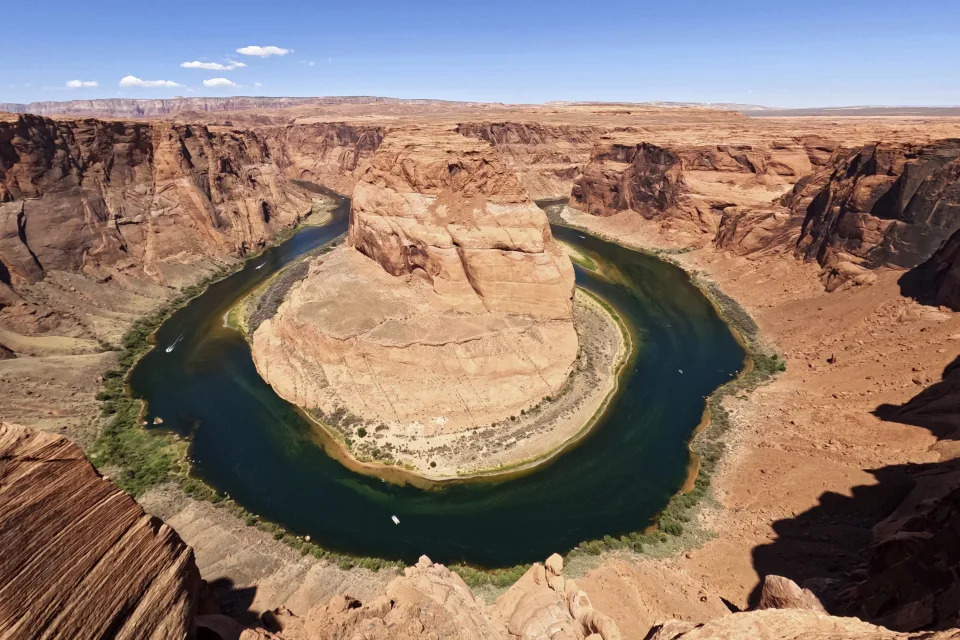
FILE - The Colorado River flows at Horseshoe Bend in Glen Canyon National Recreation Area, Wednesday, June 8, 2022, in Page, Ariz. In Arizona, water officials are concerned, though not panicking, about getting water in the future from the Colorado River as its levels decline and the federal government talks about the need for states in the Colorado River Basin to reduce use. (AP Photo/Brittany Peterson, File)
 The Colorado River flows at Horseshoe Bend in Glen Canyon National Recreation Area, Wednesday, June 8, 2022, in Page, Ariz. In Arizona, water officials are concerned, though not panicking, about getting water in the future from the Colorado River as its levels decline and the federal government talks about the need for states in the Colorado River Basin to reduce use. (AP Photo/Brittany Peterson, File)
FILE - Water from the Colorado River diverted through the Central Arizona Project fills an irrigation canal, Aug. 18, 2022, in Maricopa, Ariz. In Arizona, water officials are concerned, though not panicking, about getting water in the future from the Colorado River as its levels decline and the federal government talks about the need for states in the Colorado River Basin to reduce use. (AP Photo/Matt York, File)
 Water from the Colorado River diverted through the Central Arizona Project fills an irrigation canal, Aug. 18, 2022, in Maricopa, Ariz. In Arizona, water officials are concerned, though not panicking, about getting water in the future from the Colorado River as its levels decline and the federal government talks about the need for states in the Colorado River Basin to reduce use. (AP Photo/Matt York, File)
FILE - New home construction encroaches dormant fields owned by Kelly Anderson, left, Aug. 18, 2022, in Maricopa, Ariz. Anderson grows specialty crops for the flower industry and leases land to alfalfa farmers whose crops feed cattle at nearby dairy farms. (AP Photo/Matt York, File)
New home construction encroaches dormant fields owned by Kelly Anderson, left, Aug. 18, 2022, in Maricopa, Ariz. Anderson grows specialty crops for the flower industry and leases land to alfalfa farmers whose crops feed cattle at nearby dairy farms. (AP Photo/Matt York, File)
FILE - Boats move along Lake Powell along the Upper Colorado River Basin, June 9, 2021, in Wahweap, Ariz. In Arizona, water officials are concerned, though not panicking, about getting water in the future from the Colorado River as its levels decline and the federal government talks about the need for states in the Colorado River Basin to reduce use. (AP Photo/Ross D. Franklin, File)
Boats move along Lake Powell along the Upper Colorado River Basin, June 9, 2021, in Wahweap, Ariz. In Arizona, water officials are concerned, though not panicking, about getting water in the future from the Colorado River as its levels decline and the federal government talks about the need for states in the Colorado River Basin to reduce use. (AP Photo/Ross D. Franklin, File)
FILE - Tourists carry a kayak up a sandy hill Tuesday, June 7, 2022, in Page, Ariz. As Lake Powell levels drop, recreation is becoming tougher to access as boat ramps and marinas close. (AP Photo/Brittany Peterson, File)
 Tourists carry a kayak up a sandy hill Tuesday, June 7, 2022, in Page, Ariz. As Lake Powell levels drop, recreation is becoming tougher to access as boat ramps and marinas close. (AP Photo/Brittany Peterson, File)

TUCSON, Ariz. (AP) — Robbie Woodhouse’s grandfather began nearly a century of family farming along the Gila River near Yuma in the middle 1920s when he dug up a bunch of mesquite stumps on his land to make way for his barley, wheat, Bermuda seed, cotton and melon fields.

Farming never really took off at the Woodhouse homestead until 1954, when the federal government finished a 75-mile-long concrete canal to bring Colorado River water to what’s now known as the Wellton-Mohawk Irrigation and Drainage District, which covers about 58,500 acres along the Gila River east of the Colorado.

Today, Woodhouse presides over the governing board of a district with more than 120 individual growers, partnerships, trusts and other operating entities growing about 100 different crops, including seed crops as well as staples like wheat, cotton, lettuce and other produce. Wellton-Mohawk is one of six agricultural districts in the Yuma area that together grow 90% of the cauliflower, lettuce, broccoli and other winter vegetables sold in the U.S.

But now, the future of this district, of farming in the Yuma area in general and of Arizona’s second largest drinking water supply for urban residents are all mired in a sea of uncertainty. Due to a logjam in interstate negotiations for massive cuts in Colorado River water deliveries, farmers and urban users have no idea how much water use they’ll be ordered to cut, possibly starting next year.

All the Yuma area irrigation districts depend entirely on Colorado River water to nourish their crops. While groundwater does lie beneath many of the farm fields, its quality is uncertain or poor in many places.

“Obviously we’re very, very concerned,” said Woodhouse, whose 1,250 acres grow mostly produce, such as cauliflower, broccoli and lettuce. “Without the water, we don’t grow anything. But I wouldn’t say we are scared. We do feel an obligation to do our part.”

___

EDITOR’S NOTE: This is part of a collaborative series on the Colorado River as the 100th anniversary of the historic Colorado River Compact approaches. The Associated Press, The Colorado Sun, The Albuquerque Journal, The Salt Lake Tribune, The Arizona Daily Star and The Nevada Independent are working together to explore the pressures on the river in 2022.

___

Water officials of Arizona cities of Tucson, Goodyear and Scottsdale are also concerned and a little on edge although they’re not panicking. They are the most dependent of Arizona cities on river water delivered through the Central Arizona Project, a $4 billion, 336-mile-long canal system running from the river to the Phoenix and Tucson areas.

While all these cities have backup supplies, led by groundwater, to cushion them in the short- to medium-term in the event of river water cuts, their long-term picture is more uncertain because the CAP was extended into Arizona nearly 40 years ago precisely to get them off groundwater.

Arizona got about 36% of its total water supply from the river as recently as 2020. That share of river water feeding farms and cities has declined some since then, with the advent of a federally approved Drought Contingency Plan that will cut the state’s river water use by 21% starting in 2023. It’s expected to drop even further in the coming years but nobody knows how much right now.

The uncertainty was triggered first in June, when Reclamation Commissioner Camille Touton testified at a U.S. Senate Committee hearing that to stabilize the river’s declining reservoirs Lakes Mead and Powell, the basin states need to cut their water use by roughly up to 30% starting in 2023, and come up with a plan to do that by mid-August. If a plan doesn’t appear by then, she warned the federal government would impose its own, to “protect the system.”

But mid-August came and went with no agreement and no plan or timetable for a plan from the bureau. The bureau did say at an Aug. 16 news conference, however, that it was going to look closely at several measures such as modifying the Hoover and Glen Canyon dams so they can keep delivering water at lower elevations and counting evaporation of water from Lake Mead and the river against the Lower Basin’s total water supply, thereby reducing that supply by hundreds of thousands of acre-feet a year.

So now, Wellton Mohawk and the other irrigation districts are pushing a plan to cut one acre-foot of water used per acre annually, on 925,000 acres along the Lower Colorado River in Arizona and California. In return, they’re seeking $1,500 an acre-foot in compensation, or a total of $1.387 billion annually.

With that money, they’ll invest in water-efficient farming tools like drip irrigation, gradually switch to less thirsty crops from water-slurping alfalfa and weather economic losses from reduced water use, Woodhouse said.

“What we want to have happen is for each individual farmer to operate their farms in the matter that they want to operate and plant the crops that they feel they can maintain the fertility of their soils,” he said. “I’m sure it’s going to greatly change crop rotations and also change management practices of individual farmers, to exist on less water. It’s real important that those decisions be left to each individual farm.”

This proposal has been roundly criticized by urban water leaders, however. While saying farms must take the biggest water use curbs because they use 72% of Arizona’s water and close to 80% basin-wide, Central Arizona Project officials say the farmers’ price tag is unrealistically high and that whatever money is paid should be used strictly to modernize irrigation practices for the long term.

“Anytime anyone wants to sit down with us and talk about it, we’re more than willing to do so. But no one has been willing to discuss it,” countered Wade Noble, an attorney representing the Yuma-area irrigation districts. “Until we get to that point, our voluntary forbearance of a significant amount of the water we control will remain on the terms we put on the table. We’re not going to negotiate with ourselves.”

Where both Arizona farms and cities agree is that the other river basin states and the federal government haven’t moved fast enough to reduce water use.

“Reclamation has got to show some leadership and say this has got to be done and give us a guide map as to how the system is protected as the commissioner promised what it would be,” Noble said.

The CAP’s board president Terry Goddard and its previous president Lisa Atkins wrote a letter on Aug. 19 to Interior Secretary that made essentially the same point. To date, no written response from Interior has been forthcoming.

With no action forthcoming on a deal, some Arizona water users have pulled back on past commitments to leave water in Lake Mead to prop it up. The Tucson City Council, for instance, had pledged earlier this year to leave 30,000 acre-feet in the lake in 2022 and 2023 but has since backed off that pledge and voted to order its full allocation of 144,191 acre-feet for 2023 pending the negotiations’ outcome. The Gila River Indian Community withdrew an even larger commitment, to leave nearly 130,000 acre-feet in Mead next year. The CAP is holding onto 35,000 acre-feet it was going to leave in Mead and announced plans to remove another 18,000 acre-feet from the lake next year.

“Unfortunately, the community has been shocked and disappointed to see the complete lack of progress in reaching the kind of cooperative basin-wide plan necessary to save the Colorado River system,” said Gila River Indian Community Chairman Stephen Roe Lewis.

Until now, it’s left almost 600,000 other acre-feet of its CAP supply in Mead since 2016. In 2022 alone, CAP users and other Arizona Colorado River users left nearly 800,000 acre-feet in Mead, led by 512,000 acre-feet it legally had to leave there under the terms of the 2019 Drought Contingency Plan due to the lake’s falling levels. Arizona and California left another 268,000 acre-feet in the lake this year from what’s called the “500 Plus Plan,” which had sought a half-million acre-feet in voluntary contributions to the lake, but projections for next year show more water will be removed from the lake under that plan than will be left in it.

Many Arizona cities using river water are preparing for the inevitability they’ll have to use less. In Goodyear, in the Phoenix area’s West Valley, whose population is about 101,000, the city has recharged about half of its annual CAP supplies into the ground for several years. It’s also been recharging treated sewage effluent into the ground, and has stored a total of seven years’ supply of both sources. It anticipates no short-term problems in delivering water to customers, said Ray Diaz, Goodyear’s water resources and sustainability manager.

Colorado River shortfalls aren’t going to affect what the city does now but could in the future.

“What would happen if we were shorted and had to continue our approved development?” said Diaz. “It’s something we would have to look into and really assess what we could afford for the future — how much water we can provide.”

In Scottsdale in the Phoenix area’s East Valley, CAP supplies about 70% of the water for its 250,000 residents. Most is delivered directly to homes and businesses rather than recharged. If the city had to sustain a large cut in CAP supplies, it would have to rely much more heavily on groundwater, said Gretchen Baumgardner, the city’s water policy manager.

It has stored about 230,000 acre-feet of CAP water and treated sewage effluent in the ground — about 2.5 years worth of its current supply — but town officials don’t want to use it all at once, Baumgardner said. It also gets about 15% of its supply from Salt and Verde River surface supplies, delivered by the quasi-public utility the Salt River Project.

“There will be a larger portion of groundwater” used in the future, said Baumgardner, adding that city officials won’t know how much until they learn how drastic the cuts in CAP deliveries will be.

The city is also looking to extend its supply further. Its wastewater treatment plant in North Scottsdale operates a pilot project to treat a small amount of effluent to exceed state drinking water standards, a process called “direct potable reuse.” The city is working with the State Department of Environmental Quality to help set up new state regulations that would allow the plant to reuse its wastewater for drinking on a larger scale.

But when asked if a “Day Zero” could ever arrive in which Scottsdale failed to meet all residents’ demands for water, Baumgardner replied, “It’s just one of those uncertainties right now. That will really be hard to answer,” in part because of a pending effort by federal officials to overhaul its guidelines for operating its reservoirs — an effort that won’t be finished until 2026.

In Tucson, officials of the Tucson Water utility are more optimistic about their ability to survive major CAP cuts. The utility about 40 years ago signed up to take almost a third more CAP water than it needs today to serve the 735,610 customers living inside and outside city limits. That’s allowed it to store nearly five and a half years worth of CAP in large, recharge basins — water that can be pumped when needed during CAP shortages later. The utility also has access to a huge aquifer lying under a large expanse of former farmland northwest of the city that it bought and retired in the 1970s. It also is regularly recharging and storing underground large amounts of partially treated effluent that can be pumped later for drinking.

But there is one cautionary note. A recent Bureau of Reclamation study found that as the Southwest’s climate warms up, runoff of melting snows into rivers and washes surrounding the city is likely to decline, meaning less water will be replenishing its aquifer than in the past. That would increase the possibility that groundwater pumping in place of CAP water use could put increased pressure on the aquifer, triggering higher pumping costs and more likelihood of subsidence in which the ground collapses, possibly triggering fissures.

Ultimately, the story of CAP water in Arizona is a story about groundwater, added Kathryn Sorensen, a researcher for Arizona State University’s Kyl Center for Water Policy. When there’s less Colorado River water delivered to Arizona, the cities, farms and other users fall back on groundwater, she said.

“We are very blessed to have plentiful aquifers in central Arizona we can fall back on,” Sorensen said while noting they are fossil aquifers, meaning water entered them thousands of years ago and they are not easily replaced.

“If we pump them and are unable to replenish the pumping, the aquifers will pay the price,” she said.


Visa, Mastercard, AmEx to start categorizing gun shop sales

Associated Press

Visa, Mastercard, AmEx to start categorizing gun shop sales

Ken Sweet- September 10, 2022

FILE – Visa credit cards are seen on Aug. 11, 2019, in New Orleans. Payment processor Visa Inc. said late Saturday, Sept. 10, 2022, that it plans to start separately categorizing sales at gun shops. (AP Photo/Jenny Kane, File) (ASSOCIATED PRESS)

NEW YORK (AP) — Payment processor Visa Inc. said Saturday that it plans to start separately categorizing sales at gun shops, a major win for gun control advocates who say it will help better track suspicious surges of gun sales that could be a prelude to a mass shooting.

But the decision by Visa, the world’s largest payment processor, will likely provoke the ire of gun rights advocates and gun lobbyists, who have argued that categorizing gun sales would unfairly flag an industry when most sales do not lead to mass shootings. It joins Mastercard and American Express, which also said they plan to move forward with categorizing gun shop sales.

Visa said it would adopt the International Organization for Standardization’s new merchant code for gun sales, which was announced on Friday. Until Friday, gun store sales were considered “general merchandise.”

“Following ISO’s decision to establish a new merchant category code, Visa will proceed with next steps, while ensuring we protect all legal commerce on the Visa network in accordance with our long-standing rules,” the payment processor said in a statement.

Visa’s adoption is significant as the largest payment network, and with Mastercard and AmeEx, will likely put pressure on the banks as the card issuers to adopt the standard as well. Visa acts as a middleman between merchants and banks, and it will be up to banks to decide whether they will allow sales at gun stores to happen on their issued cards.

Gun control advocates had gained significant wins on this front in recent weeks. New York City officials and pension funds had pressured the ISO and banks to adopt this code.

Two of the country’s largest public pension funds, in California and New York, have been pressing the country’s largest credit card firms to establish sales codes specifically for firearm-related sales that could flag suspicious purchases or more easily trace how guns and ammunition are sold.

Merchant category codes now exist for almost every kind of purchase, including those made at supermarkets, clothing stores, coffee shops and many other retailers.

“When you buy an airline ticket or pay for your groceries, your credit card company has a special code for those retailers. It’s just common sense that we have the same policies in place for gun and ammunition stores,” said New York City Mayor Eric Adams, a former police captain who blames the proliferation of guns for his city’s deadly violence.

The city’s comptroller, Brad Lander, said it made moral and financial sense as a tool to push back against gun violence.

“Unfortunately, the credit card companies have failed to support this simple, practical, potentially lifesaving tool. The time has come for them to do so,” Lander said recently, before Visa and others had adopted the move.

Lander is a trustee of the New York City Employees’ Retirement System, Teachers’ Retirement System and Board of Education Retirement System — which together own 667,200 shares in American Express valued at approximately $92.49 million; 1.1 million shares in MasterCard valued at approximately $347.59 million; and 1.85 million shares in Visa valued at approximately $363.86 million.

The pension funds and gun control advocates argue that creating a merchant category code for standalone firearm and ammunition stores could aid in the battle against gun violence. A week before the mass shooting at the Pulse Nightclub in Orlando, Florida, where 49 people died after a shooter opened fire in 2016, the assailant used credit cards to buy more than $26,000 worth of guns and ammunition, including purchases at a stand-alone gun retailer.

Gun rights advocates argue that tracking sales at gun stores would unfairly target legal gun purchases, since merchant codes just track the type of merchant where the credit or debit card is used, not the actual items purchased. A sale of a gun safe, worth thousands of dollars and an item considered part of responsible gun ownership, could be seen as a just a large purchase at a gun shop.

“The (industry’s) decision to create a firearm specific code is nothing more than a capitulation to anti-gun politicians and activists bent on eroding the rights of law-abiding Americans one transaction at a time,” said Lars Dalseide, a spokesman for the National Rifle Association.

Over the years, public pension funds have used their extensive investment portfolios to influence public policy and the market place.

The California teacher’s fund, the second largest pension fund in the country, has long taken aim on the gun industry. It has divested its holdings from gun manufacturers and has sought to persuade some retailers from selling guns.

Four years ago, the teacher’s fund made guns a key initiative. It called for background checks and called on retailers “monitor irregularities at the point of sale, to record all firearm sales, to audit firearms inventory on a regular basis, and to proactively assist law enforcement.”

The Olive Oil Capital of the World, Parched

The New York Times

The Olive Oil Capital of the World, Parched

David Segal and José Bautista – September 10, 2022

A variety of olive oils at a shop in the town of Úbeda, in Spain's olive oil producing province of Jaén, Aug. 26, 2022. (Emilio Parra Doiztua/The New York Times)
A variety of olive oils at a shop in the town of Úbeda, in Spain’s olive oil producing province of Jaén, Aug. 26, 2022. (Emilio Parra Doiztua/The New York Times)

EL MOLAR, Spain — The branch, plucked from one of thousands of trees in a densely packed olive grove in this village, has browning leaves and a few tiny, desiccated buds that are bunched near the end. To Agustín Bautista, the branch tells a story, and the story is about a harvest that is doomed.

Typically, those buds are green and healthy, and can produce 13,000 gallons of olive oil in a season. That is more than enough for Bautista, a 42-year-old with a booming voice and close-cropped red hair, to support his wife and two young kids. Starting in October, when olives are shaken from the trees and gathered in nets on the ground, he’ll be lucky to produce one-fifth of that amount.

“I’m going to lose money,” he said, in the resigned tone of a man squarely in the acceptance stage of grief. As he looked around the arid acres of his property, he summed up the reality facing Spain’s olive farmers: “No water, no future.”

Drought has ravaged dozens of crops throughout Europe: corn in Romania, rice in Italy, beans in Belgium, and beets and garlic in France. Among the hardest hit is the olive crop of Spain, which produces half of the world’s olive oil. Nearly half of Spain’s output comes from Jaén, a landlocked southern province of 5,200 square miles, about the size of Connecticut, that yields far more olive oil annually than all of Italy, according to the International Olive Council. It is often called the olive oil capital of the world.

Farmers and political leaders are now searching for answers to a pressing question: What happens to a one-crop economy when that crop is scorched by record-breaking temperatures?

This has never been much of a tourist destination, but those who come, mostly to see Moorish fortresses and Renaissance-style cathedrals, are treated to a landscape unlike any other. Sixty-seven million olive trees are planted on every hill and valley, alongside every highway and road, in every direction. It has been called the largest man-made forest.

Since the Romans began planting this forest centuries ago, olive trees have sustained thousands of farmers and itinerant workers here. The trees thrive in a Mediterranean climate and need a minimal amount of rain. But not this minimal. Europe is suffering through its worst drought in 500 years, says the European Drought Observatory, a service run by the European Commission’s Joint Research Center, and is experiencing heat waves so severe that the nearby city of Seville gave one of them a name — Zoe — the way hurricanes and tropical storms are named in the United States.

The morning that Bautista studied the withered olive tree branch, he was sweating in heat that was already headed above 100 degrees by 11 a.m. As he drove his Toyota pickup truck around the 5,000 trees that he cultivates in a grove beside this tiny village where he grew up, he was already ruing lost profits. He and other farmers expect that the olive crop of Jaén will be about 50% smaller than last year. Government estimates of lost income now stand at $1 billion.

“The situation is critical,” said Francisco Reyes Martínez, president of the Provincial Council of Jaén. “A lot of people here are going to struggle.”

The harvest is just the latest setback for the hundreds of villages that dot Jaén and have relied for decades on the olive crop. El Molar has one bar, one church, no restaurants and an official population tally of 237.

“I think the actual number is closer to 200,” said the village mayor, Misericordia Jareño. “Some people have died.”

There were 1,000 people here when she moved to El Molar as a girl of 10, back in 1963. The place did not have a single paved road, and homes lacked running drinking water. But it had a high school, its own cuisine — she urged a visitor to return for dinner and try her gachamiga, a dish of olive oil, garlic, salt, water and wheat flour — and a sense of community that has endured even as the place slowly emptied.

Many remaining residents are fourth- or fifth-generation farmers who can trace their holdings back more than 100 years. They have an attachment to the business that transcends facts and figures, tiptoes into romance and bursts with civic pride. Oil from here winds up in dozens of varieties sold around the world, many of which can be purchased online directly from local mills.

The landscape has inspired some of Spain’s greatest poets (Miguel Hernández, Antonio Machado), singers (Juanito Valderrama) and painters (Rafael Zabaleta). Now the groves are turning up on social media. One Jaén farmer who has 1.7 million followers on TikTok makes gargantuan sandwiches, all generously slathered with olive oil.

With a nudge from the local government, a nascent olive oil tourism industry, dubbed oleoturismo, is starting to grow. There are spas with olive oil treatments and specialty shops, like Panaderia Paniaceite, that sell dozens of varieties of olive oil. One almazara, as traditional mills are known, offers olive oil tastings like wine tastings at a vineyard. Visitors can also spend a day working and living as an olive farmer, meals included, for 27 euros (about $27).

“It was a surprise to us, the amount of interest there is in seeing how we produce olive oil,” said José Jiménez, co-owner of the mill, Oleícola San Francisco, in a village called Baeza. “We’ve already had 50,000 visitors from 78 countries.”

Tourism will never offset losses in the fields nor thwart a variety of tectonic shifts that go far beyond the weather. A harvest that once took tens of thousands of people, including a massive influx of seasonal migrant workers, now requires a fraction of manpower because so much of the work is now done by machines. Most notably, there is the vibradora, a hand-held, gasoline-powered device — it looks like a chain saw with a very long, thin snout — that shakes olives out of trees by clamping onto branches and rattling them.

A person armed with a vibradora can shake 1,500 kilograms (about 3,300 pounds) of olives to the ground in a day. Using the traditional slap-it-with-a-stick technique, the number is closer to 200 kilograms a day.

That is one reason El Molar has been shedding population; far fewer people are needed for the harvest. And those still toiling in the groves face higher costs, especially now that inflation is over 9% in the eurozone, raising the price of electricity, fuel, fertilizer and labor.

“The cost of producing olive oil is now two or three times as expensive as it was 10 years ago,” said Juan Carlos Hervás, a farmer and expert with the local branch of a farmers union. He laid out the math: A liter of extra-virgin olive oil, the highest grade, now fetches 3.90 euros, well above the 1.8 euros per liter that was the going rate before the pandemic. But the price of harvesting that liter has gone up by 2.40 euros.

“We’re losing money now,” Hervás said. “For the first time in many years we’re seeing a good price for olive oil, but our costs are going up and it hasn’t rained in three months.”

Without expensive irrigation systems to water trees, many are fruitless. During Bautista’s drive through the groves of El Molar, there was a clear dichotomy: Trees that were quenched from a nearby reservoir, using many miles of black tubing, looked healthy and green. Those that were not were brown and barren.

“Eight liters per hour, for eight hours, one night a week,” said Bautista, explaining how much each tree is watered. That water is expensive, and farmers here need to buy a share of a reservoir cooperative, created in 2001, to access it. Many decided long ago to save their money, betting that rain would do the job for free.

That bet has never looked more catastrophic, although the portents were evident 15 years ago. José Felguera, the secretary of Asolite, a nonprofit association of olive tree farmers, said that in the mid-aughts, he and colleagues met with climatologists from Galicia, Spain, to pose a question: Why was there less and less rain?

“We saw lot more airplanes flying overhead, so we thought it had something to do with planes,” said Felguera, sitting near a public swimming pool in Arquillos, the village where he lives. “The climate scientists said that the planes had nothing to do with it.”

Felguera, who grew up in Arquillos, remembers two or three snowfalls a year as a child and creeks that were frozen so solid during winter that a rock couldn’t break the ice. Now, winters are dry and short, which he says is even more damaging to olive trees than torrid summers.

“These are trees made for dry weather, and periods of drought have been around forever,” he said. “But now the droughts are stronger and longer.”

Subsidies from the European Union have been essential to the olive farmers in Jaén for years. Currently, the rate is roughly 690 euros a year per hectare, said Juan Vilar Hernández, an agricultural analyst and professor at the University of Jaén. Given that the average farmer owns 1.58 hectares — about 4 acres — the average subsidy is roughly 1,090 euros a year.

“If you removed subsidies, about 80% of the farmers in Jaén would lose money,” he said. The subsidy is set to decrease in coming years, which alarms many farmers. One long-term solution is for farms here to embrace “modern oliviculture,” which means packing more trees into the same physical footprint, and then using additional industrial equipment during the harvest.

For much of Jaén, however, that isn’t possible. Most of its groves are on sloping hills where expensive new machines like olive harvesters — essentially, massive $500,000 tractors that drive over 14-foot trees — can’t operate. Inevitably, Jaén is going to lag in productivity compared with groves in California, Chile, Australia and elsewhere, Hernández said. The province may always be synonymous with olive production, but in the future it will be a competition that the province can’t win.

“The average age of an olive farmer here is 60,” he said. “And their children are all moving to cities. So in 20 years, no one is going to live in these villages.”

Luis Planas, Spain’s agriculture minister, said in an interview that the country needed to adapt to new conditions. He outlined a number of steps the government has already taken to provide short-term relief, including tax breaks and an increase in employment benefits. The goal is to save and sustain more than an industry.

“If villages like El Molar disappear, Spain will lose a very important part of its identity,” he said. “If the olive grove disappears, that area will become a desert.”

One recent Friday evening, El Molar ignored the weather and the laws of market economies arrayed against it and gathered for its annual summer fiesta. It had the feel of a family reunion, and included more than a few Bautistas, including a reporter of this story, who is Agustín’s cousin. Not much happened before about 11 p.m., when a brass band with a drummer noisily marched up the main street, playing a kid’s song, “Soy una Taza.” Beer and tortillas were sold at a pop-up restaurant and bar while children caromed around a bouncy castle set up nearby.

Many gathered under white tents set up in the village square. A few recent college graduates were on hand and rhapsodized about growing up here.

“My childhood was beautiful,” said Mario Romero, who was celebrating his 25th birthday. “When I was young, my parents taught me how to work in the olive trees and how to love this way of life.”

He liked being in nature, repairing broken equipment and having a sense of self-sufficiency. But he studied to be a teacher, and there is no longer a school for children older than 11 in the village. Like a lot of his friends, he won’t settle in El Molar because it lacks any opportunities aside from olive farming. That said, it will always be a part of his life. His parents still own 600 olive trees, and he has no intention of selling even one when he inherits them.

“I’d like to buy more,” he said. He imagines having children someday, and even if they never want to farm for a living, he wants to teach them how it is done. “The way my parents taught me.”

About midnight, a DJ showed up and started playing dance music at a tinnitus-inducing volume. As if on cue, the wind picked up, napkins started swirling in the air and to everyone’s collective delight, it started to rain, lightly at first.

An elderly woman named María la de Ricardo walked by, smiling.

“It is not normal to have rain in August,” she said. “But I was praying for it, and God listened.”

By then, it started to pour and everyone scurried for cover to watch the deluge.

With more than 40 Trump lawyers singled out for ethics complaints and even more facing charges, legal experts joke MAGA now stands for ‘Making Attorneys Get Attorneys’

Insider

With more than 40 Trump lawyers singled out for ethics complaints and even more facing charges, legal experts joke MAGA now stands for ‘Making Attorneys Get Attorneys’

Katherine Tangalakis-Lippert – September 10, 2022

Trump at CPAC Texas
Former President Donald Trump speaks at the Conservative Political Action Conference on August 6, 2022 in Dallas, Texas.Brandon Bell/Getty Images

For lawyers working with former President Donald Trump, legal risk is considered an expected part of the job: More than 40 attorneys who worked to overturn the 2020 election on his behalf have been hit with ethics complaints.

The New York Times reported legal experts joke MAGA now stands for “Making Attorneys Get Attorneys,” based on the reputational risk of working with Trump.

“There’s no way to adhere to your ethical integrity and keep your job,” Kimberly Wehle, a University of Baltimore law professor who closely tracked investigations into the Jan. 6, 2021 attack on the Capitol, told The New York Times of the dilemma Mr. Trump’s lawyers face: “There’s just no way to not step into a mess.”

The 65 Project, a bipartisan effort to hold Trump-allied lawyers accountable for filing 65 lawsuits across swing states in an attempt to overturn legitimate 2020 election results, has filed more than 40 ethics complaints with their respective state bar associations against lawyers who participated in the scheme.

Among the complaints, including 17 filed last month, are ethical concerns raised against former Trump lawyers John EastmanCleta Mitchell, and Jenna Ellis.

On Jan 6, 2021, Eastman asked former Vice President Mike Pence’s legal counsel to break the law and halt proceedings to certify the 2020 election. He was still pitching ways to overturn the election by the time President Joe Biden took office.

Mitchell is currently leading a group of GOP poll workers to challenge results in the midterms. Ellis has been ordered to testify before the Fulton County, Georgia special grand jury investigating whether Trump and his associates tried to interfere in the 2020 elections.

Rudy Giuliani, Trump’s one-time personal lawyer, has also been named as a target in the Georgia investigation and his licenses to practice law in the District of Columbia and New York have been suspended over his election fraud claims.

Another former Trump lawyer, Sidney Powell, is under investigation for overseeing an effort to copy sensitive election data and coordinating a breach in Georgia election files.

Christina Bobb, a current Trump lawyer, is currently facing legal trouble after she signed a letter attesting that a “diligent search” had been conducted and all material that was in Mar-a-Lago at the time had been returned to the US government, per a court filing. Two months later, the FBI raided Trump’s Florida golf club and found 20 boxes worth of new material, including 11 sets that were marked as classified.

Michael Cohen, a former Trump lawyer sentenced to three years in prison in part over his role in arranging illegal hush-money payments to adult-film star Stormy Daniels to prevent her from speaking about her affair with Trump, has warned Trump’s current legal team to “lawyer up,” citing his own felony charges including tax evasion, campaign-finance violations, and bank fraud.

“Ultimately, we want to demonstrate to all the lawyers that the next time that Sidney Powell or Rudy Giuliani calls and says, ‘Hey, will you sign your name to this,’ they’ll say ‘no,’ because they’ll realize that there are professional consequences,” Michael Teter, director of the 65 Project, told The New York Times.

Triple-dip’ La Niña is on the way. Here’s what it means for weather in the US

USA Today

‘Triple-dip’ La Niña is on the way. Here’s what it means for weather in the US

Doyle Rice, USA TODAY – September 9, 2022

La Niña just won’t go away.

Meteorologists say that for the third straight year, La Niña will persist throughout the winter in the Northern Hemisphere. This is the first “triple-dip” La Niña of the century, according to a recent update from the United Nations’ World Meteorological Organization.

This La Niña began in September 2020.

The La Niña climate pattern is a natural cycle marked by cooler-than-average ocean water in the central Pacific Ocean. It is one of the main drivers of weather in the United States and around the world, especially during late fall, winter and early spring.

It’s the opposite to the more well-known El Niño, which occurs when Pacific ocean water is warmer than average. While this would be the first “triple-dip” La Niña this century, it’s not unprecedented for the pattern to last more than nine months to a year, which is typical for a La Niña, according to ABC News.

What does La Niña mean for winter in the US?

A typical La Niña winter in the U.S. brings cold and snow to the Northwest and unusually dry conditions to most of the southern tier of the U.S., according to NOAA’s Climate Prediction Center. The Southeast and Mid-Atlantic also tend to see warmer-than-average temperatures during a La Niña winter.

Meanwhile, New England and the Upper Midwest into New York tend to see colder-than-average temperatures, the Weather Channel said.

Climate change also plays a role

However, the WMO said all naturally occurring climate events now take place in the context of human-induced climate change, which is increasing global temperatures, exacerbating extreme weather and climate, and impacting seasonal rainfall and temperature patterns.

“It is exceptional to have three consecutive years with a La Niña event,” said WMO Secretary-General Petteri Taalas in a news release. “Its cooling influence is temporarily slowing the rise in global temperatures – but it will not halt or reverse the long-term warming trend,” he added.

Where did the term La Niña come from?

Both La Niña and El Niño are Spanish language terms: La Niña means “little girl,” while El Niño means “little boy,” or “Christ child.” South American fishermen first noticed periods of unusually warm water in the Pacific Ocean in the 1600s, the National Oceanic and Atmospheric Administration said. The full name they used was “El Niño de Navidad” because El Niño typically peaks around December.

The entire natural climate cycle is officially known by climate scientists as El Niño – Southern Oscillation (ENSO), a see-saw dance of warmer and cooler seawater in the central Pacific Ocean.

During La Niña events, trade winds are even stronger than usual, pushing more warm water toward Asia, NOAA said. Off the west coast of the Americas, upwelling increases, bringing cold, nutrient-rich water to the surface.

Careers and climate change have Americans on the move: Here are the top 10 states people are leaving (and where they are going)

MoneyWise

Careers and climate change have Americans on the move: Here are the top 10 states people are leaving (and where they are going)

Serah Louis – September 8, 2022

Careers and climate change have Americans on the move: Here are the top 10 states people are leaving (and where they are going)

Americans are packing their bags (and ordering a moving truck) and leaving behind their home states — and flocking to new lodgings in other parts of the country.

Moving company United Van Lines released its 45th Annual National Movers Study in January, which provides data on the number of people who joined or left each state last year.

While work remains the No. 1 reason for leaving, with almost a third of movers exiting their state to pursue a new job opportunity or transfer — it’s a significant decrease from 2015, when over 60% of Americans cited work as their primary reason.

With about 40% of Americans considering a move this year, it’s worth noting where people have been going and why.

The United Van Lines study found that about 32% of movers were motivated to live closer to their families, a new migration trend that’s been influenced in part by the COVID-19 pandemic. Fast forward to this year, a Forbes study found that nearly a third of Americans surveyed cited climate change and worsening weather conditions as a reason to move in 2022.

Here are the states where Americans are packing up and leaving, followed by the ones they’re driving that moving van to.

10. Nebraska

Outbound moves: 55.7%

Nebraska made it to the top 10 for states Americans were fleeing last year — KMTV reports the Cornhusker State loses around 2,000 residents a year due to “brain drain.”

College-educated adults are moving out of Nebraska for better jobs and pay, and looking at larger cities with more to offer, according to David Drozd, research coordinator at UNO’s Center for Public Affairs.

Nearly 42% of movers pointed to work opportunities as their primary reason for departing the state.

Some people also find the weather a nuisance. “Our winters are very cold … What is worse than the cold itself is the wind. 20 degrees with a strong wind from the west can chill you to the bone. When it gets into the single digits with a strong wind, it is hard to deal with. I have had to jump start batteries in that kind of weather, and it is not fun,” writes Keith Rockefeller on Quora.

9. Ohio
Cincinnati, Ohio, US
@christiemitchell1104 / Twenty20

Outbound moves: 56.3%

Ohio didn’t change spots from last year’s ranking, remaining one of the states with the largest outflows.

A new job or job transfer is the number one reason for Ohio’s outbound moves, but 28% of Buckeye movers say it was retirement that prompted them to relocate elsewhere.

The state might boast a relatively low cost of living, but some say the erratic weather can be an issue.

“110 degrees in the summer with 90% humidity. Then a couple weeks of autumn weather. I missed the changing foliage. Then straight into frigid winter. We got what they called a polar vortex. It was -10 degrees for six weeks. I had seven feet of snow in my drive. Then a couple weeks of spring weather, and right back into the brutal summer,” recounts Quora user Curtis Williams, who says he used to reside in Elkhorn, Blair and Tekamah.

8. Louisiana

Outbound moves: 56.5%

Residents in the Pelican State are eager to escape the sweltering heat and low income opportunities.

An overwhelming majority of movers pointed to work as their primary reason for getting out of Louisiana — more than 30 percentage points higher than the second biggest motivator (family). And nearly half of movers were under the age of 45.

“Everyone I know has left. Low pay and not many opportunities especially if you aren’t aiming for oil field,” writes cain261 on Reddit.

7. Massachusetts
Adams, Massachusetts
@eric_urquhart / Twenty20

Outbound moves: 57.6%

The Bay State might be renowned for its top educational institutions and charming coastal towns, but it’s also one of the least affordable states to live in the U.S.

The median home value lies upwards of $545,000, according to Zillow, and it’s even worse in cities like Boston.

Jobs, family and retirement were the top three reasons for movers abandoning Massachusetts.

“Gentrification is going on hardcore and causing rents to skyrocket even more. Kinda runs counter to the whole collegiate environment, as it’s hard for students to find affordable places to live,” writes Thomas Griffin on Quora.

6. Michigan

Outbound moves: 57.7%

Michigan is widely considered the center of the American automotive industry, but more residents are packing their bags and driving out of the state than into it.

Although the desire to be closer to family was the primary motivation for almost half the inbound movers, a third of outbound movers said they exited the Great Lake State for jobs.

Michigan also has one of the highest average auto insurance rates in the nation and residents say driving in the colder months can get particularly treacherous.

“The weather is miserable six months of the year. If you’re into winter sports, roads so icy that you fear for your life every time you get behind the wheel every winter, and constant grey dreary skies, then Michigan winters might be fine for you,” says one anonymous Quora user.

5. California
Real estate neighborhood community homes, San Diego, California
@TonyTheTigersSon / Twenty20

Outbound moves: 59.3%

California’s home to Disneyland, Hollywood and Silicon Valley — what’s not to love? — but the Golden State can lack luster for those who can’t afford it.

California’s quite expensive to live in, with the highest gasoline taxes in the nation, according to the American Petroleum Institute.

About 35% of movers also said they left the state to be closer to their family.

Quora user and resident Andrew T. Post claims overpopulation is a major problem in the state. “Housing prices are sky high. There’s too little housing and too many people — and too many regulations on the building of new housing. Traffic is insane, even in non-major cities.”

4. Connecticut

Outbound moves: 60.1%

The Nutmeg State is burdened by high taxes and expensive housing, and its residents simply cannot afford to stay.

About a third of outbound movers cite retirement as their primary motivation for leaving the state. Unlike most other states, all of your retirement income — including Social Security — gets taxed in Connecticut.

Residents contend with high property taxes as well. Others take issue with the weather.

“Winters are long, cold and usually quite snowy. Night time starts at 4:00 or so in the afternoon in the depths of winter. Go to work with your headlights on, and come home with them on again,” says resident David Dill on Quora.

3. New York
23rd st, Manhattan, New York
@itgnet / Twenty20

Outbound moves: 63.1%

The Empire State underwent an exodus during the COVID-19 pandemic with residents fleeing cramped, overcrowded apartments for more open, greener spaces.

New York slid down by one spot in 2021, however it still made the top three for outbound moves.

The top reason for movers exiting New York last year was to be closer to one’s family (29.4%), closely followed by retirement (29%).

“Most of New York State’s population can be found in the New York City area and, frankly, there’s no more room … The other population centers in New York are suffering from a combination of urban sprawl and a hollow industrial base. Buffalo, for example, has been losing population since 1950 and the growth of the metro area hasn’t kept pace,” says Steven Haddock on Quora.

2. Illinois

Outbound moves: 67.2%

Unlike New York, the Prairie State has plenty of rolling hills and open plains — and yet Americans are still fleeing Illinois in droves.

About 3 in 10 outbound movers left Illinois to be closer to their family. Around 28% each cited either retirement or jobs.

The state lacks job opportunities and reached an all-time high for resignations in August last year during the Great Resignation. To make matters worse, Kiplinger named it the least tax-friendly state for middle-class families in 2021.

Others say the climate can be off-putting as well. “I just can’t deal with winter or the humidity very well anymore. It used to only be the winter, but as I get older the humidity affects me more and more. We have 11 years until retirement and then we are moving to a cheaper, more temperate area,” says Sloth_grl on Reddit.

1. New Jersey
Newark, New Jersey, US
@p__nutbutter83 / Twenty20

Outbound moves: 70.5%

The Garden State holds the dubious distinction of holding the highest percentage of outbound moves — for the fourth year in a row.

About a third of movers said retirement was their main reason for relocating elsewhere.

New Jersey has some of the highest property taxes in the nation and the median home value is around $430,000, according to Zillow.

“It’s overpopulated, over-regulated and overtaxed. People also tend to hate it because almost every approach to the state drops you right in the middle of an industrial wasteland, and if you drive through it you only see the massively crowded highways,” writes emperorko on Reddit.

So those are the states people are fleeing the fastest. But where are all those people moving to?

The National Movers Study also contains data on the states Americans are flocking to as they seek better prospects and a more comfortable life for their families.

Keep reading as we check out the top states people are moving to.

10 (tie). District of Columbia
The Bicycle Shop, DC
@motherspreciousgems / Twenty20

Inbound moves: 59.1%

Washington, D.C. might not technically be a state — but United Van Lines still includes it on its list every year.

D.C. moved up five spots from the previous year’s ranking, and while it’s considered pretty pricey to live in, the job market’s thriving and you can expect higher-than-average income as well, according to the U.S. Census Bureau.

Redditor Gumburcules says D.C. also trumps other big cities you might normally compare it to.

“It’s so much quieter and more relaxed than NY. It’s much more compact and convenient than LA. The weather is miles better than Chicago, and you’re not stuck in the middle of the country, which makes travel and weekend getaways a million times better.”

10 (tie). Rhode Island

Inbound moves: 59.1%

America’s tiniest state has been steadily moving up the ranks of United Van Lines’ national movers list in recent years, jumping into the top 10 for inbound moves in 2021.

Nearly 36% of those entering Rhode Island said the jobs convinced them to relocate to the state.

That said, it’s also one of the costliest states to live in the U.S. and half of all inbound movers reported an income of $150,000 or more.

“It’s basically the Shire in LOTR, everyone knows everyone, people are generally friendly with each other but distrusting of strangers, and generally the people that live here never leave or want to leave,” says Redditor draqsko.

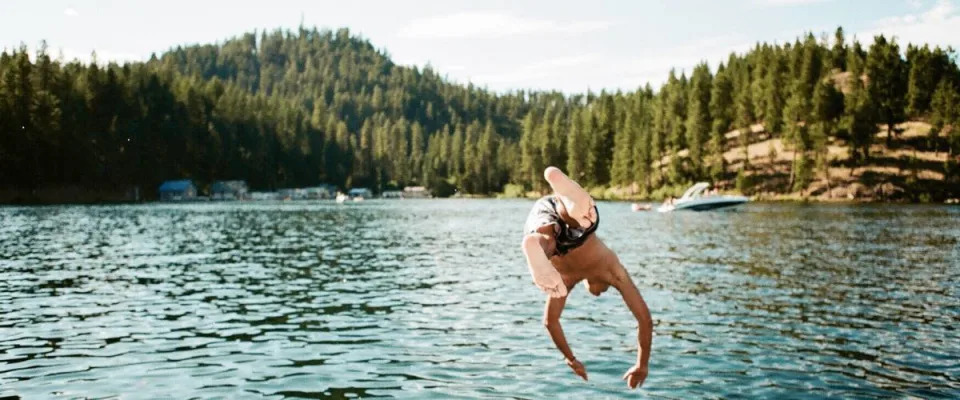
9. Idaho
Diving in Coeur d'Alene, Idaho, US
@codykliu / Twenty20

Inbound moves: 60.4%

The Gem State wasn’t quite as prized in 2021 as it has been in previous years, plunging from first to ninth place.

Contrary to popular belief, Idaho isn’t all farmland and potatoes — its IT job market in particular has been flourishing and the state’s Department of Labor also reported strong population and job growth last year.

The low cost of living and abundance of outdoor recreational opportunities can make Idaho attractive to Americans seeking a more affordable lifestyle and open spaces as well.

“There’s a lot of positives especially if you’re the outdoors type. Huge swaths of wilderness in the state, desert in the south with more mountainous terrain and forests in the central and northern parts of the state. Even in Boise (where traffic can get ‘bad’), an hour of driving will get you into the wilderness,” says stormy370 on Reddit.

8. Oregon

Inbound moves: 60.5%

Lush forests and blue rivers delineate the Beaver State — however, its natural beauty wasn’t enough to stop it from slipping down the list.

Oregon took third place in United Van Lines’ list for 2021 and before that it held at No. 2 for three years in a row.

A sizable chunk of inbound movers (44%) said they chose Oregon for work-related reasons and that’s unsurprising considering the state’s thriving tech industry. A number of high-tech businesses are clustered around the Silicon Forest area around Portland.

That said, the state’s high cost of living and ballooning homeless population have become an issue for many.

7. Tennessee
Girl at  Tennessee State University, Nashville, Tennessee, US
@jazzze_phe / Twenty20

Inbound moves: 62%

Tennessee is home to more than just Graceland and fried chicken — plenty of Americans love the state for its low cost of living and affordable homes.

The Volunteer State has fairly low property taxes and won’t tax your Social Security benefits or income. Just be prepared to deal with sky-high sales taxes when you do your shopping.

The climate can be hit-or-miss for some people, as Larry Gwinn writes on Quora.

“If you hate winter, then Tennessee is a great state for you. Tennessee’s winter is mild and short. But, its summer is long and very humid.”

6. Alabama

Inbound moves: 62.1%

Sweet Home Alabama certainly lives up to much of the hype, ranking sixth place on United Van Lines’ list.

Residents in the Yellowhammer State benefit from extremely low property taxes and cheap home values.

However, Alabama’s job market was the top reason for both people moving out and into the state. The unemployment rate is fairly low, but median household income in the state is lower than the national median.

“Travel is easy and cheap in one of the most ecologically diverse states, meaning there is a ton to see and do in nature without spending much. Lots of diverse small/medium cities to visit … Alabama is also a sick hub for great weekend trips. Nashville, New Orleans, Atlanta are all reasonable to go to on a Friday after work and enjoy the weekend in,” says jsm2008 on Reddit.

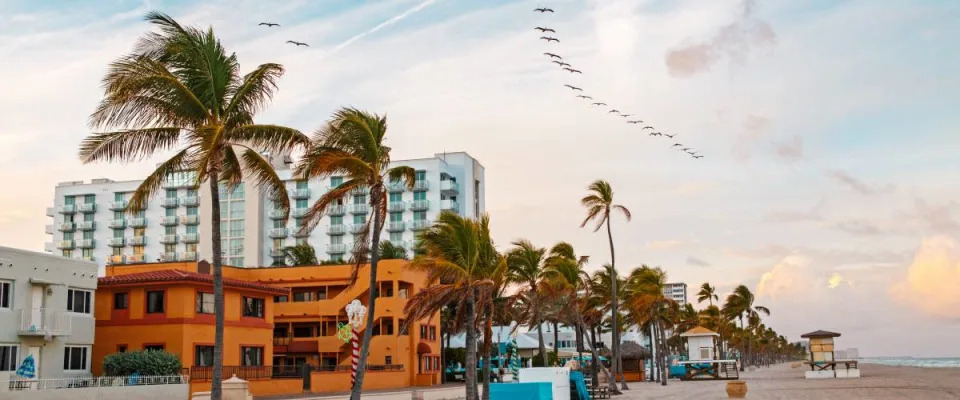
5. Florida
Beach boardwalk, Florida
@Hanni / Twenty20

Inbound moves: 62.3%

Florida’s got a little bit of everything for everyone, whether you’re hitting up the local beaches and theme parks or just looking for the ideal spot to settle down in your golden years.

Retirees adore the state (retirement was the top reason for almost 39% of inbound movers) for its excellent climate and recreational opportunities, as well as its tax-friendliness. There’s no state income tax, and the sales and property taxes are pretty average compared to the rest of the country.

It’s not all sunshine and rainbows in the Sunshine State, however, according to AdrianArmbruster on Reddit.

“It’s definitely not going to be all vaporwave aesthetics and Miami Beach sunsets all the time. Definitely don’t go expecting that. The primary industry being tourism both raises prices and depresses wages. Anyone thinking of coming here with a penny to their name may want to keep that in mind.”

3 (tie). West Virginia

Inbound moves: 63%

Those country roads are taking plenty of Americans into West Virginia — the state jumped up eight spots to make it to third place for inbound moves in 2021.

Close to half of those entering the Mountain State cited jobs as their main motivator, but a whopping 72% said they exited the state for the same reason.

West Virginia grapples with one of the worst poverty rates in the country, particularly with the decline of its coal industry.

However, Redditor OMothmanWhereArtThou says, “The cost of living in West Virginia is really low and it has so much natural beauty. If you’re an outdoorsy person, you can find a lot to get into. If you’re a fan of living near very few people, that can be easily achieved in WV.”

3 (tie). South Carolina
Elderly couple in  Magnolia Plantation and Gardens, Charleston, South Carolina, US
@speakboston / Twenty20

Inbound moves: 63.3%

South Carolina boasts a warm climate, friendly residents and outdoor attractions like Myrtle Beach and the salt marshes.

Like in 2020, the top reason for moving to the Palmetto State was retirement, and almost 70% of the new residents last year were 55 or older.

South Carolina is well known for its golf courses, beaches and historic buildings — and it’s pretty tax-friendly for retirees as well.

“There are plenty of gorgeous towns around: Beaufort, Hilton Head, Myrtle Beach and Charleston. I would even say that Charleston is perhaps the most underrated city in the U.S. I don’t think you can find that sort of wonderful, unique and well-preserved southern British colonial architecture anywhere else in the U.S.,” writes TheWalkingKing on Reddit.

2. South Dakota

Inbound moves: 68.8%

The Mount Rushmore State is clearly more than just the massive granite carvings it gets its nickname from — drawing almost 70% of its movers last year.

In fact, the desire to be closer to family was the main motivator for those relocating to South Dakota.

The cost of living is lower-than-average, plus the state has no income tax and low sales taxes.

“Sioux Falls is consistently rated one of the best places in the U.S. to live. It’s got a gorgeous parks system and lively local music scene. As to the rural parts of the state, it’s incredibly beautiful, basically the lyrics to ‘America the Beautiful’: beautiful, spacious skies; amber waves of grain; purple mountains majestically rising above a fruited plain,” writes nemo_sum on Reddit.

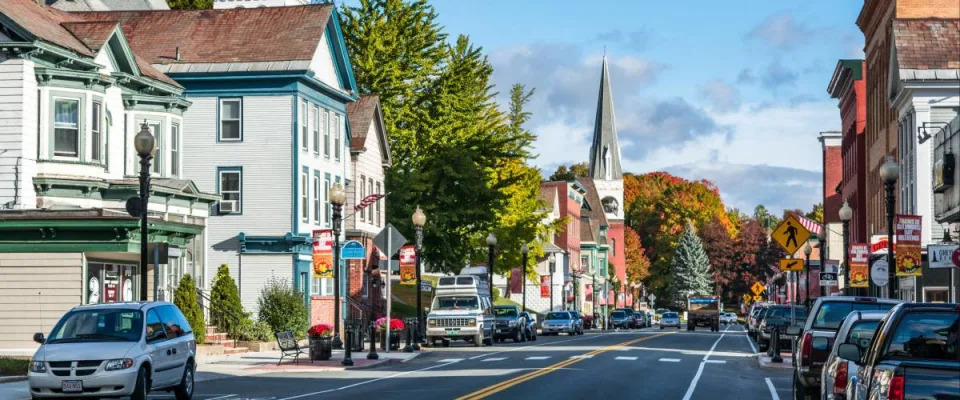
1. Vermont
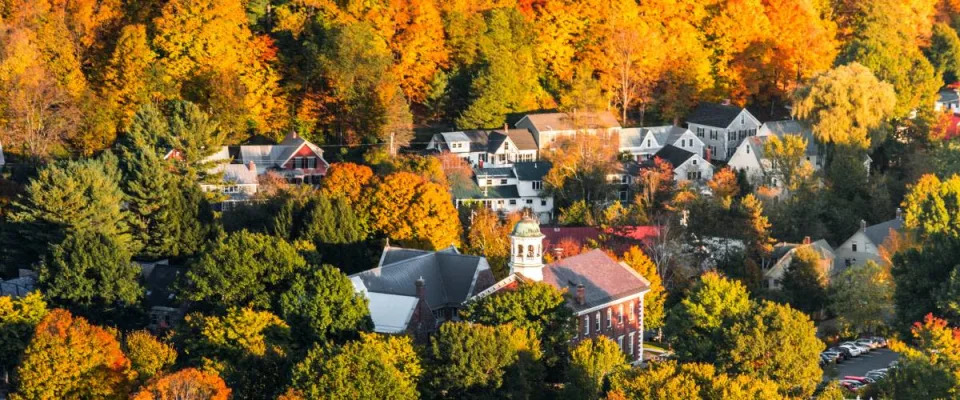
Autumn in Vermont
@eric_urquhart / Twenty20

Inbound moves: 74.3%

Despite being one of the least populated states in the nation, Vermont ranks No. 1 for the highest percentage of inbound moves in 2021.

Over 43% of inbound movers cited the jobs as their main reason for moving. The state has one of the lowest unemployment rates in the U.S., however it’s also considered quite expensive to run a business there, so it’s not ideal for launching a startup.

Redditor luxorange recommends the Green Mountain State for its natural beauty and recreational opportunities.

“It’s a really outdoorsy state. People are all about being outside, hiking, kayaking, biking, skiing. No matter where you live here, it is beautiful. The seasons are fun, it’s almost always a pretty drive, and the air is clean (seriously underrated feature of VT, how good the air smells).”

Bridge collapses during ribbon-cutting ceremony in Congo

Reuters

Bridge collapses during ribbon-cutting ceremony in Congo

September 7, 2022

KINSHASA, Democratic Republic of Congo (Reuters) – Sharply-suited dignitaries gathered to inaugurate a footbridge in the Congolese capital on Monday only for the structure to collapse beneath their feet to the barely concealed delight of onlookers, video verified by Reuters showed.

Just as an organiser cut the ribbon at the ceremony in Kinshasa’s Mont-Ngafula district, the bridge buckled, both its handrails broke off, and the central section slumped into the stream a couple of metres below.

Spectators shouted in apparent glee as the VIPs struggled to get off the crumpled wreck. Nobody was reported to have been hurt in the incident.

One of the last people to climb free was a man in military fatigues and dark glasses who was clutching an unopened bottle of champagne, other footage shared widely on social media showed.

Climate Change Is Ravaging the Colorado River. There’s a Model to Avert the Worst.

The New York Times

Climate Change Is Ravaging the Colorado River. There’s a Model to Avert the Worst.

Henry Fountain – September 5, 2022

Apricots from an orchard in the Roza Irrigation District, in Washington State on July 18, 2022. (Ruth Fremson/ The New York Times)

YAKIMA, Wash. — The water managers of the Yakima River basin in arid central Washington know what it’s like to fight over water, just like their counterparts along the Colorado River are fighting now. They know what it’s like to be desperate, while drought, climate change, population growth and agriculture shrink water supplies to crisis levels.

They understand the acrimony among the seven Colorado Basin states, unable to agree on a plan for deep cuts in water use that the federal government has demanded to stave off disaster.

But a decade ago, the water managers of the Yakima Basin tried something different. Tired of spending more time in courtrooms than at conference tables, and faced with studies showing the situation would only get worse, they hashed out a plan to manage the Yakima River and its tributaries for the next 30 years to ensure a stable supply of water.

The circumstances aren’t completely parallel, but some experts on Western water point to the Yakima plan as a model for the kind of cooperative effort that needs to happen on the Colorado right now.

“It’s going to require collaboration on an unprecedented level,” said Maurice Hall, vice president for climate resilient water systems at the Environmental Defense Fund. The Yakima Basin plan, he said, “is the most complete example of what we need that I have observed.”

Rep. Melanie Stansbury, D-N.M., who worked on the Yakima Basin and other water issues for years before being elected to Congress in 2021, said the plan “represents the best of a collaborative, science-based process.”

“It’s a successful model of bringing science and stakeholders to the table,” she said.

But it began out of a strong sense of desperation.

Climate change and recurring drought had wreaked havoc with the water supply for irrigation managers and farmers in the Yakima Basin, one of the most productive agricultural regions in the country. Conservationists were concerned that habitats were drying up, threatening species. Old dams built to store water had blocked the passage of fish, all but eliminating the trout and salmon that the Indigenous Yakama Nation had harvested for centuries. In droughts, water allocations to many farms were cut.

Years of court fights had left everyone dissatisfied, and a proposal in 2008 for a costly new dam and reservoir that favored some groups over others had not helped.

Ron Van Gundy, manager of the Roza Irrigation District at the southern end of the basin, went to see Phil Rigdon, director of the Yakama Nation’s natural resources division. The two had been battling for years, largely through lawyers. They both opposed the dam, but for different reasons.

“I was walking into a meeting,” Rigdon recalled in an interview. “And he said, ‘Hey Phil, can we talk?’ I started laughing and said, ‘I don’t know, can we? Our attorneys would probably freak out if we did.’”

The two met, and eventually other stakeholders joined them in developing a plan for better management of the river. After several years of give-and-take, the result was the Yakima Basin Integrated Plan, a blueprint for ensuring a reliable and resilient water supply for farmers, municipalities, natural habitats and fish, even in the face of continued warming and potentially more droughts.

A decade into the plan, there are tens of millions of dollars’ worth of projects up and down the river designed to achieve those goals, including canal lining and other improvements in irrigation efficiency, increasing reservoir storage and removing barriers to fish.

“It’s an amazing collaboration of all of these different agencies with all of these different interests, coming together and realizing that we can’t just focus on our agenda,” said Joe Blodgett, a fisheries project manager for the Yakama Nation.

Now, hundreds of miles to the south and east, there’s a similar sense of desperation among the users of the Colorado.

With the river’s two main reservoirs at all-time lows, the federal government is asking the seven states that use the Colorado to cut consumption next year by a staggering amount, up to one-third of the river’s normal annual flow. And beyond 2023, as climate change continues to take a toll on the river, painful long-term cuts in water use will be necessary.

All the reductions will have to be negotiated among states that, more often than not have been fiercely protective of their share of the river’s water. Those shares were originally negotiated during wetter times a century ago.

The states have negotiated some important agreements over the years, including one that prescribed cuts, based on water levels at Lake Mead on the lower Colorado, that were first implemented last year. But the demand for much larger reductions has put a spotlight on perennial tensions between the upper basin states of Colorado, Utah, New Mexico and Wyoming, who collectively use less than their allotted share, and the lower basin states of California, Nevada and Arizona, who use their full allotment or more.

The states missed a mid-August deadline to negotiate next year’s cuts. The federal government has effectively given them more time, but is threatening to step in and order the reductions.

The Yakima Basin is far smaller than the Colorado, with a population of 350,000 compared with the 40 million people who rely, to varying degrees, on the Colorado’s supply. While farmland in the basin is important (among other things, it produces about 75% of the country’s hops that impart a tang to countless beers and ales), agricultural production along the Colorado is much larger.

The Yakima River, itself a tributary of the Columbia, is only 210 miles long, one-seventh the Colorado’s length, and lies within a single state, not seven plus Mexico. Thirty Native tribes have rights to Colorado water, compared with just the Yakama Nation.

All of that makes some water managers on the Colorado doubt that the Yakima plan could be much of a model.

“The Colorado River is orders of magnitude more complex and difficult than the Yakima,” said Jim Lochhead, CEO of Denver Water, which supplies drinking water to the city and surrounding communities. “That makes it extremely difficult to sit down a group of stakeholders and agree on a grand solution.”

But those who are intimately familiar with the Yakima plan say the plan’s fundamental principle, of shared sacrifice and cooperation among groups that were often adversaries, can apply anywhere.

“Everyone can’t get everything that they want,” said Thomas Tebb, director of the Columbia River office of the state Department of Ecology. “But if they can get something, that’s really the basis of the plan.”

The Yakima River has a long history of overuse, dating to the early white settlers who arrived after a treaty was signed between the federal government and the Yakama Nation in 1855. The river and its tributaries were dammed and diverted, and irrigation systems were built. Water shortages quickly became an issue, especially in dry years, leading to decades of conflicts among users.

As on the Colorado, there were earlier efforts to ensure a stable supply, especially following droughts in the 1930s and ’40s. After another severe drought, in 1977, state and federal officials developed a “watershed enhancement” plan to try to improve fish passage.

But it wasn’t enough. For one thing, the droughts kept coming, said Urban Eberhart, who grew up on a farm in the basin and now manages the Kittitas Reclamation District in the northern part.

“Instead of just being one of these droughts, we started getting them back-to-back and then three in a row,” he said.

In 2010, the federal Bureau of Reclamation undertook a study of the basin, looking at how it would fare as the world continued to warm. The findings added impetus to the drive to develop a plan.

“What we went through from 1977 to 2009 was nothing in comparison to where we were headed,” Eberhart said. There was a growing sense that drastic action was needed. “We won’t recognize this economy or this ecosystem if we don’t act.”

With so much information to discuss, the meetings on the plan were intense and time consuming, Eberhart said. But that had a benefit: Pressed for time, participants started taking breaks and lunches together.

“Pretty soon, over time, all of us who were very suspicious of each other would talk, and that turned into friendship, trust and respect,” he said.

Rigdon said that now, as likely as not, a project gets widespread support, even from groups that might not see as much benefit from it. Although challenges remain, he said, “We’ve understood what the other side needs. And they’re no longer the other side.”

The fruits of those relationships can be seen throughout the basin, in projects that usually serve more than one purpose and benefit more than one group of stakeholders.

In the Yakama Nation’s irrigation district, canal work and dam improvements are saving water and improving fish habitat.

In his irrigation district, Eberhart has led successful efforts to use the canals to deliver water to long-dried-up streams, to restore fish.

There are several projects, under construction and proposed, to increase water storage to help make it through dry years. And in the city of Yakima itself, Nelson Dam, an old diversion dam on a tributary has been removed, replaced by an engineered channel that will allow passage of both fish and boats, redistribute sediment through the river system and reduce flooding, all while continuing to divert water for the city’s needs.

“It’s not doing one thing — do things that meet everybody’s criteria,” said George Brown, the city’s assistant public works director. “If you do that, everybody agrees.”

Scorching Temperatures Just Broke A World Record In California’s Death Valley

HuffPost

Scorching Temperatures Just Broke A World Record In California’s Death Valley

Ben Blanchet – September 3, 2022

Scorching Temperatures Just Broke A World Record In California’s Death Valley

Death Valley National Park in California scorched a world record for high temperatures on Thursday.

The park’s Furnace Creek thermometer hit 127 degrees this week, marking a world record for the hottest temperature ever recorded in September, CBS News reported.

Visitors flocked to the park on Thursday to experience the record-breaking heat, which came less than a month after 1,000 people were stranded in Death Valley due to flash flooding.

The rainfall, the park’s second-highest single-day total since 1936, reportedly buried some 60 vehicles in debris and mud, and washed away boulders and trees in the park.

Thursday’s record temperatures may not last long, according to KABC-TV.- ADVERTISEMENT -https://s.yimg.com/rq/darla/4-10-1/html/r-sf-flx.html

The news station reported that the weekend’s temperatures look like they’ll peak on Monday or Tuesday.

While historic, Death Valley’s incredible heat this week is not expected to break the world’s highest-ever recorded temperature of 134 degrees, CBS News noted.

That temperature occurred on July 10, 1913, also in Death Valley. It was recorded during a heat wave that featured multiple consecutive days with temperatures of 129 degrees or above, according to the National Park Service.

Earlier this week, California Gov. Gavin Newsom (D) declared a state of emergency as high temperatures continued to rock the state’s energy grid, KTVU-TV reported.

The move will allow people in the state to temporarily increase their energy usage as demand grows.

“This is just the latest reminder of how real the climate crisis is, and how it is impacting the everyday lives of Californians,” Newsom said. “While we are taking steps to get us through the immediate crisis, this reinforces the need for urgent action to end our dependence on fossil fuels that are destroying our climate and making these heat waves hotter and more common.”

UPDATE: Mill Fire explodes to 3,921 acres with no containment, Mountain Fire at 600 acres

Redding Record Searchlight

UPDATE: Mill Fire explodes to 3,921 acres with no containment, Mountain Fire at 600 acres

David Benda, Michele Chandler, Jessica Skropanic and Jenny Espino, Redding Record Searchlight

September 3, 2022

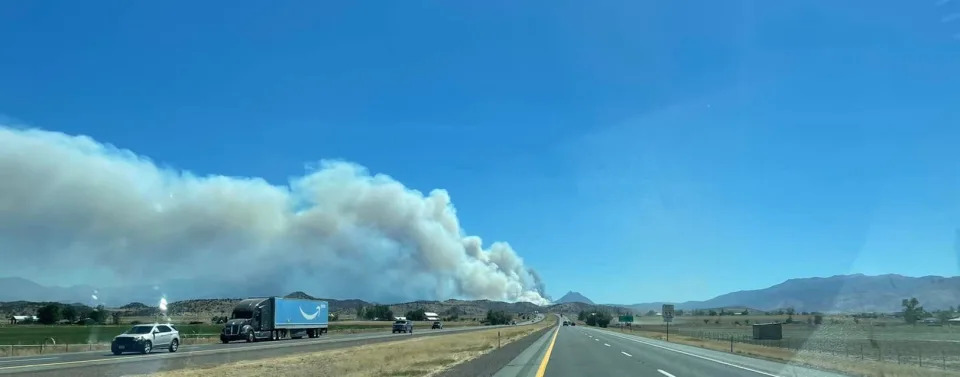
The fast-moving Mill Fire erupted on Friday near the area of the Roseburg Forest Products mill in Weed, a small city just over 50 miles from the Oregon border. 

There were reports of burn victims and destroyed homes in a neighborhood. Thousands were forced to leave their homes in the communities of Weed, Lake Shastina and Edgewood.

We’ve made these updates free to readers as an important public service to our North State communities. If you are able, help local journalism thrive by subscribing to your local newspaper, and check back here for updates.

10:20 p.m.: Mill Fire still growing, with no containment

Cal Fire on Friday night said sensor aircraft estimated the size of the Mill Fire to be 3,921 acres, roughly 1,300 acres more than fire officials believed earlier in the evening.

The fire, first reported at 12:49 p.m. on Friday, broke out at Woodridge Court and Woodridge Way, near the area of the Roseburg Forest Products mill in Weed. The Cal Fire-Siskiyou Unit via Twitter said the cause of the fire is under investigation.

Evacuations in Weed, Lake Shastina and Edgewood remain in place and Highway 97 remains closed.

8:40 p.m.: Mountain Fire doubles in size, Mill Fire unstable, Sheriff’s Office said

The Mountain Fire grew to 600 acres, twice its size two hours ago, according to Cal Fire.

Both the Mill Fire and Mountain Fire remain uncontained, according to Cal Fire.

“This incident (Mill Fire) is rapidly changing and our staff and partners are doing everything they can to get everyone to safety,” the Siskiyou County Sheriff’s Office said.

The sheriff’s office posted information to help those unable to reach family and friends in evacuation areas. They can call 530-842-8746.

An evacuation shelter is in use at the Yreka Community Center at 810 North Main St. in Yreka.

For information on evacuation zones go to www.zonehaven.com.

8:15 p.m.: Help available for animals in fire evacuation zones

The Siskiyou County Sheriff’s Office is offering animal welfare checks for people who had to evacuate from Mill and Mountain fire areas without their pets or livestock.

Evacuees can go to the Siskiyou County website at bit.ly/3Qc9Hsf and fill out a form to request a welfare check.

6:50 p.m.: Mill Fire explodes Friday afternoon

The Mill Fire exploded in size to 2,580 acres — up from 900 acres at 3 p.m., according to Cal Fire.

There is no containment on the fire, burning north of Weed near Lake Shastina.

The blaze damaged and destroyed multiple structures, including homes, but Cal Fire has not yet released the total number of structures.

The cause of the fire remains under investigation, Cal Fire said.

6:30 p.m.: Mountain Fire grows to 300 acres

The Mountain Fire burned 300 acres of forest eight miles southeast of the small town of Gazelle, according to Cal Fire.

It is not contained, Cal Fire said.

The fire started before 4 p.m. near China Mountain Road, west of Interstate 5, north of Weed.

5:30 p.m.: Some tankers being sent to nearby Mountain Fire

While firefighters continue to battle the Mill Fire burning in the area of Weed and Lake Shastina, six air tankers are being diverted to a second fire that started about an hour ago in the area of Gazelle.

The Mountain Fire is burning in heavy brush on the west side of Interstate 5 north of Weed. Firefighters there have reported that no structures are threatened.

5 p.m.: Wind pushing fire over dry hot terrain

Firefighters continue to battle strong winds while they fight the Mill and Mountain fires.

Those conditions won’t change until Friday night, said Jay Stockton, meteorologist with the National Weather Service in Medford. Weather conditions are ripe for fires to continue spreading until 11 p.m.

Friday afternoon, strong southeast winds blew up to 24 mph, with 36 mph gusts, Stockton said. Temperatures reached 98 degrees in Weed and brush is incredibly dry: 5% humidity.

“That combination of windy and dry is what’s creates conditions for rapid fire growth,” he said.

A red flag warning is in effect until 11 p.m. Friday, at which time the winds should calm down, Stockton said. Temperatures should cool to the mid-50s, increasing moisture in the air.

All that could help firefighters get a better handle on the fires, he said.

4:14 p.m.: Power outage reported in Weed, Mount Shasta, Lucerne

About 8,300 residents in Weed and Mount Shasta in Siskiyou County and Lucerne in Lake County were hit by a power outage shortly before 1 p.m. on Friday, according to electric power company PacifiCorp.

A cause of the outage is under investigation, said company spokesman Brandon Zero. Crews have been dispatched to the area, he said.

A smoke plume from the Mill Fire rises over downtown Weed on Friday, Sept. 2, 2022.
3:55 p.m.: Fire threatening Carrick outside Weed

Firefighters are communicating to each that the fire is threatening to jump Highway 97 and burn into the small community of Carrick just outside Weed.

3:20 p.m.: Mill Fire balloons to 900 acres

The Mill Fire burning north of Weed toward Lake Shastina is now more than 900 acres, Cal Fire reports.

Firefighters are asking for all strike teams to come to the Jackson Ranch Road area. Earlier, the fire jumped Jackson Ranch Road and started burning into Lake Shastina.

Currently, there is no containment.

All zones east of Interstate 5 from Weed to county road A12, south of county road A12 from Grenada to Highway 97, west of Highway 97 from A12 to I-5, Cal Fire said.

There is an evacuation Shelter at the Karuk wellness center in Yreka at 1403 Kahtishraam.

Meanwhile, all remaining Weed High School students were bussed to Mt. Shasta High School for pick up, officials said.

2:50 p.m.: Fire burning into Lake Shastina

The Mill Fire has jumped Jackson Ranch Road and is burning into the community of Lake Shastina, which is north of Weed, crews battling the blaze report. Firefighters also have asked for at least five more strike teams to help fight the fire.

Meanwhile, a temporary evacuation center is being set up at the Siskiyou County Fairgrounds in Yreka, according to scanner reports.

2:45 p.m.: Mill Fire grows to 555 acres

The communities of Weed, Lake Shastina and Edgewood are under evacuation orders as of 2 p.m. Friday due to the Mill Fire, according to the Siskiyou County Sheriff Office’s Facebook page.

Residents in those areas are asked to leave immediately.

Use caution, as emergency vehicles are assisting with evacuations, structure protection and fire suppression efforts. For more information, call 2 1 1. Real-time evacuation zone statuses are available on aware.zonehaven.com.

The Mill Fire near Weed has grown to 555 acres since first being reported on Friday afternoon, officials said.

The wildfire broke out the same day that the area was under a red flag warning due to high temperatures, gusty winds and low humidity. The chance of rain in the area remains in the single digits through Tuesday.

The wind was blowing north at 20 mph in the Weed and Lake Shastina areas on Friday afternoon, according to Windfinder.com.

Southerly winds of about 20 mph, with gusts as high as 30 mph, could emerge through Friday night, according to the National Weather Service.

The Mill Fire as seen from Interstate 5. The fire started on Friday afternoon, Sept. 2, 2022.

Saturday’s forecast calls for sun with widespread haze and a high near 89. Calmer winds becoming northwest at between 5 to 8 mph are expected in the afternoon, according to the weather service.

Pacific Power had not reported any outages in greater Weed as of mid-afternoon on Friday.

1:55 p.m.: Students to stay on campus

Firefighters battling the Mill Fire are recommending not to release students at Weed High School. They are asking the students to stay on campus for now, according to scanner reports.

Meanwhile, mandatory evacuations are being called for all residents east of Interstate 5 to Jackson Ranch Road. Firefighters say the blaze has reached Jackson Ranch Road.

Also, all of Lake Shastina is under a mandatory evacuation order.

Evacuation warnings are in place along Highway 97 in the Mt. Shasta Vista neighborhood.

1:49 p.m.: Evacuations ordered

Evacuation orders have been issued in the community of Weed due to a fire that started Friday afternoon in the area of Roseburg Forest Products mill.

Highway 97 is closed from the junction of Highway 265 in Weed to south of Macdoel due the Mill Fire, the California Department of Transportation said.

Firefighters are also asking for Jackson Ranch Road to be closed so residents who are evacuating in that area have a clear route out of the neighborhood, according to emergency scanner reports.

The fire also has reached Hoy Road.

Firefighters report that traffic in the area is backed up due to all the evacuations.

At least one ambulance has been dispatched to treat a burn victim and a medical triage has been set up to treat other burn victims, scanner reports said.