Thousands flee, several hurt as Mill Fire scorches Weed, Lake Shastina in Northern California
Adam Beam – September 3, 2022
Thousands of people remained under evacuation orders Saturday after a wind-whipped wildfire raged through rural Northern California, injuring people and torching an unknown number of homes.
The fire that began Friday afternoon on or near a wood-products plant quickly blew into a neighborhood on the northern edge of Weed but then carried the flames away from the city of about 2,600.
Evacuees described heavy smoke and chunks of ash raining down.
Annie Peterson said she was sitting on the porch of her home near Roseburg Forest Products, which manufactures wood veneers, when “all of a sudden we heard a big boom and all that smoke was just rolling over toward us.”
Very quickly her home and about a dozen others were on fire. She said members of her church helped evacuate her and her son, who is immobile. She said the scene of smoke and flames looked like “the world was coming to an end.”
A house in the Lake Shastina Subdivision, northwest of Weed, burns up on Friday, Sept. 2, 2022. The Mill Fire erupted that afternoon in the area of the Roseburg Forest Products mill in Weed and raced out of control, forcing residents in that Northern California community, Lake Shastina and Edgewood to flee their homes.
Suzi Brady, a Cal Fire spokeswoman, said several people were injured.
Allison Hendrickson, spokeswoman for Dignity Health North State hospitals, said two people were brought to Mercy Medical Center Mount Shasta. One was in stable condition and the other was transferred to UC Davis Medical Center, which has a burn unit.
Rebecca Taylor, communications director for Roseburg Forest Products based in Springfield, Oregon, said it is unclear if the fire started near or on company property. A large empty building at the edge of company property burned she said. All employees were evacuated, and none have reported injuries, she said.
The blaze, dubbed the Mill Fire, was pushed by 35-mph winds, and quickly engulfed 4 square miles of ground.
The flames raced through tinder-dry grass, brush and timber. About 7,500 people in Weed and several nearby communities were under evacuation orders.
Dr. Deborah Higer, medical director at the Shasta View Nursing Center, said all 23 patients at the facility were evacuated, with 20 going to local hospitals and three staying at her own home, where hospital beds were set up.
Gov. Gavin Newsom declared a state of emergency for Siskyou County and said a federal grant had been received “to help ensure the availability of vital resources to suppress the fire.”
Cal Fire firefighters try to stop flames from the Mill Fire from spreading on a property in the Lake Shastina Subdivision northwest of Weed on Friday, Sept. 2, 2022. The Mill Fire erupted that afternoon in the area of the Roseburg Forest Products mill in Weed and raced out of control, forcing residents in that Northern California community, Lake Shastina and Edgewood to flee their homes.
At about the time the blaze started, power outages were reported that affected some 9,000 customers, and several thousand remained without electricity late into the night, according to an outage website for power company PacifiCorp, which said they were due to the wildfire.
It was the third large wildfire in as many days in California, which has been in the grip of a prolonged drought and is now sweltering under a heat wave that was expected to push temperatures past the 100-degree mark in many areas through Labor Day.
Thousands also were ordered to flee on Wednesday from a fire in Castaic north of Los Angeles and a blaze in eastern San Diego County near the Mexican border, where two people were severely burned and several homes were destroyed. Those blazes were 56% and 65% contained, respectively, and all evacuations had been lifted.
The heat taxed the state’s power grid as people tried to stay cool. For a fourth day, residents were asked to conserve power Saturday during late afternoon and evening hours.
The Mill Fire was burning about an hour’s drive from the Oregon state line. A few miles north of the blaze, a second fire erupted Friday near the community of Gazelle. The Mountain Fire has burned more than 2 square miles but no injuries or building damage was reported.
The whole region has faced repeated devastating wildfires in recent years. The Mill Fire was only about 30 miles southeast of where the McKinney Fire — the state’s deadliest of the year — erupted in late July. It killed four people and destroyed dozens of homes.
Olga Hood fled her Weed home on Friday as smoke was blowing over the next hill.
With the notorious gusts that tear through the town at the base of Mount Shasta, she didn’t wait for an evacuation order. She packed up her documents, medication and little else, said her granddaughter, Cynthia Jones.
“With the wind in Weed everything like that moves quickly. It’s bad,” her granddaughter, Cynthia Jones, said by phone from her home in Medford, Oregon. “It’s not uncommon to have 50 to 60 mph gusts on a normal day. I got blown into a creek as a kid.”
Hood’s home of nearly three decades was spared from a blaze last year and from the devastating Boles Fire that tore through town eight years ago, destroying more than 160 buildings, mostly homes.
Hood wept as she discussed the fire from a relative’s house in the hamlet of Granada, Jones said. She wasn’t able to gather photos that had been important to her late husband.
Scientists say climate change has made the West warmer and drier over the last three decades and will continue to make weather more extreme and wildfires more frequent and destructive. In the last five years, California has experienced the largest and most destructive fires in state history.
Associated Press reporters Olga R. Rodriguez and Janie Har in San Francisco and Stefanie Dazio and Brian Melley in Los Angeles contributed to this article.
Barbara Ehrenreich, Explorer of Prosperity’s Dark Side, Dies at 81
By Natalie Schachar –September 2, 2022
Her book “Nickel and Dimed,” an undercover account of the indignities of being a low-wage worker in the United States, is considered a classic in social justice literature.
The author Barbara Ehrenreich in 2020. She tackled a variety of themes: the myth of the American dream, the labor market, health care, poverty and women’s rights.Credit…Jared Soares
It was a casual meeting.
Over salmon and field greens, Barbara Ehrenreich was discussing future articles with her editor at Harper’s Magazine. Then, as she recalled, the conversation drifted.
How could anyone survive on minimum wage? She mused. A tenacious journalist should find out.
Her editor, Lewis Lapham, offered a half smile and a single word reply: “You.”
The result was the book “Nickel and Dimed: On (Not) Getting By in America” (2001), an undercover account of the indignities, miseries and toil of being a low-wage worker in the United States. It became a best seller and a classic in social justice literature.
Ms. Ehrenreich, the journalist, activist and author, died at 81 on Thursday at a hospice facility in Alexandria, Va., where she also had a home. Her daughter, Rosa Brooks, said the cause was a stroke.
Working as a waitress near Key West, Fla., in her reporting for “Nickel and Dimed,” Ms. Ehrenreich quickly found that it took two jobs to make ends meet. After repeating her journalistic experiment in other places as a hotel housekeeper, cleaning lady, nursing home aide and Wal-Mart associate, she still found it nearly impossible to subsist on an average of $7 an hour.
Every job takes skill and intelligence, she concluded, and should be paid accordingly.
One of more than 20 books written by Ms. Ehrenreich, “Nickel and Dimed” bolstered the movement for higher wages just as the consequences of the dot-com bubble snaked through the economy in 2001.
“Many people praised me for my bravery for having done this — to which I could only say: Millions of people do this kind of work every day for their entire lives — haven’t you noticed them?” she said in 2018 in an acceptance speech after receiving the Erasmus Prize, given to a person or institution that has made an exceptional contribution to the humanities, the social sciences or the arts.
Ms. Ehrenreich noticed those millions throughout a writing career in which she tackled a variety of themes: the myth of the American dream, the labor market, health care, poverty and women’s rights. Her motivation came from a desire to shed light on ordinary people as well as the “overlooked and the forgotten,” her editor, Sara Bershtel, said in an email.
“Nickel and Dimed,” one of more than 20 books Ms. Ehrenreich wrote, xCredit…
Barbara Alexander was born on Aug. 26, 1941, in Butte, Mont., into a working-class family. Her mother, Isabelle Oxley, was a homemaker; her father, Benjamin Howes Alexander, was a copper miner who later earned a Ph.D. in metallurgy at Carnegie Mellon University in Pittsburgh and became director of research at Gillette.
Having grown up steeped in family lore about the mines, Ms. Ehrenreich recalled thinking it was normal for a man over 40 to do dangerous work and be missing at least a finger.
“So to me, sitting at a desk all day was not only a privilege but a duty: something I owed to all those people in my life, living and dead, who’d had so much more to say than anyone ever got to hear,” she wrote in the introduction to “Nickel and Dimed.”
Both of her parents were heavy drinkers. In a 2014 memoir, she described her mother’s wrath as the “central force field” of her childhood home. She believed that her mother’s death, from a heart attack, had been induced by an intentional overdose of pills.
Ms. Ehrenreich graduated from Reed College in Portland, Ore., in 1963. She received a Ph.D. in cell biology in 1968 from Rockefeller University in New York, where she met her first husband, John Ehrenreich.
After her studies, she became a budget analyst for New York City and then a staff member at the New York-based (and now defunct) nonprofit Health Policy Advisory Center in 1969. In 1971 she began working as an assistant professor in the Health Sciences Program at the State University of New York, Old Westbury. But the social and political upheaval of the 1960s awakened her anger and fueled her desire to write.
Her first book, “Long March, Short Spring: The Student Uprising at Home and Abroad” (1969), co-written with Mr. Ehrenreich, grew out of her anti-Vietnam War activism. Their second book, “The American Health Empire: Power, Profits and Politics,” was published the next year.
Ms. Ehrenreich quit her teaching job in 1974 to become a full-time writer, selling a number of articles to Ms. magazine in the 1970s.
Numerous critically acclaimed books followed, including “The Hearts of Men: American Dreams and the Flight from Commitment” (1983), “Fear of Falling: The Inner Life of the Middle Class” (1989), “The Worst Years of Our Lives: Irreverent Notes from a Decade of Greed” (1990) and “Blood Rites: Origins and History of the Passions of War” (1997).
It was her firsthand reporting in “Nickel and Dimed,” however, that resonated with working Americans and became a turning point in her career.
Ms. Ehrenreich in 2006. Her firsthand reporting in “Nickel and Dimed” became a turning point in her career.Credit…David Scull for The New York Times
Following the book’s success, Ms. Ehrenreich applied her immersive journalism technique to works about the dysfunctional side of the American social order. Those included “Bait and Switch: The (Futile) Pursuit of the American Dream” (2005) and “Smile or Die” (2009), about the dangers of “positive thinking” amid inadequate health care.
In her memoir, “Living With a Wild God” (2014), she focused on her troubling, unconventional experiences as a teenager.
She also wrote articles and essays for The New York Times, The Washington Post Magazine, The Atlantic, Harper’s, The Nation and The New Republic and held academic posts, teaching women’s studies at Brandeis and essay writing at the Graduate School of Journalism at the University of California, Berkeley.
Her marriage to Mr. Ehrenreich in 1966 ended in divorce in 1982. In addition to their daughter, Ms. Brooks, a law professor, she is survived by their son, Ben Ehrenreich, a journalist; two siblings, Benjamin Alexander Jr. and Diane Alexander; and three grandchildren. Her second marriage, to Gary Stevenson in 1983, ended in divorce in 1993.
In recent years Ms. Ehrenreich came to believe that many people living at or near the poverty level didn’t need someone else to give voice to their struggles.
Instead, she thought that individuals could tell their own stories if they had greater support. She created the Economic Hardship Reporting Project, which focused on helping the work of underrepresented people get published and providing economic assistance to factory workers, house cleaners, professional journalists and others who had fallen on hard times.
Her most recent book, “Had I Known: Collected Essays” (2020), compiles four decades of her articles on sexism, health, the economy, science, religion and other topics. Almost all of them shared repeated warnings about growing poverty and worsening inequality.
Ms. Ehrenreich’s anger at inequity remained unabated late in her life. In a 2020 interview with The New Yorker, she said a lack of paid sick-leave and the declining well-being of the working class still gave her “grim and rageful thoughts.”
“We turn out to be so vulnerable in the United States,” she said. “Not only because we have no safety net, or very little of one, but because we have no emergency preparedness, no social infrastructure.”
In 2018, she published “Natural Causes,” which addressed the topic of growing old and bluntly excoriated the wellness movement.
“Every death can now be understood as suicide,” she wrote. “We persist in subjecting anyone who dies at a seemingly untimely age to a kind of bio-moral autopsy: Did she smoke? Drink excessively? Eat too much fat and not enough fiber? Can she, in other words, be blamed for her own death?”
Ms. Ehrenreich continued writing into her 80s and at her death had begun work on a book about the evolution of narcissism, her daughter said.
Ms. Ehrenreich said she believed that her job as a journalist was to shed light on the unnecessary pain in the world.
“The idea is not that we will win in our own lifetimes and that’s the measure of us,” she told The New Yorker, “but that we will die trying.”
Dirty water, drying wells: Central Californians shoulder drought’s inequities
Hayley Smith – September 2, 2022
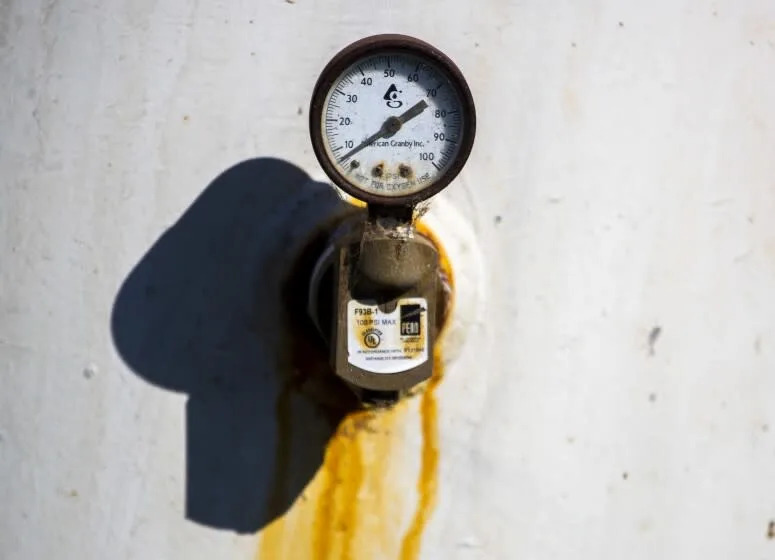
A gauge shows only a few pounds of pressure in the well at Jesús Benítez’s home near Visalia. (Brian van der Brug / Los Angeles Times)
On a hot morning in August, the pressure gauge on Jesús Benítez’s well read about 10 pounds per square inch — barely enough for a trickle.
The 74-year-old has been living just outside of Visalia, in the heart of California’s San Joaquin Valley, for about 14 years, ever since he decamped from Downey in search of bigger skies and more space. But the once-green three-acre property that was meant to be his retirement haven is now dry, brittle and brown.
Like a growing number of Central Californians, Benítez is bearing the brunt of the state’s punishing drought, which is evaporating the state’s surface water even as a frenzy of well drilling saps precious reserves underground. As a result, the number of dry wells in California has increased 70% since last year, while the number of Californians living with contaminated drinking water is at nearly 1 million.- ADVERTISEMENT -https://s.yimg.com/rq/darla/4-10-1/html/r-sf-flx.html
The majority of those people live in low-income communities and communities of color, state data show — and experts say heat, drought and climate change are only making those inequities worse.
“We’re fighting an uphill battle due to climate change,” said Gregory Pierce, director of the Human Right to Water Solutions Lab at UCLA. “Even with the progress we’re making, there are other losses that few people anticipated when it comes to heat impacts on water quality … and the pace at which people, and even larger systems, are at risk of running out of water entirely.”
Jesús Benítez, who has little water, stands near a spot where an underground pipe carrying city water ends just 100 feet from his home outside Visalia. (Brian van der Brug / Los Angeles Times)
Benítez is one of the unlucky people dealing with both. His sputtering well — the only source of water on his property — is polluted with nitrates, uranium and hexavalent chromium, which are becoming more concentrated as the water draws down. He and about 60 other residents in the area are trying to get connected to the water system that services the city of Visalia, but officials have told them the work may not be complete until 2024.
“I hope I don’t die without water by then,” Benítez said. The nearest municipal pipeline ends just about 100 feet from his property.
His story is becoming increasingly common in California, where an audit last month found that the State Water Resources Control Board “lacks the urgency necessary to ensure that failing water systems receive needed assistance in a timely manner.” The audit also noted that more than two-thirds of the water systems that have fallen below basic quality standards are in disadvantaged communities of significant financial need.
“California is one of the largest economies in the world, and yet this is happening here,” said Pedro Calderón Michel, a spokesman with the nonprofit group the Community Water Center. All too often, he said, “the browner your skin, the browner your water will be.”
Jesús Benítez’s home, top center, sits on a dry dusty lot where he has little water. A neighboring farm growing silage corn, bottom, is green. (Brian van der Brug / Los Angeles Times)
The problem is multifaceted. On the surface, climate change-fueled heat and dryness are contributing to a thirstier atmosphere that is sapping the state’s water, while a persistent lack of rain and snowpack means mounting deficits are not getting replenished. More than 97% of the the state is under severe, extreme or exceptional drought, and officials have said the first half of the year was the driest it’s ever been.
But much of the problem is happening underground, where California’s aquifers have long served as a reliable source of water, especially during dry times. In 2014, the state passed the Sustainable Groundwater Management Act, a historic law intended to address the overpumping of those supplies. But the act laid out a timeline that spans more than two decades, and set off a rash of well drilling among those trying to beat the deadline, particularly in agricultural areas where wells are the lifeblood of the industry.
Residents who rely on domestic wells are increasingly paying the price. Benítez’s well, for example, dried up after a neighbor installed a new, deeper well to help water 25 acres of silage corn, or corn used to feed dairy cows and other livestock.
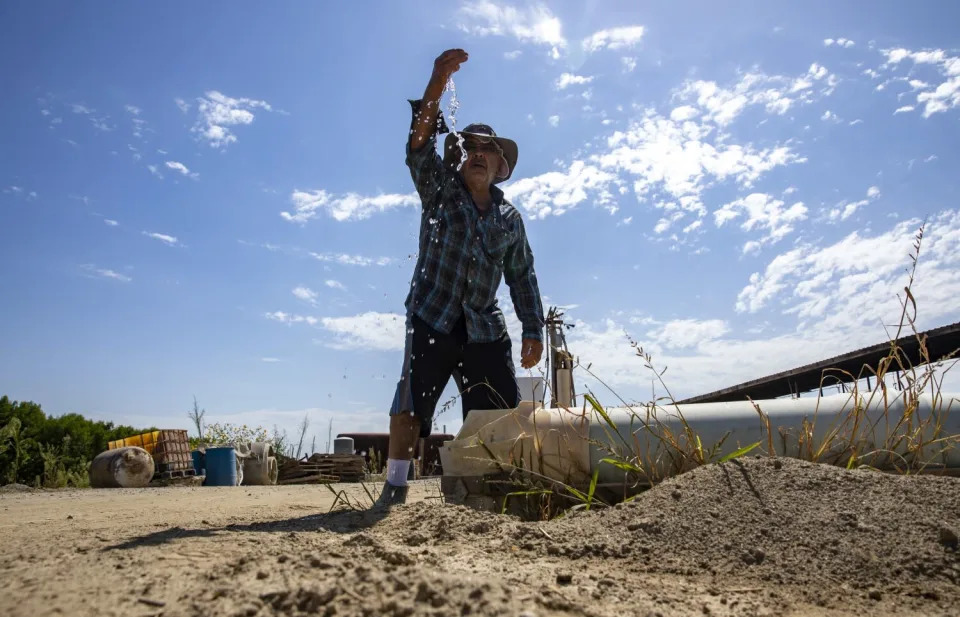
That neighbor, Frank Ferreira, said he spent $160,000 on the well, and he may need to dole out even more to dig deeper when it dries up. When asked whether the state has placed any limits on how deep he can go, Ferreira said, “not yet.”
Frank Ferreira pulls a handful of fresh water from a large open pipe at his farm near Visalia. Ferriera says the water from his well is delicious. (Brian van der Brug / Los Angeles Times)
While agriculture is a leading factor in groundwater depletion and contamination, the added layer of drought is exacerbating the problem, according to Joaquin Esquivel, chair of the State Water Resources Control Board.
“As you draw down your aquifers, you get left with more and more of the undesirable constituents,” he said. “In water quality control, it’s often said, ‘The solution to pollution is dilution.’ When you have the opposite — very little amounts coming in, little recharge happening with fresher flows — you get an increase in contaminants.”
Esquivel acknowledged that some conclusions from the state audit were fair, including some findings around delayed response times for funding and other assistance for drinking water systems. Systems can receive funds to help with the design and construction of new infrastructure, the maintenance of existing infrastructure or other projects that address or prevent public health risks. Over the past five years, the average length of time for water systems to complete applications and receive funding from the board nearly doubled from 17 to 33 months, the audit said.
An equestrian rides along Jesús Benítez’s driveway. (Brian van der Brug / Los Angeles Times)
But he also called the top-line conclusion that the board lacks urgency “bombastic” and inaccurate. Since 2019, the board has reduced the number of Californians served by failing systems by 40%, from 1.6 million to 950,000, he said. It also doubled the amount of community construction grants to $700 million and increased technical assistance funding for small disadvantaged communities by 150%.
“I think what we have is a really good down payment and a good start,” he said. “What’s helpful here is we need to continue to really be clear about how long it takes to get projects done.”
Critically, Esquivel also noted that many of the challenges the state is facing when it comes to clean, safe and affordable drinking water are the result of generations of racist policies.
“There’s a complicated context to all of this,” he said. “That’s not the excuse for why it takes the time it takes, but I think I do have to mention here that there were explicit redlining policies that purposely didn’t extend service to our communities.”
Redlining was the institutional practice of denying homeownership and financial services to residents based on race.
One Central Valley community that still feels the weight of those policies is Tooleville, which is home to about 200 residents, nearly half of whom are Latino, according to the latest U.S. Census.
In 1973, Tooleville was one of 15 communities that the Tulare County general plan deemed as having “little or no authentic future,” and for which public commitments should be “carefully examined,” one study noted.
“These non-viable communities would, as a consequence of withholding major public facilities such as sewer and water systems, enter a process of long term, natural decline as residents depart for improved opportunities in nearby communities,” the plan documents read.
But that’s not what happened. Instead, residents there have for decades depended on two wells that have become increasingly contaminated with nitrates, arsenic, hexavalent chromium, 123 trichloropropane and other pollutants. Sometimes, they sputter to a stop.
“Water flows toward money and power,” says Susana de Anda, director of the Community Water Center in Visalia. (Brian van der Brug / Los Angeles Times)
“If you’re low income and a person of color and you live in the Central Valley, you’re going to have higher chances of having to pay for toxic water and a very expensive water bill for water that can get you sick,” said Susana De Anda, co-founder and executive director of the Community Water Center.
“It’s no surprise you go into our communities and you don’t see a thriving community, because water limits growth,” she said. “The most basic thing is, without safe drinking water, it blocks all economic development.”
The Community Water Center has spent the last 16 years working with residents on the ground in communities like Tooleville and fighting for legislation such as California’s Human Right to Water Act and the Sustainable Groundwater Management Act. They also helped achieve a moratorium on unpaid water bills during the first year of the COVID-19 pandemic, De Anda said.
But while there have been many victories, the drought has created a new layer of difficulty, she said, and more than 90% of San Joaquin Valley residents are now relying solely on groundwater.
“Unfortunately the drought only worsens the already dire conditions that our community is faced with — which is they don’t have safe drinking water,” De Anda said. “That’s constant stress. Now on top of that, some are losing water. So you add the layer, again, on top of this disproportionate impact when it comes to water quality.”
Jesús Benítez looks at his dropping water pressure at his home near Visalia. (Brian van der Brug / Los Angeles Times)
In March, Gov. Gavin Newsom issued a drought order intended to slow the drilling of new wells. The order prohibits local governments from granting well-drilling permits if the proposed well is inconsistent with an area’s groundwater management plan. A piece of legislation, AB 2201, would have made that permanent, requiring groundwater sustainability agencies to weigh in on all well permit applications, but the bill didn’t come up for a final vote and died in the Legislature.
De Anda said it’s an important step in securing clean, safe water for everyone. But she also noted that all too often, “water flows toward money and power.”
“We’re talking about millions of families in California that don’t have safe drinking water and domestic wells,” she said. “The narrative should be, how do we help prioritize these communities to have a resilient community? How do we make sure that they’re part of water planning? How do we make sure that they’re at the top of the list with resources? That’s what we should be thinking about.”
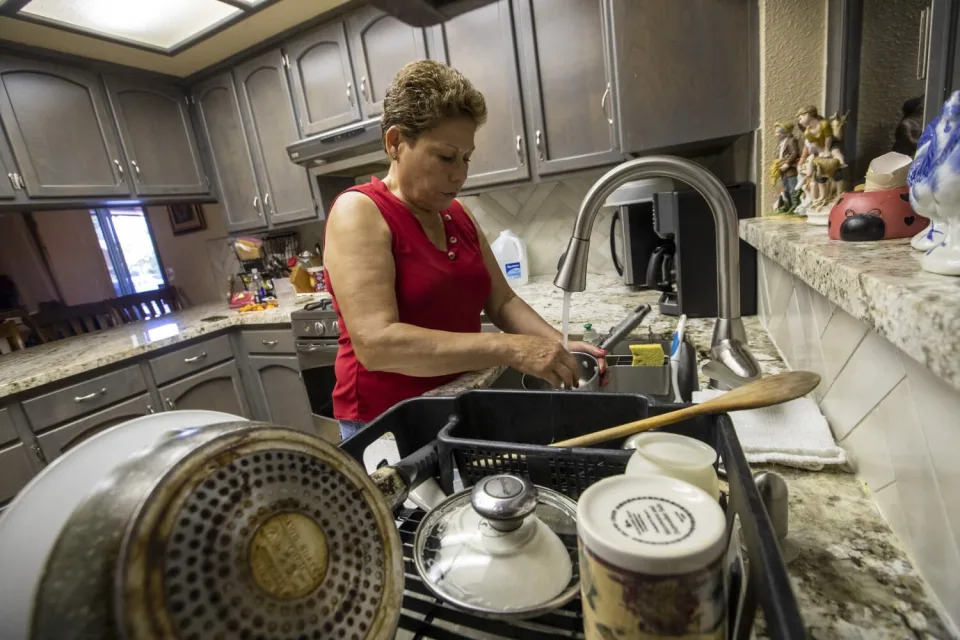
Maria Olivera, who is living with chromium and arsenic in her well and is showering with contaminated water, washes dishes at home in Tooleville. Her family drinks and cooks with bottled water supplied by the state. (Brian van der Brug / Los Angeles Times)
Pierce, of UCLA, shared a similar sentiment.
“The impact of not having sufficient water is not just that you have to spend a bunch of money and get very little water, or you can’t use water for X, Y and Z purposes,” he said. “It’s a mental health and stress impact far beyond that, and a ‘dignity as a resident of the state’ impact. It’s hard to overstate that.”
Maria Olivera, who has lived in Tooleville since 1974, today relies on bottled water that she receives in jugs from the state — 60 gallons every two weeks — which she uses primarily for cooking and drinking. But she still has to shower in contaminated water, and she has to remind her visitors not to drink it.
“It’s hard, the way we live,” said Olivera, 68. “You always have to carry the gallons.”
Recently, the state ordered the neighboring community of Exeter to connect Tooleville to its water system after more than 20 years of refusing to do so. But the project could take two years to complete, Olivera said, and until then, she’ll keep relying on the plastic gallons.
Despite the challenges, Olivera shook her head when asked about the prospect of leaving. Tooleville has been her home for nearly 50 years.
“This is it for me. Where else am I going to go?” she said. “It’s a really nice community — we just need water.”
As dangerous heat wave scorches California, Death Valley could hit a whopping 125 degrees
Doyle Rice, USA TODAY – September 2, 2022
A dangerous and sweltering heat wave will continue to consume much of the western U.S., especially California on Friday through the Labor Day weekend, the National Weather Service said.
The intense heat is exacerbating wildfire concerns and putting a strain on the electrical grid.
Temperatures in the mid- to upper 90s and lower 100s will result in widespread daily records each day for much of the region, the Weather Service said.
Notorious hot spot Death Valley could soar as high as 125 degrees on Saturday, AccuWeather said, which would come close to the hottest September temperature ever recorded on Earth of 126 degrees. The hellish location already holds the record for the world’s hottest temperature of 134 degrees, set in 1913.
Other temperature records likely to be broken
Elsewhere, many monthly temperature records are likely to be broken in inland areas of California, according to UCLA climate scientist Daniel Swain.
Nearly 50 million people from Arizona to Idaho were under excessive heat warnings and watches along with heat advisories, which probably will continue for the next several days. That includes major metropolitan areas such as Los Angeles, Sacramento and San Diego.
“Little to no relief from the heat overnight will only increase the heat stress and create a potentially dangerous situation for sensitive individuals,” the Weather Service warned.
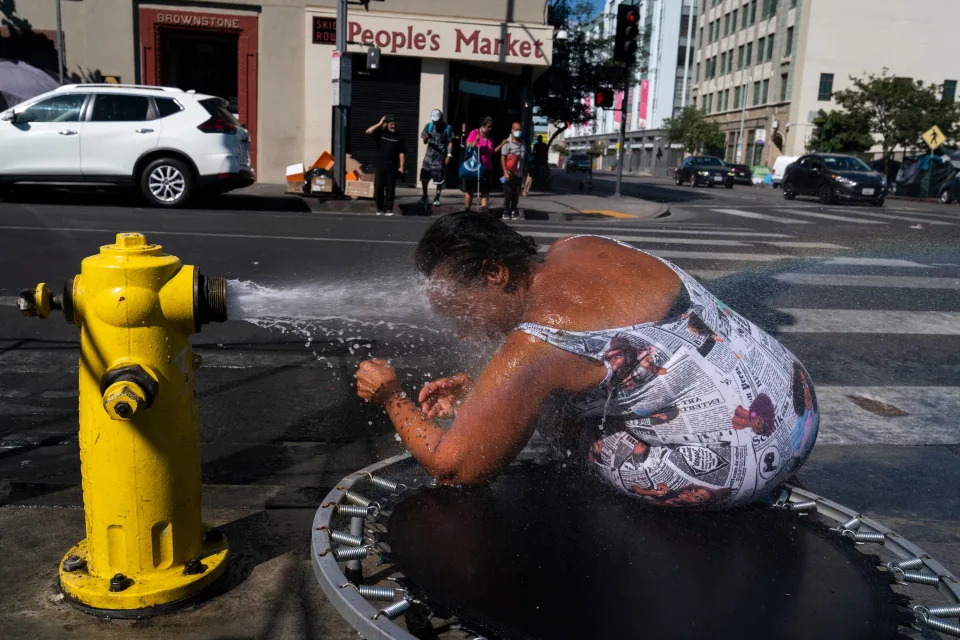
Stephanie Williams, 60, cools off with water from a hydrant in the Skid Row area of Los Angeles, Wednesday. Excessive-heat warnings expanded to all of Southern California and northward into the Central Valley on Wednesday, and were predicted to spread into Northern California later in the week.
“This heat may produce a very high risk of heat illness,” the Weather Service in Los Angeles said.
The Capital Weather Gang said, “Close to 38 million people, the vast majority of them in California and Arizona, are predicted to experience highs hitting the century mark in the coming week.”
AccuWeather chief meteorologist Jonathan Porter said: “The risks associated with this heat wave are even more concerning than other heat waves because this will be happening through the Labor Day weekend, a holiday weekend when many people are spending additional time outdoors and may be less aware of the heat risks.
“The heat wave will be notable due to its persistence – day after day of extreme heat with temperatures, in some locations such as California’s capital of Sacramento, near or exceeding 110 degrees for three or more days in a row,” Porter said.
“Extreme caution” is advised for people who go outdoors, the Weather Service in Sacramento said.
Wildfire, power concerns
Wildfires and power outages were high on the list of concerns among California officials on Friday.
In California, wildfires chewed through rural areas north of Los Angeles and east of San Diego, racing through bone-dry brush and prompting evacuations.
In northwestern Los Angeles County, the intense Route Fire near Castaic raged through more than 8 square miles of hills containing scattered houses late Wednesday. Traffic was snarled on Interstate 5, a major north-south route running through the fire area. Containment was estimated at 12% Thursday morning.
One structure had been destroyed and 550 remained threatened, the Los Angeles Times said, adding that “no civilian casualties were reported, but seven firefighters were injured.”
State officials hope to avoid rolling blackouts by asking residents to voluntarily use less power, even as the heat tempts Californians to crank up their air conditioners.
“One of the big unknowns in this (whether blackouts will happen) is that we also expect wildfires,” said Daniel Kammen, an energy professor at the University of California, Berkeley: “And wildfires will cause us to have to shut down certain transmission lines, de-energizing them to prevent wildfires.
“Then we could get into a situation where those rolling brownouts, we call them, when they’re scheduled, we tell people in advance. But right now, none of them are anticipated,” Kammen told USA TODAY.
“I wish it were cooler already,” Abby Wines, spokesperson for Death Valley National Park, told Reuters. “This is abnormally hot for September.”
The hottest temperatures of the current extended heat wave are not expected to peak until Monday or Tuesday, however, leaving open the possibility that Thursday’s record for a September day will be short-lived.
Temperature records in many parts of the state are forecast to fall in the coming days, but it’s the duration of extremely hot weather that bears the hallmarks of climate change rather than a single record being broken. Studies have linked increasing heat wave duration and frequency with rising global temperatures due to the greenhouse effect caused by the burning of fossil fuels by humans.
In Sacramento, the state capital, the city has never recorded 10 consecutive days of triple-digit temperatures. It is now in its ninth straight day, and that record is almost certain to fall, meteorologist Tamara Berg said Friday.
Death Valley, Calif., recorded a temperature of 127 degrees Fahrenheit on Thursday. (Reuters video)
Public high schools in the San Fernando Valley have altered schedules due to the heat and canceled football games. On Wednesday it was 106 degrees Fahrenheit in the valley, on Thursday it reached 107 degrees Fahrenheit and on Friday it is forecast to hit 103 degrees Fahrenheit before temperatures edge back up for the remainder of the holiday weekend.
In Death Valley, tourists have flocked to the national park to experience temperatures that will become more commonplace over the coming decades thanks to climate change. Even walking relatively short distances in the extreme heat can prove hazardous to one’s health.
“The ground heats up. We’ve measured temperatures of 201 [degrees Fahrenheit] as far as ground temperatures. The ground is then radiating heat back up into the air,” Wines said.
The National Weather Service has been issuing alerts across the state warning of the dangers that exposure to the heat can have to human and animal health.
“Dry heat means that your sweat will evaporate almost instantly, to the point where you don’t even realize you’re sweating,” Wines said. “Your shirt doesn’t get soaked and so people — their body is cooling them down through sweating and may not realize how overheated they actually are and how dehydrated they’re getting.”
California under warnings for extreme heat, fire threats
Meredith Deliso – September 2, 2022
Excessive heat and red flag warnings are in effect for much of California this weekend, as the state battles several blazes amid scorching temperatures.
Record-high temperatures could be set this Labor Day weekend, from San Diego to Los Angeles and up into Sacramento.
PHOTO: A vendor wheels around an ice cream cart in MacArthur Park in Los Angeles, Sept. 1, 2022. (Caroline Brehman/EPA via Shutterstock)
Residents in the state are urged to continue to conserve energy amid a heatwave that has tested the state’s energy grid, with temperatures across the state 10 to 20 degrees hotter than is typical this time of year.
“This kind of weather drives up energy demand, straining power generation equipment as people run their air conditioning,” California Gov. Gavin Newsom’s office said in a statement Thursday.
Since Wednesday, “two new fires have started that threaten transmission lines that supply power to millions of homes,” his office said.
Newsom declared a state of emergency on Wednesday due to the high temperatures, to temporarily increase energy production and reduce demand. For the third day in a row, the California Independent System Operator, which operates the state’s power grid, issued an alert on Friday asking residents to reduce their electricity consumption during the late afternoon and evening hours.
PHOTO: High temperatures map (ABC News)
California ISO President Elliot Mainzer said the grid experienced no “serious problems” on Thursday due to energy conservation efforts, as the prolonged heatwave pushed demand to the highest levels since September 2017.
“The hottest weather in this extended heatwave is still ahead of us,” Mainzer said in a video statement Friday. “Much of California will see record triple-digit temperatures with only moderate cooling at night, right through the Labor Day holiday weekend and into the middle of next week. So electricity conservation is going to be essential in keeping the power flowing to California without interruption.”
Amid the soaring temperatures, firefighters are also battling several blazes in California.
One of the newest threats is the Mill Fire in northern California’s Siskiyou County, which has quickly burned nearly 900 acres since starting Friday afternoon amid a red flag warning for the area and poses a danger to structures, powerlines and transmission lines.
Multiple evacuation orders and warnings are in place as Cal Fire warns of a “dangerous rate of spread” for the wildfire.
Among the largest active blazes in the state, the Route Fire has burned more than 5,000 acres in Castaic in Los Angeles County since igniting on Wednesday. It was nearly 40% contained as of Friday morning.
Amazon Closes, Abandons Plans for Dozens of US Warehouses
Matt Day and Spencer Soper – September 2, 2022
(Bloomberg) — Amazon.com Inc., determined to reduce the size of its sprawling delivery operation amid slowing sales growth, has abandoned dozens of existing and planned facilities around the US, according to a closely watched consulting firm.
MWPVL International Inc., which tracks Amazon’s real-estate footprint, estimates the company has either shuttered or killed plans to open 42 facilities totaling almost 25 million square feet of usable space. The company has delayed opening an additional 21 locations, totaling nearly 28 million square feet, according to MWPVL. The e-commerce giant also has canceled a handful of European projects, mostly in Spain, the firm said.
Just this week Amazon warned officials in Maryland that it plans to close two delivery stations next month in Hanover and Essex, near Baltimore, that employ more than 300 people. The moves are a striking contrast with previous years, when the world’s largest e-commerce company typically entered the fall rushing to open new facilities and hire thousands of workers to prepare for the holiday shopping season. Amazon continues to open facilities where it requires more space to meet customer demand.
“There remains some serious cutting to do before year-end — in North America and the rest of the world,” said Marc Wulfraat, MWPVL’s founder and president. “Having said this, they continue to go live with new facilities this year at an astonishing pace.”
Maria Boschetti, an Amazon spokesperson, said it’s common for the company to explore multiple locations at once and make adjustments “based upon needs across the network.”
“We weigh a variety of factors when deciding where to develop future sites to best serve customers,” she said in an emailed statement. “We have dozens of fulfillment centers, sortation centers and delivery stations under construction and evolving around the world.”
The Maryland closings are part of an initiative to shift work to more modern buildings, Amazon says. “We regularly look at how we can improve the experience for our employees, partners, drivers and customers, and that includes upgrading our facilities,” Boschetti said. “As part of that effort, we’ll be closing our delivery stations in Hanover and Essex and offering all employees the opportunity to transfer to several different delivery stations close by.”
Chief Executive Officer Andy Jassy has pledged to unwind part of a pandemic-era expansion that saddled Amazon with a surfeit of warehouse space and too many employees. The company has typically weaned its ranks of hourly workers by leaving vacant positions open, slowing hiring and tightening disciplinary or productivity standards. But warehouse closings are also part of the mix, and workers are bracing for more. During the second quarter, Amazon’s workforce shrank by roughly 100,000 jobs to 1.52 million, the biggest quarter-to-quarter contraction in the company’s history.
The Seattle company has also been seeking to sub-lease at least 10 million square feet of warehouse space, Bloomberg reported in May.
When homebound shoppers stampeded online during the pandemic, Amazon responded by doubling the size of its logistics network over a two-year period, a rapid buildout that exceeded that of rivals and partners like Walmart Inc., United Parcel Service Inc. and FedEx Corp. For a time, Amazon was opening a new warehouse somewhere in the U.S. roughly every 24 hours. Jassy told Bloomberg in June that the company had decided in early 2021 to build toward the high end of its forecasts for shopper demand, erring on the side of having too much warehouse space rather than too little.
Wulfraat said that most of the closings announced this year are delivery stations, smaller buildings that hand off already packaged items to drivers. Facilities that have been canceled include several planned fulfillment centers, giant warehouses containing millions of items. MWPVL estimates that Amazon operates more than 1,200 logistics facilities, large and small, around the US.
More belt-tightening could complicate Amazon’s already fraught relations with organized labor. Earlier this year, an upstart labor union started by a fired Amazon worker won a historic victory at a company warehouse in Staten Island, New York. A federal labor official on Thursday rejected Amazon’s bid to overturn the result. Last month, workers at an Amazon facility near Albany, New York, filed a petition to hold a union election there.
How much overcapacity Amazon needs to work through is hard to gauge, and some analysts believe the extra space will come in handy during the Christmas holiday season.
(Updated with additional Amazon comment beginning in the fifth paragraph.)
Barbara Ehrenreich, activist and groundbreaking ‘Nickel and Dimed’ author, dies at 81
Nardine Saad, Dorany Pineda – September2, 2022
Author Barbara Ehrenreich at her home in Charlottesville, Va., in August 2005. (Andrew Shurtleff / Associated Press)
Barbara Ehrenreich, the author, journalist and political activist whose groundbreaking work of immersive journalism, “Nickel and Dimed,” presaged and arguably helped spark the resurgence of the American labor movement, has died. She was 81.
Ehrenreich died Thursday in Alexandria, Va., after recently suffering a stroke, the Associated Press reported Friday.
“Sad news. Barbara Ehrenreich, my one and only mother, died on September 1, a few days after her 81st birthday,” her son, author and journalist Ben Ehrenreich, tweeted Friday.
“She was, she made clear, ready to go. She was never much for thoughts and prayers, but you can honor her memory by loving one another, and by fighting like hell,” he wrote.
Following news of her death, writers, journalists and activists took to social media to pay their respects.
“Heartland” author Sarah Smarsh called Ehrenreich’s contributions to U.S. discourse around class and injustice “immeasurable. … May she rest in peace, & may we include class in every conversation about justice.”
Robert Reich, former U.S. secretary of Labor, called her “inimitable. … Our abiding thanks to her for her contributions to the labor, progressive and women’s movements, her brilliant literary journalism, and her tenacious appeals to common sense. She will be sorely missed.”
“Barbara Ehrenreich changed my life in many ways,” tweeted New York state Rep. Emily Gallagher. “Not only was I forever inspired by ‘Nickel and Dimed,’ I recently took a deeper dive into her earlier feminist pamphlets and felt kinship by her relentless pursuit of socialist feminism. Thank you Barbara [heart emoji] we continue your work.”
The Montana-born writer, also known for “Bait and Switch: The (Futile) Pursuit of the American Dream” and “Natural Causes: An Epidemic of Wellness, the Certainty of Dying and Killing Ourselves to Live Longer,” rallied for higher minimum wage, pushed against white privilege and challenged conventional thinking about race, religion, class, American exceptionalism, gender politics, the mechanics of joy and the gap between rich and poor.
A proponent of liberal causes such as economic equality and abortion rights, Ehrenreich wrote 20 books and was also the founding editor of the Economic Hardship Reporting Project. She frequently contributed to the Los Angeles Times and other publications such as Mother Jones and the Nation.
Her 1989 book, “Fear of Falling: The Inner Life of the Middle Class,” was nominated for a National Book Critics Circle Award. Her 2001 bestseller, “Nickel and Dimed: On (Not) Getting By in America,” traced her own journey as a waitress and hotel housekeeper, among other low-income jobs, and became one of her best-known works.
In that book, she wrote “to be a member of the working poor is to be an anonymous donor, a nameless benefactor, to everyone.” She learned — and wrote — that living on $7 an hour was not a way to live at all.
In a 2001 review for The Times, Stephen Metcalf called the book “thoroughly enjoyable, written with an affable, up-your-nose brio throughout. Ehrenreich is a superb and relaxed stylist, and she has a tremendous sense of rueful humor. … Social critics often sting but just as often lack real antiseptic power. Not so Ehrenreich, an old-time southpaw, a leftie without a trace of the apologetic squeak that’s recently crept into the voice of the left — and crept in while conservatives have stertorously monopolized phrases like ‘civilized society.'”
In 2009, Ehrenreich asked in The Times if feminism had “been replaced by the pink-ribbon breast cancer cult,” hoping to ignite a new women’s health movement. In 2014, she asked “how do we reconcile the mystical experience with daily life” for a memoir that she never set out to write, thinking the form was too self-involved.
Nonetheless, she crafted “Living With a Wild God: A Nonbeliever’s Search for the Truth About Everything,” a personal history and spiritual inquiry that pulled from journals she wrote between the ages of 14 and 24.
In a 2014 review of the book, David L. Ulin, a former Times books editor and critic, emphasized that the memoir was “not a book of faith. Educated as a scientist, trained as a reporter, Ehrenreich does not believe in what she cannot see. As such, she turns to philosophy, chemistry and physics; she traces the influence of her home life, which was dysfunctional (both parents were alcoholics) but encouraged asking questions and thinking for oneself.”
Barbara Alexander was born in Butte, Mont., in 1941, to a mother who was a homemaker and a father who was a copper miner before earning a PhD from Carnegie Mellon University and becoming the director of research at Gillette.
According to the Associated Press, she was raised in a union household where family rules included “never cross a picket line and never vote Republican.”
She also said she was born and raised into atheism “by people who had derived their own atheism from a proud tradition of working-class rejection of authority in all its forms, whether vested in bosses or priests, gods or demons.” She was a student activist, was educated as a scientist — she studied physics at Reed College and earned a PhD in cellular biology from Rockefeller University in 1968 — but trained as a teacher and reporter.
After getting her doctorate, she joined a group of activists trying to improve healthcare for poor New Yorkers, which cemented her love of reporting and writing. “Health seemed related to biology,” she told the Washington Post in 2005.
Her 1983 book, “The Hearts of Men: American Dreams and the Flight From Commitment,” helped her get assignments at the New York Times and launched her journalism career. She wrote a regular column for Time from 1990 to 1997. Her most notable books from that period include “Fear of Falling” and “Blood Rites: Origins and History of the Passions of War.”
Barbara Ehrenreich in New York in 2007. (Andrew Harrer / Bloomberg via Getty Images)
In 2019, after the release of “Natural Causes,” she explored “Silicon Valley syndrome,” or “towering hubris,” the pursuit of not just extending the quality of life but living forever.
The prolific author told The Times that once she realized she was old enough to die, she decided she would put up with no more “suffering, annoyance and boredom” in pursuit of a longer life. Instead, she opted to choose the foods she liked, the exercise that sufficed and the doctor visits that addressed the pains she actually felt. At the time, she had just released “Natural Causes.”
Ehrenreich was motivated by a desire to shed light on ordinary people as well as the “overlooked and the forgotten,” her editor, Sara Bershtel, told the New York Times.
She is survived by her son and her daughter, Rosa Brooks.
Barbara Ehrenreich, muckraking writer and activist, dies
Associated Press –September 2, 2022
Barbara Ehrenreich, the muckraking author, activist and journalist who in such notable works as “Nickel and Dimed” and “Bait and Switch” challenged conventional thinking about class, religion and the very idea of an American dream, has died at age 81.
Ehrenreich died Thursday morning in Alexandria, Virginia, according to her son, the author and journalist Ben Ehrenreich. She had recently suffered a stroke.
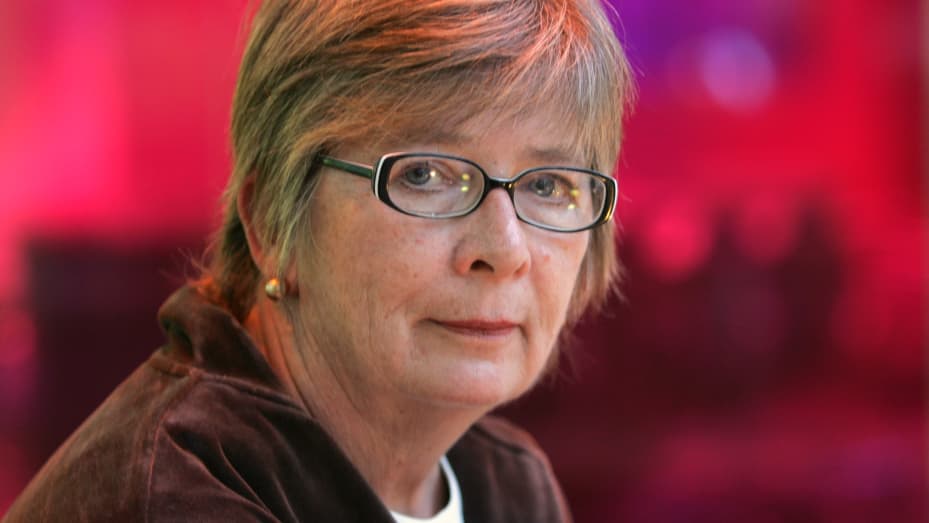
Barbara Ehrenreich, author of Dancing in the Streets, poses in New York on Wednesday, January 10, 2007.Andrew Harrer | Bloomberg | Getty Images
Barbara Ehrenreich, the muckraking author, activist and journalist who in such notable works as “Nickel and Dimed” and “Bait and Switch” challenged conventional thinking about class, religion and the very idea of an American dream, has died at age 81.
Ehrenreich died Thursday morning in Alexandria, Virginia, according to her son, the author and journalist Ben Ehrenreich. She had recently suffered a stroke.
“She was, she made clear, ready to go,” Ben Ehrenreich tweeted Friday. “She was never much for thoughts and prayers, but you can honor her memory by loving one another, and by fighting like hell.”
Barbara Ehrenreich was a Montana native, raised in a union household where family rules included “never cross a picket line and never vote Republican.” A prolific author who regularly turned out books and newspaper and magazine articles, she was a longtime proponent of liberal causes from economic equality to abortion rights. For “Nickel and Dimed,” one of her best known books, she worked in minimum wage jobs so she could learn firsthand the struggles of the working poor, whom she called “the major philanthropists of our society.”
“They neglect their own children so that the children of others will be cared for; they live in substandard housing so that other homes will be shiny and perfect; they endure privation so that inflation will be low and stock prices high,” she wrote. “To be a member of the working poor is to be an anonymous donor, a nameless benefactor, to everyone.”
Barbara Ehrenreich, author who resisted injustice, dies aged 81
Ed Pilkington – September 2, 2022
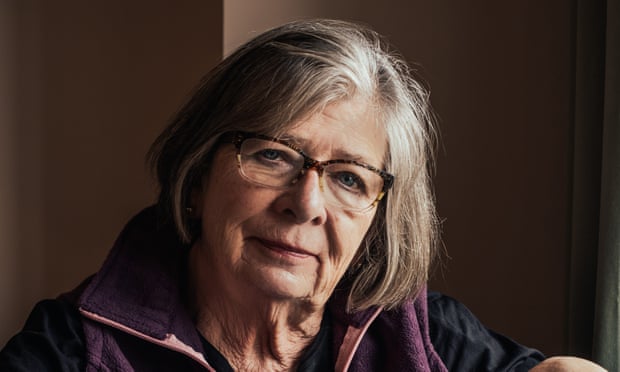
Barbara Ehrenreich in 2018. Photograph: Stephen Voss/The Guardian
Writer of the 2001 bestseller Nickel and Dimed died on 1 September, her son announced
Barbara Ehrenreich, the author of more than 20 books on social justice themes ranging from women’s rights to inequality and the inequities of the American healthcare system, has died at the age of 81.
The news that Ehrenreich had died on 1 September was released by her son, Ben Ehrenreich, on Friday. He accompanied the announcement with a comment redolent of his mother’s spirit: “She was never much for thoughts and prayers, but you can honor her memory by loving one another, and by fighting like hell.”
Ehrenreich battled over a half a century as a writer committed to resisting injustice and giving a voice to those who were typically unheard.
Her first book, published in 1969, Long March, Short Song, was an account of the student uprising against the Vietnam war.
In Nickel and Dimed: On (Not) Getting By in America, her 2001 bestseller, she wrote an immersive experience of living as a low-waged worker in Key West, Florida.
The book helped spread awareness of an economy in which it was necessary to work two or three jobs to survive, and acted as a catalyst of the minimum wage movement.
Later, she used her name and energy to try to give low-income and other disadvantaged groups a direct voice to tell their own stories.
She founded the Economic Hardship Reporting Project which supports independent journalists to write about their lives including in poor rural areas of the US.
Ehrenreich, who acquired a doctorate in cell biology before she turned to social activism and writing, was diagnosed in 2000 with breast cancer. She wrote an award-winning essay Welcome to Cancerland about the experience.
She brought her trademark clear-eyed reporting to the subject of her own mortality. In 2018 she published Natural Causes: An Epidemic of Wellness, the Certainty of Dying, and Killing Ourselves to Live Longer, in which she described coming to the realization that she had lived long enough to die.
“That thought had been forming in my mind for some time,” she told the Guardian at the time. “I really have no hard evidence about when exactly one gets old enough to die, but I notice in obituaries if the person is over 70 there’s not a big mystery, there’s no investigation called for. It’s usually not called tragic because we do die at some age. I found that rather refreshing.”
Announcing his mother’s death on Twitter, Ben Ehrenreich echoed that point. “She was, she made clear, ready to go,” he said.