How do I fix an overwatered plant? The warning signs – and ways to combat excessive moisture

Homes & Gardens

How do I fix an overwatered plant? The warning signs – and ways to combat excessive moisture
Drew Swainston – July 8, 2023

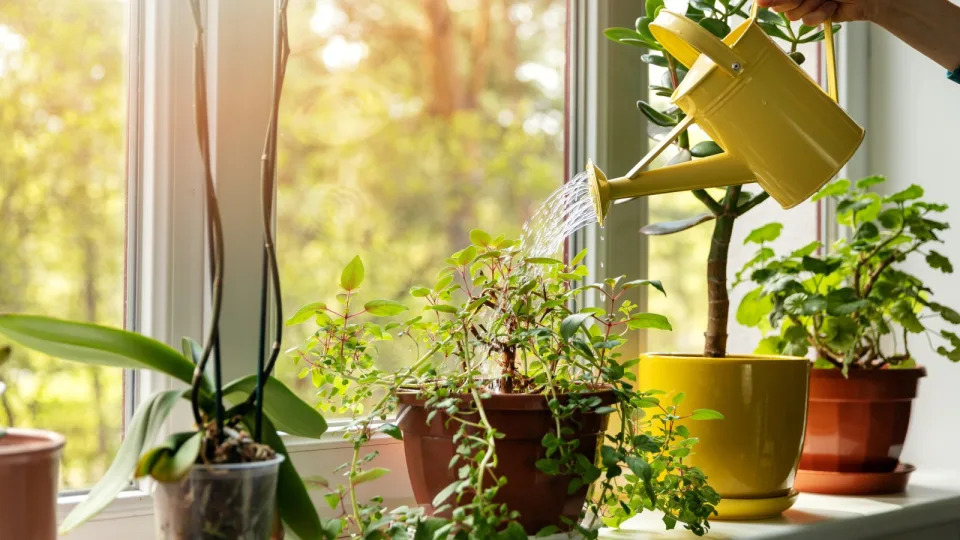
 Watering houseplants on a windowsill
Watering houseplants on a windowsill

Overwatering plants is a common mistake to make and many people do not realize it can be as dangerous as underwatering. There is the potential for plants to be killed by overwatering as the roots can essentially be suffocated by too much moisture in the soil.

However, rest assured that there are tried-and-tested methods of fixing a plant that has been overwatered and getting it back to a healthy and thriving state again. The measures can be as simple as stopping watering until the soil dries out, to moving the plant or repotting it into a new soil mix.

Judging when to water plants is always tricky, especially so for a novice gardener, so it pays to know those classic signs of overwatering so you can spot them quickly and make any moves required to deal with that excess moisture in the soil.

What should I do if I overwater my plant?

watering potted plants

Overwatering plants happens. It is often a case of over-enthusiasm and mis-judging how much moisture the plants need, though it can be a year-round issue and equally as problematic during the winter months as when watering plants in hot weather.

There are recommended tactics to avoid potential plant overwatering, such as watering plants from the bottom if they are in pots. You can also get aids, such as self-watering planters (our pick is below) or using DIY drip irrigation techniques to help control the watering of indoor plants or when container gardening.

However, there are tell-tale signs that any plant has been overwatered which are important to recognize. This includes yellowing or browning leaves, wilting, and also the soil can look green as a result of algae growth.

At the first sign of any of these, move quickly to see if overwatering could be the cause. While it is more common to overwater houseplants or those in containers, overwatering outdoor plants does also often occur and the signs to look out for will be the same.

The first move should be to check how wet the soil is around the base of the plants. When watering plants in containers, always use your fingers to see the moisture levels a few inches down in the pot. The soil may look dry on top, but still be very sodden below the surface and adding more moisture can easily lead to overwatering. An alternative to using your fingers is to get a soil moisture meter that can be inserted and give an instant reading with regards to water levels. Sonkir’s meter is by far Amazon’s best seller with over 30,000 positive reviews, and can also test soil pH.

If you fear overwatering to be the issue, then there are simple steps to take. Which one is the best step is likely to be dependent on how fast you spotted the signs of this garden watering mistake and how waterlogged the soil got.

ETGLCOZY 6/4.1/3.2 Inch Self Watering Planter Pots | available at Amazon
These set of five self-watering pots can allow up to 14 days of watering per fill and their clear view window allows you to monitor when it is time to fill the pot. They are ideal for indoor plants and can help prevent overwatering View Deal

1. Stop watering

It may seem obvious, but the main thing to remember is to stop giving an overwatered plant any more water. Continuing to add more water to an already overwatered plant can further exacerbate the issues and increase the chance of root rot.

It may take many days for the soil to dry out, but hold off from watering the plant while it dries out. If the problem has been identified quickly then merely letting the soil dry out and then adjusting your watering schedule to better suit the plant can often do the trick.

Woman watering plants
2. Re-pot the plant

To help the plant to recover from overwatering, it can be beneficial to re-pot it and improve the soil type in which it is living. Depending on how sodden the soil is, it might be possible to lift the plant out of the pot and allow the soil to dry in the air for a few hours. If the soil is so wet this seems unlikely, then it would be best to re-pot it completely into a better soil mix.

How to repot an overwatered plant in 5 simple steps:

  1. Remove the plant from the pot and try to remove as much of the wet soil as you can.
  2. Inspect the roots and cut off any rotting sections, they will look brown and potentially have a decaying odor.
  3. Pick a pot and make sure there are holes in the bottom for drainage. You can reuse the same pot, but it is best to wash it out beforehand.
  4. Repot the plant in a mix of free-draining compost, for example the Premium Organic Potting Mix from Burpee, with some perlite or grit added in for extra drainage. Do not reuse potting soil, or use garden soil in pots as it holds too much moisture.
  5. Place the pot in a shady spot and refrain from watering until the soil mix feels dry.
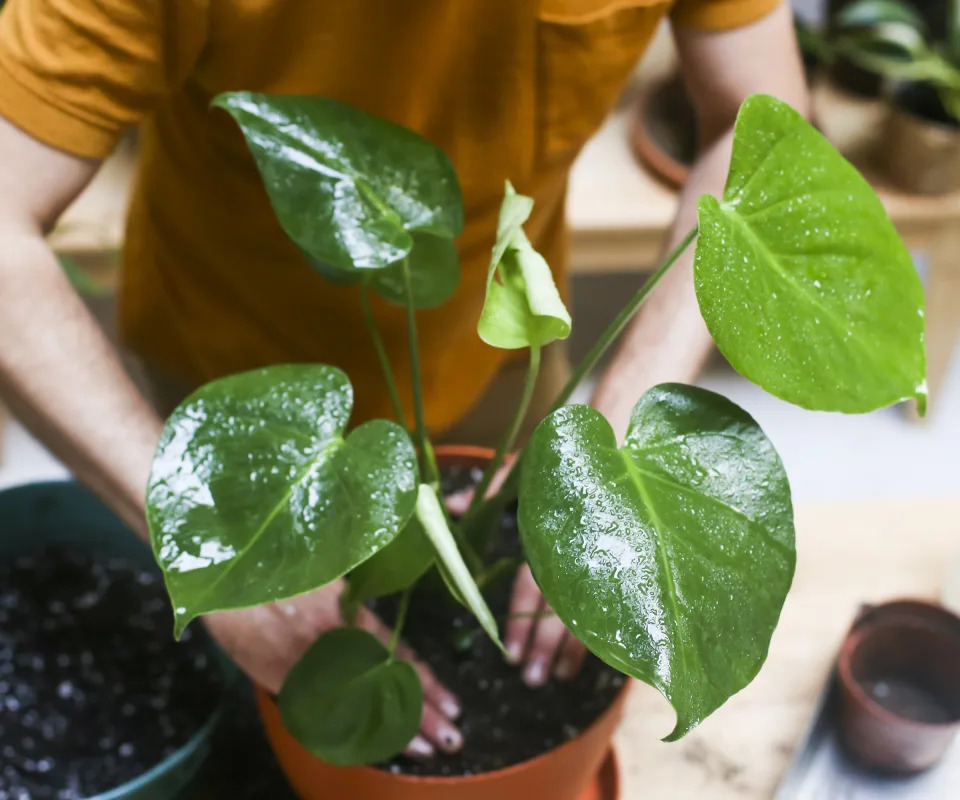
Repotting a houseplant
3. Move the pot

While the instinct might be to move the plant to the sunniest spot possible to help dry out the soil, this can actually do the plant further harm. It is far better to move the plant into a shaded spot to allow it to dry out.

A plant that has been overwatered will struggle to move water to its upper leaves, which can leave the upper levels of the plant at risk of drying out due to evaporation in full sun. This can further stress the plant, it is better to move the plant to a shady spot and remove any flowers or fruits that are towards the top. Removing theses helps the plant focus its energy into recovery and surviving.

Plants in pots on a balcony
4. Increase air flow

Increasing the air flow can help to dry a plant out. This can be particularly beneficial if you can lift the plant out of the pot and air dry the soil around the root ball. Air flow can help to dry out soil that is holding too much moisture, especially if they are in porous terracotta pots, and it can dry soil throughout the whole container. This can be achieved by placing a fan nearby.

If you can lift the root ball, lay it on a rack and get some air movement around it to help reduce some of that excess moisture. Once dried, the root ball can go back into the pot again.

FAQs
How long does it take for a plant to recover from overwatering?

The time it takes for a plant to recover from overwatering will depend on certain factors, including how sodden the soil is, the pot size, and temperature. It is a case of playing the waiting game and monitoring how long it takes for the soil to dry out completely before starting to water again. It can take between one and two weeks for a plant to dry out and start the recovery process from being overwatered.

What are signs of root rot?

The tricky thing with root rot is that, while there can be signs of the issue showing above the ground, you cannot be sure until you lift the plant. By this time there could be a lot of damage done to the plant’s overall health. The signs to look for include yellowing leaves, wilting, overall slow growth of plants, and also a rotting smell from the soil. Roots affected by rot will be brown or black in color, potentially slimey, and smelling of decay. There is no treatment for root rot, you can trim off any affected sections if you catch it in time and hope there are enough healthy roots remaining to maintain the plant.

Should I re-pot after overwatering?

There are many scenarios where it is helpful to re-pot a plant after overwatering. This is especially the case where the plant is living in a pot that does not have holes in the bottom for drainage. If there is nowhere for the water to go, the bottom of the pot can fill with moisture and start to suffocate the roots. If the soil is very sodden, or the pot does not have holes for excess water to escape through, then it is important to repot the plant.

Should I water an overwatered plant?

No, you should not water an overwatered plant. Continuing to add more moisture further increases the risk of root rot and the eventual demise of your plant. Stop watering and carefully monitor the plant until the soil dries out. Check the moisture levels regularly using your fingers to see the level a few inches into the soil. Only when the soil becomes dry to the touch should you start adding water and alter the watering schedule to prevent overwatering again.

Overwatering can often be a problem with container plants and houseplants, though it does not need to be the end of the road for any affected plant. Always get to know your plants, learn what watering they need to be at their best. and tailor any schedule to them. Never treat all plants the same when it comes to watering, as that can spell trouble. And monitor them closely, the sooner you see any troublesome signs the quicker you can act and the more likely it is the plant can pull through fine.

Texas considered a bill that would severely limit residents’ use of solar power: ‘[It] would turn all of Texas into an HOA’

TCD

Texas considered a bill that would severely limit residents’ use of solar power: ‘[It] would turn all of Texas into an HOA’

Laurelle Stelle – July 8, 2023

The Texas legislature recently considered a bill to heavily restrict the generation of wind and solar energy, University of Texas at Austin research scientist Joshua D. Rhodes revealed in a tweet.

The bill in question was Texas SB 624co-sponsored by Senators Lois Kolkhorst, Mayes Middleton, and Bryan Hughes. It would have established new permit requirements for affordable “renewable energy” — not for dirty energy sources, such as coal. In a win for clean energy, it failed to get out of committee.

According to the latest version of the bill (as of late May), any Texas resident with a large solar or wind system who wanted to connect to the grid would have needed a permit. The lengthy permitting process would have required a public meeting to allow comments, multiple surveys and assessments, and a website with information about the project.

SB 624 would also have required that wind turbines be placed a whole 3,000 feet — more than half a mile — away from the property line, except with the permission of neighboring property owners.

“Texas #SB624 would turn all of Texas into an HOA where your neighbors are now going to be able to tell you what you can and can’t do on your own property,” tweeted Rhodes.

As written, the bill applied to facilities with a capacity of 10 megawatts or higher to connect “with a transmission facility.” That wouldn’t include small residential systems, which are usually between one and four kilowatts (0.001 to 0.004 megawatts), according to Yes Energy Solutions.

However, it would have applied to the many wind farms set up by rural property owners across Texas, Rhodes said.

“Our current and expected fleet of renewables are set to pay landowners tens of billions of dollars over their lifetimes, but those Texans might get less if their neighbors protest,” he said in a comment.

Power Up Texas said the new bill would not only have harmed Texas landowners financially but would also have made the energy grid less stable and raise the cost of electricity for everyone.

According to state legislators, the bill’s purpose was to protect wildlife, water, and land from the effects of energy generation. But it’s telling that the proposed law applied only to nonpolluting wind and solar, rather than heavily polluting energy sources like coal and oil that have a much harsher impact on our air and our planet.

Lawsuit seeks to end new law signed by Greg Abbott banning water breaks after Texas heat wave deaths

Salon

Lawsuit seeks to end new law signed by Greg Abbott banning water breaks after Texas heat wave deaths

Tatyana Tandanpolie – July 7, 2023

Greg AbbottBrandon Bell/Getty Images

Officials in Houston, Texas, filed a lawsuit on Monday looking to keep the state from enforcing an oppressive law critics have dubbed the “Death Star” bill.

House Bill 2127 is set to go into effect on Sept. 1 after Republican Gov. Greg Abbott signed it into law on June 6, according to MSNBC’s “The ReidOut” blog. The new law restricts local governments by preventing them from passing certain ordinances if they contradict state laws in eight key areas: agriculture, finance, business and commerce, insurance, local government, labor, natural resources, property or occupations.

In the newly filed lawsuit, lawyers representing the city argue that, in broadly pre-empting local laws, the bill violates the state Constitution, and ultimately call the measure “hopelessly vague.” The city, thus, asks the court to make the law “void and unenforceable.”

“Because of HB 2127’s vagueness, Houston will not know with any certainty what laws it may enforce, and its residents and businesses will not know with certainty what laws they must obey,” the suit reads. “This high level of uncertainty and confusion concerning the validity of virtually all local laws in important regulatory areas and those concerning health and safety themselves constitutes a concrete injury.”

Arguing that the bill will incite confusion, the lawsuit cites the so-called Death Star law’s lack of a requirement for local legislation to actually conflict with state laws in order for it to be prevented from taking effect.

“Under HB 2127, if the State regulates anything in an unspecified ‘field,’ local regulation is arguably entirely precluded in the undefined area unless there is express legislative authorization,” according to the lawsuit.

Related

Scorching temperatures broke records three times this week and July is just getting started

The lawsuit also comes after a deadly heat wave wracked the state last month, resulting in a public health crisis, the deaths of 11 people between the ages of 60 and 80 in Webb County since the bill was signed, and a surge in emergency department visits related to the record-breaking, 100-degree temperatures.

In Texas prison facilities without air conditioning, at least nine incarcerated people, including two men in their 30s, died last month from heart attacks or unknown causes. Another harrowing incident saw a teen and his stepfather die after the 14-year-old lost consciousness during a hike in Big Bend National Park and the stepfather crashed his car while racing to find help. Plus, at least four workers have died in the state after collapsing in three-digit heat, the Texas Observer reports: a Dallas post office worker, an East Texas utility lineman and two Houston construction workers.

While the nature of the worker deaths is still under investigation, the Observer notes that hyperthermia is likely the cause. Considering climate scientists told the Tribune that heat waves will become increasingly severe and common due to climate change, the risk to public health will only rise.

Once HB 2127 goes into effect in September, local ordinances mandating water breaks for workers outdoors in cities across the state, which the Observer writes contributed to a “significant decrease in annual heat-related illnesses and heat deaths,” will be overturned and localities will be barred from passing new ones.

A spokesperson for Abbott said that “ensuring the safety of Texans is a top priority as our state experiences high summer heat,” in a statement, noting that overriding local laws won’t keep workers from taking breaks under the federal Occupational Safety and Health Administration’s (OSHA) standards.

But some workers fear that the lack of local protections will mean bosses hoping to increase production will eliminate breaks, the Observer said.

The city of Houston’s lawsuit also calls out the possibility of widespread, city deregulation sparked by individuals and businesses pursuing their own interests and justifying the acts under the law.

“Houston will have to defend against a likely barrage of lawsuits brought by trade associations or individuals essentially to deregulate their industries or businesses at the local level,” the suit claims, adding an accusation that Texa’ Republican legislators are creating “a public/private enforcement regime that will penalize and raise the risk of Houston’s exercising its clear and expansive constitutional authority.”

Related

Climate change is driving earlier springtimes. For some birds, that could equal extinction: Study

If successful, the suit will protect the water mandates and other measures like the Houston program providing 30,000 uninsured people with healthcare, Mayor Sylvester Turner noted.

“HB 2127 reverses over 100 years of Texas constitutional law without amending the Constitution,” Turner said in a public statement. “Because Texas has long had the means to preempt local laws that conflict with State law, HB 2127 is unnecessary, dismantling the ability to govern at the level closest to the people and therefore punishing all Texas residents. Houston will fight so its residents retain their constitutional rights and have immediate local recourse to government.”

A parasite in bagged salad was linked to a spike in cases of a stomach bug that can cause explosive diarrhea

Insider

A parasite in bagged salad was linked to a spike in cases of a stomach bug that can cause explosive diarrhea

Serafina Kenny – July 7, 2023

An opened bag of leafy greens and carrot salad
Leafy greens are a common source of food contamination.Getty
  • A doubling of stomach illnesses in Florida was linked to a parasite.
  • Cyclosporiasis can cause explosive diarrhea, but usually goes away on its own.
  • Leafy greens like salad are among the leading causes of food poisoning in the US.

A doubling in cases of a stomach illness in Florida last year was partly linked to people eating bagged salad containing a parasite, according to the Centers for Disease Control and Prevention.

The illness, cyclosporiasis, is caused by a microscopic parasite called Cyclospora cayetanensis, which can spread to humans from food and water contaminated with feces carrying it. In the US, cases are often linked to people ingesting imported fresh produce carrying the parasite, according to the CDC. However, cases have recently been linked to US-grown produce.

There were 513 confirmed cases of cyclosporiasis in Florida in 2022, double the amount reported the previous year, according to a CDC report published on Thursday. The Florida Department of Health surveyed 457 of these people to find out how they were exposed to the parasite.

Of those, 330 hadn’t travelled internationally, including 200 who had been exposed to prewashed bagged salad in the weeks before they became ill the in spring and summer of 2022. A further 85 of those 200 people (43%) had eaten the same brand of Caesar salad kit from the same grocery store chain, which contained only romaine lettuce.

Genetic testing of stool samples from 211 of the cyclosporiasis patients also traced the illnesses back to bagged salad, but the source of the contamination was not discovered.

Cyclosporiasis can cause diarrhea, stomach pain, and nausea

Symptoms of cyclosporiasis include watery diarrhea and sometimes explosive bowel movements, as well as loss of appetite, bloating, stomach pain, nausea, and fatigue, according to the CDC.

The illness can go away by itself in people with healthy immune systems, which can take between a few days to a month if left untreated. Doctors can also prescribe antibiotics to treat the illness, and antidiarrheal medicine can help to lessen the symptoms.

Leafy greens are a common cause of food poisoning

Most bagged salads are safe to eat, but a 2018 CDC study found that between 1998 and 2008, leafy vegetables were the type of produce most likely to cause illness.

This is because there are so many points at which fresh produce can become contaminated before it reaches your plate – including germs from animal poop getting into the water used to keep plants hydrated, in the processing and transportation of the produce, and from unwashed hands picking produce up in grocery stores.

Leafy greens also spoil quicker than other foods, so can go bad even before they are technically out of date. Unlike other foods, they are risky to consume after their use-by date.

You can prevent cyclosporiasis by washing your fresh produce

Anyone can get sick with cyclospoiasis, but handling fresh fruit and vegetables correctly can help prevent it from spreading. This means washing all fresh produce before eating or cooking with it, and refrigerating cut, peeled or cooked produce as soon as possible, the CDC says.

The US government’s FoodKeeper App recommends that you refrigerate bagged leafy greens and consume them within two days of opening.

DeSantis’ veto of electric cars bill cost taxpayers $277 million, critics say

Orlando Sentinel

DeSantis’ veto of electric cars bill cost taxpayers $277 million, critics say

Jeffrey Schweers, Orlando Sentinel – July 7, 2023

Suzanne Cordeiro/AFP/GETTY IMAGES NORTH AMERICA/TNS

TALLAHASSEE — Gov. Ron DeSantis was more concerned about Iowa corn farmers than Florida taxpayers when he vetoed a popular bill that could have saved the state $277 million by adding electric vehicles to state and local government fleets, a Democratic critic says.

More EVs would mean less of a demand for ethanol, which is processed from corn grown in states such as Iowa, the expected home to the first presidential caucus next year.

It’s another example of DeSantis putting his own political ambitions to be president over the needs of Floridians, said Rep. Anna Eskamani, D-Orlando.

“The Iowa caucus voters who are all about ethanol don’t see electric vehicles as something that is economically in their favor,” Eskamani said. “DeSantis is catering to his Iowa voters, not passing policy for Floridians.”

The electric car bill, SB 284, sponsored by Sen. Jason Brodeur, R-Lake Mary, would have required all state and local governments, colleges and universities to buy vehicles based on their lowest lifetime costs. Current law requires such purchases to be based on fuel efficiency.

It ordered the Department of Management Services to make recommendations by July 1, 2024, to state agencies, colleges, universities and local governments about buying electric vehicles and other vehicles powered by renewable fuels.

“It allows us to look at procuring electric vehicles,” Brodeur said. “It doesn’t mean you have to purchase any.”

The governor’s veto last week was perplexing, supporters said. Both the Florida Natural Gas Association and the Sierra Club supported the measure, along with the Advanced Energy United and Electrification Coalition, a group that supports increasing the use of alternative-fuel vehicles.

“It was a common sense, good governance bill. There is nothing in this bill that any person in America should be against,” said former Sen. Jeff Brandes, a Tampa Bay Republican who tried getting similar legislation through last year.

The law could have saved state and local governments $277 million over 15 years by adding more electric vehicles to their fleets, said Michael Weiss, the Florida state lead at Advanced Energy United, a trade association of clean energy companies.

Advanced Energy United and the Electrification Coalition calculated the bill would have saved governments an average of $18,000 per vehicle by switching to an all-electric vehicle fleet, Weiss said. Using the state’s vehicle data provided by the Department of Management Services, they conducted a total cost analysis of the state’s fleet.

“This veto is a baffling decision that will cost Florida taxpayers millions of dollars,” Weiss said. “The Florida Legislature saw the clear economic and taxpayer benefits of a modern and efficient state fleet, but Gov. DeSantis somehow didn’t get the memo.”

It was only a few years ago that DeSantis touted the benefits of electric cars at a news conference announcing the construction of EV charging stations at rest stops along Florida’s Turnpike.

“It’s amazing how much cheaper it is to just charge a vehicle than to fill up a gas tank,” DeSantis said at the time. “And so as technology evolves, we hope that that’ll be reflected in people’s pocketbooks. So we want to make sure we have the infrastructure in place to make that a reality.”

His staff didn’t respond to a request to explain the veto.

The bill passed both chambers of the Legislature with just a single no vote, by Rep. Yvonne Hinson of Gainesville. But it is not likely anyone would even suggest trying to override the veto because of the governor’s immense grip on Tallahassee.

“That’s not going to happen,” Eskamani said.

Eskamani said DeSantis also has put personal politics first with culture war laws such as sexual orientation in schools, banning gay-themed books and drag shows, and making it harder for unions to collect dues.

She and other Democrats have pointed out problems such as soaring insurance premiums and a spike in housing costs that go unsolved.

“Not a single part of his agenda that passed is helping Floridians,” she said. “His agenda is tailored to the needs of Republican [primary and caucus voters].”

As an Idaho Republican, I yearn for a return to the party’s true conservative roots

Idaho Statesman – Opinion

As an Idaho Republican, I yearn for a return to the party’s true conservative roots | Opinion

Idaho Statesman – July 7, 2023

Idaho GOP

As a common-sense Republican, I find myself increasingly disheartened by the actions and direction of the Idaho Republican Party. What was once a party rooted in conservative principles, fiscal responsibility and limited government has seemingly veered off course. Instead of focusing on the core values that initially attracted me, I witness a growing inclination toward extreme ideologies, divisive rhetoric, and attention to issues that do not matter. It is disappointing to see a lack of collaboration, compromise, and a willingness to engage with diverse perspectives, which includes members of their own party. The party should be a platform for inclusive and effective governance, but it seems to be losing sight of its purpose. As a Republican, I yearn for a return to the party’s true conservative roots and a renewed commitment to serving the people of Idaho with integrity and thoughtful leadership.

William Moylan, Caldwell

Maternal mortality

On July 1, Idaho became the only state without a legal requirement or specialized committee (Maternal Mortality Review Committee) to review maternal deaths related to pregnancy.

Idaho stands alone with this “achievement,” and disbanding the committee at this point comes exactly at the time when maternal rates in the U.S. are rising (and are much higher than maternal deaths in other high-income countries such as Canada and Germany). We know how many people die from heart disease; we know how many graduate from high school, how many people have disabilities, total food service sales, and the average travel time workers commute. Mothers seem to be important only while they can birth babies (evidenced also by our lack of societal support for mothers). If a woman dies due to pregnancy, we don’t appear to care enough to try to prevent the next death. We don’t even want to know. Shame on us and particularly, once again, shame on the Idaho legislature.

Donna M. Carlson, Boise

Beavers

An excellent article on beavers by Julie Jung.

People are the problem, not the beaver. One quote from the article “sometimes a beaver will just try to make a home in the wrong place at the wrong time.”

Apply this quote to people and look no further than the Boise/Treasure Valley, where people have made homes in the wrong place at the wrong time replacing crop/agricultural land with rooftops, pavement and concrete. There is a day coming when this land will be needed to feed a growing population.

Les Sweeney, Payette

Fireworks

How is it possible to sell illegal fireworks to someone as long as they sign an affidavit? It’s like selling alcohol to a minor and them saying they won’t drink it in Idaho. Maybe instead of distracting people about which kid can use which bathroom we actually solve real problems? The fire trucks were going up and down 10th Avenue putting out fires from illegal fireworks from people saying they won’t use them in Idaho. It was like a war zone in Caldwell, and no cop in sight.

Douglas Badger, Caldwell

LGBTQ attacks

My brother-in-law used to quip that “Everybody needs someone to look down on, and there is nobody lower than a hippy, that’s why all hippies have dogs.” For decades Idaho GOP leadership has fought against equal rights for LGBTQ+ citizens. I have to think that is either because “everybody needs someone to look down on,” or because they are not above putting this entire group of people down for their own political gain. Presently, the RINO extremists making the loudest and most destructive noise in the Idaho GOP leadership are not above putting down this whole group of people for their own personal gain, but they are doing so in a very reckless and dangerous way. Displaying a belief that God made only some people in his image, and that man is to love only some of his neighbors, they are hell bent on demonizing all LGBTQ+ people, jeopardizing their lives, their families, and Idaho. Are they doing so out of pure evil, hatred, or only for political gain? No matter why, this needs to stop!

Tom Newton, Caldwell

Caucus

Idaho accidentally got rid of its presidential primary, so we had to find another way to have our say. The Idaho GOP decided a caucus was the best option. Some people think this takes away our rights, but I think it’s a chance to come together as a community and have some fun.

Caucuses have been around for a long time in America, even before we started voting with ballots. At a caucus, you get to meet your neighbors and folks from your community. You can talk openly and debate the presidential race, and then decide who you want to support.

Candidates often send representatives to caucuses to speak on their behalf. It’s a good way to learn about the different players and make an informed choice.

Voting can sometimes feel ordinary and sterile. You just fill out a ballot and that’s it. But a caucus is more like a county fair than an election. It’s supposed to be enjoyable.

I hope every Idaho Republican takes part in their county caucus on March 2. You can make your voice heard and meet your neighbors at the same time.

Brian Almon, Eagle

Affirmative action

It’s interesting that the Supreme Court has prohibited affirmative action policies by colleges, the purposes of which are to provide admission because of the value to the schools and to the students of racial diversity, while voicing no objection to other similar admission policies. Schools have policies that value athletics, geographic diversity, arbitrary tests of intelligence, leadership abilities, legacies (children of graduates), cultural diversity, particular extracurricular activities, socioeconomic diversity, first-generation college attendance, large parental donations, unusual perspectives, sexual orientation diversity, artistic talent, musical ability, and high school academic performance. But the Court says they are prohibited from placing any value on racial diversity. Perhaps the Court just hasn’t gotten around to dealing with these other college admissions policies. Quick, let’s find someone to bring lawsuits against schools for these reasons as well, so that we can get these cases up to the Court before anything happens to its conservative majority.

Walt Thode, Boise

‘Woke’ isn’t going to die in DeSantis’ Florida. It’s just taking its dollars elsewhere

Miami Herald – Opinion

‘Woke’ isn’t going to die in DeSantis’ Florida. It’s just taking its dollars elsewhere | Opinion

The Miami Herald Editorial Board – July 7, 2023

Katie Goodale/USA TODAY NETWORK

Think of a dystopian, polarized country, where Americans are not only divided based on political beliefs but also on where they live and shop, what beer they drink, what doctors they visit, whether they are vaccinated, where they go on vacation and attend professional conferences.

This is what politicians who want to inject extremism (from the right or the left) into governing seem to want to accomplish: to reshape their communities so that only like-minded people feel comfortable co-existing.

Gov. Ron DeSantis has made no secret that his approach to governing is “You’re either with me or get the heck out.” He has signed laws and used state power against: teachers; transgender people; African Americans; women’s bodies; teachers and unions; university professors and academic freedom; universities that want to diversify their student body; immigrants; LGBTQ people and drag queens.

Most recently, DeSantis defended a bizarre and homophobic video his campaign shared on Twitter, calling it “fair game” to attack Donald Trump for past statements in support of LGBTQ rights. Not surprising coming from the governor of the state “where woke goes to die.”

The governor probably doesn’t lose sleep over the few conferences that Florida has lost recently as professional organizations take their dollars and thousands of attendees to states with less extreme policies. That blue parts of the state, Broward and Orange counties, lost the opportunity to host those events fit right into the governor’s strategy. DeSantis’ motto is to “own the libs.”

Two organizations canceled events that were planned in the Orlando area in coming years. AnitaB.org, a group of women and nonbinary tech workers, canceled a 2027 event that normally draws about 16,000 visitors. The group told the Orlando Sentinel it will no longer hold events in the state after this year’s conference at the Orange County Convention Center. The reasons are Florida’s abortion ban, its easing of gun regulations and the state’s efforts “to erase the identities and dignities of people from historically marginalized and excluded groups, including Black, Brown, LGBTQIA+, and Indigenous people.”

Broward County has lost more than half-dozen conferences, thanks to Florida’s political climate, organizers told the county’s tourism agency Visit Lauderdale, as the Sun Sentinel reported Friday. Among them is the 2024 National Family and Community Engagement and Community Schools Conference, which would have needed more than 2,000 hotel rooms. The organization “decided to pull out of Florida due to concerns about what the Governor is doing in the education/schools and that he will likely run in 2024. They do not want to lose attendees due to this,” according to a list of cancellations Visit Lauderdale put together.

The governor’s office told the Sun Sentinel the cancellations are “nothing more than a media-driven stunt.” His administration recently released numbers that show the number of tourists visiting the state is up compared to last year. Florida also welcomed nearly 320,000 new residents from other states between 2021 and 2022, according to the U.S. Census Bureau. DeSantis claims credit for those new residents but Florida benefits from a series of factors, such as the longstanding lack of state income taxes and the rise of remote work during the pandemic

Have DeSantis’ policies caused widespread financial ruin in Florida? No, though the hotels and conference centers that lost business might see it differently.

The bigger question is who DeSantis thinks Florida is for. Nonbinary tech workers are not his intended demographic. Neither are college professors, who have warned that the state’s crackdown on what they can teach regarding race is causing a brain drain. Nor are the undocumented workers who are leaving the state after DeSantis signed into law one of the most draconian immigration laws in the country (it requires, among other things, that immigrants disclose their citizenship status at hospitals).

Are these people leaving in big enough numbers to make a difference? We bet that’s the governor’s goal.

The Florida Blueprint he’s trying to sell to presidential primary voters doesn’t concern itself with having a diverse workforce, attracting the best and brightest or ensuring that Florida’s agriculture has enough people to work its fields. Its myopic focus is fighting the outsider — and there are more and more of those — and rewarding those who fall in line.

1 million Florida buildings will be overrun by sea-level rise by 2100, study shows

USA Today

1 million Florida buildings will be overrun by sea-level rise by 2100, study shows

Jim Waymer, USA TODAY NETWORK – July 5, 2023

Storms that ride in on seas rising due to global warming will displace millions of Floridians in low-lying areas by century’s end, according to a new analysis by a flood-risk research group.

Well before then, a higher ocean will force many to elevate their homes, similar to stilted homes on North Carolina’s Outer Banks, or else endure deadly surging floodwaters and sky-high insurance costs.

The lure of living beachside has long been Florida’s biggest draw. But with sea levels expected to rise one foot by 2030 and another three feet by the end of the century, many dream homes could become nightmares.

“If nobody acts, if nothing changes, by the end of the century there are approximately 1 million buildings that will be inundated in Florida,” said Adrian Santiago Tate, CEO/cofounder of HighTide Intelligence, a flood-risk data company that spun out of a research group at Stanford University. About 90% of those buildings are single-family homes. “We wanted to make this abstract idea of flooding mean something to people.”

Don’t believe it? Search your address on HighTide Intelligence’s platform Arkly.com and see for yourself. The site’s a work in progress, so not every home is there but if your home is, and at low elevation, it likely will pop up as at “high-risk” of flooding and property damages.

Derrick Lockhart, owner of Airboat Rides at Midway on the St. Johns  River just over the Brevard County line, says the flooding that followed Hurricane Ian last fall was the worst he had ever seen in the area.n(Credit: TIM SHORTT/ FLORIDA TODAY, TIM SHORTT/ FLORIDA TODAY)
Derrick Lockhart, owner of Airboat Rides at Midway on the St. Johns River just over the Brevard County line, says the flooding that followed Hurricane Ian last fall was the worst he had ever seen in the area.n(Credit: TIM SHORTT/ FLORIDA TODAY, TIM SHORTT/ FLORIDA TODAY)

Floridians already are feeling the pain. After last year’s hurricane season, Florida homeowners watched their premiums double or triple or got letters cancelling their policies. More than a dozen insurance companies either went belly up or just bailed on Florida altogether.

Satellite Beach and other coastal cities for years have been warning residents in the most vulnerable spots to start planning countermeasures now. To bring concrete data to those warnings, Satellite Beach hired HighTide Intelligence to do a $295,000, three-year study to assess flood risk from rising seas. The analysis was paid for in part by a $275,000 grant the city received from the Florida Department of Environmental Protection (DEP) to study ways to make the city more resilient to flooding and sea-level rise. The city chipped in $20,000.

Sparked in part by the Satellite Beach project, HighTide decided to make its statewide dataset of building-level flood risk available to the public in a new user-friendly website, Arkly.com.

Insurers and risk managers use the term “hundred-year storms” when assessing flooding risk. Such storms have about a 1% chance of striking in any given year based on historical data.

But don’t think such storms only roll around every 100 years. With global warming, such storms are striking with increasing frequency.

Statewide, HighTide found that within Florida’s 35 coastal counties, a once-in-a-century storm would:

  • Flood at least 1.28 million buildings, with potential for $261 billion in losses (2020 dollars).
  • By 2030, as the sea levels rise, it’s 1.3 million buildings and $270 billion.
  • By 2050, it’s 1.6 million buildings and $321 billion in losses.
  • Then by 2100, it’s 2.4 million buildings and whopping $624.5 billion in losses.

“Satellite Beach gets some credit for this,” Santiago Tate, CEO/cofounder of HighTide Intelligence, said of the city’s proactive stance on planning for sea-level rise. “They really wanted us to focus on the element of communicating risk.”

And for thousands in this small city of just 11,200 residents, that risk is mounting. Unless the city prepares, rising seas and powerful storms will put 2,200 households in Satellite Beach — half the city’s total — at risk and could inflict $142 million in flood damages to buildings by 2050, according to HighTide’s study.

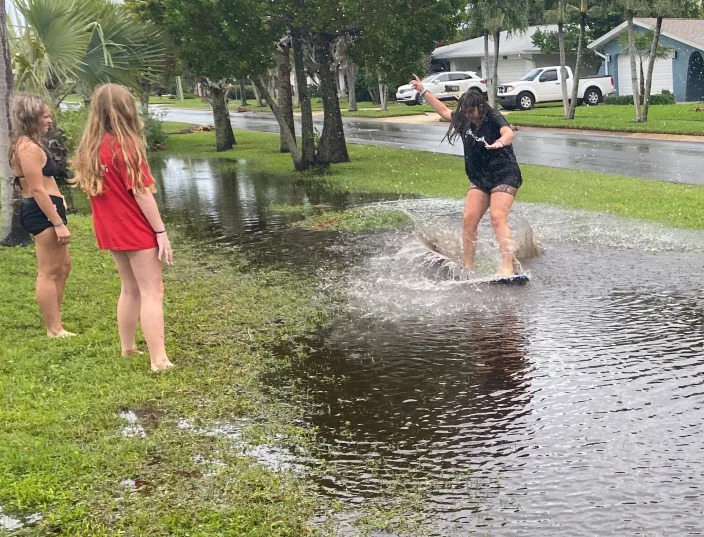
During the run-up to Hurricane Ian in October 2022, many teenagers decided to have some fun in the flooding. Rising sea levels are expected to make flooding a more common problem in Florida even in the absence of hurricanes.n(Credit: MALCOLM DENEMARK/FLORIDA TODAY)

Local governments can get insurance discounts for residents from Federal Emergency Management Agency’s National Flood Insurance Program (NFIP) by conducting floodplain management activities that qualify for points in what’s called the Community Rating System (CRS). Part of Satellite Beach’s effort is to improve the city’s rating.

Most of the vulnerable homes and infrastructure are on the city’s west side, along the low-lying banks of the Indian River Lagoon.

Don’t care about climate change?: Insurance rates might force you to.

How fast is sea level rising?
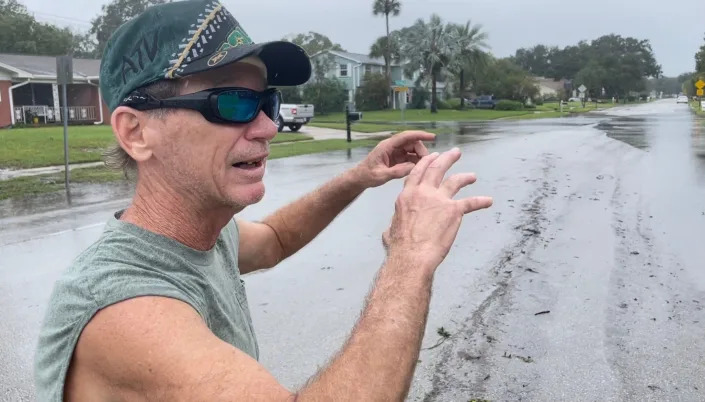
Lee Corbridge describes how this flooding near his family's home on Lantern Drive, north of Titusville, in late September, early October 2022 was the worst he has ever seen. Rising sea levels are expected to make flooding a more common problem in Florida even in the absence of hurricanes.
Lee Corbridge describes how this flooding near his family’s home on Lantern Drive, north of Titusville, in late September, early October 2022 was the worst he has ever seen. Rising sea levels are expected to make flooding a more common problem in Florida even in the absence of hurricanes.

On average, sea levels rose about 6 to 8 inches worldwide over the past century,  according to the National Oceanic and Atmospheric Administration. But the rate of rise has more than doubled since 2006.

Researchers at the University of Central Florida found sea level rise is accelerating in other parts of Florida such as Key West and Fernandina Beach. A study in Nature this past April on sea level rise along the Southeastern U.S. and Gulf of Mexico coasts echoed those findings.

Sea levels along the southeastern and Gulf Coasts already are rising faster than climate models predicted, the UCF researchers note, causing coastal erosion, high-tide flooding, saltwater contamination of freshwater aquifers and higher storm surges in Florida.

Hurricanes exacerbate the problem. Even a Category 1 storm could inundate more than 40% of Satellite Beach, according to a 2010 study for the city by Florida International University, and as sea level rises, it’s only going to get worse.

Governments usually opt for large-scale infrastructure projects to prevent flooding, such as levees, the Satellite Beach report notes. Those aren’t always best, though, because costs exceed benefits and can take decades for Congress to appropriate funds.

Meanwhile, property owners are left susceptible to storm flooding.

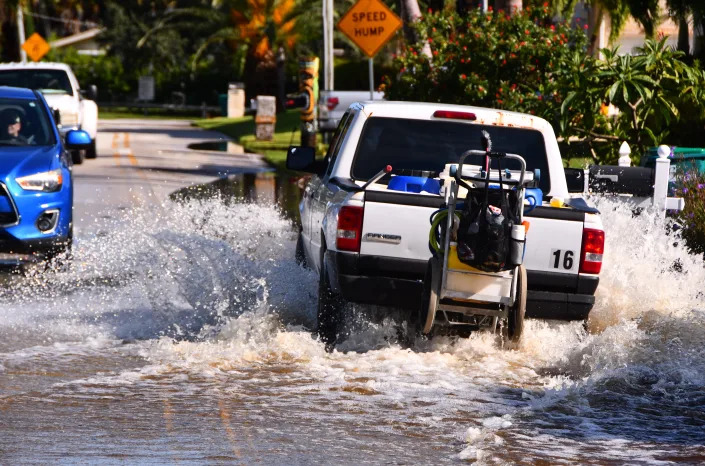
A truck makes its way down Milford Point Drive on Merritt Island after heavy rains pounded Brevard County in September 2022, flooding streets and yards. Rising sea levels are expected to make flooding a more common problem in Florida even in the absence of hurricanes.

HighTide’s study builds on two previous flood studies of Satellite Beach, including the one by Florida International University. At the time, the researchers in that study anticipated the tipping point toward “catastrophic inundation” — a 2-foot sea-level rise — in just 40 years for Satellite Beach. Now that’s less than 30 years away.

Rotting seaweed, dead fish, no sand: Climate change threatens to ruin US beaches

“I don’t really know how you get ahead on this,” said Randy Parkinson, the coastal geologist at Florida International University who coauthored the 2010 study.https://flo.uri.sh/story/1950403/embed

Complacency about flood risk jumped out at him during a recent drive down State Road A1A in south Brevard and into Indian River County, where the barrier island thins to just a few hundred feet wide.

“I couldn’t believe the number of new single-family homes still going in,” Parkinson said. “The real wakeup call is sadly when we get a Cat. 4 or Cat. 5 and it’s moving slow.”

Time will tell how many structures Satellite Beach and other Florida coastal cities will have to move to higher ground or elevate.

“It really depends on the timescale,” Santiago Tate said. “There’s only so much you can do to hold back Mother Nature.”

Contact Environment reporter Jim Waymer at jwaymer@floridatoday.com.

Food Industry Giants Must Fix Their Plastic Pollution

Civil Eats – Op-Ed:

Food Industry Giants Must Fix Their Plastic Pollution

McDonald’s, Coca-Cola, PepsiCo, and other major brands are creating massive amounts of plastic waste. Their initiatives are not enough and they need to be held accountable for the plastics crisis.

By Ashka Nail – July 6, 2023 

Plastic bottles for recycling are seen at a junkshop on April 11, 2023 in Manila, Philippines. (Photo by Ezra Acayan/Getty Images)

Plastic bottles for recycling are seen at a junkshop on April 11, 2023 in Manila, Philippines. (Photo by Ezra Acayan/Getty Images)

RELATED

Op-ed: Is There Plastic in Your Soda?

Beverage Companies Must Go Beyond Recycling

In the Food System and Beyond, Plastics Are the Problem

Ocean Plastic Is Bad, but Soil Plastic Pollution May Be Worse

Plastic has allowed many food industry giants to become the massive entities they are today. For example, Coca-Cola generates 3 million tons of plastic packaging a year; PepsiCo has been found to use nearly 2.3 billion tons of plastic each year for its bottles and packaging; and McDonald’s has been called out for generating the weight of “100 Eiffel Towers” worth of packaging waste.

It hasn’t always been this way. Plastic became the packaging material of choice in the mid-20th century, when it took over human imagination with its malleability, seeming ease of production, and strength. Its production increased threefold during WWII alone.

The political power of plastic also became palpable rather quickly with the emergence of plastic industry lobbying more than 30 years ago. Its primary function has been to fight laws designed to safeguard people and the planet from plastic’s well-documented toxicity. Plastic industry lobbyists also amped up their work as widespread concern grew about plastic’s presensce in the oceanin animalsin farming systems, and in the human body.  And while the industry has always had grand plans of recycling its plastic waste, most plastic is not recycled today.

“Predictably, when we take a closer look at some of these initiatives, what we find is not much evidence of meaningful or sustained progress.”

This lobby’s political power was also present in the corridors of the United Nations recently, as the majority of the world’s countries negotiated a legally binding agreement on plastic pollution focused on production, design, use, and disposal. In this context, the industry has worked diligently to position itself as a solution to a crisis it has avariciously fueled.

Over the years, in addition to making unverifiable commitments to reduce the use of plastic and ensure more of its products are recycled, the industry has convened at platforms like the Business Coalition for a Global Plastics Treaty, the World Economic Forum, Global Plastic Action Partnership, and the NextGen Consortium.

The industry has also judiciously crafted narratives about its commitment to solving this global emergency by supporting entities like the Ocean Cleanup, Ocean Conservancy’s Trash Free Seas Alliance, and World Wildlife Fund’s ReSource.

Predictably, when we take a closer look at some of these initiatives, what we find is not much evidence of meaningful or sustained progress. In fact, recent investigations have found that many corporations like Coca-Cola and PepsiCo have been backing these initiatives while using more plastic than even before.

There is also a litany of corporate doublespeak on plastic in the media. Take the recent New York Times article by Boyan Slat titled, “Reducing Plastic Pollution in Our Oceans Is Simpler Than You Think.”

Slat is the founder of Ocean Cleanup, “a nonprofit funded by donations and a range of philanthropic partners with the mission to rid the oceans of plastic.” In the article, Slat claims his program has salvaged “more than 0.2 percent of the plastic in the [garbage] patch so far,” and mentions the need for stopping “more plastic from flowing into the oceans,” but conspicuously shies away from calling on Coca-Cola and his other program partners to stop producing plastic.

Instead, he writes that “meaningful reductions in plastic use will be difficult to achieve.” Slat also blames the lagging waste management systems in middle- and lower-income countries for the majority of ocean plastic pollution without recognizing that much of the plastic waste from the Global North is in fact being dumped in middle- and lower-income countries—such as Vietnam, India, Indonesia, and Malaysia.

He fails to recognize the fact that it is often “waste colonialism” that forces these nations to become what Slat calls “hot spots” of plastic pollution.

Corporations often tout the fact that the Ellen MacArthur Foundation’s (EMF) New Plastics Economy Global Commitment reports on their plastic use. But if you dig deeper, the information it shares doesn’t provide much actual transparency.

For instance, its audit of PepsiCo says there is “no third-party verification or assurance in place.” Coca-Cola’s reporting on this portal yielded no concrete third-party reviewed progress, but more of the same—self reporting and more corporate marketing speech than evidence of verifiable progress. In fact, an analysis done by Oceana of the data from the 2022 progress report found that Coca-Cola increased its plastic packaging use by nearly 9 percent between 2020 and 2021, and PepsiCo increased its use of virgin plastic by 4.5 percent in 2021 compared with the previous year.

Another disturbing example of promises unkept comes from the world’s largest distributor of plastic toys, McDonald’s. It has publicly committed to “drastically reduce plastics in Happy Meal toys [including the latest toy, a replica of The Little Mermaid, a symbol of the ocean] around the globe and transition to more sustainable materials by the end of 2025.”

However, when some of the largest food and beverage corporations were surveyed by a conservation organization last year, McDonald’s emerged as one of only two whose “plastic intensity” was actually increasing. And then at the company’s annual meeting in May, McDonald’s faced investor scrutiny (p.101) for its staunch opposition to proposed EU plastic waste reduction laws.

The company distributes nearly 1 billion toys a yearevery year. To its credit, it claims that in Japan it has recovered toys to make trays that can be equivalent to approximately 0.75 percent of its annual global toy distribution. The number of recycled toys for other countries where it operates, and there are nearly 100 of them, are difficult to find; it’s not clear whether they even exist.

All these initiatives and commitments tell the true story of plastic. It is about time McDonald’s, Coca-Cola, PepsiCo, and other food and beverage companies own up to their role in fueling the plastics crisis, by eliminating the use of plastic from their entire supply chains immediately. For more than 80 years, Coca-Cola mainly used glass and aluminum, so it can be done! It’s time for these companies to devise business models that stop exploiting the planet, its ecosystems, and the public to benefit a handful of shareholders.

These corporations also need to be held accountable by legal systems and democratic institutions across the world for their inaction.

Yes, the power of plastic has proven potent in changing the course of our history, but lest the world forget, so has the power of the people to determine our collective future. It’s about time food and beverage companies stopped jeopardizing the viability of future generations of all species to have a livable planet to call home.

Ashka Naik is a director of research and policy at Corporate Accountability. Her work focuses on on strategic campaign development, corporate research, and equity-centered analysis of corporate power across issues that guide the vision and overall success of the campaigns. She also spearheads Corporate Accountability’s food program, which focuses on structural determinants and sociopolitical dimensions of food systems, nutrition, and public health, while uncovering industry’s influence in the policies and politics of global food security, sovereignty, and justice. Read more >

The Supreme Court is on a mission to ensure the US assumes the form that the Republican Party wants

Salon

The Supreme Court is on a mission to ensure the US assumes the form that the Republican Party wants

Chauncey DeVega – July 5, 2023

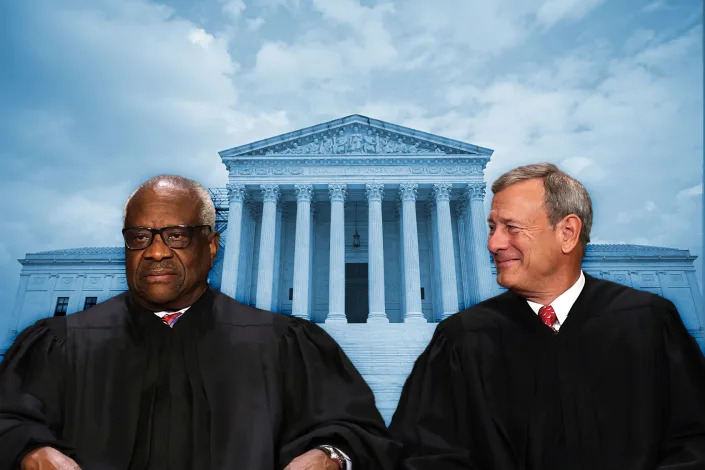
Clarence Thomas; John RobertsPhoto illustration by Salon/Getty Images

Last week, the United States Supreme Court issued a series of decisions that ended race-based affirmative action programs at colleges and universities, voided President Biden’s student loan forgiveness program, and made it legal for people to cite sincere “religious objections” as a reason for discriminating against the LGBTQ community (and presumably other marginalized individuals and groups as well) in ways that violate civil rights laws.

The Washington Post bizarrely described the Supreme Court’s last term as “restrained.” The reality is very much the opposite: it was a political and judicial bloodletting, a collective act of radical right-wing judicial activism that will have serious negative implications for the American people and the country as a whole for decades to come. These decisions by the “conservative” majority on the Supreme Court are part of a decades-long project to return American society to a time period before the civil rights movement(s) of the 1960s and 1970s and back to the Gilded Age (if not before) when white men and moneyed interests – a true tyranny of the minority —were able to exercise dominion over American society, largely uncontested.

In an attempt to make better sense of the Supreme Court’s recent decisions about race-based affirmative action and its broad implications for American democracy, the law, and society, I recently spoke with Khiara M. Bridges. She is a Professor of Law at UC Berkeley School of Law whose scholarship examines race, class, reproductive rights, and the intersection of the three. Professor Bridges is the author of three books, the most recent of which is Critical Race Theory: A Primer.

This conversation has been lightly edited for length and clarity.

How are you feeling given the Supreme Court’s decisions this week, in particular the decision to ban the consideration of race in university and college admissions? 

I’m tired – even though none of this is surprising. All of this was perfectly predictable. We knew that decisions such as the one gutting affirmative action were almost inevitable after Kavanaugh and Barrett joined the court. The decisions this week are the realization of a long-term project by the Republican Party to use the federal judiciary to shape the nation into its vision of what the country ought to be.

It has been an exhausting week.

How do we connect the dots between the affirmative action decision and the decision to allow “religious objections” to be used as a justification for discriminating against gays and lesbians — and presumably other groups as well?

“I think that what we are seeing is just how hellbent the Supreme Court is on ensuring that the U.S. assumes the form that the Republican Party wants it to assume.”

Those two decisions represent a backlash against people of color and LGBTQ people. Both groups have realized substantial gains in terms of being conceptualized as equal and valuable members of the body politic. Many people want to reverse those gains. They want to return LGBTQ people and Black and brown people to second-class citizenship. The court is doing the bidding for those folks.

The Republicans, “conservatives” and other members of the larger white right are joyous and celebrating the end of affirmative action. Black and brown folks, white folks and others who believe in multiracial democracy and equality are hurting and lamenting this decision and what it symbolizes and means for our society and the harm it does to real people. How are you reconciling those divergent responses? 

I understand these celebrations as consistent with a right-wing effort to erase America’s brutal history of racial subjugation and to deny the consequences that history has on society today. Conservatives are celebrating the myth that America is “post-racial” and the lie that events like chattel slavery, Jim Crow, redlining, “urban renewal,” etc. really have no effect on contemporary society. And most of all, they are celebrating the fact that there is a Supreme Court that is willing to affirm those fictions. 

In the most basic sense, what are the competing visions of the law and its role in society that we are seeing play out with the Supreme Court this week, and of course the Age of Trump these last few years?

I think that what we are seeing is just how hellbent the Supreme Court is on ensuring that the U.S. assumes the form that the Republican Party wants it to assume. It is important to keep in mind that the Court creates its own docket; it selects the cases that it wants to hear. And it is no coincidence that the Court is deciding to hear cases that touch on all of these hot button issues: affirmative action, abortion, guns, religious freedom, LGBTQ rights. And of course, it is no coincidence that the Court is deciding these cases in ways that are consistent with the Republican Party’s platform.

Related

Harvard comes under fire for “legacy admissions” following SCOTUS affirmative action ruling

It is also important to keep in mind that it is really hard to reconcile these decisions with one another in terms of an overarching theory of law. So, the government can force people to carry pregnancies to term, but the government cannot forbid people from carrying firearms outside of the home. Institutions cannot consider race when making college admissions decisions, but they can consider their customers’ sexual orientation and gender identity when deciding whether to sell products and services to them. Those decisions cannot be reconciled with one another very easily in terms of law. It’s all politics.  

In simple terms, how do we explain what “affirmative action” is or isn’t and how it’s been distorted by the right wing and its propaganda machine for the general (white) public?

In order to understand what affirmative action is in the context of university admissions, one has to understand how decisions traditionally have been made about who is admitted to a school.  This generally has consisted of evaluating a student’s GPA and performance on standardized tests. Affirmative action moves beyond just grades and standardized testing. It insists that those measures are not the totality of an individual. We actually know empirically that grades and standardized testing only imperfectly predict success in college. For example, a student that has had to raise their younger siblings while they’re in high school probably has the determination and grit to succeed in a four-year university. We might guess that a student who has managed to learn and succeed in an underfunded school lacking in resources will likely learn and succeed at a university or college that has lots of resources.

Race-based affirmative action specifically says that we ought to be conscious of a student’s race when making admissions decisions, because a student’s race might help us understand their grades and standardized test scores. Race contextualizes those numbers. Despite what conservatives say about it, affirmative action is not some type of “handout” like “welfare” for lazy and unqualified Black and brown people.

Of course, the right-wing members of the court did not mention legacy admissions or how the children of big money donors get preferential treatment — what is a de facto type of white privilege and white unearned advantage, an “affirmative action” program for unqualified white people. Likewise, the majority did not object to how at most universities a decision is made to admit more “unqualified” male students as a way of achieving gender parity in a given cohort.

There is a conservative argument about so-called “mismatch,” where students of color are imagined to be admitted through affirmative action into institutions where they supposedly do not have the skills and preparation to succeed. Clarence Thomas mentions this theory repeatedly. But the science is not there to justify mismatch theory. It has been debunked time and time again, which Justice Sotomayor mentions in her dissent. Interestingly, the right-wing justices who claim to be concerned about mismatch in terms of students of color going to competitive colleges and universities do not have the same level of concern about mismatch in terms of legacy admits.

“It is really hard to reconcile these decisions with one another in terms of an overarching theory of law.”

Your dad and granddad having graduated from college does not prove that you have the academic chops, or discipline, or determination to succeed in the school. Similarly, your family having donated millions of dollars to the university does not translate into academic ability and intelligence. Students who lack the highest SAT scores and GPAs, but who are admitted because they are athletes, would fall into that category as well. The court was not concerned about those students either.

For me, this reveals that the justices who signed on to these opinions are not really worried about whether Black and brown students are going to do well in elite institutions; it is just that they do not want Black and brown students to “take the seats” of white and Asian students who they believe actually deserve to be at these elite institutions.

In their decision to end affirmative action at the nation’s colleges and universities, the right-wing justices summoned up Brown v. Board of Education. This is part of a larger project by the “conservative” movement and white right to weaponize, distort, abuse, and misrepresent the victories of the long Black Freedom Struggle and civil rights movement as a way of undermining and ultimately reversing them. Please help me process their twisted readings of Brown v. Board and the Equal Protection Clause.

Brown v. Board looms over these debates about affirmative action. Those who oppose race-based affirmative action and those who support it both say that their position is faithful to Brown v. Board. In 1954, the court decided in Brown that racially separate schools were inherently unequal and that they were a violation of the Equal Protection Clause of the 14th Amendment. Brown is subject to many interpretations. One interpretation is that Brown mandated colorblindness; it forbade school districts from taking into consideration students’ races when assigning them to schools.

Another equally plausible interpretation of Brown is that the court was concerned with anti-subordination. In this view, segregated Black and white schools were unconstitutional because they functioned to subordinate Black people; they functioned to subjugate Black people vis-à-vis their white counterparts. So, which is the better understanding of Brown? Was Brown about colorblindness, or was it about antisubordination?

In my opinion, Brown was about antisubordination. And I get there because I think that we have to pay attention to the motivations behind the Equal Protection Clause, which was added to the Constitution after the Civil War. The 14th Amendment, which contains the Equal Protection Clause, was proposed and ratified in order to make formerly enslaved Black people equal citizens.

“The conservative majority on the court does not care; they are very comfortable with subjugating non-white people in America.”

The Equal Protection Clause was designed to undo slavery. And the problem of chattel slavery was not that white people weren’t being colorblind. The problem of chattel slavery was that white people thought that Black people were an inferior race of humans and treated them accordingly. The Equal Protection Clause was ratified not to make white people colorblind, but rather to ensure that Black people were no longer treated as subhuman. Race-based affirmative action programs are consistent with what the 14th Amendment requires because it is interested in real racial equality, not just colorblindness.

A Supreme Court justice made the intervention not too long ago that to get past racism one must take account of race.

That guy’s gone, right? It’s really just a numbers game with the Supreme Court today. Before Justice Kennedy retired, conservatives on the court just didn’t have the votes to instantiate this view that the Constitution mandates colorblindness. Now they do. It’s not that those arguments make more sense today than they did 10 years ago. It’s not that there is more evidence to support that right-wing view. It is most certainly not true that we as a country are closer to a multiracial democracy than we were ten years ago. Ultimately, the only thing that has changed is the composition of the court.

As a factual and historical matter, the United States Constitution is not “colorblind.” In reality, it is a document that represented the interests of the white slave-owning class and was one of the bedrock documents of a herrenvolk racial state. Serious historians and other scholars have repeatedly documented how as a group the framers and other white elites saw little if any contradiction between white on Black chattel slavery, white supremacy, and their vision of (white) democracy. Yet, the right-wing justices insist on the Constitution somehow being “colorblind” and then reasoning from that incorrect premise to whatever conclusion they want to reach. Taking them seriously, how is such a view of the Constitution structured?

I think they believe that if you keep saying it, somehow it becomes true. But reality does not work that way. The Constitution is very much aware of race. The document literally contemplates race. The 3/5th clause is an obvious example. The majority opinion in the court’s recent affirmative action decision repeats “colorblind” so many times that an uninformed person may actually think that if you read the Constitution, you would see the words “colorblind” or “colorblindness.” But it doesn’t say that. What it does say is that no person shall be denied “equal protection of the laws.” Conservatives insist that those words mean “colorblindness.”

Related

Two anti-equality decisions show billionaires’ return on Supreme Court investment

What the conservative majority will say is that during those lamentable and tragic moments in our nation’s racial history, the court was not interpreting the Constitution to be colorblind. They would say that the problem was that the court was allowing people to think about race. However, in my view, the problem of separate but equal, for example, wasn’t that people were thinking about race. The problem was how people were thinking about race. And they were thinking about race in order to conserve the existing racial hierarchy and to protect white supremacy. The conservative majority pretends that it cannot see the difference between those divergent uses of race. These conservative justices—all of whom got the finest educations from competitive universities—supposedly cannot see the difference between thinking about race in order to subjugate somebody and thinking about race in order to attempt to undo that subordination. Of course, they can see the difference. They know better.

The distinction here is important. Do the right-wing justices, like Clarence Thomas for example, actually believe in the factually wrong version of history and the Constitution (and reality) that they are articulating in the decision to end affirmative action, and more generally in terms of their legal theories? Or are they just ideologues and operatives, zealots, who don’t really care about the substance of the law and the Constitution and are just using it to advance a larger political and societal project?

I don’t know. And I don’t think it matters. What I do know for sure is that they are very comfortable signing on to decisions and handing down interpretations of the Constitution that will hurt people of color. In the end that is all I need to know. They won’t lose any sleep at night thinking about how students of color are going to be even more underrepresented in the nation’s colleges and universities. They don’t care about the real world implications of striking down affirmative action; they don’t care that, quite literally, lives will be lost, as Justice Jackson so compellingly and brilliantly demonstrated in her dissent when she talked about the effect that doctor-patient racial concordance has on reducing Black infant mortality. The conservative majority on the court does not care; they are very comfortable with subjugating non-white people in America.