These corporations are helping elect an alleged child sex abuser to the U.S. Senate

ThinkProgress

These corporations are helping elect an alleged child sex abuser to the U.S. Senate

Follow the money.

Josh Israel, Danielle McLean,     December 5, 2017

ALABAMA REPUBLICAN SENATE NOMINEE ROY MOORE AT A NOVEMBER RALLY. CREDIT: AP PHOTO/BRYNN ANDERSON

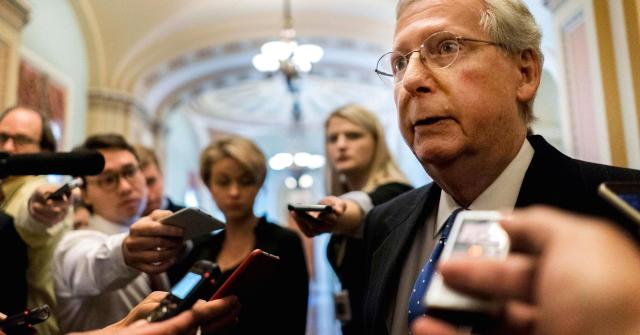
Last month, after several women came forward and accused Alabama Republican Senate nominee Roy Moore of child sexual abuse and other sexual misconduct, the Republican National Committee (RNC) said it had cut ties with the candidate and terminated a joint fundraising program aimed at helping his campaign. In the time since, more women have come forward with similar stories and evidence of their relationships. Yesterday, after Donald Trump offered his full support to Moore anyway, the RNC reversed course and reportedly will resume its efforts to elect Moore in next Tuesday’s special election and will devote party resources to the effort.

A ThinkProgress review of contributions to the Republican National Committee so far in this 2017 to 2018 campaign cycle, at least 15 companies have donated $15,000 or more each from their corporate political action committees (PACs) to the party, and are thus contributing to the pro-Moore efforts. The totals include donations through the end of September. According to Federal Election Commission data from the subscription online Political MoneyLine, these include:

  • Comcast Corporation & NBCUniversal with at least $100,000.
  • AT&T Inc with at least $60,000.
  • Leo A Daly Company with at least $30,000.
  • Amerisourcebergen Corporation with at least $15,000.
  • Lockheed Martin Corporation with at least $15,000.
  • Honeywell International with at least $15,000.
  • Pricewaterhousecoopers with at least $15,000.
  • AFLAC with at least $15,000.
  • Pfizer Inc. with at least $15,000.
  • Massachusetts Mutual Life Insurance Company with at least $15,000.
  • Textron Inc with at least $15,000.
  • Exelon Corporation with at least $15,000.
  • The Boeing Company with at least $15,000.
  • Microsoft Corporation with at least $15,000.
  • BNSF Railway Company with at least $15,000.

While federal campaign finance law prohibits corporations from donating directly to national parties and federal candidates out of their company treasuries, corporations have long influenced politics by establishing political action committees and pooling donations from executives and other employees.

ThinkProgress reached out to each of these companies to ask them if they are comfortable with their donations being used to help elect Moore. None immediately responded.

Log Cabin Republicans release brilliant Roy Moore ad that you have to see to believe

LGBTQ Nation

Log Cabin Republicans release brilliant Roy Moore ad that you have to see to believe

By Jeff Taylor     December 1, 2017

Good Christians™ screenshot

The Log Cabin Republicans are out with a clever new ad that is calling on Christians to act on their morals.

Alabama Senate candidate Roy Moore has been accused by a number of women of sexual misconduct and assault, including some who say they were as young as 14 and 15 when the incidents occurred.

The conservative LGBTQ group’s new spot is titled “Good Christians.”

It opens like every far right Christian conservative campaign commercial you’ve ever seen, with a country chapel, awash in blue tint, and a voice over warning of “a war on Christianity happening right in our midst.”

And then comes the twist.

A recent poll found that 40 percent of Evangelicals were more likely to support Moore despite the allegations against him.

“Roy Moore has spent his entire career using his bigoted brand of Christianity as a weapon to relentlessly attack members of the LGBT community, all the while allegedly preying upon the most vulnerable in our society,” Log Cabin Republicans President Gregory T. Angelo said in a statement released alongside the video.

“Moore’s myopic faith prevents him from seeing that a significant number of LGBT individuals are devout Christians themselves, including many members of Log Cabin Republicans. Regardless of one’s sexual orientation or gender identity, it’s time for good Christians to do what good Christians do: REJECT Roy Moore.”

Alabamans will decide between Moore and Democrat Doug Jones on Dec. 12.

Huge Human Inequality Study Hints Revolution is in Store for U.S

InverseScience

I need the money to go to the Super Bowl.

Huge Human Inequality Study Hints Revolution is in Store for U.S…Every society has a tipping point.

by Yasmin Tayag      November 15, 2017

There’s a common thread tying together the most disruptive revolutions of human history, and it has some scientists worried about the United States. In those revolutions, conflict largely boiled down to pervasive economic inequality. On Wednesday, a study in Nature, showing how and when those first divisions between rich and poor began, suggests not only that history has always repeated itself but also that it’s bound to do so again — and perhaps sooner than we think.

In the largest study of its kind, a team of scientists from Washington State University and 13 other institutions examined the factors leading to economic inequality throughout all of human history and noticed some worrying trends. Using a well-established score of inequality called the Gini coefficient, which gives perfect, egalitarian societies a score of 0 and high-inequality societies a 1, they showed that civilization tends to move toward inequality as some people gain the means to make others relatively poor — and employ it. Coupled with what researchers already know about inequality leading to social instability, the study does not bode well for the state of the world today.

“We could be concerned in the United States, that if Ginis get too high, we could be inviting revolution, or we could be inviting state collapse. There’s only a few things that are going to decrease our Ginis dramatically,” said Tim Kohler, Ph.D., the study’s lead author and a professor of archaeology and evolutionary anthropology in a statement.

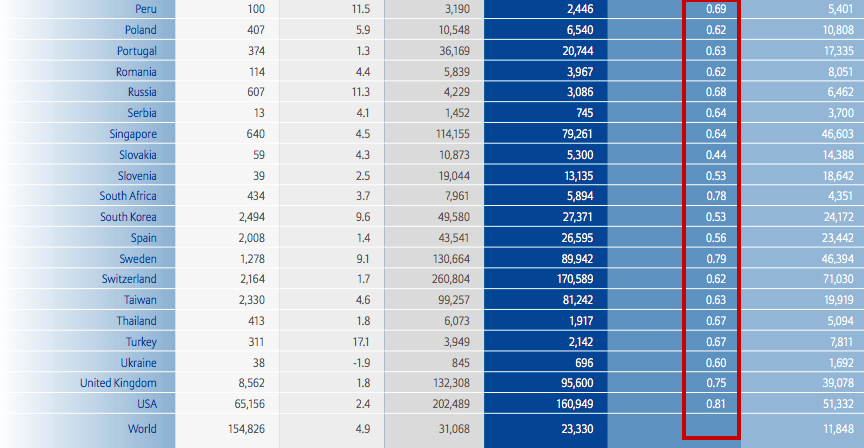
Currently, the United States Gini score is around .81, one of the highest in the world, according to the 2016 Allianz Global Wealth Report.

The Holme

A recent Credit Suisse report shows that the richest 1 percent of humanity owns half the world’s wealth.

Kohler and his team had their work cut out for them, as studying inequality before the age of global wealth reports is not a straightforward task. It’s one thing to measure modern day economic inequality using measures of individual net worth, but those kind of metrics aren’t available for, say, hunter-gatherers chasing buffalo during the Paleolithic. To surmount this obstacle, the researchers decided to use house size as a catch-all proxy for wealth, then examined the makeup of societies from prehistoric times to modern day using data from 63 archaeological digs.

Overall, they found that human societies started off fairly equal, with the hunter-gatherer societies consistently getting Gini scores around .17. The divide between rich and poor really began once humans started to domesticate plants and animals and switch to farming-based societies. Learning to till the land meant introducing the concept of land ownership, and inevitably, some people ended up as landless peasants. Furthermore, because these societies no longer lived as nomads, it became easier to accumulate wealth (like land) and pass it down from generation to generation.

The Gini scores got higher as farming societies got bigger. The small scale “horticultural” farmers had a median Gini of .27, and larger-scale “agricultural” societies moved up to .35. This pattern continued until, oddly, humans moved into the New World — the Americas. Then, over time, the researchers saw that Gini scores kept rising in Old World Eurasia but actually hit a plateau in the Americas. The researchers think this plateau happened because there were fewer draft animals, like horse and water buffalo, in the New World, making it harder for new agricultural societies to expand and cultivate more land.

A selection of Gini scores from the 2016 Allianz Global Report are shown in red. A score of 1 is given to societies with the highest inequality.

Overall, the highest-ever historical Gini the researchers found was that of the ancient Old World (think Patrician Rome), which got a score of .59. While the degrees of inequality experienced by historical societies are quite high, the researchers note, they’re nowhere near as high as the Gini scores we’re seeing now.

“Even given the possibility that the Ginis constructed here may somewhat underestimate true household wealth disparities, it is safe to say that the degree of wealth inequality experienced by many households today is considerably higher than has been the norm over the last ten millennia,” the researchers write in their paper.

On Monday, a global report from Credit Suisse showed that modern humans are continuing the trends set by our predecessors: Now, the report showed, half of the world’s wealth really does belong to a super-rich one percent, and the gap is only growing. Historically, Kohler says in his statement, there’s only so much inequality a society can sustain before it reaches a tipping point. Among the many known effects of inequality on a society are social unrest, a decrease in health, increased violence, and decreased solidarity. Unfortunately, Kohler points out, humans have never been especially good at decreasing inequality peacefully — historically, the only effective methods for doing so are plague, massive warfare, or revolution.

The revolution will not be televised. It’ll be sent to your inbox by us.

Photos via Flickr  garryknight, Flickr / kennethkonica 

Senate Democrats stand united against GOP tax bill

Associated Press

Senate Democrats stand united against GOP tax bill

GOP tax bill passes through the Senate

Sen. Heidi Heitkamp, D-N.D., speaks, as ...

Matthew Daly, Associated Press      December 3, 2017

WASHINGTON (AP) — Rarely unified, Senate Democrats stood together in opposing the GOP revamp of the tax code despite the traditional popularity of tax cuts and warnings from President Donald Trump and Republicans about the political cost in next year’s midterm elections.

White House dinners, trips aboard Air Force One and even threats from Trump during campaign stops in their states were not enough to sway Democrats who rejected the nearly $1.5 trillion tax bill early Saturday. Lawmakers voting against the bill included 10 vulnerable Democrats from states Trump won last year, some handily.

When Trump took office 10 months ago, moderate Democrats such as Joe Manchin of West Virginia, Heidi Heitkamp of North Dakota and others were widely expected to break with their party and side with the Republican president.

But on Trump’s top two legislative priorities — taxes and dismantling former President Barack Obama’s health care law — Democrats unanimously rebuffed the GOP president despite his derision.

Trump said Saturday, “We got no Democrat help and I think that’s going to cost them in the election because they voted against tax cuts. I don’t think politically it’s good to vote against tax cuts.”

Democrats argued that the unpopularity of the tax bill with its deep cuts for business and the wealthy and modest changes for many Americans made their votes relatively easy. Multiple polls show the tax bill is supported by less than 40 percent of voters. And Democrats recall a painful political lesson: In 2010, Democrats backed the unpopular health care bill and lost their House majority months later.

“My Republican friends must know that ‘we needed to notch a political win’ isn’t a good enough excuse for a constituent who asks why you voted to raise their taxes but slash them for big corporations,” Senate Democratic leader Chuck Schumer said Friday.

Missouri Sen. Claire McCaskill, who was singled out for criticism by Trump at a campaign-style event in Missouri this past week, said her vote against the tax bill — and Trump — “is not risky as long as I do the hard work in making sure Missourians understand what’s in the bill.”

Trump went to her state “and told Missourians something that just wasn’t true,” McCaskill said. “This bill is not helping teachers and police officers and construction workers. This bill is helping wealthy people, and he is among the people it is helping.”

Schumer hasn’t had to do a lot of arm twisting with a caucus whose politics range from liberal Sen. Bernie Sanders, I-Vt., to Manchin, according to a senior aide. Democrats said they had reasons enough to oppose the GOP bill, which while slashing tax rates for corporations and the wealthy adds more than $1 trillion to the national debt.

“It’s a horrible bill,” said Sen. Jon Tester of Montana, one of the vulnerable Democrats up for re-election in a state Trump won easily.

A third-generation farmer, Tester said if he imposed debt on his family farm at a rate similar to the tax bill, “my kids would go broke.”

Hours before the final vote, Tester released a video on Twitter showing him with a copy of the 479-page tax bill he had been handed minutes before. One page was filled with scribbled policy changes that Tester said he could not be read.

“This is Washington, D.C., at its worst,” he complained.

Heitkamp, who is seeking a second term next year, said the bill’s toll on the national debt made her vote easy.

“The risk is for the fiscal responsibility for this country,” she said. “We all owe a much higher debt — not to a political party or a re-election, but to the people of this country.”

Manchin, who like Heitkamp was considered for a job in Trump’s Cabinet, said he told Trump he wanted to “get to yes” on the tax bill but could not support the bill as drafted by GOP leaders.

“Millionaires, billionaires and gazillionaires should not have tax breaks,” Manchin said in an interview. “That’s what the president told me: It was not going to be for the rich. Well, the bill I have in front of me is not the bill that he talked about” at a White House dinner in September.

Republicans looking to unseat Democrats next year were ready with their criticism.

Rep. Luke Messer, one of several Indiana Republicans seeking to challenge Democratic Sen. Joe Donnelly, said Donnelly’s opposition to the bill showed he votes with his party’s leadership to block the president’s agenda.

“Once again, it looks like Sen. Donnelly has made his choice, siding with Chuck Schumer over Hoosiers,” Messer said in an argument that is likely to be used against other Democratic incumbents.

Donnelly said the Senate bill “would result in a tax hike for millions of middle-class families while giving a tax cut to the top 1 percent.”

Rep. Lou Barletta, a Pennsylvania Republican who is seeking to challenge Democratic Sen. Bob Casey, said he was surprised Casey opposed the bill in a state where Trump narrowly won last year.

“Blue-collar Democrats in Pennsylvania voted for Donald Trump because they want to see him do exactly what he’s doing now: allowing them to have more money in their pocket, making sure businesses they work at stay here in Pennsylvania and stopping illegal immigrants who compete for their jobs and depress their wages,” Barletta said.

Casey called the GOP plan “an insult” to middle-class families in Pennsylvania who will pay more in taxes “while the super-rich and big corporations get a windfall. It’s obscene.”

Associated Press writer Alan Fram contributed to this report.

Related:

Check out Michael Phelan’s SocialSecurityWorks.org

The government is now referring to our Social Security checks as a “Federal Benefit Payment.” This isn’t a benefit. It is our money paid out of our earned income! Not only did we all contribute to Social Security but our employers did too. It totaled 15% of our income before taxes.

If you averaged $30K per year over your working life, that’s close to $180,000 invested in Social Security.

If you calculate the future value of your monthly investment in social security ($375/month, including both you and your employers contributions) at a meager 1% interest rate compounded monthly, after 40 years of working you’d have more than $1.3+ million dollars saved!

This is your personal investment. Upon retirement, if you took out only 3% per year, you’d receive $39,318 per year, or $3,277 per month.

That’s almost three times more than today’s average Social Security benefit of $1,230 per month, according to the Social Security Administration. (Google it – it’s a fact).

And your retirement fund would last more than 33 years (until you’re 98 if you retire at age 65)! I can only imagine how much better most average-income people could live in retirement if our government had just invested our money in low-risk interest-earning accounts.

Instead, the folks in Washington pulled off a bigger “Ponzi scheme” than Bernie Madoff ever did. They took our money and used it elsewhere. They forgot (oh yes, they knew) that it was OUR money they were taking. They didn’t have a referendum to ask us if we wanted to lend the money to them. And they didn’t pay interest on the debt they assumed. And recently they’ve told us that the money won’t support us for very much longer.

But is it our fault they misused our investments? And now, to add insult to injury, they’re calling it a “benefit”, as if we never worked to earn every penny of it.

Just because they borrowed the money doesn’t mean that our investments were a charity!

Let’s take a stand. We have earned our right to Social Security and Medicare. Demand that our legislators bring some sense into our government.

Find a way to keep Social Security and Medicare going for the sake of that 92% of our population who need it.

Then call it what it is: Our Earned Retirement Income.

The GOP’s biggest lie: Republican tax plan reveals the rot is deep

Salon

The GOP’s biggest lie: Republican tax plan reveals the rot is deep

Republicans are getting away with the most brazen political lie ever told

(Credit: Getty/Hulton Archive/Zach Gibson/Salon)

Ted Morgan      December 2, 2017

The “Big Lie” has been most closely associated with the Nazis’ incessant propaganda campaign about an international Jewish “war of annihilation” against Germany, a campaign that brought the totalitarian Nazi regime to power and paved the way for the Holocaust.  In assessing Adolph Hitler’s psyche, the U. S. Office of Strategic Services reported,

His primary rules were: never allow the public to cool off; never admit a fault or wrong; never concede that there may be some good in your enemy; never leave room for alternatives; never accept blame; concentrate on one enemy at a time and blame him for everything that goes wrong; people will believe a big lie sooner than a little one; and if you repeat it frequently enough people will sooner or later believe it.

On Nov. 22, Donald Trump declared, “We’re going to give the American people a huge tax cut for Christmas … a great big, beautiful Christmas present.”  This is one among many lies Trump has bleated about the tax cut — a con job designed to appeal to Americans who struggle to make ends meet, whether they be unemployed or underemployed, the elderly, working or middle class, or poor.  In reality, the Trump/Republican Party tax cut, whatever final form it takes, is a pack of lies and distortions designed to further enrich the wealthiest Americans and solidify the takeover of our government by corporate wealth.

What makes this a Big Lie is its repetition over a period of 35 years of “supply-side economics,” years marked by an unprecedented upward redistribution of income and wealth and the growth of staggering inequality.

We know the wealthy are the chief beneficiaries of this tax cut.  According to the Tax Policy Center, the top 1 percent receive 34 percent of the corporate tax cut benefit, and the top 20 percent receive 70 percent of the benefit. Eliminating the estate tax only benefits those individuals with wealth exceeding $5 million ($10 million for married couples).  Eliminating the alternative minimum tax gets rid of the very tax created to prevent the wealthy from getting away with paying no taxes at all.  If it were removed in 2015, for example, Donald Trump would have been $31 million richer and taxed at 3.5 percent.  By contrast, according to the Center for Budget and Policy Priorities, those with incomes below $75,000 will be paying higher taxes by 2027.

The only possible legitimation for such a blatantly inequitable tax is the claim that cutting taxes on corporations and the wealthy will produce investment and job growth; not surprisingly Trump claims the tax cut will produce 10.5 percent growth in GDP over 10 years.  By contrast, the Urban/Brookings Tax Policy Center predicts 0.3 percent growth over 10 years.  When the non-partisan Congressional Research Services tracked tax rates from 1945 to 2010, they found that cutting the top tax rates had no positive effect on economic growth or the growth of savings, investment or productivity. Corporate CEOs themselves have acknowledged that they would use new revenue to buy back shares, retire debt, and issue shareholder dividends – i.e., benefiting Wall Street and its clients, not Main Street where we live and work.

Only one of 38 economists polled by the University of Chicago believed economic growth would be “substantially higher” in 10 years because of the tax cut; all 38 believed the national debt would be substantially higher.  According to the bipartisan Joint Committee on Taxation, the tax cut will produce roughly $1.4 trillion in new debt over the next 10 years.

We’ve been here before. Reagan-era tax cuts tripled the national debt over the 1980s, and G.W. Bush-era tax cuts added $1.5 trillion to the national debt.  Each of these  administrations also dramatically increased a bloated military budget while reducing programs that aid vulnerable Americans.

Therein lies the covert “benefit” of these soaring budget deficits. With military spending increasing, and popular entitlement programs like Social Security and Medicare typically impervious to budget cuts (though every indication is the Republicans will go after these in the coming months), and required interest payments on the national debt piling up, deficits have been used to justify cuts to a wide range of domestic programs, thereby depriving the nation of the ability to address such accelerating crises as disintegrating infrastructure, overburdened schools, costly and non-universal health care, and climate change.

So, when a Nov. 15 Quinnipiac poll shows two-thirds of the American public in opposition, why are these people pushing a tax cut that enriches the wealthy while debilitating the country as a whole?  When asked, Rep. Chris Collins of New York declared, “My donors are basically saying. ‘Get it done or don’t ever call me again.’”  Such is the rot eroding our democracy.

Ted Morgan is emeritus professor of political science at Lehigh University and the author, most recently, of “What Really Happened to the 1960s: How Mass Media Culture Failed American Democracy.”

Senate Republicans are essentially defunding public schools to pay for private ones

ThinkProgress

Senate Republicans are essentially defunding public schools to pay for private ones

Another big win for the wealthy.

E.A. Crunden     December 2, 2017

CREDIT: AP PHOTO/JOHN LOCHER

The new tax bill passed by Senate Republicans does away with crucial support for public schools while adding a provision beneficial to their private counterparts. That move would help wealthy parents pay for private schools, including religious schools, while hurting lower-income families. A similar provision is in the House version of the tax bill.

In the early hours of Saturday morning, GOP lawmakers passed the biggest tax overhaul in several decades through a 51 to 49 vote. One lone Republican, Sen. Bob Corker of Tennessee, voted against the legislation, citing deficit concerns. The bill, which includes a number of dramatic provisions and cuts, will have sweeping implications for many people across the United States.

Under current law, parents can open 529 plans to help pay for future college costs. Those accounts, which differ by state, are tax-advantaged and grow as long as the money is spent exclusively on higher education. A last-minute provision added to the Senate tax bill allows for 529 plans to be used for K-12 private schools. (Lawmakers initially included but later removed a controversial provision allowing parents to open 529 accounts for fetuses.)

In addition to benefitting wealthier families, the new 529 expansion is popular with proponents of “achool choice” — a movement that favors religious education. Sen. Ted Cruz (R-TX), a longtime supporter of school choice, filed the amendment expanding 529 plans. Debate over Cruz’s amendment helped stretch tha tax bill vote into the early-morning hours but the addition still won out in the end.

Ron Lieber, a financial columnist for the New York Times, tweeted that the Cruz amendment’s implications could have much broader repercussions than similar language in the House bill.

“Last night, Ted Cruz (w the help of a tiebreaking vote from VP Pence) got the 529s-for-private-schools provision into the Senate tax bill. As I reported last month, this could be worth $30,000 in net new tax savings per child to wealthy families,” Lieber wrote. “The Cruz amendment goes even further than the House 529s-for-private-schools thing did. If the House comes around, you’ll be able to use 529s for tutoring.”

The state and local tax deduction (or, SALT) allows taxpayers to deduct those taxes when determining their federal income taxes. SALT’s biggest beneficiaries are actually wealthy suburban voters in populous states like New York and California, many of whom tend to vote Republican. But the Senate bill initially called for a complete repeal of SALT in order to lower tax rates elsewhere.

Outcry from some Republicans led to a slight change — itemizers may still receive a deduction for property taxes up to $10,000. But the rest of the SALT repeal stands, which is bad news for public schools.

Under SALT, income that paid for public schools went untaxed at the federal level. Current law allows states that raise taxes to better fund public schools to receive a deduction through SALT. The Senate bill ends that ability. As states struggle to lessen the impact of the tax bill on citizens, there will be an outsized amount of pressure on the taxes that typically help public schools.

For families able to afford private school, the combination of SALT’s demise and the tax bill’s new private school provision is likely to make the decision to pay for private education far more appealing. That’s a big win for school choice proponents like Education Secretary Betsy DeVos, who expressed support for the original 529 plan expansion in the House tax bill.

Public schools in areas with strong upper middle class populations currently fare well because they can afford teachers with higher salaries and offer an array of extracurricular options. Families in those areas are also invested in public schools, to say nothing of incentivized by SALT. But without the deduction, that incentive goes away. Wealthier families will be more inclined to opt for private school instead — especially with the expansion of 529 plans.

Experts have speculated that the elimination of SALT could ultimately cost public schools upwards of $17 billion. That loss will almost inevitably degrade the quality of public schools, something that will hurt families with no other option. Around 50.7 million U.S. students attend public schools — approximately 90 percent of students in the United States.

Please Don’t Look At Me Like That!

John Hanno     December 1, 2017                               

   Please Don’t Look At Me Like That!

While out in public these days, I feel uncomfortable when people look askance my way. What are they really thinking? Yes, I’m a white man similar in age to Donald J. Trump but please don’t put me in the same class. All old white men are not as humanly toxic and morally and mentally crippled as our commander in chief *.

I (We) would not, under any circumstances, engage in or entertain treasonous conspiracies with foreign evildoers attempting to undermine America’s democratic principles, just to benefit our own families, friends or contributors financially, or to support some political ambition.

Although our memories falter at times, we don’t all speak with such caviler disregard for the truth like this entire Trump administration. We keep our promises; its call integrity.
Image result for pictures about politics

We believe that our free and fair press and media is not fake news and is absolutely necessary for a viable democracy.

Image result for pictures about politics

We would not jeopardize America’s environment, its national public treasures or our children’s and grandchildren’s future, in order to reward political donors from the fossil fuel and mining industries.

We would never undermine our State Department employees, diplomats and even the Secretary of State. Trump’s budget plan for fiscal year 2018 will include a historically large $54 billion increase for defense spending and a corresponding cut from the State Department and foreign aid budgets. But Trump’s own Secretary of Defense, James Mattis has said: “if the State Departments funding gets cut, then I need to buy more ammunition.” Any credible Commander in Chief must realize, if critical American leadership is to maintain world peace, we need two peace makers at the State Department for every one employee in the Department of Defense.
Image result for pictures about politics

And just because we have to get up a few times during the night to pee, most old men don’t stay up nights devising tweets aimed at spreading crazy fringe conspiracies, supporting racist or white supremacist groups or ideas, or denouncing anyone who would disagree with us, like Trump does when people criticize his hair-brained ideas.

We don’t conspire to divide America into them and us and we don’t denigrate  immigrants, people of color, other religions or the LGBT community.
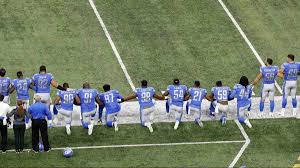
Image result for pictures about politics

We don’t view all women as objects to be judged or demeaned or sexually abused. And we do not champion political candidates who prey on or sexually abuse underage children, no matter how it may benefit our own goals. Is Judge Roy Moore’s reliable Senate vote really worth the hit to the GOP’s already damaged reputation?

We wouldn’t propose a bull-crap tax reform scam like this Senate Tax Bill that actually transfers a trillion dollars in wealth from the poorest of Americans and the middle-class to the richest special interests, most of whom have already prospered greatly in the last 4 decades.

The Congressional Budget Office attempted a preliminary scoring on this bill and claim it will take 13 million Americans health insurance away and add almost $1.5 Trillion to the national debt.

Trump, the Republi-cons in congress and Treasury Secretary Steve Mnuchin claim the bill will pay for itself, and have attempted to persuade skeptical Republican Senators that dynamic and not the CBO’s static scoring will prove their magic tax bill is the  prescription for a blooming economy. They claim it will trickle down to every American, but their trickle down tax bill is really more like Trump’s Russian pee tape.
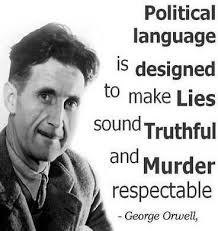
Image result for pictures about politics

They claim Multi-national Corporations will jump at the chance to bring back the mountains of cash they have squirreled away offshore over the last 2 decades and will miraculously invest this bounty in new plants and equipment and give their employees thousands in increased wages, instead of their usual MO of buying back their company’s stock in order to plump-up top executives stock portfolios, and then dole out what’s left to stock-holders. Corporations are already releasing statements claiming any such tax benefits will go back to their investors.
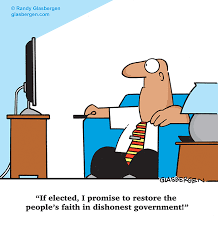
Image result for pictures about politics

They claim the bill will somehow create millions of new jobs, even though economic experts claim America is at full employment. Anyone looking for a job has dozens to choose from. The only problem is the crappy wages most employers consistently refuse to increase. We don’t need bogus stimulants for the economy, we need employers willing to share their new found wealth with their loyal employees. But good luck with that.

Secretary Mnuchin kept promising deficit hawk Republican Senators that he had 100’s of treasury department employees working around the clock analyzing the bill and would show them a favorable score before they had to cast their vote. As it turned out, not one single employee was working on any such analysis. Mnuchin was blowing smoke up their butts and can’t deliver the promised numbers to support this obvious scam. The Inspector General of the Treasury is now investigating whether Mnuchin was a bold face liar or just incompetent.

The Republicans were promising another favorable score from the Joint Committee on Taxation, but they just revealed the bill would cause a one trillion dollar loss to the treasury with very little benefit to the economy. The bill would explode the debt by $1 trillion, increase the GDP by only .8%, increase job growth by a meager .6% and only cut taxes for the middle class by 1%. Is it any wonder this bogus tax scam is the most unpopular in history with only 28% approval. A massively unpopular tax cut bill; simply unbelievable!

Senator’s Corker, McCain, Flake, Johnson and others must feel like fools for believing these flim-flam sharks. They’re now demanding the deficit be reduced from 1 trillion to 500 million. On his MSNBC program last night, Lawrence O’Donnell replayed a video of Sen. John McCain explaining the reason he voted against the Bush tax cuts, was because it would blow up the debt for no credible benefit. Which Senator John McCain will vote on this bill, the sensible deficit hawk or the one willing to take health care away from 13 million Americans, some of which are fighting cancer just like McCain?

Image result for pictures about politics

These Republi-cons are not credible leaders capable of legitimate legislation. Trump has failed like no President in history in hiring the best and the brightest. He has fired or lost, in only one year, more of his best and brightest than the last 5 or 6 presidents combined.

Image result for pictures about politics

Unlike Trump, who pisses money away like it going out of style tomorrow, on gold plated everything, I’m an old school, true fiscal conservative. I (we) would not add trillions of dollars to the national debt just to give millionaires, billionaires and very prosperous multi-national corporations, unnecessary tax cuts.

I would not create a fiscal crisis by starving the federal treasury with these tax cuts, which will not only jeopardize and cripple many state government budgets, but will allow the Republi-cons in congress to do a 180 degree flip and cry about the escalating debt they just caused. The ink from Trump’s cut, cut, cut pen will be barely dry, when these slavish miscreants will push legislation aimed at cutting the Medicaid, Medicare, Social Security and other entitlement programs for America’s poor and middle-class. And the Paygo provisions in the bill would automatically cut from these programs as the national debt increases.

I (we) would also not engage in money laundering schemes with foreign governments, foreign despots or criminal syndicates, who steal from their fellow citizens, no matter how much of a financial windfall we would reap.

The 30 percent of voters who still stand by this Trump cabal of incompetent, unpatriotic evildoers, will sooner or later have to admit they threw in with the wrong saviors. The healers were right in front of them all along. They constituted the diverse democratic party, who pulled us out of a deep recession and repaired the economy after the Republi-cons crashed it in 2008 and also the principled moderates in the GOP, before they were expelled from the party by these ult-right tricksters.

Image result for pictures about politics

No matter how dire America’s future looks, there are countless folks in our governments who are principled, honest, competent, fiscally proficient and capable of bipartisan legislation.

Image result for pictures about politics

America has relied on a two party political system to steer it through centuries of democratic progress and middle-class prosperity. Past Presidents and Conservatives like Eisenhower, Nixon, the Bushes and even Regan would not be welcomed or elected by these Republi-cons.

Image result for pictures about politics

Who will pick up the pieces of the Grand Old Party; will there be enough healers left to reconstitute a valid political opposition?

George W. Bush, Trump, myself and Bill Clinton were all born within a few months of each other; born in the first year of the baby boom. We were blessed with a fantastic new beginning after the nation survived a depression and world war. America was primed for an unprecedented period of prosperity, driven by industries getting back to their non-military business and a burgeoning middle-class of returning veterans, returning to school, ready to start families and building homes.

Employers were desperate for these loyal veterans and willing to pay good wages and ample benefits, including fully paid health insurance with small co-pays and deductibles. And the organized labor movement was growing by leaps and bounds. But what drove that bountiful economy was not a bogus tax cut sham for the already wealthy, but a concerted effort by state and federal governments passing legitimate legislation aimed at those who needed help the most. The G.I. bill, which supported education and housing, corporations willing to share their wealth, a healthy organized labor force, and expanding families drove that remarkable prosperity, something these Republi-cons just don’t get.


Child Hunger in America

 PBS‘s video to the group: Veterans against the G.O.P.

November 30, 2017

Is this what America has become? The party that calls themselves pro-life, spends 14 trillion per year on our war machines, but cannot feed, house, provide medical care or educate our people??? Child hunger is a REAL issue affecting real children in real life so please STOP claiming free-school meals to children provide an empty soul.

Child Hunger in America

Kaylie’s family can’t afford a refrigerator. Johnny dreams of eating meals somewhere other than a shelter. Here’s a candid look at hunger in America, explained by three kids living in “food-insecure” homes. (From FRONTLINE)

Posted by PBS on Wednesday, November 22, 2017

PBS. Kaylie’s family can’t afford a refrigerator. Johnny dreams of eating meals somewhere other than a shelter. Here’s a candid look at hunger in America, explained by three kids living in “food-insecure” homes. (From FRONTLINE)

U.S. Senator Bernie Sanders: We Must Stop the Immoral Republican Tax Bill.

Will County Progressives and Let the Revolution Begin. Peacefully of Course.shared U.S. Senator Bernie Sanders‘s live video.

Pathetic, disgraceful, immoral. How else can I describe the Republican tax plan? It must be stopped.

We Must Stop the Immoral Republican Tax Plan

Pathetic, disgraceful, immoral. How else can I describe the Republican tax plan? It must be stopped.

Posted by U.S. Senator Bernie Sanders on Wednesday, November 29, 2017

Congressional Budget Office Says GOP Senate Tax Bill Hits Poor, Including Many Veterans, Harder

CNBC

Lowest-income Americans would take bigger hit than first thought under Senate GOP tax bill, CBO says

Jacob Pramuk, CNBC    November 27, 2017 

Melina Mara | The Washington Post | Getty Images. The CBO report estimates that lower-income groups would foot a bigger bill from tax cuts than previously expected.

The lowest-income American households would take a hit while higher-earning taxpayers would see their burden reduced under the Senate Republican tax plan, according to the latest analysis from the nonpartisan Congressional Budget Office.

The Senate proposal permanently chops the corporate tax rate and temporarily reduces individual income taxes, while changing numerous deductions . GOP senators hope to pass that plan this week and approve a final bill agreed upon with the House before the end of the year.

The CBO report, released Sunday, estimates that lower-income groups would foot a bigger bill from tax cuts than previously expected. In 2019, all income groups under $30,000 would have a bigger burden under the bill, the CBO projected.

In 2027, that would extend to all income groups under $75,000, as individual tax reductions expire.

The change largely stems from the bill effectively getting rid of the Obamacare provision requiring most Americans to have health insurance or pay a penalty.

Low-income Americans would receive fewer premium tax credits if more of them choose not to have insurance. The CBO estimate also includes the effects of changes to spending for programs like Medicaid and Medicare.

A previous Joint Committee on Taxation analysis that showed more modest effects on low-income Americans did not include the changes in those programs.

In a statement, Senate Finance Committee spokeswoman Julia Lawless criticized the CBO report, calling its logic related to the individual mandate “confusing and erroneous.”

“Unfortunately, this is not the first time CBO has vastly overestimated the impact of the deeply flawed individual mandate,” the statement said. “And, for members concerned about the sunset date for individual tax cuts, Democrats will have a chance to make these strong middle-class tax cuts permanent on the floor.”

Democrats, who oppose the GOP tax bill, have repeatedly cast it as a plan helping corporations and the wealthy at the expense of poorer Americans.
More From CNBC:

Wavering GOP senators must face three hard truths on tax reform

Rand Paul: ‘I plan to vote for the Senate tax bill’ despite problems

Ken Griffin: We ‘probably’ don’t need to cut taxes as much as proposed