Trump’s spotty record on manufacturing jobs

Yahoo Finance – Politics

Trump’s spotty record on manufacturing jobs

Rick Newman, Senior Columnist             

Democratic presidential nominee Joe Biden is visiting swing-state manufacturing regions to bash President Trump’s record on factory jobs. “President Trump has broken just about every promise he’s ever made to American workers and he has failed our economy and our country,” Biden said in Warren, Mich., on Sept. 9. Voters will hear a lot more of that. Biden specifically points to a manufacturing recession in 2019, the increased offshoring of jobs under Trump, and a slower pace of job creation under Trump than under the last three years of the Obama administration.

While running for president in 2016, Trump promised to “bring back manufacturing,” which may have helped him win crucial Rust Belt states like Pennsylvania, Ohio, Michigan and Wisconsin. Did he bring it back? The answer could very well determine who wins those states—and the White House—in 2020.

Business shutdowns associated with the coronavirus recession have hammered manufacturing, like many other sectors. Manufacturers have lost 720,000 jobs since February, though employers have been slowly rehiring since May. But some voters may give Trump a pass on the coronavirus and try to assess his record on manufacturing during the first three years of his presidency, before the virus upended things.

From that perspective, Biden’s criticism largely holds up. Trump claims to have created the “greatest economy ever” before the coronavirus arrived, which is a comical exaggeration. In many respects, the U.S. economy grew at a similar pace from the last three years of the Obama administration into early 2020. Overall employment growth slowed a bit under Trump, but wages rose, which is typical of an expansion moving from middle to later stages. On manufacturing, however, one factor—Trump’s trade disputes with China and other countries, and the protectionist tariffs he imposed on many imports—may have caused a manufacturing slowdown and undermined the promises Trump made in 2016.

After taking a huge hit during the 2007-2009 recession, manufacturing recovered at a consistent pace from 2010 to 2015, as the following charts show. There was a slowdown toward the end of Obama’s second term, but manufacturing output picked up again near the end of 2016 and continued into 2018. Then another slowdown occurred in 2019. Biden calls that a manufacturing recession, and technically, that’s correct, since it entailed two consecutive quarters of declining manufacturing output. Production recovered in the third quarter of 2019 but dipped again in the fourth quarter, before output plunged in 2020 amid the coronavirus outbreak.

Graphic by David Foster


During the manufacturing slowdowns in 2015 and 2019, hiring flattened out—but manufacturers didn’t start laying off workers. That’s probably because CEOs saw the softness as temporary, rather than the start of another recession. They turned out to be right. Production and employment picked up after each slowdown.

Graphic by David Foster
Blame the trade war

Biden blames the Trump tax cuts for the modest manufacturing recession in 2019, claiming they gave manufacturers an incentive to move some production overseas. But Trump’s trade wars were probably the more likely cause of the 2019 slowdown. Trump began imposing tariffs on many Chinese imports, along with steel and aluminum from other countries, in 2018, and most of these nations imposed their own retaliatory measures on U.S. exports. By 2019, the trade war some analysts expected to peter out was escalating, instead. Trump ultimately slapped tariffs on about $361 billion worth of imported goods, imposing a cost of about $57 billion on the U.S. economy, according to the American Action Forum think tank.

Before the coronavirus contraction, Trump could credibly that manufacturers created about 100,000 more jobs during the first three years of his presidency than during the last four years of Obama’s. The Trump tax cuts may have helped a bit, by boosting after-tax income at most companies. But Trump also benefited from the recovery he inherited, with many deep scars of the prior recession finally healing by the time Trump took office. And there’s no evidence of manufacturing jobs that had left for other countries returning to the United States during the last three years, as Trump promised.

Democratic presidential candidate former Vice President Joe Biden arrives to speak during a campaign event on manufacturing and buying American-made products at UAW Region 1 headquarters in Warren, Mich., Wednesday, Sept. 9, 2020. (AP Photo/Patrick Semansky)

Factoring in the coronavirus shutdown, manufacturing has lost 237,000 jobs during the entirety of Trump’s presidency, which still compares fairly well with the performance of other presidents. On the Yahoo Finance Trumponomics Report Card, Trump still ranks third out of the last seven presidents on manufacturing employment. That’s because the manufacturing sector lost even more jobs at the same point in the first term of Presidents Obama, both Bushes and Reagan. During Obama’s second term, things got better, with manufacturers adding 386,000 jobs.

Biden says he’ll do better than Trump, through tax incentives meant to punish companies sending work overseas and reward those reopening closed factories here at home. Biden also says he’ll establish more muscular Buy America policies for the federal government than Trump has. Factory workers hear these types of promises every four years, and sometimes decide to give the promiser a shot. That helped Trump in 2016, but now he’s the one who has to prove he kept those promises.

Mexican water wars: Dam seized, troops deployed, at least one killed in protests about sharing with U.S.

Mexican water wars: Dam seized, troops deployed, at least one killed in protests about sharing with U.S.

Patrick J. McDonnell                        September 11, 2020
National Guard troops equipped with riot gear stand guard at Las Pilas dam, two days after withdrawing from nearby La Boquilla dam after clashing with hundreds of farmers, in Camargo, Chihuahua State, Mexico, Thursday, Sept. 10, 2020. President Andrés Manuel López Obrador said Thursday he regretted the killing of a woman and the wounding of her husband following a Tuesday clash between National Guard troops and farmers over water. (AP Photo Christian Chavez)
Troops guard a dam Thursday in Camargo, Mexico. (Christian Chavez / Associated Press)


Mexico’s water wars have turned deadly.

A long-simmering dispute about shared water rights between Mexico and the United States has erupted into open clashes pitting Mexican National Guard troops against farmers, ranchers and others who seized a dam in northern Chihuahua state.

A 35-year-old mother of three was shot dead and her husband seriously wounded in what the Chihuahua state government labeled unprovoked National Guard gunfire.

The demonstrators and state officials complain that the administration of Mexican President Andres Manuel Lopez Obrador is diverting water to the United States at the expense of drought-stricken Mexican farmers and ranchers.

“We will defend our water until the end,” said Alejandro Aguilar, 57, a Chihuahua tomato and onion grower who was among the protesters. “We will not end our fight, because this liquid is vital to our future.”

La Boquilla dam remained in protesters’ custody as of Friday amid rumors that the federal troops were readying to mount an assault to recapture the strategic facility.

The conflict has escalated into a national crisis in which both sides allege rampant corruption and the meddling of shadowy provocateurs and hidden political interests in a complex scenario reminiscent of “Chinatown,” the iconic film about early 20th century water battles in Southern California.

López Obrador denies any water shortage for farmers in Chihuahua and charges that his opponents are fomenting a politically motivated “rebellion.” Mexico has been sending water north in advance of an October deadline to provide the United States with a vast amount of water owed under terms of a 76-year-old treaty.

“We have to comply with the agreement,” López Obrador told reporters, insisting that doing so will not result in any scarcity now or in the future. “We will not allow that Chihuahua be left without water.”

Mexico is playing catch-up in its water debt to the United States after falling behind on last year’s installments. Meanwhile, Chihuahua growers say they are suffering the effects of an almost decade-long drought.

López Obrador, a leftist populist, has carefully cultivated strong ties with the Trump administration. And in a U.S. presidential election year, he clearly does not want the binational water issue to provide fodder for President Trump to engage in a new round of campaign-time Mexico-bashing.

López Obrador has voiced fears that Trump, who launched his 2016 campaign with a message that Mexico was sending “rapists” and criminals to the United States, could retaliate should Mexico fail to pony up its water debt.

“We don’t want sanctions; we don’t want a major conflict,” López Obrador told reporters. “Imagine if, for failing to comply, they close the border on us.”

In recent months, Mexico has endeavored to meet its obligation by opening dam sluices and releasing water into rivers that flow into the Rio Grande, which forms much of the U.S.-Mexico border.

The flows from Mexico provide crucial irrigation for vegetables, sugar cane and other crops in south Texas.

Mexican officials “need to increase their water releases to the United States immediately,” Jayne Harkins, U.S. commissioner of the International Boundary and Water Commission, the binational body overseeing border treaties between the United States and Mexico, warned in July.

“Continuing to delay increases the risk of Mexico failing to meet its delivery obligation,” said Harkins, a Trump administration appointee.

A 1944 binational treaty — still hailed as a groundbreaking international pact — mandates U.S. water distribution to Mexico via the Colorado River and Mexican allocation to its northern neighbor via the Rio Grande. Mexican officials concede that the treaty is advantageous because Mexico receives four times the volume of water that it delivers to the United States.

The treaty requires that Mexico provide water to the United States based on five-year cycles. Currently, however, Mexico is facing a huge shortfall — 307,943 acre-feet, or 379.8 million cubic meters — due by Oct. 24, when the current five-year cycle ends. The deficit is about 88% of what Mexico is expected to supply per year to the United States.

“That’s a lot of water to make up in a short period of time,” said Sally Spener, spokeswoman for the U.S. section of the commission. “Mexico cannot simply kick the can down the road.”

The treaty, Spener noted, does not specify sanctions for noncompliance and assumes that both parties will make “good-faith efforts” to fulfill mutual obligations.

Recent Mexican discharges meant to shrink the water balance to the United States sparked sometimes violent protests in Chihuahua, a mostly desert state that is home to large-scale farming of vegetables, grains and other crops, along with ranching.

Protesters have blocked railway tracks and torched highway toll booths and federal government vehicles, prompting the dispatch of hundreds of National Guard troops. But the unrest escalated to a new level this week.

Several thousand protesters, many wielding rocks, sticks and Mexican flags, descended on the La Boquilla dam. The marchers clashed with National Guard troops, who fired tear gas and wielded batons and plexiglass riot shields.

The outnumbered troops finally pulled back — a step that the president later called “prudent” — and the protesters occupied the dam.

The National Guard says “armed civilians” in vehicles later attacked retreating soldiers, who “repelled the aggression.” But in doing so, soldiers reportedly killed the woman and seriously wounded her husband.

Chihuahua state authorities and protest leaders blame the soldiers.

“In our investigations, no one confirms the version that the National Guard was attacked first,” said Chihuahua Gov. Javier Corral, who is a member of the National Action Party, a conservative opposition bloc that the president has blamed for fanning the crisis.

“It is one thing to look to win the governorship of Chihuahua, and something else to deceive, manipulate and use such a delicate matter for electoral goals,” Lopez Obrador said.

Gubernatorial elections are scheduled for next year in Chihuahua, where, as elsewhere in northern Mexico, voters have long been cool to López Obrador. The ex-Mexico City mayor’s power base is in central and southern Mexico. The country’s north-south political divides play into the bitter water conflict.

The president has alleged that unnamed “interests” and “water bosses” in Chihuahua have long manipulated supplies to benefit wealthy growers, who have made fortunes from planting large tracts of crops such as alfalfa and walnuts that need extensive irrigation.

“We are talking about very prosperous farmers, about businesses, a clear association of the economy and politics, but everything linked to the water,” López Obrador told reporters Friday. “The corrupt politicians become businessmen. And the businessmen become corrupt politicians.”

Water users in Chihuahua have likewise cited sinister “dark interests” fomenting discord, in the words of Salvador Alcántar, who heads the state’s association of irrigation users.

Protesters say they do not seek to renegotiate the binational water treaty. Rather, they say the Mexican government should seek alternative solutions, such as waiting for fall rains or diverting water from border areas less drought-afflicted than Chihuahua.

Mexican officials respond that time is running out and that the water flows from Chihuahua are essential to settle the country’s international arrears. The two sides appear no closer to a solution.

“For us, here, the question of water is fundamental,” Alcántar said. “It is the patrimony that we inherited from our grandparents, our parents. And now we have to leave it for our children.”

Special correspondents Cecilia Sánchez and Liliana Nieto del Río contributed to this report.

Devastating consequences’: At least six dead as wildfires rage across West Coast

NBC News

Devastating consequences’: At least six dead as wildfires rage across West Coast

David K. Li and Matteo Moschella and Whitney Lee and Tim Stelloh and Sarah Kaufman                      September 10, 2020.
Scenes of devastation as two wildfires merge in Northern California

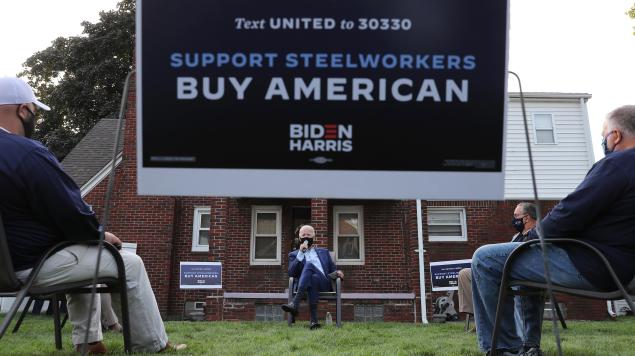
Wildfires continued to rage out of control throughout California and the Pacific Northwest on Wednesday, killing at least six people and devastating half a dozen towns in Oregon.


Oregon Gov. Kate Brown said that in the last 24 hours, the state had “experienced unprecedented fire with significant damage and devastating consequences.”

“This could be the greatest loss of human lives and property due to wildfire in our state’s history,” she said at a news conference.

In Washington State, Commissioner of Public Lands Hilary Franz said that a child had died in one of the state’s largest wildfires, the 163,00-acre Cold Springs fire. The blaze is burning mid-way between Spokane and Seattle. Franz didn’t offer details but said she was devastated by the death.

“The pain that family is going through is unfathomable,” she said.

In Oregon, wildfires burning east of the state capital tore through the small city of Lyons, killing Wyatte Tofte, 12, and his grandmother, Peggy Mosso, according to the boy’s father, Christopher Tofte. The boy’s mother, Angela Mosso, suffered severe burns and is in critical condition, he said.

And in Butte County, California, where the state’s deadliest fire on record killed 85 people and all but destroyed the town of Paradise two years ago, the remains of three people were found Wednesday after a wildfire burned through the area, Sheriff Kory Honea told reporters.

Two people were found at the same location, Honea said. The third was found elsewhere. Honea declined to provide additional details until the remains are identified.

In Southern Oregon, officials in the town of Talent told their 6,600 residents to stay outside the city limits because there’s scant electricity and it’s not safe stepping around fallen power lines.

While City Hall, the police department and other government buildings survived, there were whole neighborhoods and blocks of businesses completely gutted by the blaze.

“The fire ripped through the core of our (Oregon Route) 99 corridor,” the main stretch of town, Talent Mayor Darby Ayers-Flood told NBC News. “Where it burned, it burned completely and totally. I’m exhausted and shocked by it.”

City officials were hoping that their fast-acting residents, who evacuated Tuesday and Wednesday, would keep deaths at zero.

“I believe that most everyone is safe, it could have been far worse,” Ayers-Flood said.

Brown enacted a fire conflagration act for the first time in state history, with at least 35 fires scorching more than 300,000 acres of land in Oregon.

“Our number-one priority right now is saving lives,” Brown said on Twitter Wednesday. During the news conference, she said that six towns in Marion, Lane, and Jackson counties have been “substantially destroyed.”

Meanwhile, up the road in Medford, residents in the southern end of the city were ordered to evacuate on Wednesday as the Almeda Fire made its way north.

And to make matters worse, another blaze dubbed the Obenchain Fire was gaining strength north of Medford, according to Jackson County Emergency Management, prompting more evacuation orders.

“Level 3 (evacuation order), that’s as serious as it gets,” Rudy Owens, spokesman for the Oregon Office of State Fire Marshal, said of the emergency actions taken in and around Medford.

Huge swaths of tinder-dry brush across the western U.S. were ablaze on Wednesday as firefighters battled flames, hot weather and high winds.

There were 14,000 firefighters on the lines in California as 28 wildfires burned out of control, according to the California Department of Forestry and Fire Protection (Cal Fire).

Near the Oregon border, a fire that began Monday had exploded to 30,000 acres by Wednesday and destroyed an estimated 150 homes in the small community of Happy Camp, the U.S. Forest Service said.

In the central part of the state, the Creek Fire had consumed nearly 167,000 acres by Wednesday evening, officials said. In Butte County, the blaze that killed three people, the Bear Fire, prompted evacuation warnings for part of the town of Paradise.

Remarkably, three other fires still burning on Wednesday — the August Complex, SCU Lightning Complex and LNU Lightning Complex blazes — were classified as the second, third and fourth biggest wildfires in state history, firefighters said Wednesday.

Before Wednesday, wildfires had killed eight people in California, including five during the LNU fire, which was sparked by a rare summer thunderstorm last month. The state has seen a record 2.5 million acres burn this year.

While these flames were burning well outside the state’s biggest cities, their smoke had enveloped large urban cores.

An eerie orange and brown glow filled the sky above the Bay Area, a mixture of fog and smoke from the fires that cast San Francisco in a perpetual rust colored haze on Wednesday.

Citing the “unprecedented” and “historic fire conditions” in California, 10 national forests were ordered closed on Wednesday, meaning that all 18 national forests in the state were shut down.

“These temporary closures are necessary to protect the public and our firefighters, and we will keep them in place until conditions improve and we are confident that National Forest visitors can recreate safely,” Regional Forester Randy Moore said in a statement.

Wildfires in the state of Washington also continued to burn on Wednesday, with more than 576,400 acres charred since a series of blazes were touched off on Labor Day, said state Department of Natural Resources spokesman Joe Smillie.

In the small community of Malden, near the Idaho state line, most of the town was destroyed by a fast-moving blaze that swept through the area Monday. Larry Frick, who stayed and fought the fire as it surrounded his home, compared the scene Wednesday to a war zone.

“There were explosions going off non-stop and some really big ones where I could feel it shake the ground,” he said in an interview.

Frick said he tried to save his neighbor’s house, but the wind-whipped flames roared through its facade, reducing the structure to rubble in what seemed like minutes. The fire, which has destroyed 98 buildings, had grown to nearly 18,000 acres by Wednesday, fire officials said.

The ugly numbers are finally in on the 2017 Trump tax rewrite

Salon

The ugly numbers are finally in on the 2017 Trump tax rewrite

David Cay Johnston, Salon                     September 7, 2020
Donald Trump; Tax Forms
Donald Trump; Tax Forms.      Getty/Salon 

The first data showing how all Americans are faring under Donald Trump reveal the poor and working classes sinking slightly, the middle class treading water, the upper-middle class growing and the richest, well, luxuriating in rising rivers of greenbacks.

More than half of Americans had to make ends meet in 2018 on less money than in 2016, my analysis of new income and tax data shows.

The nearly 87 million taxpayers making less than $50,000 had to get by in 2018 on $307 less per household than in 2016, the year before Trump took office, I find.

That 57% of American households were better off under Obama contradicts Trump’s often-repeated claim he created the best economy ever until the pandemic.

The worsened economic situation for more than half of Americans contradicts Trump’s frequent claims that he is the champion of the “forgotten man” and his vow that “every decision” on taxes “will be made to benefit American workers and American families.”

The figures in this story come from my annual analysis of IRS data known as Table 1.4. The income figures are pre-tax money that must be reported on tax returns.  I adjusted the 2016 data to reflect inflation of 4.1% between 2016 and 2018 (slightly more than 2% a year).

This is the first data on the first full year when Trump was president. It also is the first year of the Radical Republican tax system overhaul, passed in December 2017. The Trump tax law, the most significant tax policy change since 1986, was passed without a single public hearing or a single Democratic vote.

High income households multiply

Trump policies overwhelmingly favor the top 7% of Americans. And, oh, do they benefit!

Prosperous and rich people, the data reveal, include half a million who are not even filing tax returns. Yet they are not being pursued as tax cheats, a separate report shows.

The number of households enjoying incomes of $200,000 or more soared by more than 20%. The number of taxpayers making $10 million or more soared 37% to a record 22,112 households.

Who saves on taxes

The Trump/Republican tax savings were highly concentrated up the income ladder with hardly any tax savings going to the working poor and only a smidgen to the middle class.

Those making $50,000 to $100,000 for example, paid just three-fourths of 1 percentage point less of their incomes to our federal government. People making $2 million to $2.5 million saw their effective tax rate fall by about three times that much.

Now let’s compare two groups, those making $50,000 to $100,000 and those declaring $500,000 to $1 million. The second group averaged nine times as much income as the first group in 2018.

Under the Trump tax law, the first group’s annual income taxes declined on average by $143, while the second group’s tax reduction averaged $17,800.

Put another way, a group that made nine times as much money enjoyed about 125 times as much in income tax savings.

This disparity helps explain Trump’s support among money-conscious high-income Americans. But given the tiny tax benefits for most Americans, along with cuts in government services, it is surprising Trump enjoys significant support among people making less than $200,000.

But realize none of the biggest news organizations do the kind of analysis you are reading, at least not since I left The New York Times a dozen years ago. Instead, the major news organizations quote Trump’s claims and others’ challenges without citing details.

Understating incomes

The figures I cite here understate actual incomes at the top for two reasons. One is that loopholes and Congressional favors allow many rich and superrich Americans to report much less income than they actually enjoy. Often they get to defer for years or decades reporting income earned today.

Second, with Trump’s support Congress has cut IRS staffing so deeply that the service cannot even pursue growing armies of rich people who have stopped filing tax returns. The sharp decline in IRS auditing means tax cheating—always a low-risk crime—has become much less risky.

Trump ignores rich tax cheats

In the three years ending in 2016, the IRS identified 879,415 high-income Americans who did not even bother to file. These tax cheats owed an estimated $45.7 billion in taxes, the treasury inspector general for Tax Administration reported May 29.

Under Trump more than half a million cases of high-income Americans who didn’t file a tax return “will likely not be pursued,” the inspector general wrote.

One of the Koch brothers was under IRS criminal investigation until Trump assumed office and the service abruptly dropped the case. DCReport’s five-part series last year showed, from a thousand pages of documents, that William Ingraham Koch, who lives one door away from Mar-a-Lago, is collecting more than $100 million a year without paying income taxes.

Borrowing to help the rich

Trump’s tax law will require at least $1.5 trillion in added federal debt because it falls far short of paying for itself through increased economic growth even without the pandemic. Most of the tax savings were showered on rich Americans and the corporations they control. Most of the negative effects will fall on the middle class and poor Americans in the form of Trump’s efforts to reduce government services.

The 2017 income tax law caused only a slight decline in the share of adjusted gross income that Americans paid to Uncle Sam, known as the effective tax rate. Adjusted gross income is the last line on the front page of your tax return and is in the measure used in my analysis.

The overall effective tax rate slipped from 14.7% under Obama to 14.2% under Trump.

Curious anomaly

In what might seem at first blush a curious development, Americans making more than $10 million received a below-average cut in their effective tax rate. The effective tax rate for these 22,000 households declined by less than half a percent.

The reason for that smaller-than-average decline is that these super-rich Americans depend less on paychecks and much more on capital gains and dividends that have long been taxed at lower rates than paycheck earnings.

The new tax data also show a sharp shift away from income from work and toward income from investments, a trend which bodes poorly for working people but very nicely for those who control businesses, invest in stocks and have other sources of income from capital.

Overall the share of American income from wages and salaries fell significantly, from almost 71% in 2016 to less than 68% in 2018.

Meanwhile, if you look just at the slice of the American income pie derived from business ownership and investments, it expanded by nearly one-tenth in two years. Income from such investments is highly concentrated among the richest Americans.

Infuriating fact

There’s one more enlightening and perhaps infuriating detail I sussed from the IRS data.

The number of households making $1 million or more but paying no income taxes soared 41% under the new Trump tax law. Under Obama, there were just 394 such households. With Trump, this grew to 556 households making on average $3.5 million without contributing one cent to our government.

Again, Trump seems to have forgotten all about the Forgotten Man. But he’s busy doing all he can to help the rich, then stick you with their tax bills.

Federal Report Warns of Financial Havoc From Climate Change

The New York Times

Federal Report Warns of Financial Havoc From Climate Change

Coral Davenport and Jeanna Smialek                     September 9, 2020
Southern California Wildfires
Fountain Valley, Caif., firefighters extinguish hot spots at a structure destroyed by the El Dorado wildfire on Monday, Sept. 7, 2020, near Yucaipa, Calif. A couple’s plan to reveal their baby’s gender went up not in blue or pink smoke but in flames when the device they used sparked a wildfire east of Los Angeles. The fire started Saturday morning in dry grasses at El Dorado Ranch Park, a rugged natural area in the city of Yucaipa. (Cindy Yamanaka/The Orange County Register/SCNG via AP)


WASHINGTON — A report commissioned by federal regulators overseeing the nation’s commodities markets has concluded that climate change threatens U.S. financial markets, as the costs of wildfires, storms, droughts and floods spread through insurance and mortgage markets, pension funds and other financial institutions.

“A world wracked by frequent and devastating shocks from climate change cannot sustain the fundamental conditions supporting our financial system,” concluded the report, “Managing Climate Risk in the Financial System,” which was requested last year by the Commodity Futures Trading Commission and set for release Wednesday morning.

Those observations are not entirely new, but they carry new weight coming with the imprimatur of the regulator of complex financial instruments like futures, swaps and other derivatives that help fix the price of commodities like corn, oil and wheat. It is the first wide-ranging federal government study focused on the specific impacts of climate change on Wall Street.

Perhaps most notable is that it is being published at all. The Trump administration has suppressed, altered or watered down government science around climate change as it pushes an aggressive agenda of environmental deregulation that it hopes will spur economic growth.

The new report asserts that doing nothing to avert climate change will do the opposite.

“This is the first time a government entity has looked at the impacts of climate change on financial markets in the U.S.,” said Robert Litterman, the chairman of the panel that produced the report and a founding partner of Kepos Capital, an investment firm based in New York. “Rather than saying, ‘What’s the science?’ this is saying, ‘What’s the financial risk?’ ”

The commodities regulator, which is made up of three Republicans and two Democrats, all of whom were appointed by President Donald Trump, voted unanimously last summer to create an advisory panel drawn from the world of finance and charged with producing a report on the effects of the warming world on financial markets. The initial proposal for the report came from Rostin Behnam, one of the panel’s two Democrats, but the report is written by dozens of analysts from investment firms including Morgan Stanley, S&P Global and Vanguard; oil companies BP and ConocoPhillips; and agricultural trader Cargill, as well as academic experts and environmental groups.

It includes recommendations for new corporate regulations and the reversal of at least one Trump administration policy.

“It was shocking when they asked me to do this,” Litterman said. “This is members of the entire community involved in financial markets saying with one voice, ‘This is a serious problem, and it has to be addressed.’”

A White House spokesman, Judd Deere, declined Tuesday to comment on the report because the White House had not yet seen it.

Douglas Holtz-Eakin, president of the American Action Forum, a conservative research organization, who served as economic adviser to John McCain’s 2008 presidential campaign, said: “This was initiated by the Trump administration. It is the only document of its type.”

He added, “If you’re denying this exists, you don’t ask for a report on it.”

The Republican chairman of the CFTC, Heath Tarbert, acknowledged the risk of climate change, but he noted that the report also detailed what the regulators called “transition risk” — the financial harm that could befall the fossil fuel industry if the government enacted aggressive policies to curb carbon dioxide pollution.

“I appreciate Commissioner Behnam’s leadership on convening various private sector perspectives on the important topic of climate risk,” Tarbert said in a statement. “The subcommittee’s report acknowledges that ‘transition risks’ of a green economy could be just as disruptive to our financial system as the possible physical manifestations of climate change, and that moving too fast, too soon could be just as disorderly as doing too little, too late. This underscores why it is so important for policymakers to get this right.”

The authors of the report acknowledged that if Trump is reelected, his administration is all but certain to ignore the report and its recommendations.

Instead, they said they saw the document as a policy road map for a Joe Biden administration.

Biden’s climate policy proposals are the most ambitious and expensive ever embraced by a presidential candidate, and most of them would meet resistance in Congress. But even without legislation, he could press forward with regulatory changes. Lael Brainard, a Federal Reserve governor who is seen as a top contender to be Treasury secretary in a Biden administration, has called for financial regulators to treat climate change as a significant risk to the financial system.

Joe Biden, the Democratic presidential nominee, speaks in Wilmington, Del., Sept. 2, 2020. (Michelle V. Agins/The New York Times)


In calling for climate-driven policy changes, the report’s authors likened the financial risk of global warming to the threat posed by the coronavirus today and by mortgage-backed securities that precipitated the financial crash in 2008.

One crucial difference, they said, is that in the case of climate change, financial volatility and loss are likely to be spread out over time, as they hit different regions and markets. Insurance companies could withdraw from California in the wake of devastating wildfires, and home values could plummet on coastlines and in floodplains. In the Midwest, banks could limit loans during or after extended droughts that drastically lower crop yields. All of those problems will be exacerbated by climate change, but they are unlikely to hit all at once.

“Financial markets are really good at managing risk to help us provide credit, so that the economy can flourish,” said Leonardo Martinez-Diaz, an editor of the report who served as senior official at the Treasury Department during the Obama administration. But, he added, the system breaks down “when it’s no longer able to manage risk, when it’s invisible, it’s not captured by the price of stocks.”

“That’s what we saw in the financial crisis of 2008, and it’s as relevant now on climate change as it was then on mortgage-backed securities,” he said.

Among the first of those risks already pervading the markets, the report’s authors say, are falling home prices and rising mortgage default rates in regions where wildfires and flooding are worsening.

“Climate change is linked to devaluing home values,” said Jesse Keenan, an editor of the report and a professor of real estate at Tulane University in New Orleans.

“If in your town, your house is devalued, that makes it harder for your local government to raise money,” he said. “That’s one set of risks that could lead to a contagion and broader instability across financial markets.”

Extreme weather could cause swings in agricultural commodity prices, the report warns, and climate-spurred market volatility could afflict pension and retirement funds, which invest across a range of asset classes.

“Climate change is one of the top three risks to our fund,” said Divya Mankikar, an author of the report and an investment manager at the California Public Employees’ Retirement System, the country’s biggest public pension fund. “We pay pension and health benefits to over 2 million current and former state employees. So the payout is decades out.”

The report makes several concrete recommendations for inoculating the financial system against potential harm.

It emphasizes the need to put a price on carbon emissions, which is often done either by taxing or through an emissions trading system that caps carbon emissions and allots credits that polluters can buy and sell under that cap.

The report calls for the reversal of a proposed rule being put forward by the Trump administration’s Labor Department that would forbid retirement investment managers from considering environmental consequences in their financial recommendations.

“If there’s any class of investors that should be thinking about the long run, it’s retirement funds and pension funds,” said Nathaniel Keohane, an author of the report and an economist at the Environmental Defense Fund, an advocacy group.

The report suggests that the Financial Stability Oversight Council, a Treasury Department-led body created in the wake of the 2008 crisis, incorporates climate risks into its annual report and its communications with Congress. It suggests that the Federal Reserve and other major financial regulators join international coalitions that focus on climate threats.

The report also suggests that bank regulators should roll out a climate risk stress testing pilot program. Such stress tests, which assess how bank balance sheets and the broader system would fare in bad climate-related economic scenarios, have been under development in Britain and elsewhere in Europe.

The authors also recommend that another financial regulator, the Securities and Exchange Commission, strengthen its existing requirements that publicly traded companies disclose the risks to their bottom lines associated with climate change.

Coca-Cola has noted in its financial disclosures that water shortages driven by climate change pose a risk to its production chains and profitability. But many other companies “just check the box” on that requirement, Keohane said.

Such disclosures should also include the risk to companies’ bottom lines posed by future policies designed to mitigate climate change, such as taxes or regulations on carbon dioxide pollution, which could hurt fossil fuel producers.

“If carbon risk is priced, this will add cost to the oil and gas industry,” said Betty Simkins, a report author and professor of finance at Oklahoma State University in Stillwater. “But they need to be prepared for this. It’s better for the companies to disclose the risk and be as financially fit as possible.”

Who will clean up Alaska’s ‘orphaned’ oil infrastructure?

Op-Ed: Who will clean up Alaska’s ‘orphaned’ oil infrastructure?

George Schaller and Martin Robards         September 8, 2020
A small herd of musk oxen roam the Arctic refuge’s coastal plain. (U.S. Fish and Wildlife Service / Associated Press).


You can feel the encroaching decay in the sides of buildings, in the limp remains of a once-proud drill rig slowly rusting into the waterlogged gravel and tundra. In the 1950’s, one of us, George, was part of the expedition that explored and then advocated for the formation of the Arctic National Wildlife Refuge. At that time, he worried the region would end up resembling the disrupted skylines and greasy sheens of Texas’s aging and abandoned oil fields.

More recently, we visited the sprawling spaghetti of pipelines, metallic shells of buildings and this defunct drill rig, now worrying that a legal and regulatory morass will bring George’s dystopian fears to fruition. There has been little formal preparation for what happens when oil ends, even as the Trump administration has announced plans to fast-track the auction of leases for drilling in pristine areas of the Arctic refuge, with similar plans for parts of the Teshekpuk Lake Special Area in the National Petroleum Reserve-Alaska.

If we ignore the costs for plugging and abandoning wells, dismantling and removing accompanying infrastructure, and fully restoring impacted tundra, we allow for a vast overestimate of the economic value of oil in these outstanding Arctic ecosystems. Unless the intent is to walk away and just leave the mess behind.

For generations, people arriving in Alaska have done just this. Alaska’s legacy of abandoned infrastructure and contaminants has wrought havoc on numerous remote sites, and for many communities. In our travels across the Arctic coastal plain, we encountered abandoned drill sites where metal shards and sun-bleached wood punctuate rotting gravel pads, the acrid smells a clear olfactory reminder of what should not be there.

In the absence of plugging and proper abandonment, fluids and gases left in wells and underground reservoirs can seep to the surface. Added to this chronic challenge are corrosion of well bores from salts and water, the settling of land and changes in the climate that contribute to erosion of the hard surface permafrost.

In a few decades, the bulk of revenues from Alaska’s North Slope will be dispersed, and this decaying industrial mess will be someone else’s problem, if it is dealt with at all.

The Government Accountability Office stated in 2002 that there were inadequacies in planning for the proper and effective cleanup of abandoned sites on the North Slope of Alaska. The GAO restated its concerns in 2003, 2010 and 2011. The Department of the Interior Inspector General in 2015 and the Congressional Research Service in 2018 echoed these concerns.

Other large oil fields, such as in Texas, Louisiana and California, do not offer much solace as the number of their “orphaned” wells grow. In Louisiana, there are over 4,000 abandoned and unplugged wells, many of them in deteriorating condition. Texas has over 6,000, and California another 5,500, that are abandoned or at high risk of becoming so. Thousands of inactive additional wells will likely add to these numbers as the years tick by.

The decline in oil prices since 2014 has exacerbated the trend of well abandonment, particularly among smaller operators who may also be facing bankruptcy. These declines further reduce the already-inadequate revenues allocated to cleanup funds for these abandoned sites.

Alaska is starting to experience these pressures. The bankruptcy of Aurora Gas in 2018 left the state the responsible party for cleaning up three wells on state land. Recent news that BP is closing shop in Alaska and selling to the smaller Hilcorp is consistent with this trajectory.

Decommissioning costs cannot be an afterthought. The Bureau of Land Management spent $90 million in northern Alaska, remediating just 18 of 136 “legacy wells” that the federal government drilled between 1944 and 1981. On Alaska’s North Slope, cleanup of a 60-acre oil-field logistics site ran up a $2-million bill and is still not complete. There are now over 3,000 active wells on the North Slope and another 800 suspended or idle, linked by a labyrinth of pipes, buildings and gravel roads.

Current bonding levels, the funds put aside by the industry to ensure adequate decommissioning of wells and other infrastructure, barely touch what’s needed for cleaning up what’s been built or drilled to date. Former State Commissioner Cathy Foerster previously expressed doubt that the bonds would “even pay for the engineering study needed to plan the plugging operations, much less any of the actual plugging costs” — and these plugging costs are just one small component of cleaning up the accumulated debris of a specific drill site, never mind the new oil fields that continue to sprawl outward from the Prudhoe Bay hub. Operators can hold blanket bonds for their entire operations that may not even cover a single site’s cleanup.

There has been reticence from the industry and regulators to absorb the burdens of decommissioning at the outset. However, if the state of Alaska or other local representatives do not insist on a bond to cover all costs of potential cleanup and restoration prior to approval of an operation, experience in North America and around the world strongly suggests it will not be done.

If we cannot afford a plan to fully clean up and restore an area, this is just one more of the many reasons why we cannot afford to drill new wells.

George Schaller is a senior conservationist at the Wildlife Conservation Society. Martin Robards is regional director for the Arctic Beringia program at WCS.

Fox News Reporter Snaps Back As Trump Demands Her Firing For Confirming War Dead Story

Fox News Reporter Snaps Back As Trump Demands Her Firing For Confirming War Dead Story

Mary Papenfuss              September 5, 2020

Fox News reporter staunchly defended her work Saturday after President Donald Trump demanded she be fired for confirming parts of The Atlantic’s bombshell story revealing the president’s insults about military service members.

“I can tell you that my sources are unimpeachable,” Fox News’ national security correspondent Jennifer Griffin said on-air (in the video above). “I feel very confident with what we have reported at Fox.”

She didn’t confirm “every line” of the report, but did confirm “most of the descriptions and the quotes in that Atlantic article … so I feel very confident in my reporting,” Griffin said. She also discovered as part of her reporting that Trump had once said that including “wounded guys” would not be a “good look” at a Fourth of July parade honoring the military, according to a source.

The Atlantic article cited multiple accounts of shocking incidents when Trump denigrated military service members, including referring to fallen war heroes as “losers” and “suckers.” It also revealed details of the president’s refusal to visit the graves of America’s war dead at Aisne-Marne Cemetery while he was in France in 2018. Trump has denied everything.

Griffin said she wasn’t able to confirm the “suckers” and “losers” portion of the Atlantic report about dead military heroes. But a source did confirm that Trump once said that anyone who served in the Vietnam War was a “sucker.”

While reporters at other news operations confirmed the Atlantic report, Trump singled out Griffin because a hit from Fox News, which is usually supportive of the president, is particularly damaging for him.

Trump cited a Breitbart article pointing out that Griffin had failed to confirm the “most salacious” (“suckers” and “losers”) details of the Atlantic story, written by editor-in-chief Jeffrey Goldberg, whom Trump called a “slimeball.” The president also declared that Fox News was “gone.”

Fox News was confused about where it stood on the story Friday. News hosts bashed the story before it was confirmed (by Griffin), then it was bashed again, then reconfirmed. News hosts also attacked the use of anonymous sources by The Atlantic, but then used anonymous sources to attack — and confirm — the story.

At least seven of Griffin’s colleagues — and a Republican congressman — supported her after the president’s tweet and after being bashed by Fox contributor Mollie Hemingway for using anonymous sources.

Illinois GOP Rep. Adam Kinzinger also spoke up for Griffin on Saturday, calling her “fair and unafraid.”

Twitter critics are calling on two retired Marine Corps generals — former Defense Secretary James Mattis and ex-White House chief of staff John Kelly — to speak out about the Atlantic article.

Former NATO supreme commander and Navy Admiral James Stavridis tweeted Friday that the men’s “lack of denial” speaks volumes.


Why Trump’s ‘losers’ and ‘suckers’ slurs cut especially deep for Marines

The Week

Why Trump’s ‘losers’ and ‘suckers’ slurs cut especially deep for Marines

Peter Weber, The Week           September 4, 2020


The Atlantic‘s Jeffrey Goldberg dropped a bombshell on Washington, D.C., late Thursday, publishing a compilation of anecdotes about President Trump disparaging U.S. service members, frequently referring to those killed or captured in the line of duty as “losers” and “suckers.” Trump and his aides pushed back hard against the reports, but then James LaPorta, a Marine Corps veteran and investigative reporter at The Associated Pressgot confirmation from two sourcesThe Washington Post and The New York Times followed up with their own sources confirming Trump’s dismissive comments about POWs and slain soldiers.

Goldberg begins his article with Trump declining to visit the Aisne-Marne American Cemetery near Paris in 2018:

In a conversation with senior staff members on the morning of the scheduled visit, Trump said, “Why should I go to that cemetery? It’s filled with losers.” In a separate conversation on the same trip, Trump referred to the more than 1,800 Marines who lost their lives at Belleau Wood as “suckers” for getting killed. Belleau Wood is a consequential battle in American history, and the ground on which it was fought is venerated by the Marine Corps. America and its allies stopped the German advance toward Paris there in the spring of 1918. But Trump, on that same trip, asked aides, “Who were the good guys in this war?” [The Atlantic]

Goldberg’s report is “quite shocking,” LaPorta told MSNBC’s Rachel Maddow on Thursday night. “I actually didn’t believe it — which is why I started reaching out to sources. … Belleau Wood is one of those things that is sort of hammered into young Marines as they’re going through boot camp. I mean, Marine Corps folklore comes out of Belleau Wood, the idea the German army called Marines ‘Teufel Hunden,’ which translates into ‘Devil Dog.’ That’s where we get that name from.”

Maddow also played a previously unseen part of her interview with Mary Trump in which the president’s niece recounts a family story about Trump threatening to disinherit Donald Trump Jr. if he joined the military.

Goldberg told MSNBC’s Morning Joe on Friday he thinks Pentagon officials are mostly baffled at Trump’s attitude toward military heroes. “I think he’s genuinely confused by service,” Goldberg said. “I think the volunteer force in particular kind of confuses him, because why would you ever possibly put your life at risk for a salary of $64,000 a year? It doesn’t make any sense, is my point, in his worldview.” Watch below.


Minivans at the Food Pantry: Meet America’s New Needy

The New York Times

Minivans at the Food Pantry: Meet America’s New Needy

Tim Arango                     September 4, 2020

LAKESIDE, Calif. — This is America: a family crammed in a minivan driving mile after mile across San Diego County, first to one food giveaway and then to another and then to more.

To Mary’s Donuts, in rustic downtown Lakeside, for day-old chocolate frosted, maple-and-bacon glazed and pastries the size of catcher’s mitts.

Sixteen miles west to Jewish Family Service for big, fresh mangoes, boxes of hard-boiled eggs, cheese and lamb stew. Another 20 minutes south to the Ocean Discovery Institute for diapers and school supplies. To the Salvation Army for bottled water, oatmeal, a cake. All of it piled high into the back.

Since the coronavirus pandemic upended her life and so many others’, Alexis Frost Cazimero has spent most days this way, gathering food for her four children as well as neighbors in need. She pulls her packed silver Volkswagen van alongside the BMWs and Mercedeses as they edge their way through the long, snaking food lines. Where else but America can luxury and poverty get so close together that, in essence, they become one?

“I want people to understand, the face of the needy is different now,” said Cazimero, who has joined a new class of Americans who never imagined they would have to take a spot in a modern-day bread line. “Just because I have a car doesn’t mean I have enough money to buy food.”

The pandemic has exposed the fragile nature of success for millions of Americans: material markers of outward stability, if not prosperity, but next to nothing to fall back on when times get tough.

In long conversations around the country in August — at kitchen tables, in living rooms and in cars during slow-moving food lines with rambunctious children in the back — Americans reflected on their new reality. The shame and embarrassment. The loss of choice in something as basic as what to eat. The worry over how to make sure their children get a healthy diet. The fear that their lives will never get back on track.

There was the family in Jackson, Mississippi, that relied on a local food bank over the summer, even though before the pandemic they had been making almost six figures a year. That is a nice living in a place like Jackson, and it got them a house in the leafy Belhaven neighborhood, a Chevy Suburban and beach vacations to Florida.

Or the single mother in Tennessee who had finally pushed her way into the middle class with a job that paid enough to send her oldest daughter to private school, only to find herself accepting food from charity.

Cazimero, 40, faced her new financial circumstances with as much equanimity as determination, even as it shook her sense of what it meant to have made it. Before the pandemic, she was a hair stylist at a salon owned by her mother-in-law that would shut down in accordance with California’s coronavirus rules. She also ran her own events business, which had been “rocking and rolling” after a lucrative holiday season decking out car dealerships for Christmas. Her husband, Adam, saw far fewer people come into the local Ford dealership where he works, and his commissions have plummeted.

These days she has become an armchair therapist to friends who feel ashamed at not being able to afford enough food; a logistics specialist in how she navigates the schedules of all the pantries in San Diego County; and a food procurer and distributor to the needy, even as she is needy herself.

“Before, I always helped out,” she said. “But I wasn’t the one who needed it. Now I need it.”

After making her rounds, Cazimero returned to her modest house in a development studding a hillside and separated out what will go to her family and what she will give away to neighbors and others. Over Facebook and text message groups, informal barter networks have sprouted among needy families. “You have toilet paper? Let’s trade,” she said.

And then there are the private messages from friends saying they need help but are embarrassed at not being able to provide for their families anymore.

She reminds them they are not the only ones. “Dude,” she said, “none of us can because we can’t work.”

‘The Great Depression With Minivans’

When historians look back on our pandemic-stricken times, there will perhaps be one indelible image that captures the attention of future generations: the endless lines of cars across the country filled with hungry Americans.

“I call it the Great Depression with minivans,” said Terry McNamara, who on a recent morning was behind the wheel in a line of cars, their trunks opened as they wound through the parking lot of Parma Senior High School in a working-class suburb of Cleveland that was once America’s fastest-growing city.

With his daughter, Laura Horsburgh, and five grandchildren along for the ride, McNamara, 74, drove his car through the procession as it moved along with military precision. At each station a coach or a teacher or even the principal loaded up the trunk with milk, or fresh produce from local farms — sometimes plump tomatoes or corn on the cob — or boxes of soup and lentils and cans of tuna. How much food one got depended on how many children were in the car. At the last stop, inside the school’s auto repair shop, volunteers offered watermelons and storybooks — Dr. Seuss and Berenstain Bears.

“The kids love to go and see what is new,” Horsburgh said.

The numbers of Americans seeking help from food banks have swelled despite an unprecedented expansion of the federal government’s food stamp program in the midst of the pandemic.

Just one food bank in Memphis, Tennessee, served more than 18,000 people between March and August, 10 times as many as over the same period last year.

“Folks who had really good jobs and were able to pay their bills and never knew how to find us,” said Ephie Johnson, the president and chief executive of Neighborhood Christian Centers. “A lot of people had finally landed that job, were helping their family and able to do a little better, and then this takes you out.” In her 30 years of charitable work in Memphis, she said, “I have not seen it quite like this.”

In one week in late July nearly 30 million Americans reported they did not have enough to eat, according to a government survey. Among households with children, 1 in 3 reported insufficient food, the highest level in the nearly two decades the government has tracked hunger in America, said Lauren Bauer, who studies food insecurity at the Brookings Institution.

“What’s happening with children right now is unprecedented in modern times,” Bauer said.

As painful as the summer was, as difficult as it became for so many families to afford decent food, the situation could get worse, especially with unemployment benefits drying up for many people and Washington unable to agree on a new stimulus package. Then there is the virus itself: It could surge back in the fall and shutter businesses again, putting more people out of work and into the food lines.

Feeding America, which oversees the country’s largest network of food banks and pantries, has projected that up to 54 million Americans could be food insecure before the end of the year, a 46% increase since the pandemic began. The group has reported a 60% increase in the number of people it serves and said that 4 in 10 people are first-time recipients of food aid.

During the pandemic, Feeding America’s volunteers have surveyed recipients, sending dispatches back to headquarters that read like raw intelligence reports from a nation in need.

“It was obvious that several people who came through our drive-through mobile pantry had never been to a pantry before,” reads one account from Terre Haute, Indiana.

In Cleveland, a woman who had once been prosperous enough to be a donor to the local food bank found herself on the receiving end, collecting food and also flowers on Mother’s Day.

In July, a report came back from New Orleans: “We have met so many people who are seeking the assistance from a food bank for the first time. In a ‘normal’ year, it’s not uncommon to hear someone say, ‘Six months ago, I never dreamed I’d need to ask for help getting food.’ But over the course of the pandemic response the number of people telling us has grown by magnitudes.”

What the numbers do not capture is the powerful emotions of shame or embarrassment that many say they feel, having fallen so suddenly into the lines of the desperate, and seeing so many hard-earned prizes of middle-class life — the nice car, the vacations, the ability to buy what they want when they want — fall away.

Ciara Jones, a single mother in Memphis, grew up poor but in recent years worked her way to economic stability. She was hired last year as a manager at Logan’s Roadhouse, a restaurant chain in the South, earning $60,000 a year — more money than she had ever made. She put her oldest daughter in a private Christian school, bought a new white Honda Accord and took her four children on vacation to Six Flags in St. Louis.

“I felt myself finally in the middle class,” Jones, 33, said.

Then the pandemic hit, and Logan’s closed, but not before she was allowed to take home T-bone steaks and chicken wings and hamburger patties from the restaurant’s freezer, which helped for a little while. And so did the extra $600 a week in unemployment she was receiving. But that has run out, and now she is receiving $275 per week in benefits, barely enough to cover her monthly rent of $975. She said she was ashamed to get food from Neighborhood Christian Centers and is embarrassed every time she pulls out her food stamp card at the grocery store.

“I’ve always been a strong woman, a strong mother,” she said. “I don’t want my kids to see me struggle or stressed.”

They Thought Poverty Was in the Rearview Mirror

The Belhaven neighborhood of Jackson, Mississippi, is filled with charming bungalows, stately old homes and canopied streets. Lily Victory lives in a small, white clapboard house on the edge of the neighborhood.

As a child, Victory was in foster care sometimes and grew up “super-poor,” she said. Food was always scarce. Her parents, she said, were too proud to apply for discounted lunches, so she never ate at school.

Before the pandemic, she worked as a contractor with the military. Her husband, Mike, is a machinist at a box factory, and together they earned a little less than $100,000 a year.

“We had nothing to worry about,” she said. “We had savings. We were saving up to put a down payment on a house. We took a couple vacations a year. The kids got whatever they wanted.”

After losing her job, and after her husband’s hours were cut, they were soon staring at an eviction notice. They were unable to make the $1,100 rent payment. The Chevy Suburban was one of the first things to go. Every day she awoke to a feeling of “impending doom.”

She called around to social service organizations and churches searching for help paying the rent. She was instead directed to a food bank, the Good Samaritan Center. Save the money you would spend on food and put it toward rent, she was told.

“I thought about a food bank and I was like, I don’t want to do that because if you are going to a food bank you really need it,” she said as she barely touched her lunch at a Mediterranean restaurant in Jackson. “I didn’t want to take it away from someone.”

She went anyway, as painful as it was.

“I lied to my children,” she said, her eyes unblinking.

To explain why there were so many things she did not normally buy — like cans of Coke and Sprite, or boxes of cupcakes — she told them they were a special treat because they were cooped up in the house. And to explain why she was not buying usual items like Lunchables, she said the shelves at the grocery store were bare because of the pandemic.

Amid Struggle, Gratitude and Silver Linings

As she drove from one food pantry to another in eastern San Diego County, Cazimero pointed out some of the businesses that have closed permanently. She passed through the center of El Cajon, her hometown, where she used to put up Christmas decorations at the promenade.

She was on her way to pass out doughnuts at a trailer community in the shadow of a busy freeway. Helping others find food, she said, has brought her purpose. She may have less money now, but she also has less anxiety. That is because she no longer is driven to exhaustion managing the children and work. There is no work anymore.

“I can go with less, and we have spent so much more valuable time as a family,” she said.

About 2,500 miles and three time zones away, in Erie, Pennsylvania, Claire Hudson, a single mother, lost her customer service job. For the first time, she went to a food bank. Like millions of Americans, she suddenly had little choice in what to eat, forced to accept whatever is boxed up and loaded in the trunk.

Many food banks offer fresh produce from local farms and prime cuts of meat. But giveaway boxes are often stuffed with bread and cakes and cookies.

“In the richest country in the world, and we are, we make it so easy to be unhealthy,” Cazimero said.

The crisis of food insecurity has further exposed how an unhealthy diet contributes to conditions like obesity and diabetes that put people at higher risk for complications from the virus.

With little choice, Hudson picked out what she and her son could use and donated the rest to those even more in need. She noticed a growing homeless population so started stuffing what she called “blessing bags” with sugary cereals like Froot Loops, graham crackers and pudding.

When she began handing them out to homeless people, she let them pick what they liked. “I started giving them a choice,” she said. “Hey, this is what I have, does any of this interest you? The choice for me came from not having a choice in what we got.”

Back in Ohio, Horsburgh, a stay-at-home mother, and her husband, Chris, a house painter whose jobs dwindled when the pandemic hit, worry plenty about money. But the children look forward to the weekly outings to the high school parking lot to pick up food — a routine in an uncertain time.

As the pandemic drags on, our understanding of the nature of the needy in the United States is changing, and with that change new questions abound: What is our responsibility to those who can barely hang on? Will we think differently about who has to ask for help and why?

Cazimero said she was trying to be optimistic: “Something great is going to come of this.”

But no one knows what the road back for so many families looks like — or if they can even make it back.

“You could grit and grind as a 19-year-old, until you get to 25 or 30, and you’re finally getting there,” said Johnson, the head of the charity in Memphis. “But at 30, 40 years old now you are trying to start over again? How are you going to do that? It’s hard.”

What is California’s wildfire smoke doing to our health? Scientists paint a bleak picture

What is California’s wildfire smoke doing to our health? Scientists paint a bleak picture

Erin McCormick in Berkeley                   September 4, 2020
<span>Photograph: Xinhua/Rex/Shutterstock</span>
Photograph: Xinhua/Rex/Shutterstock. Historic wildfires burning across California have sent a 500-mile-long gray blob of smoky air swirling above the western United States, and Stanford researcher Bibek Paudel is already seeing the health effects build up.


In the days after lightning sparked hundreds of fires across the north of thstate, Paudel, who studies respiratory illness at Stanford’s allergy and asthma research center, saw hospital admissuch as strokes jump by 23%. Based on the center’s studies of recent fires, Paudel expects that th

The research is part of a growing body of scientific evidence painting a dire picture of the effects of wildfire smoke on people, even those living hundreds of miles away. Many researchers worry that those debilitating effects will only intensify the risks of the Covid-19 pandemic. “Wildfire smoke can affect the health almost immediately,” said Dr Jiayun Angela Yao, an environmental health researcher in Canada.

Related: ‘An impossible choice’: farmworkers pick a paycheck over health despite smoke-filled air

This summer, Yao co-authored a study for the University of British Columbia showing that, within an hour of fire smoke descending upon the Vancouver area during recent wildfire seasons, the number of ambulance calls for asthma, chronic lung disease and cardiac events increased by 10%. The study found that within 24 hours greater numbers of people were calling for help with diabetic issues as well.

Studies after the bushfires that raged throughout Australia last year found even bleaker outcomes. Researchers from the University of Tasmania identified 417 extra deaths that occurred during 19 weeks of smoky air, and reported 3,100 more hospital admissions for respiratory and cardiac ailments and 1,300 extra emergency room visits for asthma.

The fires and the smoke are complicating the response to the coronavirus pandemic. Meanwhile, social distancing requirements are exacerbating the risks of smoke pollution. “For communities that are exposed to both fire smoke and Covid-19, it’s going to be a double threat,” Yao said.

<span class="element-image__caption">A satellite image shows smoke plumes from the California wildfires migrating across the American west.</span> <span class="element-image__credit">Photograph: Nasa/AFP/Getty Images</span>A satellite image shows smoke plumes from the California wildfires migrating across the American west. Photograph: Nasa/AFP/Getty Images


For health workers and first responders, dealing with both a pandemic and a fire season at the same time comes with significant logistical challenges. Evacuees and firefighters forced to live in shared housing may face additional Covid-19 exposure. The pandemic has already stretched the resources available from local government agencies thin.

Residents wanting to get away from the smoke may no longer have the option of sheltering at the library or mall or staying with friends because of shutdowns and pandemic risks. “We are not in a situation where people can just leave to get away from the smoke as they might like,” said Peter Lahm, an air resource specialist with the USDA Forest Service, who specializes in monitoring wildfire smoke.

Researchers also fear the smoke can act more deeply to hamper the body’s ability to fend off infection.

Science has long shown that air pollution can cause numerous deadly health effects, including increasing the severity of respiratory infections, such as flu and pneumonia. Research this year from Harvard University showed a significant link between increases in long-term exposure to air pollution particles and Covid death rates. The study, led by researcher Xiao Wu, has not yet been peer-reviewed.

Many US regions have managed to reduce pollution from industrial smokestacks and automobile tailpipes, but wildfire smoke has become an increasing threat.

Fire smoke is a volatile mixture of gases that can contain hundreds of different toxins, depending on the heat of the fire, the wind conditions and the composition of what is burning – whether it is trees, grasses or houses filled with plastics and manmade chemicals.

The spray of very fine particles – known as PM2.5 – that wildfires launch into the air causes the biggest concerns. These particles are small enough to be inhaled through the lungs, where they can cause disruptions to health that are just beginning to be fully understood.

“We know that pollution, in general, is going to make your immune system less healthy and its responses more chaotic,” said Dr Mary Prunicki, who oversees Stanford’s smoke studies as the director of research for the Sean N Parker Center for Allergy & Asthma Research. “It requires a healthy immune system to fight infections like Covid-19. And, if your immune system isn’t working as well, it puts you at greater risk.”

Prunicki and her team are working to learn more about how wildfire smoke affects the workings of the human body. Even as her own home was threatened with possible evacuation from Santa Clara county’s SCU Lightning Complex fires, Prunicki was working to send out more than 100 blood testing kits to volunteers for a study that researchers hope will help establish how conditions like inflammation are affected by the smoke.

<span class="element-image__caption">San Francisco is blanketed under a thick layer of unhealthy smoke-filled air.</span> <span class="element-image__credit">Photograph: Peter Dasilva/EPA</span>San Francisco is blanketed under a thick layer of unhealthy smoke-filled air. Photograph: Peter Dasilva/EPA

Earlier studies of young people, who were exposed to even distant wildfire smoke, showed dramatic changes.

“We found, even in teenagers, if we drew their blood after a wildfire, we saw a systematic increase in inflammatory markers,” said Prunicki, who added that “a lot of chronic disease is related to inflammation”.

With clouds of smoke from the fires floating around the country, people as far away as Idaho and Colorado are choking on California’s smoke. “We had several days when we were just socked in,” said Sally Hunter, an air specialist with the Idaho department of environmental quality, who said smoke travelled north to spark health warnings in Boise, even though there were no fires nearby. “I got up to go get groceries and I couldn’t see down to the end of my street. I got a headache and my sister in-law got itchy, watery eyes.”

Since California’s fires started months earlier than usual, experts worry that this will be an especially smoky year.

The worst year on record for California fire smoke was 2008 when lightning fires started in June and continued all summer, according to Lahm. Fires from 2017 and 2018 also unleashed huge amounts of smoke.

Paudel and the Stanford researchers found that, since 2011, the number of smoky days occurring each year has increased in California and in the entire western US. Unfortunately, some of the largest increases were in counties with the biggest population centers, such as those around Los Angeles or along California’s Central Valley.

When a gray curtain of smoke descended on the Bay Area last week, 76-year-old Berkeley resident Barbara Freeman, who suffers from pulmonary conditions, tried to follow all the advice. She regularly checked environmental air monitor readings, stayed inside, sealed her windows and turned on her two air cleaners.

Still Freeman lost her voice and found breathing painful. She worried, if she had to evacuate, she would have nowhere to turn to escape the smoke and the danger of coronavirus. But one of the things she found the hardest was not being able to go outside to walk her dog.

“That was how I was maintaining what sanity I had left,” she said.