Republican lies have thrust America into its third revolution. We are a nation in crisis.
Carrie Cordero and Edward J. Larson
Angry supporters of President Donald Trump scale the west wall of the the U.S. Capitol in Washington on Jan. 6, 2021.
To read and listen to the headlines after House Republicans voted to remove Rep. Liz Cheney from her leadership post, one would think that the “turning point” in the Republican Party began with its denial of the 2020 election result after Nov. 3, or the Capitol insurrection on Jan. 6. Neither of those moments, however, is or was the actual turning point. Instead, the transformation one of the nation’s two major political parties took place well before each of those events. And the longer it takes for the public conversation to recognize how dramatically the Republican Party has already shifted, the longer it will take to develop a coherent civic strategy to protect U.S. democracy going forward.
And we do need a strategy, because this political crisis is not just the internal machinations of a single political party; it is a political crisis of a nation. Indeed, it might not be hyperbolic to characterize our present national state as in the midst of the third revolution.
Tectonic shift in the Republican Party
What was at first an acquiescence to Donald Trump since his nomination at the Republican National Convention in 2016 slowly became a public acceptance, and then an entanglement. Some who were slow to realize the tectonic shift taking place in the Republican Party over the past five years have awakened from their slumber in the wake of the attack on the Capitol. They are a little late. Those who thought they could wait out Trump’s presidential term before getting on the right side of history were wrong; the time for choosing in a way to actually affect the trajectory of the modern-day Republican Party was earlier.
One explanation for this delayed acknowledgement could be that even sophisticated political participants forget how quickly political parties can completely transform or disappear. Some political actors perhaps thought that they had more time. In the 1850s, a decade before the Civil War, the relative balance that had lasted for a generation between the two political parties – the Democrats and the Whigs – collapsed. The Whig Party disintegrated between 1852 and 1856. As this historic transformation shows, fundamental change to a political party need not take decades. It can happen in just a few years.
From left, Jared Kushner, Ivanka Trump, President Donald Trump and Japanese Prime Minister Shinzo Abe in Osaka in 2019.
From 2016-20, it appeared that the Republican Party might disintegrate like the Whigs. First, the GOP looked away as Trump relied on family members instead of government professionals as White House advisers. Second, midway through his term, the president fired or solicited the resignations of political appointees of his own party who had been confirmed by the Senate. He repeatedly turned on his own appointees, particularly when they sought to carry out their lawful functions. Third, the Republican convention in 2020 declined to adopt a political platform; instead, it allowed the party to reflect the whims of its highly personalized leader.
Since then, the vast majority of Republican voters and officials have embraced denial of the 2020 election results and refused to acknowledge the severity of the Jan.6 attack on the Capitol. These developments reveal that the Republican Party will not give up like the Whigs. The party will persevere, emboldened by taking pride in belligerence and transformed into a political movement that embraces fraud and deceit as fundamental to its survival and electoral success.
US democracy’s existential crisis
We are all familiar with the first American Revolution: an actual war, a rebellion for self-governance. But it was not long after that Thomas Jefferson called the election of 1800 the “second American revolution.” The election of the Democratic-Republicans over the Federalists set the course for the nation in Jefferson’s vision of American democracy, and permanently marginalized the Federalist Party and led to its ultimate replacement by the Whigs.
In the hours after the insurrection at the U.S. Capitol, former president Trump tweeted, “Remember this day forever!” Participants in the melee he incited openly invoked 1776.
American Revolution reenactment in Lexington, Mass., in 2006.
We will not know until after the 2022 midterms and the 2024 presidential election whether the result of 2020 set the nation on a path toward Democratic Party domination for a generation, like the election of 1800. But we think this moment in our nation’s history is best understood as the third American revolution – hopefully primarily of competing ideas and minimally of political violence – where the effective functioning of American elections and democratic institutions hangs in the balance.
It is no longer enough to characterize the present political crisis as an internal party dispute. Instead, we are witness to a political revolution that will define American society and governance for decades to come.
Carrie Cordero is the Robert M. Gates Senior Fellow at the Center for a New American Security and adjunct professor at Georgetown Law. Edward J. Larson is a Pulitzer Prize winning legal historian and a professor at Pepperdine University whose latest book is “Franklin & Washington: The Founding Partnership.“
Thanks to Kobach, Trump and conservative think tank, we know extent of voter fraud
Charles Hammer May 20, 2021
We Kansans owe Kris Kobach warm thanks for his greatest triumph: He proved that voter fraud is virtually nonexistent in our state. He achieved that by fiercely striving to prove the opposite.
In 2010 he got himself elected as Kansas secretary of state, then won legislative authority to prosecute illegal voters — a power no equivalent state official elsewhere holds.
He secured a 2013 law requiring that those registering to vote prove they are American citizens. His bar to voting was among the most severe in the nation until overruled in federal court.
Kobach recently filed to run for Kansas attorney general in the next election.
So how many fraudulent voters did Kobach’s dragnet convict during his eight-year tenure in office? Just nine. Nine convictions in a state with nearly 2 million registered voters. Among those were older citizens who mistakenly voted in two different places where they owned property.
A college student filled out an absentee ballot for her home state before voting months later in Kansas, both times for Trump. Steve Watkins, a former Republican congressman, was charged with three felony voting offenses and got off with diversion.
The Heritage Foundation, a conservative think tank, supports the arguments of Donald Trump and Kobach. Going back as far as 2005, Heritage lists 15 convictions for voter infractions in Kansas, presumably including those from the Kobach era. Over 15 years, one offense per year.
The Heritage website also reports 1,322 “proven instances of voter fraud” in the United States since the early 1980s. How could America have passed 40 years with a measly 1,322 proven instances of voter fraud? Among our 168 million registered voters?
Both for Kansas and the nation, the rate of fraud has been less than one one-thousandth of 1%. Would that we religious Americans sinned at such a microscopic rate.
Fully armed, Trump, Kobach and the Heritage Foundation marched out on an elephant hunt and bagged a gnat.
But, see, there must be horrendous voter fraud. Otherwise, how can Republicans defend their gerrymandering of voting districts so they win even when they lose? How can they defend suppression of votes from minorities, the elderly and young people?
Only fraud can justify shutting down polling places, banning drop boxes, cutting short mail voting and requiring notary public signatures on such ballots — make it, in other words, very hard for certain people to vote.
Here’s another high-flying way they strive to overcome “fraud.” The U.S. president telephones the Georgia secretary of state and says: “So, look…I just want to find 11,780 votes, which is one more than we have. Because we won the state…And there’s nothing wrong with saying, you know, that you’ve recalculated.”
But what if the man answers: “Well, Mr. President…the data you have is wrong”? Then direct threats are necessary. “You know, that’s a criminal,” says the president, “that’s a criminal offense….”
Then there’s the oft-repeated claim by Kobach and others that undocumented immigrants swarm to the polls and elect Democrats.
My research on this went only as far as the Heritage Foundation’s own list of their illegal Kansas voters’ last names: Watkins, Garcia, Christensen, Criswell, Doyle, Farris, Hannum, Kilian, Weems, Wilson, Gaedke, Kurtz, Duncan, Scherzer and McIntosh. Not a plethora of Hispanic last names there.
The Heritage tally also includes one Hispanic name, Lleras-Rodriguez, among 17 voter fraud cases in Missouri.
I’m tender myself on the immigrant issue since I’m half German. My father embarked from Hamburg just five years before Adolf Hitler seized power in 1933.
As an immigrant hater, Trump should be tender himself since his grandfather was German and his mother immigrated from Scotland. Two of his three wives, one now an ex-wife, immigrated from Eastern Europe.
Long before he died in 1974 my dad (naturalized as an American citizen in 1934) got to feeling easy about his origins. I fondly remember him tilted back in his green recliner, puffing his pipe and musing, as we immigrants often do, on who should be Americans.
“That’s de trouble mit this country,” he would say with a grin. “We got too dang many foreigners. They gettin’ all de good jobs. Ha, ha, ha!”
GOP resistance may be slowing Florida vaccine campaign. ‘We have to take this seriously’
Lautaro Grinspan, Ben Conarck May 18, 2021
During a late April meeting of the Republican Party of Miami-Dade County, it dawned on party member Gustavo Garagorry, 54, that his stance in favor of COVID-19 vaccines was far from unanimous.
“At that meeting there were lots of people against the vaccine,” he said. “They were saying, ‘First, I’m not going to wear a mask. And I’m not getting vaccinated, either. It doesn’t do any good.’ ”
Garagorry described his reaction that day as one of dismay rather than surprise. As president of the Venezuelan American Republican Club of Miami-Dade, the Doral resident is active in local Republican circles. For weeks, he’d noticed firsthand how misinformation about the vaccine was taking hold among many fellow conservatives.
“There’s a certain group of people that has bought into all the conspiracy theories. They say they’re injecting nanochips in people, that people are getting sterilized [because of the vaccine],” neither of which is true.
“I think they’re completely wrong, and I believe we have to take this seriously,” Garagorry said.
“There’s pretty significant resistance to getting vaccinated, especially on the Republican side. It’s crazy. I’ve seen it with my own eyes, and I’m still seeing it.”
Garagorry’s observations on the ground in Miami track with the findings of poll after poll conducted at the national level this spring, which show Republican voters are significantly less likely to seek the shot than Democrats and Independents, a trend that could complicate the campaign to reach herd immunity in the United States.
By her own account, among those very unlikely to get vaccinated is Miami-based Muñeca Fuentes, who heads the Nicaraguan American Republican Alliance. Although she knows of people who’ve traveled to South Florida from Nicaragua to get the shot, Fuentes says most of her local friends are, like her, choosing against inoculation.
“Progressives talk about ‘my body, my choice’ when it comes to abortion. …My body, my choice,” she said. “I’m not getting vaccinated.”
REPUBLICAN VACCINE HESITANCY, IN DEPTH
Even as vaccines became increasingly available over the course of the year, Republican resistance remained high. Last month, polls released by Monmouth University and Quinnipiac University both found that nearly half of Republican respondents would avoid getting vaccinated if possible.
Per the Kaiser Family Foundation, vaccine enthusiasm rose among Republicans from March to April, but that group continues to be the most resistant, with 1 in 5 (20%) saying they will “definitely not” get vaccinated. By contrast, just 13% of independents and 4% of Democrats expressed similar levels of opposition to the vaccine.
In partnership with the Washington Post, the Kaiser Family Foundation found that partisan vaccine hesitancy extends to the healthcare industry, with 40% of front-line Republican healthcare workers indicating they are not confident in the safety and efficacy of coronavirus vaccines (compared to 28% of Democrats).
Although there are a variety of reasons why people decline to be vaccinated, polls show a correlation between respondents’ political affiliations and their concern level about the pandemic in general. That could impact decision-making when it comes to vaccines. According to the Quinnipiac poll, for instance, 32% of Republicans say they are worried about another surge in COVID-19 cases, compared with 85% of Democrats. Notable gaps in concern level about the coronavirus have been fairly steady since the outbreak of the pandemic.
Republican state Sen. Manny Díaz represents parts of largely conservative Hialeah and chairs the Senate’s health policy committee. Based on conversations with constituents, he says the more significant dividing line for vaccine enthusiasm isn’t partisanship, but age, with older folks showing lesser hesitancy regardless of their politics.
“The interesting part is in my area, those older residents tend to be Republican, very much more so,” he said. And “there was no hesitation.” But Díaz says he’s noticed doubts among younger generations, with politics and “culture” playing a potential role.
“I think when anything’s new there’s some skepticism, and there tends to be more skepticism from those who have a little bit more mistrust in the government, and that tends to be more Republicans than anybody else. I think that’s part of it. I don’t think it’s tinfoil-hat-type stuff,” he said. “The folks that I have been speaking to, it’s a mixed bag. Some want to wait and see if there are any effects. Some are just not interested in the vaccine at all.”
Carl Latkin, a health behaviors researcher and vice chair at the Johns Hopkins Bloomberg School of Public Health, said that younger people are also less likely to get routine medical care, and more likely to get their information from social media.
Latkin faulted poor government messaging on how the vaccines were developed so quickly without cutting corners on safety. Republican leaders did little to bolster it.
Former President Donald Trump offered a “half-hearted at best” endorsement for the vaccines, Latkin said. Prior to that, COVID skepticism from Trump and local conservative leaders almost certainly fueled hesitancy, he added.
“When we had a president that was spreading incorrect and bogus information, that just leads to this whole atmosphere of, ‘Who do you believe? What should I believe?’ ” Latkin said.
Also tempering enthusiasm in his district, Díaz noted, are reports of (rare) adverse reactions, as well as lack of clarity about whether booster shots will be needed and how long immunity from vaccines lasts.
As far as Fuentes is concerned, her principal source of unease is the speed with which the vaccines were developed, and a perception that their long-term effects could be dangerous. (The CDC says long-term health problems are “extremely unlikely.”)
“I’m not going to get the vaccine because I feel it would be very premature. They made it too fast. … We still don’t know the consequences. Five or 10 years could go by before we know the real consequences of the vaccine,” she said. “I’m nobody’s guinea pig.”
Fuentes added that she feels comfortable continuing to take the same set of safety precautions against the coronavirus that she is taking now, including mask-wearing “when needed,” abiding by social distancing guidelines and keeping a bottle of hand sanitizer in her purse.
“I also keep chlorine dioxide at home. Each time I go out and I’m exposed to the public, I come home and I drink 20 drops,” she said. “But honestly I don’t believe in the vaccine.”
The U.S. Food and Drug Administration says chlorine dioxide, an ingredient in disinfectant, can’t treat or prevent COVID-19, and could “pose significant risks to patient health.”
VACCINE MISINFORMATION ON SOCIAL MEDIA
Likely fueling some conservatives’ vaccine hesitancy in South Florida is the spread of misinformation in Republican-oriented spaces and communities in social media, where conspiracy theories about vaccines abound both in English and Spanish
Screenshot from a pro-Trump group on the messaging platform Telegram.
Last month, using an ominous tone increasingly common during discussions of the vaccine, a group member falsely described the vaccination campaigns as an impending “mass die-off event,” with “millions of people already condemned to a death that will be certain, immutable, and agonizing.” She seemed to be citing a report from the ultraconservative website LifeSiteNews, which was debunked by the website Snopes.com, and which was removed from Facebook earlier this month for violating the platform’s policies regarding COVID-19.
On Facebook, anti-vaccine memes, posts and videos regularly crop up in the feeds of large groups and popular pages like Trump Team 2020 Florida, South Florida For Trump and Miami TRUMP Volunteers.
Juan Fiol, the leader of Miami TRUMP Volunteers, said he has no plans to get vaccinated. Public health experts say people who have previously contracted the virus do not enjoy the same immunity as those protected by the vaccine. But also playing a factor is his belief that a rise in new variants means the vaccine won’t be effective for long, and that getting vaccinated is no carte blanche to go back to normal.
“They tell you, ‘Did you get vaccinated? Well, it doesn’t matter. Wear a mask. You still can’t go out.’ It’s a joke. What more do they want?”
It actually does matter, as the vaccines are protective against existing variants. It is unknown if people will need booster shots in the future.
In a reversal of previous guidelines, the Centers for Disease Control and Prevention announced on May 13 that fully vaccinated individuals can go without masks in most cases, even when they are indoors or in large groups.
René Garcia, county commissioner and chairman of the Republican Party of Miami-Dade, says that policy change could be key in swaying current vaccine holdouts like Fiol.
“I believe the best way to move forward is to say, ‘If you’re vaccinated, if you’ve done your part, then you don’t have to keep wearing a mask,’ ” he said. “I tell everyone: ‘I got vaccinated to stop wearing masks.’ I say it jokingly, but I believe it moves people.”
He added: “It needs to be a personal decision. I respect people who decided to get vaccinated and I also respect those who don’t want to get vaccinated, and might be waiting a little bit longer to see the long-term results.”
TAMING VACCINE HESITANCY AMONG REPUBLICANS
To date, about 48% of U.S. adults are fully vaccinated, a far cry from the 80% threshold many scientists say the country needs to reach to achieve herd immunity. To close the gap, it will be important to address concerns among all people, according to a Pew report.
But while many health departments at the local level have taken steps to reach minority communities and other groups disproportionately affected by the pandemic, there have been few if any Republican-specific initiatives to tackle hesitancy.
“I think we need to continue to provide facts,” said Díaz. And “whatever new information we can get for the questions they keep asking.”
Garagorry, leader of the Venezuelan American Republican Club, said it would be helpful for Donald Trump to more forcefully encourage his supporters to seek the shot. The former president got vaccinated shortly before leaving office, but behind closed doors. He was also absent from pro-vaccination spots by the Covid Collaborative project and the Ad Council that featured all other living former presidents.
“If President Trump were the face of a campaign telling people to go out and get the shot because we have a dangerous pandemic in front of us, I believe it would be very effective,” he said.
Latkin, the health behaviors researcher from Johns Hopkins, had his own idea for convincing Trump voters: Vaccine recipients would be entered into a lottery for a golf game with the former president.
But the position of Trump supporters like Fuentes show that may not be enough.
“President Trump may have gotten the vaccine, his entire family may have gotten the vaccine, but Muñeca Fuentes isn’t getting it,” she said.
For now, Garagorry says he will focus on “controlling what [he] can control,” and continue taking precautions for his own health, including mask-wearing.
“This isn’t a game. OK, this may not have killed everyone, but it has killed many people. I’ve lost over 10 friends. Earlier today, a friend of mine died,” he said. “He wasn’t vaccinated.”
Column: We loved our pensions. Then our employers took them away. How was that allowed to happen?
Nicholas Goldberg May 19, 2021
Traditional pensions gave people a measure of financial security when they retired. (John Moore / Getty Images)
In a recent column in the New York Times, Paul Krugman argued that if President Biden succeeds in giving Americans affordable childcare, universal pre-K and paid family leave, it will be almost impossible to take them back.
People would never allow such desirable, transformational benefits to be taken away once they had become part of the fabric of our society, he wrote. Officials wouldn’t dare try because the backlash would be too great.
I hope he’s right. But all I could think, as I read along, was, “If that’s the case, where’s my pension?”
I’m talking about the kind of old-fashioned pension that many of our mothers, fathers and grandparents received — a “defined-benefit” pension, which provided employees with a guaranteed lifelong income as they grew old in retirement.
Pensions were part of the “fabric of our society” until they were taken away.
Most government workers still get them. But private sector workers? Fuggedaboutit. Although as many as half of private sector workers were covered by defined-benefit plans in the mid-1980s, the U.S. Bureau of Labor Statistics says that by 2019, only 16% of private sector workers had access to them.
I’m not breaking any news here. This is a trend in the wrong direction that’s been underway for more than 30 years. But the story bears repeating because it is both a tragedy and a potential lesson.
The tragedy is obvious. The retirement plans that dominate now — 401(k)s mostly — were designed merely to supplement pensions, but became the go-to alternative instead. They offer no guaranteed income in retirement, but instead put the responsibility for saving and investing entirely on the individual, leaving people more worried about their financial futures — and often rightly so. An estimated third to a half of all Americans, including many who have 401(k)s, have insufficient funds to retire at their current standard of living.
As for the lesson, it’s that, yes, actually they can take stuff away from us, and there won’t necessarily be a backlash. Of course in the case of pensions it was our employers who did away with them, not elected politicians. That makes a big difference. Corporate America simply decided the pension system wasn’t penciling out, and since we don’t get to vote about what our employers do (except with our feet), they got away with it. Government, for its part, did not step forward to rescue us.
I remember how my grandmother took her pension the moment she became eligible for it at age 62 and lived off it in a comfortable-but-not-luxurious manner for 20 years after that.
I was covered by a traditional pension plan too at the very start of my career, but it was quickly frozen. My children? Are you kidding?
Let’s back up for a moment. The first private pension in the country was introduced by American Express for some employees in 1875. From there, the pension system grew and grew, especially after the Second World War.
By the 1970s and 1980s, employees who were covered by pensions could expect a pretty standard package: Benefits became available at age 60 or 65, as long as you’d worked for the company for five or 10 years. The longer you worked, and the more you earned, the higher the pension amount.
Workers knew in advance how much they’d be getting. No doubt they earned a bit less during their careers in return for a lifetime retirement income, but the trade-off was worth it.
I don’t want to suggest that everything was perfect. If people changed jobs, their pensions were not portable. Pension funds could be underfunded; sometimes workers were left in the lurch. The biggest problem was that companies were not required to offer pensions, so only employees of certain companies could participate.
But for decades, the system expanded. In the 1940’s, 4 million people were covered; in 1987, 40 million people were covered.
Why did the system collapse? A million reasons, including the rise of 401(k)s, which allowed employers to shift risks from themselves onto employees. (To be fair, some employees liked the idea of managing their own investments.) The declining strength of unions didn’t help. The Employee Retirement Income Security Act of 1974, designed to safeguard set-aside funds, unexpectedly persuaded some companies to stop offering pensions at all.
“We’ve moved backwards,” says Josh Gotbaum, a Brookings scholar whose field is retirement economics. “If you had a pension — and let’s be clear, not everybody did — you knew that when you retired, you’d get a paycheck for your whole life and you’d know how much it would be. Now, you don’t know how much will be there when you retire or how long it will last.”
Former U.S. Secretary of Labor Robert Reich, who teaches public policy at UC Berkeley, says that corporate leaders used to feel a duty not just to shareholders but to all stakeholders, including employees. Since the 1980s, the emphasis has shifted to showing “greater and greater profits,” leading CEOs to slash wages and benefits. The move away from defined benefit pensions was part of that.
Pensions as we knew them are unlikely to return. But the fight for retirement security continues. California allows many people whose employers don’t offer 401(k)s to save for retirement through its CalSavers program. There are proposals to dramatically expand Social Security. Some argue for automatic enrollment in 401(k)s, rather than requiring people to “opt-in,” to increase participation.
I’m sure that once benefits are offered by government, it becomes a lot harder to repeal them, as Krugman suggests. But just to be sure, remember the pension lesson: If there are benefits we trust and rely on, we’d be wise to keep a close and protective watch over them so no one takes them away.
ExxonMobil is the world’s single largest producer of single-use plastics, according to a new report published today by the Australia-based Minderoo Foundation, one of Asia’s biggest philanthropies.
The Dow Chemical Company ranks second, the report finds, with the Chinese state-owned company Sinopec coming in third. Indorama Ventures — a Thai company that entered the plastics market in 1995 — and Saudi Aramco, owned by the Saudi Arabian government, round out the top five.
Funding for single-use plastic production comes from major banks and from institutional asset managers. The UK-based Barclays and HSBC, and Bank of America are the top three lenders to single-use plastic projects, the new report finds. All three of the most heavily invested asset managers named by the report — Vanguard Group, BlackRock, and Capital Group — are U.S.-based.
“This is the first-time the financial and material flows of single-use plastic production have been mapped globally and traced back to their source,” said Toby Gardner, a Stockholm Environment Institute senior research fellow, who contributed to the report, titled The Plastic Waste Makers Index.
The report is also the first to rank companies by their contributions to the single-use plastic crisis, listing the corporations and other financiers it says are most responsible for plastic pollution — with major implications for climate change.
Graph Credit: The Plastic Waste Makers Index: Revealing the Source of the Single-Use Plastics Crisis, Mindaroo Foundation.
“The trajectories of the climate crisis and the plastic waste crisis are strikingly similar and increasingly intertwined,” Al Gore, the former U.S. vice president, wrote in the report’s foreword. “Tracing the root causes of the plastic waste crisis empowers us to help solve it.”
The world of plastic production is concentrated in fewer hands than the world of plastic packaging, the report’s authors found. The top twenty brands in the plastic packaging world — think Coca Cola or Pepsi, for example — handle about 10 percent of global plastic waste, report author Dominic Charles told DeSmog. In contrast, the top 20 producers of plastic polymers — the building blocks of plastics — handle over half of the waste generated.
“Which I think was really quite staggering,” Charles, director of Finance & Transparency at Minderoo Foundation’s Sea The Future program, told DeSmog. “It means that just a handful of companies really do have the fate of the world’s single-use plastic waste in their hands.”
Graph Credit: The Plastic Waste Makers Index: Revealing the Source of the Single-Use Plastics Crisis, Mindaroo Foundation.
Meanwhile, the report suggests that public policy responses to the threats posed by plastic pollution have focused further along the supply chain, where things become more fragmented.
“Government policies, where they exist, tend to focus on the vast number of companies that sell finished plastic products,” the report finds. “Relatively little attention has been paid to the smaller number of businesses at the base of the supply chain that make ‘polymers’ — the building blocks of all plastics — almost exclusively from fossil fuels.”
While there are about 300 polymer producers currently operating worldwide, just three companies — ExxonMobil, Dow, and Sinopec — combined are responsible for roughly one out of every six pounds of single-use plastic waste, the report concludes.
In 2019, for example, more than 130 million metric tons of plastic was used just once and then discarded. ExxonMobil, the report concludes, was responsible for creating 5.9 million tons of that single-use plastic waste in 2019, with Dow right behind it, generating 5.6 million tons that year.
Neither ExxonMobil nor Dow responded immediately to a request for comment.
Meanwhile, 20 of the world’s largest banks lent nearly $30 billion that was used for the production of new single-use plastics, the report finds. That funding represents about 60 percent of the commercial finance that funds single-use plastics. An additional $10 billion in investment in new single-use plastics has come from 20 institutional asset managers, like Vanguard and BlackRock.
“Through our Investment Stewardship program, Vanguard regularly engages with companies on issues that are financially material to their long-term value and sustainability, including climate issues and environmental matters,” Vanguard spokesperson Alyssa Thornton said in an email to DeSmog. “We expect company boards to oversee climate and environmental risks and provide investors with clear disclosures of their risk oversight and decision-making processes. Importantly, we do not dictate company strategy, or operational or financial decisions; rather, we hold company board’s responsible for being aware of such risks and opportunities as part of a foundation for making the most sustainable long-term decisions.”
Barclays did not immediately respond to a request for comment.
Graph Credit: The Plastic Waste Makers Index: Revealing the Source of the Single-Use Plastics Crisis, Mindaroo Foundation.
Virtually all single-use plastic comes from fossil-fuel based feedstocks, the report adds.
“One of the key findings of the report is that single-use plastics today is 98 percent fossil fuel-based,” Charles told DeSmog. “And that in itself is really, we say, the source of the plastic waste crisis. And that’s because if you’re only making new plastics from new fossil fuels, you’re taking away the commercial incentive, you’re undermining the commercial incentive to collect this plastic and to turn it into recycled plastic products.”
The report grades plastic manufacturers based on their preparation to transition away from fossil fuels and towards recycling — and found that most of the largest producers not only have made very little progress in that direction to date, they haven’t even set targets that would push them towards a “circular” model involving recycling.
“Over 50 of these companies received an ‘E’ grade — the lowest possible — when assessed for circularity, indicating a complete lack of policies, commitments, or targets,” the report found. “A further 26 companies, including ExxonMobil and Taiwan’s Formosa Plastics Corporation, received a ‘D-’ due to their lack of clear targets/timelines.”
In fact, fossil fuel producers appear to be counting on that failure to move towards recycling. “Two of the biggest markets for fossil fuel companies — electricity generation and transportation — are undergoing rapid decarbonization, and it is no coincidence that fossil fuel companies are now scrambling to massively expand their third market — petrochemicals — three-quarters of which is the production of plastic,” Gore wrote. “They see it as a potential life raft to help them stay afloat, and they’re telling investors that there’s lots of money to be made in ramping up the amount of plastic in the world.”
In a statement on the report, the American Chemistry Council pointed to the use of plastics in products like solar panels and wind turbines to highlight the role that plastics — though not single-use plastics — play in renewable energy. “The world needs plastic to live more sustainably, and America’s plastic makers are leading the development of solutions to end plastic waste,” the Council said. “We’re innovating and investing in efforts to create a more circular economy, where used plastics are systematically remanufactured to make new plastics and other products. In the last three years, the private sector has announced $5.5 billion in U.S. investments to dramatically modernize plastics recycling.”
Meanwhile, the plastics industry remains on track to continue rapidly increasing the amount of new plastic it produces each year, meaning more fossil fuel use — even while other industries are seeking to trim or eliminate their reliance on fossil fuels.
“Our numbers suggest a 30 percent increase in capacity compared to 2019,” Charles told DeSmog. “Now that is not out of line with the historical rate of growth, it’s about 5 percent per year. But if we are to see 5 percent growth in fossil fuel-based, that is a real threat towards the growth of circular plastics and recycling. So I think that’s a real cause for concern.”
Marine debris collected on Midway Atoll, Photo Credit: Holly Richards, US Fish and Wildlife Service.
As of 2019, plastic producers had created 8.3 billion metric tons of plastic — and 91 percent of it was never recycled, according to one peer-reviewed study. Even from the start, a NPR and PBS Frontline investigation found, industry insiders were skeptical that recycled plastic could compete against new production, with one industry insider warning in a speech — in 1974 — that “There is serious doubt that [recycling plastic] can ever be made viable on an economic basis.”
So where does the money for all this come from?
The financing of single-use plastics is complex, involving not only lending and investment by Wall Street fund managers and big banks, but also privately held companies. The report’s list of the top 10 equity owners of polymer producers includes not only state actors and massive asset managers like BlackRock but also private individuals like James Arthur Ratcliffe — co-founder and majority owner of INEOS, a UK-based petrochemical company.
“Transitioning away from the take-make-waste model of single-use plastics will take more than corporate leadership and ‘enlightened’ capital markets: it will require immense political will,” the report says. “This is underscored by the high degree of state ownership in these polymer producers — an estimated 30 percent of the sector, by value, is state-owned, with Saudi Arabia, China, and the United Arab Emirates the top three.”
The report calls not only for more disclosures from companies and financiers about their ties to plastic production, it also calls for global action to respond to the plastic pollution crisis — starting with a focus on the companies most responsible.
“A Montreal Protocol or Paris Agreement-style treaty may be the only way to bring an end to plastic pollution worldwide,” the report says. “The treaty must address the problem at its source, with targets for the phasing out of fossil-fuel-based polymers and encouraging the development of a circular plastics economy.”
That’s in part because the plastic waste crisis and the climate crisis share one other thing in common — their impacts are global in scope.
“The plastification of our oceans and the warming of our planet are amongst the greatest threats humanity and nature have ever confronted,” Dr. Andrew Forrest, chairman and founder of the Minderoo Foundation, said in a statement accompanying the report. “And we must act now.”
‘It’s like a place of healing’: the growth of America’s food forests
Mike Jordan in Atlanta and Salomé Gómez-Upegui in Miami
May 8, 2021
Atlanta is home to America’s biggest food forest which also offers composting, beekeeping and bat boxes. Photograph: Peyton Fulford/The Guardian
There are more than 70 ‘food forests’ in the US as part of a growing movement to tackle food insecurity and promote urban agriculture
America’s biggest “food forest” is just a short drive from the world’s busiest airport, Atlanta’s Hartsfield-Jackson, but there is a relative calm as you wander through the gravel paths that weave through its fertile 7.1 acres (2.8 hectares).
When the Guardian visits the Urban Food Forest at Browns Mill there are around a dozen volunteers working on a warm morning. Among them are a mother and son clearing weeds from a secluded area soon to become a yoga and meditation space. “I wanted to help,” Rina Saborio said. “I thought it was a really cool opportunity for the community.”
Hundreds of volunteers have come before them in Atlanta, and thousands at similar schemes across the US.
Food forests are part of the broader food justice and urban agriculture movement and are distinct from community gardens in various ways. They are typically backed by grants rather than renting plots, usually rely on volunteers and incorporate a land management approach that has a focus on growing perennials. The schemes vary in how they operate in allocating food and policies on harvesting, but they are all aimed at boosting food access.
Organizers in Atlanta stress that they properly distribute the food to the neighborhoods that the food forest is intended to support and it’s not open to the public beyond volunteer workers. Other schemes have areas where the public is free to take what they want.
Atlanta’s Urban Food Forest opened in 2019 with a plan to be a model for urban agriculture and to increase food access, a challenge that long predates the pandemic but which has been terribly exacerbated by the economic crisis caused by Covid-19.
This scheme is located in Atlanta’s southside Lakewood community, less than five miles from downtown. Lakewood is a food desert, as defined by the USDA, and the nearest grocery store with healthy food options takes 20 minutes via public transportation. Most nearby “food marts” offer far more sweets, processed foods, and canned goods than fresh fruits, vegetables and produce.
Celeste Lomax, who manages community engagement at the Brown Mills forest and lives in the neighborhood, believes education is key to the forest’s success and beams like sunlight when sharing her vision for the fertile soil she tends. “We’re using this space for more than just growing food. We have composting, beehives, bat boxes, and this beautiful herb garden where we’re teaching people how to heal themselves with the foods we eat. We’ll be doing walkthrough retreats and outside yoga. This is a health and wellness place. It’s so much more than just free food.”
Celeste Lomax, top left, manages community engagement at the Urban Food Forest at Browns Mill in Atlanta. Rosemary Griffin, bottom left, waters the garden. The food forest gives the community access to fresh, nutritious food with garden beds, herb gardens and fruit trees. Photographs by Peyton Fulford/The Guardian
The land, once owned by a pecan farming family, sat vacant for years and almost became a multi-family housing unit after being purchased by developers in 2000. It was acquired by the city in 2016, through a partnership with Trees Atlanta and The Conservation Fund, and a grant from the USDA Forest Service’s Community Forest and Open Space Conservation Program.
Food access has been a long-term challenge in the city. According to a June 2017 report in the Atlanta Studies journal, food insecurity rates were above 25% in downtown Atlanta and nearby in southern Fulton and DeKalb counties, where residents are mainly people of color with lower incomes. In Atlanta Regional Commission’s annual Metro Atlanta Speaks survey, 18% stated they received food bank assistance since March 2020.
Before the pandemic, Lomax had enough herbs of all types, to give volunteers tea packs for homebrewing after a day’s work. Today, the volunteer maximum is set at fifteen people, but back then as many as fifty volunteers worked the forest on scheduled days. She is hopeful that there’ll be enough catnip, lemon balm, chocolate mint, and other herbs to keep up with demand as members of the community near and far come back to help. “Once this stuff grows, and I can start giving things away again, I’ll be blessing the volunteers. They call it sweat equity; I call it blessing those who bless us.”
‘A living system’
Some 35.2m people lived in food-insecure households throughout the US according to a report by the US Department of Agriculture in 2019. Last month a Guardian/Northwestern University investigation showed the scale of the crisis in the past year with one in four facing food insecurity before Christmas, amounting to some 81 million people. It also highlighted the racial divide in the food system with Black families reported to be facing hunger four times more often than white families.
The Dr George Washington Carver edible park in Asheville, North Carolina, was the first public food forest to open in the US, back in 1997. Since then, many more have emerged around the country, and though there is no official data, according to the non-profit Sustainable America, as of 2018 there were more than 70 public food forests in the United States.
As Mark Bittman writes in his book, Animal, Vegetable, Junk, urban gardens, farms and food forests “can’t compare in scale, appearance, or yield to large rural farms but by supplying populations with real food, and bringing power and understanding of food systems to urban eaters, they become important pieces of the puzzle.”
As defined by expert Michael Muehlbauer, Orchard Director at the Philadelphia Orchard Project who is currently working to bring a food forest to public land in Philadelphia, food forests “are a gardening technique or land management system, which mirrors and works with woodland ecosystems by incorporating trees, shrubs, perennials and annuals that produce human food. This creates a living system with numerous benefits including wildlife habitat, resilient biodiversity, an abundance of food and medicinal yields, carbon sequestration, increased urban tree canopy, local food security, and an opportunity for community gathering and education.”
Muehlbauer was one of the very first volunteers at the Beacon Food Forest in Seattle. It began back in 2009 when four friends from the neighborhood of Beacon Hill came together to transform a seven-acre plot of public land into an ecosystem that could provide local food to neighbors.
The role of community and volunteers is crucial to places like the Urban Food Forest. Volunteer Rina Saborio, bottom left, pulls weeds in the learning area. “We do something unique where we empower people to show up,” said Elise Evans, a long-time volunteer and former board president of Food Forest Collective. Photographs by Peyton Fulford/The Guardian.
Elise Evans, a long-time volunteer and former board president of Food Forest Collective, the nonprofit that manages the Beacon Food Forest, shared that the forest has helped in many ways with food insecurity.
“We’re not a food bank,” she clarified, “but we do something unique where we empower people to show up. We accept all volunteers who are kind and want to have a sense of purpose in growing food together. It’s sort of a large-scale demonstration site. Anyone can do this in their ecosystem and we’re showing them how that can be done.”
The Beacon Food Forest in Seattle is mostly an open harvest site. Except for areas designated as food bank plots and City of Seattle P-Patches, they allow free foraging on-site. Over the past eleven years, they’ve seen successful results and haven’t observed anyone “wiping out” a harvest. Evans said: “In the golden hour of the evening, we see many people on site harvesting food for their dinner or food for a neighbor. They get to harvest something and walk two blocks away to go home and have dinner.”
The role of community and volunteers is crucial to keep these initiatives going. And Evans knows this from personal experience. She first became involved in the Beacon Food Forest after attending the first “ground making party”, a monthly community gathering that pre-Covid that would attract more than 100 people of all backgrounds to work on the forest while enjoying pots of soup and salads picked from the site.
“It was a glorious communal experience,” she recalled. “At first I thought I would learn about permaculture, but in the end, it was a vivid experience with energy from people of all backgrounds. So I ended up making friends and stayed for the people, which is a story of many people at the Beacon Food Forest.”
J Olu Baiyewu, Urban Agriculture Director of the City of Atlanta, says that as urban agriculture installations continue to come into communities, digging more deeply into community engagement and outreach is essential: “I think what has become clearer for everyone involved is the need for a continuous community engagement beyond the visioning plan, continuous kind of check-ins,” he said.
Yet, consistent community engagement comes with challenges of its own. There are issues of governance, organizing and commitment to be sorted out, and as projects grow, these matters become increasingly complex.
Muelhbaur, who has worked for the past five years to bring a food forest to public land in Philadelphia, emphasized that “challenges for public food forest projects include volunteer burnout, as it can be quite a bit of work to organize these projects, which often fall on the shoulders of passionate volunteers Finding the right structure is important to keep the project organized.”
Citing his experience with the upcoming food forest, he added, “it’s taken five years of community organizing, talking to the city, making sure we have the right insurance policy in place, and negotiating a lease”.
As Evans put it, many volunteers are driven by wanting a change from large mono-crop agriculture. And aside from knowing where their food comes from, they want to know their neighbors. “In a world that’s increasingly digital and stressful, it’s consistent that we need community and this provides that. It’s nourishing both for our bodies and our hearts to show up to this space.”
Celeste Lomax shares her knowledge of the food found in the forest with other volunteers. Photograph: Peyton Fulford/The Guardian
‘This is so much bigger than us’
“This is good for stomach ailments,” Lomax recommended, speaking to one of the Atlanta volunteers about anise growing near lavender. “It’s good for insomnia, so I would use this in a tincture and also in a tea.”
As she continues explaining the potential of the forest, including her excitement about meeting a volunteer earlier in the day who offered to lead a cooking class on the property using herbs and produce grown in its dirt, Rina Saborio walks over to say goodbye after finishing her day of volunteering. In her hand is a bunch of chives she’s carefully uprooted from the area she and her son were clearing. She offers them to Lomax, who says she can keep them in exchange for her service.
“This is so much bigger than us,” Lomax said. “We thought we were just gardening but it’s grown to be so much more. It’s like a place of healing. I’ve had a lady cry because she was able to release stress in this place. That’s when I said, “Wow, this place is really magical. It takes a village to raise a child but it takes a community to change the world.”
… we have a small favor to ask. Perhaps you’re familiar with the Guardian’s reputation for hard-hitting, urgent reporting on the environment, which tens of millions of people read every year. We need your support to continue providing high-quality coverage from across a rapidly changing world.
The Guardian views the climate crisis as the defining issue of our time. It is already here. Mega-droughts, wildfires, flooding and extreme heat are making growing parts of our planet uninhabitable. As parts of the world emerge from the pandemic, carbon emissions are again on the rise, risking a rare opportunity to transition to a more sustainable future.
The Guardian has renounced fossil fuel advertising, becoming the first major global news organization to do so. We have committed to achieving net zero emissions by 2030. And we are consistently increasing our investment in environmental reporting, recognizing that an informed public is crucial to keeping the worst of the crisis at bay.
More than 1.5 million readers, in 180 countries, have recently taken the step to support us financially – keeping us open to all and fiercely independent. With no shareholders or billionaire owner, we can set our own agenda and provide trustworthy journalism that’s free from commercial and political influence, offering a counterweight to the spread of misinformation. When it’s never mattered more, we can investigate and challenge without fear or favor.
Unlike many others, Guardian journalism is available for everyone to read, regardless of what they can afford to pay. We do this because we believe in information equality. Greater numbers of people can keep track of global events, understand their impact on people and communities, and become inspired to take meaningful action.
If there were ever a time to join us, it is now. Every contribution, however big or small, powers our journalism and sustains our future. Support the Guardian from as little as $1 – it only takes a minute. Thank you.
Arizona’s bonkers election audit sharply divides state Republicans
Republicans at the national level are confronting notable divisions, but GOP divisions in Arizona are considerably worse.
Former Secretary of State Ken Bennett, center, works to move ballots from the 2020 general election at Veterans Memorial Coliseum in Phoenix, on May 1, 2021.Courtney Pedroza / Getty Images file
The 2022 election cycle is bound to be an interesting one in the state of Arizona. The Grand Canyon State will host a wide-open gubernatorial race with no clear frontrunner; Sen. Mark Kelly (D) will seek a full term just two years after his special-election victory; and there will likely be other competitive contests and up and down the ballot.
Republicans have reason to feel anxious about their prospects. While Arizona has traditionally been a reliably red state, Democrats have won both of the state’s U.S. Senate seats, and Joe Biden narrowly carried Arizona last fall — becoming only the second Democratic presidential hopeful to win the state in the last seven decades.
All of which suggests Republicans in the state have every incentive to get their act together, broaden their appeal, and settle on a mainstream message and policy agenda. What GOP officials in Arizona are actually doing, however, are tearing each other apart. Politiconoted over the weekend:
Republicans in the state are still divided over the results of the last election, months after President Joe Biden was sworn into office. An ongoing and extraordinary audit of the 2020 vote count in the state’s largest county — rooted in conspiracy theories and the false belief that Biden’s election was not legitimate — is deepening the schism six months after the election, with no clear end in sight.
One of the first signs of trouble came last week, when state Sen. Paul Boyer (R), who used to support his party’s truly bonkers election audit, conceded that the process was making Arizona Republicans “look like idiots.” The GOP state legislator added that he didn’t realize how “ridiculous” the review would be.
As the week progressed, Jack Sellers, the Republican chairman of the board of supervisors in Maricopa County — Arizona’s most populous county, whose votes are the target of the GOP audit — described the ongoing process as reaching a “dangerous” stage. Sellers went on to condemn his own party’s “lies and half-truths” about the election results, and said Cyber Ninjas, the Florida-based firm Republicans hired to conduct this fiasco, “are in way over their heads.”
Around the same time, Maricopa County Supervisor Bill Gates, another lifelong Republican, was asked about his party’s ongoing election audit. “My fear is that all of this is further tearing at the foundations of our democracy and tearing at people’s faith in our electoral systems,” he told the New York Times. “If there were fraud going on, if there was systematic corruption going on, I would be the first to speak out against it. But we have looked at this again and again and again with numerous audits here.”
Evidently, a certain former president doesn’t care. In fact, Donald Trump released a bizarre written statement on Saturday, claiming, “The entire Database of Maricopa County in Arizona has been DELETED! This is illegal…. Additionally, seals were broken on the boxes that hold the votes, ballots are missing, and worse.” The former president went on to complain that his allied outlets, including Fox News and Newsmax, aren’t alerting the public to these made-up developments.
In reality, Trump’s claims were deranged, and Stephen Richer, the local Republican official who oversees Maricopa County’s elections department, described the former president’s nonsense as “unhinged.” Richer added, “We can’t indulge these insane lies any longer. As a party. As a state. As a country.”
As last week helped demonstrate, Republicans at the national level are confronting notable divisions of their own. Rep. Liz Cheney (R-Wyo.), for example, was ousted from her GOP leadership post for daring to tell her party inconvenient truths about democracy, and the party was similarly split on whether to see Jan. 6 insurrectionist rioters as harmless and patriotic tourists.
But the divisions among Arizona Republicans are even more stark — and they’re likely to get worse. As the Associated Press reported, “Republican Senate President Karen Fann has demanded the Republican-dominated Maricopa County Board of Supervisors come to the Senate to answer questions raised by the private auditors she has hired.”
Recycling and general waste plastic wheelie bins awaiting collection for disposal in Newport, Rhode Island. Tim Graham / Getty Images
Reduce. Reuse. Recycle. According to The National Museum of American History, this popular slogan, with its iconic three arrows forming a triangle, embodied a national call to action to save the environment in the 1970s. In that same decade, the first Earth Day happened, the EPA was formed and Congress passed the Resource Conservation and Recovery Act, encouraging recycling and conservation of resources, Enviro Inc. reported.
According to Forbes, the Three R’s sustainability catch-phrase, and the recycling cause it bolstered, remain synonymous with the U.S. environmental movement itself. There’s only one problem: despite being touted as one of the most important personal actions that individuals can take to help the planet, “recycling” – as currently carried out in the U.S. – doesn’t work and doesn’t help.
Turns out, there is a vast divide between the misleading, popular notion of recycling as a “solution” to the American overconsumption problem and the darker reality of recycling as a failing business model.
The Myth: Recycling Began as a Plastics’ Industry Marketing Tactic
A recycling dumpster in Los Angeles. Citizen of the Planet / Education Images / Universal Images Group / Getty Images
When it was first introduced, recycling likely had altruistic motivations, Forbes reported. However, the system that emerged was never equipped to handle high volumes. Unfortunately, as consumption increased, so too did promotion of recycling as a solution. The system “[gave] manufacturers of disposable items a way to essentially market overconsumption as environmentalism,” Forbes reported. Then and now, “American consumers assuage any guilt they might feel about consuming mass quantities of unnecessary, disposable goods by dutifully tossing those items into their recycling bins and hauling them out to the curb each week.”
Little has changed since that Forbes article, titled “Can Recycling Be Bad For The Environment?,” was published almost a decade ago; increases in recycling have been eclipsed by much higher consumption rates. In fact, consumerism was at an all-time high in January 2020 before the pandemic hit, Trading Economics reported.
But, if the system doesn’t work, why does it continue? Turns out, consumers were misled – by the oil and gas industry. News reports from September 2020 revealed how the plastic industry-funded ads in the 1980s that heralded recycling as a panacea to our growing waste problem. These makers of virgin plastics were the biggest proponents and financial sponsors of plastic recycling programs because they created the illusion of a sustainable, closed-cycle while actually promoting the continued use of raw materials for new single-use plastics.
To the masses, these programs justified overconsumption and eased concerns over trash that could be thrown into recycling bins, Forbes reported. Generations of well-meaning Americans since the 1970’s and ’80’s – believing these communications masterminds – have dutifully used-then-recycled plastics and other materials. They trusted that their discards would be reborn as new goods instead of ending up in oceans and landfills.
The plastics industry went even further, lobbying 40 states to put the recycling triangle symbol on all plastic – even if it wasn’t recyclable, Houston Public Media reported. This bolstered the public image of plastic as a renewable resource, but the cost was clarity about what actually can be recycled. As recent as 2020, a Greenpeace report found that many U.S. products labeled as recyclable could not actually be processed by most domestic material recovery facilities.
The Reality: Most Recyclables Aren’t Being Recycled
An initial pre-sort removes contaminates, items that can’t be recycled, at Republic Services in Anaheim, California on Thursday, April 15, 2021. Paul Bersebach / MediaNews Group / Orange County Register / Getty Images
The U.S. relies on single-stream recycling systems, in which recyclables of all sorts are placed into the same bin to be sorted and cleaned at recycling facilities. Well-meaning consumers are often over-inclusive, hoping to divert trash from landfills. Unfortunately, the trash often ends up there anyways – with the additional cost of someone at a recycling plant sorting through it.
The single-stream system is easier on consumers, but results in a mixed stream of materials that is easy to contaminate, hard to sort and more expensive to process. There are a variety of items – including dirty pizza boxes, old clothing, hangers, plastic bags, aerosols, batteries and electronics – that, if added to a residential recycling bin, will contaminate the entire batch of recyclables, a Miami recycling center representative told EcoWatch. At that point, it can be too costly and too dangerous for employees to hand-pick out erroneous items. Because these items cannot be processed in the same way as recyclable materials, their inclusion often means the whole batch will fetch a lower price from buyers or must be thrown away.
“Most people have the attitude that if they just put it in the blue bin, it will get taken away and somebody will figure out what to do with it, but putting something in the blue bin and actually recycling it are two very different things,” said David Biderman, CEO and executive director of the Solid Waste Association of North America.
Misunderstandings, misinformation and mislabeling aside, the harsh reality was and remains that most plastic can’t and won’t be recycled, reported NPR. For example, the EPA reported that plastic generation in 2018 was 35.7 million tons, accounting for 12.2 percent of municipal solid waste (MSW) that year. Of this total, only three million tons were recycled (an 8.7 percent recycling rate). The vast majority – 27 million tons – ended up in landfills, and the rest was combusted. The environmental agency also estimated that less than 10 percent of plastic thrown in bins in the last 40 years has actually been recycled.
The situation is slightly better for other recyclables, though they make up a smaller percentage of MSW. For example, glass products totaled 12.3 million tons in 2018, or 4.2 percent of the annual MSW generation. Almost 25 percent of glass was recycled, 61.6 percent ended up in landfills and 13.4 percent was combusted.
Post-consumer paper and cardboard for 2018 totaled 67.4 million tons, or 23.1 percent of total MSW generation for the year. The material also had the highest recycling rate of any other material in MSW – 68.2 percent. 25.6 percent of paper ended up in landfills and 6.23 percent was combusted.
According to this EPA data, recyclable plastics, glass and paper accounted for 18.5 percent, 5.2 percent and 11.8 percent of MSW landfilled in 2018, respectively. Those three materials alone comprised 35.5 percent of the total landfilled trash in the U.S. for the year; had they been properly collected, processed and purchased, they theoretically could have been diverted and recycled.
The Reason: Recycling Is Bad Business Around the World
Recyclable waste must be sorted, cleaned and processed before it can be sold as a commodity on the open market. Nareeta Martin / Unsplash
Unfortunately, the EPA data also shows that 2018 was not an anomaly but rather another data point showing how the single-stream system in the U.S. has never been economically viable or feasible on a large scale. To further understand why recycling in America is failing, we need to think of recycled goods as commodities – because that’s what they are.
According to the recycling center representative, municipalities and counties pay for residential and commercial recyclables to be trucked to local and regional recycling plants for processing. Clean batches are sorted and/or compressed into bales of similar plastics, paper, aluminum or glass. The centers sell the cleaned recyclables on the open market to buyers who will process them into recycled materials like plastic pellets or post-consumer paper; these can be turned into new products.
This entire process – the processing and creation of saleable recycled goods – costs money. As with any good, profitability requires selling for a higher price than it costs to make. Contaminated batches are harder to process into new products and therefore fetch a lower price on the market, if they can be sold at all. Currently, U.S. recyclables are no longer profitable, and no one wants to buy them.
China used to buy the majority of the world’s plastics and paper for recycling, The New York Times reported. The U.S. has been the #1 generator of plastic waste in the world for years and used to ship more than half of its total plastic production to China, a November 2020 study found. The research also noted that up to one-fourth of American plastics sent abroad were contaminated or of poor quality, which would make it extremely difficult to recycle anyways.
Starting Jan. 1, 2018, China banned imports of most scrap materials because shipments were too contaminated, The Times reported; the country no longer wanted to be the “world’s garbage dump.”
The Western nations began sending recyclable waste to other Southeast Asian countries like Vietnam, Indonesia, India and Malaysia. These countries often lacked the infrastructure to handle recyclables, so a lot of the waste ended up incinerated or landfilled
Domestically, the closing of the Chinese market to U.S. recyclables bankrupted many domestic recycling programs because there was too much supply and no real demand. The smaller Asian countries could not accept nearly as much as China had. Prices of recyclables dropped, and bales of scrap materials were sent to landfills and incinerators when they couldn’t be sold, another Times article reported.
This left waste-management companies around the country with no market for recyclabes, The Atlantic reported. They’ve been forced to go back to cities and municipalities with two choices: pay a lot more to get rid of their recycling or throw it away. The news report noted that most are choosing the latter.
“The economics are challenging,” agreed Nilda Mesa, director of the Urban Sustainability and Equity Planning Program at the Earth Institute’s Center for Sustainable Urban Development. “If there is not a market for the recycled material, then the numbers do not work for these facilities as well as cities, as they need to sell the materials to recoup their costs of collection and transportation, and even then it’s typically only a portion of the costs,” Columbia’s State of the Planet reported.
Tiffany Duong is an avid ocean advocate. She holds degrees from UCLA and the University of Pennsylvania Carey Law School and is an Al Gore Climate Reality Leader and student member of The Explorer’s Club.
She spent years as a renewable energy lawyer in L.A. before moving to the Amazon to conduct conservation fieldwork (and revamp her life). She eventually landed in the Florida Keys as a scientific scuba diver and field reporter and writes about the oceans, climate, and the environment from her slice of paradise.
Five environmental groups have filed a lawsuit in a Montana federal court alleging that the way that the U.S. Army Corps of Engineers issues permits for oil and gas pipelines nationwide violates some of the country’s cornerstone environmental laws.
This new lawsuit, filed May 3, is the most recent round in a nearly decade-long battle, sparked under the Obama administration, over how regulators approach the environmental impacts from oil and gas pipelines and the extent to which the public gets a say in the permitting process.
That battle centers on whether pipeline builders should be allowed to use a generic permit, known to regulators as Nationwide Permit 12 (NWP 12), when pipelines cross rivers, streams and wetlands.
Critics say authorizing pipelines with NWP 12 lets builders off the hook when it comes to the environmental scrutiny that would otherwise be required and eliminates a chance for the public to weigh in before construction begins. They say that the way the Corps has used NWP 12 for oil and gas pipelines, approaching each small water crossing separately instead of looking at the cumulative effects from an entire pipeline, has put both drinking water supplies and threatened and endangered wildlife like Florida manatees and whooping cranes at greater risk.
“Nationwide Permit 12 is a tool for corporate polluters to fast-track climate-destroying oil and gas pipelines and exempt them from critical environmental reviews and consultations,” said Doug Hayes, an attorney for the Sierra Club, which joined the Center for Biological Diversity, Friends of the Earth, Waterkeeper Alliance, and Montana Environmental Information Center in filing the lawsuit. “There’s no time to waste in eliminating this process, which only serves to bolster the oil and gas industry’s bottom lines.”
Oil and Water
Builders are already backing away from using NWP 12, with executives from natural gas pipeline company Equitrans saying on May 4 that they would seek individual permits for the Mountain Valley Pipeline’s water crossings, and adding that the additional delays will push the project’s completion date back to the summer of 2022.
A representative for the U.S. Army Corps of Engineers said that the Corps does not comment on pending litigation.
Representatives for the Interstate Natural Gas Association of American, a trade organization advocating for the natural gas pipeline industry, did not respond to a request for comment. “Presidents on both sides of the aisle have used the program,” John Stoody, vice president of the Association of Oil Pipe Lines, told the Associated Press. “Not until the modern era — when we have activists trying to use pipelines for their climate goals — has there been any controversy.”
Tens of thousands of permits for water-crossings are on the line. The Corps has estimated that NWP 12 would be used to permit more than 40,000 water crossings over the next five years — including small projects as well as massive interstate pipelines carrying fossil fuels and the raw materials for plastic and petrochemical manufacturing.
Part of the problem, the lawsuit alleges, is that the Corps’ use of NWP 12 short-circuits the environmental scrutiny required by the National Environmental Policy Act (NEPA), allowing major transmission pipelines that never actually underwent a full environmental review to be approved.
“The Corps allows oil and gas pipelines to use NWP 12 repeatedly for each water crossing along a project’s length, with no limit to the number of times a pipeline can use NWP 12 or the total number of acres of wetlands that a project can impact,” the plaintiffs wrote. “NWP 12 thereby allows the Corps to artificially treat large interstate pipeline projects as hundreds or even thousands of separate ‘single and complete projects’ to avoid the more transparent and thorough individual permit process required” by the Clean Water Act and other federal laws.
From Obama-era Keystone XL to Trump Era
The Clean Water Act gives federal regulators power over any construction and development that takes place near rivers, streams, lakes, wetlands, and other bodies of water. If a construction project involves, say, dredging a river or adding fill material like dirt into a wetland or stream, a builder has to get a Clean Water Act permit beforehand — a process that can take years in some cases.
But, of course, there’s a lot of construction in the U.S. and there are also a lot of rivers, streams, and wetlands. To make the permit process easier, especially when a given project isn’t really likely to have major impacts on a body of water, the Army Corps has created dozens of Nationwide Permits — permits that can be used at multiple sites — that builders can apply to use for many common projects, letting them step under the umbrella of that existing Nationwide Permit instead of having to get a new permit that’s specifically issued for their site.
President Obama’s administration first used NWP 12 for a major oil and gas pipeline when it greenlit the Keystone XL pipeline in 2012 — and ever since, using NWP 12 for pipelines has drawn outrage from activists who say that the generic permit process was meant for small local projects, like adding a boat ramp to a lake, not for building oil and gas pipelines carrying hundreds of thousands of barrels of oil a day across drinking water supplies.
In April 2020, a federal judge in Montana found that the Corps’ use of NWP 12 on Keystone XL was illegal and violated the Endangered Species Act in a ruling that not only tossed out Keystone XL’s permits but also vacated NWP 12 entirely. Soon after, that court amended its ruling to allow NWP 12 to still be used for things that aren’t oil and gas pipelines, like electrical power lines — but then, in July 2020, the U.S. Supreme Court stepped in and temporarily revived NWP 12 for all pipelines except Keystone XL.
Next, in mid-January — one week after the failed January 6 insurrection at the Capitol and one week before leaving office — the Trump administration published a new version of NWP 12, a version the lawsuit asserts still falls short of the standards required by federal law. That version went into effect in March.
“We are extremely disappointed that the Biden administration has allowed the Nationwide Permits to go into effect,” Hallie Templeton, deputy legal director for plaintiff Friends of the Earth, said in a statement.
Mountain Valley Pipeline Delayed
The legal uncertainty clouding NWP 12 has already affected pipeline construction projects.
In an earnings call Tuesday, May 4, Equitrans Midstream executives revealed that the controversial Mountain Valley Pipeline (MVP), which was originally slated to start carrying 2 billion cubic feet a day of natural gas in 2018, would be delayed until the summer of 2022. Costs for the 303-mile project will rise to $6.2 billion, executives said, up from an original budget of $3.7 billion.
MVP will no longer rely on NWP 12, executives said, but will instead apply for new permits for most of MVP’s water crossings from state regulators in Virginia and West Virginia and will be turning to the Federal Energy Regulatory Commission (FERC) for permits in cases where it plans to drill under rivers, streams, or wetlands.
“We do support and expect that the Army Corps will grant additional review time [for the state of Virginia permitting process] and as a result we do not believe that we will receive the necessary approvals during the third quarter of 2021 which we previously expected,” Diana Charletta, an Equitrans executive, said during the earnings call.
The company has said that about half of MVP’s roughly 1,000 waterbody crossings have not yet been finished.
MVP has faced strong grassroots opposition. In March, police arrested two activists and ended the Yellow Finch tree-sit, a long-running blockade by activists who had occupied MVP’s path for 932 days. Last week, two other protesters were charged with felonies after briefly blocking a truck carrying pipe for MVP in Virginia.
Scrutiny on Falcon Intensifies
Another project that has used NWP 12 for water crossings, Shell’s Falcon pipeline which would carry raw materials to Shell’s plastics manufacturing plant in western Pennsylvania, faced renewed calls this week for federal scrutiny following the recent public revelation of concerns raised by a whistleblower. The whistleblower first came to light in public records revealed by the FracTracker Alliance this March and in which Pennsylvania officials described “credible information that sections of Shell’s Falcon Pipeline project in western PA, developed for the transportation of ethane liquid, may have been constructed with defective corrosion coating protection.”
FracTracker Alliance and other environmental groups called for a full investigation from the U.S. Pipeline and Hazardous Materials Safety Administration (PHMSA) and for Falcon’s construction to be suspended.
On May 4, Tristan Brown, acting administrator of PHMSA wrote to FracTracker Alliance, providing new details about specific concerns that had been raised in a July 2019 safety complaint, including concerns that related to places where Falcon crosses waterways.
“PHMSA has not identified actionable non-compliance or safety concerns specifically related to the July 2019 allegations,” Brown wrote, “but our safety oversight is an ongoing process.”
“PHMSA is aware of at least one individual indicating that he or she had been fired by Shell Pipeline Company while working on this project,” the letter notes, adding that another federal agency, the Occupational Safety and Health Administration (OSHA) has jurisdiction over retaliation against whistleblowers.
A Shell spokesperson said the company is cooperating with all government and regulatory agencies that have jurisdiction over Falcon. “Our commitment to the safe construction and operation of the Falcon pipeline is unwavering,” Shell spokesperson Curtis Smith told DeSmog. “The robust design and installation of Falcon has been supported by numerous inspections and the pipeline meets or exceeds all safety standards and regulatory requirements. We look forward to the day it’s fully operational.”
Smith pointed to an OSHA whistleblower matter involving the Falcon project that was dismissed in March, though that case involved an employee of a Falcon contractor, not Shell Pipeline Company.
“We’re grateful for this information but sadly still have a lot of concerns and questions,” Erica Jackson, an organizer with FracTracker Alliance, said during a call organized by Appalachian regional groups to discuss the Falcon pipeline. She added that PHMSA’s response appeared to rely in part on data supplied by Shell, rather than independent inspections. “It appears that they’re relying maybe on self-reported data, which is concerning.”
Meanwhile, the lawsuit challenging the use of NWP 12 is bringing pipeline permits back into the spotlight. Plaintiffs in the case are seeking to vacate NWP 12 and asking the federal court in Montana for a declaration that the Corps’ use violated the Endangered Species Act, the Clean Water Act, NEPA, and the Administrative Procedures Act.
“The Corps’ failure to comply with bedrock environmental laws requires immediate attention,” Jared Margolis, a Center for Biological Diversity attorney, said in a statement. “There’s simply no justification for allowing destructive and dangerous pipelines to avoid rigorous environmental review, and it’s disheartening to see the Corps continue to flaunt its obligation to protect our nation’s waters and imperiled wildlife.”
Sharon Kelly is an attorney and freelance writer based in Philadelphia. She has reported for The New York Times, The Guardian, The Nation, National Wildlife, Earth Island Journal, and a variety of other publications. Prior to beginning freelance writing, she worked as a law clerk for the ACLU of Delaware.
What Is Climate Change? Is It Different From Global Warming?
Climate change is actually not a new phenomenon. Scientists have been studying the connection between human activity and the effect on the climate since the 1800s, although it took until the 1950s to find evidence suggesting a link.
Since then, the amount of greenhouse gases (carbon dioxide, methane, nitrous oxide and fluorinated gases) in the atmosphere have steadily increased, taking a sharp jump in the late 1980s when the summer of 1988 became the warmest on record. (There have been many records broken since then.) But climate change is not a synonym for global warming.
The term global warming entered the lexicon in the 1950s, but didn’t become a common buzzword until a few decades later when more people started taking notice of a warming climate. Except climate change encompasses a greater realm than just rising temperatures. Trapped gases also affect sea-level rise, animal habitats, biodiversity and weather patterns. For example, Texas’ severe winter storms in February 2021 demonstrate how the climate isn’t merely warming.
Why Is Climate Change Important? Why Does It Matter?
Marc Guitard / Moment / Getty Images
Despite efforts from forward thinkers such as SpaceX Founder Elon Musk to colonize Mars, Earth remains our home for the foreseeable future, and the more human activity negatively impacts the climate, the less habitable it will become. It’s estimated that Earth has already warmed about one degree Celsius, or two degrees Fahrenheit, since the start of the Industrial Revolution around the 1750s, although climate change tracking didn’t start until the late 1800s. That warming number may not sound like much, but this increase has already resulted in more frequent and severe wildfires, hurricanes, floods, droughts and winter storms, to name some examples.
Environmental Impacts
Then there’s biodiversity loss, another fallout of climate change that’s threatening rainforests and coral reefs and accelerating species extinction. Take rainforests, which act as natural carbon sinks by absorbing carbon dioxide from the atmosphere. But as rampant deforestation is occurring everywhere from Brazil’s Amazon to Borneo, fewer trees mean that rainforests are becoming carbon sources, emitting more carbon than they’re absorbing. Meanwhile, coral reefs are dying as warming ocean temperatures trigger bleaching events, which cause corals to reject algae, their main food and life source. Fewer trees, coral reefs and other habitats also equate to fewer species. Known as the sixth mass extinction, a 2019 UN report revealed that up to a million plant and animal species could become extinct within decades.
Human Impact
It can be easy to overlook climate change in day-to-day life, or even realize that climate change is behind it. Notice there’s yet another romaine lettuce recall due to E. Coli? Research suggests that E. Coli bacteria are becoming more common in our food sources as it adapts to climate change. Can’t find your favorite brand of coffee beans anymore? Or that the price has doubled? Climate change is affecting that too. Climate change is also worsening air quality and seasonal allergies, along with polluting tap water. Not least, many preliminary studies have also drawn a line between climate change and the deadly COVID-19 pandemic that is still gripping much of the world. Future pandemics are likely to happen more frequently until the root causes, such as deforestation, are addressed.
As touched upon earlier, it’s one thing to be inconvenienced by a lack of romaine lettuce for a couple of weeks or higher coffee bean prices, but reports warn how climate change will continue to threaten global food security, to the point of triggering a worldwide food crisis if temperatures surpass two degrees Celsius.
Many of these factors are already contributing to climate migration, forcing large numbers of people to relocate to other parts of the world in search of better living conditions.
Unless more immediate, drastic action is taken to combat climate change, future generations will have to contend with worst-case scenario projections by the end of the 21st century, not limited to coastal cities going underwater, including Miami; lethal heat levels from South Asia to Central Africa; and more frequent extreme weather events involving hurricanes, wildfires, tsunamis, droughts, floods, blizzards and more.
What’s Happening and Why?
Fiddlers Ferry power station in Warrington, UK. Chris Conway / Moment / Getty Images
The Earth’s temperature has largely remained stable until industrial times and the introduction of greenhouse gases. These gases have forced the atmosphere to retain heat, as evidenced by rising global temperatures. As the planet grows warmer, glaciers melt faster, sea levels rise, severe flooding increases and droughts and extreme weather events become more deadly.
The Greenhouse Effect
In the late 1800s, Swedish chemist Svante Arrhenius studied the connection between the amount of atmospheric carbon and its ability to warm and cool the Earth, and while his initial calculations suggested extreme warming as carbon increased, researchers didn’t start to take human-induced climate change seriously until the late 20th century.
But proof of human-led climate change can be traced to the 1850s, and satellites are among the ways that scientists have been tracking increased greenhouse gases and their climate impact in more recent years. Climate researchers have also documented warmer oceans, ocean acidification, shrinking ice sheets, decreased snow amounts and extreme weather as among the events resulting from greenhouse gases heating the planet.
Numerous factors contribute to the production of greenhouse gases, known as the greenhouse effect. One of the biggest causes involve burning fossil fuels, including coal, oil and natural gas, to power everything from cars to daily energy needs (electricity, heat). From 1970-2011, fossil fuels have comprised 78 percent of total greenhouse gas emissions.
Meanwhile, a recent study revealed that abandoned oil and gas wells are leaking more methane than previously believed, with U.S. wells contributing up to 20 percent of annual methane emissions.
Not least is the cement industry. Cement is heavily used throughout the global construction industry, and accounts for around eight percent of carbon dioxide emissions.
Natural Climate Change
Granted, natural climate change exists as well, and can be traced throughout history, from solar radiation triggering the Ice Ages to the asteroid strike that rapidly raised global temperatures and eliminated dinosaurs and many other species in the process. Other sources of natural climate change impacts include volcano eruptions, ocean currents and orbital changes, but these sources generally have smaller and shorter-term environmental impacts.
How We Can Combat Climate Change
Participant holding a sign at the climate march on Sept. 20, 2020, in Manhattan. A coalition of climate, Indigenous and racial justice groups gathered at Columbus Circle to kick off Climate Week with the Climate Justice Through Racial Justice march. Erik McGregor / LightRocket / Getty Images
While the latest studies and numbers can often feel discouraging about society’s ability to prevent the worst-case climate scenarios from happening, there’s still time to take action.
As a Society
In 2015 at COP 21 in Paris, 197 countries came together to sign the Paris Agreement, an international climate change treaty agreeing to limit global warming in this century to two degrees Celsius, and ideally 1.5 degrees Celsius, compared to pre-industrial levels; it’s believed that the planet has warmed one degree Celsius since 1750. Studies show that staying within the two-degree range will prevent the worst-case climate scenarios from happening. Achieving this goal requires participating parties to drastically slash greenhouse gas emissions sooner rather than later. However, there have already been numerous setbacks since then, from former U.S. President Donald Trump withdrawing from the Paris Agreement in 2020 to world leaders, such as China, the world’s biggest polluter, failing to enact aggressive climate action plans. Yet many of the treaty participants have been slow to implement changes, putting the world on track to hit 3.2 degrees Celsius by the end of the 21st century even if the initial goals are met. However, it’s worth noting that U.S. President Joe Biden rejoined the Paris Agreement in 2021, and pledged to cut greenhouse gases in half by 2030.
Then there’s the Montreal Protocol, a 1987 global agreement to phase out ozone-depleting substances such as chlorofluorocarbons, chemicals that were commonly used in air-conditioning, refrigeration and aerosols. Recent studies show that parts of the ozone are recovering, proving that a unified commitment to combatting climate change issues does make a difference.
On a smaller scale, carbon offset initiatives allow companies and individuals to invest in environmental programs that offset the amount of carbon that’s produced through work or lifestyle. For example, major companies (and carbon emitters) such as United Airlines and Shell have pledged to achieve net-zero carbon emissions in part by participating in carbon offset programs that remove carbon from the atmosphere. The problem is that these companies are still producing high levels of fossil fuel emissions.
While individuals can make a small impact through carbon offsets, the greater responsibility lies with carbon-emitting corporations to find and implement greener energy alternatives. This translates to car companies producing electric instead of gas vehicles or airlines exploring alternative fuel sources. It also requires major companies to rely more on solar and wind energy for their energy needs.
In Our Own Lives
While it’s up to corporations to do the heavy lifting of carbon reduction, that doesn’t mean individuals can’t make a difference. Adopting a vegan lifestyle, using public transportation, switching to an electric car and becoming a more conscious consumer are all ways to help combat climate change.
Veganism
Consuming meat relies on clearing land for crops and animals, while raising and killing livestock contributes to about 14.5% of global greenhouse gas emissions, according to the UN’s Food and Agricultural Organization. By comparison, choosing a plant-based diet could reduce greenhouse gas footprints by as much as 70 percent, especially when choosing local produce and products.
Public Transportation
Riding public trains, subways, buses, trams, ferries and other types of public transportation is another easy way to lower your carbon footprint, considering that gas-powered vehicles contribute 95 percent of transportation-related greenhouse gas emissions.
Electric Vehicles
Electric cars and trucks have come down in price as more manufacturers enter the field, and these produce far lower emissions than their gas counterparts. Hybrid vehicles are another good alternative for lowering individual emission contributions.
Conscious Consumption
Buying locally produced food and items is another way to maintain a lower carbon footprint, as the products aren’t shipped or driven long distances. Supporting small companies that are committed to sustainability is another option, especially when it comes to clothes. Fast fashion has become a popular option thanks to its price point, but often comes at the expense of the environment and can involve unethical overseas labor practices. Not least, plastic saturates every corner of the consumer market, but it’s possible to find non-plastic alternatives with a little research, from reusable produce bags to baby bottles.
Climate Activism
Those interested in becoming even more involved can join local climate action organizations. Popular groups include the Sunrise Movement, Fridays for Future, Greenpeace and the Sierra Club, to name a few. Voting, volunteering, calling local representatives and participating in climate marches are additional ways to raise your voice.
Takeaway
It’s taken centuries to reach a climate tipping point, with just a matter of decades left to prevent the worst-case climate scenarios from happening. But there’s still hope of controlling a warming climate as long as individuals, companies and nations make an immediate concerted effort to lower greenhouse gas emissions. As the world already experienced with the COVID-19 pandemic, a rapid unified response can make all the difference.
Meredith Rosenberg is a senior editor at EcoWatch. She holds a Master’s from the Newmark Graduate School of Journalism in NYC and a B.A. from Temple University in Philadelphia.




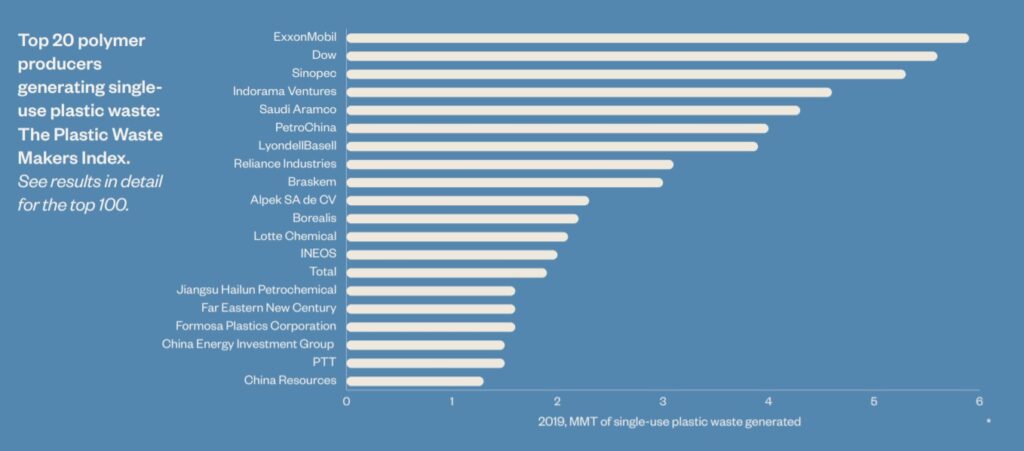
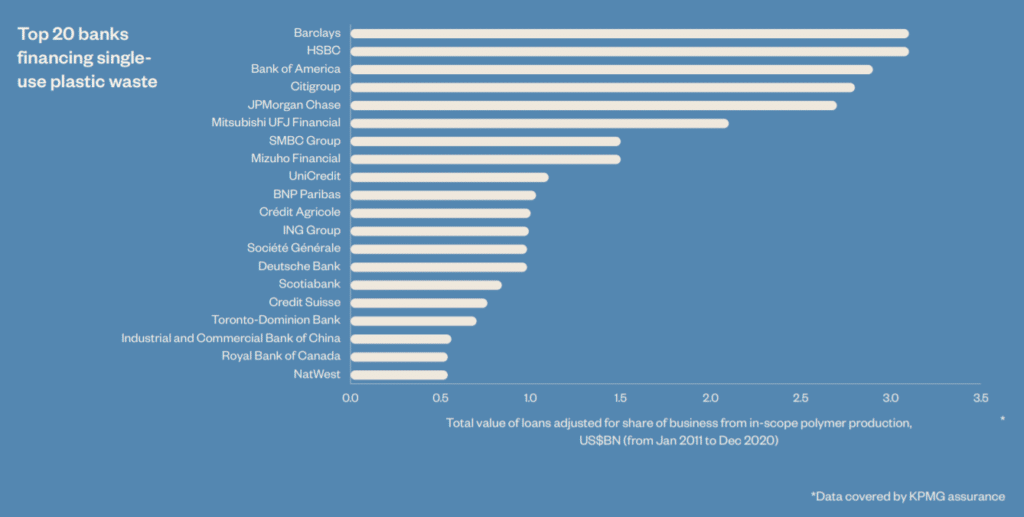
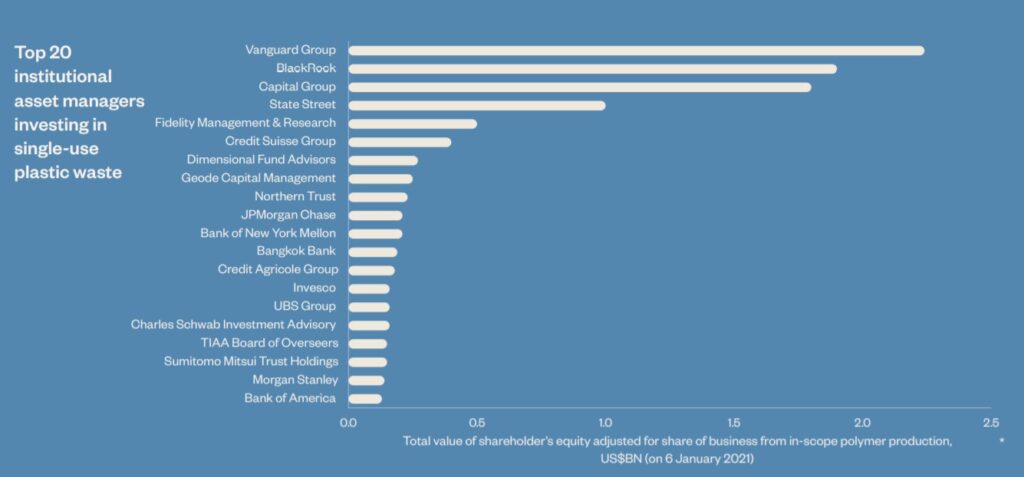
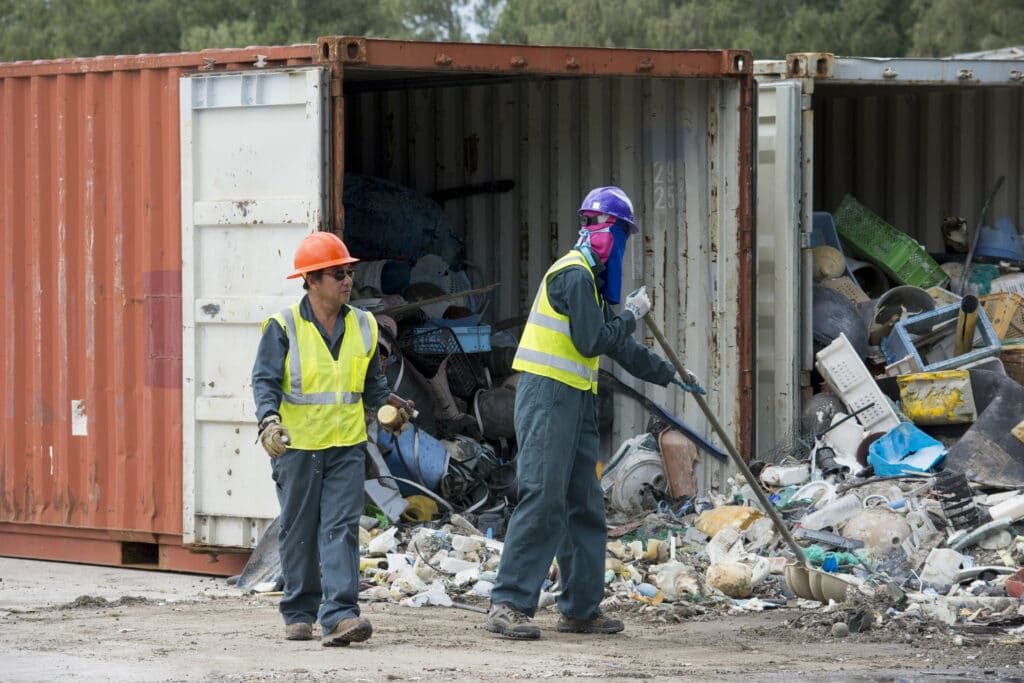
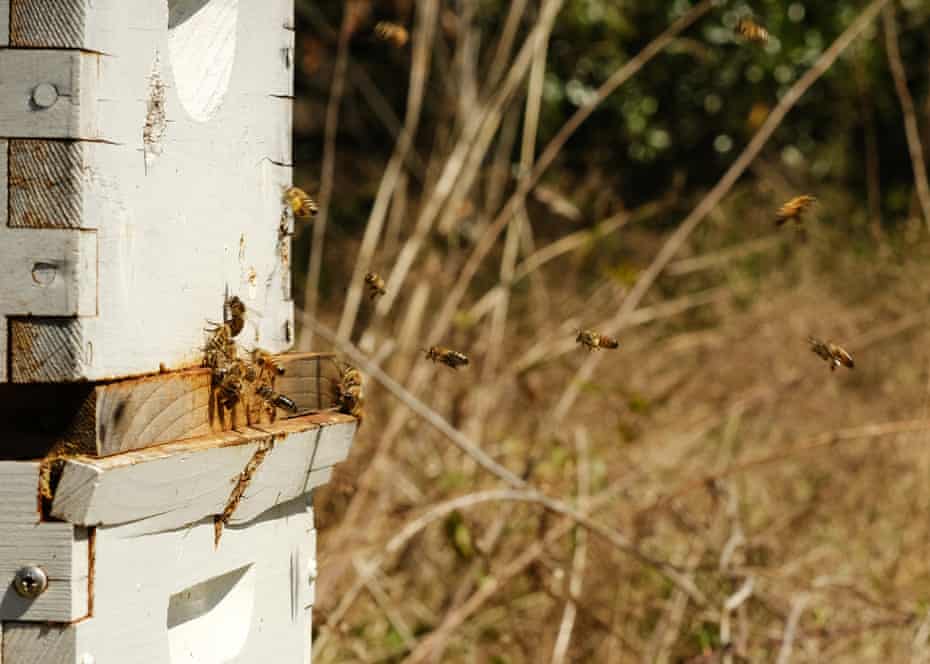


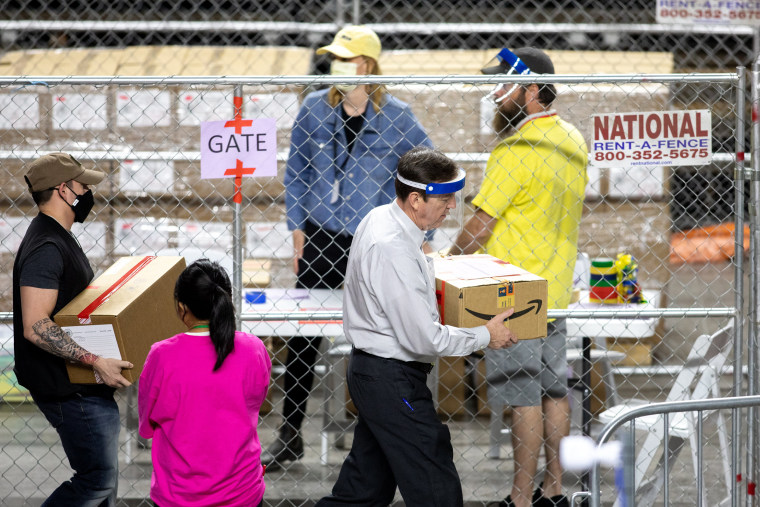

 A recycling dumpster in Los Angeles. Citizen of the Planet / Education Images / Universal Images Group / Getty Images
 An initial pre-sort removes contaminates, items that can’t be recycled, at Republic Services in Anaheim, California on Thursday, April 15, 2021. Paul Bersebach / MediaNews Group / Orange County Register / Getty Images
 Recyclable waste must be sorted, cleaned and processed before it can be sold as a commodity on the open market. Nareeta Martin / Unsplash


