Republicans on House Judiciary panel focus on first White House target

CBS News

Republicans on House Judiciary panel focus on first White House target

Kathryn Watson – November 18, 2022

With the House Judiciary Committee’s gavel and subpoena power close at hand, Rep. Jim Jordan, Republican of Ohio, is getting ready to launch his first investigations of the Biden administration, starting Friday with what he has recently referred to as the administration’s “anti-parent directives.” It’s the type of request from House Republicans that the White House is describing as politically motivated, as Republicans prepare to take control of the House.

In a letter obtained by CBS News, Jordan and Republicans on the panel made their first request for testimony and documents from the Biden White House since the GOP won control of the chamber. They wrote to White House chief of staff Ron Klain to ask White House officials to testify at the beginning of the next Congress, as part of a House GOP probe of what they say is the administration’s “misuse of federal criminal and counterterrorism resources to target concerned parents at school board meetings.”

House Judiciary Republicans want to know more about any actions the Biden administration took regarding an October 2021 memo from Attorney General Merrick Garland noting the “disturbing spike in harassment, intimidation, and threats of violence against school administrators, board members, teachers, and staff” and directing the FBI and U.S. attorneys to meet with federal, state, local, tribal and territorial leaders to address strategies for dealing with those threats.

The memo followed a September 2021 letter from the National School Boards Association asking the administration to investigate threats of violence against school board members that “could be the equivalent to a form of domestic terrorism and hate crimes.”

Jordan and Republicans on the committee believe employees within the Executive Office of the President were involved in discussions surrounding that National School Boards Association letter and earlier this year requested documents and information about the White House’s “collusion with the NSBA.”

Republicans on the committee allege the administration is using law enforcement to “chill” parents’ First-Amendment rights, although the letter doesn’t call parents who protest school board meetings “domestic terrorists,” as House Minority Leader Kevin McCarthy has claimed, as an Associated Press fact check noted.

“The American people … deserve much more accountability and transparency about the Biden administration’s anti-parent directives,” Jordan said in an Oct. 17 letter to Klain, asking the White House to preserve all records related to the matter.

Jordan’s Friday letter requested testimony from Mary C. Wall, the senior adviser for the COVID-19 response team; Julie C. Rodridguez, director of the Office of Intergovernmental Affairs; Katherine Pantangco, policy adviser for the Office of Intergovernmental Affairs; and Nezly Silva, senior policy analyst for the Office of Intergovernmental Affairs.

The request for testimony is voluntary — for now. But if the officials don’t agree to testify and provide records, in January, when Republicans control the House, “the committee may be forced to resort to compulsory process to obtain the material we require,” Friday’s letter says. Jordan’s efforts to obtain records related to the National School Boards Association letter and Justice Department memo have so far been unsuccessful.

The White House suggested congressional Republicans don’t have their priorities in the right place.

“Instead of working with President Biden to address issues important to the American people, like lower costs, congressional Republicans’ top priority is to go after President Biden with politically-motivated attacks chock full of long-debunked conspiracy theories,” said Ian Sams, spokesman for the White House Counsel’s office. “President Biden is not going to let these political attacks distract him from focusing on Americans’ priorities, and we hope congressional Republicans will join us in tackling them instead of wasting time and resources on political revenge.”

Jordan’s letter to the White House Friday is just the beginning of the array of probes the House is expected to undertake once the 118th Congress is seated and Republicans have control. Jordan’s committee and Republicans on the House Oversight and Reform Committee also plan to investigate Hunter Biden and the president himself. Jordan has sent the White House letters requesting testimony and information on a number of topics since Mr. Biden took office, despite Republicans’ current lack of subpoena authority.

It remains to be seen exactly how many seats Republicans will have in the 118th Congress, although CBS News has projected the GOP will have between 218-223 seats. To control the lower chamber, they need 218. A handful of races remain to be decided.

Not all Republicans believe a focus on multiple investigations into the Biden administration and Hunter Biden is the way to go. In a Wall Street Journal op-ed last week, Republican Sen. Mitt Romney, of Utah, appeared to encourage the party to avoid such types of hearings, and instead, focus on things like inflation, the debt, spending, and entitlement and immigration reform.

“Two roads diverge before this potential GOP majority,” Romney wrote last week. “The one ‘less traveled by’ would be to pass bills that would make things better for the American people. The more tempting and historically more frequented road would be to pursue pointless investigations, messaging bills, threats and government shutdowns.”

With all he’s accomplished, why is President Joe Biden so unpopular?

Lexington Herald – Leader

With all he’s accomplished, why is President Joe Biden so unpopular?

Herald-Leader Readers – November 18, 2022

Mario Tama/TNS

Republican plans

Following the election, I find myself wondering why people vote Republican. President Joe Biden has a favorable approval rating of only about 45 percent. What has he done to alienate 55 percent of the voters? Was it the big push on Covid vaccines that resulted in 250 million Americans getting vaccinated? Was it the passage of the Infrastructure Investment and Jobs Act that will refurbish and rebuild the nation’s roads, bridges, and water systems? Was it the Inflation Reduction Act, which will lower costs for families, combat the climate crisis, reduce the deficit, and ask the largest corporations to pay their fair share of taxes? Or perhaps it was his legislation that allows Medicare to negotiate drug prices with big Pharma and insure that no family spends more than $35 per month for insulin.

What are the Republicans plans? Well, we know they plan to increase the retirement age for social security and Medicare to 70 and to reduce benefits. We hear that they are planning to cut military aid to Ukraine. And they want to repeal Biden’s legislation on drug price negotiations and insulin cost caps. On the other hand, they plan to reduce taxes for the rich and for wealthy corporations yet again.

Folks, that’s all they have!

House GOP pushes Hunter Biden probe despite thin majority

Associated Press

House GOP pushes Hunter Biden probe despite thin majority

Colleen Long – November 18, 2022

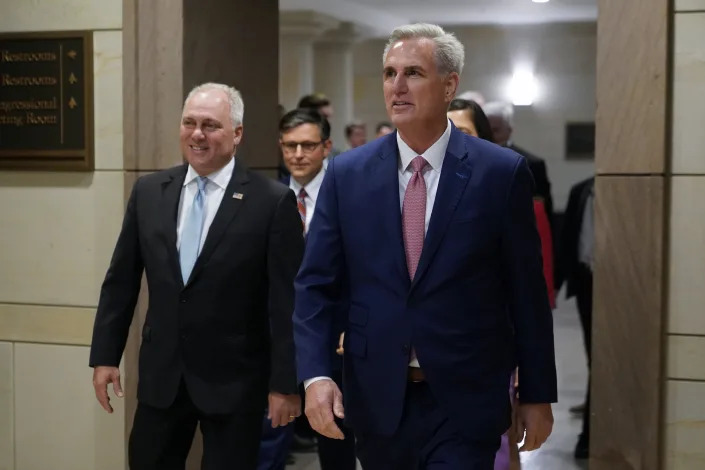
FILE - House Minority Leader Kevin McCarthy of Calif., right, and House Minority Whip Steve Scalise, R-La., arrive to speak with members of the press after a House Republican leadership meeting, Nov. 15, 2022, on Capitol Hill in Washington. McCarthy won the House Speaker nomination from his colleagues, while Scalise was voted majority leader. Even with their threadbare House majority, Republicans doubled down this week on using their new power to investigate the Biden administration and in particular the president’s son. (AP Photo/Patrick Semansky)
House Minority Leader Kevin McCarthy, of Calif., speaks during a news conference, Nov. 15, 2022, after voting on top House Republican leadership positions, on Capitol Hill in Washington. The Republican Party’s narrow capture of the House majority is poised to transform the agenda in Washington, empowering GOP lawmakers to pursue conservative goals and vigorously challenge the policies of President Joe Biden and his administration. (AP Photo/Jacquelyn Martin, File)

WASHINGTON (AP) — Even with their threadbare House majority, Republicans doubled down this week on using their new power next year to investigate the Biden administration and, in particular, the president’s son.

But the midterm results have emboldened a White House that has long prepared for this moment. Republicans secured much smaller margins than anticipated, and aides to President Joe Biden and other Democrats believe voters punished the GOP for its reliance on conspiracy theories and Donald Trump-fueled lies over the 2020 election.

They see it as validation for the administration’s playbook for the midterms and going forward to focus on legislative achievements and continue them, in contrast to Trump-aligned candidates whose complaints about the president’s son played to their most loyal supporters and were too far in the weeds for the average American. The Democrats retained control of the Senate, and the GOP’s margin in the House is expected to be the slimmest majority in two decades.

“If you look back, we picked up seats in New York, New Jersey, California,” said Mike DuHaime, a Republican strategist and public affairs executive. “These were not voters coming to the polls because they wanted Hunter Biden investigated — far from it. They were coming to the polls because they were upset about inflation. They’re upset about gas prices. They’re upset about what’s going on with the war in Ukraine.”

But House Republicans used their first news conference after clinching the majority to discuss presidential son Hunter Biden and the Justice Department, renewing long-held grievances about what they claim is a politicized law enforcement agency and a bombshell corruption case overlooked by Democrats and the media.

“From their first press conference, these congressional Republicans made clear that they’re going to do one thing in this new Congress, which is investigations, and they’re doing this for political payback for Biden’s efforts on an agenda that helps working people,” said Kyle Herrig, the founder of the Congressional Integrity Project, a newly relaunched, multimillion-dollar effort by Democratic strategists to counter the onslaught of House GOP probes.

Inside the White House, the counsel’s office added staff months ago and beefed up its communication efforts, and staff members have been deep into researching and preparing for the onslaught. They’ve worked to try to identify their own vulnerabilities and plan effective responses. But anything the House seeks related to Hunter Biden, who is not a White House staffer, will come from his attorneys, who have declined to respond to the allegations.

Rep. James Comer, incoming chairman of the House Oversight Committee, said there are “troubling questions” of the utmost importance about Hunter Biden’s business dealings and one of the president’s brothers, James Biden, that require deeper investigation. He said they were examining the president, too.

“Rooting out waste, fraud and abuse in the federal government is the primary mission of the Oversight Committee,” said Comer, R-Ky. “As such, this investigation is a top priority.”

Republican legislators promised a trove of new information this past week, but what they have presented so far has been a condensed review of a few years’ worth of complaints about Hunter Biden’

Hunter Biden joined the board of the Ukrainian gas company Burisma in 2014, around the time his father, then vice president, was helping conduct the Obama administration’s foreign policy with Ukraine. Senate Republicans have said the appointment may have posed a conflict of interest, but they did not present evidence that the hiring influenced U.S. policies, and they did not implicate Joe Biden in any wrongdoing.

Republican lawmakers and their staff for the past year have been analyzing messages and financial transactions found on a laptop that belonged to Hunter Biden. They long have discussed issuing congressional subpoenas to foreign entities that did business with him, and they recently brought on James Mandolfo, a former federal prosecutor, to assist with the investigation as general counsel for the Oversight Committee.

The difference now is that Republicans will have subpoena power to follow through.

“The Republicans are going to go ahead,” said Tom Davis, a Republican lawyer who specializes in congressional investigations and legislative strategy. “I think their members are enthusiastic about going after this stuff … there are a lot of unanswered questions. Look, the 40-year trend is parties under-investigate their own and over-investigate the other party. It didn’t start here.”

White House press secretary Karine Jean-Pierre dismissed the GOP focus on investigations as “on-brand” thinking.

“They said they were going to fight inflation, they said they were going to make that a priority, then they get the majority and their top priority is actually not focusing on the American family, but focusing on the president’s family,” she said.

Even some newly elected Republicans are pushing back against the idea.

“The top priority is to deal with inflation and the cost of living. … What I don’t want to see is what we saw in the Trump administration, where Democrats went after the president and the administration incessantly,” Rep.-elect Mike Lawler of New York said on CNN.

Hunter Biden’s taxes and foreign business work are already under federal investigation, with a grand jury in Delaware hearing testimony in recent months.

While he never held a position on the presidential campaign or in the White House, his membership on the board of the Ukrainian energy company and his efforts to strike deals in China have long raised questions about whether he traded on his father’s public service, including reported references in his emails to the “big guy.”

Joe Biden has said he’s never spoken to his son about his foreign business, and there are no indications that the federal investigation involves the president.

Trump and his supporters, meanwhile, have advanced a widely discredited theory that Biden pushed for the firing of Ukraine’s top prosecutor to protect his son and Burisma from investigation. Biden did indeed press for the prosecutor’s firing, but that was a reflection of the official position of not only the Obama administration but many Western countries and because the prosecutor was perceived as soft on corruption.

House Republicans also have signaled upcoming investigations into immigration, government spending and parents’ rights. White House Chief of Staff Ron Klain, Homeland Security Secretary Alejandro Mayorkas, Attorney General Merrick Garland and FBI Director Chris Wray have been put on notice as potential witnesses.

Rep. Jim Jordan of Ohio, incoming Judiciary Committee chairman, has long complained of what he says is a politicized Justice Department and the ongoing probes into Trump.

On Friday, Garland appointed a special counsel to oversee the Justice Department’s investigation into the presence of classified documents at Trump’s Florida estate as well as key aspects of a separate probe involving the Jan. 6, 2021, insurrection and efforts to undo the 2020 election.

Trump, in a speech Friday night at his Mar-a-Lago estate, slammed the development as “the latest in a long series of witch hunts.”

Of Joe and Hunter Biden, he asked, “Where’s their special prosecutor?”

Matt Mackowiak, a Republican political strategist, said it’s one thing if the investigations into Hunter Biden stick to corruption questions, but if it veers into the kind of mean-spirited messaging that has been floating around in far-right circles, “I don’t know that the public will have much patience for that.”

Associated Press Writer Eric Tucker contributed to this report.

Bio of Polish statesman holds lessons on today’s Ukraine

Associated Press

Bio of Polish statesman holds lessons on today’s Ukraine

John Daniszewski – November 18, 2022

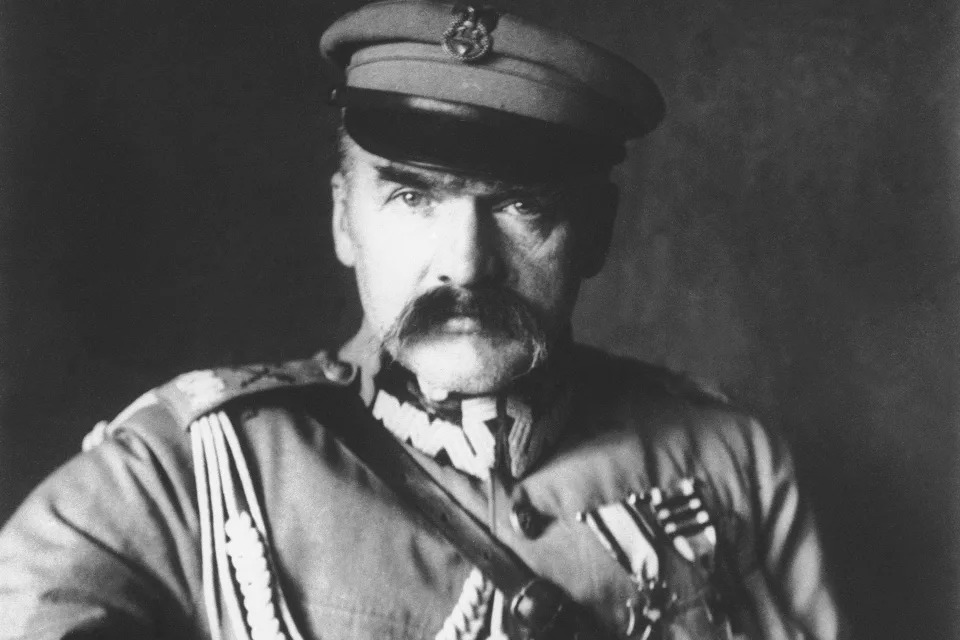
FILE - Jozef Pilsudski, the father of Polish independence in 1918, sits for a portrait on March 19, 1932, in Warsaw, Poland. More than 100 years ago, Pilsudski stated that the long-term security of Europe would need an independent Ukraine, according to a new biography of the Polish leader. The biography, “Józef Pilsudski Founding Father of Modern Poland” by Joshua D. Zimmerman is published by Harvard University Press. (AP Photo, File)
Jozef Pilsudski, the father of Polish independence in 1918, sits for a portrait on March 19, 1932, in Warsaw, Poland. More than 100 years ago, Pilsudski stated that the long-term security of Europe would need an independent Ukraine, according to a new biography of the Polish leader. The biography, “Józef Pilsudski Founding Father of Modern Poland” by Joshua D. Zimmerman is published by Harvard University Press. (AP Photo, File)
This cover image released by Harvard University Press shows "Jozef Pilsudski Founding Father of Modern Poland" by Joshua D. Zimmerman. (Harvard University Press via AP)
This cover image released by Harvard University Press shows “Jozef Pilsudski Founding Father of Modern Poland” by Joshua D. Zimmerman. (Harvard University Press via AP)
FILE - Polish dictator and military leader Marshal Jozef Pilsudski reviews troops in Warsaw on Nov. 5, 1927. Farsighted, analytical and determined, Pilsudski never managed to fulfill his hope for a Ukraine independent of Russia and connected to Europe. But he did, improbably, wrest his own homeland from the grip of tsarism and from Austria and Prussia. His story is the subject of a new biography, “Józef Pilsudski Founding Father of Modern Poland” by Joshua D. Zimmerman. (AP Photo, File)
Polish dictator and military leader Marshal Jozef Pilsudski reviews troops in Warsaw on Nov. 5, 1927. Farsighted, analytical and determined, Pilsudski never managed to fulfill his hope for a Ukraine independent of Russia and connected to Europe. But he did, improbably, wrest his own homeland from the grip of tsarism and from Austria and Prussia. His story is the subject of a new biography, “Józef Pilsudski Founding Father of Modern Poland” by Joshua D. Zimmerman. (AP Photo, File)

NEW YORK (AP) — One hundred years ago, a revolutionary Polish patriot argued that Russia’s hunger for territory would continue to destabilize Europe unless Ukraine could gain independence from Moscow.

Poland’s Marshal Józef Piłsudski never managed to fulfil his hope for an independent Ukraine connected to Europe. But the farsighted and analytical statesman did manage to wrest his own homeland from the grip of czarism and from two other powers, Austria and Prussia.

At a time when many Poles had given up on the dream for full independence, Piłsudski put a sovereign Polish state back on the map of Europe at the end of World War I, after more than a century’s erasure.

Piłsudski’s story, complete with flaws, accomplishments and echoes of today’s war in Ukraine, is brought to life in a recent biography, “Józef Piłsudski Founding Father of Modern Poland,” by Joshua D. Zimmerman, a professor of Holocaust Studies and eastern European history at New York’s Yeshiva University. The book, published by Harvard University Press, also reexamines Piłsudski’s relationship to Ukraine.

Thickly mustached, with heavy brows and a hawk-like visage, Piłsudski lived modestly and inspired his troops by leading them in battle. He was celebrated at home and abroad in his day, but his memory outside of Poland has faded.

After proclaiming a new Polish republic, Piłsudski and his legionnaires fought a series of wars to define, secure and defend its borders, culminating with his greatest victory: turning back a Bolshevik army in 1920 that was threatening to drive all the way to Berlin and carry a Communist revolution to the heart of industrial Europe.

Before that battle, known as the “Miracle on the Vistula,” Piłsudski’s forces had marched deep into Ukraine and occupied Kyiv in an alliance with nationalist leader Symon Petliura, who also was fighting the Bolsheviks, amid Ukraine’s short-lived independence in 1918-21.

As Zimmerman recounts, Piłsudski had a vision of a multilingual and multiethnic Poland that respected the rights of minorities, especially Jews. That earned him the enmity of nationalists who wanted a Poland run for ethnic Poles.

After World War I, Piłsudski hoped Lithuania, Belarus and Ukraine could form an alliance to counter Russia in the style of the Polish-Lithuanian union that existed for centuries prior to 1795. But Ukrainians and Lithuanians were wary of Polish claims on their territories, and Pilsudski’s vision of an anti-Russian alliance never became reality.

In language that might be applied to today’s discourse, Piłsudski conceived of a sovereign Ukraine not merely to prevent Russian aggression but as an outpost of Western liberal democracy.

“There can be no independent Poland,” he is quoted as saying in 1919, “without an independent Ukraine.”

Piłsudski launched a military campaign in 1920 to support Ukrainian nationalists against Bolshevik rule, an action condemned by some as an overreach. Zimmerman believed he had a rationale that echoes today, when Poland, Lithuania and the Baltic countries, as well as Finland and Sweden, feel that Russia under President Vladimir Putin must be contained.

On May 7, 1920, Piłsudski’s cavalry entered Kyiv, followed by Polish and Ukrainian infantry. At the peak of his Ukrainian campaign, he ordered his commanders to withdraw “as soon as possible” in order to establish friendly relations with the new Ukrainian state. according to Zimmerman.

“My view is that he clearly championed an independent Ukraine, one that would be a democratic outpost on Russia’s border, a buffer between Russia and the West, but also a staunch Polish ally that shared Piłsudski’s democratic values and the values of at least his followers,” the author said.

Poland and Lithuania — two countries that emerged from Soviet rule — are among Ukraine’s strongest diplomatic champions against Putin’s Russia.

Zimmerman’s book makes a balanced and “significant contribution” to the understanding of Piłsudski, said Michael Fleming, a historian and director of the Institute of European Culture at the Polish University Abroad in London.

“Pilsudski was well aware of the challenges posed by Poland’s geography and concluded that an independent Ukraine would share Poland’s interest in limiting Russia’s expansionist tendencies,” Fleming said by email. “At the same time, however, it is important to remember that western Galicia (including Lviv) was much contested” between Poles and Ukrainians.

Indeed Polish and Ukrainian nationalists clashed in the early 1900s and again during and after World War II, and some ethnic animosities have lingered.

During Russia’s civil war between the Red Army and the anti-Bolshevik White Army, Pilsudski resisted pleas for Poland to help the Whites. No matter who won, he believed, Russia would remain “fiercely imperialistic.”

There was little to gain from negotiations because “we cannot believe anything Russia promises,” Piłsudski is quoted as saying.

Piłsudski, born in 1867 and raised in present-day Lithuania, was steeped in the romanticism of Polish independence. He acquired a burning hatred of czarist authority that held Poland, Lithuania, Belarus and Ukraine in its grip, and he and his brother were implicated in a plot to assassinate the czar and imprisoned.

Zimmerman traces how, upon his release, Piłsudski became the leading activist of the banned Polish Socialist Party, published its newspaper for years, made a daring escape from a second Russian imprisonment after he was caught — by pretending to be insane — and then turned to creating a military force in Austrian-ruled Poland that eventually fought against Russia during World War I.

Although they fought under Austria and Germany, Piłsudski’s insistence on Polish independence ultimately led to his imprisonment by the Germans, a sacrifice that enhanced his legend among his fellow Poles. Upon his release, he was acclaimed the country’s leader and the de facto founder of modern Poland on Nov. 11, 1918, now celebrated as Polish independence day.

After Poland’s borders were secured and a civil government established, Piłsudski mostly stepped back from public life. But after several years, he followed with his own turn to strongman rule.

Concerned that a democratic Poland was slipping away and disgusted by 13 failed Polish governments, he led a 1926 military putsch to restore order. After imposing a system of “managed” democracy and soft dictatorship, Piłsudski’s final years were burdened by declining health and growing worries about how to position Poland between a rising Soviet Union and Hitler’s Germany.

Zimmerman captures the difficulties of knitting together Poland and details its conflicts, including pogroms against Jews by some of Piłsudski’s troops. Yet he views Pilsudski as a defender of Jews and pluralism.

The author makes the case that Piłsudski, although flawed, possessed the judgment and skills to defend Poland’s interests. His death in 1935 left Poland with a vacuum in leadership, unable to stave off the German and Soviet invasions of 1939.

Yet Piłsudski’s creation of an independent Poland after World War I helped ensure that when World War II ended and Soviet rule receded, there would be no question that an independent Poland would reemerge.

John Daniszewski, editor-at-large for standards and former senior managing editor for international news at The Associated Press, is a former Warsaw correspondent.

Hakeem Jeffries: The Democrat who could replace Nancy Pelosi

BBC News

Hakeem Jeffries: The Democrat who could replace Nancy Pelosi

Sam Cabral – BBC News, Washington – November 18, 2022

Hakeem Jeffries
Hakeem Jeffries

US lawmaker Hakeem Jeffries has formally launched a bid to succeed Nancy Pelosi as the Democratic leader in the House of Representatives.

The New York congressman, 52, has served in the fifth-highest rank of Democratic leadership since 2019.

If Mr Jeffries ascends to the top spot, held by Mrs Pelosi for two decades, he will be the first black person to lead a party in the US Congress.

But he would be minority leader, and not the speaker.

Republicans regained a slim majority in the House of Representatives, the lower chamber of Congress, in last week’s midterm elections.

California Republican Kevin McCarthy, who currently serves as minority leader, has been nominated as the party’s choice to be House speaker.

In a letter on Friday, Mr Jeffries asked his Democratic colleagues for their support “as we once again prepare to meet the moment”.

All eyes were on Mrs Pelosi, 82, a day earlier, as she took to the chamber floor to announce her retirement.

“The hour has come for a new generation to lead the Democratic caucus,” she said.

The move appeared to be co-ordinated with Mrs Pelosi’s top two deputies – Steny Hoyer, 83, and Jim Clyburn, 82 – who quickly followed suit by releasing statements on their future plans.

Both men offered endorsements for Mr Jeffries, with Mr Clyburn writing that his focus was “doing whatever I can to assist our new generation of Democratic Leaders, which I hope to be Hakeem Jeffries, Katherine Clark, and Pete Aguilar”.

Congresswoman Katherine Clark, 59, of Massachusetts is tipped to run for the post of whip, the number two Democratic leadership job. Pete Aguilar, 43, of California, currently vice-chairman of the caucus, is being talked about as successor to Mr Jeffries for caucus chairman.

Mr Jeffries, for his part, quickly lauded Mrs Pelosi as “the most accomplished Speaker in American history”, writing that she had been “the steady hand on the gavel during some of the most turbulent times the nation has ever confronted”.

The leadership shuffle may help quell complaints from some Democratic voters that their party’s leaders are too old.

Congresswoman Katherine Clark joined Congress in 2013

But the trio of young up-and-comers is closely aligned with the party’s establishment wing, and Mr Jeffries in particular has been known to clash on occasion with his party’s left flank.

A lawyer who was born and raised in the Brooklyn borough of New York, he has represented the state’s eighth congressional district in the House since 2013.

He once paid tribute on the House floor to rapper The Notorious B.I.G., who was born as Christopher Wallace in Mr Jeffries’ district and gunned down in Los Angeles in 1997.

On the 20th anniversary of his death, the congressman said that the hip hop artist represented “the classic embodiment of the American Dream” and rapped some lyrics from his 1994 hit single Juicy.

In 2020, Mr Jeffries served as one of seven Democratic managers at President Donald Trump’s first impeachment trial.

With Democrats retaining power in the upper chamber of Congress, Senate majority leader Chuck Schumer is likely to remain at his post. That could mean the Democratic leaders in both chambers of Congress will hail from the state of New York.

Katie Porter wins re-election in California after days of counting

NBC News

Katie Porter wins re-election in California after days of counting

Rebecca Shabad and David K. Li – November 18, 2022

Graeme Sloan

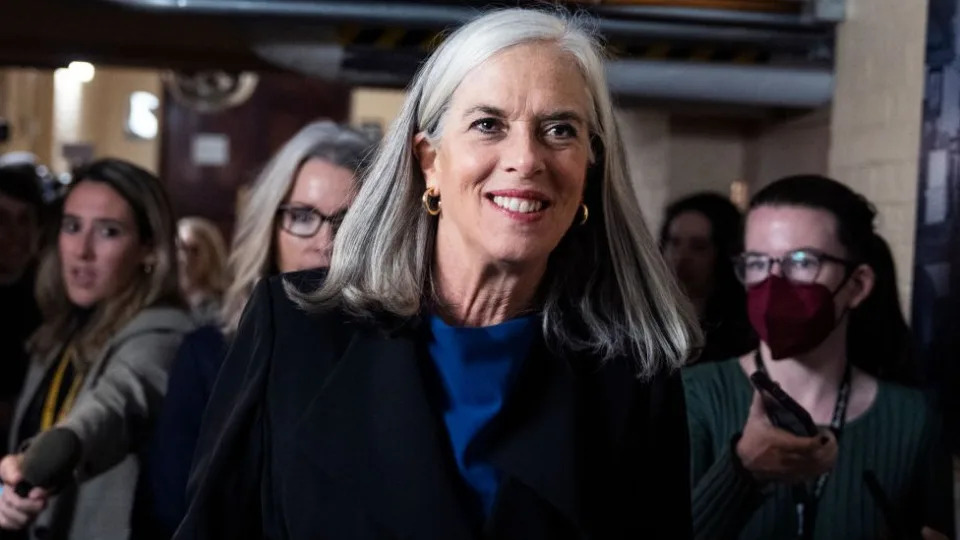
WASHINGTON — Rep. Katie Porter, D-Calif., the whiteboard-wielding lawmaker and progressive star, won her re-election race, NBC News projected on Friday.

After days of vote counting, Porter staved off a challenge from former state Assemblyman Scott Baugh, a Republican, to win a third term in Congress.

President Joe Biden called Porter on Wednesday night to congratulate her on the victory.

Porter, 48, is best known for viral videos of her sharp questioning of witnesses testifying before Congress. The former law school professor often used a dry-erase board to list user-friendly facts and figures to make her point.

She has served in the House since 2019, representing the 45th Congressional District, and is deputy chair of the Congressional Progressive Caucus.

In the 2022 midterm election cycle, Porter raised more than $23 million compared to Baugh, who raised more than $2 million, according to Federal Election Commission filings.

Baugh, 60, served as an assemblyman in California’s Legislature from 1995 to 2000. During his last year in the statehouse, he was the assembly’s GOP leader. More recently, Baugh was chairman of the Orange County Republican Party, from 2004 to 2015.

The 47th Congressional District in coastal Orange County between Long Beach and San Clemente was once been dominated by Republicans but now is more mixed.

The race for the new 47th Congressional District seat had been listed as a “toss up” by the nonpartisan Cook Political Report.

Arizona county board delays certifying election results

Associated Press

Arizona county board delays certifying election results

Bob Christie – November 18, 2022

FILE – Maricopa County, Ariz., ballots cast in the 2020 general election are examined and recounted by contractors working for Florida-based company, Cyber Ninjas, in Phoenix on May 6, 2021. At least one recount will be on tap in Arizona after the counting from the Nov. 8, 2022, midterm elections ends. Once Arizona’s counties certify their results in the coming days as scheduled, a recount will be triggered in at least one statewide race. (AP Photo/Matt York, Pool, File) (ASSOCIATED PRESS)

PHOENIX (AP) — The board overseeing a southeastern Arizona county whose Republican leaders had hoped to recount all Election Day ballots on Friday delayed certifying the results of last week’s vote after hearing from a trio of conspiracy theorists who alleged that counting machines were not certified.

The three men, or some combination of them, have filed at least four cases raising similar claims before the Arizona Supreme Court since 2021 seeking to have the state’s 2020 election results thrown out. The court has dismissed all of them for lack of evidence, waiting too long after the election was certified or asking for relief that could not be granted, in increasingly harsh language.

But Tom Rice, Brian Steiner and Daniel Wood managed to persuade the two Republicans who control the Cochise County board of supervisors that their claims were valid enough for them to delay the certification until a Nov. 28 deadline.

They claimed the U.S. Elections Assistance Commission allowed certifications for testing companies to lapse, and that voided the certifications of vote tabulation equipment used across the state.

That came despite testimony from the state’s elections director that the machines and the testing company were indeed certified.

“The equipment used in Cochise County is properly certified under both federal and state laws and requirements,” state Elections Director Kori Lorick told the board. “The claims that the SLI testing labs were not properly accredited are false.”

The move is the latest drama in the Republican-heavy county in recent weeks, which started when GOP board members Tom Crosby and Peggy Judd voted to have all the ballots in last week’s election counted by hand to determine if the machine counts were accurate.

Crosby also defended a lawsuit he and Judd filed against the county elections director earlier this week seeking to force the hand-count. They dropped the case against Lisa Marra on Wednesday.

“If our presenters’ request is met by the proof that our machines are indeed legally and lawfully accredited, then indeed we should accept the results,” Crosby said. “However, if the machines have not been lawfully certificated, then the converse is also true. We cannot verify this election now.”

Crosby and Judd then voted to delay certification, with Crosby saying he believed Wood, Steiner and Rice needed to be provided proof since they were “the experts.”

Democratic Supervisor Ann English was powerless to overrule them.

The delay potentially jeopardizes state certification, set for Dec. 5, and at least one statewide recount.

Lorick issued a statement after the vote vowing legal action to force the board to accept the results. Under Arizona law the formal election canvass can’t be changed by the elected county boards — their only role is to accept the numbers as they are tallied by their elections departments.

“If they fail to do so, the Secretary (of State) will use all available legal remedies to compel compliance with Arizona law and protect Cochise County voters’ rights to have their votes counted,” Lorick said.

All 15 Arizona counties face the same Nov. 28 deadline, but there is no sign others are considering similar defiance.

Once the state certifies the results Dec. 5, there will be a recount in at least one statewide race.

That contest, between Republican Abraham Hamadeh and Democrat Kris Mayes for attorney general, is so close that a recount is certain. As of Friday night, Mayes was less than 600 votes ahead with fewer ballots remaining to be counted than the margin for a mandatory recount, which will be about 12,500 votes.

“It’s going to be close, and every vote matters,” Mayes said in a brief interview. “And obviously we’re headed into a recount, one way or another.”

One other statewide race also is within the margin for a recount, but incumbent Superintendent of Public Instruction Kathy Hoffman conceded to Republican Tom Horne on Thursday. Horne is a former schools chief who served two years as attorney general before losing the 2014 primary. He was more than 9,000 votes ahead on Friday.

Horne criticized Hoffman for embracing progressive teaching and promised to shut down any hint of “critical race theory,” which is not taught in state schools but is a hot-button issue for social conservatives.

Judd had said Wednesday she would move to clear the way for the state recount.

“We’ve had to step back from everything we were trying to do and say, OK, we’ve got to let this play out,” Judd told The Associated Press. “Because it’s the last thing we want to do to get in (Marra’s) way.”

There has been no evidence of widespread fraud or manipulation of voting machines in 2020 or during this year’s midterm elections.

Arizona recount laws were changed this year. The previous margin for a mandatory recount was 1/10 of 1%. It is now 0.5%.

This story was first published on November 18, 2022. It was updated on November 19, 2022 to correct the spelling of the name of the Democratic attorney general candidate to Kris Mayes.

Critics say Virginia’s Youngkin wants to rewrite history

Yahoo! News

With new standards draft, critics say Virginia’s Youngkin wants to rewrite history

Marquise Francis, National Reporter – November 18, 2022

Gov. Glenn Youngkin against a big blue sky with a few gray clouds.
Virginia Gov. Glenn Youngkin at a campaign rally in Smithfield, Va., on Oct. 27. (Alex Wong/Getty Images)

A number of cultural groups, historians and Virginia residents are sounding the alarm about historical inaccuracies and oversights in the latest draft of history standards for K-12 education in the state proposed last week by Republican Gov. Glenn Youngkin.

Chief among their frustrations is the draft’s omission of teaching about the ongoing legacy of slavery and the Civil War in Virginia today, as well as LGBTQ history. Critics believe this shows that the governor is using his political power to rewrite history and downplay unsavory episodes in American history.

“The Youngkin administration is proposing revised standards that are racist and factually incorrect,” James J. Fedderman, president of the Virginia Education Association, the state’s largest teachers’ union, told Yahoo News. “This attack on these standards continues to be a divisive approach to put parents against teachers and to put teachers against parents.”

Last week’s draft, which has since been slightly revised, removed mention of Martin Luther King Jr. Day from the K-5 standards and made no mention of Juneteenth. Both have since been restored to the draft.

A line of schoolchildren from behind, showing an array of backpacks.
Students line up to enter their classrooms for kindergarten orientation at Lyles-Crouch Traditional Academy in Alexandria, Va., on Aug. 19. (Craig Hudson for the Washington Post via Getty Images)

Charles Pyle, a spokesman for the Virginia Department of Education, said the omissions were unintentional.

“The August draft included the broad standards and much more granular curriculum frameworks for each grade level and course,” Pyle told Yahoo News in an email. “Much of the recent public comment has centered on content that is still in the draft curriculum frameworks.”

The latest draft put forth by the Virginia DOE contains a bevy of changes from a draft it released in July, written largely by the Democratic administration of then-Gov. Ralph Northam. The Northam administration’s draft standard attempted to include a full breadth of history that included eras in which racism and slavery were widely accepted and antisemitism and homophobia were rampant in American society. Youngkin’s proposed rewrite seeks to downplay the role of bigotry in U.S. history.

Words like “Nazis” and “Final Solution,” which are essential to understanding the Holocaust, are omitted in the latest version. Inaccuracies include a statement saying that Virginia’s capital was relocated from Jamestown to Williamsburg during the Revolutionary War, when it was in fact relocated to Richmond.

A view of from above shows Jamestown, surrounded on all sides by a river and a larger body of water.
An aerial view of Jamestown, Va., from a 17th century painting. (Universal History Archive/Universal Images Group via Getty Images)

The draft also states that the last U.S. president from Virginia was Zachary Taylor, who was elected in 1848, not Woodrow Wilson, elected in 1912. Wilson was born and raised in Virginia, though he served as governor of New Jersey before becoming U.S. president.

In August, the Virginia Board of Education was originally scheduled to vote on the recommended guidelines, which would have been the standards put together by the Northam administration. The decision was delayed after state Superintendent of Public Instruction Jillian Balow urged the board to give Youngkin’s five newly appointed board members additional time to review the documents.

Under Virginia law, history standards are required to be updated every seven years; the last time they were updated was 2015. They set Virginia’s expectations for student learning in history and social sciences statewide, which are eventually assessed through various tests.

The sweeping changes in this latest draft come less than 60 days after the department announced that it did not anticipate “any major changes or deletions of content” to a previous draft under Northam.

The original document under Northam was developed over nearly two years of consultation with a team of historians, professors, parents, students and museums, according to the Richmond Times-Dispatch.

Fedderman said the original version went through more than 400 experts, who devoted thousands of hours of their time on the standards, and he lamented that their work is now being “discredited” and “thrown out.”

“Gov. Youngkin continues to say, ‘We want to hear from parents.’ Well, there are educators who are parents,” Fedderman said, adding that he did not know why there had been no collaboration with his union.

Glenn Youngkin at the microphone surrounded by supporters carrying banners bearing his name and saying Latinos for Youngkin.
Youngkin, then Virginia’s Republican gubernatorial nominee, addresses a rally in Henrico, Va., on Oct. 23, 2021. (Zach Gibson/Getty Images)

“There’s never been a decision that has been made that impacted children and public education, the teaching profession, without the Virginia Education Association being consulted,” he said. “Whether they took our advice or not, we were always consulted, there was always a discussion.”

The process that was followed for the latest document proposed by the Youngkin administration is unclear. The DOE did not provide answers to a direct question on the process posed by Yahoo News.

But Balow, the state superintendent, has publicly acknowledged seeking consultation with the Thomas Fordham Institute, a conservative education policy think tank, and Michigan’s Hillsdale College, which played an instrumental role in the drafting of the “1776 Report” on U.S. history commissioned by then-President Donald Trump. That report sought to promote a “patriotic education” about race and the birth of the nation, a direct counter to the New York Times’s “1619 Project,” a Pulitzer Prize-winning report on the major role of slavery in the founding of the United States. The “1776 Report” was widely condemned by groups like the American Historical Association for being “written hastily in one month after two desultory and tendentious ‘hearings’” and “without any consultation with professional historians of the United States.”

Stacks of Nikole Hannah-Jones's book
Nikole Hannah-Jones’s book, “The 1619 Project: A New Origin Story,” displayed in a bookstore in 2021. (Spencer Platt/Getty Images)

The new document also does not once mention the word “racism,” which James Grossman, executive director of the American Historical Association, described as “a problem.”

“You can argue that the central concepts in American history are freedom or liberty or democracy, but you cannot teach American history without helping students to understand that racism has been a central theme,” Grossman told the Times-Dispatch. “You just can’t.”

Gail Flax, a retired Virginia educator, told the Virginia Mercury that learning accurate history is the best way to understand the world around us.

“You have to know what happened before and what happened afterward to be able to analyze and contextualize history,” she said.

In all, the revision was more than 300 pages shorter than its predecessor, mainly because it excluded a curriculum framework, a more detailed document that the Board of Education approves a year before its implementation.

Lindsey Lienau does a headcount of her small students.
Kindergarten teacher Lindsey Lienau does a headcount of her students at Lyles-Crouch Traditional Academy on Aug. 19. (Craig Hudson for the Washington Post via Getty Images)

Cassandra Newby-Alexander, an endowed professor of Virginia Black history and culture at Norfolk State University, told VPM, a Richmond-based NPR affiliate, that she is “disturbed and troubled” by the new draft.

“This is not an update. … This is an entirely different document,” she said. “I have never seen such a messy, incoherent and inaccurate document that is age-inappropriate for the content that is being taught.”

Fedderman objected that any revisions to date have not shown any “significant improvement.”

“I believe that this is another attempt to show that Virginia Public Schools are failing our students, because if they push these standards through in the middle of the year, and students are assessed on all of these new standards without preparation, it’s going to show that they don’t have the skill set to be successful,” he said. “And that’s not the case. It’s just that this administration continues to move the goalposts every day.”

Cover thumbnail photo: Demetrius Freeman/The Washington Post via Getty Images

Teen’s eulogy to ‘racist, misogynistic, xenophobic, Trump-loving’ father at his funeral goes viral

Next Shark

Teen’s eulogy to ‘racist, misogynistic, xenophobic, Trump-loving’ father at his funeral goes viral

Michelle De Pacina – November 17, 2022

A 19-year-old TikTok user has gone viral after sharing a video of their eulogy to their deceased father at his funeral, in which they call him a “racist, misogynistic, xenophobic, Trump-loving” man.

The user, identified as Saga, goes by the handle @saginthesunforever and has self-described themselves as a “Black supremacist” on their TikTok bio. Saga, who uses the pronouns they/them, has received widespread backlash after their viral video was re-posted to Twitter by controversial conservative account Libs of TIkTok on Tuesday.

In the video, Saga can be seen on stage delivering their eulogy speech to their father at his funeral.

“Dad, please know that while I am grateful and highly aware of all that you’ve given this family, I still don’t miss you,” Saga says. “When you died, I felt like there was a hole. I missed something, but it wasn’t you. It was the idea of what you could [have] become. I missed being able to hope and wish that one day you’d turn a corner and see the world from my perspective. I missed the idea that one day you might help me fight for the things that matter. I miss my fantasy of you.”

More from NextShark: Man accused of murdering his boss’s family in Texas was rejected for a job promotion, docs reveal

“Because when you died, it solidified the fact that you’ll never be what you could have been, but only what you are,” they add. “And what you are is a racist, misogynistic, xenophobic, Trump-loving, cis, straight white man. That is all you will ever be to me.”

To conclude their eulogy, Saga says, “You are everything I aspire not to be…I swear to god, I will make this world a better place. Not at all because of you, but in exact opposition to you.”

More from NextShark: Police identify Asian man killed in California triple shooting

Although many viewers have praised Saga for their bravery, others condemned their “disrespectful” action at the funeral of their own father.

“What a dark, wicked heart this young lady has. I’m sure there were many there that loved this man and are grieving. Even if she hated her father, she had zero concern for the pain she caused those that were mourning his loss,” one user tweeted.

“He doesn’t have to deal with her relentless hatred anymore. He’s gone and she’ll still be perpetually outraged. She really made someone else’s funeral about her. Could have skipped it, but how would she get 15 minutes of internet attention then? She’s toxic,” another user wrote.

More from NextShark: Man who murdered 3 New York Asian restaurant workers in 2019 gets no jail time

However, the 19-year-old reportedly defended their speech to The National Desk (TND), noting that they wanted to “stand firm in their truth and speak it no matter what dissenting opinions would say.”

“Funerals and speeches are to provide solace to the people giving them,” Saga told TND. “My solace was in my truth. It was in expressing and condemning all of the trauma my father has caused me and expressing my grief the way I needed to express it.”

“Some people think the funeral wasn’t the right place but what was the right place? When EVER would I get another opportunity to speak my truth and not just on TikTok to a screen but REALLY speak it,” Saga added. “A part of me wanted to prove to myself that I had the bravery and the balls to be able to stand in my truth and belt it out to whoever could hear which is why I did it.”

Former U.S. President Donald Trump has infamously been known to spread anti-China rhetoric through his repeated use of terms like “Chinese virus,” “Wuhan virus” and “Kung Flu” amid the COVID-19 pandemic. His use of racist terms have been blamed for fueling anti-Asian hate in America amid the global pandemic.

Last year, Trump was sued by the Chinese American Civil Rights Coalition (CACRC) for defamation and infliction of emotional distress. The organization claimed that Trump’s rhetoric has contributed to the rise of violence against Chinese and other Asian Americans.

Last week, Trump took a swing at Virginia Gov. Glenn Youngkin, saying that his last name was Chinese-sounding, once again deploying the “Chinese” descriptive in a negative way. The incident was described by Maryland Gov. Larry Hogan as “racist” and “Asian hate against a white governor.”

“It was definitely distasteful and inappropriate, not only because I don’t think my friend Glenn Youngkin deserved to be attacked like that, but it was also — I mean, it’s Asian hate against a white governor, and making fun of Asians,” Hogan said.

“He didn’t even have his nationalities, right, because Young Kin would be Korean, as opposed to Chinese,” Hogan added. “But it’s just more of the same from Donald Trump, insults and attacks. And that’s one of the reasons why the party is in such bad shape.”

Kari Lake has finally met her match: Arizona voters

AZ Central – The Arizona Republic

Kari Lake has finally met her match: Arizona voters

Elvia Díaz, Arizona Republic – November 15, 2022

Kari Lake, the leading lady of the Make America Great Again movement, has finally met her match: Arizona voters.

Lake’s hopes of becoming Arizona’s MAGA governor evaporated with every drop of new vote counts. But on Monday evening, some news networks and the Associated Press called the race for Hobbs.

Lake had been hanging by a thread, but her chances of pulling off a victory against Democrat Katie Hobbs seem more like an illusion than a realistic possibility, given the number of remaining votes in key Maricopa County.

As of Monday night, she was losing by 20,481 votes – just under 1 percentage point. If the final margin is a half a percentage point or less, there would be an automatic recount. That would mean dragging out this whole drama for weeks.

But the voters who turned on Lake must pat themselves on the back. These voters are the defenders of democracy, who successfully built a wall to hold off the MAGA restrictionists’ scheme.

None of Lake’s or other MAGA claims are sticking
Kari Lake gives a press conference on the sidewalk outside of the Downtown Phoenix Post Office after casting her ballot on Nov. 8, 2022.

For days now, we’ve seen and heard voters’ powerful message. None of the MAGA candidates’ tantrums are sticking, and that’s a great thing.

On Election Day, they huffed and puffed over a computer glitch that affected some vote-counting machines. They screamed voter fraud.

That was a serious glitch, but it didn’t keep voters from casting their ballots. And so, it didn’t stick with Arizonans who are tired of hearing conspiracy theories and the lies of a stolen election.

In the midterm: Arizona’s politically purple credentials are hard to top

Lake and other MAGA candidates later accused Maricopa County election officials of purposefully “dragging their feet” in counting votes – conveniently forgetting those overseeing the vote count are mostly Republicans merely following state law set by a Republican-controlled government.

That didn’t stick, either.

Cue Donald Trump. The former president was fuming to see that his hand-picked candidates, including Lake, were losing. Predictably, he fired off accusations of a stolen election.

That didn’t stick, either.

Their reaction is reassurance: You voted wisely

Over the weekend, some of Lake’s supporters called for military intervention because she’s losing.

“We the people are requesting the military to step in and redo our election,” a protester outside the Maricopa County ballot counting center said.

I kid you not. Lake’s supporters want the U.S. military to take over elections and presumably make sure she wins.

Don’t dismay, though. That call isn’t sticking, either.

If anything, those few protesters calling for military intervention make Lake look like a dictator wanna be – reassuring the Arizona voters who rejected her of their decision.

The slow vote count was exasperating, but that also gave us – the people – a real sense of normalcy.

There was actual excitement and gasps with every vote count revealed. That’s because we, the people, were hungry for mutual respect at the ballot box.

Elvia Díaz is the editorial page editor for The Republic and azcentral.