Far-Right Republican Who Called For ‘More Gallows’ Wonders If GOP Had A Messaging Problem

HuffPost

Far-Right Republican Who Called For ‘More Gallows’ Wonders If GOP Had A Messaging Problem

Matt Shuham – November 15, 2022

Far-Right Republican Who Called For ‘More Gallows’ Wonders If GOP Had A Messaging Problem

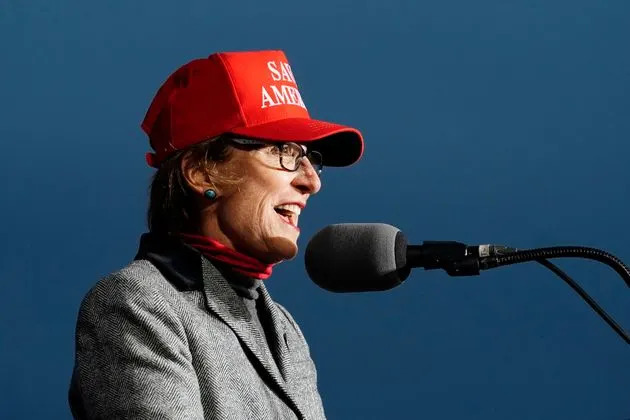
As updated vote tallies began to cement a loss for Trump-backed Arizona governor candidate Kari Lake on Monday, a far-right state lawmaker who told a gathering of white nationalists that “we need to build more gallows” started to have second thoughts about her party’s pitch to voters. 

“We wonder now if we were in an echo chamber,” said state Sen. Wendy Rogers (R), who has also suggested throwing county officials in solitary confinement and spent years lying about the 2020 election. 

“I don’t know, I’m just beginning to get some perspective,” added Rogers.

In the final days of her unsuccessful campaign against Democrat Katie Hobbs, Lake bear-hugged Rogers, despite the fellow Republican being one of the nation’s foremost elected supporters of the white nationalist influencer Nick Fuentes

Rogers’ realization about echo chambers occurred in an interesting place: She was speaking to Charlie Kirk on his YouTube show, which is also broadcast on the Salem Radio Network.

Kirk is the founder of the right-wing youth group Turning Point USA, which has close ties to the Trump family and spent considerable time and money working to elect Arizona Republicans. The group’s nationwide endorsement page is now sprinkled with painful losses, including Lake and U.S. Senate candidate Blake Masters (R).

“Every pollster was wrong, every single one,” Kirk told Rogers. Later, he apologized to listeners for getting the projections wrong ― referring to positive polling for Lake as “Kool-Aid” ― and mentioned that he’d heard “they didn’t run an internal poll the whole campaign.”

“Never again are we going to trust polls, or tracking, or any of that stuff,” Kirk said.

As the results rolled in, the crew speculated that Lake, who in many ways emulated former President Donald Trump’s election denialism and theatrical antagonism of the press, was simply too much for some otherwise winnable Arizona voters.

“If every person who voted to retire [House Speaker Nancy] Pelosi in Arizona voted for Kari Lake, she’s governor,” Kirk said, referring to Arizona’s U.S. House delegation, which went from 5-4 Democratic to 6-3 Republican with this election.

“What that means … is a Republican undervote, and it looks like that happened,” he added, referring to voters who supported Republicans other than Lake.

Arizona state Sen. Wendy Rogers (R) has spent years making false claims about the 2020 election.

Arizona state Sen. Wendy Rogers (R) has spent years making false claims about the 2020 election.

Tyler Bowyer, TPUSA’s chief operating officer and a falsepresidential “elector” for Trump’s 2020 campaign, said “the same Trump attack messaging seemed to work” against Lake.

“I love Trump, I love him to death, but the Trump rally is an echo chamber,” Bowyer said separately, responding to Rogers’ comment. He recalled warning Lake’s political team against having “all the same people showing up to the same events” and not bringing in new supporters but rather “fangirls and fanboys.”

Rogers agreed that Trump’s more recent rallies felt like a “family reunion.”

“I do think voters are telling us that they’re fatigued,” Kirk said. “I think people are telling us, they’re trying to send it in more ways than one: ‘I’m going to vote for the more boring person.’”

A few minutes later, Kirk read the latest returns from Maricopa County ― home to more than half of Arizona’s residents ― which sealed the deal on Hobbs’ projected victory.

Then he read an email from a listener as he and his guests’ heads sank. “We all have Trump fatigue syndrome,” he read. “I reluctantly voted for Kari Lake but all my friends couldn’t do it. We don’t want all the bombast.”

When Kirk announced that Lake was trailing Hobbs by 20 points in Pima County, the second largest county in the state, Rogers did a double take. “You said 20 points?” she confirmed, seemingly stunned as she looked at her phone.

Related…

There’s more to Katie Hobbs than anyone understood (including media, MAGA and Democrats)

AZ Central – The Arizona Republic

There’s more to Katie Hobbs than anyone understood (including media, MAGA and Democrats)

Phil Boas, Arizona Republic – November 15, 2022

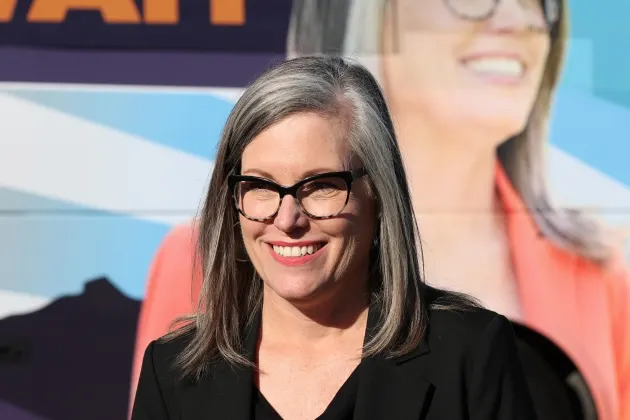
Finally, the wait is over! Katie Hobbs is the next governor of Arizona, and Trump Republicanism suffers another major defeat.

The MAGA energy that swept Kari Lake to victory in her primary has become hemlock in general elections.

Lake joins the list of hapless MAGA candidates who lost the governor’s offices in Michigan, Pennsylvania, New York and now Arizona.

Donald Trump recently boasted he created the modern Republican brand. Well, today the modern Republican brand is what, Edsel? Polaroid? Enron?

Nope.

It’s Old Hat.

Many of us dismissed Katie Hobbs

The temptation will be great to say Hobbs didn’t win the governor’s seat. Kari Lake lost it. Had Lake run as a normal Republican with her polished delivery and anchorwoman looks she’d be recarpeting the hallways right now on the Ninth Floor.

But let’s give Hobbs her due. This was a candidate widely underestimated by not only the Republicans but the media and even her own party, the Democrats.

Hobbs vs. Lake: Arizona’s politically purple credentials are hard to top

Soft-spoken and understated, she was dismissed from the beginning as a lightweight and novice filled with self-doubt and struggling to find the right words in front of TV cameras. She stuck with her much-maligned strategy (that also took criticism from this corner) to skip debates in the primary and general elections.

Many of us said that was wrong. She’s not meeting the moment.

What we didn’t know was that Hobbs had a brought a sledgehammer of her own to this race. She used it to smash conventional wisdom.

But Democrats have real reason to celebrate

Now that Hobbs has won the all-important Arizona governor’s race, Democrats are aglow. They should be.

To call what happened in Arizona and nationally a “red ripple” suggests the Republicans eked out a victory that could have been much larger. But this was not a Republican win. It was an indisputable and historic triumph for the Democratic Party and its candidates.

In a year when inflation was pushing up the price of milk and eggs, when the Democratic president was drowning in dismal approval ratings, when border crossings were at record highs and urban crime was beginning to scare people, the liberal party defied predictions and proved it is more in tune with the American people than its rival.

In fact, the Democrats pulled off the best midterm performance in 20 years by the party holding the White House, The New York Times reported.

Democrats retained control of the Senate, and lost the House by such a fine margin, Republicans will be dancing with the devil trying to manage it.

Beneath the angst, Katie Hobbs has steel
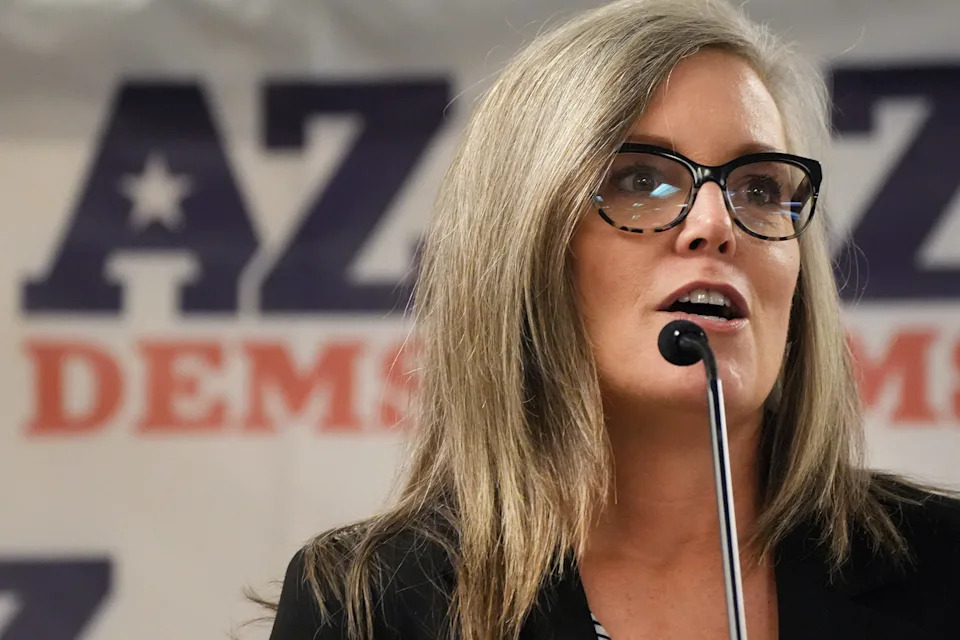
Gubernatorial candidate Katie Hobbs speaks as the Arizona Democratic Party hosts a Unity Rally with statewide candidates to energize Democratic voters and volunteers ahead of the November election at Carpenters Union Hall on Saturday, Aug. 27, 2022.

In Arizona, Democrats could not wait to start their well-earned gloating. Lobbyist and former state lawmaker Chris Herstam got the jump on it Sunday night by picking a Twitter fight with me:

“@boas_phil’s so-called “leftists” have done quite well in the midterm (in Arizona & DC). Arizona Democrats will do even better in ‘24 with a presidential election turnout & a reproductive freedom initiative on the ballot.”

I bring this up to illustrate just what a long haul this has been for Hobbs and to show that beneath all the surface angst and insecurity, Katie Hobbs has some steel.

Herstam’s tweet reminded me that from the very beginning Hobbs had to endure attacks from a large part of the Democratic establishment.

When she got into the race, Herstam tried to bury her campaign.

He pointed loudly to a recent jury verdict that found that Democratic legislative leadership had discriminated against Senate aide Talonya Adams when they fired her in 2015.

Hobbs faced a torrent of criticism

Hobbs was Senate Democratic leader at the time, so she faced a storm of criticism.

“I think she’s in real trouble,” Herstam told KJZZ radio. “Katie Hobbs needs to apologize profusely and compassionately, and she hasn’t really done that yet.

“Frankly, she should have apologized very directly when she announced her candidacy.  … And she didn’t do so. … That was a bonehead political move by her team.”

Herstam at the time was plumping the potential candidacy of U.S. Rep. Greg Stanton, the former Phoenix mayor who had not yet decided to skip the gubernatorial race.

“The anti-Hobbs storm, it’s still to come,” said Herstam, predicting the Republicans would run ads on the discrimination verdict. “They will be a real blow to her candidacy, as well as the entire Democratic ticket.”

Republicans ran with the ‘bigot’ theme

Herstam was prescient in one sense. The Republicans did pick up the “Hobbs is a bigot” theme. They got the idea from Democrats.

Then Kari Lake took her chainsaw to Hobbs: “I think a lot of people don’t realize she’s a twice-convicted racist.”

No. Hobbs was never convicted. Never charged. This was a civil case, not criminal. Chainsaws are poor instruments for making such distinctions.

Still, it’s worth remembering that before Republicans got to Hobbs many Democrats were on a tear.

Even Democrats criticized her in the primary

Five high-profile leaders of the Phoenix African American community put out this statement: “We ask that all persons, especially people of color, reconsider any support for Katie Hobbs to become the next governor of Arizona.”

Understand that this was during the social upheaval sparked by the police killing of George Floyd. Feelings were raw. And a number of Democrats were working hard to destroy her campaign.

Warren Stewart, once a centrist Democrat who morphed into a sharper-edged social-justice hawk, said he was done with Hobbs.

“I’m at a place where I am not impressed by apologies and videos,” Stewart told CNN in January. “I think the most noble thing that Katie could do is to step down and wait until she has proven herself as a leader.”

We shouldn’t underestimate Hobbs again

Now that Hobbs has won the main prize in Arizona’s 2022 election, many will forget the onslaught she survived just to get her party’s nomination.

They’ll forget she showed up for the fight as other big-name Democrats demurred. That she fought through all the insults from her own party before Kari Lake fired her artillery.

It’s one thing to bring Kari Lake-level confidence to an election, throwing flames and spitting nails. It’s another to wrestle down your self-doubt every day before you armor up to compete.

Hobbs could not match the smooth delivery of Kari Lake and always seemed self-conscious of it.

She looked like she was fighting through private doubts that may have been her most formidable opponent. And yet she stayed with it. No one was going to push her out.

That takes guts.

And we would all do well never to underestimate her again.

Phil Boas is an editorial columnist with The Arizona Republic. 

Why a Trump-appointed Texas judge blocked Biden’s student-debt cancellation plan

Insider

Why a Trump-appointed Texas judge blocked Biden’s student-debt cancellation plan

Ayelet Sheffey – November 14, 2022

A view of the US Capitol before a news conference to discuss student-debt cancellation on September 29, 2022.
A view of the US Capitol before a news conference to discuss student-debt cancellation on September 29, 2022.Drew Angerer/Getty Images
  • Trump-appointed Judge Mark Pittman struck down Biden’s debt relief in Texas last week.
  • He argued the two student-loan borrowers who sued have sufficient standing to block the plan.
  • But some legal experts and Democrats said Pittman should never have taken up the case in the first place.

A federal judge doesn’t think President Joe Biden’s plan to cancel student debt for millions of borrowers is legal.

On Thursday evening, Mark Pittman — a Texas judge appointed by former President Donald Trump — struck down Biden’s plan to forgive up to $20,000 in student-loans for federal borrowers making under $125,000 a year. He ruled in favor of two student-loan borrowers who filed the lawsuit because each of them didn’t qualify for the full amount of relief, and at this point, Pittman’s ruing bars the Education Department from discharging student loans until a final verdict is made.

Biden’s Justice Department has filed an appeal, but the administration is not accepting any new student-loan applications at this time.

The Texas case, along with a number of other lawsuits backed by conservative groups, challenges Biden’s authority to use the HEROES Act of 2003, which gives the Education Secretary the ability to waive or modify student-loan balances in connection with a national emergency, like COVID-19. They claimed that enacting broad student-loan forgiveness is an overreach of the authority and should require Congressional approval, while Biden has maintained one-time student-loan forgiveness is well within the administration’s legal authority.

Pittman appeared sympathetic to the conservatives’ arguments in his ruling. “This case involves the question of whether Congress—through the HEROES Act—gave the Secretary authority to implement a Program that provides debt forgiveness to millions of student-loan borrowers, totaling over $400 billion,” Pittman wrote in his ruling. “Whether the Program constitutes good public policy is not the role of this Court to determine. Still, no one can plausibly deny that it is either one of the largest delegations of legislative power to the executive branch, or one of the largest exercises of legislative power without congressional authority in the history of the United States.”

The other lawsuits are also moving through the courts. The 8th Circuit Court of Appeals, for example, ruled on Monday that its temporary pause on student-debt relief will remain in place until further orders from the court on a separate lawsuit in which six Republican-led states sued the loan forgiveness, arguing it would hurt their states’ tax revenues.

One of the key parts of Pittman’s ruling is that the plaintiffs actually met the legal requirements for a valid lawsuit. He ruled that they have standing to sue the administration, but several prominent Democrats and legal experts have questioned that decision — and other courts have thrown out similar conservative lawsuits due to a lack of standing.

The plaintiffs’ standing to sue

Both of the plaintiffs who brought the Texas lawsuit hold student loans. The first plaintiff, Myra Brown, sued because her loans are commercially-held and therefore ineligible for Biden’s debt relief, which requires the borrower to owe their debt directly to the federal government. And the other plaintiff, Alexander Taylor, sued because he was eligible only for $10,000 in debt forgiveness and not the full $20,000 since he did not receive a Pell Grant in college.

They both argued they were not given the opportunity to challenge the relief before its announcement since it didn’t go through the Administrative Procedure Act’s notice-and-comment period, and they said that failure to go through typical rulemaking processes, along with overstepping authority granted through the HEROES Act, were reasons why the debt relief should be blocked.

Pittman ruled that the plaintiffs have valid reasons for suing the administration. In his opinion, Pittman wrote that standing contains three legal requirements: there must be concrete injury, there must be causation, and there must be redressability, which is the likelihood the requested relief — in this case, blocking debt cancellation — would repair the injury caused. Pittman said that Biden’s Justice Department argument that the plaintiffs’ standing does not exist is “untrue.”

“Plaintiffs do not argue that they are injured because other people are receiving loan forgiveness,” Pittman wrote. “Their injury—no matter how many people are receiving loan forgiveness—is that they personally did not receive forgiveness and were denied a procedural right to comment on the Program’s eligibility requirements.”

And while Pittman concluded that debt relief did not violate procedural requirements, he said it violates authority under the HEROES Act because the “pandemic was declared a national emergency almost three years ago and declared weeks before the Program by the President as ‘over.’ Thus, it is unclear if COVID-19 is still a ‘national emergency’ under the Act.”

Some Democrats and legal experts take issue with the ruling

While Republican lawmakers were quick to laud Pittman’s decision, some legal experts weren’t sold on the merits of the ruling. Steve Vladeck, a CNN legal analyst and professor at the University of Texas School of Law, wrote in an opinion piece that “the biggest problem with Pittman’s ruling isn’t its substance; it’s why he allowed the case to be brought in the first place.”

Vladeck referenced prior conservative lawsuits seeking to challenge the debt relief that had been dismissed for lack of standing, and that if “the complaint is just that the government is acting unlawfully in a way that doesn’t affect plaintiffs personally, that’s a matter to be resolved through the political process – not a judicial one.”

And Leah Litman, a professor at the University of Michigan School of Law, wrote on Twitter that the ruling “is just the latest example of Trump-appointed district judges doing completely outlandish, lawless things to rule against policies by Democratic administrations,” referring to what she said was a lack of standing on the plaintiffs’ side.

Massachusetts Sen. Elizabeth Warren also slammed the ruling, telling NBC News on Sunday that “we have a court down in Texas, and if they’re going to play politics instead of actually following the law, they do put the program at risk.”

Democrat Katie Hobbs Defeats Trump-Backed Kari Lake in Arizona Governor’s Race

Rolling Stone

Democrat Katie Hobbs Defeats Trump-Backed Kari Lake in Arizona Governor’s Race

Charisma Madarang – November 14, 2022

Democratic Senate Candidate Mark Kelly Campaigns With Fellow Democrats In Phoenix - Credit: Getty Images
Democratic Senate Candidate Mark Kelly Campaigns With Fellow Democrats In Phoenix – Credit: Getty Images

Democratic candidate Katie Hobbs, who has vigorously defended abortion rights during her campaign, has defeated Republican Kari Lake, the Associated Press reports. Lake joins the overwhelming list of MAGA wipeouts during the midterm elections.

Hobbs has defeated one of the most outspoken defenders of former President Donald Trump. Serving as Arizona’s Secretary of State, Hobbs has repeatedly rejected GOP lies about the election. Lake’s defeat follows the loss of two other high-profile election deniers — Republican Senate nominee Blake Masters and Secretary of State nominee Mark Finchem.

Hobbs, who will succeed Republican Gov. Doug Ducey, is the first Democrat to be elected governor in Arizona since Janet Napolitano in 2006.

Last month, Hobbs’ campaign headquarters were burglarized amid a heated race for the Senate. “Secretary Hobbs and her staff have faced hundreds of death threats and threats of violence over the course of this campaign. Throughout this race, we have been clear that the safety of our staff and of the secretary is our No. 1 priority,” said Nicole DeMont, the campaign manager for Hobbs, in a statement. “For nearly two years Kari Lake and her allies have been spreading dangerous misinformation and inciting threats against anyone they see fit.”

Once a Republican stronghold, Arizona was key to Trump and his supporters to casting doubt on Joe Biden’s 2020 presidential victory. Pre-election polls leading to the 2022 midterms indicated that the race was tied, but Hobbs’ victory was still a surprise to Democrats who feared her understated approach during the campaign would turn voters away. Hobbs exceeded expectations in Maricopa and Pima counties, where the majority of Arizona voters reside and where she made sure to spend a significant amount of her time campaigning in rural areas that traditionally vote Republican.

After Hobbs was declared the winner in the Arizona governor’s race, Congresswoman Liz Cheney reposted a letter from Lake mocking Cheney’s television ad targeting Arizona election deniers.

“Your recent television ad urging Arizonians not to vote for me is doing just the opposite,” wrote Lake. “Your commercial should add another 10 points to our lead! I guess that’s why they call the Cheney anti-endorsement the gift that keeps on giving.”

Yet while Cheney’s gratitude towards Lake is feigned, the votes in this race are very much real.

After a Senate Loss in Wisconsin, Democrats Turn on Each Other

Rolling Stone

After a Senate Loss in Wisconsin, Democrats Turn on Each Other

Kara Voght – November 13, 2022

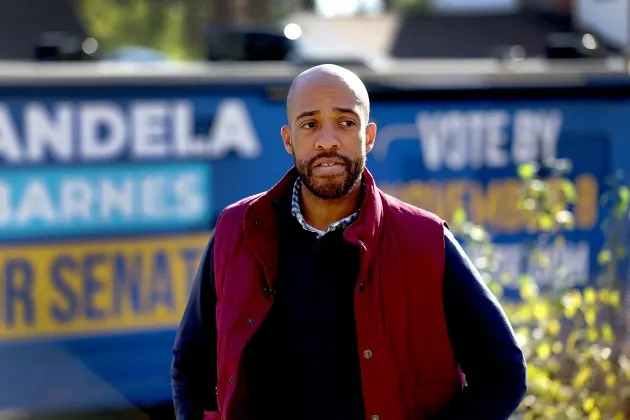
how-did-mandela-barnes-lose.jpg Mandela Barnes Campaigns Across Wisconsin On Eve Of Midterm Election - Credit: Scott Olson/Getty Images
how-did-mandela-barnes-lose.jpg Mandela Barnes Campaigns Across Wisconsin On Eve Of Midterm Election – Credit: Scott Olson/Getty Images

In the weeks leading up to Election Day, Mandela Barnes’ supporters felt frustrated. They believed in Barnes as the best Democrat to take on Sen. Ron Johnson (R-Wisc.), and election forecasts all but guaranteed a Johnson victory. That frustration gave way to fury, however, once the ballots were counted on Wednesday. Barnes lost to Johnson by a single point.

It was a performance far stronger than what former Sen. Russ Feingold (D-Wisc.) achieved in his back-to-back runs against Johnson in 2010 and 2016. It also shouldn’t have been a shock. “This was a result that tracks with what our model suggested might happen,” says Ben Wikler, the chair of the Wisconsin Democratic Party. He’d spent the last few weeks explaining, both publicly and privately, that the race was tied — even as credible public polls found Barnes uncomfortably behind.

The unexpectedly sunny outcomes for Democrats on Tuesday night mostly staved off party soul searching — with one notable exception: The U.S. Senate race in Wisconsin. It wasn’t as if Democrats couldn’t win statewide there. Gov. Tony Evers won his reelection on Tuesday by more than 90,000 votes. The Senate race, meanwhile, had been the Democrats’ top target in 2022 as polls consistently deemed Johnson unpopular among Wisconsin voters. His reported efforts to help overturn Wisconsin’s 2020 presidential election results only made his ousting more desirable.

Barnes’ near miss has reopened intraparty wounds as Democrats lament the Senate seat that got away. At the root of it is a perennial question that follows high-profile losses: Was the candidate the wrong choice, or did he have insufficient resources to make his case?  Barnes’ progressive allies point fingers at the Democratic establishment, whom they blame for discouraging big money from stepping in to counter tens of millions in attack ads unleashed upon Barnes after the primary. Democratic operatives, meanwhile, blame the Barnes campaign for not doing enough to counter those attacks with his own messaging — and for not putting enough distance between himself and past progressive positions they believe are toxic to Democrats running in tight races.

Barnes had been the early favorite to take on Johnson. The 35-year-old Black lieutenant governor had been a Democratic rising star ever since he’d won a Milwaukee-area seat in the Wisconsin legislature at age 25. He shared the winning gubernatorial ticket with Gov. Evers in 2018, a victory that boosted his visibility statewide. Barnes didn’t fit squarely in any ideological frame; both progressive stalwarts like Sen. Elizabeth Warren (D-Mass.) and moderate Black leaders like Rep. Jim Clyburn (D-S.C.) claimed Barnes as their own. It was a seemingly winning quality he shared with Pennsylvania’s John Fetterman, another Democratic lieutenant governor trying to flip a U.S. Senate seat. (”Just two tall bald dudes trying to get the job done,” Barnes told Politico of their very online bromance in July.)

He and Fetterman also shared a vulnerability: Liberal sensibilities to criminal justice reform. Barnes became the face of the Evers administration during the Kenosha riots that followed the police shooting of Jacob Blake, a Black man, in August 2020. He made frequent cable news appearances to demand police accountability. At one point, he suggested diverting funding from “over-bloated budgets in police departments” to community programs. The sentiment seemed to align Barnes with the goals of “defund the police,” the left-wing rallying cry that had grown radioactive in Democratic circles. Barnes had also been photographed holding an “Abolish ICE” T-shirt, another liberal slogan the GOP insisted on weaponizing.

Barnes tailored his campaign to neutralizing those attacks. He introduced himself as a candidate with a middle-class upbringing and a pocketbook-oriented platform. When asked about his criminal justice positions, Barnes would say he supported investing in both crime-prevention measures and law enforcement in equal measure. The strategy worked for the Democratic primary: He cleared a crowded field before any votes were cast as challengers, seeing Barnes as the clear frontrunner, dropped out and threw their support behind him.

The view from Washington, however, hadn’t been so convinced of Barnes’ obvious ascent. The Senate Democrats’ campaign arm had seen multiple candidates as strong contenders to challenge Johnson, declining to put its thumb on the scales for any candidate during the race. In the months leading up to the primary, a number of influential Democrats had privately raised doubts over Barnes’ electability — including Senate majority leader Chuck Schumer (D-N.Y.), according to several sources with knowledge of conversations. (“That’s ridiculous,” says a Schumer spokesperson, who noted that Schumer transferred $1 million from his own campaign coffers to Barnes’ efforts. “Sen. Schumer worked tirelessly to ensure Mandela Barnes and other Democratic candidates across the country had the resources they needed to run strong and competitive campaigns.”)

Then, just two weeks after the primary, the predictable happened. Four Johnson-aligned super PACs blanketed Wisconsin airwaves with ten different ads tying rising crime rates to Barnes. The spots preyed on the trauma of the Kenosha riots as well as a violent scene in Waukesha, where a man killed five attendees at the city’s annual Christmas parade as drove his car in November 2021. Nearly $25 million was spent in TV, radio, and digital advertising against Barnes during that period — including more than $10 million from Wisconsin Truth, a super PAC founded by three billionaire Johnson backers.

Barnes led Johnson by seven points in the first Marquette University poll taken after the primary, a time when a third of the Wisconsin electorate still hadn’t formed any opinion of Barnes. By the beginning of October, the Marquette poll found that Johnson had pulled ahead of Barnes by six points. “They were able to make Mandela look like a scary black man,” says Angela Lang, the executive director of BLOC, a Milwaukee-based Black civic engagement organization. The crime-ridden messaging had even penetrated among the city’s older Black voters, according to Lang. As BLOC’s organizers went door-to-door, they’d sometimes be asked: “Is Mandela really trying to let all these violent criminals out?”

“If the GOP smears had been met with equal intensity, I don’t think the country would have lost track of the fact that he really did have the chance,” Wikler, the Wisconsin Democratic chair, says. But Democrats disagree on what meeting those smears should have looked like. To Barnes’ progressive allies, the major Democratic party organs didn’t hit back hard enough during the GOP’s August and September blitz. They blame the lack of pushback on doubts prominent democrats raised over Barnes’ electability, saying it discouraged key donors from investing in the race. That attitude, according to Barnes’ boosters, delivered his campaign a fatal blow at a key moment. “That window was such a critical window — Mandela was ascendant,” says Maurice Mitchell, the executive director of the progressive Working Families Party, which backed Barnes in the race.

Indeed, the Senate Democrats’ campaign arm had, by that point, viewed Fetterman’s race for Pennsylvania’s open seat as a safer bet and decided to focus its resources on winning that race. Even so, Democrats had thrown $11.6 million behind opposing Johnson in those post-primary weeks — including $3 million from the DSCC in airtime “with the hopes that our nominee would use the air cover during this period to get their own advertising plans in order,” says a DSCC spokesperson. But Democrats defending those efforts point out that no amount of anti-Johnson spending would be as effective as hearing from Barnes himself. Research from the Center for American Progress, shared with Democratic campaigns in September, had found that the most effective strategies for combating crime attacks came from the candidates deflecting allegations themselves. Democratic Senate strategists had relayed these finds to the Barnes campaign and encouraged him to be prepared to face attacks on his record.

The Barnes campaign, attuned to this, stayed on the air throughout August and September with a series of ads that featured Barnes refuting GOP claims. One from late August opened with Barnes in his kitchen in the midst of the quotidian tasks of putting away groceries. “Now they’re claiming I’m going to defund the police and abolish ICE,” Barnes said directly to camera. “That’s a lie.” It still wasn’t enough to counter the Republican onslaught with so many GOP attacks going unanswered; the Barnes campaign, still rebuilding its fundraising coffers from the primary, couldn’t match the spending. “We knew people needed to hear directly from him — ‘This is nonsense, this is what I believe,’” says Barnes campaign manager Kory Kozlowski. “The thing you can’t control is three of their ads for one of yours.”

Still, other Democrats point out that the attacks would have lost their sting if the candidate hadn’t held controversial positions in the first place. Matt Bennett, a cofounder of Third Way, a centrist Democratic political organization that supported Barnes in the general election, admits money was a huge factor — as was race, especially given the 120,000-vote delta between Barnes and Evers. “But it also can be true that Barnes did not effectively put distance between himself and his positions,” Bennett adds. Other Democrats point out that Barnes never walked away from his support of ending cash bail, a vulnerability Republicans successfully linked to the Waukesha tragedy, which had been perpetrated by a freed felon. “Proof points like that become really hard to overcome,” says Navin Nayak, the president of the Center for American Progress Action Fund. “That’s where good policy can bump up against scare tactics.”

But the Barnes campaign did find a potent strategy to crawl back into contention. Much of that was premised on hammering Johnson over his anti-abortion stances, a charge the Barnes campaign learned performed best against Johnson’s crime accusations. The Barnes campaign outraised Johnson in the final stretch and achieved a spending parity — and, at times, an advantage — as it got its own attack ads up in early October. Education among voters, too, softened the attack lines. “Naming the racism was important,” BLOC’s Lang says. “He’s talking about getting rid of cash bail, but that doesn’t actually keep our community safe.”

Barnes’ poll numbers steadily climbed each week leading up to the election. “One more week and we would have won,” Kozlowski, Barnes’ campaign manager, laments.

Johnson’s victory has no bearing on Democrats retaining their Senate majority. The caucus will, however, fall short of the 52 senators they needed to kill the filibuster — perhaps just one short if Sen. Rapahel Warnock (D-Ga.) wins a December runoff election.

Extremists in Uniform Put the Nation at Risk

The Editorial Board – Nov. 13, 2022

Credit…Justin Metz

This editorial is the second in a series, “The Danger Within,” urging readers to understand the danger of extremist violence and possible solutions. Read more about the series in a note from Kathleen Kingsbury, the Times Opinion editor.

On May 29, 2020, Steven Carrillo decided that his moment to take up arms against the government had arrived.

It was a Friday in downtown Oakland, Calif., and at 9:44 p.m., Mr. Carrillo opened the sliding door of a white van and, according to court documents, opened fire with a rifle at the Ronald V. Dellums Federal Building and courthouse. Officer David Patrick Underwood was killed inside a guard booth, and his partner was seriously injured. The van sped away into the night.

About a week later, Mr. Carrillo, who was tied to the antigovernment paramilitary boogaloo movement, was arrested after he ambushed and murdered a police officer and wounded several others with homemade explosives and an assault rifle in another attack some 60 miles away. Mr. Carrillo wasn’t just linked to an antigovernment paramilitary group; he was also an active-duty sergeant in the Air Force. This summer, he was sentenced to 41 years in prison for attacking agents of the government he’d sworn to protect and defend.

There has been a steady rise in political violence in the United States — from harassment of election workers and public officials to the targeting of a Supreme Court justice to an attack on the husband of the speaker of the House of Representatives and, of course, the attack on the Capitol on Jan. 6. An alarming number of Americans say that political violence is usually or always justified, and this greater tolerance for violence is a direct threat to democratic governance.

America needs to reduce this threat. In recent years, the majority of political violence has come at the hands of members of right-wing extremist groups or unaffiliated adherents of their white supremacist and antigovernment ideologies. This editorial board argued in the first of this series that better enforcement of state and federal laws banning private paramilitary activity could help dismantle some of the groups at the vanguard of this violence.

One of the most troubling facts about adherents of extremist movements is that veterans, active-duty military personnel and members of law enforcement are overrepresented. One estimate, published in The Times in 2020, found that at least 25 percent of members of extremist paramilitary groups have a military background.

Still, only a tiny number of veterans or members of the active-duty military or law enforcement will ever join an extremist group. Their overrepresentation is partly due to extremist groups focusing on recruiting from these populations because of their skills. But the presence of these elements within the ranks of law enforcement is cause for extra concern. Of the more than 900 people arrested in connection with the Jan. 6 attacks, 135 had military or law enforcement backgrounds. The Program on Extremism at George Washington University found that among those in policing, 18 are retired, and six are active. One Capitol Police officer who was not on the scene that day but was aware of the attack later advised a participant on how to avoid being caught.

For decades, police departments, the Pentagon and the Department of Veterans Affairs have known about the problem, yet they have made only halting progress in rooting out extremists in the ranks.

Jan. 6 changed that. Secretary of Defense Lloyd Austin was so alarmed by the events of that day that he ordered all military commands to reinforce existing regulations prohibiting extremist activity and to query service members about their views on the extent of the problem. The Defense Department standardized its screening questionnaires for recruits and changed its social media policies, so that liking or reposting white nationalist and extremist content would be considered the same as advocating it. Service members could face disciplinary action for doing so. The department also began preparing retiring members to avoid being recruited by extremist groups.

But those reforms were more easily ordered than executed. A department inspector general report released this year found that the Pentagon’s sprawling bureaucracy was unable to identify the scope of the problem across the services because it used numerous reporting systems that were not interconnected. Commanders often didn’t have a clear understanding of what was prohibited. As a result, the department “cannot fully implement policy and procedures to address extremist activity without clarifying the definitions of ‘extremism,’ ‘extremist,’ ‘active advocacy’ and ‘active participation,’” the report concluded.

After 20 years of the war on terrorism, the country is now seeing many veterans joining extremist groups like the Proud Boys.

The end of wars and the return of the disillusioned veterans they can produce have often been followed by a spike in extremism. The white power movement grew after the end of the Vietnam War, with veterans often playing leading roles. Antigovernment activity climbed in the 1990s after the first Iraq war, culminating in the bombing of the Alfred P. Murrah Federal Building in Oklahoma City by Timothy McVeigh, an Army veteran who had served in Operation Desert Storm. “These groups can give disaffected veterans a sense of purpose, camaraderie, community once they leave military service,” said Cassie Miller, an extremism researcher at the Southern Poverty Law Center.

In 2012, Andrew Turner ended his nine-year Navy career at Walter Reed National Military Medical Center with a shattered hand and loathing of the government. He’d served around the world, from South Korea to Iraq, and the experience had left him disabled and furious. “When the military was done with me, they threw me on a heap. I took it personally and was so angry,” he said in an interview.

In 2013 a fellow service member suggested that he check out a group called the Oath Keepers. Mr. Turner, then 39, joined the Maryland chapter, paid his dues and “initially felt that esprit de corps that I’d missed from the military,” he said. He felt a bond and even spent time with the group’s founder, Stewart Rhodes, who is currently on trial and charged with seditious conspiracy for his role in the Jan. 6 attacks. (Mr. Rhodes has denied ordering the group to attack the Capitol and stop the certification of the 2020 election results, as the government contends.) There’s a photo of them at the World War II Memorial in Washington, holding an Oath Keepers banner.

But Mr. Turner soon realized that the group was not the apolitical, service-oriented veterans’ association he thought it to be. In private online forums, discussions were full of racist language, and members flirted with violence. He walked away after six months. “It’s easy to find vulnerable people at their weakest moments. I was naïve, but if anyone joins the Oath Keepers today, they know exactly what they’re getting into,” he said.

Experts in the field recommend some basic steps the military should take that could make a difference. Better training, counseling and discussion of the true nature of extremism are vital and must start long before service members retire and need to continue after they do. Better staff training and better funding for the Department of Veterans Affairs are also critical to meeting this challenge, so that members who are struggling can be coaxed down a different path.


While the military can exert fairly strict control over men and women in uniform, civilian law enforcement agencies face a different set of challenges in addressing extremists or extremist sympathizers in the ranks.

At least 24 current and former police officers have been charged with crimes in relation to the Jan. 6 attacks, and dozens of others have been identified as part of the crowd at the Capitol. Some officers who participated wanted things to go further than they did. “Kill them all,” Peter Heneen, a sheriff’s deputy in Florida, texted another deputy during the attack. The streets of the capital, he wrote, needed to “run red with the blood of these tyrants.”

Experts who track the tactics of extremist movements have been sounding the klaxon about the growing presence of antigovernment and white supremacist groups in law enforcement for years. “Although white supremacist groups have historically engaged in strategic efforts to infiltrate and recruit from law enforcement communities, current reporting on attempts reflects self-initiated efforts by individuals, particularly among those already within law enforcement ranks, to volunteer their professional resources to white supremacist causes with which they sympathize,” an F.B.I. intelligence assessment concluded in 2006.

Last year a leaked membership roster of the Oath Keepers, a violent paramilitary group involved in the Jan. 6 attacks that recruits police officers and military personnel, included some 370 members of law enforcement and more than 100 members of the military, according to an Anti-Defamation League Center on Extremism analysis. An investigation by Reuters this year found that several police trainers around the country — who together have trained hundreds of officers — belong to extremist paramilitary groups or expressed sympathy for their ideas. One trainer, for instance, posted on social media that government officials disloyal to Donald Trump should be executed and that the country was on the brink of civil war.

A recent investigation by the Marshall Project found that hundreds of sheriffs nationwide are part of or are sympathetic to the ideas behind the constitutional sheriffs movement, which holds that sheriffs are above state and federal law and are not required to accept gun laws, enforce Covid restrictions or investigate election results. The Anti-Defamation League describes the Constitutional Sheriffs and Peace Officers Association as an “antigovernment extremist group whose primary purpose is to recruit sheriffs into the antigovernment ‘patriot’ movement.”

Identifying members of extremist groups and those sympathetic to their ideology to make sure they don’t join the thin blue line in the first place should be a priority for departments and governments nationwide. Yet most departments don’t have explicit prohibitions on officers joining extremist paramilitary groups, according to a 2020 study by the Brennan Center for Justice.

Since Jan. 6, however, some states have successfully pushed for reforms. This fall, California passed a law that requires law enforcement agencies to screen candidates for participation in groups that promote hate crimes or genocide. In April, Minnesota’s police officer standards board proposed a series of rule changes, including barring people who belong to or support extremist groups from getting a law enforcement license. Public hearings‌, which are set to be held‌ on those changes, deserve support. Other states and communities should look closely at these measures as a model.

Prosecutors in communities all over the United States also have a powerful tool already at their disposal: cross-examination during criminal trial. All defendants in criminal cases have a constitutional right to know about potentially exculpatory evidence. If an arresting officer is a member of a hate group or expresses extremist beliefs, that should be a subject of cross-examination by the defense.

If prosecutors were more aggressive about vetting police officers for extremist views, “defendants will get fairer trials, the public will be informed of problem officers through public trials, and police and prosecutors get the opportunity to identify problematic police officers and take action to rid the force of these officers,” wrote Vida Johnson, a professor at Georgetown Law, in a 2019 law review article.


Americans have a nearly unlimited right to free speech and association, and any effort to stop extremist violence must ensure that those rights are protected. Reforms should be carefully structured to avoid the abuses that occurred in the wake of the Sept. 11 attacks — the violations of civil liberties, mass surveillance and the accelerated militarization of the police, to name a few. But protecting freedom of expression need not stand in the way of tackling extremism in police departments.

Officers around the country have rightly been fired for racist or extremist actions. But punishment for harboring extremist sympathies is a finer line, because Americans have the right to believe what they like. So, the treatment of officers with extremist beliefs and extremist connections is often uneven. This year, a New York prison guard who belonged to a right-wing hate group was ultimately fired — not just for membership but also for trying to smuggle hate literature into the prison. This may be a useful model in determining where extremist ideology crosses the line to actions that can be addressed by law or regulation.

Other recent attempts to root out extremism have been less clear-cut. An unidentified police officer in Chicago was given a four-month suspension but was not dismissed after it was discovered that he had ties to the Proud Boys. Last month, a police officer in Massachusetts was found to have been involved in the Unite the Right rally in Charlottesville, Va. He resigned, and the district attorney announced an investigation into all closed and pending cases he had worked on.

Coordinating the efforts of the nation’s roughly 18,000 law enforcement agencies has been notoriously difficult. Federal standards or even guidelines about how to deal with extremism — in recruiting officers, disciplining existing ones or even sharing information — would go a long way toward harmonizing law enforcement’s response. But carrying out such changes would require both local attention to detail and the political will to do so. It would also require staffing law enforcement with people committed to the rule of law, rather than rule by force. As one congressional staff member working on homeland security issues put it: “People have to decide this is a priority. We can’t legislate hearts and minds.”

Across the board, extremists and their sympathizers, whether they act on their beliefs or just spread them, erode the public’s trust in the institutions that are designed to keep the country safe. Extremists bearing badges can put at risk ongoing police investigations by leaking confidential information. In the military, extremists pose a threat to good order and discipline. In law enforcement, extremists — particularly white supremacists — pose a threat to the people they are meant to protect, especially people of color. In federal agencies, extremists can compromise national security and make our borders even less secure. Protecting those institutions and the nation they serve demands urgent action.

With Herschel Walker, the Stupidity Is the Point

Rolling Stone

With Herschel Walker, the Stupidity Is the Point

George Chidi – November 13, 2022

herschel-walker-greatest-asset.jpg - Credit: Elijah Nouvelage/Getty Images
herschel-walker-greatest-asset.jpg – Credit: Elijah Nouvelage/Getty Images

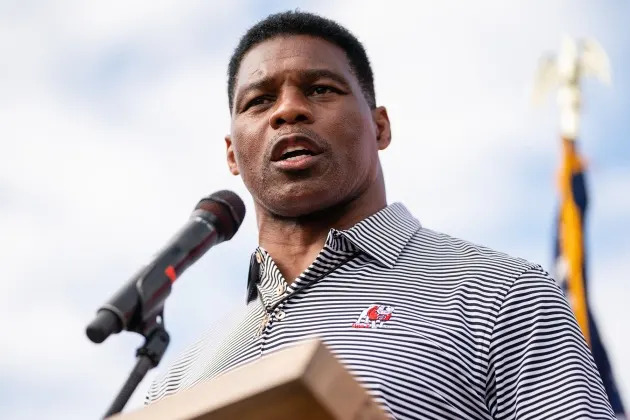
About half of Georgia voters cast a ballot for Herschel Walker on Tuesday. Most of these voters wouldn’t trust Walker to run the check-out at a Family Dollar. But that’s the whole point.

Herschel Walker has repeatedly proven himself to be stupid. Herschel Walker’s voters aren’t necessarily stupid. That’s too easy.

More from Rolling Stone

Georgia Republicans aren’t stupid. But they see safety in stupid politicians. The stupidity of Herschel Walker isn’t a problem for them. It’s a feature. And writing off Georgia Republicans as country idiots is a kind of smug, lazy thinking that oversimplifies a complicated political problem, not just in Georgia but across the country.

Herschel Walker was not nominated to govern. He was not nominated to bargain. He was not nominated to formulate policy. He was not nominated to exercise judgment. He was nominated to mash the R button whenever a vote comes up, no matter what.

“It could be Daffy Duck for all I care,” one such voter told the Atlanta Journal-Constitution at a Walker rally in Baxley, Ga. “Just get the Democrats out of Washington.”

Electing Walker is like replacing that check-out clerk with an automated self-scanner.

A smart man certainly wouldn’t have held up a fake badge during a debate after being accused of pretending to be a police officer. Rather than own up to the mistake, Walker started doing interviews with news reporters while wearing the badge. The number of children Walker was publicly willing to acknowledge were his has grown twice over the course of the campaign, surprising his own campaign staff with the revelations. Walker’s response to the revelations has been to argue that the children he doesn’t see aren’t campaign props, and please ignore the one who is shouting from the high hilltops about having to move six times in six months as his mother evaded Walker’s abuse.

Walker has argued for a national ban on abortion with no exceptions for rape or incest in interviews as late as August. He denied that he ever said he held a position that extreme, in his first debate with Warnock, but the record of his comments is crystal clear. “I believe in life,” Walker said at a forum in August. “And I said, you know, if anyone wants to have an exception, I said, ‘Not in my book,’” Walker said. “I said, ‘I’m sorry. I feel bad for anyone that’s a victim of any kind of crime.’ I do. I feel like that. That is terrible and that’s horrible, but we deal with that as it comes.”

He’s plainly a pro-life candidate either way.

Two women have come forward to say that Walker pressured them into getting abortions. One, the mother of one of Walker’s (known) children, had a check signed by Walker and a receipt from the abortion clinic. Normally, this would fall into the category of career-ending political scandals. But Walker’s stupidity is an asset. Wisdom might prevent mistakes, but it also generates the kind of self-reflection that creates a conscience, and that’s a problem.

On Tuesday, Republican Gov. Brian Kemp earned roughly 200,000 more votes than Herschel Walker, out of about four million cast. Sen. Raphael Warnock earned about 140,000 more than Stacey Abrams. That means that only about 1 in 20 voters saw the trainwreck that Walker presented – a history of mental illness, violence against women, plain lies about his charitable work with veterans and his business dealings, an absolutist stand on abortion and his connection to Donald Trump – and bailed. Only about two-thirds of those voters who walked away from Walker were actually willing to cross the aisle and vote for Warnock.

If you want a clearer example of bipartisanship’s death, well… you’re not going to find it.

An introspective candidate with Walker’s skeletons would never have run in the first place. But an introspective candidate wouldn’t have had Walker’s skeletons. This may seem counter-intuitive, but for a lot of Georgians, these kinds of mistakes solidify the view among Georgia’s right that Walker must have never thought he would go into politics and hasn’t lived the sterile careerist lifestyle of the political elite … which is the best qualification they know for higher office.

So rather than slink into a corner and collapse after the abortion stories, Walker simply denied everything and threatened to sue The Daily Beast for its reporting on the abortions he allegedly paid for. (So far, he hasn’t followed through on the threat.) He has continued to campaign on an unapologetically pro-life platform.

Wednesday, Susan B. Anthony Pro-Life America announced it would back Walker with $1 million in spending on the runoff.

A senator who stops to consider the personal or political consequences of his actions might vote for bills that don’t “own the libs.” For many Republican voters, this alone is enough reason to vote for Walker.

For example, Georgia did not expand Medicaid under the Affordable Care Act. The state contributes extra money into the national treasury for medical care that it does not receive, for no real reason other than keeping doctors away from poor people. Hospitals are closing across the state, mostly in communities with poor white residents, though the most significant recent closure was of a major Level 1 trauma center in downtown Atlanta.

The policy is profoundly stupid. It also hurts more Black people than white people in Georgia, so many Republicans support it. A smart politician would be looking for a policy workaround that brings that money to Georgia. But Republicans don’t want a smart politician. They want Walker.

Before you start feeling superior about your choices, the tribal desire to beat a political enemy is also the fundamental political motivation for most Democrats. Even Raphael Warnock has had issues surface during the campaign which might give voters a pause.

Warnock was arrested in 2002 and briefly accused of obstructing an investigation into child abuse at a summer camp. The charge was dropped once it became clear to a judge that Warnock was trying to prevent children from being questioned by police without parents or a lawyer. Walker’s campaign ran ads showing police body camera footage from a domestic case, where Walker’s ex-wife told cops he ran over her foot after an argument in 2020. Paramedics found no injuries on her.

Warnock’s church, the famed Ebenezer Missionary Baptist of Atlanta, owns a nonprofit which owns Columbia Tower at MLK Village, a senior residential housing complex. Some of its tenants have been served eviction notices for paltry sums in recent years, a point that Walker gleefully made during their debate. Warnock replied that no one had actually been evicted.

As a practical matter, none of these attacks mattered. Democrats voted for Warnock anyway. Politics have become tribal in Georgia.

That means a government that’s more dysfunctional, where there’s no incentive to agree to help people. That’s the whole point.

Tucker Carlson and others on the far right have been steadily reinforcing fears of the “Great Replacement” in the hearts of America’s white middle class. The threat of demographic change – and the concomitant political change – is the heart of this message. Sooner or later, they tell white conservatives, you’re going to be outnumbered. Once that happens, white nationalists argue that white people will become the targets of discrimination (instead of Black people.) They’re already arguing that in Georgia: Steven Miller’s team flooded TV and mailboxes with ads reminiscent of Jesse Helms’ “White Hands” ad with White people need not apply messages on jobs. The less functional and less legitimate that government is when the turnover happens, the easier it will be to fight.

Disabling the government is fundamental to white nationalist politics, and those politics have an audience in Georgia. But they can’t say that directly, because most voters reject that message and don’t like who is delivering it.

To be clear: most white Republicans are not crypto-white nationalists. But virtually all white nationalists will vote Republican, and they form a large-enough bloc within the party to influence primary contests in Georgia.

Ironically, Walker’s ethnicity is an added asset here. It’s harder to describe a Black man as a shill for a white nationalist agenda. Win or lose, it amuses the 4Chan wing of the party to amplify all the things they can’t say aloud in the voice of a Black man.

Usually, that play doesn’t work this well. Vernon Jones, a former CEO for majority-Black DeKalb County turned MAGA provocateur, ran for Congress with Trump’s blessings. He made it to a runoff and was thoroughly trounced.

It didn’t used to be like this. Georgia has produced highly educated, politically savvy, even smart Republican leaders over the years, from Newt Gingrich to David Perdue. The problem for the common Republican voter is that these guys – and they’re usually guys – have also tended to be corrupt. Elites are part of the problem. They know how to save their own skin if the ship is sinking. Georgia’s Republicans have decided it’s better to send in someone who wouldn’t know better.

And given the choice between a crooked brainiac and a simpleton, today’s GOP has made its preference clear.

As world population hits 8 billion, China frets over too few babies

Reuters

As world population hits 8 billion, China frets over too few babies

November 13, 2022

FILE PHOTO: People walk and ride vehicles along a street, amid the coronavirus disease pandemic, in Shanghai

BEIJING/HONG KONG (Reuters) – Chinese software developer Tang Huajun loves playing with his two-year-old in their apartment on the outskirts of Beijing but he said he is unlikely to have another child.

Such decisions by countless people like Tang will determine the course not only of China’s population but that of the world, which the United Nations says is projected to reach 8 billion on Tuesday.

Tang, 39, said many of his married friends have only one child and, like him, they are not planning any more. Younger people aren’t even interested in getting married let alone having babies, he said.

The high cost of childcare is a major deterrent to having children in China, with many families in an increasingly mobile society unable to rely for help on grandparents who might live far away.

“Another reason is that many of us get married very late and its hard to get pregnant,” Tang said. “I think getting married late will definitely have an impact on births.”

China was for decades preoccupied with the prospect of runaway population growth and imposed a strict one-child policy from 1980 to 2015 to keep numbers in check.

But now the United Nations expects China’s population will start shrinking from next year, when India will likely become the world’s most populous country.

China’s fertility rate of 1.16 in 2021 was below the 2.1 OECD standard for a stable population and among the lowest in the world.

The anguish of the coronavirus pandemic and China’s strict measures to stamp it out may also have had a profound impact on the desire of many people to have children, demographers say.

New births in China are set to fall to record lows this year, demographers say, dropping below 10 million from last year’s 10.6 million – which was already 11.5% lower than in 2020.

Beijing last year began allowing couples to have up to three children and the government has said it is working towards achieving an “appropriate” birth rate.

OLD PEOPLE, NEW PROBLEMS

For planners, a shrinking population poses a whole new set of problems.

“We expect the aging population to increase very rapidly. This is a very important situation facing China, different to 20 years ago,” said Shen Jianfa, a professor at the Chinese University of Hong Kong.

The proportion of the population over the age of 65 is now about 13% but is set to rise sharply. A declining labour force faces an increasing burden of looking after the rising numbers of old folk.

“It will be very high for some years,” Shen said of the proportion of elderly in the population. “That’s why the country has to prepare for the coming aging.”

Alarmed by the prospect of an ageing society, China has been trying to encourage couples to have more children with tax breaks and cash handouts, as well as more generous maternity leave, medical insurance and housing subsidies.

But demographers say the measures are not enough. They cite high education costs, low wages and notoriously long working hours, along with frustration over COVID curbs and the overall state of the economy.

A key factor is job prospects for young people, said Stuart Gietel Basten, professor at Hong Kong’s University of Science and Technology.

“Why would you have more babies when the people you have cannot even get jobs?”

(Reporting by Thomas Suen and Farah Master; Editing by Robert Birsel)

Gov. Stitt claims Oklahoma for Jesus, but Tuesday showed America is still a secular nation – for now.

DailyKos

Gov. Stitt claims Oklahoma for Jesus, but Tuesday showed America is still a secular nation – for now.

Aldous J. Pennyfarthing – November 10, 2022 

Abortion rights activists hold signs reading "Abortion is Healthcare" as they rally in Miami, Florida, after the overturning of Roe Vs. Wade by the Supreme Court on June 24, 2022. (Photo by CHANDAN KHANNA / AFP) (Photo by CHANDAN KHANNA/AFP via Getty Images)

If there’s one big takeaway from Republicans’ tepid showing on Tuesday, it’s that women don’t want Jesus as their OB-GYN. I mean, he was a carpenter, after all. It really doesn’t translate. And it’s a totally different set of tools. Well, in most of the country, anyway. Not so sure about Oklahoma.

In the days leading up to the midterms, Republicans were pretty confident that they’d ride the inflation steamroller to a decisive congressional sweep. Instead, two days later, control of both houses remains in doubt, and the GOP is gobsmacked. Of course, religious extremism—mostly in the form of cruel and draconian abortion restrictions—played a big role in that belly flop. Have they learned their lesson? Pretty doubtful, since many of them have a really long way to go when it comes to fully endorsing religious diversity and the equal rights of nonbelievers.

Case in point: Gov. Kevin Stitt, who won reelection in ruby red Oklahoma on Tuesday, was filmed before the election claiming Oklahoma for Jesus. The whole state. Not just the churches and the Hobby Lobbys. Everything.

RELATED: Five Tribes endorse Hofmeister, call Stitt ‘most anti-Indian governor in the history of’ Oklahoma

Watch:

STITT: “Father, we just claim Oklahoma for you. Every square inch, we claim it for you in the name of Jesus. Father, we can do nothing apart from you. We [wind noise] battle against flesh and blood, against principalities of darkness. Father, we just come against that, we just loose your will over our state right now in the name of Jesus. … We just thank you, we claim Oklahoma for you, as the authority that I have as governor, and the spiritual authority and the physical authority that you give me. I claim Oklahoma for you, that we will be a light to our country and to the world right here on stage. We thank you that your will is done on Tuesday and, Father, that you will have your way with our state, with our education system, with everything within the walls behind me and the rooms behind me, Lord, that you will root out corruption, you will bring the right people into this building, Father, from now on.”

“Are you there, God? It’s me, MAGA-rat. Can you maybe dial down the wind for a second until Gov. Stitt finishes shredding the First Amendment? That’s too much cacophony all at once, brother. Thanks!” 

Now, it’s pretty bold—not to mention exclusionary and wildly inappropriate—for a sitting governor to claim an entire state for a single deity. Can we maybe set aside one synagogue and maybe an ashram or two for someone other than Jesus? Jesus doesn’t step foot in synagogues anyway, except maybe to ask for directions to Kirk Cameron’s house. But these folks have long had trouble imagining what it might be like to walk in someone else’s shoes—and they’re really not keen on secular government, which is supposed to represent everyone, whether they believe in Kevin Stitt’s god or not.

Of course, if Stitt wants to lay his grubby hands on Oklahoma on behalf of Jesus, he better get moving, because he’s running out of time. Tuesday made clear that Americans as a whole don’t want too much religion sprinkled in with their politics, and new polling backs that up.

Pew Research survey conducted in September and released two weeks before the election found that while 45% of Americans want the U.S. to be a “Christian nation,” far fewer want religion to encroach on the political sphere. And while Christian nationalism is rising, it’s still running up against a firewall of church-state separation.

Overall, six-in-ten U.S. adults – including nearly seven-in-ten Christians – say they believe the founders “originally intended” for the U.S. to be a Christian nation. And 45% of U.S. adults – including about six-in-ten Christians – say they think the country “should be” a Christian nation. A third say the U.S. “is now” a Christian nation.

At the same time, a large majority of the public expresses some reservations about intermingling religion and government. For example, about three-quarters of U.S. adults (77%) say that churches and other houses of worship should not endorse candidates for political offices. Two-thirds (67%) say that religious institutions should keep out of political matters rather than expressing their views on day-to-day social or political questions. And the new survey – along with other recent Center research – makes clear that there is far more support for the idea of separation of church and state than opposition to it among Americans overall.

While it’s alarming that so many Americans think the Founders intended the U.S. to be a Christian nation (narrator: they didn’t), it’s a relief that most would still rather leave secular matters up to secular authorities. And it’s reasonably safe to assume that this is the high-water mark for religious fervor in this country. Gallup has been tracking religious sentiment in the U.S. for decades, and the number of people who claim to have no religious affiliation—currently at 21%—has steadily increased over the years. As recently as 1985, that number was just 1%. Meanwhile, the nation’s share of Christians continues to fall. 

Could Tuesday be one of the first indications that the noxious religious-political stew that charlatans like the Rev. Jerry Falwell started cooking up in the ‘80s is finally about to spoil? They’ve brought us to the brink, but it appears they’ve gone as far as they possibly can if they want to keep dipping their fungal right-wing evangelical toes in our secular humanist soup. 

Of course, that’s assuming they don’t take control by force and turn us into Gilead overnight. But that seems less likely now, even with this dude still looming out there:

ScreenShot2022-11-06at10.03.49AM.png

Yeah, I didn’t want you to get too comfortable just yet. Sorry. Now do your best to enjoy the sad remainder of your now-squalid lives. I’ll see myself out.

Vote like your life depends on it, because it does!

The Tarbabys Blog

John Hanno – November 7, 2022

To American’s who still believe in Democracy and in the Democratic institutions that have sustained our Republic as a beacon for the world to admire and emulate, this is not the election to take a pass on.

To all the true Republicans who have been drummed out of your party or have fled the MAGA insanity, please take a stand for representative government.

To all eligible voters who are turned off by the toxic state of our political system, refusing to vote will only make that worse. Sometimes, even a small number of votes in close elections can make a critical difference.

To those who believe they’re not political or aren’t the least bit interested in our political systems, believe that every moment of your family’s existence is impacted by politics, both good and bad. And your vote could make our two party Democratic system much better, and more responsive and accountable.

Erstwhile Republican’s Rep. Liz Cheney, Rep Adam Kinzinger and others have been sounding the autocratic alarm bells even before trump and his MAGAnian conspirators commandeered the Grand Old Party and turned it into the wholly owned trump cult militia, that swarmed, assaulted, terrorized, pummeled and even killed Capitol police officers on January 6,2021, in a futile but consequential attempt to overthrow our Democratic government.

And where would we be if they had succeeded?

The hundreds of state laws republicon legislatures already authored and implemented to restrict voting rights and Democratic representative government would have already become the law of the land.

A women’s right to chose what happens to her body and reproductive rights would have been turned back to the 19th century, in all of America; with no exceptions for rape, incest or the life of the mother. Children as young as ten years old would have been forced to carry another child to birth.

The progress made by workers to improve labor’s rights and increase their diminishing wage value would have been overturned.

Progress made on fighting global warming and the remarkable improvements in alternative energy, would be pushed to the back burners of history.

trump and his republicon party sycophant’s march towards personal wealth enrichment would again be front and center of any legislation or executive orders. His gold tipped sharpie would again be busy rewarding the trump family criminal enterprises and the republicon’s most generous donors.

The separation of church and state would be but a distant memory; and they would proclaim White Christian dogma and the bible as governing principles. Many other parts of our constitution would be in jeopardy, all but the Second Amendment.

I could go on all day, pointing out the chaos created the last time trump held power, but I’ll conclude with reminding voters about the scores of criminal types in trump’s administration, who were forced to resign, were fired, went to prison, were indicted, pardoned or ended up in the right wing media.

Republican’s stated plans if they take control of congress, is to hold the government budget hostage until they get concessions on cutting, or eliminating altogether, Social Security, Medicare and Medicaid. But the safety net assault probably won’t stop there, continued support for programs like food stamps and even military and humanitarian support for Ukraine’s war with Russia are also on the MAGA chopping block.

And the extreme members of a republicon controlled House of Representatives will have as its main goal, a two year long investigation of a long list of their political opponents. Any progress the Democrats and the Biden administration have made addressing America’s critical problems over the last two years, will have to take a back seat to political witch hunts and futile attempts to overturn that progress.

And all this just so they can make permanent, the enormous tax cuts that trump and the republicon’s in congress awarded to their rich benefactors, the last time they held control. America’s colossal wealth disparity between the 1% and all the rest will again be on steroids.

For those who emphatically believe MAGA World is synonymous with freedom, believe me: “Freedom is just another word for, nothing left to lose”

If you paid close attention to the videos of Russian citizens protesting Putin’s “Special Operation” in the streets of Moscow and St. Petersburg, you couldn’t help but notice there wasn’t one single assault weapon or high capacity magazine in sight, and no hunting rifle, handgun or even a pea shooter. Why? Because it’s against putin’s laws to have those weapons in public, if at all. And what we call our First Amendment Rights to say anything that comes to mind, forget it in Putin’s Russia or trump’s America. I remember one courageous Russian women holding up a blank sign, apparently afraid to call Putin’s invasion of Ukraine a war, for fear of the consequential 15 year prison term, yet still wanting to register her displeasure. Unfortunately it didn’t succeed, within 2 or 3 minutes, 4 or 5 security troops dressed in black whisked her, and her blank protest sign, off and into a police van headed for the gulag.

It’s no secret that trump and many congressional republicons admire and support war criminal Vladimir Putin and his invasion and genocide against the Democratic people of Ukraine. They admire strongmen fascists and autocrats like putin and trump and denigrate Joe Biden as weak. Apparently raining down missiles and rockets on innocent civilians, on schools and medical facilities, on apartments, libraries, and shopping centers, killing and maiming children, women, and disabled old folks is manly, but also isn’t a bridge too far for this new MAGAnian cult, as long as the reward is omnipotent power and wealth. Mass graves are just necessary collateral damage.

For those who believe the republicon’s are better on the economy or will do a better job fixing inflation, I’ll repost this November 4th, David Rothkopf and Bernard Schwartz article from the Daily Beast.

Republicans Are Bad for the Economy. Here’s Why.

According to a wave of recent polls, the economy is the dominant issue on the minds of Americans going into next week’s elections.

recent Pew poll concluded nearly eight in 10 voters said the economy will be “very important” to their voting decisions. Another such poll, by ABC News and Ipsos, showed that almost half of respondents cited either the economy or inflation as the issue about which they were most concerned. The poll indicated that concerns about the economy and inflation are “much more likely to drive voters towards Republicans.”

But that impulse is not only ill-considered, every bit of available evidence makes clear that the GOP is the wrong party to which to turn if you seek better U.S. economic performance in the future.

In fact, it is not close. When it comes to the economy, the GOP is the problem and not the solution. If anything, it is a greater obstacle to our economic well-being today than it has ever been.

At the same time, the economic record of President Joe Biden and the Democrats is not just consistent—in creating jobs, reducing the deficit, and enhancing our competitiveness—during the past two years their record has been one of extraordinary, often record-breaking success.

History tells a very stark tale. Ten of the last 11 recessions began under Republicans. The one that started under former President Donald Trump and the current GOP leadership was the worst since the Great Depression–and while perhaps any president presiding over a pandemic might have seen the economy suffer, Trump’s gross mismanagement of COVID-19 clearly and greatly deepened the problems the U.S. economy faced. Meanwhile, historically, Democratic administrations have overseen recoveries from those Republican lows. During the seven decades before Trump, real GDP growth averaged just over 2.5 percent under Republicans and a little more than 4.3 percent under Democrats.

Republicans have also historically presided over huge expansions in the U.S. deficit, while Democrats (since Bill Clinton’s administration) have overseen dramatic deficit reduction. Ronald Reagan more than doubled the deficit from $70 billion to more than $175 billion. George H.W. Bush nearly doubled that to $290 billion. Clinton ended his administration with a $128.2 billion surplus.

George W. Bush inherited that… and left office with a record deficit of more than $1.4 trillion. Obama reduced that by very nearly $1 trillion. Each of Donald Trump’s last two years in office saw federal budgets with deficits of over $3 trillion. In fact, in total, the national debt rose almost $8 trillion during Trump’s time in office. According to ProPublica, it was the third biggest such increase in U.S. history—after George W. Bush and Abraham Lincoln during the Civil War years.

What about job creation?

The U.S. lost jobs under Trump and created relatively few under George W. Bush. Of the 14 presidents since World War II, seven were Democrats and seven were Republican. Of the seven with the highest job creation rates, six were Democrats. Of the seven with the lowest job creation rates, six were Republicans.

There’s No Democrat Equivalent to GOP Election Deniers’ Scumbaggery

What about now? Biden and the current Democratic Congress have created more jobs than the past three Republican administrations combined.

The job creation rate in 2021 was the most ever in a single year. GDP growth in 2021 was the highest since 1984. This year, the unemployment rate fell to 3.5 percent, its lowest level in 50 years. As part of that, we are seeing record low unemployment for Blacks and Latinos.

Ok, you might say, but what about inflation?

Rising prices are a real problem for many Americans. But the origins of inflation have very little to do with the Biden administration or the Congress. Inflation is a global problem that is related, according to economists, primarily to supply chain problems associated with COVID, Vladimir Putin’s escalation of the war in Ukraine, and corporate profiteering.

Dems Do Big F*cking Deals, the GOP Does Fake Big Dick Energy

What makes the Republican focus on this issue so shockingly hypocritical is that Trump’s mismanagement of the COVID crisis, his support for Putin, and Republicans’ protection of Big Oil (and big businesses) actually helped create the conditions that have driven prices up. Further, Republicans unanimously opposed every single measure by the Biden administration to reduce prices and help those hit by inflation—including the landmark Inflation Reduction Act’s efforts to lower drug costs and to help those hardest hit.

Meanwhile, the U.S. just reported stronger than expected growth in the last quarter and the price of gasoline, an oft-cited sign of inflation, has been falling for months.

At the same time, a substantial majority within the GOP have sought to block virtually every single new economic measure proposed or passed by Biden and the Democratic Congress. That includes the America Recovery Act that lifted millions out of poverty and drove job creation, the Chips and Science Act to enhance competitiveness, and even the so-called “Bipartisan Infrastructure Bill” which garnered the support of fewer than half of the GOP caucus in the Senate.

You might assume that if the GOP opposed these initiatives but were critical of what Biden was doing, that they had alternative plans that they have presented to the American people. But, you would be wrong. In fact, Senate Minority Leader Mitch McConnell has bragged that he would not even discuss his agenda until after the election. They have no inflation plan. And the plans they’ve said they admire—like that of the United Kingdom’s prime minister-for-a-second Liz Truss—have been a catastrophe.

The last time the Republicans were in charge, during the Trump years, they passed precisely one significant piece of economic legislation, a tax cut that benefited the very rich at the expense of everyone else and, as we have established, helped explode the federal budget deficit.

Putin’s Last Hope to Win in Ukraine Is a GOP Victory in November

Republicans are just plain bad at managing the economy. They have been for as long as anyone who is alive can remember. And they continue to be—although they are achieving previously unattained new levels of cynicism and obstructionism that make the current crowd of Republicans look even worse than their very unsuccessful predecessors.

History and data make it clear that Democrats are good for the economy—while Republicans, especially the current Republicans in Congress, are not.

Up next for the Republicans are plans to cut Medicare and social security, plans to increase costs for average Americans on a wide variety of fronts, and they’re even contemplating reducing support for Ukraine—at a critical moment in its war to defend its democracy and stop the Russian aggression that threatens not only them, but the West.

Republicans have done a great job fooling voters into thinking that their simplistic economic philosophies of tax cuts and minimal regulation are “good for business.” But facts, history, and logic show otherwise.

David Rothkopf and Bernard Schwartz conclude their case with: If you care about the economy, want to fight inflation, want to create jobs, want a better life for your family, want to preserve democracy, and want to defend your fundamental rights, then you should vote for the Democrats.

—–

John Hanno: And if you’re still inclined to reverse the remarkable progress made by the Biden administration and the Democrat’s thin margin in congress over the last 2 years, and also willing to turn over your children’s and grandchildren’s future to these wannabe Putin like autocrats, think about this latest bit of news:

The world’s richest person and Twitter’s new owner, Elon Musk, implored his more than 110 million followers on Monday to support Republicans in Tuesday’s U.S. midterm elections, saying that Republican control of Congress would act as a balance against Democrats and the Biden administration. Could it be because of the Biden administration and Democrats proposals to tax billionaires and give more tax incentives to union-made electric vehicles. Musk’s Tesla does not have any unions at its U.S. factories. Apparently the world’s richest person doesn’t have enough billions of dollars to pay income taxes, pay prevailing union wages or to live comfortably. That should tell you exactly where this MAGA cult is headed.

Democracy and the big lie are on the ballot today. trump has endorsed those more than 250 election deniers running to thwart one person one vote, free and fair elections. Overwhelm these Democracy deniers with a monumental blue wave.

Like I said, vote November 8th like your and your families lives depends on it, because it surely does.

John Hanno, The Tarbabys Blog