Home Depot’s 93-year-old cofounder who said ‘nobody works’ anymore because of ‘socialism’ has donated $64 million to elect Trump and the Republican party over the years
Kelsey Vlamis,Madison Hall – December 29, 2022
Richard Drew / AP Images
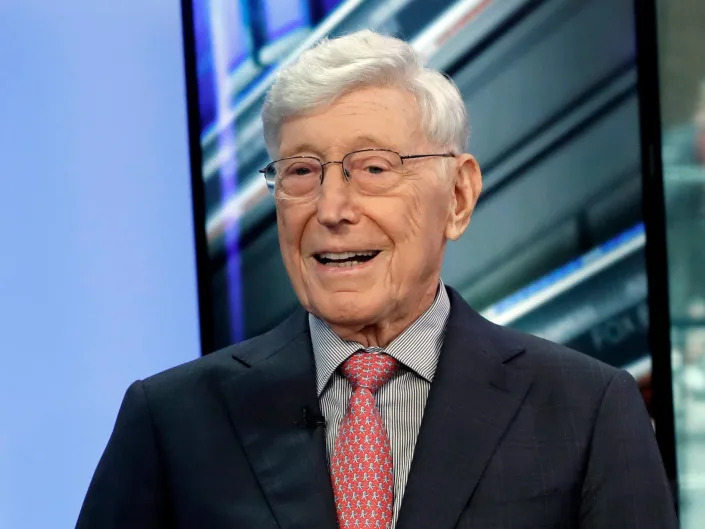
Bernie Marcus, the billionaire cofounder of Home Depot, said Thursday “nobody works” anymore.
Marcus said he believed if he founded Home Depot today it wouldn’t be as successful.
Marcus donated millions to Trump in 2016 and 2020, and more to other Republicans over the years.
A billionaire cofounder of Home Depot who said “nobody works” has donated nearly $64 million to political causes over the years, including the campaigns of former President Donald Trump, Florida Gov. Ron DeSantis, and Sen. John McCain, according to data from the Federal Election Commission.
“‘Just give it to me. Send me money. I don’t want to work — I’m too lazy, I’m too fat, I’m too stupid,'” he said, adding that he thinks if he founded Home Depot today it may not have been as successful.
Home Depot today is worth $321 billion and has around 2,300 stores in North America. As for the current US unemployment rate, it’s at 3.7%, the lowest in decades, despite the hiring challenges some businesses are still experiencing.
Marcus, who cofounded Home Depot in 1978, has become a mega-donor to the GOP over the years, supporting Trump’s presidential campaigns in both 2016 and 2020. His public support for Trump sparked calls to boycott Home Depot, prompting the company to distance from him.
In a statement provided to Insider, a spokesperson for Home Depot said: “Our co-founder Bernie Marcus left The Home Depot more than 20 years ago, and his views do not represent the company.”
But going back to at least 1978, Marcus has donated a total of $63,801,322 to political campaigns and PACs, FEC data obtained by Insider showed.
Many of the donations went to directly supporting Republican candidates, including the presidential campaigns of Trump, McCain, Sen. Marco Rubio, Jeb Bush, and Sen. Mitt Romney, among others.
Some of Marcus’s largest individual donations have gone to conservative super PACS that directly supported Trump.
In 2020, he made two separate donations of $5 million each to the Preserve America PAC, a single-candidate PAC that supports Trump.
In 2016, Marcus made two donations, one for $3 million and one for $2 million, to Rebuilding America Now, a super PAC established to support Trump’s first campaign. He also gave another $2 million to Making America Number 1, a pro-Trump PAC.
Between 2015 and 2022, Marcus donated more than $15 million to the Senate Leadership Fund, a PAC dedicated to helping Republicans gain a majority in the Senate, and more than $5 million to the Congressional Leadership Fund.
Marcus has also donated extensively to House and Senate races, contributing to a long list of Republican lawmakers that includes Sens. Tom Cotton, Mike Lee, Chuck Grassley, Mitch McConnell, and Tim Scott, as well as Reps. Kevin McCarthy and Liz Cheney.
Marcus in 2022 also donated to Herschel Walker, the failed Senate candidate from Georgia, and Sen. Joe Manchin, the West Virginia Democrat who has been accused of impeding his own party’s agenda.
Marcus and his wife, Billi, have also pledged to give away most of their estimated $8.9 billion fortune. In 2010, they signed The Giving Pledge, a commitment to donate most of their wealth to charitable causes.
Trump’s tax returns released after long fight with Congress
Michael R. Sisak and Jill Colvin – December 29, 2022
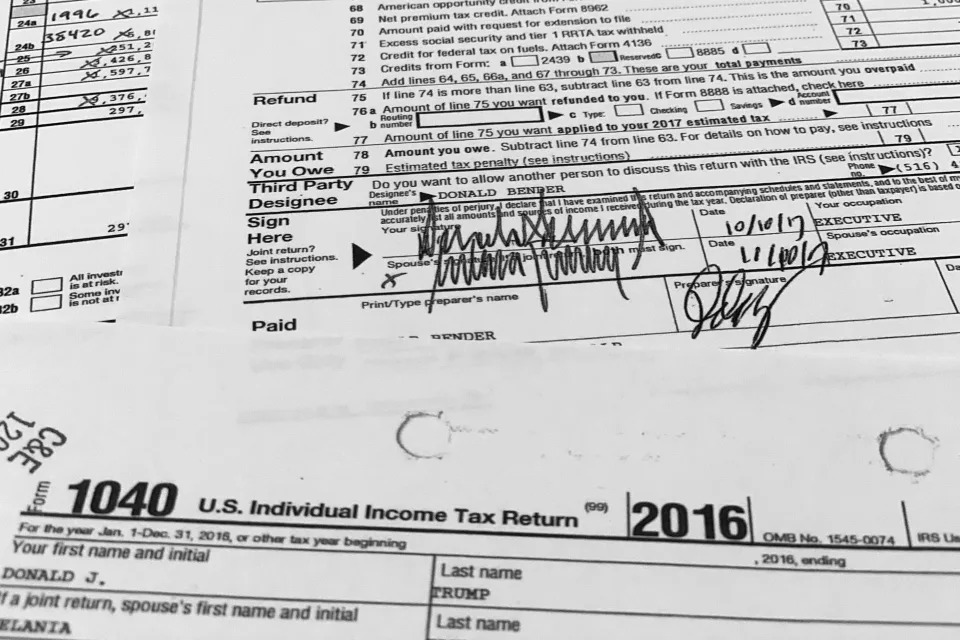
Signatures of former President Donald Trump and former first lady Melania Trump appear on their individual tax returns for 2016, released by the Democratic controlled House Ways and Means Committee, are photographed Friday, Dec. 30, 2022. The returns, which include redactions of some personal sensitive information such as Social Security and bank account numbers, span nearly 6,000 pages, including more than 2,700 pages of individual returns, and more than 3,000 pages in returns for Trump’s business entities. (AP Photo/Jon Elswick) ASSOCIATED PRESS
Democrats in Congress released thousands of pages of former President Donald Trump’s tax returns Friday, providing the most detailed picture to date of his finances over a six-year period, including his time in the White House, when he fought to keep the information private in a break with decades of precedent.
The documents include individual returns from Trump and his wife, Melania, along with Trump’s business entities from 2015-2020. They show how Trump used the tax code to lower his tax obligation and reveal details about foreign accounts, charitable contributions and the performance of some of his highest-profile business ventures, which had largely remained shielded from public scrutiny.
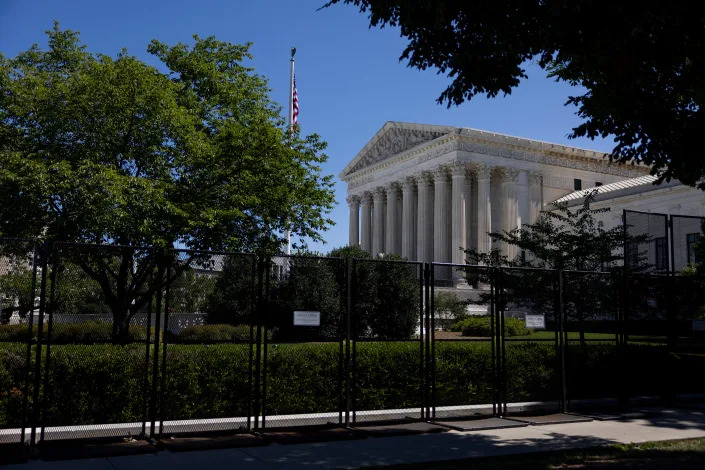
The disclosure marks the culmination of a yearslong legal fight that has played out everywhere from the presidential campaign to Congress and the Supreme Court as Trump persistently rejected efforts to share details about his financial history — counter to the practice of transparency followed by all his predecessors in the post-Watergate era. The records release comes just days before Republicans retake control of the House and weeks after Trump began another campaign for the White House.
The records show how Trump limited his tax liability by offsetting his income against corporate losses as well as millions of dollars in businesses expenses, asset depreciation and other deductions.
While Trump paid $641,931 in federal income taxes in 2015, the year he began his campaign for president, he paid just $750 in 2016 and 2017, according to a report released last week by Congress’ nonpartisan Joint Committee on Taxation. He paid nearly $1 million in 2018, but only $133,445 in 2019 and nothing in 2020, the year he unsuccessfully sought reelection.
The records also detail Trump’s foreign holdings.
Trump, according to the filings, reported having bank accounts in China, Ireland and the United Kingdom in 2015 through 2017, even as he was commander in chief. Starting in 2018, however, he only reported an account in the U.K. The returns also show that Trump claimed foreign tax credits for taxes he paid on various business ventures around the world, including licensing arrangements for use of his name on development projects and his golf courses in Scotland and Ireland. In 2018, according to Joint Committee on Taxation figures, Trump paid more in foreign taxes than he did net federal income.
The documents show that Trump’s charitable donations fluctuated during his presidency but, in his final years, represented only a sliver of his income. In 2020, the year the coronavirus ravaged the economy, Trump reported no charitable donations at all. In 2019 and 2018 he reported writing checks for about $500,000 in donations. In earlier years the numbers were higher — $1.8 million in 2017 and $1.1 million in 2016.
It’s unclear whether the reported sums included Trump’s $400,000 annual presidential salary, which he had said he would forgo and claimed he donated to various federal departments.
The release marks the latest setback for Trump, who has been mired in investigations, including federal and state inquiries into his efforts to overturn the 2020 election. The Department of Justice also has been investigating reams of classified documents found at his Mar-a-Lago club and possible efforts to obstruct the investigation.
In a statement Friday, Trump lashed out at Democrats and the Supreme Court for the release.
“It’s going to lead to horrible things for so many people,” he said. “The radical, left Democrats have weaponized everything, but remember, that is a dangerous two-way street!”
He said the returns demonstrated “how proudly successful I have been and how I have been able to use depreciation and various other tax deductions” to build his businesses.
Presiding over a routine pro forma session of the House on Friday, Rep. Don Beyer, chairman of the Joint Economic Committee, said great care had been taken to ensure the returns were treated with sensitivity, with personal and other identifying information redacted.
“We’ve been trying to be very careful to make sure that we weren’t ‘weaponizing’ the IRS returns,” said Beyer, D-Va. He also is a member of the tax-writing House Ways and Means Committee, which held a party line vote last week to make the returns public.
The returns detail how Trump used tax law to minimize his liability, including carrying forward massive losses from previous years, as allowed by tax law. Trump said during his 2016 campaign that paying little or no income tax in some years “makes me smart.”
His tax returns show he did that by structuring his company as a massive sole proprietorship, with nearly every dollar, pound, euro and yuan passing through his golf courses, hotels and other assets affecting — and in many cases helping — his own bottom line.
For instance, in 2020, more than 150 of Trump’s business entities listed negative qualified business income, which the IRS defines as “the net amount of qualified items of income, gain, deduction and loss from any qualified trade or business.” In total for that tax year, combined with nearly $9 million in carryforward loss from previous years, Trump’s qualified losses amounted to more than $58 million for the final year of his term in office.
Another of Trump’s money losers: the ice rink his company operated until last year in New York City’s Central Park. Trump reported a total of $2.6 million in losses from Wollman Rink over the six years made public. The rink, an early Trump Organization jewel run through a contract with New York City’s government, reported a loss of $1.3 million in 2015 despite taking in $9.3 million in revenue, according to the tax returns. The rink turned a $298,000 profit in 2016, but was back to melting cash in each of the next four years.
Aspects of Trump’s finances had been shrouded in mystery since his days as an up-and-coming Manhattan real estate developer in the 1980s.
Trump, known for building skyscrapers and hosting a reality TV show before winning the White House, did provide limited details about his holdings and income on mandatory disclosure forms and financial statements he provides to banks to secure loans and to financial magazines to justify his place on rankings of the world’s billionaires.
Trump’s longtime accounting firm has since disavowed the statements, and New York Attorney General Letitia James has filed a lawsuit alleging Trump and his Trump Organization fraudulently inflated asset values on the statements. Trump and his company have denied wrongdoing.
In October 2018, The New York Times published a Pulitzer Prize-winning series based on leaked tax records that contradicted the image Trump had tried to sell of himself as a self-made businessman. It showed that Trump received a modern-day equivalent of at least $413 million from his father’s real estate holdings, with much of that money coming from what the Times called “tax dodges” in the 1990s.
A second series in 2020 showed that Trump paid no income taxes at all in 10 of the previous 15 years because he generally lost more money than he made.
The IRS only began to audit Trump’s 2016 tax filings on April 3, 2019 — more than two years into his presidency — when the Ways and Means chairman, Rep. Richard Neal, D-Mass., asked the agency for information related to the tax returns.
Every president and major-party candidate since Richard Nixon has voluntarily made at least summaries of their tax information available to the public. Trump bucked that trend as a candidate and as president, repeatedly asserting that his taxes were “under audit” and couldn’t be released.
Associated Press writers Paul Wiseman and Farnoush Amiri in Washington, Meg Kinnard in Columbia, South Carolina, and Nicholas Riccardi in Denver contributed to this report.
What about my right to live without violence? Supreme Court decisions on guns harm survivors.
Richard Alba – December 27, 2022
I have lived since the age of 2 with the damage inflicted by a gun death.
My father was killed while serving in the U.S. military in late 1945 by another soldier test firing his souvenir Luger in a barracks. I can still feel the powerful reverberations of that shot. It immediately threw the life of what remained of my family onto a much more difficult trajectory – less upwardly mobile, much less happy – than it had been on before.
My mother, though she remarried for a time and bore additional children, never knew sustained contentment and took her own life at the age of 60, three decades later. I struggled through an emotionally fraught childhood into a prickly young adulthood. Only years of psychological therapy and finally finding love in my 30s made it possible for me to break with my anger and melancholy.
The 1939 wedding photo of Richard and Mary Alba. Sgt. Alba died in 1945. He was shot by a soldier test firing a gun in the barracks.
This personal background gives me an unusually intense interest in the current rash of American mass shootings and its relation to our Constitution, as interpreted by a conservative Supreme Court. According to the Gun Violence Archive, there were 609 mass shootings (those with four or more victims) by Thanksgiving this year, though last year’s record of 690 looks safe.
There’s a simple explanation for this level of violence: The American rate of gun ownership is exceptional because of the Second Amendment. That part of the Bill of Rights has made it difficult for government to limit gun ownership and even now to restrict concealed arms in public places.
Right to guns vs. right to live free of gun violence
Recent Supreme Court decisions have torqued that difficulty. The District of Columbia v. Heller decision of 2008 established for the first time an individual right to gun ownership and invalidated a widespread previous understanding that the Second Amendment referred to a collective “right of the people,” organized in a “well regulated Militia.”
Justice Antonin Scalia’s majority opinion offers a tutorial on the conservative doctrine of originalism, as he strove to demonstrate the general acceptance in the 18th and 19th centuries of the principle that guns are necessary for individual self-defense.
But there is a glaring lack of balance in the opinion because Scalia, while admitting limits on Second Amendment rights in the abstract, provides no systematic reasoning or principles that might help us establish where the individual’s right to gun ownership ends and the right of the community to live without the constant threat of gun violence begins.
Recent Supreme Court decisions have hampered government efforts to limit gun ownership and restrict concealed arms in public places.
It then opines, “The exercise of other constitutional rights does not require individuals to demonstrate to government officers some special need (as the New York law did).” Ergo, Second Amendment rights should not require it, either.
One would hope that the average law student could spot the flaw in this reasoning: For when the right of speech is abused, an injured party can seek redress in the courts. But what redress is open to the person shot dead or grievously wounded by a gunman?
This distinction makes evident why government and the public have compelling interests in the exercise of Second Amendment rights that they do not for other rights.
It matters that guns are more deadly
Gun rights pose a severe test for the idea of originalism because of the enormous technological advance of weapons since the 18th century. Today’s semi-automatic firearms bear almost no resemblance to the muskets and rifles of the 18th century, which had to be reloaded after a single shot. Can originalism logically justify the right to own a weapon that could not be conceived when the Constitution was written?
In a recent speech, Justice Samuel Alito declared that the court’s decision extending the anti-discrimination provision in civil rights legislation to sexual orientation and gender was wrongly decided. His originalist reasoning: “It is inconceivable that either Congress or voters in 1964 understood discrimination because of sex to mean discrimination because of sexual orientation, much less gender identity.”
It seems highly doubtful that the Second Amendment as now understood can survive the Alito test. Can anyone seriously maintain that the Founders, whose knowledge of guns was limited to single-shot weapons, would have sanctioned constitutionally the widespread keeping and bearing of modern arms of war, which can tear the human body apart in seconds? Can anyone really believe that they would have intended such sanction for these weapons if given the knowledge that they are being used regularly to massacre American schoolchildren?
When is a society civilized?
The damage of gun violence is a spreading blight on American society. It affects not only the victims themselves but also their survivors, who must live with emotional loss and psychic trauma indefinitely.
In refusing to consider how to balance the Second Amendment’s right to gun ownership with the right of other citizens to live without the constant threat posed by ubiquitous weaponry, the court is contributing to the deterioration of the United States as a civilized society.
In common understanding, a society is civilized when citizens can go unarmed about their daily business without fear of violence. Today, pedestrians in many parts of the United States have to fear that the person walking by may be armed, and that the police can do nothing to protect them until he or she pulls out the weapon and starts shooting.
And then it is too late, as so many recent mass shootings instruct us.
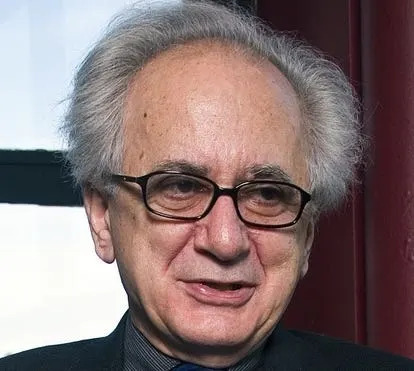
Richard Alba is a distinguished professor of sociology at The Graduate Center at the City University of New York.
Richard Alba is a distinguished professor of sociology emeritus at The Graduate Center, CUNY.
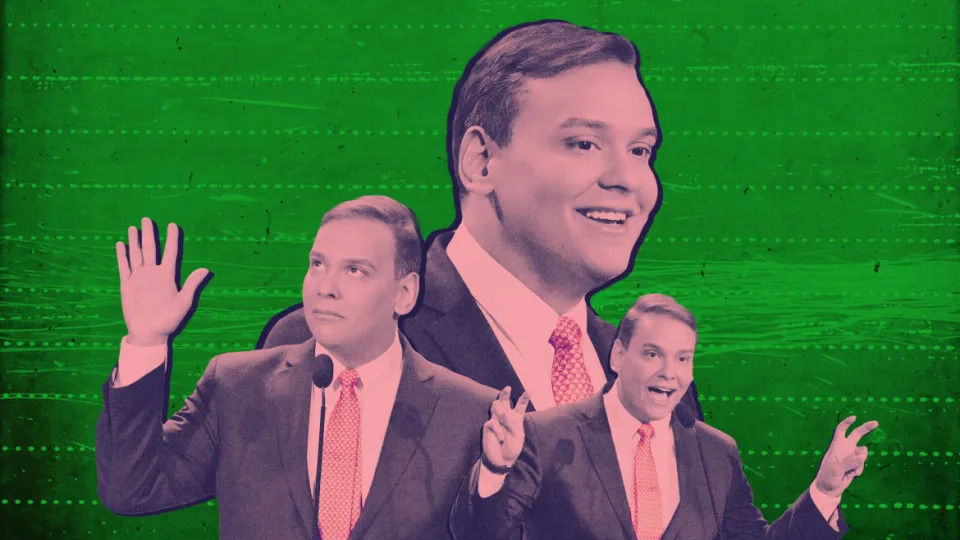
George Santos deleted his campaign biography and blamed ‘elitist’ New York Times for his lies about his employment history
Bryan Metzger – December 27, 2022
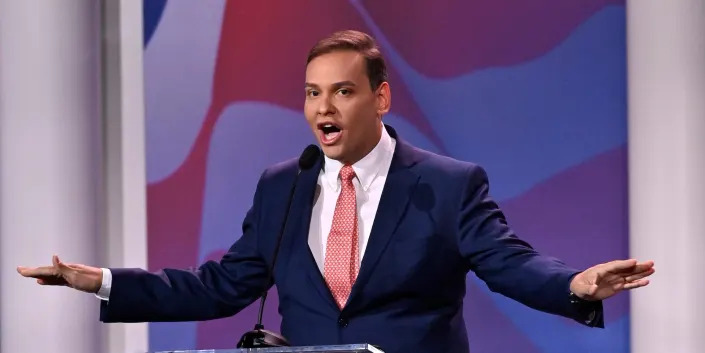
Rep-elect George Santos removed his biography from his campaign website on Tuesday.David Becker/Washington Post via Getty Images
GOP Rep-elect George Santos admitted he fabricated much of his background before he was elected.
On Tuesday, he removed his biography from his campaign website.
In one interview, he blamed the “elitist” New York Times for his lies about his employment history.
As he faced numerous questions over a series of apparent falsehoods in his resume last week, Republican Rep-elect George Santos said he had a “story to tell and it will be told next week.”
On Monday, he began to do just that via a series of largely friendly interviews — and admitted that whole sections of his biography were fake.
The biography included the lie that he had graduated from Baruch College and that his grandparents had “fled Jewish persecution in Ukraine.” The Forward found that his grandparents were born in Brazil.
In an interview with the New York Post on Monday, he came clean about lying about his employment and education history, as well as the fact that he isn’t Jewish.
“I never claimed to be Jewish,” he told The Post. “I am Catholic. Because I learned my maternal family had a Jewish background I said I was ‘Jew-ish.'”
“I worked as a customer service agent for six, seven months of my life or so — eight, maybe, in some — at some point in 2011, 2012,” he said. “The moment I put that on a resume, and I put it out there, elitists like the New York Times like to call blue-collar jobs like that ‘odd jobs.’ “
Santos was apparently referencing a story from the Times that noted that the congressman-elect worked at a Dish Network call center around the same time he purportedly worked on Wall Street.
“It’s those expectations, and those negative connotations, from elitist organizations, such as the New York Times that lead people — like me,” he said before abruptly changing course mid-sentence, saying he was “very comfortable in saying, I come from poverty, I come from a family of absolute nothing.”
“The reality is, yes, I omitted, like, past employment history that was irrelevant to the role,” he added.https://www.youtube.com/embed/E20WpTB4ZgA
During his interview with City & State NY, Santos also addressed his prior marriage to a woman; Santos is the first non-incumbent gay Republican ever elected to Congress.
He said he initiated a divorce after deciding to come out as gay.
“At least I had the courage to do it,” he said. “So many people… live in denial for their entire life, or are frustrated, and then eventually become a trans woman in their 60s.”
Santos Blames ‘Bourgeois’ Media for Pointing Out His Many, Many Campaign Lies
Nikki McCann Ramirez – December 27, 2022
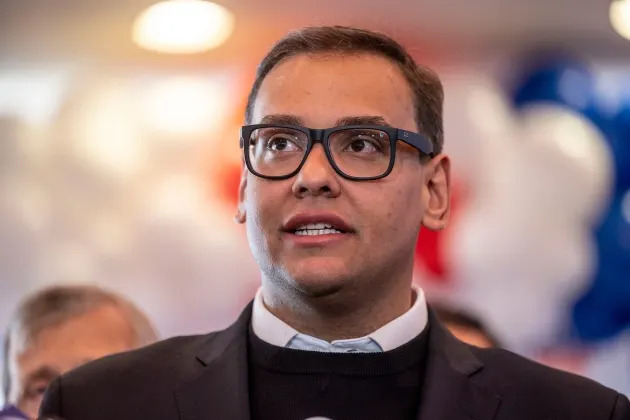
george-santos-admission.jpg U.S. Congressman-elect George Santos – Credit: Alejandra Villa Loarca/Newsday RM/Getty Images
“Did I embellish my resume? Yes I did. And I’m sorry … but I’m still the same guy, I’m not a fraud.”
New York congressman-elect George Santos admitted on Monday to having engaged in “résumé embellishment” and lying about his education and work history. Santos has been embroiled in controversy following a New York Timesreport that raised discrepancies in the incoming congressman’s background. In various interviews responding to the controversy, Santos has now admitted to misrepresenting his job history, lying about his educational background, and exaggerating his financial position.
Despite repeatedly apologizing for misleading the public, Santos still attempted to deflect blame for his lies onto other entities. Santos pointed the finger at elitism in the media as the motivation behind the exaggeration of his credentials. “I worked as a customer service agent for 6-7 months of my life…elitists like the New York Times like to call blue-collar jobs like that ‘odd jobs’ because it just doesn’t fit their bourgeois-style lifestyle.”
And that, Santos says, is what’s to blame for him making a litany of false statements to voters while seeking office. “It’s those expectations and those connotations from elitist organizations such as the New York Times that lead people like me” to embellish their history.
The investigation by the Times was unable to verify claims by Santos regarding his self-reported work for major financial groups Goldman Sachs and Citigroup, as well as his assertion that he had graduated from Baruch College in New York and New York University. In an interview with the New York Post, Santos admitted that he had “never worked directly” with Goldman Sachs or Citigroup. He explained that a financial firm he had worked for, Link Bridge, had done work with the companies and blamed the discrepancy on his “poor choice of words.” “If I was trying to really defraud the people, like everybody keeps saying, I could have just listed bigger — just as big names,” Santos said in an interview with City & State New York.
“I didn’t graduate from any institution of higher learning,” Santos admitted to the Post. “ I’m embarrassed and sorry for having embellished my resume,” he stated. “I own up to that … We do stupid things in life.”
Santos further denied accusations that he had lied about having Jewish heritage, telling the Post that he “never claimed to be Jewish.” “I am Catholic,” Santos said, “because I learned my maternal family had a Jewish background I said I was ‘Jew-ish.’” Santos had previously claimed that his grandparents were Holocaust survivors who escaped persecution in WWII.
Regarding questions on discrepancies in his finances, Santos admitted to little besides a history of bad tenancy and never actually having owned property. Addressing claims that he owned more than 13 properties to City & State Santos said he “never claimed to” have owned property himself. “No I do not own property,” he said, “I’ve never purchased property under my name.” Santos clarified that while his family members owned various properties he helped manage, none outright belonged to him.
The revelations have prompted calls from Democrats for Santos’ resignation, including accusations from his future colleagues that Santos “[defrauded] the voters of Long Island about his ENTIRE resume.” However, the incoming congressman plans to see his term through. ”I will be sworn in. I will take office.” Santos told New York’s WABC.
Column: Closing out 2022, Trump has supplanted Nixon as the saddest figure in post-presidential politics
Jonah Goldberg – December 27, 2022
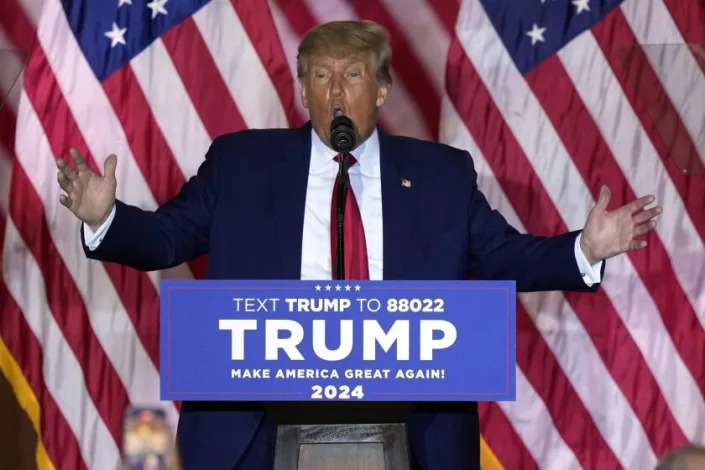
Former President Trump announces a third run for president on Nov. 15 at Mar-a-Lago in Palm Beach, Fla. (Rebecca Blackwell / Associated Press)
“The tapes are the real man — mean, vindictive, panicky, striking first in anticipation of being struck, trying to lift his own friable self-esteem by shoving others down,” Gary Wills wrote of Richard Nixon in the 2017 preface to his book, “Nixon Agonistes.” Wills added, perhaps unfairly, that “Nixon’s real tragedy is that he never had the stature to be a tragic hero. He is the stuff of sad (almost heartbreaking) comedy.”
The passage comes to mind as we close out Donald Trump’s annus horribilis, during which he supplanted Nixon as the saddest figure in post-presidential politics. The Jan. 6 committee, despite its flaws, succeeded in establishing a damning official record (largely told by his own aides) of his attempt to steal the presidency. A special prosecutor is on his case(s). His tax returns are out for all to see.
A week after a disastrous midterm election for his party and his power, he announced he’s running for president again. The party and public shrugged.
Then, he teased a “major announcement” which turned out to be a line of digital trading cards, some of which appear to be little more than Photoshopped images from Google searches with his face pasted on. What Trump described as “amazing ART of my Life & Career!” show him as, among other things, an astronaut, a sheriff and a superhero with laser beams shooting out of his eyes (causing even Russian state TV to snicker).
I can report that Trump was neither an astronaut nor sheriff. If he had heat vision, Mike Pence would now be a pile of ash.
The contrast with Nixon’s post-presidency is poignant. Nixon in exile wrote 10 books, all quite serious, including his memoirs. He clawed back a reputation as a wise man who dispensed advicetopresidents.
But that’s not the poignant part. Nixon was surrounded with a loving family, lifelong friends and loyal aides who gave him the sort of succor that politics couldn’t. His first — and only — wife was the love of his life. Long after Nixon’s death, they cherished his memory. Nixon in exile still enjoyed the respect not just of his friends but of his enemies.
The famouslyfriendless Trump has admitted that he never had much use for real friends. Trump prefers to be surrounded by people who will tell him what he wants to hear, and what he wants to hear is: You’re awesome. Reportedly, this is why he hit it off so well with a neo-Nazi toady who heaped praise on him at that now notorious dinner with the artist formerly known as Kanye West.
This is what makes Trump such a pathetic figure. Wills titled his book “Nixon Agonistes” — a reference to the Milton poem “Samson Agonistes” — because Nixon was a man of struggle, both internal and external, hungry for respect.
Trump isn’t merely hungry for respect; he’s, as the kids say, “thirsty” for respect — respect for his strength, his “very stable genius,” his masculinity and, of course, his money. When Trump read a 2015 column of mine in the New York Post mocking his potential run, he turned to his aide Sam Nunberg and muttered, “Why don’t they respect me, Sam?”
Of course, there are people who respect Trump, but most of them aren’t friends, they’re fans, the sorts of people who don’t get the joke of his trading cards. In 2016, he told a New Hampshire audience: “I have no friends, as far as I’m concerned,” he said. “You know who my friends are? You’re my friends.”
Fans are generally the last people to tell you hard truths. Worse for Trump: His definition of fans are people who think he can do no wrong.
The key difference is that Nixon’s hunger for respect was tempered by a reciprocal respect, admittedly flawed, for the presidency, his party, the country and for those closest to him. Nixon spared them all the ordeal of impeachment; Trump was impeached twice, then ran again, lost, and then tried to steal the presidency. He recently called for the suspension of the Constitution to reinstall him, because no impediment to his self-glorification deserves respect.
Nixon’s struggle was complicated because he was complicated. Trump’s struggle is simple because he is simple: All he is is appetite — for fame, power, sex, admiration — shorn of any interior life and unencumbered by exterior attachments.
Wills may have been right that the secret tapes displayed the “real” Nixon. We don’t need secret tapes to know Trump, because the real Trump is always on display for those with eyes to see him. And, finally, the sight is becoming wearying, even for his fans.
Older and unappreciated: Workers over 50 face a rough time on the job
Katrin Park – December 26, 2022
Forget the Great Resignation. The shakeup of Generation Z workers, seeking fulfillment and treating their jobs like a game of musical chairs, will sort itself out over time. They have their whole lives ahead of them to find something that fits.
The larger crisis is what to do with all the older-than-50 workers searching for gainful employment. This is one of the worst times to be a worker in the twilight of a career. Only half of Americans are steadily employed throughout their 50s. Last year, more than a quarter of workers ages 55 to 59 were out of the workforce, which meant that they didn’t have jobs to retire from.
Across the globe, full-time, stable employment that culminated in pensions has become a relic of the pre-pandemic past. In the United States, an increasing number of workers can’t afford to retire, not with inflation and uncertain retirement savings. Now, a worker must wait to age 70 to collect maximum Social Security benefits, and Congress is expected to discuss raising the age for Social Security eligibility next year.
Multiple factors create challenges for older workers
The disappearance of stable employment with a living wage and benefits – once the driver of upward mobility – has added to growing inequality. Global crises like COVID-19, changing business models and emerging technologies have led to the rise of low-quality, temporary jobs.
If workers have physically demanding jobs such as in retail or hospitality, poor health can force them to drop out. Many workers in their 50s also have caregiving responsibilities for older generations, which temporary gigs don’t accommodate. And of course there’s ageism.
A Brookings Institution report found a strong relationship between holding steady employment in one’s 50s and working in their 60s and beyond. So interventions to support older workers must start earlier on, even in one’s 40s. This can be done by improving the quality of low-wage jobs – including through higher minimum wages, greater work schedule flexibility and paid leave – to reduce turnover. That will help people work longer.
Likewise for firms, this is an opportunity to avoid productivity losses in the long run by maintaining a stable workforce. Firms that rely on disproportionately large numbers of hourly workers tend to have higher turnover rates. They are also less likely to invest in employee training and technologies.
Assisting older workers with developing skills that are in demand can help them get jobs again and meet businesses’ needs.
Such efforts are vital to maintain Social Security benefits, projected to be cut by more than 20% come 2034 unless Congress and the president intervene. Without action, monthly benefits would shrink by hundreds of dollars on average, and anyone 55 or younger would never get a full benefit.
And yet, unemployment statistics tend to leave out 50-something workers who are forced into early retirement. That happens because they are not part of the prime-age workforce, and they haven’t yet reached the benchmark ages associated with retirement, according to Beth Truesdale, a sociologist and author of the Brookings paper. Labor force policy and retirement policy should be considered as one system but are not, and these workers fall through the gap.
It’s a gap that’ll only get wider and harder to fill with the passage of time.
Which is alarming, given that an aging population, not a growing one, is the ticking time bomb.
The global population has just hit the 8 billion milestone, with life expectancy soaring and fertility rates dropping. Across the world, people 75 and older are the fastest-growing group in the labor force. Today, 40 million Americans are 65 and older, a figure expected to double over the next 40 years.
Opinion alerts: Get columns from your favorite columnists + expert analysis on top issues, delivered straight to your device through the USA TODAY app. Don’t have the app? Download it for free from your app store.
Not preparing for this inescapable demographic shift will result in a shrinking workforce that struggles to support a ballooning number of “retirees.”
To be sure, improving the working conditions of low-wage jobs or training programs alone will not solve the myriad challenges older workers face. Age discrimination persists.
Katrin Park is a freelance writer and a former director of communications with the International Food Policy Research Institute.
Unfortunately, among the more than 40 million Americans 50 and older in the labor force, according to a 2018 analysis by ProPublica and the Urban Institute, half of them are likely to be laid off or forced into retirement regardless of income, education level or geography.
Without stronger legal protection for older workers and changing business models so they value work experience as a competitive advantage necessary for greater productivity, older workers will face fewer opportunities, resulting in higher rates of poverty in old age.
The disappearance of 50-something workers should factor more prominently in future of work debates. Even if all the quirks of Gen Z work habits were resolved tomorrow, a massive demographic work crisis still looms.
This editorial is the sixth in a series, “The Danger Within,” urging readers to understand the danger of extremist violence and possible solutions. Read more about the series in a note from Kathleen Kingsbury, the Times Opinion editor.
Whoever shot the small steel ball through the front window of the Brewmaster’s Taproom in Renton, Wash., this month wasn’t taking chances. The person wore a mask and removed the front and rear license plates of a silver Chevrolet Cruze. The police still have no leads.
The bar’s owner, Marley Rall, thought the motivation seemed clear: The attack followed social media posts from conservatives angry about the bar’s Drag Queen Storytime and Bingo, slated for the following weekend.
The Taproom sits in a two-story office park a 15-minute drive from downtown Seattle. It has a little outside patio and about two dozen local craft beers on tap. Dogs are welcome. A sign on the door reads: “I don’t drink beer with racists. #blacklivesmatter.” Now there’s also a note with an arrow pointing to the hole in the window reading: “What intolerance looks like.”
Over the past two years, criticism of the bar’s long-running monthly Drag Queen Storytime had been limited to nasty voice mail messages and emails. But talk on right-wing message boards has turned much darker, Ms. Rall said. One post this month about the Taproom event read: “Drag Queen Storytime Protest. STOP Grooming Kids! Bring signs, bullhorns, noisemakers.”
Ms. Rall knew how protests like this could escalate. There was an incident in 2019 at a library drag queen story hour about 10 minutes from the bar, where members of the Proud Boys and other paramilitary groups got into a shouting match with supporters of the event.
Was the shot at the Taproom a warning? She had no way to know, so she kept the event on the calendar.
Sitting in a corner of the Taproom a few hours before her story time was set to begin, Sylvia O’Stayformore said she didn’t care if the Proud Boys showed up to an event that was aimed at teaching children empathy. Protesters or not, she had a show to put on. “I’d never be intimidated by all this,” she said.
On Monday, protesters vandalized the home of a gay New York City councilor with homophobic graffiti and attacked one of his neighbors in protest of drag queen story hours held at libraries.
The protests use the language of right-wing media, where demonizing gay and transgender people is profitable and popular. Tucker Carlson, a Fox News host who rails against transgender people and the medical facilities that serve them, has the highest-rated prime-time cable news program in the country. Twitter personalities with millions of followers flag drag events and spread anti-trans rhetoric that can result in in-person demonstrations or threats. Facebook pages of activist groups can mobilize demonstrators with ease.
Some Republican lawmakers are using the power of the state in service of the same cause. Several states are trying to restrict or ban public drag shows altogether, amid a record number of anti-L.G.B.T.Q. bills introduced this year. Republican politicians also used a barrage of lies about trans people in their campaign ads during the midterm elections, funded to the tune of at least $50 million, according to a report released in October from the Human Rights Campaign Foundation.
This campaign isn’t happening in a vacuum. Levels of political violence are on the rise across the country, and while some of it comes from the left, a majority comes from the right, where violent rhetoric that spurs actual violence is routine and escalating. At anti-L.G.B.T.Q. events, sign-waving protesters are increasingly joined by members of the street-fighting Proud Boys and other right-wing paramilitary groups. Their presence increases the risk of such encounters turning violent.
In a series of editorials, this board has argued for a concerted national effort against political violence. It would require cracking down on paramilitary groups, tracking extremists in law enforcement, creating a healthier culture around guns and urging the Republican Party to push fringe ideas to the fringes. Every American citizen has a part to play, and the most important thing we all can do is to demand that in every community, we treat our neighbors — and their civil liberties and human rights — with respect.
One way to do that is to call out and reject the dehumanizing language that has become so pervasive in online discussions, and in real life, about particular groups of people. Calling L.G.B.T.Q. people pedophiles is an old tactic, and it makes ignoring or excusing any violence that may come their way easier. While direct calls for violence are beyond the pale for most Republican politicians, and the causes of specific violent acts are not easily traced, calling transgender people pedophiles or “groomers” is increasingly common and usually goes unchallenged.
Marco Rubio, a Republican senator from Florida, released a TV ad recently in which he said: “The radical left will destroy America if we don’t stop them. They indoctrinate children and try to turn boys into girls.” A conservative activist group recently ran ads in several states, including one that said, “Transgenderism is killing kids.” This year, as Florida lawmakers debated the so-called Don’t Say Gay bill, a spokeswoman for Gov. Ron DeSantis of Florida posted on Twitter: “If you’re against the Anti-Grooming Bill, you are probably a groomer or at least you don’t denounce the grooming of 4-8 year old children. Silence is complicity.”
The silence from a great majority of Republicans on the demonization of, and lies about, trans people has indeed meant complicity — complicity in what experts call stochastic terrorism, in which vicious rhetoric increases the likelihood of random violence against the people who are the subject of the abusive language and threats.
Drag queen story hours aren’t the only current target for right-wing extremists. On Aug. 30, an operator at Boston Children’s Hospital, a pioneer in providing gender-affirming care, answered the telephone at about 7:45 p.m. and received a disturbing threat. “There is a bomb on the way to the hospital,” the caller said. “You better evacuate everyone, you sickos.” It was the first of seven bomb threats the hospital received over several months. The most recent came on Dec. 14.
After extremists posted online the address of a physician who works with trans children at the hospital, the doctor had to flee the home. “These have been some of the hardest months of my life,” the doctor said.
Around the country, at least 24 hospitals or medical facilities in 21 states have been harassed or threatened in the wake of right-wing media attacks, according to a tally this month by the Human Rights Campaign Foundation. To protect their employees, some hospitals are stripping information about the transgender services they provide from their websites. The messages that appear to trigger these attacks are often outlandish lies about what care these medical facilities actually provide. As a result, many hospitals feel they have no choice but to protect their staff, even if it means making the care they provide less visible. Removal of official information creates a risk that more disinformation could fill the void.
Given the transnational nature of extremism, these threats can come from anywhere. The F.B.I. arrested three people in connection with the various threats against Boston doctors. One person lived in Massachusetts, another in Texas and the third in Canada.
Data collected by the Armed Conflict Location and Event Data Project, which tracks political violence, puts the harassment of hospitals into a wider, troubling context. Acts of political violence against the entire L.G.B.T.Q. community have more than tripled since 2021; anti-L.G.B.T.Q. demonstrations have more than doubled in the same period. And the nature of the intimidation is changing: Protesters dressed as civilians have been replaced by men in body armor and fatigues; signs have been replaced by semiautomatic rifles.
Even dictionary publishers have become targets. This year, a California man was arrested for threatening to shoot up and bomb the offices of Merriam-Webster because he was angry about its definitions related to gender identity.
GOP Sen. Mike Lee said that ‘Rudy is walking malpractice’ after Giuliani left him an accidental voicemail on January 6
Sonam Sheth – December 23, 2022
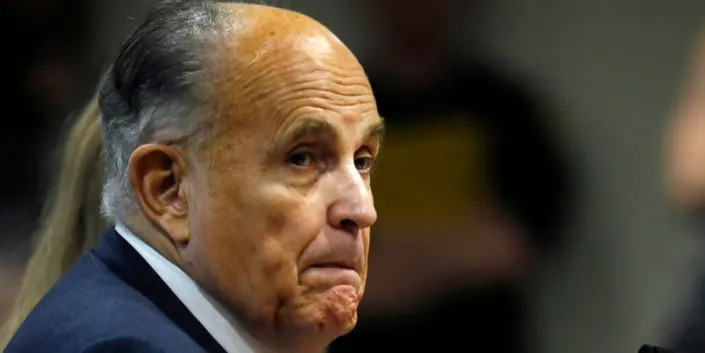
Former New York City mayor Rudy Giuliani.JEFF KOWALSKY/AFP via Getty Images
GOP Sen. Mike Lee described Rudy Giuliani as “walking malpractice” following the Capitol riot.
Lee texted then national security advisor Robert O’Brien after getting a voicemail from Giuliani that was intended for GOP Sen. Tommy Tuberville.
In the message, Giuliani urged Tuberville and “our Republican friends” to delay Congress’ certification of Biden’s victory.
Republican Sen. Mike Lee described former New York mayor Rudy Giuliani as “walking malpractice” in a late-night text to then national security advisor Robert O’Brien.
That’s according to the January 6 select committee, which released its full 845-page report on the deadly Capitol siege late Thursday.
“You can’t make this up. I just got this voice message [from] Rudy Giuliani, who apparently thought he was calling Senator Tuberville,” Lee’s text said. “You’ve got to listen to that message. Rudy is walking malpractice.”
GOP Sen. Tommy Tuberville of Alabama was one of several lawmakers Giuliani tried to contact before Congress resumed its joint session to certify Joe Biden’s victory following the Capitol riot.
“I’m calling you because I want to discuss with you how they’re trying to rush this hearing and how we need you, our Republican friends, to try to just slow it down so we can get these legislatures to get more information to you,” Giuliani said in the voicemail intended for Tuberville.
Lee’s text to O’Brien was buried in an endnote in Chapter 7 of the report, titled “187 Minutes of Dereliction.” He texted O’Brien at 10:55 p.m. ET on January 6, per the endnote.
It’s one of dozens of times Giuliani is mentioned in the committee’s report, which paints a damning portrait of how the former New York mayor and his cohorts relied on dubious and conspiratorial theories to try to nullify Joe Biden’s victory in the 2020 election and install Trump for a second presidential term.
Bill Stepien, Trump’s 2020 campaign manager, told the committee that he was so uncomfortable with Giuliani’s post-election antics that he locked Giuliani out of his office and instructed his assistant not to allow the former mayor to enter.
“I told her, don’t let anyone in,” Stepien testified. “You know, I’ll be around when I need to be around. You know, tell me what I need to know. Tell me what’s going on here, but, you know, you’re going to see less of me. And, you know, sure enough, you know, Mayor Giuliani tried to, you know, get in my office and ordered her to unlock the door, and she didn’t do that, you know.”
“Mayor Rudy Giuliani exposed and took down the mafia not just here in America, but also in Italy,” Ted Goodman, a communication and political advisor to Giuliani, told Insider in a statement. “He rooted out corruption in government, prosecuted some of the largest insider trading cases on Wall Street, and cleaned up the streets of New York. Partisan politics aside, he is unquestionably one of the greatest prosecutors in American history.”
Some of the claims Giuliani and his allies made were so outlandish that even Trump found them hard to believe.
For instance, the committee’s report describes one phone call, on November 20, 2020, between Trump and the GOP-linked lawyer Sidney Powell, who worked closely with Giuliani on election litigation.
Powell spouted baseless allegations of widespread voter fraud during the call, including one claim that the voting tech company Dominion Voting Systems had colluded with the Venezuelan dictator Hugo Chavez — who died in 2013 — to tilt the election in Biden’s favor.
According to testimony from Trump’s top communications aide Hope Hicks, the president muted himself while Powell was detailing these allegations during their call. Hicks testified that Trump laughed at Powell and told others in the room, “This does sound crazy, doesn’t it?”
Giuliani is currently facing possible disbarment as a Washington, DC, ethics panel reviews his efforts to overturn the 2020 election.
His “misconduct” after the election was “so serious that it should never be allowed to happen again,” disciplinary counsel Hamilton Fox said last week.
The DC Board of Professional Responsibility determined in a preliminary finding that Giuliani violated at least one ethics rule by filing a legal challenge in Pennsylvania seeking to throw out millions of votes in the state. The decision is not binding, and the hearing committee will consider alternative sanctions proposals before putting out a report with a final recommendation.
Giuliani vehemently defended himself throughout the proceedings, accusing the disciplinary counsel of engaging in a “personal attack” without presenting proper evidence. He also told Robert Bernius, the chairman of the panel overseeing the hearings, that Fox’s statements were an “outrage.”
Note: This story has been updated with a statement from Giuliani’s representative.
‘Openly Gay’ Rep.-Elect George Santos Didn’t Disclose Divorce With Woman
Roger Sollenberger – December 22, 2022
Photo Illustration by Thomas Levinson/The Daily Beast/Getty
Republican congressman-elect George Santos is under new scrutiny after a New York Times report earlier this week uncovered a string of apparent outright fabrications at the heart of some of the most fundamental facts of his life, but that backstory may also be notable for what Santos did not include—a publicly undisclosed marriage.
Santos, who claims he has “never experienced discrimination in the Republican Party,” broke barriers this year when he became the first openly gay non-incumbent GOP candidate elected to Congress.
But according to court records obtained by The Daily Beast, Santos appears to be the subject of a previously unacknowledged Sept. 2019 divorce with a woman in Queens County, New York. The divorce—which Santos has not discussed publicly—adds new uncertainty to his already shaky biographical and political claims.
“I am openly gay, have never had an issue with my sexual identity in the past decade, and I can tell you and assure you, I will always be an advocate for LGBTQ folks,” Santos told USA Today in October, responding to criticism about his support for Florida’s so-called “Don’t Say Gay Bill” signed into law this year by GOP Gov. Ron DeSantis.
Less than two weeks after his divorce was finalized, Santos filed the official paperwork to launch his 2020 campaign. And while his 2022 campaign bio mentions his husband, who according to Santos lives with him and their four dogs on Long Island, he’s kept this previous marriage out of the public eye entirely.
It’s entirely possible that Santos, who claims he has “never experienced discrimination in the Republican Party,” has been living comfortably as an openly gay man for, as he says, more than a decade. People get married for countless reasons. But Santos’ situation is curious because he never disclosed his divorce to voters, and never reconciled his prior marriage to a woman—which ended just 12 days before he established his first congressional campaign—with his claims of being an out and proud gay Republican.
Santos, 34, made his first bid for Congress in 2020, losing to Rep. Tom Suozzi (D-NY) before toppling Democratic opponent Robert Zimmerman this year. But following a New York Timesinvestigation that suggested Santos had fictionalized key elements of his resume, he’s already facing calls to resign, as well as a possible ethics investigation.
The colleges Santos says he attended don’t have a record of him; Citigroup and Goldman Sachs don’t either, though he claimed to work there; the IRS has no record of his nonprofit; he still faces “unresolved” legal trouble in Brazil; his past business ventures appear flimsy; and even his address was called into question.
In response to the Times report, Santos’ attorney Joseph Murray released a statement that, while stopping short of denying the accusations, painted his client as a victim, because he “represents the kind of progress that the Left is so threatened by—a gay, Latino, immigrant and Republican who won a Biden district in overwhelming fashion by showing everyday voters that there is a better option than the broken promises and failed policies of the Democratic Party.”
The Times story set off a rapid-fire round of criticism that extended not just to the congressman-elect, but to Democratic opposition researchers, Republican vetters, and media who had not called attention to the now-glaring holes in his story before the election.
While those details went largely unnoticed during the campaign, the Times investigation prompted reporters and internet sleuths around the country to dig deeper into Santos’ past—or what they could find of it.
It’s unclear why Santos has not disclosed his apparent marriage and divorce, but it doesn’t fit well with his current biography.
He has previously told U.S. and Brazilian media that he was engaged to a man, a fellow Brazilian whom Santos has identified as a pharmacist, and his campaign bio claims he lives on Long Island with his husband. (The Daily Beast could find no public record of the man’s work in that field, nor could we find a marriage record.)
But New York court records show that, in 2019, someone named George Devolder Santos, with a second initial of “A,” finalized an uncontested divorce with Uadla Santos Vieira Santos. Public records searches only reveal one person in the United States with that name.
Uadla Santos and George Santos did not reply to calls or questions sent via text message to numbers associated with them. (A deed for a $750,000 house purchase in Union County, New Jersey, this June lists Uadla Santos as the buyer, and says she is married; she is the only purchaser listed on the property documents.)
George Santos, whose middle name is Anthony, sometimes uses Devolder, his late mother’s maiden name. He incorporated it into his campaign—“Devolder Santos for Congress”—as well as his own supposed financial services company, the Devolder Organization.
Santos has shifted between different combinations of those four names over the years, sometimes embracing his father’s Santos surname, other times going by his mother’s Devolder.
Santos’ mother died in 2016, according to an online crowdfunding campaign Santos launched to raise money to cover “the costs of the wake.” The GoFundMe page lists “Anthony D Santos” as the beneficiary—and Anthony Devolver of Sunnyside, New York, as the organizer—and the fundraising campaign remains open.
Santos’ campaign bio page claims his mother was “the first female executive at a major financial institution,” though the specific institution is unnamed. The bio also says “George’s mother was in her office in the South Tower” on the morning of Sept. 11, 2001.
“She survived the horrific events of that day, but unfortunately passed away a few years later”—about 15 years later.
And on Wednesday, Jewish outlet The Forward added still more intrigue, suggesting Santos may also have been untruthful when he claimed during the campaign—including on his website—to have Jewish ancestry. The report led incoming House Minority Leader Hakeem Jeffries to declare his future colleague a “complete and utter fraud.”
But the divorce revelation, and the apparent secrecy around it, complicates a central piece of the image Santos has burnished as a dynamic and culturally revolutionary figure.
In an election season where many of his fellow conservatives spouted nonsensical allegations of pedophilia among Democrats, targeted benign drag brunches as epicenters for “grooming,” and inflamed a hateful anti-gay and anti-trans movement—as attacks on the LGBTQ community skyrocketed—Santos made history as the first non-incumbent gay Republican to ever be elected to Congress.
But after achieving that victory, and just two weeks before his barrier-breaking inauguration, Santos’ relationship with the truth is facing tests he somehow dodged for two campaigns.