Incoming Iowa attorney general Brenna Bird tells 19 staffers to resign

The Des Moines Register

Incoming Iowa attorney general Brenna Bird tells 19 staffers to resign

Jared Strong/Capital Dispatch – January 3, 2023

The incoming, newly elected Iowa attorney general has asked for the resignations of 19 current staffers, including many in leadership positions but also some longtime staff attorneys, according to Lynn Hicks, a spokesperson for the office who was among those asked to resign.

Brenna Bird, a Republican county attorney who defeated longtime Attorney General Tom Miller, a Democrat, in the November election, requested the resignations on Dec. 22, according to letters obtained by Iowa Capital Dispatch.

“We appreciate your past service to the State of Iowa,” wrote Sam Langholz, whom Bird has selected as her chief deputy when she takes control of the office next week. “But the people of Iowa have elected a new attorney general. To best serve them — and to do the things she told Iowans she would do — the Attorney General-Elect is realigning the office and building a new team that matches her vision for the office.”

Bird pledged during her election campaign to more vigorously defend laws enacted by the Republican-controlled Legislature and to challenge policies enacted by President Joe Biden, a Democrat.

Langholz, former senior counsel for Gov. Kim Reynolds, has worked for the attorney general’s office for about two years and has helped defend against challenges to the governor’s policies and administrative actions.

His letter to 19 of his colleagues asked that their resignations be effective at 8:30 a.m. Jan. 3, at the latest.

“We are timing this transition date and time so that you will receive holiday pay on January 2, regular pay for 30 minutes on January 3, and your normal health insurance coverage for the month of January,” Langholz wrote.

He said the notices of resignation were due on Dec. 28 — six days after the letters were sent.

Hicks, who is Miller’s chief of staff, is among at least 10 who have acquiesced to the requests or had already planned to resign, according to copies of the resignation letters and other information he provided to Capital Dispatch with the consent of the employees. He identified a total of 13 of those asked to resign.

The 19 employees represent less than 10% of the total staff, which has about 150 assistant attorneys general and more than 200 people total, according to state salary records.

Replacing top staffers is common when someone new is elected to a statewide executive position, especially when they are tied to a different political party. However, the letters also targeted attorneys more closely involved in litigating cases, several of whom have been with the office for more than two decades.

“It has been my great honor serving the people of the state of Iowa — particularly the most vulnerable amongst us including older Iowans, veterans, and other at-risk individuals — and am disappointed that I was asked to resign,” wrote Chantelle Smith, an assistant attorney general whose focus is elder abuse and who has been employed by the office since about 2000, according to state records.

Hicks said others who were asked to resign include:

  • Nathan Blake, the chief deputy attorney general.
  • Jessica Whitney, the deputy attorney general for public protection and the director of the office’s Consumer Protection Division.
  • Matt Gannon, the first assistant attorney general, who wrote in his resignation letter: “I wish you success. I have my doubts.”
  • Chandlor Collins, director of the Human Services Division.
  • Emily Willits, director of the Licensing and Administrative Law Division.
  • Sandi Tibbetts Murphydirector of the Crime Victim Assistance Division who wrote in her resignation letter: “It has been a singular honor to serve the people of Iowa, and specifically victims of crime, as part of this Division and I hope that its groundbreaking and pivotal work continues unabated.” Bird has said she might overhaul the division, given her experience prosecuting crimes and interacting with victims of those crimes.
  • Heather Adams, an assistant attorney general who specializes in licensing and administrative law and public health who had worked for the office since 1994. She told Capital Dispatch: “I do not know why I was asked to resign. I, too, was deeply disappointed to be asked to submit my resignation. I have faithfully served the office, the public, and my public health clients for nearly 30 years — in a nonpartisan manner.”
  • Mari Culver, an assistant attorney general who specializes in consumer protection. She is the spouse of former Iowa Gov. Chet Culver, a Democrat.
  • Ashlee Kieler, a communications specialist who had already submitted her resignation.
  • Ellen Ramsey-Kacena, an assistant attorney general who specializes in human services and family law.
  • Donn Stanley, an assistant attorney general who specializes in consumer protection. Stanley has worked for the office for about two decades and previously held leadership roles. He also took a leave of absence from the office to be campaign manager for Gov. Culver in 2010.
  • Sharon Wegner, an assistant attorney general in the Special Litigation Division.
Iowa Attorney General Brenna Bird, who took office Tuesday.

Langholz noted that Miller also installed his “own team” to lead the office after he was first elected in 1978, based on media accounts at the time, and that the number of requested resignations are less than 8% of the total staff. They are at-will employees and “can be terminated at any time and for any lawful reason,” Langholz said.

“To implement her vision for the office, the Attorney General-elect will build a new team that shares her goals and values,” according to a prepared statement Langholz provided. “The Attorney General-elect appreciates the service to Iowa from the individuals leaving the office.”

Outgoing NY House rep on George Santos: ‘I’m being succeeded by a con man’

The Hill

Outgoing NY House rep on George Santos: ‘I’m being succeeded by a con man’

Caroline Vakil – January 3, 2023

Rep. Thomas Suozzi (D), whose New York seat was won by Rep.-elect George Santos (R) in November, said in an op-ed published on Tuesday that he was being “succeeded by a con man” amid rising controversy about Santos’s credentials.

Suozzi, who currently represents New York’s 3rd Congressional District and will be leaving Congress after he forwent reelection to run for governor, wrote in an editorial for The New York Times that Santos “must be removed by Congress or by prosecutors, because there is no indication that he will be moved by conscience to voluntarily resign.”

“Sure, some candidates say and do anything to get into office and then abuse the public trust. In Mr. Santos, we have someone who abused the public trust even before he got into office; it’s mind-boggling to think what his actions and conversations will be like in Congress on behalf of his constituents,” Suozzi wrote in the Times. “I know from my experience as a mayor of my hometown, as a county executive and as a member of Congress that you cannot get things done without building trust with your colleagues. How can Mr. Santos be trusted? How could he be effective?”

House lawmakers have urged for an investigation into the New York Republican after reporting from the Times published last month noted inconsistencies about Santos’s claims about his personal and professional history, including graduating from Baruch College in New York and working for Goldman Sachs and Citigroup.

The Long Island Republican eventually admitted he had been guilty of “embellishing my resume” during an interview with the New York Post later in December, and a prosecutor in New York, who is a Republican, later announced she would be opening an investigation into Santos.

It’s unclear if Santos will resign, though many, including Suozzi, have called on him to step down. House GOP leadership has largely remained silent about the controversy given the slim Republican majority in the House and Santos’s expressed support for a Speakership vote for House Minority Leader Kevin McCarthy (R-Calif.).

For first time in decades Iowa has an all-Republican congressional delegation. Here’s what they want to do

The Des Moines Register

For first time in decades Iowa has an all-Republican congressional delegation. Here’s what they want to do

Katie Akin, Des Moines Register – January 3, 2023

When U.S. Rep-elect Zach Nunn swears into office on Tuesday, it mark the first time since the 1950s that Iowa’s D.C. delegation will be comprised of entirely Republicans.

It’s the result of a strong midterm election cycle for the Iowa GOP: Nunn won election to Iowa’s 3rd District seat in November, ousting two-term incumbent Democrat Cindy Axne. Republican incumbents won reelection to the state’s other three U.S. House seats.

Nunn anticipates Iowa’s four Republican votes will give the state more power in the House, where Republicans will hold a majority in 2023.

“This is the loudest voice that Iowa is going to have in Washington, basically since the Eisenhower administration,” Nunn told the Des Moines Register.

Flanked by his family, 3rd Congressional District candidate Zach Nunn, a Republican, addresses his supporters during the Iowa GOP election night celebration on Tuesday, Nov. 8, 2022, at the Hilton Des Moines Downtown.

Iowans also reelected U.S. Sen. Chuck Grassley to his eighth Senate term. He will join Republican U.S. Sen. Joni Ernst, who has another four years remaining in her term.

However, Iowa’s “red wave” was an outlier in the country where Democrats hung onto seats and cling to their control of the U.S. Senate. After two years of a Democratic trifecta, Congress will be divided in 2023, making it harder for either party to push through their priorities.

More:The Republican red wave foundered nationally, but in Iowa it swept away Democrats

In pre-election candidate surveys, recent statements and interviews with the Register, Iowa’s congressional representatives outlined their goals for the upcoming term: curbing inflation, addressing illegal immigration and promoting the year-round sale of biofuels. They also highlighted potential bipartisan efforts, including bills to lower prescription drug prices and support community colleges.

Lawmakers promise to focus on biofuels, economy, ‘reducing government interference’

Incumbent U.S. Reps. Randy Feenstra, Ashley Hinson and Mariannette Miller-Meeks each said in pre-election surveys: promoting and legalizing the year-round use of biofuels would be a top domestic priority for 2023.

Under current law, higher ethanol blends may not be sold in the summer months due to concerns about increased air pollution. President Joe Biden temporarily waived that standard in 2022 to help combat high fuel prices, but Iowa leaders called for a more permanent change.

“I am committed to proving that clean, renewable energy is attainable for every state by using Iowa as a framework to show how it can be done,” Miller-Meeks had said.

Hinson argued that focusing on biofuels will help address inflation, which appeared to be soaring before the election.

“I am championing an all-of-the-above energy strategy that prioritizes Iowa biofuels to bring down the cost of gas and restore our energy independence while boosting Iowa’s agriculture economy,” Hinson had said.

Nunn said his top domestic priority would be addressing inflation and “reducing government interference with our lives.” As he did on the campaign trail, Nunn called for the federal government to mirror Iowa, where the Republican-led Legislature championed tax cuts and a budget surplus.

“It was the number one issue that I heard when I knocked on doors,” he said. “It’s the number one issue that I still continue to get email about.”

Meanwhile, Grassley said Friday he was calling on the Biden administration to make a New Year’s resolution for “border security.”

“The Biden administration’s border policies are allowing Mexican drug cartels to rule the roost along our southern border. And that has created grievous harm to the social fabric of America,” Grassley’s statement said. “Let’s ring in the New Year with a commitment to stop the humanitarian and drug trafficking crises at our border once and for all.”

Ernst also said “our national security and defense remain top of mind” as she goes into the 2023 session.

“While we secured a number of strong priorities in this year’s defense package, I’ll continue to push legislation that ensures our military remains the most lethal fighting force on the face of the planet,” Ernst said in a statement Thursday.

More:Republicans appear poised to expand majorities in Iowa Legislature after election red wave

Iowa may be all red but ‘there’s still a lot of opportunity for good bipartisan work’

Republicans won a slim majority in the U.S. House — a power shift that included Nunn’s flipped 3rd District seat.

But with Democrats controlling the Senate and Biden still in office, Iowa’s all-red delegation will need to work across the aisle to get anything signed into law.

“I’m not naive,” Nunn said. “I think it’s gonna be challenging… but there’s still a lot of opportunity for good bipartisan work to happen.”

Nunn and Grassley had said they were interested in working with Democrats to lower the cost of prescription drugs. Grassley has pointed toward a 2019 bill he sponsored with U.S. Sen. Ron Wyden, a Democrat, to cap out-of-pocket prices for medication. That bill passed a Senate Finance Committee vote that year, when Republicans controlled the Senate. It has not advanced since.

“Our bipartisan bill would lower costs without harming life-saving cures and treatments the American people expect,” Grassley has said.

Miller-Meeks, an ophthalmologist, was also hopeful that lawmakers could find common ground on medical issues. She highlighted a bipartisan proposal to improve protocols for step therapy, a practice that requires patients to try cheaper medications before being prescribed more costly prescriptions.

Ernst said she intends to use her role on the Democrat-led Senate Small Business Committee to address childcare shortages. She also emphasized the importance of the annual farm bill, promising to “prioritize the needs of Iowa’s farmers and growers on the Senate Agriculture Committee.”

Hinson said hopes to work with Democrats on community college programs and expanding Pell Grants. Feenstra said he intends to keep pushing for a bipartisan bill to require more price transparency from major meatpacking companies.

The next stage of Russia’s secular decline comes in 2023

Los Angeles Times

Op-Ed: The next stage of Russia’s secular decline comes in 2023

Simon Johnson – January 3, 2023

People watch as Russian President Vladimir Putin delivers his speech after a ceremony to sign the treaties for four regions of Ukraine to join Russia in the Moscow's Kremlin, during a meeting in Sevastopol, Crimea, Friday, Sept. 30, 2022. The signing of the treaties making the four regions part of Russia follows the completion of the Kremlin-orchestrated "referendums." (AP Photo)
Russian President Vladimir Putin delivers a speech in September declaring the annexation of four regions of Ukraine. (Associated Press)

After a year of big surprises, led by Russia’s invasion of Ukraine, the global spike in inflation rates, and the collapse of cryptocurrency ventures, what kind of year will 2023 prove to be? This kind of short-run question is hard to answer because repercussions of global events can spread so quickly and unpredictably. But the last 12 months highlighted one major trend that will shape what happens next, in 2023 and beyond: the decline of Russia.

Russian aggression is nothing new. Moscow has been invading other countries since the mid-1990s and has occupied parts of Ukrainian territory since 2014. But the brutality of Russia’s attacks in Ukraine since last February and the most recent phase, destroying civilian energy infrastructure, is widely seen as amounting to a war crime. It is unlikely to change the course of the war, which Russia is losing.

In the bigger picture, Russia has again entered a period of secular decline, during which it will have limited access to Western investment, technology or consumer goods. Russia’s empires have collapsed before, in 1917-18 and again when the Soviet Union imploded in 1989-91. In both cases, the collapse took a while to get going, and then proved quite complete. Of course, historically Russia has also been able to reassert control over time, and during the 1990s, by getting a lot of help from Western companies.

This time, too, we should expect a long struggle for power within Russia, with serious existential risks for the world, including who ends up controlling Russian nuclear weapons. But the more direct economic impact will be reflected in the world energy market.

Demand for Russian fossil fuels is way down. Before its 2022 invasion of Ukraine, Russia produced about 10.8 million barrels of oil per day, of which around 8 million were exported either as crude or refined products. The sharp decline in Russian economic activity means that more oil is available for export, but the European Union, the United States, and their allies are now buying crude from other suppliers — and the same will be true for refined products from February 2023.

The International Energy Agency predicts that Russian oil exports will fall to around 6 million barrels per day over 2023-24. Over the medium term, India might buy 1-2 million barrels and China could sop up the rest — assuming both countries want to become more dependent on a malevolent and unreliable partner.

Purchases by India, China, and a few others can still result in a lot of free cash flow and tax revenue for Russia. Whoever leads Russia will put much of these proceeds into building and buying weapons — including missiles with which it can hit a wide range of countries from long distance. NATO member countries are, one hopes, protected to some extent by the threat of retaliation, but Russia can be expected to engage in sabotage and other deniable attacks on Western energy infrastructure and similar vulnerable strategic targets.

During the Cold War, the Soviet Union was careful not to attack Western Europe and the U.S. too directly (and vice versa). Instead, both sides used proxy wars and other forms of pressure. This time, however, we should expect much more direct confrontation. The Russian elite have boxed themselves into a corner, with a bizarre set of beliefs — right-wing nationalism on steroids — and long-range weapons. Giving ground to these extremists will only embolden them to take more.

The need to limit over time how much cash Russia can spend on aggression is why the price cap on Russian oil exports is so important. The evidence so far is that this is working as intended.

But further measures are needed, including accelerated investments in renewable energy to reduce world demand for oil. If we continue to depend on Russia and its allies in the OPEC+ cartel, the ability to disrupt our economies will remain immense. There is now a pressing national security dimension to the energy transition.

High inflation in the 1970s had multiple causes, beginning with tight economies in the 1960s and the Vietnam War. But the problems were exacerbated by two oil price shocks, in 1973 and 1979. OPEC+ members understand that they have the power to do this again, at a time of their choosing — or the next time Russia asks for a favor.

Oil demand and supply are quite unresponsive to oil prices in the short run, but historically quite responsive over five to 10 years. In 2023 and beyond, the West needs to focus more intently on reducing demand for fossil fuels, particularly oil, and increasing the supply of alternative energy sources outside the control of Russia and OPEC.

Simon Johnson, a former chief economist at the International Monetary Fund, is a professor at MIT Sloan School of Management.

Jared Kushner blocked Biden’s access to COVID-19 planning in the final days of the Trump era, former aide says

Insider

Jared Kushner blocked Biden’s access to COVID-19 planning in the final days of the Trump era, former aide says

Joshua Zitser – December 30, 2022

Jared Kushner blocked Biden’s access to COVID-19 planning in the final days of the Trump era, former aide says
  • Jared Kushner denied Biden’s team access to COVID-19 plans in late 2020, a former aide said.
  • Kushner said Biden’s team should “absolutely not” be looped in, claimed Alyssa Farah Griffin.
  • She made the claim in a newly released transcript of her interview with the Jan. 6 House panel.

Jared Kushner ordered that the incoming Biden administration be excluded from COVID-19 planning in the aftermath of the 2020 election, a former aide said.

Alyssa Farah Griffin made the claim in an interview with the House select committee investigating the Capitol riot, according to a newly released transcript.

Farah Griffin told the panel that Kushner shot down the a suggestion to include President Joe Biden’s transition team in planning discussions after the election had been called for Biden, per the transcript.

At the time, Trump was angrily refusing to concede defeat, and hyping his baseless theory that the election had been stolen. Though he left office in January 2021, he continues to claim he won the 2020 vote.

In the transcript, Farah Griffin described former COVID Task Force coordinator Dr. Deborah Birx asking whether they should be “looping” the incoming Biden transition in.

“Jared just said, ‘Absolutely not,'” Farah Griffin told the panel. “And then we just moved on.”

Farah Griffin’s allegation, which was first reported by The Independent, is the first to directly put blame for the stonewalling on Kushner.

Biden officials complained at the time that the Trump administration was refusing them access to COVID-19 data in the weeks after the election.

Former Surgeon General Vivek Murthy told “Fox News Sunday”  on November 15, 2020, that the Trump administration had stonewalled crucial COVID-19 data and plans.

Biden also said that week that Trump officials were harming the US by denying them access, per The New York Times.

“If we have to wait until January 20 to start that planning, it puts us behind,” Biden told reporters, referring to the date of his inauguration. “More people may die if we don’t coordinate.”

In the same speech, Biden pressed the Trump administration to provide more details about the allocation of COVID-19 vaccinations. “The sooner we have access to the administration’s distribution plan, the sooner this transition would be smoothly moved forward,” Biden said, per Politico.

It comes from one of the dozens of witness transcripts released by the January 6 committee in the past week.

Kushner did not immediately respond to Insider’s request for comment.

Greta Thunberg’s Response To Andrew Tate Getting Arrested Is One For The History Books

BuzzFeed

Greta Thunberg’s Response To Andrew Tate Getting Arrested Is One For The History Books

December 30, 2022

Twitter has been pretty fun for the past 24 hours all thanks to Greta Thunberg.
  Christopher Furlong / Getty Images
Christopher Furlong / Getty Images
It all started with misogynistic internet personality, Andrew Tate, making a random swipe at Greta.
  Karwai Tang / WireImage / Getty Images
Karwai Tang / WireImage / Getty Images
In case you didn’t know, Andrew Tate was banned from Twitter in 2017 for hate speech.
  Karwai Tang / WireImage / Getty Images
Karwai Tang / WireImage / Getty Images
He was recently allowed back on the platform because of the new changes Elon Musk made.
  - / Twitter account of Elon Musk/AFP via Getty Images
– / Twitter account of Elon Musk/AFP via Getty Images
He took this opportunity to tweet at climate activist Greta Thunberg about owning 33 cars:

Hello Greta Thurnberg: I have 33 cars. My Bugatti has a w16 8.0L quad turbo. My TWO Ferrari 812 competizione have 6.5L v12s. This is just the start. Please provide your email address so I can send a complete list of my car collection and their respective enormous emissions.

Greta responded:

yes, please do enlighten me. email me at smalldickenergy@getalife.com

Andrew Tate:

Hello Greta Thunberg: I have 33 cars. My Bugatti has a w16 8.0L quad turbo. My TWO Ferrari 812 competizione have 6.5L v12s. This is just the start. Please provide your email address so I can send a complete list of my car collection and their respective enormous emissions.

People on Twitter collectively lost their minds over her reply:
Image

George Conway Replying to Greta Thunberg:

“this may well be the greatest tweet of all time”

And then Andrew tweeted this cigar smoking rant:
But there’s something in this video that Andrew is probably regretting…
Twitter: @Cobratate
Twitter: @Cobratate
The pizza box:
Twitter: @Cobratate
Twitter: @Cobratate
The pizza box is from a Romanian chain of restaurants.
Twitter: @Cobratate
Twitter: @Cobratate
That box apparently allowed police to locate him, and he and his brother were arrested on human trafficking charges: 
But that’s not all!
  Sean Gallup / Getty Images
Sean Gallup / Getty Images
Greta got the last word with her response to the arrest:

“this is what happens when you don’t recycle your pizza boxes”

Wowzaaa.
Twitter: @Cobratate
Twitter: @Cobratate
It’s just too real!!!
Twitter: @Cobratate
Twitter: @Cobratate
I think this tweet from George Takei sums it up best:

So…Elon Musk let Andrew Tate back on Twitter, and Tate promptly used it to reveal his whereabouts to authorities in Romania who then arrested him. All because Greta Thunberg owned him so hard his little wee-wee fell off. Do I have that right? Please say I have that right.

Happy New Year!

Key Takeaways From Trump’s Tax Returns

The New York Times

Key Takeaways From Trump’s Tax Returns

Jim Tankersley, Susanne Craig and Russ Buettner – December 30, 2022

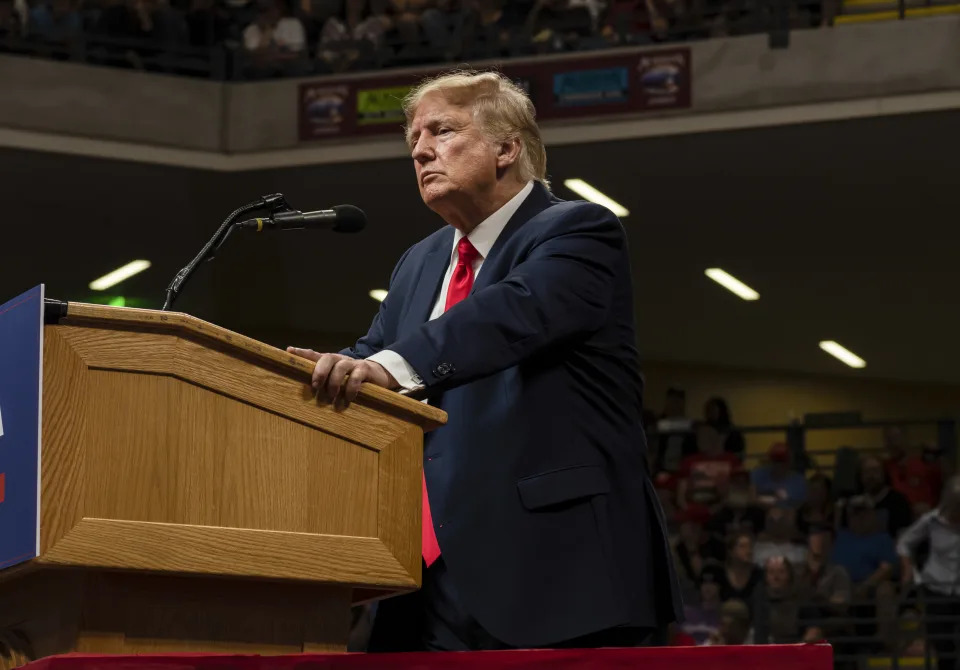
Former President Donald Trump speaks at a rally inside the Alaska Airlines Center in Anchorage, Alaska, July 9, 2022. Thousands of pages of Trump's tax documents were released on Friday, Dec. 30. (Ash Adams/The New York Times)
Former President Donald Trump speaks at a rally inside the Alaska Airlines Center in Anchorage, Alaska, July 9, 2022. Thousands of pages of Trump’s tax documents were released on Friday, Dec. 30. (Ash Adams/The New York Times)

Democrats on the House Ways and Means Committee have followed through with their vow to make public six years of former President Donald Trump’s tax returns, giving the American public new insight into his business dealings and drawing threats of retaliation from congressional Republicans.

The release Friday morning contained thousands of pages of tax documents, including individual returns for Trump and his wife, Melania, as well as business returns for several of the hundreds of companies that make up the real estate mogul’s sprawling business organization.

The committee had this month released top-line details from the returns, which showed that Trump paid $1.1 million in federal income taxes during the first three years of his presidency, including just $750 in federal income tax in 2017, his first year in office. He paid no tax in 2020 as his income dwindled and his business losses mounted.

The documents contain new details not revealed in those earlier releases. New York Times reporters are combing the pages for key takeaways. Here is a list.

Trump made no charitable contributions in 2020.

As a presidential candidate in 2015, Trump said he would not take “even one dollar” of the $400,000 salary that comes with the job. “I am totally giving up my salary if I become president,” he said.

In his first three years in office, Trump said he donated his salary quarterly. But in 2020, his last full year in office, the documents show that Trump reported $0 in charitable giving.

Also in 2020, as the pandemic recession swiftly descended, Trump reported heavy business losses and no federal tax liability.

In the earlier years, White House officials made a point of highlighting which government agencies were receiving the money, starting with the National Park Service in 2017. The tax documents released Friday show that Trump reported charitable donations totaling nearly $1.9 million in 2017 and just over $500,000 in both 2018 and 2019.

In a bad year for business, Trump didn’t take a full refund.

Trump reported nearly $16 million in business losses in 2020, which swamped his other income and left him with no federal income tax liability. But the tax documents show that he made nearly $14 million in tax payments to the federal government over the course of the year.

Those payments left him with the potential for a large income tax refund from the government — like the ones many taxpayers find when they go to file their taxes every March. In Trump’s case, he chose not to take the full refund available to him. He claimed a refund of just under $5.5 million, then directed the IRS to apply another $8 million to his estimated taxes for 2021.

His own tax law may have cost him.

The tax law Trump signed in late 2017, which took effect the next year, contained some provisions that most likely gave him an advantage at tax time — including the scaling back of the alternative minimum tax on high earners.

But one provision in particular drastically reduced the income tax deductions Trump could claim in 2018 and beyond: limits that Republicans placed on deductions for state and local taxes paid.

The so-called SALT deduction disproportionately hit higher earners, including Trump, in high-tax cities and states like New York. In 2019, he reported paying $8.4 million in state and local taxes. Because of the SALT limits included in his tax law, he was able to deduct only $10,000 of those taxes paid on his federal income tax return.

Those losses could have been mitigated at least in part by other sections of the law that were favorable to wealthier taxpayers like Trump.

Fred Trump is a silent actor in the returns.

Fred Trump, Trump’s long-deceased father, has continued to have an effect on his son’s finances.

In 2018, after a decade in which the former president declared no taxable income, he reported taxable income of more than $24 million and paid $1 million in federal taxes, nearly the entire total he paid as president.

That income, as previously detailed by the Times, appeared to be the result of more than $14 million in gains from the sale of an investment his father made in the 1970s, a New York City housing complex named Starrett City, which became part of Trump’s inheritance.

But the new documents show that the effect of his inheritance in 2018 was far greater: Trump reported $25.7 million in gains from the sale of business properties that he and his siblings inherited or took through trusts, including the sale of Starrett City.

The sales of business properties Trump created himself came at a loss, however, dragging down his net proceeds and somewhat reducing his tax liability, the tax itemization shows.

That included a total of $1 million in property sold at a loss by 40 Wall St., his office building in Manhattan, and DJT Holdings LLC. He recorded another $1 million loss bailing his son Donald Trump Jr. out of a failed business to build prefabricated homes.

Trump also received tens of thousands of dollars in dividends while he was in the White House from trusts that were established for him when he was young, his tax returns show.

A new tax firm got involved in 2020.

For years, Trump used the accounting firm Mazars USA to prepare his taxes and those of his businesses. Donald Bender, Trump’s longtime accountant at Mazars, had long been listed on the former president’s taxes as his accountant.

The firm formally cut ties with Trump and his businesses this year, saying it could no longer stand behind a decade of annual financial statements it prepared for the Trump Organization.

But it turns out Mazars and Trump had begun distancing themselves from each other as early as 2020. That year, BKM Sowan Horan, a Texas-based accounting firm, prepared Trump’s taxes, his returns show.

Republicans are threatening retaliation.

The release of the documents Friday set off a new round of attacks between Democrats and Republicans on Capitol Hill, including threats of escalating — and politically motivated — future releases of private tax information.

Democrats cast the move as necessary oversight on a president who broke decades of precedent in declining to release his returns.

“Trump acted as though he had something to hide, a pattern consistent with the recent conviction of his family business for criminal tax fraud,” Rep. Don Beyer, D-Va., a Ways and Means Committee member, said in a news release. “As the public will now be able to see, Trump used questionable or poorly substantiated deductions and a number of other tax avoidance schemes as justification to pay little or no federal income tax in several of the years examined.”

But Republicans — who won control of the House in November — warned Democrats that they had started down a dangerous road and that public pressure could push the incoming majority to release returns from President Joe Biden’s family or a wide range of other private individuals.

“Going forward, all future chairs of both the House Ways and Means Committee and the Senate Finance Committee will have nearly unlimited power to target and make public the tax returns of private citizens, political enemies, business and labor leaders, or even the Supreme Court justices themselves,” Rep. Kevin Brady of Texas, the top Republican on the Ways and Means Committee, said in a statement Friday.

Trump weighed in late Friday morning in an email statement that also raised the threat of retaliation.

“The Democrats should have never done it, the Supreme Court should have never approved it, and it’s going to lead to horrible things for so many people,” he said. “The great USA divide will now grow far worse. The Radical Left Democrats have weaponized everything, but remember, that is a dangerous two-way street!”

Congressman says Donald Trump ‘abused his power’ to hide his finances on a scale not seen since Nixon

Insider

Congressman says Donald Trump ‘abused his power’ to hide his finances on a scale not seen since Nixon

Rebecca Cohen – December 30, 2022

Congressman says Donald Trump ‘abused his power’ to hide his finances on a scale not seen since Nixon
  • Rep. Don Beyer said Donald Trump “abused his power” to hide his finances.
  • The Democrat compared Trump’s attempts to “block basic transparency” to Richard Nixon.
  • A House committee published six years’ worth of Trump’s tax returns on Friday after a years-long legal fight.

A Democratic congressman compared former President Donald Trump to Richard Nixon, saying Trump “abused his power” to hide his finances from the public.

“Despite promising to release his tax returns, Donald Trump refused to do so, and abused the power of his office to block basic transparency on his finances and conflicts of interest which no president since Nixon has foregone,” Democratic Virginia Rep. Don Beyer said in a statement Friday.

Six years of Trump’s personal and business tax returns were released by the House Ways and Means Committee on Friday.

Beyer accused the former president of having “something to hide” as he refused to release tax documents as presidents since Nixon had done and fought Congress’ attempts to access them.

“As the public will now be able to see,” Beyer continued, “Trump used questionable or poorly substantiated deductions and a number of other tax avoidance schemes as justification to pay little or no federal income tax in several of the years examined.”

Beyer noted that tax laws in the US are “often inequitable, and that enforcement of them is often unjust.”

“Trump was able to bypass even the mandatory IRS presidential audit program for years, but many other wealthy and powerful people evade billions in tax dues every year through more quotidian tax avoidance. Congress has so much work to do to make tax enforcement in this country fairer, and that will continue to be a major priority for me as a member of the Ways and Means Committee going forward,” Beyer said.

The Ways and Means Committee voted on December 20 to release Trump’s tax returns from 2015 to 2020 after a long legal battle in which none of the courts who heard the case — including the US Supreme Court — sided with Trump.

The returns revealed just how much Trump earned in each of those years, showing that the former president — who campaigned as a successful businessman and passed sweeping tax cuts while in office — told the IRS he lost millions in the years before and during his presidency.

EPA finalizes water rule that repeals Trump-era changes

Associated Press

EPA finalizes water rule that repeals Trump-era changes

Jim Salter and Michael Phillis – December 30, 2022

FILE - A great egret flies above a great blue heron in a wetland inside the Detroit River International Wildlife Refuge in Trenton, Mich., on Oct. 7, 2022. President Joe Biden’s administration on Friday, Dec. 30, announced a finalized rule for federal protection of hundreds of thousands of small streams, wetlands and other waterways, rolling back a Trump-era rule that environmentalists said left waterways vulnerable to pollution. (AP Photo/Carlos Osorio, File)
A great egret flies above a great blue heron in a wetland inside the Detroit River International Wildlife Refuge in Trenton, Mich., on Oct. 7, 2022. President Joe Biden’s administration on Friday, Dec. 30, announced a finalized rule for federal protection of hundreds of thousands of small streams, wetlands and other waterways, rolling back a Trump-era rule that environmentalists said left waterways vulnerable to pollution. (AP Photo/Carlos Osorio, File)
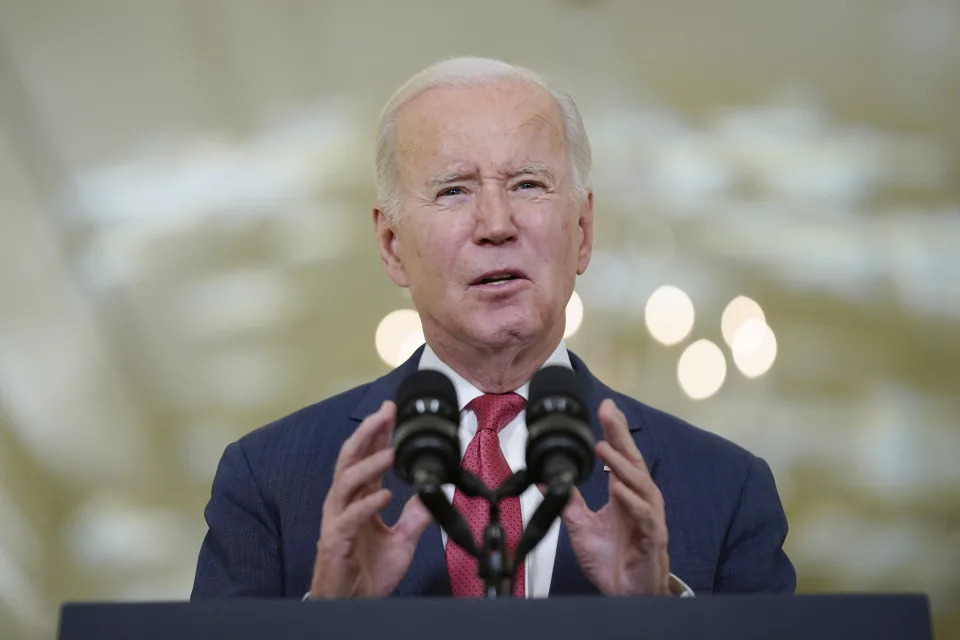
FILE - President Joe Biden speaks in the East Room of the White House ahead of the holidays on Dec. 22, 2022, in Washington. Biden’s administration on Friday, Dec. 30, announced a finalized rule for federal protection of hundreds of thousands of small streams, wetlands and other waterways, rolling back a Trump-era rule that environmentalists said left waterways vulnerable to pollution. (AP Photo/Patrick Semansky, File)
 President Joe Biden speaks in the East Room of the White House ahead of the holidays on Dec. 22, 2022, in Washington. Biden’s administration on Friday, Dec. 30, announced a finalized rule for federal protection of hundreds of thousands of small streams, wetlands and other waterways, rolling back a Trump-era rule that environmentalists said left waterways vulnerable to pollution. (AP Photo/Patrick Semansky, File)

ST. LOUIS (AP) — President Joe Biden’s administration on Friday finalized regulations that protect hundreds of thousands of small streams, wetlands and other waterways, repealing a Trump-era rule that federal courts had thrown out and that environmentalists said left waterways vulnerable to pollution.

The rule defines which “waters of the United States” are protected by the Clean Water Act. For decades, the term has been a flashpoint between environmental groups that want to broaden limits on pollution entering the nation’s waters and farmers, builders and industry groups that say extending regulations too far is onerous for business.

The Environmental Protection Agency and the Department of the Army said the reworked rule is based on definitions that were in place prior to 2015. Federal officials said they wrote a “durable definition” of waterways to reduce uncertainty.

In recent years, however, there has been a lot of uncertainty. After the Obama administration sought to expand federal protections, the Trump administration rolled them back as part of its unwinding of hundreds of environmental and public health regulations. A federal judge rejected that effort. And a separate case is currently being considered by the Supreme Court that could yet upend the finalized rule.https://s.yimg.com/rq/darla/4-10-1/html/r-sf-flx.html

“We have put forward a rule that’s clear, it’s durable, and it balances that protecting of our water resources with the needs of all water users, whether it’s farmers, ranchers, industry, watershed organizations,” EPA Assistant Administrator for Water Radhika Fox told The Associated Press.

The new rule is built on a pre-2015 definition, but is more streamlined and includes updates to reflect court opinions, scientific understanding and decades of experience, Fox said. The final rule will modestly increase protections for some streams, wetlands, lakes and ponds, she said.

The Trump-era rule, finalized in 2020, was long sought by builders, oil and gas developers, farmers and others who complained about federal overreach that they said stretched into gullies, creeks and ravines on farmland and other private property.

Environmental groups and public health advocates countered that the Trump rule allowed businesses to dump pollutants into unprotected waterways and fill in some wetlands, threatening public water supplies downstream and harming wildlife and habitat.

“Today, the Biden administration restored needed clean water protections so that our nation’s waters are guarded against pollution for fishing, swimming, and as sources of drinking water,” Kelly Moser, senior attorney for the Southern Environmental Law Center’s Clean Water Defense Initiative, said in a statement.

Jon Devine, director of federal water policy for the Natural Resources Defense Council, called repealing the Trump-era rule a “smart move” that “comes at a time when we’re seeing unprecedented attacks on federal clean water protections by polluters and their allies.”

But Republican Sen. Shelley Moore Capito called the rule “regulatory overreach” that will “unfairly burden America’s farmers, ranchers, miners, infrastructure builders, and landowners.”

Jerry Konter, chairman of the National Association of Home Builders, struck a similar note, saying the new rule makes it unclear if the federal government will regulate water in places such as roadside ditches and isolated ponds.

A 2021 review by the Biden administration found that the Trump rule allowed more than 300 projects to proceed without the federal permits required under the Obama-era rule, and that the Trump rule significantly curtailed clean water protections in states such as New Mexico and Arizona.

In August 2021, a federal judge threw out the Trump-era rule and put back in place a 1986 standard that was broader in scope than the Trump rule but narrower than Obama’s. U.S. District Court Judge Rosemary Marquez in Arizona, an Obama appointee, said the Trump-era EPA had ignored its own findings that small waterways can affect the well-being of the larger waterways they flow into.

Meanwhile, Supreme Court justices are considering arguments from an Idaho couple in their business-backed push to curtail the Clean Water Act. Chantell and Michael Sackett wanted to build a home near a lake, but the EPA stopped their work in 2007, finding wetlands on their property were federally regulated. The agency said the Sacketts needed a permit.

The case was heard in October and tests part of the rule the Biden administration carried over into its finalized version. Now-retired Justice Anthony Kennedy wrote in 2006 that if wetlands “significantly affect the chemical, physical, and biological integrity” of nearby navigable waters like rivers, the Clean Water Act’s protections apply. The EPA’s rule includes this test. Four conservative justices in the 2006 case, however, said that federal regulation only applied if there was a continuous surface connection between wetlands and an obviously regulated body of water like a river.

Charles Yates, attorney for the libertarian group Pacific Legal Foundation, said the new rule shows the importance of the Supreme Court case since the definition for WOTUS “shifts with each new presidential administration.”

“Absent definitive guidance from the Supreme Court, a lawful, workable, and durable definition of ‘navigable waters’ will remain elusive,” Yates said in a statement.

The Biden rule applies federal protections to wetlands, tributaries and other waters that have a significant connection to navigable waters or if wetlands are “relatively permanent.” The rule sets no specific distance for when adjacent wetlands are protected, stating that several factors can determine if the wetland and the waterway can impact water quality and quantity on each other. It states that the impact “depends on regional variations in climate, landscape, and geomorphology.”

For example, the rule notes that in the West, which typically gets less rain and has higher rates of evaporation, wetlands may need to be close to a waterway to be considered adjacent. In places where the waterway is wide and the topography flat, “wetlands are likely to be determined to be reasonably close where they are a few hundred feet from the tributary …,” the rule states.

Fox said the rule wasn’t written to stop development or prevent farming.

“It is about making sure we have development happening, that we’re growing food and fuel for our country but doing it in a way that also protects our nation’s water,” she said.

The Associated Press receives support from the Walton Family Foundation for coverage of water and environmental policy. The AP is solely responsible for all content. For all of AP’s environmental coverage, visit https://apnews.com/hub/climate-and-environment

Trump’s ultra-low tax bills are what happens when government tries to make policy through the tax code

The Conversation

Trump’s ultra-low tax bills are what happens when government tries to make policy through the tax code

Gary Winslett, Asst. Prof. of Political Science – December 30, 2022

The tax code can feel like a labyrinth. <a href=
The tax code can feel like a labyrinth. Marcel Germain/Moment via Getty Images

People tend to have one of two reactions to the revelation that President Donald Trump has paid little to no taxes in recent years: He’s either an amoral tax cheat or he’s smart.

To me, it reveals just how much is wrong with the U.S. tax code, which Congress treats as a sort of policy Swiss Army knife to deal with innumerable desired social and economic policy goals, from homeownership to protecting the Maine blueberry industry.

I teach a course on “the politics of taxes,” in which we examine how politics shapes tax policy in the United States and other countries – as well as how taxation affects politics. My students are consistently struck by the extent to which Congress uses taxes as its default go-to policy lever.

It wasn’t supposed to be this way.

The tax code takes over

In principle, the main function of taxation is to fund the government. But in practice, Congress also uses it to tackle challenges in virtually every policy area, from promoting conservation and charitable giving to encouraging entrepreneurship and ensuring steady business revenue.

All of these policies, however sound they made be individually, make the income tax system more complicated for ordinary taxpayers and creates a vast array of means by which some wealthy people can reduce their tax payments to levels that feel unfair to many voters. They also, ultimately, aren’t a very good way to reach achieve the policy’s explicit goals.

This convoluted system was thus not created in a big bang of malfeasance or ineptitude but mostly through piecemeal changes that increasingly complicated the tax code. Legislative reforms meant to simplify the tax code, such as those passed in 1986 and 2017, have accomplished little.

“The result of this process is a set of very complex provisions that appear to have no overall logic if the tax law were being designed from scratch,” as the nonpartisan Tax Policy Center put it.

This complexity has a range of negative impacts.

For example, estimates vary but most suggest taxpayers likely pay well over US0 billion a year in time and money filing their taxes each year – known as tax compliance. The 2017 Tax Cuts and Jobs Act does not appear to have reduced compliance costs despite its emphasis on simplifying the 1040 tax form.

And it’s a lot worse than in other rich countries.

The average American spends about 13 hours filing their taxes each year, according to the Joint Committee on Taxation, compared with under an hour in the Netherlands, Japan and Estonia. In Sweden, the government fills in the tax forms automatically, and citizens can simply view and approve them – or make changes – on their cellphone.

Another result is that social welfare programs in the U.S. can be needlessly complicated.

For example, Canada provides its citizens with cheap child care simply by subsidizing it so that it costs a day. Instead of offering subsidies, the U.S. supports lower- and middle-income parents mainly through the tax code with credits like the earned income tax credit and the child tax credit. But both are very complicated, poorly understood and often do not reach those who need it.

Trump has refused to release his tax returns since the 2016 election. <a href=
Trump has refused to release his tax returns since the 2016 election. AP Photo/Evan Vucci
How Trump takes advantage

Complexity also means that the tax code is littered with opportunities for wealthier taxpayers like Trump to reduce their tax bill quite substantially. The perception that there are loopholes that only the rich can use leads many taxpayers to view the system as unfair.

Three of the strategies The Times reported that Trump has used to avoid taxes demonstrate this quite well.

In 2006, lawmakers wanted to promote conservation while helping farmers and ranchers, so they expanded conservation easements, in which property holders agree to not develop land in exchange for a tax deduction. Trump used this frequently abused provision to claim a .1 million deduction in 2015 for not developing land near his Seven Springs estate that his family wanted to use as a private retreat anyway.

Another example is how U.S. tax policy allows individuals to walk away from an investment and, if they receive nothing, declare any losses that haven’t yet been taken on their current tax return, reducing income by that amount. The policy aim here is to encourage entrepreneurship by not making business failure too onerous.

Trump used this abandonment rule in 2009 to declare more than 0 million in losses when he walked away from his Atlantic City casinos. Yet it appears he got something in exchange for walking way – stock in a new company – which means he may have technically violated the rules of that tax break.

And in 2009, Congress wanted to help businesses recover from the financial crisis so it made it easier to use the large losses that many companies were experiencing to offset income earned in prior years, which resulted in refunds for taxes already paid. This allowed Trump to claim a refund of .9 million he had paid in taxes in 2005 and 2006.

The government has ways other than tax code to implement a policy with a social or economic aim, such as via regulations or spending on a new or existing government program. Lawmakers have often preferred to use the tax code because it can seem easier and avoids the political costs associated with higher taxes.

Ultimately, however, research shows using tax code is not the best way to achieve a policy’s ends.

Read more: