Large body of misinformation is fueling American gun violence
Tom Gabor and Fred Guttenberg – June 7, 2023
Slogans like “Guns don’t kill, people do” and “The only thing that stops a bad guy with a gun is a good guy with a gun” reflect the decades-long campaign by the gun lobby and its allies to convince Americans that owning guns makes them safer. This campaign, based on a large body of misinformation, has made America a far more dangerous place. Our book American Carnage identifies and debunks close to 40 core myths that have led many Americans to mistakenly believe that carrying a gun and keeping one in the home will protect them rather than expose them to an elevated risk of harm.
Much of this misinformation stems from the radicalization of the gun lobby, beginning in the 1970s. Since then, the gun industry and gun rights organizations have made it their priority to convince Americans that an armed citizenry is the most effective way to shield ourselves from violence. This campaign has included stoking the public’s fear of crime, funding dubious scholarship by gun-friendly researchers, and shutting down federal funding of research showing that guns in the home put occupants at an elevated risk.
Before you fight over the word ‘woke,’ learn its history. It will blow you away.
Phil Boas, Arizona Republic – June 7, 2023
Poster of Leadbelly at the Rusty Nail in Wilmington.
Someday when the cultural moment that many have called “The Great Awokening” is finally, mercifully, over, Americans of all races should fight to give African Americans their word back.
Less than 10 years ago, “woke” was a word so deeply layered with history and meaning it could evoke years of pain suffered by descendants of slaves coming of age in Jim Crow America.
You don’t have to be African American, however, to feel its history. The word woke is seminal to our larger culture in ways most of us have never understood.
It’s one of the great words in American English and it should be preserved in its purest form.
At the moment it is being hijacked by politics – first by white liberals, then by white conservatives.
A battle over ‘woke’ in the Republican Party primary
This week the word “woke” is igniting a family spat within the 2024 Republican primary for president, pitting Donald Trump against his former apprentice, Ron DeSantis.
DeSantis, the Florida governor, uses the word frequently to describe an ideology steeped in identity politics that has taken over our universities, media, large corporations, medicine, arts, entertainment and sports.
Trump argues he doesn’t use the word. “I don’t like the term ‘woke’ because I hear, ‘Woke, woke, woke.’ It’s just a term they use, half the people can’t even define it, they don’t know what it is.”
There’s a good chance none of us would know the word today had the Library of Congress not set out in the 1930s to preserve American folk music in the South.
That project took library archivists to Louisiana where they discovered a little-known African American blues singer named Huddie William Ledbetter or “Lead Belly.”
The archivists recorded on aluminum discs Lead Belly and his 12-string guitar, preserving what would become some of the great Blues standards such as “Cotton Fields,” “Goodnight, Irene” and “Rock Island Line.”
‘Woke’ emerges with a song about race and suffering
In Lead Belly’s song “The Scottsboro Boys,” the nine African-American young men falsely accused of raping two white women in Alabama, he admonishes his listeners to, “Best stay woke!”
As Huddie Ledbetter used “woke,” it meant that when you’re a Black person travelling through a deeply racist state such as Alabama, you need to know what you’re dealing with – a highly refined form of evil.
Ledbetter would know. He travelled the byways of Louisiana, Alabama and Texas singing his songs and confronting white bigotry and its violence against Black people.
In a way that history has of surprising us, Lead Belly would become essential to white culture in America and Great Britain. All white people reading this and learning the name Huddie Ledbetter for the first time, should know that they have likely felt his influence, far more than they could have imagined.
Lead Belly influences Rock ‘n Roll’s greatest band
Donovan became “the king” of the U.K. “skiffle craze” and eventually inspired new skiffle groups across England, such as Liverpool’s The Quarrymen, then led by an aspiring singer-songwriter named John Lennon.
By 1960, the group would evolve into The Beatles, and its lead guitarist, George Harrison, would one day tell an interviewer, “If there was no Lead Belly, there would have been no Lonnie Donegan; no Lonnie Donegan, no Beatles. Therefore, no Lead Belly, no Beatles,” as recounted by Smithsonian Magazine.
Lead Belly was inspiring many musical forms of that day. Those same early recordings that preserved his music and the word “woke,” found their way into the imagination of another young artist of some note.
“Somebody – somebody I’d never seen before – handed me a Lead Belly record with the song ‘Cottonfields’ on it,” recalled Bob Dylan in his 2017 lecture to the Noble (Prize) Foundation. “That record changed my life right then and there. Transported me into a world I’d never known.
“It was like an explosion went off. Like I’d been walking in darkness and all of the sudden the darkness was illuminated. It was like somebody laid hands on me. I must have played that record a hundred times.”
The biggest names in many genres sing his songs
By the end of the century, Led Belly’s influence on American popular music was its own constellation of stars. Artists covering his songs included Gene Autry, Frank Sinatra, Nat King Cole, Tom Jones, Harry Belafonte, Elvis Presley, Johnny Cash, The Beach Boys, Creedence Clearwater Revival, Aerosmith, Lead Zeppelin, Tom Petty, The Grateful Dead.
When Beat Generation author William S. Burroughs wrote, “These new rock ‘n roll kids should just throw away their guitars and listen to something with real soul, like Lead Belly,” a young musician in Seattle named Kurt Cobain took up his challenge.
Years later, he recalled on an MTV stage: “I’d never heard about Lead Belly before so I bought a couple of records, and now he turns out to be my absolute favorite of all time in music. I absolutely love it more than any rock’n’roll I ever heard.”
Our chattering classes, and I include myself among them, have been poor caretakers of the word “woke.”
When this battle over wokeness is finally over, it would do us well to give the word back.
And while we’re at it, maybe we could make the name Huddie Ledbetter, one of America’s most important songwriters, as easily recognizable as say, Ringo Starr.
Phil Boas is an editorial columnist with The Arizona Republic. Email him at phil.boas@arizonarepublic.com.
This article originally appeared on Arizona Republic:
U.S. eyes Russia in destruction of Ukraine’s Kakhovka dam
Preliminary U.S. intelligence suggests Russia blew a major piece of Ukrainian critical infrastructure.
Michael Weiss and James Rushton – June 6, 2023
The U.S. government “has intelligence that is leaning toward Russia as the culprit” behind the destruction of Ukraine’s Kakhovka dam and hydroelectric power plant in the early hours of June 6, according to a report by NBC News.
The dam across the Dnipro River, one of the country’s major waterways, was all but gone in video and satellite footage that has emerged over the last 18 hours. The Kakhovka Reservoir has been emptying into the river all day, causing catastrophic flooding downstream in the Ukrainian region of Kherson. Water from the reservoir is also used by the Zaporizhzhia nuclear power plant to cool its reactors. According to the International Atomic Energy Agency, there is at present no immediate nuclear safety risk at the plant.
Widespread flooding
A local resident makes her way through a flooded road after the walls of the Kakhovka dam collapsed overnight. (Evgeniy Maloletka/AP)
Upward of 40,000 people are now in danger due to floodwaters, according to the Ukrainian government. As many as 70 towns along the Dnipro are at risk, President Volodymyr Zelensky said on Tuesday.
Footage from Kherson showed rooftops floating down the river and other homes half submerged, and flood waters are expected to peak by Wednesday. Tragically, most of the animals at a zoo in the settlement of Nova Kakhovka, which is under Russian occupation, have drowned, according to the zoo’s management.
Even as rescue work continued, noise from Russian artillery could be heard nearby, a grim reminder that a mass ecological disaster is occurring amid the backdrop of war.
Timing of the dam incident
An aerial view of the damage at the Kakhovka dam in southern Ukraine. (Planet Labs PBC via AP)
Ukrainian analysts have linked the alleged Russian dam destruction to the much anticipated Ukrainian counteroffensive, which may already be in progress. “In the course of the Kharkiv counteroffensive operation, the Russians destroyed the dam over Oskil reservoir,” Mykola Bielieskov, a research fellow at National Institute for Strategic Studies, a government-funded think tank, told Yahoo News, referring to the Ukrainian military’s recapture of thousands of square miles of terrain in September. “So there is precedent here.”
“Although one reason might be to impede the Ukrainian offensive, the Russians also have established an historical pattern of destroying infrastructure in areas they do not control — such as Kyiv — and areas they must leave behind when retreating, signaling that, if they cannot control it, no one else will be allowed to possess it,” said Dr. Alex Crowther, a retired U.S. Army colonel and strategist. “In short, the Russians did this for spite.”
The Ukrainian government was itself quick to blame Russian occupiers for blowing up the dam, originally built by the Soviets in 1956. Oleksii Danilov, chairman of Ukraine’s National Security Council, attributed the sabotage to Russia’s 205th Motorized Rifle Brigade, suggesting Kyiv was in possession of specific intelligence confirming that claim. In October 2022, a Telegram channel, purportedly belonging to a member of the 205th, outlined plans to mine and undermine the structure, with instructions for local residents in the event of “dam failure.”
Eyewitnesses have also come forward, describing hearing loud bangs at the dam they say indicate the use of large explosives.
‘An outrageous act’
Tetiana, a resident of Kherson, inside her damaged house after the Kakhovka dam was blown up overnight. (Evgeniy Maloletka/AP)
Ukraine’s Western partners wasted little time placing blame on Russian forces.
“The destruction of the Kakhovka dam today puts thousands of civilians at risk and causes severe environmental damage,” NATO Secretary-General Jens Stoltenberg tweeted hours after the dam was destroyed. “This is an outrageous act, which demonstrates once again the brutality of Russia’s war in Ukraine.”
Josep Borrell, the high representative of the European Union for Foreign Affairs and Security Policy, described the catastrophe as “a new dimension of Russian atrocities.” Michael Carpenter, the U.S. ambassador to the Organization for Security and Co-operation in Europe, commented: “The destruction of the Nova Kakhovka dam is an outrageous act of environmental destruction that imperils the lives and livelihoods of hundreds of thousands of Ukrainians, as well as the natural environment.”
How will the West respond?
The House of Culture in Kherson is partially submerged after the nearby dam was attacked. (Alexey Konovalov/TASS/Handout via Reuters)
Previous large-scale Russian attacks on Ukrainian infrastructure have almost always led to significant increases in weapon systems from Western allies.
Most recently, after Russia began its campaign of aerial bombardment of Ukrainian power stations and energy plants in October 2022, the U.S. and other Western nations responded by sending their most advanced air defense systems, such as the Patriot platform, to Kyiv.
The Russian response, meanwhile, started with an unequivocal denial that anything untoward had happened to the Kakhovka dam, then segued into accusations that Ukraine destroyed its own critical infrastructure. Vladimir Putin’s spokesman, Dmitry Peskov, claimed without evidence that Kyiv was behind this act of apparent sabotage and that it would result in “very severe consequences” for local residents and the environment. Meanwhile, Russia’s Investigative Committee — tantamount to the FBI — said it had launched a criminal investigation.
Meanwhile, the Russia-appointed governor of Kherson Oblast, Vladimir Saldo, gave a surreal interview, filmed against the backdrop of Nova Kakhovka, visibly underwater. “Everything is fine in Nova Kakhovka,” he said. “People go about their daily business like any day.”
Couple charged in ‘torture’ abuse case that left 5-year-old boy with 46 visible injuries
Mark Harper, The Daytona Beach News-Journal – June 3, 2023
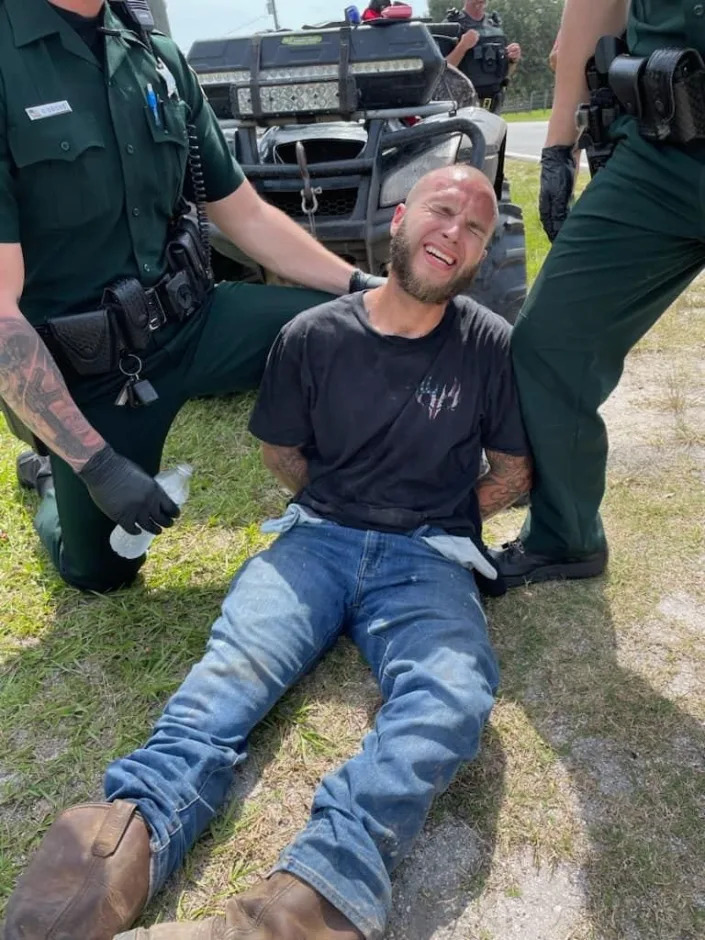
A 5-year-old boy whose skull was fractured when his mother’s live-in boyfriend struck him with a mop handle, breaking it in half, has been beaten, neglected, and tortured repeatedly, the Volusia Sheriff’s Office revealed on Saturday.
Investigators discovered video surveillance from inside the DeLand-area home revealing the child once had his hands tied behind his back for more than 19 hours. Doctors examining him found, in addition to the skull fracture, 46 visible injuries as well as internal injuries, Volusia Sheriff’s spokesman Andrew Gant said in a news release.
There were three children in the home, including an 8-year-old girl and a 9-year-old boy.
“The torture these kids endured is hard to imagine. The good news is they’re in safe hands now, and their scumbag abusers will have to answer for what they did,” Sheriff Mike Chitwood wrote in a Facebook post Saturday.
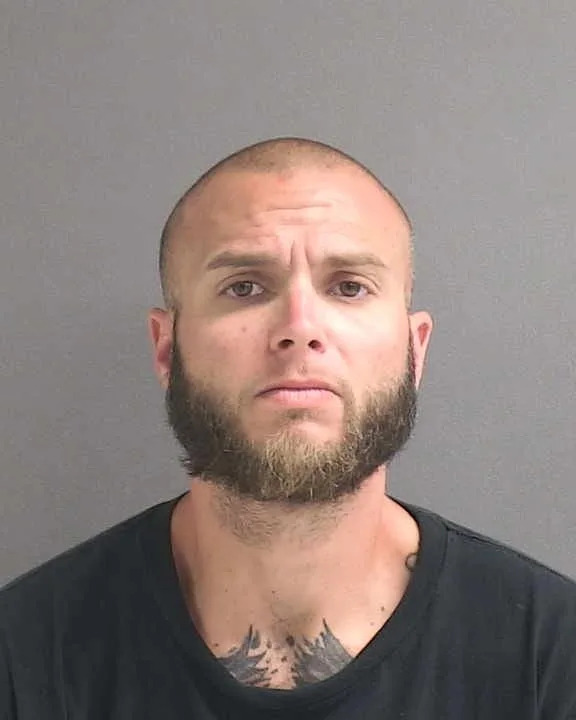
Shawn M. Stone, 32, has been in custody since May 9. In addition to one count of aggravated child abuse, he was charged on Friday with 23 other counts of abuse and neglect.
The boyfriend, Shawn M. Stone, 32, has been in custody since May 9. In addition to one count of aggravated child abuse, he was charged on Friday with 23 other abuse-and-neglect-related counts.
Jail records show Stone is facing eight counts of neglect of a child causing great bodily harm; five counts of aggravated child abuse; four counts of neglect of a child; three counts of failing to report suspected child abuse; two counts of false imprisonment of a child under 13; and two counts of tampering with a witness in a life felony proceeding.
He is being held without bond.
Meanwhile, the mother, Taylor B. Schaefer, 28, is facing 25 charges after investigators said she repeatedly witnessed abuse and failed to stop or report it. She has yet to be located by authorities, Gant said.
Schaefer called 911 after the mop handle incident, saying she had a “gut feeling” that Stone was abusing the victim, then checked the video footage and confirmed it.
Taylor Schaefer
But investigators who watched hours of video found that she had been present in the house when the 5-year-old was being beaten, Gant said, while the mother also saw the boy visibly injured and limping, but did not provide medical attention.
“On the day that Schaefer did report the abuse, video showed her mopping up the area where the victim was beaten with the mop handle,” Gant said.
The 5-year-old boy had been repeatedly bound for hours at a time. In one instance, his hands were tied behind his back at 6:43 p.m. one night, and left that way until 2:02 p.m. the following afternoon.
Shawn Stone
The victim had also been tied up and placed in a dog cage, Gant said, adding that a common form of punishment for him was food deprivation.
“Another child in the home was forced to drink boiling water, sprayed with boiling water, and beaten with several household objects,” Gant said. “That child also witnessed the brutal abuse inflicted on the younger victim.”
A third child victim in the house was not receiving proper nutrition or care for a serious medical condition, and also witnessed the constant abuse, Gant said.
Investigators’ video evidence is backed up with text messages and witness interviews, Gant said.
All three children were removed from the home and placed in a “safe environment” on May 9, Gant said.
Chitwood shared a Go-Fund-Me page to help the adults who are now caring for the children.
Glen Hobbs, the organizer of the page, has provided several updates on the children. All three have been released from the hospital, where they began eating regularly.
The 5-year-old will need a wheelchair and walker, and “has a long road to recovery,” Hobbs said. The 8-year-old girl is eating well, while the oldest boy “is in good spirits and looks healthy.”
The Go-Fund-Me had raised more than $8,000 of a $20,000 goal as of late Saturday afternoon.
A Small Town’s Tragedy, Distorted by Trump’s Megaphone
Charles Homans and Ken Bensinger – May 29, 2023
From left, Larry Erickson, Sue Bakko, and Bob Bailey having breakfast at the Hunting Shack Cafe in McHenry, N.D., on May 24, 2023. (Lewis Ableidinger/The New York Times)
McHENRY, N.D. — There were no known witnesses when Shannon Brandt and Cayler Ellingson got into an argument in the blurry hours after last call at Buck’s n Doe’s Bar & Grill in September. And no one but Brandt could say with certainty what led him to run over Ellingson with his Ford Explorer, crushing him to death in a gravel alley.
But the people of McHenry, a town of 64 in sparsely populated Foster County, North Dakota, have gotten used to hearing from people who think they know.
They include former President Donald Trump, who denounced the killing of Ellingson, an 18-year-old recent high school graduate, at the hands of a “deranged Democrat maniac who was angry that Cayler was a Republican” in a Truth Social post. Rep. Marjorie Taylor Greene of Georgia described Brandt on Twitter as a “Democrat political terrorist” and cited the case as evidence that “Democrats want Republicans dead, and they’ve already started the killings.”
Trump and Greene were among a chorus of Republican politicians — including several members of Congress and the attorney general of North Dakota — who rushed to condemn Brandt. They relied on a handful of early news stories that cited a state highway patrol officer’s report, which suggested Brandt killed Ellingson because he believed he was a “Republican extremist.”
That claim, made weeks before the midterm elections, ignited a brief national political firestorm. Republican politicians and right-wing media figures claimed that Brandt had been inspired by President Joe Biden’s recent warnings about “extremism” in the Republican Party. They complained that news media coverage of political violence willfully ignored instances when the assailants were Democrats.
But the episode quickly became an example of another media phenomenon: the distortion of complex, painful events to fit an opportune political narrative.
Although evidence in the case suggests the two men argued about politics that night, law enforcement officials concluded quickly that the killing was not politically motivated. The prosecutor for Foster County who brought the charges never accused Brandt of running over Ellingson because of political beliefs.
Acquaintances and a family member could not recall Brandt, a 42-year-old welder with no history of party registration, expressing political views.
Late last month, the murder charge against Brandt was downgraded to manslaughter, which carries a sentence of up to 10 years in prison. He agreed on May 18 to plead guilty.
By averting a courtroom trial, the plea leaves many questions hanging over a still largely unexplained incident — and over a town that found itself swept abruptly into a national political cyclone and just as abruptly cast out.
In conversations this month, residents of McHenry — a conservative, close-knit agricultural community where most families, including the Ellingsons and the Brandts, have known each other for decades, if not generations — said the narrative of the tragedy that Trump and others promoted never made much sense to them. But except for a handful of county officials, they have shied away from speaking on the record about it.
Robyn Sorum, the mayor of McHenry, said she had advised the community against doing so to avoid worsening local tensions around the case. “Anywhere something like this happens, it’s a tragedy, you know?” she said. “But then you get to a small town where everyone knows each other, it makes it even rougher.”
Ellingson’s family did not comment. Brandt, through his attorney, Mark Friese, declined an interview.
Friese, who did not discuss details of the incident, described the aftermath as a cautionary tale. “I think we’re going to see more of this,” he said. “Things end up being tried on social media instead of in the courtroom.”
A Confusing Encounter
The town of McHenry sits on a crosshatch of gravel roads etched into an undulating plain of wheat and soybean farms and Angus cattle ranches. The nearest landmarks of any significance, a 30- and 60-minute drive away, respectively, are a decommissioned intercontinental ballistic missile silo and the world’s largest concrete buffalo.
“It’s a nice little town,” said Sorum, who is also the proprietor of the Hunting Shack cafe, the only business besides Buck’s n Doe’s on the town’s main thoroughfare. “Everybody tries to help everybody else.”
On the night of Sept. 17, 100 or so people from McHenry and surrounding towns gathered outside of Buck’s n Doe’s for McHenry Days, a local festival. After midnight, when a three-piece country band from Fargo packed up and went home, some of the festival goers drifted into the bar.
The crowd included Ellingson, who had come to the festival with his family and stayed behind with his brother after their parents drove back to nearby Grace City. And it included Brandt, who came from a locally prominent family that had lived in McHenry since the early 20th century. His father and uncle had shot the immense trophy elks that looked down upon patrons from the walls of the bar.
Buck’s n Doe’s closed at 2 a.m. Fifty-five minutes later, the county 911 dispatcher received a call from Brandt. “I hit a man with my vehicle,” he said in the recording of the call.
At the time, Ellingson was alive and conscious but badly injured. He died later that morning at a hospital.
The next day, two Fargo television stations reported that a sworn declaration from a highway patrol officer said that Brandt had claimed Ellingson “was part of a Republican extremist group” and admitted to hitting the teen with his car “because he had a political argument” with him. The highway patrolman’s statement was based on a recording of the 911 call and an interview of Brandt by two other law enforcement officers.
But the declaration appears to have mischaracterized the 911 call. And the prosecutor never presented evidence that showed Brandt told officers that he ran into the teen because of the argument or that he believed he was part of an extremist group. Five days after the incident, a captain in the North Dakota State Highway Patrol told reporters that his agency had concluded the killing was “not political in nature at all.”
Subsequent court filings and testimony instead revealed a murkier, more confused encounter.
In phone calls, Brandt and Ellingson both made a reference to some sort of political dispute. Both called family members during the encounter, and each described feeling threatened, according to court records.
Ellingson told his mother “some politics had got brought up” and Brandt “didn’t like what he had to say,” according to a state Bureau of Criminal Investigation agent who interviewed Ellingson’s mother. She recalled her son saying “something to the effect of, ‘They’re on to me. I should round up my cousins or my posse,’” the agent testified.
In his 911 call after he hit Ellingson, Brandt said the teenager had said “something about some Republican extremist group,” but he did not claim Ellingson was a member. Brandt told the dispatcher he believed the teen was “calling other guys to come get me.” There’s no evidence Ellingson did so.
In the 911 call, Brandt described trying to leave in a panic only to be blocked by Ellingson. At one point he said he knew his running over Ellingson had been “more than” an accident. But he otherwise insisted the act had been unintentional. “I never meant to hurt him,” he told the dispatcher.
Both men were intoxicated. Brandt’s family and Friese say Brandt has been diagnosed with autism spectrum disorder, which Friese argued was a relevant factor in the case. An autopsy by the state forensic medical examiner ruled the cause of death as “accidental.”
‘Politically Motivated’
In the days after the episode, several local news outlets published articles. As is typical with early reports, those first stories relied heavily on the sparse details provided by law enforcement records.
“Man admits to killing teen after political dispute in Foster Co., court docs allege,” was the headline published online by Valley News Live, a news outlet based in Fargo, the day after Ellingson’s death.
The next morning, Gateway Pundit, a right-wing site that regularly seeds stories in the conservative media, wrote its own version under the headline “Crazed North Dakota man runs over and kills teen for ‘extremist’ Republican views.”
That evening, the case hit Fox News’s prime-time lineup, where it stayed for days. “This is a guy who intended to kill an 18-year-old Republican because he was a Republican,” Jeanine Pirro said during an on-air debate about the incident, claiming that Brandt chased Ellingson in his vehicle.
Pirro blamed Biden, who she said “is the one who started this extremist hate” when he made a speech about the perils of far-right extremism earlier that month. On Twitter, Greene posted a clip of Biden referencing “extreme MAGA Republicans,” adding that Ellingson was “executed in cold blood by a Democrat political terrorist because of rhetoric like this.”
The case spread across the right-wing ecosystem, from Jack Posobiec, the far-right conspiracy theorist and podcaster, to Rep. Jim Jordan of Ohio, who appeared on Laura Ingraham’s Fox News show, calling Brandt a “terrible guy.” State Attorney General Drew H. Wrigley condemned the episode as “hateful violence.”
In McHenry and the neighboring town of Glenfield, where Brandt lives, acquaintances said they were surprised by the claims of a political motive. There is no evidence in public records or court filings suggesting Brandt is a Democrat.
“I can honestly tell you, I don’t know who Shannon voted for in the last presidential election,” Ashley Brandt-Duda, Brandt’s sister, said in an interview. Although their parents are both registered Republicans, “I would say my family is quite apolitical,” she said.
Brandt’s reference to extremists was similarly met with surprise in McHenry, where both residents and law enforcement officials profess to know little about such groups. The county sheriff’s records do mention one previously unreported incident: In October, a long-shuttered local school was found to have been vandalized, its interior walls spray-painted with the stenciled logo of Patriot Front, a white nationalist group.
The building’s owner, David Ludwig, initially told a sheriff’s deputy that the break-in happened the weekend of Ellingson’s killing. But when reached by The New York Times, he said that timing was just a guess. Justin Johnson, the Foster County sheriff, said he considered the incident to be “totally unrelated.”
Nothing on public record suggests that Ellingson or Brandt had links to extremist groups.
‘Everything Just Exploded’
In the week and a half after Ellingson’s death, the case was discussed on at least seven Fox News shows. The coverage continued well after law enforcement officials had said the killing was not politically motivated, a point that was only occasionally mentioned on-air.
Brandt-Duda said her parents left their home in McHenry out of concern for their safety. When they returned about a week later, they found more than 50 threatening messages on their answering machine.
They received numerous threatening letters, too, Brandt-Duda said. One was written on the margins of an article about the incident from The New York Post, she said. The newspaper covered the case extensively and also published an opinion column arguing that the “president of the United States, supported by a fan-girl media, spouts irresponsible rhetoric that led to Ellingson’s death.”
“Everything just exploded,” Brandt-Duda said.
The county court and sheriff’s offices also received numerous threats, according to multiple local officials. On Sept. 29, 11 days after Ellingson’s death, the county prosecutor, Kara Brinster, dropped the initial charge of vehicular homicide, which is used for fatal drunken driving accidents, for a new one: intentional homicide, which carries a sentence of up to life in prison.
Brinster did not respond to requests for comment on the decision.
Then, as quickly as it swelled, the media frenzy receded. Fox Digital, the TV network’s online arm, continued to publish articles that acknowledged the more complicated story that was emerging from officials. But Fox News’ hosts did not mention the case on-air again after Sept. 30.
Asked for comment, a Fox spokesperson, Jessica Ketner, noted the company’s online articles but did not comment on the network’s television coverage.
Gateway Pundit, too, stopped publishing stories on the case. Politicians who had been quick to speak out appeared to lose interest. Trump, Greene, Jordan and Wrigley did not respond to requests for comment.
This month, after Brinster dismissed the intentional homicide charge, the decision merited little more attention than a front-page story in The Foster County Independent and an article by The Associated Press.
But just as Brandt agreed to plead guilty, Posobiec, the right-wing podcaster, took up the story again. In a segment on his daily show, he singled out the prosecutor, claiming she had gone soft on Brandt. He posted her photograph and phone number online, and told listeners to call her to complain.
“Maybe Kara Brinster should be prosecuted,” he said. “Maybe we should look into her.”
Trump and Putin Are in Deep Trouble and Need Each Other More Than Ever
David Rothkopf – May 27, 2023
Photo Illustration by Luis G. Rendon/The Daily Beast/Reuters
Times are tough for both Donald Trump and Vladimir Putin. Since they are two of the world’s most repulsive and dangerous people, that might be considered good news.
But, not so fast. Because there is one thing that can save Trump from the dark realities of legal accountability—and it happens to also be the only thing that is likely to turn the tide in Putin’s disastrous war in Ukraine. That is the reelection of Donald Trump.
Once again the interests of Trump and Putin are aligned, but this time the stakes for both are much higher than they were in 2016. That should worry us all. It should worry us a lot.
Worse still, there are others for whom the 2024 election is of existential importance. It includes Trump’s close allies—who may face jail unless Trump is reelected and can pardon them. It includes extremists and their allies—who also see a Trump victory as a get out of jail (or avoid jail) free card. It includes advocates of MAGA wingnut policy views, for whom four more years of Joe Biden appointing rational jurists could undo many of their initiatives subjugating women, criminalizing love and identity within the LGBTQ community, and impeding the ability of voters to participate in a democracy they would like to see weakened or done away with altogether.
There are still others for whom the stakes are high, if not quite existential. These include countries that have thrown in their lot with Trump. (The disgraced former president’s business ties to these are now reportedly an investigative target of special counsel Jack Smith.)
It also, of course, includes politicians in the U.S. who have declared their loyalty to His Roiled MAGAsty himself and whose political fates are likely to mirror his.
Taken together they will be an unholy alliance that poses a real threat to next year’s elections being fair, while also increasing the likelihood that the results of next year’s elections will be contested in ways that may make the Jan. 6 insurrection (and Trump’s nationwide false electors campaign) seem mild by comparison.
You can see the situations of both Trump and Putin’s fiasco in Ukraine getting more dire daily.
His New York hush money trial now has a start date, March 25, 2024. Smith is reportedly putting the finishing touches on his conclusion regarding the former president’s alleged mishandling of classified documents. He’s also looking into Trump’s involvement in the Jan. 6 insurrection and has expanded the ambit of their inquiry to look at possible wrong-doing associated with Trump fund-raising. Fulton County District Attorney Fani Willis has signaled that any charges in the case she might bring regarding election interference by Trump and/or his allies are just around the corner, due in the first three weeks of August. More charges may come from other states on election fraud. And the verdict against Trump in the defamation case brought by E. Jean Carroll may be compounded as she expands her claims in a second, related case.
As for Putin, while he has declared “victory” in the battle for Bakhmut, it has come at an enormous cost to his military. It is unlikely that his forces will be able to hold the smoldering remnants of the devastated city for much longer. What is more, the U.S. and allies have agreed to provide Ukraine with advanced F-16 fighters and the training needed to fly them. Ukrainian “militia” have also launched attacks across Russia’s border.
Russia’s military is depleted. Putin has effectively committed his entire conventional force to Ukraine… where it is getting pummeled. A major Ukrainian offensive is expected to commence soon. Even one of his former buddies, Wagner Group head Yevgeny Prigozhin, has said that Putin could face a revolution at home and defeat in Ukraine if Putin doesn’t turn things around—which seems unlikely.
Prigozhin, of course, played a central role in helping Putin in his efforts to compromise U.S. elections in 2016. He even admitted it publicly. Whatever reasons Putin may have had for trying to help get Trump elected in 2016, they are clearly much greater today. And whatever reasons Trump may have had for running, they too are transcended by those he has right now.
With so many trials and such serious crimes being discussed, the odds that Trump faces not only conviction but possible jail time, may make delaying the trials and verdicts until he can win the election his only defense. And it is clear he will try anything in that regard, from whining on social media that the New York case has been brought to interfere with his campaigning, to revealing himself to be MAGA’s true Karen-in-chief with a letter whining about his mistreatment and asking for an audience with U.S. Attorney General Merrick Garland so he could make his feelings known to “the manager.”
As for Putin, his last chance to turn his epic blunder in Ukraine into something he can claim is a success is also a Trump victory. Trump, during his CNN pep rally, made it clear he does not see Ukraine as a special ally of the U.S. and he won’t condemn Putin war crimes.
Putin critics have already demonstrated they view Trump as Putin’s “best hope.” (During the CNN event, Trump also refused to say he would accept 2024 election results.)
So here we are again, only more so. Trump needs Putin. Putin needs Trump. They have plenty of cronies and bad actors and fellow travelers who need them both. Which is why this is a moment to prepare for the shape their collaboration might take.
Unfortunately, dangerously, this is also the moment that Trump’s GOP is once again promoting the lie that Trump never colluded with Russia. This time, they are seizing upon the recent report by Special Counsel John Durham to say that it “proves” that the whole Trump-Russia affair was, as Trump so often asserted, “a hoax.”
Of course, it said nothing of the sort. In fact, it was a big nothing burger that offered a mild critique of the FBI… without actually even saying the FBI shouldn’t have investigated Trump and Russia.
And we know that every investigation conducted in the past—including those by the intelligence community, the U.S. Senate, and special counsel Robert Mueller—indicated that Russia actively intervened in 2016 to help Trump. In fact, the intelligence community also concluded Russia tried to help Trump in 2020.
Putin has proven he will stop at nothing to achieve his goals. Trump has done the same.
Given the intersection of their interests in 2024, and the profound urgency with which both see a Trump election as essential, now is the time to mobilize to anticipate, identify, and stop both foreign and domestic interference in our upcoming election—and potential initiatives to undo the results of those elections.
That is why it is so essential not to shrug off the misinformation about the Durham report as just more spin. It is precisely the kind of effort to convince us to drop our guard that serves the interests of the enemies of our democracy. It is also why efforts to hold Trump accountable must proceed unimpeded by the elections that Trump sees as his best legal strategy.
Finally, it is why the administration needs to make it clear that it is preparing for whatever may come and that whenever threats are seen, they are stopped as early as possible.
No election in our history has been either more important or more imperiled. We have plenty of evidence to support that view. Now, we must act on that evidence with unwavering resolve.
Scammers using text messages to drain bank accounts in new ploy
Anna Werner Wernera@cbsnews.com – May 26, 2023
In a stark reminder of the growing threat of financial scams, Deborah Moss, owner of a small catering business, found herself ensnared in a sophisticated bank scam that started with a seemingly harmless text message.
Moss, who had dedicated over a decade to building her business, says she had finally accumulated enough savings to pursue a peaceful life in rural Guerneville, California. But her dreams began to shatter after she received a text message purporting to be from her bank, Chase, inquiring about an unauthorized $35 debit card charge from another state. Initially dismissing it as a minor inconvenience, Moss promptly replied.
Shortly after replying to the text, Moss received a call from someone claiming to be a representative from Chase Bank, with the caller ID displaying the bank’s name. On the other end of the line was an individual identifying herself as “Miss Barbara” from “Chase ATM.” She requested permission from Moss to issue a new debit card to resolve the alleged fraudulent charge.
Moss says Miss Barbara told her she needed to verify Moss’s identity and to do so, instructed Moss to read the numbers from a subsequent text message back to her over the phone.
“And I would just repeat those numbers to her, and she’d say, ‘That’s great. Thank you so much, Ms. Moss,'” said Moss.
Over the next week, Miss Barbara called Moss several times, each time saying there was a problem with delivery of the card and each time asking Moss to verify her identity by reading back the numbers from subsequent text messages.
It wasn’t until Moss visited her nearest bank branch that the devastating truth emerged. A supervisor informed her that her account had been drained, leaving her life savings of nearly $160,000 completely depleted.
“That was all my money. It took me 12 years to get that money, and that was my life savings,” Moss said.
Moss’ ordeal sheds light on the escalating trend of fraud and the alarming financial losses suffered by Americans, with reported losses reaching a staggering $8.8 billion last year, marking a 30% surge from the previous year, according to government data.
The text messages asking Moss to authenticate her account were authentic: they were sent by Chase Bank as part of its two-factor authentication system, designed to enhance customer security. But the scammers deceived Moss into revealing the numbers to them over the phone, enabling them to bypass security measures and transfer large sums of money from Moss’s account. In just one week, they conducted six wire transfers, some as high as nearly $48,000.
Moss filed a police report and submitted a claim to Chase Bank, hoping to recover her stolen funds. However, her hopes were dashed when, after a five-week wait, the bank denied her claim.
Chase Bank appeared to fault Moss, writing her in a letter, “During our review we found you did not take the appropriate steps to protect your account from theft or unauthorized use.” Bank officials said they would not reimburse her account, leaving Moss devastated and feeling betrayed.
“My world fell apart. My whole world fell apart,” Moss said. “You think of your bank as being some place that you put your money so that it’s safe but it’s not safe. It needs to change.”
JPMorgan Chase provided a statement to CBS News in response, stating, “Regrettably, Ms. Moss’s account was compromised as a result of scammers deceiving her and obtaining her personal confidential information.”
Chase Bank told CBS News that bank officials had attempted to contact Moss via phone and email regarding the wire transfers at the time. Moss says she did not receive any of these messages. Chase offered the following tips for consumers to remember: Do not share personal account information such as ATM PINs or passcodes. Keep in mind that the bank typically does not initiate phone calls, but if you want to ensure you are speaking with the bank, call the number on the back of your card. Lastly, avoid clicking on suspicious links in texts or emails.
JPMorgan Chase defended its commitment to combating fraud, saying in a statement: “Each year we invest hundreds of millions of dollars in authentication, risk models, technology and associate, client education to make it harder for scammers to trick customers.”
David Weber, a certified fraud examiner and forensic accounting professor, believes that Chase Bank bears responsibility for, in his opinion, failing Moss and neglecting to implement stronger security measures.
“Anyway you look at it, they failed. They failed her,” Weber said. “The bank could have required her to come in and sign the wire form in person. They left everything for her to be at risk, and now they’re saying they bear no responsibility.”
He also said that the current two-factor authentication systems, including text messages, are insufficient in combating the increasingly sophisticated tactics employed by scammers.
“This is happening hundreds and thousands of times a day in the United States using the exact same methods here. The two-factor authentication is not strong enough to protect this customer,” Weber said.
ADDITIONAL INFORMATION FROM JPMORGAN CHASE:
Threats are changing every day as scams become more sophisticated. As threats evolve, so do our methods to prevent both fraud and scams.We know we cannot thwart these scams alone. It takes an all-hands-on deck approach in partnership with law enforcement, the private sector, and government to help prevent, avoid and prosecute these crimes. Consumers play a critical role too, which is why we continue to educate them about the latest scams so that they can spot and avoid them.
SCAM PREVENTION TIPS:
Protect your personal account information, ATM pins, passwords and one-time passcodes. If someone contacts you and asks for this information, especially if it’s someone claiming to be from your bank, do not share it with them.If you want to be sure you’re talking to a legitimate representative of the company that contacted you, call the number on their official website. If you want to be sure you are talking to a legitimate representative of your bank, call the number at the back of your card or visit a branch. Never click on suspicious links in a text or email or grant anyone remote access to your phone or computer. Do not respond to phone, text or internet requests for money or access to your computer or bank accounts. Banks will never call, text or email asking for you to send money to yourself or anyone else to prevent fraud. To learn more about common scams and ways to protect yourself visit: www.chase.com/security-tips.
NC Governor declares ‘state of emergency’ due to GOP school voucher expansion, tax cuts
T. Keung Hui – May 22, 2023
Kaitlin McKeown
Democratic Gov. Roy Cooper declared Monday that “public education in North Carolina is facing a state of emergency” in the face of “extreme legislation” being promoted by Republican state lawmakers.
In a video posted online Monday, Cooper said GOP lawmakers are “starving” public schools and “dropping an atomic bomb on public education” with plans to further cut taxes and increase funding for private school vouchers. He said the public needs to speak out against the changes before they’re adopted in the state budget.
“It’s clear that the Republican legislature is aiming to choke the life out of public education,” Cooper said. “I am declaring this state of emergency because you need to know what’s happening.
“If you care about public schools in North Carolina, it’s time to take immediate action and tell them to stop the damage that will set back our schools for a generation.”
Cooper’s speech comes as Republican legislative leaders are negotiating a state budget deal for the next two years that includes tax cuts and expansion of private school vouchers. The GOP has a legislative supermajority, so it can adopt a spending plan and other legislation without needing Cooper’s support.
The governor will hold public events across the state in the days ahead to call on parents, educators and business leaders to speak against the GOP proposals, the Associated Press reported.
Cooper, who can’t run again for a third consecutive term, has been losing political power. Last week, seven Democrats joined Republicans in passing the Senate budget proposal.
“Meaningless publicity stunts do nothing to improve educational outcomes in our state,” Randy Brechbiel, a spokesman for Senate leader Phil Berger, said in a statement Monday. “The House and Senate will continue working together to put forward budget proposals that address the needs of students and parents.”
‘Our teachers deserve better’
Under the Senate budget, average teacher pay would increase 4.5% over the next two years with the biggest increase going toward beginning educators. The House GOP budget had average 10.2% raises for teachers over the next two years.
Cooper has advocated for 18% raises for teachers over the next two years.
“Our teachers deserve better pay and more respect but the legislature wants to give them neither one,” Cooper said.
The $250 pay raise that the Senate would provide veteran teachers over the next two years “is a slap in the face,” Cooper said. He said the proposed Senate pay raise will not help the state deal with the thousands of teacher vacancies.
‘Cut public schools to the bone’
The Senate GOP budget would also expand the Opportunity Scholarship program so that any family, regardless of its income, would qualify to apply for vouchers to attend a K-12 private school.
Republicans point out that public education spending would grow by several hundred million dollars a year annually in their competing plans. And GOP leaders consider expansion of the private-school vouchers program part of a philosophy to give all children access to education options — whatever the source — to help them succeed.
But an Office of State Budget and Management analysis says the bill could cost traditional public schools $200 million in state funding, rural counties being particularly hard hit.
The Senate budget would also accelerate the tax cuts that Republicans put in previous budgets.
Cooper accused GOP lawmakers of wanting to help millionaires by giving them more tax cuts and making it possible for them to get private school vouchers. Currently, the Opportunity Scholarship program is limited to lower-to-middle-income families.
GOP lawmakers are choosing corporations and millionaires over public schools, the governor charged.
“Public school superintendents are telling me they’ll likely have to cut public schools to the bone — eliminate early college, AP and gifted courses, art, music, sports — if the legislature keeps draining funds to pay for private schools and those massive tax breaks,” Cooper said.
Trump Rolled Back Decades Of Clean Water Protections. The Supreme Court Just Went Even Further.
Alexander C. Kaufman, Chris D’Angelo – May 26, 2023
More than three decades ago, a Michigan man named John Rapanos tried to fill in three wetlands on his property to make way for a shopping center. State regulators warned him that doing so was illegal without federal Clean Water Act permits. Rapanos argued that you couldn’t navigate a boat from his wetlands to a federal waterway, so the Environmental Protection Agency had no jurisdiction on his land. When Rapanos ignored the EPA’s cease-and-desist letters, the government successfully brought a civil lawsuit against him, which he then vowed to “fight to the death.”
Instead, he made it all the way to the nation’s highest court. In a split decision in 2006, the Supreme Court overturned the judgment against Rapanos, but did not reach a majority ruling on whether wetlands that flowed into federally regulated “waters of the United States” qualified for the same protections.
In 2016, President Barack Obama sought to answer that question with a new EPA rule extending the Clean Water Act of 1972 to include millions of acres of marshes, bogs and lagoons whose water — and any pollution added to it — channel into already federally regulated waterways.
Republicans chided the move as a federal land grab, while environmentalists cheered what they saw as a reasonable interpretation of the decadesold law through the lens of the latest science shows about hydrology and the increasing threat of extreme droughts and toxic algae blooms.
In 2020, President Donald Trump rolled back much of the rule’s protections, slashing the total protected area of wetlands roughly in half. In 2022, President Joe Biden moved to restore the Obama-era rule.
On Thursday, the Supreme Court’s new right-wing supermajority revisited the 2006 decision to strike down federal protections for virtually all the wetlands Trump deregulated — and then some, eliminating even the few safeguards the Republican administration tried to preserve.
An environmental advocate holds up a sign during a rally outside the Supreme Court in October. (Photo by Paul Morigi/Getty Images for Protect our Waters)
An environmental advocate holds up a sign during a rally outside the Supreme Court in October. (Photo by Paul Morigi/Getty Images for Protect our Waters)
The 5-4 decision — written by Justice Samuel Alito, and joined by Justices John Roberts, Clarence Thomas, Neil Gorsuch and Amy Coney Barrett — revoked the Clean Water Act’s authority over at least 59 million acres of wetlands across the U.S., according to an estimate by the environmental group Earthjustice.
“You’re going to see the Clean Water Act significantly scaled back in terms of coverage,” said Duke McCall, a partner who specializes in federal water rules at the law firm Morgan Lewis. “The impacted waters are going to be significantly narrowed.”
The Obama administration included any wetlands linked to existing federal waterways via underground aquifers or streams. The Trump EPA narrowed the scope to only include wetlands with visible surface connections to rivers, lakes and other long-standing “waters of the United States.” But the Republican administration made an exception for wetlands cut off from federal waterways via a berm, bridge or other artificial barrier.
The court granted no such leeway, instead dismantling nearly half a century of established federal jurisdiction over wetlands — a fact that conservative Justice Brett Kavanaugh noted in his dissenting opinion.
At the very least, the ruling takes the U.S. back to the mid-1970s, to the early days of the Clean Water Act, said Emily Hammond, an energy and environmental law professor at George Washington University. But Hammond stressed it could be worse than that, noting that the majority’s opinion repeatedly cites the Supreme Court’s 1870 decision in The Daniel Ball case, which found that waterways are “navigable” only if they are “navigable in fact” and used for interstate or foreign commerce.
“It’s always been understood, I think, by courts and by Congress and by agencies that when Congress used the term ‘waters of the United States’ it meant to go further than that ‘navigable in fact’ standard that Daniel Ball stood for,” Hammond said. “To see the majority now citing that old decision suggests their eye is to shrink the scope of the Clean Water Act down back to where it would have been before we had a Clean Water Act.”
“In some ways, this takes us back that far,” Hammond said, referring to the 1870 case.
Kavanaugh wrote that while the last eight previous administrations dating back to 1977 “maintained dramatically different views of how to regulate the environment, including under the Clean Water Act,” all of them “recognized as a matter of law that the Clean Water Act’s coverage of adjacent wetlands means more than adjoining wetlands and also includes wetlands separated from covered waters by man-made dikes or barriers, natural river berms, beach dunes, or the like.”
Thursday’s ruling, he argued, will have “negative consequences for waters” across the country.
“By narrowing the Act’s coverage of wetlands to only adjoining wetlands, the Court’s new test will leave some long-regulated adjacent wetlands no longer covered by the Clean Water Act, with significant repercussions for water quality and flood control throughout the United States,” Kavanaugh wrote.
Michael and Chantell Sackett of Priest Lake, Idaho, pose for a photo in front of the Supreme Court in Washington on Oct. 14, 2011. The Supreme Court on Thursday, May 25, 2023, made it harder for the federal government to police water pollution in a decision that strips protections from wetlands that are isolated from larger bodies of water. The justices boosted property rights over concerns about clean water in a ruling in favor of an Idaho couple who sought to build a house near Priest Lake in the state’s panhandle.More
Michael and Chantell Sackett of Priest Lake, Idaho, pose for a photo in front of the Supreme Court in Washington on Oct. 14, 2011. The Supreme Court on Thursday, May 25, 2023, made it harder for the federal government to police water pollution in a decision that strips protections from wetlands that are isolated from larger bodies of water. The justices boosted property rights over concerns about clean water in a ruling in favor of an Idaho couple who sought to build a house near Priest Lake in the state’s panhandle.
The ruling is part of what liberal Justice Elena Kagan views as a clear trend by the court to curb the federal government’s legal authority to regulate pollution in an era of dramatic ecological upheaval — when other countries are taking drastic steps to preserve some semblance of nature’s current biodiversity and order. Last year, the Supreme Court drastically limited EPA’s authority to curb power plant emissions under the Clean Air Act.
“The vice in both instances is the same: the Court’s appointment of itself as the national decision-maker on environmental policy,” Kagan wrote. “So I’ll conclude, sadly, by repeating what I wrote last year, with the replacement of only a single word. ‘[T]he Court substitutes its own ideas about policymaking for Congress’s. The Court will not allow the Clean [Water] Act to work as Congress instructed. The Court, rather than Congress, will decide how much regulation is too much.’”
Last year, the Supreme Court took the unusual step of hearing a case on a defunct power plant regulation — the high court typically rejects suits with no active legal bearing — in what was widely seen as an attempt to preemptively stop the Biden administration from reviving a controversial Obama-era rule. The court’s six conservative justices, including Kavanaugh, ruled in favor of permanently sealing off the legal avenue the Obama administration took to justify parts of its Clean Power Plan regulation.
The conservative justices’ apparent partisan agenda is hardly the only perceived conflict of interest sowing mistrust in the nation’s highest court. The Trump-appointed Barrett, whose father spent much of his career working for Royal Dutch Shell, declined to recuse herself from key cases involving the oil giant, even as Justice Samuel Alito stepped aside over his disclosed investments in oil and companies.
The investigative news outlet ProPublica published a series of exposés over the past month revealing that Thomas, who was appointed by President George H. W. Bush, failed to disclose private jet trips and land deals he received from billionaire real-estate developer Harlan Crow. The National Multifamily Housing Council, which has close ties to Crow — the CEO of Crow Holdings Inc. is also the chair of that group, and three of Crow’s companies are dues-paying members — filed an amicus brief on an earlier iteration of this case, as HuffPost’s Paul Blumenthal reported.
Republican lawmakers celebrated Thursday’s decision as a win for family farmers crushed under the boot of regulators seeking to make living off the land ever harder and more complicated.
“In a huge win for farmers, ranchers, small business owners, and families — the Supreme Court has ditched the Obama/Biden WOTUS rule overreach once and for all,” Rep. Sam Graves (R-Mo.) wrote in a statement.
But while “farmers and small business owners have been held up” as the most sympathetic victims of purported government overreach, McCall said “developers are a huge affected group who have been strong opponents” of expanded wetland protections.
Another way that Thursday’s ruling turns the clock back to before the Clean Water Act was passed in 1972 is by effectively restoring a variable patchwork of state water rules, Hammond said.
“The Clean Water Act was designed of course to create some floor among the states so that we wouldn’t have the race to the bottom, polluters moving to states where they could pollute more because the policies were more lenient,” they said. “This decision so dramatically undermines the Clean Water Act that we do in a sense go back to the times of significant disparities among the states in terms of protections for our waters.”
“These kinds of decisions are starting to add up,” Hammond added. “There’s no doubt there will be cumulative impacts and we’ll see shifts as a result.”
CORRECTION: A previous version of this story suggested the facts of the Rapanos case occurred in the 2000s. They occurred in the 1980s.
‘It’s not their money’: Older Americans worried debt default means no Social Security
Peter Charalamboust – May 23, 2023
‘It’s not their money’: Older Americans worried debt default means no Social Security
If the United States defaults on its financial obligations, millions of Americans might not be able to pay their bills as well.
With Social Security and other government benefits at risk amid a political stalemate over the government’s debt ceiling, experts and older Americans told ABC News that the consequences of the impasse in Washington could be dire, including for older Americans who need the money to pay for basic needs such as food, housing or health care costs.
A quarter of Americans over age 65 rely on Social Security to provide at least 90% of their family income, according to the Social Security Administration.
PHOTO: President Joe Biden walks to the White House after landing on the South Lawn aboard Marine One, May 21, 2023 in Washington, DC. (Samuel Corum/Getty Images)
Fred Gurner, 86, of New York, told ABC News that he uses his Social Security payment for his $800 rent. But now there is real risk that his payment might not come in time in June — when the Treasury Department says the government might not be able to send him the money he counts on.
“It’s very stressful, gives me a heart attack,” Gurner said about how the issue has become politicized.
How are Social Security payments affected by the debt ceiling?
Since 2001, the United States has spent more money than revenue it has taken in overall.
To cover the difference, the United States Treasury issues debt through securities, according to University of Pennsylvania’s Wharton School of Business professor Olivia Mitchell. Backed by the United States, those securities are happily bought by investors who see it as a safe guarantee they’ll get paid back with interest.
However, the United States and Denmark are the only two countries to limit the amount of debt the government can issue, known as a debt ceiling, Mitchell noted.
Lawmakers can pass new laws that require government spending, but the debt ceiling will remain in place until lawmakers vote to increase it. That has happened 78 separate times in the United States since 1960.
If that debt ceiling does not increase by June 1, Treasury Secretary Janet Yellen has warned House Speaker Kevin McCarthy that the country will not be able to satisfy all of its financial obligations.
Beyond not being able to pay interest and principal on government securities — which economists broadly agree would rattle the stock market and possibly damage the U.S. credit rating — the Treasury would be unable to issue new debt to cover expenses like Social Security, according to Mitchell.
The government projects to spend roughly $100 billion on Social Security in the month of June, according to the Bipartisan Policy Center.
“It’s going to be pretty tight for people for a while, unless Congress and the president can get together on this problem,” Mitchell said.
When would Social Security payments become delayed?
The Social Security Administration plans to send contributions to beneficiaries on four dates next month — June 2, 14, 21, and 28. Those checks would be the first ones at risk of being delayed, according to Max Richtman, President and CEO of the National Committee to Preserve Social Security and Medicare.
“Millions and millions of Social Security beneficiaries are worried about having the income to pay their basic bills,” he noted.
Lynda Fisher, 80, told ABC News that her budget relies on her monthly Social Security check and that a delay would complicate her essential spending, frustrating the 80-year-old who has spent her life contributing to the system.
PHOTO: FILE – House Speaker Kevin McCarthy, Republican of California, speaks with reporters in the US Capitol in Washington, DC, May 17, 2023. (Andrew Caballero-reynolds/AFP via Getty Images, FILE)
“I paid into Social Security, and I paid into Medicare,” she said. “And now they’re trying to take it away. It’s not their money, it’s my money that I paid into.”
Richtman is now actively encouraging older residents to save money in anticipation of a delayed Social Security payment, fearing negotiations will not yield a compromise in time to avoid default.
On NBC’s “Meet the Press” on Sunday, Yellen indicated that certain bills might be prioritized, including interest payments, Social Security and military contractor payments. However, Richtman expressed doubt that such a prioritization would be legally possible.
What does this mean for the future of Social Security?
Some Republican lawmakers have framed the debt ceiling fight as necessary to slow government spending; however, some economists, including Mitchell, see this as a “manufactured crisis” that threatens essential services, retirement savings and the overall economy.
“Every time one of these crises occurs, it’s signaling to the rest of the world, and to American investors that U.S. Treasuries are not as safe as we thought,” Boston University economics professor Laurence Kotlikoff said.
Kotlikoff expressed further concern that the Social Security system will have over $65.9 trillion in unfunded financial obligations over the indefinite horizon, based on the entity’s own report.
However, the debate over the debt ceiling appears unlikely to produce a meaningful solution to the broader Social Security shortfall, though, according to Kotlikoff, Mitchell and Richtman.
When will retirees receive their payments?
Mitchell and Richtman remained optimistic that Social Security recipients would eventually receive their checks once a deal is made, albeit with some delay.
“I’m pretty confident that payments would be fulfilled,” Richtman said. “That’s not much comfort to those people who will not be able to pay for their groceries, their utilities or their rent while they’re waiting to receive a back payment.”