“Things just got very real”: Legal experts say Jack Smith appeal threat “puts Cannon on notice”
Igor Derysh – April 3, 2024
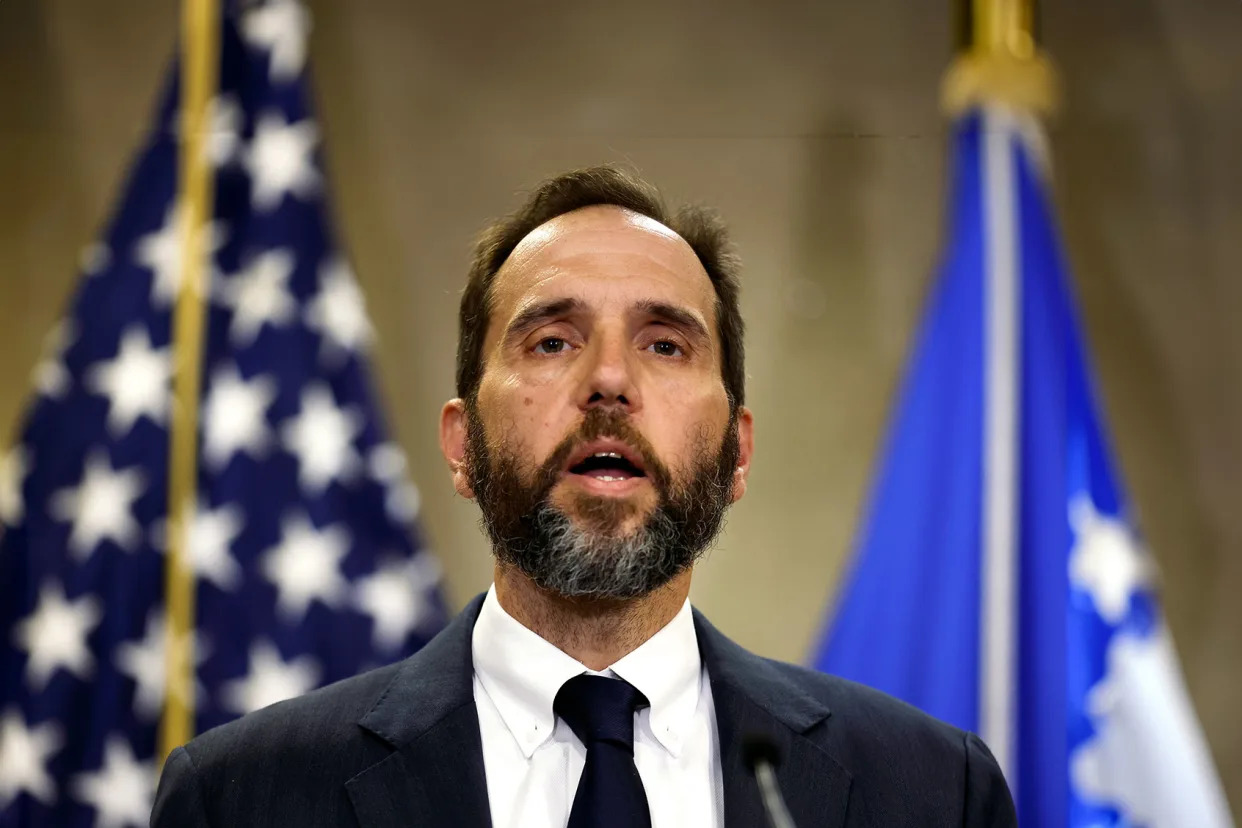
Jack Smith Chip Somodevilla/Getty Images
Special counsel Jack Smith’s team on Tuesday pushed back against an order the judge overseeing former President Donald Trump’s classified documents case.
Smith and Trump’s lawyers submitted proposed jury instructions in response to an unusual order from U.S. District Judge Aileen Cannon based on competing interpretations of the Presidential Records Act. The PRA requires a president to turn over his documents to the National Archives upon leaving office but Trump has claimed it gives him the right to deem government records as personal property.
Smith’s team in a filing said the jury instructions were based “fundamentally flawed legal premise” and asked the Trump-appointed judge to rule before a trial so he can appeal if the court rules against him because any jury instructions that include the PRA would “distort the trial.”
“The PRA’s distinction between personal and presidential records has no bearing on whether a former President’s possession of documents containing national defense information is authorized under the Espionage Act, and the PRA should play no role in the jury instructions,” Smith said in the filing. “Indeed, based on the current record, the PRA should not play any role at trial at all.”
“Things just got very real in the classified documents prosecution,” tweeted New York University Law Prof. Ryan Goodman, citing Smith’s threat to appeal in response to “Cannon’s outlandish jury instructions.”
Smith “just threw down the gauntlet” by threatening to immediately appeal if Cannon rules against him to “avoid a miscarriage of justice at trial,” wrote former federal prosecutor Renato Mariotti.
“To make this crystal clear, if trial begins and Judge Cannon makes a ruling that is legally erroneous *in the middle of the trial*, resulting in a not guilty verdict, prosecutors *cannot* appeal the verdict,” he explained. “That’s why Jack Smith wants a ruling before trial, so he can appeal.”
National security attorney Bradley Moss said the Smith filing “puts Cannon on notice that he has had enough.”
“The PRA angle is a question of law, not fact, and if she believes Trump’s PRA defense she should grant his motion and let Smith take this to the 11th circuit already,” he wrote.
Trump’s team also submitted proposed jury instructions that read like a “’Choose Your Own Adventure’ that always leads you to ‘Not guilty,’” tweeted Politico’s Kyle Cheney.
Trump’s team said that Cannon’s instructions are consistent with the former president’s position that the “prosecution is based on official acts” he took as president rather than the illegal retention of materials.
“You heard evidence during the trial that President Trump exercised that authority, at times verbally and at times without using formal procedures, while he was President,” Trump’s lawyers wrote in the hypothetical jury instructions. “I instruct you that those declassification decisions are examples of valid and legally appropriate uses of President Trump’s declassification authority while he was President of the United States.”
Trump’s team essentially used the jury instructions to “reassert supposed bases for dismissal,” explained former U.S. Attorney Harry Litman.
“Cannon is definitely in a pickle, but has nobody to blame but herself for it,” he wrote.
“The Mar-a-Lago case remains the steepest legal challenge Trump faces,” Mariotti tweeted. “Absolutely devastating evidence that is almost impossible for Trump to overcome. That’s why he is trying to delay and is making absurd arguments about the Presidential Records Act.”
Several Trump supporters involved in Jan. 6 are running for office this year
Diana Paulsen, Monica Dunn, Kelly Davis and Abigail Russ April 3, 2024
WASHINGTON — Former President Donald Trump has promised to pardon many of his supporters convicted of crimes related to the Jan. 6 attack on the Capitol if he’s elected in November.
Further down the ballot in the 2024 elections, several convicted rioters and others who were involved in the lead-up to the Capitol attack are running for local and national office themselves.
This fall will also see a candidate who was on the other side of the clash on Jan. 6, 2021. Former Capitol Police Officer Harry Dunn, who faced down a crowd of rioters, is running to replace retiring Democratic Rep. John Sarbanes of Maryland. The primary in that race is on May 14.
NBC News has identified seven candidates who are running for elected office this year who were at the Capitol on Jan. 6 or attended the Trump “Stop the Steal” rally that preceded it, plus three more who ran but have already lost in primaries. Only one candidate — Derrick Evans of West Virginia — returned NBC News’ request for comment for this story.
Kimberly Dragoo, Missouri
Kimberly Dragoo before entering the Capitol through a window. (U.S. District Court)
Kimberly Dragoo, who pleaded guilty to a misdemeanor in connection with the Jan. 6 attack, is running for a seat on the St. Joseph Board of Education in Missouri.
Dragoo participated in the riot with her husband, Steven, who photographed the couple throughout the day, including when she went through a broken window into the Capitol, according to court documents. She is one of 10 candidates running for three open seats for a board that oversees 10,000 students and 1,500 staff members, per the district’s website. The election will occur on April 2.
Michele Morrow, North Carolina
Michele Morrow won the Republican primary for North Carolina Superintendent of Public Education and will face democrat Mo Green in November.
Morrow has said publicly that she attended the “Stop the Steal” rally on Jan. 6 but that she did not enter the Capitol building. Morrow spoke to a local news station about her experience shortly after Jan. 6, saying that she “was up there” and “around the Capitol” and tried to discourage others from committing violence. She said she was “telling everyone we cannot expect our lawmakers to uphold the law if we’re going to break the law.” She has not been charged in connection with Jan. 6.
Morrow has recently gained national prominence for past social media posts in which she called for violence against prominent Democrats, including calls for the execution of President Joe Biden and then-President Barack Obama, which were first reported by CNN. In a video posted on X, she responded to the reporting of her posts saying they were “old comments taken out of context, made in jest, or never made in the first place.” She accused the media of reporting on the statements to “hide the radicalism of the Democrat platform.”
If elected, Morrow would oversee the nearly 3,000 public schools in North Carolina, attended by 1.4 million children. Morrow has no elected experience, has said that she homeschools her children and has described public schooling as “indoctrination” in social media posts.
Jason Riddle, New Hampshire
Jason Riddle holds a bottle of wine inside the Capitol. (via NBC Boston)
Jason Riddle pleaded guilty to entering the Capitol and theft of government property and was sentenced to 90 days in prison. Now, he is running for Congress in New Hampshire’s Second District. He admitted to chugging a bottle of wine inside the building and provided a photo of himself holding the bottle to media outlets, per government filings.
This is his second run for Congress. He also ran in 2022, but his candidacy was complicated by the fact that he was incarcerated at the time. He also initially expressed confusion about what office he was running for. In an interview with NBC Boston, Riddle said that he planned to challenge Democratic Rep. Annie Kuster but he “thought Ann was a state representative.” When told that she was a member of Congress, he replied: “Oh, well, I guess I have to run for that then.”
In a survey about his policy positions for the website Ballotpedia, Riddle described himself as a “recently released January 6th political prisoner” and lists Jesus as his only endorsement. The filing deadline for New Hampshire is in June and he is one of several Republicans seeking to run in the GOP primary, which is set for Sept. 10.
Anthony Kern, Arizona
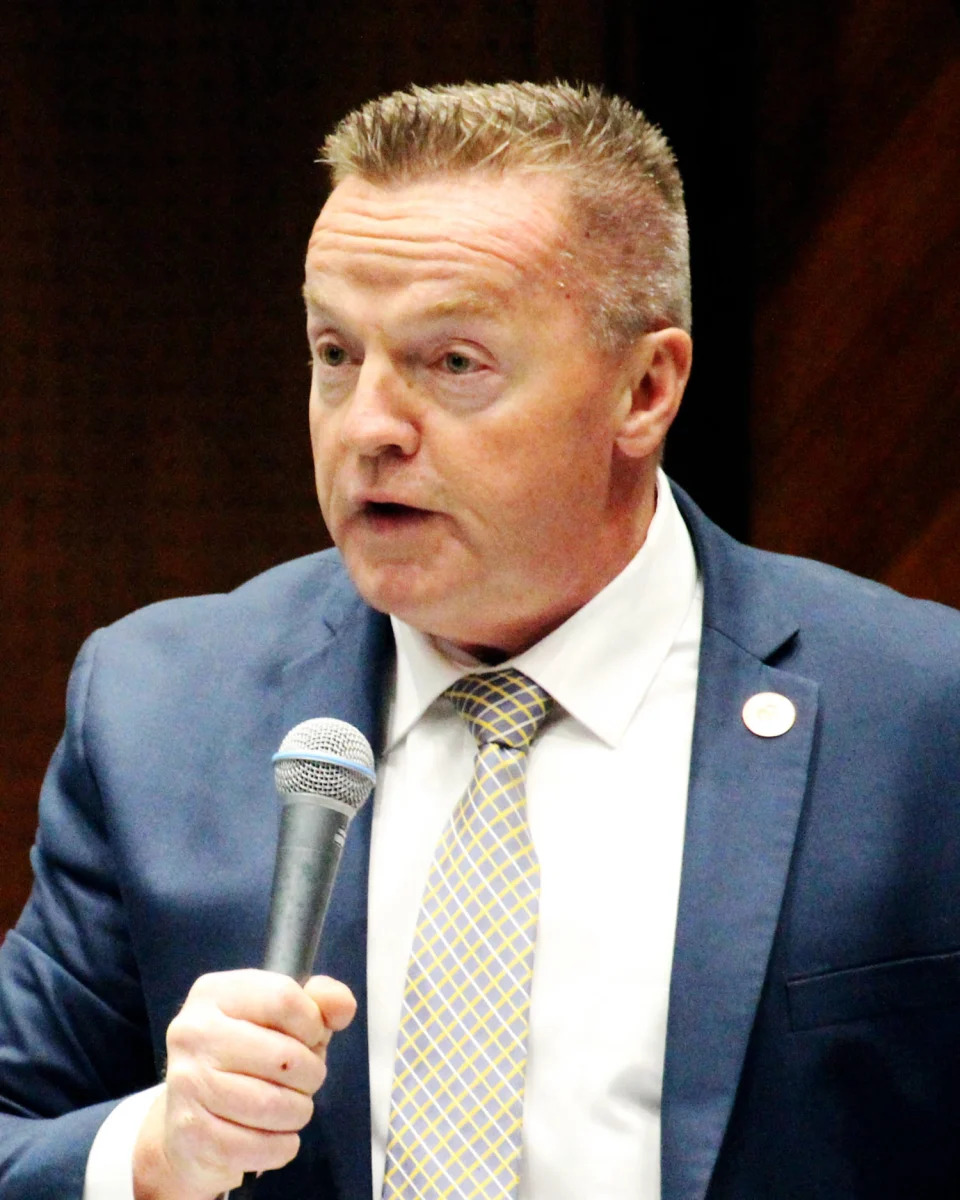
Anthony Kern Anthony Kern argues in support of a provision in the Arizona budget package that strips cash from Maricopa County Sheriff’s office in Phoenix (Bob Christie / AP file)
Anthony Kern is a current member of the Arizona Senate who signed a document falsely “certifying” the Arizona election for Trump as a fake elector. Kern attended the “Stop the Steal” rally and was outside the Capitol while rioters entered it; multiple news outlets identified him in video of the day posted online. Kern tweeted on Jan. 6 that he was in Washington for “D-Day,” using the hashtag #StopTheSteal. He later condemned the violence. He has not been charged in relation to the attack and there is no evidence that he entered the Capitol.
Kern is running for Congress in Arizona’s 8th District, where he faces several opponents in the race to replace retiring Republican Debbie Lesko. His opponents include Blake Masters, the Republican candidate for Senate in Arizona in 2022, and Abe Hamadeh, the Republican candidate for Arizona Attorney General in 2022. (Hamadeh has filed three legal challenges to his loss in the election, all of which are still pending.)
The district, which covers the northwest Phoenix suburbs, is considered solidly Republican, with Trump having won it in 2020 by 13 points.
Jacob Chansley, Arizona
Jacob Chansley at the Capitol riots on Jan. 6, 2021. (Brent Stirton / Getty Images)
Jacob Chansley, better known as the “QAnon Shaman,” has indicated that he’s running for the same seat as Kern, but as a libertarian.
Chansley was sentenced to 41 months in prison for felony obstruction of a proceeding. He is notorious for his unusual attire, having worn a furry horned headdress on Jan. 6.
He filed a statement of interest to run for Congress in November. Chansley does not appear to have a campaign website, has not filed a statement of candidacy with the Federal Election Commission and is not listed as a candidate on the Arizona Libertarian Party’s website. He, like the other candidates, did not respond to NBC News’ request for comment.
Derrick Evans, West Virginia
Derrick Evans at the Capitol on Jan. 6, 2021. (Department of Justice)
Evans, who had been sworn into office just weeks before the Jan. 6 attack, livestreamed his activities that day on Facebook, including him yelling, “Derrick Evans is in the Capitol!”
When reached for comment this week about how his connection to the riot was affecting his candidacy, Evans said in a statement that he believes there was an effort to steal the 2020 election from Trump.
Katrina Pierson, Texas
Katrina Pierson listens during the Conservative Political Action Conference (Dylan Hollingsworth / Bloomberg via Getty Images file)
Pierson is headed to a runoff in her bid for Texas’ 33rd state House District. Pierson, a former Trump spokesperson, helped organize the rally at the Ellipse and served as a liaison between organizers and the White House, including sharing Trump’s plan to call on his supporters to march to the Capitol, according to the House Jan. 6 Committee’s report. There is no evidence that Pierson went near the Capitol or into the building and she has not been charged with any crimes.
Pierson faces incumbent state Rep. Justin Holland, also a Republican, in a May 28 runoff. She was endorsed in the race by Gov. Greg Abbot and Attorney General Ken Paxton, who is targeting state House members who voted to impeach him, including Holland.
Candidates who lost
Several candidates involved in Jan. 6 have already lost their bids for office this cycle.
Ryan Zink, who was convicted of a felony and two misdemeanors for his role in the riot, lost his primary challenge to Rep. Jodey Arrington in Texas’ 19th Congressional District. He filmed himself breaching the Capitol in footage cited by prosecutors, saying, “We’re storming the Capitol! You can’t stop us!” He received about 3% of the vote.
Bianca Gracia lost her bid to represent Texas’ 128th state House District. According to the Jan. 6 committee report, Gracia helped organize a pro-Trump rally in Washington on Jan. 5 and had close ties to the extremist Proud Boys group, even meeting with leaders of that group and of the Oath Keepers on the night before the riot. Gracia gave testimony to the House Jan. 6 committee but largely invoked her Fifth Amendment rights in declining to answer questions. She has not been charged with any crimes and does not appear to have been at or near the Capitol on Jan. 6.
Gracia was endorsed by Texas Attorney General Ken Paxton but that wasn’t enough to help her defeat ultra-conservative Texas house member Briscoe Cain, who assisted the Trump legal team in its election results challenges in 2020.
Biden administration points finger at Republicans for internet bill hikes
Brian Fung, CNN – April 2, 2024
Spencer Platt/Getty Images
Tens of millions of Americans could see skyrocketing internet bills this spring or may be abruptly kicked off their plans — and it will be congressional Republicans who are to blame, the Biden administration said Tuesday.
The accusation reflects a last-ditch pressure campaign to save a federal program that has helped connect more than 23 million US households to the internet, many for the first time. Without it, those households will be forced to pay hundreds of dollars more per year to stay online.
By the end of the month, funding for the Affordable Connectivity Program (ACP) will run out, jeopardizing the monthly discounts on internet service benefiting an estimated 59 million low-income people, including veterans, students and older Americans.
Many ACP subscribers would be forced to choose between paying for groceries and paying for internet service if the program is shut down, CNN has previously reported.
Although popular with users from across the ideological spectrum, the ACP’s future is in doubt as legislation to extend the program has stalled. Now, as the Federal Communications Commission has begun winding it down, the Biden administration is ramping up pressure on the GOP for standing in the way of a critical lifeline for accessing health care, jobs and education.
“President [Joe] Biden has been calling on Congress to pass legislation that would extend the benefit through 2024. And we know Democratic members and senators have joined him in that effort,” a senior administration official told reporters. “But unfortunately, Republicans in Congress have failed to act.”
Biden has called on Congress to approve $6 billion to continue the ACP. A bill introduced in January by a bipartisan group of lawmakers in the House and Senate would authorize $7 billion. That legislation has 216 co-sponsors in the House, including 21 Republicans, and three in the Senate, including two Republicans.
But policy experts have said it is unlikely Republican House Speaker Mike Johnson will let the bill onto the House floor as GOP leaders have decried government spending, despite the program being used in virtually every congressional district nationwide.
“It is clear the program would be extended if the speaker would allow a vote,” said Blair Levin, an analyst at the market research firm New Street Research. “So far, he has not said anything about it, but it appears he will not allow the House to vote on the legislation. He has not, to my knowledge, said anything substantive about the legislation or the program.”
Levin added that support by Republican Sens. J.D. Vance of Ohio and Kevin Cramer of North Dakota also suggest the bill would pass the Senate, making the House “the biggest obstacle.”
Spokespeople for Johnson and for Senate Majority Leader Chuck Schumer didn’t immediately respond to a request for comment.
The result is a stalemate that, if left unresolved, will lead to the collapse of the ACP by early May.
Administration officials declined to say whether Biden or Vice President Kamala Harris have personally discussed the ACP with congressional Republicans. But the officials told reporters there is currently no Plan B if Congress fails to extend the program.
“There are really no good options in a world in which Congress leaves us without any funding,” said another senior administration official. “There are certainly no easy answers for us to move forward if this program ends. So we want to work as hard as possible to make sure we avoid that possibility.”
Some lawmakers had hoped that money for the ACP could have been included in the recent bipartisan spending deal intended to keep the government open, but those hopes were ultimately left unfulfilled.
On Tuesday, FCC Chairwoman Jessica Rosenworcel sent a letter to Congress outlining the impact that the ACP’s disruption would cause.
“The end of the ACP will have broad impact,” Rosenworcel wrote. “But it is worth noting that they will have special impact on certain vulnerable populations, including senior citizens. We know that nearly half of ACP households are led by someone over the age of 50.”
More than 4 million military households are signed up for the ACP, Rosenworcel added, while 3.4 million households within the ACP program reported using school lunch or breakfast programs, indicating that many program subscribers are parents of children whose ability to do homework assignments may be interrupted by the loss of the ACP. To qualify for the ACP, users are required to meet certain income limits or be a participant in one of a number of other federal aid programs, such as the National School Lunch Program.
Rosenworcel called on Sen. Maria Cantwell and the panel she chairs, the Senate Committee on Commerce, Science, and Transportation, to quickly advance legislation to extend the ACP. But the bill’s future remains foggy.
Our Trump reporting upsets some readers, but there aren’t two sides to facts: Letter from the Editor
Chris Quinn, Editor, Cleveland Plain Dealer – March 30, 2024
Some readers complain that we have different standards involving Donald Trump and Joe Biden. (AP Photo, File)AP
A more-than-occasional arrival in the email these days is a question expressed two ways, one with dripping condescension and the other with courtesy:
Why don’t our opinion platforms treat Donald Trump and other politicians exactly the same way. Some phrase it differently, asking why we demean the former president’s supporters in describing his behavior as monstrous,insurrectionist and authoritarian. I feel for those who write. They believe in Trump and want their local news source to recognize what they see in him.
The angry writers denounce me for ignoring what they call the Biden family crime syndicate and criminality far beyond that of Trump. They quote news sources of no credibility as proof the mainstream media ignores evidence that Biden, not Trump, is the criminal dictator.
The courteous writers don’t go down that road. They politely ask how we can discount the passions and beliefs of the many people who believe in Trump.
This is a tough column to write, because I don’t want to demean or insult those who write me in good faith. I’ve started it a half dozen times since November but turned to other topics each time because this needle hard to thread. No matter how I present it, I’ll offend some thoughtful, decent people.
The north star here is truth. We tell the truth, even when it offends some of the people who pay us for information.
The truth is that Donald Trump undermined faith in our elections in his false bid to retain the presidency. He sparked an insurrection intended to overthrow our government and keep himself in power. No president in our history has done worse.
This is not subjective. We all saw it. Plenty of leaders today try to convince the masses we did not see what we saw, but our eyes don’t deceive. (If leaders began a yearslong campaign today to convince us that the Baltimore bridge did not collapse Tuesday morning, would you ever believe them?) Trust your eyes. Trump on Jan. 6 launched the most serious threat to our system of government since the Civil War. You know that. You saw it.
The facts involving Trump are crystal clear, and as news people, we cannot pretend otherwise, as unpopular as that might be with a segment of our readers. There aren’t two sides to facts. People who say the earth is flat don’t get space on our platforms. If that offends them, so be it.
As for those who equate Trump and Joe Biden, that’s false equivalency. Biden has done nothing remotely close to the egregious, anti-American acts of Trump. We can debate the success and mindset of our current president, as we have about most presidents in our lifetimes, but Biden was never a threat to our democracy. Trump is. He is unique among all American presidents for his efforts to keep power at any cost.
Personally, I find it hard to understand how Americans who take pride in our system of government support Trump. All those soldiers who died in World War II were fighting against the kind of regime Trump wants to create on our soil. How do they not see it?
The March 25 edition of the New Yorker magazine offers some insight. It includes a detailed review of a new book about Adolf Hitler, focused on the year 1932. It’s called “Takeover: Hitler’s Final Rise to Power” and is by historian Timothy W. Ryback. It explains how German leaders – including some in the media — thought they could use Hitler as a means to get power for themselves and were willing to look past his obvious deficiencies to get where they wanted. In tolerating and using Hitler as a means to an end, they helped create the monstrous dictator responsible for millions of deaths.
How are those German leaders different from people in Congress saying the election was stolen or that Jan. 6 was not an insurrection aimed at destroying our government? They know the truth, but they deny it. They see Trump as a means to an end – power for themselves and their “team” – even if it means repeatedly telling lies.
Sadly, many believe the lies. They trust people in authority, without questioning the obvious discrepancies or relying on their own eyes. These are the people who take offense to the truths we tell about Trump. No one in our newsroom gets up in the morning wanting to make a segment of readers feel bad. No one seeks to demean anyone. We understand what a privilege it is to be welcomed into the lives of the millions of people who visit our platforms each month for news, sports and entertainment. But our duty is to the truth.
Our nation does seem to be slipping down the same slide that Germany did in the 1930s. Maybe the collapse of government in the hands of a madman is inevitable, given how the media landscape has been corrupted by partisans, as it was in 1930s Germany.
I hope not.
In our newsroom, we’ll do our part. Much as it offends some who read us, we will continue to tell the truth about Trump.
Extremist ex-adviser drives ‘anti-white racism’ plan for Trump win – report
Martin Pengelly in Washington – April 1, 2024
Stephen Miller at the White House, in Washington DC on 15 July 2020.Photograph: Anna Moneymaker/The New York Times/Bloomberg via Getty Images
The anti-immigration extremist, white nationalist and former Trump White House adviser Stephen Miller is helping drive a plan to tackle supposed “anti-white racism” if Donald Trump returns to power next year, Axios reported.
“Longtime aides and allies … have been laying legal groundwork with a flurry of lawsuits and legal complaints – some of which have been successful,” Axios said on Monday.
Should Trump return to power, Axios said, Miller and other aides plan to “dramatically change the government’s interpretation of civil rights-era laws to focus on ‘anti-white racism’ rather than discrimination against people of colour”.
Such an effort would involve “eliminating or upending” programmes meant to counter racism against non-white groups.
The US supreme court, dominated 6-3 by rightwing justices after Trump installed three, recently boosted such efforts by ruling against race-based affirmative action in college admissions.
America First Legal, a group founded by Miller and described by him as the right’s “long-awaited answer” to the American Civil Liberties Union, is helping drive plans for a second Trump term, Axios said.
In 2021, an AFL suit blocked implementation of a $29bn Covid-era Small Business Administration programme that prioritised helping restaurants owned by women, veterans and people from socially and economically disadvantaged groups.
Miller called that ruling “the first, but crucial, step towards ending government-sponsored racial discrimination”.
Recent AFL lawsuits include one against CBS and Paramount alleging discrimination against a white, straight man who wrote for the show Seal Team, and a civil rights complaint against the NFL over the “Rooney Rule”, which says at least two minority candidates must be interviewed for vacant top positions.
Reports of extremist groups planning for a second Trump presidency are common, not least around Project 2025, a blueprint for transition and legislative priorities prepared by the Heritage Foundation, a hard-right Washington thinktank.
Trump’s spokesperson, Steven Cheung, told Axios: “As President Trump has said, all staff, offices, and initiatives connected to [Joe] Biden’s un-American policy will be immediately terminated.”
Throughout Trump’s term in office, Miller was a close adviser and speechwriter – though one of the 45th president’s less successful TV surrogates, ridiculed for using “spray-on hair”.
Controversies were numerous. Among them were reported advocacy for blowing up migrants with drones (which Miller denied); for sending 250,000 US troops to the southern border; and for beheading an Isis leader, dipping the head in pig’s blood and “parad[ing] it around to warn other terrorists” (Miller denied it and called the source of the story, the former defense secretary Mark Esper, a “moron”).
In 2019, after Miller was discovered to have touted white nationalist articles and books, 55 civil rights groups wrote to Trump, protesting: “Stephen Miller has stoked bigotry, hate and division with his extreme political rhetoric and policies throughout his career. The recent exposure of his deep-seated racism provides further proof that he is unfit to serve and should immediately leave his post.”
On Monday, Cedric Richmond, co-chair of Biden’s re-election campaign, said: “It’s not like Donald Trump has been hiding his racism … [but] he’s making it clear that if he wins in November, he’ll turn his racist record into official government policy … It’s up to us to stop him.”
Despite his legal advocacy in the cause of eradicating “anti-white racism”, Miller is not himself a lawyer.
Ty Cobb, a former Trump White House lawyer, recently told the Guardian those close to the former president were now “looking for lawyers who worship Trump and will do his bidding. Trump is looking to Miller to pick people who will be more loyal to Trump than the rule of law.”
Trump Allies Plan to Reinterpret Civil Rights Laws to Protect White People: Report
Nikki McCann Ramirez – April 1, 2024
Allies of Donald Trump and powerful conservative organizations are preparing to launch an offensive against “anti-white racism” should the former president retake the White House in November. According to a report from Axios, those in Trump’s orbit are gearing up for a widespread re-interpretation of civil rights laws to combat what they perceive as reverse racism against white Americans.
According to the report, this would include a mass gutting of government programs and diversity initiatives. “As President Trump has said, all staff, offices, and initiatives connected to Biden’s un-American policy will be immediately terminated,” Steven Cheung, a Trump campaign spokesperson, told Axios.
The initiative is already being spearheaded by former Trump adviser Stephen Miller, who founded the right-wing judicial activist outfit America First Legal after leaving the White House. Miller has leveraged Civil Rights-era laws intended to protect minorities from discrimination to challenge “woke” corporate policies of inclusion. America First Legal has sued Nike, Disney, United Airlines, the National Football League, and CBS Entertainment — among others— for allegedly discriminating against white men. Several of the lawsuits cite the 1964 Civil Rights Act, which prohibits discrimination on the basis of race, color, religion, sex or national origin.
Miller and his organization are not acting alone. America First Legal was consulted by the Heritage Foundation, a conservative think tank, in the drafting of its “Project 2025” policy handbook. The handbook contains language calling for an end to “affirmative discrimination,” and calls for an incoming conservative administration to “reorganize and refocus the DOJ’s Civil Rights Division to serve as the vanguard for this return to lawfulness.”
Trump himself has repeatedly claimed to be the target of anti-white discrimination. As previously reported by Rolling Stone, the former president has directed his advisers to look into ways he might compel the Justice Department to investigate New York Attorney General Letitia James, who successfully sued the former president for fraud last year. Trump regularly refers to James as “racist” in his social media posts and public statements.
Last week, National Review contributing editor Deroy Murdock suggested on Fox Business that Trump has grounds to sue James on the basis of discrimination.
“I think what President Trump should do is sue her on the basis of the 1964 Civil Rights Act,” Murdock said. When asked if he had suggested this directly to the former president, Murdock responded that he “will,” and that the message will get to Trump “sooner or later.”
5 Sneaky Signs You Have Insulin Resistance, According to Dietitians
Allison Knott, MS, RDN, CSSD – April 1, 2024
Some of the symptoms on this list are easy to miss.
Getty Images
Reviewed by Dietitian Emily Lachtrupp, M.S., RD
Four out of 10 adults between the ages of 18 and 44 have an often-overlooked health condition that can lead to type 2 diabetes, according to research published in 2022 in The Journal of Clinical Endocrinology & Metabolism: Insulin resistance.
When you have insulin resistance, your body doesn’t respond effectively to insulin, a hormone that pushes blood glucose into your cells where it can be used for energy, says the National Institute of Diabetes and Digestive and Kidney Diseases (NIDDK). Because of this, the body demands more insulin to help the cells absorb glucose. “This leads to higher levels of both insulin and glucose in the bloodstream,” says Emily Cornelius, RD, a registered dietitian and insulin resistance expert. “Over time, this can lead to various health complications like prediabetes and type 2 diabetes,” she explains.
The catch? Insulin resistance often doesn’t have any signs or symptoms. This can make it difficult to identify before it progresses to prediabetes or type 2 diabetes. But the good news is that insulin resistance can be managed and even reversed when addressed early. That’s why paying attention to the signs of this condition—many of which are sneaky—is so important. Here’s what you need to know.
Changes to the skin are one of the lesser-known signs of insulin resistance. In some people, insulin resistance can lead to the development of skin tags or acanthosis nigricans (dark patches of skin on the neck or under the armpits), both of which are thought to be related to excess insulin production, according to the NIDDK. If you have questions about your skin, talk to a dermatologist.
2. You May Have Gained Weight
Weight gain may be a sign of insulin resistance, particularly if you have excess abdominal fat called visceral fat, according to the Journal of Clinical Medicine in 2019. Weight gain alone puts you at risk for developing insulin resistance, but insulin resistance itself can also lead to weight gain resulting in a cycle that can progress over time. That said, it doesn’t have to be a large amount of weight gain, either. Data in The Journal of Clinical Endocrinology & Metabolism in 2022 found that half of adults with insulin resistance did not have weights that were considered obese.
3. You Experience Brain Fog
Being insulin resistant means that glucose isn’t as readily available to provide energy for cells, including those in the brain. Because of this, you may feel what’s commonly referred to as “brain fog.” Research suggests that people who have insulin resistance may have worse cognitive performance compared to those who don’t have the condition, found a study in Diabetes Research and Clinical Practicein 2020. Insulin resistance may impair important brain processes that affect mental clarity.
4. You’re Always Hungry
Hunger is influenced by a combination of hormones, one being insulin. With insulin resistance, you may experience frequent hunger. Why? Insulin resistance causes high blood sugar, a symptom of which is increased hunger.
Because the cells don’t get the energy they need from glucose, you may also feel fatigued. It’s important to note that many other health conditions can affect energy levels. Be sure to talk to your doctor about persistent fatigue.
How Is Insulin Resistance Diagnosed?
Many of the tests to diagnose insulin resistance are time-consuming and expensive. For this reason, they’re often only used in research studies and not in medical offices, according to the NIDDK. Prediabetes is a condition that is diagnosed, which is done through blood testing like a fasting plasma glucose test or A1C test. The Centers for Disease Control and Prevention points out that having a combination of high blood sugar, high triglycerides, high “bad” LDL cholesterol and low “good” HDL cholesterol can alert you to the fact that you probably have insulin resistance.
Strategies to Improve and Prevent Insulin Resistance
Balance Meals
The foods you eat have a significant effect on blood glucose and can help to stabilize levels throughout the day. “When working on reversing insulin resistance, it’s critical to look at it from a holistic perspective, but the diet plays a foundational role,” says Cornelius. “Eating a balanced diet that includes protein, fat and fiber helps to lessen spikes during meals,” she says.
Focus on Minimally Processed Foods
Many processed foods—fast food, packaged desserts, snack mixes, sodas, chicken nuggets, hot dogs and more—are rich in saturated fat or sugar or both, and are calorically dense, making them easy to overeat, something that can lead to weight gain and the development of visceral fat.
“Prioritizing whole-nutrient dense foods such as fresh fruits, vegetables, whole grains and lean proteins along with controlling portion sizes and consistent and spaced meal timings can help improve insulin sensitivity,” says registered dietitian nutritionist Cari Riker. Eating this way can also help with weight management.
Don’t Fear Carbohydrates
Fiber-rich carbs are the way to go. “Carbohydrates often get a bad reputation when it comes to blood sugar discussions; however, fiber is a type of carb that doesn’t get fully digested and absorbed. So its impact on your blood sugar levels is significantly different than that of added sugars,” says registered dietitian Alyssa Pacheco. Choose high-fiber foods often as part of a balanced diet. Foods like whole grains, beans, vegetables and fruits, nuts and seeds can all contribute to the recommended 25 to 38 grams of daily fiber.
Eat Magnesium-Rich Foods
Foods that are a good source of fiber are also often a good source of magnesium, a nutrient that plays a critical role in glucose metabolism. “Magnesium is another nutrient to make sure you’re getting enough of, since a deficiency can worsen insulin resistance. Good food sources of magnesium include beans, spinach, almonds, pumpkin seeds, cashews and avocados,” says Pacheco.
Fit in Physical Activity
It’s time to get on the move. “Another important strategy is moving your body throughout the day, since it lowers blood sugar,” says Cornelius. Physical activity improves insulin sensitivity, according to the American Diabetes Association, helping to manage or reverse insulin resistance. Find an activity you enjoy and do it regularly to combat insulin resistance.
According to the CDC, no single test can determine if you have insulin resistance. Having health conditions like high blood sugar levels, high LDL (“bad”) cholesterol, low HDL (“good”) cholesterol and high triglycerides may indicate insulin resistance.
What is the main cause of insulin resistance?
A family history of type 2 diabetes, being overweight or having obesity and a sedentary lifestyle can all increase the risk of developing insulin resistance.
How do you fix insulin resistance?
Strategies like increasing activity, weight loss, a healthy diet, improving sleep quality and reducing stress can all help improve insulin resistance.
The Bottom Line
Maintaining a healthy blood sugar range is essential for longevity and the prevention of chronic disease. Regular physical activity and eating a balanced diet can help with preventing insulin resistance, but because many other factors are at play in the development of this condition, it’s equally as important to know the signs and symptoms for early detection. If you suspect you have insulin resistance, reach out to your doctor or registered dietitian to help you develop a plan to manage or reverse it over time.
Gastrointestinal (GI) symptoms affect most people from time to time. The gastrointestinal tract is the body’s digestive system. Common GI symptoms include bloating, indigestion, and heartburn. Other symptoms that may indicate a health problem may include sudden abdominal pain, constant diarrhea, and bloody stool.
This article discusses serious GI symptoms that should never be ignored, their possible causes, and what to do about them.
Kate Wieser / Getty Images
Stomach Cramps
Stomach cramps are a common GI symptom that often feels like a dull, aching pain. The discomfort may be constant or come and go. Common causes of stomach cramps include constipation, gas, diarrhea, a virus, hormonal medication, a menstrual period, pregnancy, and ovulation.
Kidney stones: hard deposits that may become lodged in the urinary tract or ureter
Diverticulitis: occurs when small sacs or pouches in the colon become inflamed and cause pain and cramping
Appendicitis: an inflammation of the appendix that causes significant abdominal pain and cramping
Pancreatitis: an inflammation of the pancreas that causes abdominal pain, cramping, and vomiting
Endometriosis: when endometrial tissue grows outside the uterus and causes significant pain and cramping during the menstrual cycle
Swollen Belly
If you notice a swollen belly, it is likely due to bloating. Common causes of bloating are gas, indigestion, premenstrual syndrome (PMS), IBS, or lactose intolerance, which causes bloating, gas, and diarrhea after ingesting lactose (dairy products).
Serious causes of a swollen belly include:
IBD
Ascites: a buildup of fluid in the abdomen caused by chronic liver disease
Gallstones
Pancreatitis
Ovarian cyst: a fluid-filled sac on or in the ovary that causes abdominal pain and swelling
Bloody vomit indicates bleeding somewhere in your digestive tract. Never ignore bloody vomit because the cause of the bleeding requires treatment. Possible causes of bloody vomit include:
Bleeding ulcer: a sore on the lining of the stomach or small intestine that may bleed and cause vomiting
Chronic pancreatitis: may lead to bleeding in the upper part of the GI tract
Tumor: a tumor in the GI tract may irritate the tissues and cause bleeding
Traumatic injury: an injury to the abdominal area that may lead to internal bleeding (see a healthcare provider immediately if this happens)
Blood in the stool or urine means you are bleeding somewhere in your lower GI or urinary tract. A small amount of bright red blood with straining may indicate hemorrhoids. Serious causes of bloody stool may include:
Anal fissure: a small tear in the lining of the rectum that causes drops of red blood when you wipe after using the bathroom
Diverticulitis: a condition that can lead to diverticular bleeding
Infectious colitis: an infection in the colon that causes inflammation and bleeding
Colon polyps: growths on the lining of the colon and rectum that may become irritated and start bleeding
Colorectal cancer: cancer of the colon or rectum in which cancerous growths may cause bleeding
A small amount of blood in the urine after a procedure on the bladder or urinary tract is common. For example, you may experience a small amount of bleeding after having a catheter. People who menstruate may notice blood in their urine caused by their menstrual period. Serious causes of bloody urine may include:
Sexually transmitted infections (STI): Blood in the urine is a possible sign of chlamydia or gonorrhea
Bladder or kidney cancer: the cancerous growth may cause irritation and bleeding
Sickle cell disease: an inherited red blood cell disorder that causes pain and bleeding
Pain in the Upper Stomach
Pain in the upper area of your stomach may indicate indigestion or heartburn. Sudden upper abdominal pain may indicate a problem with the organs located in that area. The stomach, pancreas, spleen, liver, gallbladder, and bile ducts are in the upper abdomen. Serious causes of upper stomach pain may include:
Splenomegaly: an enlarged spleen may cause upper abdominal pain
Gallstones
Cholecystitis: an inflammation of the gallbladder that often causes nausea and upper abdominal pain
Hepatitis: Inflammation of the liver is usually caused by an infection; one sign of hepatitis is upper abdominal pain
Cancer: cancer of the stomach, pancreas, liver, gallbladder, or bile ducts may cause pain
Lower Right Abdominal Pain
Pain in the lower abdominal area may indicate constipation, diarrhea, or menstrual cramps. If you notice pain localized in the right side of the lower abdomen, it may be your appendix. Lower right quadrant pain could mean inflammation in your appendix (appendicitis). Rarely, it could indicate appendix cancer.
Constantly Feeling Full
Feeling full without eating or after eating only a small amount is not normal. Temporary causes of feeling very full could be eating habits, indigestion, or constipation. More serious causes of constantly feeling full may include:
Gastroparesis: a disorder that causes the stomach to empty slowly
Gastritis: an inflammation of the stomach lining that may cause you to feel full
Pancreatitis
Black Stool
Black stool usually means that there is bleeding in the digestive tract. Certain foods and supplements, such as blueberries or iron supplements, can make stool appear darker. Black stool could mean esophagus, stomach, or small intestine bleeding. It may also mean that you have a bleeding ulcer.
Sudden Pulsing Pain
It is possible to feel a pulsing sensation in the abdomen because of a large blood vessel called the abdominal aorta. You may feel the abdominal aorta pulse when there is more blood flow due to pregnancy, eating, or positioning (lying down). An abdominal aortic aneurysm could cause sudden pulsing pain in the abdomen.
Strong Hunger Pangs
It is normal to feel hunger pangs when you have gone a long time without eating. Hunger is your body’s way of communicating that it is time to eat. Common causes of hunger pangs include hunger, dehydration, and constipation. Serious causes of intense hunger pangs may include:
IBS
Peptic ulcer
Anxiety: causes physical symptoms, including stomach discomfort and intestinal spasms that may feel like hunger pangs
Medications: including antidepressants, antipsychotics, diabetes medications, steroids, and anticonvulsants (seizure medications), which can cause hunger and weight gain
Constant Diarrhea
Most people experience diarrhea or loose stools from time to time. If you have been experiencing constant or chronic diarrhea, see a healthcare provider. The types of diarrhea that may indicate a health problem include:
Watery: may be caused by an infection, food poisoning, or IBS
Inflammatory: occurs when the colon is inflamed from infection, IBD, diverticulitis, or cancer
Bloody: indicates inflammation or colon cancer
Summary
Gastrointestinal symptoms are common and often include heartburn, indigestion, bloating, and cramping. Other GI symptoms are more serious and may indicate a health problem. If you ever experience bleeding with vomiting, urinating, or releasing stool, see a healthcare provider. Seek medical attention if you notice sudden abdominal pain that does not improve.
The pandemic played a role in increased consumption, but alcohol use among people 65 and older was climbing even before 2020. (Luisa Jung/The New York Times)
The phone awakened Doug Nordman at 3 a.m. A surgeon was calling from a hospital in Grand Junction, Colorado, where Nordman’s father had arrived at the emergency room, incoherent and in pain, and then lost consciousness.
At first, the staff had thought he was suffering a heart attack, but a CT scan found that part of his small intestine had been perforated. A surgical team repaired the hole, saving his life, but the surgeon had some questions.
“Was your father an alcoholic?” he asked. The doctors had found Dean Nordman malnourished, his peritoneal cavity “awash with alcohol.”
Doug Nordman, a military personal finance author living in Oahu, Hawaii, explained that his 77-year-old dad had long been a classic social drinker: a scotch and water with his wife before dinner, which got topped off during dinner, then another after dinner, and perhaps a nightcap.
Having three to four drinks daily exceeds current dietary guidelines, which define moderate consumption as two drinks a day for men and one for women, or less. But “that was the normal drinking culture of the time,” Doug Nordman, now 63, said.
At the time of his hospitalization, though, Dean Nordman, a retired electrical engineer, was widowed, living alone and developing symptoms of dementia. He got lost while driving, struggled with household chores and complained of a “slipping memory.”
He had waved off his two sons’ offers of help, saying he was fine. During that hospitalization, however, Doug Nordman found hardly any food in his father’s apartment. Worse, reviewing his father’s credit card statements, “I saw recurring charges from the Liquor Barn and realized he was drinking a pint of scotch a day,” he said.
Public health officials are increasingly alarmed by older Americans’ drinking. The annual number of alcohol-related deaths from 2020 through 2021 exceeded 178,000, according to recently released data from the Centers for Disease Control and Prevention. That is more deaths than from all drug overdoses combined.
An analysis by the National Institute on Alcohol Abuse and Alcoholism shows that people over 65 accounted for 38% of that total. From 1999 to 2020, the 237% increase in alcohol-related deaths among those over age 55 was higher than for any age group except 25- to 34-year-olds.
Americans largely fail to recognize the hazards of alcohol, said George Koob, director of the institute. “Alcohol is a social lubricant when used within the guidelines, but I don’t think they realize that as the dose increases it becomes a toxin,” he said. “And the older population is even less likely to recognize that.”
The growing number of older people accounts for much of the increase in deaths, Koob said. An aging population foreshadows a continuing surge that worries health care providers and elder advocates, even if older people’s drinking behavior doesn’t change.
But it has been changing. The proportions of people over 65 who report using alcohol in the past year (about 56%) and the past month (about 43%) are lower than for all other groups of adults. But older drinkers are markedly more likely to do it frequently, 20 or more days a month, than younger ones.
Moreover, a 2018 meta-analysis found that binge drinking (defined as four or more drinks on a single occasion for women, five or more for men) had climbed nearly 40% among older Americans over the past 10 to 15 years.
What’s going on here?
The pandemic has clearly played a role. The CDC reported that deaths attributable directly to alcohol use, emergency room visits associated with alcohol, and alcohol sales per capita all rose from 2019 to 2020, as COVID-19 arrived and restrictions took hold.
“A lot of stressors impacted us: the isolation, the worries about getting sick,” Koob said. “They point to people drinking more to cope with that stress.”
Researchers also cite a cohort effect. Compared with those before and after them, “the boomers are a substance-using generation,” said Keith Humphreys, a psychologist and addiction researcher at Stanford. And they’re not abandoning their youthful behavior, he said.
Studies show a narrowing gender divide, too. “Women have been the drivers of change in this age group,” Humphreys said.
From 1997 to 2014, drinking rose an average of 0.7% a year for men over 60, while their binge drinking remained stable. Among older women, drinking climbed by 1.6% annually, with binge drinking up 3.7%.
“Contrary to stereotypes, upper-middle-class, educated people have higher rates of drinking,” Humphreys explained. In recent decades, as women grew more educated, they entered workplaces where drinking was normative; they also had more disposable income. “The women retiring now are more likely to drink than their mothers and grandmothers,” he said.
Yet alcohol use packs a greater wallop for older people, especially for women, who become intoxicated more quickly than men because they’re smaller and have fewer of the gut enzymes that metabolize alcohol.
Seniors may argue that they are merely drinking the way they always have, but “equivalent amounts of alcohol have much more disastrous consequences for older adults,” whose bodies cannot process it as quickly, said Dr. David Oslin, a psychiatrist at the University of Pennsylvania and the Veterans Affairs Medical Center in Philadelphia.
“It causes slower thinking, slower reaction time and less cognitive capacity when you’re older,” he said, ticking off the risks.
Long associated with liver diseases, alcohol also “exacerbates cardiovascular disease, renal disease and, if you’ve been drinking for many years, there’s an increase in certain kinds of cancers,” he said. Drinking contributes to falls, a major cause of injury as people age, and disrupts sleep.
Older adults also take a lot of prescription drugs, and alcohol interacts with a long list of them. These interactions can be particularly common with pain medications and sleep aids like benzodiazepines, sometimes causing oversedation. In other cases, alcohol can reduce a drug’s effectiveness.
Oslin cautions that while many prescription bottles carry labels that warn against using those drugs with alcohol, patients may shrug that off, explaining that they take their pills in the morning and don’t drink until evening.
“Those medications are in your system all day long, so when you drink, there’s still that interaction,” he tells them.
One proposal for combating alcohol misuse among older people is to raise the federal tax on alcohol, for the first time in decades.
“Alcohol consumption is price-sensitive, and it’s pretty cheap right now relative to income,” Humphreys said.
Resisting industry lobbying and making alcohol more expensive, the way higher taxes have made cigarettes more expensive, could reduce use.
So could eliminating barriers to treatment.
Treatments for excessive alcohol use, including psychotherapy and medications, are no less effective for older patients, Oslin said. In fact, “age is actually the best predictor of a positive response,” he said, adding that “treatment doesn’t necessarily mean you have to become abstinent. We work with people to moderate their drinking.”
But the 2008 federal law requiring health insurers to provide parity — meaning the same coverage for mental health, including substance use disorders, as for other medical conditions — doesn’t apply to Medicare. Several policy and advocacy groups are working to eliminate such disparities.
Dean Nordman never sought treatment for his drinking, but after his emergency surgery, his sons moved him into a nursing home, where antidepressants and a lack of access to alcohol improved his mood and his sociability. He died in the facility’s memory care unit in 2017.
Doug Nordman, whom his father had introduced to beer at 13, had been a heavy drinker himself, he said, “to the point of blackout” as a college student, and a social drinker thereafter.
But as he watched his father decline, “I realized this was ridiculous,” he recalled. Alcohol can exacerbate the progression of cognitive decline, and he had a family history.
He has remained sober since that pre-dawn phone call 13 years ago.
They came for Florida’s sun and sand. They got soaring costs and a culture war.
Shannon Pettypiece – March 31, 2024
One of the first signs Barb Carter’s move to Florida wasn’t the postcard life she’d envisioned was the armadillo infestation in her home that caused $9,000 in damages. Then came a hurricane, ever present feuding over politics, and an inability to find a doctor to remove a tumor from her liver.
After a year in the Sunshine State, Carter packed her car with whatever belongings she could fit and headed back to her home state of Kansas — selling her Florida home at a $40,000 loss and leaving behind the children and grandchildren she’d moved to be closer to.
“So many people ask, ‘Why would you move back to Kansas?’ I tell them all the same thing — you’ve got to take your vacation goggles off,” Carter said. “For me, it was very falsely promoted. Once living there, I thought, you know, this isn’t all you guys have cracked this up to be, at all.”
Florida has had a population boom over the past several years, with more than 700,000 people moving there in 2022, and it was the second-fastest-growing state as of July 2023, according to Census Bureau data. While there are some indications that migration to the state has slowed from its pandemic highs, only Texas saw more one-way U-Haul moves into the state than Florida last year. Mortgage application data indicated there were nearly two homebuyers moving to Florida in 2023 for every one leaving, according to data analytics firm CoreLogic.
But while hundreds of thousands of new residents have flocked to the state on the promise of beautiful weather, no income tax and lower costs, nearly 500,000 left in 2022, according to the most recent census data. Contributing to their move was a perfect storm of soaring insurance costs, a hostile political environment, worsening traffic and extreme weather, according to interviews with more than a dozen recent transplants and longtime residents who left the state in the past two years.
A demonstrator holds a placard reading
“It wasn’t the utopia on any level that I thought it would be,” said Jodi Cummings, who moved to Florida from Connecticut in 2021. “I thought Florida would be an easier lifestyle, I thought the pace would be a little bit quieter, I thought it would be warmer. I didn’t expect it to be literally 100 degrees at night. It was incredibly difficult to make friends, and it was expensive, very expensive.”
Cummings expected she’d have extra money in her paycheck working as a private chef in the Palm Beach area since the state doesn’t have an income tax. But the high costs of car insurance, rent and food cut into that additional take-home pay. After six months of dealing with South Florida’s heat and traffic, she began planning a move back to the Northeast.
“I had been so disenchanted with Florida so quickly,” Cummings said. “There was this feeling of confusion and guilt about wanting to leave, of moving there then realizing this is not anything like I thought it would be.”
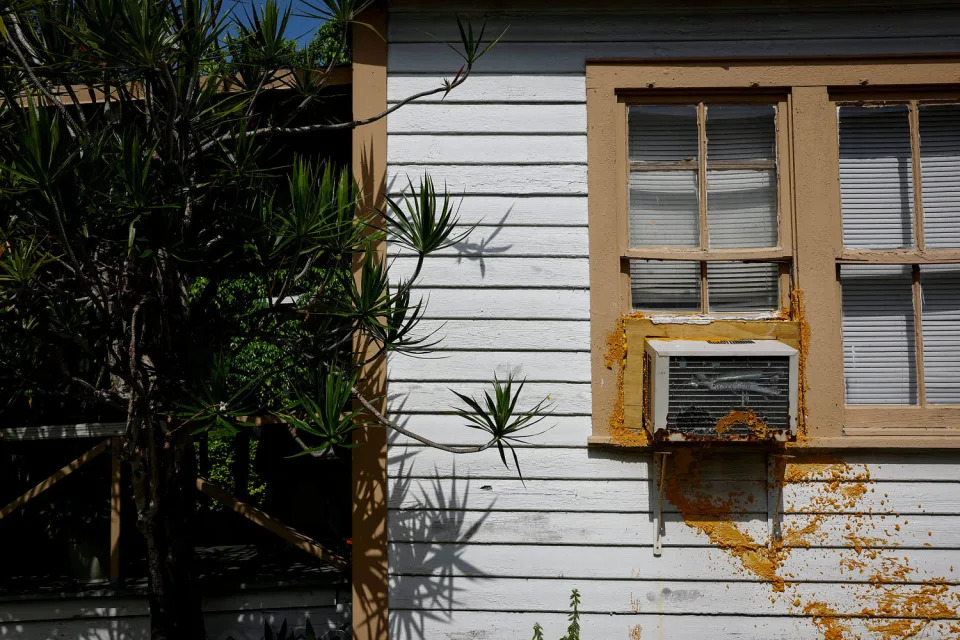
A window air conditioning unit during a heat wave in Miami (Eva Marie Uzcategui / Bloomberg via Getty Images)
While costs have been rising across the country, some areas of Florida have been hit particularly hard. In the South Florida region, which includes Miami, Fort Lauderdale and Palm Beach, consumer prices in February were up nearly 5% over the prior year, compared to 3.2% nationally, according to the most recent data from the Bureau of Labor Statistics.
Homeowners insurance rates in Florida rose 42% last year to an average of $6,000 annually, driven by hurricanes and climate change, and car insurance in Florida is more than 50% higher than the national average, according to the Insurance Information Institute. While once seen as an affordable housing market, Florida is now among the more expensive states to buy a home in, with prices up 60% since 2020 to an average of $388,500, according to Zillow.
For Carter, who made the move in 2022 from Kansas to a suburb of Orlando for the weather, beaches and to be closer to her grandchildren, the costs began to quickly pile up. She purchased a manufactured home and initially expected the lot rent in her community to be $580 a month. But when she arrived she learned her monthly bill was actually $750, and by the time she left it had jumped to $875 a month. Along with the $9,000 in repairs from the armadillos, her car insurance doubled and Hurricane Ian destroyed her home’s roof on her 62nd birthday.
A aerial view of a man wading through a flooded street. (Bryan R. Smith / AFP via Getty Images)
There were also the ever-present conversations and disagreements over politics that started to wear on her. Carter, who describes herself as a “middle of the road” Republican, said she learned to keep her opinions to herself.
“You cannot engage in a conversation there without politics coming up, it is just crazy. We’re retired, we’re supposed to be in our fun time of life,” she said. “I learned quickly, just keep your mouth shut, because I saw people in my own community break up their friendships over it. I don’t like losing friends, and especially over politics.”
A supporter of President Joe Biden faces supporters of Donald Trump outside of the courthouse in Fort Pierce, Fla., where Trump attended a hearing in his classified records case on March 14. (Joe Raedle / Getty Images)
But she said the final straw was when she couldn’t find a surgeon to remove a 6-inch tumor from her liver that doctors warned could burst at any moment and lead to life-threatening sepsis. After being passed among doctors, she finally found one willing to remove the tumor. But when she called to schedule the surgery, her calls went unanswered and her messages weren’t returned. After months of trying and fearing for her life, she returned to Kansas to have the procedure done.
“It just seemed like one challenge after another, but I kept with it until there was literally a lifesaving event that I needed to get handled and I wasn’t able to do it there,” she said. “I think it was the most difficult year of my life.”
No state has had more residents relocate to Florida in recent years than New York, with 90,000 New Yorkers moving there in 2022, according to census data. Among all out-of-state mortgage applicants, nearly 9% were from New York in 2023, slightly lower than the previous two years but similar to 2019, according to CoreLogic. One of those New York transplants was Louis Rotkowitz. He lasted less than two years in Florida.
“Like every good New Yorker, this is where you want to go,” he said by phone while driving the last of his belongings out of the state to his new home in Charlotte, North Carolina. “It’s a complete fallacy.”
After years working in emergency medicine, and nearly dying from a Covid-19 infection he contracted at work, Rotkowitz said he and his wife were looking for a more pleasant, affordable lifestyle and warmer weather when they decided to buy a house in the West Palm Beach area in 2022. He got a job there as a primary care physician and his wife took a teaching position.
But he said he quickly found the Florida he’d moved to wasn’t the one he’d experienced on regular visits there over the years. His commute to work often took more than an hour each way, he struggled to get basic services like a dishwasher repair, and the cost of his homeowners association fees doubled.
“I had a good salary, but we were barely making ends meet. We had zero quality of life,” said Rotkowitz.
Along with the rising costs, Rotkowitz said he generally felt unsafe in the state between the erratic traffic — which resulted in a number of his patients being injured by vehicles — and a state law passed in 2023 that allowed people to carry a concealed weapon without a license.
A handgun is inventoried at store that sells guns in Delray Beach (Joe Raedle / Getty Images file)
“Everyone is walking around with guns there,” he said. “I consider myself a conservative guy, but if you want to carry a gun you should be licensed, there should be some sort of process.”
Veronica Blaski, who moved to Florida from Connecticut, said rising costs drove her out of the state after less than three years. When at the start of the pandemic her husband was offered a job in Florida making more money as a manager for a landscaping company, Blaski envisioned warm weather and a more comfortable lifestyle.
The couple, both in their 40s, sold their home in Connecticut and were starting to settle into their new community when Blaski said they were hit with a “bulldozer” of costs at the start of 2023.
Her homeowners insurance company threatened to drop her coverage if she didn’t replace her home’s 9-year-old roof, a $16,000 to $30,000 project, and even with a new roof, she was expecting her home insurance rates to double — one neighbor saw their insurance go from $600 a month to $1,200 a month.
She was also facing rising property taxes as the value of her home increased, her homeowners association fees went from $326 a month to $480, and her insurance agent warned that her car insurance would likely double when it was time to renew her policy. Her husband had to get a second job on weekends to cover the higher costs.
While Florida has an unemployment rate below the national average, Blaski and others said wages weren’t enough to keep up with their expenses. The median salary in Florida is among the lowest in the country, according to payroll processor ADP. To afford a home in one of Florida’s more affordable metro areas, like Jacksonville, a homebuyer would need to earn $109,000 a year, around twice as much income as a buyer would have needed just four years ago, according to an analysis by Zillow.
“My little part-time job making $600, $700 a month went to paying either car insurance or homeowners insurance, and forget about groceries,” said Blaski, who was working in retail. “There are all these hidden things that people don’t know about. Make sure you have extra money saved somewhere because you will need it.”
A woman looks at bottle of juice. (Joe Raedle / Getty Images file)
When her husband’s former boss in Connecticut reached out to see if he’d be willing to return, the couple leaped at the chance.
The reverse migration out of Florida isn’t just among newcomers, but also among longtime residents who said they can no longer afford to live there and are uncomfortable with the state’s increasingly conservative policies, which in recent years have included a crackdown on undocumented immigrants, a ban on transgender care for minors, state interventions in how race, slavery and sexuality are taught in schools, and a six-week ban on abortions.
After more than three decades in the Tampa Bay area, Donna Smith left the state for Pennsylvania in December, with politics and rising insurance costs playing a major role in her decision to leave.
“It breaks my heart, it really does, because Florida was really a pretty great place when I first moved there,” Smith said.
Having grown up in Oklahoma, Smith considered herself a Republican, but as Florida’s politics shifted to the right, she said she began to consider herself a Democrat. It wasn’t until the past several years, though, that politics started to encroach on her daily life — from feuds between neighbors and friends to neo-Nazis showing up at a Black Lives Matter rally in her small town.
“When I first moved to Florida, it was a live-and-let-live sort of beach feel. You met people from all over, everybody was relaxed. That’s just gone now, and it’s shocking. It’s just gone,” said Smith, 61, who works as a graphic designer and illustrator. “Instead, it’s just a constant stressful atmosphere. I feel as though it could ignite at any point, and I’m not a fearmonger. It’s just the atmosphere, the feeling there.”
She was already considering a move out of the state when she was told by her homeowners insurance company that she would need to replace her home’s roof because it was older than four years or her insurance premium would be going up to $12,000 a year from $3,600, which was already double what she had been paying. Even with a new roof, she was told her premium would be $6,900 a year. Before she could make a decision about what to do, her insurance policy was canceled.
Shortly after, Smith ended up moving to the Lancaster, Pennsylvania, area, where she is closer to her adult children. While the majority of voters in her new county chose Donald Trump in the last election, she said politics is no longer such a heavy presence in her everyday life.
“I don’t feel it is as oppressive. People don’t wear it on their sleeve like they did in Florida,” she said. “When you walk in a room, you don’t overhear a conversation all the time where people are saying ‘Trump is the best’ or ‘I went to that last rally,’ and they’re telling total strangers while you’re just waiting for your car or something. It was just everywhere.”
A supporter of Donald Trump wears a Trump bust jewelry. (Chandan Khanna / AFP – Getty Images)
Costs and politics were also enough to cause Noelle Schmitz to leave the state after more than 30 years, despite her son having a year left in high school, and relocate to Winchester, Virginia. She said the politics became ever-present in her daily life — one former neighbor had a massive Trump banner in front of their house for years, and another had Trump written in big letters across their yard. When she put out a Hillary Clinton sign in 2016, it was stolen and her house was egged.
“I saw my neighbors and co-workers become more radicalized, more aggressive and more angry about politics. I’m thinking, where is this coming from? These are not the people I remember,” Schmitz said. “I was finally like, we need to get the hell out of here, things are not going well.”
For some Florida newcomers though, politics is the main draw to the state, said John Desautels, who has sold real estate in Florida for decades. While politics never used to be a topic for homebuyers, Desautels said it is now a regular subject his clients bring up. Rather than asking about schools or amenities in a community, prospective buyers are asking him about the political affiliations of a certain neighborhood.
“One of the first things they say is, ‘I don’t want to be in one of them X or Y political party neighborhoods,’” Desautels said. “I spend hours listening to people vent to me about fleeing the communist government of XYZ and they want to come to freedom or whatever. So the politics have been the biggest issue when we get the call.”
Even home showings have become a politically sensitive issue. He recalled showing an elderly woman one property where there were Confederate flags at the gate and swastikas on the fish tank.
But while politics are a lure to people arriving in the state, he said they’re also among the reasons sellers tell him they’re leaving, and the state’s politics have deterred some of his gay or nonwhite clients from moving there.
“The problem is, when we alienate protected classes, it sounds like a good sound bite, but you’ve got to remember those are people who spend money in our community,” he said. “For this pro-business, free state, I’m feeling it in the wallet, bad.”
In Kansas, Carter says it’s good to be home. She moved into a 55-plus community in a small town about 10 miles from Wichita. While in Florida she was paying nearly $900 in lot rent for her manufactured home, she now pays just $520 in rent for a cottage-style apartment — a place she estimates would have cost her $1,800 a month in Florida.
With the money she’s saving in Kansas, she can afford to visit Florida.
“People call me the modern-day Dorothy,” she said. “There’s no place like home.”
An aerial view of a vehicle driving along a flooded street. (Miguel J. Rodriguez Carrillo / AFP via Getty Images)