A more just and equitable future of farming

Civil Eats

More Than Succession. It’s About Story.

Peach farmer Nikiko Masumoto shares her vision for a more just and equitable future of farming, which is connected deeply to her ancestral past.

By Nikiko Masumoto, Young Farmers Unite       September 17, 2018

Photo by Gosia Wosniacka.

In 1948, my jiichan (grandfather), Takashi Joe Masumoto, bought the first 40 acres of the Masumoto Family Farm. It was only three years after my entire Japanese-American family had left the Gila River War Relocation Center in Arizona to go back to California, back to the Central Valley. And my jiichan decided that he was going to literally plant roots in a country that did not want him.

To me, that story is an act of resistance and of love. Mine was one of many Japanese-American families that returned to agriculture after unjust incarceration. Through farming, my jiichan dedicated his life and work to love and nurture this earth and soil in the same state and country that had so deeply hurt him and his family. His actions said, “I’m going to turn that around and actually make a place of joy.”

My jiichan was not a bitter man, though I know he experienced rage and anger; he was also a joyous and quiet man. I don’t think he ever verbally said “I love you” to me, but I felt it every day through the peaches that he grew. I lived with my grandparents during the first couple of years I spent working full-time on the farm. Every day, I came in from the fields tired and covered with dust. My jiichan, then in his 80s, would smile as I came in the door and we would join hands for a moment.

That is just part of the ancestral story of our farm. Today, my father and I work together to grow organic peaches, nectarines, and grapes on 80 acres. My familial portal into farming gestures to the fact that no land is devoid of story. We would be wise to listen to the stories of those who are erased, made invisible, or live and work in the margins.

When you think about farming through story, you begin to think about the conversation that began before you were here. I can’t conceptualize my life on our farm with my family without a sense of story. I did not become a farmer because I wanted to be wealthy, or because I had ambitions for fame. I became a farmer because I felt a deep calling toward home—a calling to give my most radical self to a single place.

I’m often asked what it feels like to be a woman in a field dominated by men (roughly 86 percent of farmers). Similarly, people ask, “What’s it like being queer in the Central Valley?” And, in truth, it’s not easy. In fact, stepping out into the world in my farm clothes and dusty shoes feels a like a small, badass act every day.

While I take pride in my small acts of defiance-by-virtue-of-being, I find understanding my role to be much more powerful when I conceive of it in a lineage of people who have pushed boundaries and forged paths of resistance, always trying to make room for others. All of the women in my Japanese-American family have worked the land, and who knows how many might have been queer. But they weren’t counted in the census as “farmers.”

I had an unusual entry into farming. Studying Gender and Women’s Studies at U.C. Berkeley gave me the tools to see how power structures and ideologies encircle my life. And it prompted me to ask important questions about other people’s experiences. Feminism offers core questions that must be answered if we’re going to change the food and farming world for the better, questions such as: How is power functioning? Who is benefiting? Who is left out? Who is making decisions for whom?

One of my wishes for the future of farming is that we would eventually able to see and name inequities and biases. Any movement or work toward a better food future must place working against xenophobia and racism at its core. Asking about, including, and making room for people of color and immigrants to lead cannot be an afterthought. We will destroy the future of California agriculture if we do not shift these questions to the core of our work.

But seeing and naming problems alone is inadequate, too. We must engage with each other and actually change how we interact, how we structure resources and who is given power. Changing how we interact with one another begins with self-observation: What assumptions do I bring with me, what are my barriers to listening? On our farm, constant energy is put into considering how we approach communicating with the employees.

This means on-going study of language and culture. Many of our workers are most comfortable speaking in Spanish, and so we do our part to study not only vocabulary, but also understand the cultural frames and concepts that are important to support our ability to work together. There is no simple list of things to do; it’s ongoing work. We are also experimenting with different models of structuring our farm work, bringing more voices into decision-making processes.

I have found that difficult conversations and disagreements are served well when two people have seen each other sweat and respect the effort each puts into their work. In many contexts, I might use words like “progressive” to describe myself, but that term is less important to me than actual conversation. My father, with whom I work every day, likes to use the term “sweat equity” to describe this approach to social change.

When we witness each other working, enduring similar work conditions like the dusty fields and the relentless heat of summer—though there are still important and distinguishing structures, privileges, and powers—the fact that we are witnessing each other’s work creates a shared respect. This can become the foundation for conversations about change, policy, and other things more contentious.  California’s Central Valley is prime real estate for sweat equity activism.

Photo by Alan Sanchez

My life depends on this work. I’ve staked my future on the bet that we will be able to “right the ship” and build enough shared purpose to see equity as essential to the future of food and farming.  The reality for most farmers (of all scales) is that the margins of profit we work for are small compared to other industries. I’ve half-joked that if we had to pitch a business plan for our family farm to the judges on “Shark Tank,” no one would invest. Yet, food is one of the essential parts of life.

As the average age of the American farmer hovers around 60, many in the sustainable agriculture community are worried about the future of farming. These conversations are primarily framed through questions of how to support the next generation of farmers facing inaccessible land prices, changing climatic conditions, and an increasingly difficult market for mid- and small-scale operations to succeed. “Farm succession” is on everyone’s tongues.

The problem with “succession” is its singular linearity, however.  Succession implies that farm ownership only moves in one direction and erases the context of land and people.  While I do plan to succeed my father at this work when he is no longer farming, it won’t be my land alone. And so the question I ask myself is: What is the verse that I want to offer to the ancestral story of this place?

This is the question I whisper to myself as I get out of bed, exhausted at 4 a.m., and the day’s high temperature is supposed to soar into triple digits; this question compels me to work toward a higher purpose. It shakes me from my ego and points me toward the story of place. With my jiichan’s shovel in my hand, I know I am not working alone, and my vision of the future is about so much more than just my one life. My verse has not fully come into view yet, but I know it is feminist, it is fierce, and it will help us bend toward justice.

Based on comments given during a panel discussion on farm succession hosted by the Center for Urban Education about Sustainable Agriculture (CUESA).
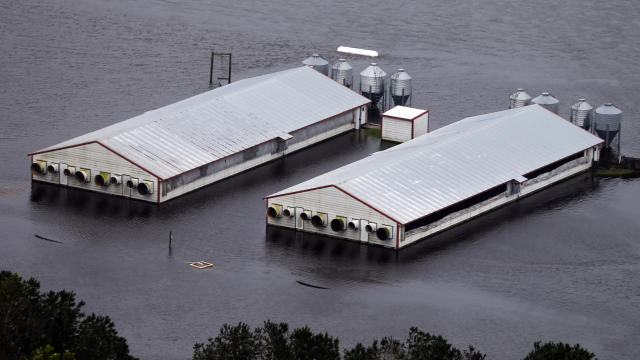
Pollution fears: Swollen rivers swamp ash dumps, hog farms

Associated Press

Pollution fears: Swollen rivers swamp ash dumps, hog farms

Michael Biesecker , Associated Press     September 17, 2018

Democratic Socialism

Bill Maher

September 15, 2018

The new campaign slogan for the Democratic Party should be: We’re Not Socialists – You’re Traitors

Scary Socialism

The new campaign slogan for the Democratic Party should be: We're Not Socialists – You're Traitors

Posted by Bill Maher on Friday, September 14, 2018

There’s a natural solution to climate change all around us.

EcoWatch

September 16, 2018

There’s a natural solution to climate change all around us, but we’re taking it for granted. Alec Baldwin and Dr. Jane Goodall explain how we get back on track. #YEARSproject #theforgottensolution with the Jane Goodall Institute

via We Can Solve This

The Forgotten Solution

There's a natural solution to climate change all around us, but we're taking it for granted. Alec Baldwin and Dr. Jane Goodall explain how we get back on track. #YEARSproject #theforgottensolution with the Jane Goodall Institutevia We Can Solve This

Posted by EcoWatch on Friday, September 14, 2018

Flooding from Hurricane Florence Threatens to Overwhelm Manure Lagoons

The New Yorker – Dispatch

Flooding from Hurricane Florence Threatens to Overwhelm Manure Lagoons

Even under normal conditions, the farms’ odor penetrates the plane, three thousand feet above. “We can smell the waste,” Dove told me. “It’s been described in court proceedings as similar to the odor of dead bodies. It’s the worst smell in the world. It clings to your clothes. It burns your eyes, burns your nose and even your lips. And these swine lagoons are built right in neighborhoods.” Often, Dove said, the sprayed overflow waste ends up on or near cars and homes. (In May, five hundred neighbors of North Carolina hog farms, owned by Murphy-Brown, a subsidiary of Smithfield Foods, won a fifty-million-dollar judgment against the corporation. Its hog-waste-management practices, the neighbors argued, adversely affected their quality of life. Agriculture Secretary Sonny Perdue told reporters that he considered the verdict “despicable.”)

As the storm approached, most of the farmers who live near the facilities probably evacuated, Dove told me, leaving the animals behind. “The water will go over the confinement buildings,” he said. “Most of those animals are gonna drown.” As flooding worsens on the North Carolina coast, no one I could reach has been able to observe firsthand what’s happening to the hogs—or to the hog-waste lagoons. Reconnaissance flights have been cancelled until weather conditions improve. But area environmentalists, whom I reached on Friday and Saturday, are deeply concerned about the situation.

On Saturday morning, Matt Butler, the program director with Sound Rivers, was able to drive around parts of the Tar-Pamlico River Basin, which his group oversees. The basin’s southern edge is located about a hundred miles north of Wilmington. “The thirty or so farms we keep track of have not yet experienced inundation, as of this morning,” he told me. “But some were spraying waste ahead of the storm.” Butler agreed that the real effects of Florence on the hog farms will be seen from the air. “We have a very high concern that we’ll see lagoons and farms flooded further south, distributing waste all over the place,” he said.

Kemp Burdette, the Cape Fear Riverkeeper, was born and raised in Wilmington. He now lives about twenty miles northwest, on the Black River, a flat body of water in a cypress swamp. “The human costs will be significant,” Burdette told me. “I mean, my house will probably be flooded. But the wider environmental costs will be enormous as well.” He, too, was most concerned about the flooding of factory farms. “The Black River, Northeast Cape Fear River, and the main stem of the Cape Fear River flow through three of the most swine-farm-concentrated counties, which make up the most swine-farming-dense watershed on earth,” he said. “There’s plenty of poultry farms, too.” He added, “It’s looking like a worst-case scenario here, with those rivers cresting to historically high levels.”

Burdette spent Thursday and Friday trying to save his home, which sits on stilts. “The river has started to come up,” he told me Friday night. “My girlfriend and I took a load of our most valuable stuff—pictures, kids’ art, Christmas stuff, that kind of thing—to my office, in Wilmington. Then we took our boat, which we’ll need in a few days to get out to the house, into town, too, so it wouldn’t get stranded out here.” They brought everything else up to the second floor of the home and—since flooding from Hurricane Matthew, in 2016, breached that floor—put it all on three-foot saw horses.“We just took bucket baths in the tub,” Burdette said. “We’re cooking dinner now. And we’re getting ready to lay down on our army cots and go to sleep here soon. The river is rising, though, so I’m gonna set my alarm to get up several times tonight to make sure it’s not rising too fast.”

Tom Butler (no relation to Matt) runs a factory farm a hundred and ten miles northwest of Wilmington, with about eight thousand hogs. “It’s a medium-sized farm,” he told me on Saturday afternoon. “We have about a hundred thousand contract hogs in my county, while the next county over, Sampson, has two million. I’ve had a concentrated animal-feeding operation here for twenty-three years. I’m familiar with bad weather and lagoons.” So far, he’s had about eight or nine inches of rain fall on his farm. But he’s taken precautions that, he says, most other hog farmers don’t. “I’m an advocate for better waste management,” he said, “and have been for ten years. The industry doesn’t like me very much. We have high-density-plastic covers for our lagoons—only about seven or eight farms out of two thousand in North Carolina do that—which excludes the rainwater and prevents inundation or whatever. As far as hog protection, we just lower the curtains to keep off the wind. We cut off the feeders so the feed won’t get wet. We stay with that mode until the wind and rain goes by.”

Butler went on, “We have no idea what’s gonna happen with the residual flooding from this storm. Most folks are just praying, as far as controlling the lagoon problem. Even if a grower had his lagoons pumped down to the regulatory amount of nineteen inches, it would still overflow when you have twenty to thirty inches of rain predicted. That amount of rain is a real problem. Fifteen inches many can get by with. Twenty inches is a real problem.”

Charles Bethea is a staff writer at The New Yorker

Florence’s rains: Coal ash landfill collapses in Carolinas’

Associated Press

Michael Biesecker, Associated Press      September 16, 2018

Here’s what would happen if the Sahara was covered in solar and wind farms

Digital Trends – Science

Here’s what would happen if the Sahara was covered in solar and wind farms

Luke Dormehl, Digital       September 11, 2018 

Trump administration rushes to lease federal lands

Yahoo News

Trump administration rushes to lease federal lands

Alexander Nazaryan                    September 11, 2018 

Climate Change Could Completely Transform Earth’s Ecosystems

Climate Change Could Completely Transform Earth’s Ecosystems

By Olivia Rosane       September 1, 2018

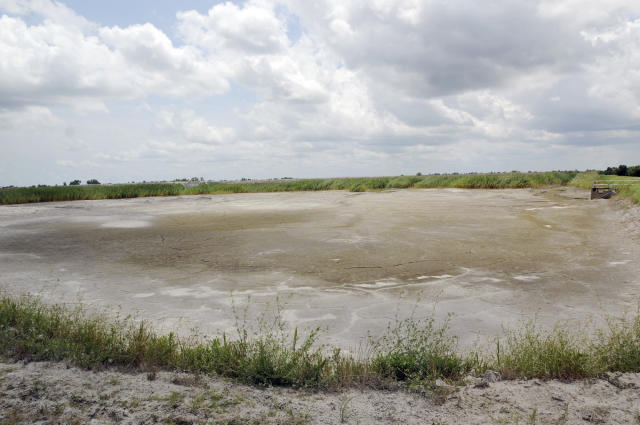
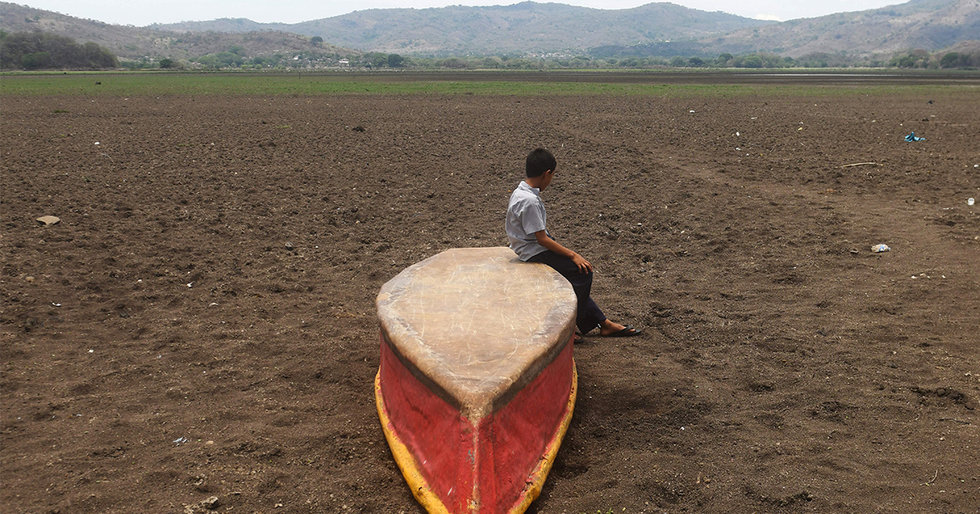
Lake Atescatempa in Guatemala has dried up due to drought and high temperatures. MARVIN RECINOS / AFP / Getty Images
Fifty two million years ago, crocodiles swam in the Arctic. Twenty thousand years ago, an ice sheet covered Manhattan. Earth’s ecosystems have changed dramatically as the climate has shifted, and now scientists are trying to determine how they might respond to the current era of human-caused climate change.

Forty-two scientists contributed to a study published in Science Friday that examined how land-based plants had responded to temperature changes of four to seven degrees Celsius since the height of the ice age in order to predict how land-based ecosystems might respond to similar temperature changes predicted for the future.

They found that, if we do not act quickly to reduce greenhouse gas emissions, the earth’s entire terrestrial biome is 75 percent likely to change completely, impacting biodiversity and making life difficult for anyone whose livelihood is based around an ecosystem as it exists now.

“Having this kind of change occur at such a massive scale in such a short period of time is going to create unprecedented challenges for natural-resource management,” study author and U.S. Geological Survey climate scientist Stephen Jackson told The Atlantic.

The researchers looked at 594 examples of ecosystem change over time to get an understanding of what sorts of changes we could expect from unmitigated global warming.

“Five miles from where I sit is the middle of the Sonoran Desert and Saguaro National Park,” Jackson told The Atlantic from his desk in Tucson, Arizona. “Today, there’s big saguaro cacti, mesquite trees, ironwood trees. If we were to roll back the calendar 20,000 years, and we went to the same place, we would find a woodland of evergreen trees.”

But while the period the researchers studied spanned around 21,000 years, similar temperature changes could occur within the next 100, and the speed of change could have a major impact.

“If you’re a wildlife manager and your ecosystem changes, if you’re a forest manager trying to respond to wildfires, if you’re a water manager who is responsible for converting rainfall estimates into reservoir levels,” Jackson told The Atlantic, “then the old rules are not necessarily going to apply.”

Another study, published Thursday in Trends in Ecology & Evolution, looked at how the individual species within ecosystems might respond to these dramatic temperature changes.

The study, led by the Center for Macroecology, Evolution and Climate at the University of Copenhagen, looked to the past to see how plants and animals had responded to changes in their environment over the past million years.

“From fossils and other biological ‘archives,’ we have access to a nearly limitless number of case studies throughout Earth’s history. This provides us with valuable knowledge of how climate changes of various rates, magnitudes and types can affect biodiversity,” Jackson, who also co-authored the second study, said in a University of Copenhagen press release.

Scientists had previously believed species would simply migrate in response to changing climates, but the historical examples reviewed for this study showed they often adapted over time by changing their behavior or body color or shape.

However, researchers were concerned the pace of current climate change might be too fast for evolution to keep up.

“We know animals and plants have prevented extinction by adapt or migrate in the past. However, the models we use today to predict future climate change, foresee magnitudes and rates of change, which have been exceptionally rare in the last million years,” co-author Francisco Rodriguez-Sanchez from the Spanish Research Council (CSIC) said in the university release.

Rodriquez-Sanchez said more research was needed to predict how species might respond to current climate change, but hoped the past examples of successful adaptation could help policy makers craft effective conservation decisions.

Stunning Victory for Indigenous Nations as Canada Halts Trans Mountain Pipeline Expansion

EcoWatch

Stunning Victory for Indigenous Nations as Canada Halts Trans Mountain Pipeline Expansion

By Lorraine Chow         August 30, 2018

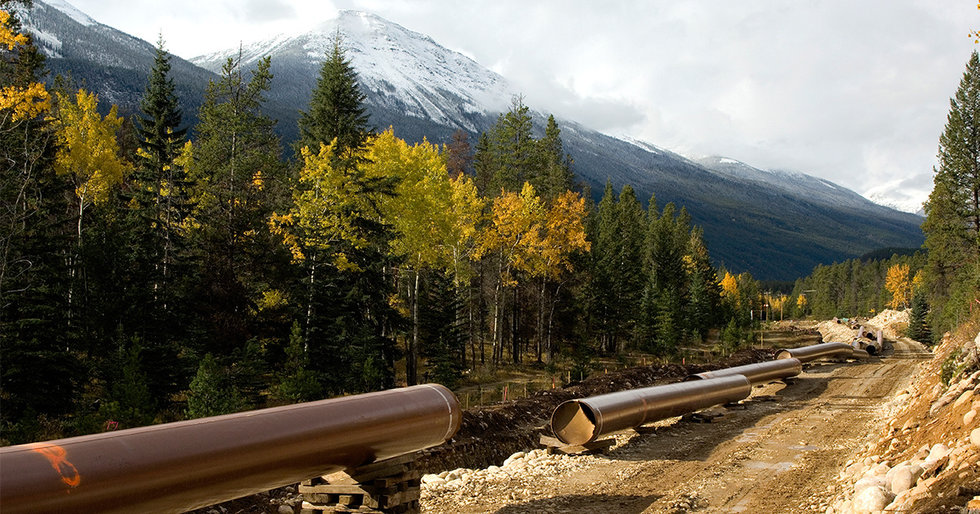
Pipeline intended to cross Jasper National Park in the Canadian Rocky Mountains. Robert McGouey / Getty Images

A Canadian court “quashed” approval of the Trans Mountain pipeline expansion on Thursday, a major setback for Prime Minister Justin Trudeau, whose government agreed to purchase the controversial project from Kinder Morgan for $4.5 billion Canadian dollars (U.S. $3.5 billion) in May.

It’s a stunning victory for Indigenous groups and environmentalists opposed to the project, which is designed to nearly triple the amount of tar sands transported from Alberta to the coast of British Columbia.

The Federal Court of Appeal ruled that the National Energy Board’s review—as explained by the Canadian Press—”was so flawed that the federal government could not rely on it as a basis for its decision to approve the expansion.”

The project has been at the center of widespread protests from environmental groups and First Nations ever since November 2016, when Trudeau approved a $7.4 billion expansion of the existing Trans Mountain pipeline that would increase the transport of Alberta tar sands oil from the current 300,000 barrels per day to 890,000 barrels per day and increase tanker traffic nearly seven-fold through the Burrard Inlet.

Specifically, the court said it was an “unjustifiable failure” that the National Energy Board did not consider the environmental impacts of the increased tanker traffic.

The court additionally concluded that the government “fell well short” with properly consulting with the Indigenous groups involved in the case, including the Tsleil-Waututh and Squamish on British Columbia’s south coast.

The ruling will force the National Energy Board to redo its review of the pipeline and the government to restart consultations with the Indigenous groups. It also means that the construction that has already began in central Alberta must cease.

In effect, the court has halted the 1,150-kilometer project indefinitely and it will remain in “legal limbo until the energy regulator and the government reassess their approvals to satisfy the court’s demands,” CBCwrote about today’s decision.

Notably, the decision was made the same day Kinder Morgan’s shareholders voted to approve the $4.5 billion sale to Canada, which means the country owns a proposed pipeline project that could be subject to years of further review, the publication pointed out.

The court’s judgment could be appealed a final time to the Supreme Court of Canada.

The Minister of Finance Bill Morneau said that the government has received the ruling and will review the decision.