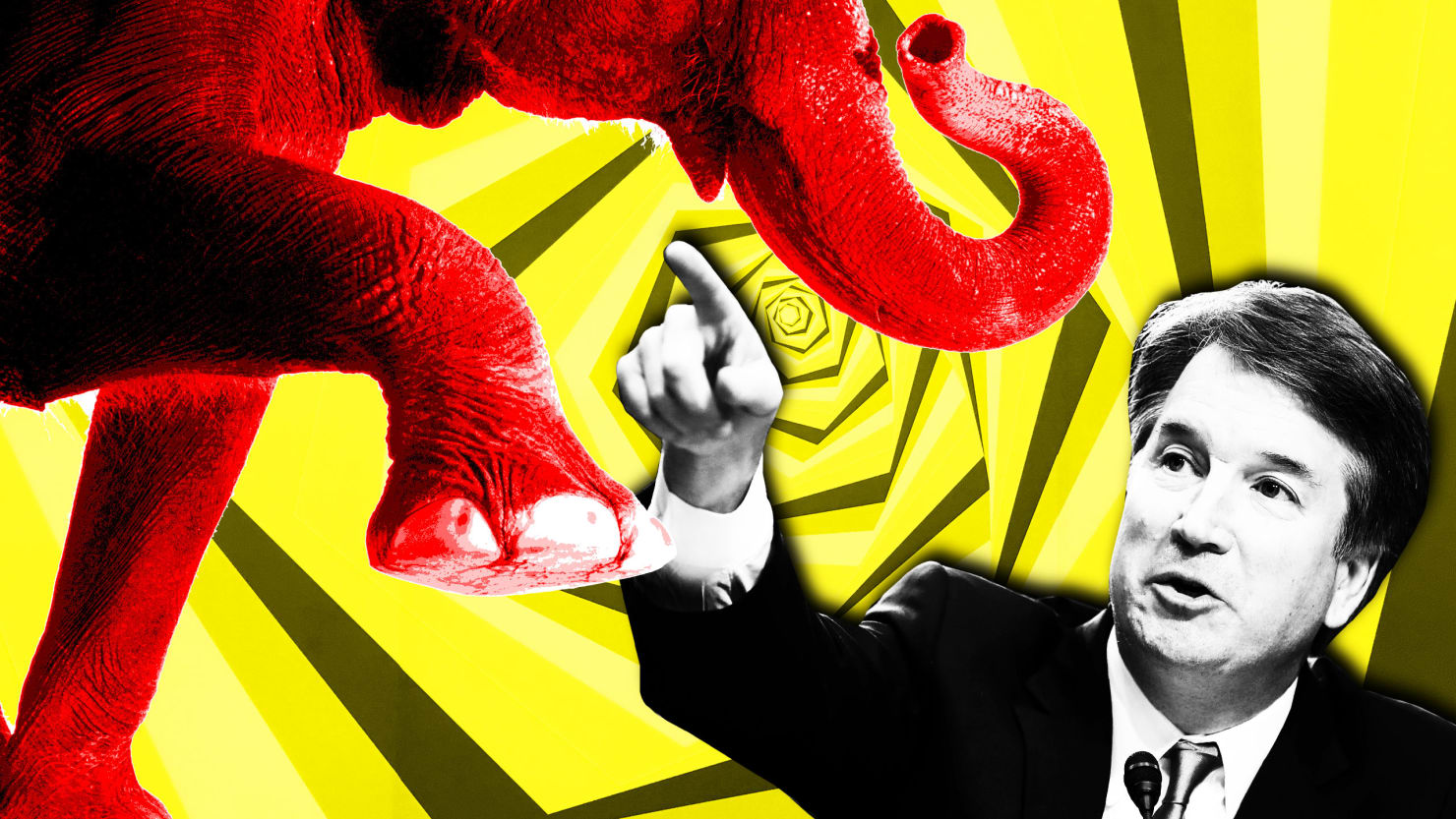
Republicans Are Waging War on Women—and Two Women Can Stop Them

Harper’s Bazaar – Politics

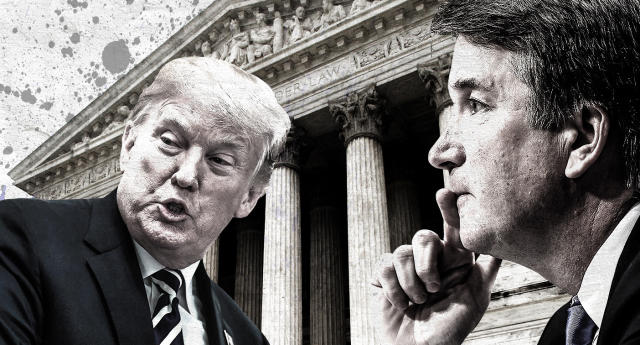
Republicans Are Waging War on Women—and Two Women Can Stop Them

Alyssa Milano, Harper’s Bazaar        September 20, 2018  

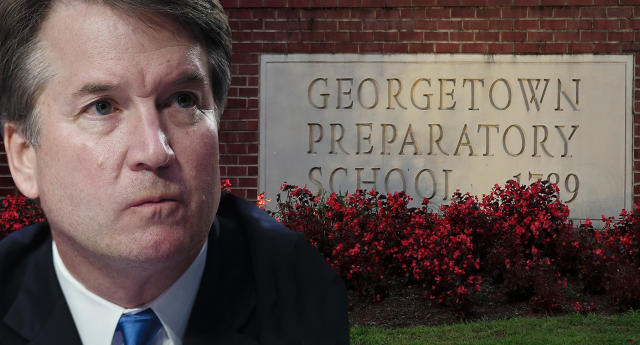
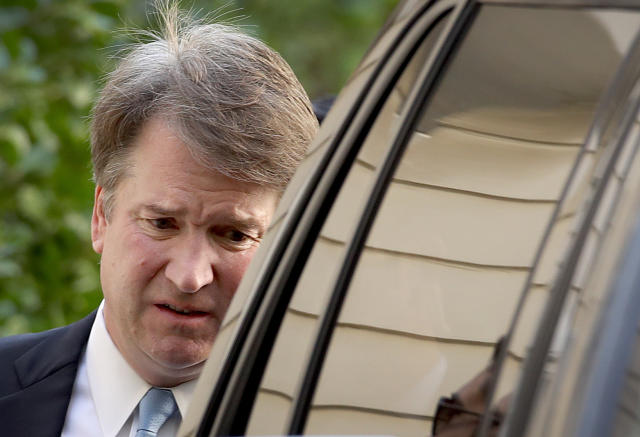
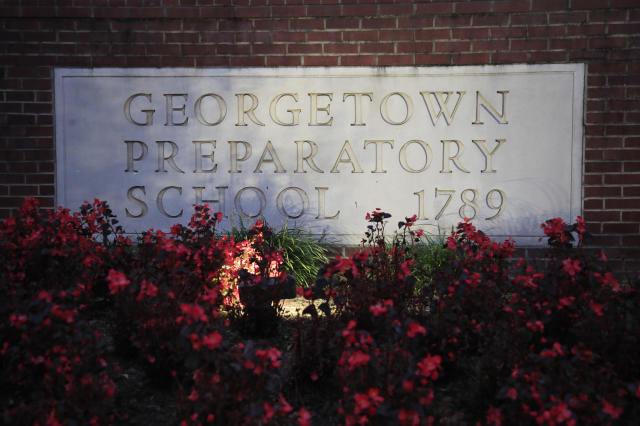
Georgetown Prep president says school has been soul-searching in wake of Kavanaugh allegations

Yahoo News

Georgetown Prep president says school has been soul-searching in wake of Kavanaugh allegations

 Dylan Stableford       September 21, 2018 

Student debt is forcing millennials to delay life milestones

Yahoo Finance

Student debt is forcing millennials to delay life milestones

Alyssa Pry and Jeanie Ahn        September 21, 2018

President Good Brain’s Latest Genius Idea: Build the Wall…Across the Sahara Desert

Esquire

President Good Brain’s Latest Genius Idea: Build the Wall…Across the Sahara Desert

You like that one? How about Silent Bombs?

By Jack Holmes      September 20, 2018

President Trump Hosts Hispanic Heritage Month Celebration At The White HouseGetty ImagesAlex Wong.

President Trump’s nominee to the Supreme Court, Brett Kavanaugh, is soaking up all the headlines at the moment, and with good reason. It’s not just that Dr. Christine Blasey Ford has accused Kavanaugh of sexual assault when they were teenagers. Kavanaugh also has a Totally Normal financial background that has largely gone unexplored, and there’s reason to believe he may have lied under oath on multiple occasions while testifying before Congress.

But while all that and Hurricane Florence have been percolating in The Discourse, we’ve learned a little bit more about how our Large, Adult President’s very good brain works. It’s worth pausing to digest a few of his new ideas—or at least the ones we’ve recently learned about. After all, it’s always nice to be reminded that the world’s most powerful man is swimming in a mental sea of informational flotsam. Most of what you might otherwise call his knowledge consists of fragments of reality he internalized around 1982. Those fact-like objects have been fermenting there ever since, re-filtering through his kaleidoscopic reasoning faculties each time he dispensed a crank observation at cocktail party.

Now, of course, he’s the president. Here are some of the things he thinks.

Build the Wall (in the Sahara)

Saharan Twilight

President Trump recommended building a wall across the Sahara to solve Europe’s migrant crisis, Spain’s foreign minister says. Josep Borrell, also a former President of the European Parliament, disagreed with the strategy.

You don’t say. I can’t believe the Spaniards didn’t bite on you should build a 3,000-mile wall, at incredible expense, through one of Earth’s most extreme environments. “The border with the Sahara cannot be bigger than our border with Mexico,” Trump reportedly told the minister, a statement that has the downside of being verifiably false. (The U.S.-Mexico border is less than 2,000 miles.) Of course, Trump doesn’t think in those terms. Reality can be molded to suit his needs and wants, and besides, if he doesn’t know something it’s probably unknowable. It can’t possibly be bigger, he suggests, and more to the point, how could we possibly know?

TOPSHOT-POLITICS-TRUMP-US-politics-California

Spain has no sovereignty over the Sahara, but it does possess two small enclaves on the north African coast, Ceuta and Melilla, separated from Morocco by controversial wire fences. The enclaves have become magnets for African migrants seeking a better life in Europe.

Funny enough, the proposal shares a lot in common with the proposed Wall on our southern border. There are issues with Native American sovereignty, there is already a fence in some areas, and, of course, it won’t actually fix the problem.

Silent Bombs

Reaper Aircraft Flies Without Pilot From Creech AFB

When the agency’s head of drone operations explained how the CIA had developed special munitions to limit civilian casualties, the president seemed nonplused. Shown a strike in which the CIA delayed firing until the target was a safe distance from a compound with other occupants, Trump asked, “Why did you wait?” And when Trump noticed that militants had scattered seconds before another drone attack, he said, “Can they hear the bombs coming? We should make the bombs silent so they can’t get away.”

It obviously jumps out that our president thinks this is how, well, bombs work. But the more pressing issue is his absolute commitment to racking up civilian casualties. We’ve discussed before his inability to empathize with other human beings, but this seems to be on another level. It’s particularly reassuring when Trump has reopened the CIA’s lethal drone program—missions were shifted exclusively to the military towards the end of the Obama years after criticism of its secrecy and civilian casualties—and we’re now apparently running drones over large parts of Africa, too.

“Just Run the Presses”

New Series 2001 One Dollar Bill Notes

As a candidate, Donald Trump pledged to balance the federal budget and lower the national debt, promises that are proving difficult to keep. Once he won, Trump considered an unusual approach that was quickly slapped down by his chief economic advisor…

“Just run the presses — print money,” Trump said, according to Woodward, during a discussion on the national debt with Gary Cohn, former director of the White House National Economic Council.

“You don’t get to do it that way,” Cohn said, according to Woodward. “We have huge deficits and they matter. The government doesn’t keep a balance sheet like that.”

Cohn was “astounded at Trump’s lack of basic understanding,” Woodward writes.

He honestly thought you could just print the $20 trillion and wipe out the debt.

President Trump Unveils His Infrastructure Initiative With State And Local Officials In The State Dining Room Of White House

Take his discussion with Cohn on trade:

“Several times [chief economic adviser Gary] Cohn just asked the president, ‘Why do you have these views [on trade]?’ ‘I just do,’ Trump replied. ‘I’ve had these views for 30 years.’ ‘That doesn’t mean they’re right,’ Cohn said. ‘I had the view for 15 years I could play professional football. It doesn’t mean I was right.'”

The president’s views on trade are his views because they’ve been his views for 30 years. They’re right because they’re his views and always have been. There’s no need to learn anything when you already know it all—and you know you know it all because you know what you know. God help us.

What Kavanaugh deserves — and what we deserve from him

Yahoo News

Matt Bai’s Political World

Matt Bai          September 20, 2018

GOP Fakes Sincerity for Kavanaugh’s Accuser, Then Goes In for Kill

OPINION

Photo Illustration by The Daily Beast

Well, it seems the Republicans have learned exactly one thing in the 27 years since the Anita Hill hearings: be respectful to the woman in the first 24 hours. Hey, that’s progress. At this rate, they’ll demand an FBI investigation in 2045, and by 2072, who knows, maybe they’ll actually believe the woman!

Read this New York Times article from October 7, 1991. It’s the first-day article announcing the explosive news that Hill accused Clarence Thomas of sexual harassment just two days away from his full Senate confirmation vote.

In it, the reporter writes that the George H.W. Bush White House began pushback against Hill that very day, or the day before: White House staffers gave reporters the name of another woman who had worked with Hill and Thomas at the Equal Employment Opportunity Commission and would vouch for Thomas. The woman said Hill was making the charges up out of spite that Thomas “did not show any sexual interest in her” (the Times’ words, not the woman’s).

Compare to today. Kellyanne Conway said straight out of the chute that Dr. Ford deserves to be heard. Donald Trump said nothing untoward about her. Can you imagine how itchy his Twitter finger was on Monday morning? But they hid his smart phone in the White House gym or vegetable cellar or some other chamber Trump doesn’t frequent.

I’m not complimenting them. I’m observing that they figured out that the narrative on these kinds of things is set in the first 24 hours and so it was crucial that for those 24 hours, they behave themselves. Seem like they learned from last time, or even from #MeToo.

Lindsey Graham, earlier in the week, even uttered the r-word: “I’d have a hard time putting somebody on the Court that I thought tried to rape somebody. Period.” That quote arrested me, as it seemed to indicate that Graham was actually being open to the possibility of an investigation to determine just what Brett Kavanaugh actually did that night.

But within 24 hours, Graham was back on side. “Requiring an FBI investigation of a 36-year-old allegation (without specific references to time or location) before Professor Ford will appear before the Judiciary Committee is not about finding the truth, but delaying the process till after the midterm elections,” Graham tweeted after Christine Blasey Ford’s lawyer said she wanted an FBI investigation before testifying. “It is imperative the Judiciary committee move forward on the Kavanaugh nomination and a committee vote be taken ASAP.”

So that’s what they’ve learned in 27 years—and evidently, it’s all they need to learn, because it looks like it’s going to get their nominee through. They played it cool at the start so that the first-day stories wouldn’t say the Republicans blew a gasket and immediately started discrediting the woman; so that instead, those stories would say “Republicans agree Dr. Ford should be heard.” Establish them as reasonable people. Then, once they skated through that news cycle, they’d start turning the screws.

They played it like Bond villains. Sit down, Meestah Bond. We are both men of the world. We have much to discuss. Beluga caviar? Dom Perignon ’55? What’s that, you prefer the ’53? Alfonso, down to the cellar, fetch a bottle of the ’53! It’s all civility for a few hours. Then they attach him to the laser beam machine with the piranhas swimming below.

That’s what the Republicans do, except they’re smarter than Blofeld. They don’t walk away so the captive can escape. They stay and watch. They finish the job.

They know exactly what they can get away with, because they know the sad truth of the matter. The sad truth of the matter is that Ford and her lawyers don’t have the leverage to force an FBI investigation or delay the hearing. The only leverage Ford had, potentially, was if Donald Trump had called her a liar and a slut in those first 24 hours. Then, she’d have been a figure of enormous sympathy. Now, alas, she’s mostly a figure of partisan sympathy.

Mind you, she shouldn’t have to demand an FBI probe. If the Republicans were actually interested in learning the truth about what happened on that long-ago night, of course they’d want the FBI to look into it. If the White House was interested, it would have directed the FBI to get to the bottom of her allegations.

By the way, if this isn’t too dog-bites-man, Donald Trump lied about all that. “The FBI said they don’t really do that,” he said Tuesday. No. According to Pete Williams of NBC news, it’s up to the White House to ask the FBI to investigate.

But they didn’t want an FBI probe. They were terrified of what an FBI probe would find, just as they were all mortified at the idea that they might have to be relying on Mark Judge as a character witness.

So they’re getting their way, probably. Although Ford could still show up next Monday and blow people away. She’d need to find just the right tone in telling them, ‘You set me up; you made me come up here with a few days’ preparation while getting death threats and take your best shots, and fine, I’m doing it.’ If she does testify and does it well, she can turn this around one more time.

And if she can’t, well, that’s a hell of a weight to put on someone who was a private person minding her own business until five days ago. I believe her. I bet most people believe her. I bet Susan Collins and Lisa Murkowski end up believing her. But I bet they won’t have the courage to admit it.

Just remember: If Kavanaugh does make it, there’s one good way to get revenge. Vote. Vote, vote, vote. Make the Senate Democratic. That should ensure no more Supreme Court choices for Trump if another vacancy opens up (the Democrats just need to stonewall, as the Republicans did to Merrick Garland) and virtually no confirmations of any consequence.

The time to stop Kavanaugh was 2016. But the time to stop future ones? That starts this November 6.

Pennsylvania and America Deserve’s Better

Pennsylvania and America Deserve’s Better

Gubernatorial Candidate Scott Wagner Publicly Calls Voter ‘Young and Naive’ on Climate Change

Gubernatorial Candidate Scott Wagner Publicly Calls Voter 'Young and Naive' on Climate Change

This GOP candidate called a teen activist 'young and naive' for challenging his claim that climate change is caused by human body heat

Posted by NowThis Election on Tuesday, September 18, 2018

Republi-cons cut taxes for billionaires and now need to cut Social Programs to pay for it

Reuters – Politics

 Reuters          September 17, 2018

Watch This Millionaire Explain How Easy It is for the Rich to Exploit the System


Watch This Millionaire Explain How Easy It is for the Rich to Exploit the System

Watch This Millionaire Explain How Easy It is for the Rich to Exploit the System

This millionaire revealed his tax return to show just how much the GOP tax law favors the rich (via Patriotic Millionaires)

Posted by NowThis Opinions on Sunday, August 12, 2018

California’s capital city has become the nation’s farm-to-fork capital

Civil Eats

Sacramento Is Making Urban Agriculture a Way of Life

California’s capital city has become the nation’s farm-to-fork capital, and in the process is making food more accessible, equitable, and just.

By Heather  Gehlert, Food Justice, Urban Ag     September 12, 2018


As the food movement gains strength and farm-to-fork practices become increasingly popular, many cities across the United States are investing in urban agriculture, both to attract tourists and to improve community health. For example, in Detroit, which The Washington Post has dubbed a “food mecca,” advocates are using urban farms and community gardens to help ease food insecurity. And, in Boston, legislation to make urban farming easier has contributed to the city’s reputation as a “haven for organic food” and helped make local produce more available to low-income residents.

Yet few places have been more vocal in their efforts to expand urban agriculture as Sacramento, California. In fact, if you Google “farm to fork,” the top result will take you to a website about Sacramento’s initiatives to support local food.

“Farm-to-Fork isn’t a passing fad or a marketing slogan in the Sacramento region—it’s the way we live,” the website explains, noting that the area’s ideal climate, ability to grow food year-round, and 1.5 million acres of active farmland make it an agricultural leader nationally and globally.

Now, as a recent case study from the Berkeley Media Studies Group (a program of the Public Health Institute) shows, advocates are working to expand that narrative. Instead of focusing on primarily on food, they aim to highlight the people who grow and sell it—and to make sure that everyone benefits equally from the area’s bounty.

Photo courtesy of BMSG.Photo courtesy of BMSG.

“Sacramento has branded itself as America’s farm-to-fork capital,” Robyn Krock, project manager at Valley Vision, a regional nonprofit that works to improve the livability of the Sacramento region, said at a recent city council meeting. “But,” she added, “the question that gets repeatedly asked is, ‘are we farm-to-every-fork?’”

Krock is just one of many local advocates who are highly committed to equity. They see urban agriculture not just as a feel-good trend for those with money and time to participate, but as a tool for promoting social justice.

Make no mistake: Krock and many other advocates and policymakers are working to ensure the new narrative is not just lip service, that it is rooted in robust community organizing and policy change. The strategies they have undertaken, supported by an infusion of funds from The California Endowment, have helped coalitions of local advocates transform Sacramento’s urban farming landscape in recent years to better support healthy food programs and access.

“I know that this is important,” Brenda Ruiz, a mother, a chef, and a longtime Sacramento resident who is active in the city’s Slow Food chapter, said at a council meeting when an ordinance that would reduce barriers to participating in urban farming was up for a vote. “It’s important for families to have access to fresh food; it’s important for families to consider their neighborhoods walkable and social areas where they can convene and share stories around a garden space; it’s important for our kids and young people to see this as normal for folks to be growing food and exchanging over that.”

Following strong organizing efforts from advocates, the council approved that ordinance in 2015, making it legal for people to grow and sell produce to consumers directly from their properties and from temporary farm stands as large as 120 square feet. A few months later, the council passed another ordinance offering tax incentives for people to convert vacant lots for agricultural use. And in January 2017, following the city’s lead, Sacramento County passed similar regulations, allowing all residents in urban and suburban areas to legally grow and sell produce, as well as keep bees, chickens, and ducks on small lots.

The Fremont Community Garden in Sacramento. (Photo CC-licensed by Annie & John)The Fremont Community Garden in Sacramento. (Photo CC-licensed by Annie & John)

“If you don’t have food in your bellies, you can’t do anything else, so I look at it as the foundation of society,” said Chanowk Yisrael, whose family runs an urban farm from their home in Sacramento’s South Oak Park neighborhood.

Crafting the Message, Shaping the Policy

Yisrael and other advocates have been following this foundational approach in their work to make sure that urban ag policies and programs are inclusive, especially for Sacramento residents who live in neighborhoods with less access to fresh, affordable food.

For example, although the city ultimately approved the urban agriculture ordinances, that did not happen without a strong push from local organizers, including through the ordinance language itself. Advocates crafted the language to maximize selling hours and participation—a task that involved rewriting 70-80 pages of zoning code. Although they could have approached the city and asked them to draft an ordinance, that posed some risks.

“[The city’s] first draft is probably going to be more conservative than your goal as an advocate,” said Matt Read, one of the ordinance’s authors. He also noted that the process of drafting and passing policies can help people develop skills in advocating for themselves and their communities. “It’s a really good opportunity for people to learn about local government and the laws that affect the built environment,” he said.

With draft language in hand, advocates then crafted messaging materials, pitched stories to local media, arranged meetings with public officials to get their buy-in, and used a combination of traditional organizing tactics and social media to get a wide range of residents—including immigrant farmers—engaged and willing to testify at council meetings in support of the urban ag ordinances. Advocates delivered 300 signatures in favor of the ordinances and testified about how the policy changes could improve health, equity, and community sustainability, among other issues.

“Right now, barriers such as zoning restrictions and limited land use hinder our communities’ ability to farm and contribute to the local economy,” Sue Vang, who works with Hmong Innovating Politics, a grassroots organization that works with local leaders and underserved communities, especially Hmong and Southeast Asian communities, told the council.

“The urban ag ordinance can help mitigate these barriers and revitalize low-income neighborhoods, provide solutions to blight caused by unmaintained vacant lots, and, most importantly, connect the very diverse—linguistically, racially, ethnically—communities within Sacramento.” Vang also spoke more personally: “It would also give my family the opportunity to sell the produce that my mom grows in her backyard.”

Broadway Sol Gardens in Sacramento. (Photo courtesy BMSG)Broadway Sol Gardens in Sacramento. (Photo courtesy BMSG)

As advocates work to make sure that their policy wins translate into increased participation in urban agriculture, they are simultaneously running youth programs to develop the next generation of advocates and make the future of urban farming more robust, diverse, and inclusive.

These include a variety of after-school programs, school gardens, and the development of a new Urban Agriculture Academy, or core learning trajectory, at Luther Burbank High School, which has a student body that is 97 percent youth of color, according to California Department of Education data. Launched in September 2017, the Academy provides a stronger foundation for students who want to enter an agriculture-related career, gives young entrepreneurs the knowledge and skills they need to set up their own small businesses, and increases opportunities for students of color.

“Culturally, we need diversity for the field to innovate and excel,” said Todd McPherson, who was instrumental in creating the Academy and currently works as its coordinator.

Urban Ag Lessons from Sacramento

While more work remains in their effort to increase access to healthy food—and region-wide farming changes may halt the growth of farm-to-fork in Sacramento—advocates have made tremendous progress over the past few years. How, then, can other places push for similar changes? Below are a few lessons from those on the ground in Sacramento.

Collaborate. Collaborate. Collaborate. This includes working not only with other advocates but also with city or county officials and with residents, who should be involved as early in the process as possible. “As an organization that was beat down, but not defeated by the recession, I would say the main way that we survived as an organization was by sharing resources and coming together with other organizations to carry out a project,” said Davida Douglas, executive director of Alchemist CDC, a Sacramento-based nonprofit active in the food space. “I think for a lot of projects it’s necessary in terms of sustainability and feasibility.”

When creating solutions, context matters. Without knowing the history or context of a problem, urban ag advocates risk developing solutions that are ill-informed or short-sighted.

This lesson is especially crucial in regards to race. “Not all [advocates] are aware of structured racialization or institutional racism, and so you end up with unintended consequences,” Yisrael said, referring to zoning restrictions and other policies that have historically fueled segregation and led to the formation of food deserts and “food swamps,” which have an abundance of junk food and a dearth of healthier options, in many low-income neighborhoods and communities of color.

Yisrael recalled an example of advocates opening a farm stand without fully understanding the community space in which they were trying to operate. Although the farm stand offered healthy and affordable food options, it was surrounded by convenience stores like 7-11 and other vendors selling foods like fried chicken, doughnuts, and alcohol. “There was no way we could win that fight,” he said.

Stay focused on the big picture, despite setbacks. Social change can take years or decades. Whether it’s establishing a new farmers’ market or passing a series of ordinances that help remove barriers and reshape people’s ideas about what is possible, McPherson emphasized that these victories speak to “the power of small groups” and show that they can accomplish major feats when they work together and persist in the face of adversity.

More lessons from and details about how Sacramento’s healthy food advocates are working to expand urban agriculture are available in the Berkeley Media Studies Group’s full case study.