‘It’s not their money’: Older Americans worried debt default means no Social Security

ABC News

‘It’s not their money’: Older Americans worried debt default means no Social Security

Peter Charalamboust – May 23, 2023

‘It’s not their money’: Older Americans worried debt default means no Social Security

If the United States defaults on its financial obligations, millions of Americans might not be able to pay their bills as well.

With Social Security and other government benefits at risk amid a political stalemate over the government’s debt ceiling, experts and older Americans told ABC News that the consequences of the impasse in Washington could be dire, including for older Americans who need the money to pay for basic needs such as food, housing or health care costs.

A quarter of Americans over age 65 rely on Social Security to provide at least 90% of their family income, according to the Social Security Administration.

PHOTO: President Joe Biden walks to the White House after landing on the South Lawn aboard Marine One, May 21, 2023 in Washington, DC. (Samuel Corum/Getty Images)

Fred Gurner, 86, of New York, told ABC News that he uses his Social Security payment for his $800 rent. But now there is real risk that his payment might not come in time in June — when the Treasury Department says the government might not be able to send him the money he counts on.

“It’s very stressful, gives me a heart attack,” Gurner said about how the issue has become politicized.

How are Social Security payments affected by the debt ceiling?

Since 2001, the United States has spent more money than revenue it has taken in overall.

To cover the difference, the United States Treasury issues debt through securities, according to University of Pennsylvania’s Wharton School of Business professor Olivia Mitchell. Backed by the United States, those securities are happily bought by investors who see it as a safe guarantee they’ll get paid back with interest.

However, the United States and Denmark are the only two countries to limit the amount of debt the government can issue, known as a debt ceiling, Mitchell noted.

MORE: Ahead of meeting with Biden, McCarthy says debt, spending deal needed ‘this week’

Lawmakers can pass new laws that require government spending, but the debt ceiling will remain in place until lawmakers vote to increase it. That has happened 78 separate times in the United States since 1960.

If that debt ceiling does not increase by June 1, Treasury Secretary Janet Yellen has warned House Speaker Kevin McCarthy that the country will not be able to satisfy all of its financial obligations.

Beyond not being able to pay interest and principal on government securities — which economists broadly agree would rattle the stock market and possibly damage the U.S. credit rating — the Treasury would be unable to issue new debt to cover expenses like Social Security, according to Mitchell.

The government projects to spend roughly $100 billion on Social Security in the month of June, according to the Bipartisan Policy Center.

“It’s going to be pretty tight for people for a while, unless Congress and the president can get together on this problem,” Mitchell said.

When would Social Security payments become delayed?

The Social Security Administration plans to send contributions to beneficiaries on four dates next month — June 2, 14, 21, and 28. Those checks would be the first ones at risk of being delayed, according to Max Richtman, President and CEO of the National Committee to Preserve Social Security and Medicare.

“Millions and millions of Social Security beneficiaries are worried about having the income to pay their basic bills,” he noted.

Lynda Fisher, 80, told ABC News that her budget relies on her monthly Social Security check and that a delay would complicate her essential spending, frustrating the 80-year-old who has spent her life contributing to the system.

PHOTO: FILE - House Speaker Kevin McCarthy, Republican of California, speaks with reporters in the US Capitol in Washington, DC, May 17, 2023. (Andrew Caballero-reynolds/AFP via Getty Images, FILE)
PHOTO: FILE – House Speaker Kevin McCarthy, Republican of California, speaks with reporters in the US Capitol in Washington, DC, May 17, 2023. (Andrew Caballero-reynolds/AFP via Getty Images, FILE)

“I paid into Social Security, and I paid into Medicare,” she said. “And now they’re trying to take it away. It’s not their money, it’s my money that I paid into.”

Richtman is now actively encouraging older residents to save money in anticipation of a delayed Social Security payment, fearing negotiations will not yield a compromise in time to avoid default.

On NBC’s “Meet the Press” on Sunday, Yellen indicated that certain bills might be prioritized, including interest payments, Social Security and military contractor payments. However, Richtman expressed doubt that such a prioritization would be legally possible.

What does this mean for the future of Social Security?

Some Republican lawmakers have framed the debt ceiling fight as necessary to slow government spending; however, some economists, including Mitchell, see this as a “manufactured crisis” that threatens essential services, retirement savings and the overall economy.

“Every time one of these crises occurs, it’s signaling to the rest of the world, and to American investors that U.S. Treasuries are not as safe as we thought,” Boston University economics professor Laurence Kotlikoff said.

MORE: Debt ceiling breach could cut millions of jobs. Here’s who would lose employment first

Kotlikoff expressed further concern that the Social Security system will have over $65.9 trillion in unfunded financial obligations over the indefinite horizon, based on the entity’s own report.

However, the debate over the debt ceiling appears unlikely to produce a meaningful solution to the broader Social Security shortfall, though, according to Kotlikoff, Mitchell and Richtman.

When will retirees receive their payments?

Mitchell and Richtman remained optimistic that Social Security recipients would eventually receive their checks once a deal is made, albeit with some delay.

“I’m pretty confident that payments would be fulfilled,” Richtman said. “That’s not much comfort to those people who will not be able to pay for their groceries, their utilities or their rent while they’re waiting to receive a back payment.”

Ron DeSantis is learning that not every state wants to be Florida

NBC News

Ron DeSantis is learning that not every state wants to be Florida

Henry J. Gomez – May 22, 2023

Charlie Neibergall

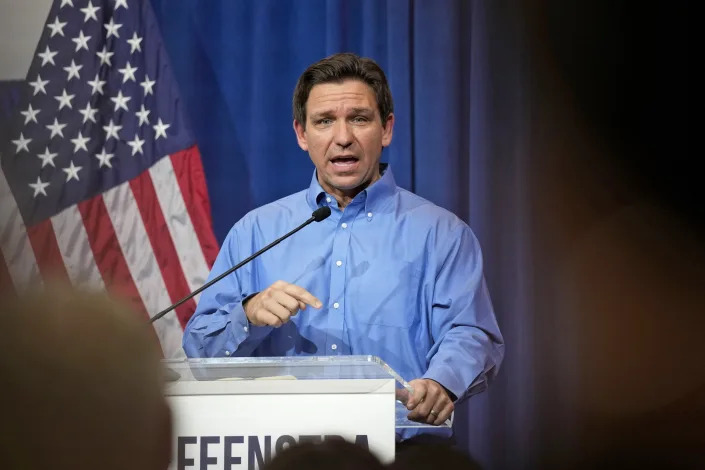
Wherever Gov. Ron DeSantis goes, he brings greetings from “the free state of Florida.” He heralds his “Florida Blueprint.” And he brags about how many people originally from whichever state he happens to be visiting love taking advantage of Florida’s warm weather and low taxes.

But a funny thing has happened as DeSantis travels the country with a “Make America Florida” message that underpins the Republican’s soon-to-launch presidential campaign.

DeSantis has found that not everyone wants to be Florida. And he has encountered spirited pushback from competitive fellow governors and GOP officials who believe that their states have done just as much, if not more, to advance a conservative agenda.

“It’s a lot of fun competing with my colleagues and Republican governors across the country,” Iowa Gov. Kim Reynolds, who has hosted DeSantis in the first-in-the-nation caucus state, said in an interview with NBC News. “But make no mistake, we are competitors.”

Reynolds introduced and interviewed DeSantis at two events in March, making sure to hold up her own record alongside his and frame them as equally accomplished governors. DeSantis, though, emphasized that he enjoys a “special perch” or “unique catbird’s seat” to view how other governors are doing, “because when people visit or move here, they tell me what’s going on in their states.”

After bestowing this authority onto himself, he took some shots at Democratic-led Illinois and proclaimed that Reynolds indeed presides over “one of the best-run states.”

It’s a tricky task — one that has caught attention of DeSantis’ home state reporters at Florida Politics — that in the wrong hands can come off as a magnanimous pander or a condescending pat on the back. And there have been signs in recent weeks that DeSantis recognizes he needs to shift how he talks about Florida, making it seem less aspirational and exceptional and more like an example of Republican leadership that has thrived elsewhere.

Reynolds, who stressed that her rivalry with DeSantis is friendly, brushed aside a question about whether his comments might offend Iowans and then quickly pivoted to her own accomplishments.

“Offend Iowans? Oh no, because I took care of that,” Reynolds said. “Because starting this year, we no longer tax retirement income. I made a deal with Gov. DeSantis. I said, ‘Hey, I’ll let our retirees go down to Florida — maybe a couple of months in January and February when the temperature’s not as good here in Iowa. … He’s gracious when he talks about it.”

DeSantis’ Florida boosterism has also prompted some ribbing in New Hampshire. At a GOP dinner there last month, DeSantis spoke admiringly about that state’s “Live Free or Die” motto before launching into his self-congratulatory story. Before DeSantis left the stage, New Hampshire GOP Chairman Chris Ager playfully jabbed at the governor.

“Instead of people moving to Florida,” Ager said, “maybe you can move up here.”

DeSantis’ spokesperson did not return a request for comment for this piece.

As boastful as DeSantis can be, he also searches for common cause with his audiences. During two stops in Ohio last month he played up his mother’s roots in the Youngstown area and his wife’s childhood in Troy, near Dayton. During that trip, he told a GOP crowd over breakfast in Akron that some parts of Florida are like “Ohio South,” given the number of retirees there.

“And it’s all good, because I’ll tell you, when it came time to get that big victory margin, there were a lot of transplanted people from Ohio who had my back,” DeSantis said, referring to his 19-point re-election margin last year. “So, God bless them for doing that.”

During a speech in South Carolina, DeSantis mentioned how his in-laws now live in the state and how he’s noticed more traffic on the roads there when he and his wife visit.

“Similar to what we’ve seen in Florida over the years with people coming down here,” he said.

But he was unable to resist an attempt at one-upmanship: “Famously — and, as long as I’m around, permanently — we have no state income tax. You guys should try that sometime.”

In Georgia, a compliment quickly gave way to grievance.

“One thing we’re no longer No. 1 in is college football,” DeSantis told an audience during a visit to a gun store in March. “So I just have a little bit of a plea … just stop taking so many of our high school football recruits. Can you give us a little bit of a chance?”

Ager, the New Hampshire GOP chair, said in an interview that he sees nothing wrong with friendly competition — and he wasted little time asserting his own state’s superiority.

“We are clearly No. 1. Gov. DeSantis calls it the free state of Florida. But the Cato Institute … in their whole scoring criteria, New Hampshire came in first last year,” Ager said, referring to a libertarian think tank’s ranking of New Hampshire as the freest state, based on personal and economic freedoms. “So we have some objective criteria from a third party.”

DeSantis himself seems to have softened his pitch a tad. While addressing the Utah GOP’s organizing convention in late April, he called the state, led by Republican Gov. Spencer Cox, “one of the best governed, best performing states.” DeSantis then went on to bestow perhaps the biggest compliment he could, even if it kind of came at the expense of a third state.

“I was recently visiting with some folks in Iowa, and people said, ‘Iowa, they’re really the Florida of the Midwest with all the conservative stuff they’re doing,’” DeSantis said. “Well, let me just tell you, maybe this is a little secret, but it might just be that Florida’s the Utah of the Southeast.”

By the time he returned to Iowa this month, DeSantis sounded ready to reconsider.

“I was here in March, and someone kind of took note and they’re like, ‘Man … Iowa’s like the Florida of the Midwest.’ … But I just want to let you know, after watching all the good stuff you’ve done in Iowa, it may be that Florida is the Iowa of the Southeast. So we’ll see.”

For the competitive Reynolds, there’s no question.

“Absolutely,” said Iowa’s governor, who has not endorsed a candidate for president. “Florida is the Iowa of the Southeast, and we’re doing everything we can to continue that narrative.”

Florida flood insurance costs are about to explode. ZIP codes closest to the coast will pay the most

South Florida Sun Sentinel

Florida flood insurance costs are about to explode. ZIP codes closest to the coast will pay the most

Ron Hurtibise, South Florida Sun Sentinel – May 22, 2023

Events of the past year have convinced more Florida homeowners of the need to carry flood insurance.

Flooding caused by hurricanes Ian and Nicole caught hundreds, if not thousands, of homeowners across the state by surprise, and without flood insurance.

Similarly, many homeowners affected by last month’s historic rainfall in eastern Broward County had no flood insurance and learned tragically that damage caused by water rising from the ground was not covered by their normal homeowner insurance.

It’s not just flood victims who are experiencing hard lessons about flood insurance.

Just as homeowners are realizing the increased risks of going without flood coverage, the Federal Emergency Management Agency has released data showing that coverage costs are exploding for properties in coastal areas most vulnerable to flooding.

The cost hikes stem from mandates by Congress to require rates charged by the National Flood Insurance Program, which is run by FEMA, to reflect the cost of flood risk to individual covered properties, and to pay down the program’s deficit, which was $20.5 million as of last November, according to FEMA.

The result is a new risk pricing model called Risk Rating 2.0, which took effect on Oct. 1, 2021, for new NFIP policies and on April 1, 2022, for renewing policies. Rather than set rates solely based on a property’s elevation within a zone on a Flood Insurance Rate Map, the new approach considers more risk variables such as flood frequency, types of flooding, and distance to a water source, along with individual property characteristics like elevation and the cost to rebuild, FEMA’s website states.

Improved modeling, however, is of little comfort to homeowners who will have to pay more for flood insurance at the same time costs of regular multiperil property insurance are skyrocketing.

Recently, FEMA released a spreadsheet that compared average premiums currently and how high they’ll climb under the new pricing model.

For example, homeowners in Boca Raton’s 33432 ZIP code can look forward to a whopping 229% flood insurance premium increase, from an average $950 per policy to $3,128.

In Broward County, the 33305 ZIP code that includes Wilton Manors and Fort Lauderdale neighborhoods near the Middle River will pay 209% more, from $1,099 to $3,400.

In the 33315 zip code, which includes Fort Lauderdale’s Edgewood neighborhood that was among the hardest-hit by last month’s flooding, average rates will increase by 64% — from $863 currently to $1,420.

These numbers are averages. Within each ZIP code are less expensive homes with cheaper coverage costs and pricier homes that will cost even more to insure.

Unsurprisingly, homes nearest the coast, particularly in low-lying areas, cost far more to insure than homes on higher ground in western suburban cities.

For example, homeowners in Coral Springs’ 33071 ZIP code are looking at a total premium increase of just 17.6% — from $669 to $787.

FEMA says the new pricing model will also drive down the cost of flood insurance for customers with low-risk characteristics. Yet, none of South Florida’s ZIP codes will see average rates decrease, FEMA’s data shows.

Not everyone facing rate increases will have to pay the higher premiums immediately. While homeowners who previously did not carry NFIP flood insurance will have to pay the new higher prices if they want a new policy, price hikes for existing policyholders are capped at 18% a year for homesteaded properties and 25% annually for second homes or investment properties, until they reach the new rates.

If the total increase is 18% or less, affected homeowners will pay it just once — presumably until FEMA raises rates again, whenever that happens.

Few homes have flood insurance, even in Florida

Although Florida has the largest number of NFIP flood insurance policies of any U.S. state — 597,967 of 2.2 million in the U.S., FEMA data shows, the percentage of covered homes remains low.

Florida has 3.8 million detached single-family homes, according to 2020 census figures. The number of FEMA flood insurance policies are just 15.7% of that total. In South Florida’s tricounty region, the percentage is 20.8%.

The actual percentages of homes with flood insurance are likely to be a little different. The above estimates don’t take into account private flood insurance policies, which are increasing but still a fraction of the number of federally-backed policies. And the estimates exclude attached single-family homes, such as townhomes. The percentage also does not include condominiums, which are typically covered by blanket commercial policies.

Experts advise every Florida homeowner to buy flood insurance because flooding can happen throughout the state, as during last fall’s hurricanes.

But many buy flood insurance only when required, such as home loan borrowers with federally backed mortgages who live in high-risk flood zones.

Flood insurance required for some with Citizens insurance

This year, a new set of homeowners are required to buy flood insurance. Customers of state-owned Citizens Property Insurance Corp. who live in high-risk flood zones are required to also carry flood insurance.

That mandate, enacted by the state Legislature and governor last year, took effect on April 1 for new Citizens policyholders and on July 1 for renewing policyholders.

Under the new law, all Citizens policyholders will have to buy flood insurance by 2027.

According to Citizens data, 228,203 of the company’s 1.2 million customers are now required to buy flood insurance. Of them, 105,763 are in Broward, Palm Beach or Miami-Dade counties.

When enacted last year, the law also required condo owners covered by Citizens to buy flood insurance. They were exempted, however, by a new law that was passed during the just-completed spring Legislative session and now awaits the governor’s signature. The change followed complaints that flood insurance is unnecessary for residents on upper floors of multistory buildings and for those covered by commercial policies that cover all units.

Although the mandate remains in place legally, Citizens has stopped sending notices to condo owners telling them they must buy flood insurance at renewal time, Citizens spokesman Michael Peltier said. Once it is signed, condo owners who bought coverage will be able to drop it.

If they bought FEMA coverage, they can request refunds if their policies have not yet taken effect, the NFIP’s website states.

Because the flood insurance requirement for renewing Citizens customers won’t take effect until July 1, Ryan Papy, president of Palmetto Bay-based Keyes Insurance, says it’s still a bit early to gauge the impact.

“There hasn’t been that much sticker shock,” Papy said in an email. “Many (premiums) in Miami-Dade County have gone down.”

But he added, “We do see issues when some clients are purchasing new property.” The difference between a new owner’s premiums and the capped rates paid by the previous owner can sometimes “be extreme,” he said.

Save money on the private market?

Florida homeowners hit hardest by rising NFIP rate hikes might ask their agents to see if they can save money by checking out the private flood insurance market.

Neptune Flood, the nation’s largest private flood insurer with more than 150,000 clients, can save policyholders up to 25% off the cost of comparable NFIP coverage, Neptune spokeswoman Loren Pomerantz said by email.

Private flood insurance satisfies requirements of both federal mortgage guarantors and Citizens, according to Pomerantz and Peltier.

Pomerantz said Neptune’s sales in Florida have increased in recent months. Sales climbed 20% in areas hard hit by Hurricane Ian prior to the new Citizens mandate taking effect. In high-risk flood zones, sales have increased 25% since April 1 compared to the same period last year, she said.

Private flood insurance also offers coverage that far exceeds the NFIP’s $250,000 cap for structural damage and $100,000 limit for personal property damage. “We can cover homes for up to $4 million in building coverage and $500,000 of personal property,” she said. “Additional coverage options not available through the NFIP include pool repair and refill, replacement cost on contents, temporary living expenses and more. This allows a homeowner to adequately cover their property and protect their families in the event of a flood-related loss.”

A ‘Canadian Armageddon’ Sets Parts of Western Canada on Fire

The New York Times

A ‘Canadian Armageddon’ Sets Parts of Western Canada on Fire

Dan Bilefsky – May 20, 2023

Flames from a prescribed burn, started by wildland firefighters in an attempt to halt the spread of larger wildfires, in Shining Bank, Alberta, Canada on May 19, 2023. (Jen Osborne/The New York Times)

EDMONTON, Alberta — As acrid smoke filled the air, turning the sky around her sleepy hometown, Fox Creek, Alberta, a garish blood orange, Nicole Clarke said she felt a sense of terror.

With no time to collect family photographs, she grabbed her two young children, hopped into her pickup truck, and sped away, praying she wouldn’t drive into the blaze’s menacing path.

“This feels like a Canadian Armageddon, like a bad horror film,” said Clarke, a 37-year-old hair stylist, standing outside her truck, a large hamper of dirty laundry piled in the back.

In a country revered for placid landscapes and predictability, weeks of out-of-control wildfires raging across western Canada have ushered in a potent sense of fear, threatening a region that is the epicenter of the country’s oil and gas sector.

Climate research suggests that heat and drought associated with global warming are major reasons for the increase in bigger and stronger fires.

Amid frequent fire updates dominating national television news broadcasts, the blazes have also helped unite a vast and sometimes polarized nation, with volunteers, firefighters and army reservists from other provinces rushing in to lend a hand.

Roughly 29,000 people in Alberta have been forced from their homes by the recent bout of wildfires, though that number has been cut in half in recent days as fires subsided.

Clarke said her family had been staying in cheap motels since they were ordered about a week ago to evacuate. But she and her boyfriend were unemployed and money was quickly running out.

“I don’t know if I’ll have a home to return to,” she added Thursday, sobbing.

The fires have produced such thick smoke that during recess, children in some towns have remained in their classrooms rather than risk smoke inhalation outside. Dozens of residents left in such a frantic panic that they left pets behind.

On Highway 43, a long stretch of Alberta highway peppered by small, evacuated towns, the thick layer of smoke blanketing the road on Thursday conjured the feeling of a dystopia.

With helicopters hovering and dropping water, police cars with flashing lights blocked parts of the highway as fires approached the road. Residents trying to return to homes they hoped were still intact commiserated as they were forced to turn back.

Fires have broken out throughout western Canada, including British Columbia, but hardest hit has been neighboring Alberta, a proud oil and gas producing province sometimes referred to as “the Texas of the North,” which has declared a state of emergency. More than 94 active wildfires were burning as of Friday afternoon.

British Columbia was the site in 2021 of one of Canada’s worst wildfires in recent decades, when fires decimated the tiny community of Lytton after temperatures there reached a record 49.6 degrees Celsius, or 121.3 Fahrenheit.

Not since the worst of the COVID-19 pandemic buffeted the region has the area been so overcome by apprehension, accompanied by the all-too familiar need to wear masks outside. Only this time, residents say, a silent killer has been replaced by something more visceral and visible.

So far, no deaths have been reported. But in Alberta, Frankie Payou, a firefighter and 33-year-old father of three from the East Prairie Métis Settlement in Northern Alberta, was in a coma with severe injuries after being hit in the head by a burned tree. His home was also destroyed by a fire.

The bulk of the fires are in the far north of the province, home to many Indigenous communities, dealing a heavy blow to people who depend on the land and natural resources.

At a sprawling evacuation center in Edmonton, Ken Zenner, 61, a father of eight, two of whom are members of the Sturgeon Lake Cree Nation, said he and his family had been evacuated from the town of Valleyview. He worried how they would get by.

Families that have been displaced for a cumulative seven days are eligible for government-provided financial support, according to provincial regulations. But Zenner said he didn’t qualify because he had only been evacuated for six days.

“Indigenous communities have been underfunded for years and now we are seeing the consequences,” he said.

The rest of the country is mobilizing to help. Some 2,500 firefighters are battling the fires, among them 1,000 from other provinces. Joining them are wilderness firefighters from the United States.

The fires have even affected Alberta’s largest city, Calgary, where residents this week said they sat down for breakfast only to see and smell pungent smoke entering from cracks under their front doors.

Environment and Climate Change Canada said the air quality index for the city Wednesday afternoon was at 10+, or “very high risk.” Canadian health authorities have warned the smoke could cause symptoms ranging from sore and watery eyes to coughing, dizziness, chest pains and heart palpitations.

In Alberta, the blazes have brought back bad memories of 2016 when a raging wildfire destroyed 2,400 buildings in Fort McMurray, Alberta, the heart of Canada’s oil sands region with the third-largest reserves of oil in the world.

Alberta is Canada’s main energy-producing province and the United States’ largest source of imported oil and the fires have compelled some companies to curb production.

As flames bore down on wells and pipelines, major drillers such as Chevron and Paramount Resources together shut down the equivalent of at least 240,000 barrels of oil a day, according to energy consulting firm Rystad Energy.

For now, the disruptions affect only a small proportion of the country’s total oil and gas output. Still, they underscore how the production of oil and gas, the main driver of climate change, is also vulnerable to increasingly dire consequences of a warming planet.

Some say the fire may help galvanize Canadians about the perils of climate change. “The smoke from forest fires has an in-your-face impact affecting millions of Canadians that makes it harder to ignore,” the CBC, the national broadcaster, observed this week.

The human toll of the fires will reverberate for weeks to come. Christine Pettie, a business manager for a logging cooperative in Edson, a rural town about two hours west of Edmonton, said residents were still shellshocked after being evacuated.

She and her husband left in such a rush that he forgot his insulin medicine. They were fortunate that their home remained standing.

Still, Pettie said, the experience “definitely shook me to my core.”

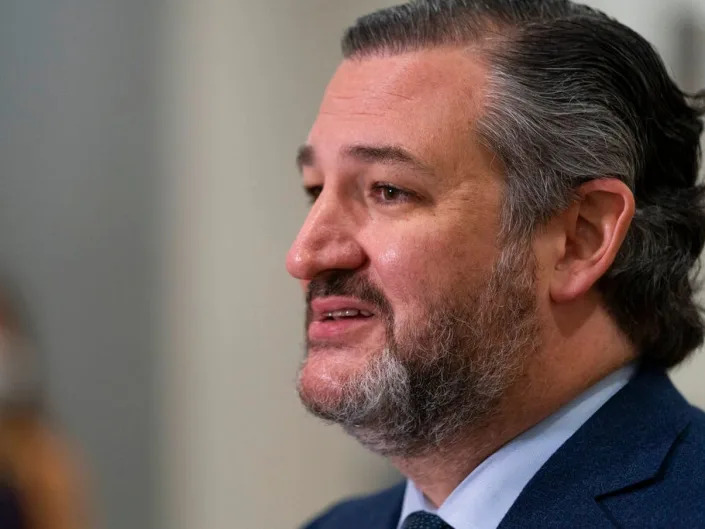
Texas is facing a housing crisis, a migrant crisis, a multi-year drought, and an epidemic of mass shootings. Ted Cruz, meanwhile, has opened an investigation into Bud Light.

Insider

Texas is facing a housing crisis, a migrant crisis, a multi-year drought, and an epidemic of mass shootings. Ted Cruz, meanwhile, has opened an investigation into Bud Light.

Katie Balevic – May 20, 2023

Texas is facing a housing crisis, a migrant crisis, a multi-year drought, and an epidemic of mass shootings. Ted Cruz, meanwhile, has opened an investigation into Bud Light.

Texas Sen. Ted Cruz opened an investigation into Bud Light’s partnership with trans influencer Dylan Mulvaney.

Meanwhile, Texas is grappling with a migration crisis and a severe housing crisis.

And also an epidemic of gun violence, extreme weather, and a multi-year drought.

Texas is facing a laundry list of crises: housing, immigration, and weather, among others.

So, naturally, Texas Sen. Ted Cruz is opening an investigation into Bud Light.

Social conservatives across the country continue to clutch their pearls over Bud Light’s partnership with influencer Dylan Mulvaney, a 26-year-old transgender activist who has shaken the far-right’s perception of reality by existing in the open.

The company’s partnership with Mulvaney led to right-wing calls for a boycott of Bud Light, which has impacted sales at its parent company, Anheuser-Busch. The latter reported a 23% drop in sales for the last week of April compared to the previous year, CBS News reported.

Together with Sen. Marsha Blackburn of Tennessee, Cruz sent a letter to the beer industry’s regulatory body, the Beer Institute, inquiring whether Anheuser-Busch’s partnership with Mulvaney “violates the Beer Institute’s guidelines prohibiting marketing to underage individuals.”

“The Beer Institute must examine whether your company violated the Beer Institute’s Advertising/Marketing Code and Buying Guidelines prohibiting marketing to individuals younger than the legal drinking age,” the letter said, claiming that “Mulvaney’s audience skews significantly younger than the legal drinking age.”

To avoid an investigation, Cruz and Blackburn offered Anheuser-Busch the option to “publicly sever its relationship with Dylan Mulvaney, publicly apologize to the American people for marketing alcoholic beverages to minors, and direct Dylan Mulvaney to remove any Anheuser-Busch content” from her social media platforms, they wrote in the letter.

The letter, which misgendered Mulvaney throughout, also seeks documents and information on how “Anheuser-Busch vets its partnerships and how Anheuser-Busch failed in assessing the propriety of a partnership with Dylan Mulvaney.”

Meanwhile, in Cruz’ home state of Texas:

Following the expiration of Title 42, the fates of thousands of immigrants are up in the air as politicians on both sides of the aisle play hot potato by busing them to different cities.

The state faces an urgent housing and affordability crisis. There are just 25 available rental units for every 100 low-income households, according to The Texas Tribune.

Texas is also grappling with a series of deadly extreme weather events. In 2022, at least 279 people in Texas died from extreme heat, and the year before that, 246 Texans died from a brutal winter freeze. And Texas farmers are bracing for another growing season beset by a multi-year drought.

Texas is also the epicenter of gun violence. It is the site of 5 of the 10 deadliest shootings in US history.

Beer marketing, however — thanks to Cruz — has all the attention of the state’s top leaders in Washington.

Texas is facing a housing crisis, a migrant crisis, a multi-year drought, and an epidemic of mass shootings. Ted Cruz, meanwhile, has opened an investigation into Bud Light.

Insider

Texas is facing a housing crisis, a migrant crisis, a multi-year drought, and an epidemic of mass shootings. Ted Cruz, meanwhile, has opened an investigation into Bud Light.

Katie Balevic – May 20, 2023

Texas is facing a housing crisis, a migrant crisis, a multi-year drought, and an epidemic of mass shootings. Ted Cruz, meanwhile, has opened an investigation into Bud Light.

Texas Sen. Ted Cruz opened an investigation into Bud Light’s partnership with trans influencer Dylan Mulvaney.

Meanwhile, Texas is grappling with a migration crisis and a severe housing crisis.

And also an epidemic of gun violence, extreme weather, and a multi-year drought.

Texas is facing a laundry list of crises: housing, immigration, and weather, among others.

So, naturally, Texas Sen. Ted Cruz is opening an investigation into Bud Light.

Social conservatives across the country continue to clutch their pearls over Bud Light’s partnership with influencer Dylan Mulvaney, a 26-year-old transgender activist who has shaken the far-right’s perception of reality by existing in the open.

The company’s partnership with Mulvaney led to right-wing calls for a boycott of Bud Light, which has impacted sales at its parent company, Anheuser-Busch. The latter reported a 23% drop in sales for the last week of April compared to the previous year, CBS News reported.

Together with Sen. Marsha Blackburn of Tennessee, Cruz sent a letter to the beer industry’s regulatory body, the Beer Institute, inquiring whether Anheuser-Busch’s partnership with Mulvaney “violates the Beer Institute’s guidelines prohibiting marketing to underage individuals.”

“The Beer Institute must examine whether your company violated the Beer Institute’s Advertising/Marketing Code and Buying Guidelines prohibiting marketing to individuals younger than the legal drinking age,” the letter said, claiming that “Mulvaney’s audience skews significantly younger than the legal drinking age.”

To avoid an investigation, Cruz and Blackburn offered Anheuser-Busch the option to “publicly sever its relationship with Dylan Mulvaney, publicly apologize to the American people for marketing alcoholic beverages to minors, and direct Dylan Mulvaney to remove any Anheuser-Busch content” from her social media platforms, they wrote in the letter.

The letter, which misgendered Mulvaney throughout, also seeks documents and information on how “Anheuser-Busch vets its partnerships and how Anheuser-Busch failed in assessing the propriety of a partnership with Dylan Mulvaney.”

Meanwhile, in Cruz’ home state of Texas:

Following the expiration of Title 42, the fates of thousands of immigrants are up in the air as politicians on both sides of the aisle play hot potato by busing them to different cities.

The state faces an urgent housing and affordability crisis. There are just 25 available rental units for every 100 low-income households, according to The Texas Tribune.

Texas is also grappling with a series of deadly extreme weather events. In 2022, at least 279 people in Texas died from extreme heat, and the year before that, 246 Texans died from a brutal winter freeze. And Texas farmers are bracing for another growing season beset by a multi-year drought.

Texas is also the epicenter of gun violence. It is the site of 5 of the 10 deadliest shootings in US history.

Beer marketing, however — thanks to Cruz — has all the attention of the state’s top leaders in Washington.

Texas has the anti-climate Governor: Greg Abbott signs Law Making EV Owners Pay for Their Gas-Free Cars

Gizmodo

Greg Abbott Signs Law Making EV Owners Pay for Their Gas-Free Cars

Lauren Leffer – May 19, 2023

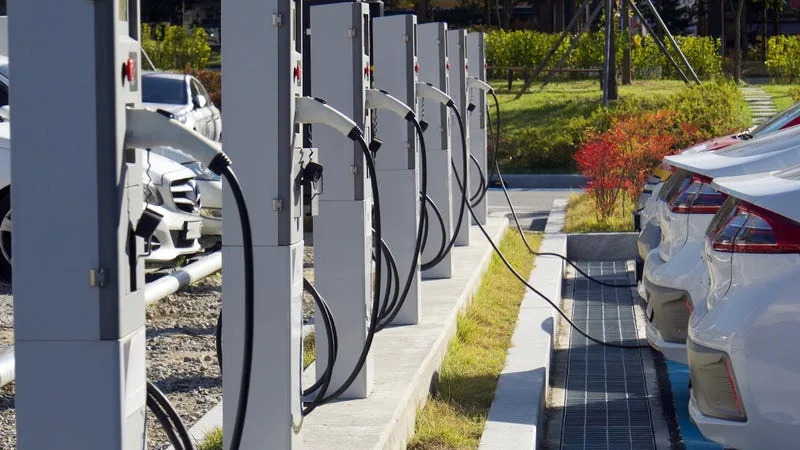
Photo of electric vehicles charging


EV drivers in Texas don’t pay at the pump, but will have to start paying a significant annual fee that critics are calling “punitive.”

Driving an electric vehicle in Texas is soon to become more expensive. Governor Greg Abbott signed a law (SB 505) on May 13 instituting new fees for registering and owning EVs in the state. Under the bill, electric car owners will have to pay $400 upon registering their vehicle. Then, every subsequent year, EV drivers will have to shell out an additional $200. Both of those fees are on top of the cost of the standard annual registration renewal fees, which are $50.75 each year for most passenger cars and trucks.

The law exempts mopeds, motorcycles, and other non-car EVs, and goes into effect starting on September 1, 2023.

At least 32 states currently have special electric vehicle registration fees, according to data from the National Conference of State Legislatures. These range from $50 in places like Colorado, Hawaii, and South Dakota to $274 (starting in 2028) in a recently passed piece of Tennessee legislation. Note: Tennessee lawmakers had originally proposed a $300 fee, but lowered it in response to pushback.

Like many other states that have instituted EV fees, the reasoning behind the Lone Star State’s new law is that electric car drivers don’t buy gas. Taxes at the fuel pump are the primary way that most states, Texas included, amass funds for road construction, maintenance, and other driving-related infrastructure.

“Currently, Texas uses the gasoline/diesel fuel tax to fund transportation projects; however, with the growing use of EVs, the revenue from the fuel tax is decreasing, which diminishes our ability to fund road improvements for all drivers,” said the bill’s author, Republican State Senator Robert Nichols, in comments about the legislation, per local NBC News affiliate KXAN.

But, compared with what gas drivers contribute, Texas’s EV fees seem a little out of whack. Charging $200 per year and $400 at the outset of EV ownership places Texas’s fee schedule at the higher price end of the policies out there. In comparison, Texas’s gas tax is among the lowest in the country, at just $0.20 per gallon. Just seven states impose a lower duty on gasoline than TX. Among the 10 most populous states in the country, additional fees levied elsewhere make Texas’s gas the cheapest.

The average Texas driver burned through ~55 million BTUs of motor gasoline in 2018, according to data from the U.S. Energy Information Administration. That’s equal to about 440 gallons of gas. At $0.20 per gallon, the standard car owner in Texas is paying just $88 per year in gas taxes—far less than the hundreds more EV drivers will now be throwing into the pot. A 2022 Consumer Reports analysis determined that a Texas driver’s gas tax contribution is even lower, at just $71.

The new law says loud and clear that Texas is “fully behind oil and gas,” Kara Kockleman, a transportation engineering professor at the University of Texas, Austin, told local ABC News affiliate KVUE. “Electric vehicles should pay a gas tax – I just think the tax on the conventional cars should be much, much higher than it is. We pay less for gas in this state than almost anyone in the world… Texas is really behind the curve on trying to do the right thing by the environment. And so, that’s embarrassing, I think, for all of us.”

There’s no doubt that roads and other car infrastructure are expensive. Though it can be easy to forget that—every time a driver cruises down the asphalt, complies with a traffic signal, or reads a highway sign—they’re benefiting from a costly system constructed for their particular use and benefit. But compared with other forms of transportation in the U.S., car ownership is already heavily subsidized. So is burning fossil fuels.

According to a 2015 analysis from the nonprofit Canadian media outlet The Discourse, society pays more than $9 for every $1 a driver pays in commuting: Through infrastructure, accident liability, noise and air pollution, and congestion. Buses, biking, and walking all eat up much less public funds for the same amount of miles traveled. EVs presumably also have a slightly lower public cost, as they’re quieter and don’t directly emit air pollution.

Yet in Texas, the tax load for driving an electric car will far exceed that of a gas-powered vehicle. The new law is “punitive” according to Consumer Reports. “Consumers should not be punished for choosing a cleaner, greener car that saves them money on fuel and maintenance,” Dylan Jaff, a policy analyst at CR, wrote in an April statement. “The fees proposed in this bill will establish an inequitable fee scale for EV owners, and will not provide a viable solution to the long-standing issue of road funding revenue.”

Luke Metzger, director of the non-profit advocacy group, Environment Texas, echoed Consumer Reports’ findings in a statement from last month. “The Texas Legislature is pouring sugar in the tank of the electric vehicle revolution. This punitive fee will make it harder for Texans to afford these clean vehicles which are so critical to reducing air pollution in Texas.”

Electric personal vehicles are not a perfect solution to the ongoing problem of petroleum-powered cars. Swapping every gas-guzzler for an EV still would use up an extraordinary amount of resources, that are likely to be ill-gotten. Public investment in mass transit would inarguably be a better environmental strategy. But, as long as the U.S. remains overwhelmingly car dominant and as long as most Americans lack access to adequate public transit, EV uptake remains important for lowering the nation’s carbon emissions.

Already, the upfront costs of purchasing an electric car are significantly higher than buying a gas vehicle. A disproportionate tax system adds to that burden, and it could dissuade people from transitioning to EVs.

Psaki on debt ceiling talks: China probably ‘rooting for default’

The Hill

Psaki on debt ceiling talks: China probably ‘rooting for default’

Alex Gangitano – May 19, 2023

Former Biden White House press secretary Jen Psaki said Friday that China is probably “rooting for default” while talks in Washington over a debt ceiling compromise have been cut short.

“All of these world leaders and their teams are watching what’s happening in the United States. Is democracy going to last? Are they going to default? All of that makes the United States look weak on the world stage,” Psaki said on MSNBC.

“If you’re China, you’re probably — you’re rooting for default,” she added.

President Biden has also warned it could be a concern internationally if the U.S. were to default on its debt, arguing recently that world leaders have been wondering about the looming risk.

Director of National Intelligence Avril Haines said earlier this month Beijing and Moscow would use a potential default for propaganda purposes through “information operations” as evidence the U.S. political system is chaotic.

Psaki outlined the situation with the president in Japan for the Group of Seven (G-7) summit, relying on Republican negotiators and White House officials to keep working to avoid a default until he returns to Washington on Sunday.

“So for the president, this is about — he’s there to project strength; the United States is back at the table,” she said. “But these negotiations, this being tricky and unresolved at home, is not great. And that’s important for people, Republicans, Democrats to really understand.”

She also warned against being overly concerned by the top Republican lawmakers negotiating a debt ceiling compromise with the White House cutting the talks short. The Republicans left a meeting with White House officials Friday in the Capitol, saying the two sides were too far apart and that the White House is being unreasonable.

“Sometimes, there are pauses where it looks like everything is going to explode and not come back together, and it does,” she said.

The White House had expressed optimism as recently as late Thursday, saying there had been “steady progress” in debt limit talks, and officials said Friday the president’s team is “working hard towards a reasonable bipartisan solution.”

Additionally, Psaki said there “will be no doubt legal challenges if the president were to invoke the 14th Amendment” in response to a letter sent earlier this week from 11 senators to Biden suggesting he prepare to invoke the amendment.

The president said last week there have been discussions about whether the 14th Amendment can be invoked, but he acknowledged it would have to go to the courts.

The debt ceiling crisis is intentional | David Moon

Knox NThe debt ceiling crisis is intentional | David Moon

David Moon – May 19, 2023

The U.S. regularly faces a “debt ceiling crisis” because our elected officials would rather make a point than make a difference. Members of both parties relish this regular game of political chicken; otherwise they wouldn’t keep doing it. And the president could likely end it with a directive to the attorney general, just as a president unilaterally started this dangerous charade 43 years ago.

When the federal government threatens a shutdown, there are two issues at play: the debt ceiling and funding gaps. For more than 200 years they were never used to manufacture a “crisis” that politicians could then take credit for solving.

President Joe Biden and House Speaker Kevin McCarthy met May 16, attempting to reach agreement on raising the debt ceiling. The Treasury secretary says the country will run out of cash June 1.

After setting the first debt ceiling in 1936, Congress raised the limit only three years later. Since then, it has raised it another 82 times, just as it will eventually raise it an 83rd time in the next few weeks.

Each time the U.S. approached the statutory debt limit in the 1950s, Congress would simply approve a temporary waiver of the ceiling. That is, it voted to just ignore the law for a little while.

That changed in 1980 when, despite Democrats controlling both the House and Senate, President Jimmy Carter could not persuade Congress to pass an appropriations bill for the Federal Trade Commission. Carter’s attorney general, Benjamin Civiletti, then cited a provision in the 1884 Antideficiency Act as justification to overrule a longstanding opinion that federal agencies could continue operating during gaps in appropriation funding. Carter ordered the FTC shut down, furloughing about 1,600 federal employees, then threatened a complete government shutdown. Congress blinked and funded the FTC.

Politicians had discovered a new way to embarrass their opponents and achieve political goals. Since 1980, every potential funding gap or debt ceiling violation has provided an opportunity for politicians to boldly reveal their immaturity and short-sightedness.

In 1995 there was a debt limit situation that rivaled today’s political theater. The Treasury secretary canceled security auctions and dipped into government retirement funds for cash needs. A similar contrived crisis was miraculously resolved in 2002 using many of the same tactics and gimmicks as in 1995.

The U.S. will pay its bills, and since the federal government spends 30% more than it takes in, that requires borrowing money. (Other solutions theoretically include reducing spending, increasing taxes or selling assets to pay down debt.)

When the other party controls the White House, legislators always argue that the debt ceiling is a necessary tool to prevent out-of-control spending – except that there is no evidence that it does. Borrowing money tops the short list of things at which politicians excel. There is a much simpler way for Congress to prevent out-of-control spending: don’t pass appropriations bills that include out-of-control spending.

China overtakes Japan as world’s top car exporter

BBC News

China overtakes Japan as world’s top car exporter

Peter Hoskins – Business reporter – May 19, 2023

Worker on the assembly line of electric vehicles at a factory of Dayun Automobile in Yuncheng, Shanxi Province, China.
China’s car exports were boosted by demand for electric vehicles and sales to Russia

China says it has become the world’s biggest exporter of cars after overtaking Japan in the first three months of the year.

Officials figures released in the last week show China exported 1.07 million vehicles in the period, up 58% compared to the first quarter of 2022.

At the same time Japan’s vehicle exports stood at 954,185, after edging up 6% from a year earlier.

China’s exports were boosted by demand for electric cars and sales to Russia.

Last year, China overtook Germany to become the world’s second largest car exporter.

According to China’s General Administration of Customs, China exported 3.2 million vehicles in 2022, compared to Germany’s 2.6 million vehicle exports.

The shift away from fossil fuels has helped fuel the rise of China’s motor industry.

First quarter exports of new energy vehicles (NEVs), which includes electric cars, rose by more than 90%, compared to a year earlier.

Tesla’s China arm, SAIC – the owner of the MG brand – and BYD, which is backed by veteran US investor Warren Buffett, are among China’s top exporters of NEVs.

Elon Musk’s electric carmaker has a huge manufacturing plant in Shanghai which exports to regions including Japan and Europe.

Tesla’s ‘Gigafactory’ is currently capable of producing 1.25 million vehicles a year, and the company is planning to further increase capacity.

Last month, it started making Model Y sport utility vehicles for export to Canada.

China has also seen exports to Russia surge since the start of the Ukraine war, as Western countries imposed trade sanctions on Moscow.

Last, year, Chinese carmakers – including Geely, Chery and Great Wall – saw their market share in Russia jump after rivals including Volkswagen and Toyota quit the country following the invasion of Ukraine.