‘I still hate LIV:’ Rory McIlroy tries to find hope in humiliation of PGA Tour-LIV merger

Yahoo! Sports

‘I still hate LIV:’ Rory McIlroy tries to find hope in humiliation of PGA Tour-LIV merger

Rory McIlroy, surprised by the PGA Tour-LIV merger, tried to reconcile frustration and humiliation on Wednesday.

Jay Busbee, Senior writer – June 7, 2023

Rory McIlroy tries to deal with the fallout of Tuesday's seismic news. (Vaughn Ridley/Getty Images)
Rory McIlroy tries to deal with the fallout of Tuesday’s seismic news. (Vaughn Ridley/Getty Images)

Rory McIlroy has known abject humiliation in his golf career. He stood alone in the pines alongside Augusta National’s 10th hole in 2011 as his Masters lead evaporated. He could only watch as Cam Smith blazed past him in 2022 at St. Andrews in an Open Championship that was McIlroy’s for the taking. Never has McIlroy been humiliated like he was Tuesday.

After a year and a half of caping for the PGA Tour and commissioner Jay Monahan, a year and a half of serving as the point of the spear, McIlroy had to just sit and watch as the PGA Tour cut a deal with the opposition. The PGA Tour and the Saudi Public Investment Fund have agreed to join forces in a new, as-yet-unspecified endeavor, and McIlroy was as surprised as the rest of the golf world.

Speaking on Wednesday morning before the RBC Canadian Open, McIlroy walked through both the sequence of events Tuesday and his overall perspective on the seismic, permanent changes that flipped golf on its head.

“It’s hard for me not to sit up here and feel somewhat like a sacrificial lamb,” McIlroy said. He was notified at 6:30 a.m. of the impending merger, just a few hours before it became public news.

McIlroy tried to find some daylight between the PIF, which already bankrolls multiple tournaments, companies and endeavors in which McIlroy is involved, and LIV Golf, the upstart tour that’s spent more time beefing in public with McIlroy and others than actually playing tournaments.

“I’ve come to terms with [the PIF],” McIlroy said. “I see what’s happened in other sports, I see what’s happened in other businesses, and honestly I’ve just resigned myself to the fact that this is what’s going to happen.”

McIlroy also sided with Monahan, at least to the extent that he appreciates the structure of the new endeavor as it was announced. “Whether you like it or not, the PIF were going to keep spending the money in golf. At least the PGA Tour now controls how that money is spent,” he said. “If you’re thinking about one of the biggest sovereign wealth funds in the world, would you rather have them as a partner or an enemy? At the end of the day, money talks and you would rather have them as a partner.”

As for LIV itself, there was no gray area, no equivocation.

“I still hate LIV. I hate them,” McIlroy said. “I hope it goes away.”

McIlroy’s resigned acceptance of the PIF’s incursion didn’t include acceptance of the LIV defectors. He wasn’t quite ready to extend them any courtesies. “There still has to be consequences to actions,” he said. “The people that left the PGA Tour irreparably harmed this Tour, started litigation against it. We can’t just welcome them back in. Like, that’s not going to happen. And I think that was the one thing that Jay was trying to get across yesterday is like, guys, we’re not just going to bring these guys back in and pretend like nothing’s happened. That is not going to happen.”

Still, above and beyond who makes up a given tournament field, there’s an inevitability grinding away here. Sounding like a man watching a tidal wave approach, McIlroy acknowledged the reality of the situation while holding out a faint, perhaps irrational, hope that maybe everything would work out.

“It’s very hard to keep up with people that have more money than anyone else,” McIlroy said. “And if they’re going to put that money into the game of golf, then why don’t we partner with them and make sure that it’s done in the right way?”

McIlroy has spent a lifetime staying loyal to the PGA Tour. But loyalty doesn’t fill bank accounts. McIlroy is, by nature, an optimist. But even the PGA Tour’s strongest, most eloquent defender is struggling to rationalize Tuesday’s events as anything more than a money grab, loyalty be damned.

Would $10,000 convince you to move to a new city?

MarkerWatch – Best New Ideas in Money

June 1, 2023

To change the world, we may need to change money first. Best New Ideas in Money explores innovations that rethink how we live, work, spend, save and invest. Each week, MarketWatch reporter Charles Passy and economist Stephanie Kelton will talk to leaders in business, tech, finance and government about the next phase of money’s evolution, and meet real people whose lives are being changed as these new ideas are put to the test.

More Ways to Listen

That’s the premise of Tulsa Remote, and the program is far from alone: Cities across the country are competing for workers who can work from anywhere.

Full Transcript

This transcript was prepared by a transcription service. This version may not be in its final form and may be updated.

Raj Choudhury: Given the prevalence of work from anywhere as a work arrangement now it gives policy makers an opportunity to try to leverage this and attract their communities, their region’s workers who can work remotely.

Stephanie Kelton: Welcome to the Best New Ideas in Money, the podcast for Market Watch. I’m Stephanie Kelton. I’m an economist and a professor of economics and public policy at Stony Brook University.

Charles Passy: And I’m Charles Passy, a reporter at Market Watch.

Stephanie Kelton: Each week we explore innovations and economics, finance, technology, and policy that rethink the way we live, work, spend, save, and invest. So Charles, before we get started, I think you have some news that you want to share with our listeners.

Charles Passy: I sure do, Stephanie. So this will be my next to last episode of Best New Ideas in Money. I’ve really loved working on the podcast, but time has come to step aside and let somebody else from the Market Watch team take over. I’ll be doing a little bit more writing for Market Watch, which is my primary duty at the publication.

Stephanie Kelton: Well, I’ve had an absolute blast working with you, Charles. We will miss you and I’m going to continue to read everything you write at Market Watch.

Charles Passy: That’s great. I appreciate that. I’m happy to say that my colleague James Rogers will be taking my place. James is a financial columnist at Market Watch and he has been covering money and technology for decades.

Stephanie Kelton: So you’re saying we’re in good hands?

Charles Passy: Very much. And next week James and I will co-host an episode about why many innovative projects fail and what these failures can teach us about taking meaningful risks. So as always, stay tuned.

Stephanie Kelton: Charles, if you are going to work from anywhere, where would that be?

Charles Passy: I’m going to say a place called Block Island. It’s a island community in Rhode Island. Very remote, very peaceful. I think it’s the kind of place where you could really hunker down and do some really quality work in peace. What about you, Stephanie?

Stephanie Kelton: That sounds pretty nice. Well, I mean, I live on the north shore of Long Island, so it’s pretty peaceful. I’ve got a lot of space. We have the water, but I guess maybe I would go somewhere where there are mountains, maybe a lot of nature, low humidity, nice hiking trails, maybe Colorado.

Charles Passy: So as you might have guessed, working from anywhere is the subject of today’s episode. A few weeks back we talked about the impact of remote and hybrid work on commercial real estate cities and even the economy. Put simply what happens if people stop going to the office.

Stephanie Kelton: Today we’re taking a look at another piece of this puzzle, which is, does remote work present an opportunity for cities and regions across the United States to compete for workers who can, well, work from anywhere?

Charles Passy: But first, when we say remote work, what exactly do we mean?

Johnny C. Taylor Jr.: First of all, it’s really important that we distinguish remote work, which I will say is fully remote from hybrid, from in the office.

Stephanie Kelton: That’s Johnny C. Taylor Jr. President and CEO of the Society for Human Resource Management or SHRM.

Johnny C. Taylor Jr.: Remote work is where your full-time job is working away from an office. Hybrid, which has really become all the rage is where you spend some portion of time in your employer’s physical office space and another portion of time at wherever you’d like to work remotely. And then the obvious is the traditional in-office work environment.

Charles Passy: We’re focusing specifically on fully remote work. So how many jobs does Taylor Jr estimate will be fully remote in the near future?

Johnny C. Taylor Jr.: We believe the number is going to settle in somewhere between 12 and 15% where people will be able to work remotely full time. We believe that’s where we’re going to settle. Obviously none of us know, but that’s our best guess.

Stephanie Kelton: Estimates vary and they’re contested and debated on the higher end the freelance platform, Upwork anticipates that as much as 22% of the United States workforce could become remote by 2025.

Charles Passy: But we’re not there yet. And a more conservative estimate is roughly in line with Taylor Jr’s as of its most recent count. In February, 2023, Stanford University’s monthly study on remote work found that 12% of workers were fully remote.

Stephanie Kelton: But if we stick with Taylor Jr’s range 12 to 15%. That’s between 20 and 25 million workers in the United States.

Charles Passy: That’s a lot of fully remote workers.

Stephanie Kelton: It really is Charles, and it also means that 20 to 25 million workers are potentially up for grabs. To understand more about the race for talent this pool of jobs may create we spoke to three academics who co-authored a study for the Brookings Institution about work from anywhere as policy. They looked at a program called Tulsa Remote, which we’ll hear about later in the episode.

Charles Passy: Before we do, what’s the new idea here? What does work from anywhere say about how the geography of work may be shifting?

Evan Starr: For most of history where workers live has been tied to the jobs that they have.

Charles Passy: That’s Evan Starr, a professor of economics at the University of Maryland, and one of the co-authors of the Brookings Report on work from anywhere as policy.

Evan Starr: So if a locality wants to bring in a bunch of workers and jobs, historically, the main way to do that has been to try to bring in companies.

Stephanie Kelton: Why do companies benefit cities and states? Well, two of the big reasons are they broaden the tax base and they bring jobs.

Charles Passy: And if you remember anything that happened before the COVID-19 pandemic, you might remember the big brouhaha over where Amazon was going to build its HQ two,

Speaker 6: Amazon’s shopping for a second headquarters bringing up to 50,000 jobs to the city the online retail giant selects.

Speaker 7: Amazon will feel right at home here.

Speaker 8: Of the nearly 240 bids from across America. The 20 finalists are mostly in the east and south from big cities like Boston, Dallas, and Atlanta to the mid-size like Columbus, Raleigh, and Nashville.

Stephanie Kelton: Cities and states across America compete with each other to lure corporations typically by offering them valuable tax credits and subsidies or granting them other favorable treatment. And Amazon’s HQ2 was the ultimate big fish pitting cities against cities and states against states.

Charles Passy: Ultimately, Amazon settled on a new build in northern Virginia outside of Washington DC and after a whole lot of controversy leased additional space in New York City where it had originally intended to build a large complex. And notably this year after cutting thousands of jobs, Amazon recently paused construction of its Northern Virginia headquarters.

Stephanie Kelton: The point is with work from anywhere, how cities compete for jobs could be changing. Back to Starr.

Evan Starr: In this day and age where we have these remote workers who can work from anywhere who aren’t tied to location, we can now separate the company from where they live. And so we can have these municipalities competing for the location of the individual while simultaneously having employers competing over their labor. So we’ve split this classic connection of where you work and where you live. And I think that kind of gave all of these programs, these work from anywhere as policy programs a boost.

Stephanie Kelton: What exactly is work from anywhere as policy? Raj Choudhury is another co-author of the Brookings Report, as well as a professor at Harvard Business School. Choudhury studies the future of work, and in particular how the geography of work is changing.

Raj Choudhury: Given the prevalence of work from anywhere as a work arrangement now, it gives policy makers an opportunity to try to leverage this and attract to their communities, their towns, their regions workers who can work remotely. And this is especially salient for towns and cities and regions that have witnessed a lot of talent flight, brain drain, or have had problems retaining their own young workers. So I think if you can incentivize remote workers to relocate to your town, your city, or your region, then you are leveraging work from anywhere as a policy.

Charles Passy: Why is this important? For Choudhury it presents an opportunity.

Raj Choudhury: So in the case of the US, the smaller towns in the middle of the country lose talent with the larger cities on the coasts. And this has been described as a chicken and egg problem. So if you were a mayor or a policymaker in one of these smaller towns, it’s hard for you to try to convince companies to come and set up factories or offices or warehouses in your town because there’s no talent. The talent is leaving. And it’s also hard to convince your residents to stay back because there are no jobs. And so the argument we’ve made in the past is that remote work and work from anywhere breaks this chicken and egg problem because the remote workers come with their own jobs.

Charles Passy: In Choudhury’s view, it’s a win-win. Remote workers bring their jobs and their higher salaries and spend money and pay taxes, which all benefits communities. And if some of these remote workers go on to start companies or open businesses, well, it’s a new way of doing economic development.

Stephanie Kelton: The incentives for cities and states are fairly clear and as a result, the number of work from anywhere as policy programs is growing. Here’s Thomaz Teodorovicz, a professor in the Department of Strategy and Innovation at the Copenhagen Business School. Teodorovicz is the third and final co-author on the Brookings study.

Thomaz Teodorovicz: Right now. We know of more than 17 municipalities who have some type of relocation incentive programs, and they are distributed in several states, West Virginia, Maine, Vermont, Michigan, Iowa, Oklahoma, Alaska, Hawaii. You can see them spread out across all the country. And if you look internationally in 2022, there are over 40 countries that started issuing digital nomad visas.

Charles Passy: Digital nomad visas are pretty much exactly what you’d expect them to be, a type of visa that authorizes the holder to work remotely in another country. And in 2023, there may be more than 50 countries worldwide, which offers some type of digital nomad visa.

Stephanie Kelton: Although the United States doesn’t offer digital nomad visas, Teodorovicz believes that we’ll be seeing more and more of these work from anywhere incentive programs.

Thomaz Teodorovicz: So we are seeing an increase in interest, and that has not diminished even after the COVID pandemic has started, we are have seen a little. So my expectations, this will continue to increase to a certain extent. And right now we’re just starting to explore what is the potential of Working-From-Anywhere as a policy.

Charles Passy: But wait a minute, if one of the inducements for workers is taking their big city salary and moving to a place with a lower cost of living well, aren’t companies going to eventually start to say, “Hey, I’m not going to pay somebody in Tulsa what I pay somebody in New York City? I’m going to adjust for cost of living?”

Stephanie Kelton: Let’s go back to Johnny C. Taylor Jr. President and CEO of SHRM.

Johnny C. Taylor Jr.: It’s actually being hotly debated right now is if in fact you should make cost of living adjustments for people who choose to work remotely. If one currently works in New York City and is going to move to Idaho, perhaps we should decrease your pay. Because if the opposite were occurring, if we were asking someone who lives in the Midwest to move to New York City, we would increase their pay.

Charles Passy: And thinking about these digital nomad visas, couldn’t jobs done anywhere, literally be done anywhere? Meaning if I’m an employer, why would I pay an employee an American salary to work in a country with a much lower cost of living?

Stephanie Kelton: It’s not quite so simple and there are meaningful business labor and tax implications to consider when employers weigh moving jobs abroad. But the point is for employees, be careful what you wish for. Here’s Taylor Jr.

Johnny C. Taylor Jr.: Well, that’s precisely what happened to me as the CEO of SHRM, I had an employee who came in fully prepared, made a very compelling case for why her job could be done remotely, fully, remotely. She wanted to go live in the Caribbean and she could do her work. She didn’t really interact with her fellow colleagues, wasn’t involved in innovation, et cetera. And so she could do it remotely. And I said, “You raise a really important point, but be careful because what you’ve actually done is convinced me that there is no value in me carrying you as a full-time employee, which includes benefits, annual merit increases, et cetera. I could actually get your work done more cost effectively going outside of the country. So while you’re looking to work remotely, I’m looking for remote employees, including elsewhere on the globe.”

Charles Passy: Would $10,000 convince you to move to Tulsa, Oklahoma for one year? Plus we’ll look at another side of the story or what happens when a so-called Zoom town sees too much remote work too fast?

Stephanie Kelton: Welcome back to the Best New Ideas in Money. Before the break we considered how tens of millions of work from anywhere jobs could create a new way in which cities and states consider economic development.

Charles Passy: But what does this actually look like? Our next guest is Justin Harlan, managing director of Tulsa Remote, the program we mentioned earlier. So what exactly is Tulsa Remote?

Justin Harlan: At its core, Tulsa Remote is a one-year program that offers a $10,000 grant and additional benefits to eligible remote workers who move to and work from Tulsa for a year.

Charles Passy: Wait a minute. So if you move to Tulsa for a year and bring your job with you, you get $10,000. How does this work?

Justin Harlan: It’s a fairly quick and easy process is our hope. You jump online, tulsaremote.com, you submit your application. There’s some basic eligibility requirements like having a full-time remote job, living outside of Oklahoma for at least the last year and being eligible to work in United States. And then if you do get invited to move to Tulsa through Tulsa Remote, you have a year to do so. You can move at any time. And when you’re here, you let us know you sign up for an orientation and that’s when we start really trying to help you get integrated into the city and get you connected to the events and connect you with other people.

Stephanie Kelton: And the program is popular. According to Harlan. Tulsa Remote receives about 10,000 applications a year.

Justin Harlan: We started off pretty small. Our cohort in that first year in 2019 was about 70 people. And then in 2020, obviously everything changed. We had about 350 people move to the city, and then that number grew to about 950 people in 2021. And last year we brought in just under 800. So all in all, we’ve brought in over 2300 people to the city thus far. And one of the things that we’re probably most proud of at Tulsa Remote is the fact that about 90% of people that come to Tulsa through the program are staying beyond that year. We have recently surveyed our alumni and know that about 75% of folks that have ever come through the program and have finished that year are still around in Tulsa today, contributing in meaningful ways and choosing to call it home.

Charles Passy: For context, the population of Tulsa is about 400,000. So who are these Tulsa Remoters?

Justin Harlan: 35 is the average age and $100,000 is the average salary. So we see people that are kind of within their career. They’re not entry level folks on average. And the biggest places we see those folks coming from are those big expensive cities like New York and LA and San Francisco and Austin, and really tapping into Tulsa as a place that has high quality of life at a low cost of living.

Stephanie Kelton: It’s not the same measure as average salary, but the real median household income in Tulsa was about $52,000, according to the Census Bureau.

Charles Passy: Stephanie, I’ve been thinking 2300 remote workers at $10,000 each. That’s $23 million. Not to mention staff like Harlan, where’s this money coming from?

Stephanie Kelton: That’s a great question, Charles. Here’s Harlan.

Justin Harlan: Our program is fully funded by the George Kaiser Family Foundation. It’s a large philanthropic organization here in the city of Tulsa, and we also had some legislation passed recently at the state of Oklahoma that essentially incentivizes programs like ours to bring quality remote jobs to the state by reimbursing us up to $10,000 if somebody sticks around for a couple of years. So it’s kind of paying for success that employer tax dollars that are coming with an individual to the state are then coming back to the program that brought that individual.

Stephanie Kelton: According to a November, 2022 story in Oklahoma’s journal record, Tulsa Remote is expected to hit 5,000 jobs and $500 million in new local earnings by 2025. When we spoke, Harlan said they’re on track to exceed those numbers.

Charles Passy: On the other hand, Tulsa has a significant poverty rate, 18% compared to 11.6% nationally. And despite the low cost of living that Tulsa Remote advertises, Tulsa is itself in the grips of a housing crisis. We asked Harlan if some Tulsa’s have questioned why all of this money isn’t being invested into programs that benefit those who need the help and who already live in Tulsa.

Justin Harlan: I believe that both are necessary. In Tulsa we need to continue to attract talented and diverse people to add to the incredibly talented and diverse folks that are already here, which will grow our city and grow the opportunities that exist in our city, which I believe raises the floor for everybody. And one of the beautiful things about working for a program that’s underneath the Georgia Kaiser Family Foundation is I see the annual budget and I know that Tulsa Remote is a very small sliver of the annual budget and the vast majority of the rest of that money is being spent at a local level. So we believe it’s an important both/and we can do both simultaneously and we can do them both really well.

Stephanie Kelton: In Harlan’s view. It’s really a different model of economic development.

Justin Harlan: The traditional economic development approach has been you try to go after a company and you go all in and you invest incentives and you roll out the red carpet in hopes of them bringing hundreds of jobs with them. Our approach has been quite different by going after the individual instead of creating one basket that we’re putting all of our eggs in the form of a company. In our case at Tulsa Remote, we’ve created 2300 different baskets that all primarily have different employers. I think it really creates a less risky, far more differentiated approach to economic development that’s rooted in an individual as opposed to a company.

Charles Passy: Stephanie, you are the economist. What do you think about this?

Stephanie Kelton: Well, it makes a lot of sense and it makes a lot of sense as someone who thinks about finance too, right? I mean, if you were building a portfolio, you wouldn’t just put stocks from a couple of behemoth companies in there. You’d want to diversify your portfolio so it would be less risky. And that’s what this feels like to me. Now, on the other hand, if too many remote workers suddenly descend on a city that isn’t prepared for them, well, that can create a whole lot of problems.

Brian Guyer: Hi everybody. My name is Brian Guyer. I am the housing director for HRDC, the Human Resources Development Council here in Bozeman, Montana.

Stephanie Kelton: The population of Bozeman, Montana is about 50,000 people, but Bozeman is growing fast.

Brian Guyer: Bozeman, during the pandemic was affectionately dubbed a Zoom town by a lot of national publications because quite frankly, it’s a great place to be a remote worker. There’s a lot to love outdoors, a lot of natural amenities that are really attractive to a lot of people, and it’s also a really vibrant community.

Charles Passy: Bozeman is popular and it has been for a while, but during the height of the COVID-19 pandemic, it got even more popular. And unlike a big city, a city of 50,000 people typically has far less capacity to absorb new arrivals who put a strain on often already burdened resources like housing and infrastructure.

Stephanie Kelton: That’s right. Take housing for example. In March of 2020, the median listing price in Bozeman was about $643,000. In January of 2022, it had shot up to $1.8 million.

Charles Passy: That’s higher than Manhattan.

Stephanie Kelton: No kidding. And although that number has since dropped today, it’s still very high, nearly $1.3 million. Meanwhile, according to the Census Bureau, the median household income in Bozeman was about $67,000 in 2021. How did locals respond to this meteoric rise in the cost of housing? Here’s Guyer.

Brian Guyer: We were just in shock at what was going on, and our focus and the focus of a lot of our discussions was on that cost of a single family home and what are we going to do about home ownership opportunities for our workforce? But at the same time, probably the more difficult problem was the rapidly increasing cost of rental units, and that’s something that has really had a profound impact on our local workforce.

Stephanie Kelton: If you’ve watched the show Yellowstone, the fictional drama between longtime residents and new arrivals bear some resemblance to what’s happening in Bozeman today. What does that look like?

Brian Guyer: One of the things that kind of is in my purview is homeless shelters, and we are seeing more and more of our guests who are working multiple jobs. So our staff are waking folks up at 4:00 AM to get off to their early shift. We’re keeping our doors open late because they’re coming home from the late shift. So in a real perverse sort of way, the shelter is workforce housing.

Charles Passy: But the housing affordability issue doesn’t only impact lower income residents.

Brian Guyer: We are seeing more and more people coming to the table to talk about housing solutions who aren’t traditionally at the table. So these employers are losing this sort of middle management talent to other more affordable communities. And when that starts to happen, employers are finding themselves at the table saying, “I have to have a viable business, and if I can’t have housing for my mental management, then my business is not as viable as it may have once been.”

Charles Passy: Despite these issues, the state of Montana has a major initiative called Come Home Montana. It aims to attract remote workers from anywhere and especially to bring home Montanans who have left the state. Why? Well, in a state that was and still is struggling with brain drain, talent flight or the flow of recent college graduates out of the state, the advent of remote work isn’t necessarily a bad thing. Here’s Guyer.

Brian Guyer: So I try to think about it by considering the alternative. If we’re not growing, then effectively our community is dying. And we see a lot of communities who were at one point pretty vibrant, smaller communities who are struggling to retain that vibrancy. So I really pause and I hesitate to say that this is all a bad thing. If it were the alternative of a brain drain to borrow your term, if that was our other option, I’d much rather have the growth and the vibrancy that comes with people arriving in our community excited about being in a new place.

Charles Passy: For Guyer, it’s important that remote workers think of their new home as not only a place that offers some of the best skiing in the world, but a place that needs their talents and expertise.

Brian Guyer: What we aren’t seeing yet is people who are newly arrived to our community rounding themselves out. And I don’t know that we’ve done the best job of outreach and education to our newcomers to say, welcome to our community. We can’t wait to see you on the ski hill. We can’t wait to see you out on the trails. But also, we got issues here. We’re going through some major growing pains, and you’re very smart and you have a lot of resources that maybe haven’t always existed in a place like Montana. Let’s put those resources to good use.

Stephanie Kelton: Thanks for listening to the Best New Ideas in Money. You can subscribe to the show wherever you listen to podcasts. If you like what you heard, please leave us a rating or review. And if you have ideas for future episodes, drop us a line at bestnewideasinmoney@marketwatch.com. Thanks to Johnny C. Taylor, Jr. Evan Starr, Raj Choudhury Thomas, Teodorovicz, Justin Harlan, and Brian Guyer. To learn more about remote work, head to marketwatch.com. I’m Stephanie Kelton.

Charles Passy: And I’m Charles Passy. The Best New Ideas in Money is a podcast for Market Watch. The producers are Michael McDowell, Meta Lutoff and Katie Ferguson. Michael McDowell mixed this episode. Melissa Haggerty is the executive producer. Nathan Vardi was our newsroom editor on this episode. The Best New Ideas in Money theme was composed by Sam Retzer. Stephanie Kelton is an economist and a professor of economics and public policy at Stony Brook University and not part of the Market Watch Newsroom. We’ll be back next week with another new idea.


Five college towns worth staying put in after graduation

MarketWatch – Livability

Five college towns worth staying put in after graduation

Lesley Kennedy – June 1, 2023  

Imagine living in these lively towns without all the classes and homework
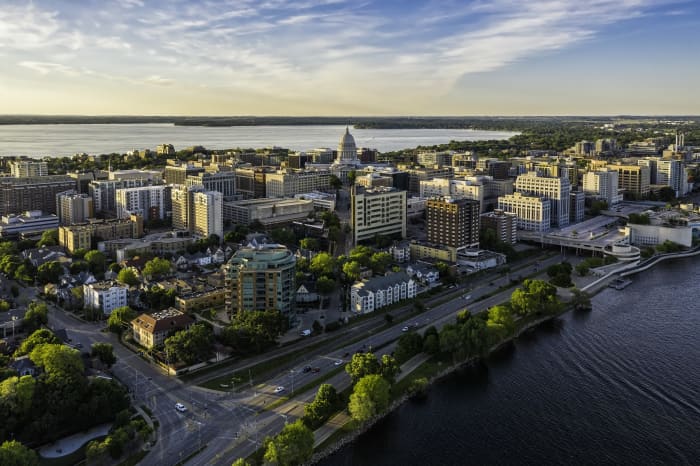
Madison is the capital of Wisconsin and home to the flagship state university. ISTOCK

Your diploma has been framed, the cap and gown are in storage, and you’ve been to more going-away parties than you can count. Now, where to focus that job hunt and narrow down where to live after graduation? If your destination wish list includes lots of culture, a smaller-town feel and football Saturdays (you’re never too old to tailgate), it may be time to head back to school — only without all the classes and homework.

Here are five college towns that are great places to live after graduation. 

1. Madison, Wis.
Lakes Monona and Mendota and the urban core of Madison, Wis. ISTOCK

If the Midwest is calling your name, this authentic college town, home to the University of Wisconsin-Madison, is an easy answer. Frequently recognized on award lists — one of the best cities in the Midwest, best city for biking, happiest city in the world, greenest city, fittest city, etc. — the state capital has the feel of a smaller town (population: 272,159) but offers big-city amenities and culture. With an array of museums, the largest producer-only farmers market in the nation and plenty of food fests — from the world’s biggest Brat Fest to the Isthmus Beer Cheese Festival — it’s also just 77 miles from Milwaukee and 122 miles from Chicago.

Madison is also an excellent place for 20-somethings (more than half the population is younger than 30) and those who seek an active lifestyle (you’ll find five lakes, more than 260 parks and bike paths everywhere you look). 

Ready to move? The average rent for a one-bedroom apartment is $1,567, roughly $400 below the national average, and the median home value in Madison is $339,874. The largest job sectors include healthcare, life sciences, agriculture, advanced manufacturing and IT, and, of course, public employment in education. Is that “On, Wisconsin” we hear you humming?

2. Corvallis, Ore.
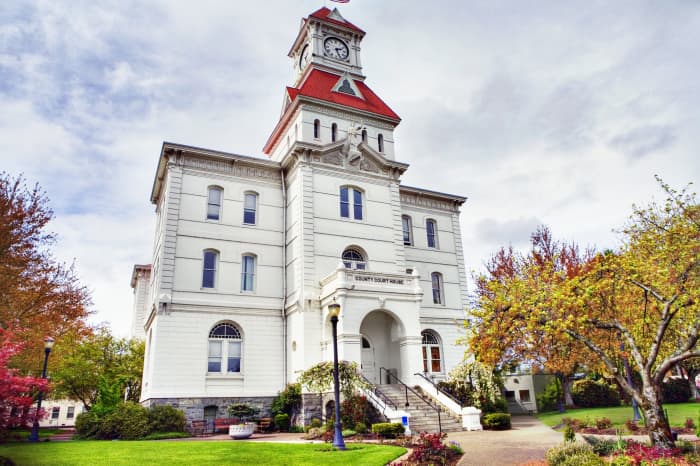
Corvallis is home to Oregon State University. ISTOCK

So your ultimate town wish list includes charming homes, proximity to outdoor adventures, a vibrant college campus and breweries, wineries and independent restaurants? It’s a tall order, but Corvallis, home to Oregon State University, will check all your boxes. 

The pretty, stately campus, situated near downtown, is one of just a few in the country with National Register of Historic Places status and hosts many cultural events (and Pac-12 athletics) open to the public throughout the year. 

With a population of 58,612 and an average Benton County home price of $527,363, it’s also a place where creative jobs are common — nearly half of the workforce is engaged in careers in science and technology, design and architecture, arts, entertainment and media, healthcare, law, management, and education.

Also see: 25 of the best places to live out West

Weekend warriors will love its location in the Willamette Valley (just 90 minutes from Portland), where both skiing and the Oregon coast are within easy drives, but crowd-drawing events, including a festival called da Vinci Days and the Corvallis Fall Festival, make staying put fun, too. 

3. Ames, Iowa
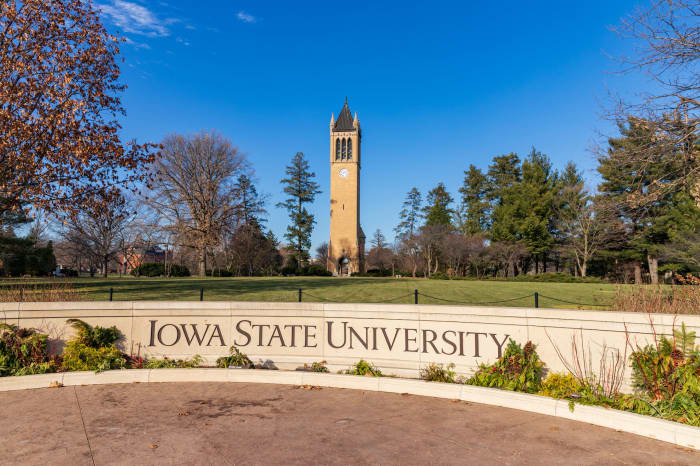
A view of the Iowa State University campanile. ISTOCK

“Is this heaven? No, it’s Iowa.”

Longtime residents of Ames may tire of the famous “Field of Dreams” line, but the movie quote isn’t far off. Boasting Iowa State University, 36 parks, a fun downtown scene, miles and miles of bike trails, four golf courses and more, this college town is a solid place to put down roots.

And it’s not just us saying it: Ames, with a population of 66,361 (including students), has racked up a long list of accolades, including best place for STEM grads, best town for millennials and healthiest city. 

If you plan to have kids, Ames has one of the nation’s top school systems. If you crave culture, the university brings Broadway shows, Pulitzer Prize–winning speakers and famous artists from across the world. If you love collegiate athletics, the Big 12 member ISU Cyclones will have you cheering. 

Don’t miss: This Iowa town will pay you to build a house there

And it’s affordable, too: The median home value is $246,387, and the average rent for a one-bedroom apartment is $725. Top jobs are in education, government and professional, and scientific and technical services.

Heaven? No, it’s Ames. 

Also see: The best affordable places to live in the U.S.

4. Ann Arbor, Mich.
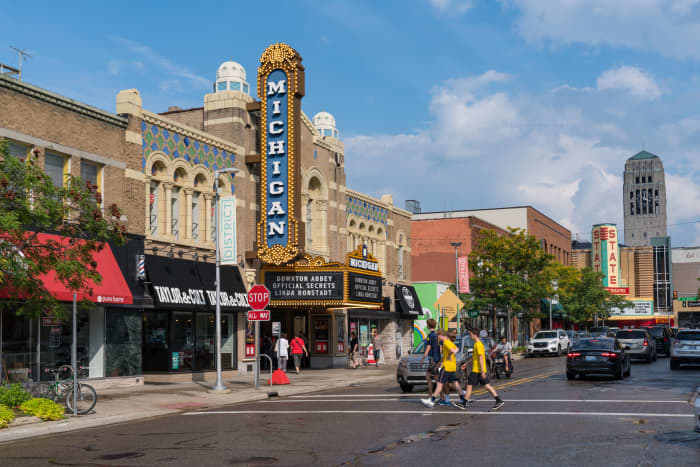
Liberty Street in Ann Arbor. GETTY IMAGES

Thinking of moving to Wolverine territory? Start by learning the lyrics to the University of Michigan fight song (“Hail! to the victors valiant; Hail! to the conqu’ring heroes; Hail! Hail! to Michigan, the champions of the West!”), then get ready to take notes on what makes this city (one of the best in the country) so beloved.

First is the college’s award-winning museums, cultural performances, nationally ranked sports teams (the football stadium seats a whopping 107,601, with epic tailgating on its exterior) and Instagram-worthy campus. Then there’s the food and drink scene: more than 300 restaurants, food trucks, a charming farmers market and a host of breweries.

See: 25 of the best cities and towns to live in the Northeast U.S.

Or the festivals held most weekends, such as July’s Ann Arbor Art Fair, April’s FoolMoon and FestiFools and holiday lights fest. Or the outdoor options — you could golf, hike, mountain bike, snowshoe or cross-country ski or canoe, paddleboard or kayak the Huron River. 

Named a winner on lists celebrating the most educated cities in America, best coffee, best college towns, happiest cities, best cities for entrepreneurs, best city for millennials and so on, Ann Arbor boasts about 122,915 residents (U. of M. students included). The median home value is $377,706, and almost 10% of the workforce is employed by the university (the city’s largest employer); unemployment is low, with the healthcare, automotive, IT and biomedical research fields as local leaders.

Ann Arbor? Hail, yes!

5. Fort Collins, Colo.
On the Poudre River Trail in Fort Collins. ISTOCK

When it comes to Rocky Mountain college towns, Boulder tends to get most of the love. But Fort Collins, home to CU’s intrastate rival, Colorado State, is bursting with potential as a worthy city in which to put down roots.

And if you’re a beer drinker, it’s time to hoist a pint. Fort Collins makes roughly 70% of the craft beer produced in the state of Colorado and has one of the highest numbers of microbreweries per capita. When friends visit, hop on a brew tour (there are plenty to choose from) to sample a Fat Tire from New Belgium, a 90 Shilling from Odell or a Dunkel from Zwei. 

Just an hour’s drive north of Denver, this town (population: 172,676), may center on CSU (which boasts a world-class performing-arts center, historic buildings and a state-of-the-art stadium), but it also supports a ballet troupe, opera company, symphony, art galleries, museums and lots of live music venues. The major employers in the area include Advanced Energy Industries, Anheuser Busch, Banner Health and CSU. 

Also see: I’m looking for a place that has year-round mild, sunny weather and is near or on the water, and my budget is $125,000 — where should I retire?

And the setting ain’t bad. Located along the Cache la Poudre River and along the Front Range, camping, hiking, skiing, fishing, biking and other outdoor adventures are just moments away. It’s a perpetual award winner on top-cities lists, from the best city for cycling to the best place to raise a family to the best place to live.

The average home price in Fort Collins is climbing — currently, it’s at $487,730, with one-bedroom apartments renting for $1,500 on average. But it’s easy to see why folks come here for college and stay forever. 

Climate Shocks Are Making Parts of America Uninsurable. It Just Got Worse.

The New York Times

Climate Shocks Are Making Parts of America Uninsurable. It Just Got Worse.

Christopher Flavelle – May 31, 2023

A firefighter tried to save a home in Meyers, Calif. (NYT)

The climate crisis is becoming a financial crisis.

This month, the largest homeowner insurance company in California, State Farm, announced that it would stop selling coverage to homeowners. That’s not just in wildfire zones, but everywhere in the state.

Insurance companies, tired of losing money, are raising rates, restricting coverage or pulling out of some areas altogether — making it more expensive for people to live in their homes.

“Risk has a price,” said Roy Wright, the former official in charge of insurance at the Federal Emergency Management Agency, and now head of the Insurance Institute for Business and Home Safety, a research group. “We’re just now seeing it.”

In parts of eastern Kentucky ravaged by storms last summer, the price of flood insurance is set to quadruple. In Louisiana, the top insurance official says the market is in crisis, and is offering millions of dollars in subsidies to try to draw insurers to the state.

And in much of Florida, homeowners are increasingly struggling to buy storm coverage. Most big insurers have pulled out of the state already, sending homeowners to smaller private companies that are straining to stay in business — a possible glimpse into California’s future if more big insurers leave.

Growing ‘catastrophe exposure’

State Farm, which insures more homeowners in California than any other company, said it would stop accepting applications for most types of new insurance policies in the state because of “rapidly growing catastrophe exposure.”

The company said that while it recognized the work of California officials to reduce losses from wildfires, it had to stop writing new policies “to improve the company’s financial strength.” A State Farm spokesperson did not respond to a request for comment.

Insurance rates in California jumped after wildfires became more devastating than anyone had anticipated. A series of fires that broke out in 2017, many ignited by sparks from failing utility equipment, exploded in size with the effects of climate change. Some homeowners lost their insurance entirely because insurers refused to cover homes in vulnerable areas.

Michael Soller, a spokesperson for the California Department of Insurance, said the agency was working to address the underlying factors that have caused disruption in the insurance industry across the country and around the world, including the biggest one: climate change.

He highlighted the department’s Safer From Wildfires initiative, a fire resilience program, and noted that state lawmakers are also working to control development in the areas at highest risk of burning.

But Tom Corringham, a research economist with the Scripps Institution of Oceanography at the University of California San Diego who has studied the costs of natural disasters, said that allowing people to live in homes that are becoming uninsurable, or prohibitively expensive to insure, was unsustainable.

He said that policymakers must seriously consider buying properties that are at greatest risk, or otherwise moving residents out of the most dangerous communities.

“If we let the market sort it out, we have insurers refusing to write new policies in certain areas,” Corringham said. “We’re not sure how that’s in anyone’s best interest other than insurers.”

A broken model

California’s woes resemble a slow-motion version of what Florida experienced after Hurricane Andrew devastated Miami in 1992. The losses bankrupted some insurers and caused most national carriers to pull out of the state.

In response, Florida established a complicated system: a market based on small insurance companies, backed up by Citizens Property Insurance Corp., a state-mandated company that would provide windstorm coverage for homeowners who couldn’t find private insurance.

For a while, it mostly worked. Then came Hurricane Irma.

The 2017 hurricane, which made landfall in the Florida Keys as a Category 4 storm before moving up the coast, didn’t cause a particularly great amount of damage. But it was the first in a series of storms, culminating in Hurricane Ian last October, that broke the model insurers had relied on: One bad year of claims, followed by a few quiet years to build back their reserves.

Since Irma, almost every year has been bad.

Private insurers began to struggle to pay their claims; some went out of business. Those that survived increased their rates significantly.

More people have left the private market for Citizens, which recently became the state’s largest insurance provider, according to Michael Peltier, a spokesperson. But Citizens won’t cover homes with a replacement cost of more than $700,000, or $1 million in Miami-Dade County and the Florida Keys.

That leaves those homeowners with no choice but private coverage — and in parts of the state, that coverage is getting harder to find, Peltier said.

‘Just not enough wealth’

Florida, despite its challenges, has an important advantage: A steady of influx of residents who remain, for now, willing and able to pay the rising cost of living there. In Louisiana, the rising cost of insurance has become, for some communities, a threat to their existence.

Like Florida after Andrew, Louisiana’s insurance market started to buckle after insurers began leaving following Hurricane Katrina in 2005. Then, starting with Hurricane Laura in 2020, a series of storms pummeled the state. Nine insurance companies failed; people began rushing into the state’s own version of Florida’s Citizens plan.

The state’s insurance market “is in crisis,” Louisiana’s insurance commissioner, James J. Donelon, said in an interview.

In December, Louisiana had to increase premiums for coverage provided by its Citizens plan by 63%, to an average of $4,700 a year. In March, it borrowed $500 million from the bond market to pay the claims of homeowners who had been abandoned when their private insurers failed, Donelon said. The state recently agreed to new subsidies for private insurers, essentially paying them to do business in the state.

Donelon said he hoped that the subsidies would stabilize the market. But Jesse Keenan, a professor at Tulane University in New Orleans and an expert in climate adaptation and finance, said the state’s insurance market would be hard to turn around. The high cost of insurance has begun to affect home prices, he said.

In the past, it would have been possible for some communities — those where homes are passed down from generation to generation, with no mortgages required and no banks demanding insurance — to go without insurance altogether. But as climate change makes storms more intense, that’s no longer an option.

“There’s just not enough wealth in those low-income communities to continue to rebuild, storm after storm,” Keenan said.

A shift to risk-based pricing

Even as homeowners in coastal states face rising costs for wind coverage, they’re being squeezed from yet another direction: Flood insurance.

In 1968, Congress created the National Flood Insurance Program, which offered taxpayer-backed coverage to homeowners. As with wildfires in California and hurricanes in Florida, the flood program arose from what economists call a market failure: Private insurers wouldn’t provide coverage for flooding, leaving homeowners with no options.

The program achieved its main goal, of making flood insurance widely available at a price that homeowners could afford. But as storms became more severe, the program faced growing losses.

In 2021, FEMA, which runs the program, began setting rates equal to the actual flood risk facing homeowners — an effort to better communicate the true danger facing different properties, and also to stanch the losses for the government.

Those increases, which are being phased in over years, in some cases amount to enormous jumps in price. The current cost of flood insurance for single-family homes nationwide is $888 a year, according to FEMA. Under the new, risk-based pricing, that average cost would be $1,808.

And by the time current policyholders actually have to pay premiums that reflect that full risk, the impacts of climate change could make them much higher.

“Properties located in high-risk areas should plan and expect to pay for that risk,” David Maurstad, head of the flood insurance program, said in a statement.

The best way for policymakers to help keep insurance affordable is to reduce the risk people face, said Carolyn Kousky, associate vice president for economics and policy at the Environmental Defense Fund. For example, officials could impose tougher building standards in vulnerable areas.

Government-mandated programs, like the flood insurance plan, or Citizens in Florida and Louisiana, were meant to be a backstop to the private market. But as climate shocks get worse, she said, “we’re now at the point where that’s starting to crack.”

More Than 1 in 4 American Homeowners Is ‘House Poor’

THe New York Times

More Than 1 in 4 American Homeowners Is ‘House Poor’

Debra Kamin – May 30, 2023

More Than 1 in 4 American Homeowners Is ‘House Poor’

More than one-quarter of homeowners in the United States are “house poor,” spending more than 30% of their income on housing costs, according to a new study.

Chamber of Commerce, a product research company for real estate agents and entrepreneurs, used numbers from the U.S. Census Bureau to analyze monthly housing costs and median household income in the 170 most populated U.S. cities. The company found that 27.4% of all homeowners are “cost-burdened” in its study.

Miami, Los Angeles and New York City have the highest number of “house poor” residents, with more than 4 in 10 homeowners in each city feeling stretched beyond their means by their housing bills. And with the exception of New York City, the top 10 cities in the United States for cost-burdened homeowners are all located in either California or Florida.

Why it matters: Housing costs are on the rise nationwide.

Mortgage interest rates, which dipped to historic lows at the beginning of the pandemic, climbed past 7% in 2022 — the highest numbers seen since 2002. And although rates slightly cooled in the early months of 2023, new homeowners today are still saddled with significantly higher monthly mortgage payments than neighbors who locked in a lower rate.

Add skyrocketing inflation and stagnating wages into the pot, and Americans owe trillions more than they did at the start of the pandemic. Higher housing costs means less set aside for savings, spending and emergencies.

It’s not just homeowners being squeezed, either: Rising housing costs push up rents as well, meaning both renters and homeowners are feeling strapped.

Background: The number of cost-burdened homeowners had been on the decline.

The “30% rule” is a longtime piece of personal finance gospel that advises keeping all housing expenses, including rent or mortgage payments, property taxes and utilities, from cutting into more than 30% of your monthly income.

From 2015 to 2019, the percentage of U.S. homeowners who were considered financially strapped dropped each year, from 29.4% in 2015 to 26.5% in 2019. But the pandemic has now started to erase those gains.

Los Angeles and New York mirror that national trend: In Los Angeles, where nearly half of homeowners are currently house poor, the number of cash-strapped owners dropped 4 percentage points between 2015 and 2019 but is now climbing again. The same goes for New York City, where in 2021, more than 45% of homeowners were house poor, up from 41.3% in 2019.

Miami, however, bucked the trend: The percentage of house-poor homeowners there was 44.6% in 2021, down 2 1/2 points from 2019.

What’s next: Federal interest rates might offer relief.

The Federal Reserve, fighting an uphill battle against inflation, has increased interest rates every month since March 2022. And while the Fed does not set mortgage rates, many home loans are tethered to their actions.

America’s central bank is now signaling that after nearly a year of consecutive rate increases, a break is on the horizon.

“That could signal some relief, at least for new homeowners,” said Collin Czarnecki, a researcher at Chamber of Commerce.

Struggles continue for thousands in Florida 8 months after Hurricane Ian as new storm season looms

Associated Press

Struggles continue for thousands in Florida 8 months after Hurricane Ian as new storm season looms

Curt Anderson – May 28, 2023

A skeleton in sunglasses sits beside a sign reading "Just waiting for the insurance check," outside the closed Kona Kai Motel on Sanibel Island, Fla., Thursday, May 11, 2023. In Sanibel, the lingering damage is not quite as widespread as in Fort Myers Beach, but many businesses remain shuttered as they are repaired and storm debris is everywhere. Seven local retail stores have moved into a shopping center in mainland Fort Myers, hoping to continue to operate while awaiting insurance payouts, construction permits, or both before returning to the island. (AP Photo/Rebecca Blackwell)
A skeleton in sunglasses sits beside a sign reading “Just waiting for the insurance check,” outside the closed Kona Kai Motel on Sanibel Island, Fla., Thursday, May 11, 2023. In Sanibel, the lingering damage is not quite as widespread as in Fort Myers Beach, but many businesses remain shuttered as they are repaired and storm debris is everywhere. Seven local retail stores have moved into a shopping center in mainland Fort Myers, hoping to continue to operate while awaiting insurance payouts, construction permits, or both before returning to the island. (AP Photo/Rebecca Blackwell)
In this drone photo, restaurants operate from food trucks with outdoor seating in the Times Square area, where many businesses were completely destroyed during Hurricane Ian, in Fort Myers Beach, Fla., Wednesday, May 10, 2023. With this year's Atlantic hurricane season officially beginning June 1, recovery is far from complete in hard-hit Fort Myers Beach, Sanibel and Pine Island. Blank concrete slabs reveal where buildings, many of them once charming, decades-old structures that gave the towns their relaxed beach vibe, were washed away or torn down. (AP Photo/Rebecca Blackwell)
In this drone photo, restaurants operate from food trucks with outdoor seating in the Times Square area, where many businesses were completely destroyed during Hurricane Ian, in Fort Myers Beach, Fla., Wednesday, May 10, 2023. With this year’s Atlantic hurricane season officially beginning June 1, recovery is far from complete in hard-hit Fort Myers Beach, Sanibel and Pine Island. Blank concrete slabs reveal where buildings, many of them once charming, decades-old structures that gave the towns their relaxed beach vibe, were washed away or torn down. (AP Photo/Rebecca Blackwell)
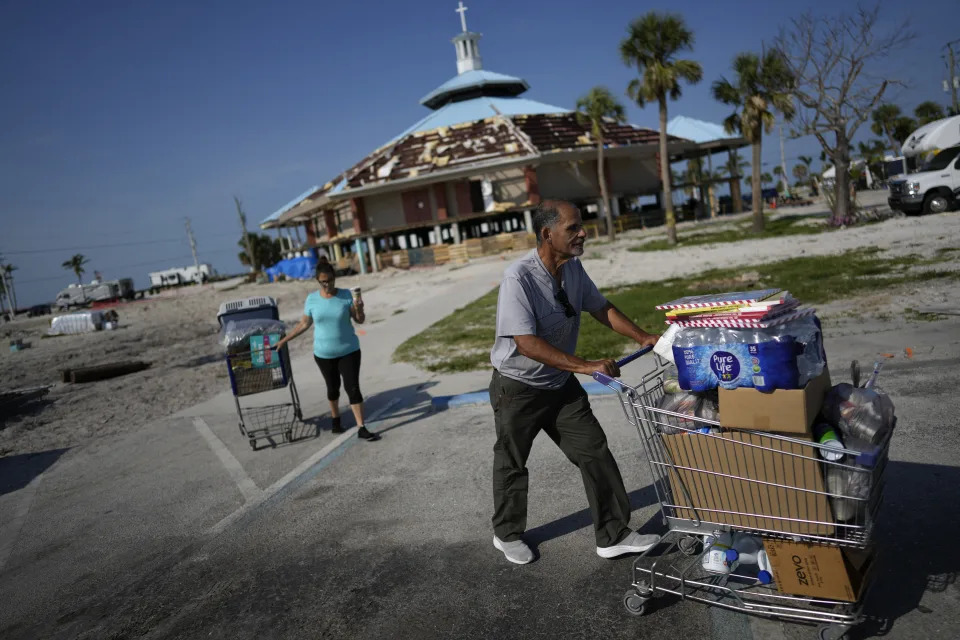
Omar Del Rio, a civil engineer currently subcontracted to FEMA, and his wife Maria wheel shopping carts full of groceries and supplies to their car as they leave the free food pantry operating underneath the heavily damaged Beach Baptist Church in Fort Myers Beach, Fla., Thursday, May 11, 2023. Before Hurricane Ian devastated Fort Myers Beach in 2022, the Del Rios rented an apartment on the island, living near the rented homes of their adult son and daughter, who each lived with their spouse and three children. All three homes were lost in the storm, and the six adults and six children were forced to spend months living together in one camper. (AP Photo/Rebecca Blackwell)
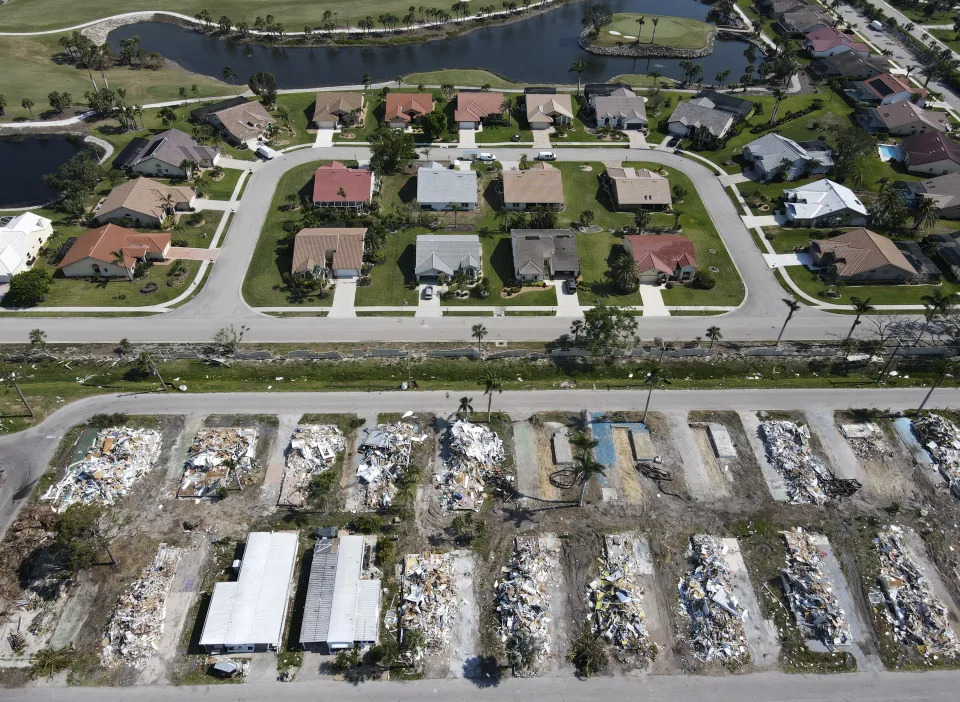
In this photo taken with a drone, the remains of homes demolished after sustaining heavy damage in Hurricane Ian are seen in Tropicana Sands mobile home park, bottom, in Fort Myers, Fla., Wednesday, May 10, 2023. More than seven months after the storm, crews continue removing debris after demolishing all but a handful of the hundreds of manufactured homes in the community marketed to active adults ages 55 and up. The state estimated the total insured loss from Ian in Florida was almost $14 billion, with more than 143,000 claims still open without payment or claims paid but not fully settled as of March 9. (AP Photo/Rebecca Blackwell)
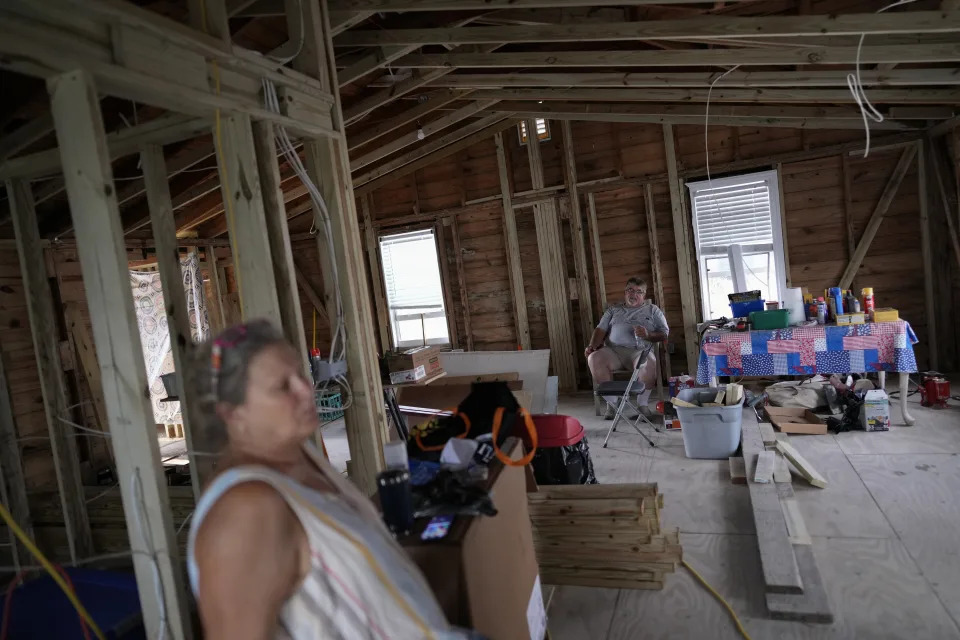
Jacquelyn and Timothy Velazquez sit inside the gutted shell of their 910 square foot two-bedroom home, which was damaged when Hurricane Ian's storm surge rose to within inches of the ceiling, in Fort Myers Beach, Fla., Wednesday, May 24, 2023. The couple has laid down new flooring, but is still battling with their insurance company to have the damage to the leaking roof covered, while waiting on permits for the renovation work. (AP Photo/Rebecca Blackwell)
Jacquelyn and Timothy Velazquez sit inside the gutted shell of their 910 square foot two-bedroom home, which was damaged when Hurricane Ian’s storm surge rose to within inches of the ceiling, in Fort Myers Beach, Fla., Wednesday, May 24, 2023. The couple has laid down new flooring, but is still battling with their insurance company to have the damage to the leaking roof covered, while waiting on permits for the renovation work. (AP Photo/Rebecca Blackwell)

FORT MYERS BEACH, Fla. (AP) — Eight months ago, chef Michael Cellura had a restaurant job and had just moved into a fancy new camper home on Fort Myers Beach. Now, after Hurricane Ian swept all that away, he lives in his older Infiniti sedan with a 15-year-old long-haired chihuahua named Ginger.

Like hundreds of others, Cellura was left homeless after the Category 5 hurricane blasted the barrier island last September with ferocious winds and storm surge as high as 15 feet (4 meters). Like many, he’s struggled to navigate insurance payouts, understand federal and state assistance bureaucracy and simply find a place to shower.

“There’s a lot of us like me that are displaced. Nowhere to go,” Cellura, 58, said during a recent interview next to his car, sitting in a commercial parking lot along with other storm survivors housed in recreational vehicles, a converted school bus, even a shipping container. “There’s a lot of homeless out here, a lot of people living in tents, a lot of people struggling.”

Recovery is far from complete in hard-hit Fort Myers Beach, Sanibel and Pine Island, with this year’s Atlantic hurricane season officially beginning June 1. The National Oceanic and Atmospheric Administration is forecasting a roughly average tropical storm season forecast of 12 to 17 named storms, five to nine becoming hurricanes and one to four powering into major hurricanes with winds greater than 110 mph (177 kph).

Another weather pattern that can suppress Atlantic storms is the El Nino warming expected this year in the Pacific Ocean, experts say. Yet the increasingly warmer water in the Atlantic basin fueled by climate change could offset the El Nino effect, scientists say.

In southwest Florida, piles of debris are everywhere. Demolition and construction work is ongoing across the region. Trucks filled with sand rumble to renourish the eroded beaches. Blank concrete slabs reveal where buildings, many of them once charming, decades-old structures that gave the towns their relaxed beach vibe, were washed away or torn down.

Some people, like Fort Myers Beach resident Jacquelyn Velazquez, are living in campers or tents on their property while they await sluggish insurance checks or building permits to restore their lives.

“It’s, you know, it’s in the snap of the finger. Your life is never going to be the same,” she said next to her camper, provided under a state program. “It’s not the things that you lose. It’s just trying to get back to some normalcy.”

Ian claimed more than 156 lives in the U.S., the vast majority in Florida, according to a comprehensive NOAA report on the hurricane. In hard-hit Lee County — location of Fort Myers Beach and the other seaside towns — 36 people died from drowning in storm surge and more than 52,000 structures suffered damage, including more than 19,000 destroyed or severely damaged, a NOAA report found.

Even with state and federal help, the scale of the disaster has overwhelmed these small towns that were not prepared to deal with so many problems at once, said Chris Holley, former interim Fort Myers Beach town manager.

“Probably the biggest challenge is the craziness of the debris removal process. We’ll be at it for another six months,” Holley said. “Permitting is a huge, huge problem for a small town. The staff just couldn’t handle it.”

Then there’s battles with insurance companies and navigating how to obtain state and federal aid, which is running into the billions of dollars. Robert Burton and his partner Cindy Lewis, both 71 and from Ohio, whose mobile home was totaled by storm surge, spent months living with friends and family until finally a small apartment was provided through the Federal Emergency Management Agency. They can stay there until March 2024 while they look for a new home.

Their mobile home park next to the causeway to Sanibel is a ghost town, filled with flooded-out homes soon to be demolished, many of them with ruined furniture inside, clothes still in closets, art still on the walls. Most homes had at least three feet of water inside.

“No one has a home. That park will not be reopened as a residential community,” Lewis said. “So everybody lost.”

The state Office of Insurance Regulation estimated the total insured loss from Ian in Florida was almost $14 billion, with more than 143,000 claims still open without payment or claims paid but not fully settled as of March 9.

With so many people in limbo, places like the heavily damaged Beach Baptist Church in Fort Myers Beach provide a lifeline, with a food pantry, a hot lunch stand, showers and even laundry facilities for anyone to use. Pastor Shawn Critser said about 1,200 families per month are being served at the church through donated goods.

“We’re not emergency feeding now. We’re in disaster recovery mode,” Critser said. “We want to see this continue. We want to have a constant presence.”

In nearby Sanibel, the lingering damage is not quite as widespread although many businesses remain shuttered as they are repaired and storm debris is everywhere. Seven local retail stores have moved into a shopping center in mainland Fort Myers, hoping to continue to operate while awaiting insurance payouts, construction permits, or both before returning to the island.

They call themselves the “Sanibel Seven,” said Rebecca Binkowski, owner of MacIntosh Books and Paper that has been a Sanibel fixture since 1960. She said her store had no flood insurance and lost about $100,000 worth of books and furnishings in the storm.

“The fact of the matter is, we can get our businesses back up and running but without hotels to put people in, without our community moving back, it’s going to be hard to do business,” she said. “You hope this is still a strong community.”

Yet, the sense among many survivors is one of hope for the future, even if it looks very different.

Cellura, the chef living in his car, has a new job at another location of the Nauti Parrot restaurant on the mainland. Insurance only paid off the outstanding loan amount on his destroyed camper and he didn’t qualify for FEMA aid, leaving him with virtually nothing to start over and apartment rents rising fast.

But, after 22 years on the island, he’s not giving up.

“I believe that things will work out. I’m strong. I’m a survivor,” he said. “Every day I wake up, it’s another day to just continue on and try to make things better.”

AP visual journalist Laura Bargfeld and photographer Rebecca Blackwell contributed to this story.

State Farm will no longer accept applications for homeowners insurance in California, citing wildfire risk

ABC News

State Farm will no longer accept applications for homeowners insurance in California, citing wildfire risk

 Julia Jacobo – May 28, 2023

One of the largest insurance agencies in the country will no longer accept applications for home and business insurance in California due to wildfire risks and the cost of rebuilding.

State Farm has ceased new applications, including all business and personal lines property and casualty insurance, starting Saturday, the company announced in a press release.

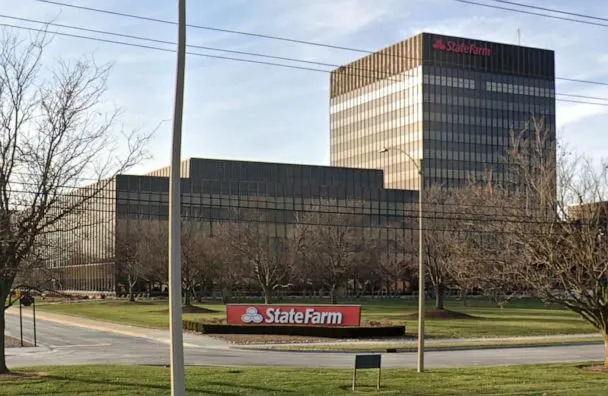
PHOTO: The headquarters for State Farm Insurance is shown in Bloomington, Illinois. (Google Maps Street View)

Existing customers will not be affected, and the company will continue to offer auto insurance in the state, according to the release.

The insurance agency cited “historic increases in construction costs outpacing inflation, rapidly growing catastrophe exposure, and a challenging reinsurance market” for its decision.

MORE: Mosquito Fire in Northern California has destroyed dozens of homes

State Farm said while it takes its responsibility to manage risk “seriously” and will continue to work with state policymakers and the California Department of Insurance to help build market capacity in California, the decision was necessary to ensure the company remains in good financial standing.

“It’s necessary to take these actions now to improve the company’s financial strength,” the statement read. “We will continue to evaluate our approach based on changing market conditions. State Farm® independent contractor agents licensed and authorized in California will continue to serve existing customers for these products and new customers for products not impacted by this decision.”

PHOTO: In this Sept. 7, 2022, file photo, a property destroyed by Mosquito Fire is shown in the Michigan Bluff neighborhood of Foresthill, in Placer County, Calif. (Fred Greaves/Reuters, FILE)

A decadeslong megadrought and climate change have been exacerbating wildfire risk in California in recent years. Severe drought during the winter is leading to matchbox conditions in the dry season, allowing intense wildfires to ignite with the slightest spark.

The warm, dry climate that serves as fuel for wildfires is typical for much of the West, but hotter overall temperatures on Earth are increasing wildfire risk in the region.

MORE: Out-of-control wildfire destroys town of Greenville, California, as dry, gusty conditions encourage rapid spread

Last year, the Mosquito Fire destroyed dozens of homes in El Dorado and Placer counties. In 2021, the Dixie Fire destroyed more than 100 homes in the town of Greenville.

The Creek Fire in 2020 became the largest single fire in California history, damaging or destroying nearly 1,000 structures and burning through about 380,000 acres.

PHOTO: In this Sept. 24, 2021, file photo a burned residence is shown in Greenville, Calif. The Dixie fire has burned almost 1 million acres and remains at 94% containment after burning through 5 counties and more than 1,000 homes. (Josh Edelson/AFP via Getty Images, FILE)

Rebuilding from wildfire destruction is expensive, expensive, experts have found.

The reconstruction costs from the 2022 Coastal Fire in Southern California were estimated to be $530 million, and only 20 homes were destroyed, according to a report by property solutions firm CoreLogic.

MORE: Creek Fire becomes largest single blaze in California history

In addition, the nationwide impact of California’s 2018 wildfire season — which included the Camp Fire, the most destructive in California history — totaled $148.5 billion in economic damage, according to a study by the University College London.

PHOTO: In this Sept. 8, 2020, file photo, a home is engulfed in flames during the 'Creek Fire' in the Tollhouse area of unincorporated Fresno County, Calif. (Josh Edelson/AFP via Getty Images, FILE)
PHOTO: In this Sept. 8, 2020, file photo, a home is engulfed in flames during the ‘Creek Fire’ in the Tollhouse area of unincorporated Fresno County, Calif. (Josh Edelson/AFP via Getty Images, FILE)

The state’s FAIR Plan provides basic fire insurance coverage for high-risk properties when traditional insurance companies will not, but that plan is the last resort, Janet Ruiz, director of strategic communication for the Insurance Information Institute, told ABC San Francisco station KGO.

“It’s a basic policy, only covers fire – you have to get a wraparound policy too to cover theft and liability,” she said.

Scammers using text messages to drain bank accounts in new ploy

CBS News

Scammers using text messages to drain bank accounts in new ploy

 Anna Werner Wernera@cbsnews.com – May 26, 2023

In a stark reminder of the growing threat of financial scams, Deborah Moss, owner of a small catering business, found herself ensnared in a sophisticated bank scam that started with a seemingly harmless text message.

Moss, who had dedicated over a decade to building her business, says she had finally accumulated enough savings to pursue a peaceful life in rural Guerneville, California. But her dreams began to shatter after she received a text message purporting to be from her bank, Chase, inquiring about an unauthorized $35 debit card charge from another state. Initially dismissing it as a minor inconvenience, Moss promptly replied.

Shortly after replying to the text, Moss received a call from someone claiming to be a representative from Chase Bank, with the caller ID displaying the bank’s name. On the other end of the line was an individual identifying herself as “Miss Barbara” from “Chase ATM.” She requested permission from Moss to issue a new debit card to resolve the alleged fraudulent charge.

Moss says Miss Barbara told her she needed to verify Moss’s identity and to do so, instructed Moss to read the numbers from a subsequent text message back to her over the phone.

“And I would just repeat those numbers to her, and she’d say, ‘That’s great. Thank you so much, Ms. Moss,'” said Moss.

Over the next week, Miss Barbara called Moss several times, each time saying there was a problem with delivery of the card and each time asking Moss to verify her identity by reading back the numbers from subsequent text messages.

It wasn’t until Moss visited her nearest bank branch that the devastating truth emerged. A supervisor informed her that her account had been drained, leaving her life savings of nearly $160,000 completely depleted.

“That was all my money. It took me 12 years to get that money, and that was my life savings,” Moss said.

Moss’ ordeal sheds light on the escalating trend of fraud and the alarming financial losses suffered by Americans, with reported losses reaching a staggering $8.8 billion last year, marking a 30% surge from the previous year, according to government data.

The text messages asking Moss to authenticate her account were authentic: they were sent by Chase Bank as part of its two-factor authentication system, designed to enhance customer security. But the scammers deceived Moss into revealing the numbers to them over the phone, enabling them to bypass security measures and transfer large sums of money from Moss’s account. In just one week, they conducted six wire transfers, some as high as nearly $48,000.

Moss filed a police report and submitted a claim to Chase Bank, hoping to recover her stolen funds. However, her hopes were dashed when, after a five-week wait, the bank denied her claim.

Chase Bank appeared to fault Moss, writing her in a letter, “During our review we found you did not take the appropriate steps to protect your account from theft or unauthorized use.” Bank officials said they would not reimburse her account, leaving Moss devastated and feeling betrayed.

“My world fell apart. My whole world fell apart,” Moss said. “You think of your bank as being some place that you put your money so that it’s safe but it’s not safe. It needs to change.”

JPMorgan Chase provided a statement to CBS News in response, stating, “Regrettably, Ms. Moss’s account was compromised as a result of scammers deceiving her and obtaining her personal confidential information.”

Chase Bank told CBS News that bank officials had attempted to contact Moss via phone and email regarding the wire transfers at the time. Moss says she did not receive any of these messages. Chase offered the following tips for consumers to remember: Do not share personal account information such as ATM PINs or passcodes. Keep in mind that the bank typically does not initiate phone calls, but if you want to ensure you are speaking with the bank, call the number on the back of your card. Lastly, avoid clicking on suspicious links in texts or emails.

JPMorgan Chase defended its commitment to combating fraud, saying in a statement: “Each year we invest hundreds of millions of dollars in authentication, risk models, technology and associate, client education to make it harder for scammers to trick customers.”

David Weber, a certified fraud examiner and forensic accounting professor, believes that Chase Bank bears responsibility for, in his opinion, failing Moss and neglecting to implement stronger security measures.

“Anyway you look at it, they failed. They failed her,” Weber said. “The bank could have required her to come in and sign the wire form in person. They left everything for her to be at risk, and now they’re saying they bear no responsibility.”

He also said that the current two-factor authentication systems, including text messages, are insufficient in combating the increasingly sophisticated tactics employed by scammers.

“This is happening hundreds and thousands of times a day in the United States using the exact same methods here. The two-factor authentication is not strong enough to protect this customer,” Weber said.

ADDITIONAL INFORMATION FROM JPMORGAN CHASE:

Threats are changing every day as scams become more sophisticated. As threats evolve, so do our methods to prevent both fraud and scams.We know we cannot thwart these scams alone. It takes an all-hands-on deck approach in partnership with law enforcement, the private sector, and government to help prevent, avoid and prosecute these crimes.  Consumers play a critical role too, which is why we continue to educate them about the latest scams so that they can spot and avoid them.

SCAM PREVENTION TIPS:

Protect your personal account information, ATM pins, passwords and one-time passcodes. If someone contacts you and asks for this information, especially if it’s someone claiming to be from your bank, do not share it with them.If you want to be sure you’re talking to a legitimate representative of the company that contacted you, call the number on their official website. If you want to be sure you are talking to a legitimate representative of your bank, call the number at the back of your card or visit a branch. Never click on suspicious links in a text or email or grant anyone remote access to your phone or computer. Do not respond to phone, text or internet requests for money or access to your computer or bank accounts. Banks will never call, text or email asking for you to send money to yourself or anyone else to prevent fraud. To learn more about common scams and ways to protect yourself visit: www.chase.com/security-tips.

NC Governor declares ‘state of emergency’ due to GOP school voucher expansion, tax cuts

The News & Observer

NC Governor declares ‘state of emergency’ due to GOP school voucher expansion, tax cuts

T. Keung Hui – May 22, 2023

Kaitlin McKeown

Democratic Gov. Roy Cooper declared Monday that “public education in North Carolina is facing a state of emergency” in the face of “extreme legislation” being promoted by Republican state lawmakers.

In a video posted online Monday, Cooper said GOP lawmakers are “starving” public schools and “dropping an atomic bomb on public education” with plans to further cut taxes and increase funding for private school vouchers. He said the public needs to speak out against the changes before they’re adopted in the state budget.

“It’s clear that the Republican legislature is aiming to choke the life out of public education,” Cooper said. “I am declaring this state of emergency because you need to know what’s happening.

“If you care about public schools in North Carolina, it’s time to take immediate action and tell them to stop the damage that will set back our schools for a generation.”

Cooper’s speech comes as Republican legislative leaders are negotiating a state budget deal for the next two years that includes tax cuts and expansion of private school vouchers. The GOP has a legislative supermajority, so it can adopt a spending plan and other legislation without needing Cooper’s support.

The governor will hold public events across the state in the days ahead to call on parents, educators and business leaders to speak against the GOP proposals, the Associated Press reported.

Cooper, who can’t run again for a third consecutive term, has been losing political power. Last week, seven Democrats joined Republicans in passing the Senate budget proposal.

“Meaningless publicity stunts do nothing to improve educational outcomes in our state,” Randy Brechbiel, a spokesman for Senate leader Phil Berger, said in a statement Monday. “The House and Senate will continue working together to put forward budget proposals that address the needs of students and parents.”

‘Our teachers deserve better’

Under the Senate budget, average teacher pay would increase 4.5% over the next two years with the biggest increase going toward beginning educators. The House GOP budget had average 10.2% raises for teachers over the next two years.

Cooper has advocated for 18% raises for teachers over the next two years.

“Our teachers deserve better pay and more respect but the legislature wants to give them neither one,” Cooper said.

The $250 pay raise that the Senate would provide veteran teachers over the next two years “is a slap in the face,” Cooper said. He said the proposed Senate pay raise will not help the state deal with the thousands of teacher vacancies.

‘Cut public schools to the bone’

The Senate GOP budget would also expand the Opportunity Scholarship program so that any family, regardless of its income, would qualify to apply for vouchers to attend a K-12 private school.

Republicans point out that public education spending would grow by several hundred million dollars a year annually in their competing plans. And GOP leaders consider expansion of the private-school vouchers program part of a philosophy to give all children access to education options — whatever the source — to help them succeed.

But an Office of State Budget and Management analysis says the bill could cost traditional public schools $200 million in state funding, rural counties being particularly hard hit.

The Senate budget would also accelerate the tax cuts that Republicans put in previous budgets.

Cooper accused GOP lawmakers of wanting to help millionaires by giving them more tax cuts and making it possible for them to get private school vouchers. Currently, the Opportunity Scholarship program is limited to lower-to-middle-income families.

GOP lawmakers are choosing corporations and millionaires over public schools, the governor charged.

“Public school superintendents are telling me they’ll likely have to cut public schools to the bone — eliminate early college, AP and gifted courses, art, music, sports — if the legislature keeps draining funds to pay for private schools and those massive tax breaks,” Cooper said.

These Science-Backed Supplements May Help Ease Joint Pain, According to Experts

Prevention

These Science-Backed Supplements May Help Ease Joint Pain, According to Experts

Adele Jackson-Gibson – May 25, 2023

collagen powder and pills on pink background
The 10 Best Supplements to Improve Joint HealthYulia Lisitsa – Getty Images


“Hearst Magazines and Yahoo may earn commission or revenue on some items through these links.”

We updated this article in May 2023 to add more information about each featured product, based on extensive research done by our team.

Anyone who’s experienced joint pain in their life knows how frustrating it can be. Even the most basic activities can be painful when your joint are stiff, inflamed, and achy. Although the pain can be temporary, like the kind of soreness you might feel after a long day being desk-bound, it can also stem from a chronic condition. In fact, about one in four adults with arthritis, or 15 million people, report experiencing severe joint pain. Thankfully, the best joint supplements might help.

Of course, for some people, relief can come in the form of over-the-counter medications like acetaminophen (Tylenol), ibuprofen (Advil, Motrin IB), and naproxen (Aleve), which can help lessen pain and reduce inflammation. However, long-term use of these painkillers can come with unpleasant side-effects.

That’s why many physicians suggest exploring other strategies to find relief. For example, eating a balanced diet rich in anti-inflammatory foods, strength training, and maintaining your ideal weight are “the most effective and proven way[s] to improve the symptoms of osteoarthritis,” says Elizabeth Matzkin, M.D., the surgical director of Women’s Musculoskeletal Health at Brigham and Women’s Hospital.

Meet the Experts: Elizabeth Matzkin, M.D., the surgical director of Women’s Musculoskeletal Health at Brigham and Women’s Hospital; Thomas Wnorowski Ph.D., a clinical and biomedical nutritionist and the lead researcher of the Neurolipid Research Foundation in Millville, NJ; Jordan Mazur, M.S., R.D., the coordinator of performance nutrition for the San Fransisco 49ers; Valentina Duong, A.P.D., owner of the Strength Dietitian; Kendra Clifford, N.D., a naturopathic doctor and birth doula at Uxbridge Chiropractic Centre in Ontario; Nicole M. Avena, Ph.D., a nutrition consultant and assistant professor of neuroscience at the Mount Sinai School of Medicine.

In addition to making lifestyle changes, some people turn to supplements to improve the health of their joints. But before you rush to the vitamin aisle of your pharmacy, beware: Not all of these supplements are the joint-relieving panaceas that they claim to be. And with so many options out there, sifting through the supplement aisle is definitely not a walk in the park—which is why we’ve done the work for you and found quality joint supplements recommended by medical pros to ease pain and improve your overall joint health. Before you shop, though, always consult your doctor and do your research to determine what’s best for you.

Ahead, check out expert-recommended supplements to help improve your joint health.

Dietary supplements are products intended to supplement the diet. They are not medicines and are not intended to treat, diagnose, mitigate, prevent, or cure diseases. Be cautious about taking dietary supplements if you are pregnant or nursing. Also, be careful about giving supplements to a child, unless recommended by their healthcare provider.

Collagen Peptides Powder

“Taking 20 to 30 grams of high-quality collagen [peptides] is a good preventative measure to provide the body what it needs to synthesize collagen, an important protein for joint and ligament health,” says Jordan Mazur, M.S., R.D., the coordinator of performance nutrition for the San Fransisco 49ers. He prefers this brand which has been certified and tested by NSF International and contains 11.9g of collagen peptides per scoop.

<p><a href=
Shop NowCollagen Peptides Powder$51.95amazon.comProduct Shot ImageMore
Palmitoylethanolamide (PEA) Capsules

Though palmitoylethanolamide (PEA) is still being researched, some studies have suggested its potential for improving lower back pain and chronic pelvic pain. Nootropic Depot’s capsules are manufactured in facilities that are GMP-certified, with each capsule containing 400 mg of PEA. There is no recommended dosage for this particular nutrient, but 300 mg to 600 mg of PEA have been shown to be effective in certain cases. If you want to try this supplement, ask your doctor what dosage they recommend.

<p><a href=
Shop NowPalmitoylethanolamide (PEA) Capsules$23.99amazon.comProduct Shot ImageMore
Boswellia Complex Capsules

This nutrient is best absorbed when combined with black pepper (or piperine), which this brand includes. Experts from the Arthritis Foundation suggest that 100 mg daily can help ease osteoarthritis pain. Tribe’s vegan capsules contain 112.5mg per serving. The company also produces its supplements in Good Manufacturing Practice (GMP) approved facilities.

<p><a href=
Shop NowBoswellia Complex Capsules$27.97amazon.comProduct Shot ImageMore
Joint Collagen Tablets Advanced Formula + Boswellia

This product contains collagen, boswellia, and turmeric—three joint health powerhouses. Nicole M. Avena, Ph.D., a nutrition consultant and assistant professor of neuroscience at the Mount Sinai School of Medicine, likes Youtheory’s variety because the company has been in the collagen supplement game for a long time. “Their ingredients are sourced from all over the world to ensure the highest quality, and their products are manufactured in their own facility,” says Avena. Youtheory’s facility is also Good Manufacturing Practice (GMP) certified.

<p><a href=
Shop NowJoint Collagen Tablets Advanced Formula + Boswellia$18.17amazon.comProduct Shot ImageMore
Omega Triple Super Strength Fish Oil Capsules

Blackmores’ fish oil contains 540mg of EPA and 36 mg of DHA, making it a solid choice among fish oil supplements. Bonus: This is an Australian brand, which is worth noting because the Australian government regulates “complementary medicines” (aka supplements) as rigorously as they do pharmaceutical drugs. Blackmore also makes their products in GMP-certified facilities, which is another major plus.

<p><a href=
Shop NowOmega Triple Super Strength Fish Oil Capsules$41.43amazon.comProduct Shot ImageMore
Super EPA & DHA Supplement

Thorne is a well-respected supplement brand that has had partnerships with the Mayo Clinic and has certifications from GMP and NSF. Its fish oil product “Super EPA” packs a decent serving of pain-relieving goodness: 425mg of EPA and 270mg of DHA per capsule.

<p><a href=
Shop NowSuper EPA & DHA Supplement$36.00iherb.comProduct Shot ImageMore
Vitamin D3 Supplement

Nordic Naturals provides 1,000 IU of D3 that is non-GMO and third-party tested. The National Institutes of Health (NIH) recommends adults ages 19-70 get at least 800 IUs a day, which means this supplement’s got you covered.

<p><a href=
Shop NowVitamin D3 Supplement15.26amazon.comProduct Shot ImageMore
Longvida Optimized Curcumin Capsules

Longvida comes recommended by Thomas Wnorowski Ph.D., a clinical and biomedical nutritionist and the lead researcher of the Neurolipid Research Foundation in Millville, NJ. It’s a “clean and effective source” of curcumin. This brand provides 400mg of “bioavailable” curcumin per capsule, which means your body will be able absorb most of the nutrients. The Arthritis Foundation says that the best dosage of curcumin to alleviate arthritis pain is 500 mg twice daily, but that amount might vary according to your needs.

<p><a href=
Shop NowLongvida Optimized Curcumin Capsules$22.99nootropicsdepot.comProduct Shot ImageMore
Vegan Omega-3 DHA EPA

Omgea-3 fats typically come from fish, but vegetarians or vegans can still find omega-3 supplements that are suitable with their diet. This pick from Deva is vegan-friendly, providing 500mg of DHA and EPA derived from algae oil instead of fish. The supplements are also produced in an FDA-inspected facility under GMP regulations.

<p><a href=
Shop NowVegan Omega-3 DHA EPA$31.69amazon.comProduct Shot ImageMore
Devil’s Claw Dietary Supplement

This vegetarian formula contains 575mg of devil’s claw per capsule. While recommended dosages vary, experts at the Arthritis Foundation suggest adults take 750mg to 1,000mg three times a day. But again, consult your physician before deciding how much to take. Dosage aside, what’s great about Greenbush’s devil’s claw is that it was produced in FDA-inspected plants under GMP guidelines.

<p><a href=
Shop NowDevil’s Claw Dietary Supplement$15.95greenbush.netProduct Shot ImageMore
How to choose the best joint supplements

Just because a supplement has solid research backing it, that doesn’t mean whatever you find on the shelves of your pharmacy will be effective. For one thing, “products can have a wide range of dosages of their active ingredients,”says Kendra Clifford, N.D., a naturopathic doctor and birth doula at Uxbridge Chiropractic Centre in Ontario. “[But] in order for a supplement to work, there needs to be an effective dosage.”

While you can find general dosage recommendations from reliable sources like the Arthritis Foundation, an effective dose for you really depends on your condition, adds Clifford. A convo with your physician can help you figure out the right amount.

Once you nail that down, it’s time to select the brand. Keep in mind that the Food and Drug Administration (FDA) regulates dietary supplements under a different set of regulations than those covering “conventional” foods and drug products. You’ll want to find labels that have stamps of approval from third-party certification programs like Consumer Lab, NSF International, the US Pharmacopeial Convention (USP), or Good Manufacturing Practice to ensure that there are no harmful ingredients and that the product contains everything it claims to have.

Are joint supplements really effective?

It depends. In many cases, the research is mixed, so there are no definitive answers. For example, glucosamine and chondroitin are often touted for their joint pain-relieving abilities, but according to the American Academy of Orthopaedic Surgeons, these supplements are not much more effective than a placebo in treating arthritis pain. On the flip side, the Arthritis Foundation suggests otherwise and includes both glucosamine and chondroitin on its list of supplements that can help with arthritis symptoms.

The good news is, there are supplements out there that have less conflicting evidence, meaning they may be worth a try.

Which joint supplements have proven benefits?

So far, research shows that the supplements below may help improve joint pain and overall joint health:

✔️ Curcumin: This is the active compound in turmeric that gives the spice its flavor and color. It’s known for its anti-inflammatory effects, as it disrupts pro-inflammatory cells in the body, according to Wnorowski.

✔️ Boswellia: Boswellia serrata or Indian frankincense is one of those dark horses in the world of anti-inflammatories. According to the Arthritis Foundation, it works by blocking the enzymes that turn your food into the molecules that attack your joints. In 2018, researchers who conducted a systematic review of 20 osteoarthritis-relieving supplements found that boswellia extract was a standout for easing joint pain.

✔️ Collagen: One of the keys to preventing joint pain is to protect the cushy cartilage that protects your bones. Cartilage is partially made of a protein called collagen, which “plays a major role in the proper maintenance and strength of joint and ligament health,” says Mazur. A 2014 review suggests that collagen can protect cartilage, relieve pain, and potentially increase the strength of your bones.

✔️ Fish oil: The omega-3 fatty acids in fish oil have been extensively studied for their anti-inflammatory effects for many conditions, including arthritis. Some researchers have found that people suffering from osteoarthritis who took 200 mg of EPA and 400 mg of DHA (fish oil’s active ingredients) daily for 16 weeks experienced less chronic pain. Fish oil has also been proven to be an effective treatment for gout, a common but complex form of arthritis where symptoms tend to be more sudden and severe. For an effective fish oil supplement, you’ll want to find a brand that contains a minimum of 500mg of combined EPA and DHA, says Valentina Duong, A.P.D., owner of the Strength Dietitian.

✔️ Vitamin D: It won’t take the place of OTC painkillers, but it is vital for strong bones—including the ones that make up your joints. According to the National Institutes of Health (NIH), Vitamin D helps you absorb calcium, one of the major building blocks of your bones. It also regulates phosphate, which allows you to contract the muscles that move the bones of your joints.

Many of us need more of this essential nutrient. “Lower levels [of vitamin D] may result in bone, joint, and muscle pain,” says Kendra Clifford, N.D., a naturopathic doctor and birth doula at Uxbridge Chiropractic Centre in Ontario. “Bone aches can often be difficult to distinguish from muscle aches, therefore, vitamin D deficiency can be the direct cause of pain in many individuals.”

✔️ PEA: Palmitoylethanolamide was discovered in the 1950s as a potent anti-inflammatory, and it’s still being studied for its pain-relieving potential. Several studies have found that PEA can assist people with lower back pain and chronic pelvic pain. Clifford has found in her practice that PEA “is very well tolerated and can be used in at risk populations—such as those on a large number of medications—where typical pain relievers have a large number of adverse effects.”

✔️ Devil’s claw: Derived from a plant native to South Africa, this is a popular supplement in France and Germany to treat inflammation, arthritis, headaches, and low back pain. Taking devil’s claw for 8 to 12 weeks can reduce pain and improve joint function in people with osteoarthritis.

How we chose the best joint supplements

We consulted Elizabeth Matzkin, M.D., the surgical director of Women’s Musculoskeletal Health at Brigham and Women’s Hospital; Thomas Wnorowski Ph.D., a clinical and biomedical nutritionist and the lead researcher of the Neurolipid Research Foundation in Millville, NJ; Jordan Mazur, M.S., R.D., the coordinator of performance nutrition for the San Fransisco 49ers; Valentina Duong, A.P.D., owner of the Strength Dietitian; Kendra Clifford, N.D., a naturopathic doctor and birth doula at Uxbridge Chiropractic Centre in Ontario; and Nicole M. Avena, Ph.D., a nutrition consultant and assistant professor of neuroscience at the Mount Sinai School of Medicine. We also combed through countless ratings, reviews, and product specs online.

Why trust us

For more than 70 years, Prevention has been a leading provider of trustworthy health information, empowering readers with practical strategies to improve their physical, mental, and emotional well-being. Our editors interview medical experts to help guide our health-focused product selections. Prevention also examines hundreds of reviews—and often conducts personal testing done by our staff—to help you make informed decisions.