Millions of debt collections dropped off Americans’ credit reports
Gabriella Cruz – Martinez – Personal finance writer – February 18, 2023
Tens of millions of debt collections disappeared from Americans’ credit reports during the pandemic, a new government watchdog report found, but overdue medical bills remain a big strain on many households nationwide.
The total number of debt collections on credit reports dropped by 33% from 261 million in 2018 to 175 million in 2022, according to the Consumer Financial Protection Bureau, while the share of consumers with a debt collection on their credit report shrunk by 20%.
Medical debt collections also dropped by 17.9% during that time, but still made up 57% of all collection accounts on credit reports, far more than other types of debt combined — including credit cards, utilities, and rent accounts.
Despite the reduction in collections, the CFPB noted that the results underscore ongoing concerns that current medical billing and collection practices can lack transparency, often hurting the credit scores and financial health of those most vulnerable.
“Our analysis of credit reports provides yet another indicator that, due to a strong labor market and emergency programs during the pandemic, household financial distress reduced over the last two years,” Rohit Chopra, CFPB director said in a statement. “However, false and inaccurate medical debt on credit reports continues to drag on household financial health.”
Signage is seen at the Consumer Financial Protection Bureau (CFPB) headquarters in Washington, D.C., (Credit: Andrew Kelly, REUTERS)
Having a debt in collections means your original creditor sent your debt to a third-party agency to collect it. According to the CFPB, common items that can slip into collections include medical debt, student loans, unpaid credit card balances and rent, to name a few.
Once in collections, these debts can stay on your credit report for up to 7 years, Experian noted, potentially harming your chances of gaining access to new credit in the future.
While pandemic-era stimulus benefits may have helped families reduce some of their overall debt, the CFPB noted that the decline in collections was mainly due to some debt collectors underreporting data.
According to the report, debt collectors — particularly those who primarily collect on medical bills — reported 38% fewer collection tradelines from 2018 to 2022. Chopra noted this could be troubling.
(Photo: Getty Creative)
The “decline in collections tradelines does not necessarily reflect a decline in debt collection activity, nor an improvement in families’ abilities to meet their financial obligations,” he said, “but a choice by debt collectors and others to report fewer collections tradelines, while still conducting other collection activities.”
Fortunately, a growing share of Americans may see even more medical debt disappear from their credit history this year, helping to improve their creditworthiness.
In the first half of 2023, Equifax, Experian, and TransUnion will no longer include medical debts under the amount of $500 on credit reports. That followed the credit bureaus’ move last year to remove approximately 70% of medical collection debt tradelines from consumer reports. Additionally, unpaid medical debt would take a year — rather than the current six months — to show up on a person’s credit report, the bureaus said.
About two dozen people eventually filled the “Debt and Collections” courtroom in Poplar Bluff, Missouri. Many of the cases on the docket involved medical debt. (Credit: Michael S. Williamson/The Washington Post via Getty Images)
Those upcoming changes may still be just a drop in the bucket toward reducing medical debt, Chopra said.
“While this will reduce the total number of medical collections tradelines, an estimated half of all consumers with medical collections tradelines will still have them on their credit reports,” Chopra said in the report, “with the larger collection amounts representing a majority of the outstanding dollar amount of medical collections remaining on credit reports.”
The CFPB analysis builds on the Biden-Harris Administration’s aim to strengthen the Affordable Care Act and implement new consumer protections to reduce the burden of medical debt and lower medical costs.
It also follows a string of CFPB reports citing how inaccurate medical debt tradelines could not only unfairly harm consumers’ credit scores, but also create long-term repercussions such as avoidance of medical care, risk of bankruptcy, or difficulty securing employment.
Gabriella is a personal finance reporter at Yahoo Finance.
How Climate Change Is Making Tampons (and Lots of Other Stuff) More Expensive
Coral Davenport – February 18, 2023
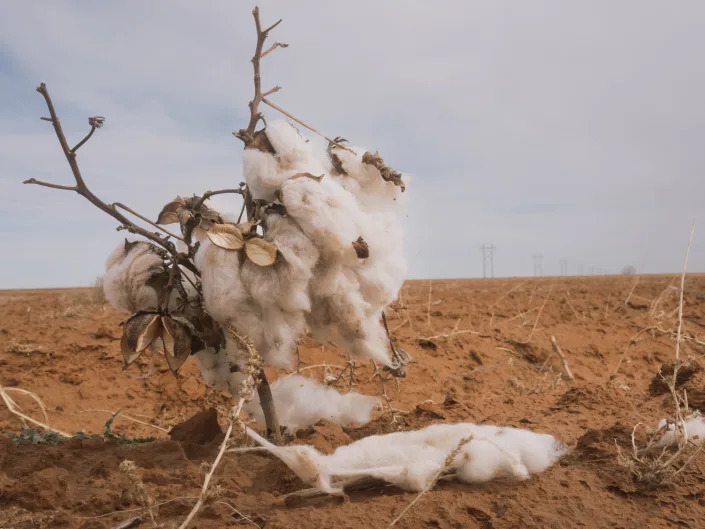
Cotton left over after the harvest in Meadow, Texas, Jan. 19, 2023. (Jordan Vonderaar/The New York Times)
When the Agriculture Department finished its calculations last month, the findings were startling: 2022 was a disaster for upland cotton in Texas, the state where the coarse fiber is primarily grown and then sold around the globe in the form of tampons, cloth diapers, gauze pads and other products.
In the biggest loss on record, Texas farmers abandoned 74% of their planted crops — nearly 6 million acres — because of heat and parched soil, hallmarks of a megadrought made worse by climate change.
That crash has helped to push up the price of tampons in the United States 13% over the past year. The price of cloth diapers spiked 21%. Cotton balls climbed 9%, and gauze bandages increased by 8%. All of that was well above the country’s overall inflation rate of 6.5% in 2022, according to data provided by the market research firms NielsonIQ and The NPD Group.
It’s an example of how climate change is reshaping the cost of daily life in ways that consumers might not realize.
West Texas is the main source of upland cotton in the United States, which in turn is the world’s third-biggest producer and largest exporter of the fiber. That means the collapse of the upland cotton crop in West Texas will spread beyond the United States, economists say, onto store shelves around the world.
“Climate change is a secret driver of inflation,” said Nicole Corbett, a vice president at NielsonIQ. “As extreme weather continues to impact crops and production capacity, the cost of necessities will continue to rise.”
Halfway around the world in Pakistan, the world’s sixth-largest producer of upland cotton, severe flooding, made worse by climate change, destroyed half that country’s cotton crop.
There have been other drags on the global cotton supply. In 2021, the United States banned imports of cotton from the Xinjiang region of China, a major cotton-producing area, out of concerns about the use of forced labor.
But experts say that the impact of the warming planet on cotton is expanding across the planet with consequences that may be felt for decades to come.
By 2040, half of the regions around the globe where cotton is grown will face a “high or very high climate risk” from drought, floods and wildfires, according to the nonprofit group Forum for the Future.
Texas cotton offers a peek into the future. Scientists project that heat and drought exacerbated by climate change will continue to shrink yields in the Southwest — further driving up the prices of many essential items. A 2020 study found that heat and drought worsened by climate change have already lowered the production of upland cotton in Arizona and projected that future yields of cotton in the region could drop by 40% between 2036 and 2065.
Cotton is “a bellwether crop,” said Natalie Simpson, an expert in supply chain logistics at the University at Buffalo. “When weather destabilizes it, you see changes almost immediately,” Simpson said. “This is true anywhere it’s grown. And the future supply that everyone depends on is going to look very different from how it does now. The trend is already there.”
Return of the Dust Bowl
For decades, the Southwestern cotton crop has depended on water pumped from the Ogallala Aquifer, which stretches underneath eight western states from Wyoming to Texas.
But the Ogallala is declining, in part because of climate change, according to the 2018 National Climate Assessment, a report issued by 13 federal agencies. “Major portions of the Ogallala Aquifer should now be considered a nonrenewable resource,” it said.
That is the same region that was abandoned by more than 2 million people during the Dust Bowl of the 1930s, caused by severe drought and poor farming practices. John Steinbeck famously chronicled the trauma in his epic “The Grapes of Wrath,” about a family of cotton farmers driven from their Oklahoma home. Lately, the novel has been weighing on the mind of Mark Brusberg, a meteorologist at the Agriculture Department.
“The last time this happened, there was a mass migration of producers from where they couldn’t survive any longer to a place where they were going to give it a shot,” Brusberg said. “But we have to figure out how to keep that from happening again.”
In the years since, the farmland over the Ogallala once again flourished as farmers drew from the aquifer to irrigate their fields. But now, with the rise in heat and drought and the decline of the aquifer, those dust storms are returning, the National Climate Assessment found. Climate change is projected to increase the duration and intensity of drought over much of the Ogallala region in the next 50 years, the report said.
Barry Evans, a fourth-generation cotton farmer near Lubbock, Texas, doesn’t need a scientific report to tell him that. Last spring, he planted 2400 acres of cotton. He harvested 500 acres.
“This is one of the worst years of farming I’ve ever seen,” he said. “We’ve lost a lot of the Ogallala Aquifer, and it’s not coming back.”
When Evans began farming cotton in 1992, he said, he was able to irrigate about 90% of his fields with water from the Ogallala. Now that’s down to 5% and declining, he said. He has been growing cotton in rotation with other crops and using new technologies to maximize the precious little moisture that does arrive from the skies. But he sees farmers around him giving up.
“The decline of the Ogallala has had a strong impact on people saying it’s time to retire and stop doing this,” he said.
Kody Bessent, the CEO of Plains Cotton Growers Inc., which represents farmers who grow cotton across 4 million acres in Texas, said that land would produce 4 or 5 million bales of cotton in a typical year. Production for 2022 is projected at 1.5 million bales — a cost to the regional economy of roughly $2 billion to $3 billion, he said.
“It’s a huge loss,” he said. “It’s been a tragic year.”
From Cotton Fields to Walmart Shelves
Upland cotton is shorter and coarser than its more famous cousin, Pima cotton. It is also far more widely grown and is the staple ingredient in cheap clothes and basic household and hygiene products.
In the United States, most cotton grown is upland cotton, and the crop is concentrated in Texas. That’s unusual for a major commodity crop. While other crops such as corn, wheat and soybeans are affected by extreme weather, they are spread out geographically so that a major event afflicting some of the crop may spare the rest, said Lance Honig, an economist at the Agriculture Department.
“That’s why cotton really stands out, with this drought having such a big impact on the national crop,” Honig said.
Sam Clay of Toyo Cotton Co., a Dallas trader that buys upland cotton from farmers and sells it to mills, said the collapse of the crop had sent him scrambling. “Prices have gone sky-high, and all this is getting passed on to consumers,” he said.
Clay said he is experiencing the impacts himself. “I bought six pairs of Wranglers a year and a half ago for $35 a pair. I’m paying $58 a pair now.”
At least 50% of the denim in every pair of Wrangler and of Lee jeans is woven from U.S.-grown cotton, and the cost of that cotton can represent more than half the price tag, said Jeff Frye, the vice president of sustainability for Kontoor Brands, which owns both labels.
Frye and others who deal in denim did point out, however, that other factors have driven up price, including the ban on imports of Xinjiang cotton, high fuel costs and the complicated logistics of moving materials.
Among the cotton products most sensitive to the price of raw materials are personal care items like tampons and gauze bandages, since they require very little labor or processing like dying, spinning or weaving, said Jon Devine, an economist at Cotton Inc., a research and marketing company.
The price of Tampax, the tampon giant that sells 4.5 billion boxes globally each year, started climbing fast last year.
In an earnings call in January, Andre Schulten, chief financial officer for Procter & Gamble, which makes Tampax, said the costs of raw materials “are still a significant headwind” for the company across several products, forcing the company to raise prices.
On a recent Sunday at a Walmart in Alexandria, Virginia, several shoppers said they had noticed rising prices.
“The price of a regular box of Tampax has gone up from $9 to $11,” said Vanessa Skelton, a consultant and the mother of a 3-year-old. “That’s a regular monthly expense.”
Make Way for Polyester
Cotton farmers say that Washington can help by increasing aid in the farm bill, legislation that Congress is renewing this year.
Taxpayers have sent Texas cotton farmers an average of $1 billion annually over the past five years in crop insurance subsidies, according to Daniel Sumner, an agricultural economist at the University of California, Davis.
Farmers say they’d like expanded funding for disaster relief programs to cover the impact of increasingly severe drought and to pay farmers for planting cover crops that help retain soil moisture. They also say they hope that advances in genetically modified seeds and other technologies can help sustain Texas cotton.
But some economists say it may not make sense to continue support a crop that will no longer be viable in some regions as the planet continues to warm.
“Since the 1930s, government programs have been fundamental to growing cotton,” Sumner said. “But there’s not a particular economic argument to grow cotton in West Texas as the climate changes. Does it make any economic sense for a farm bill in Washington, D.C., to say, ‘West Texas is tied to cotton?’ No, it doesn’t.”
In the long run, it could just mean that cotton is no longer the main ingredient in everything from tampons to textiles, said Sumner, “and we’re all going to use polyester.”
As the Colorado River shrinks, federal officials consider overhauling Glen Canyon Dam
Ian James – February 18, 2023
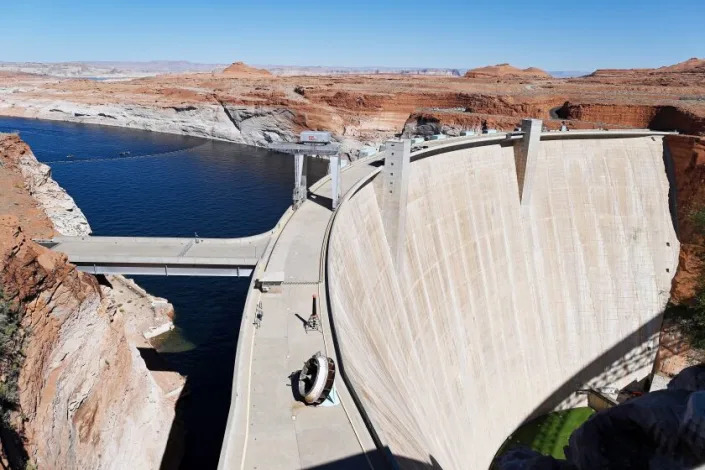
The Colorado River’s decline threatens hydropower at Glen Canyon Dam. Now, officials are looking at retooling the dam to deal with low water levels. (Joshua Lott / Washington Post)
The desiccation of the Colorado River has left Lake Powell, the country’s second-largest reservoir, at just 23% of capacity, its lowest level since it was filled in the 1960s.
With the reservoir now just 32 feet away from “minimum power pool” — the point at which Glen Canyon Dam would no longer generate power for six states — federal officials are studying the possibility of overhauling the dam so that it can continue to generate electricity and release water at critically low levels.
A preliminary analysis of potential modifications to the dam emerged during a virtual meeting held by the federal Bureau of Reclamation, which is also reviewing options for averting a collapse of the water supply along the river. These new discussions about retooling the dam reflect growing concerns among federal officials about how climate change is contributing to the Colorado River’s reduced flows, and how declining reservoirs could force major changes in dam management for years to come.
Among the immediate concerns is the threat of the reservoir dropping below the dam’s power-generating threshold. If that were to occur, water would only flow through four 8-foot-wide bypass tubes, called the outlet works, which would create a chokepoint with reduced water-releasing capacity.
“There is now an acknowledgment, unlike any other time ever before, that the dam is not going to be suited to 21st century hydrology,” said Kyle Roerink, executive director of the environmental group Great Basin Water Network, who listened to the meeting. “They’re not sugarcoating that things have to change there, and they have to change pretty quickly.”
Those who participated in the Feb. 7 meeting included dozens of water mangers, representatives of electric utilities, state officials and others. They discussed proposals such as penetrating through the dam’s concrete to make new lower-level intakes, installing a new or reconfigured power plant, and tunneling a shaft around either side of the dam to a power plant, among other options.
The Interior Department declined a request for an interview, but spokesperson Tyler Cherry said in email that the briefing was part of broader conversations with state officials, tribal leaders, water managers and others “to inform our work to improve and protect the short-term sustainability of the Colorado River System and the resilience of the American West to a changing climate.”
Roerink and two other people who listened to the webinar told The Times that cost estimates for several alternatives ranged from $500 million to $3 billion. The agency will need congressional approval and will have to conduct an environmental review to analyze options.
The Bureau of Reclamation’s presentation, given by regional power manager Nick Williams, included some additional alternatives that wouldn’t require major structural modifications of the dam. Those options included adjusting operations to maximize power generation at low reservoir levels, studying ways of using the existing intakes at lower water levels, and making up for the loss of hydroelectric power by investing in solar or wind energy.
Glen Canyon Dam stands 710 feet tall, anchored to the canyon’s reddish sandstone walls in northern Arizona, about 320 miles upstream from Lake Mead, the nation’s largest reservoir. The dam has been controversial since its inception, with environmental activists and others arguing the reservoir was unnecessary and destroyed the canyon’s pristine ecosystem.
Lake Powell and Lake Mead have declined over the last 23 years during the most severe drought in centuries. Federal officials have sought to boost Powell’s levels in recent months by reducing the amount of water they release downstream until the spring runoff arrives. They’ve said they may need to further cut water releases.
A central concern is that if the water drops below minimum power pool — 3,490 feet above sea level under the current operating rules — the main intakes would need to be shut down and water would instead flow through the dam’s lower bypass tubes. Because of those tubes’ reduced capacity, that could lead to less water passing downstream, shrinking the river’s flow in the Grand Canyon and accelerating the decline of Lake Mead toward “dead pool” — the point at which water would no longer pass through Hoover Dam to Arizona, California and Mexico.
Federal officials prepared the initial studies of alternatives for Glen Canyon Dam using $2 million that the Bureau of Reclamation secured as part of $200 million for drought response efforts.
According to a slide presentation shown at the meeting, officials see potential hazards in some of the six alternatives. Piercing the dam’s concrete to create new low-level or mid-level intakes, for example, would entail “increased risk from penetration through dam,” the presentation says.
They also describe risks due to possible “vortex formation,” or the creation of whirlpools above horizontal intakes as the water level declines. Their formation could cause damage if air is pulled into the system. The presentation says one alternative would involve lowering the minimum power pool limit and possibly installing structures on the intakes to suppress whirlpools, but it said this still would not allow for the water level to go much lower.
One of the possible fixes includes installing a new power plant that would generate electricity with water flowing from the bypass tubes, or taking a similar approach using existing infrastructure. Another would involve excavating a tunnel to the left or right side of the dam, and installing a power plant underground or in the riverbed.
Other options include changing operations at both Glen Canyon and Hoover dams “to maximize power generation under low flow conditions using existing infrastructure.”
“Any of the options are going to be very expensive and they’re going to be very time-consuming,” said Leslie James, executive director of the Colorado River Energy Distributors Assn., who participated in the meeting.
James praised the Bureau of Reclamation for “starting the processes to look at structural options like this.”
“I see what they’re doing here as getting an early start and at least evaluating everything that they can to look and see what may be feasible,” James said. She said she hopes Congress will provide the necessary funding to ensure continued electricity flowing from Glen Canyon Dam, given “how important hydropower is to entire communities.”
Her association represents nonprofit electric utilities that buy power produced by Glen Canyon Dam and other dams that are part of the Colorado River Storage Project. The association includes members in Arizona, Colorado, Nevada, Utah, New Mexico and Wyoming. The utilities supply power in cities, rural areas, irrigation districts and tribal communities.
Power from the dam has long been a vital energy source, though its output has decreased dramatically in recent years as Lake Powell has declined. During the 2022 fiscal year, Glen Canyon Dam generated 2,591 gigawatt-hours of electricity, enough to power more than 240,000 average homes for a year.
James said electric utilities across the region have had to make up for the reduced hydropower by turning to other costlier sources.
“It’s a real challenging time,” James said. “And it is the people in these communities that are ultimately being impacted with higher electricity bills.”
Lake Powell’s level is projected to rise this spring with runoff from the above-average snowpack in the Rocky Mountains. But that boost in water levels is expected to have a limited effect on the deep water deficit that has accumulated over more than two decades.
And in the long term, scientific research indicates warming and drying will continue to take a major toll on the river.
Scientists have found that roughly half the decline in the river’s flow since 2000 has been caused by higher temperatures, that climate change is driving the aridification of the Southwest, and that for each additional 1 degree Celsius (1.8 degrees Fahrenheit) of warming, the river’s average flow will probably decrease about 9%.
Environmental activists have for years urged the federal government to consider draining Lake Powell, decommissioning the dam and storing the water downstream in Lake Mead.
Activists who listened to the Bureau of Reclamation’s presentation said they welcome the agency’s examination of the issues at Glen Canyon Dam but would prefer to see a broader analysis that evaluates other options, including draining the reservoir.
In a report last year, Roerink’s Great Basin Water Network and two other groups warned that the “antiquated plumbing system inside Glen Canyon Dam represents a liability to Colorado River Basin water users who may quickly find themselves in legal jeopardy and water supply shortfalls.”
“The bureau is admitting that the dam is a liability,” Roerink said. “From my perspective, that’s a good first step.”
Beyond the current focus on trying to prop up hydropower generation, Roerink said, “I think we need an option that is just a bypass option without a power plant at the end of it.”
Roerink said he expects there will be a lot of debate about issues such as evaporation from the reservoir and the high costs of modifications to the dam.
“Is it all worth it? Are the taxpayer dollars going to be worth it for those electrons?” Roerink said. “How long will it be until this just proves itself to be a futile exercise?”
John Weisheit, an activist who has advocated for removing the dam, said he was delighted to hear federal officials openly discussing these options for the first time.
“I’m glad we’re having this conversation. It’s long overdue,” said Weisheit, who is co-founder of the group Living Rivers.
Weisheit said he also thinks the agency’s alternatives aren’t broad enough, and leave unanswered questions about the dam’s life span.
“I think it’s imperative that we know exactly what the life span of this dam is,” Weisheit said. “There is so much more that needs to be discussed.”
Weisheit said one major concern should be the accumulation of sediments in the bottom of the reservoir, which, according to a recent federal survey, has lost nearly 6.8% of its water-storing capacity.
Another issue with the agency’s current alternatives, he said, is that they wouldn’t solve problems of intakes or bypass tubes sucking in air at low water levels, “just like everybody’s bathtub does,” potentially causing cavitation that would pit and tear into metal, damaging the infrastructure.
Weisheit said he also was concerned about potential threats to endangered fish in the Grand Canyon.
Overall, the modifications to the dam that the federal government is considering would be “too much investment for very little return,” Weisheit said. “And it’s going to take a long, long time.”
Weisheit said he favors the option of investing in solar and wind energy. Instead of spending up to $3 billion trying to squeeze a shrinking amount of power from the dam, he said, “you can build a lot of solar cells and turbines,” including nearby on the Navajo Nation, which needs electricity.
Weisheit said he thinks the situation shows Glen Canyon Dam isn’t needed.
“Take the dam out,” he said, “because it’s not the right dam for climate change.”
Feral cows to be gunned down by shooters in helicopters in US national forest
Jon Haworth – February 17, 2023
Feral cows roaming wild around southwest New Mexico will be gunned down by shooters in helicopters beginning next week, according to a plan approved by U.S. officials.
About 150 feral cattle, which authorities say “are not domesticated animals and pose a significant threat to public safety and natural resources,” will be hunted by “aerial shooting” and will take place over four days beginning Thursday, Feb. 23 at the Gila National Forest, according to the U.S. Forest Service.
A closure order has been issued in the area of operations of the 3.3 million acre reserve in southwest New Mexico and the public has been asked to avoid the area completely while the culling takes place.
“This has been a difficult decision, but the lethal removal of feral cattle from the Gila Wilderness is necessary to protect public safety, threatened and endangered species habitats, water quality, and the natural character of the Gila Wilderness,” said Camille Howes, Gila National Forest Supervisor. “The feral cattle in the Gila Wilderness have been aggressive towards wilderness visitors, graze year-round, and trample stream banks and springs, causing erosion and sedimentation. This action will help restore the wilderness character of the Gila Wilderness enjoyed by visitors from across the country.”
Authorities say that this is the most “efficient and humane way” to deal with the animals and that Gila National Forest officials are working closely together with the USDA Animal and and Plant Health Inspection Service (APHIS) on this operation.
“All dispatched cattle will be left onsite to naturally decompose,” read a statement detailing the confirmation of the cattle removal from the U.S. Forest Service. “Forest Service staff will ensure no carcasses are adjacent to or in any waterbody or spring, designated hiking trail, or known culturally sensitive area. A wilderness minimum requirements decision guide has been completed and approved before using any methods otherwise prohibited under the Wilderness Act.”
PHOTO: Stock image of Gila National Forest where feral cows roaming wild around southwest New Mexico will be gunned down by shooters in helicopters beginning Feb. 23, 2023, according to a plan approved by U.S. officials. (U.S. Forest Service)
Forest officials say that some cattle growers have expressed concern to them that non-feral branded cattle could have strayed into the Gila National Forest due to fences and water gaps that were damaged during an unusually strong monsoon season over the past several months.
“The Forest Service is committed to continued efforts toward collaborative solutions and will continue to coordinate with permittees in their efforts to locate, gather, and remove their branded cattle from areas where they are not authorized,” officials said.
The issue regarding the feral cattle has been ongoing since the 1990s, according to the official decision memorandum released on Thursday, and several hundred cattle were destroyed between 1996 and 1998 in an effort to control the growing population.
In fact, in the past 25 years, the forest has issued a total of nine contracts that have resulted in the removal of 211 cattle, with the last order coming a year ago in Feb. 2022 when 65 feral cattle were lethally removed. Authorities estimate that around 150 will be eliminated during the cull set to take place next week.
If branded cattle are lethally removed during gathering or aerial operations, U.S. Forest Service officials say the owner may request compensation by contacting the U.S. Forest Service, Southwestern Region or the Gila National Forest.
Through a year of war in Ukraine, the U.S. and most European nations have worked to help counter Russia, in supporting Ukraine both with armaments and in world energy markets. Russia was Europe’s main energy supplier when it invaded Ukraine, and President Vladimir Putin threatened to leave Europeans to freeze “like a wolf’s tail” – a reference to a famous Russian fairy tale – if they imposed sanctions on his country.
But thanks to a combination of preparation and luck, Europe has avoided blackouts and power cutoffs. Instead, less wealthy nations like Pakistan and India have contended with electricity outages on the back of unaffordably high global natural gas prices. As a global energy policy analyst, I see this as the latest evidence that less wealthy nations often suffer the most from globalized oil and gas crises.
I believe more volatility is possible. Russia has said that it will cut its crude oil production starting on March 1, 2023, by 500,000 barrels per day in response to Western energy sanctions. This amount is about 5% of its current crude oil production, or 0.5% of world oil supply. Many analysts expected the move, but it raises concerns about whether more reductions could come in the future.
How Europe has kept the lights on
As Russia’s intent toward Ukraine became clear in late 2021 and early 2022, many governments and energy experts feared one result would be an energy crisis in Europe. But one factor that Putin couldn’t control was the weather. Mild temperatures in Europe in recent months, along with proactive conservation policies, have reduced natural gas consumption in key European markets such as Germany, the Netherlands and Belgium by 25%.
With less need for electricity and natural gas, European governments were able to delay drawing on natural gas inventories that they built up over the summer and autumn of 2022. At this point, a continental energy crisis is much less likely than many forecasts predicted.
European natural gas stockpiles are around 67% full, and they will probably still be 50% full at the end of this winter. This will help the continent position itself for next winter as well.
The situation is similar for coal. European utilities stockpiled coal and reactivated 26 coal-fired power plants in 2022, anticipating a possible winter energy crisis. But so far, the continent’s coal use has risen only 7%, and the reactivated coal plants are averaging just 18% of their operating capacity
The U.S. role
Record-high U.S. energy exports in the summer and fall of 2022 also buoyed European energy security. The U.S. exported close to 10 million cubic meters per month of liquefied natural gas in 2022, up 137% from 2021, providing roughly half of all of Europe’s imported LNG.
Although domestic U.S. natural gas production surged to record levels, some producers had the opportunity to export into high-priced global markets. As a result, surpluses of summer natural gas didn’t emerge inside the U.S. market, as might otherwise have happened. Combined with unusually hot summer temperatures, which drove up energy demand for cooling, the export surge socked U.S. consumers with the highest natural gas prices they had experienced since 2008.
Prices also soared at U.S. gas pumps, reaching or exceeding US$5 per gallon in the early summer of 2022 – the highest average ever recorded by the American Automobile Association. The U.S. exported close to 1 million barrels per day of gasoline, mainly to Mexico and Central America, plus some to France, and consolidated its position as a net oil exporter – that is, it exports more oil than it imports.
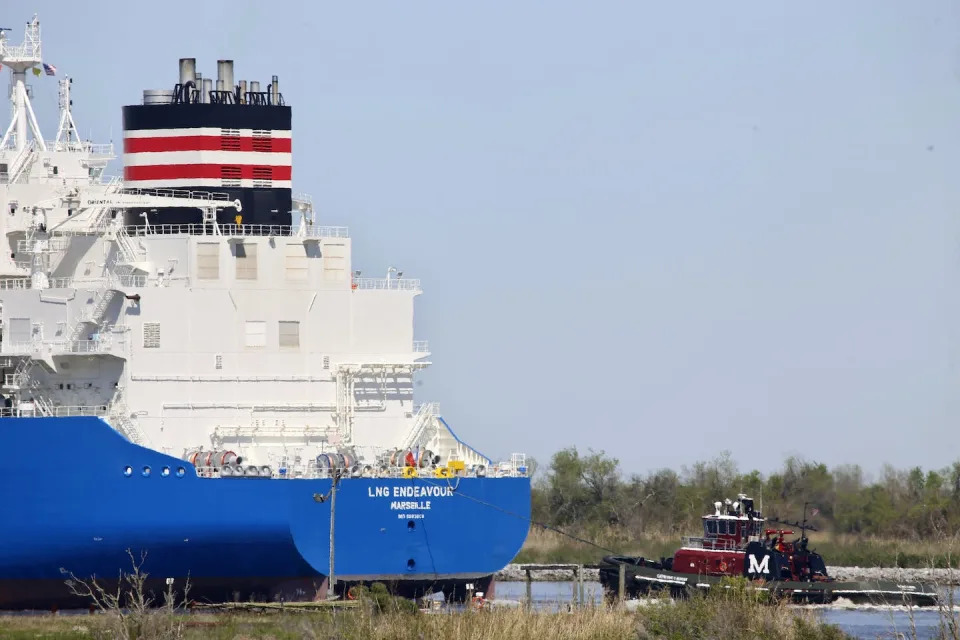
A tugboat helps guide the LNG Endeavor, a French liquefied natural gas tanker, through Calcasieu Lake near Hackberry, La., March 31, 2022. U.S. LNG exports to Europe reached record levels in 2022 as the continent prepared to sever energy ties with Russia. AP Photo/Martha Irvine
Much like Europeans, U.S. consumers had to pay high prices to outbid other global consumers for oil and natural gas amid global supply disruptions and competition for available cargoes. High gasoline prices were a political headache for the Biden administration through the spring and summer of 2022.
However, these high prices belied the fact that U.S. domestic gasoline use has stopped growing. Forecasts suggest that it will decline further in 2023 and beyond as the fuel economy of U.S. cars continues to improve and the number of electric vehicles on the road expands.
While energy prices were a burden, especially to lower-income households, European and American consumers have been able to ride out price surges driven by the war in Ukraine and have so far avoided actual outages and the worst recessionary fears. And their governments are offering big economic incentives to switch to clean energy technologies intended to reduce their nations’ need for fossil fuels.
Developing nations priced out
The same can’t be said for consumers in developing nations like Pakistan, Bangladesh and India, who have experienced the energy cutoffs that were feared but didn’t occur in Europe. Notably, Europe’s intensive energy stockpiling in the summer of 2022 caused a huge jump in global prices for liquefied natural gas. In response, many utilities in less developed nations cut their natural gas purchases, creating price-related electricity outages in some regions.
The energy challenge that the Russia-Ukraine crisis has bred in developing countries has intensified global discussions about climate justice. One less examined impact of giant clean tech stimulus plans enacted in wealthy nations, such as the United States’ Inflation Reduction Act, is that they keep much of the available funding for climate finance at home. As a result, some developing country leaders worry that a clean energy technology knowledge gap will widen, not shrink, as the energy transition gains momentum.
Worsening the problem, members of the G-7 forum of wealthy nations have tightened their monetary policies to control war-driven inflation. This drives up the cost of debt and makes it harder for developing countries to borrow money to invest in clean energy.
The U.S. is supporting a new approach called Just Energy Transition Partnerships, in which wealthy nations provide funding to help developing countries shift away from coal-fired power plants, retrain workers and recruit private-sector investors to help finance decarbonization projects. But these solutions are negotiated bilaterally between individual countries, and the pace is slow.
When nations gather in the United Arab Emirates in late 2023 for the next round of global climate talks, wealthy nations – including Middle East oil producers – will face demands for new ways of financing energy security improvements in less wealthy countries. The world’s rich nations pledged in 2009 to direct $100 billion yearly to less wealthy nations by 2020 to help them adapt to climate change and decarbonize their economies, but are far behind on fulfilling this promise.
U.N. Secretary-General Antonio Guterres has called on developed nations to tax fossil fuel companies, which reported record profits in 2022, and use the money to fund climate adaptation in low-income countries. New solutions are needed, because without some kind of major progress, wealthy nations will continue outbidding developing nations for the energy resources that the world’s most vulnerable people desperately need.
drone photograph showing the continuing cleanup of portions of a Norfolk Southern freight train that derailed Friday night in East Palestine, Ohio
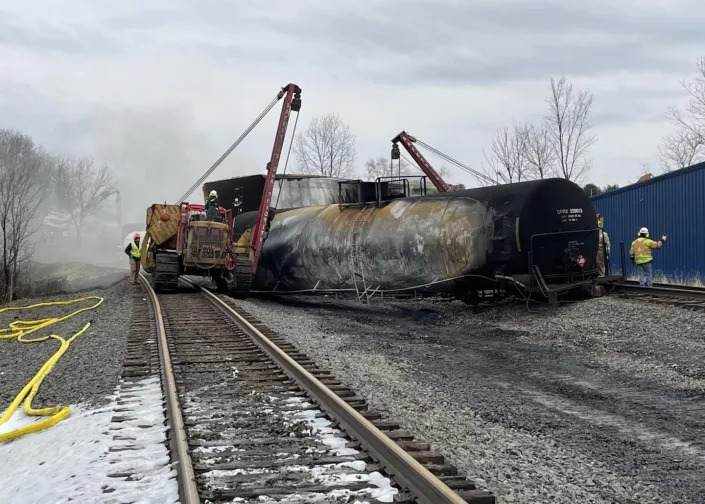
This photo taken with a drone shows the continuing cleanup of portions of a Norfolk Southern freight train that derailed Friday night in East Palestine, Ohio, on Feb. 9, 2023. Credit – Gene J. Puskar—AP
On Feb. 3, 2022, a train loaded with toxic chemicals derailed in East Palestine, Ohio, igniting a fire and forcing the controlled release and burn of vinyl chloride, a known cancer-causing compound, to avert a disastrous explosion. The environmental catastrophe killed thousands of fish in nearby streams and has triggered growing concerns over the impact on residents’ health and on the village’s surface, ground, and well water.
East Palestine joins a long list of other places in the United States facing major threats to clean water. In October 2022, a campaign called “Imagine a Day Without Water” asked Americans to stand with those who lack adequate drinking water, sanitation, or both. In one of the richest countries on Earth, the tally of those who live even without basic indoor plumbing might surprise you: more than 2 million.
The acronym WASH, which stands for “water, sanitation, and hygiene,” is often associated with nonprofits like the World Toilet Organization, working in developing parts of the globe. But the lack of access to clean drinking water, sanitary bathrooms, and treated wastewater is an ongoing emergency for many parts of the U.S. as well. In rural and urban communities throughout the country, water tainted by pollutants, woefully inadequate sewage treatment, and a lack of restrooms (or plumbing at all) have laid bare the legacy of neglect.
This photo provided by the Ohio National Guard, ONG 52nd Civil Support Team members prepare to enter an incident area to assess remaining hazards with a lightweight inflatable decontamination system (LIDS) in East Palestine, Ohio, on Feb. 7, 2023.Ohio National Guard/AP
In her book Waste: One Woman’s Fight Against America’s Dirty Secret, author Catherine Coleman Flowers describes how rural residents in Lowndes County, Ala., often have no means of wastewater treatment. They lack what most of us take for granted, “because septic systems cost more than most people earn in a year and tend to fail anyway in the impervious clay soil,” Flowers writes. “Families cope the best they can, mainly by jerry-rigging PVC pipe to drain sewage from houses and into cesspools outside.” With her assistance, researchers found that more than one-third of 55 stool samples collected from county residents tested positive for hookworms—intestinal parasites often associated with poor sanitation in developing countries.
To the west, historic flooding incapacitated an aging water treatment plant in Mississippi’s capital of Jackson in September 2022, leaving residents of the predominantly Black city without safe drinking water for weeks. When students returned from their holiday break in January 2023, more than half of the city’s public schools lacked water and had to hold virtual classes after cold weather again damaged the system. The majority-Black Michigan cities of Flint and Benton Harbor faced severe lead contamination in their own drinking water, a consequence of aging lead pipes leaching the toxic contaminant into the water supply. And in West Baltimore, E. coli bacteria contaminated the water, a crisis again blamed on aging water treatment infrastructure.
A 2021 analysis, “The widespread and unjust drinking water and clean water crisis in the United States,” found that nearly half a million U.S. households lacked complete plumbing, while many more were living in communities with unclean water. Surveys suggest that the former problem is a disproportionately rural issue while the latter is disproportionately urban. “As it currently stands, counties with elevated levels of incomplete plumbing and poor water quality in America—which are variously likely to be more indigenous, less educated, older, and poorer—are continuing to slip through the cracks,” the authors of the study concluded.
Without urgent action, those cracks will only continue to widen. The 2021 Report Card for America’s Infrastructure, released by the American Society of Civil Engineering, gave a dismal D+ grade to the country’s more than 16,000 wastewater treatment plants, a significant fraction of which have reached or exceeded their design capacities. The U.S. drinking water infrastructure earned only a marginally better rating, with a C-grade.
As local and state investment in vital infrastructure has faltered, so too has federal action. Amid decades of chronic underfunding, the U.S. government’s share of capital costs on water infrastructure fell from more than 60% in 1977 to less than 10% 40 years later. A 2020 report by the American Society of Civil Engineering spelled out the growing investment gap in stark terms. But the costs of failing to update the country’s aging and deteriorating drinking water and wastewater infrastructure could be far greater, with trillions lost in preventable diseases, higher medical costs, lost productivity, and environmental pollution.
That inattention couldn’t come at a worse time. A 2021 study by Just Security, based at the NYU School of Law, explained how extreme weather events—exacerbated by global warming—are leading to even more failures of inadequate and poorly maintained infrastructure. Undoing the harm will require sustained attention, especially in what environmental justice pioneer Robert Bullard at Texas Southern University describes as the “invisible” communities of color that have disproportionately shouldered the burden of environmental racism.
Effecting change will require a major investment in urban and rural systems. Nearly $800 million in federal funds have been earmarked for water projects in Jackson. And in 2022, the U.S. Environmental Protection Agency and Department of Agriculture launched the Closing America’s Wastewater Access Gap Community Initiative, to be piloted in Lowndes County and ten other underserved communities where residents lack basic wastewater management. The federal Inflation Reduction Act provided another $550 million for water systems in disadvantaged communities—not nearly enough but a start in reversing the decades of damage.
Well-considered projects could make a big impact by not only improving public and environmental health, but also redistributing wealth back to those same communities. More wastewater treatment plants are becoming resource recovery facilities, preventing pollution from the treated liquid waste and extracting valuable resources. Biogas and electricity, pure water, charcoal-like biochar, nutrients like nitrogen and phosphorus, and soil amendments can all be recovered, creating new sources of local wealth.
At the grass-roots level, organizations like PHLUSH (Public Hygiene Lets Us Stay Human) are pushing for equitable access to toilets and sanitation systems. PHLUSH has positioned public restrooms as critical elements of the U.S. infrastructure, rightfully arguing that they are “as essential to community well-being as sidewalks, traffic signals and street lighting.” For people experiencing homelessness, a lack of access to sanitary toilets can be dehumanizing, dangerous, and disease-causing. The public health crisis for that segment of the population is growing throughout America, with a recent report calling for more stigma-free access to WASH facilities in rural areas.
In rural communities from Puerto Rico to Hawaii, advocates are introducing advanced biofilters and composting or incineration toilets as more affordable, sustainable, and sanitary alternatives to leaking, broken, or altogether lacking septic systems. Installing these systems in large enough numbers to make a difference will require revisions to outdated or punitive local codes and a rethinking of what might be recouped through long-term investments in our communities.
The Center for Rural Enterprise and Environmental Justice, founded by Flowers, is working to “eliminate the health, economic and environmental disparities suffocating rural and marginalized communities.” Doing so will be easier with renewed local, state, and federal backing, bolstered by public awareness and the recognition that reinvesting in neglected communities helps us and our environment. Most of all, it will require a reaffirmation that access to water and sanitation are fundamental human rights—no matter where you live.
First it was blood pressure medication. Now FDA eyes more drugs for cancer-causing chemical.
Ken Alltucker, USA TODAY – February 16, 2023
For people managing high blood pressure, recalls of the carcinogen-tainted drug quinapril might sound familiar.
Since 2018, more than 12 million bottles of blood pressure-lowering drugs such as valsartan and losartan have been removed from the market because they contained cancer-risk chemicals called nitrosamines.
The same family of contaminants triggered recalls of the heartburn drug Zantac, the diabetes drug metformin and the smoking cessation medication Chantix.
The flurry of drug recalls because of carcinogens has prompted the Food and Drug Administration to assess the scope of the problem.
The federal regulator has asked drugmakers to evaluate all products for any risk they might contain nitrosamines. Companies that identify any such risk must conduct follow-up testing, report changes and take action by October.
Nitrosamines are found in water, cured and grilled meats, dairy products and vegetables, according to the FDA. While nearly everyone is exposed to trace amounts of nitrosamines, studies link the contaminants to increased cancer risk if people are exposed to large amounts over long periods of time.
Public health experts have long been aware of the small risk associated with sustained exposure to these contaminants.
Food safety experts have worked to reduce nitrosamines in food such as cured meats to far below levels found in the 1970s and 1980s, said Dr. Stephen Hecht, a University of Minnesota professor of cancer prevention.
“The difference is with drugs it’s totally avoidable,” Hecht said. “I don’t think this could have happened in the 1970s because there was much greater awareness of the consequences.”
The FDA has said the risk for anyone exposed to nitrosamines in drugs is small.
The agency has set acceptable limits on six types of nitrosamines, which equal up to one case of cancer per 100,000 people exposed to the contaminant.
Some recalled drugs have exceeded that amount. For every 8,000 people on the highest dose of valsartan for four years, FDA scientists concluded there would be one more cancer case above average rates for that population. Europe’s drug regulator, the European Medicines Agency, estimated the risk to be one cancer case for every 3,000 patients.
As with the valsartan and losartan recalls in 2018 and 2019, the FDA has advised people on recalled quinapril to continue the medication until their doctor or pharmacist can identify a replacement.
Dr. Yul Ejnes, a clinical professor of medicine at Alpert Medical School of Brown University, said people might panic and immediately stop their medication when they hear about a recall. For a patient on a blood-pressure-lowering drug to manage conditions such as heart failure, halting the drug can create an immediate medical problem.
He generally recommends people call their pharmacist, who can check whether their drug is part of the recall. If it is, the pharmacist might be able to locate the same version of the drug that’s not part of the recall. Or the pharmacist and doctor can find a substitute drug.
“The key message is it’s a small risk; there’s no imminent danger,” said Ejnes, chair of the American Board of Internal Medicine. “There’s no need to stop the drug. Now, we can find replacements.”
What’s being done to protect consumers?
Though the FDA said the risk is small for people who ingested these drugs, lawyers have filed thousands of lawsuits in state and federal courts on behalf of people who say they have been harmed.
In 2019, heartburn drug Zantac was removed from store shelves after the FDA found unacceptable levels of a nitrosamine called NDMA, or nitrosodimethylamine, in brand and generic versions.
In December, a Florida federal judge dismissed thousands of claims that alleged Zantac caused cancer. The judge ruled that the plaintiffs’ experts did not use reliable methods linking the drug to cancer.
More than 1,000 claims against valsartan manufacturers are pending in federal court.
Meanwhile, FDA officials said the agency expects drug manufacturers who have identified a potential risk to complete testing and report changes they’ve made by Oct. 1.
“We continue to closely evaluate this type of impurity and will continue to investigate and monitor the marketplace and manufacturing efforts to help ensure the availability of safe, quality products for U.S. consumers,” said FDA spokesman Jeremy Kahn.
Makers of generic drugs, which produce about 9 of 10 prescription drugs dispensed in the United States, have pushed back on the FDA’s required comprehensive review. The generic drug’s industry group, the Association for Accessible Medicines, said in a position paper that to review every drug would be a “Herculean task” that would divert resources and focus and could exacerbate drug shortages.
Instead, the organization wants to conduct a more efficient “risk-based” review that looks for the source of such impurities across all facets of drugmaking.
Why are we seeing so many contaminated drugs?
Independent experts say the recent recalls are partly the result of a system that values inexpensive manufacturing over drug quality.
David Light is CEO and co-founder of Valisure, an independent lab that first discovered Zantac and its generic versions contained nitrosamines. His lab’s testing led to the voluntary nationwide recall of the medication for supermarket and drug stores. Since then, his lab has flagged potential harmful contaminants in consumer products such as hand sanitizers and sunscreens.
Though the FDA sets standards for drug companies to follow, it’s up to the drug manufacturers to ensure their products are safe and free from impurities. This regulatory approach is an “honor system,” Light said, adding that “some manufacturers are going to do a better job than others.”
Generic drug manufacturers want to make inexpensive products and seek to control manufacturing costs. Insurers and consumers expect to pay less for generic medications.
“The fact that we have a broken market system where we’re only valuing price and just assuming quality certainly increases the risk for these kinds of issues to crop up,” Light said.
How dangerous was the Ohio chemical train derailment? An environmental engineer assesses the long-term risks
Andrew J. Whelton, Professor of Civil, Environmental & Ecological Engineering, Director of the Healthy Plumbing Consortium and Center for Plumbing Safety, Purdue University – February 15, 2023
Headaches and lingering chemical smells from a fiery train derailment in East Palestine, Ohio, have left residents worried about their air and water – and misinformation on social media hasn’t helped.
State officials offered more details of the cleanup process and a timeline of the environmental disaster during a news conference on Feb. 14, 2023. Nearly a dozen cars carrying chemicals, including vinyl chloride, a carcinogen, derailed on the evening of Feb. 3, and fire from the site sent up acrid black smoke. Officials said they had tested over 400 nearby homes for contamination and were tracking a plume of spilled chemicals that had killed 3,500 fish in streams and reached the Ohio River.
However, the slow release of information after the derailment has left many questions unanswered about the risks and longer-term impact. We put five questions about the chemical releases to Andrew Whelton, an environmental engineer who investigates chemical risks during disasters.
Let’s start with what was in the train cars. What are the most concerning chemicals for human health and the environment long term, and what’s known so far about the impact?
The main concerns now are the contamination of homes, soil and water, primarily from volatile organic compounds and semivolatile organic compounds, known as VOCs and SVOCs.
The train had nearly a dozen cars with vinyl chloride and other materials, such as ethylhexyl acrylate and butyl acrylate. These chemicals have varying levels of toxicity and different fates in soil and groundwater. Officials have detected some of those chemicals in the nearby waterway and particulate matter in the air from the fire. But so far, the fate of many of the chemicals is not known. A variety of other materials were also released, but discussion about those chemicals has been limited.
State officials disclosed that a plume of contamination released into the nearby creek had made its way into the Ohio River. Other cities get their drinking water from the river, and were warned about the risk. The farther this plume moves downstream, the less concentrated the chemical will be in water, posing less of a risk.
Long term, the greatest risk is closest to the derailment location. And again, there’s limited information about what chemicals are present – or were created through chemical reactions during the fire.
It isn’t clear yet how much went into storm drains, was flushed down the streams or may have settled to the bottom of waterways.
There was also a lot of combusted particulate matter. The black smoke is a clear indication. It’s unclear how much was diluted in the air or fell to the ground.
How long can these chemicals linger in soil and water, and what’s their potential long-term risk to humans and wildlife?
The heavier the chemical, often the slower it degrades and the more likely it is to stick to soil. These compounds can remain for years if left unaddressed.
After the Kalamazoo River oil pipeline break in Michigan in 2010, the U.S. Environmental Protection Agency excavated a tributary where the oil settled. We’ve also seen from oil spills on the coasts of Alaska and Alabama that oil chemicals can find their way into soil if it isn’t remediated.
The long-term impact in Ohio will depend in part on how fast – and thoroughly – cleanup occurs.
If the heavily contaminated soils and liquids are excavated and removed, the long-term impacts can be reduced. But the longer removal takes, the farther the contamination can spread. It’s in everyone’s best interest to clean this up as soon as possible and before the region gets rain.
Air-stripping devices, like this one used after the derailment, can help separate chemicals from water. U.S. EPA
Booms in a nearby stream have been deployed to capture chemicals. Air-stripping devices have been deployed to remove chemicals from the waterways. Air stripping causes the light chemicals to leave the water and enter air. This is a common treatment technique and was used after an 2015 oil spill in the Yellowstone River near Glendive, Montana.
At the derailment site in Ohio, workers are already removing contaminated soil as deep as 7 feet (about 2 meters) near where the rail cars burned.
Some of the train cars were intentionally drained and the chemicals set on fire to eliminate them. That fire had thick black smoke. What does that tell you about the chemicals and longer-term risks?
Incineration is one way we dispose of hazardous chemicals, but incomplete chemical destruction creates a host of byproducts. Chemicals can be destroyed when heated to extremely high temperatures so they burn thoroughly.
The black smoke plume you saw on TV was incomplete combustion. A number of other chemicals were created. Officials don’t necessarily know what these were or where they went until they test for them.
We know ash can pose health risks, which is why we test inside homes after wildfires where structures burn. This is one reason the state’s health director told residents with private wells near and downwind of the derailment to use bottled water until they can have their wells tested.
The EPA has been screening homes near the derailment for indoor air-quality concerns. How do these chemicals get into homes and what happens to them in enclosed spaces?
Homes are not airtight, and sometimes dust and other materials get in. It might be through an open door or a window sill. Sometimes people track it in.
So far, the U.S. EPA has reported no evidence of high levels of vinyl chloride or hydrogen chloride in the 400 or so homes tested. But full transparency has been lacking. Just because an agency is doing testing doesn’t mean it is testing for what it needs to test for.
Media reports talk about four or five chemicals, but the manifest from Norfolk Southern also listed a bunch of other materials in tanks that burned. All those materials create potentially hundreds to thousands of VOCs and SVOCs.
Are government officials testing for everything they should?
Ohio and federal officials need to better communicate what they’re doing, why, and what they plan to do. It’s unclear what questions they are trying to answer. For a disaster this serious, little testing information has been shared.
In the absence of this transparency, misinformation is filling that void. From a homeowner’s perspective, it’s hard to understand the true risk if the data is not shared.
Natural disasters, boosted by climate change, displaced millions of people in U.S. in 2022
Lucas Thompson – February 12, 2023
Ricardo Arduengo
Natural disasters forced an estimated 3.4 million people in the U.S. to leave their homes in 2022, according to Census Bureau data collected earlier this year, underscoring how climate-related weather events are already changing American communities.
The overwhelming majority of these people were uprooted by hurricanes, followed by floods, then fires and tornados. Nearly 40% returned to their homes within a week. Nearly 16% have not returned home (and may never do so), and 12% were evacuated for more than six months.
The Census Bureau count is based on 68,504 responses it received as part of the Household Pulse Survey conducted Jan. 4-Jan. 16. The data collection is one of the few federal efforts to track displaced people, starting only in 2020. The bureau does note that the data is “experimental,” and is extrapolated based on its sample data.
“These numbers are very distressing,” said Michael Gerrard, director of the Sabin Center for Climate Change Law at Columbia University, who was not involved in the data collection. “These numbers are what one would expect to find in a developing country. It’s appalling to see them in the United States. … They’re only going to get worse in the years to come because climate change is making extreme weather events more frequent and more severe.”
Some states experienced far more of an impact than others. Florida had more than 888,000 people displaced. Louisiana had more than 368,000 displaced.
The U.S. was hit by a series of major disasters in 2022. The National Oceanic and Atmospheric Administration said that 18 extreme weather events had each caused at least $1 billion in damage. Climate experts have warned for years to expect more intense weather disasters as global temperatures rise.
The Census Bureau estimate, almost 1.4% of the U.S. adult population, is higher than other estimates. Data from the Internal Displacement Monitoring Center, part of the humanitarian organization The Norwegian Refugee Council, previously estimated that disasters displaced an average of 800,000 U.S. residents a year from 2008 through 2021.
“The United States is not in the least prepared for this,” Garrard said. “Our settlement patterns have not reflected the emerging risks of climate change to the habitability of some parts of the country.”
The data showed that the more than half a million people who never returned home experienced multiple hardships, including lack of housing, food, water, sanitation and child care.
“These are all things that we take for granted in a modern society,” Gerrard added. “Its absence is deeply disruptive to physical and emotional health as well as to child development.”
The data also showed disparities between people of different economic status, race and identities. Those earning less than $25,000 a year had the highest evacuation rate of any economic group, and Black and Hispanic residents had slightly higher evacuation rates than white residents.
According to the data, adults who identify as LGBTQ were disproportionately affected — 4% of LGBTQIA+ adults had to leave their homes compared with 1.2% of straight, cisgender people.
“It’s important to note that a lot of these individuals that are LGBTQ are often also considered to be socially vulnerable, and really putting a strong intersectional lens to disaster response preparedness and recovery,” said Michael Méndez, a professor of environmental policy and planning at the University of California, Irvine.
“Much of the LGBT community that’s vulnerable, and most socially vulnerable to disasters, are those that are African American, transgender and low income,” he said. “Oftentimes, that’s why they’re rendered invisible in the context of disaster policy and planning and preparedness. People write them off as not needing to provide extra resources for this community.”
Imperial Valley has made enough sacrifices already in the water rights war
Craig William Morgan – February 12, 2023
There is an old saying in the water world that it is better to be upstream with a shovel than downstream with a law book, which is the position California finds itself in as it stands apart from its neighbors on the Colorado River in negotiations over the use of the river’s water.
On Jan. 31, representatives for the six other basin states submitted a proposal to the Bureau of Reclamation describing the measures by which the supply deficit on the Colorado River should be closed in the near term. Not surprisingly, the other basin states have asked that California reduce its water use beyond that which the state had previously proposed last fall. California was right to decline its neighbors’ new proposal notwithstanding its position on the river.
As many readers know, California water users have priority rights to Colorado River water that allow them to receive water first in times of drought. These rights are derived under the appropriative rights doctrine known as “first in time, first in right” that has been a mainstay of western water law for more than a century and a half. Those without such rights are legally bound to reduce their use.
Not surprisingly, those without such rights have developed a new theory of law that effectively says the priority system of water allocation is no longer applicable because of climate change.
The new buzzword describing this change is “aridification.” The terms “shortage” and “drought” that have historically been used they claim are no longer relevant to describing water conditions. The reason for this change in nomenclature is because existing law is very clear that water is apportioned based on priority during times of shortage and drought.
They argue that aridification is somehow different. It is not.
If state and federal courts were to interpret a distinction in such terms, water law would not only be upended along the Colorado River system, but indeed across the entire United States.
The Upper Basin states of Colorado, Wyoming, Utah and New Mexico have joined the chorus of Nevada and Arizona in arguing that aridification demands the priority system be ignored. They also argue that the requirement under the 1922 Colorado River Compact among the basin states guaranteeing a fixed quantity of water be delivered to the Lower Basin states should be ignored on the same grounds. Their fears are that such a requirement will limit their existing and proposed future diversions of Colorado River water. To date, these states’ diversions have been well below their junior allotment. The imbalance on the Colorado River they argue is a Lower Basin concern, not an Upper Basin concern.
But such a position is inconsistent and self-serving. If in fact, aridification demanded that the priority system be ignored along the river, wouldn’t it make sense that all water users within the Colorado River basin take a reduction, not just those in the Lower Basin as Upper Basin users have proposed? It is noteworthy that Upper Basin states thus far have not meaningfully participated in reducing demands on the Colorado River. Yet they should.
Why haven’t Arizona and Nevada looked harder at the Upper Basin states to reduce their water use to balance demands instead of focusing on California? Perhaps they are hoping that California’s Imperial Valley will once again come to the rescue of the river’s water users as was done in 2003 when the Imperial Irrigation District signed the Quantification Settlement Agreement (QSA) and reduced its water use by more than 15 %. As the river’s biggest water user (and least politically potent), surely, they must have more water to spare.
The residents of Imperial Valley are right to be concerned about the future of their community. In 2003, the Imperial Irrigation District, despite holding senior water rights to the river for the benefit of its farming community, succumbed to the political pressures within California and from other basin states to reduce their demands on the Colorado River.
The argument made at the time by the river’s other water users was that the district was wasting water. However, the fact of the matter was that the district’s water use was no different than that of other irrigation districts across the west. The QSA water transfers have created significant hardships on the local communities and an ecological nightmare for the Salton Sea.
As the basin states and federal government move forward in crafting solutions to the water shortage problem on the Colorado River, they must consider the sacrifices that have already been made by those living in Imperial Valley: Sacrifices that have been made by those holding senior water rights. They must also consider the damage that would be done to the legal structure governing water use across the west if the priority system is to be ignored.
Craig William Morgan is a water resources engineer who served as consultant to farmers opposing the QSA. He is the author of the recently published book about the QSA and the fight for Imperial Valley’s water called “The Morality of Deceit.”