Amsterdam plans to ban weed from Red Light District streets
Hannah Sampson – February 10, 2023
Amsterdam, Netherlands – October 1, 2012: Amsterdam’s red-light district at night. There are about three hundred cabins rented by prostitutes in the area. (sborisov via Getty Images)
In their latest effort to rein in carousing visitors, Amsterdam officials announced plans this week to tamp down disruptive behavior in the city’s Red Light District, including barring pot-smoking on the streets, reducing hours for restaurants and brothels, and tightening some alcohol restrictions.
The rules are meant to ease the impact of hordes of sometimes-rowdy tourists on people who live in the area. An announcement from the city council referenced an alcohol- and drug-fueled atmosphere at night that makes the neighborhood unsafe and prevents residents from sleeping.
Officials are taking public comments on many of the proposed measures for the next four weeks before finalizing amendments to municipal bylaws.
Under the measures announced Thursday, the smoking ban would go into effect in mid-May. The city could take more action if the ban doesn’t go far enough to reduce nuisance behavior.
Also under consideration: banning to-go sales of drugs at coffee shops at certain times and potentially restricting smoking on cafe terraces.
The Netherlands has a tolerance policy for weed, meaning people will not be prosecuted for buying up to five grams of cannabis, which is classified as a “soft drug” and sold in coffee shops. Only visitors 18 and older can enter cannabis cafes, which are not allowed to sell alcohol. While weed can be consumed in coffee shops, most clubs or bars do not allow people to smoke pot on-site.
The city issues permits for brothels and sex clubs to operate. Under rules that had already been decided, brothels will only be able to stay open until 3 a.m., not the 6 a.m. closing time in place now. Restaurants and sex establishments with catering licenses will have to close at 2 a.m. on Fridays and Saturdays, rather than 3 or 4 a.m.
No new visitors would be allowed into businesses with a catering license after 1 a.m., the English-language publication NL Times reported. The time changes would go into effect April 1, the publication said.
Officials also want to close terraces at 1 a.m. in the summer, a change from the previous closing time of 2 a.m.
Alcohol sales at stores and cafeterias in the district will continue to be blocked starting at 4 p.m. from Thursday through Sunday. The city says alcohol displays must also be removed from the shops or hidden from view. Visitors are already not allowed to drink on the streets.
Amsterdam has tried for years to address overtourism concerns, restricting some tours of the historic Red Light District before the pandemic and voting to move sex workers to an erotic center outside of the district in 2021. According to a November story in the Guardian, however, residents of the proposed neighborhoods for relocation don’t want the businesses – and the workers also don’t want to move.
Late last year, authorities said they planned to take steps to combat tourism problems, including limiting river cruises, curbing rowdy bachelor parties, cracking down on organized pub crawls and taking other measures. Part of the plan included some of the rules announced this week, such as reducing hours for sex businesses and catering establishments and banning smoking in some parts of the city.
A campaign is expected to start this year discouraging global visitors who want to party hard in the city.
“Amsterdammers live in every neighborhood, including the Red Light District and Leidseplein,” the official visitor information site I amsterdam says. “Limit noise and drunkenness, clean up your mess and don’t pee in the canals. Keep in mind the locals and they will welcome you with open arms.”
Fungal infections are becoming more common. Why isn’t there a vaccine?
Berkeley Lovelace Jr. – February 10, 2023
Fungal infections are becoming more common in the United States, but unlike illnesses caused by bacteria or viruses, there’s no vaccine to protect against a fungal threat.
While scientists aren’t worried that a fungal infection like the one seen in HBO’s “The Last of Us” will wipe out humanity, the infections are certainly a cause for concern.
Fungi cause a wide range of illnesses in people, from irritating athlete’s foot to life-threatening bloodstream infections.
In the U.S., fungal infections are responsible for more than 75,000 hospitalizations and nearly 9 million outpatient visits each year, according to the Centers for Disease Control and Prevention. In 2021, around 7,200 people died from fungal diseases. These numbers, the CDC said, are likely an underestimate.
One type of fungus, Candida auris, can be resistant to all of the drugs used to treat it, and is particularly dangerous for hospitalized and nursing home patients. The fungus was first identified in Japan in 2009 and has since been found in over 30 countries, including the U.S., the CDC said.
Climate change also threatens to make several infection-causing fungi more widespread: The fungus that causes Valley fever thrives in hot, dry soil, and the fungus that causes an illness called histoplasmosis prefers high humidity.
Despite the growing threat, there are currently no licensed vaccines — in the U.S. or abroad — to prevent fungal infections.
“These are the most important infectious diseases that you have not heard of,” said Karen Norris, an immunologist and vaccine expert at the University of Georgia. “A vaccine has the potential to move forward and protect a large swath of individuals.”
Fatal fungal infections
Norris said that the ultimate goal would be to develop a single vaccine that protects against all fungal infections.
But a “pan-fungal” vaccine is incredibly challenging to make.
That’s because, she said, unlike the Covid vaccines, which target a single pathogen — the SARS-CoV-2 virus — a fungal vaccine would ideally protect against the wide spectrum of fungi in existence, each biologically different from the next.
For now, Norris and her team have decided to focus on the three fungi responsible for the vast majority of fatal fungal infections in the U.S.:
Candida, particularly Candida auris, a type of yeast that can cause serious blood infections, particularly in people in health care settings.
Pneumocystis, which can cause pneumonia.
In preclinical trials, the experimental vaccine developed by Norris and her team was shown to generate antifungal antibodies in animals, including rhesus macaques. With funding support, the researchers could start and finish the human vaccine trials within the next five years, she said.
In Arizona, researchers are focused on a vaccine to prevent Valley fever, a lung infection caused by the fungus Coccidioides. The fungus, typically found in the hot, dry soils of the Southwest, is an “emerging threat,” Norris said, because climate change is expanding its range.
So far, the vaccine has been shown to be effective in dogs, said John Galgiani, the director of the Valley Fever Center for Excellence at the University of Arizona College of Medicine.
Little urgency, lack of funding
While experts know which fungi are best to target, vaccine development has been slow, mostly due to a lack of funding, said Galgiani, who is working to start a trial in humans for the Valley fever vaccine.
Many in public and private spaces don’t see fungal vaccines as a “critical unmet need,” he said. Respiratory viruses, such as the ones that cause Covid, the flu or measles, infect millions of people and lead to thousands of hospitalizations worldwide each year, he said. The viruses can be deadly for anyone, in any part of the world, he said, illustrating the need for vaccines to prevent those diseases.
By comparison, hundreds of species of fungi can cause illness in people, but the most common ones — such as those that infect the skin and nails, or cause vaginal yeast infections or athlete’s foot — are non-life-threatening, according to Galgiani.
Additionally, severe cases are sporadic across the U.S., he said.
Valley fever, for example, is usually limited to the Southern and Western regions of the U.S. and are usually serious for people with weakened immune systems. Most people breathe in Aspergillus every day without getting sick, but it can be life-threatening for people with cystic fibrosis or asthma. Candida auris infections have been mostly limited to health care settings, and pose the biggest threat to very sick patients.
“As a risk-benefit investment proposal, it fails,” Galgiani said of developing a vaccine. “You would not put your retirement investment into this.” He said it could take eight years before a fungal vaccine is made available in the U.S.
But as awareness of climate change’s impact on fungal infections grows, funding support could grow and there could be a fungal vaccine developed sooner, Norris said.
In response to growing public health concerns about severe and life-threatening fungal diseases, the National Institutes of Health in September released a framework for how the U.S. could create a vaccine for Valley fever in the next 10 years.
Last October, the World Health Organization released its first-ever list of fungi that pose the greatest threat to public health, calling for more research into 19 fungal diseases.
Dr. Andrew Limper, a pulmonologist at the Mayo Clinic in Rochester, Minnesota, said that there are a handful of oral treatments for most mild to moderate fungal infections. Depending on the fungus, he said, people may need to take the medications for three to six months to clear the infection from their system. The drugs can come with side effects, including headache, stomach pain, vomiting and diarrhea.
People with strong immune systems oftentimes will recover with medication, but fungal infections, particularly those that affect lungs, can leave scarring, he said.
In severe cases, some people may need to take intravenous medications, such as Amphotericin B, he said.
The Republican Distraction Farm Is Failing Because They’re Employing Less Talented Grievance-Farmers
Jack Holmes – February 10, 2023
Republican Grievance-Farmers Lose Green ThumbsPool – Getty Images
“Hearst Magazines and Yahoo may earn commission or revenue on some items through these links.”
Sarah Huckabee Sanders, now the governor of Arkansas, gave a rebuttal to President Joe Biden’s State of the Union address this week that suggested Republicans have learned precious few lessons from their dramatic underperformance in the midterms. Biden’s speech was a full-throated appeal to everyday Americans on populist economic grounds—one that actually echoed some of Donald Trump’s rhetoric in the 2016 campaign. Sanders brought the now-standard routine about The Woke Mob “that can’t even tell you what a woman is,” and that is ushering in a world where “children are taught to hate one another on account of their race.” She referred to “C.R.T.” as if everyone listening would know that stands for Critical Race Theory (and that it is inherently evil). Sanders did outline a plan to raise starting salaries for Arkansas teachers, which is welcome in an era in which the American right increasingly seeks to paint educators as rogue agents of Woke determined to brainwash your kids.
The latter is the kind of stuff that cost them seats in the midterms. It hits squarely with people who are up-to-date on their Fox News folklore, fluent in the language of culture-war apocalypto. But for most people, it’s probably pretty weird. They mostly like their kids’ teachers, who are usually trying to do the best job they can in sometimes challenging circumstances. For years, the Democratic Party was the one considered out of touch, if only because of the alienating way that some liberals talked about the issues. But that’s now the Republican Party’s stock-in-trade. The right’s rising star—at least in the view of media-politico types—is the governor of Florida, Ronald DeSantis, who has replaced his pandemic anti-interventionist crusade (which at least dealt with a major issue of public concern) with campaigns against Woke Corporations and in favor of the government’s prerogative to police what teachers teach in schools. It’s gotten fewer national headlines that he, too, has sought to raise salaries, but that nugget is competing with news that teachers have been told to remove or cover up books out of fear they could face criminal charges for their content.
Maybe DeSantis is reluctant to talk about other parts of his record because, as the political press finally turns to it, we’re fully realizing how committed he once was to changing Social Security and Medicare. (We’ve also seen how touchy Republicans get when you talk about this since Biden brought it up at the State of the Union. Even a talk-radio host interviewing Ron Johnson was explicitly trying to brand this stuff as “reforms” not “cuts.”) The president pointed out that some Republicans—including chair of the National Republican Senatorial Committee and Lizard-American Rick Scott—have called for sunsetting all federal legislation after five years. This would by definition include Medicare and Social Security.
Time will tell if Ronald DeSantis is the kind of right-winger who can still thread the needle.SOPA Images – Getty Images
Maybe they would be renewed as-is, but that’s quite a bet to make, particularly when you examine the record of the hospital chain Scott once ran. DeSantis, though, used to be even more forthright. He supported privatizing aspects of both programs in his 2012 congressional campaign, CNN found, and once in Congress he supported Paul Ryan’s agenda on “entitlements.” (They are earned benefits.) All this is based on the combined notions that these programs are fiscally unsustainable and raising taxes is a kind of supreme evil. None of this is new: George W. Bush tried to privatize Social Security. Ronald Reagan launched his political career with this stuff. Maybe DeSantis is an example of how how you can get away with this kind of policy record, considering he’s extremely popular in the old folks’ Mecca of Florida. Or maybe we in the press have just done a godawful job.
Republicans lose votes when people get a good look at their proposals on these issues, so maybe it’s no wonder they’re now permanently engaged in culture-war food fights. Except that also seems to have lost its luster outside The Base. Trump at least had a canny ear for the more transcendent gripes, particularly in 2016. His would-be successors are less talented grievance farmers, and some absolute loony toons have joined their ranks in Congress. It’s not a change so much as it’s become more obvious than it was that Republicans have no plans to address problems in normal people’s lives. They’re getting so high on their own supply that they can no longer even explain some of these bedrocks of their politics. The Louisville Courier-Journal‘s Joe Sonka asked Kentucky Senate President Robert Stivers for his definition of “woke” on Friday and he replied, “Woke? That is the definition to me that is a describing of a mentality or a culture that certain individuals have about how things are progressing through society.” Hey man, maybe carve out some time to think about this or just admit that it’s become a hollow vehicle for reactionary rage.
‘Superbugs’ caused by climate change are becoming a greater threat to humanity, report finds
Devika Rao, Staff writer – February 8, 2023
Bacteria on agar petri dish held by gloved hands. Rodolfo Parulan Jr./Getty Images
A new report from the UN Environment Programme (UNEP) has identified antimicrobial resistance (AMR) and the rise of “superbugs” as major threats to humanity.
“The development and spread of AMR means that antimicrobials used to prevent and treat infections in humans, animals and plants might turn ineffective, with modern medicine no longer able to treat even mild infections,” the UNEP explained in a news release.
“[H]igher temperatures and extreme weather patterns, land-use changes that alter its microbial diversity, as well as biological and chemical pollution” — all of which comprise the “triple planetary crisis” — contribute to the “development and spread” of AMR, which is predicted to cause “10 million additional direct deaths by 2050,” the UNEP said in the report.
Climate change, specifically warming temperatures, has been proven to make AMR worse because it causes microbes to grow and spread faster, thereby hastening the spread of resistant genes. The genes themselves are becoming more prevalent because of the widespread use of antimicrobial products like disinfectants and antibiotics, which are finding their way into waterways and soil and interacting with microbes. The germs that survive those interactions then end up multiplying and creating stronger strains.
“Climate change, pollution, changes in our weather patterns, more rainfall, more closely packed, dense cities and urban areas – all of this facilitates the spread of antibiotic resistance,” Dr. Scott Roberts, an infectious diseases specialist at Yale School of Medicine, told CNN.
AMR is also expected to disrupt the global economy, causing annual GDP to drop by at least $3.4 trillion by the end of the decade, per the UN. “The impacts of anti-microbial resistance could destroy our health and food systems,” warned UNEP Executive Director Inger Andersen.
Barbados Prime Minister Mia Mottley, who is also chair of the One Health Global Leaders Group on AMR added: “We must remain focused on turning the tide in this crisis by raising awareness and by placing this matter of global importance on the agenda of the world’s nations.”
Quantum breakthrough could revolutionize computing
Pallab Ghosh – Science correspondent – February 8, 2023
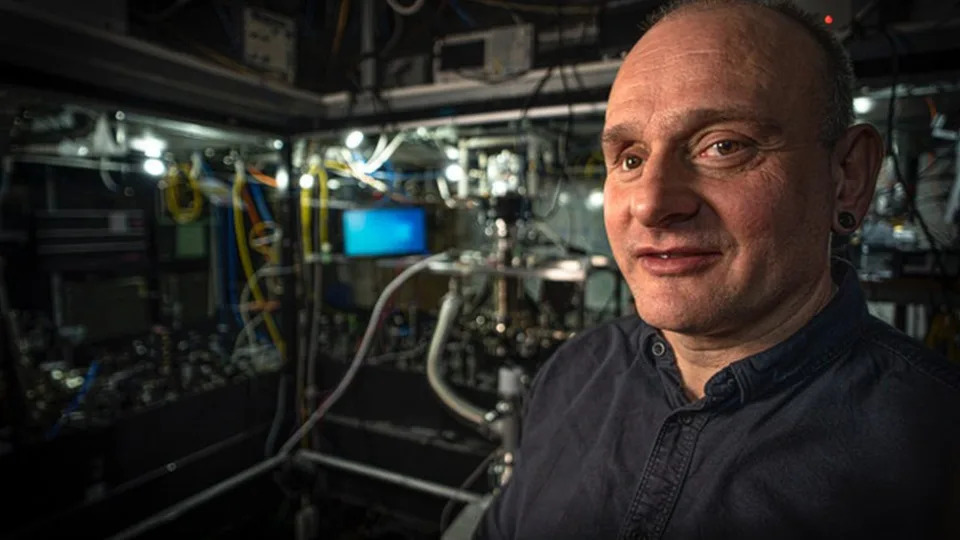
Twenty years ago Winfried Hensinger was told by other scientists that developing a powerful quantum computer was impossible. Now he has made the system behind him that he believes will prove them wrong
Scientists have come a step closer to making multi-tasking ‘quantum’ computers, far more powerful than even today’s most advanced supercomputers.
Quantum computers make use of the weird qualities of sub-atomic particles.
So-called quantum particles can be in two places at the same time and also strangely connected even though they are millions of miles apart.
A Sussex University team transferred quantum information between computer chips at record speeds and accuracy.
The researchers connected two chips together and sent record amounts of quantum information at unprecedented speeds and reliability
Computer scientists have been trying to make an effective quantum computer for more than 20 years. Firms such as Google, IBM and Microsoft have developed simple machines. But, according to Prof Winfried Hensinger, who led the research at Sussex University, the new development paves the way for systems that can solve complex real world problems that the best computers we have today are incapable of.
“Right now we have quantum computers with very simple microchips,” he said. “What we have achieved here is the ability to realise extremely powerful quantum computers capable of solving some of the most important problems for industries and society.”
Rolls-Royce is investing in quantum computing research to see if it can speed up the design process for their aircraft engines
Currently, computers solve problems in a simple linear way, one calculation at a time.
In the quantum realm, particles can be in two places at the same time and researchers want to harness this property to develop computers that can do multiple calculations all at the same time.
Quantum particles can also be millions of miles apart and be strangely connected, mirroring each other’s actions instantaneously. Again, that could also be used to develop much more powerful computers.
The quantum computer chips have to be set up in a clean room an put into a vacuum container as even the slightest contamination can reduce its performance
One stumbling block has been the need to transfer quantum information between chips quickly and reliably: the information degrades, and errors are introduced.
But Prof Hensinger’s team has made a breakthrough, published in the journal Nature Communications, which may have overcome that obstacle.
The team developed a system able to transport information from one chip to another with a reliability of 99.999993% at record speeds. That, say the researchers, shows that in principle chips could be slotted together to make a more powerful quantum computer.
The research team can see individual atoms floating above their chips as the test out their quantum computer
Prof Michael Cuthbert, who is the director of the newly established National Quantum Computing Centre in Didcot, Oxfordshire and is independent of the Sussex research group described the development as a “really important enabling step”. But he said that more work was needed to develop practical systems.
“To build the type of quantum computer you need in the future, you start off by connecting chips that are the size of your thumbnail until you get something the size of a dinner plate. The Sussex group has shown you can have the stability and speed for that step.
“But then you need a mechanism to connect these dinner plates together to scale up a machine, potentially as large as a football pitch, in order to carry out realistic and useful computations, and the technology for communications for that scale is not yet available.”
Quantum computers harness two weird properties of particles at the very small scale – they can be in two places at the same time and be strangely connected even though they are millions of miles apart.
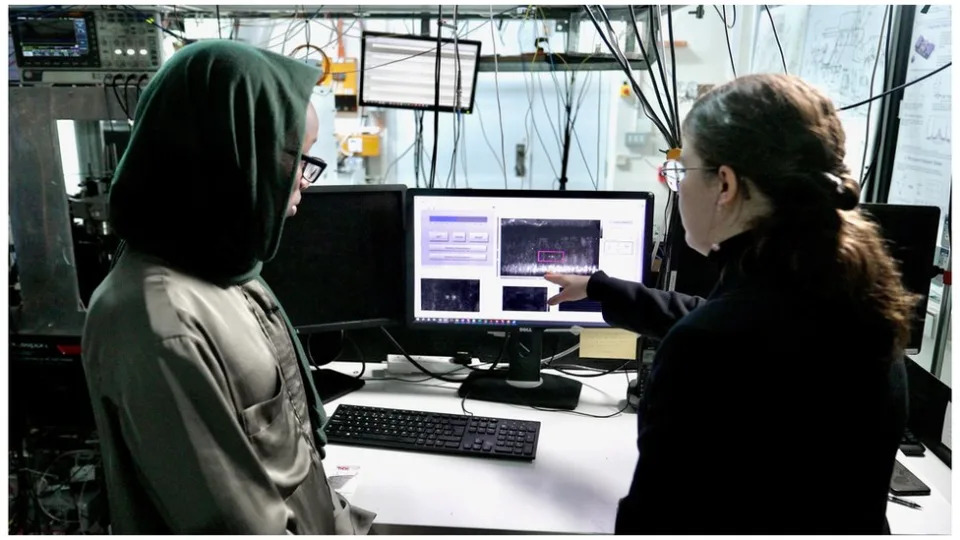
PhD student Sahra Kulmiya, who carried out the Sussex experiment, says that the team are ready for the challenge to take the technology to the next level.
“It is not just solely a physics problem anymore,” she told BBC News.
“It is an engineering problem, a computer science problem and also a mathematical problem.
“It is really difficult to say how close we are to the realisation of quantum computing, but I’m optimistic in how it can become relevant to us in our everyday lives.”
One of the UK’s leading engineering firms, Rolls Royce, is also optimistic about the technology. It is working with the Sussex researchers to develop machines that could help them design even better jet engines.
Powerful supercomputers are used to model the flow of air in simulations to test out new designs of aircraft engines.
Transforming engineering
A quantum computer could in principle track the airflow with even greater accuracy, and do so really quickly, according to Prof Leigh Lapworth, who is leading the development of quantum computing for Rolls-Royce.
“Quantum computers would be able to do calculations that we can’t currently do and others that would take many months or years. The potential of doing those in days would just transform our design systems and lead to even better engines.”
The technology could potentially also be used to design drugs more quickly by accurately simulating their chemical reactions, a calculation too difficult for current supercomputers. They could also provide even more accurate systems to forecast weather and project the impact of climate change.
Prof Hensinger said he first had the idea of developing a quantum computer more than 20 years ago.
“People rolled their eyes and said: ‘it’s impossible’.”
“And when people tell me something can’t be done, I just love to try. So I have spent the past 20 years removing the barriers one by one to a point where one can now really build a practical quantum computer.”
Worried about having a gas stove? Here’s how to limit risks.
Allyson Chiu, The Washington Post – February 7, 2023
Note: This article has been updated to include additional safety information about using induction hot plates.
The raging gas stove debate might have you reassessing how you cook. But replacing a gas stove with an induction stove – a commonly recommended alternative – isn’t always feasible.
Renters are often limited in what they can do. For homeowners, swapping out a gas range can be expensive and complicated, especially if it involves electrical updates.
Still, even if you cannot get rid of your gas stove, you can take several steps to help protect your health and the planet:
Get reacquainted with your other appliances
A whole world of versatile and convenient cooking devices exist outside of your gas stove.
“There’s a lot of appliances available that can address different things you might need to do in the kitchen, and so you can go a long way toward electrifying all of your cooking,” said Talor Gruenwald, a research associate at Rewiring America, a nonprofit group focused on electrification.
Beyond the trusty microwave, you might have one or more of the following appliances taking up space in your kitchen: toaster oven, air fryer, Instant Pot (or some other multicooker), or an electric kettle or hot water heater.
Using them more, particularly for smaller meals, can help reduce the amount of pollutants, such as nitrogen dioxide, released into your home when you turn on your gas burners. Research has linked nitrogen dioxide to increased risk of childhood asthma and worsening asthma symptoms. A recent peer-reviewed study estimated that about 12.7 percent of childhood asthma cases nationwide could be attributed to gas cooking.
Here are some creative ways you can use your appliances:
– Microwaves: They can do much more than just zap cold leftovers. You can bake (remember mug cakes?), steam vegetables and in some situations even toast, fry or caramelize food. For more detailed tips on how you can make the most out of your microwave, read this article from my colleague Becky Krystal.
– Toaster ovens: Reheating leftovers, such as pizza or fries, that you don’t want to eat soggy? Broiling seafood, vegetables or a cheesy open-face sandwich? Baking savory casseroles or sweet desserts? Most modern toaster oven models can likely do it all. Read more here.
– Air fryers: You can make entire balanced and healthy meals in an air fryer in less than 30 minutes with inexpensive ingredients and minimal cleanup afterward, as my colleague Anahad O’Connor writes. You can also bake in air fryers.
– Instant Pots or multicookers: Aside from its handy pressure cooker feature, they can serve as effective steamers and slow cookers, and are even “equipped with a sauté or sear function, meaning you can use them as you would a pot or skillet on a traditional stovetop,” Krystal writes.
Pay attention to ventilation
If you do need to use your gas stove or oven, it can help to turn on your range hood while cooking, Gruenwald said.
Brady Seals, a manager in the carbon-free buildings program at RMI, a clean-energy think tank, recommends using the rear burners on your stovetop where the range hood can be more effective.
If your hood isn’t vented outside or you don’t have one, you should open your windows, experts said.
“You just want to try to move air and bring in clean air,” Seals said, noting that people can try turning on a bathroom fan. “Even opening a window for five minutes can sometimes be helpful in removing some of the pollutants.”
And don’t forget to maintain your gas stove. Some research has found that unused stoves can still leak methane, a powerful greenhouse gas, as well as other hazardous air pollutants, such as benzene. If you’re concerned about leaks, consider having a professional examine the fittings on your stove, Gruenwald said.
Experiment with induction
You can also buy a low-cost induction hot plate that plugs in to a regular outlet. Models are available with single or double burners.
What’s more, experts say you can turn your gas stove into a makeshift induction cooktop by first closing the gas valve behind the stove and then placing an electric hot plate on top. Make sure to double check that no gas is coming out of your burners and that all the knobs are also turned off. It may be helpful to use a butcher block or other sturdy flat surface to provide a firm footing for the hot plate.
“If you are curious about induction but aren’t able to make the switch because you’re a renter or other reasons, it’s a good way to try out the speed and see all the other benefits,” Seals said.
Huge chunk of plants, animals in U.S. at risk of extinction -report
Brad Brooks – February 6, 2023
A Venus flytrap is seen at the meat-eating plant exhibition “Dejate Atrapar” (Let Yourself Get Caught), in BogotaEndangered Key Deer are pictured in a puddle following Hurricane Irma in Big Pine Key, FloridaEndangered Arizona hedgehog cactus is seen in the Oak Flat recreation area outside Superior, ArizonaA full moon rises over a cactus in PhoenixThe endangered dusky gopher frog, a darkly colored, moderately sized frog with warts covering its back and dusky spots on its belly, is shown in this handout photo
(Reuters) -A leading conservation research group found that 40% of animals and 34% of plants in the United States are at risk of extinction, while 41% of ecosystems are facing collapse.
Everything from crayfish and cacti to freshwater mussels and iconic American species such as the Venus flytrap are in danger of disappearing, a report released on Monday found.
NatureServe, which analyzes data from its network of over 1,000 scientists across the United States and Canada, said the report was its most comprehensive yet, synthesizing five decades’ worth of its own information on the health of animals, plants and ecosystems.
Importantly, the report pinpoints the areas in the United States where land is unprotected and where animals and plants are facing the most threats.
Sean O’Brien, president of NatureServe, said the conclusions of the report were “terrifying” and he hoped it would help lawmakers understand the urgency of passing protections, such as the Recovering America’s Wildlife Act that stalled out in Congress last year.
“If we want to maintain the panoply of biodiversity that we currently enjoy, we need to target the places where the biodiversity is most threatened,” O’Brien said. “This report allows us to do that.”
U.S. Representative Don Beyer, a Democrat who has proposed legislation to create a wildlife corridor system to rebuild threatened populations of fish, wildlife and plants, said NatureServe’s work would be critical to helping agencies identify what areas to prioritize and where to establish migration routes.
“The data reported by NatureServe is grim, a harrowing sign of the very real problems our wildlife and ecosystems are facing,” Beyer told Reuters. “I am thankful for their efforts, which will give a boost to efforts to protect biodiversity.”
HUMAN ENCROACHMENT
Among the species at risk of disappearing are icons like the carnivorous Venus flytrap, which is only found in the wild in a few counties of North and South Carolina.
Nearly half of all cacti species are at risk of extinction, while 200 species of trees, including a maple-leaf oak found in Arkansas, are also at risk of disappearing. Among ecosystems, America’s expansive temperate and boreal grasslands are among the most imperiled, with over half of 78 grassland types at risk of a range-wide collapse.
The threats against plants, animals and ecosystems are varied, the report found, but include “habitat degradation and land conversion, invasive species, damming and polluting of rivers, and climate change.”
California, Texas and the southeastern United States are where the highest percentages of plants, animals and ecosystems are at risk, the report found.
Those areas are both the richest in terms of biodiversity in the country, but also where population growth has boomed in recent decades, and where human encroachment on nature has been harshest, said Wesley Knapp, the chief botanist at NatureServe.
Knapp highlighted the threats facing plants, which typically get less conservation funding than animals. There are nearly 1,250 plants in NatureServe’s “critically imperiled” category, the final stage before extinction, meaning that conservationists have to decide where to spend scant funds even among the most vulnerable species to prevent extinctions.
“Which means a lot of plants are not going to get conservation attention. We’re almost in triage mode trying to keep our natural systems in place,” Knapp said.
‘NATURE SAVINGS ACCOUNT’
Vivian Negron-Ortiz, the president of the Botanical Society of America and a botanist with the U.S. Fish and Wildlife Service, who was not involved in the NatureServe report, said there is still a lot scientists do not know and have not yet discovered about biodiversity in the United States, and that NatureServe’s data helped illuminate that darkness.
More than anything, she sees the new data as a call to action.
“This report shows the need for the public to help prevent the disappearance of many of our plant species,” she said. “The public can help by finding and engaging with local organizations that are actively working to protect wild places and conserve rare species.”
John Kanter, the senior wildlife biologist with the National Wildlife Federation, said the data in the report, which he was not involved with, was essential to guiding state and regional officials in creating impactful State Wildlife Action Plans (SWAPs), which they must do every 10 years to receive federal funding to protect vulnerable species.
Currently $50 million in federal funding is divided up among all states to carry out their SWAPs. The Recovering America’s Wildlife Act, whose congressional sponsors say will be reintroduced soon, would have increased that to $1.4 billion, which would have a huge impact on the state’s abilities to protect animals and ecosystems, Kanter said, and the NatureServe report can act as roadmap for officials to best spend their money.
“Our biodiversity and its conservation is like a ‘nature savings account’ and if we don’t have this kind of accounting of what’s out there and how’s it doing, and what are the threats, there’s no way to prioritize action,” Kanter said. “This new report is critical for that.”
Read more:
GRAPHIC-The collapse of insects
Penguins offer varied clues to Antarctic climate change
ANALYSIS-U.N. nature deal can help wildlife as long as countries deliver
(Reporting by Brad Brooks in Lubbock, Texas; Additional reporting by Julio-Cesar Chavez in Washington; Editing by Lisa Shumaker)
Death toll climbs as 7.8 magnitude earthquake rocks Turkey and Syria: Here’s everything we know
Photos show the devastation and desperate search for survivors after an earthquake hit the border of Turkey and Syria.
Dylan Stableford and Yahoo News Photo Staff – February 6, 2023
Rescuers carry out a girl from a collapsed building following an earthquake in Diyarbakir, Turkey February 6, 2023. (Sertac Kayar/Reuters)
At least 2,300 people were killed after a 7.8 magnitude pre-dawn earthquake rocked the border of Turkey and Syria early Monday, toppling thousands of buildings and leaving hundreds of people trapped under rubble.
The quake, which was centered on Turkey’s southeastern province of Kahramanmaras, could be felt as far away as Cairo and Beirut, as powerful aftershocks continued to rattle the region.
Here’s everything we know about the earthquake and its aftermath.
This aerial view shows residents searching for victims and survivors amidst the rubble of collapsed buildings following an earthquake in the village of Besnia near the twon of Harim, in Syria’s rebel-held northwestern Idlib province on the border with Turkey, on February 6, 2022. (Omar Haj Kadour/AFP via Getty Images)
The U.S. Geological Survey measured the 7.8 magnitude quake at a depth of 17.9 km, or about 11 miles, at 4:17 a.m. local time.
“On both sides of the border, residents jolted out of sleep by the pre-dawn quake rushed outside on a cold, rainy and snowy night. Buildings were reduced to piles of pancaked floors,” the news service reported. “Rescue workers and residents in multiple cities searched for survivors, working through tangles of metal and concrete. A hospital in Turkey collapsed, and patients, including newborns, were evacuated from facilities in Syria.”
An infographic titled “Impact area of earthquakes in Turkey” created in Ankara, Turkiye on February 06, 2023. (Yasin Demirci/Anadolu Agency via Getty Images)
Dozens of aftershocks followed. Hours later, a 7.5 magnitude quake struck more than 60 miles away. An official from Turkey’s disaster management agency said it was a new earthquake, not an aftershock, the AP said.
Death toll climbs
In Turkey, officials said the death toll had risen to almost 1,500, with at least 8,500 injured.
In Syria, the death toll in government-held areas was at least 430 with more than 1,200 injured, the Syrian Health Ministry reported. In rebel-held areas, more than 380 people were killed, according to the Syrian Civil Defense unit, also known as the White Helmets.
Search and rescue operations continue after 7.7 magnitude earthquake hits Elazig, Turkiye on February 06, 2023. (Ismail Sen/Anadolu Agency via Getty Images)
Turkish President Recep Tayyip Erdogan warned that the death toll will undoubtedly rise.
“Because the debris removal efforts are continuing in many buildings in the earthquake zone, we do not know how high the number of dead and injured will rise,” Erdogan said. “Hopefully, we will leave these disastrous days behind us in unity and solidarity as a country and a nation.”
Winter weather complicates recovery efforts
Bitterly cold temperatures and worsening conditions were complicating the search and rescue efforts, Reuters reported.
Civil defense workers and security forces search through the wreckage of collapsed buildings in Hama, Syria, Monday, Feb. 6, 2023. (SANA via AP)
“Temperatures in some areas were expected to fall to near freezing overnight, worsening conditions for people trapped under rubble or left homeless,” the news service said. “Rain was falling on Monday after snowstorms swept the country at the weekend.”
What’s more, “poor internet connections and damaged roads between some of the worst-hit cities in Turkey’s south, homes to millions of people, hindered efforts to assess and address the impact.”
Quake struck war-torn region
The earthquake struck a region that has been battered on both sides of the border by more than a decade of civil war in Syria.
Rescue teams search for victims in the rubble following an earthquake in northwestern Syrian Idlib in the rebel-held part of Idlib province, on February 6, 2023. (Syria Civil Defense/UPI/Shutterstock)
“On the Syrian side, the region is divided between government-held territory and the country’s last opposition-held enclave, which is surrounded by Russian-backed government forces. Turkey is home to millions of refugees from that conflict. About 4 million people live in the opposition-held regions in Syria, many of them displaced from other parts of the country by the fighting. Many of the residential buildings were already unsafe because of bombardments.”
Mehmet Emin Ataoglu rescued under the rubble of 6-storey-building after 7.7 magnitude earthquake hits Iskenderun district of Hatay, Turkiye on February 06, 2023. (Murat Sengul/Anadolu Agency via Getty Images)
The region also sits on top of major fault lines. In 1999, a string of earthquakes struck northwest Turkey, killing nearly 18,000 people.
Erdogan called Monday’s quake the biggest disaster since the 1939 Erzincan earthquake, which killed more than 30,000.
Biden vows support
Civil defense workers and security forces search through the wreckage of collapsed buildings in Hama, Syria, Monday, Feb. 6, 2023. (Omar Sanadik/AP)
In a statement, President Biden said he was “deeply saddened by the loss of life and devastation caused by the earthquake” and has directed his administration to provide any and all needed assistance.
“Our teams are deploying quickly to begin to support Turkish search and rescue efforts and address the needs of those injured and displaced by the earthquake,” Biden said in a statement. “U.S.-supported humanitarian partners are also responding to the destruction in Syria. Today, our hearts and our deepest condolences are with all those who have lost precious loved ones, those who are injured, and those who saw their homes and businesses destroyed.”
More images from the devastation
Rescue teams evacuate a victim pulled out of the rubble following an earthquake in northwestern Syrian Idlib in the rebel-held part of Idlib province, on February 6, 2023. (Syria Civil Defense/UPI/Shutterstock)People gather as rescuers search for survivors under the rubble, following an earthquake, in rebel-held town of Jandaris, Syria February 6, 2023. (Khalil Ashawi/Reuters)A rescuer carries an injured child away from the rubble of a building following an earthquake in rebel-held Azaz, Syria February 6, 2023 in this still image taken from video. Reuters TV/via Reuters)Rescuers search for survivors under the rubble, following an earthquake, in rebel-held town of Jandaris, Syria February 6,2023. (Khalil Ashawi/Reuters)Firefighters carry the body of a victim in Diyarbakir, in southeastern Turkey, Monday, Feb. 6, 2023. (Mahmut Bozarsan/AP)Syrian civil defense members search for people under the rubble of a destroyed building in Afrin, Syria, Monday, Feb. 6, 2023. (Zana Halil/DIA images via AP)People and emergency teams rescue a person on a stretcher from a collapsed building in Adana, Turkey, Monday, Feb. 6, 2023. (IHA agency via AP)People search for survivors under the rubble following an earthquake in Diyarbakir, Turkey February 6, 2023. (Sertac Kayar/Reuters)People carry a victim as rescuers search for survivors under the rubble, following an earthquake, in rebel-held town of Jandaris, Syria February 6, 2023. (Khalil Ashawi/AP)Rescuers work at the site of a collapsed building following an earthquake in Adana, Turkey February 6, 2023. (Cagla Gurdogan/Reuters)A man carries a girl following an earthquake, in rebel-held town of Jandaris, Syria February 6, 2023. (Khalil Ashawi/Reuters)People gather as rescuers search for survivors under the rubble, following an earthquake, in rebel-held town of Jandaris, Syria February 6, 2023. (Khalil Ashawi/Reuters)Earthquake victims receive treatment at the al-Rahma Hospital in the town of Darkush, Idlib province, northern Syria, Monday, Feb. 6, 2023. (Ghaith Alsayed/AP)
While COVID raged, another deadly threat was on the rise in hospitals
Emily Alpert Reyes – February 5, 2023
A patient rests on a gurney inside a Los Angeles hospital. (Francine Orr / Los Angeles Times)
As COVID-19 began to rip through California, hospitals were deluged with sickened patients. Medical staff struggled to manage the onslaught.
Amid the new threat of the coronavirus, an old one was also quietly on the rise: More people have suffered severe sepsis in California hospitals in recent years — including a troubling surge in patients who got sepsis inside the hospital itself, state data show.
Sepsis happens when the body tries to fight off an infection and ends up jeopardizing itself. Chemicals and proteins released by the body to combat an infection can injure healthy cells as well as infected ones and cause inflammation, leaky blood vessels and blood clots, according to the National Institutes of Health.
It is a perilous condition that can end up damaging tissues and triggering organ failure. Across the country, sepsis kills more people annually than breast cancer, HIV/AIDS and opioid overdoses combined, said Dr. Kedar Mate, president and chief executive of the Institute for Healthcare Improvement.
“Sepsis is a leading cause of death in hospitals. It’s been true for a long time — and it’s become even more true during the pandemic,” Mate said.
The bulk of sepsis cases begin outside of hospitals, but people are also at risk of getting sepsis while hospitalized for other illnesses or medical procedures. And that danger only grew during the pandemic, according to state data: In California, the number of “hospital-acquired” cases of severe sepsis rose more than 46% between 2019 and 2021.
Experts say the pandemic exacerbated a persistent threat for patients, faulting both the dangers of the coronavirus itself and the stresses that hospitals have faced during the pandemic. The rise in sepsis in California came as hospital-acquired infections increased across the country — a problem that worsened during surges in COVID hospitalizations, researchers have found.
“This setback can and must be temporary,” said Lindsey Lastinger, a health scientist in the CDC’s Division of Healthcare Quality Promotion.
Physicians describe sepsis as hard to spot and easy to treat in its earliest stages, but harder to treat by the time it becomes evident. It can show up in a range of ways, and detecting it is complicated by the fact that its symptoms — which can include confusion, shortness of breath, clammy skin and fever — are not unique to sepsis.
There’s no “gold standard test to say that you have sepsis or not,” said Dr. Santhi Kumar, interim chief of pulmonology, critical care and sleep medicine at Keck Medicine of USC. “It’s a constellation of symptoms.”
Christopher Lin, 28, endured excruciating pain and a broiling fever of 102.9 degrees Fahrenheit at home before heading to the Kaiser Permanente Los Angeles Medical Center. It was October 2020 and the hospital looked “surreal,” Lin said, with a tent set up outside and chairs spaced sparsely in the waiting room.
His fever raised concerns about COVID-19, but Lin tested negative. At one point at the emergency department his blood pressure abruptly dropped, Lin said, and “it felt like my soul had left my body.”
Lin, who suffered sepsis in connection with a bacterial infection, isn’t sure where he first got infected. Days before he went to the hospital, he had undergone a quick procedure at urgent care to drain a painful abscess on his chest, and got the gauze changed by a nurse the following day, he said. Such outpatient procedures aren’t included in state data on “hospital-acquired” sepsis.
Someone with sepsis might have a high temperature or a low one, a heart rate that has sped or slowed, a breathing rate that is high or low.
It can result from bacteria, fungal infections, viruses or even parasites — “and the challenge is that when someone walks into the emergency department with a fever, we don’t know which of those four things they have,” said Dr. Karin Molander, an emergency medicine physician and past board chair of Sepsis Alliance. Treatment can vary depending on what is driving the infection that spurred sepsis, but antibiotics are common because many cases are tied to bacterial infections.
The pandemic piled on the risks: A coronavirus infection can itself lead to sepsis, and the virus also ushered more elderly and medically vulnerable people into hospitals who are at higher risk for the dangerous condition, experts said. Nearly 40% of severe sepsis patients who died in California hospitals in 2021 were diagnosed with COVID-19, according to state data. Some COVID-19 patients were hospitalized for weeks at a time, ramping up their risk of other complications that can lead to sepsis.
“The longer you’re in the hospital, the more things happen to you,” said Dr. Maita Kuvhenguhwa, an attending physician in infectious disease at MLK Community Healthcare. “You’re immobilized, so you have a risk of developing pressure ulcers” — not just on the backside, but potentially on the face under an oxygen device — “and the wound can get infected.”
“Lines, tubes, being here a long time — all put them at risk for infection,” Kuvhenguhwa said.
Experts said the pandemic may have also pulled away attention from other kinds of infection control, as staff were strained and hospital routines were disrupted. California, which is unusual nationwide in mandating minimum ratios for nurse staffing, allowed some hospitals to relax those requirements amid the pandemic.
Nurses juggling more patients might not check and clean patients’ mouths as often to help prevent bacterial infections, Kumar said. Mate said that hospitalized patients might not get their catheters changed as often amid staff shortages, which can increase the risk of urinary tract infections.
Hospitals might have brought in traveling nurses to help plug the gaps, but “if they don’t know the same systems, it’s going to be harder for them to follow the same processes” to deter infections, said Catherine Cohen, a policy researcher with the RAND Corp.
Armando Nahum, one of the founding members of Patients for Patient Safety U.S., said that pandemic restrictions on hospital visitors may have also worsened the problem, preventing family members from being able to spot that a relative was acting unusually and raise concerns.
Molander echoed that point, saying that it’s important for patients to have someone who knows them well and might be able to alert doctors, “My mom has dementia, but she’s normally very talkative.”
Sepsis has been a longstanding battle for hospitals: One-third of people who die in U.S. hospitals had sepsis during their hospitalization, according to research cited by the CDC. But Mate argued that sepsis deaths can be reduced significantly “with the right actions that we know how to take.”
In Pennsylvania and New Jersey, Jefferson Health began rolling out a new effort to combat sepsis in fall of 2021 — just before the initial Omicron wave began to hit hospitals.
Its system includes predictive modeling that uses information from electronic medical records to alert clinicians that someone might be suffering from sepsis. It also set up a “standardized workflow” for sepsis patients so that crucial steps such as prescribing antibiotics happen as quickly as possible, hospital officials said.
The goal was to lessen the mental burden on doctors and nurses pulled in many directions, said Dr. Patricia Henwood, its chief clinical officer. “Clinicians across the country are strained, and we don’t necessarily need better clinicians — we need better systems,” she said.
Jefferson Health credits the new system with helping to reduce deaths from severe sepsis by 15% in a year.
In New York state, uproar over the death of 12-year-old Rory Staunton led to new requirements for hospitals to adopt protocols to rapidly identify and treat sepsis and report data to the state. State officials said the effort saved more than 16,000 lives between 2015 and 2019, and researchers found greater reductions in sepsis deaths in New York than in states without such requirements.
If your child gets sick, he said, “you shouldn’t have to wonder if the hospital on the right has sepsis protocols and the one on the left doesn’t,” said Ciaran Staunton, who co-founded the organization End Sepsis after the death of his son. His group welcomed the news when federal agencies were recently directed to develop “hospital quality measures” for sepsis.
Such a move could face opposition. Robert Imhoff, president and chief executive of the Hospital Quality Institute — an affiliate of the California Hospital Assn. — contended that expanding the kind of requirements in effect in New York was unnecessary.
“I don’t think hospitals need to be mandated to provide safe, quality care,” Imhoff said.
State data show that severe sepsis — including cases originating both outside and inside hospitals — has been on the rise in California over the last decade, but Molander said the long-term increase may be tied to changes in reporting requirements that led to more cases being tracked. California has yet to release new data on severe sepsis acquired in hospitals last year, and is not expected to do so until this fall.
For Lin, surviving sepsis left him determined to make sure that the word gets out about sepsis — and not just in English. In the hospital, he had struggled to explain what was happening to his mother, who speaks Cantonese. After recovering, Lin worked with local officials to get materials from Sepsis Alliance translated into Mandarin.
“I can’t imagine if it were my parents in the hospital,” he said, “going through what I was going through.”
50-car train derailment causes big fire, evacuations in Ohio
February 4, 2023
In this photo provided by Melissa Smith, a train fire is seen from her farm in East Palestine, Ohio, Friday, Feb. 3, 2023. A train derailment and resulting large fire prompted an evacuation order in the Ohio village near the Pennsylvania state line on Friday night, covering the area in billows of smoke lit orange by the flames below. (Melissa Smith via AP)This photo taken with a drone shows portions of a Norfolk and Southern freight train that derailed Friday night in East Palestine, Ohio are still on fire at mid-day Saturday, Feb. 4, 2023. (AP Photo/Gene J. Puskar)In this photo provided by Melissa Smith, a train fire is seen from her farm in East Palestine, Ohio, Friday, Feb. 3, 2023. A train derailment and resulting large fire prompted an evacuation order in the Ohio village near the Pennsylvania state line on Friday night, covering the area in billows of smoke lit orange by the flames below. (Melissa Smith via AP) ASSOCIATED PRESS
EAST PALESTINE, Ohio (AP) — A freight train derailment in Ohio near the Pennsylvania state line left a mangled and charred mass of boxcars and flames Saturday as authorities launched a federal investigation and monitored air quality from the various hazardous chemicals in the train.
About 50 cars derailed in East Palestine at about 9 p.m. EST Friday as a train was carrying a variety of products from Madison, Illinois, to Conway, Pennsylvania, rail operator Norfolk Southern said Saturday. There was no immediate information about what caused the derailment. No injuries or damage to structures were reported.
“The post-derailment fire spanned about the length of the derailed train cars,” Michael Graham, a member of the National Transportation Safety Board, told reporters Saturday evening. “The fire has since reduced in intensity, but remains active and the two main tracks are still blocked.”
Norfolk Southern said 20 of the more than 100 cars were classified as carrying hazardous materials — defined as cargo that could pose any kind of danger “including flammables, combustibles, or environmental risks.” Graham said 14 cars carrying vinyl chloride were involved in the derailment “and have been exposed to fire,” and at least one “is intermittently releasing the contents of the car through a pressure release device as designed.”
“At this time we are working to verify which hazardous materials cars, if any, have been breached,” he said. The Environmental Protection Agency and Norfolk Southern were continuing to monitor air quality, and investigators would begin their on-scene work “once the scene is safe and secure,” he said.
Vinyl chloride, used to make the polyvinyl chloride hard plastic resin used in a variety of plastic products, is associated with increased risk of liver cancer and other cancers, according to the federal government’s National Cancer Institute. Federal officials said they were also concerned about other possibly hazardous materials.
Mayor Trent Conaway, who earlier declared a state of emergency citing the “train derailment with hazardous materials,” said air quality monitors throughout a one-mile zone ordered evacuated had shown no dangerous readings.
Fire Chief Keith Drabick said officials were most concerned about the vinyl chloride and referenced one car containing that chemical but said safety features on that car were still functioning. Emergency crews would keep their distance until Norfolk Southern officials told them it was safe to approach, Drabick said.
“When they say it’s time to go in and put the fire out, my guys will go in and put the fire out,” he said. He said there were also other chemicals in the cars and officials would seek a list from Norfolk Southern and federal authorities.
Graham said the safety board’s team would concentrate on gathering “perishable” information about the derailment of the train, which had 141 load cars, nine empty cars and three locomotives. State police had aerial footage and the locomotives had forward-facing image recorders as well as data recorders that could provide such information as train speed, throttle position and brake applications, he said. Train crew and other witnesses would also be interviewed, Graham said.
Firefighters were pulled from the immediate area and unmanned streams were used to protect some areas including businesses that might also have contained materials of concern, officials said. Freezing temperatures in the single digits complicated the response as trucks pumping water froze, Conaway said.
East Palestine officials said 68 agencies from three states and a number of counties responded to the derailment, which happened about 51 miles (82 kilometers) northwest of Pittsburgh and within 20 miles (32 kilometers) of the tip of West Virginia’s Northern Panhandle.
Conaway said surveillance from the air showed “an entanglement of cars” with fires still burning and heavy smoke continuing to billow from the scene as officials tried to determine what was in each car from the labels outside. The evacuation order and shelter-in-place warnings would remain in effect until further notice, officials said.
Village officials warned residents that they might hear explosions due to the fire. They said drinking water was safe despite discoloration due to the volume being pumped the fight the blaze. Some runoff had been detected in streams but rail officials were working to stem that and prevent it from going downstream, officials said.
Officials repeatedly urged people not to come to the scene, saying they were endangering not only themselves but emergency responders.
The evacuation area covered 1,500 to 2,000 of the town’s 4,800 to 4,900 residents, but it was unknown how many were actually affected, Conaway said. A high school and community center were opened, and the few dozen residents sheltering at the high school included Ann McAnlis, who said a neighbor had texted her about the crash.
“She took a picture of the glow in the sky from the front porch,” McAnlis told WFMJ-TV. “That’s when I knew how substantial this was.”
Norfolk Southern opened an assistance center in the village to take information from affected residents and also said it was “supporting the efforts of the American Red Cross and their temporary community shelters through a $25,000 donation.
Elizabeth Parker Sherry said her 19-year-old son was heading to Walmart to pick up a new TV in time for the Super Bowl when he called her outside to see the flames and black smoke billowing toward their home. She said she messaged her mother to get out of her home next to the tracks, but all three of them and her daughter then had to leave her own home as crews went door-to-door to tell people to leave the evacuation zone.