Norfolk Southern train derails in Springfield, Ohio
Faris Tanyos – March 4, 2023
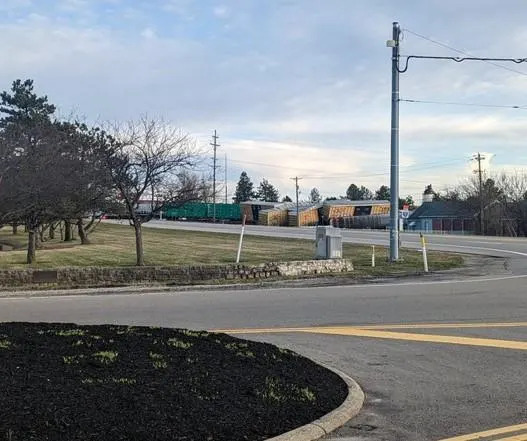
Nearby residents have been asked to shelter in place after a Norfolk Southern train derailed near a highway in the Springfield, Ohio, area on Saturday.
Norfolk Southern confirmed in a statement to CBS News that 20 cars of a 212-car train derailed. The railway company said there were no hazardous materials aboard the train, and there were no reported injuries.
Residents within 1,000 feet of the derailment were asked to shelter-in-place out of an “abundance of caution,” the Clark County Emergency Management Agency reported. The derailment occurred near State Route 41.
A Norfolk Southern train which derailed in Springfield, Ohio. March 4, 2023. / Credit: Jon Shawhan/Twitter
On Feb. 3, a Norfolk Southern train carrying hazardous materials derailed in a fiery crash in East Palestine, Ohio. Of the 38 cars that derailed, about 10 contained hazardous materials. Hundreds of residents were evacuated, and crews later conducted a controlled release of toxic chemicals, including vinyl chloride, because of the risk that the derailment could cause an explosion.
State and federal officials have faced significant criticism over their response to the East Palestine incident, with local residents concerned that the contamination to the area could pose significant long-term health risks.
The Environmental Protection Agency has so far said that air quality levels remain at safe levels. However, on Thursday the EPA said that it had ordered Norfolk Southern to conduct dioxin tests at the site of the derailment, and if those dioxin levels were found to be at unsafe levels, it would order an immediate cleanup.
Transportation Secretary Pete Buttigieg, who was also criticized for not visiting East Palestine until three weeks after the derailment, tweeted Saturday night that he had been briefed by Federal Railroad Administration staff about the Springfield derailment and had also spoken to Ohio Gov. Mike DeWine on the incident.
“No hazardous material release has been reported, but we will continue to monitor closely and FRA personnel are en route,” Buttigieg said.
Springfield is located about 200 miles southwest of East Palestine.
Warm atmospheric rivers in California forecast could spell trouble for massive snowpack
The risk of flooding could rise dramatically with the arrival of warm rains later this month.
David Knowles, Senior Editor – March 2, 2023
A series of atmospheric river storms brought heavy snowfall to the region around Mammoth Lakes, Calif., Jan. 22. (Mario Tama/Getty Images)
Californians are bracing for the arrival of more atmospheric rivers over the coming weeks that could dump rain on the state’s massive snowpack and dramatically increase the risk of flooding.
“I would suggest that literally anyone who lives in the flood plains of these rivers, which is millions of people, pay attention to what’s going on and be prepared for floods,” Peter Gleick, climate scientist and founder of the Pacific Institute, told Yahoo News.
With snowpack levels already near all-time highs, cold temperatures in the state have begun moderating in recent days, and there is a roughly 20% chance of warmer atmospheric river rains later this month.
“The really big worry for flooding when you have a lot of snow in the mountains, your reservoirs are relatively full and you get a really warm, massive storm that dumps a lot of rain and melts a lot of snow, is that you overwhelm the reservoirs,” Gleick said.
On the bright side, this year’s rain and snow amounts have helped erase or ease California’s long-term drought crisis.
But the impressive snowpack coupled with warmer air and rain poses other risks.
“This is a good pattern for drought relief,” UCLA climate scientist Daniel Swain told Yahoo News about the rain and snowpack. “We’ve got to think about what happens when that all comes downstream in the late spring and early summer. There’s almost guaranteed to be at least minor snowmelt flooding this year. The question is whether we’re lucky and it’s nice and gradual and it doesn’t cause any big problems. Do we get some huge early season heat waves? That would be big uh-oh.”
Swain and Gleick both stress that human beings are not good at predicting weather more than a few days in advance. But the arrival of one or more warm atmospheric rivers in California over the coming weeks could be bad news for those living downstream from the snowpack.
“There’s no way to know. It depends on where that storm comes,” Gleick said. “Probably the most vulnerable area, generically speaking, is Sacramento on the American River. The main reservoir that protects Sacramento from flooding is Folsom, which is on the American River. Folsom, I think everyone would acknowledge, is undersized for the level of protection that Sacramento really needs.”
So far this year, in terms of historical averages for March 2, Folsom is at 114% of average capacity, a little more than half-full overall. But multiple additional atmospheric river rain events could be problematic.
Imposing snowbanks in Mammoth Lakes, Calif. (Mario Tama/Getty Images)
“We have the classic dilemma in California, which is that we want to keep our reservoirs relatively empty in the winter for flood protection, and we want them as full as possible at the end of the rainy season in April,” Gleick said. “The biggest demand for water is during the dry season, April through September, the growing season. So reservoir operators have to balance those two things. They don’t want to fill the reservoirs too soon if there’s a risk of flooding, and it’s bad if they don’t capture as much water as they can for the dry part of the year.”
While Republicans like House Speaker Kevin McCarthy of California often criticizes Democratic Gov. Gavin Newsom for not diverting runoff water during the rainy season into reservoirs, Gleick explained that reservoir managers have a difficult task this year due to the above-average rain and snowfall.
“They look at how much water is in the mountains stored as snow and they look at what’s in the reservoirs. They have models that tell them, Well, you can add this much water, you can let this much out. That’s the way they operate the system,” Gleick said. “The problem of course is that historical data are just averages, they’re not perfect and you can be surprised. The other problem, of course, is that climate change is telling us that all of the historical data are no longer a guide to the future.”
For now, the Sierra Nevada continued to receive multiple feet of snow this week.
“If we were to get heavy rain with a warm system and a lot of tropical moisture feeding into it, that would melt all of the snow that just fell in the mountains,” David Sweet, a meteorologist with the National Weather Service in Oxnard, told the Los Angeles Times, adding, “We need to stick that in the back of our mind and think, ‘Boy, I sure hope that doesn’t happen.’”
These days, they let their freak flag fly. And no, I’m not talking about dubious yarns of after-hours debauchery—though I am old enough to remember Steve Stockman’s hot tub party (no, I wasn’t there). I’m talking instead about political statements that will be uttered on stage by credentialed speakers or on camera by attention-starved activists and attendees. I mean, the event just kicked off Thursday, and already, a video with a self-described “Jan. 6 political prisoner” is garnering buzz.
Those small potatoes will quickly be forgotten. Every CPAC has a narrative, but what will this year be? Attendance could be down. That’d be embarrassing. Big names like Gov. Ron DeSantis are skipping this year’s event. Could it be that CPAC isn’t as relevant as it used to be? What is more, this year’s meeting is taking place on the heels of allegations that the event’s organizer, Matt Schlapp, groped a Herschel Walker campaign aide.
Any of these stories could be the big one. But my money’s on another option: The Trumpification of CPAC.
Kellyanne Conway envisioned this future back in 2017, when she dubbed the event “TPAC.” Of course, back then, Trump was a newly-minted president—not a perpetual drag on the party’s electoral prospects. The fact that CPAC is doubling down on Trumpism now tells you all you need to know about the direction of the movement and the party, not to mention their penchant for lost causes (one of the other big speakers this year will be election-denier Kari Lake).
This is not how it was supposed to go. Trust me, I know. Back in 2012, I was CPAC’s “Blogger of the Year.” I know what you’re thinking: What’s a blogger? It doesn’t matter. The point is that a mere eleven years ago, I wasn’t just the kind of person that CPAC could tolerate, I was feted.
But even for those who aren’t huge McCain fans, the contrast is clear. My friend Craig Shirley, the acclaimed conservative historian, was recently quoted in The New York Times lamenting the conference’s decline since the ‘70s. “It’s more of like a boat show,” Shirley said.
I can think of other words besides “boat.” Ship might be closer.
CPAC was serious and wonky back in the Reagan era, but that started to change long before I attended the first of my many CPACs in 2000. By then, the hall was bustling with young college students who had presumably been bussed in by organizers and/or campaigns vying to win the presidential straw poll.
To be sure, there have always been eccentric attendees. A tongue-in-cheek essay I wrote for the Daily Caller in 2012 lamented the “gadflies” and “time burglars” who populate these events.
But there used to be a lot of intellectually stimulating things to do and see.
To be sure, CPAC speakers have long existed on a spectrum, somewhere between William F. Buckley and P.T. Barnum. But in the last dozen years, or so (coinciding, it seems, with the election of Barack Obama—and then exploding with Trump’s election), it began skewing very heavily toward the Barnum end.
There are numerous warning signs along the way, but let me remind you of just a few:
In 2009, my friend and former boss Tucker Carlson was briefly booed at CPAC for praising The New York Times for accuracy.
In 2011, CPAC invited Donald Trump—who was just a crazy celebrity touting “birtherism”—to give a speech.
In what might be considered his political coming out (as a conservative) party, Trump “was by far the best-received speaker and the audience lapped up his act,” reported Maggie Haberman.
None of these things, in and of themselves, were terribly surprising or noteworthy (the straw poll was always manipulated by campaigns, which is to say the results were far from organic or even scientific). Collectively, however, these developments now strike me as telling. They were harbingers of things to come.
My conclusion is this: If you want to know what the conservative movement will look like in five years, look at what today’s CPAC hall is like.
That is a scary thought, because if that analysis turns out to be true, Donald Trump is the GOP’s future. After all, he’s their celebrated hero. And with Ron DeSantis presumably sitting this CPAC out, he’s the only game in town.
Republicans seize on train derailment to go after Buttigieg
Yasmeen Abutaleb, Ian Duncan and Justine McDaniel – March 1, 2023
Transportation Secretary Pete Buttigieg and other federal officials examine a burned Norfolk Southern rail car in East Palestine, Ohio. (Allie Vugrincic/AP)
Republicans are seizing on the train derailment in East Palestine, Ohio, to ramp up their attacks against Transportation Secretary Pete Buttigieg, saying he is promoting his own agenda at the expense of families who are grappling with a toxic chemical accident in their backyard.
The Transportation Department does not have primary responsibility for the cleanup, and Buttigieg and his supporters are firing back, suggesting the GOP has other motives for its focus on him. The secretary, who sought the presidency in 2020, has taken the unusual step of responding directly to some of his critics, including Sen. Marco Rubio (R-Fla.), former president Donald Trump and Senate Minority Leader Mitch McConnell (R-Ky.).
The result is an unusually personal and, on occasion, vitriolic back-and-forth involving a transportation secretary who is also a rising star in his party, potential candidate for higher office and prominent gay official – far from the usual technocratic and logistical debates that surround the Transportation Department.
“I’ve never heard this level of criticism against another secretary, ever, and I’ve been following this a long time,” said Ray LaHood, a former Republican congressman who served as transportation secretary under President Barack Obama. “I’ve never seen it like this before. This is pure politics.”
Buttigieg has faced GOP criticism before, notably during supply chain disruptions early in Biden’s presidency and the failure of a federal aviation safety system in January. But people close to the transportation secretary say the attacks on him since the derailment have risen to a new level, noting that the Environmental Protection Agency, which is in charge of the response to the derailment, has taken far less heat.
Though part of a broader GOP criticism of the administration’s response to the derailment, the attacks on Buttigieg have in some cases been strikingly personal. Rubio tweeted that Buttigieg is “an incompetent who is focused solely on his fantasies about his political future & needs to be fired.” McConnell said on the Senate floor that Buttigieg is “more interested in pursuing press coverage for woke initiatives and climate nonsense than in attending to the basic elements of his day job.”
Some critics suggest Buttigieg should have been on the scene earlier – he visited East Palestine on Feb. 23, almost three weeks after the accident – but many of the accusations lack specificity, instead taking the secretary to task largely for his broader positions on issues such as the climate.
Buttigieg is one of the Biden administration’s most visible messengers, a deft debater who, unlike many Democrats, is often willing to appear on Fox News and other conservative outlets to advocate the White House’s priorities. A surprise star of the 2020 Democratic primaries, he moved last year from deep-red Indiana to the bluer state of Michigan, fueling speculation about further political ambitions.
Jeffrey Shane, a senior Transportation Department official during the presidency of George W. Bush, said that is one reason Buttigieg is receiving this level of attention. “Because his last act was running for president, Secretary Buttigieg is an unusually high-profile person to have the DOT job,” Shane said. “That visibility, together with genuine challenges in transportation and a toxic atmosphere in Washington, have combined to make this a difficult time.”
The White House argues that the administration implemented a by-the-book response to the train derailment, quickly dispatching federal experts from numerous agencies. The derailment itself did not harm or kill anyone, but some of the rail cars were carrying hazardous chemicals that leaked and burned in a massive fire.
Three days after the crash, officials decided to release vinyl chloride from five rail cars to prevent them from exploding, a controversial decision that spewed more chemicals into the air and yielded photos of an ominous-looking black plume looming over East Palestine.
The Transportation Department, while concerned with the conditions leading to the crash, did not have a central role in the response. The department did send experts to help the National Transportation Safety Board investigate, and the head of the Federal Railroad Administration, part of the Transportation Department, has also visited the scene.
Buttigieg has conceded that he should have spoken out sooner to convey his concern about the accident and the people in the area. “That’s a lesson learned for me,” he told CBS News.
While the Transportation Department is weighing new safety rules in the accident’s aftermath, it is the EPA that is the lead federal agency on the ground, monitoring toxins and overseeing the cleanup effort by Norfolk Southern, the company that operated the train. Still, Republicans have not gone after EPA Administrator Michael Regan or other federal officials in the same way they have targeted Buttigieg.
Some conservatives have tried making a broader argument – that Biden and his team do not care about East Palestine because it is a Republican, rural, largely White town. “Is it because these are not their voters?” Fox News host Tucker Carlson asked Sen. J.D. Vance (R-Ohio), who agreed.
Others have taken it further, taking the opportunity to wrap Buttigieg’s sexual orientation into their criticism. Donald Trump Jr., the former president’s son, said late last month that Buttigieg got his job solely because Democrats wanted to give a role to “the gay guy.” Long before the derailment, some Republicans mocked Buttigieg’s decision to take paternity leave after his twins were born and to bring his husband, Chasten, with him on a military jet.
That has led to allegations that the post-derailment criticism stems in part from homophobia.
“Whether it’s sickening attacks on his family or disrespecting a community’s pain with failed attempts at exploitation as a political prop, nothing saps credibility like following debunked smears with even more debunked smears,” deputy White House press secretary Andrew Bates said in a statement.
In East Palestine last month, former New York mayor Rudy Giuliani cited Buttigieg’s paternity leave as he criticized him for purportedly taking too long to visit the town. Giuliani, a Trump ally, referred to his own experience leading New York at the time of the Sept. 11, 2001, terrorist attacks.
“One of the main rules in investigating a murder is: Every day you miss is one more day inactive,” Giuliani said in an interview. “It’s quite obvious that this mayor, who accomplished nothing as the mayor of a tiny town not much bigger than a New York City apartment building, seems to have no expertise.” Buttigieg was mayor of South Bend, Ind., when he launched his presidential bid in 2019.
Buttigieg has hit back directly against many of the attacks, an unusual approach for top officials, who often seek to remain above the fray. He has coupled that with invitations to his critics to help craft new rail safety guidelines, arguing that Republicans are at fault for blocking previous safety rules related to railways and chemical spills.
He accused Rubio of sending out a letter two years ago that was drafted by railway lobbyists. The senator responded that Buttigieg was “m.i.a. on the derailment” and was lying about the letter.
Buttigieg retorted: “The facts don’t lie. The 2021 letter you signed was obviously drafted by railroad industry lobbyists. It supports waivers that would reduce visual track inspections. Now: will you vote to help us toughen rail safety accountability and fines, or not?”
After McConnell’s floor speech accusing Buttigieg of pursuing “woke initiatives” and “climate nonsense,” Buttigieg cited a bridge in Kentucky that had benefited from the bipartisan infrastructure law, which the Transportation Department is helping implement.
“Respectfully, the Brent Spence Bridge we’re funding in Kentucky is hardly a ‘woke initiative.’ Fighting climate change isn’t ‘nonsense,'” Buttigieg tweeted. “And Leader McConnell could be enormously helpful by joining us in standing up to the railroad industry lobby to make hazardous trains safer.”
Republicans on the House Oversight Committee, meanwhile, said they were opening an investigation of the derailment and sent a letter seeking records from Buttigieg. “You ignored the catastrophe for over a week,” the letter said, accusing Transportation Department leadership of “apathy in the face of this emergency.”
Rep. Jamie B. Raskin (D-Md.) and other Democrats fired back that the letter “failed to ask a single legitimate question” about the cause of the derailment.
“If Committee Republicans are serious about uncovering the truth, it must do so by conducting thorough, fact-based oversight, which includes seeking answers from Norfolk Southern about its potentially harmful policies and ongoing efforts to influence federal railroad safety measures,” they wrote.
Biden administration officials note that the United States experiences about 1,000 derailments a year. They say they responded almost instantly to this one.
EPA personnel arrived at the crash site in the middle of the night on Feb. 4, a few hours after the train derailed, and began monitoring the air and water. The next morning, the NTSB, an independent agency, announced its investigation and was set to meet with local officials; the agency held two news briefings in East Palestine in the first three days of the crisis.
Ohio Gov. Mike DeWine, a Republican, has praised the administration’s response, telling reporters on Feb. 14 that Biden had offered federal help but that he had not taken the president up on it because the situation was under control.
As media attention on the derailment exploded that week, DeWine moved to secure more aid, and the administration sent teams from the Centers for Disease Control and Prevention, the Department of Health and Human Services and the Federal Emergency Management Agency.
In the past, transportation secretaries have sometimes visited disaster scenes, most often after incidents involving fatalities. In those cases, they have often waited several days to avoid causing a distraction and impeding the on-the-ground response.
Federico Peña, transportation secretary under President Bill Clinton, said he went to several accident scenes, adding that seeing the trauma firsthand enabled him to better push for improved safety measures.
Both Peña and LaHood also used disasters as springboards for efforts to overhaul transportation safety regulations, a playbook Buttigieg now seems to be using. Some Republicans, despite their criticism of his performance, have signaled a willingness to take part in such a push.
On Wednesday, Vance and Rubio sponsored bipartisan legislation that would advance many of the rail safety initiatives supported by the Transportation Department.
The Washington Post’s Meryl Kornfield contributed to this report.
A sunken boat reemerges in September 2022 in Lake Mead National Recreation Area, Nevada, after unprecedented drought. (David McNew/Getty Images)
Much of the Northern Hemisphere is struggling with drought or the threat of drought, as Europe experiences an unusually warm, precipitation-free winter and swaths of the American West remain mired in an epic megadrought.
But it’s not just those pockets feeling the pain in the U.S. Most of the Western United States is in some form of drought, with areas of extreme drought concentrated in the Great Plains and Texas. A 23-year megadrought has left the Southwest at the driest it is estimated to have ever been in 1,200 years, based on tree-ring data.
That’s very bad news for Texas cotton farmers. The New York Times recently reported that “2022 was a disaster for upland cotton in Texas,” leading to short supplies and high prices of tampons and cloth diapers, among other products. “In the biggest loss on record, Texas farmers abandoned 74 percent of their planted crops — nearly six million acres — because of heat and parched soil, hallmarks of a megadrought made worse by climate change,” the Times noted.
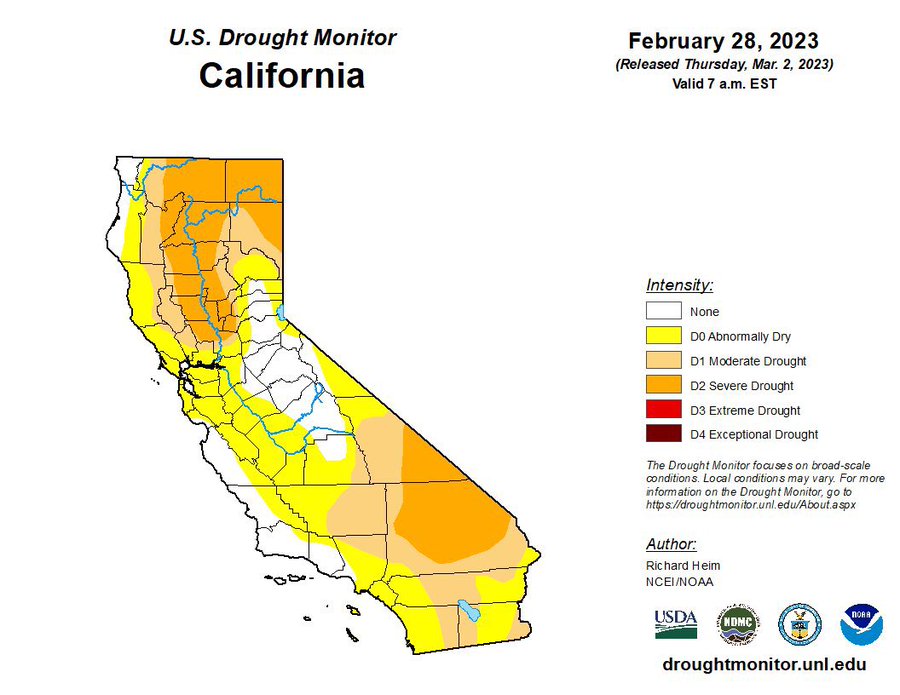
Even recent heavy storms in California haven’t brought the state out of drought, because the precipitation deficit is so big.
A car drives through a flooded road in Gilroy, Calif., in January. (Michael Ho Wai Lee/SOPA Images/LightRocket via Getty Images)
“I want to be clear that these storms — and the likely rain and snow we may get over the next few weeks — did not, nor will they fully, end the drought, at least not yet,” Yana Garcia, secretary of the California Environmental Protection Agency, said last Wednesday. “We’re in better shape than we were two months ago, but we’re not out of the woods.”
Just days earlier, Lake Powell, the second-largest U.S. reservoir, dropped to a new record low. Powell is created by a Colorado River dam along the Arizona-Utah border, and if the reservoir goes much lower, experts warn, water won’t be able to pass through it. Millions of people who rely on the Colorado would then lose access to their water supply.
“If you can’t get water out of the dam, it means everyone downstream doesn’t get water,” Brad Udall, a water and climate scientist at Colorado State University, told USA Today. “That includes agriculture, cities like Los Angeles, San Diego and Phoenix.” The hydroelectric power plant for which the dam was constructed would also cease to function.
When the current 23-year megadrought plaguing the American West began, Lake Powell and Lake Mead — the largest U.S. reservoir, also on the Colorado — were 95% full. Now, they’re one-quarter full, according to Udall.
Logs and driftwood on Sept. 8, 2022, near Hite, Utah, remain where they settled when Lake Powell was at its highest-ever water level. (David McNew/Getty Images)
In order to prevent what one California official calls “a doomsday scenario,” the Department of the Interior will have to impose reductions in water allotments for downriver users.
Scientists say that the underlying conditions — growing demand for water and naturally occurring periodic drought — are being exacerbated by climate change. Warmer temperatures cause more water to evaporate, making both droughts and heavy precipitation more extreme. Climate change makes droughts “more frequent, longer, and more severe,” according to the U.S. Geological Survey.
“It’s unfortunate that the largely natural occurrence of a drought has coincided with this increasing warming due to greenhouse gases,” Flavio Lehner, a professor of atmospheric sciences at Cornell University, said. “That has brought everything to a head much earlier than people thought it would.”
In Europe, an unusually warm, dry winter has forced ski resorts in the Alps to close for lack of snow, and left the canals of Venice running dry in Italy. Some of the city’s iconic gondolas are stuck in the mud. Europe experienced its third-warmest January on record, France has seen a record dry spell of 31 days without rain, and the Alps have received less than half their normal snowfall so far this winter.
Last Wednesday, Britain’s National Drought Group warned that one hot, dry spell would return England to the severe drought conditions it endured last summer.
Low water levels at Baitings Reservoir on Aug. 12, 2022, reveal an ancient packhorse bridge amid a heatwave in the U.K. at Ripponden, West Yorkshire. (Christopher Furlong/Getty Images)
The threat goes beyond tourism: A study published last month by researchers from Graz University of Technology in Austria warned that Europe’s drinking water supply has become “very precarious.” Much of Europe has been in a drought since 2018, and a review of satellite data of groundwater confirmed acute shortages in parts of France, Italy and Germany.
“A few years ago, I would never have imagined that water would be a problem here in Europe,” Torsten Mayer-Gürr, one of the researchers, said.
This development follows a summer of record-breaking heat waves and droughts that left thousands dead across the continent, as well as the worst wildfire season on record. Europe’s hot, dry summer coincided with acute droughts in the U.S. — even in normally wet regions like the Northeast — and in Asia. The dropping water levels revealed buried artifacts, including the wreckage of a German World War II warship in Serbia, dead bodies in Lake Mead and ancient Buddhist statues in China’s Yangtze River.
Last summer’s drought across the Northern Hemisphere was made 20 times more likely by climate change, according to an October 2022 study by World Weather Attribution, a group of international scientists who explore the link between global warming and the increasingly frequent and severe extreme weather events it causes.
An emaciated cow stands at the bottom of a water pan that has been dried up for 4 months, in Iresteno, a town bordering Ethiopia, on Sept. 1, 2022. (Yasuyoshi Chiba/AFP via Getty Images)
The worst impacts of ongoing drought are being felt in the Horn of Africa, where millions of residents in Ethiopia, Kenya and Somalia are contending with food insecurity due to poor harvests. The region faces a forecast of a sixth consecutive low rainy season this spring.
Meanwhile, it’s summer in the Southern Hemisphere, and crop yields are being diminished by drought there as well. Argentina is a leading exporter of soy and corn, but its production is being drastically reduced this year as extremely high temperatures exacerbate a drought.
Climate scientists say that adaptation to climate change-related droughts is essential, including reducing water usage and building new infrastructure, like aquifers, to better manage water resources.
During the month of January there were 367 encounters, more than the past 12 years of January totals combined, said Ryan Brissette in a press release for the Swanton border patrol.
The number of border patrol encounters in Swanton started to climb in July 2022. During the seven-month window through January 2023, there have been 2,070 instances of illegal crossings. In that same period, there were 258 the year prior and 225 the year before that.
Northern and Southern borders see uptick in rescues
The uptick is causing problems for officials, especially considering dangerously cold temperatures that have put border crossers’ and border control agents’ lives at risk. Brissette noted -4 degree temperatures and “life-saving aid” that was provided during encounters in Newport, Vermont, and Burke, New York.
“It cannot be stressed enough: not only is it unlawful to circumvent legal means of entry into the United States, but it is extremely dangerous, particularly in adverse weather conditions, which our Swanton Sector has in incredible abundance,” Swanton Sector Chief Patrol Agent Robert N. Garcia said in a press release.
The southern border has also seen an increase in rescues, as the U.S. places a renewed emphasis on rescuing migrants and historically high numbers of immigrants seek asylum at U.S. borders.
5,336 migrants rescued at southern border in fiscal year 2020.
12,857 migrants rescued at southern border in fiscal year 2021.
22,014 migrants rescued at southern border in fiscal year 2022, which ended in September.
In fiscal 2021, agents at the southern border tallied 568 migrant deaths, the highest ever recorded.
Most of the deaths (219) were attributed to “environmental exposure-heat” as people trek through blazing terrain in Arizona and Texas. Agents also counted 86 deaths as “water-related” as migrants try to cross canals or the swift-moving Rio Grande, which divides the U.S. and Mexico.
Immigration advocates and experts believe the border death toll is much higher, and the federal system for death data long failed to include many border deaths.
There are no clear-cut answers as to why people are crossing as the circumstances differ for each person or group, said Steven Bansbach, a public affairs officer for U.S. Customs and Border Protection. Many are being dropped off near the border by car and then proceeding across land on foot, he said.
https://flo.uri.sh/visualisation/12838349/embed
Among the border crossers are family groups that include infants and children who are particularly vulnerable to the cold. Bansbach said many are crossing at night while cold and sleep deprived, all of which can be disorienting.
Looking at the countries of origin of encounters involving the border patrol in Swanton, a vast majority are from Mexico. Among the 1,513 encounters from October through January, 945 originated from Mexico.
“They may be trying to find a path of least resistance to enter into the U.S.,” Bansbach surmised. “And they may know there’s a conundrum at the southwest border and so they may find that the northern border they may sneak across to have a better advantage.”
Grass-powered gas to heat homes for the first time
Telegraph reporters – February 26, 2023
Green gas will be made from grass material using anaerobic digestion – Ecotricity
Grass-powered gas is set to heat thousands of homes for the first time in the coming weeks.
Green energy firm Ecotricity is expected to begin supplying 5,300 homes from its plant near Reading in April.
Research has estimated that the grass biogas can reduce greenhouse gas emissions by nearly 90 per cent.
It is hoped the scheme can be scaled up to supply fuel to more homes around the country.
The £11 million mill uses bacteria to break down grasses and herbs, which absorb carbon dioxide while growing, in an anaerobic digester.
This produces biogas which is then “scrubbed” to remove some carbon dioxide and upgraded to biomethane for use in the gas network.
An organic fertiliser, which is intended to help grow more grass, is also produced.
Hopes for expansion
Homes in Berkshire will be supplied through the distribution company Southern Gas Networks.
Ecotricity owner Dale Vince hopes to expand across the country, building mills which minimise the use of fossil fuels while avoiding damage to the environment, and boost energy security.
Mr Vince, 61, said: “We are ready to go and once the gas supply company’s measuring and checking equipment is in place we expect to start in April.”
Green gas has previously been made from food waste or “high energy” crops such as maize, but both face sustainability issues and problems with a lack of scale.
Maize, for example, is fertiliser-hungry, attracts birds that struggle to survive in it, and is harvested around autumn, leaving topsoil run-off.
“Our mix of grass with herbs and clovers makes carbon neutral gas, pulling carbon out of the atmosphere,” said Mr Vince. “It’s a cycle of carbon rather than a net emission.
“When you burn fossil fuel it’s carbon from millions of years ago that gets released into the atmosphere.
“We’re buying the grass from farmers. Instead of them using it to grow for animals, they’re selling it to us.
“It’s better for farmers, they get a better price and more security because animal agriculture is a super marginal business. It only exists with massive subsidies.”
Reduce greenhouse gas emissions by 90pc
On average, the amount of grass being used initially could be cultivated every year from around 3,000 acres to provide over 48 million kWh of gas, while saving nearly 12,000 tonnes of carbon dioxide emissions – but the ultimate goal is to expand on a national scale.
A report by Imperial College Consultants estimated the UK has 6.46 million hectares of suitable grassland not involved in food production, enough for 5,400 green gas mills to provide up to 236.5TWh – sufficient to heat 98.8 per cent of British homes if made energy efficient.
The research estimated that gas made from grass can reduce greenhouse gas emissions by nearly 90 per cent when compared to the current use of North Sea gas and synthetic fertilisers.
The report also said the Government’s national air source heat pump roll-out – its alternative plan for heating homes without carbon emissions – would cost six times as much as a green gas roll out and would not be possible in 20 per cent of British homes.
Asked about Ecotricity’s biomethane project, a Department for Energy Security and Net Zero spokesman said: “Initiatives like this show how the UK is leading in the development of innovations in green technologies that can help increase our energy security, tackle climate change and bring down people’s bills.”
Southern Gas Networks said: “We’ve partnered with Ecotricity to deliver a biomethane to grid project at a site in Farley Hill near Reading. The project will supply 5,300 nearby properties with renewable green gas for heat and power, helping to reduce each household’s annual carbon emissions by an equivalent of 2.2 tonnes.
“Our role is to commission the gas entry unit infrastructure at the plant. This equipment will measure the flow of gas into our network and ensure it meets the required specification. Approximately 700m3 of biomethane-powered renewable energy will be injected into our local intermediate pressure network every hour.”
A National Gas Transmission spokesman: “Biomethane will play an important supporting role in the journey to Britain achieving net zero.”
In a California Town, Farmworkers Start From Scratch After Surprise Flood
Soumya Karlamangla and Viviana Hinojos – February 26, 2023
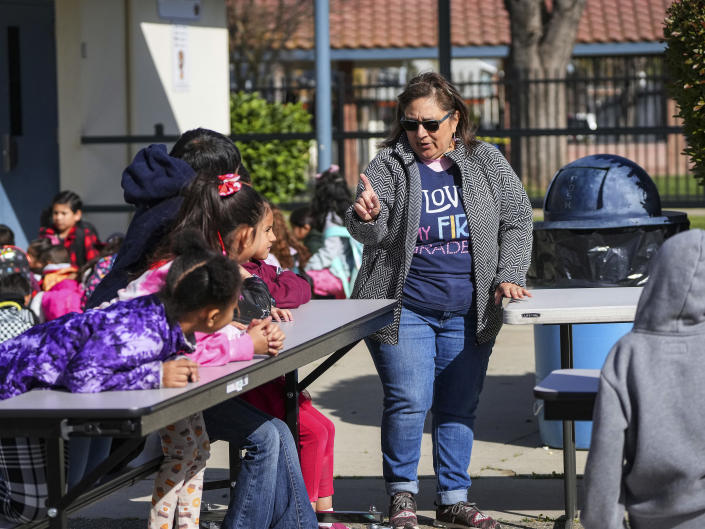
A teacher holds class on a playground at Planada Elementary School because classrooms in the building were flooded, in Planada, Calif. on Feb. 14, 2023. (Jim Wilson/The New York Times)
PLANADA, Calif. — Until the floodwaters came, until they rushed in and destroyed nearly everything, the little white house had been Cecilia Birrueta’s dream.
She and her husband bought the two-bedroom fixer-upper 13 years ago, their reward for decades of working minimum-wage jobs, first cleaning houses in Los Angeles and now milking cows and harvesting pistachios in California’s Central Valley.
The couple replaced the weathered wooden floors, installed a new stove and kitchen sink, and repainted the living room walls a warm burgundy. Here, they raised their three children, the oldest now at the University of California, Davis. They enjoyed tomatoes, peaches and figs from neighbors who worked on the nearby farms.
Birrueta and her husband felt content. Until last month. Until the floodwaters came.
A brutal set of atmospheric rivers in California unleashed a disaster in Planada, an agricultural community of 4,000 residents in the flatlands about an hour west of Yosemite National Park. During one storm in early January, a creek just outside of town burst through old farm levees and sent muddy water gushing into the streets.
For several days, the entire town looked like a lagoon. Weeks after record-breaking storms wreaked havoc across California and killed at least 21 people, some of the hardest-hit communities are still struggling to recover.
The flood ruined the two cars owned by Birrueta and her family and destroyed most of their clothes. The walls with the burgundy paint that she had carefully picked out had rotted through. Their house may need to be demolished.
Birrueta, her husband and their 14-year-old son and 10-year-old daughter had to move into a camp that typically houses migrant farmworkers, who arrive each spring with few belongings and the hope of building a life like the Birruetas had. There, 41 families from Planada are staying in long beige cabins and relying on space heaters for warmth because the camps lack furnaces.
“We came as immigrants, we started with nothing,” said Birrueta, 40, who was born in Mexico. “We bought a place of our own that we thought would be safe for our kids, and then we lost it. We lost everything.”
Nine miles east of Merced in California’s agricultural heartland, Planada’s wide streets are dotted with bungalows and lead to a central park shaded by towering spruce and elm trees. Less than 2 square miles, Planada was created in 1911 to be an idyllic, planned farming community — its name means “plain” in Spanish, a nod to its fertile, low-lying lands — but was eventually abandoned by its Los Angeles developers.
The quiet town, surrounded by almond orchards and cornfields, has since become a desirable place for farmworkers to settle with their families. When California farmworkers marched through Planada last summer on their way to the state Capitol in Sacramento, hundreds of children lined the streets to cheer them on.
The recent floods dealt a painful blow to a community in which more than one-third of households are impoverished. Planada is more than 90% Latino and overwhelmingly Spanish-speaking. Roughly one-fourth of the residents are estimated to be immigrants living in the country illegally, making them ineligible for some forms of disaster relief.
Agricultural workers in California are often on the front lines of catastrophes. They worked during the early, uncertain days of the COVID-19 pandemic, have endured record heat waves and toiled in the smoke-choked air that gets trapped in the Central Valley during wildfires.
During the recent floods, tens of thousands of farmworkers most likely lost wages because of water damage to California’s crops, compounding their already precarious financial situations, said Antonio De Loera-Brust, a spokesperson for the United Farm Workers of America.
“The very workers who put food on our table are getting hot meals from the Salvation Army,” said De Loera-Brust. “Whether California is on fire or underwater, the farmworkers are always losing.”
On a recent morning in Planada, huge piles of furniture were stacked more than 6 feet high along the curb, as if standing guard in front of each home. Once cherished possessions had become trash: A child’s tricycle. A green velvet armchair. An engraved wooden crib.
When Birrueta returned to her home after evacuating Jan. 9, it had a sour smell inside, she said. A floral rug in her daughter’s room that had once been white and blue appeared black after being caked in mud. The girl rushed to grab her soaked toys, some of them recent Christmas gifts. Birrueta had to wrest them from her hands. They threw away her pink wooden dollhouse, a Build-a-Bear she called Rambo, her beloved collection of Dr. Seuss books.
“I don’t really know how to talk to my kids about it,” Birrueta said, choking up.
Birrueta applied for relief from the Federal Emergency Management Agency but has yet to hear back. Although Planada is in a flood zone, most homeowners said they couldn’t afford to pay thousands of dollars for flood insurance. Besides, they said, so many years of severe heat and drought made wildfires seem a much greater concern than a deluge.
Maria Figueroa, a FEMA spokesperson, said the agency would provide, at most, $41,000 per flooded household. The funds are intended to jump-start recovery, not cover a full rebuild. “We’re not an insurance agency,” she said.
In 1910, Los Angeles real estate developer J. Harvey McCarthy decided Planada would be his “city beautiful,” a model community and an automobile stop along the road to Yosemite. “The town will be laid out similar to Paris,” The San Luis Obispo Daily Telegram reported at the time.
An infusion of money brought Planada a bank, hotel, school, church and its own newspaper, the Planada Enterprise, by the next year. But McCarthy eventually abandoned the community when he ran out of funds, leaving its settlers to pick up the pieces.
One thing wasn’t mentioned in advertisements for Planada: the floods. On Feb. 3, 1911, The Merced County Sun reported that during a 48-hour downpour, a creek overflowed its banks and that Planada was “under water.”
More than a century later, Maria Soto, 73, was sleeping when her grandson, who lives in the house behind hers, banged on her door around 2 a.m. A family member was driving a pickup truck through Planada to rescue their relatives, dozens of whom lived there.
Soto clambered onto the truck bed, and her feet dangled in the rising waters as they fled. When the engine stalled momentarily, she was frightened but didn’t tell anyone else that she didn’t know how to swim.
At her low-slung, peach-colored home, with an overgrown avocado tree out front and wind chimes hanging from the eaves, water breached the roof and poured down the walls.
Black patches of mold have begun to spread inside, so she is living at her daughter’s house next door while trying to scrape together money on her fixed income for the repairs.
“This is where I raised my children, and it’s always been dry,” said Soto, who in the late 1970s moved to Planada with her husband, who picked lettuce. “We weren’t prepared. No one was prepared.”
Disasters only exacerbate the health dangers that farmworkers face. Mold in flooded homes, for example, can prompt symptoms of asthma and chronic obstructive pulmonary disease, which are more common in low-income communities. Farmworkers often battle pesticide exposure and, even in good times, can only afford substandard housing.
“A small community like Planada, that has so many low-wage workers, you can only imagine the extent to which these problems were already existing,” said Edward Flores, an associate professor of sociology at University of California Merced and who co-wrote a new study revealing California farmworkers’ poor living conditions.
The flood’s impacts extend beyond inundated homes. Planada Elementary School lost 4,000 books as well as student desks, beanbag chairs and rugs. Hundreds of students had to be relocated to a nearby middle school.
“We were doing a really good job recovering from COVID,” said José L. González, superintendent of the Planada Elementary School District. “This just feels like we’re cut off at the knees again.”
Another major storm arrived this past week in California, bringing rain and snow, but Planada residents have been spared from further disaster.
Birrueta used to tuck sentimental items into suitcases that she stored in her son’s closet. Old photographs of relatives in Mexico, including of her father, who recently died. Socks she crocheted for her children when they were newborns. Pictures of her oldest daughter’s birthday celebrations, from an era before iPhones.
The floodwaters drenched those suitcases and everything inside. Still, Birrueta said she was grateful because her family safely escaped the floods and that they have a roof over their heads, albeit temporarily. Families can stay in the migrant camps until March 15, after which the county may provide other lodging.
Birrueta and her husband plan to rebuild their home in Planada.
“We started with nothing,” she said. “So in a way, we know how to start over again.”
Rail Industry Pushes Sensors Over Brakes After Ohio Train Crash
Thomas Black – February 26, 2023
(Bloomberg) — The train derailment that spilled toxic chemicals into a small Ohio town has revived a long-running debate about railroad safety — and some industry players think they have just the thing to resolve it.
The Feb. 3 crash of the Norfolk Southern Corp. train in East Palestine, Ohio, has renewed a push for railroads to adopt electronic brakes that could help prevent a malfunctioning train from endangering people and property. Electronically controlled pneumatic, or ECP, brakes have been touted for their capacity to bring trains to a halt in shorter distances and prevent dangerous pileups.
The Biden administration has blamed industry stonewalling for blocking regulations that would have mandated use of the systems on some trains — even though it isn’t clear that ECP brakes would’ve done much to mitigate an accident similar to the one in Ohio, and the proposed rules wouldn’t have applied to the train that crashed.
The railroad industry has found itself in a tight spot as the political furor around the accident grows, with former President Donald Trump turning up in East Palestine, and the derailment becoming a talking point on cable news and Capitol Hill. The episode has aggravated fears about the safety of sending chemicals and other hazardous materials over the rails, and raised the specter of new regulation at a time when railroads are coping with restive workers and annoyed customers.
Installing ECP brakes that the Biden administration and safety advocates favor would be expensive and cumbersome for a business beset by complaints about delays and lackluster service. The brakes need to be installed on each car to work properly — a daunting prospect for an industry with some 1.5 million cars on the tracks and little idle capacity.
A coalition that includes railcar makers, shippers and two large railroads say they have a different idea. They want to place sensors on railcars that could flag faulty equipment immediately to a train’s crew and others monitoring remotely. The system is being tested on 400 railcars and could be available commercially by the end of this year, according to the group, which calls itself RailPulse.
Such sensors could potentially catch problems like the overheated wheel bearing that likely caused the East Palestine wreck. Electronically controlled brakes, on the other hand, may not have even done much to mitigate the derailment if they were installed, based on a 2017 study by the National Academy of Sciences.
Notably, a sensor apparatus also would likely be much less expensive for the industry to put into place. RailPulse says its system would cost about $400 to $900 per railcar.
Smart Railcars
The use of remote sensing technology on the railroads isn’t entirely new. Currently, sensors known as wayside heat detectors placed along the tracks screen train cars for defects — and they sniffed out the trouble in Ohio. Wayside detectors were voluntarily adopted by railroads to reduce accidents; Norfolk Southern said it has nearly 1,000 of them.
According to a preliminary report by the National Safety Transportation Board, Norfolk Southern’s wayside detectors in Ohio were working, but caught the overheated wheel too late. The NTSB found that a wayside detector about 20 miles before the crash site measured the wheel bearing at 103 degrees Fahrenheit above ambient temperature — hot, but below a level that calls for the crew to stop and take a look.
However, the next detector, just ahead of the crash site, recorded a wheel temperature at 253 degrees above, a critical level. The sensor sounded an alarm, but it was too late. The wheel failed and caused 38 of the train’s 149 railcars to careen off the rails.
Sensors mounted directly on railcars could diagnose the issue sooner and buy critical time, backers say. Railcars will likely have multiple sensors in the near future that can detect anything from open doors to signs that equipment is in danger of failing, said David Shannon, general manager of RailPulse.
“Our objective is to make railcars smart,” Shannon said.
The group’s pilot program, which is testing five types of sensors, will be on 1,000 railcars by this summer, he said, and should be ready for real-world use by the end of this year. RailPulse plans to provide a subscription service to transmit the data to the cloud, and is counting on manufacturers to design the sensors the industry needs.
ECP Debate
Norfolk Southern was on the forefront of testing ECP brakes before the US Department of Transportation decided to require them on high hazard flammable trains in 2015. The company opposed the mandate because of cost, the brakes’ reliability and the inability to mix locomotives and railcars that didn’t have the system.
One of the biggest drawbacks of ECP brakes is that all the railcars on a train must have them or the system doesn’t work, making it impossible to phase in gradually. The rule followed a spate of derailments by trains shuttling crude oil from fracking hotspots where there were no pipelines to refineries.
As part of an infrastructure bill in 2015, Congress required the transportation department to justify the need for ECP braking. The National Academy of Sciences was ordered to examine computer modeling the department used to support its position that they had a significant safety advantage over conventional brakes.
After tests at a Norfolk Southern rail yard in Conway, Pennsylvania, and the New York Air Brake Facility in Watertown, New York, the academy said in a 2017 report that the department’s efforts to validate its modeling “do not instill sufficient confidence in DOT’s comparison of the estimated emergency performance of ECP braking systems” with other systems. That paved the way for the Trump administration to rescind the mandate.
In a Feb. 19 letter to Norfolk Southern Chief Executive Officer Alan Shaw, Transportation Secretary Pete Buttigieg faulted the industry for opposing ECP brakes. “Rather than support these efforts to improve rail safety, Norfolk Southern and other rail companies spend millions of dollars in the courts and lobbying members of Congress to oppose common-sense safety regulation,” Buttigieg wrote.
However, others in the federal government have pushed back on the idea that the ECP mandate would have prevented the Ohio crash.
“Some are saying the ECP (electronically controlled pneumatic) brake rule, if implemented, would’ve prevented this derailment. FALSE,” NTSB Chairman Jennifer Homendy said in a Feb. 16 tweet. She went on to explain why the Norfolk Southern train wasn’t designated as high hazard flammable. “This means even if the rule had gone into effect, this train wouldn’t have had ECP brakes.”
Uphill Battle
The prospect that regulators would swiftly put the electronic-braking rules in place following the Ohio crash is remote. To reinstate the mandate would be an uphill battle, a senior White House official acknowledged during a Feb. 17 briefing. The rulemaking process takes years and it would be difficult to pull off after Congress weighed in against the technology.
Similarly, persuading the entire railroad industry to go along with RailPulse’s sensors could be a tall order.
Workers are wary of new safety technologies that the industry touts, especially if they are aimed at replacing human inspections, said Mark Wallace, vice president of the Brotherhood of Locomotive Engineers and Trainmen. For the past five years, the railroads’ first priority has been profit, not safety, Wallace said. Operating profit margin for North American railroads increased to 39% last year from 34% in 2017.
“If you’re going to implement the technology, then you have to maintain the technology and you have to have somebody in place to make sure that it’s working properly,” he said.
Additionally, railcars are mostly owned by shippers and by leasing companies. Shippers are pushing to be able to track their freight cars just as they can for trailers on trucks, the railroads’ main competitor for freight. Some large railroads, including CSX Corp. and BNSF Railway, aren’t part of the coalition.
In Less Than a Decade, You Won’t Be Able To Afford a Home in These Cities
Joel Anderson – February 25, 2023
dszc / iStock.com
Rising home values can quickly transition a reasonable housing market into the type of real estate monster that has consumed places like the San Francisco Bay Area and New York City. While the idea of affordable housing in an urban center isn’t implausible for plenty of Americans living in some areas, that’s rapidly changing in many places.
GOBankingRates conducted a study to determine which major U.S. cities are on track to lose their label of affordability. GOBankingRates took the overall U.S. median home value and projected its growth over 10 years using Zillow’s September 2022-23 one-year forecast. This projection was then compared to the projections of 537 U.S. cities that currently have home prices below the national median of $356,026, with those surpassing the national median in the next 10 years (plus its projected growth rate over the same period) being deemed “not affordable.”
GOBankingRates notes that projecting into the future based on a single year’s growth rate might paint an unfair picture in markets where the current rate is an anomaly. Additionally, Zillow’s estimated home values don’t necessarily reflect the list prices or sale prices in each market.
Still, identifying the areas that are outpacing the national average for growth can help shed light on the cities where you should buy a home sooner rather than later. If you end up living in one of these cities 10 years down the line, you might want to check out other cities with more affordable housing.
will_snyder_ / Getty Images/iStockphoto
Roseburg, Oregon
August 2022 home value: $321,807
One-year projected growth rate: 20.4%
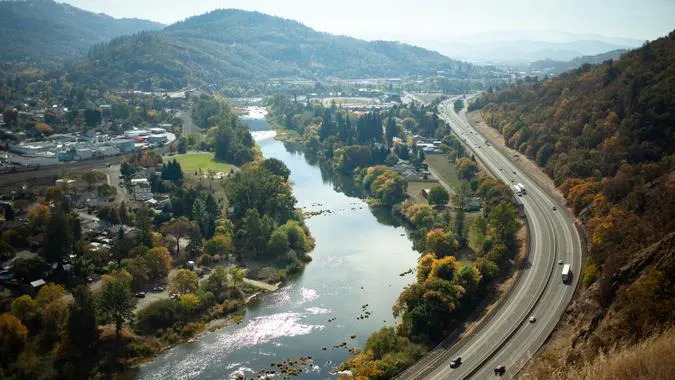
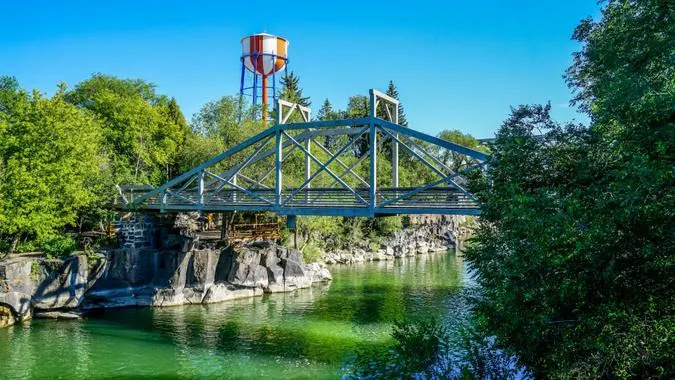
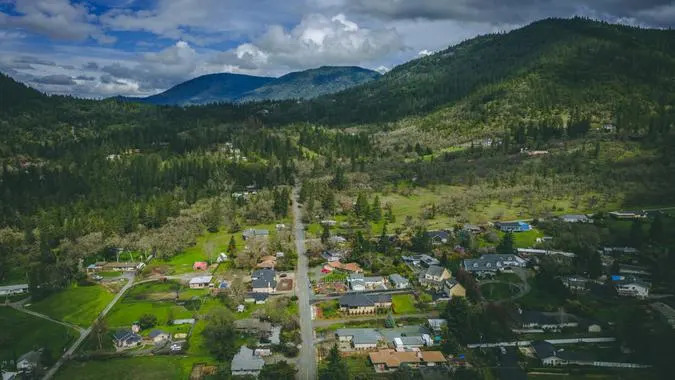
Roseburg is in the Hundred Valleys of the Umpqua in southwestern Oregon, known for having seasonal, but pleasant, temperatures – never too hot or too cold. It sits 123 miles north of the California border.
kaceyb / Getty Images/iStockphoto
When It Will Become Too Expensive
Year: 2023
Projected home value: $387,456
U.S. median projected home value: $382,019
Difference in value: $5,437
2032 projected home value: $2,059,967
Steven Liveoak / Shutterstock.com
Auburn, Alabama
August 2022 home value: $321,643
One-year projected growth rate: 19.4%
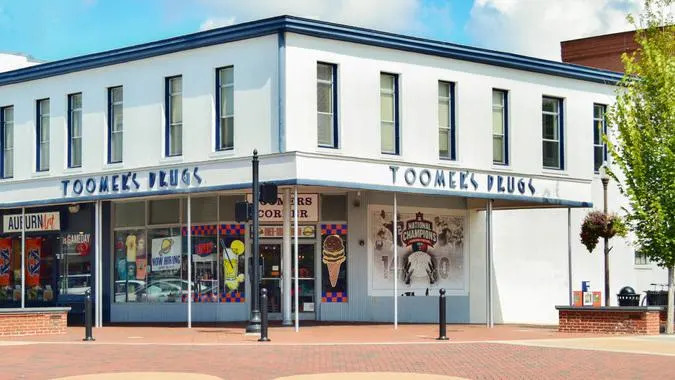
Auburn, in the eastern part of central Alabama, is just 35 miles west of Columbus, Georgia, and a 3 ½-hour drive from vacation spots along the Gulf of Mexico. Auburn University is the city’s largest employer, with about 7,100 people working there
disorderly / Getty Images/iStockphoto
When It Will Become Too Expensive
Year: 2023
Projected home value: $384,042
U.S. median projected home value: $382,019
Difference in value: $2,023
2032 projected home value: $1,894,163
DenisTangneyJr / Getty Images/iStockphoto
Fayetteville, Arkansas
August 2022 home value: $307,909
One-year projected growth rate: 23.1%
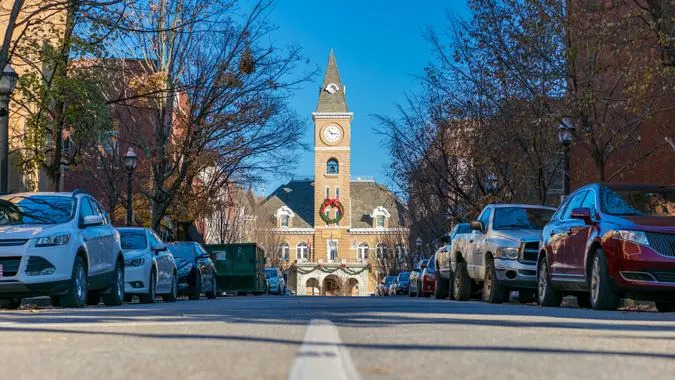
Another college town, Fayetteville is home to the University of Arkansas. Bill and Hillary Clinton called Fayetteville home before he was elected the state’s governor, and then president of the United States, and the home they lived in is now a museum preserving memories of their time in the city.
Shutterstock.com
When It Will Become Too Expensive
Year: 2024
Projected home value: $466,593
U.S. median projected home value: $448,108
Difference in value: $18,485
2032 projected home value: $2,460,384
SeanPavonePhoto / iStock.com
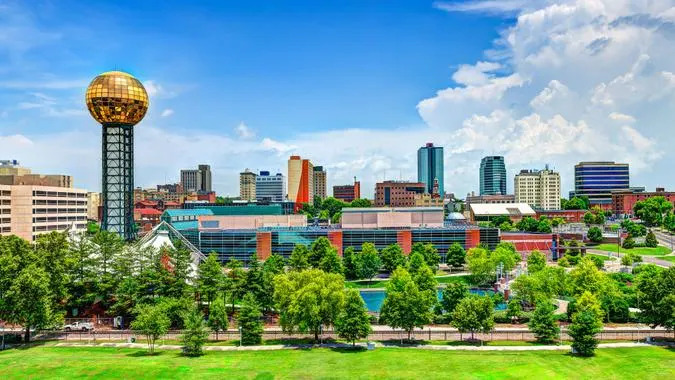
Knoxville, Tennessee
August 2022 home value: $299,342
One-year projected growth rate: 23.1%
Knoxville, Tennessee sits at the foothills of Great Smoky Mountains National Park, and is a diverse city known for celebrating its many different ethnicities in festivals and cultural events. This city of over 192,000 people is also home to the University of Tennessee and the Knoxville Ice Bears professional hockey team.
Shutterstock.com
When It Will Become Too Expensive
Year: 2024
Projected home value: $453,611
U.S. median projected home value: $448,108
Difference in value: $5,503
2032 projected home value: $2,391,928
Patricia Elaine Thomas / Shutterstock.com
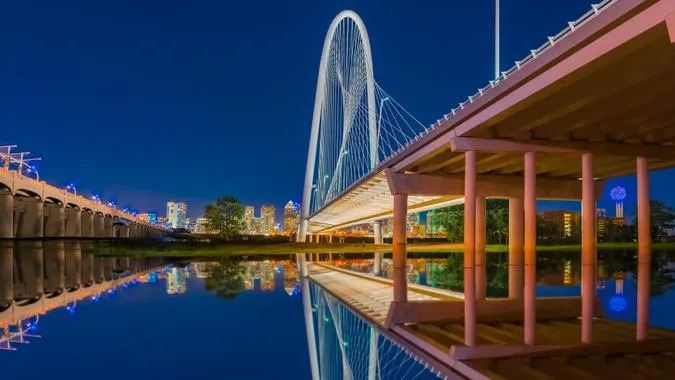
Dallas, Texas
August 2022 home value: $308,661
One-year projected growth rate: 22.4%
Dallas, with 1.3 million residents, is the third-largest city in Texas but also the ninth-largest in the United States. It boasts many firsts. The nation’s first planned shopping center (Highland Park Village Shopping Center) and convenience store (7-Eleven) opened in Dallas, and the frozen margarita and precursor to the microchip were invented there.
Trong Nguyen / Shutterstock.com
When It Will Become Too Expensive
Year: 2024
Projected home value: $462,429
U.S. median projected home value: $448,108
Difference in value: $14,321
2032 projected home value: $2,329,678
Chris Rubino / Shutterstock.com
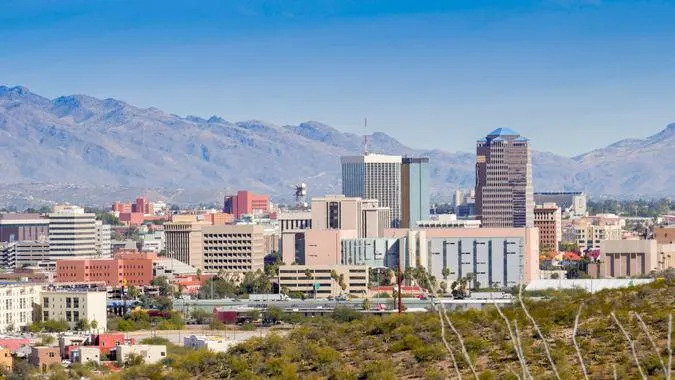
Tucson, Arizona
August 2022 home value: $307,232
One-year projected growth rate: 21.5%
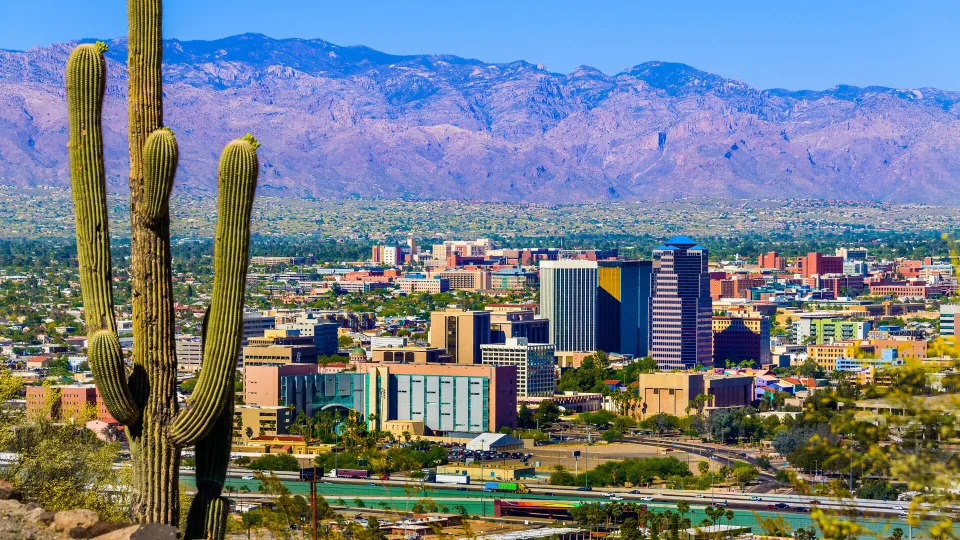
Tucson is an hour north of the border with Mexico, and it lays claim to some of the best Mexican food in the U.S. Start on 12th Avenue in the city to begin your tour of what is called The Best 23 Miles of Mexican food.
Tim Roberts Photography / Shutterstock.com
When It Will Become Too Expensive
Year: 2024
Projected home value: $453,544
U.S. median projected home value: $448,108
Difference in value: $5,436
2032 projected home value: $2,153,918
chapin31 / iStock.com
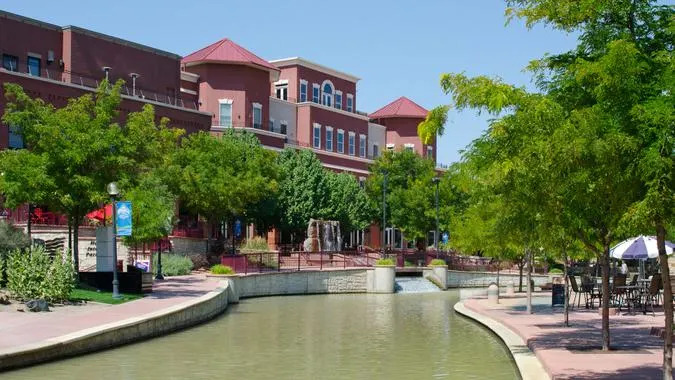
Pueblo, Colorado
August 2022 home value: $291,995
One-year projected growth rate: 22.6%
A city of about 112,000 people, Pueblo is located along the Arkansas River in Colorado, which once was the boundary between the U.S. and Mexico. The Colorado State Fair has been held in Pueblo since 1872.
J. Michael Jones / Shutterstock.com
When It Will Become Too Expensive
Year: 2025
Projected home value: $538,080
U.S. median projected home value: $525,631
Difference in value: $12,449
2032 projected home value: $2,240,166
Shutterstock.com
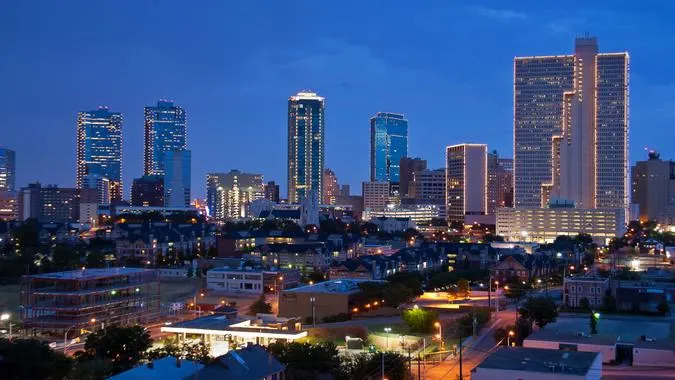
Fort Worth, Texas
August 2022 home value: $292,963
One-year projected growth rate: 22.4%
A city of about 920,000, Fort Worth grew by more than 175,000 people between the censuses of 2010 and 2020. Fun fact: 60 percent of America’s paper money is printed at the U.S. Bureau of Engraving and Printing Western Currency Facility in Fort Worth.
Christopher Boswell / Shutterstock.com
When It Will Become Too Expensive
Year: 2025
Projected home value: $537,226
U.S. median projected home value: $525,631
Difference in value: $11,595
2032 projected home value: $2,211,195
Susilyn / Shutterstock.com
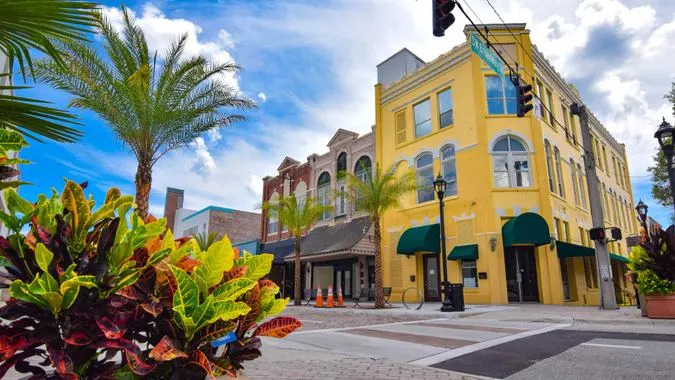
Lakeland, Florida
August 2022 home value: $263,818
One-year projected growth rate: 25.6%
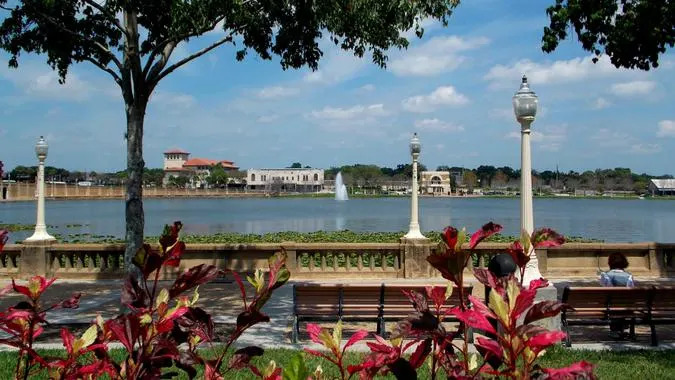
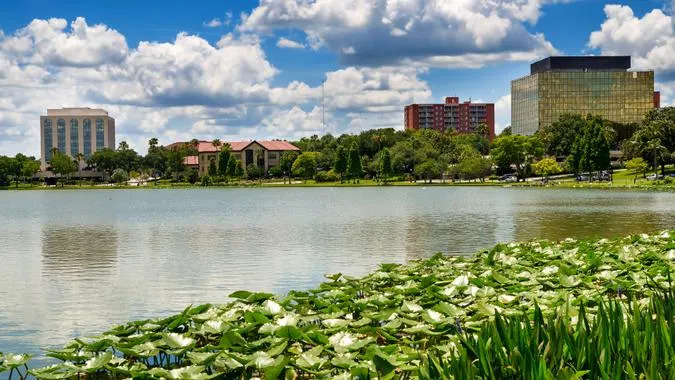
Lakeland is located along Interstate 4 between Tampa and Florida. It’s name is appropriate. Lakeland has 38 named lakes within its 74.4 square miles.
Shutterstock.com
When It Will Become Too Expensive
Year: 2026
Projected home value: $656,543
U.S. median projected home value: $616,565
Difference in value: $39,978
2032 projected home value: $2,577,513
Shutterstock.com
Daytona Beach, Florida
August 2022 home value: $258,118
One-year projected growth rate: 25.5%
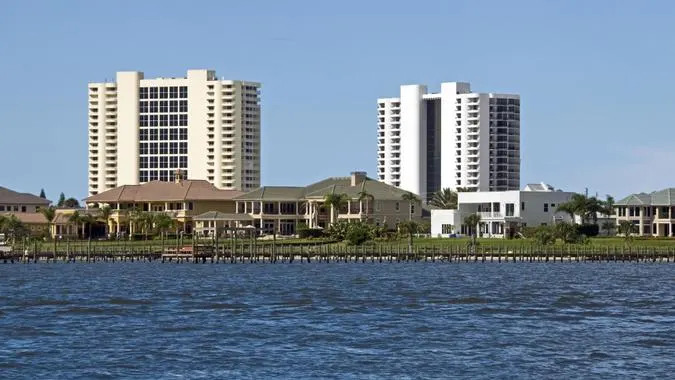
Daytona Beach is known as the home of the Daytona International Speedway and the Daytona 500, but even amateur drivers have a spot in the city. Visitors are allowed to drive – slowly – along designated areas of the 23-mile-long white-sand beaches.
Shutterstock.com
When It Will Become Too Expensive
Year: 2026
Projected home value: $640,314
U.S. median projected home value: $616,565
Difference in value: $23,749
2032 projected home value: $2,501,817
Arizona: 3.00% APY
Yuma, Arizona
August 2022 home value: $266,546
One-year projected growth rate: 24.1%
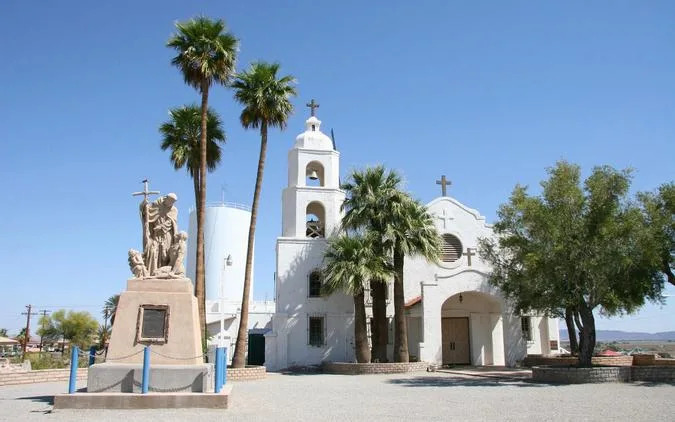
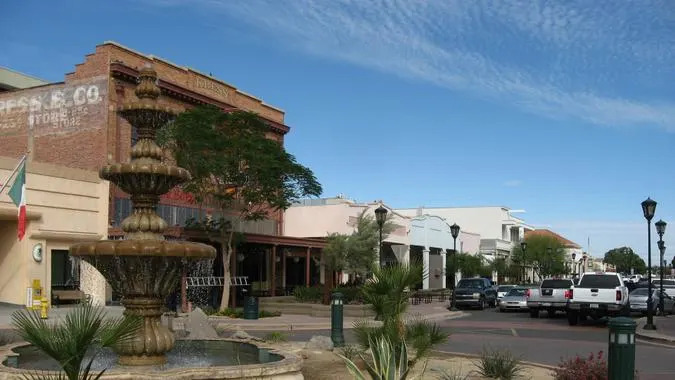
Yuma has about 95,000 residents, and there’s a good many of them help to put some of the food on your table. According to the city’s tourism website, Yuma is the “winter vegetable capital of the world” and produces 91% of the leafy greens served in North America each winter. Instead of watching the ball drop on New Year’s Eve, you can watch the Iceberg Lettuce Drop.
Ken Lund / Flickr.com
When It Will Become Too Expensive
Year: 2026
Projected home value: $632,207
U.S. median projected home value: $616,565
Difference in value: $15,642
2032 projected home value: $2,309,351
Brian Stansberry / Wikimedia Commons
Crossville, Tennessee
August 2022 home value: $262,886
One-year projected growth rate: 24.1%
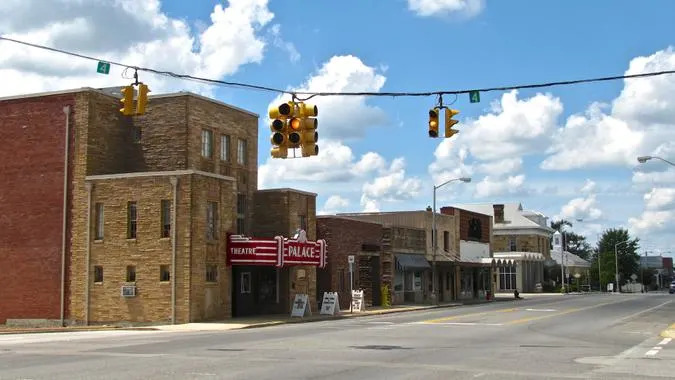
In 12,000-resident Crossville, residents can test their physical and mental skills. Known as the Golf Capital of Tennessee, it has nine courses. And, Crossville is the headquarters of the United States Chess Federation, too.
Swarmcatcher / Getty Images/iStockphoto
When It Will Become Too Expensive
Year: 2026
Projected home value: $623,526
U.S. median projected home value: $616,565
Difference in value: $6,961
2032 projected home value: $2,277,641
B Brown / Shutterstock.com
Pocatello, Idaho
August 2022 home value: $289,072
One-year projected growth rate: 21.6%
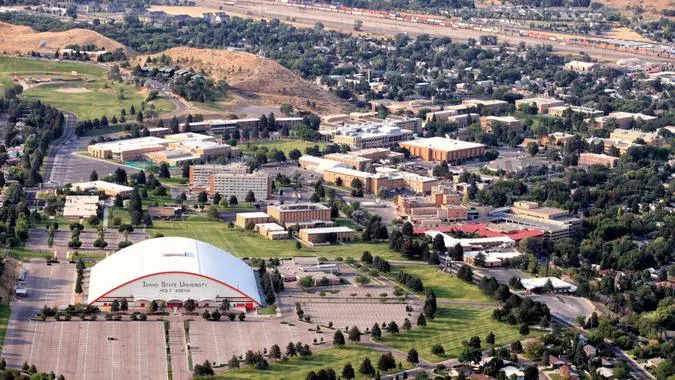
Pocatello is in the southeastern portion of Idaho at an altitude of 4,448 feet. Home of Idaho State University, the city is along the Oregon Trail, in the western foothills of the Rocky Mountains.
Ric Schafer / Shutterstock.com
When It Will Become Too Expensive
Year: 2026
Projected home value: $632,034
U.S. median projected home value: $616,565
Difference in value: $15,469
2032 projected home value: $2,043,345
virsuziglis / Getty Images/iStockphoto
Jacksonville, Florida
August 2022 home value: $281,915
One-year projected growth rate: 21.8%
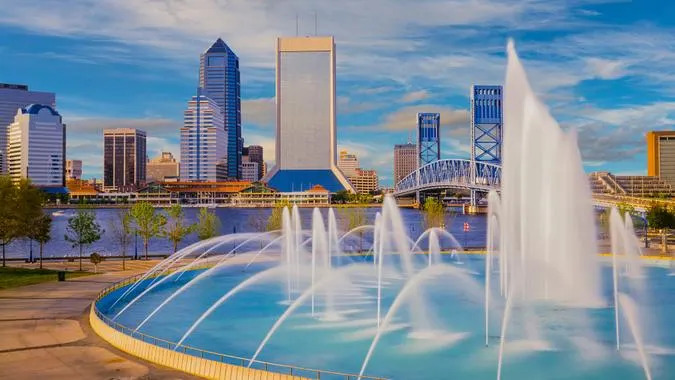
At 840 square miles, Jacksonville is the largest city in the continental United States in terms of land mass. About 950,000 people live in the city – almost twice the amount of residents of Florida’s second-largest city in terms of population, Miami.
Ron_Thomas / Getty Images/iStockphoto
When It Will Become Too Expensive
Year: 2026
Projected home value: $620,451
U.S. median projected home value: $616,565
Difference in value: $3,886
2032 projected home value: $2,025,774
Ocala, Fla
Ocala, Florida
August 2022 home value: $230,684
One-year projected growth rate: 25.6%
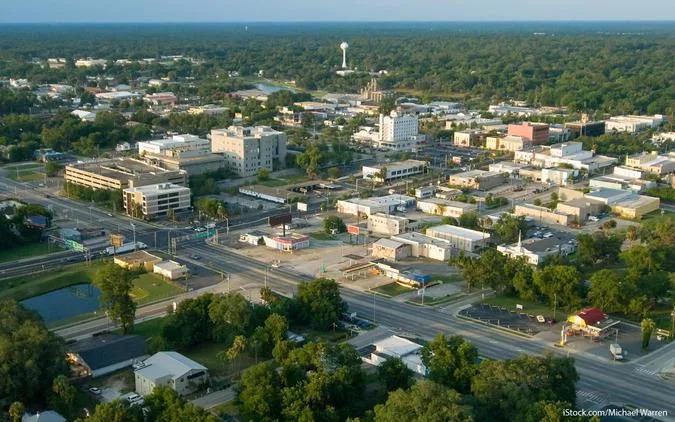
Ocala, the first town in Marion County in the early 1840s, has preserved much of its past in the Ocala Historic Downtown Square. Boutiques, restaurants, galleries and more fill the spaces. About 64,000 people live in Ocala.
Michael Warren / Getty Images/iStockphoto
When It Will Become Too Expensive
Year: 2028
Projected home value: $905,639
U.S. median projected home value: $848,350
Difference in value: $57,289
2032 projected home value: $2,253,792
Lorraine Boogich / Getty Images
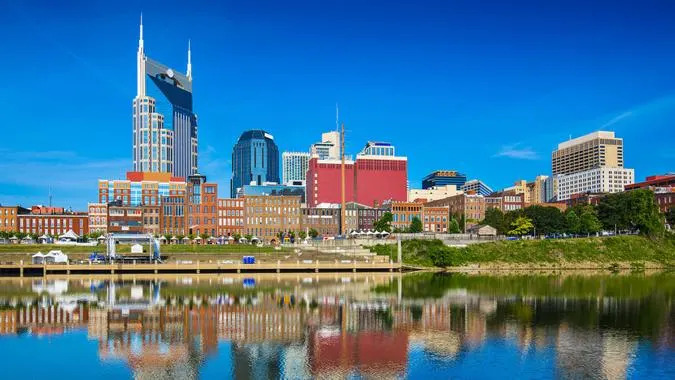
Cookeville, Tennessee
August 2022 home value: $262,204
One-year projected growth rate: 22.4%
Incorporated in 1903, Cookeville sits almost midway between two of Tennessee’s biggest cities – 101 miles west of Knoxville and 79 miles east of Nashville. Fun fact: According to the local visitor’s bureau, Cookeville is within a day’s drive of 75% of the nation’s population.
ESB / Shutterstock.com
When It Will Become Too Expensive
Year: 2028
Projected home value: $881,714
U.S. median projected home value: $848,350
Difference in value: $33,364
2032 projected home value: $1,979,035
Sean Pavone / Shutterstock.com
Athens, Georgia
August 2022 home value: $279,410
One-year projected growth rate: 20.3%
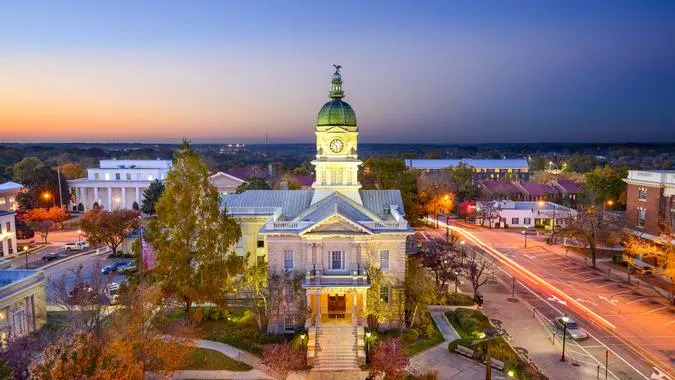
Athens, with a population of 127,300, is 60 miles northeast of Atlanta. The home of the University of Georgia, the city is beaming with pride. Their beloved Bulldogs won the College Football Playoff national championship following the 2021 season – their first since 1980.
Sean Pavone / Shutterstock.com
When It Will Become Too Expensive
Year: 2029
Projected home value: $1,018,829
U.S. median projected home value: $995,115
Difference in value: $23,714
2032 projected home value: $1,773,774
Manuela Durson / Shutterstock.com
Klamath Falls, Oregon
August 2022 home value: $280,201
One-year projected growth rate: 19.9%
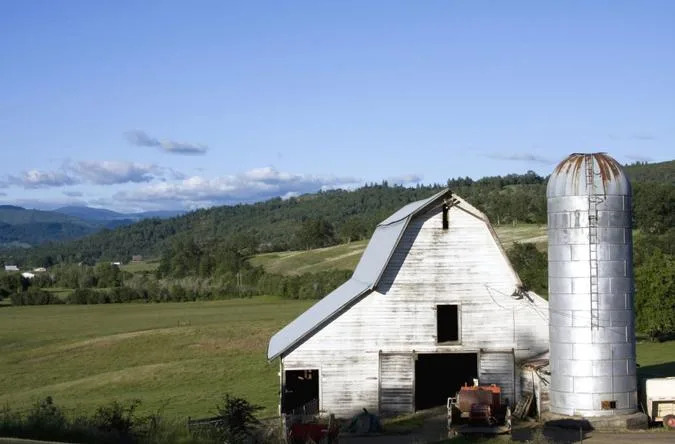
Klamath Falls is in the south-central part of Oregon, just north of the California border. The city has a population of nearly 22,000, according to the 2020 U.S. Census. The Klamath Falls website reports the city has the highest concentration of bald eagles in the Pacific Northwest.
Oregon: 66.67 Hours a Month to Afford
When It Will Become Too Expensive
Year: 2029
Projected home value: $998,169
U.S. median projected home value: $995,115
Difference in value: $3,054
2032 projected home value: $1,720,527
Sean Pavone/iStockPhoto
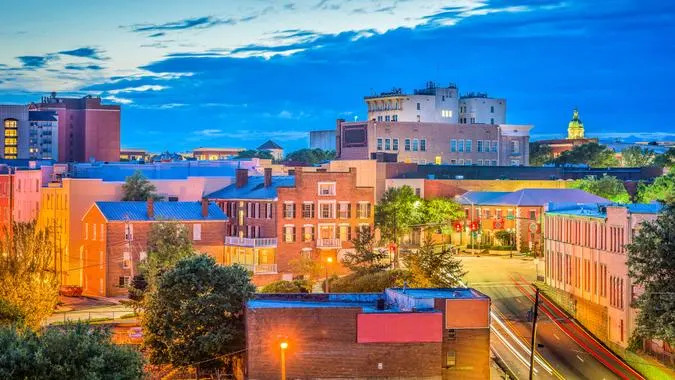
Savannah, Georgia
August 2022 home value: $246,657
One-year projected growth rate: 22%
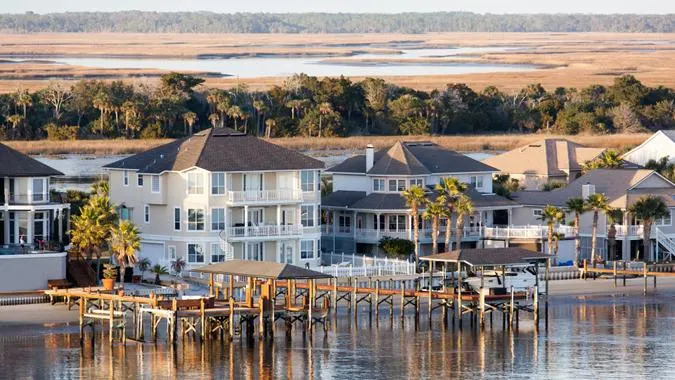
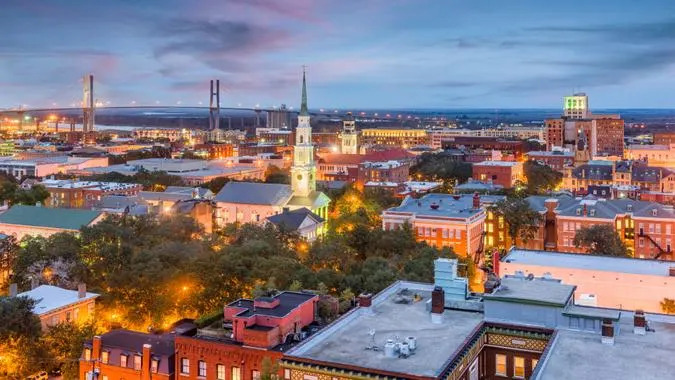
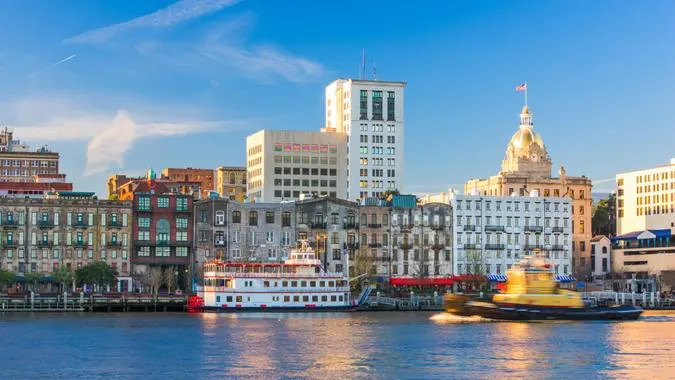
Savannah’s history dates to 1733, and it became the first city in the 13th colony – Georgia – which was named for King George II of England. Today, visitors are drawn by its period architecture, art and boutiques
SeanPavonePhoto / iStock.com
When It Will Become Too Expensive
Year: 2030
Projected home value: $1,210,520
U.S. median projected home value: $1,167,270
Difference in value: $43,250
2032 projected home value: $1,801,738
Shutterstock.com
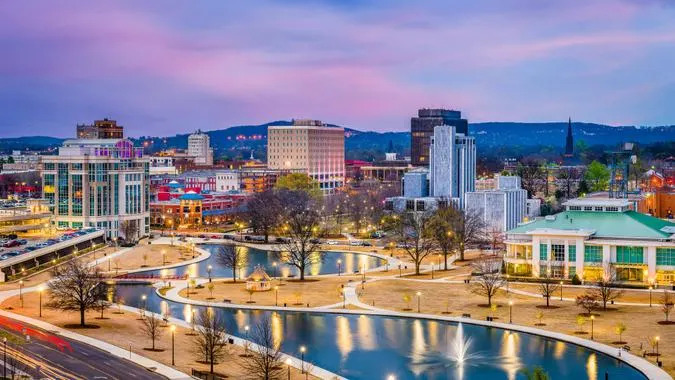
Huntsville, Alabama
August 2022 home value: $266,033
One-year projected growth rate: 20.6%
The city is named after John Hunt, who settled there in 1805. It grew rapidly from 2010 to 2020 – from 180,000 to 215,000 people – and is a bustling area for the technology, space and defense industries. NASA’s Marshall Space Flight Center and the U.S. Army Aviation and Missile Command are located in Huntsville.
Sean Pavone / Getty Images/iStockphoto
When It Will Become Too Expensive
Year: 2030
Projected home value: $1,190,458
U.S. median projected home value: $1,167,270
Difference in value: $23,188
2032 projected home value: $1,731,445
DenisTangneyJr / Getty Images/iStockphoto
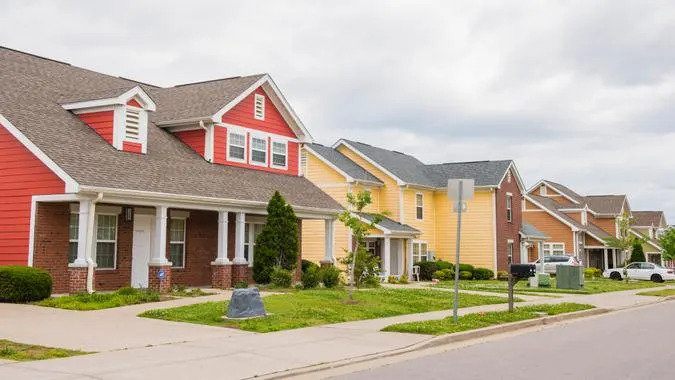
Clarksville, Tennessee
August 2022 home value: $270,758
One-year projected growth rate: 20%
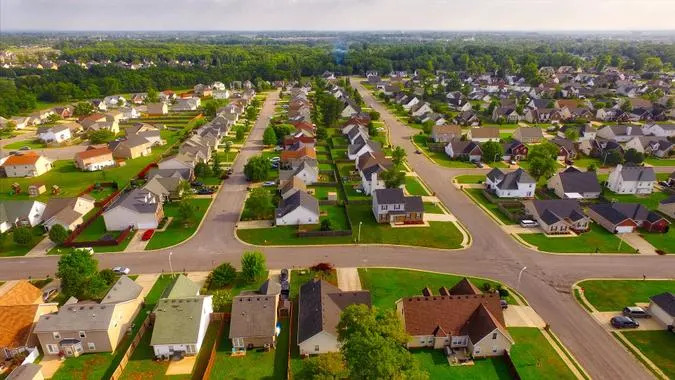
Clarksville is about an hour’s drive north of Nashville and is located just south of the Kentucky border. About 167,000 people live there, and the average age of residents is 29, the city reports.
Google Maps
When It Will Become Too Expensive
Year: 2031
Projected home value: $1,397,052
U.S. median projected home value: $1,369,207
Difference in value: $27,845
2032 projected home value: $1,676,462
ivanastar / Getty Images/iStockphoto
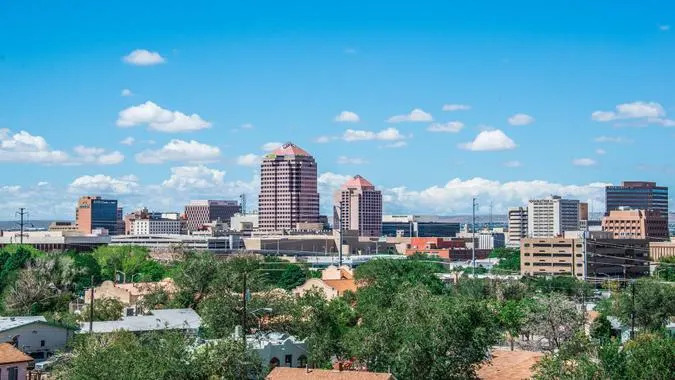
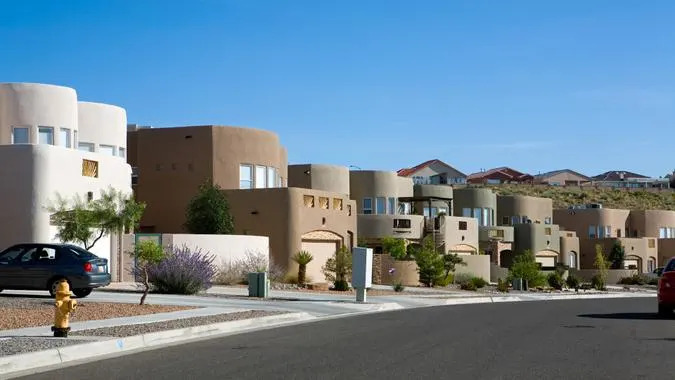
Albuquerque, New Mexico
August 2022 home value: $289,262
One-year projected growth rate: 19%
About 565,000 people live in Albuquerque, and what does it mean if one of them asks you “red or green”? You’re being asked whether you want red or green chiles in your New Mexican fare. Reply “Christmas” if you want both.
photoBeard / Getty Images/iStockphoto
When It Will Become Too Expensive
Year: 2031
Projected home value: $1,384,248
U.S. median projected home value: $1,369,207
Difference in value: $15,041
2032 projected home value: $1,647,256
Jordan Rosenfeld contributed to the reporting for this article.
Methodology: GOBankingRates took the overall U.S. median home value and projected its growth over 10 years using Zillow’s September 2022-23 one-year forecast. This projection was then compared to the projections of 537 U.S. cities that currently have home prices below the national median, with those surpassing the national median in the next 10 years (plus its projected growth rate over the same period) being deemed “not affordable.” For each “not affordable” city over the next decade, GOBankingRates found the following factors: (1) year the city will become “not affordable”; (2) projected home value for that year; (3) US average projected home value for that year; and (4) the difference in value between factors (2) and (3). NOTE: GOBankingRates does not expect growth in home value to stay stagnant at one current rate for the next decade, but using these constant figures gives us an idea where certain markets are heading without unforeseen market disruptors in the future. All data used to conduct this study was compiled and verified on October 11, 2022.