In race to arm Ukraine, U.S. faces cracks in its manufacturing might

The Washington Post

In race to arm Ukraine, U.S. faces cracks in its manufacturing might

Missy Ryan, The Washington Post – March 9, 2023

Correction: A previous version of this article mischaracterized why Scranton, Pa., is known as “Steamtown.” The name is derived from the steam-powered locomotives that helped fuel the city’s industrial rise, not the early pioneering or electric power. The article has been updated.

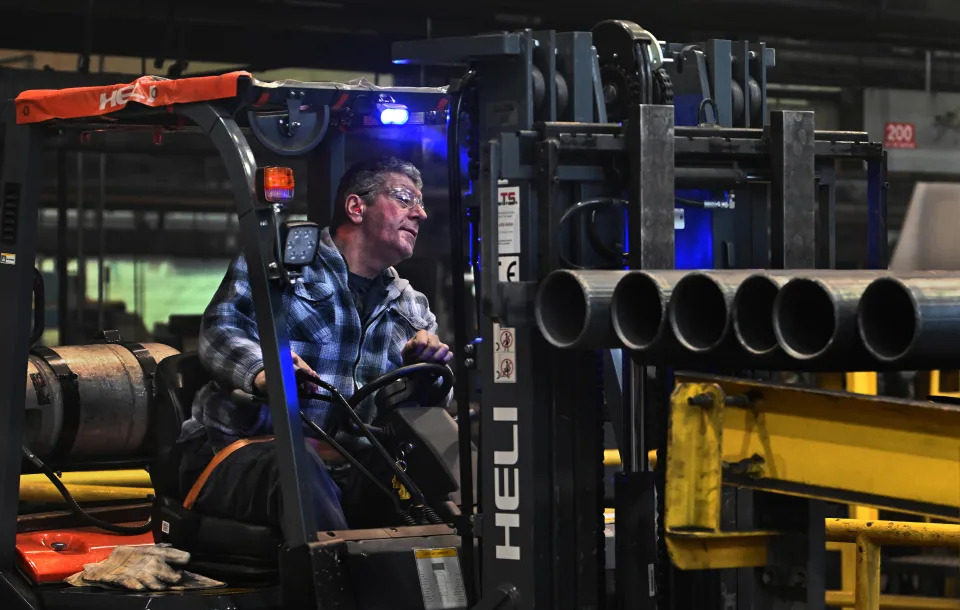
SCRANTON, Pa. – A sharp hissing sound fills the factory as red-hot artillery shells are plunged into scalding oil.

Richard Hansen, a Navy veteran who oversees this government-owned munitions facility, explains how the 1,500-degree liquid locks in place chemical properties that ensure when the shells are fired – perhaps on a battlefield in Ukraine – they detonate in the deadly manner intended.

“That’s what we do,” Hansen said. “We build things to kill people.”

The Scranton Army Ammunition Plant, one of a network of facilities involved in producing the U.S. Army’s 155-mm artillery round, is ground zero for the Biden administration’s scramble to accelerate the supply of weapons that Ukraine needs if its military is to prevail in the war with Russia.

The Pentagon’s plan for scaling up production of the shells over the next two years marks a breakthrough in the effort to quench Ukraine’s thirst for weapons. But the conflict has laid bare deep-seated problems that the United States must surmount to effectively manufacture the arms required not just to aid its allies but also for America’s self-defense should conflict erupt with Russia, China or another major power.

Despite boasting the world’s largest military budget – more than $800 billion a year – and its most sophisticated defense industry, the United States has long struggled to efficiently develop and produce the weapons that have enabled U.S. forces to outpace their peers technologically. Those challenges take on new importance as conventional conflict returns to Europe and Washington contemplates the possibility of its own great-power fight.

Even as public support for the vast sums of aid being given to Ukraine grows softer and more divisive, the conflict has sparked a broader conversation about the need to shatter what military leaders describe as the “brittleness” of the U.S. defense industry and devise new means to quickly scale up output of weapons at moments of crisis. Some observers are worried the Pentagon is not doing enough to replenish the billions of dollars in armaments that have left American stocks.

Research conducted by the Center for Strategic and International Studies (CSIS) shows the current output of American factories may be insufficient to prevent the depletion of stockpiles of key items the United States is providing Ukraine. Even at accelerated production rates, it is likely to take at least five years to recover the inventory of Javelin antitank missiles, Stinger surface-to-air missiles and other in-demand items.

Earlier research done by the Washington think tank illustrates a more pervasive problem: The slow pace of U.S. production means it would take as long as 15 years at peacetime production levels, and more than eight years at a wartime tempo, to replace the stocks of major weapons systems such as guided missiles, piloted aircraft and armed drones if they were destroyed in battle or donated to allies.

“It is a wake-up call,” Sen. Jack Reed (D-R.I.), chairman of the Senate Armed Services Committee, said in an interview, referring to the production problems the war has exposed. “We have to have an industrial base that can respond very quickly.”

A year into the Ukraine fight, American military aid has reached a staggering $30 billion, funding everything from night-vision goggles to Abrams tanks. Much of the weaponry was drawn from Pentagon stocks. Other systems must be produced in U.S. factories.

U.S. and NATO officials have touted the powerful effect of foreign arms on the battlefield, where they have enabled Ukrainian troops to hold Kremlin forces at bay and, in places like the southern city of Kherson, reverse Russian gains. But the armament effort also has rattled officials in the United States and Europe, depleting the military stockpiles of donor nations and revealing the gaps in their productive power.

As the front lines have hardened during the frigid winter months, the ground war has become a bloody, artillery-heavy fight, with Ukrainian forces firing an average of 7,700 artillery shells a day, according to the Ukrainian military, greatly outpacing the U.S. prewar production rate of 14,000 155-mm rounds a month. In the first eight months after Russian President Vladimir Putin’s invasion, Ukrainian forces burned through 13 years worth of Stinger antiaircraft missiles and five years of Javelin missiles, according to Raytheon, which produces both weapons.

Gen. Mark A. Milley, chairman of the Joint Chiefs of Staff, has predicted the munitions squeeze may require a further boost in Pentagon spending, potentially ending the era in which ammunition functioned as a military “bill payer,” a part of the defense budget from which officials can trim to fund more expensive items like tanks or planes.

“What the Ukraine conflict showed is that, frankly, our defense industrial base was not at the level that we needed it to be to generate munitions,” Colin Kahl, undersecretary of defense for policy, told lawmakers last week, pointing to the effort to accelerate output of artillery shells, guided rockets and other items. “Those are going to matter a year from now, two years from now, three years from now, because even if the conflict in Ukraine dies down, and nobody can predict whether that will happen, Ukraine is going to need a military that can defend the territory it has clawed back,” he said.

The problem is not limited to ammunition, nor to items being provided to Ukraine. According to Mark Cancian, a retired Marine officer and defense expert with CSIS, the pace of production at U.S. factories means it would take over 10 years to replace the U.S. fleet of UH-60 Black Hawk helicopters, and almost 20 years to replace the stock of advanced medium-range air-to-air missiles. It would be a minimum of 44 years before the Pentagon could replace its fleet of aircraft carriers.

In Europe, the problems are equally grave. NATO Secretary General Jens Stoltenberg warned in February that the wait time for large-caliber weapons has more than tripled, meaning items ordered now will not be delivered for over two years. In Germany, amid plans for a dramatic military expansion, its ammunition supply is believed to be sufficient for two days of fighting. In one war game, British stocks lasted eight days.

To address those problems, European Union leaders are exploring ways to accelerate manufacturing, possibly by using advance-purchase agreements modeled on the race to develop a coronavirus vaccine. In Ukraine, the ammunition crunch is existential. In places like Bakhmut, where Ukrainian troops are locked in a grisly battle with Russian mercenary and military fighters, defending forces say they must ration artillery ammunition because they receive far less than they need.

Fortunately for Kyiv, Russia, with its defense industry under severe sanctions, has a similar problem. According to Kyrylo Budanov, the Ukrainian military intelligence chief, the Kremlin has been forced to reduce the pace of air attacks due to dwindling stocks of key munitions, including the Kalibr and Kh-101 cruise missiles. Producing enough missiles for one major strike, he said recently, now takes up to two months.

The Pentagon’s own analysis of the U.S. defense sector reveals an industry poorly equipped to match the productive prowess of World War II, when U.S. factories churned out planes and weapons that powered the Allied militaries to victory over the Axis powers. Its problems trace in part to the consolidation that occurred after the Cold War, as military spending fell and the number of uniformed personnel shrank by a third.

In a world where no major state-on-state conflict was expected, the federal government welcomed a wave of mergers and acquisitions that dramatically shrank the sector. At one point, 1,000 civilian defense jobs disappeared every day. In the 1990s, the United States had 51 major air and defense contractors. Today, there are five. The number of airplane manufacturers has fallen from eight to three. Meanwhile, 90 percent of missiles now come from three sources.

The Pentagon used to design weapons programs so there would be at least two manufacturing sources, but over time it began to view that excess capacity as wasteful. Officials sought ways to maintain the competition in part by piggybacking off the commercial sector, but it did not always work. “We quit buying more than we needed,” said David Berteau, a former Pentagon acquisition official who heads the Professional Services Council, an industry group. “We quit paying for more than we needed.”

It was easier to overlook production problems during the two decades of counterinsurgent war that followed the 9/11 attacks, when U.S. forces battled lightly armed militants in Iraq, Syria and Afghanistan. That is quickly changing with the demands posed by the large-scale conventional conflict underway now.

Industry experts say inconsistent, unpredictable military demand and short-term contracts dictated by appropriations cycles have further discouraged corporate investment in extra capacity. And because there is no commercial market for items like surface-to-air missiles or precision bombs, companies with specialized production cannot rely on civilian demand to keep them afloat.

Officials note that production lags also are due to the fact that military equipment today is inherently more complicated to build than it was during World War II, when Ford could produce a plane an hour. Now weaponry often requires microelectronics and parts from dozens or hundreds of facilities. Lockheed Martin’s F-35 stealth fighter, for one, contains 300,000 parts sourced from 1,700 suppliers.

Doug Bush, the Army’s chief weapons buyer, characterized the government’s decision to keep facilities like the one in Scranton in operation despite a decades-long absence of such sizable demand as a bet that paid off. “It was a public policy choice. An expensive one,” he said. “But they were kept as an insurance policy for this exact circumstance.”

The Army now plans to boost its monthly capacity for producing 155-mm shells from about 14,000 now to 30,000 this spring, and eventually to 90,000. The military also is spending $80 million to bring a second source online for the Javelin missile’s rocket motor, a key component, and plans to double production to around 4,000 a year.

The Army recently signed a $1.2 billion contract for Raytheon to build six more units of national advanced surface-to-air defense systems, which are being used in the war in Ukraine to defend against Russian missile and drone attacks, but they will not be ready for another two years.

Researchers note, however, that of the $45 billion Congress has appropriated for producing new weapons for Ukraine and replacing donated U.S. stocks, the Pentagon as of February had placed contracts for only around $7 billion, raising questions about whether it is moving fast enough.

Industry officials, lawmakers and Pentagon leaders agree that building a greater ability to quickly expand production of needed weapons will require both time and new investment. “You have to bring all of those different streams of increased production together at the right time,” Bush said. “And so that would be one challenge, and that is just, you know, sequencing a large scale industrial ramp up like this.”

While support for defense spending is typically strong on Capitol Hill, backing for arming Ukraine has slipped, especially among Republicans. One recent poll showed that 40 percent of Republicans now believe the United States is giving too much aid to Ukraine, up from 9 percent last spring.

And it is not clear how much more military spending, which already represents more than 3 percent of gross domestic product, Americans will countenance in an era of inflation and economic strain, no matter the rationale.

At a recent hearing, Rep. Lisa C. McClain (R-Mich.), told Pentagon officials that voters in her district were worried about getting mired in a “never-ending war” in Ukraine. “They believe that we are spending money and resources on a fight overseas, rather than getting our own fiscal house in order,” she said.

At the Scranton munitions plant, which is operated by General Dynamics, long steel billets undergo a multiday transformation from burning-hot shafts of metal to finished artillery shells ready to be trucked to a plant in Iowa, where they are filled with explosives and dispatched for training or battle. It can be two to three months from when shells leave Scranton until they are ready to be used.

The city surrounding the plant tells the story of broader industrial decline that is another important element in the production scramble today. As its coal and steel industries drew flocks of immigrant workers in the 19th century, Scranton became an important rail hub and was dubbed “Steamtown” for the steam-powered locomotives that helped fuel its rise.

But the city’s population declined along with the coal industry after World War II. Today, the previously booming city center shows the mixed results of economic revitalization efforts: shuttered store fronts, a handful of brewpubs, and an art house movie theater.

President Biden has identified Scranton, his hometown, as a symbol of the erosion of American manufacturing power, vowing to make a reversal of that trend a signature of his administration. “When jobs move overseas, factories at home close down. Once-thriving cities and towns became shadows of what they used to be, and they lost a sense of their self-worth along the way,” he said in late January.

Since its apex in 1979, more than 7 million jobs have disappeared from the American manufacturing sector, over a third of its workforce. The defense sector has also shed a third of its workforce.

While General Dynamics said the historic Scranton plant remains an attractive employer, in part because of its competitive wages, finding the right workers for its facilities is not easy in an economy with low unemployment and a dearth of traditional manufacturing skills like metalworking. “It’s still a challenge,” said Todd Smith, the company’s general manager for northeast Pennsylvania.

Biden has touted new investments in rail and other infrastructure that U.S. officials hope can anchor a new era of American productivity. “Where the hell is it written that . . . America can’t lead the world again in manufacturing?” he demanded.

Scranton Mayor Paige Cognetti said she hopes for added jobs at the Scranton plant, which now employs about 300 people, and other defense manufacturers in the area. “It’s union work. It’s stable work. It’s work that you can build a career and support a family on,” she said. “So any of those types of jobs are critical for us.”

It is not clear how much the Scranton facility, which already runs 24/7 during the week along with some weekend hours, can expand its manufacturing output. Plant officials said the pace of production has not accelerated since the Ukraine war began, and they are not aware of plans to ramp up operations.

While the hoped-for production transformation may not happen fast enough for Ukraine, as Kyiv braces for a massive springtime assault by Kremlin forces, the next conventional conflict could be far larger and more deadly.

The Ukraine scramble “has also given us some ideas of what we need to look at when it comes to Taiwan and China, because we have seen the need to surge,” said Kea Matory, director of legislative policy at the National Defense Industrial Association. “So this is a good learning opportunity for us.”

The Washington Post’s Ellen Nakashima and Dan Lamothe in Washington and Kamila Hrabchuk in Kyiv contributed to this report.

Red tide has overtaken much of Florida’s southwest coast. See the hot spots.

USA Today

Red tide has overtaken much of Florida’s southwest coast. See the hot spots.

Orlando Mayorquin and Kimberly Miller – March 8, 2023

'Red tide' toxic algae bloom kills sea life and costs Florida millions

Dead fish are washing up on the Southwest Florida coast thanks to a toxic algae known as red tide that can pose a risk to humans.

The algae, which is known formally as the single-cell Karenia brevis, has concentrated near Tampa and neighboring communities.

Scientists have found the algae at rates ranging from 10,000 cells per liter to more than 1 million cells per liter – levels that result in fish kills and breathing difficulties in exposed humans, according to the Florida Fish and Wildlife Conservation Commission.

The FWC said Wednesday that red tide was detected at concentrations greater than 100,000 cells per liter in samples from the following counties: Pinellas, Manatee, Sarasota, Charlotte, Lee, Collier and Monroe.

The agency said red tide becomes harmful to people at 10,000 cells per liter.

Red tides produce a toxin called brevetoxin that can make humans ill if they breathe the toxin in through sea spray or get wet with contaminated water.

The illness can cause a range of symptoms, according to the Centers for Disease Control and Prevention, including:

  • Coughing and sneezing
  • Shortness of breath
  • Eye, skin, and throat irritation
  • Asthma attacks

The FWC it had received multiple reports of dead fish respiratory irritation at communities through the Southwest Florida. One community, Indian Rocks Beach, decided to cancel a beach festival slated for next month amid red tide concerns.

Red tides are a naturally occurring phenomenon that have been observed in the Gulf of Mexico since the 1800s. Nascent studies have connected nutrient-laden runoff from farms and developments to increased levels of red tide along the coast.They begin to form on the coast beginning in the fall, and typically clear up by Spring.

Here’s where you can find red tide in Florida.

Florida red tide map

Josh Hawley thinks you’re too stupid to realize Tucker Carlson is lying to you

The Kansas City Star – Opinion

Josh Hawley thinks you’re too stupid to realize Tucker Carlson is lying to you | Opinion

The Kansas City Star Editorial Board – March 8, 2023

Facebook/HawleyMO

Fox News lies to its viewers. Josh Hawley is fine with that.

Old news? Maybe. Certainly, we’ve known of both Fox’s mendacity and the Missouri Republican senator’s cynicism for a long time. But fresh developments have revealed yet again how deep the rot goes.

Monday night, Fox News host Tucker Carlson offered a ludicrous alternative take on the Jan. 6, 2021, insurrection — that deadly attack on American democracy in the name of defying the will of the voters in order to keep Donald Trump in the White House. Using a feeble smattering of clips eked out of 40,000 hours of unseen Capitol surveillance video furnished to him by House Speaker Kevin McCarthy, Carlson made a ridiculously weak case that it wasn’t actually a rebellion against the lawful and constitutional transfer of power to Joe Biden — instead, it was simply “mostly peaceful chaos,” generated by sightseers and tourists.

“The footage does not show an insurrection or a riot in progress,” Carlson said. It was a bald-faced attempt to rewrite history, to tell Americans that what they witnessed on Jan. 6 wasn’t real. “Gaslighting” is an overused term, but it describes Carlson’s efforts perfectly.

The good news is that many Republicans who typically defer to Fox News pushed back on Carlson’s falsehoods. Sen. Thom Tillis of North Carolina used a barnyard epithet to describe the absurdity. Senate Minority Leader Mitch McConnell aligned himself with a letter from the Capitol Police chief, who accused Carlson of “cherry-picking” his video clips to show calmer moments amid the insurrectionist storm.

These leaders showed it’s more than possible to be a member of the GOP and still respect the truth of what happened on Jan. 6.

Unless you’re Josh Hawley. He embraced Carlson’s version of the insurrection. “Sunshine is always the right answer,” he tweeted Tuesday, openly and directly mocking McConnell’s rightful denunciation of the Fox idiocy.

Please. It’s not “sunshine” to furnish government videos only to one favored propagandist, as McCarthy did to Carlson. Real transparency would’ve meant making the footage widely available to all the news outlets that asked for it.

But it’s no surprise McCarthy gave the videos to Fox. Over the last few weeks, filings in Dominion Voting Systems’ defamation lawsuit against the network have revealed that Fox hosts were happy to air Trump’s false and discredited claims even though senior figures — all the way up to owner Rupert Murdoch and prime-time host Sean Hannity — knew at the time they were patently false. Instead, Hannity and Carlson actively undermined Fox’s few real journalists, even calling for the firing of one reporter who debunked Trump’s lies.

Why? Because they were afraid of losing conservative viewers to even further-right-wing alternatives such as Newsmax. “Weak ratings make good journalists do bad things,” Fox News exec Bill Sammon wrote in a December 2020 email. He might believe that. We don’t.

Fox host on Trump: ‘I hate him passionately’

Believing one thing and telling viewers another is a regular practice at Fox, clearly. Carlson is a fierce defender of Trump when he’s on the air. Behind the scenes? “I hate him passionately,” Carlson said of Trump, in a text revealed by the Dominion lawsuit. “What he’s good at is destroying things.” His viewers never heard that view.

That is the guy McCarthy put in charge of shedding “sunshine” on Jan. 6.

We don’t know Hawley’s real feelings about Trump. But we suspect that — like those up and down the ranks at Fox News — the senator knew better than to believe the former president’s lies, yet still embraced them out of expediency and fear. That’s likely why he led the ludicrous and doomed Senate effort to deny Biden’s rightful election.

Fox executives worried about losing viewers. Hawley had donors and voters to think about.

Now? There’s the matter of his reputation. Carlson on Monday said the famous video showing Hawley fleeing from the insurrectionists was “edited deceptively” by the Jan. 6 committee because, in fact, several other senators were also running away. We’re not sure how that makes Hawley look better, but the senator must take comfort in having an embarrassing moment ever-so-slightly whitewashed.

The problem is that Carlson’s insurrection denialism won’t wash. More than two dozen of Hawley’s Missouri constituents — including, most recently, a member of the Missouri National Guard — have been arrested or charged for their participation in the insurrection. Across the border, another nine Kansans have also been accused of involvement.

Anybody who cares to know what happened on Jan. 6, 2021, understands it was the bloody, violent and irredeemable affair we all saw unfolding in real time with our own eyes.

The folks at Fox News know it, no matter what Tucker Carlson says on his show. And Josh Hawley knows it too.

What will Miami look like with more sea rise? This high-tech car helps us picture it

Miami Herald

What will Miami look like with more sea rise? This high-tech car helps us picture it

Alex Harris – March 8, 2023

Hurricane Ian’s destructive storm surge last fall shocked many Floridians, even some who’d weathered severe hurricanes before. In some places, the waters were so high that survivors had to scramble to the second story or their roof for safety.

Experts say it’s tough for people to visualize what those record-breaking levels of surge would look like until they arrive.

But FloodVision, a new tool from nonprofit climate advocacy group Climate Central, could change that, with help from a high-tech car they’ve nicknamed the “flood rover.”

The vehicle isn’t anything special (it’s actually a rental), but the cameras and sensors strapped onto it are. They form a mobile scanning system that acts a lot like a souped-up Google Maps car, except the finished product is a simulation of a future flooded street.

Benjamin Strauss, CEO and chief scientist of Climate Central, calls it a “visual, visceral, powerful” way to explain the risks of hurricanes — and rising seas — to communities most at risk.

“We know the images are more powerful than any map we can make, or any graphic we can show you,” he said.

Strauss’ team has already done some scanning in Miami, Miami Beach, Fort Lauderdale and Tampa, and they debuted the car and the new system at the Aspen Ideas: Climate conference in Miami Beach this week.

This is a simulation of what a Miami street could look like in 2070 with no interventions to slow down sea level rise. It was produced with FloodVision, a new technology from Climate Central.

In one example in Miami, researchers at Climate Central captured a picture of a neighborhood with the car cameras, then superimposed the two or so feet of sea rise the region is projected to see by 2070 under NOAA’s intermediate high standard.

The result: enough water to come halfway up a tree and soak through the doors of parked cars. It’s a familiar sight to residents of flood-prone neighborhoods like Brickell, which can reach the same levels of flooding after an intense rainstorm.

Strauss plans to use the technology to simulate images of what sea rise or intense storm surge could look like to educate communities about the risks they face from climate change. One potential hurdle is that the technology does not account for protections that local governments may have already installed, like elevated roads or higher sea walls and stronger stormwater pumps.

Without that, the picture of what could likely happen is skewed in places like Miami Beach, which has spent millions installing new protections against rising seas. But despite the growing body of scientific evidence showing the need for coastal cities to adapt to sea level rise, the execution of these projects has been controversial in the places that need them most.

Strauss hopes that his team’s work can be used to help cut through the noise and visually show residents the benefit of investing in flood protection.

“It’s expensive to build flood protections, and it’s also disruptive,” he said. “This technology can be used, essentially, to show what you’re preventing.”

Miami Beach’s latest road-raising squabble: Who gets swamped by the flood waters?

Lawmakers unveil plan to keep Americans from claiming Social Security too early

Yahoo! Finance

Lawmakers unveil plan to keep Americans from claiming Social Security too early

Ben Werschkul, Washington Correspondent – March 6, 2023

Why you should delay Social Security benefits

Yahoo Finance columnist Kerry Hannon makes the case for why retirees should delay their Social Security benefits to age 70.

A bipartisan group of senators launched a multi-pronged effort this week to help Americans make better decisions about when to claim their Social Security benefits.

A letter and legislation released Monday said that Americans are confused about their options and that the Social Security Administration (SSA) needs to do a better job at communication — including bringing back paper statements.

“We believe that SSA should take more proactive measures to provide Americans with the tools and resources to determine how best to set themselves and their families up for financial security in retirement,” wrote Sens. Bill Cassidy (R-LA), Chris Coons (D-DE), Susan Collins (R-ME), and Tim Kaine (D-VA) in the note.

Monday’s announcement comes after years of discussion on the issue. Groups like the Bipartisan Policy Center have pushed for reforms for years and were cited in Monday’s letter. In a 2020 report, the group said many people are hurting their long-term financial security by claiming Social Security too early.

UNITED STATES - DECEMBER 15: Sens. Bill Cassidy, R-La., left, and Chris Coons, D-Del., talk before the Senate Policy luncheons in the Capitol, December 15, 2015. (Photo By Tom Williams/CQ Roll Call)
Sens. Bill Cassidy (R-LA) and Chris Coons (D-DE) are two of the authors of the new letter. (Tom Williams/CQ Roll Call)
Americans are jumping in ‘at a financially sub-optimal time’

The Social Security program gives retirees an option of when to start getting their checks. They can begin as early as age 62, but with a trade-off: Those monthly benefits are locked in at a lower rate for the rest of their lives. The benefit amount gets bigger the longer you wait to claim, topping out with maximum benefits for Americans who wait until age 70.

That decision has far-reaching implications and experts say many Americans are getting it wrong by claiming too early.

A recent study from a group called United Income — also cited in Monday’s letter — estimates that retirees collectively lose $3.4 trillion because they claim Social Security “at a financially sub-optimal time” That works out to $111,000 per household.

The problem, experts say, is that Americans don’t fully understand the consequences of their choice even though more than half of 65-or-over households rely on Social Security for a majority of their income.

A central recommendation released Monday is around changing the nomenclature. Currently, seniors are presented with what these four senators say are a battery of confusing terms from “early eligibility age” to “full retirement age” to “delayed retirement credits.”

Instead, the lawmakers say, Americans should be given a choice among “minimum benefit age,” “standard benefit age,” and “maximum benefit age.”

The bill also includes a push to redesign and bring back paper statements to Americans.

After years of blasting out millions of letters each year, the agency cut back in the last decade and now largely only reaches out to Americans via the U.S. Postal Service when they are over 60 and not receiving benefits.

If the legislation is enacted, all Americans in the workforce would get updates of where they stand and an explanation of their options at least every five years with the frequency increasing to annual notes after age 60.

Why are Americans claiming so early?

The letter from Capitol Hill also asks the agency to analyze why so many Americans claim benefits early and to outline its plans to “educate the public about the trade-offs of early versus delayed claiming.”

A 2019 release from the SSA laid out how age 62 remains the most common age for Americans with nearly 35% of men and 40% of women jumping into the program then.

But some of the reasons that Americans are interested in getting money as early as possible may also have to do with the uncertain future of the Social Security program as is does with any lack of education. A recent government trustees report found that, with no action from Congress, Social Security only has the funds to continue paying out 100% of benefits through 2034. After that, benefits could be decreased by around 24%.

https://flo.uri.sh/visualisation/10885096/embed?auto=1

In addition, Social Security has been a central issue in the ongoing debt ceiling fight. Democrats have charged that Republicans are looking to cut benefits in return for raising the debt ceiling. Most in the GOP adamantly deny this claim.

Polling has shown again and again that Americans are keenly aware of the perilous state of the program. In just one example, an AP-NORC poll in 2019 found that only 24% of Americans were confident Social Security would be able to pay out at least the same benefits in five years that it was paying out then.

Also in Washington, bipartisan talks are underway to shore up the program and give Americans more confidence. In recent months, those talks have been led by Sen. Cassidy (one of the co-signers of Monday’s letter) and Sen. Angus King (I-ME). In a statement Friday, the senators offered an update on those talks, noting that a dozen of options remained under discussion.

They pledged that “what we are discussing, millions would immediately receive more, and no one would receive less.” They hope to have “a fully developed plan” that can be released and debated in the months ahead.

Ben Werschkul is Washington correspondent for Yahoo Finance.

Hazards of Gas Stoves Were Flagged by the Industry—and Hidden—50 Years Ago

Gizmodo

Hazards of Gas Stoves Were Flagged by the Industry—and Hidden—50 Years Ago

Kate Yoder, Grist – March 6, 2023

Photo:  Scott Olson (Getty Images)
Photo: Scott Olson (Getty Images)

Newly uncovered documents reveal that the gas industry understood that its stoves were polluting the air inside homes 50 years ago — and then moved to conceal that information. It stands in stark contrast to the industry’s denial of the health dangers posed by gas stoves today.

In a draft report on natural gas and the environment in January 1972, the American Gas Association included a section on “Indoor Air Quality Control” that detailed its concerns with pollution from gas appliances like carbon monoxide and nitrogen oxides. The document showed that the trade group was in the process of researching solutions “for the purposes of limiting the levels of carbon monoxide and nitrogen oxides in household air.” But all that information disappeared from the final text, according to reporting by the climate accountability site DeSmog on Thursday.

That draft report was sent to the National Industrial Pollution Control Council, what was then a government advisory council made up of 200 business executives representing industrial heavyweights, including utilities. When the council’s final report was published in August 1972, those utilities had removed the section on air pollution concerns, according to the DeSmog article. Arguing that the fuel should replace the coal used for power, heating, and cooking in homes, the report spotlighted the pollution problems of burning coal while downplaying the dangers of natural gas.

In response to DeSmog’s investigation, Karen Harbert, the CEO of the American Gas Association, pointed to “a 1982 review of the available research that found no causative link between gas stoves and asthma, a conclusion shared by regulatory agencies.”

The concerns about indoor air quality in the report’s deleted section foreshadowed those held by health experts today. In recent months, studies have found that gas-burning stoves are responsible for nearly 13 percent of childhood asthma cases in the United States, and that they leak methane, a potent greenhouse gas, and benzene, a cancer-causing chemical, even when they’re shut off. Earlier this week, the federal Consumer Product Safety Commission made a formal request for information on the hazards of gas stoves. This is often the first step toward creating a regulation — although the commission has said it doesn’t plan on banning gas stoves entirely, after the mention of it sparked heated backlash.

The gas industry has pushed back against the peer-reviewed research showing that gas stoves increase the risk of childhood asthma. In January, the American Gas Association argued that the findings were “not substantiated by sound science” and that even discussing the asthma allegations would be “reckless.”

But the newly unveiled documents show that the gas industry itself was once concerned about the pollution coming from gas stoves — which the National Industrial Pollution Control Council called “the NOx problem” in 1970, referring to nitrogen oxides, a family of poisonous gases. Gas companies were even aware of the problem decades before, with the president of the Natural Gas Association warning of the dangers of emissions from gas stoves as far back as the early 1900s.

This article originally appeared in Grist at https://grist.org/accountability/gas-stove-hazards-documents-utilities-1972/. Grist is a nonprofit, independent media organization dedicated to telling stories of climate solutions and a just future. Learn more at Grist.org

You’re Now a ‘Manager.’ Forget About Overtime Pay.

The New York Times

You’re Now a ‘Manager.’ Forget About Overtime Pay.

Noam Scheiber – March 6, 2023

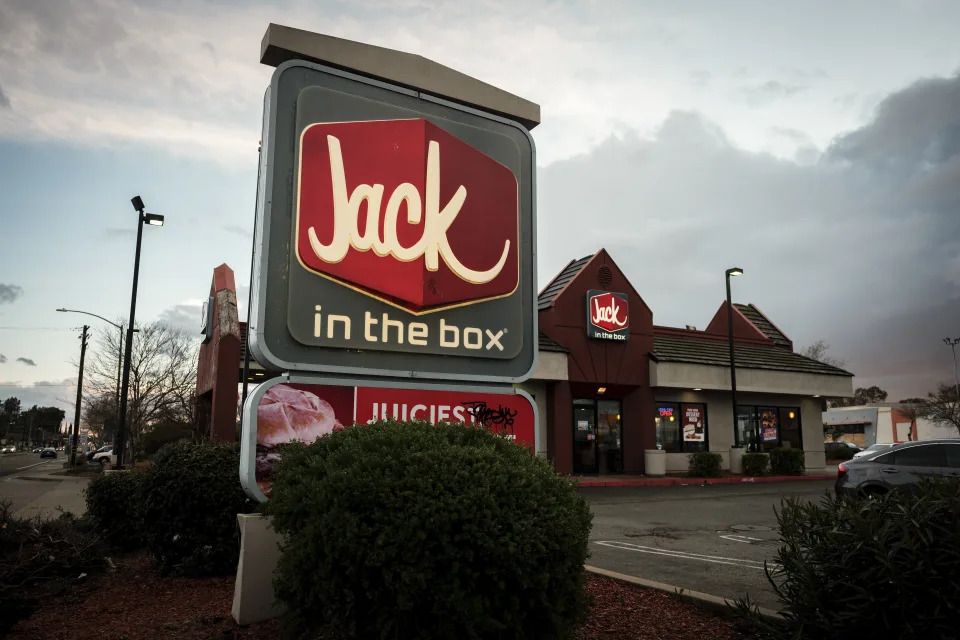
The Jack in the Box where Gonzalo Espinosa used to work in Roseville, Calif. on Feb. 23, 2023. (Max Whittaker/The New York Times)

For four years beginning in 2014, Tiffany Palliser worked at Panera Bread in South Florida, making salads and operating the register for shifts that began at 5 a.m. and often ran late into the afternoon.

Palliser estimates that she worked at least 50 hours a week on average. But she says she did not receive overtime pay.

The reason? Panera officially considered her a manager and paid her an annual salary rather than on an hourly basis. Palliser said she was often told that “this is what you signed up for” by becoming an assistant manager.

Federal law requires employers to pay time-and-a-half overtime to hourly workers after 40 hours, and to most salaried workers whose salary is below a certain amount, currently about $35,500 a year. Companies need not pay overtime to salaried employees who make above that amount if they are bona fide managers.

Many employers say managers who earn relatively modest salaries have genuine responsibility and opportunities to advance. The National Retail Federation, a trade group, has written that such management positions are “key steps on the ladder of professional success, especially for many individuals who do not have college degrees.”

But according to a recent paper by three academics, Lauren Cohen, Umit Gurun and N. Bugra Ozel, many companies provide salaries just above the federal cutoff to frontline workers and mislabel them as managers to deny them overtime.

Because the legal definition of a manager is vague and little known — the employee’s “primary” job must be management, and the employee must have real authority — the mislabeled managers find it hard to push back, even if they mostly do grunt work.

The paper found that from 2010 to 2018, manager titles in a large database of job postings were nearly five times as common among workers who were at the federal salary cutoff for mandatory overtime or just above it as they were among workers just below the cutoff.

“To believe this would happen without this kind of gaming going on is ridiculous,” Cohen, a Harvard Business School professor, said in an interview.

Cohen and his co-authors estimate that the practice of mislabeling workers as managers to deny them overtime, which often relies on dubious-sounding titles like “lead reservationist” and “food cart manager,” cost workers about $4 billion per year, or more than $3,000 per mislabeled employee.

And the practice appears to be on the rise: Cohen said the number of jobs with dubious-sounding managerial titles grew over the period he and his co-authors studied.

Federal data appear to underscore the trend, showing that the number of managers in the labor force increased more than 25% from 2010 to 2019, while the overall number of workers grew roughly half that percentage.

From 2019 to 2021, the workforce shrank by millions while the number of managers did not budge. Lawyers representing workers said they suspected that businesses mislabeled employees as managers even more often during the pandemic to save on overtime while they were short-handed.

“There were shortages of people who had kids at home,” said Catherine Ruckelshaus, general counsel of the National Employment Law Project, a worker advocacy group. “I’m sure that elevated the stakes.”

But Ed Egee, a vice president at the National Retail Federation, argued that labor shortages most likely cut the other way, giving low-level managers the leverage to negotiate more favorable pay, benefits and schedules. “I would almost say there’s never been a time when those workers are more empowered,” he said. (Pay for all workers grew much faster than pay for managers from 2019 to 2021, though pay for managers grew slightly faster last year.)

Experts say the denial of overtime pay is part of a broader strategy to drive down labor costs in recent decades by staffing stores with as few workers as possible. If a worker calls in sick, or more customers turn up than expected, the misclassified manager is often asked to perform the duties of a rank-and-file worker without additional cost to the employer.

“This allows them to make sure they’re not staffing any more than they need to,” said Deirdre Aaron, a former Labor Department lawyer who has litigated numerous overtime cases in private practice. “They have assistant managers there who can pick up the slack.”

Palliser said that her normal shift at Panera ran from 5 a.m. to 2 p.m., but that she was often called in to help close the store when it was short-staffed. If an employee did not show up for an afternoon shift, she typically had to stay late to cover.

“I would say, ‘My kids get out of school at 2. I have to go pick them up, I can’t keep doing this,’” said Palliser, who made from about $32,000 to $40,000 a year as an assistant manager. She said her husband later quit his job to help with their child care responsibilities.

She won a portion of a multimillion-dollar settlement under a lawsuit accusing a Panera franchisee, Covelli Enterprises, of failing to pay overtime to hundreds of assistant managers. Panera and representatives of the franchise did not respond to requests for comment.

Gassan Marzuq, who earned a salary of around $40,000 a year as the manager of a Dunkin’ Donuts for several years until 2012, said in a lawsuit that he had worked roughly 70 hours or more in a typical week. He testified that he had spent 90% of his time on tasks such as serving customers and cleaning, and that he could not delegate this work “because you’re always short on staff.”

Marzuq eventually won a settlement worth $50,000. A lawyer for T.J. Donuts, owner of the Dunkin’ Donuts franchise, said the company disputed Marzuq’s claims and maintained “that he was properly classified as a manager.”

Workers and their lawyers said employers exploited their desire to move up the ranks in order to hold down labor costs.

“Some of us want a better opportunity, a better life for our families,” said Gonzalo Espinosa, who said that in 2019 he often worked 80 hours a week as the manager of a Jack in the Box in California but that he did not receive overtime pay. “They use our weakness for their advantage.”

Espinosa said his salary of just over $30,000 was based on an hourly wage of about $16 for a 40-hour workweek, implying that his true hourly wage was closer to half that amount — and well below the state’s minimum wage. The franchise did not respond to requests for comment.

The paper by Cohen and his co-authors includes evidence that companies that are financially strapped are more likely to misclassify regular workers as managers, and that this tactic is especially common in low-wage industries such as retail, dining and janitorial services.

Still, lawyers who bring such cases say the practice also occurs regularly in white-collar industries such as tech and banking.

“They have a job title like relationship manager or personal banker, and they greet you, try to get you to open account,” said Justin Swartz, a partner at the firm Outten & Golden. “They’re not managers at all.”

Swartz, who estimated that he had helped bring more than two dozen overtime cases against banks, said some involved a so-called branch manager inside a big-box store who was the only bank employee onsite and largely performed the duties of a teller.

The practice appears to have become more difficult to root out in recent years, as more employers have required workers to sign contracts with mandatory arbitration clauses that preclude lawsuits.

Many of the cases “are not economically viable anymore,” said Swartz, citing the increased difficulty of bringing them individually through arbitration.

Some lawyers said only an increase in the limit below which workers automatically receive overtime pay is likely to meaningfully rein in misclassification. With a higher cutoff, simply paying workers overtime is often cheaper than avoiding overtime costs by substantially increasing their pay and labeling them managers.

“That’s why companies fought it so hard under Obama,” said Aaron, a partner at Winebrake & Santillo, alluding to a 2016 Labor Department rule raising the overtime limit to about $47,500 from about $23,500. A federal judge suspended the rule, arguing that the Obama administration lacked the authority to raise the salary limit by such a large amount.

The Trump administration later adopted the current cutoff of about $35,500, and the Biden administration has indicated that it will propose raising the cutoff substantially this year. Business groups say such a change will not help many workers because employers are likely to lower base wages to offset overtime pay.

Red tide is blanketing some Florida beaches: What you need to know about the toxic algae

USA Today

Red tide is blanketing some Florida beaches: What you need to know about the toxic algae

 ‘Red tide’ toxic algae bloom kills sea life and costs Florida millions

Kimberly Miller, Palm Beach Post – March 6, 2023

Red tide is currently blanketing the Southwest Florida coast.

Levels from Tampa Bay south to Marco Island range from around 10,000 cells per liter to more than 1 million cells per liter, according to the Florida Fish and Wildlife Conservation Commission.

Fish kills and breathing issues in humans can start when levels reach 10,000 cells per liter, according to the FWC.

Fish kills have been problematic in waters near Collier County, home of Naples, in recent weeks.

On the eastern coast of the state, water taken from the Juno Beach Pier on Feb. 15 tested positive for background amounts of red tide, but the amount was so miniscule it was not expected to have any detrimental health effects, and it was gone when a follow-up test was taken Feb. 22.

A Florida homeowner opened his front door. He was bitten by an alligator.

Florida red tide map
Is red tide harmful to humans?

When the toxin from red tide is inhaled, it can cause respiratory symptoms in people, such as coughing, wheezing and sore throats.

In marine life, it’s a killer that affects the nervous system and can cause paralysis.

What exactly is red tide?

It is a sea-faring toxic algae, formally known as the single-cell Karenia brevis.

It produces a toxin as a defense mechanism.

What is the main cause of red tide and how long does it last?

Red tides are naturally occurring. They have been observed in the Gulf of Mexico since the 1800s.

They can grow far offshore in the Gulf and pile up near the coast in the fall and winter as wind patterns blow cold fronts into Florida.

Red tide is often gone by spring, but in some years, the infection has lingered.

Palm Beach lifeguard George Klein wears a mask at Midtown Beach in Palm Beach that remains closed due to red tide warnings, Sunday, September 30, 2018. (Melanie Bell / The Palm Beach Post)
Is red tide present in Florida right now?

Yes. Samples on Florida’s west coast from Venice to Naples tested at high levels of toxicity.

Fish kills have been problematic in Collier County waters in recent weeks. Rhonda Watkins, a pollution control environmental supervisor for Collier County, said reports of dead fish are widespread.

Medium levels have been found in the Florida Keys.

It’s possible a stronger dose of red tide could find its way to Florida’s east coast beaches, according to James Sullivan, executive director of Florida Atlantic University’s Harbor Branch Oceanographic Institute.

Red tide hit Florida beaches hard in 2018

A persistent red tide bloom lasted through the summer and into fall of 2018.

Tons of marine life died on the west coast of the state, triggering daily “fish kill clean-up” reports on Sanibel Island where dump trucks full of dead fish were removed.

In October 2018, Palm Beach County ocean rescue Captain Rick Welch, left, and lifeguard Russ Gehweiler, right, install newly printed signs warning visitors of the red tide outbreak along A1A, south of Indiantown Road in Jupiter.  (Richard Graulich / The Palm Beach Post)
In October 2018, Palm Beach County ocean rescue Captain Rick Welch, left, and lifeguard Russ Gehweiler, right, install newly printed signs warning visitors of the red tide outbreak along A1A, south of Indiantown Road in Jupiter. (Richard Graulich / The Palm Beach Post)

Manatee, Goliath grouper, shorebirds and sea turtles all perished in droves that year in areas from Sarasota through Naples.

Can red tide on Florida’s west coast reach the state’s east coast?

Yes. A west coast bloom can reach the east coast if it gets caught in the Gulf of Mexico’s loop current and travels through the Florida Straits into the Gulf Stream – a north-moving river of warm water that skims the Palm Beach County coastline.

Once in the Gulf Stream, waves can force the toxin produced to be dispersed in the air, which can be carried by east winds to the beaches.

Since 1972 when the transport of red tide from the west coast to the east was first identified, seven more instances had been documented prior to 2018, according to the Florida Fish and Wildlife Conservation Commission. Those include in 1990, 1997, 1999 and 2006. In 2007, a red-tide bloom near Jacksonville traveled south with a near-shore current.

Florida choking on the poison: DeSantis, GOP lawmakers ready for Culture Wars 2.0 as Florida Legislature convenes

Miami Herald

DeSantis, GOP lawmakers ready for Culture Wars 2.0 as Florida Legislature convenes

Lawrence Mower – March 5, 2023

Daniel A. Varela/dvarela@miamiherald.com

When Florida lawmakers met for their annual legislative session last year, they championed bills that led to months of headlines for Gov. Ron DeSantis about sexual orientation, abortionimmigrationvoting and the teaching of the nation’s racial history.

For this year’s legislative session, which begins Tuesday, DeSantis has a preview: “You ain’t seen nothing yet.”

Emboldened by an overwhelming reelection victory margin and the most compliant Legislature in recent memory, DeSantis is pushing lawmakers to pass the legislation conservatives have been wanting for years.

Lawmakers are preparing to advance bills sought by DeSantis that would require private companies to check their employees’ immigration status. They’re eyeing sweeping changes to limit lawsuits against businesses. They could do away with requiring permits to carry a concealed weapon. More abortion restrictions might be on tap, too, when the 60-day legislative session officially kicks off.

It’s an agenda that’s expected to give DeSantis months of headlines — and springboard his anticipated 2024 presidential run. Some of the bills could help shore up his conservative bona fides against fellow Floridian Donald Trump, who has already announced he’s running to take back the White House, and to further endear him to deep-pocketed donors.

“I’ve never seen a governor in my lifetime with this much absolute control of the agenda in Tallahassee as Ron DeSantis,” said lobbyist Brian Ballard, who has been involved in Florida’s legislative sessions since 1986 and supports the governor.

READ MORE: As culture wars get attention, legislators seek control of local water, growth rules

DeSantis is coy about his presidential ambitions, but legislative leaders are prepared to pass a bill allowing him to run without having to resign. Political observers believe he’ll enter the race after the session ends in May.

Already, DeSantis is promising “the most productive session we’ve had,” aided by his 19-point reelection victory.

And the Republican super-majority Legislature has signaled that it’s along for the ride. Lawmakers in his own party have appeared reluctant to challenge him.

The goal over the next two months, according to House and Senate leaders: Get DeSantis’ priorities “across the finish line.”

Agenda of long-sought reforms

Last year’s legislative session was dominated by “culture war” bills that enraged each party’s base and left lawmakers drained.

The legislation — which included the Parental Rights in Education bill that critics called “don’t say gay” — led to months of headlines in conservative and mainstream media that helped cast DeSantis as the most viable alternative to Trump in a presidential GOP primary.

This year, DeSantis and lawmakers are looking to continue the trend — and check off several bills that failed to get traction in previous years.

DeSantis wants juries to be able to issue the death penalty even when they’re not unanimous.

The governor and lawmakers are also looking to limit liberal influences in schools and state government. A bill has been filed to end university diversity programs and courses, and lawmakers are preparing bills to prevent state pension investments that are “woke.” Legislators are also considering laws governing gender-affirming care for minors.

And when lawmakers craft their budget for the next fiscal year, it’s likely to include DeSantis’ requests for $12 million more to continue the program that sent migrants from Texas to Martha’s Vineyard in Massachusetts. DeSantis also wants a tripling of the size of his Office of Election Crimes and Security, from 15 to 42 positions. And in a dig at President Joe Biden after an official in his administration suggested a ban on gas stoves, DeSantis wants to adopt a permanent tax break for anyone who buys one.

Perhaps his most ambitious proposal is another attempt to make good on his 2018 campaign promise requiring private employers to use the federal online system E-Verify to check that employees have entered the country legally.

In 2020, DeSantis caved after resistance from the business community and legislative leaders; he quietly signed a watered-down version of the bill into law. Late last month, he announced he would try again.

That’s one of several items on some Florida Republicans’ wish lists. Others include:

▪ An expansion of school vouchers to all school-aged children in the state, the culmination of two decades of education reforms;

▪ A measure allowing Floridians to carry concealed weapons without first seeking a permit and receiving training;

▪ Tort reform legislation long sought by the state’s business associations;

▪ A bill making it easier to sue media outlets for defamation, an idea DeSantis’ office pitched last year but that no lawmakers sponsored.

“Now we have super majorities in the Legislature,” DeSantis said. “We have, I think, a strong mandate to be able to implement the policies that we ran on.”

A changed Legislature under DeSantis

If DeSantis has a chance to pass those bills, it’s during this legislative session.

The culture in Tallahassee is far different than it was when Republicans took control more than 20 years ago. Gone are the days when Republicans publicly debated ideas. Today, floor debate among House members is time-limited, and bills are often released in their finished form following backroom deals with Republican leaders. Committee chairpersons could block leadership bills they didn’t like. Today, they’re expected to play along.

In years past, lawmakers would push back hard against the governor, such as in 2013, when they refused to carry out then-Gov. Rick Scott’s plan to expand Medicaid coverage to more than 1 million Floridians.

Today is a different story.

Much as DeSantis has exerted control over schools, school boards, Disney, high school athletics, universities and the state police, DeSantis has thrown his weight around with the Legislature over the last four years.

He’s called them into special legislative sessions six times in 20 months. Once was to pass DeSantis’ new congressional redistricting maps after he vetoed maps proposed by legislators. It was the first time in recent memory that a governor proposed his own maps.

He endorsed Republican Senate candidates during contested primary races last year, something past governors considered an intrusion into the business of legislative leaders. In one race, he supported the opponent of incoming Senate President Kathleen Passidomo, R-Naples. The move was considered to undermine only the third woman to be Senate president in the state’s history.

He’s also shown little regard for the priorities of past House speakers and Senate presidents. In June, he vetoed the top priorities of the then-House speaker and Senate president, joking about the cuts while both men flanked him on stage.

DeSantis is aware of his influence over state lawmakers, according to his book “The Courage to be Free,” released last week. In one part, he writes that his ability to veto specific projects in the state budget gave him “a source of leverage … to wield against the Legislature.”

Legislative leaders say they’re aligned

The state’s legislative leaders in 2023, Passidomo and House Speaker Paul Renner, R-Palm Coast, consider themselves ideologically aligned with the governor.

“We have a very, very similar philosophical view of things on really every issue,” Renner said in November.

Republicans have two-thirds super-majorities in the Legislature, an advantage that allows them to further limit Democratic opposition on bills. The last two Republican legislators willing to publicly criticize their leaders’ agendas left office last year. Multiple moderate House Republicans decided not to run again last year.

DeSantis’ sway over the Legislature has not gone unnoticed.

When Luis Valdes, the Florida director for Gun Owners of America, spoke to lawmakers last month, he was upset that legislators weren’t allowing gun owners to openly carry firearms. He concluded that it must be because DeSantis didn’t want it.

“If he tells the Legislature to jump, they ask, ‘How high?’ ” he said.

Former lawmakers and observers have noticed the shift in Tallahassee.

Former Republican lawmaker Mike Fasano laments that legislators don’t exercise the power they used to have. But Fasano, who supports DeSantis, said the governor’s popularity makes it risky to go against him.

“A Republican in the Legislature, I’m sure, is aware of that,” Fasano said.

The Democrats’ lament

Senate Minority Leader Lauren Book, D-Plantation, who grew up in the legislative process thanks to her father, a big-time Tallahassee lobbyist, said the changes in the Legislature are obvious.

“This is not the same Florida Senate, Florida House, as it was when the titans were here,” Book said.

DeSantis’ culture wars have overshadowed more practical problems in Florida, such as the high costs of rent and auto and homeowners insurance, said House Minority Leader Fentrice Driskell, D-Tampa.

Passidomo has proposed broad legislation to create more affordable housing, but the governor has not endorsed the bill.

Driskell said Floridians want a pragmatist, not a populist, as governor.

“This governor has never seemed to care to know the difference.”

Tampa Bay Times political editor Emily L. Mahoney contributed to this report.

How Ron DeSantis misreads Corporate America

Yahoo! Finance

How Ron DeSantis misreads Corporate America


Rick Newman, Senior Columnist – March 4, 2023

Culture warrior Ron DeSantis, the Republican governor of Florida, is laying the groundwork for a 2024 presidential bid. That includes a new manifesto against the way corporate America tries to navigate shifting attitudes on race, gender, climate change, and other issues pitting those who want power against those who have it.

DeSantis has been waging a very public war with the Walt Disney Company (DIS) that now looks like a template for a broader crusade against companies practicing “woke capitalism,” as DeSantis and other conservatives put it.

“The left has pressured big corporations like Disney to use their enormous power to advance woke political ends,” DeSantis writes in his new book, “The Courage to be Free,” which The Wall Street Journal excerpted on March 1. “There is little upside for big companies to take positions on contentious political issues.”

Republicans fed up with former President Donald Trump’s antics think DeSantis could be their nominee in 2024. His book became an instant bestseller, and DeSantis won reelection to the governor’s mansion last year in a rout, establishing strong momentum should he run for president. He’s also a military veteran with a Harvard law degree who’s only 44 and could bring the generational power shift many voters crave.

But DeSantis is badly misreading corporate America and, by extension, the convulsive societal forces CEOs are grappling with. The CEOs that DeSantis dings aren’t craven tools of the left or rudderless weather vanes. Big brand-name companies sometimes have no choice but to take a stand on controversial issues, because large blocs of their customers and employees want them to. They mess up sometimes, but as an alternative, staying silent or doing nothing is often worse.

FILE - Florida Gov. Ron DeSantis speaks as he announces a proposal for Digital Bill of Rights, Feb. 15, 2023, at Palm Beach Atlantic University in West Palm Beach, Fla. DeSantis has emerged as a political star early in the 2024 presidential election season even as he ignores many conventions of modern politics. (AP Photo/Wilfredo Lee, File)
Florida Gov. Ron DeSantis at Palm Beach Atlantic University in West Palm Beach, Fla. (AP Photo/Wilfredo Lee, File)
The target was purely political’

The Disney flap arose over a 2022 Florida law that limited what schools can teach young kids about sex and gender issues. Opponents dubbed the measure the “Don’t say gay” law and pressured Florida companies to lobby against it. Disney initially took no stance that angered some Disney employees, who staged walkouts and other types of protests. The CEO at the time, Bob Chapek, then apologized for the company’s silence and said Disney would work to overturn the bill.

That angered DeSantis, who worked with the state legislature to revoke a special self-governing status Disney has enjoyed near its Disney World theme park since 1967. Instead of managing its own municipal affairs, Disney will now have to answer to a five-person board staffed with DeSantis allies. DeSantis characterizes the move as the long overdue end of a corporate boondoggle, yet it reeks of political retribution.

“People ask us: Was there any merit behind this? Was Disney deficient?” says David Kotok, chairman of investing firm Cumberland Advisors, which is based in Sarasota. “When we do the research, there is no merit financially or in a business context for the attack on Disney. Disney is a huge employer, a model citizen, it attracts huge economic interests to Florida. Why attack a model corporate citizen? The target was purely political.”

DeSantis argues that small cadres of “loud and militant” liberals are driving companies like Disney to embrace radical issues most Americans disagree with. He extends this to ESG investing and has taken new steps to prohibit any consideration of environmental, social, and governmental factors for the investors managing Florida’s pension money.

This is another area where DeSantis goes awry: by dismissing substantial shifts in public opinion on hot-button issues as mere manipulation by liberal activists. Those shifts are much deeper. The Florida education bill, for instance, is pushback against new efforts to normalize LGBTQ representation in public education. A company such as Disney needs to think not just about its employees, but about customers, suppliers, partners, and everybody else it does business with.

220122 -- ANAHEIM U.S., Jan. 22, 2022 Xinhua -- Visitors pose for photos with the cartoon character Tigger during the Lunar New Year celebrations at Disney's California Adventure Park in Anaheim, the United States, on Jan. 21, 2022. Disney's California Adventure Park kicked off celebrations of the Year of the Tiger Friday, featuring a string of Chinese culturally-themed performances, art shows, lantern decorations and Asian-inspired dishes. (Photo by Zeng Hui/Xinhua via Getty Images) TO GO WITH Feature: Disneyland celebrates Chinese Lunar New Year with dynamic cultural activities
Visitors pose for photos with the cartoon character Tigger during the Lunar New Year celebrations at Disney’s California Adventure Park in Anaheim, the United States, on Jan. 21, 2022. (Photo by Zeng Hui/Xinhua via Getty Images)

If Disney’s customer base reflects the overall population, then around 7% of them identify as LGBTQ. More than that, public attitudes are clearly liberalizing over time. More than 71% of Americans, for instance, think same-sex marriage should be valid, according to Gallup polling, up from just 27% in 1996.

As society evolves, companies need to update their policies to keep up. That’s not “wokeism” — it’s sensible business. And it’s inevitable that there will be uncomfortable moments when cultures clash and companies get tangled in fights they’d rather avoid because they end up alienating somebody.

Members of the National Rifle Association, for instance, tried to boycott Delta Air Lines a few years ago when it ended an NRA discount in the aftermath of a mass shooting. The flap blew over. Most of the time, the best way for a company to navigate cultural minefields is to take a principled stand that will endure the test of time. You can’t please everybody, yet people respect resolve.

‘Make America Florida’?

Republicans in general are testing the war on “woke capitalism” as a bedrock theme of their 2024 electoral efforts. While the terms “woke” and “antiwoke” are vague, so-called ESG investing is a more tangible target because some adherents call for disinvesting in fossil-fuel companies and others with a big carbon footprint or other demerits.

But again, it’s a mistake to assume this is some goofy liberal plot. Polls show Americans generally support the goals of ESG investing, even if they don’t feel strongly that investment portfolios are the right tool. Solid majorities of Americans favor more action to combat climate change. Young voters are most passionate about the issues fueling ESG investing.

Guess who obsesses about the coveted 18-to-34 demographic? Consumer companies that want to capture young spenders as they’re forming their values, and make them customers for life. This is a much more powerful motivator for companies than any political agenda, liberal or otherwise. Ambitious politicians aiming for a long career might even learn something from successful companies that align with the values of people they aim to convert into customers.

The last chapter of DeSantis’s book is titled, “Make America Florida.” That’s pretty clever. It’s a variation on Donald Trump’s “Make America Great Again” that’s meant to highlight Florida’s booming economic growth and a lifestyle that has made the Sunshine State a top target for relocators. You may hear that in 2024 as a DeSantis campaign slogan.

New College of Florida student Fatima Ismatulla speaks during a rally at the New College of Florida, where students staged a walkout from the public liberal arts college to protest against a proposed wide-reaching legislation that would ban gender studies majors and diversity programs at Florida universities, in Sarasota, Florida, U.S. February 28, 2023 .  REUTERS/Octavio Jones
New College of Florida student Fatima Ismatulla speaks during a rally at the New College of Florida, where students staged a walkout from the public liberal arts college to protest against a proposed wide-reaching legislation that would ban gender studies majors and diversity programs at Florida universities, in Sarasota, Florida, U.S. February 28, 2023. REUTERS/Octavio Jones

But how many Americans want to be Florida-fied? Probably a lot fewer than DeSantis thinks. Even some Florida Republicans don’t love DeSantis’s war on business. Billionaire Ken Griffin is a DeSantis supporter who moved both his hedge fund Citadel and his market making firm Citadel Securities from Chicago to Miami last year. He agrees with the “don’t say gay” legislation, but he objects to DeSantis’s heavy-handed tactics against Disney.

“I don’t appreciate Governor DeSantis going after Disney’s tax status,” Griffin said last year. “It can be portrayed, or feel, or look like retaliation.”

Swing voters crucial to winning national elections don’t seem especially interested in wokeism, either for or against it. In focus groups with swing voters in DeSantis’s own state, research firm Engagious mostly evoked yawns on the topic of wokeism, with some respondents interpreting DeSantis’s attacks on business as his own effort to rouse extremists on the right.

“He has clearly tapped into sentiment on the right that is profound,” says Rich Thau, president of Engagious. “But it doesn’t seem to have much traction with swing voters.”

DeSantis may also be undermining the type of support Republicans typically get from businesspeople who favor low taxes and gentle regulation.

“I have Republican friends who are disillusioned with what’s happening in Florida,” says Kotok of Cumberland Advisors. “I’m worried on the business side because I know businesses that are reexamining their investments in Florida and looking at other locations because they don’t like what they see here.”

Maybe DeSantis’s Florida should be a little more like the rest of America.

Clarification: This post was updated to mention both Citadel and Citadel Securities.