Hybrid work ramps up as employers push in-office time over work from home

Yahoo! Finance

Hybrid work ramps up as employers push in-office time over work from home

Kerry Hannon – Senior Columnist – April 5, 2023

 Over 40% of U.S. employees work hybrid schedules while fully-remote perks decline while all remote work declining from 43% to 35%. 

Remy Reya, deputy chief of staff at Compass Pro Bono, splits his work week between his studio apartment, or a local coffee shop, and the Washington, D.C., office where he typically works three days a week.

While his company mandates the in-person days, it works for him.

“Because I am hybrid, though, I have to work a little harder to connect with colleagues,” Reya told Yahoo Finance. “Carving out space to develop camaraderie with my teammates that helps us work better together is almost always easier to do in person.”

Many workers, like Reya, are part of the shift in the post-pandemic world of work where hybrid and remote arrangements have swapped places in terms of prevalence.

In February, 41% of workers with jobs that can be done remotely have a hybrid schedule, up from 35% in January 2022, according to a new Pew Research Center survey conducted of 5,188 U.S. adults working part or full time. At the same time, 35% remain fully remote, down from 43% a little over a year ago.

The reversal reflects how more employers are requiring more office time to foster in-person collaboration, even though many workers would prefer to spend fewer days away from home.

“Since late 2022, we are seeing more companies, both large and small, moving from hiring remote to making jobs hybrid,” Gwenn Rosener, partner, and co-founder of FlexProfessionals, a recruiting and staffing firm for the Boston and Washington, D.C., areas, told Yahoo Finance. “Positions that are 100% remote are becoming more elusive.”

(Credit: Pew Research Center)
‘Trying to reestablish internal cultures’

Among hybrid workers who are not self-employed, 63% say their employer requires them to work in person a certain number of days per week or month, Pew found.

Similarly, in early 2022, 56% of the job searches Rosener’s company supported were for fully remote jobs. Since the beginning of 2023, that number has dropped to 39%, she said.

Remote jobs are also becoming less attractive pay-wise, another nudge from employers to more in-person time. Payscale’s recent 2023 Compensation Best Practices Report found that about a quarter of employers surveyed pay employees who don’t come into an office less than those who do for the same position.

The impetus for the rise of hybrid: Flexprofessional’s clients are “trying to reestablish internal cultures and work processes that have eroded over the past several years of heavily remote work,” Rosener said. “Second, they feel that training and mentoring are more effective and efficient in-person, and for some types of jobs, that nothing beats in-person collaboration.”

For instance, a study co-authored by Jonathan Levav of Stanford Graduate School of Business and Melanie Brucks of Columbia Business School found that in-person teams generated more ideas than remote teams working on the same problem.

A group of three young women and two men of different ethnicities are in a business meeting in a modern day office. A bald man is talking to the group while there are laptops and documents on the table.
A study co-authored by Jonathan Levav of Stanford Graduate School of Business and Melanie Brucks of Columbia Business School found that in-person teams generated more ideas than remote teams working on the same problem. (Getty Creative)

In a laboratory experiment administered at Stanford, half the teams worked alongside each other in person and half worked virtually. The in-person teams spawned 15% to 20% more ideas than their on-line teams, according to the researchers. In another experiment that tapped 1,490 engineers at a multinational corporation, in-person teams also popped up with more original ideas.

A potential reason online meetings produce a dearth of good ideas: “Videoconferencing hampers idea generation because it focuses communicators on a screen, which prompts a narrower cognitive focus,” the researchers concluded. “As virtual communicators narrow their visual scope to the shared environment of a screen, their cognitive focus narrows in turn. This narrowed focus constrains the associative process underlying idea generation.”

‘A major competitive advantage’

Still, unlike Reya, some candidates have been slow to accept the shift, and some have walked away from jobs requiring any in-office time, Rosener said. “For those who are open to hybrid arrangements, most are looking for at least three days remote.”

That jibes with Pew’s findings. Almost 3 in 5 of all hybrid workers said they work from home three or more days in a typical week.

But getting to that schedule can be fraught. When employers like Amazon announce that they want them back in the office it’s a point of contention. The majority of organizations (51%) surveyed by Payscale have been “experiencing resistance by their workers when asked to return” to traditional or even hybrid offices.

Amazon’s top human-resources executive reportedly dismissed an internal petition signed by more than 30,000 employees over the company’s return-to-office policy. Apple is tracking employee attendance and has warned staff who don’t work from the office at least three days a week about possible repercussions, according to a report by AppleInsider.

African American customer woman talking to support service employee, operator on video call. Female business coworkers discussing project marketing report on distance virtual chat at computer monitor
In February, 41% of workers with jobs that can be done remotely have a hybrid schedule, up from 35% in January 2022, according to the Pew Research Center.

“Companies that offer truly remote work, however, which is around 11% of those surveyed by Payscale, will still have a major competitive advantage this year in attracting and retaining talent,” Amy Stewart, associate director of content and editorial at PayScale, previously told Yahoo Finance.

This is why. A good portion of hybrid workers want more home time.

Just over a third of those currently working from home most of the time would like to do it all the time, if they had the choice, the Pew survey found. And among those who are working from home some of the time, half say they’d like to do so all or most of the time.

That’s probably why fully remote work is not going back into the bottle, an accommodation that continues to be much more common than before the pandemic, especially among workers.

“Among those with jobs that can be done from home, 35% are now working from home all the time,” Kim Parker, Pew Research Center’s director of social trends research, told Yahoo Finance. “That’s down from the height of the pandemic lockdowns, but still exponentially higher than the 7% who did so in pre-pandemic days.”

‘I am more productive at home’

That includes Beth Ferrentino, a material program manager for Raytheon Technologies, who lives in Mont Vernon, N.H., and works fully remote from her home. The arrangement enables her to be available for her kids in the mornings and afternoons, echoing many remote workers.

Seven in 10 of those who work from home at least some of the time reported that the largest upside is how the arrangement helps to balance their work and personal lives, according to the Pew survey. Fifty-six percent say it helps them get their work done and meet deadlines.

“It gives me flexibility,” Ferrentino told Yahoo Finance. “I find that I am more productive at home than in the office with a quiet workspace and few distractions.”

Pew Research Center
Pew Research Center

And despite concerns among employers over connectedness, Ferrentino fosters her professional relationships with coworkers via Teams messaging and Zoom meetings.

“We try to get together in person every quarter which helps build an in-person presence as well,” she said.

That echoes Pew’s findings, which show that remote workers are extremely or very satisfied with their relationships with coworkers at the same rates as those with hybrid or traditional in-office schedules. Still, 53% of folks who work from home at least some of the time say the arrangement does ding their ability to feel connected with co-workers.

“Work from the office can be more punctuated with conversation, but I’ve always appreciated the reminder that we’re not meant to work nine hours straight in isolation every day,” Reya said. “Connecting with colleagues and managers in those unplanned moments can have benefits for our work, too, because many of those ‘side conversations’ have led to valuable insights about our shared work. Even though it can feel unnatural on Zoom, I try to make space for those moments when I’m working remotely, too.”

Kerry is a Senior Reporter and Columnist at Yahoo Finance. 

Law & Dis-Order – Crime and Punishment

Law and Disorder – Crime and Punishment

John Hanno – The Tarbaby’s blog – April 2, 2023

Trump indicted live updates: Ex-president expected to appear before judge Tuesday

The opening disclaimer for NBC’s Law & Order reads, “The following story is fictional and does not depict any actual person or event.” Never the less, regular viewers recognize recent story lines “ripped from the headlines” on a regular basis. We can reliably predict, the “Trump indicted by New York Grand Jury; becomes the first U.S. President in history to be prosecuted” headline, will soon spark future crime-time episodes.

MAGA World quickly pounced on Manhattan D.A. Alvin Bragg as being, nasty, on a vendetta, a pawn of George Soros, a racist, an animal and above all, a political tool. Some on the left believe he should have waited his turn on the Trump indictment train, but they fail to appreciate the element of statute of limitations.

How often have we faithfully followed story lines from our favorite crime shows, depicting serial (killers- rapists- drug kings -abusers etc. etc.) continued week after week, with the investigative authorities assembling an elaborate white board of circumstantial evidence, but unable to quite convince the D.A. / prosecutor to bring charges on the most serious violations, before the legal clock runs out. They’re convinced the career criminal is as guilty as sin but can’t quite close the deal. That’s when they must, by hook or crook, charge the bastards with any even minor infraction, in order to take them off the streets, before they can continue their carnage and mayhem. And then just when we think all is lost, they uncover the smoking gun, the final nail in the coffin that will put them away for life.

During his half century plus of life in New York and then in the White House, Trump seems to have left no criminal enterprise untapped. Insurrection and attempts to overthrow American Democracy, conspiring with a foreign enemy during his campaigns, theft of confidential government documents, business and bank fraud, tax evasion, money laundering, obstruction of justice in multiple cases, witness intimidation, bribery, campaign violations, perjury, sexual assault, violations with his school and charities, real estate discrimination, slander etc. etc. are just some of allegations leveled against Trump and his various business enterprises. There’s no doubt a list of crimes they haven’t discovered yet.

In the Trump Organization trial, two entities were found guilty by a jury in December of a combined 17 counts related to criminal tax fraud. They were fined the maximum allowed. And his CFO Allen Weisselberg, who is currently incarcerated in New York City’s Rikers Island jail, entered a guilty plea last year and admitted to receiving more than $1.7 million in untaxed compensation. Who can forget all the fines for Trump family financial malfeasance. And who can forget all the Trump miscreants, cronies and conspirators who were hired, fired, indicted, convicted, jailed and utterly defamed.

D.A. Bragg campaigned and won his election on a platform of fairness and equity in the system of justice he’s now responsible for. He pledged to turn the page on a two tier system of justice. Both the right and the left forget that New York, New York is at the top of the list of world class banking, business and financial centers of the world. Trump and his enterprises have been a constant assault against and black eye for that reputation. Enough is enough they said.

After a two year long investigation of Trump and all of his Inc’s, they believe they have the goods and will attempt to take them off the streets of New York forever. Rumors are the good citizen street sweepers of New York have found at least 30 criminal count violations this serial criminal is guilty of. MAGA members of congress cry political persecution, and threaten to tar and feather D.A Bragg, without even seeing the sealed indictment.

Who is Manhattan DA Alvin Bragg?

The cast of Presidential contenders, previously Trump enablers, often critics, and then turned demonizers, and now turned staunch defenders can’t figure out whether to pee their pants , pray for Trump, or go dumb. Lindsey Graham, Mike Pence, DeSantis and others, must bow to the MAGA monster Trump unleased and which they and others glorified and anointed. The MAGA faithful will not be denied their perceived grievances’.

The Benghazi wing of the Republi-con House of Representatives spends their waking hours trying to out Trumpit their outraged colleagues. They have no one to blame for tomorrows karmatic political awakening but their own cowardice. They turned a blind eye to their twice impeached President’s unending assault on our American Democratic Institutions.

Trump’s entourage leaves South Florida today on a journey most American believe is long overdue. Who knows what happens when he lands in Manhattan. Too many in the MAGA cult hierarchy pray for violence and chaos. Lindsey Graham was particularly apoplectic: “They are trying to drain him dry. He’s spent more money on lawyers than most people spent on campaigns. They’re trying to bleed him dry. Donald J. Trump dot com. Go tonight. Give the president some money to fight this bullshit! This is going to destroy America!”

Wow, that’s richy rich! No doubt Trump has spent more on lawyers (billed but probably not paid) than any single entity by far, but that’s because not only is he allegedly the head of the most complex criminal enterprise in American History, legal warfare is also his primary modus operandi. Sooner or later, some news organization will attempt to add up the cost to all Federal and State Governments and to various businesses and individuals, for them to rein in and take to task, Trump Inc. and his many conspirators and enablers in congress. I’m guessing the bill is closing in on a billion dollars. This is not your Grandfathers conservative, penny pinching GOP.

Trump will try to blame everyone in sight for his legal predicaments, including D.A. Alvin Bragg and his team of prosecutors, Judge Juan Merchan , who will oversee his case, the New Yorkers who indicted him, and probably the jury of his peers who will convict him. But Trump has no one to blame but his own egomaniacal self. His rein of amateurish governing Apprenticeship is being recorded in history, as we speak, as the very biggest prime time “Loser” to ever occupy the White House.

But the biggest blame must be laid at the feet of the MAGA base of nationalistic, racist, misogynistic, anti-Semitic, homophobic, anti government, anti Democratic bomb throwers. They seriously need to ask themselves what kind of a country they want to live in. Some seriously think Vladimir Putin is a better leader than Joe Biden. And that Russia and the autocratic Kremlin leaders promise a more agreeable way of life. Most of the civilized world would disagree. And since Putin unleashed a campaign of war crimes and genocide by invading their peaceful Democratic neighbor Ukraine, more than a million Russian citizens have fled the country; and still many more are trying. And as the MAGA crowd likes to point out on a daily basis, millions of folks flock to our Southern border and now to our Northern border trying to become part of this American Democratic Experience.

American’s need to allow our Justice System protect it’s citizens from serial evildoers. Serial bizzaro man, Lindsey Graham pleads with the MAGA faithful to quickly send in their rent and utility money, so billionaire Trump can mount a legal defense, and also suggests “How can President Trump avoid prosecution in New York?,” asked Graham. “On the way to the DA’s office on Tuesday, Trump should smash some windows, rob a few shops and punch a cop.” MAGA World responded with donations of $5 million within 48 hours.

I don’t believe there’s a single, reputable Fortune 50, 100, 500, 50,000 or any mom and pop business anywhere, who would employ Trump, or pay him any amount, to do any job. Isn’t there an ethical, and reasonable, true conservative Republican anywhere in America that this toxic MAGA crowd would nominate to represent the party?

This sad state of our political climate clearly represents how low, the once “Law and Order” Republican party, has sunk. Heaven help us.

Trump to be arraigned Tuesday to face hush money indictment

Associated Press

Trump to be arraigned Tuesday to face hush money indictment

Michael R. Sisak – March 31, 2023

Former President Donald Trump speaks with reporters while in flight on his plane after a campaign rally at Waco Regional Airport, in Waco, Texas, Saturday, March 25, 2023, while en route to West Palm Beach, Fla. (AP Photo/Evan Vucci)
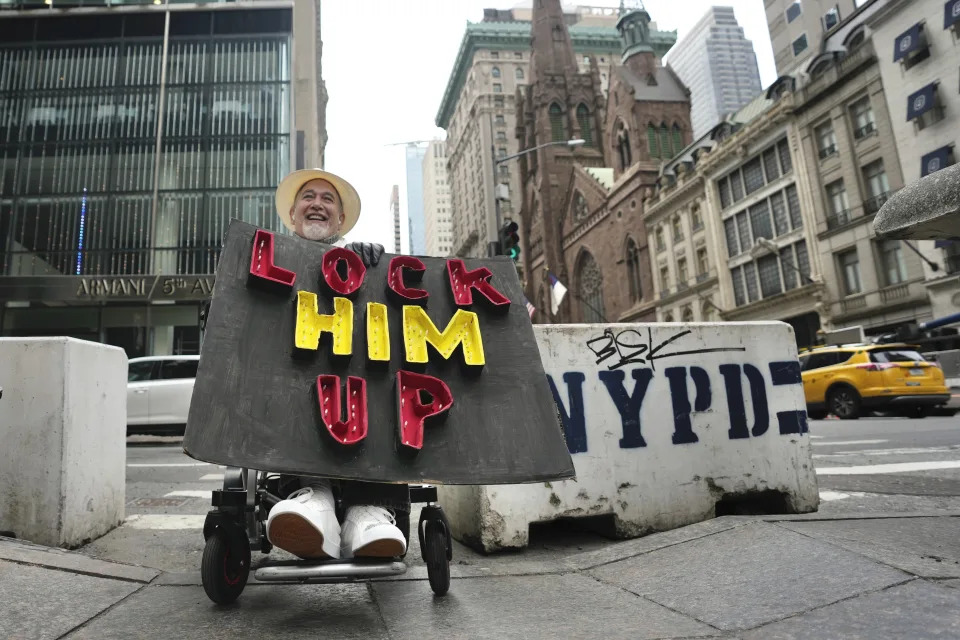
Richard Fisher protests former President Donald Trump outside Trump Tower on Friday, March 31, 2023, in New York. Former President Donald Trump was indicted by a Manhattan grand jury, Thursday, a historic reckoning after years of investigations into his personal, political and business dealings and an abrupt jolt to his bid to retake the White House.(AP Photo/Bryan Woolston)
Richard Fisher protests former President Donald Trump outside Trump Tower on Friday, March 31, 2023, in New York. Former President Donald Trump was indicted by a Manhattan grand jury, Thursday, a historic reckoning after years of investigations into his personal, political and business dealings and an abrupt jolt to his bid to retake the White House.(AP Photo/Bryan Woolston)
Protesters gather outside Trump Tower on Friday, March 31, 2023, in New York. Former President Donald Trump was indicted by a Manhattan grand jury, Thursday, a historic reckoning after years of investigations into his personal, political and business dealings and an abrupt jolt to his bid to retake the White House. (AP Photo/Bryan Woolston)

NEW YORK (AP) — Former President Donald Trump will be arraigned Tuesday after his indictment in New York City, court officials said Friday, his formal surrender and arrest presenting the historic, shocking scene of a former U.S. commander in chief forced to stand before a judge.

While Trump and his lawyers prepared for his defense, the prosecutor in his hush money case defended the grand jury investigation that propelled him toward trial, as congressional Republicans painted it all as politically motivated.

In a letter obtained by The Associated Press, Manhattan District Attorney Alvin Bragg told three Republican House committee chairs Friday that such claims are “misleading and meritless” and rebuffed congressional probing into the grand jury process — by law, a confidential one.

“We urge you to refrain from these inflammatory accusations, withdraw your demand for information, and let the criminal justice process proceed without unlawful political interference,” Bragg wrote to Reps. James Comer, Jim Jordan and Bryan Steil.

House Speaker Kevin McCarthy has vowed to use congressional oversight to probe Bragg. Steil, Jordan and Comer have asked Bragg’s office for grand jury testimony, documents and copies of any communications with the Justice Department.

Trump’s indictment, announced Thursday, came after a grand jury probe into hush money paid during the 2016 presidential campaign to squelch allegations of an extramarital sexual encounter. The indictment itself has remained sealed, as is standard in New York before an arraignment.

Trump, a Republican, has denied any wrongdoing and denounced the investigation as a “scam,” a “persecution,” an injustice and a political low blow aimed at damaging his 2024 presidential run.

Trump lawyer Joseph Tacopina said during TV interviews Friday he would “very aggressively” challenge the legal validity of the Manhattan grand jury indictment. Trump himself, on his social media platform, trained his ire about what he calls a “political persecution” on a new target: the judge expected to handle the case.

No ex-president has ever been charged with a crime before, so there’s no rulebook for booking one. Trump has Secret Service protection, so agents would need to be by his side at all times.

Indeed, Trump was asked to surrender Friday, but his lawyers said the Secret Service needed more time to make security preparations, two people familiar with the matter told The Associated Press.

Even for defendants who turn themselves in, answering criminal charges in New York generally entails at least several hours of detention while being fingerprinted, photographed, and going through other procedures.

Bragg’s office said Thursday it had contacted Trump’s lawyer to coordinate a surrender. Ahead of the court’s announcement of the arraignment date, Trump’s attorney, Joseph Tacopina, said that Tuesday was the likely date for Trump to turn himself in.

The investigation dug into six-figure payments made to porn actor Stormy Daniels and former Playboy model Karen McDougal. Both claim to have had sexual encounters with the married Trump years before he got into politics; he denies having sexual liaisons with either woman.

As Trump ran for president in 2016, his allies paid the women to bury their allegations. The publisher of the supermarket tabloid the National Enquirer paid McDougal $150,000 for rights to her story and sat on it, in an arrangement brokered by former Trump lawyer Michael Cohen.

After Cohen himself paid Daniels $130,000, Trump’s company reimbursed him, added bonuses and logged the payments to Cohen as legal expenses.

Federal prosecutors argued — in a 2018 criminal case against Cohen — that the payments equated to illegal aid to Trump’s campaign. Cohen pleaded guilty to campaign finance violation charges, but federal prosecutors didn’t go after Trump, who was then in the White House. However, some of their court filings obliquely implicated him as someone who knew about the payment arrangements.

The New York indictment came as Trump contends with other investigations that could have grave legal consequences.

In Atlanta, prosecutors are considering whether he committed any crimes when trying to get Georgia officials to overturn his narrow 2020 election loss there to Joe Biden.

At the federal level, a Justice Department-appointed special counsel also is investigating Trump’s efforts to unravel the national election results. Additionally, the special counsel is examining how and why Trump held onto a cache of top secret government documents at his Florida club and residence, Mar-a-Lago, and whether the ex-president or his representatives tried to obstruct the probe into those documents.

Associated Press writers Colleen Long and Farnoush Amiri contributed from Washington.

Putin’s getting nervous about Russia’s sinking economy

Yahoo! Finance

Putin’s getting nervous about Russia’s sinking economy


Rick Newman, Senior Columnist – March 30, 2023

Kremlinologists think it’s no coincidence that Russian authorities seized Wall Street Journal reporter Evan Gershkovich just a day after he co-authored a Journal story on how Russia’s economy is “starting to come undone.”

Russia says Gershkovich was spying, which the Journal adamantly denies. It’s safe to believe the Journal because Russia passed a law last year that basically criminalizes what journalists do: ask questions about things the government doesn’t want anybody to know about.

That law focuses on anybody spreading information about the Russian military, which may apply to Gershkovich because he was reportedly researching a story on the Wagner paramilitary group that’s part of Russia’s invasion force in Ukraine. But that’s just a pretext for Russian President Vladimir Putin to punish and silence one voice highlighting the economic price Russians are starting to pay for Putin’s disastrous invasion of Ukraine.

A picture taken on July 24, 2021 shows journalist Evan Gershkovich. - A US reporter for The Wall Street Journal newspaper has been detained in Russia for espionage, Russian news agencies reported Thursday, citing the FSB security services.
A picture taken on July 24, 2021 shows journalist Evan Gershkovich. – A US reporter for The Wall Street Journal newspaper has been detained in Russia for espionage, Russian news agencies reported Thursday, citing the FSB security services. “The FSB halted the illegal activities of US citizen Evan Gershkovich… a correspondent of the Moscow bureau of the American newspaper The Wall Street Journal, accredited with the Russian foreign ministry,” the FSB was quoted as saying. He is “suspected of spying in the interests of the American government” and of collecting information “on an enterprise of the Russian military-industrial complex,” agencies reported. (Photo by Dimitar DILKOFF / AFP) (Photo by DIMITAR DILKOFF/AFP via Getty Images)

For several months after Russian forces invaded Ukraine last February, the Russian economy seemed resilient. A spike in energy prices boosted Russia’s oil and gas revenue, its largest source of funds. Deft maneuvers by the Russian Central Bank helped the country withstand tough sanctions imposed by the United States and other allies of Ukraine. Russian forces floundered in Ukraine, but that was due to poor military planning and execution, not sanctions.

Now, however, sanctions are finally beginning to strangle the Russian economy in ways that could set it back for years. Laura Solanko of the Bank of Finland recently described how Russia is undergoing “reverse industrialization” in which the military-industrial complex driven by war needs crowds out the consumer economy, as in Soviet times. “Russia is stuck ineluctably on a path to lower potential growth and a bleak economic future,” Solanko wrote on March 27.

On paper, Russia seems to be surviving. Official data show its economy shrank by 2.2% in 2022, with the International Monetary Fund (IMF) forecasting flat GDP growth in 2023. But Russia, never the most trustworthy data purveyor, has stopped publishing a variety of economic statistics, and some IMF critics have blasted the agency’s Russia forecast as naïve and wrong. The wonky debate matters because it gets to the question of whether sanctions are accomplishing anything or not.

Russian President Vladimir Putin takes part in a ceremony via video link at the Kremlin in Moscow, Russia March 30, 2023. Sputnik/Gavriil Grigorov/Pool via REUTERS ATTENTION EDITORS - THIS IMAGE WAS PROVIDED BY A THIRD PARTY.
Russian President Vladimir Putin takes part in a ceremony via video link at the Kremlin in Moscow, Russia March 30, 2023. Sputnik/Gavriil Grigorov/Pool via REUTERS ATTENTION EDITORS – THIS IMAGE WAS PROVIDED BY A THIRD PARTY.

In early March, Russian journalist Boris Grozovsky detailed a new Russian economy in which “all resources go to war” and “household goods are sacrificed.” Spending on consumption, he reported, fell by 49% in 2022, largely because there was nothing to buy. There’s been explosive growth in sectors related to defense production, but cars, furniture, and appliances have grown scarce as imports disappeared and the Russian economy pivoted toward materiel needed for the war.

Murmurs of discontent are seeping out of Russia itself. Aluminum magnate Oleg Deripaska said at a recent conference in Siberia that Russia will run out of money by 2024. He complained about new taxes on Russian businesses to help finance the war effort. Even Putin has acknowledged that “restrictions imposed on the Russian economy may indeed have a negative impact.”

Sanctions imposed after Russia invaded Ukraine in February 2022 aimed to isolate its financial system and restrict trade while leaving Russia’s energy exports more or less intact. Since Russia is one of the world’s largest exporters of oil and natural gas, the goal was to hurt Russia without causing a global energy shortage that would send prices soaring. That largely worked, but the scheme allowed Russia to continue earning huge amounts of energy revenue that helped finance the war.

Last December, the European Union banned most imports of Russian oil, while a U.S.-led group of large economies imposed a price cap of $60 per barrel on Russian oil. Those sanctions were novel and nobody was sure they’d work. Some Ukraine allies wanted a lower oil price cap that would reduce Russia’s oil revenues even more.

Energy markets remained calm after those moves went into effect, and in February a similar set of sanctions went into effect on refined Russian hydrocarbons such as diesel fuel. Russia is still exporting energy, but the sanctions do seem to be forcing costly workarounds in Russia’s energy exports and denting revenue. The allied nations could lower the price caps on Russian energy at any time, effectively tightening the sanctions.

Russia’s economic woes are intensifying as it seems to be running short of tanks, artillery, and other weapons vitally needed in Ukraine. The intent of sanctions is to make it progressively more difficult for Russia to sustain the war. Ukraine, of course, is suffering weapons shortages of its own and a sharp economic contraction, though billions in aid from the United States and other partners compensates for some of that.

The Journal piece, written by Gershkovich and Georgi Kantchev, catalogued Russia’s economic woes and its diminution into a kind of junior partner for China, whose economic assistance it depends on. The story described how sanctions prevent Russian airlines from obtaining spare parts and finance firms from updating software. New-car sales have plunged by 62% year-over-year. Investment in Russian oil and gas exploration is down 42%, which could lead to a long-term decline in Russia’s energy output.

That wasn’t the first story on Russia’s economic problems, but it was comprehensive and may have arrived just as Putin is feeling the rising heat of a failing war and a flat-lining economy. Snatching Gershkovich on bogus charges probably reveals increasing desperation for Putin, yet it’s consistent with the bullying behavior of a dictator who has badly erred and blames the messengers. It won’t be the last of Putin’s aberrant behavior.

Sir Nick Faldo: LIV players have quit their job – and now they want a bonus

The Telegraph

Sir Nick Faldo: LIV players have quit their job – and now they want a bonus

Jim White – March 30, 2023

Nick Faldo - Nick Faldo: LIV players have quit their job – and now they want a bonus - Getty Images/Luke Walker
Nick Faldo – Nick Faldo: LIV players have quit their job – and now they want a bonus – Getty Images/Luke Walker

Sir Nick Faldo is back. And he is as full as ever of opinions, on everything from the BBC, through the height of tees, to LIV Golf. His return, however, may come as a surprise, because last August he bade farewell from the commentary box at the American network CBS, for whom he had covered all the big golfing events (and a few smaller ones) for 16 years.

As goodbyes go, this was one that looked pretty permanent, an adieu so tearful that he and his fellow pundits ran out of tissues. Yet, barely seven months on, the 65-year-old has returned to be part of Sky’s coverage of the Masters from Augusta. And one thing is for sure: his time away from the microphone has not dampened his opinions.

Take his view of LIV Golf, the Saudi-backed breakaway tour run by his old Masters sparring partner Greg Norman.

“All this ‘we’re going to supercharge the excitement’,” he says of LIV’s claim it is a golfing game-changer. “Well, we haven’t seen any excitement because nobody’s watching.”

As for the LIV players breaking off to do their own thing and then insisting on competing in a tournament such as the Masters, Faldo is not holding back.

“Hey, if you want to go and do something different, fine. But this [playing in the Masters] is a bit like: You had a job in a store and now you’ve got a new one, then you’re calling the store demanding you get a bonus. I’ve got nothing against these guys, the grass is greener on the other side and all that. But don’t get all uppity if people object when you come back.”

Lest anyone accuse him of being the Roy Hodgson of television punditry, unable to keep away even after saying he was off, the great three-time Masters winner wants to make it clear he never said he was retiring. Just pulling back.

“I wanted to cut down from full-time commentary. It was too much,” he says. “It’s a great job, don’t get me wrong. But you’re basically flying twice a week. You check out of a hotel and they say: See you again next year. And sure enough, another year goes by and you’re checking in again. And hey, that just hit me and I was like: I’m off. I have other things to do with my life.”

There is, he says, plenty to do: he has a course design business and is involved in a tournament in the Far East trying to fast-track new players on to the DP World Tour – which he calls the “hashtag growing the game.”

Then there is his farm in the middle of Montana, from where he is speaking to Telegraph Sport. Though he is quick to point out “farm” may be something of an exaggeration: He is definitely no golfing Jeremy Clarkson.

“He’s doing it properly and as he goes he’s highlighting the bloody difficulty of being a farmer in Britain. So good on him,” he says of Clarkson. “I’m just about getting my boots muddy. Most of my time seems to be spent feeding the dogs. Really, we’re just doing it all for the scenery.”

And he describes the view from the window as he speaks, the uninterrupted mountain range, the river where he fishes, the several feet of snow that has lain thereabouts all winter.

“Yeah, that’s been a surprise,” he says of the four months of deep-freeze conditions. “Augusta will make a nice change.”

Though it is not just the lush fairways and magnolias that are drawing him back down to Georgia. It is the golf. The lure of being involved once again in a sport which he has played and commentated on for the past 46 years.

“I want to do the big stuff,” he says. “I want to be there for the Majors.”

In the United States, he became a much-loved fixture of the CBS golf coverage, his light touch, dry humour and refusal to take himself seriously were hugely admired. Which might come as a surprise to Sky viewers in Britain who remember him as a golfer of almost terrifying intensity. Where did that comedy come from? After all, he was not joking when he hunted down Greg Norman on that final day in Augusta in 1996 to win his third green jacket.

“I felt insulted when people said I invented my broadcasting style to disguise the fact I was such an arse,” he says. “I read people saying it was an act to come across as a nice guy. Actually, it is me. I credit my dad for this. He loved his amateur dramatics, and I think it brings out the theatre in me. Make it quick, make it funny. And it’s a show, that’s the other thing to remember: It’s entertainment. I always thought, ‘Well if I entertain myself, then hopefully that comes across.’”

When he talks about what is needed at Augusta, he knows precisely what he is talking about. “Way back from my first year of TV, I said, ‘All right, don’t sit here and wish you were out there. Just say what you see and let the pictures tell the story’.”

‘Golf is a global sport and Augusta is its showcase. The BBC should be there’

Not that Faldo is lacking in opinion. There is, for instance, his take on the fact that, barring a late stay of execution, the BBC will no longer broadcast so much as edited television highlights from Augusta. After all, it was watching the Beeb’s coverage of Jack Nicklaus winning the 1972 edition on his parents’ new colour television that first lured the teenage Faldo into the game.

“Well, it’s not right,” he says of BBC Television’s probable absence. “It’s a global sport and Augusta is its showcase. They should be there. Very simple, they really should be there.”

Then there is his dismay at the manner in which equipment advances have changed the nature of the game, particularly the distance of drives. “I come from an era when only about five golfers could hit over 300 yards. Now everyone can. We had drivers that had a sweetspot the size of a pea. Now they are the size of Montana.”

His solution is a simple one, a lot simpler than the PGA’s mooted idea of altering the ball, which is causing such unrest in the locker room. “I mean it sounds a silly thing, but it’s the size of the tee peg,” he says. “They wallop these drives from tees about a foot high. Make them play off the ground and instantly they won’t be able to hit the ball into the next time zone.”

And then there is LIV Golf. Initially he said he did not want to talk about LIV. But once he starts, there is no stopping him.

“I’m not against them. They decided the grass is greener on their tour. Fine. The gripes I get is when he [Norman] said these things about doing it to grow the game of golf. We’ve all been here 40 years or more, hang on mate. The fact is they got a ridiculous cash offer, which for some of them was the right thing to do.

“But as we said, it’s gone very quiet. So good luck with changing the game.”

Nick Faldo interview: LIV players have quit their job - and now they want a bonus - Getty Images/Christian Petersen
Nick Faldo interview: LIV players have quit their job – and now they want a bonus – Getty Images/Christian Petersen

Faldo will doubtless let his opinion be known when he attends the Champions Dinner the night before the Masters starts. This is a unique social gathering in which only those who have previously worn the Green Jacket may attend. Norman will not be there as, largely thanks to Faldo, he never won it. But there will still be a significant representation of LIV players.

“That is going to be a great evening,” he says. “Six of them [LIV golfers] are champions. There could be a few fireside stories after that. Apparently we’re using plastic knives and forks this year. Just in case.”

DeSantis has one thing in common with trump, they do nothing constructive: No One Is Talking About What Ron DeSantis Has Actually Done to Florida

Time

No One Is Talking About What Ron DeSantis Has Actually Done to Florida

William Kleinknecht – March 29, 2023

Florida Governor DeSantis Kicks Off His "Freedom Blueprint" Tour In Florida
Florida Governor DeSantis Kicks Off His “Freedom Blueprint” Tour In Florida

Florida Gov. Ron DeSantis speaks during an event spotlighting his newly released book, ‘The Courage To Be Free: Florida’s Blueprint For America’s Revival at the Orange County Choppers Road House & Museum on March 08, 2023 in Pinellas Park, Fl. Credit – Joe Raedle—Getty Images

Media coverage of Florida Gov. Ron DeSantis’s all-but-announced candidacy for president is already in full frenzy, and so far the script is exactly as his handlers would like it to be. The governor regularly opens up new fronts in the culture wars, sowing alarm over critical race theory, transgender rights, or border policies. In response, liberal pundits fall into the trap of accentuating the very issues DeSantis has chosen to fire up his base.

Omitted from the public debate about DeSantis’s policies is almost any discussion of his actual record of governance—what exactly he has delivered to the citizens of his state, especially those without seven-figure incomes and lush investment portfolios.

Even a cursory dip into the statistics of social and economic well-being reveals that Florida falls short in almost any measure that matters to the lives of its citizens. More than four years into the DeSantis governorship, Florida continues to languish toward the bottom of state rankings assessing the quality of health careschool fundinglong-term elder care, and other areas key to a successful society.

Florida may be the place where “woke goes to die”—as DeSantis is fond of saying—but it is also where teachers’ salaries are among the lowest in the nation, unemployment benefits are stingier than in any other state, and wage theft flourishes with little interference from the DeSantis administration. In 2021, DeSantis campaigned against a successful ballot initiative to raise the state’s minimum wage, which had been stuck at $8.65 an hour. Under DeSantis’s watch, the Sunshine State has not exactly been a workers’ paradise.

Read More: Why “Woke” Is A Convenient Republican Dog Whistle

DeSantis weaponizes the cultural wars to distract attention from the core missions of his governorship, which is to starve programs geared toward bettering the lives of ordinary citizens so he can maintain low taxes on the wealthy and corporations. Florida is the ideal haven for privileged Americans who don’t want to pay their fair share of taxes. It has no income tax for individuals, and its corporate tax rate of 5.5% is among the lowest in the nation. An investigation by the Orlando Sentinel in late 2019 revealed the startling fact that 99% of Florida’s companies paid no corporate income tax, abetted by tax-avoidance schemes and state officials who gave a low priority to enforcing tax laws.

This is a pattern that shows up in the statistics of many Republican-led states, which on average commit fewer dollars per-capita to health carepublic education, and other crucial services compared to their blue counterparts, while making sure corporations and wealthy individuals are prioritized for tax relief. Arizona cut taxes every year between 1990 and 2019, following up with a shift to a flat tax this year that will cost its budget $1.9 billion. Meanwhile, its public-school spending ranks 48 among the 50 states.

In Florida, the state’s tax revenues come largely through sales and excise taxes, which fall hardest on the poor and middle class. A 2018 study by the left-leaning Institute on Taxation and Economic Policy found that Florida had the third least-equitable tax system of the 50 states. In the state’s “upside-down” tax structure, the poorest 20% of Florida families paid 12.7% of their income in taxes, while the families whose income was in the top 4% paid 4.5%, and the top 1% paid 2.3%, according to the study.

Florida taxpayers get less for their money than residents of many other states. The Commonwealth Fund, a private foundation that studies health-care systems globally, found in its 2022 “scorecard” that Florida had the 16th worst health care among the 50 states. It’s no wonder that Florida ranks below the northern blue states in life expectancy and rates of cancer deathdiabetesfatal overdosesteen birth rates, and infant mortality.

Largely because of DeSantis’s obstinacy, Florida is one of 10 states that have refused to expand Medicaid under the Affordable Care Act, an act of political spite that has cost those states billions in federal health care dollars and cost thousands of people their lives. More than 12% of Floridians are without medical insurance, a worse record than all but four other states. Despite having the country’s highest percentage of retirees, Florida has the worst long-term care among the 50 states, according to the American Association of Retired Persons.

Public schools fare no better than health care in DeSantis’s Florida. Not only did Florida rank 49th in the country for average teacher pay in 2020, but the Education Law Center, a non-profit advocacy group based in New Jersey, found in a 2021 report that the state had the seventh-lowest per-pupil funding in the country. Education Week, which ranks states public school annually, looking beyond mere test scores, placed Florida 23rd in its 2021 report, a lackluster showing for a large and wealthy state.

It says something about the state of our political discourse that Florida’s denuded public sector was not more of an issue in last year’s gubernatorial campaign. In endorsing DeSantis’s Democratic opponent, Charlie Crist, the Tampa Bay Times spent so many column inches on the incumbent’s demagoguery, vindictiveness, and authoritarian tendencies that it never even got to the minutiae of his governance. “No matter what you think about the state of the Florida economy or its schools or its future…,” the paper wrote, “the choice really is this simple: Do you want the state governed by a decent man or a bully?”

To be fair to the media, DeSantis and his allies manned the trenches of the culture wars so ferociously that it was all reporters could do to keep up with all the bomb throwing. How do you delve into the state’s tax policy when your governor is flying planeloads of migrants to Martha’s Vineyard or declaring war on Disney for issuing a statement in opposition to the state’s so-called “Don’t Say Gay Law”?

But that is very much the point of wedge issues, as they have been wielded by scurrilous politicians for decades, to anger and distract voters so they won’t notice the actions of public officials that mainly benefit the wealthy and are against the public interest.

As the 2024 election draws closer, DeSantis must not be allowed to accomplish nationally what he did in his state—cloak his service to the wealthy by frightening working people with stories about transgender recruiting and “socialist” college professors. There are unmistakable signs that Americans are focused on what an activist government can do for the public good, as evidenced by Floridians’ vote to increase the minimum wage.

The failure of DeSantis to better serve the most vulnerable citizens of his state is his weak underbelly in a national campaign.

The US housing market is crashing and soaring at the same time. It all depends on where you live.

Business Insider

The US housing market is crashing and soaring at the same time. It all depends on where you live.

Matthew Fox – March 28, 2023

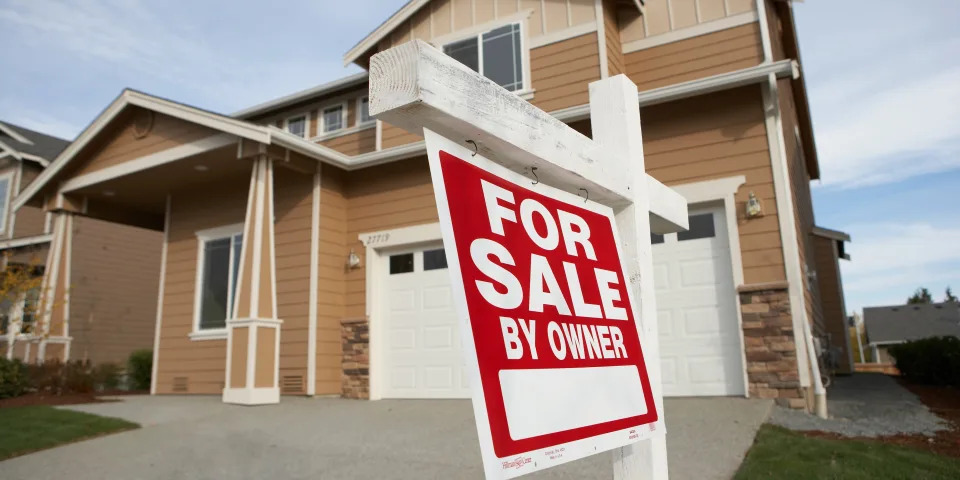
A for-sale sign home in Washington state
Mortgage rates could fall as low as 5% this year but may not be enough to significantly boost home sales.Thomas Northcut/Getty Images
  • The US housing market is crashing and soaring all at the same time as pockets of the market see divergent trends.
  • Home prices on the West Coast have plunged as much as 10%, while homes in the East have surged.
  • The home price trends have been driven by mortgage rates, little supply, and broader economic trends. 

The US housing market is experiencing both a crash and a boom at the same exact time, and it all depends on where you live.

According to data from Black Knight, home prices on the West Coast are plunging at the same time home prices on the East Coast are surging. The split between rising fortunes or sinking home values essentially depends on whether the home is located east or west of the Rocky mountains.

From January 2022 to January 2023, home prices fell 7.5% in Seattle and dropped 10.3% in San Francisco. At the same time, home prices surged 12% in Miami and jumped 9.3% in Orlando. Even Buffalo, NY saw home price values rise 8.3% on an annual basis in January.

Except for Austin, Texas, 37 of the biggest metro areas east of Colorado saw home prices rise year-over-year in January. Meanwhile, all 12 of the major housing markets west of Texas saw home prices fall over the same time period.

Such a split in the US housing market is unprecedented. In the US housing crisis of 2007 and 2008, home prices dropped in 134 out of the 153 metropolitan areas, and the select few pockets of strength saw home prices stay essentially flat, not rise like they are today.

“We’ve never seen anything quite like this where it’s so stark, west to east,” Black Knight vice president Andy Walden told The Wall Street Journal.

The unprecedented nature of the bifurcated housing market is driven by a number of factors that stem from the COVID-19 pandemic, which saw a boom in housing demand at a time when the supply of homes was limited.

Fast forward to today, and supply is still low, while mortgage rates have soared to levels not seen in more than a decade, making it more expensive for prospective home buyers. That means housing markets that have a supply of relatively affordable homes, such as Buffalo, NY and Hartford, Connecticut, have seen steady price gains.

But in areas of the market that were already suffering from sky-high home prices, like in San Francisco and Los Angeles, there has been room for home prices to fall. And a wave of layoffs at high-profile technology companies that are mostly concentrated in West Coast cities has removed potential buyers from the market and has likely sparked an uptick in homes for sale.

To be sure, West Coast home prices had room to fall after experiencing dizzying gains over the past decade. Home prices in San Francisco soared 112% between 2012 and 2020, nearly doubling the national gain of 58% during that same time period, according to data from S&P Dow Jones Indices.

The pain seen in West Coast housing prices might take time to spread to the East Coast, if it does at all, given that the supply of homes remains extremely limited. At the same time, the millennial generation and Gen Z represents a large swath of prospective buyers that could help keep any future price declines limited.

That’s as long as mortgage rates don’t surge even higher. The average 30-year fixed mortgage rate was at 6.42% last week, well below its one-year high of 7.08%, according to data from Freddie Mac. That represents some relief for prospective home buyers.

Sen. Sherrod Brown: American consumers losing power over their savings and paychecks is an emergency, too.

MarketWatch – Outside the Box

Opinion: Sen. Sherrod Brown: American consumers losing power over their savings and paychecks is an emergency, too.

The Consumer Financial Protection Bureau holds Wall Street and big banks accountable. The U.S. Supreme Court must protect it, writes Sen. Sherrod Brown.

Sherrod Brown – March 27, 2023

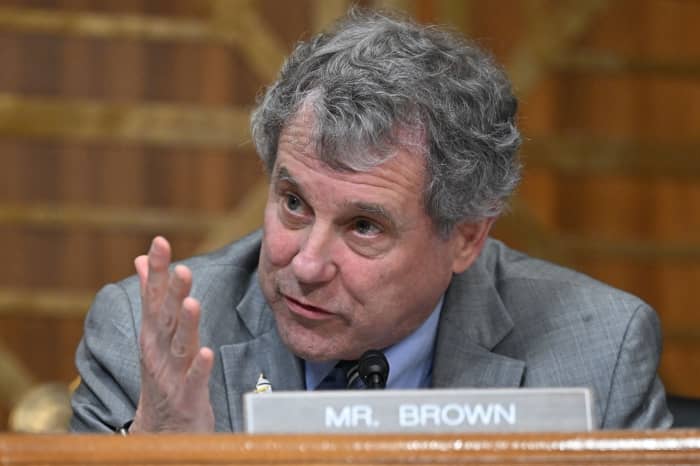
U.S. Senator Sherrod Brown (D-OH) says the CFPB must remain strong and independent. AGENCE FRANCE-PRESSE/GETTY IMAGES

The collapse of Silicon Valley Bank sent shockwaves through the global economy and had the makings of another crisis. Depositors raced to withdraw money. Banks worried about the risk of contagion. I spent that weekend on the phone with small business owners in Ohio who didn’t know whether they’d be able to make payroll the next week. One woman was in tears, worried about whether she’d be able to pay her workers. 

The Federal Deposit Insurance Corporation (FDIC) and the Federal Reserve responded quickly, took control of the bank, and contained the fallout. Consumers’ and small businesses’ money was safe. That Ohio small business was able to get paychecks out.

The regulators were able to protect Americans’ money from incompetent bank executives because when Congress created the Federal Reserve in 1913 and the FDIC in 1933, it ensured that their funding structures would remain independent from politicians in Congress and free from political whims. 

But now, as the U.S. Supreme Court considers the case of Community Financial Services Association v. CFPB, these independent watchdogs’ ability to keep our financial system stable faces an existential threat.

The Consumer Financial Protection Bureau is the only agency solely dedicated to protecting the paychecks and savings of ordinary Americans, not Wall Street executives or venture capitalists. Corporate interests have armies of lobbyists fighting for every tax break, every exemption, every opportunity to be let off the hook for scamming customers and preying on families.

The CFPB’s funding structure is designed to be independent, just like the Fed and the FDIC.

Ordinary Americans don’t have those lobbyists. They don’t have that kind of power. The CFPB is supposed to be their voice — to fight for them. The CFPB’s funding structure is designed to be independent, just like the Fed and the FDIC. Otherwise, its ability to do the job would be subject to political whims and special interests — interests that we know are far too often at odds with what’s best for consumers.

Since its creation, the CFPB has returned $16 billion to more than 192 million consumers. It’s held Wall Street and big banks accountable for breaking the law and wronging their customers. It’s given working families more power to fight back when banks and shady lenders scam them out of their hard-earned money. 

The CFPB can do this good work because it’s funded independently and protected from partisan attacks, just as the Fed and the FDIC are. So why, then, does Wall Street claim that only the CFPB’s funding structure is unconstitutional?

Make no mistake — the only reason that Wall Street, its Republican allies in Congress, and overreaching courts have singled out the CFPB is because the agency doesn’t do their bidding. The CFPB doesn’t help Wall Street executives when they fail. It doesn’t extend them credit in favorable terms or offer them deposit insurance like the other regulators do. The CFPB’s funding structure isn’t unconstitutional — it just doesn’t work in Wall Street’s favor.

If the Supreme Court rules against the CFPB, the $16 billion returned to consumers could be clawed back. What would happen then — will America’s banks really go back to the customers they’ve wronged with a collection tin?

Invalidating the CFPB and its work would also put the U.S. economy — and especially the housing market — at risk.

Invalidating the CFPB and its work would also put the U.S. economy — and especially the housing market — at risk. For more than a decade, the CFPB has set rules of the road for mortgages and credit cards and so much else, and given tools to help industry follow them. If these rules and the regulator that interprets them disappear, markets will come to a standstill. 

By attacking the CFPB’s funding structure and putting consumers’ money at risk, Wall Street is putting the other financial regulators in danger, too. 

The Fifth Circuit’s faulty ruling against the CFPB is astounding in its absurdity — the court ruled that the authorities that other financial agencies, like the Federal Reserve and the FDIC, have over the economy do not compare to the CFPB’s authorities. In other words, the court is claiming that the CFPB supposedly has more power in the economy than the Fed.

That’s ridiculous. Look at the extraordinary steps taken to contain the failures of Silicon Valley Bank and Signature Bank — the idea that the CFPB could take action even close to as sweeping is laughable.

But we know why the Fifth Circuit put that absurd assertion in there — they recognize the damage this case could do to these other vital agencies, and to our whole economy.

Imagine what might happen if another series of banks failed and the FDIC did not have the funds to stop the crisis from spreading.

The FDIC’s own Inspector General has stated that the Fifth Circuit ruling could be applied to their agency. If that happens, the FDIC and other regulators could be subject to congressional budget deliberations, which we all know are far too partisan and have resulted in shutdowns. Imagine what might happen if another series of banks failed and the FDIC did not have the funds to stop the crisis from spreading, or the Deposit Insurance Fund to protect depositors’ money. Imagine if politicians caused a shutdown, and we were without a Federal Reserve. 

U.S. financial regulators are independently funded so that they can respond quickly when crises happen. It’s telling, though, that plenty of people in Washington don’t seem to consider the CFPB’s issues in the same category. Washington and Wall Street expect the government to spring into action when businesses’ money is put at risk. But when workers are scammed out of their paychecks, that’s not an emergency — it’s business as usual. 

When Wall Street’s abusive practices put consumers in crisis, the CFPB must have the funding and strength it needs to carry out its mission — to protect consumers’ hard-earned money. 

U.S. Sen. Sherrod Brown (D-OH) is chairman of the U.S. Senate Committee on Banking, Housing, and Urban Affairs.

More: Supreme Court to hear case that will decide the future of consumer financial protection

Florida’s Latest Tourism Problem Is Twice the Width of the United States

The Street

Florida’s Latest Tourism Problem Is Twice the Width of the United States

Jena Greene – March 27, 2023

The dreaded return of an invasive species could ruin beach-going up and down the coast.

Between hurricane season, rising water levels, ongoing feuds between Disney and the local government, and crazed spring breakers, Florida already has enough to worry about. 

The last thing the state wants is a giant blob of seaweed headed directly for a coastal impact on its pristine sunny beaches — but it’s looking like that’s what it’s going to get. 

DON’T MISS: If You Want to Visit Florida for Spring Break, It May Be Too Late

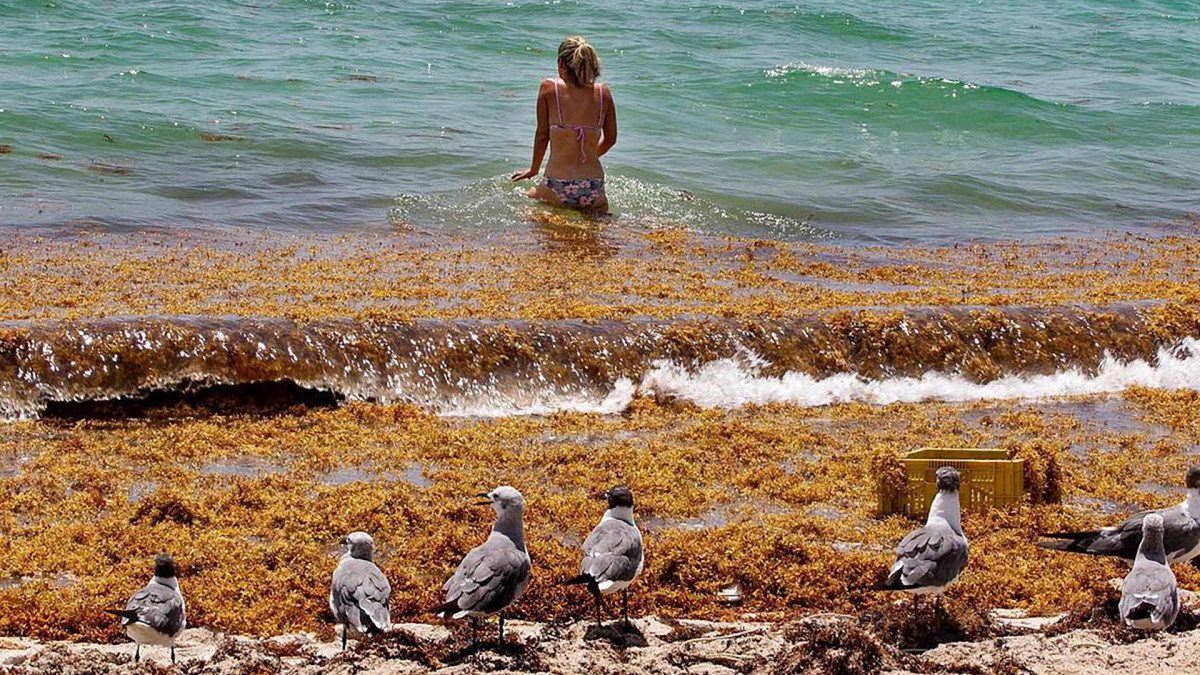
Seaweed Blob Florida Lead KL 032723
Pedro Portal/Miami Herald/Tribune News Service via Getty
What is Sargassum Seaweed?

Buoyant brown seaweed, or The Great Atlantic Sargassum Belt as it’s formally known, is something many Floridians have come to know. It’s an invasive species that’s something of a grim reaper for sea life; it kills some marine animals and destroys coral reefs in its path.

Sargassum is a brown, rubbery seaweed that releases a foul odor once it washes up on the beach and decays in the sunlight. In the ocean, the seaweed tends to bind up and reproduce, creating big, blobby problems for boaters and animals. It’s also one of the few marine species that replicates (and therefore, gets bigger) while on the water’s surface. 

Once it’s washed up, it can take days or even weeks to remove the stuff. Since it smells sulphuric and makes beaches difficult to enjoy, some hotels even see decreased foot traffic while it’s around. 

How Big Is the Seaweed Blob Heading for the U.S.? 

Sargassum regularly washes up on coastal North and central America, particularly around Florida, Mexico and the Caribbean. But this year’s Sargassum is massive at 5,000 miles (8,000 km) long, and stretches between West Africa and the Gulf of Mexico. That’s nearly twice as wide as the U.S. 

“What is unusual this year compared to previous years is it started early,” University of South Florida oceanography professor Chuanmin Hu said. “The algae generally blooms in the spring and summer, but ‘this year, in the winter, we already have a lot.'”

Experts say it’s already started showing up on Key West, FL. There’s already an estimated 10 million metric tons of the seaweed floating around in the middle of the ocean and it’s likely to get bigger before it washes up. 

Sargassum Can Affect Travel and Tourism

It’s no surprise that many hotels view giant seaweed blobs as problematic for tourism, but there are several measures some can take to mitigate its impact. 

“Keeping sargassum at bay from a beach where it’s determined to wash ashore is like fighting a rising tide,” Afar reports. “Apart from removing what washes ashore as it arrives, [USF professor Brian] Barnes says a hotel might consider installing a floating boom offshore (usually made of PVC and deployed parallel to the shoreline) with the goal of preventing sargassum from coming ashore. But again, it represents a small measure against a monumental task.”

Luckily, mild to moderate exposure to Sargassum doesn’t a major risk to human health, and some animals, including sea turtles, even dine on the stuff. 

Kerry: Americans don’t need to have ‘lower quality of life’ to fight climate change

Yahoo! News

Kerry: Americans don’t need to have ‘lower quality of life’ to fight climate change

Ben Adler, Senior Editor – March 24, 2023

Americans do not have to compromise on their quality of life in order to help prevent catastrophic climate change, special presidential envoy for climate John Kerry told Yahoo News.

When asked about the recent backlash regarding proposals to restrict the use of private jets or gas stoves, Kerry argued that no such changes are necessary in order to dramatically reduce greenhouse gas emissions.

“When you say ‘change your lifestyle,’ people feel, ‘Oh, you’re challenging me to have a lower quality of life,’” the former secretary of state and United States senator said in a Friday interview at Yahoo News’ New York City offices. “No, we don’t have to have a lower quality of life.”

John Kerry
Climate czar John Kerry. (Photo illustration: Yahoo News; photos: Ethan Hill for Yahoo News)

Even while addressing climate change, Kerry maintained, Americans will still be able to enjoy the comforts of modern life as long as they choose lower-emission alternatives as a part of their lifestyle.

“Do you have to change some of the choices you make in your life? Yeah, I have now a solar field outside the house that’s feeding the house,” Kerry said. “I drive an electric car now. I didn’t do that five years ago. And when I got in the electric car, I said, ‘Why did I wait so long?’ It’s a fabulous drive. So I think that, yes, we have to make different decisions, but they do not have to — and shouldn’t, absolutely shouldn’t — reduce the quality of life of our citizens.”

Although home solar panels and electric vehicles have long been unaffordable to many Americans, the Inflation Reduction Act, signed into law by President Biden last year, includes subsidies for families making less than $150,000 to buy EVs, solar panels and other low-emissions technology.

But even with the passage of Biden’s new climate law, the U.S. is projected to fall short of the president’s pledge to cut emissions by 50% by 2030. Kerry acknowledged that current policies are insufficient to achieve that goal and said new initiatives are needed to speed up the switch to clean energy.

“Despite all the efforts, we’re not at the pace we need to be to meet the goals we’ve set,” Kerry conceded. “So we have to pick up the scale, pick up the efforts of transition.

“Frankly, nobody should fear this,” he added. “It’s not a challenge to our quality of life. There are great jobs in this transition. Last year, the year before, the fastest-growing job in America was wind turbine technician and the third-fastest-growing job was solar panel installer.”

Projections from the Bureau of Labor Statistics show that over the coming decade, demand for workers in those fields will be among the fastest growing in the nation.

Kerry has been accused of hypocrisy by conservative media outlets such as Fox News for the fact that, until last summer, his wife’s family owned a plane through a charter-flight company. Studies have shown that private jets cause five to 14 times the amount of greenhouse gas emissions per passenger than commercial flights. Kerry noted that he doesn’t use a private jet to travel the world meeting with other governments to work on climate change agreements.

“I didn’t fly private while I was in this job,” Kerry said. “I’ve had one, maybe two private flights, which were military flights in order to get to China during COVID, where we were forced into that, but I fly commercially.” (A spokesperson has previously stated that Kerry isn’t an owner of the company that had the airplane.)

Carbon offset programs have come under increasing scrutiny, however, with critics accusing them of overestimating their environmental benefits.

Kerry went on to say that the aviation sector will ultimately see its emissions reduced through the substitution of biofuels, which are made from feedstocks like corn and manure, for traditional jet fuel.

“We’re already moving on sustainable aviation fuel,” Kerry said. “Boeing and United and others have joined in a pledge. Now 5% of the fuel they’re going to use is going to be sustainable aviation fuel — even though it’s far more expensive than other fuel available. … But we have to be thoughtful about [the fact that] we’re not going to suddenly wipe out every aircraft in the world and not fly.”

Similarly, Kerry suggested that gas stoves and home heating units won’t necessarily all have to be replaced with electric models, if their manufacturers can find a way of eliminating their emissions. “That’s the challenge for the industry, to capture their emissions,” the 2004 Democratic presidential nominee said.

Kerry, 79, is now a grandfather and has been in public service for the last four decades. Asked what the planet will look like when his young grandchildren are his age, he said the answer is up to the older generations.

“It depends entirely on the decisions their parents and grandparents make today,” he said. “We have it in our hands to guarantee them a healthy and strong future. We also — by virtue of indifference, arrogance, inattention — have it in our capacity also to really foul the planet beyond recognition.”

He also urged young people who will be most impacted by climate change to try to shape the future they will live in.

“Get involved,” Kerry said. “We need you desperately. Young people have, historically, in our country … been the agents of change. … It was kids in college who went down South and helped to break the back of Jim Crow.”

“I think that we need young people again to make sure they’re talking to their parents, their grandparents, and going out and acting on their beliefs,” he added.