Rick Steves Is Making One Major Change to His European Guidebooks This Year — for an Important Reason

Travel + Leisure

Rick Steves Is Making One Major Change to His European Guidebooks This Year — for an Important Reason

Kelsey Fowler – April 27, 2023

The newest edition of Rick Steves Eastern Europe is getting a new name.

<p>Courtesy of Rick Steves
Courtesy of Rick Steves’ Europe

The guidebook formerly known as “Rick Steves Eastern Europe” will have a new title when the next edition is published later this year.

Rick Steves’ Europe is changing “Eastern Europe” across the brand to “Central Europe,” to better reflect a more geographically accurate name for the region.

When the 11th edition is published, the guidebook will switch over to “Central Europe” as the identifier for the area that includes countries like the Czech Republic, Poland, Hungary, Slovenia, and Croatia. The change was announced in February and will roll out across the company’s guidebooks, website, and tour itineraries.

In a recent interview with Travel + Leisure, founder Rick Steves explained why he thought the switch was long overdue.

<p>Courtesy of Rick Steves' Europe </p>
Courtesy of Rick Steves’ Europe

“From a marketing, publishing, and tourism point of view, we call Central Europe ‘Eastern Europe’ and that’s a hangover from the Cold War,” he said. “That was a 50-year anomaly. Poland, Hungary, the Czech Republic got filed away in our minds as Eastern Europe, but that’s really Central Europe.”

In a post announcing the change, guidebook co-author Cameron Hewitt wrote that “Eastern” Europe should really be considered countries like Georgia, Ukraine, and Russia. Prague, often the showcase city of “Eastern” European tours, is actually located to the west of cities like Vienna, Stockholm, and even parts of Italy.

“The political divide of Europe has changed, of course, and it’s high time guidebooks and tour itineraries do, too,” Hewitt wrote.

The zone is also down in tourism this year, Steves said, because people are worried about the ongoing war in Ukraine. Rick Steves’ Europe is continuing to operate tours in the region as long as it remains safe to do so, and Steves said he plans to film with his TV crew in Poland later this year.

<p>Courtesy of Rick Steves' Europe </p>
Courtesy of Rick Steves’ Europe

“It’s unfortunate that people are penalizing the countries that are farther east,” Steves said. “Their economy is hurting because people are staying away.”

While the change might result in some confusion for travelers looking to visit Poland but still searching for “Eastern” Europe trips and tips, Hewitt and those at Rick Steves’ Europe believe the change is worth the risk that come with rebranding.

Hewitt wrote: “We’ve learned that Rick Steves travelers are savvy, open-minded, and curious enough about our world to hop on board when we lead them toward new places and new ideas.”

For more Travel & Leisure news, make sure to sign up for our newsletter!

Disney sues Florida’s DeSantis for ‘weaponizing’ government

Reuters

Disney sues Florida’s DeSantis for ‘weaponizing’ government

Dawn Chmielewski and Lisa Richwine – April 26, 2023

FILE PHOTO: Walt Disney World Resort in Orlando

(Reuters) -Walt Disney Co sued Florida Republican Governor Ron DeSantis on Wednesday, asking a court to overturn state efforts to control Disney World and intensifying a battle between a global entertainment giant and a likely White House contender.

In its lawsuit, Disney accused DeSantis and his supporters of illegally using the state government to punish a company for voicing an opinion that should be protected by free-speech rights.

The skirmish began last year after Disney criticized a Florida measure banning classroom discussion of sexuality and gender identity with younger children. DeSantis repeatedly attacked “woke Disney” in public remarks.

Florida lawmakers passed legislation that ended Disney’s virtual autonomy in central Florida where the Disney World theme parks attract millions of visitors each year.

In the action filed in federal court in Tallahassee, Disney said it aimed to protect Disney World’s employees, guests and developers from “retaliation for expressing a political viewpoint unpopular with certain State officials.”

“Disney now is forced to defend itself against a State weaponizing its power to inflict political punishment,” the company said.

Last year, Disney’s then-chief executive, Bob Chapek, said the company opposed a bill formally known as the Parental Rights in Education Act. Critics called it the “Don’t say gay” law.

Disney’s lawsuit alleges that a newly formed DeSantis-appointed tourist board violated the company’s contract rights, and did so without just compensation or due process. The company is asking the court to declare Florida’s legislative action unlawful.

DeSantis has argued that Disney, which employs roughly 75,000 people in Florida, had been enjoying unfair advantages for decades.

“We are unaware of any legal right that a company has to operate its own government or maintain special privileges,” DeSantis spokesman Jeremy Redfern said Wednesday on Twitter.

The governor is currently traveling in Asia on a four-country trade mission.

Disney shares fell 1.4% to close at $96.61 on the New York Stock Exchange on Wednesday.

POLITICAL RISK

DeSantis’ clash with Disney has been a centerpiece of his speeches as he toured the United States ahead of his expected presidential bid. But as the battle has intensified, it has brought mounting political risk.

Former President Donald Trump, the favorite for the Republican nomination, has slammed DeSantis’ stance, saying on social media that the governor “is being destroyed by Disney” and warning that the company would reduce its investments in Florida.

Carlos Curbelo, a former U.S. Republican congressman from Miami, said DeSantis’ attacks on Disney “made sense for a time.”

“Now it’s coming across as petty and personal,” Curbelo said. “Disney clearly detects that the governor is in a weaker position today and is going on offense for the first time in this conflict.”

Before DeSantis appointees took over a state board that oversees Disney World, the company pushed through changes to the special tax district agreement that limit the board’s action for decades.

Florida’s new oversight body on Wednesday said Disney’s plans for potential expansion of Disney World did not comply with state law, and declared that agreement void.

The Central Florida Tourism Oversight Board unanimously supported an attorney’s findings of legal flaws in the developers’ agreement Disney reached in February with a previous board, including a lack of proper public notice.

“What they created is an absolute legal mess,” said board Chairman Martin Garcia. “It will not work.”

Disney announced its lawsuit minutes later.

The tussle could boost DeSantis’ support among U.S. Republican voters, a Reuters/Ipsos poll found, but also hurt him among the wider electorate.

Seventy-three percent of respondents – including 82% of Democrats and 63% of Republicans – said they were less likely to support a political candidate who backs laws designed to punish a company for its political or cultural stances.

The judge that will oversee Disney’s case against DeSantis, U.S. District Judge Mark Walker, has struck down several laws that defined the governor’s conservative political agenda, including statutes that sought to limit the speech of college professors, curtailed protests and restricted voting access.

(Reporting by Dawn Chmielewski and Lisa Richwine in Los Angeles; Additional reporting by James Oliphant in Washington; Editing by Sonali Paul, David Gaffen and Matthew Lewis)

Disney v. DeSantis judge called Florida governor’s law ‘dystopian’

Reuters

Disney v. DeSantis judge called Florida governor’s law ‘dystopian’


Tom Hals – April 26, 2023

WILMINGTON, Delaware (Reuters) -When attorneys for Florida Governor Ron DeSantis appear in court to defend against Walt Disney Co’s lawsuit that accuses the Republican official of weaponizing state government, they will see a familiar face, if not always a welcome one.

U.S. District Judge Mark Walker in Tallahassee has struck down several laws that defined DeSantis’ conservative political agenda, including statutes that sought to limit the speech of college professors, curtailed protests and restricted voting access.

Walker was nominated to the federal court by former President Barack Obama, a Democrat.

Disney sued DeSantis on Wednesday to block a state law that created an oversight board that Disney said will interfere with billions of dollars of planned development.

The feud between the global entertainment giant and a likely candidate for the 2024 presidential election started last year, when Disney criticized a law signed by DeSantis that banned classroom instruction on gender identity and sexual orientation for younger children.

Disney alleges a law that imposed an oversight board was punishment for voicing opposition to DeSantis’ classroom instruction law known as the Parental Rights in Education Act.

The company called the state’s actions “particularly offensive here due to the clear retaliatory and punitive intent.”

The gender-education statute, derided by critics as the “Don’t Say Gay” law, survived challenges in federal court before a different judge.

Free speech has been central to several rulings by Walker against DeSantis, although the judge has also at times sided with the governor.

Walker blocked the Individual Freedom Act or Stop Woke Act, which limited the speech of college professors, calling it “positively dystopian” in an opinion that began with a quote from George Orwell’s anti-totalitarian novel “1984.”

In 2021, Walker blocked the Combating Public Disorder Act, which DeSantis signed into law after the 2020 protests over the murder of George Floyd, a Black man, at the hands of police.

Walker ruled the law’s expansion of the definition of “riot” infringed on protesters’ right to free speech.

The judge last year enjoined a law signed by DeSantis that banned ballot drop boxes and prevented groups from offering food and water to voters waiting in long lines, causes championed by Democrats as a way to support voter turnout.

The judge also sided with plaintiffs in a second lawsuit challenging a different aspect of the Stop Woke Act, which defined as “unlawful employment practices” workplace training around issues of race and sex.

Walker said Florida had become a place where the First Amendment allowed, rather than prevented, the state to limit speech. Or as he put it, “in the popular television series Stranger Things, the ‘upside down’ describes a parallel dimension containing a distorted version of our world. Recently, Florida has seemed like a First Amendment upside down.”

The judge has also ruled with DeSantis and declined to block the execution of a death row inmate and dismissed some claims against the governor over the Individual Freedom Act.

(Reporting by Tom Hals in Wilmington, DelawareAdditional reporting by Lisa Richwine in Los AngelesEditing by Amy Stevens and Matthew Lewis)

First Republic handed out billions in ultra-low-rate mortgages to the wealthy. It backfired horribly.

Business Insider

First Republic handed out billions in ultra-low-rate mortgages to the wealthy. It backfired horribly.

Matt Turner – April 25, 2023

brownstone stoop
Lucas Jackson/Reuters
  • First Republic is teetering, with the stock down 93% in 2023 and the bank exploring strategic options.
  • The bank won wealthy clients with the offer of jumbo mortgage loans that required no principal payments for a decade.
  • The bank is now reversing course as it fights for survival. 

First Republic is racing to strengthen itself.

The bank said Monday that it will cut as much as 25% of staff, and is pursuing strategic options after revealing that deposits plunged by more than $100 billion in the first three months of the year.

That sent the stock as much as 48% lower on the day, with First Republic now down 93% for the year to date. Gillian Tan and Matthew Monks at Bloomberg subsequently reported that the bank is exploring an asset sale in the range of $50 billion to $100 billion.

First Republic first moved into focus back in the March banking crisis that claimed Silicon Valley Bank, Signature Bank, and Silvergate.

Like SVB and Signature, a large percentage of First Republic deposits were not insured by the FDIC, making it especially susceptible to deposit flight. Like SVB, First Republic had seen deposits boom in the low-rate pandemic era. And like SVB, First Republic has been sitting on large unrealized losses, as the value of the bonds it’s marked as being held-to-maturity has dropped as rates have gone up.

But while the FDIC seized SVB and Signature, a group of major banks parked $30 billion in deposits with First Republic, helping to shore it up in a period of where depositors opted to move their money to the biggest banks.

One of the causes of First Republic’s troubles is a strategy to woo rich clients with huge mortgages that offer sweet terms, as detailed in this story from Noah Buhayar, Jennifer Surane, Max Reyes, and Ann Choi at Bloomberg.

In particular, First Republic would offer interest-only mortgages, where the borrower didn’t have to pay back any principal for the first decade of the loan. In 2020 and 2021, it extended close to $20 billion of these loans in San Francisco, Los Angeles, and New York alone, per Bloomberg’s analysis.

Many of these loans went to ultra wealthy types in finance, tech, and media. For example, one of the most senior executives at Goldman Sachs took out an $11.2 million mortgage with First Republic with no principal payments in the first 10 years and an interest rate below 3%, per Bloomberg.

The quality of these loans isn’t in question, as the borrowers are extremely safe bets.

But the loans are worth a lot less now than when First Republic wrote these deals, with the average mortgage rate on a thirty-year fixed rate loan now at around 6.3%. (Bond prices go down as interest rates go up, and vice versa.)

Wealthy clients can easily move their deposits away from First Republic while keeping their mortgage with the firm, which creates a liquidity challenge.

And these loans are hard to sell to other lenders, given Fannie Mae and Freddie Mac are limited to only purchasing mortgages up to just over $1 million. Should they successfully sell, it would also create a hole in First Republic’s balance sheet. The bank would be forced to recognize the current value of these loans, and what are currently unrealized losses could suddenly wipe out the bank’s capital.

First Republic is now backtracking from this strategy, saying it will focus on writing loans that are guaranteed by Fannie and Freddie.

More immediately, the bank is trying to find a way to convince buyers to take on some of its assets, including finding ways to sweeten the deal with equity-like instruments so buyers pay a higher price for the loans, according to Tan and Monks at Bloomberg.

The coming days will show whether First Republic was successful.

first republic stock chart 4-25-23
Markets Insider

Surprise Exit Catches Trumpworld By Surprise

The New York Times

Surprise Exit Catches Trumpworld By Surprise

Jonathan Swan and Maggie Haberman – April 25, 2023

From left: Eric Trump, Rep. Marjorie Taylor Greene (R-Ga.), Tucker Carlson, Donald Trump Jr. and former President Donald Trump at Trump National Golf Club in Bedminster, N.J., July 31, 2022. (Doug Mills/The New York Times)

The announcement on Monday that Fox News was parting ways with its top-rated prime-time host, Tucker Carlson, stunned people in Donald Trump’s orbit. The former president himself was surprised by the news, according to a person with direct knowledge, and his eldest son, Donald Trump Jr., who is a close friend of Carlson’s, described the network’s decision as “mind-blowing.”

“I think it changes things permanently,” Donald Trump Jr. said on “The Charlie Kirk Show,” adding that Carlson was “an actual thought leader in conservatism” and a “once-in-a-generation type talent.”

The casual news observer would be forgiven for thinking that Trump and his family no longer had a relationship with Carlson, given recent disclosures of the Fox host’s scathing private text messages, which emerged as part of the conservative network’s legal battle against Dominion Voting Systems.

In early 2021, as Trump desperately tried to overturn the 2020 election, Carlson texted a confidant that he hated the president “passionately.” He also described Trump as a “demonic force.”

When the texts were released in March, Trump was wounded and called Carlson to talk about them, according to a person familiar with the outreach. But the two men patched it up quickly. Since then, they have talked regularly, exchanged text messages and appeared to have a closer relationship than at any time before, according to two people close to Trump who are familiar with their relationship and who did not want to be identified to discuss their private interactions.

In an interview with Greg Kelly of Newsmax that was recorded shortly after Carlson’s departure became public, Trump offered support for the former anchor. “I’m shocked. I’m surprised,” Trump said. “I think Tucker’s been terrific. He’s been, especially over the last year or so, he’s been terrific to me.”

Carlson did not respond to a request for comment.

Last year, some of Trump’s advisers had worried that Carlson seemed poised to support the potential presidential candidacy of Trump’s top rival, Gov. Ron DeSantis of Florida. Carlson had given DeSantis plenty of airtime and praised his policies. But over the past six weeks, as Trump and Carlson spoke more often, the Trump team felt increasingly confident that Carlson would not be weighing in for DeSantis, who has been heavily promoted by Rupert Murdoch’s media properties including Fox News.

The Trump team liked their odds even more when they learned that Carlson was disgusted with DeSantis’ decision, in late March, to call President Vladimir Putin of Russia a “war criminal.”

Sen. J.D. Vance, R-Ohio, a close ally of both Trump and Carlson, described the Fox News host’s ousting as a shock.

“Tucker is a giant, and the most powerful voice against idiotic wars and an economy that placed plutocrats over workers,” Vance said in a text message. “This is a huge loss for a conservative movement that hopes to be worthy of its own voters. I assume he’ll land on his feet and continue to have a powerful voice. If he doesn’t it will be terrible for the country.”

“The best decision I ever made was leaving Fox. Good for you, @TuckerCarlson. You’re free & uncensored!” Kari Lake, a Republican who lost the governor’s race in Arizona last year, wrote in a tweet. Lake left her job as an anchor at a local Fox channel in 2021.

Rep. Lauren Boebert, R-Colo., struck an upbeat tone in a Monday tweet: “Wherever Tucker Carlson goes, America will follow!”

Joe Kent, a Republican who ran unsuccessfully for Congress in Washington state, tweeted, “Standing by for the launch of the Tucker news network, the people demand it!”

One close ally of Trump said he was happy that Carlson would not be able to give rocket fuel to any other candidate on Fox’s airwaves. Yet for some candidates in the Republican primary field, the loss of Carlson could mean a minefield they would have to navigate is now gone from a prominent platform.

For instance, DeSantis’ statement to Carlson weeks ago describing the Russian invasion of Ukraine as a “territorial dispute” set off alarm bells and a wave of criticism among Republicans in Washington and some donors. It represented the beginning of what has been a period of concern about DeSantis’ expected candidacy from some who had seen him as the best option to stop Trump.

A Trump adviser, who spoke on the condition of anonymity, said the sense in Trump’s world was that any pro-Trump host at Fox News had something of a target on their back after the Dominion lawsuit.

Trump’s longest-serving adviser, Roger Stone, who is also an old friend of Carlson’s, said in an interview that Fox News had “essentially canceled the single most influential conservative commentator in the country, at the same time killing a cash cow for the network.”

He predicted that Carlson would take his “massive audience” wherever he ends up next.

Can lawmakers save the collapsing Florida home insurance market?

Bankrate

Can lawmakers save the collapsing Florida home insurance market?

Cate Deventer – April 24, 2023
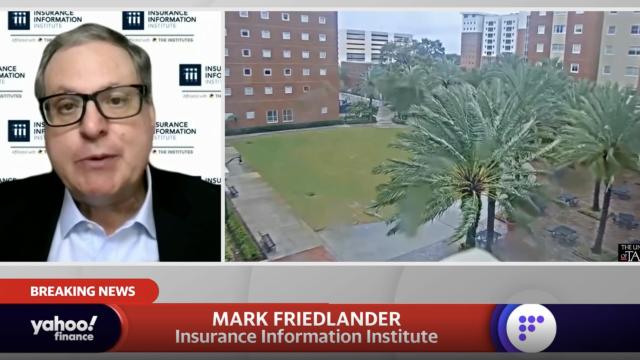
Hurricane Ian could be ‘one of the most severe loss events in U.S. history’: Insurance expert

Insurance Information Institute Director Mark Friedlander joins Yahoo Finance Live to discuss the fraud and over-litigation in Florida’s insurance markets, the losses expected from Hurricane Ian, and insurance reform legislation.

The Florida home insurance market has spent most of 2022 tumbling toward collapse, but recent legislation just might avert disaster. Bankrate dug deep into the Florida insurance industry to discover the cause of the problem and to report on the proposed solutions. We can help you understand why the Florida home insurance crisis is happening and your options if you receive a cancellation or nonrenewal notice on your homeowners insurance policy.

Lightbulb Key insights Governor Ron DeSantis signed a second insurance reform bill into law on December 16, 2022. Combined with earlier legislation, these new regulations may stabilize the spasming home insurance market.

Florida accounts for only 9 percent of the country’s home insurance claims but 79 percent of its home insurance lawsuits, many of them fraudulent.
Because of the fraudulent lawsuits and the high overall claim risk in Florida, insurance companies have faced two consecutive years with net underwriting losses over $1 billion.
The devastating damage from Hurricane Ian will likely put further strain on Florida insurers and could worsen the crisis.

The crisis in the Florida insurance market

Florida has always been a complex home insurance market, but recent issues are pushing the state’s market to the point of collapse. Since 2017, six property and casualty companies that offered homeowners insurance in Florida liquidated. Five more are in the liquidation process in 2022. Other insurance companies are voluntarily leaving the state. Even more are choosing to nonrenew swaths of home insurance policies, drastically tighten their policy eligibility requirements or request substantial rate increases.

For Florida homeowners, this is resulting in fewer home insurance companies and increased premiums. When a company goes insolvent, the Florida Insurance Guaranty Association (FIGA) takes on any claims that still need to be paid by that company. In late August, FIGA’s board and the Florida Office of Insurance Regulation (OIR) approved a .7 percent assessment to help cover the costs of open claims associated with the liquidated companies. That’s the second assessment this year, with a 1.3 percent assessment approved in March. Homeowners will pay these fees regardless of the insurance company they are with.

According to Logan McFaddin, Vice President of State Government Relations at the American Property Casualty Insurance Association,

Florida’s property insurance market is in crisis as insurers grapple with out-of-control litigation costs and billions in losses from recent natural disasters.

Florida’s Insurance Consumer Advocate (ICA) Tasha Carter agrees, saying, “Homeowners insurance options in Florida have become more and more limited, and consumers are facing dire consequences.”

Why are home insurance companies leaving Florida?

Florida insurers are canceling policies, leaving the state or liquidating at a rapid pace. Why? What is behind these companies’ aversion to insuring Florida homes?

Florida has always presented a risky market to home insurance companies due to the high threat of widespread weather-related damage, but the current crisis is caused by a number of factors reaching a boiling point at the same time.

Insurance fraud in Florida

The biggest issue right now in Florida is home insurance fraud, driven by fraudulent roofing claims. A proclamation from the office of Governor Ron DeSantis notes that, although Florida only accounts for 9 percent of the country’s home insurance claims, it is home to 79 percent of the country’s home insurance lawsuits. Many of these lawsuits are fraudulent. ICA Carter explains how the scams generally work:

  1. First, roofers canvas neighborhoods and offer inspections to unsuspecting homeowners. These contractors inevitably “find damage” on the roof and often promise a “free roof” to the homeowner, claiming they can have the home insurance deductible waived.
  2. Homeowners are pressured to sign an assignment of benefits form, giving contractors the right to file an insurance claim on their behalf.
  3. claims adjuster from the insurance company inspects the alleged damage. The adjuster either finds no damage or far more minimal damage than the contractor found, and the claim payout is less than what the contractor demanded.
  4. The contractor brings legal action against the insurance company, demanding a claim payout for the contractor’s original quote. Remember, the homeowner signed the benefits of the policy to the contractor, so the contractor doesn’t need the homeowner’s permission to do this.
  5. The insurance company now has a choice: it can pay the legal costs to fight the lawsuit or pay the costs to settle out of court. Either way, the insurance company loses money due to the legal action.

ICA Carter notes that “these schemes are real and are happening more frequently,” which puts more and more financial pressure on insurance companies, especially in a state with high claims costs due to weather-related events.

According to Mark Friedlander, Director of Corporate Communications at the Insurance Information Institute, “Florida property insurers are projected to post a cumulative underwriting loss of $1.7 billion for 2021” due to these runaway litigation costs. The governor’s office reports that, for two consecutive years, net underwriting losses have exceeded $1 billion. It’s no wonder that so many companies are going insolvent or leaving the state before they reach that point.

On top of that, Florida also previously had a “one-way attorney fee” system. This meant that, when a court ruled in favor of the plaintiff (in this case, a home insurance policyholder or the third-party contractor who filed the claim), the defendant (in this case, the insurance company) was responsible for paying the plaintiff’s attorney fees. So not only were insurers paying for fraudulent lawsuits, they were also paying for the fraudster’s legal costs. Friedlander notes that the insurance reform bill passed in December 2022 “addresses the two root causes of Florida’s residential insurance crisis — litigation abuse and assignment of benefits (AOB) abuse…Eliminating both is necessary to slow down the mass volume of lawsuits being filed against Florida insurers.” Going forward, assignment of benefits forms are banned for home insurance losses and Florida will no longer operate a one-way attorney fee system.

Roof age

Instead of leaving altogether, some companies are tightening their underwriting restrictions to lessen the risk of these scams. This may be the reason why several companies — including Southern Fidelity, Progressive and Universal — have chosen to continue operations in Florida but have nonrenewed tens of thousands of policies.

However, companies are now prohibited from denying coverage solely based on roof age if the roof is fewer than 15 years old and has a life expectancy of five years at the time the policy is issued. That said, insurers will have to decide if they are comfortable with these restrictions or if they will continue leaving Florida.

Storm risk

Risk will always be a consideration for home insurance companies in Florida. The state’s shape and geographic location mean that it could get hit from either side by a hurricane. Because the peninsula is so thin, even homes in the interior counties aren’t entirely protected.

To make matters worse, fraudulent claims may be more common after severe storms — and storms are not uncommon in the state. Hurricane Ian made landfall on September 28 as a powerful Category 4 storm, causing widespread damage. The damage and financial fallout could push the already-teetering home insurance market into collapse due to increased home repair expenses, including the potential of fraudulent roof claims.

However, although the risk of hurricane damage complicates things, it isn’t what’s driving the market to the brink of collapse. After all, other risky states don’t have this problem. A high likelihood of damage generally means paying a higher premium to offset that risk, but coverage is usually still available. Oklahoma, for example, has the highest average cost of home insurance in the nation at $3,593 per year for $250K dwelling coverage due to the likelihood of tornado damage, but homeowners in the state don’t face the same difficulty finding coverage that Floridians do.

Is anything being done to curb the crisis?

Yes, although the full effects of the measures have yet to be seen. Senate Bill 76 went into effect in July 2021 and included several provisions to curb fraudulent claims causing insurers so much strain. One such provision is aimed at reducing the solicitation tactics that fraudulent contractors often use at the start of a scam. While this legal measure may help solve the problem, Sean Harper, CEO of Kin Insurance, warns that “there will need to be additional action taken to restore the market to health.”

Florida lawmakers met for a special session from May 23 through May 27. The Legislature passed an insurance reform bill that includes several provisions to help slow the spiral of the market. The provisions included setting up the My Safe Florida Home Program, which provides grants to help Florida homeowners strengthen their homes against damage. Additionally, home insurance companies will not be able to deny coverage for homes solely based on roof age if a roof is less than 15 years old and still has five years of useful life left (older roofs may still be denied as they present a high risk of damage). Finally, lawyers will be restricted in the rates they can charge for property insurance claims cases, hopefully discouraging fraudulent lawsuits and decreasing litigation costs.

Update: December Special Session yields promising reform legislation

Additional legislation was signed into law on December 16, 2022. Senate Bill 2-A. The bill has numerous provisions but focuses on one-way attorney fees and the assignment of benefits scam. Friedlander told Bankrate:

“This is the strongest insurance reform package we have ever seen passed in Florida. It shows Florida’s new legislative leaders understand the enormity of the state’s property insurance crisis and are initiating decisive actions to create a path toward stability of the market.”

Doing away with one-way attorney fees and assignment of benefit forms could potentially remove massive financial pressure from insurance companies and reduce the number of fraudulent lawsuits. The combination of actions included in Senate Bill 2-A will hopefully buoy the rapidly-sinking insurers in the Florida market.

However, Friedlander notes that change won’t happen overnight: “…it will take time to see positive impacts of the legislative reform. We expect home insurance rates in Florida to remain high in 2023 due to expenses associated with ongoing litigation, combined with soaring reinsurance rates and double-digit replacement cost increases driven by escalating prices of construction materials and labor.”

In other words, relief may be coming, but it’ll likely take some time for homeowners and insurers to feel it.

Demotech responds to potential rating downgrades

Because many home insurance companies have been hit hard by the rampant and fraudulent litigation, they may no longer be as financially stable as they were. In late July 2022, financial strength rating company Demotech announced it was considering downgrading the financial strength ratings of 27 property insurance companies.

The situation is complex. While these carriers may no longer have the financial strength they used to, downgrading also causes issues. Downgrading financial ratings impacts homeowners with federally-backed mortgages — those from Fannie Mae and Freddie Mac — because these lenders require home insurance companies with Demotech ratings to maintain at least an ‘A’ level. Demotech has not released the names of the companies it is considering downgrading.

“Preliminary evaluations are just that — preliminary,” Demotech President Joe Petrelli told Bankrate. Some of the 27 could retain an ‘A’ or higher rating. But if these downgrades happen, homeowners whose coverage is with an affected company may need to find another insurance carrier in a market where options are already limited or expensive.

While a rating downgrade may present challenges for a company and its insureds, that hardship cannot, and does not, factor into our ratings, which are based on specific data and the objective application of our rating methodology.— Joe PetrelliPresident of Demotech

The Florida OIR established a reinsurance fund through its last-resort insurer, Citizens. This means that if an insurance company’s financial strength rating is downgraded below the ‘A’ level, the downgraded company could purchase coverage from Citizens to back it, similar to a co-signer backing a loan. Reinsurance through Citizens would allow the downgraded insurance company to meet Fannie Mae and Freddie Mac’s requirements. This is important because it would prevent policyholders from being required to find a new property insurer. However, a reinsurance solution further strains Citizens, which is already taking on substantial risk by insuring more policyholders in the state as other insurance companies exit Florida.

Learn more: Demotech downgrades and what they might mean for the Florida property insurance market

Update: Florida seeks to replace Demotech

On September 9, the Florida legislature approved a $1.5 million plan to search for a financial strength rating company to replace Demotech. The state will hire a consultant to seek out alternatives that may include finding another company or creating a state-backed financial strength rating agency. Petrelli released a statement in response:

“Since 1996 in Florida, Demotech has provided neutral, unbiased ratings to property insurers, among the approximately 50,000 such ratings we have produced across the country. Our review and analysis process has remained consistent throughout this time. Currently, at least four rating organizations acceptable to the government-sponsored mortgage enterprises operate in Florida and countrywide, and a research effort on rating alternatives could be accomplished at no cost to the taxpayers by reviewing existing Freddie Mac and Fannie Mae sellers or servicer guides. Today’s action is an unnecessary response to a problem that does not exist. The reality is that when Hurricane Andrew devastated the state nearly 30 years ago, the rating agencies involved in Florida chose to step away — but Demotech stepped up.”

It remains to be seen if finding another ratings agency will produce meaningful results toward correcting the Florida home insurance crisis. As always, Bankrate continues to monitor the situation.

How to lessen your risk of nonrenewal

If you live in Florida, having a plan could help you lessen your risk of receiving an insurance nonrenewal. There’s nothing you can do to prevent your company from pulling out of the state, but there are steps you can take to make your home as insurable as possible:

  • Keep your roof updated and in good shape: Inspect your roof regularly and repair minor damage as it happens. If you can afford to, replace your roof before it reaches 15 years of age to lessen the risk of being nonrenewed.
  • Install wind mitigation features: State law requires Florida home insurance companies to offer discounts for certain wind protection features, such as hurricane straps and other roof-bracing measures. These features lessen the risk of severe damage to your home, thus making your property more attractive to insurers.
  • Maintain your property: Generally, maintaining your property will make finding insurance coverage easier. Along with checking your roof, also regularly check the rest of the exterior features of your home for damage. You should also make sure no large tree branches or other potential hazards overhang your home, as these could put you at risk of roof damage in a windstorm.

Additionally, there are ways you can lessen the impact of home insurance fraud and help keep companies from having to liquidate. ICA Carter points out that “consumers have the power to help stop contractor fraud by being informed and reporting fraud.”

  • Know the signs and stay educated: ICA Carter created educational resources called “Demolish Contractor Fraud: Steps to Avoid Falling Victim” that may help homeowners recognize the signs of fraud, stop it before it happens and report it.
  • Be wary of solicitation: Soliciting business isn’t against the law, but contractors who canvas neighborhoods after storms — and especially those who offer incentives and rebates for an inspection — may be part of a scam. Instead, contact your insurance company if you are concerned your home sustained damage after a storm.
  • Do not sign an assignment of benefits form: These forms have been banned by Senate Bill 2-A, but keeping an eye out for them as you work with a contractor could still be useful. By keeping control of your policy, you decide if a lawsuit is filed, which vastly cuts down on fraudulent litigation. It’s worth noting that these forms are often buried within otherwise legitimate-looking contracts. Once you’ve signed, the form is legally binding, so it’s important to read everything you are asked to sign. Do not let a contractor simply point out a signature section on paperwork or scroll past the details on a tablet screen. Read the entire document carefully.

Additionally, some companies now offer a discount if you agree to make your policy unassignable. Kin is one such company, and Harper notes that having a high number of unassignable policies has shielded the company from much of the litigation nightmare ensnaring other carriers.

What to do if your home insurance has been canceled

If you’ve received a Florida homeowners insurance cancellation, act quickly. With hurricane season approaching and the insurance market in turmoil, getting another policy could be difficult, but it is possible.

McFaddin recommends that you “work closely with your insurer or insurance agent to see what options may be available to you.” ICA Carter’s advice was similar, advising that “consumers should contact their insurance agency immediately to determine what their options are for homeowners insurance.”

If you’re struggling to find home insurance coverage in Florida, there are still a few companies that may be able to help.

Kin

No home insurance company in Florida is immune to the ripping effects of raging litigation, but Harper notes that his company has “some things that we’re doing that allow us to stay open in Florida when other folks aren’t or are going out of business.” In addition to the bulk of the company’s policies being unassignable, the company also employs a unique system for assessing claim damage.

Harper explains that Kin uses software that monitors weather systems and accurately pinpoints which houses may be damaged. The company can then proactively reach out to homeowners to determine if a claim needs to be filed, thereby cutting out potentially predatory contractors.

It sounds crazy, right, to be an insurance company that is asking our customers for claims? But it actually pays off.— Sean HarperCEO of Kin Insurance

Citizens Property Insurance Corporation

Citizens is often one of the only options for homeowners in many areas of the state. The company has experienced rapid growth due to other carriers leaving the market. In 2018, the company had only 414,000 active policies; by August 2022, that number had ballooned to over 1,000,000. Michael Peltier, the spokesperson for Citizens, told Bankrate that the company is writing 5,000 to 6,000 new policies per week, and that in many parts of the state, Citizens is “the only game in town right now.”

Even so, Peltier says that “we do have underwriting guidelines,” so it may not be an option for all homeowners. Citizens is also affected by the same issues that are plaguing other insurance carriers and have recently raised their rates. Although the company requested a 10.7 percent increase on standard home insurance policies, the Florida OIR approved a 6.4 percent increase. While 6.4 percent is certainly better than 10.7 percent, it’s likely that many Citizens policyholders will still feel the strain of a larger bill. The rate increase will go into effect on September 1.

Additionally, Friedlander warns that, because Citizens is insuring so many of the high-risk homes that other carriers have walked away from, “a major hurricane striking Florida could have devastating effects” on the company and the industry. Offering reinsurance to companies if Demotech does downgrade ratings will add more risk to Citizens if a disaster strikes.

Citizens may get some relief from the December 2022 reform bill, though. Policyholders must now accept private insurance quotes if they are no more than 20 percent higher than Citizens’ quotes. Additionally, Citizens’ rates must be actuarially sound but are now required to be non-competitive with the private insurance market. Finally, Citizens policyholders will be required to carry flood insurance. Rates for a last-resort policy are likely to be higher going forward, but that should theoretically help curb the influx of policies that could drown Citizens entirely.

Update: Slide Insurance takes on some St. Johns and UPC policyholders after insolvency

Since its 2021 inception, Tampa-based company Slide Insurance has embraced taking on books of business from insolvent Florida home insurance companies.

In February of 2022, the Florida OIR announced that Slide would absorb about 147,000 policyholders from St. Johns Insurance Company when it reported its insolvency. In a similar move, approximately 72,000 UPC Insurance policyholders were transferred to Slide when UPC went belly-up in February 2023.

But what is Slide Insurance? Founded by former Heritage Insurance CEO Bruce Lucas, Slide is an insurtech that relies on AI and large data sets for its underwriting models. The company claims this is the edge it needs to thrive in the challenged Florida homeowners insurance market. Slide is rated A (Exceptional) by Demotech.

If you’re one of the many homeowners who have found themselves transferred to Slide, you might be wondering what’s next. According to the company, policyholders have no actions to take — as long as you pay your premiums, there will be no lapse of coverage. Additionally, Slide will notify your mortgage company for escrow purposes (if applicable).

One important thing to note is that Slide will not handle any open UPC claims that occurred before February 1, 2023. Instead, those that need help with an existing UPC claim should contact the UPC claims center directly.

Update: Florida OIR announces Tailrow Insurance Company as newest carrier to enter the Florida home insurance market

In April 2023, the Florida OIR announced that it approved the application for Tailrow Insurance Company, bringing a new carrier into the state.

While Tailrow is yet to be formed (the company has provisions to meet before the OIR will authorize it to do business), this may be a promising first step in stabilizing the market. Bankate’s experts are committed to staying on top of this story and will bring our readers new information as it unfolds.

The bottom line

Florida home insurance has always been complex due to the state’s high risk of storm damage, but the incidence of fraudulent roofing claims has pushed the market to the brink of collapse. The problem may not stay in Florida, either; if other high-risk states like Louisiana and California see an increase in insurance fraud, those markets could begin to degrade. There is hope, though, as measures are put into place to protect companies and policyholders from financial strength rating downgrades, laws are passed that could help curb scams and carriers take a different approach to insuring homes in the Sunshine State. But will these measures be enough to save a market in turmoil?

Joe Biden Wants to Make This Big Social Security Change

Joe Biden Wants to Make This Big Social Security Change — and Most Americans Could Be on Board With It

Updated Keith Speights – April 24, 2023

Key Points
  • Biden’s earlier plan for Social Security included a change similar to one he proposed recently to bolster Medicare.
  • The president’s idea appears to have solid public support from Americans.
  • While more changes will be needed to ensure Social Security’s solvency, this proposal would significantly reduce the program’s projected shortfall.
Two surveys — one in 2023 and another last year — appear to show that Americans like one of the president’s ideas to fix Social Security.

Social Security is in trouble. You know it. I know it. The program’s trustees definitely know it, recently reporting that Social Security will become insolvent one year earlier than previously forecast.

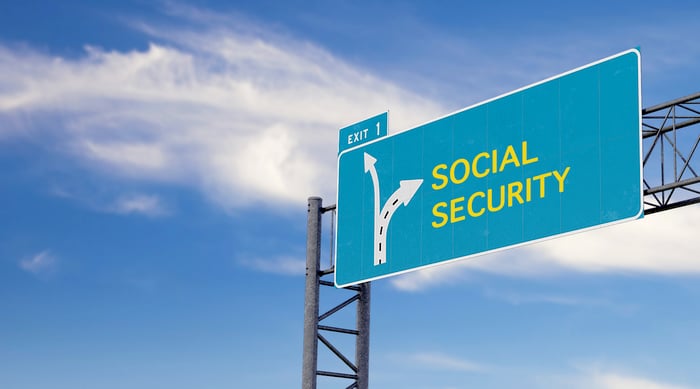
The president is also aware that something needs to be done to preserve Social Security. While his administration hasn’t proposed major reforms to Social Security yet, Joe Biden wants to make a big Social Security change based on his previous statements. And there’s reason to believe that most Americans could be on board with it.Social Security displayed on a highway sign.

Getty Images.

Biden’s big change

When Biden campaigned for president in 2020, he proposed several benefit increases for Social Security recipients. For example, he wanted to boost the benefits for older Americans who had been retired for at least 20 years. He also sought to increase the minimum benefit, allow surviving spouses to receive higher benefits, and eliminate penalties for public-sector workers.

However, the biggest Social Security change in Biden’s plan was to ask “Americans with especially high wages to pay the same taxes on those earnings that middle-class families pay.” In particular, he proposed increasing the payroll tax cap to $400,000. This cap is currently $160,200.

Thus far in his presidency, Biden hasn’t put forward a plan including this change. He did, though, include a similar idea for Medicare in his proposed 2023 budget. Biden called for a tax increase on all annual earnings above $400,000 to help preserve the federal healthcare program. 

What Americans think

A poll conducted by The Associated Press-NORC Center for Public Affairs Research last month appears to show that many Americans agree with the president’s ideas. Although this poll didn’t specifically ask about raising the Social Security payroll tax cap, the responses to other questions likely made the White House happy.

For example, a whopping 79% of Americans polled oppose reducing Social Security benefits. Three-quarters of those responding were against raising the full retirement age from 67 to 70. This aligns well with Biden’s commitments to prevent any cuts to Social Security. 

When asked about increasing taxes on households making more than $400,000 to help pay for Medicare, 58% of Americans favored the idea with another 19% on the fence. This doesn’t necessarily mean that similar numbers of Americans would favor raising the payroll tax cap to $400,000 to help fund Social Security. However, it seems to bode well for the president’s chances to gain public support should he move forward with the proposal.

Another survey conducted by the University of Maryland’s Program for Public Consultation (PPC) last year also looked good for Biden. The PPC survey found that 81% of respondents supported the proposal to apply payroll taxes to all income over $400,000 to fund Social Security. Importantly, the idea received bipartisan support, with 79% of Republicans and 88% of Democrats in favor.  

More changes needed

At least at this point, increasing the payroll tax cap appears to be one of the most likely reforms to help preserve Social Security’s benefits. However, this proposal won’t be enough on its own to ensure the program’s solvency over the long term.

The Social Security Administration estimates that raising the payroll tax cap to $400,000 beginning in 2024 would eliminate roughly 64% of the projected Social Security shortfall. This projection is close to the PPC’s estimate made last year that the change would reduce the program’s shortfall by 61%. 

The good news for retirees is that there are plenty of other alternatives available that would prevent Social Security from becoming insolvent in 2034. It’s also a positive sign that politicians from both major political parties are at least talking about ways to preserve the program.

While consensus hasn’t been reached on the best solutions yet, a bipartisan plan to fix Social Security remains a real possibility. In the meantime, the best thing for Americans approaching retirement to do is to save as much as they can and research ways to boost their overall retirement income.

Dangers from future technologies? It’s the current ones that are killing us

Resilience – Environment

Dangers from future technologies? It’s the current ones that are killing us

By Kurt Cobb, originally published by Resource Insights 

April 23, 2023

vision of the future
Image: “A futuristic vision: the advance of technology leads to rapid transport, sophisticated tastes among the masses, mechanization, and extravagant building projects. Coloured etching by William Heath” (1829). Via Wikimedia Commons https://commons.wikimedia.org/wiki/File:A_futuristic_vision_Wellcome_V0041098.jpg

Certainly, there a plenty of horror stories about possible disasters awaiting us from emerging technologies. I’ve written about two of them: 1) the possibility of small cheap, AI-guided drones used to commit mass slaughter (or targeted assassinations) and 2) lethal synthetic viruses for warfare or released by an apocalyptic cult trying to bring the apocalypse forward on the calendar. More recently, some have predicted that advances in artificial intelligence will ultimately lead to the destruction of humanity.

As bad as these sound, it’s possible that doomscrolling our way through the breathless coverage of dangerous new technologies is distracting us from what is already happening in right front of us: Existing technologies are already pushing humans quickly down the path to extinction (along with many plants and animals). Pretending that dangers to the survival of the human species come ONLY from the future is a perilous diversion.

In fact, the combination of climate change; the increasingly toxic pollution of the soil, water and air; depletion of arable soil, water, energy and critical metals; galloping development of wild and farm lands; and second order effects such as habitat and biodiversity loss, acidification of the oceans and dramatic loss of Greenland’s ice that may lead to a breakdown in the Gulf Stream ocean current that keeps much of Europe temperate—all this has gathered so much momentum that, frankly, we don’t need any help from the future to kill ourselves as a species. (Oh, I almost forgot; we could obliterate ourselves with a nuclear winter without any new nuclear technology or warheads needed.)

It turns out that we may be doing such a good job of threatening our species already that the emerging technologies we fear most will never get a chance to fully emerge. In the not-too-distant future, we humans may already be gone or our societies so degraded that launching a second apocalypse with the help of new technologies will be a practical impossibility. We won’t have the functioning infrastructure to do it!

And, that is basically the key to the lethality of most emerging technologies: connectivity. If communities become so isolated that inhabitants cannot travel to distant places harboring designer virus outbreaks, humanity will paradoxically be saved from extinction because of the loss of technology and any attendant mobility. Contemplate that for moment!

As for artificial intelligence, well, it needs a vast infrastructure of connected information sources to be effective. When I asked friends recently why we can’t literally just pull the plug on AI if it becomes dangerous, they had many explanations. But, perhaps the most telling one was that we have become so networked across the globe and AI will be so distributed, that we’d effectively have to pull the plug on ourselves—and we are not willing to do that even if not pulling the plug ultimately leads to our destruction.

Of course, the public has been told again and again that emerging technologies will bring abundance for all, solve climate change, get rid of pollution, cure most diseases, produce so much energy we’ll never have to think about the cost, and actually help regenerate the soil and the forests while increasing biodiversity.

I don’t know what they’ve been waiting for, but the tech overlords who’ve sold us this story had better get busy right now. There isn’t much time left for them to build out their “solutions.”

Kurt Cobb

Kurt Cobb is a freelance writer and communications consultant who writes frequently about energy and environment. His work has appeared in The Christian Science Monitor, Common Dreams, Le Monde Diplomatique, Oilprice.com, OilVoice, TalkMarkets, Investing.com, Business Insider and many other places. He is the author of an oil-themed novel entitled Prelude and has a widely followed blog called Resource Insights. He is currently a fellow of the Arthur Morgan Institute for Community Solutions.

Saying NO to a farm-free future

Resilience – Society

Saying NO to a farm-free future

By Chris Smaje, originally published by Small Farm Future

April 20, 2023

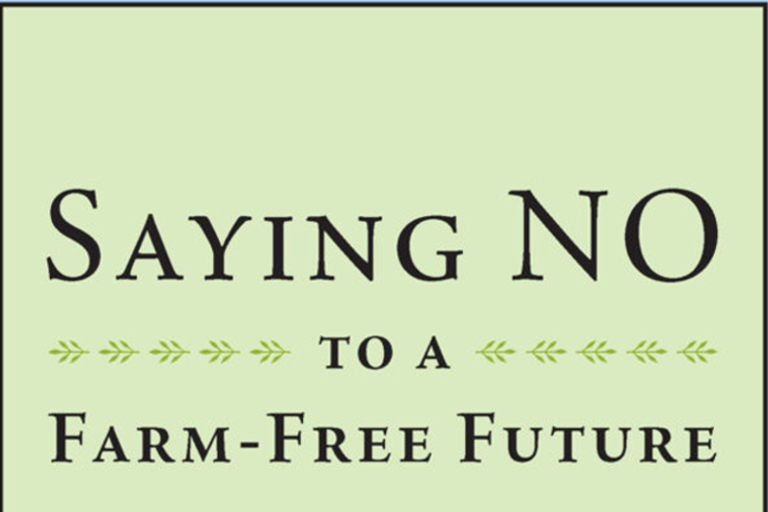
The time has come to announce my new book, Saying NO to a Farm-Free Future: The Case for an Ecological Food System and Against Manufactured Foods. It’ll be published in the UK on 29 June and the US on 20 July, with ebook and audio versions also available. So there’s no excuse… I’m delighted that Sarah Langford, the author of Rooted, is writing a foreword for it.

The folks at Chelsea Green have come up with this attractive but unfancy cover, which matches my feelings about the book.

I wrote the book in a two-month blur as a job of work that I felt somebody had to do to combat the head of steam building around the case for a farm-free future associated with George Monbiot’s book Regenesis and the Reboot Food initiative. And if that somebody was me, so be it.

My original motivation was mainly just to critique the fanciful ecomodernism of Reboot Food, which I believe is apt to bedazzle people of goodwill but with limited knowledge of food and farming into thinking that a technological solution is at hand that will enable them to continue living high-energy, urban consumerist lifestyles while going easy on the climate and the natural world. Really, it isn’t. The danger is that farm-free bromides will, as usual with ecomodernism, instil a ‘great, they’ve fixed it!’ complacency at just the time when we need to jettison the techno-fix mentality and radically reimagine our social and political assumptions.

So the book takes a somewhat polemical approach in critiquing the arguments for manufactured food. But actually I found that this provided a pretty good foil for making an alternative case for agrarian localism, what I call in my book ‘a predominantly distributed rural population, energy restraint, diverse mixed farming for local needs, wildlands, human-centred science, popular smallholder democracy and keystone ecology’. So the book has that more positive framing too, much of which will be familiar to regular readers of this blog or of my previous book, although I like to think I’ve pushed a few things forwards. Still, it’s a short book, so a more detailed exposition awaits.

What I don’t and won’t do is offer some alternative technical or social one-size-fits-all solution. Solutionism of this kind is itself part of the problem. I daresay that will lead to some incomprehension in the book’s reception along the lines that if I can’t provide an alternative ‘answer’, then I can’t have anything worthwhile to say. Naturally, I don’t subscribe to that line of reasoning. Researchers, opinion-mongers and writers of books just don’t have ‘the answer’, whereas you – whoever ‘you’ are – probably do have part of an answer locally. But you have to work at it. Maybe my book will help. In that sense, what I offer is a bit like the answer of farming itself. Instead of the magic beans and golden geese of the Reboot Food narrative, all I can realistically offer is a bare seedbed awaiting productive work. The scene then has to be peopled by others, ordinary working people, doing the work.

Or maybe you could think of the book as an exercise in rewilding, because the nature of wildness is that you can’t really tell what’s going to happen next.

Anyway, I’ll be interested to see what kind of reception the book gets. Possibly, it’s presumptuous of me to expect it’ll get much of a reception at all, but my tweet from a few days back announcing the book has had around 34,000 views – so by my humble standards I think there may be an appetite out there for this.

I’m not going to steal my own thunder from the book pre-publication, but I thought I’d offer loyal readers of this blog a few tidbits by way of a sneak preview.

So, after some introductory material the book asks whether the energetics and economic geography implied in the manufactured food narrative are feasible (as I just said, I can’t give too much away just now about the book’s contents, but I’ll offer a clue: the answer is a two-letter word beginning with ‘n’). Then I consider whether the case against the wildlife and climate impacts of familiar plant-and-livestock based agriculture articulated in manufactured food narratives is plausible (answer: it’s complicated – let’s call it a two-letter word beginning with ‘n’ again, but with a side of three-letter word beginning with ‘y’). Next, I move on to examine whether a farm-free future for humanity is likely to involve what ecomodernist pioneer Stewart Brand called ‘urban promise’ – urbanization as a positive and prosperity-enriching experience. On that one, we’re back to a straightforward answer – the two-letter ‘n’ word again. Or at least we are if we have any commitment to justice. Finally, I make an alternative case for agrarian localism as the best means of securing human and natural wellbeing and climate stability, involving long-term human relationships with the land that, like all long-term relationships, require regular and ongoing work.

So there you have it. If you’d like to read the full version (or alternatively hear me reading it) I’d suggest pre-ordering a copy now! But I daresay I’ll write more about its themes on this blog once the book is out, albeit most likely with a bit less expounding than I devoted to my previous one.

Chris Smaje

Chris Smaje has coworked a small farm in Somerset, southwest England, for the last 17 years. Previously, he was a university-based social scientist, working in the Department of Sociology at the University of Surrey and the Department of Anthropology at Goldsmiths College on aspects of social policy, social identities and the environment. Since switching focus to the practice and politics of agroecology, he’s written for various publications, such as The Land , Dark Mountain , Permaculture magazine and Statistics Views, as well as academic journals such as Agroecology and Sustainable Food Systems and the Journal of Consumer Culture . Smaje writes the blog Small Farm Future, is a featured author at www.resilience.org and a current director of the Ecological Land Co-op. Chris’ latest book is: A Small Farm Future: Making the Case for a Society Built Around Local Economies, Self-Provisioning, Agricultural Diversity, and a Shared Earth.

The Dominion Settlement Is Just the Beginning of Fox and Rupert Murdoch’s Nightmare

Time

The Dominion Settlement Is Just the Beginning of Fox and Rupert Murdoch’s Nightmare

Jeffrey Sonnenfeld – April 19, 2023

Celebrity Sightings In Los Angeles - November 12, 2019
Celebrity Sightings In Los Angeles – November 12, 2019

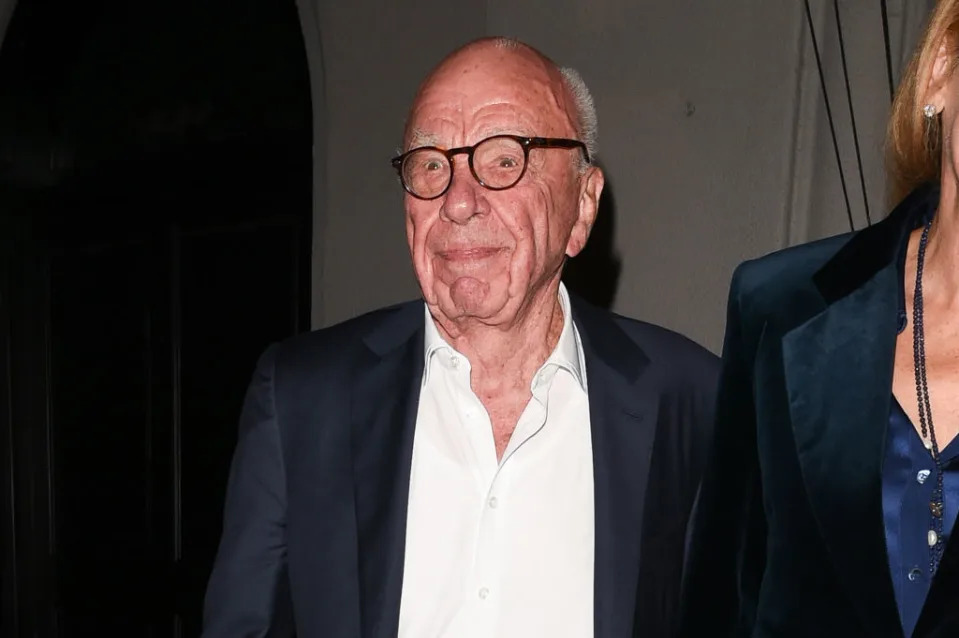
Rupert Murdoch is seen on November 12, 2019 in Los Angeles, California. Credit – PG-Bauer-Griffin/GC Images

Forget the repetitive media chatter debating the political and societal wins and losses over the historic record $787.5 million settlement between Fox News and Dominion Voting Systems, after the voting machine maker alleged defamation by the cable network for promoting false news stories that Dominion rigged the 2020 presidential election against Donald Trump. Fox settled out of court at the last minute, seemingly panicked over the prospect of a dazed 92-year-old Rupert Murdoch, CEO of Fox News parent company Fox Corporation, having to take the stand to explain how he lost control of his prized creation—his “Foxenstein” monster. But while it’s a historic and record-setting amount to pay to avoid an embarrassing public trial over the airing of an admitted lie, the settlement doesn’t mark the end of Fox’s or Murdoch’s nightmare.

The horror story that is just beginning to unfold and that will continue to haunt the company and its patriarch is the corporate governance catastrophe this case leaves in its wake and the punctured business bravado of the scorching public record of admitted fraud and negligent management oversight. Fox’s celebrity anchors already soiled themselves in emailed evidence revealing they did not believe what they were reporting as truth. Their testimony and emails are in the public record for future litigants. Meanwhile, the judge’s special master, investigating fraudulent representations by Fox and its lawyers in discovery, continue undaunted by this settlement. The rest of Murdoch’s life and the rest of the careers of his board will likely be defined by ongoing fallout.

The Big Winner

There is no disputing that this is a grand slam for Dominion and nothing short of a transformative business success. Dominion is a tiny young company not even 1% the size of Fox, and it was sold to private equity investors Staple Street Capital for just about $40 million in 2018. This week’s settlement is gigantic—more than eight times their company revenues last year of $98 million, which assuming a 20% profit margin means that the settlement results in a whopping 5000% boost in the company’s earnings.

Such a whopping settlement may not have been awarded by a jury in court and very well could have been tossed on appeal. This small a company would have had a tough time proving concrete economic damage and lost revenues equivalent to $787.5 million let alone the $1.6 billion in damages they were seeking had it gone to trial. There are two types of damages—compensatory and punitive—and the idea that a company that may have been valued by its own investors, according to Fox’s lawyers, at no more than $80 million could get anything close to 10 times that as compensatory damages is blatantly ludicrous, while punitive damages are becoming increasingly pegged to the value of compensatory damages.

Even if an appellate court concurred with a possible jury verdict that an actual malice standard was met, the financial damages Dominion asked for were excessive. Plus, unlike the Alex Jones award of $1 billion, which is facing years of byzantine appeals and stalling, Dominion gets this money now—without any more hassle, delay, or expense and without having to deal with anxious insurers and litigation finance hedge funds breathing down their neck.

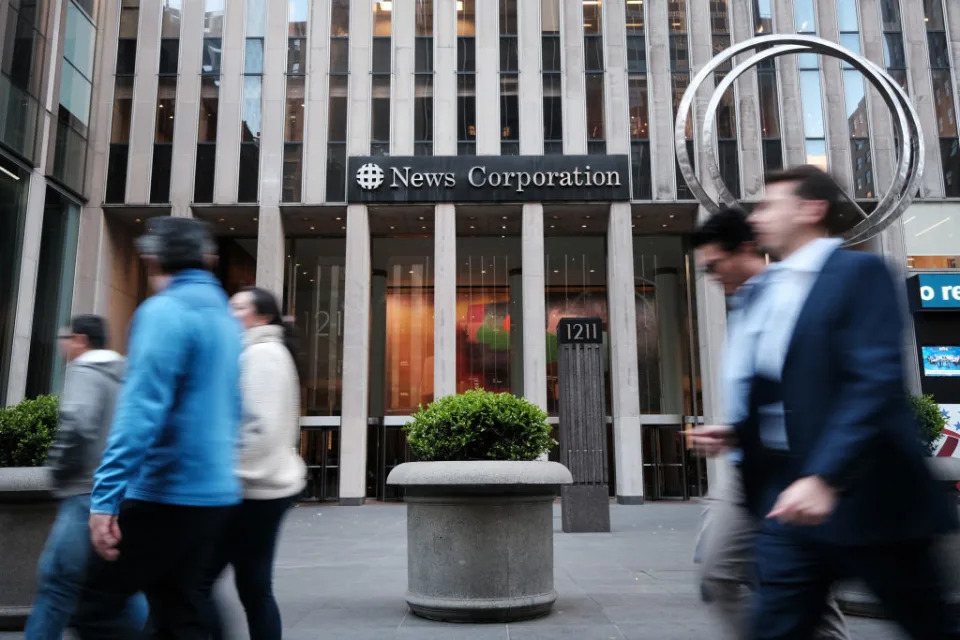
News Corporation headquarters, home to Fox News, on April 18, 2023 in New York City. Moments before opening arguments were set to begin, Fox News and Dominion Voting Systems said that they had reached a settlement of $787 million in the voting machine company’s defamation lawsuit against Fox.<span class="copyright">Spencer Platt-Getty Images</span>
News Corporation headquarters, home to Fox News, on April 18, 2023 in New York City. Moments before opening arguments were set to begin, Fox News and Dominion Voting Systems said that they had reached a settlement of $787 million in the voting machine company’s defamation lawsuit against Fox.Spencer Platt-Getty Images
The Even Bigger Loser

On the other hand, for Fox Corp., the parent company of Fox News, this is a major strikeout. Incredibly, even though $787.5 million, more than half of the company’s total profit last fiscal year, is four times larger than the prior record for a defamation settlement—in 2017, Disney/ABC News paid out $177 million over misleading reporting on pink slime—Fox’s woes are just beginning.

Sure, some Dominion fans or Fox News haters might be upset that the cable channel did not have to publicly accept responsibility or apologize, rather just releasing a statement of meaningless legalese: “We acknowledge the Court’s rulings finding certain claims about Dominion to be false.” But such disappointment ignores the massive business and financial ramifications that Fox will have to live with for years. We are still only in the early innings of Fox’s struggles.

What now stands as a statement of legal fact for future litigants is the judge’s condemning conclusions.

The judge wrote, “the evidence does not support that FNN conducted good-faith, disinterested reporting.”

In another finding, the judge wrote that the “evidence developed in this civil proceeding demonstrates that is CRYSTAL clear that none of the statements relating to Dominion about the 2020 election are true.”

These rulings were accepted by Fox with “no contest” and stand as legal fact and cannot be appealed.

Other companies, such as Smartmatic, will surely be emboldened in their own defamation suits against Fox, which share basically the same fact patterns as Dominion’s. Furthermore, the condemning depositions of Fox anchors and executives, admitting that they knew their stories were false and sources were ludicrous, opens Fox’s board to serious claims of negligence and breaches of fiduciary duty—violations of a board’s duty of care and duty of loyalty under Delaware corporate law.

Plaintiffs’ attorneys are rushing to file derivative shareholder class action lawsuits on behalf of the 60% of Fox shares not held by the Murdoch family. Fox has a sophisticated board with accomplished individuals, such as former House Speaker Paul Ryan, Managing Partner of Quinn Emanuel William Burck, former Ford CEO Jacques Nasser, and Formula One CEO Chase Carey, all of whom have a lot to lose—whether by way of reputation or liability—by more embarrassing disclosures coming out of depositions and trials.

Already two of many law firms queuing up filed suit in Delaware Chancery Court, charging: “Fox knew—from the Board on down—that Fox News was reporting false and dangerous misinformation about the 2020 Presidential election, but Fox was more concerned about short-term ratings and market share than the long-term damages of its failure to tell the truth.”

While some media commentators have suggested that insurance might cover a large portion of Fox’s Dominion settlement, the company’s breaches of fiduciary duty could absolve insurers from having to cover the payout on top of permitting them to charge the company permanently higher insurance premiums. Even worse for Fox, unless the company reforms its coverage and corporate governance processes, insurers might recoil from underwriting the insurance of Fox’s board directors and officers, much the way Elon Musk was once forced to personally underwrite the insurance of Tesla’s board directors and officers after every insurance company refused to stomach the risk.

Admissions by Murdoch, Ryan, Fox News CEO Suzanne Scott, and Fox Corp. Chief Legal Officer Viet Dinh demonstrate a failure to act on what they knew to be false—or a failure of their duties of care and duty of loyalty to the shareholders. Their duties were not to protect management or even to please viewers, but to protect the enterprise and shareholder value. Yet, when asked in a January deposition if he could have intervened when falsehoods were being spread on his cable network, Murdoch succinctly replied on the record, “I could have. But I didn’t.”

Alt-right media such as One America News Network and Newsmax are likely facing even greater financial peril as they are facing similar legal challenges as Fox.

Despite his self-proclaimed willingness to testify in court, Murdoch’s rambling, brutally candid, and self-incriminating answers in deposition raise questions over his judgment. Fox cannot retract Murdoch’s sworn testimony, and when they unsuccessfully tried to hide his actual Fox News executive oversight duties, they had to apologize for such deception. Presumably Murdoch will be forced to continue to shed light on how much he knew, when he knew it, and what he did or didn’t do in response, as the drumbeat of investigations rolls on.

For its part, Fox News is already modifying its approach and seeming to take some of these lessons to heart before they become total Faux News. Nobody would mistake Fox today for MSNBC, but the cable network has severely limited former President Trump’s airtime recently, rarely ever showcasing full Trump campaign rallies and speeches as it used to do, while anchors almost always now resort to pre-taped edited clips of Trump rather than offering the unchecked freewheeling surprise live dial-in privileges Trump used to enjoy. Like Samuel Johnson quipped, nothing so focuses the mind like the prospect of an imminent hanging. Still, as Murdoch tries to restrain his out-of-control creation, he has his work cut out for him.