Gov. DeSantis is banking on Americans hating immigrants more than high insurance rates

Miami Herald

Gov. DeSantis is banking on Americans hating immigrants more than high insurance rates | Opinion

Fabiola Santiago – May 12, 2023

He’s got your back on the hate, red Floridians.

For starters, millions of your tax dollars have been designated by Gov. Ron DeSantis and the Legislature — no, not to subsidize our skyrocketing home insurance — but to ship planeloads of new immigrants to blue states.

The governor will fish them from the sea, if he has to, for publicity stunts.

His presidential aspirations need shocker headlines — and the oxygen in his $117 billion big government budget only left room for catering to your irrational immigrant-loathing and to fighting Disney World in courts over one opinion contrary to his.

Immigrant-hunting will be as expensive as the well-paid lawyers DeSantis is employing to uphold civil rights violations.

By signing into law a sweeping anti-immigrant bill, DeSantis has built his own wall around the state’s sea and land borders, hoping to outdo Donald Trump’s U.S.-Mexico effort, wimpy and inefficient by comparison.

The Republican governor and his sycophant Legislature figured out that all they had to do was terrorize people with the ruthless contents of SB 1718 — and asylum-seekers wouldn’t confuse the Sunshine State for a sanctuary.

It’s already working so well that immigrant construction workers in South Florida weren’t showing up to work this week for fear that there would be a round-up and they’d be deported, CBS News Miami reported.

READ MORE: Florida can’t run without immigrant labor, so good luck with your crackdown, Gov. DeSantis | Opinion

Red mandates

DeSantis calls his mandates “the strongest anti-illegal immigration law in the country to combat Biden’s border crisis.”

Ironically, he’s promoting the message in an explanatory document set in bold red and black lettering — the colors of Fidel Castro’s 26th of July Movement in Cuba and the Sandinistas’ National Liberation Front in Nicaragua, regimes from which immigrants are fleeing.

The new Florida immigration law, effective July 1, allows random audits of employers suspected of hiring unauthorized immigrant workers — opening the door to ethnic and racial profiling.

All those Hispanic business owners in Miami-Dade and other immigrant-populated communities who voted for DeSantis are being richly rewarded. (There’s a more appropriate verb that starts with an “s,” but I’m not allowed to use it). I don’t feel sorry for these voters. But I do for hard-working undocumented immigrants who aren’t hurting anyone and the families who love them.

The medical field — those providing care and their patients — will also be adversely affected.

If an immigrant without legal status has a medical emergency — a life-threatening illness, is having a baby or had a car accident, makes no difference — the law now requires that hospitals collect data about patients’ immigration status and document the money spent on providing them healthcare.

In addition, no Florida government entity is allowed to issue to immigrants an identification card of any kind, even if they have passports or birth certificates. Can’t get one without proof of legal entry.

People driving without a license is just what we need in Florida. And, nope, relatives can’t drive the undocumented, either, and stay within the law themselves. Drivers can be charged with a third-degree felony for knowingly giving an undocumented migrant a lift to church, school or work.

Do so, and risk being charged as a human smuggler.

In Miami, this means all the Cubans and Venezuelans who love Trump and DeSantis so much — and are housing, hosting, transporting or providing medical care for anyone without the right documentation — now have enforced restrictions to keep in mind.

If they operate as they have until now, on the fly, they become law-breakers.

Then, there’s the tightening of E-Verify, which makes it more difficult than ever for workplaces to hire immigrants.

A federal program for employers to confirm a person’s immigration status, operating since 1996, it became voluntary when President Bill Clinton signed it into law under the Illegal Immigrant Reform and Immigrant Responsibility Act. Later required, the program was expanded and made easier to use under President Barack Obama.

Not good enough for DeSantis, who says his state will strictly enforce E-Verify: Employers with 25 or more workers have to put through the system everyone’s immigration status — or face a $1,000 per day fine if an employee is found to be in the country illegally.

All companies, no matter whether they maintain your lawn, paint the walls or put on a new roof, have to comply. So the able-bodied, quick-learning, eager-to-work rafter who just got off the boat can’t work at your house.

No, Florida is no longer a place where immigrants can rebuild — in peace — lives lost to dictatorship, poverty, and violence, while in the process, contributing desperately needed labor to the United States economy.

Without a care for the state’s history (maybe he is a Midwesterner, as he tries to pass off himself in his political pamphlet-styled memoir) DeSantis — with the help of shameless legislators who are the descendants of exiles and other immigrants — has shut the door.

READ MORE: Lawmakers with no pride in their immigrant heritage help DeSantis crush our communities | Opinion

Why the persecution?

The governor needs your red vote badly to win the Republican presidential primary — and he’s sure that crushing immigrants is the key to voters’ hearts. So much so that he forgot all about the damage those pesky hurricanes and rising seas bring and the ensuing reconstruction.

But no worries about a state dependent on agriculture, tourism and construction, left without immigrant labor.

Write with a smile the big check to the insurance company that, after decades of paying, will tell you when you most need them — as is happening now to the insured in southwest Florida repairing homes destroyed by Hurricane Ian: The fancy door is a decoration and isn’t covered.

Write with a spring in your step the big check to the construction company charging you more because the owner can’t hire cheaper labor.

Your man in Tallahassee has delivered!

Now you can peel your eyes away from the white-world-is-ending Fox News reports from the southern border.

They really are bad for your health. The surge in blood pressure can provoke a stroke — and there won’t be a cheap, undocumented immigrant your family can hire to change your diaper.

This is the new world DeSantis and the Florida GOP have created, one conceived in hatred of The Other who, more often than not, was making our lives better.
Significant El Niño event is almost guaranteed this year, experts warn. And it could be a big one.

Live Science

Significant El Niño event is almost guaranteed this year, experts warn. And it could be a big one.

Harry Baker – May 12, 2023

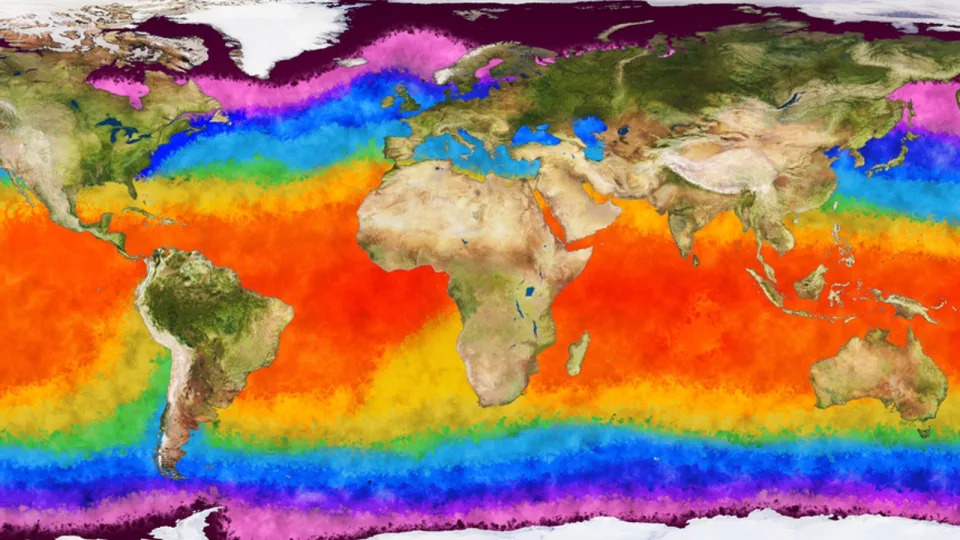
 A rainbow-colored map of the world showing different sea surface temperatures across the globe.
A rainbow-colored map of the world showing different sea surface temperatures across the globe.

The chance of the ocean-warming event known as El Niño hitting this year is now over 90%. It will likely begin in the coming months, and there is a good chance it will persist into 2024 and have a widespread impact, experts have warned.

El Niño, which means “the little boy” in Spanish, is a major climatic event caused by changes to ocean currents in the Pacific Ocean. This heating event is strong enough to trigger major changes in global weather patterns and seriously impact marine ecosystems, especially combined with the effects of human-caused climate change. El Niño, along with its counterpart La Niña, or “the little girl” — a cooling event triggered by changes to the same ocean current system — make up the El Niño-Southern Oscillation (ENSO) cycle.

Experts have suspected that an El Niño event could be on the horizon for some time. And on May 3, the World Meteorological Organization (WMO) predicted there was a 60% chance that it would begin between May and July.

But on May 11, the National Atmospheric and Oceanic Administration (NOAA) released its own forecast, which suggested that it is a near certainty that El Niño will begin during the same period. The agency also said there was a 90% chance that El Niño will persist into 2024.

Related: Is climate change making the weather worse?

“Keep your eyes peeled on the tropics, and don’t blink,” Nathaniel Johnson, a meteorologist at NOAA’s Geophysical Fluid Dynamics Laboratory, wrote in a NOAA blog post. “Conditions are evolving quickly!”

ENSO cycle 101

The ENSO cycle is mainly linked to trade winds in the Pacific Ocean that blow westward along the equator. Normally, this blows warmer surface waters from South America toward Asia, which are in turn replaced by cooler deep ocean waters in a process known as upwelling, according to NOAA.

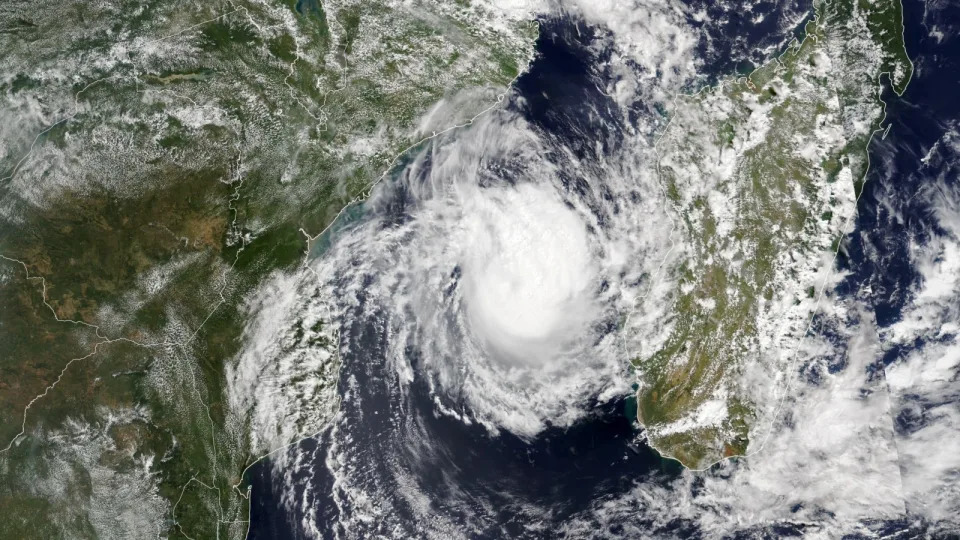
Cyclone Freddy between Mozambique and Madagascar on March 8. The image was captured by the Visible Infrared Imaging Radiometer Suite (VIIRS) on the NOAA-20 satellite.

During El Niño, the trade winds weaken, which leads to reduced upwelling and in turn warmer surface waters. During La Niña, the trade winds are unusually strong, which has the opposite effect. Both events can trigger extreme weather events, such as the potentially record-breaking Cyclone Freddy that battered parts of Africa in February and March.

The periods between El Niño and La Niña events are known as ENSO neutral.

When was the last El Niño?

In the past, El Niño and La Niña events occurred roughly once every two to seven years, according to NOAA. But their appearance has recently become much more erratic due to the effects of climate change: In the last 50 years, the ocean has absorbed nearly 90% of the energy trapped by global warming, which has drastically increased sea surface temperatures, impacting the ENSO cycle.

The last El Niño event occurred between February and August 2019 and was quite weak. Between July 2020 and March 2023, a rare triple-dip La Niña suppressed rising global temperatures.

El Niño events normally last somewhere between nine months and two years but can be longer.

How strong will El Niño be?

It’s unclear exactly how strong this El Niño will become, but NOAA’s predictions suggest there is an 80% chance of at least a moderate El Niño, where sea surface temperatures will rise by 1.8 degrees Fahrenheit (1 degree Celsius), and a 55% chance of a strong El Niño, where temperatures will rise by 2.7 F (1.5 C).

Experts are also concerned that recent high sea surface temperatures will make the upcoming El Niño worse. In early April, the average global sea surface temperature was the highest in recorded history.

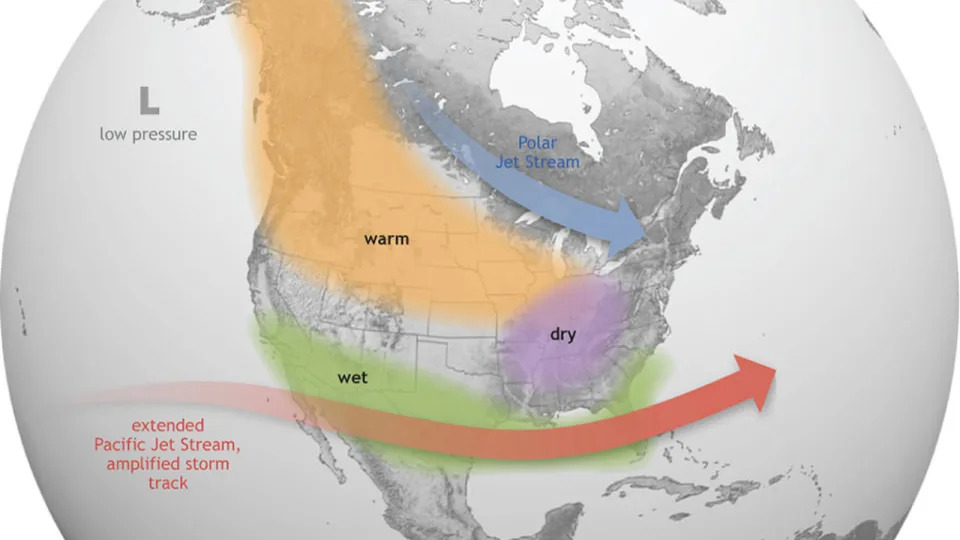
A map of the U.S. showing the effects of el nino. There is a warm front coming in from NW Canada, a dry patch over parts of NW America and a wet patch over the Southern US from California to Florida.

NOAA will provide more information on how El Niño is progressing in early June.

How will El Niño affect North America?

During El Niño, the weaker trade winds mean more warm water is pushed back east toward the west coast of the Americas. The warmer waters push the Pacific jet stream south of its neutral position, which impacts weather patterns in North America, according to NOAA.

RELATED STORIES

Climate ‘points of no return’ may be much closer than we thought

10 signs we got closer to climate disaster in 2022

World must act now to defuse ‘climate time bomb,’ UN scientists warn

For the northern U.S. and Canada, this can lead to warmer weather than usual, while eastern states often receive less rainfall. For the southern U.S. and northern Mexico, the result is often heavy rainfall, which can cause flooding and landslides.

The WMO expects global temperatures to rise to record levels during the next few years as La Niña’s cooling effect ends and El Niño begins, which could severely impact the lives of millions of people.

El Niño Is Coming in Strong, NOAA Says

Gizmodo

El Niño Is Coming in Strong, NOAA Says

Angely Mercado – May 12, 2023

Poisonous algae bloom affected major cities and fishing towns in Chile in 2016. Experts said it was linked to high temperatures stemming from the El Niño.

El Niño almost here, the global shift is likely to stick around until this winter, the National Oceanic and Atmospheric Administration announced this week. After an unusual three-year La Niña, all signs are pointing to changes in weather patterns for 2023.

Last month, NOAA said there was a 62% chance that El Niño would develop between May and July. Things have rapidly progressed, and now there is a 90% chance of El Niño forming and persisting into the end of this year, according to NOAA.

These two “siblings” are global climate shifts that are marked by cooler or warmer ocean temperatures and changes in global air currents, which alter weather and storm patterns. La Niña is associated with lower-than-average ocean temperatures, while El Niño is the opposite. Experts have noticed quickly rising ocean temperatures lately, one of the signs of a formation year.

What can we expect now that The Boy is coming to town? Ocean temperatures are going to rise above average. The Atlantic hurricane season is expected to be milder, because storms are more likely to form there during La Niña years. However, storms are more likely to form in the Pacific. In the U.S., the shift brings more rain to southern states and to the East Coast. It also brings warmer temperatures to northern states.

El Niño years are especially hot. This was certainly true in 2016, one of the hottest years on record, according to the World Meteorological Organization. Scorching temperatures have already pummeled Southeast Asia—just last week, Vietnam recorded its hottest temperature ever. Expect more extreme heat to come this year.

What new Florida immigration law means for employers, hospitals and workforce

Pensacola News Journal

What new Florida immigration law means for employers, hospitals and workforce

Brandon Girod, Pensacola News Journal – May 10, 2023

Standing at a podium with a sign reading “Biden’s Border Crisis,” Florida Gov. Ron DeSantis signed a new state immigration law Wednesday that critics say is cruel as it imposes tough penalties and new restrictions on people living in the state illegally.

The measure, approved last week by the Florida Legislature, has been condemned by critics as cruel and potentially leading to law enforcement profiling. It’s considered among the toughest steps taken by any state to deter immigrants without legal permission.

“We have to stop this nonsense, this is not good for our country,” DeSantis said, adding “this is no way to run a government.”

But immigrant advocates said Florida’s approach targets a community already struggling to survive with new criminal penalties and restrictions. Immigrants living in Florida, legally and illegally, represent a huge share of the state’s workforce, leaders added.

Susan Pai, a Florida immigration lawyer based in Jacksonville, broke the new law down, highlighting some of the bill’s biggest impacts.

Strengthening employment requirements

Several sections of the bill outline strengthened employment requirements, including:

  • Employers are required to verify a new employee’s employment eligibility within three business days after the first day the new employee begins working for pay.
  • Private employers with 25 or more employees must use the federal E-Verify system to verify a new employee’s employment eligibility starting on July 1.
  • Public agencies are also required to use the E-Verify system to verify a new employee’s employment eligibility.
  • Employers cannot continue to employ an unauthorized alien after obtaining knowledge that a person is or has entered the county illegally.
  • It is unlawful for any person to knowingly employ, hire, recruit or refer, either for herself or himself or on behalf of another, for private or public employment within the state, a “foreign national” who is not authorized to work in the U.S.
  • An unauthorized immigrant can not obtain a license to practice law in Florida after Oct. 31, 2028, repealing a 2014 law that allowed immigrants living in the country illegally to practice law in the state.

Violating the new law could result in a series of escalating penalties that could lead to the state suspending or revoking all licenses to operate their business.

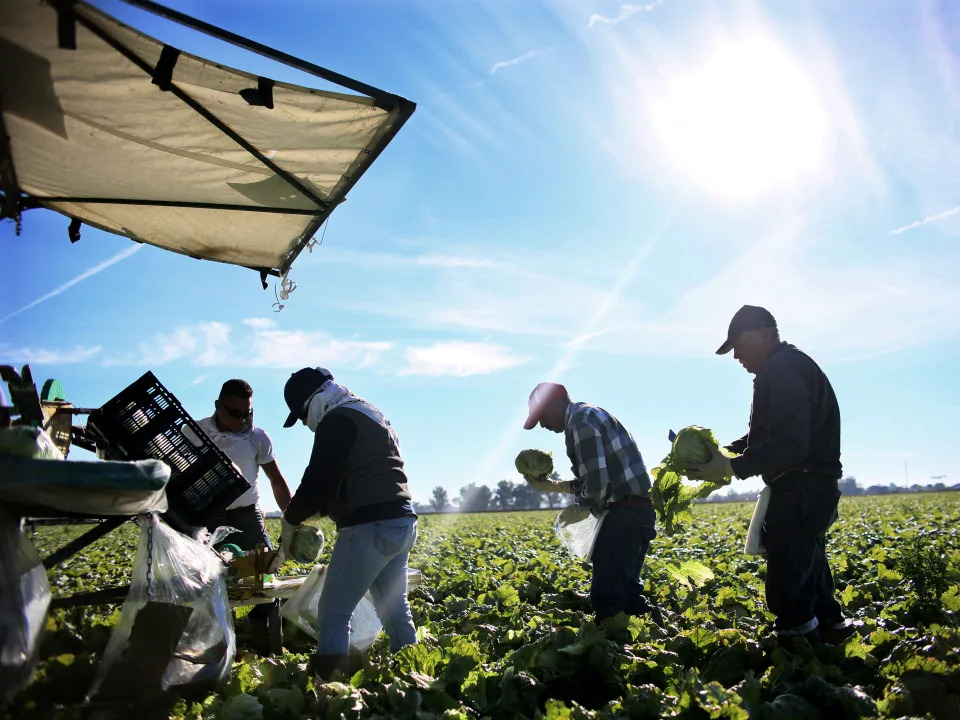
The Farmworkers Association of Florida, a grassroots nonprofit that advocates for social and environmental justice with farmworkers, estimates that there are about 300,000 farm workers in Florida who live in the state illegally, making up about 60% of the state’s farm workers.

Losing those jobs could have a significant impact on Florida’s agriculture industry, and Pai says she imagines it’s a similar situation among roofers, landscapers and others.

“I’ve been getting a lot of calls from people asking me if they should leave the state,” she said. “The undocumented community is very scared to even show up for work.”

Pai also stressed that Section 12 makes it a crime to even refer someone for employment within the state, and underlined that the law applies to people who lawfully entered the country on visitor and student visas but are not authorized to work.

‘What are we going to do?’ Two migrants share fears for the future in Florida crackdown

Hospitals must ask patients about their legal status

Section 5 states that any hospital that accepts Medicaid must include a provision on its patient admission or registration forms for the patient or the patient’s representative to indicate whether the patient is a United States citizen, lawfully present in the United States, or not lawfully present in the United States.

Hospitals would then need to turn the cumulative data over to the governor and the Florida Legislature quarterly and annually, and they would then have to quantify how much it costs to provide medical assistance to people not living in the country legally. The identity of patients would not be included in this data.

Pai says this law conflicts with health care professionals’ oaths to patients because it dissuades people in need of health care from seeking it out if they are in the country illegally.

“It’s going to prevent people from either bringing theirselves in for medical care or even their children,” Pai said. “They’re not going to know that they don’t have to answer the question. Once they’re asked the question, they believe they have to give up their undocumented status.”

People foregoing preventative health care to hide their status could end up costing Florida more money down the road when untreated medical issues become an emergency.

“Ultimately, their condition may worsen and the cost to Florida may actually be more than if they were just given the care in the first place.”

Out-of-state driver’s license issued to ‘unauthorized immigrants’ no longer valid

Driver’s licenses and permits issued by other states exclusively to people living in the country illegally will no longer be recognized in Florida.

The National Conference of State Legislatures says there are 19 states and the District of Columbia that issue these licenses to people living in the country illegally, and Pai says this bill could “open the flood gates” of racial profiling and increase the danger for drivers across the state.

Illegal immigration in Florida: A by-the-numbers look at a surge

“If you have an undocumented alien who can get a valid license, they can drive legally, they can buy insurance. They’re not going to flee the scene of an accident because they have a valid license. It just makes things more dangerous for everybody,” said Pai.

The law also bars counties and municipalities from providing funds to people, entities or organizations to issue identification documents to individuals who don’t provide proof of lawful presence in the county.

Transporting a person living in the country illegally across state lines is a third-degree felony

The law now makes it a third-degree felony for anyone who knowingly or who reasonably should know that they are transporting immigrants who entered the country illegally into Florida. Transporting a minor is a second-degree felony.

A previous iteration of the bill included transportation within the state, but was cut after critics pointed out that the bill could make transporting a family member who entered the country illegally to the hospital, their job or to school a felony.

Juvenile DNA database

Section 18 would force arrested adults and even juveniles with an immigration detainer (an “immigration hold”) to provide their DNA to the state.

DeSantis’ presidential bid: Florida Gov. Ron DeSantis poised to make presidential bid, Florida could be his blueprint

SB 1718 expands FDLE’s mission to include immigration matters

The most sweeping sections of the bill outlines the expansion of the Florida Department of Law Enforcement’s mission to include immigration matters.

Section 13 states “FDLE, with respect to counter-terrorism efforts, responses to acts of terrorism within or affecting this state, coordinating with and providing assistance to the Federal Government in the enforcement of federal immigration laws, responses to immigration enforcement incidents within or affecting this state, and other matters related to the domestic security of Florida as it relates to terrorism and immigration.”

Sections 14 through 17 expand several Florida anti-terrorism laws to include immigration law enforcement, which Pai says is a “very smart way” to skate around having to create state-specific immigration crimes that are not also federal crimes.

Pai says this “huge” expansion of power is ultimately going to “dilute” anti-terrorism resources in the state.

“There’s no appropriation that goes along with this huge expansion of power to the Florida Department of Law Enforcement and other law enforcement agencies and organizations in the state of Florida who are charged with anti-terrorism and now immigration enforcement incidents within or effecting the state,” she said.

Appropriates $12M from Florida’s General Revenue Fund to migrant transportation program

Section 21 appropriates $12 million from the General Revenue Fund, which is funded by taxpayer dollars, to be used for DeSantis’ “unauthorized alien transport program.” The same program that made headlines when DeSantis flew about 50 Venezuelan migrants in two charter planes from Texas to Martha’s Vineyard, Massachusetts.

The Division of Emergency Management selected three companies to execute Gov. Ron DeSantis’ controversial migrant relocation program.

A “notice of intent award” issued on Monday named ARS Global Emergency Management, GardaWorld Federal Services and Vertol Systems Company, Inc., which was the company that carried out last year’s migrant flights to Martha’s Vineyard.

The division had posted a request for proposals at the end of of March, after getting control of the program and $10 million to carry it out through special session legislation. During the regular session, which concluded last week, lawmakers approved $12 million more for the program.

But the taxpayer cost will be more than that, as the program has already generated multiple legal challenges. Florida has paid two law firms more than $640,000 in legal fees for DeSantis’ relocation of nearly 50 Venezuelan migrants from San Antonia, Texas, to Martha’s Vineyard.

The companies selected, according to the request for proposals, must “provide ground and air transportation and other related services… to assist in the voluntary relocation of Inspected Unauthorized Aliens that have agreed to be relocated from Florida, or another state, to a location within the United States.”

The related services include research and planning, ensuring those relocated have provided voluntary consent, and arranging social support at the destination.

A Colorado school board was taken over by Trump-loving conservatives. Now nearly half its high-school teachers are bailing.

Insider

A Colorado school board was taken over by Trump-loving conservatives. Now nearly half its high-school teachers are bailing.

Grace Eliza Goodwin – May 9, 2023

Desks and chairs arranged in classroom at high school
Desks and chairs arranged in classroom at high schoolMaskot / Getty Images
  • A newly elected conservative school board in Colorado is enraging many residents and teachers.
  • About 40% of the district’s high-school teachers have said they’re leaving next year, NBC News said.
  • The board has adopted a conservative teaching standard and argued against mental-health resources.

A Colorado school district’s board was taken over by conservatives aiming to emulate former President Donald Trump — and its new policies are set to drive off nearly half the district’s high-school teachers, NBC News reported.

At the end of 2021, a group of conservatives won control of the school district in Woodland Park, Colorado.

Since then, it has enacted a number of conservative policies that have infuriated many teachers, residents, and even staunch Republicans in the town of just 8,000 people, NBC News reported.

Nearly 40% of the district’s high-school teachers have decided to leave at the end of this school year, a district administrator told NBC News.

At least four higher-ups in the district have quit over the new board’s policies, according to interviews and emails viewed by NBC News.

“This is the flood the zone tactic, and the idea is if you advance on many fronts at the same time, then the enemy cannot fortify, defend, effectively counter-attack at any one front,” David Illingworth, a new member of the school board, wrote to another member shortly after being elected, NBC News reported.

“Divide, scatter, conquer,” he wrote. “Trump was great at this in his first 100 days.”

Among its most controversial new policies is the board’s decision to adopt the American Birthright social-studies standard. The curriculum standard, created by a conservative advocacy group, emphasizes patriotism, discourages civic engagement, and criticizes the federal government’s control of public schools, NBC News said.

The board also pushed against mental-health resources for students, with the superintendent musing how a school social worker didn’t help stop a student’s killing off campus, the NBC News report said.

New cars, once part of the American dream, now out of reach for many

The Washington Post

New cars, once part of the American dream, now out of reach for many

Rachel Siegel and Jeanne Whalen – May 7, 2023

RICHMOND, CALIFORNIA – FEBRUARY 09: In an aerial view, a sign is posted in front of a Nissan dealership on February 09, 2023 in Richmond, California. Nissan reported better-than-expected 155 percent surge in third quarter operating profits of 133.1 billion yen compared to analyst expectations of 104.79 billion yen for the three months ending on Dec. 31. (Photo by Justin Sullivan/Getty Images) (Justin Sullivan via Getty Images)

Juan David Ramirez knows that his 2012 Nissan Juke SL is on its last legs. But buying a new car in the Orlando area these days reminds him of car buying in his home country in Colombia, where only the wealthy can afford new cars.

Ramirez, 33, and his wife Angelica Castro-Calle really want a new, small SUV with a little space for camping and paddle-boarding gear. But despite good jobs in finance and business contracting, the couple’s monthly loan payment would run around $700 for the $35,000 models they are looking at, before dealer markups.

So they plan to patch up the Nissan, which is paid off. He blames the manufacturers and dealers for charging so much for new cars.

“They’re going to price out a certain segment of the market and of the demographic,” Ramirez said. “But that’s something they’re probably okay with.”

Even as inflation is easing and global chip supply shortages are beginning to resolve, more Americans are being priced out of the nation’s new car market, industry and government data suggests. Spending on new cars by the lowest 20 percent of earners dropped to its lowest level in 11 years. Meanwhile, spending on new cars by the top 20 percent reached its highest level on record, going back to 1984, according to the most recent data from the 2021 Consumer Expenditure Survey, not adjusted for inflation.

“New vehicles were maybe never an everyman product in America,” Charles Chesbrough, senior economist at Cox Automotive, said at an automotive conference earlier this year. “We like to believe that they were, but they probably haven’t been for a long time. But certainly they are even less so today.”

The problems pushing new cars out of reach are twofold. On the demand side, rising interest rates have made car loans far more costly – the average monthly payment reached $686 in mid-2022, according to data from Edmunds. Last month, it hit $730.

But even if shoppers can snag a decent interest rate, the supply of cars available for purchase has been trending far more expensive, in part because manufacturers have been funneling resources into souped-up versions of pricey models and cutting back on cheaper options.

In late April, General Motors announced it would scrap production of its top-selling electric vehicle, the Chevy Bolt, wiping out one of the most affordable EVs in the United States by the end of the year. That continues a longtime trend. In 2017, for example, there were 11 models available on the U.S. market for less than $20,000, according to Cox data. By the end of 2022, there were four. Then, by March 2023, only 2.

The end result is a widening gap between those who can afford new cars and those who can’t. The average price of a new car in the United States hit $48,008 in March, up 30 percent from March 2020, according to Kelley Blue Book.

Automakers are selling fewer new vehicles in the U.S. than they did before the pandemic – about 13.9 million last year, versus 17 million in 2019. But their 2022 revenue were still $15 billion higher than in 2019, because the mix they are selling is more expensive, according to Cox Automotive.

A big reason auto manufacturers have leaned heavily into pricier vehicles is the global chip shortage. The dearth of the tiny electronic components, caused by pandemic-related gyrations in supply and demand, forced automakers to slash output, sending prices for new and used vehicles up. The scarcity forced carmakers to ration their components, which they did by reserving them for their most profitable, high-end vehicles.

Automakers have also faced steeper production costs, thanks to factory closures in China during the pandemic and ongoing labor shortages. Some of those troubles are easing. But manufacturers have started holding more parts in inventory to guard against future shortages, a strategy that raises their costs, said Ambrose Conroy, an automotive expert at the consultancy Seraph.

Meanwhile, the auto industry is investing big money to overhaul factories to produce electric vehicles, a major expense that also contributes to rising prices, Conroy added.

Those changes accelerated a years-long trend that was already squeezing affordable cars out of the U.S. market, as automakers shifted to producing more high-margin SUVs and trucks. For more than a decade, automakers cranked up U.S. advertising for pickup trucks and SUVs, which were more profitable to sell in the United States because a 25 percent import tariff protected many of them from foreign competition.

“Everybody seems to have been conditioned to drive an SUV these days,” Conroy said.

Among the cars discontinued last year was the Chevy Spark, the cheapest of which started at $13,600. Chevy sold more than 24,400 of those cars in 2021 – more than most luxury models can claim.

Now, Chevy’s cheapest models cost more than $20,000.

At the same time, the number of models selling for more than $60,000 keeps jumping: 61 in 2017, then 76 in 2021, then 90 in 2022. By March, the category grew to 94 models.

In Austin, Johnny Loredo and his wife paid $38,000 for a new Nissan Frontier truck two years ago. “I was in sticker shock … and it was a base model,” he said. If they hadn’t had a used Suburban to trade in, they wouldn’t have been able to afford it, he said.

“I think they have outpaced what people get paid,” said Loredo, a hotel manager. “When we’re doing raises here, we’re giving the basic two-, three-, four-percent increase, but that cannot maintain a new car. That’s why you’re seeing a lot of used cars and people are just fixing their cars.”

Manufacturers determine which cars get sent to dealerships, and typically won’t send new inventory until the current stock gets sold. In Maryland, where Andrea White has expensive cars sitting on her lot, she said she’s “just suffering through it.”

“We have some final edition Dodge Challengers for $80 or $90K,” White said. “We don’t even want another one.”

Dealers say manufacturers are lifting prices beyond what customers will go for, in some cases leaving dealers stuck with models they can’t sell. Earlier this spring, White had 76 new vehicles on the lot of her Annapolis, Md., car dealership. At the time, she had no takers on the $88,000 Jeep Wagoneer. The $115,000 Grand Wagoneer? Not budging. Many of her cars cost between $50,000 and $60,000.

“I’ve got a few that are so expensive, I would do anything to get them off the lot,” White said. “I’m just giving people prices so that we would just break even. That’s how desperate I am to dump this expensive stuff, because it’s hurting us.”

The mismatch also stems from automakers’ response to how consumers behaved at the height of the pandemic, when many Americans had more cash to spend on goods and were ordering new vehicles with lots of extra features.

“These big Suburbans and Yukons and Expeditions, they were loaded up. So when you look at some of these numbers, some of this was self-inflicted by the consumer,” Pete DeLongchamps, senior vice president at Group 1 Automotive, which owns 150 auto dealerships in the U.S., told a recent automotive conference. “But I think now as the rates have gone up and we’re seeing some of these monthly price points, there is some moderation going on.”

Auto manufacturing officials disagree that they are producing cars that are out of reach, adding that the models for sale reflect customer interests and demand for SUVs and trucks. In a statement, John Bozzella, president and chief executive of the Alliance for Automotive Innovation, said that “the beauty of the auto industry – and this has always been true – is that there’s literally something for everybody.”

“More than 400 models across different manufacturers, configurations, price points and now a choice of powertrains – conventional or electric,” he said. “Why are there so many pickup and utility vehicle models for sale? Because customers really like this category of vehicles.”

Straining shoppers’ budgets even more are rising monthly payments. That’s in large part because the Federal Reserve has been hiking interest rates for more than a year, moving at the fastest pace in decades to rein in inflation. This week, the central bank raised interest rates for the 10th time, bringing the Fed’s benchmark interest rate to between 5 and 5.25 percent. It’s unclear if they will hike it again.

Interest rate hikes ricochet through all kinds of lending to curb consumer demand. The goal is to get borrowing costs high enough that people shy away from buying cars, for example, until supply can catch up with demand.

But the side effect is a widening in the affordability gap. For years leading up to the pandemic, the average monthly payment for a new car hovered between $500 and $600. That quickly changed as the Fed started hiking rates in March 2022.

“When you do the math on what that means to a median household, it is basically pricing the median completely out of the new vehicle market, and leaving higher-income households that disproportionately have more wealth, better credit, and as a result, can afford even more expensive vehicles, so the migration even accelerates in those price points,” said Jonathan Smoke, chief economist at Cox Automotive.

That has economists and auto experts keeping a close watch on car repossession rates, which are approaching pre-pandemic levels. During the covid crisis, lenders became more lenient with late payments and stimulus checks helped people keep up. There seem to be few risks, so far, of a wave of car repossessions. But buffers are drying up, especially for lower-credit consumers who make up the subprime loan market. Their repossession rates now are higher than 2019, according to Kelley Blue Book.

Some dealers say they’re starting to see an uptick in delinquent loan payments, particularly among buyers with weak credit. “Especially at that lower FICO score we’re seeing a big spike in delinquencies today, all due to affordability,” DeLongchamps, the auto dealer, said.

He added that as customers try to lower their monthly payments, loan terms are getting longer – in some cases 72 or 73 months.

Andrew Van Dam contributed to this report.

Harlan Crow and Clarence Thomas Are About to Learn About Gift Taxes

Daily Beast

Harlan Crow and Clarence Thomas Are About to Learn About Gift Taxes

Martin Sheil – May 5, 2023

Photo Illustration by The Daily Beast / Getty

Gift taxes were probably not a topic discussed on the yacht or around the campfire during the Harlan Crow-subsidized luxury vacations for Supreme Court Justice Clarence Thomas and his wife, Ginni. But maybe they should have been.

Recent reports indicate that Crow provided Thomas’ grandnephew with tuition to a pricey boarding school in the 1990s. Thomas did not report this gift from Harlan Crow as required on his annual disclosure forms. But that is nothing new. ProPublica had previously reported on multiple luxury vacations provided to Justice Thomas and his wife via Crow’s yacht and jets—including an island-hopping junket in Indonesia that ProPublica valued at $500,000.

That Thomas has made multiple lapses in ethical judgment in not reporting the receipt of such valued largesse from Crow is something for him, SCOTUS, and now Congress to muse over.- ADVERTISEMENT -https://s.yimg.com/rq/darla/4-11-1/html/r-sf-flx.html

Clarence Thomas Has Some Obscenely ‘Generous’ Friends

But what about Crow’s judgment? Did he file gift tax returns and pay gift taxes on any of the gifts he provided to the Thomas family?

It is a reasonable question to ask, and Sen. Ron Wyden (D-OR) appears to have formally done so, with a reported due date of a response May 8. In lieu of gift taxes, did Crow expense the value of the trips and tuition provided the Thomases on either personal or business income tax returns? Wyden wants to know.

If Crow took business expense deductions for the above referenced “gifts,” then he can’t claim they were gifts. And if that’s the case, he wouldn’t have had to file gift tax returns which—given a potential tax rate of up to 40 percent—would represent a pretty price for the billionaire real estate magnate.

The criteria for what constitutes an untaxed gift that exceeds the limit to avoid paying tax vary by year. For example, the limit was $13,000 per recipient in 2013, but $17,000 in 2023. The Indonesian junket—valued at over $500,000 by ProPublica—would generate gift taxes of approximately $200,000 for Mr. Crow.

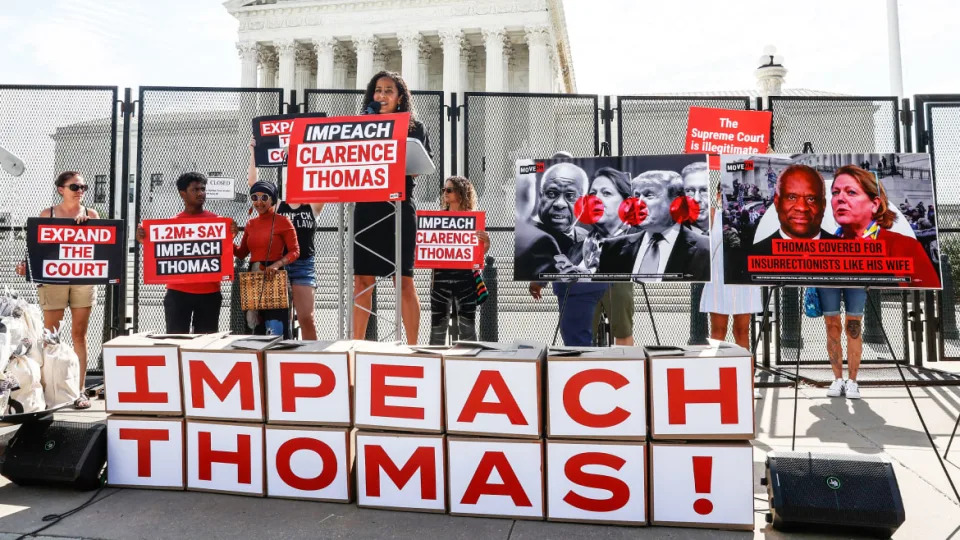
<div class="inline-image__caption"><p>Executive Director of MoveOn.org Rahna Epting speaks at a demonstration where MoveOn.org delivered over 1 million signatures calling for Congress to immediately investigate and impeach Clarence Thomas at the US Supreme Court on July 28, 2022 in Washington, D.C. </p></div> <div class="inline-image__credit">Jemal Countess / Getty </div>
Executive Director of MoveOn.org Rahna Epting speaks at a demonstration where MoveOn.org delivered over 1 million signatures calling for Congress to immediately investigate and impeach Clarence Thomas at the US Supreme Court on July 28, 2022 in Washington, D.C.Jemal Countess / Getty

Now, if Crow did take business deductions for the value of the luxury vacations provided to the Thomases, he would have opened up another can of worms for himself tax-wise. That’s because Crow has publicly stated he did not discuss any business before the court with Justice Thomas.

If that is true, then it is possible that Crow falsified his income tax returns by expensing the cost of the vacation provided the Thomases. It’s also possible the vacations provided the Thomas family could be viewed as income to Thomas—since he would be viewed as providing value to Crow through business discussions. To be very clear, this is speculative and none of this is proven, but the possibility alone makes it worth investigating.

What seems much more clear-cut is that Justice Thomas doesn’t seem to think he has to report gifts from wealthy businessmen, who also are generous corporate political donors, like Harlan Crow.

“Not reportable” is the phrase used by Thomas’ attorney/friend Mark Paoletta when he tweeted (incorrectly) about how the tuition payment by Crow to the school attended by the grandnephew was not reportable as a gift.

Oh my!

Now Would Be a Good Time to Investigate Ginni Thomas

Such an admission by Paoletta suggests knowledge of gift tax requirements by both Thomas and Crow going all the way back to the 1990s. It also raises additional questions. Was Justice Thomas motivated not to disclose valuable junkets provided to him and his family in order to abet his buddy Crow’s non-filing of gift tax returns and/or expensing of the value of the trips on his tax returns?

Oh me oh my!

Now, Mr. Crow may think he has insulated himself by procuring a golden passport from St. Kitts and Nevis—which is a notorious tax haven and money laundering refuge in the Caribbean. Then there’s the fact that Crow’s yacht, the Michaela Rose, has a registered ownership under an entity called Rochelle Marine Limited—a company domiciled in Guernsey, another notorious tax haven located just off the shores of the U.K.

Mr. Crow clearly has employed some clever tax accountants and lawyers over the years. And we all look forward to the answers he provides to the questions posed by Sen. Wyden but, clearly, Crow has exhibited a predisposition for tax avoidance behavior. Did he cross the line into tax fraud? That is something to contemplate and discuss around the campfire.

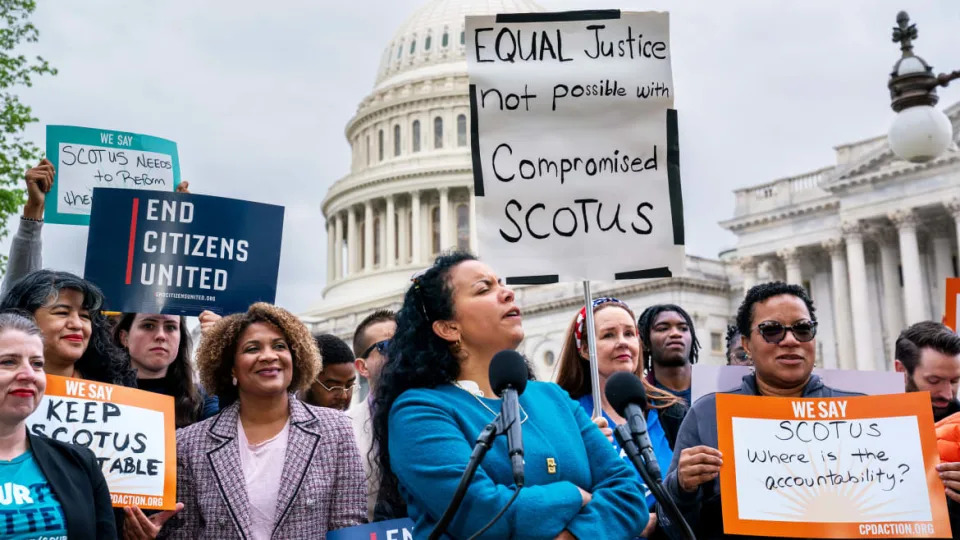
<div class="inline-image__caption"><p>Analilia Mejia of the Center for Popular Democracy, center, joins other activists calling for ethics reform in the U.S. Supreme Court, at the Capitol in Washington, Tuesday, May 2, 2023. Associate Justice Clarence Thomas has been criticized for accepting luxury trips nearly every year for more than two decades from Republican megadonor Harlan Crow without reporting them on financial disclosure forms.</p></div> <div class="inline-image__credit">J. Scott Applewhite / AP</div>
Analilia Mejia of the Center for Popular Democracy, center, joins other activists calling for ethics reform in the U.S. Supreme Court, at the Capitol in Washington, Tuesday, May 2, 2023. Associate Justice Clarence Thomas has been criticized for accepting luxury trips nearly every year for more than two decades from Republican megadonor Harlan Crow without reporting them on financial disclosure forms.J. Scott Applewhite / AP

But why is this question even significant?

It is murky as to whether any of Crow’s business dealings were ever subject to SCOTUS review—even indirectly. What is not unclear are the heavy-duty political campaign contributions made by Harlan Crow.

Has Mr. Crow donated to dark money PACs? We don’t know, because anonymity is the whole point of dark money PACs.

What about corporate political donations?

There is no limit to those given the Citizens United decision, wherein SCOTUS bestowed personhood on corporations and concluded that limiting corporate political contributions was tantamount to limiting freedom of speech—which was unconstitutional.

Clarence Thomas Shows Why Supreme Court Justices Cannot Be Above the Law

Might that issue have ever come up when Thomas was sailing on Crow’s yacht or flying on his corporate jet? Justice Thomas voted with the majority in Citizens United, which certainly had to make corporate executives everywhere in the U.S. pleased—even if it opened the door to contributions from overseas, and not just from Caribbean tax havens, and not just from dual passport holders.

That Justice Thomas was unethical in not disclosing receipt of luxury gifts provided to him is transparently obvious, though it seems inconsequential to date. But it does raise the question as to whether those who provide wealthy gifts to civil servants that hold positions of power should face any consequences, particularly when tax responsibilities are clear.

Should wealthy corporate executives who make large political donations to obtain results favorable to their business (or make luxury gifts to powerful people) be held accountable? Bottom line—does the wealth, power, and position of the wealthy insulate them from the consequences of their actions? (Normal tax-paying citizens would certainly face such a reckoning.)

These questions are bigger than just Thomas and Crow. They speak to the integrity of our political systems, and whether ordinary Americans should have to live by different rules than the wealthy and politically powerful.

Florida and Louisiana are borrowing hundreds of millions of dollars to cope with hurricane insurance claims

Quartz

Florida and Louisiana are borrowing hundreds of millions of dollars to cope with hurricane insurance claims

Aurora Almendral – May 4, 2023

In an emergency financial maneuver, the state-chartered insurance associations of Florida and Louisiana have been forced to borrow a combined $1.3 billion to cover insurance claims caused by worsening hurricanes.

The nonprofit insurance associations were already a backstop measure, stepping in after 2022’s Hurricane Ian drove insurance companies in the Gulf Coast into failure, causing the cancellation of tens of thousands of homeowners’ policies and leaving millions in unpaid claims.

But those unpaid claims were so high that the associations have had to turn to emergency borrowing of hundreds of millions of dollars at significant interest rates. “We’re currently in the midst of an insurance crisis,” Jim Donelon, Louisiana’s insurance commissioner, said in a news briefing. The crisis is “largely…a result of hurricane activity in our state the last couple of years.”

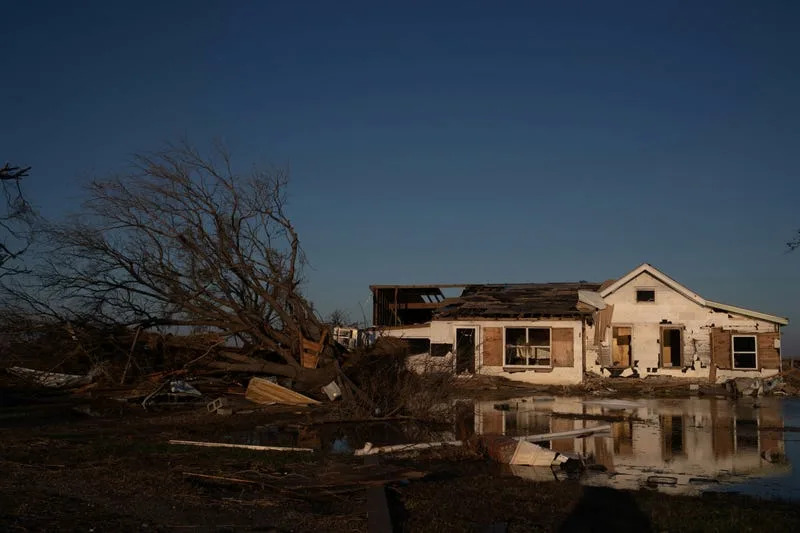
A home destroyed by Hurricane Delta in Louisiana.
Climate change is making insurance more expensive along the US Gulf Coast

As interest rates have risen over the past year, borrowing has become more expensive. Louisiana has taken on debt of $600 million to cover hurricane insurance claims, for instance, and will pay at least $275 million in interest between now and 2038 (pdf).

The increased burden of debt, including the high borrowing costs, will be shouldered by Florida and Louisiana residents in the form of higher premiums for homeowners’ insurance as well as higher costs for auto and theft insurance.

A study published in April confirmed that climate change is making hurricanes stronger, and will cause more catastrophic storms to hit the US East and Gulf Coasts in the coming decades.

“This is an extraordinary event for us,” John Wells, executive director of the Louisiana Insurance Guaranty Association, the state-chartered association, said of the emergency borrowing. “What everybody has to come to terms with is how much it takes to cover catastrophic losses.”

Climate change is causing property insurance markets to collapse

Insurance companies are built on their ability to predict loss. But worsening disasters are injecting more uncertainty into calculations, and insurers in the most climate-affected areas are struggling to cope with it.

Reinsurance companies, which help insurers deal with catastrophes, have been fleeing high-risk areas, particularly those prone to wildfires or flooding.

“Just as the US economy was overexposed to mortgage risk in 2008, the economy today is overexposed to climate risk,” Eric Andersen, president of Aon PLC, one of the world’s largest insurance brokers, said during a Senate hearing in March.

California’s wildfires are also driving an insurance crisis, causing higher premiums and lower coverage limits—if property owners can get coverage at all—as insurers withdraw from the market.

In the Gulf Coast, analysts are warning that more insurers could become insolvent before hurricane season starts again on June 1.

America is refusing to do the one simple thing that would solve the Great People Shortage

Business Insider

America is refusing to do the one simple thing that would solve the Great People Shortage

Gaby Del Valle – May 4, 2023

A US factory with immigrant employees multiplying
The US needs more workers or it will face serious economic chaos. There’s a clear fix: more immigration.Tyler Le/Insider

Two simple words: more immigrants

America needs more workers.

The United States is already running low on critical positions such as nurses, home-health aides, farmworkers, and truckers. And there are fewer young people on the way to make up the difference: The National Bureau of Economic Research found that birth rates in the US have declined by nearly 20% since 2007, while the fertility rate has been below the replacement level for decades.

That means that unless people start having a lot more kids, the US population could eventually start to shrink — just like China’s population has. The problem, though, isn’t just a smaller population, but an aging one. With fewer people to pay into Social Security to support the growing number of retirees and fewer workers in critical industries, including healthcare and agriculture, a declining population would have devastating consequences for the American economy.

“This is the issue of the future, because this is going to become the first-order issue for all kinds of industries in America,” Lant Pritchett, a development economist and RISE Research director at Oxford University’s Blavatnik School of Government, told me. “They just won’t be able to attract workers.”

Politicians have suggested various ways to encourage people to have more children: “We will support baby bonuses for a new baby boom,” former President Donald Trump said at a conference in March. But even if these policies went into effect, we’d still have to wait for those kids to grow up before they could enter the workforce. The labor imbalance is already here, and the economy needs more workers now. That’s why a growing number of demographers, economists, and business executives support letting more immigrants into the US as a more immediate way to fill in the gaps. President Joe Biden’s economic advisors even said in March that more legal immigration is needed to boost the economy. And while immigration is a politically touchy solution, the quickly aging US economy is running out of options to keep itself afloat.

“The only solution is more workers,” Pritchett said.

America’s People Shortage

The US fertility rate first dipped below the replacement level — the rate needed to sustain the population, which is about 2.1 births per woman — in the 1970s. After rebounding in the 1990s and early 2000s, the rate began a steady decline in 2007 that has not reversed. While the US population has managed to avoid an outright drop, population growth reached an unprecedented low of 0.12% in 2021. Some of this loss can be attributed to the deaths of over 1 million Americans during the pandemic, but the COVID crisis only exacerbated preexisting demographic trends. Americans are getting older: The median age of the US population has increased by roughly 3.5 years since 2000, according to the Census Bureau, and 2021 saw the largest upward shift in the population age ever recorded.

According to estimates, these trends won’t reverse anytime soon. The Congressional Budget Office estimated this year that population growth will slow between 2023 and 2053, and that by 2042, any growth will be from immigration, not births. Kenneth Johnson, a professor of sociology and a senior demographer at the University of New Hampshire, pointed out that the demographic mismatch is even more dire when you look at county-by-county data. Deaths outnumbered births in two-thirds of US counties in 2021, creating a phenomenon that demographers call “natural decrease.” Even before the pandemic, roughly half of all US counties had more deaths than births, he said.

Johnson said that one big debate among demographers is whether people are simply delaying having children or just putting it off altogether. It’s possible that a combination of factors, including the lingering effects of the Great Recession, coupled with crushing student-loan debt, the rising cost of housing, and the pandemic simply pushed back the timeline for many people to have children. After all, birth rates did rise slightly in 2021, likely because of stimulus payments and the flexibility of remote work. But Johnson told me, “Right now, my impression is that a fair number of those babies aren’t going to be born.”

Policymakers and economists have suggested myriad ways to increase the number of babies people are having — ranging from “baby bonds” to a stronger social-safety net. But some ideas to boost fertility come with a sinister undercurrent. The preoccupation with increasing birth rates has particularly taken hold on the political right, which has long had a fascination with the racist conspiracy theory that there is a global plot to “replace” white Americans with immigrants. Trump’s baby-boom plan, for instance, may have been inspired by Hungary’s family-planning program, which is designed to encourage white heterosexual couples to have more children. “Migration for us is surrender,” Hungary’s far-right Prime Minister Viktor Orbán said in 2019.

Kenneth Johnson, University of New Hampshire

The pronatalist movement, which argues that people should be having more babies, has also grabbed hold in Silicon Valley — but some of its adherents don’t believe that just anyone should be having children. Tech billionaires like Elon Musk (who has 10 children) have become convinced that they need to have lots of children to save the human race. And one Silicon Valley couple has started a campaign to encourage more people like themselves to have children, speaking openly about their use of reproduction technology to select embryos based on genetic testing.

But so far, policies designed to induce people into having more kids have been a bust. Japan has struggled with a declining birthrate for decades despite efforts to encourage families to have more children. Earlier this year, Prime Minister Fumio Kishida warned that Japan was “on the brink of not being able to maintain social functions” due to population decline, adding that it was “now or never” to solve the problem. China’s population is both aging and shrinking as well, and after decades of restrictive family-planning policies, the country is trying to change course. In recent years, China has reversed its notorious “one-child policy” and started restricting abortions for “nonmedical reasons.” But the country’s population is still declining.

How immigration can boost the economy

In the face of looming population decline and resulting labor shortages, there is a clear answer staring the US in the face: immigration. Allowing more people to become Americans would not only help immediately alleviate some of the labor shortages plaguing the US economy but would also help to stem some of the country’s long-term population decline. Historically, the median age of immigrants has been younger than the median American age. And people of working age — meaning those between 18 and 64 — comprised 77% of the immigrant population in 2021, compared to just 59% of the US-born population that same year. Immigrants, Johnson said, “bring not only themselves,” but also the potential for more children, further boosting the US population and productivity.

Though current immigration rates — particularly the number of migrants apprehended at the border — are the subject of contentious national debate, recent Census data shows that the total number of immigrants arriving in the country isn’t enough to offset population losses. Between 2021 and 2022, the number of immigrants in the 20 most-populous counties in the country nearly tripled, but most of those counties still saw their overall populations decline. Despite increased immigration, Los Angeles County’s population declined by 90,000 people in 2022 — and by 180,000 people the previous year.

In order to truly prevent a people shortage, the US will need to let more people into the country. And there’s already evidence that immigrants can help boost local economies — and transform entire cities. Immigrants are 80% more likely to start a business than people born in the US, and recent data shows that they’ve started more than 25% of businesses in seven of the eight fastest-growing sectors of the US economy. Because of that, research has found that immigrants actually create more jobs than they take. Plus, across the US, several key industries — including agriculture, meatpacking, manufacturing, and healthcare — depend on immigrant labor. And if we boost immigration rates, the incoming workers could help ease labor shortages in these critical fields.

Mexican farm workers harvest cabbages in a sunny field in California
Critical industries such as agriculture and healthcare rely on immigrant labor.Sandy Huffaker/AFP via Getty Images

From central Indiana to New York City, businesses are struggling because they can’t hire enough workers to fill their open roles. “If we don’t do this and have a positive conversation about immigration today, it will continue to crush Hoosier households and economy,” Patrick Tamm, the president and CEO of the Indiana Restaurant and Lodging Association, told a local publication.

Take Utica, New York. The city’s population declined from 100,410 people in 1960 to just over 60,500 in 2000. But instead of facing extinction, the postindustrial city’s population slowly began rebounding in the 1990s with the arrival of Bosnian immigrants fleeing the Yugoslav Wars, who were followed by refugees from Myanmar in the 2000s and, more recently, Bantu refugees from Somalia. The city’s relatively low cost of living has made it a hub for people fleeing conflicts around the world, who resettle with the help of refugee-aid organizations. Though the city’s population still hovers around 60,000, it would be much lower if not for the resettled refugees and their families who now make up about 25% of Utica’s population.

“The refugee population has helped the city’s economy tremendously,” Brian Thomas, the commissioner of Utica’s Department of Urban and Economic Development, told CNBC.

Political compromise? 

Immigration has, of course, been a political hot potato for decades. One 2022 survey found that one-third of Americans and two-thirds of Republicans believe in tenets of the so-called “Great Replacement” theory. A February Gallup poll found that just 28% of responding Americans are satisfied with our current immigration rates, and most of those who are dissatisfied want immigration to decrease. But even without a huge overhaul of the entire system, there are clear solutions that could help welcome more talented, much-needed workers to America.

One way the US could encourage more immigration is by focusing on temporary visas for specific industries that need workers. Japan took this approach and quietly opened itself to foreign workers in 2019 when it began allowing “specific skilled workers” in 14 key industries. These workers are allowed to stay in the country for up to five years on temporary labor visas — but they aren’t allowed to bring their families. Lawmakers hoped that the policy would attract around 345,000 workers in a five-year period, or an average of 5,750 people each month. Pritchett said this model could also work in the United States.

“A lot of people in the world would love to come work in a high-productivity place and would be more than willing to do so not in an exploitative way, but on a term-limited basis,” he told me.

There are already two guest-worker programs in the United States: the H-2A program for temporary agricultural laborers and the H-2B program for temporary non-agricultural workers. Both programs give temporary work visas to people tied to specific employers. The current programs are not perfect, however, and workers on H-2A and H-2B visas have sounded the alarm over squalid living conditions, wage theft, and exploitation. And the treatment of workers in the country on temporary visas has been a problem for decades. For these programs to be expanded, there would need to be significant safeguards in place to ensure workers aren’t exploited.

And there are other approaches that could work. Tara Watson, an economist and the director of the Center on Children and Families at the Brookings Institution, said that solutions focused on bringing people here on a long-term basis are more in line with what the US needs. “I’d rather see more expansion on the permanent side than the temporary side, because I think the challenges that we’re facing are long-run challenges and they really require long-run solutions,” Watson said.

She said that a good place to start would be expanding both family- and employment-based migration by simply allocating more visas in each category. Scaling up both programs would make an immediate difference, she said. Other simple solutions include lifting the cap on the number of skill-based green cards issued to immigrants from each country and letting people on nonimmigrant visas renew their status in the United States, rather than having to leave the country to do so.

Regardless of the approach, the biggest hurdle is a matter of political will. “I think there will be some resistance to this as a solution,” said Watson. “But I also think it’s essentially an imperative.” After all, the US is running out of options, and soon its growing people shortage is going to spell economic disaster.

Watson said that the economic forces will eventually overwhelm the “white-nationalist far right” that has “played an outsize influence” on the immigration debate. “If we don’t solve this problem in the next couple of years, it’s going to come to a head,” she said.

Gaby Del Valle is a writer and reporter living in Brooklyn. She coauthors the immigration newsletter BORDER/LINES.

Flood insurance costs will soar in Florida. See the expected increases in your ZIP code

Miami Herald

Flood insurance costs will soar in Florida. See the expected increases in your ZIP code

Nicolas Rivero – May 4, 2023

Brace for a few years of flood insurance rate hikes, South Florida. And they’re going to be steep — doubling, even tripling for thousands of homeowners.

FEMA has changed the way it calculates flood insurance prices. Instead of relying on old flood zone maps covering broad areas, it’s now basing premium prices on a wider range of factors, like an individual property’s distance from the ocean, rainfall levels and the cost to rebuild a home.

Last month, for the first time, FEMA shared estimates for what that will mean for the average flood insurance premium by ZIP code. For the worst-hit ZIP code in South Florida — 33469, a stretch of coastal Palm Beach County that covers parts of Jupiter and Tequesta — that will mean a 342% premium increase, on average.

In the most expensive ZIP code for flood insurance in South Florida — 33149, which covers Key Biscayne — average premiums will rise north of $7,000 a year.

How your costs compare

Type in your ZIP code to see what is happening to flood insurance costs in your community.

Some important qualifiers: The premium hikes won’t hit all at once for existing policyholders, and not everyone will see an increase. FEMA estimates that about 20% of Florida policyholders will actually see their premiums drop under the new pricing regime, known as Risk Rating 2.0.

For those with current federal flood policies, the good news is that the rate won’t immediately skyrocket. Congress has capped price hikes at 18% per year. The bad news is, you might see that flood insurance premium go up 18% every year for several years until it reaches the new Risk Rating 2.0 calculation for your home.

If you’re buying a new flood insurance policy, however, you’ll get hit with the new premium all at once. Since April 2022, new policyholders have had to enroll at the full Risk Rating 2.0 price.

FEMA says the new premiums reflect the reality of Florida’s increasing flood risk, as people continue to build homes in flood-prone areas and climate change raises sea levels and makes “rain bomb” events, like the 1,000-year floods that recently inundated Fort Lauderdale, more common.

The agency also argues that the new premium regime is more fair. “The new methodology allows FEMA to equitably distribute premiums across all policyholders based on the value of their home and the unique flood risk of their property. Currently, many policyholders with lower-value homes are paying more than they should and policyholders with higher-value homes are paying less than they should,” FEMA wrote in an April 2021 press release announcing the change.

Mortgage lenders and banks often require that home and property owners get federal flood insurance. Although Florida has the highest number of policies in the country, roughly 4 out of 5 Florida homes aren’t covered. Emergency management experts warn that just about anyone in a state vulnerable to hurricanes and heavy rains should get it.

The number of Florida flood insurance policies is likely to rise. This year, Florida lawmakers passed a bill requiring anyone with hurricane and wind policies from Citizens Insurance to also get flood insurance. That affects 1.2 million Citizens policyholders in the state.

Across South Florida, the biggest premium hikes will go to policyholders in the Keys, South Miami-Dade and coastal Broward and Palm Beach counties. Rates will remain relatively stable in North Dade and inland Broward and Palm Beach.

The 10 biggest premium hikes in South Florida affect ZIP codes up and down the coastline from Summerland Key to Jupiter — and three ZIP codes in inland Miami-Dade County.

Those hikes will eventually lead to average increases in annual insurance bills as high as $4,056 in ZIP code 33036, which covers Islamorada. But the increases will phase in gradually. In ZIP code 33469, which covers parts of Jupiter and Tequesta, the average policyholder will see eight straight years of 18% insurance hikes before their premiums stabilize at the new Risk Rating 2.0 level.

Under the new risk rating regime, the highest average premiums in South Florida will all be in ZIP codes in Miami-Dade and Monroe counties. Key Biscayne, Islamorada, Marathon, Miami Beach, North Bay Village, Bal Harbor, Surfside, and Sunny Isles will be among the most expensive areas to insure against flooding in South Florida.

Key Biscayne will have the sixth highest insurance premiums of any ZIP code in the state.

In Miami-Dade, the biggest premium increases are coming in the southern part of the county, in ZIP codes where home prices are particularly high (33146, i.e. Coral Gables) or where premiums have been historically low (33033, i.e. Leisure City and 33170, which runs west from Goulds to the Everglades).

In Broward, the biggest premium increases are concentrated on the coast, especially in ZIP codes surrounding Fort Lauderdale. ZIP code 33315, which covers Edgewood, one of the worst-hit neighborhoods in the Fort Lauderdale floods, will see a relatively modest 64% premium hike. But a few miles north in ZIP code 33305, premiums are expected to double on average.

This climate report is funded by Florida International University, the Knight Foundation and the David and Christina Martin Family Foundation in partnership with Journalism Funding Partners. The Miami Herald retains editorial control of all content.