‘Poor people are not stupid’: I grew up in poverty, earned $14 an hour, and inherited $150,000. Here’s what I have learned from my windfall.

MarketWatch – The Moneyist

‘Poor people are not stupid’: I grew up in poverty, earned $14 an hour, and inherited $150,000. Here’s what I have learned from my windfall.

Quentin Fottrell – May 3, 2023

‘When I open my accounts and see how they are growing it really fills me with a sense of pride and determination.’

‘My tiny house has been one of the greatest decisions I’ve ever made, and has truly changed my whole mindset on what makes me happy.’ MARKETWATCH

In September 2018, this woman from Texas, then 36, wrote to the Moneyist to ask how she should invest her windfall — over $150,000. It was small by some people’s standards, but it was life-changing to her. She didn’t have a college degree, said she would never earn more than $30,000 a year, and worked full-time for $15 an hour, in addition to a part-time job at $10 an hour. She paid $1,050 a month in rent. 

She paid off her car, and bought a “tiny home,” which she owns free and clear, she wrote in an update a year later. She deposited $70,000 in a high-yield online savings account. She topped up her retirement portfolio and invested $30,000 into emerging markets. She maxed out her IRA and invested $10,000 between very safe dividend stocks and ETFs. She also spent $7,000 on dental work in Mexico.

And today? Five years after her first letter, she has updated MarketWatch readers on her progress, and what she learned from this experience:

Dear Moneyist,

There are a lot more Americans making less than $50,000 a year than there are those who make more. I feel like we aren’t really represented in the financial-advice world. I’d love to see more columns helping people to invest $25-$100 when they can. It’s empowering to invest. I might never be a Warren Buffet, but when I open my accounts and see how they are growing it really fills me with a sense of pride and determination. 

As to how I’m doing? Beautifully. I hate to say it but the pandemic was a blessing to me personally. I feel terrible saying that because of the loss and devastation so many others suffered and are still suffering because of it, but for me, the pandemic opened up a world of possibilities. A job opportunity landed in my lap because of the shutdown, and I’m making almost $4,000 a month now after taxes. 

Yes, me! I’ve never made so much money before (outside of the inheritance I received). I am still frugal and live off of about $1,800 a month, and that includes health insurance, long-term disability insurance, full-coverage car insurance, and pet insurance! Everything else goes to savings and investments. I won’t say what it is I’m doing because it might identify me, but I will say it is a job that allows me to be happy every second I’m “working.”

My tiny house has been one of the greatest decisions I’ve ever made, and has truly changed my whole mindset on what makes me happy. As I’ve lived in it I’ve altered certain parts of the design to be more efficient, and I can honestly say I intend to live tiny until some mobility issue — hopefully age-related and not an accident of some kind! — forces me back into a more conventional dwelling. Tiny living forces you to be mindful. Not only of your space, but also of yourself, and how you live in your space. It might sound strange to hear, but living tiny has truly made me a better person and improved my quality of life in ways other than financial. 

I would like to address some of the comments I read in response to your previous article on my letter. While most were truly supportive others were coming from a place of judgment and condescension. I’d like to thank everyone who wished me well, and for them to know that their words meant a lot to me. That people took time out of their day to read about me and wish me well was uplifting. I send them all virtual hugs and hope each and everyone is happy and healthy. 

However, I’d also like to address some of the comments that were less encouraging. Several people insisted that my letter was obviously fake because of how well I wrote, and that someone with my education level could not possibly be in the financial situation I’m in. I was less hurt by this attitude as I was utterly astounded by it. That people genuinely believe the educated cannot struggle financially just floored me. 

‘There are more ‘poor’ Americans than there are ‘rich’ Americans, and we are not stupid or lazy. We’re trying to make it work.’

Poor people are not stupid. We’re not illiterate country bumpkins struggling to figure out how to work a computer. We’re the nurse that lives down the street with two roommates to be able to afford rent. We’re the teachers still living with their parents because they can’t find enough roommates to qualify for an apartment. We’re the cops working at Home Depot on the side trying to save up for a baby. We’re the lawyers doing Uber just to afford student-loan payments. There are more “poor” Americans than there are “rich” Americans, and we are not stupid or lazy. We’re trying to make it work — usually by having 2-3 jobs. 

There is a financial crisis in this country. I believe it comes from unchecked capitalism. When corporations are allowed to buy up single-dwelling homes and drastically raise rents, and banks/lending institutions are allowed to prey on people with obscenely high interest rates, you foster an environment of exploitation. Our society allows for the targeting of young people before they even graduate high school. Credit-card companies and college-loan institutions begin preying on people as soon as they hit 18. If their parents are financially illiterate, and considering most public schools rarely teach financial literacy, too many young people start out life with insane amounts of debt. Additionally, wages have not kept pace with the cost of living in this country, and you have a lot of educated “poor” people. 

I just could not believe those comments that insisted this story was fake because I was too educated to be poor. Then I was mad. Mad because that stereotype is what prevents a lot of change from taking place. Nothing is ever going to get better if we keep thinking the worst of each other. 

Anyway, I again want to thank you for thinking of me and sharing my story. Hopefully it helped more people. As I said before, investing is truly empowering. I didn’t know that before, but I know it now, and I wish it for many more Americans. 

Sincerely, 

Not Quite As Low Income, But I’m Still A Couponing Lady

Dear Not Quite As Low Income,

Thank you for your insightful and eloquent letter. Your words and story continue to inspire me, and I hope will inspire many others out there in America who never had a head start in life and/or continue to face financial struggles. I wish you the best of everything in your life, and I hope more good things continue to happen to you.

Lilly drug slows Alzheimer’s by 35%, bolstering treatment approach

Reuters

Lilly drug slows Alzheimer’s by 35%, bolstering treatment approach

Julie Steenhuysen and Deena Beasley – May 3, 2023

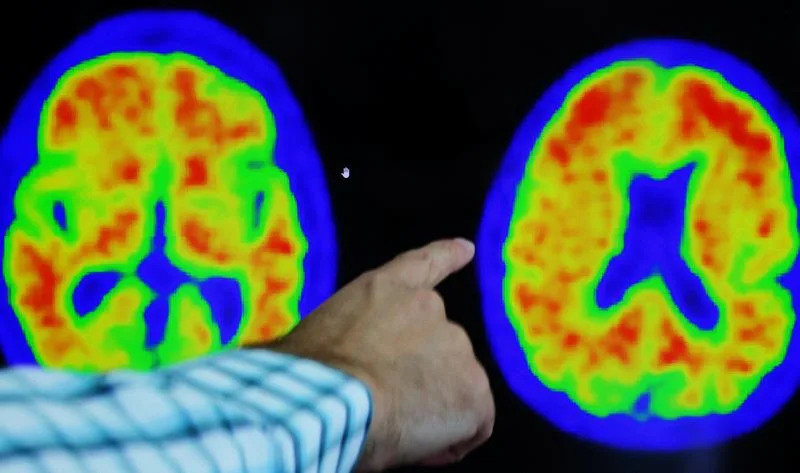
Evidence of Alzheimer’s disease on PET scans at the Center for Alzheimer Research and Treatment in Boston

CHICAGO (Reuters) -An experimental Alzheimer’s drug developed by Eli Lilly and Co slowed cognitive decline by 35% in a late-stage trial, the company said on Wednesday, providing what experts say is the strongest evidence yet that removing sticky amyloid plaques from the brain benefits patients with the fatal disease.

Lilly’s drug, donanemab, met all goals of the trial, the company said. It slowed progression of Alzheimer’s by 35% compared to a placebo in 1,182 people with early-stage disease whose brains had deposits of two key Alzheimer’s proteins, beta amyloid as well as intermediate levels of tau, a protein linked with disease progression and brain cell death.

The study also evaluated the drug in 552 patients with high levels of tau and found that when both groups were combined, donanemab slowed progression by 29% based on a commonly used scale of dementia progression known as the Clinical Dementia Rating Scale (CDR-SB).

Using that scale, experts said Lilly’s findings were roughly on par with Eisai Co Ltd and Biogen Inc’s lecanemab, sold under the brand name Leqembi, which reduced cognitive decline by 27% in patients with early Alzheimer’s in a study published last year.

The results drove Lilly’s shares to a record high, up more than 6% at $429.85.

Dr. Ronald Petersen, an Alzheimer’s researcher at Mayo Clinic, said Lilly’s trial is the third to show removing amyloid from the brain slows progression of the disease, which could put to rest some lingering doubts about the benefits of drugs in the class and the amyloid-lowering theory.

“It’s modest, but I think it’s real,” he said of the benefit, “and I think it’s clinically meaningful.”

Dr. Erik Musiek, a Washington University neurologist at Barnes-Jewish Hospital, said the efficacy looks as good or better than lecanemab.

“The evidence is really starting to build up that these drugs do work,” he said.

Musiek said the findings also offer some of the first evidence for the benefit of earlier treatment. “It really does suggest that you need to remove these plaques early, before the tau really gets going,” he said.

‘RISK THAT NEEDS TO BE CONSIDERED’

In the donanemab treatment group, Lilly said brain swelling, a known side effect of drugs of this type, occurred in 24% of participants, with 6.1% experiencing symptoms. Brain bleeding occurred in 31.4% of the donanemab group and 13.6% of the placebo group.

In the Leqembi Phase 3 trial, the drug was associated with brain swelling in nearly 13% of its study participants.

Lilly said the incidence of serious brain swelling in the donanemab study was 1.6%, including two deaths attributed to the condition, and a third, after an incident of serious brain swelling.

A research note by SVB Securities analyst David Risinger was headlined: “Donanemab Succeeds, But Safety Remains a Concern”.

“Clearly, one saw benefits here, but there is some risk that needs to be considered,” said Dr. Eric Reiman, executive director of the Banner Alzheimer’s Institute, which is running a study of donanemab in presymptomatic patients.

Lilly said it plans to file for traditional U.S. approval by the end of June, and with regulators from other countries shortly thereafter. A company spokesman said a U.S. approval decision should come by year-end or early 2024.

Alzheimer’s experts said they were eager to see full results of the study, including data on how the drug performs in people who carry an Alzheimer’s risk gene known as APOE4, who have been prone to increased risk of side effects in prior trials.

Those results are set to be presented at an Alzheimer’s meeting in Amsterdam this summer.

Study participants received a monthly intravenous infusion of donanemab. At 12 months, half had no evidence of amyloid plaques, the company said.

It also said 47% of donanemab patients in the 18-month trial had no disease progression at 12 months, compared with 29% of the placebo group.

Lilly’s drug is poised to become the third in its class on the market following U.S. approval of two similar medicines developed by partners Eisai and Biogen – Leqembi as well as Aduhelm, which failed to gain traction with doctors or insurers after showing little evidence that it slowed cognitive decline.

Both were approved under the FDA’s accelerated review program, based on their ability to remove amyloid plaques.

Leqembi is currently undergoing the FDA’s standard reviewprocess, with a decision due by July 6.

Lilly is still working on finalizing the price for donanemab, and plans for it to be in the same range as other similar therapies, CEO David Ricks told CNBC.

More than 6 million Americans are living with Alzheimer’s,and that number is projected to rise to nearly 13 million by 2050, according to the Alzheimer’s Association.

(Reporting by Julie Steenhuysen in Chicago and Deena Beasley in Los Angeles, additional reporting by Manas Mishra in Bengaluru; Editing by Bill Berkrot)

Former GOP Lawmaker Rips Republicans With ‘Simple’ Answer To Gun Violence

HuffPost

Former GOP Lawmaker Rips Republicans With ‘Simple’ Answer To Gun Violence

Lee Moran – May 2, 2023

Another Day, Another Mass Shooting

Former Rep. David Jolly (R-Fla.) on Monday suggested a “simple” political solution to America’s gun violence.

“I would say the political answer to gun violence in America is never again elect a Republican. It’s that simple,” Jolly told MSNBC’s Nicolle Wallace during an analysis of the latest mass shooting in Texas in which five people were killed.

“They are bad-faith actors,” Jolly, who left the GOP in 2018, said of his former Republican colleagues, further slamming them for focusing on “motive as opposed to the means.”

“Listen, there is no motive that can accomplish gun violence without the means and the means is the weapon and the access to that weapon and in cases like we just saw, to weapons of war,” he explained.

Jolly noted a general consensus nationwide about “common sense measures” for gun control but said he felt “we need to get more aggressive” and talk about “licensing and registration” and much deeper background checks.

Conflict deepens Russia’s demographic crisis

AFP

Conflict deepens Russia’s demographic crisis

May 2, 2023

President Vladimir Putin has long promised to address low birth rates that have shrunk Russia's labour force
President Vladimir Putin has long promised to address low birth rates that have shrunk Russia’s labour force

Russia’s offensive in Ukraine has aggravated a long-simmering demographic crisis that President Vladimir Putin has struggled to tackle, which could further damage its sanctions-hit economy.

For a country already suffering from a shrinking labour force because of persistently low birth rates, the conflict means even more difficulties that could persist for years.

The mobilisation of hundreds of thousands of men took them off the job market, while prompting many of the most educated parts of the population to flee the country.

“Russia lacks workers,” Alexei Raksha, a demographer who previously worked at the Rosstat statistics agency, told AFP.

“It’s an old problem, but it has gotten worse due to mobilisation and mass departures,” he said.

Russia inherited low birth rates with the collapse of the Soviet Union in the 1990s, when birth rates had halved due to economic hardship and uncertainties over the country’s future.

Putin has since tried to push families to have children, heralding “traditional values” as a way to solve what he believes to be an existential crisis.

As part of his efforts to boost population growth, he introduced a financial bonus for a second and every following child.

– Already hit by Covid –

Russian authorities have not given updated estimates of troop losses in Ukraine since September 2022, when the Defence Ministry reported 5,937 dead.

Western estimates suggest around 150,000 dead and wounded on each side.

“We don’t know about the exact losses in the military operation, but 300,000 people were mobilised, further reducing the number of young people working,” said Natalya Zubarevich, an expert at the Moscow State University.

The battlefield losses come on the heels of a deadly coronavirus pandemic, which “hit Russia hard”, demographic expert Igor Yefremov told AFP.

Official figures count around 400,000 deaths from Covid-19, but the actual toll is estimated to be much higher.

Given the shrinking labour force, Russia’s low unemployment rate of 3.5 percent is not a healthy sign — showing instead a shortage of recruits, with various sectors struggling to fill posts.

A survey published on April 19 by the Russian Central Bank confirmed “acute” tensions, particularly in “processing industries”, transport and “water supply”.

– Will some ‘come back’? –

A study last month from the Higher School of Economics said Russia needed to take in 390,000 to 1.1 million migrants every year until the end of the century to avoid population shrinkage.

But some sectors will not be able to compensate the losses of workers, particularly industries requiring high levels of education.

Raksha said the Ukraine conflict triggered two waves of departures, with “many highly qualified people, including IT specialists”, leaving Russia.

He estimated that around 150,000 people, including around 100,000 men, quit Russia in February-March 2022, just weeks after the conflict erupted.

After Putin announced a mobilisation for the country in September, Raksha estimates that another half a million left.

A recent law has imposed economic restrictions on draft dodgers, which could encourage those who have fled abroad to settle there permanently.

Still, Zubarevich said more than 60 percent of those who left continue working for Russian companies remotely.

“And some of them will come back,” she said.

How is your REM sleep? If you’re feeling tired you might not be getting enough.

USA Today

How is your REM sleep? If you’re feeling tired you might not be getting enough.

Daryl Austin – May 2, 2023

A 2021 phone poll revealed that only 34% of Americans “sometimes” remember their dreams. About 1 in 10 say they “almost always” can, and the same percentage say they “never” do. Explanations for such varied recall abilities come down to the quality of one’s sleep, the number of hours one spends sleeping and during what stage of sleep one wakes up.

REM sleep is the stage in which one dreams and it gets a lot of attention, often from those looking to improve their sleep. But experts say all stages of sleep are important for getting proper restrejuvenation and development.

What is REM sleep?

REM (rapid eye movement) sleep is a stage of semi-deep sleep, often referred to as “paradoxical sleep,” and is “a state of sleep when brain activity shows similar patterns as being awake,” says Wendy Troxel, PhD, a sleep expert at the RAND Corporation and author of “Sharing the Covers: Every Couple’s Guide to Better Sleep.”

According to the National Institute of Health, the initial stages of REM sleep occur about 90 minutes after falling asleep and come and go throughout the night.

What Happens During REM Sleep

During REM sleep, one’s brain is very active, “but the body is essentially paralyzed,” or in a state of sleep paralysis, says Troxel. That state of being is important, because REM sleep is also the sleep stage in which most dreams occur, so one’s muscle paralysis is believed to be the body’s way of protecting itself from acting out one’s dream. “Dreams do occur in other stages of sleep,” explains Troxel, “but the most vivid and often bizarre types of dreams tend to occur in REM.”

Indeed, people who wake up during other sleep stages can rarely recall what their dreams were about. But one study found that a whopping 80% of people who wake during the REM phase of their sleep can remember their dreams well.

The REM stage of sleeping is also when other vital functions occur. “REM sleep is particularly important for memory consolidation, emotional processing and brain development,” says Troxel.

During a full night’s rest, most people experience five stages of sleep: Stages 1 and 2 are considered lighter sleep phases where one drifts between being asleep and being awake. Stages 3 and 4 are where the deepest levels of sleep occur; they are considered the “healing” stages of sleep as that’s when breathing, body temperature, and one’s heart rate are at their lowest levels and one’s muscles are relaxed enough for tissue growth and repair to occur. REM sleep is Stage 5, and exists somewhere between the body’s deepest levels of sleep and wakefulness.

“We enter sleep in the lighter stages of non-REM sleep and slowly descend into the deeper stages of non-REM sleep, followed by an episode of REM, and the cycle repeats several times throughout the night,” explains Troxel.

And just as a healthy eating diet is not comprised of any one food group alone, “healthy sleep is comprised of all stages of sleep, including REM,” explains Troxel. “It’s a myth that REM sleep is more or less important than any other stage of sleep, including light or deep non-REM sleep.”

How to fall asleep easier? Here’s 5 tips to hit the pillow faster and wake up more refreshed.

How much REM sleep do we need?

The amount of REM sleep one needs varies with age. While brains are developing, such as in children and infants, more REM sleep is needed. Newborn babies are thought to spend about 8 hours in REM sleep every night. But people require less REM sleep as they age and most adults average only about 2 hours of REM sleep each night.

What’s more, just because some people who wake during a REM stage of sleeping often remember their dreams, doesn’t mean that failing to recall one’s dream is any indication that you aren’t getting enough REM sleep – you may have simply woken up during a less dreamy stage of sleeping.

“Rather than getting too hung up on whether you are getting enough REM sleep or deep sleep,” advises Troxel, “the best strategy is to follow some basic healthy sleep habits which promote overall good sleep quality during all sleep stages.”

Such healthy habits include adhering to a consistent sleep schedule, following a familiar wind-down routine every night before bed, keeping the lights low in the evening and avoiding alcohol, caffeine or exposure to the blue light of technology too close to bedtime. “Our bodies and brains function optimally when we achieve adequate sleep duration,” Troxel says. “That’s sleep that is appropriately timed, relatively consistent and is of good quality.”

Learn more about your sleep, here.

Can’t remember your dreams? Here 10 tips to help your dream recall.

What is sleep apnea? This sleep disorder could be the reason you’re always tired.

Feeling like you can’t move in the morning? It could be sleep paralysis.

Feeling tired? Humans may need more sleep during the winter, new study suggests

What is sleep hygiene? What to know to do it right and some tips for better sleep.

Why do people sleepwalk? The details you need to know and how to address it in your life.

This woman was told her mortgage was paid off: 10 years later, she received a foreclosure notice in the mail. She decided to fight.

MarketWatch – The Human Cost

This woman was told her mortgage was paid off: 10 years later, she received a foreclosure notice in the mail. She decided to fight.

Aarthi Swaminathan – May 2, 2023

Mortgages originated in the early 2000’s and largely forgotten are now being pursued by debt collectors. Government officials are concerned.
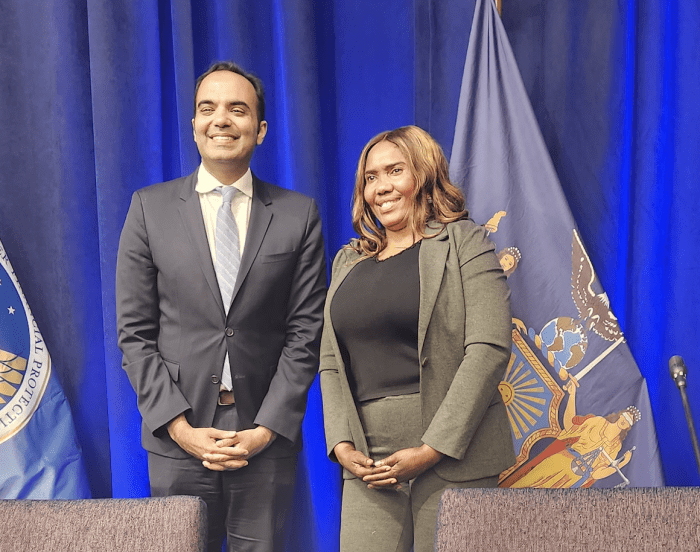
Rohit Chopra, director of the Consumer Financial Protection Bureau, stands beside homeowner Rose Prophete during a field hearing in Brooklyn, N.Y. PHOTO: LEGAL SERVICES NYC

Rose Prophete bought her home in Canarsie, Brooklyn, N.Y. in May 2005. She thought she had paid off her loans until recently, when a company approached her about a debt she thought she had settled a long time ago.

The company expected Prophete to pay up over $130,000, or face foreclosure.

When refinancing her mortgage on the home, Prophete had split her mortgage into two. Prophete said she had been erroneously told that her second mortgage was paid off. That debt, having laid dormant for years, was now being pursued by a debt-collection firm.

Prophete is one of 13 plaintiffs in a 2021 federal lawsuit against the firm, and she recently testified at a field hearing into “zombie debts” held by the Consumer Financial Protection Bureau, a government agency responsible for consumer protection in the financial-services sector.

The CFPB last week announced that it was issuing legal guidance for debt collectors trying to collect on mortgages that were long considered forgiven by borrowers, who in particular had no notices or statements sent over a decade about outstanding debt.

‘This is really frustrating — I don’t want to lose my home.’— Rose Prophete, who bought her home in Brooklyn, N.Y. in May 2005

The federal agency said that a debt collector “who brings or threatens to bring a state-court foreclosure action to collect a time-barred mortgage debt may violate the Fair Debt Collection Practices Act.” Time-barred refers to debt whose statute of limitations has run out.

“Debt collectors do not get to claim ignorance of the law or ignorance of the debt’s age,” Rohit Chopra, director of the CFPB, said during the hearing. “If the statute of limitations has expired, taking legal action threatening to bring a suit of foreclosure may be illegal no matter what the debt collector claims to have known. This is the law.”

Prophete, a Haitian immigrant and a hospital technician, said during the CFPB hearing that she had worked three jobs to afford the two-family Brooklyn home, on top of taking care of small children. 

According to the lawsuit, a little more than a year after they completed the purchase, the broker who arranged the financing suggested she refinance the mortgage to lower her monthly payments. She agreed to refinance her mortgage into two, as the broker told her that this “financing structure would be the most financially advantageous to her,” per the filing. The first loan was for $504,000 and the second for $63,000 with an interest rate of 9%.

‘Debt collectors do not get to claim ignorance of the law or ignorance of the debt’s age.’— Rohit Chopra, director of the CFPB, speaking about the Fair Debt Collection Practices Act

After a couple of years, she received a note from her first lender that the second loan was fulfilled — that she didn’t need to pay for it. She said she didn’t receive any statements for the second mortgage, so she focused on paying off her first one, the lawsuit said.

She said she never heard back from the mortgage servicer, until over a decade later, in March 2021, when she received a foreclosure notice in the mail. The creditor was attempting to collect on payments due from Jan. 1, 2009 to the date of filing in 2021. The payments had ballooned from $63,000 to over $130,000, according to the lawsuit.

“This is really frustrating — I don’t want to lose my home,” Prophete said during the field hearing. 

New York Attorney General Leticia James, who also spoke during the hearing, said that debt-collection firms were engaged in “predatory practices” to “rob individuals of the equity in their home.” 

Debt buyers were acquiring these mortgages “often for pennies on the dollar,” James said, and they were now suing homeowners and “seeking to exploit rising housing values by reviving the long-dormant zombie debt.” 

“I find this practice predatory and abusive and an affront to the American dream of sustainable home ownership,” she added. “I will fight this despicable practice.”

Cancer-causing toxins are in shampoos, body lotions, and cleaning products. Here’s what experts want you to know

Fortune

Cancer-causing toxins are in shampoos, body lotions, and cleaning products. Here’s what experts want you to know

Robin Dodson, Ruthann Rudel, Megan R. Schwarzman, The Conversation – May 2, 2023

Getty Images

The big idea

Consumer products released more than 5,000 tons of chemicals in 2020 inside California homes and workplaces that are known to cause cancer, adversely affect sexual function and fertility in adults or harm developing fetuses, according to our newly published study.

We found that many household products like shampoos, body lotions, cleaners and mothballs release toxic volatile organic compounds, or VOCs, into indoor air. In addition, we identified toxic VOCs that are prevalent in products heavily used by workers on the job, such as cleaning fluids, adhesives, paint removers and nail polish. However, gaps in laws that govern ingredient disclosure mean that neither consumers nor workers generally know what is in the products they use.

For this study we analyzed data from the California Air Resources Board (CARB), which tracks VOCs released from consumer products in an effort to reduce smog. The agency periodically surveys companies that sell products in California, collecting information on concentrations of VOCs used in everything from hair spray to windshield wiper fluid.

We cross-referenced the most recent data with a list of chemicals identified as carcinogens or reproductive/developmental toxicants under California’s right-to-know law, Proposition 65. This measure, enacted in 1986, requires businesses to notify Californians about significant exposure to chemicals that are known to cause cancer, birth defects or other reproductive harms.

We found 33 toxic VOCs present in consumer products. Over 100 consumer products covered by the CARB contain VOCs listed under Prop 65.

Of these, we identified 30 product types and 11 chemicals that we see as high priorities for either reformulation with safer alternatives or regulatory action because of the chemicals’ high toxicity and widespread use.

Why it matters

Our study identifies consumer products containing carcinogens and reproductive and developmental toxicants that are widely used at home and in the workplace. Consumers have limited information about these products’ ingredients.

We also found that people are likely co-exposed to many hazardous chemicals together as mixtures through use of many different products, which often contain many chemicals of health concern. For example, janitors might use a combination of general cleaners, degreasers, detergents and other maintenance products. This could expose them to more than 20 different Prop 65-listed VOCs.

Similarly, people experience aggregate exposures to the same chemical from multiple sources. Methanol, which is listed under Prop 65 for developmental toxicity, was found in 58 product categories. Diethanolamine, a chemical frequently used in products like shampoos that are creamy or foamy, appeared in 40 different product categories. Canada and the European Union prohibit its use in cosmetics because it can react with other ingredients to form chemicals that may cause cancer.

Some chemicals, such as N-methyl-2-pyrrolidone and ethylene gylcol, are listed under Prop 65 because they are reproductive or developmental toxicants. Yet they appeared widely in goods such as personal care products, cleansers and art supplies that are routinely used by children or people who are pregnant.

Our findings could help state and federal agencies strengthen chemical regulations. We identified five chemicals – cumene, 1,3-dichloropropene, diethanolamine, ethylene oxide and styrene – as high-priority targets for risk evaluation and management under the Toxic Substances Control Act by the U.S. Environmental Protection Agency.

What still isn’t known

Our analysis of the CARB data on volatile toxicants does not paint a complete picture. Many toxic chemicals, such as lead, PFAS and bisphenol A (BPA), don’t have to be reported to the Air Resources Board because they are not volatile, meaning that they don’t readily turn from liquid to gas at room temperature.

In addition, we were not able to identify specific products of concern because the agency aggregates data over whole categories of products.

What other research is being done

Studies have shown that women generally use more cosmetic, personal care and cleaning products than men, so they are likely to be more highly exposed to harmful chemicals in these categories. Further, women working in settings like nail salons may be exposed from products used both personally and professionally.

Research by members of our team has also shown that product use varies by race and ethnicity, partly due to racialized beauty standards. Policy interventions could be tailored to prioritize these potentially more-highly exposed groups.

Ultimately, a right-to-know law like Prop 65 can only go so far in addressing toxics in products. We’ve found in other research that some manufacturers do choose to reformulate their products to avoid Prop 65 chemicals, rather than having to warn customers about toxic ingredients.

But Prop 65 does not ban or restrict any chemicals, and there is no requirement for manufacturers to choose safer substitutes. We believe our new analysis points to the need for national action that ensures consumers and workers alike have safer products.

Dr. Kristin Knox at the Silent Spring Institute contributed to this article.

Robin Dodson, Adjunct Assistant Professor of Environmental Health, Boston UniversityMegan R. Schwarzman, Associate Project Scientist and Continuing Lecturer in Environmental Health Sciences, University of California, Berkeley, and Ruthann Rudel, Visiting Scholar, Social Science Environmental Health Research Institute, Northeastern University, Northeastern University

This article is republished from The Conversation under a Creative Commons license. Read the original article.

Putin Grooms Russians for Defeat in Leaked Crisis Manual

Daily Beast

Putin Grooms Russians for Defeat in Leaked Crisis Manual

Allison Quinn – May 2, 2023

Sputnik/Mikhail Klimentyev/Kremlin via REUTERS

After spending the last year reassuring Russians that victory is inevitable in the war against Ukraine, the Kremlin is now frantically working to lower expectations—and rolling out a contingency plan to lessen the impact of a humiliating defeat.

A new manual prepared by Russia’s presidential administration and distributed to the Kremlin’s army of propagandists contains some surprising instructions: Do not “underestimate” Ukraine’s impending counter-offensive and do not spread the idea that Kyiv is somehow “not ready” for it.

That’s according to the independent news outlet Meduza, which says it obtained a fresh copy of the manual and spoke to sources close to the Kremlin about it.

“If the offensive is unsuccessful, it will be possible to say: the army [of Russia] skillfully fended off an attack that was superior in power,” making the “victory” that much more impressive, the sources were quoted saying.

But perhaps more importantly, the sources explained, if the Ukrainian military manages to take back territories and claim battlefield victories “with the help of weapons from the U.S. and Europe,” Russia’s losses will be understandable—after all, they were up against the “entire West.”

Putin Secretly Snubbed From Major Summit Over Arrest Fears

In that case, the sources said, the Russian military will also be seen as having “pulled through.”

And just in case any Russian citizens begin to wonder about the colossal amount of funds the government is funneling to the very same Ukrainian territories it decimated before declaring them “part of Russia,” propagandists are advised to steer clear of the subject.

Instead, Kremlin spin doctors want their mouthpieces to churn out material on Russia upgrading schools and kindergartens, or hospitals.

“It’s clear there will be problems with the economy, and it’s clear why. Spending on the ‘special military operation’ isn’t going anywhere,” one source close to the presidential administration said, noting that funds will go towards the “new regions” rather than the old ones and people will inevitably feel neglected. “It is better not to show in specific amounts how much was taken [for the new regions].”

The Kremlin’s new guidelines are a stunning reversal from just a year ago, when propagandists were still pushing the idea that Russia would soon be reborn as a mighty superpower taking control of huge swathes of Ukraine.

At that time, the war was still a distant reality for many Russians—unlike now, when even residents in St. Petersburg and Moscow are on edge over drone attacks and even, in some cases, bomb-toting “Ukrainian pigeons.”

Security concerns were cited as the reason for the cancellation of Russia’s beloved Victory Day celebrations in some cities on May 9.

This Is Make or Break Time for Desperate Vladimir Putin

“There will be no parade, so as not to provoke the enemy with a large concentration of equipment and military personnel in the center of Belgorod,” the governor of the border region said last month.

Even in Moscow, the country’s biggest Victory Day parade this year will forgo its traditional procession of the Immortal Regiment, which sees thousands march carrying portraits of loved ones who died fighting in World War II. Authorities reportedly feared some people might show up carrying portraits of troops killed in Ukraine, inadvertently calling attention to the staggering losses there.

The Kremlin reportedly instructed its propagandists not to “play up” preparations for the parade.

And Moscow officials are also on high alert over any potential embarrassing disruptions in the parade: Utility workers have been ordered to patrol the city in search of bombs or drones ahead of the event, according to Sota.

That move came after a Ukrainian banker publicly offered 20 million hryvnias (about $545,000) to anyone who can design a drone—ideally painted with “Glory to Ukraine!”—that will land on Moscow’s Red Square in the middle of the parade.

Florida’s insurance crisis: 2 special sessions, little help | Commentary

Orlando Sentinel

Florida’s insurance crisis: 2 special sessions, little help | Commentary

Scott Maxwell, Orlando Sentinel – May 2, 2023

For years, Florida lawmakers ignored a looming insurance crisis.

Then, with rates skyrocketing and companies fleeing the state, they scrambled to call not one, but two special sessions, vowing to help.

Well, my wife and I saw what the Legislature’s version of help looks like a few months ago when our insurance bill jumped from $4,000 to $7,000.

Any more “help “like that and we’ll be eating cat food.

In reality, we’ll be just fine. But a growing number of Floridians are facing bills they can barely afford as prices skyrocket throughout the state.

The Insurance Information Institute predicted increases of 40% throughout Florida this year. Some companies have requested 60% hikes. And scores of Floridians are still being dropped by their carriers while the state-run Citizens Property Insurance keeps bloating.

This is an undeniable, mounting mess.

So once again, GOP legislators – who have spent the better part of the past two years waging culture wars – have cobbled together another insurance bill.

But if you’re counting on this lowering your rates, bad news: It will not.

That’s not my take. It’s the take of former GOP Sen. Jeff Brandes – one of the few lawmakers who repeatedly warned his colleagues to take action years ago and was largely ignored.

“Nothing in this bill lowers rates,” Brandes, who now runs the Florida Policy Project, said this week. “Nothing in this bill encourages more companies to come.”

Brandes and I have differing views on some aspects of reform – particularly as it relates to the transparency measures and regulations that subsidized insurance companies should face.

But we agree on three key things:

1. Despite years of yapping about fraud claims driving up costs and rates, Florida lawmakers have never cracked down on bad actors in any meaningful fashion.

2. The solutions they’re talking about now aren’t going to do much, if anything, to bring down rates.

3. Any meaningful solution – in a state like ours that’s basically a bullseye for hurricanes and increasingly at risk of flooding – is going to involve a boatload of public money.

Brandes and I may have varied thoughts on how that money should be spent. But the reality is that this problem – where the state-run insurance company is now covering millions of Floridians at increasingly high rates – requires a major investment and serious policy reform.

And that’s not good news for a Legislature that specializes in divisive bumper-sticker priorities – dragging Disney, fuming about drag queens and decrying wokeism.

When it comes to hard, serious policy work, they are either unwilling or incapable of getting the job done. At least when it comes to insurance.

A clear example of that is fraud. For years, lawmakers have blamed fraudulent claims for driving up insurance costs and driving companies out of the state. But they haven’t done squat from an enforcement standpoint.

“If you want talent in the Office of Insurance Regulation – which should be one of the most talented in the state – you have to pay for it,” Brandes said.

That seems obvious. If your city had a rash of burglaries, you’d beef up your burglary patrol. But Florida politicians have whined about fraud without ever dedicating serious resources to exposing, punishing and stopping it.

If they can set up a statewide election-crime police force to deal with fever-dream problems, you’d think they’d beef up their insurance team to deal with an actual financial nightmare.

But to really bring down prices, we need more competition among providers. Or we need to invest more in Citizens – and basically accept that a giant, costly state-run insurance company is the only way we’re going to be able to cover everyone in a state that’s both storm-ravaged and low-wage.

Few people really want that second option. Certainly not Brandes. But many of us aren’t super keen either on just handing over tax dollars to an industry with a track record of hosing its policy holders.

Just a few weeks ago, the Washington Post published a maddening investigative report that found Florida insurance companies were financially victimizing hurricane survivors by gutting their claims and payments – sometimes by as much as 90% of what the companies’ own adjusters said the homeowners were due. The piece featured an adjuster who said one insurance company took his report – which estimated $200,000 in valid claims for one home – and whittled it down to just $27,000 without his knowledge or consent.

Brandes prefers offering companies incentives to write Florida policies. That may be worth exploring – with a lot of checks and balances added in.

But here’s the bottom line: Either scenario – majorly subsidizing private industries or growing/transforming Citizens into something like a Florida version of Medicare for homeowners – is painful. They’re both costly, politically unpopular and involve a lot of hard work.

Unfortunately, most Florida politicians don’t want to do hard work or make unpopular moves. So they just keep screaming about critical race theory and transgender athletes. And while they scream, your rates keep rising.

I think we’re heading toward a pain point – where even the Floridians who used to laugh at the culture wars are going to stop laughing once they realize they can barely afford to stay in their homes. That may be when they start finally putting people in office who are more interested in solving problems than creating them.

Can American’s expect this U.S. Supreme Court to be fair and impartial? U.S. Supreme Court to examine whistleblower claims against financial firms in UBS case

Reuters

U.S. Supreme Court to examine whistleblower claims against financial firms in UBS case

Daniel Wiessner – May 1, 2023

FILE PHOTO: U.S. Supreme Court building in Washington

(Reuters) -The U.S. Supreme Court on Monday agreed to examine how difficult it should be for financial whistleblowers to win retaliation lawsuits against their employers as the justices took up a long-running case involving Switzerland’s UBS Group AG.

The justices will hear an appeal by Trevor Murray, a former UBS bond strategist, of a lower court’s decision to throw out his 2021 lawsuit that accused the company of unlawfully firing him for refusing to publish misleading research reports and complaining about being pressured to do so.

The appeal involves a technical but important issue – whether whistleblowers who sue their employers for retaliation under the federal Sarbanes-Oxley Act must prove that companies acted with “retaliatory intent.”

The New York-based 2nd U.S. Circuit Court of Appeals last year decided that Murray was required to meet that bar and failed, creating a split with four other federal appeals courts. Those courts have said that defendants in Sarbanes-Oxley cases can raise the lack of intent as a defense, but that plaintiffs do not have to prove employers acted with intent.

A Supreme Court ruling in favor of UBS could significantly curtail financial whistleblower lawsuits because it is often difficult for plaintiffs to prove a defendant’s motives.

Robert Herbst, a lawyer for Murray, said the 2nd Circuit decision ignored the text of the whistleblower law, adding that he looked forward to arguing the case before the Supreme Court.

A UBS spokesperson said, “We expect the court will uphold the 2nd Circuit’s decision.”

Murray, who worked in UBS’s mortgage securitization unit, accused UBS officials of pressuring him to issue skewed and bullish research on commercial mortgage-backed securities in order to support the bank’s trading and underwriting operations. He has said he was fired in 2012 about two months after complaining to supervisors and despite receiving excellent performance reviews.

UBS has denied wrongdoing and said Murray’s termination was part of a cost-cutting campaign that eliminated thousands of jobs.

The Sarbanes-Oxley Act was adopted in 2002 and created enhanced accounting standards for publicly traded U.S. companies after a series of accounting scandals, along with new legal protections for employees who report illegal conduct.

The Supreme Court is due to hear the case in its next term, which begins in October.

(Reporting by Daniel Wiessner in Albany, New York; Editing by Will Dunham)