BBC Spring Watch
John Hanno: Save This World !
Such a touching story looking at how nature and wildlife helps us.. 🦊🌱#Springwatch
Posted by BBC Springwatch on Saturday, August 10, 2019
Read About The Tarbaby Story under the Category: About the Tarbaby Blog

Such a touching story looking at how nature and wildlife helps us.. 🦊🌱#Springwatch
Posted by BBC Springwatch on Saturday, August 10, 2019

By Gillian Brockell September 20, 2019
That act of grief and love set in motion a chain of events that would make Standing Bear a civil rights hero. On Wednesday, he was honored with a statue representing the state of Nebraska in the U.S. Capitol’s National Statuary Hall.
Standing Bear was born sometime between 1829 and 1834 in the Ponca tribe’s native lands in northern Nebraska. A natural leader, he became a chief at a young age, according to the Nebraska History Museum.
By 1858, the Poncas were forced to cede most of their land except for a small area by the Niobrara River, where they became farmers rather than buffalo hunters. But they did well, growing corn and trading with white settlers often.
Ten years later, as described by Dee Alexander Brown in the classic “Bury My Heart at Wounded Knee,” the remaining Ponca land was mistakenly included in a treaty between the United States and the Sioux tribes.
“Although the Poncas protested over and over again to Washington, officials took no action. Wild young men from the Sioux tribes came down demanding horses as tribute, threatening to drive the Poncas off the land which they now claimed as their own,” Brown wrote.
The U.S. government finally took action in 1876 but not in the way the Poncas had hoped. Congress declared that the Poncas would be moved to Indian Territory in Oklahoma in exchange for $25,000. Though the bill stated clearly this would all happen “with the consent of said band,” when the Poncas declined the inferior land they were offered in Oklahoma, they were forced to leave anyway.
By the time they arrived in Oklahoma in 1878, it was too late in the season to plant; they also didn’t get any of the farming equipment the government had promised them. More than a third of the Poncas died of starvation and disease — including Standing Bear’s sister and his beloved son.
Standing Bear and his burial party evaded capture while they traveled home but were caught and detained after visiting relatives at the Omaha reservation.
The man who caught them, Brig. Gen. George Crook, had been fighting Native Americans for decades, Brown wrote, but he was moved by Standing Bear’s reasons for leaving the Indian Territory and promised to help him.
Crook went to the media, which spread the story of the plight of Standing Bear and his fellow prisoners nationwide. Then two lawyers offered to take up their case pro bono, and asked a judge to free the Poncas immediately.
Though Crook was sympathetic to Standing Bear, since he was the official carrying out the federal government’s orders to detain them, the civil rights case that resulted was called Standing Bear v. Crook.
The U.S. attorney argued that Standing Bear was neither a citizen nor a person, and as such did not have standing to sue the government.
On the second day, Chief Standing Bear was called to testify, becoming the first Native American to do so. He raised his right hand and, through an interpreter, said: “My hand is not the color of yours, but if I pierce it, I shall feel pain. If you pierce your hand, you also feel pain. The blood that will flow from mine will be the same color as yours. The same god made us both. I am a man.”
The judge agreed, ruling for the first time in U.S. history that “the Indian is a ‘person’ ” and has all the rights and freedoms promised in the Constitution. The judge also ordered Crook to free Standing Bear and his people immediately.
Despite the landmark decision from the judge, his opinion still drips with prejudice, calling Native Americans a “weak, insignificant, unlettered, and generally despised race.”
Standing Bear returned to the land by the Niobrara River and buried his son alongside his ancestors. When he died there in 1908, he was buried alongside them, too.
A few decades later, in 1937, the state of Nebraska sent two statues to the U.S. Capitol. Each state is allowed to pick two historical figures to represent them in National Statuary Hall, and Nebraska chose politician William Jennings Bryan and Arbor Day founder Julius Sterling Morton.
(This provision is also why there are at least eight statues of Confederates in the Capitol. Neither Congress nor the Architect of the Capitol has the power to remove them; it must be done by the states that sent the statues.)
In recent years, Nebraska lawmakers voted to replace both statues. Bryan was replaced by Chief Standing Bear; soon, Morton will be replaced by a statue of author Willa Cather.
At the dedication ceremony Wednesday, which included Ponca tribal leaders and members of the House and Senate, Nebraska Gov. Pete Ricketts said it was an honor to recognize “one of the most important civil rights leaders in our country that almost nobody knows about.
“And we hope to be able to correct that today and tell his story,” Ricketts said.


President Donald Trump’s betrayal of the Kurds stung deeply. “They trusted us and we broke that trust. It’s a stain on the American conscience.” These, according to The New York Times, are the searing words of an Army officer who has worked alongside the Kurds in northern Syria.
Kurdish forces played a central role in aiding the United States in fighting the Islamic State. But in a phone call a week ago Sunday, Trump gave the green light to Turkish President Recep Tayyip Erdoğan to invade northern Syria—and, in the process, to engage in what even one of Trump’s most loyal supporters, Senator Lindsey Graham, describes as the “ethnic cleansing” of the Kurds.
According to Jennifer Griffin and Melissa Leon of Fox News, Trump was supposed to tell Erdogan to stay north of the border, but instead “went off script.” By Wednesday, the Turkish offensive began, with Erdogan’s aim to push back the Syrian Kurds from the border region. The results have been swift and brutal: the displacement of more than 100,000 people, executions and war crimes, the escape of hundreds of Islamic State prisoners. (If Islamic State fighters escape, they’ll “be escaping to Europe,” Trump said last week—as if Europe’s problems don’t affect the United States.) For the Kurds, the consequences of America’s policy change will only get worse. “I don’t know how many people will die. A lot of people will die,” a senior military source told Fox News. Yesterday the Trump administration tried frantically to make Turkey stand down, but enormous damage has already been done.
Betrayal is a leitmotif for this president’s entire life. Think of how he cheated on his wives. Think of the infant child of a nephew who had crucial medical benefits withdrawn by Trump because of Trump’s retaliation against his nephew over an inheritance dispute. Think of those who enrolled at Trump University and were defrauded. Think about the contractors whom Trump has stiffed. Think of Jeff Sessions, the first prominent Republican to endorse Trump, whom Trump viciously turned against because Sessions had properly recused himself from overseeing the investigation into whether Russia had intervened in the 2016 election. Think about those who served in Trump’s administration—Rex Tillerson, John Bolton, Don McGahn, Reince Priebus, Gary Cohn, James Mattis, and many more—who were unceremoniously dumped and, in some cases, mocked on their way out the door.
Also think of how Trump has disparaged his own country while making excuses for strongmen. When MSNBC’s Joe Scarborough said Vladimir Putin “kills journalists, political opponents, and invades countries,” Trump replied that “at least he’s a leader.” Besides, Trump asserted, “I think our country does plenty of killing also.” And when asked whether Erdoğan was exploiting the coup attempt to purge his political enemies, Trump did not call for the Turkish leader to observe the rule of law, or Western standards of justice. “When the world sees how bad the United States is and we start talking about civil liberties, I don’t think we are a very good messenger,” he said.
As McKay Coppins put it in The Atlantic shortly after the president was sworn in, “Trump built his success on his willingness to toss aside mentors, friends, and family members during moments of frustration and chaos.” Serial betrayal is a central trait of Trump’s character, and his critics warned from the start against elevating such a person to the nation’s highest position of public trust. When the consequences are the serial humiliation of Cabinet secretaries and White House aides, they are easier for Trump’s political supporters to rationalize or overlook. But as the professor Robert King once declared, “Betrayal is a garment without seams.” The danger is far plainer when the victims of Trump’s betrayal are longtime American allies facing deadly force.
The Kurds were a mere afterthought to Donald Trump. Turkey’s Erdoğan is the type of authoritarian leader who can easily manipulate the president. Erdoğan wanted something done, and Trump was willing to do it.
A year ago, President Trump was praising the Kurds as “great” allies, vowing to protect them. “They fought with us. They died with us,” Trump said. “We have not forgotten.” But just a few days ago, he dismissed the Kurds this way: “They didn’t help us in the Second World War. They didn’t help us with Normandy, as an example.”
President Trump doesn’t interpret his abandonment of America’s faithful and intrepid Kurdish ally as betrayal because he can’t even understand why betrayal is a vice. It’s like trying to explain color to a person born with no eyesight. He doesn’t appear to comprehend that a relationship without trust is not a true relationship; it’s merely an exchange of needs—and President Trump will betray anyone who no longer serves his needs.
“We should expect our current president to betray anyone or any principle or any norm or any ally whenever he has the impulse to do so,” a friend of mine who is a psychologist told me via email. (To make sense of the Trump years, an understanding of psychology is at least as helpful as an understanding of politics.) “This should scare us all, and there’s no evidence he is capable of deferring to someone else when his relationship indifference could (again) cost lives.”
My friend, who asked not to be named because she wanted to avoid being part of the political controversy, went on to say, “Expect betrayal, because [Trump] does not know what that even means.”
The betrayal won’t stop with the Kurds. Every individual, every institution, every government agency, and every American ally could meet a similar fate. Donald Trump’s loyalty runs exactly as deep to his fellow citizens, the rule of law, the Constitution, America’s best traditions, and traditional codes of honor and decency as it does to his previous wives, to his former aides, and to those he has done business with. “A stain on the American conscience” isn’t just a characterization of what Trump did to the Kurds in northern Syria. It may also prove to be a fitting epitaph for the Trump presidency as a whole.
We want to hear what you think about this article. Submit a letter to the editor or write to letters@theatlantic.com.

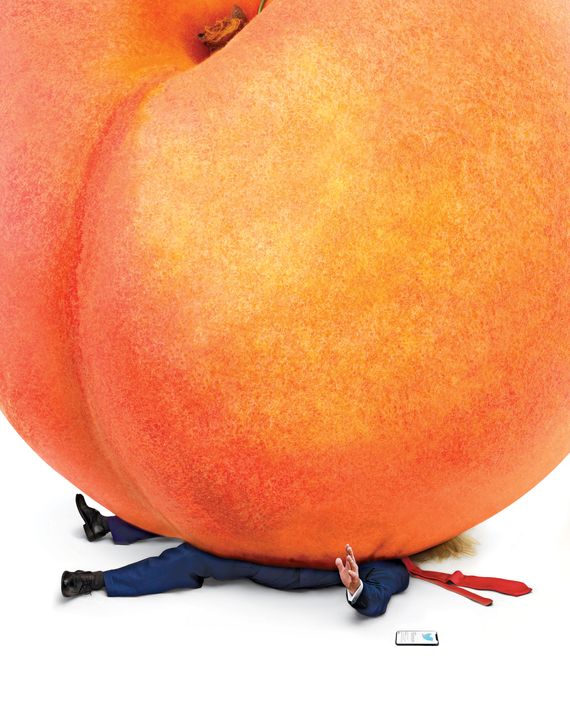
The crimes for which impeachment is the prescribed punishment are notoriously undefined. And that’s for a reason: Presidential powers are vast, and it’s impossible to design laws to cover every possible abuse of the office’s authority. House Democrats have calculated that an impeachment focused narrowly on the Ukraine scandal will make the strongest legal case against President Trump. But that’s not Trump’s only impeachable offense. A full accounting would include a wide array of dangerous and authoritarian acts — 82, to be precise. His violations fall into seven broad categories of potentially impeachable misconduct that should be weighed, if not by the House, then at least by history.
Explanation: The single most dangerous threat to any democratic system is that the ruling party will use its governing powers to entrench itself illegitimately.
Evidence: (1) The Ukraine scandal is fundamentally about the president abusing his authority by wielding his power over foreign policy as a cudgel against his domestic opponents. The president is both implicitly and explicitly trading the U.S. government’s favor for investigations intended to create adverse publicity for Americans whom Trump wishes to discredit. (2) During his campaign, he threatened to impose policies harmful to Amazon in retribution for critical coverage in the Washington Post. (“If I become president, oh do they have problems.”) He has since pushed the postmaster general to double rates on Amazon, and the Defense Department held up a $10 billion contract with Amazon, almost certainly at his behest. (3) He has ordered his officials to block the AT&T – Time Warner merger as punishment for CNN’s coverage of him. (4) He encouraged the NFL to blacklist Colin Kaepernick.
Explanation: As he does with many other laws, the president enjoys broad immunity from regulations on the proper handling of classified information, allowing him to take action that would result in felony convictions for other federal employees. President Trump’s mishandling of classified information is not merely careless but a danger to national security.
Evidence: (5) Trump has habitually communicated on a smartphone highly vulnerable to foreign espionage. (6–30) He has reversed 25 security-clearance denials (including for his son-in-law, who has conducted potentially compromising business with foreign interests). (31) He has turned Mar-a-Lago into an unsecured second White House and even once handled news of North Korea’s missile launch in public view. (32) He gave Russian officials sensitive Israeli intelligence that blew “the most valuable source of information on external plotting by [the] Islamic State,” the Wall Street Journal reported. (33) He tweeted a high-resolution satellite image of an Iranian launch site for the sake of boasting.
Explanation: President Trump has abused his authority either by distorting the intent of laws passed by Congress or by flouting them. He has directly ordered subordinates to violate the law and has promised pardons in advance, enabling him and his staff to operate with impunity. In these actions, he has undermined Congress’s constitutional authority to make laws.
Evidence: (34) Having failed to secure funding authority for a border wall, President Trump unilaterally ordered funds to be moved from other budget accounts. (35) He has undermined regulations on health insurance under the Affordable Care Act preventing insurers from charging higher rates to customers with more expensive risk profiles. (36) He has abused emergency powers to impose tariffs, intended to protect the supply chain in case of war, to seize from Congress its authority to negotiate international trade agreements. (37–38) He has ordered border agents to illegally block asylum seekers from entering the country and has ordered other aides to violate eminent-domain laws and contracting procedures in building the border wall, (39–40) both times promising immunity from lawbreaking through presidential pardons.
Explanation: The executive branch and Congress are co-equal, each intended to guard against usurpation of authority by the other. Trump has refused to acknowledge any legitimate oversight function of Congress, insisting that because Congress has political motivations, it is disqualified from it. His actions and rationale strike at the Constitution’s design of using the political ambitions of the elected branches to check one another.
Evidence: (41) Trump has refused to abide by a congressional demand to release his tax returns, despite an unambiguous law granting the House this authority. His lawyers have flouted the law on the spurious grounds that subpoenas for his tax returns “were issued to harass President Donald J. Trump, to rummage through every aspect of his personal finances, his businesses and the private information of the president and his family, and to ferret about for any material that might be used to cause him political damage.” Trump’s lawyers have argued that Congress cannot investigate potentially illegal behavior by the president because the authority to do so belongs to prosecutors. In other litigation, those lawyers have argued that prosecutors cannot investigate the president. These contradictory positions support an underlying stance that no authority can investigate his misconduct. (42) He has defended his refusal to accept oversight on the grounds that members of Congress “aren’t, like, impartial people. The Democrats are trying to win 2020.” (43) The president has also declared that impeachment is illegal and should be stopped in the courts (though, unlike with his other obstructive acts, he has not yet taken any legal action toward this end).
Explanation: By virtue of his control over the federal government’s investigative apparatus, the president (along with the attorney general) is uniquely well positioned to cover up his own misconduct. Impeachment is the sole available remedy for a president who uses his powers of office to hold himself immune from legal accountability. In particular, the pardon power gives the president almost unlimited authority to obstruct investigations by providing him with a means to induce the silence of co-conspirators.
Evidence: (44–53) The Mueller Report contains ten instances of President Trump engaging in obstructive acts. While none of those succeeded in stopping the probe, Trump dangled pardons and induced his co-conspirators to lie or withhold evidence from investigators. Former Trump lawyer Michael Cohen testified to Congress that Trump had directed him to lie to it about his negotiations with the Russian government during the campaign to secure a lucrative building contract in Moscow. And when Cohen stated his willingness to lie, Robert Costello, an attorney who had worked with Rudy Giuliani, emailed Cohen assuring him he could “sleep well tonight” because he had “friends in high places.” Trump has publicly praised witnesses in the Russia investigation for refusing to cooperate, and he sent a private message to former national-security adviser Michael Flynn urging him to “stay strong.” He has reinforced this signal by repeatedly denouncing witnesses who cooperate with investigators as “flippers.” (54–61) He has exercised his pardon power for a series of Republican loyalists, sending a message that at least some of his co-conspirators have received. The president’s pardon of conservative pundit Dinesh D’Souza “has to be a signal to Mike Flynn and Paul Manafort and even Robert S. Mueller III: Indict people for crimes that don’t pertain to Russian collusion and this is what could happen,” Roger Stone told the Washington Post. “The special counsel has awesome powers, as you know, but the president has even more awesome powers.”
Explanation: Federal employees must follow strict rules to prevent them from being influenced by any financial conflict. Conflict-of-interest rules are less clear for a sitting president because all presidential misconduct will be resolved by either reelection or impeachment. If Trump held any position in the federal government below the presidency, he would have been fired for his obvious conflicts. His violations are so gross and blatant they merit impeachment.
Evidence: (62) He has maintained a private business while holding office, (63) made decisions that influence that business, (64) and accepted payments from parties both domestic and foreign who have an interest in his policies. (65) He has openly signaled that these parties can gain his favor by doing so. (66) He has refused even to disclose his interests, which would at least make public which parties are paying him.
Explanation: One of the unspoken roles of the president is to serve as a symbolic head of state. Presidents have very wide latitude for their political rhetoric, but Trump has violated its bounds, exceeding in his viciousness the rhetoric of Andrew Johnson (who was impeached in part for the same offense).
Evidence: (67) Trump called for locking up his 2016 opponent after the election. (68–71) He has clamored for the deportation of four women of color who are congressional representatives of the opposite party. (72) He has described a wide array of domestic political opponents as treasonous, including the news media. (73–80) On at least eight occasions, he has encouraged his supporters — including members of the armed forces — to attack his political opponents. (“I have the support of the police, the support of the military, the support of the Bikers for Trump — I have the tough people, but they don’t play it tough until they go to a certain point, and then it would be very bad, very bad.”) (81) He has threatened journalists with violence if they fail to produce positive coverage. (“If the media would write correctly and write accurately and write fairly, you’d have a lot less violence in the country.”) (82) There have been 36 criminal cases nationwide in which the defendant invoked Trump’s name in connection with violence; 29 of these cited him as the inspiration for an attack.

On Friday, Attorney General William Barr spoke at Notre Dame’s law school and raised a few eyebrows by condemning societal ills on conspiring American secularists. As far as the nation’s chief law enforcement official was concerned, non-religious Americans – roughly a fifth of the population – are helping advance “social pathology” and “moral upheaval.” Barr added that these sinister secularists are responsible for “an unremitting assault” on “traditional values.”
One day later, Donald Trump spoke at a religious right gathering, where he told social conservative activists, “Forever and always, Americans will believe in the cause of freedom, the power of prayer, and the eternal glory of God.” Soon after, the president called into Fox News and insisted that there’s a Christian revival underway because “everybody” knows that “the Russian witch hunt was a faux, phony fraud. And we got rid of that. And then they came up with this Ukrainian story that was made up by Adam Schiff.”
And then, of course, there’s Secretary of State Mike Pompeo. USA Today reported late yesterday:
A recent speech about “Being a Christian Leader” by Secretary of State Mike Pompeo was promoted on the State Department’s homepage Monday, and has been met with criticism that it potentially violates the principle of separation of church and state enshrined in the Establishment Clause of the Constitution.
The speech was delivered at the America Association of Christian Counselors on Friday in Nashville, Tennessee. Pompeo touts Christianity throughout the remarks, describing how he applies his faith to his government work, referencing God and the Bible during the entirety of the speech.
If you visited the U.S. State Department’s website yesterday, its homepage featured a picture of Pompeo alongside text that read, “Being a Christian Leader.” (That text has since been replaced with content about Turkish sanctions.)
Taken together, Team Trump’s theological push isn’t exactly subtle. In a country that’s supposed to honor the constitutional principle of separation of church and state, it isn’t exactly healthy, either.
The New York Times’ Paul Krugman argued in his new column, “Pardon my cynicism, but I seriously doubt that Barr, whose boss must be the least godly man ever to occupy the White House, has suddenly realized to his horror that America is becoming more secular. No, this outburst of God-talk is surely a response to the way the walls are closing in on Trump, the high likelihood that he will be impeached for high crimes and misdemeanors.”
With Trump, Barr, and Pompeo each touting related theological messages over the course of a few days, as each of these men get caught up in an impeachment scandal, it’s hardly unreasonable to think there’s a larger strategy unfolding. And given the importance of evangelical Christians in the president’s base, the effort may even have the intended effect.
But I continue to marvel at Trump’s secularism and the inherent disconnect at the heart of the campaign. The president – a thrice-married former casino owner – claimed to go to a New York church that rarely saw him. Asked if he’s ever asked God for forgiveness, he said, “I don’t think so.” Asked whether he’s drawn more to the New or Old Testaments, Trump replied, “Both.”
And, of course, there was the whole “ Two Corinthians” incident.
The Republican has proceeded to lie repeatedly to leaders of the faith community about repealing the Johnson Amendment, which remains fully intact.
The irony of positioning Trump and his scandal-plagued team as heroes to the faithful is extraordinary.
The Rachel Maddow Show / The MaddowBlog
By Steve Benen October 14, 2019

There’s some disagreement among religious scholars over the phases of the Great Awakening, which are periods of Christian revival that began in the early 18th century. But according to Donald Trump, he may be responsible for helping usher in the latest phase.
“I was called by the great pastors of this country in a call about a week ago,” the president told Fox News’ Jeanine Pirro over the weekend, “and they said they have never seen electricity in the air, enthusiasm in the air. Churches are joining. People are joining the church.” Trump added this Christian revival is the result of “everybody” knowing that “the Russian witch hunt was a faux, phony fraud. And we got rid of that. And then they came up with this Ukrainian story that was made up by Adam Schiff.”
Evidently, this politically inspired Great Awakening is necessary, at least according to Attorney General William Barr, who spoke a day earlier at Notre Dame’s law school and condemned societal ills on conspiring American secularists.
“We see the growing ascendancy of secularism and the doctrine of moral relativism,” he said. “Basically every measure of this social pathology continues to gain ground.”
He described several social issues as “consequences of this moral upheaval.”
“Along with the wreckage of the family, we are seeing record levels of depression and mental illness, dispirited young people, soaring suicide rates, increasing numbers of angry and alienated young males, an increase in senseless violence and a deadly drug epidemic.”
Bill Barr, with a conspiratorial flare, added, “This is not decay. This is organized destruction. Secularists and their allies have marshaled all the forces of mass communication, popular culture, the entertainment industry and academia, in an unremitting assault on religion and traditional values.”
I can appreciate the fact that Barr is “neck-deep” in the scandal that’s likely to lead to the president’s impeachment, and perhaps his bizarre tirade against non-religious Americans was intended to solidify Team Trump’s support among Christian conservatives.
But that’s not much of an excuse for the attorney general’s offensive speech.
For one thing, it’s factually wrong. There are complex factors that contribute to problems such as drug abuse, gun violence, mental illness, and suicide, but to assume these issues would disappear in a more religious society is absurd. There are plenty of Western societies, for example, that are far more secular than the United States, and many of them are in better positions on these same social ills.
For that matter, if Barr is concerned about “the doctrine of moral relativism,” he may want to consider the broader relationship between his boss and his social-conservative followers – many of whom have decided to look the other way on Donald Trump’s moral failings because they approve of his political agenda.
But even putting aside these relevant details, it was the circumstances that were especially jarring: the nation’s chief law-enforcement officer delivered public remarks in which he alleged non-religious citizens of his own country are conspiring to advance a sinister “social pathology.”
Roughly one-in-five Americans considers themselves atheists, agnostics, or lacking in any specific faith affiliation. The idea that their attorney general sees them as part of a nefarious force, conspiring in the shadows to undermine morality, isn’t just ridiculous; it’s at odds with the country’s First Amendment principles.
Walter Shaub, the former director of the Office of Government Ethics, described Barr’s comments as “repugnant,” adding, “His job is to defend the First Amendment. But this immoral, unpatriotic, borderline monarchist and defender of corruption has other ideas.”
